






A Pursuer of Excellence – Barnona Basu: Harmonizing Impact, Purpose and People in a Changing World
Your life remains inspiring till you remain hopeful in every moment. As we aspire, hope inspires. It is the best way to live your personal and professional life. In that sense, Barnona Basu’s journey is a tapestry woven with intellect, artistry, and an unwavering pursuit of excellence. Born in the cultural heart of Kolkata, she grew up in a family that cherished education and integrity—values that became her compass. Her academic brilliance earned her a Gold Medal in Pharmacy from Nagpur University, followed by an MBA from NMIMS, equipping her with both scientific rigor and strategic vision. Yet Barnona’s story is not confined to boardrooms; it dances gracefully across the stage. A trained Bharatanatyam and Kuchipudi artist for over two decades, honored as Nritya Acharya, she embodies discipline and creativity—qualities that resonate in her leadership style. Her professional odyssey began at Ranbaxy, moved through Aristo Pharmaceuticals and Sudler & Hennessey, and reached a crescendo during her 22-year tenure at Lupin India, where she rose from Product Executive to Senior General Manager—Marketing & Therapy Head. Here, she shaped therapy portfolios, pioneered patient-centric programs, and built brands that touched lives. Today, as Director—Marketing, India Business at Emcure Pharmaceuticals, Barnona Basu orchestrates strategies that harmonize sustainable success with human impact, redefining healthcare engagement in India. Her path has not been without challenges—moments of uncertainty tested her resolve—but like a dancer mastering a complex rhythm, she turned every setback into a step forward. Anchored by deep family bonds and lifelong friendships, Barnona Basu leads with aristocratic grace and empathetic strength, inspiring teams to create not just business outcomes but a legacy of meaningful change. Her story is a testament to the power of blending science with soul, ambition with artistry—a leader who doesn’t just manage brands, but choreographs transformation. “A Ship Is Meant to Sail — My Compass for Balance” “Life often feels like an ocean—vast, unpredictable, and demanding,” says Barnona, whose roles as a leader, a mother, and a daughter are like currents that sometimes converge, sometimes clash. There are days when the tide of professional commitments rises high: strategy meetings, product launches, decisions that shape lives. “And then, there are moments when my daughter’s laughter or my mother’s quiet wisdom reminds me of the shores I cherish.” “One evening, after a particularly taxing day, my daughter said something that became my mantra: ‘A ship is meant to sail in the ocean, not anchored at the shore. When situations are demanding, face them, live them, and act on them.’ Her words carried the elegance of truth. Comfort zones may feel safe, but they are not where growth happens. That thought gave me clarity—life’s balance is not about resisting the waves but learning to navigate them with grace.” As a mother, Barnona Basu strives to be present for her milestones—school projects, bedtime conversations, those fleeting moments that shape her world. As a daughter, she holds the quiet responsibility of caring for her mother, ensuring her dignity and comfort as she ages. These roles are sacred, and they coexist with my professional identity. There are days when deadlines collide with family needs, and in those moments, Barnona Basu draws upon the discipline and focus she cultivated through years of classical dance. Barnona Basu vsays she learned that balance is not symmetry; it is harmony. “When I am at work, I give it my full presence. When I am with my daughter or my mother, the phone is away, and my heart is theirs. Challenges will always come, but as my daughter reminded me, ships are built to sail. And so, I sail—through boardrooms and living rooms, through tides of ambition and waves of love—knowing that in motion, I find strength; in balance, I find meaning.” A Deep Curiosity, Purpose, and Drive for Meaningful Impact Explaining her appetite for business, Barnona Basu says that to her, at its core, it is about curiosity, purpose, and the drive to create meaningful impact. It is not limited to financial success—it encompasses building ecosystems that foster innovation, empower people, and deliver value to society. Business thrives when passion meets strategy, and when ideas are transformed into solutions that matter. Entrepreneurship plays a central role in this journey. It is about anticipating change, embracing uncertainty, and finding opportunities where others see challenges. Programs like HUMRAHI, which support patients through integrated care, reflect how business can combine empathy with innovation to create lasting outcomes. This approach demonstrates that progress is not just about products—it’s about experiences that improve lives. Skills that fuel this appetite include strategic thinking, adaptability, and collaboration. These enable organizations to navigate complexity, align diverse teams, and respond to evolving market needs. When these skills are applied with integrity and vision, they create a foundation for sustainable growth. Ultimately, an appetite for business is a commitment to continuous learning and resilience. It is about asking the right questions, challenging the status quo, and striving for excellence—not for short-term gains, but for long-term progress that benefits all stakeholders. Key Highlights Passion for Purpose: Creating impact and improving lives beyond financial metrics. ● Entrepreneurial Mindset: Embracing innovation and turning challenges into opportunities. ● Strategic & Collaborative Approach: Aligning teams and resources for sustainable growth. ● Human-Centric Innovation: Programs like HUMRAHI show how empathy drives meaningful solutions. ● Commitment to Continuous Learning: Curiosity and adaptability fuel resilience and progress. “The Passion That Drives Me” The passion that drives Barnona Basu is the unwavering belief that business can change lives. For her, it has never been just about numbers or market share—it has always been about people, purpose, and progress. She reflects, “I still remember a moment early in my career that shaped this belief. I was visiting a small clinic in a remote town, where a doctor told me how a therapy we had introduced was helping patients live longer, healthier lives. One elderly patient, with tears in his eyes, said, “I can now walk to see my grandchildren.” That simple sentence stayed with me. It wasn’t about the product—it

Amazon’s AWS Beats Expectations as AI Demand Drives Strong Q4 Growth
Prime Highlights Amazon’s cloud business delivered a strong fourth quarter, with rising demand for artificial intelligence services pushing AWS revenue, profits, and margins above market expectations. The company signaled aggressive long-term investment in AI infrastructure, highlighting plans to sharply expand computing capacity amid intensifying competition in the cloud market. Key Facts AWS reported fourth-quarter revenue of $35.58 billion, up nearly 24% year on year, and operating income of $12.47 billion, with an operating margin of 35%. Amazon plans to spend about $200 billion in 2026, primarily on AI infrastructure, and aims to double AWS computing capacity again by the end of 2027. Background Amazon reported a strong performance from its cloud business in the fourth quarter, as rising demand for artificial intelligence services pushed revenue and profits above market expectations. The company said on Thursday that Amazon Web Services (AWS) generated $35.58 billion in revenue, marking an increase of nearly 24% from a year earlier and topping analysts’ estimates. AWS accounted for about 17% of Amazon’s total quarterly revenue but delivered the bulk of its profits. Operating income from the cloud unit reached $12.47 billion, exceeding market forecasts and helping lift Amazon’s overall earnings. AWS also improved its operating margin to 35%, up slightly from the previous quarter. Amazon continues to lead the global cloud infrastructure market, which it helped create nearly two decades ago. However, competition is heating up as rivals invest heavily in Artificial intelligence. Alphabet recently reported a 48% jump in Google Cloud revenue, its fastest growth since 2021, while Microsoft said revenue from Azure and related services rose 39%. During the quarter, AWS launched Nova Forge, a new service that allows customers to access Amazon’s generative AI models during training for deeper customization. The company also pointed to OpenAI’s $38 billion spending commitment, showing strong demand for powerful computing. AWS CEO Matt Garman said the company added almost four gigawatts of computing capacity in 2025. Amazon CEO Andy Jassy noted that AWS plans to double that capacity again by the end of 2027. Looking ahead, Amazon expects to spend $200 billion in 2026, with most of the money going toward AI infrastructure to meet growing customer demand. Read Also: Broadcom Shares Jump After Google Signals Massive AI Spending Push

Broadcom Shares Jump After Google Signals Massive AI Spending Push
Prime Highlight: Broadcom shares surged after Google announced a sharp increase in capital spending, signaling stronger demand for AI-focused chips and data center hardware. Google’s emphasis on its in-house AI chips positions Broadcom as a key beneficiary due to its role in designing and building Google’s tensor processing units. Key Facts: Google plans to spend up to $185 billion on capital expenditures this year, nearly double its spending from the prior year, to expand AI data center infrastructure. Broadcom works with Google on custom TPUs and is developing AI-specific chips for five customers, while Nvidia shares also rose on expectations of broader AI-driven demand. Background Broadcom shares climbed 6% in extended trading on Wednesday after Google reported earnings and announced a sharp increase in capital spending aimed at expanding its artificial intelligence infrastructure. Investors reacted positively to the scale of Google’s investment, which is expected to lift demand for advanced chips and data center hardware. Google said it plans to spend as much as $185 billion on capital expenditures this year, nearly double its spending from last year. The company is ramping up investment to build and expand data centers that support artificial intelligence workloads, joining other major technology firms in accelerating AI-focused spending. Technology analysts said the move is a major positive for companies tied to Alphabet’s supply chain. Ben Reitzes, head of technology research at Melius Research, described the spending plan as highly supportive for chipmakers linked to Google’s AI efforts. He noted that the scale of investment signals long-term growth for partners involved in building AI hardware. Unlike many AI systems that rely heavily on Nvidia chips, much of Google’s AI software runs on its own tensor processing units, or TPUs. Google’s latest Gemini 3 AI model was trained using these custom chips. Broadcom works closely with Google to design and build TPUs, so it benefits directly from the higher spending. Broadcom has been expanding its custom chip business and focusing on application-specific integrated circuits, or ASICs. These chips are designed to handle certain AI tasks more efficiently. In December, Broadcom said it would sell Google’s TPU Ironwood rack systems to AI startup Anthropic, highlighting growing demand beyond Google. Industry experts say custom AI chips are mainly used by large cloud companies, often called hyperscalers. Broadcom said it is currently developing custom chips, which it calls “XPUs,” for five customers. Other tech giants, including Microsoft, Amazon, and Meta, are also working on their own AI chips. Google continues to use Nvidia chips alongside its TPUs. Nvidia shares rose about 2% in extended trading, reflecting expectations that rising AI spending will support multiple players across the chip sector. Read More: Broadcom Shares Jump After Google Signals Massive AI Spending Push

Marcorp Engineers India Pvt Ltd: An Emerging Force in India’s MEP Contracting Landscape
New Delhi, India – Established in 2021, Marcorp Engineers India Pvt Ltd has rapidly emerged as a certified and leading MEP (Mechanical, Electrical, and Plumbing) contracting company, earning recognition for its excellence in execution, timely delivery, and uncompromising safety standards. In a remarkably short span, Marcorp Engineers has built a strong and credible footprint in government and private infrastructure development. The company has successfully executed two flagship projects with Delhi PWD, including the state-of-the-art Forensic Science Laboratory (New Building), Rohini, Delhi, and the OPD Block at Bhagwan Mahavir Hospital, Pitampura, Delhi, along with several projects for reputed private clients. Currently, Marcorp Engineers is associated with multiple prestigious projects across the country, working with esteemed organizations such as Delhi Tourism and Transportation Development Corporation (DTTDC), Delhi University in association with NBCC, National Academy of Coastal Policing with CPWD, World Health Organization projects with CPWD Gujarat, Jawaharlal Nehru University (ISTM) with CPWD Delhi, MPIDC C MPPHIDC Bhopal, ESIC Bangalore with CPWD, among many others. These collaborations reflect the company’s growing trust and credibility within India’s infrastructure ecosystem. What truly sets Marcorp Engineers apart is its extraordinary growth trajectory. From a modest beginning in 2021 with just three engineers and a small operational setup, the company has grown into a robust organization with over 60+ professionals, a well- established office infrastructure, and an impressive annual turnover of approximately INR 20–25 crores, with a clear target of INR 50 crores by 31st March 2025. This growth has been entirely organic, driven by a clear strategic roadmap, disciplined execution, and the collective efforts of a highly committed team. Marcorp Engineers is deeply committed to delivering high-quality, cost-effective, and timely MEP solutions while maintaining the highest standards of safety and compliance. Continuous improvement remains central to the company’s philosophy, supported by structured training programs that enhance technical capability and leadership across teams. Visionary Leadership At the helm of the organization is Mr. Diinesh K. Aggarwal, Managing Director and visionary leader, bringing with him over 33 years of extensive experience in MEP, electrical, and electro-mechanical services. An Electro-Mechanical Engineer with an MBA, Mr. Aggarwal combines technical expertise with strategic business acumen, leading project design, execution, and business development initiatives. Over his distinguished career, he has successfully delivered landmark projects across hotels, malls, hospitals, commercial complexes, institutional buildings, industrial and residential developments. His portfolio includes prestigious names such as Phoenix Mall, Renaissance Hotel (Phase II, Powai – Mumbai), Airline Hotel Mumbai, Radisson Blu, Sarovar Hotels, IT buildings for Shalimar Group, K. Raheja Corp, J. Kumar Infraprojects Ltd, and projects with renowned organizations including LNJ Bhilwara Group, Allana Group, DS Group, along with numerous government and private institutions. A Strong Case for Industry Recognition Marcorp Engineers India Pvt Ltd stands out as one of the few emerging MEP companies to achieve such accelerated and sustainable growth within four years. Its consistent performance, expanding national presence, ethical business practices, and leadership- driven vision make it a strong contender for industry awards and recognition. Guided by the principles of integrity, teamwork, innovation, and customer-centricity, Marcorp Engineers aspires to lead the MEP contracting sector by creating enduring value for clients, employees, and stakeholders alike—setting new benchmarks in quality, safety, and excellence across India’s infrastructure landscape. Call to Action (CTA) For further information about Marcorp Engineers India Pvt Ltd, its projects, or collaboration opportunities, please contact: Email: diineshkaggarwal@marcorp.in Phone: + 9984120666 Stakeholders, consultants, and organizations seeking reliable MEP contracting and engineering solutions are encouraged to reach out to explore potential partnerships. Disclaimer – This article is a work of original content created for public relations and informational purposes only. It may be published across multiple digital platforms with the full knowledge and consent of the author/publisher. All images, logos, and referenced names are the property of their respective owners and used here solely for illustrative or informational purposes. Unauthorized reproduction, distribution, or modification of this article without prior written permission from the original publisher is strictly prohibited. Any resemblance to other content is purely coincidental or used under fair use policy with proper attribution. Read Also : National Prestige Awards 2026 Countdown Begins to One of the Top Business Awards in Delhi

Middle East’s Most Visionary Leader in Event Management
Middle East’s Most Visionary Leader in Event Management John Jossifakis, Managing Director of JJ Productions, is a globally respected leader in live event production. Renowned for blending technology with emotional storytelling, he has delivered landmark ceremonies and fireworks worldwide, shaping immersive experiences that prioritize human connection, precision, and lasting impact. Quick highlights Quick reads

John Jossifakis: The Architect of Spectacle
Long before audiences look skyward in awe or fall silent at the opening beat of a ceremony, John Jossifakis has already imagined the moment many times. His journey into live production was driven not just by spectacle, but by a deep interest in how moments are felt, remembered, and shared through an instinct that continues to define his career. As the Managing Director of JJ Productions, he is now a member of the most respected global creative forces in live events, directing ceremonies, fireworks, and grand-scale situations throughout the whole planet. His extraordinary ascent has been through performing on some of the repetitive stages such as sporting events to national holidays where precision, tension, and storytelling meet. Nonetheless, his development has been both technical and humane. He practices with a firm grip that it is not all the surrounding dazzling performances that count but rather an intricate network of people with their individual traits and likings. His baking of creative zeal with empathy, and innovative solutions with responsibility has won him trust across cultures and industries. Instead of pursuing technology per se, he has gained a reputation for treating it as a means of communicating, employing the way people experience live events throughout the story told by lighting, sounds, etc. that last after the last cue. John Jossifakis is the one that has taken those ungraspable instant moments in time and turned them into a lifetime career. Crafting Memories Through Strategic Creativity The events industry often celebrates technical prowess, but John Jossifakis understands that technology serves only as a vehicle for deeper human connection. He leads a specialized team of Ceremonies and Infotainment Experts who possess a unique capacity. They don’t just execute shows, they tell stories, forge memories, and evoke emotions that linger long after the final curtain falls. “Everything depends on our ability to understand a vision and translate it in ways that feel memorable, emotional, and relevant to audiences and spectators,” he explains. His work with various countries worldwide as a consultant demonstrates this translation of national visions into tangible realities. Whether designing fireworks displays that paint narratives across the night sky or choreographing opening ceremonies that capture a nation’s spirit, he ensures every element serves the larger emotional arc. This commitment to emotional resonance shapes JJ Productions’ distinctive approach to show design. He and his team recognize that unless they connect authentically with audiences, they cannot create lasting impressions or memorable statements. He references the iconic Barcelona Olympics cauldron lighting, a moment etched in collective memory despite the fact that the archer actually missed his target, with the arrow landing in the parking lot. The director’s clever camera angle made the miss virtually impossible to detect, creating the intended emotional impact regardless of technical reality. “This is what we do in events. We create alternative realities to transport people to new realms where they can forget their worries and dedicate their undivided attention for those 90 to 120 minutes,” he states. The Human Factor: Leadership Beyond Logistics Managing mega-ceremonies requires orchestrating thousands of volunteers, contractors, artists, and specialized international production staff, a logistical challenge that would overwhelm most leaders. Yet John Jossifakis identifies human dynamics as the toughest aspect of his work, far exceeding the technical complexities of fireworks synchronization or multi-platform show design. “Everyone has a story, an issue, or a background that requires either time off or special treatment,” he acknowledges. His leadership methodology rejects the spreadsheet mentality that reduces people to line items. Instead, he focuses intensely on understanding that human capital represents the core attribute of success. From backstage crew to onstage talent, everyone receives allocations of time, attention, and personal care. This people-first philosophy proves especially critical in live events, where powerful personalities require careful handling and managerial care. The intimate nature of production work—spending countless hours and days with colleagues under high pressure—demands equilibrium between responsibility and inclusion in decision-making processes. “If you want your team to fight for you, make them feel that they are part of that fight,” John Jossifakis advises. This approach creates belonging, ownership, and contribution among team members, transforming temporary workforces into unified forces capable of delivering under zero-fail operational standards. Pushing Technological Boundaries in Show Design JJ Productions operates at the intersection where industrial innovation meets artistic vision. John Jossifakis recently designed a groundbreaking performance in Saudi Arabia that employed industrial assembly line robots to manipulate lightweight LED screens. The result created breathtaking convergence between industrial automation and dynamic visual impact—a perfect example of how he challenges conventional applications of technology in live production. His vision for the future of show design extends even further. He anticipates the marriage of technologies like pyro drones and floating drone flame projectors, elements that will revolutionize fireworks displays and ceremony design. He predicts the digital era will transform passive audiences into immersed, interactive participants, a revelation that will fundamentally change how guests experience live events. “We will see a lot of elements digitized in virtual spaces, and the digital era will bring new guest experiences that revolutionize how audiences spectate events,” he explains. This commitment to innovation positions JJ Productions at the forefront of an industry undergoing rapid technological transformation. The Creative-Technological Risk Equation In live broadcast settings, where ultra-high-definition cameras capture every detail with unforgiving precision, deploying groundbreaking technology carries significant risk. Drones can malfunction, holographic projections can fail, and ambitious fireworks displays can misfire, all in real-time before millions of viewers. Yet John Jossifakis maintains an unwavering commitment to pushing boundaries. “Nobody makes breakthroughs or creates memorable moments from their comfort zone. I challenge everything as an Events Director. I push the boundaries of technology, automation, lighting, audio, visual effects, and content generation,” he states emphatically. He operates on a fundamental principle: high risk usually yields high reward. The key lies in defending the creative vision while ensuring delivery pushes boundaries. Modern broadcast technology’s ultra-high-definition capabilities have eliminated traditional “smoke and mirrors” techniques, forcing events professionals to reconsider everything from screen colors and set

Streamlining Operations: Event Tech Innovators Driving Digital Transformation in 2026
Digital technologies are changing how people execute conferences, exhibitions and large-scale events which results in major transformation for the global events industry. Event technology innovators in 2026 will shift their focus beyond efficiency and automation to develop intelligent data-driven systems which create immersive experiences that meet modern audience needs and organizational goals. Brands use this transformation to develop their methods for engaging stakeholders, assessing their organizational impact and expanding their global outreach. Event technology now functions as a strategic asset through its capabilities which include artificial intelligence-based personalization, advanced analytical tools and immersive event technologies. The growing demand for integrated digital ecosystems has led organizers, venues and sponsors to seek systems which unify content delivery with audience engagement, security measures and monetization strategies. The innovators who work in this field are currently developing new event value propositions which fit into a world that operates with both hybrid and digital-first environments. Smart Platforms The event technology platforms in 2026 display two main characteristics which include intelligent and flexible design. The leading innovators use artificial intelligence to create personalized attendee experiences because they need to analyze real-time data about attendee preferences, behavior and engagement patterns. The platforms create personalized experiences for participants through their agenda curation, networking opportunity suggestions and content delivery systems which adapt to individual needs. The smart platforms provide personalization features while they maintain complete compatibility with enterprise systems which include customer relationship management and marketing automation tools. The system enables direct flow of event information into business intelligence systems which help companies track event participation and its impact on sales pipelines, brand performance and customer relationship building. Organizations now assess events based on their impact on strategic business objectives rather than their total number of attendees. The main focus of platform development involves both security measures and compliance requirements. Technology providers have started to incorporate high-level security measures and compliance solutions into their platforms because of the rising amount of attendee information and international event attendance. Immersive Experiences The combination of virtual reality with augmented reality and spatial computing technologies creates virtual spaces which allow users to experience physical environments at their highest level. The innovators have developed a system which lets attendees navigate virtual exhibition spaces while they can view products from all angles and work together with others who are located in different places. The complete virtual experience delivered to users goes beyond a traditional online streaming platform. The immersive elements of hybrid formats create a connection between their physical and digital components which provides more value to both types of audiences. The interactive virtual spaces enable remote participants to view live content while on-site attendees use augmented interfaces to obtain extra information, translations and real-time analytics. The convergence process produces a standard experience for all audience members while bringing events to audiences who exist outside the venue. The content creators and sponsors use immersive tools to build more powerful storytelling experiences. The industry now designs product launches, training sessions and thought leadership forums to function as experiential journeys which replace traditional static presentations. Event technology innovators deliver brands with various tools and frameworks which help them develop storytelling experiences that enable better content retention by users while strengthening their emotional connections. Data Impact Organizers deploy advanced analytics platforms to monitor complete event data which begins from registration and continues through attendee events until post-event activities are finished. The insights they gained from this research enable them to develop content strategies that target specific audiences while assessing their return on investment with unprecedented accuracy. Innovative companies dedicate their research efforts to developing predictive analytics which will assist them in planning their operations and improving their performance. Event technology solutions analyze both historical data, current data to predict attendance patterns and upcoming attendance declines and provide solutions which help increase audience interaction. Organizers can use this system to maintain high standards of performance throughout different locations and events which require different approaches. The strategic value of organizational events receives enhancement through data-driven insights which organizations use to evaluate their event outcomes. Senior leadership teams now recognize events as essential drivers of business growth which produce measurable results instead of being optional promotional activities. Event technology innovators help drive this transformation by transforming intricate data sets into straightforward operational information which matches executive priorities and supports the organization’s future objectives. Conclusion Developments in event technology show how the industry now assesses value and success through different methods. The current event planning system uses intelligent platforms together with immersive experiences and advanced data analytics as its core components. Organizers and venues together with sponsors can deliver secure and scalable experiences that meet the needs of more advanced audiences who attend their events. The development of digital and hybrid event formats will continue to depend on event technology innovators who create sustainable growth solutions for the entire industry. The company uses its technological capabilities to achieve its business goals which enables them to develop events that create stronger connections with audiences while delivering measurable results that help the organization achieve its long-term objectives in an international environment that keeps changing. Read Also: Leveraging Analytics to Enhance Transparency and Board-level Confidence
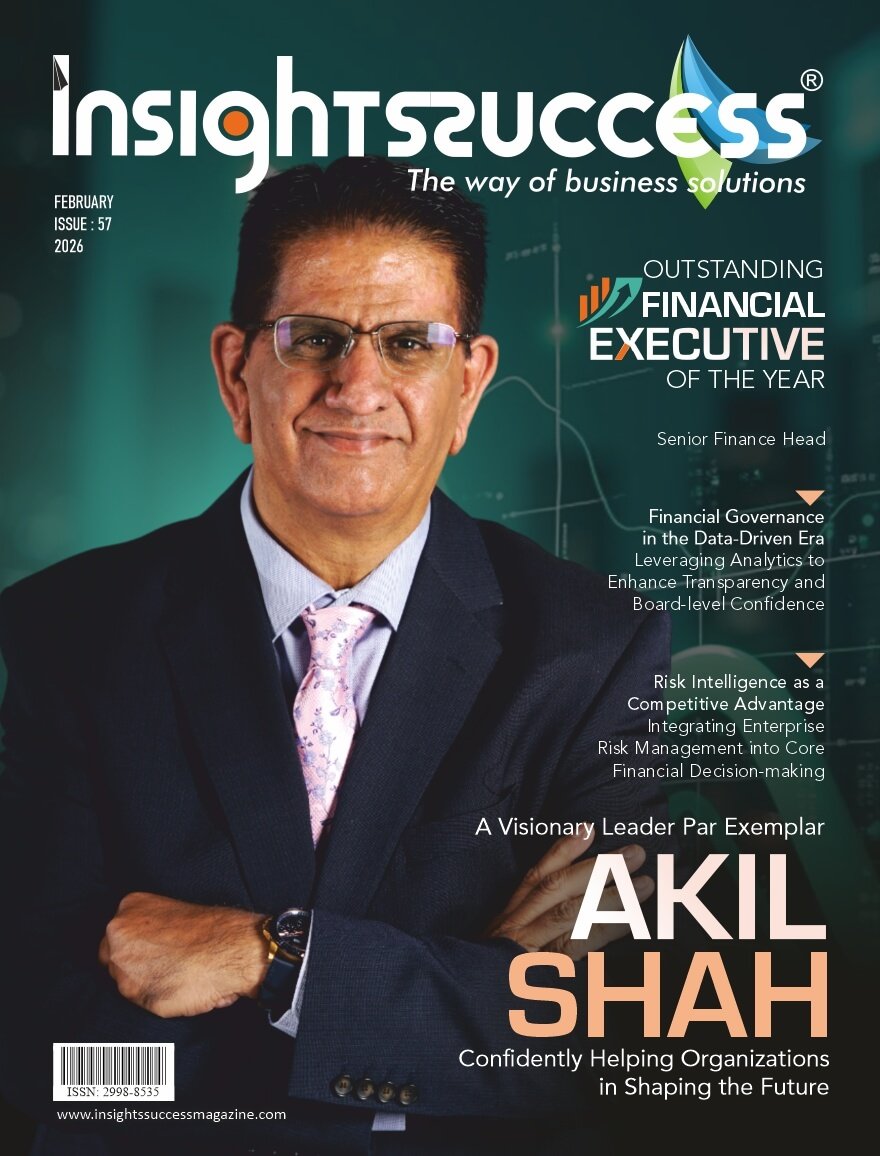
Outstanding Financial Executive of the Year
Outstanding Financial Executive of the Year This is a distinguished edition dedicated to recognizing Akil Shah, a finance leader whose strategic acumen, governance excellence, and value-driven decision-making define the gold standard in financial leadership. This feature honors an executive who demonstrates exceptional command over financial strategy while enabling organizational resilience, growth, and long-term sustainability. Quick highlights Quick reads

A Visionary Leader Par Exemplar – Akil Shah: Confidently Helping Organizations in Shaping the Future
Finance has always been more than numbers, believes Akil Shah, A Senior Finance Head and Finance Operations for the Finance Shared Services Center (FSSC). From the outset of his career, particularly during his years in the UK, where he was born, educated, and spent the majority of his life, Akil Shah learnt that finance only adds value when it is embedded in the reality of the business and not just sitting in a corner, churning the numbers. He shares, “Sitting close to sales and operations taught me that numbers help decision-making, behaviours, and outcomes for the future.” That experience shaped a belief that finance exists to create clarity, communication, discipline, and trust. Akil Shah added: “It is not about reporting football results or acting as a post box for data; it is about insight, informed judgement, and decision support to our stakeholders, grounded in an understanding of what sits behind the numbers as well as forecasting for the future.” Working across diverse sectors and geographies, it taught Akil Shah the importance of having stronger processes and governance. He saw and read how organisations become when controls are informal, unclear, or knowledge sits with individuals rather than in systems or workflow procedures. Those lessons drove his process mindset to design, document it clearly, and make accountability visible. “Good financial governance ensures that finance is managed with responsibility and risks are controlled. At the end of the day, we are the guardians of an organisation and need to protect as well as enforce rules.” Akil Shah also thinks that we, as finance leaders, need to work together to accomplish the objective. He quotes: “It is like a football game, where we have different expertise in the team but need to work together strategically to achieve our objective. We want to win gold, as my senior once said, and having that mindset defines how we set standards, believe in it and deliver results. Whether I am transforming a shared services model, strengthening balance sheet governance, reviewing the profit & loss, or embedding automation, my approach remains rooted in those lessons: understand the business, build robust foundations, empower people, and we will achieve our goal.” The Principles of Success While overseeing complex finance operations across the UAE and the Middle East, which Akil Shah calls a shared environment, scale only works when clarity exists. He insists: “My first guiding principle is therefore ownership.” Every process—from Record-to-Report to Order-to-Cash and Procure-to-Pay—must have a clearly defined owner, documented standards, and measurable outcomes. By establishing a robust Target Operating Model supported by SOPs, service catalogues, SLAs, and KPIs, he says that they can remove dependency on individuals and replace it with disciplined, repeatable execution. “We also need to ensure that resilience is in place in case of any absent resources to avoid any disruption.” The second principle is governance. Akil Shah believes that the balance sheet is the true health check of any organisation. Introducing structured trial balance reviews, monthly balance sheet scorecards, and working-day-three governance creates rhythm, accountability, and early risk visibility. Issues are surfaced quickly, ownership is clear, and corrective action becomes routine rather than reactive. Thirdly, performance is sustained by standardizing processes and embedding automation—such as host-to-host banking, supplier invoices scanning, daily cash, payments & receipts visibility—by removing manual effort and operational risk, which allows teams to focus on quality, controls, insight, and decision making rather than transaction firefighting. “Finally, you need to oversee the activities being conducted within the shared services, and the best way I felt was having regular catch-ups, reviewing KPI reports, as well as establishing a month-end tracker.” “Ongoing communication, open transparency, and collaboration are key to success in my view.” A Crucial Equilibrium To balance the demands of operational efficiency with the rigor of regulatory compliance in a rapidly changing financial landscape, across his career, whether working on SOX, ICFR, or FCPA-governed environments, for Akil Shah, the principle has remained the same: simplify first, then standardize, and only then automate. Well-designed processes reduce manual intervention, which in turn lowers risk, improves cycle time, and strengthens audit readiness. Clear operating models, documented SOPs, and strong ownership allow organisations to adapt quickly without losing control. But to achieve this, it needs to be teamwork, he emphasizes. From SOX, ICFR and FCPA requirements to regional tax and regulatory mandates, compliance is a significant part of this portfolio. Thus, before developing a mindset and systems that regard it as essential for building a culture where compliance is intuitive rather than enforced, Akil Shah says the starting point must be ‘why compliance and controls are needed?’ When people understand the why behind controls, they stop seeing them as obstacles and start seeing them as part of professional excellence, he explains. Compliance is achieved when controls are embedded directly into everyday workflows. Clear process design, documented SOPs, role clarity, and system-based checks ensure that the right behaviour is the path of least resistance, he adds. Equally important is visibility and ownership. Tools such as balance sheet scorecards, audit-ready documentation, and regular governance forums make risk transparent and accountability normal. “We need to create a culture where people take pride in doing things correctly and not a matter of ticking a box,” he always says “What would you do if this were your own business”. Akil Shah even takes it to very basic levels and says, “what budgeting and controls do you put in place in your family when you need to balance between income and expenses. Also, you need to be up to date with training and always ask the question of why we are doing a particular task and what the outcome is.” The Most Impactful Transformation Finance transformation, automation, and process optimization are Akil Shah’s core strengths. And according to him, one of the most impactful transformations he led was the end-to-end redesign of the finance shared services operating model, “Where we transferred the onshore activity to an offshore BPO.” When he joined the organisation, Akil says the finance shared services function

Leveraging Analytics to Enhance Transparency and Board-level Confidence
Financial Governance in the Data-Driven Era Financial governance is undergoing a structural evolution. Traditional oversight mechanisms built around periodic reporting and retrospective review are being augmented by real-time data visibility, advanced analytics, and integrated reporting systems. In this environment, analytics is not merely a technical tool; it is a governance enabler. When effectively deployed, it strengthens transparency, sharpens oversight, and enhances board-level confidence in financial integrity and strategic direction. The Changing Nature of Financial Governance Financial governance historically relied on controls, audits, and structured reporting cycles. While these remain essential, the scale and velocity of modern business activity demand more dynamic oversight. Digital transactions, global operations, and complex financial instruments generate vast data streams that cannot be interpreted through manual review alone. Governance frameworks, such as those promoted by OECD, emphasize accountability, transparency, and risk awareness. Analytics supports these principles by transforming raw financial data into actionable insight for leadership and boards. Enhancing Transparency Through Data Visibility Transparency is central to governance effectiveness. Advanced analytics platforms consolidate financial, operational, and risk data into unified dashboards. This integration reduces information silos and ensures consistent reporting across functions. Real-time visibility enables leaders to detect anomalies, performance deviations, and emerging risks earlier. Rather than relying solely on end-of-period summaries, executives and boards gain continuous insight into financial health. This shift from retrospective to ongoing monitoring strengthens confidence in reported performance. Strengthening Oversight and Control Analytics enhances control mechanisms by automating monitoring processes. Exception-based alerts, trend analysis, and pattern recognition identify irregularities that may signal operational issues or compliance risks. These tools extend oversight beyond traditional sampling methods. Continuous monitoring reduces the likelihood of control breakdowns going unnoticed. It also improves audit readiness, as data trails and system logs provide verifiable evidence of financial activity and decision processes. Supporting Strategic Decision-Making Governance is not limited to safeguarding assets; it also guides strategic choices. Data analytics supports scenario modeling, forecasting, and performance analysis that inform capital allocation and investment decisions. Boards benefit from data-driven narratives that link financial outcomes to strategic initiatives. When analytics clarify the relationship between strategy, risk, and performance, governance discussions move from abstract evaluation to evidence-based oversight. Board-Level Confidence and Trust Boards carry fiduciary responsibility for financial stewardship. Confidence in management’s reporting and controls is therefore essential. Analytics enhances this confidence by providing consistent, traceable, and timely information. Visualization tools translate complex data into accessible formats, enabling board members to grasp trends and risks without technical barriers. When insights are clear and data sources are reliable, governance dialogue becomes more focused and productive. Data Integrity and Ethical Considerations While analytics enhances governance, it also introduces responsibilities related to data integrity, privacy, and ethical use. Financial governance frameworks must incorporate standards for data quality, system security, and responsible analytics practices. Clear policies and oversight mechanisms ensure that data-driven governance remains trustworthy. Boards must understand not only what analytics reveal but also how those insights are generated. Cultural and Capability Requirements Effective use of analytics in governance depends on organizational capability. Finance professionals, auditors, and executives must develop analytical literacy. Cross-functional collaboration between finance, technology, and risk teams ensures that insights are accurate and actionable. A culture that values evidence-based decision-making strengthens governance outcomes. When analytics informs routine management processes, governance becomes embedded rather than episodic. Conclusion In the data-driven era, financial governance is evolving from periodic oversight to continuous insight. Analytics enhances transparency, strengthens controls, and supports strategic decision-making, thereby reinforcing board-level confidence. Organizations that integrate data capabilities into governance frameworks build trust, resilience, and accountability — essential qualities for sustainable performance in complex environments. Read Also: Streamlining Operations: Event Tech Innovators Driving Digital Transformation in 2026