






How Eric Santana Helps Clients Navigate Civil and Criminal Matters
Facing a criminal charge or dealing with the aftermath of a serious accident can quickly become overwhelming. The right attorney does more than file paperwork or appear in court. They guide clients through stressful situations, explain legal options clearly, and protect their rights from the very beginning. For people searching for dependable legal representation in Louisiana, working with experienced attorneys like Eric Santana can make a major difference. As Managing Partner of Santana Blanchard LLC, he handles both criminal defense and civil matters, giving clients broader legal support under one roof. That combination matters because many legal issues overlap, especially when accidents, insurance claims, or criminal allegations happen at the same time. A Lawyer with Experience in Criminal and Civil Cases One reason clients turn to Eric Santana is his ability to handle both criminal defense and personal injury matters. Many law firms focus on only one area, but his practice covers a wide range of legal situations. On the criminal side, he represents clients facing serious charges, including violent crimes, drug offenses, DUI allegations, and felony cases. He has also worked on high-profile litigation, including involvement in the State of Louisiana v. Cardell A. Hayes case that reached the U.S. Supreme Court. On the civil side, Eric Santana represents injury victims dealing with car accidents, truck crashes, wrongful death claims, and premises liability disputes. Clients often seek compensation for medical expenses, lost income, emotional distress, and other damages caused by negligence. Why Dual Legal Experience Matters Legal problems rarely stay confined to one category. A car accident, for example, may involve both an insurance claim and criminal charges if impaired driving is involved. Having one attorney who understands both sides of the legal process helps create a more organized and efficient strategy. Eric Santana’s courtroom experience also gives clients an advantage during negotiations. Insurance companies and prosecutors often take trial-ready attorneys more seriously because they know the lawyer is prepared to argue the case before a judge or jury if necessary. This practical experience becomes especially important when constitutional protections are involved. Under the Sixth Amendment of the U.S. Constitution, criminal defendants have the right to legal counsel. Eric Santana helps ensure those rights are protected throughout investigations, hearings, and trial proceedings. Client-Focused Representation Strong legal representation is not only about courtroom arguments. Clients also need communication, honesty, and realistic guidance during difficult moments. Eric Santana offers free consultations, allowing potential clients to discuss their legal concerns before making any decisions. During these meetings, clients can ask questions, review possible outcomes, and better understand the legal process ahead. Another important protection involves the Fifth Amendment, which protects individuals from self-incrimination. In criminal matters, clients are often advised not to speak with investigators or law enforcement without legal representation present. Early legal guidance can prevent mistakes that may later harm a case. Recognition and Reputation Over the years, Eric Santana has earned recognition for both criminal defense and personal injury work. His experience in Louisiana courts, combined with consistent courtroom appearances, has helped establish a strong professional reputation. Clients often value attorneys who remain directly involved in their cases instead of passing them off to less experienced staff members. That hands-on approach can provide reassurance during highly stressful legal situations. Final Takeaways Eric Santana handles both criminal and civil legal matters. His practice includes personal injury and felony defense cases. Dual legal experience helps clients facing overlapping legal issues. Free consultations make legal guidance more accessible. Courtroom experience can strengthen settlement negotiations. Constitutional protections remain critical in criminal cases. Clear communication between the client and the attorney helps the client feel informed and prepared.

Gargi by PNGS Expands Presence in North and East India with New Kiosks in Kolkata and Ghaziabad
Pune, India – June 9, 2026 — Gargi by PNGS, the fashion jewelry brand from the esteemed house of P N Gadgil & Sons, has announced the launch of two new kiosks in Kolkata and Ghaziabad, further strengthening its footprint across North and East India. The new retail locations, inaugurated in May 2026, reflect the brand’s continued focus on expanding into high-potential markets with strong consumer affinity for jewelry and lifestyle-driven fashion accessories. The latest additions are located at City Center II in New Town, Kolkata, and North India Mall in Ghaziabad’s Indirapuram district. These openings form part of Gargi’s broader growth strategy for FY27 and reinforce its commitment to building deeper market penetration through region-focused expansion. Strengthening Presence in Eastern India The New Town kiosk marks the organization as the second retail destination in Kolkata, following the successful launch of its Salt Lake outlet earlier this year. This expansion shows consumer acceptance of the brand in Eastern India, a region where jewelry remains an important part of culture and lifestyle. Situated within City Centre II, one of New Town’s most prominent shopping and lifestyle destinations, the new kiosk is designed to cater to a growing audience seeking contemporary jewelry that blends style, affordability, and everyday wearability. Expanding the NCR Retail Network The launch in Ghaziabad further consolidates Gargi’s presence within the National Capital Region (NCR), one of India’s largest organized jewelry markets. Located at North India Mall in Vaibhav Khand, Indirapuram, the kiosk serves a dynamic consumer base comprising young professionals, modern families, and aspirational shoppers. The addition complements Gargi’s existing presence in Delhi and surrounding markets, creating stronger regional visibility while enhancing operational efficiencies through a concentrated retail network. Commenting on the expansion, Aditya Modak, Co-Founder of Gargi by PNGS, said: “North and East India have always played a pivotal role in India’s jewelry landscape. These new kiosks represent our commitment to serving customers in markets where jewelry is deeply woven into culture and everyday life. While Ghaziabad strengthens our presence in the NCR, our second location in Kolkata reinforces the growing response we are seeing from consumers in Eastern India.” He added: “What makes this growth especially meaningful is that it has been achieved through a self-funded model supported by a zero-debt balance sheet. As we continue our expansion journey with plans for 20 additional stores in FY27, our focus remains on building lasting customer relationships and creating meaningful retail experiences rather than simply increasing store count.” Building on a Strong Growth Trajectory The latest store launches build upon a milestone year for Gargi by PNGS. During FY26, the company reported revenue of ₹149.47 crore, representing nearly 49 percent year-on-year growth. Over the course of the year, the brand added 32 new stores, expanding its retail presence to 126 points of sale across 65 cities and 21 states. Operating with a debt-free balance sheet, Gargi has funded its expansion entirely through internal accruals, reflecting a disciplined and sustainable approach to growth in a highly competitive retail environment. Looking ahead, the company plans to open 20 additional stores during FY27 while targeting a revenue CAGR of approximately 35 percent. The current expansion strategy prioritises building strong regional clusters in high-opportunity markets to maximize brand visibility, customer engagement, and operational effectiveness. New Store Locations Kolkata – New Town Ground Floor, M Block, City Centre II, Noapara, Action Area-IID, New Town, Kolkata – 700157 Ghaziabad Ground Floor, North India Mall, Vaibhav Khand, Indirapuram Scheme, Ghaziabad, Uttar Pradesh – 201014 About Gargi by PNGS Gargi by P N Gadgil & Sons is a publicly listed fashion jewelry brand (BSE: GARGI) backed by the legacy of P N Gadgil & Sons, one of India’s most respected jewelry houses established in 1832. The brand offers an extensive portfolio of 925-certified sterling silver jewelry, 14KT natural diamond jewelry, and 9KT gold collections designed for modern consumers seeking contemporary and versatile jewelry solutions. Gargi operates through a diversified retail network that includes exclusive brand outlets, franchise stores, kiosks, and shop-in-shop formats across 65 cities and 21 states in India. Since its inception, the company has maintained profitability in every quarter while continuing to expand its presence through customer-centric innovation, strong design capabilities, and a disciplined growth strategy. Media Contact Glocal Brand Solutions Aarya Raut +91 84848 09115 Brand Information Website: https://www.gargi.shop/ Instagram: https://www.instagram.com/gargibypng/ LinkedIn: https://www.linkedin.com/company/gargibypng/ Read Also: Artificial Intelligence and Its Future in Practical Application in India
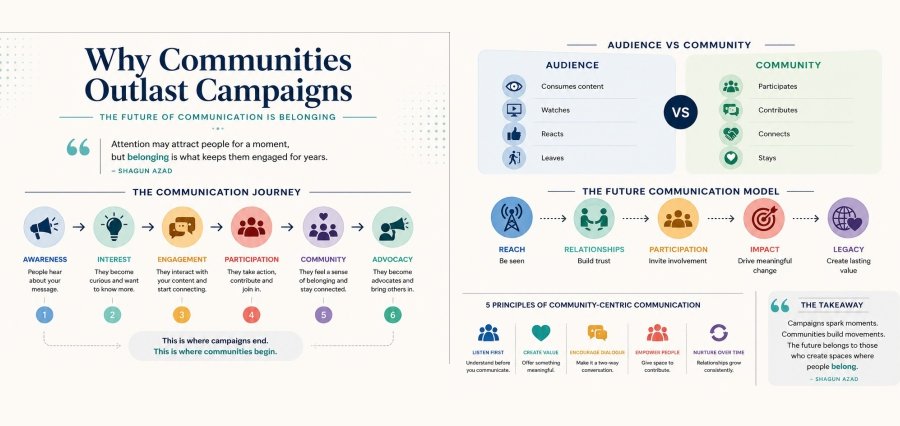
Why Communities Outlast Campaigns: The Future of Communication Is Belonging
By Shagun “Attention may attract people for a moment, but belonging keeps them engaged for years.” For decades, organizations have been building communication strategies around one goal: capturing attention. They invested heavily in campaigns that expanded reach, increased visibility, and generated awareness among target audiences. Marketing and communication teams measured success through impressions, clicks, media mentions, and engagement rates. Although these metrics still matter, communicators now face a very different landscape. Every day, people encounter thousands of messages across digital platforms, making attention increasingly fragmented and temporary. Organizations may spark interest through a campaign, but they often struggle to maintain engagement after the campaign ends. As communication is upgrading, organizations have started asking a more important question: What creates lasting influence? Increasingly, leaders have discovered that communities, not campaigns, drive long-term impact. The Attention Economy Reaches Its Limits People consume content constantly. They scroll through social media feeds, read newsletters, listen to podcasts, browse websites, and encounter advertisements throughout the day. As competition intensifies, organizations work harder to create messages that stand out. Yet visibility alone rarely builds lasting relationships. A campaign may generate awareness, but awareness does not automatically create loyalty, participation, or advocacy. After a campaign concludes, audiences often shift their focus to the next trend, announcement, or conversation. As a result, many organizations find themselves trapped in a cycle of continuously chasing attention instead of cultivating meaningful relationships. Communities Create What Campaigns Cannot Communities provide something that campaigns cannot: belonging. People naturally seek connection, purpose, and opportunities to contribute. They want others to hear their voices, value their perspectives, and include them in meaningful experiences. When organizations create these opportunities, audiences gradually become communities. The difference becomes clear: Audiences consume content; communities contribute ideas. Audiences observe activities; communities participate in them. Audiences react to messages; communities shape conversations. Audiences remember campaigns; communities sustain missions. This shift transforms the relationship between organizations and the people they serve. Instead of simply delivering messages, organizations build relationships that encourage ongoing engagement and mutual value. Organizations Must Replace Broadcasting with Participation For many years, organizations relied on one-way communication. They developed content, selected channels, and distributed messages to audiences. Today’s audiences expect much more. People want to join conversations, share opinions, and participate in experiences. They no longer accept a passive role in the communication process. Organizations that encourage participation create stronger connections. They bring people together around shared interests, goals, and values. These interactions strengthen trust, deepen engagement, and support long-term relationships. Consequently, communication becomes an ongoing journey rather than a short-term campaign. Build Ecosystems, Not Just Campaigns Digital platforms have made community-building easier than ever. People from different backgrounds, industries, and locations can connect around common interests, professional goals, social causes, and shared values. Organizations can use this opportunity to build ecosystems rather than isolated campaigns. Strong ecosystems encourage continuous engagement. They support collaboration, dialogue, learning, and collective ownership. Rather than focusing solely on reach and impressions, organizations can prioritize participation, trust, and relationships. Campaigns still serve an important purpose. They introduce ideas, create awareness, and attract new participants. However, organizations should view campaigns as the beginning of a relationship rather than its destination. The key question remains: What happens after the campaign ends? Do people disengage once they receive the message? Or do they stay connected because they feel that they belong? Organizations with an answer to this question often achieve stronger loyalty, sustainable growth, and lasting influence. The Future of Communication Belongs to Communities Organizations that create belonging will shape the future of communication. Communication leaders must stop focusing exclusively on how many people they can reach and start focusing on how deeply they can engage them. The organizations that build thriving communities around their purpose, values, and vision will create the greatest long-term impact. Organizations run campaigns to get attention and create awareness, while communities encourage participation and develop advocates. Although campaigns are meant for a particular purpose and have a set period of execution, communities encourage a relationship that lasts long and continues to grow. Campaigns can be run by organizations to meet their goals in the short run, but communities are built for long-term involvement and legacy. Conclusion Modern organizations operate in an environment saturated with information. In this environment, attention remains valuable, but belonging delivers greater long-term returns. Attention fades. Campaigns end. Communities endure. Organizations that invest in relationships, encourage participation, and foster genuine connections will build stronger brands, deeper trust, and more sustainable influence. In the future of communication, belonging will not simply support success, it will define it. Author: Shagun Contact: 9773564675 Email: azadshagun8@gmail.com Read Also : How Eric Santana Helps Clients Navigate Civil and Criminal Matters
The Most Influential CTO Revamping Their Industries, 2026
The Most Influential CTO Revamping Their Industries, 2026 The edition celebrates visionary technology leaders driving innovation, accelerating digital transformation, and redefining industry standards through strategic leadership, groundbreaking solutions, and a relentless commitment to business growth. Digital Link Quick highlights Quick reads

AI Automation Strategy Transforming the Future of Enterprise Efficiency
Smart Business Operations Modern organizations work in a sort of space where tech changes fast, where customer expectations keep shifting, and where competition feels like it’s always getting closer. So, to stay on top, companies have to keep pushing productivity, while still staying nimble and open to innovation. Because of that, more and more groups are turning toward Smart Business Operations as a kind of blueprint to boost efficiency, strengthen their decision making, and smooth out everyday workflows. At the same time there is an AI Automation Strategy that is becoming really important, not just as a nice add-on, but as part of enterprise transformation, letting businesses fine tune their processes and still drive sustainable growth. Understanding the Shift Toward Intelligent Operations Traditional operational models often lean on manual processes, disconnected systems, and repetitive tasks that chew up valuable resources. Back then, these approaches may have worked ok, but modern enterprises now need more speed, better accuracy, and a higher degree of flexibility. Because of that, organizations are putting money into Smart Business Operations, where technology, data and automation get woven into daily work. In other words, the routine stops being so heavy, and the whole thing runs with a smoother rhythm, just a bit more responsive all the time. These smart operational models help businesses a lot—like improving coordination between departments, cutting down on things that waste time, and overall raising performance, too. When they take advantage of live information and digital tools, organizations can decide quicker and react more effectively once the market starts shifting around. So, this shift seems to be building a firmer base for steady success in the long run. The Strategic Value of AI-Driven Automation Automation is no longer just about routine, admin tasks. Now artificial intelligence is quietly reshaping how organizations look at data, steer workflows, and also help with decision-making. With a solid AI Automation Strategy, you can automate those more intricate processes and still keep the output steady, plus accurate. It’s kind of a bigger shift than people expect, because it’s not only about doing things faster. From customer service and finance, to supply chain management and human resources, artificial intelligence can help boost productivity across several functions. Organizations that put in place a properly designed AI automation strategy often end up with lower operational costs, quicker response times, and better resource utilization. And in practice, these gains tie straight into stronger enterprise efficiency, plus a sort of competitive edge. Enhancing Productivity Through Technology One of the main goals of Smart Business Operations is to boost productivity without making everything more complicated. The more intelligent technologies you use, they help wipe out the repetitive chores, so employees can sink their energy into higher value tasks that call for more creativity, teamwork, and strategic thinking. Automation tools can deal with huge amounts of information, spot patterns, and come up with useful insights that help with smarter decisions. That kind of capability boosts operational effectiveness, while also lowering the chance of human mistakes. As organizations keep leaning into digital transformation, Smart Business Operations will end up mattering more and more, for pushing business performance and keeping organizational resilience intact. Data-Driven Decision Making Data is kind of one of the most valuable things in modern business today. Organizations keep generating huge amounts of information every single day, but whether they can turn that info into really usable insights, well that mostly decides if they last long term. With a good AI automation strategy, companies can go through the data fast and precisely, and then leaders get this valuable intelligence back, which helps with strategic planning. Building Scalable and Agile Enterprises Smart Business Operations gives you the kind of framework that helps an organization push forward and keep things consistent, in a quality way, even as it grows. When you blend automation plus intelligent technologies into everyday business activities, you can handle heavier workloads more effectively, kind of smoothly. In a similar vein, an AI Automation Strategy supports scaling operations without costing you extra in the same proportional way, or without needing more and more resources. Shaping the Future of Enterprise Efficiency The future of business is going to be shaped by organizations that can weave innovation, move with agility, and keep efficiency in place, even if it sounds a bit too tidy. Technology will keep on reshaping industries, and somehow it will also bring fresh opportunities for companies that are ready to embrace the whole transformation thing. Smart Business Operations will stay one of the main drivers of this evolution, because it helps businesses make better use of resources, strengthen teamwork and coordination, as well as improve overall performance, in a more measured way. Read Also : Why Communities Outlast Campaigns: The Future of Communication Is Belonging

Smart Business Operations Driving Agility in a Digital-First World
Business Process Automation The modern business landscape is shaped by quick technological growth, shifting customer expectations, and rising competitive pressure. Companies are expected to deliver faster services, boost how operationally efficient they are, and just react quickly when the market starts moving. To pull this off, many organizations are starting digital transformation efforts, those that increase productivity while reducing the kind of tangled complexity that slows everything down. And really some of the most impactful parts are Business Process Automation, plus Smart Business Operations, where both are helping firms become more nimble, more efficient, and more resilient in this digital first environment. The Growing Need for Operational Efficiency Traditional business processes usually depend on manual tasks, unconnected systems, and slow, time-consuming workflows. In the past, these approaches may have helped, but now they tend to form bottlenecks that limit performance when everything is moving fast. Business Process Automation helps with that by smoothing repetitive activities and cutting down the amount of manual involvement. It’s basically a more efficient way to run the same steps, without so much hassle. In a lot of organizations, across different industries, they are rolling out automation solutions for things like approvals management, processing transactions, answering customer requests, and organizing data in a more effective way. When routine work gets handled automatically, the results tend to be better accuracy, lower operational costs, and less repetitive effort for employees, so they can spend more energy on work that is actually higher value. This kind of change also means teams gain room for innovation, strategic thinking, and deeper customer engagement, which feels pretty important these days. Building Intelligent Operating Models Efficiency by itself isn’t really enough for long term success. Organizations also have to keep a kind of flexibility, so they can adjust when market conditions shift or when new, emerging opportunities show up. That’s basically where Smart Business Operations come in a big way. If a company weaves technology, analytics, and automation into everyday work, then operations start to feel more connected, almost like an ecosystem. In return, that setup helps teams make decisions with more clarity and keep pushing for continuous improvements, even as things change. Effective smart business operations, you know, give better overall visibility into how the organization is actually performing. Leaders end up getting real time insights, so they can watch the workflows more closely, spot inefficiencies, and then use resources in a more precise way. In the end, companies can react faster when challenges pop up, while also keeping operational consistency and service quality steady. Enhancing Productivity Through Automation One of the more significant advantages of Business Process Automation is that it can bump up productivity across multiple departments, and not just in one place. Automated systems can push through repetitive duties with speed and accuracy, so delays go down and the odds of human error get minimized too. In general, it helps teams keep things moving without all the usual friction, and it makes operations feel steadier, more fluid. At the same time, Smart Business Operations make sure automation efforts line up with wider business targets. Instead of rolling out technology just because organizations can point their attention on building joined up solutions that help long term growth and day to day operational excellence. Leveraging Data for Better Decisions Data has become one of the most valuable assets for today’s business world. Organizations end up creating huge amounts of information each day, yet the real worth is in turning that data into usable, practical understanding. Business Process Automation helps with that goal, by taking in information, arranging it, and then handling it in a more streamlined way. It supports this objective so everything can be used for better decisions, not just stored. When you combine it with Smart Business Operations, businesses get the opportunity to oversee performance live and make decisions from data, with more confidence overall. The leaders are able to spot patterns faster, forecast outcomes, and act in a timely manner as circumstances shift. In the end, this supports agility, and it also reinforces the bigger strategic planning effort plus resource handling, kind of together. Improving Customer and Employee Experiences Operational improvements really do hit both the customer side and the employee side at the same time. When service arrives faster, processes feel more streamlined, and responsiveness is better; people tend to feel more satisfied. With Business Process Automation in place, organizations can cut down the waiting times and deliver a steadier kind of service across various channels, sometimes even without much disruption. Similarly, Smart Business Operations help foster stronger collaboration by making sure that information flows efficiently between departments, not just in one place. Better communication, plus transparency, makes it easier for organizations to build more cohesive and effective working environments, even when things get a bit hectic. Read Also : AI Automation Strategy Transforming the Future of Enterprise Efficiency

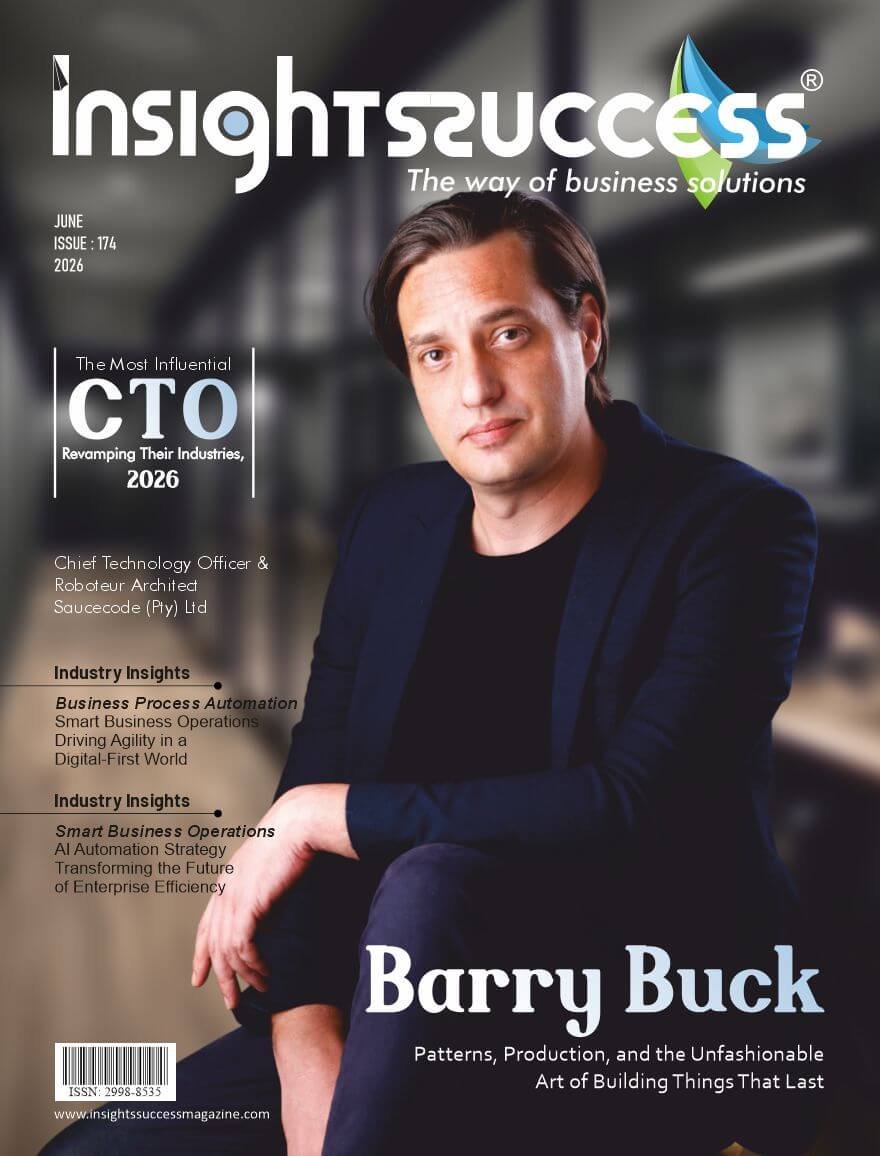
Barry Buck: Patterns, Production, and the Unfashionable Art of Building Things That Last
The technology industry has a complicated relationship with timing. Move too early and the market is not ready for you. Move too late and someone else has already won. The professionals who build lasting careers in this field are not the ones who chase what is already fashionable. They are the ones who read patterns that others have not yet noticed, make the unfashionable call, and then build something so robust that by the time the rest of the industry catches up, they are already three moves ahead. Barry Buck has made that kind of call repeatedly across a 26-year career, and he has been right every time. As Chief Technology Officer and Roboteur Architect at Saucecode (Pty) Ltd, the Johannesburg-based technology company he co-founded in 2016, originally as Code et al before rebranding, Barry Buck leads with a philosophy that is equal parts engineering discipline, pattern recognition, and an almost stubborn commitment to building things that actually work in production rather than things that look impressive in a pitch deck. He does not chase consensus. He builds, ships, and lets the results do the arguing. The results have never needed much help. Twenty-Six Years of Betting on the Unfashionable Thing Barry Buck describes his career with characteristic directness. “My career is a 26-year exercise in betting on the unfashionable thing right before it becomes fashionable.” He left medical software for WAP sites when mobile was still dismissed as a niche curiosity. He sidestepped the early TensorFlow hype in favor of OpenCV document intelligence because he wanted tools that worked in production environments rather than tools that generated conference excitement and then struggled under real-world conditions. He leaned into AI coding assistants while half the industry was still dismissing the people using them. Each move looked unusual at the time. Each move proved correct. The agency years in the 2010s shaped the engineering rigor that underpins everything he has built since. At Aqua, he led brand technology across clients including Nokia, Pick n Pay, and Coca-Cola, earning a Bookmarks award for an in-mall Nokia activation that arrived years before retail technology caught up with the concept. At Gloo, the work reached an entirely different level: a Cannes Grand Prix for KFC and a Golden Keyboard from MediaMind for one of the first HTML5 banner games ever produced. Most agencies work ages badly, as Barry Buck acknowledges without sentimentality. Engineering rigor, he adds, ages well. In 2016, he co-founded Code et al, eventually rebranded to Saucecode, and turned full attention to the work that would define his career. He built z1, the framework underneath Roboteur, entirely solo over seven years before AI coding assistants existed to accelerate the process. He describes the early version with honesty that only someone deeply confident in the outcome can afford over-engineered for what it needed to do at the time and exactly engineered for what it needed to do five years later. Today, Roboteur runs in production at Nedbank, processing over 9,000 lending cases a month across six bots, delivering R80 million in measurable savings since 2022, and earning sixteen formal recognition awards typically reserved for permanent staff rather than contractors. The Philosophy Behind the Product Barry Buck did not set out to lead anything. He wanted to build things that did not fall over. Leadership turned out to be a side effect of doing that consistently for long enough. But behind the self-deprecation sits a genuine and coherent operating philosophy that runs through every product he has designed. He calls it turning bad screen time into good screen time. The premise is simple, and the problem is real: people spend their working hours staring at interfaces that generate genuine misery. Outdated dashboards, cluttered Outlook inboxes, Excel spreadsheets that feel like homework. Then those same people go home and spend their evenings staring at screens. They actively chose gaming, streaming, music production, and anime. The quality gap between the two experiences is enormous and almost nobody in enterprise software is trying to close it. He asserts, “People spend their workday staring at miserable interfaces, then go home to gaming, Netflix, and anime. Almost nobody in enterprise software is closing that gap. I want to.” For Barry, this is not a UX principle. It is a strategic ambition. He wants bank users to open dashboards because those dashboards are genuinely more interesting than the Excel file; they were about to open instead. That ambition shapes every design decision Saucecode makes. Do the Hard Work First. Make Everything Else a Victory Lap. Barry Buck treats the question of aligning technology innovation with business objectives as a false dichotomy the industry has collectively agreed to pretend is real. Innovation and business objectives are the same conversation phrased differently, and organizations that treat them as separate departments with a tense relationship between them have already made a structural error. The principle running through everything he designs is the inverse of how most enterprise software gets built. He does the punishing engineering work up front so that actual usage becomes delightful. Most enterprise software inverts this sequence: deployment is a launch party, and everything that follows is increasing misery as the architecture creaks under reality. He explains, “Most enterprise software’s deployment is a launch party, then everything that follows is increasing misery. Build it the other way around.” Roboteur was built the other way around. The first six months of z1 were, by Barry’s own account, the worst code he has ever written. Everything has been a victory lap. Hard problems solved up front create cheap, fast, and enjoyable delivery afterward. The ROI conversation stops being a debate and becomes a statement of fact. Reading the Meme Before the Marketing Material The technology industry produces a thousand new tools every week. Most are noisy. Barry’s method for finding the signal is unconventional enough to be worth examining closely, because it reflects a genuine sophistication about how information actually travels through technical communities before the marketing version arrives. He reads patterns,

AI Search Firm Perplexity Commits to 2028 Listing as Frontier Lab IPOs Loom
Prime Highlights Srinivas warned that if frontier labs go six months without a model capability advance, it becomes a valuation problem. He called SpaceX’s IPO a leading indicator for how Anthropic and OpenAI will be received by markets. Key Facts Perplexity is an AI search company whose platform routes user queries across multiple models, including open-source options, based on task and cost. Anthropic was last valued at nearly $1 trillion after confidentially filing for an IPO in the last week of May. Background Perplexity plans to go public in 2028, regardless of how rival AI companies fare in their upcoming market debuts. CEO Aravind Srinivas confirmed the timeline remains fixed, calling it independent of what happens with Anthropic or OpenAI. Srinivas noted that the SpaceX IPO this week will serve as an early signal for how large AI listings may perform. He expressed confidence that both Anthropic and OpenAI will succeed with their offerings, citing their strong operational performance as justification for their high valuations. Anthropic confidentially filed for an IPO in the last week of May and was last valued at close to $1 trillion. OpenAI is also moving toward a public listing. Both companies are considered frontier labs, developers of the world’s most advanced AI models. Srinivas said their valuations are justified as long as they continue pushing model capabilities forward. He warned that six months without a meaningful model upgrade could hurt their standing with investors. For enterprise AI spending, Srinivas talked about the rising thing called “tokenmaxxing”, where employees somehow inflate AI usage to look more productive. He argued that smart enterprises will shift toward using the best model for each task at the lowest cost. Perplexity’s platform already does this automatically, routing queries to open-source models when they deliver comparable results at a fraction of the price. Srinivas said frontier AI still has a strong future, but companies will move away from unchecked spending toward more deliberate, value-driven use of AI. Read Also : Prada Expands Space Ambitions with NASA Moon Mission Garment

Most Influential Procurement Leaders, 2026
Most Influential Procurement Leaders, 2026 Rayed Samir Al-Amad represents the evolving role of procurement as a strategic business function that extends far beyond traditional back-office operations. In Saudi Arabia’s rapidly expanding real estate sector, he demonstrates how modern procurement leaders balance the immediate demands of large-scale construction projects with long-term strategic priorities, including economic diversification and sustainable development. Digital Link Quick highlights Quick reads

Improving Productivity: Digital Transformation and the Future of Global Sourcing Strategy
Industries worldwide are undergoing digital transformation, geopolitical shift and significantly changing enterprise expectations, and it’s changing the global sourcing landscape. In the past it was mainly about cost optimization but now it’s a strategically oriented enabler that incorporates resilience, transparency, sustainability and speed. This transition is driven by the understanding that procurement needs to increasingly focus on value-added and long-term business continuity and competitive advantage, and not just spend. Advanced digital technologies are being used by organizations to re-think their sourcing models and enhance supplier ecosystems. Cloud based platforms, real time data systems and integrated procurement solutions are helping enterprises break free from fragmented and reactive sourcing methods and paving the way for sourcing methods that are connected and intelligent. These technologies also are increasing supplier collaboration, adding visibility along lengthy multi-tier supply chains and allowing for quicker and more data-rich decision making in increasingly complex global environments. Smart Sourcing The definition of supplier identification, assessment and engagement is changing with digital technologies. Artificial Intelligence (AI) enabled platforms can now process large amounts of data to find the most suitable sources, based on cost, capability, risk exposure and compliance track record. This transition will enable procurement teams to break free from traditional supplier databases and embrace more dynamic and predictive sourcing models. Moreover, automated procurement tools are making manual tasks more efficient in the procurement process, making it faster to evaluate bids, manage contracts and onboard suppliers. Furthermore, cloud-based procurement ecosystems are also helping to enable easier and more uniform management of procurement teams working across the globe, enabling procurement decisions based on enterprise-wide objectives rather than individual business unit objectives. Smart sourcing is also enabling organizations to bring intelligence into the sourcing process. Predictive analytics can also forecast possible disruptions in the supply chain and shifts in demand and price fluctuations, allowing companies to make proactive changes to their sourcing plans. This is a huge shift from the traditional buy-or-else procurement practices prevalent in global sourcing. Supplier Ecosystems Global sourcing’s new reality is no longer linear supplier relations. Digital platforms have made it possible to collaborate in real-time with various levels of suppliers, manufacturers, logistics companies and enterprise buyers. This interdependency will lead to increased visibility and decrease in supply chain fragmentation globally. Digital-powered supplier ecosystems also increase transparency and accountability. Technologies like blockchain are helping to achieve environmental and ethical standards and verify origin of the products and track products through supply chains. This is particularly important as increasing sustainability is becoming a requirement of regulation and consumer awareness. Such ecosystems are also promoting agility. Companies can quickly change supplier networks when crisis such as geopolitical events, natural disasters or demand changes occurs. Organizations can develop digital twins and other simulation tools to simulate different sourcing scenarios and evaluate the risk exposure before deciding. Risk Resilience Risk management is becoming a major part of modern sourcing techniques and digital transformation is helping to enhance enterprise resiliency. With sophisticated risk analytics, one can monitor and react to live global events, the financial condition of suppliers and logistics delays, and respond in good time and with effectiveness. AI is also being applied to uncovering the vulnerabilities in supply chains. By analyzing patterns and trends from the past, an AI system can determine the risk of a single point of failure and recommend alternative sources that could also serve the same purpose. This solution proactively reduces dependence on narrow supplier networks and strengthens continuity planning. Cybersecurity is the other important axis of risk in digitally-enabled sourcing environments. With increasingly connected and cloud-based procurement systems, companies need strong security measures to safeguard valuable supplier and transaction information. Therefore, there needs to be an equal emphasis on governance and data protection in digital transformation. Conclusion The digital transformation is revolutionizing global sourcing strategy, moving from cost optimization to resiliency, intelligence and sustainability. The focus from the organizations is no longer viewing the sourcing decision from a cheaper perspective but instead looking at the long-term value creation, business continuity and strategic agility. The transition underscores the increasingly complex global supply chain and the need for sourcing functions to become more proactive and agile in the face of disruptions, changes in regulations, and market volatility. It is helping organizations to create smarter sourcing models based on real-time data, automation and advanced analytics. These capabilities enable procurement teams to make better-informed decisions, draw the most effective supplier network and foresee any potential disruption before it even occurs. Digital platforms are also building supplier ecosystems through better collaboration and visibility at multiple layers as well as ensuring smooth coordination between buyer and supplier in different regions and geographies. Read Also : Smart Business Operations Driving Agility in a Digital-First World