






Dr. Carmen Bell-Ross: How Parents Can Thrive During Senior Year With The College Smarter Method
Every senior year feels like a finish line. Students race to submit applications, collect recommendation letters, and wait for decisions that will shape the years ahead. However, while the spotlight shines on them, something quieter and just as profound happens in the background: parents are graduating, too. “Parents need a ‘graduation plan’ too,” Dr. Carmen explains. “And when they don’t adjust their role, it’s often the parent, not the student, who struggles most with the transition. For Dr. Carmen Bell-Ross, founder of SP Grace and creator of The College Smarter™ Method, this truth has guided her work with hundreds of families. She’s seen what happens when parents continue operating as fixers long after their children are ready for independence. She’s also seen the transformation that occurs when parents step into the next chapter of their own role, which is less about micromanaging and more about trusting the foundation they’ve built. This shift can feel like a profound change. There’s both pride and uncertainty in watching a child grow up, coupled with the challenge of redefining what it means to be a “good parent” in a way that respects the child’s independence while still providing appropriate support. From Logistics to Leadership For most of their child’s lives, parents run the logistics. They schedule practices, check homework, and send reminders about deadlines. However, by senior year, that approach begins to break down. Students who are preparing to live on their own need something different. They need parents who can guide without controlling and support without overshadowing. “As parents, it’s so easy for us to be hyper-focused on making sure our kids are ready for what’s next that we neglect the fact that this is a really big deal for us too,” Dr. Carmen says. “We’re so used to sacrificing ourselves emotionally for their best interests that we sometimes don’t even realize we’re doing it. But as they adjust, we have to adjust too. We have to go from being ‘mom the program director’ to ‘mom the program assistant.’ When we’re directing, we expect them to follow our lead. When we’re assisting, we’re supporting them, as requested. That’s a very big difference for a parent.” Planning for college applications and admissions is an ideal time to fully embrace a shift in the parent-student dynamic. The most successful applications are those that are directed by the student, not the parent. The College Smarter™ Method creates a safe space for that transition. Parents begin to trade constant monitoring for intentional conversations. They practice letting go in ways that build confidence instead of resistance. Students, in turn, begin to own their choices, and parents discover relief knowing they don’t have to pull every string. According to a study, more than 60% of students find the admissions process difficult. The College Smarter™ Method works to reduce that difficulty for both. A Method Born From Both Sides of the Table Part of what makes The College Smarter™ Method unique is Dr. Carmen’s ability to bridge two perspectives. On one side, she has advised leaders in Fortune 100 companies, helping them navigate challenges from entry-level to the executive suite. On the other, she has guided students and families through the intensely personal process of college admissions. Dr. Carmen’s daughter, Ciera, was the inspiration for The College Smarter™ Method. Together, they built a path that reflected her passions and goals, not just her grades. That strategy led to her admission to Harvard and other highly selective schools. Today, she is a neuroscience major, and her life on campus reflects the same clarity that guided her applications. Ciera volunteers at a center for children with Down syndrome and was chosen by her peers to serve as captain of Harvard’s competitive dance team. She is studying stress in adolescent mice, with research soon to be published in a peer-reviewed journal. Each piece of her story ties back to the foundation she built with The College Smarter™ Method. It wasn’t about chasing every opportunity. It was about aligning her interests and actions so that they formed a narrative she owned and understood. Admissions officers noticed. They commented on the authenticity of her story, and it has continued to shape her success in college. Dr. Carmen emphasizes that this is what makes The College Smarter™ Method unique. “It’s so important to recognize the work we’ve already put into our kids,” she says. “We’ve invested in their activities, mentoring, tutoring, and life experiences. They are already impressive. But at selective schools, impressive is the baseline. What makes them unforgettable is helping them connect the dots so the world can see just how special they are.” The Parent’s Graduation Plan Students aren’t the only ones preparing for the next stage of life. Parents are too. Senior year means transitioning from a daily presence to a supportive guide. It means learning how to trust the foundation already built and how to let children take the driver’s seat. The College Smarter™ Method recognizes this emotional layer. Parents who go through the method are invited to reframe their role. Instead of pushing deadlines, they are coached on how to create intentional conversations. Instead of hovering over every detail, they learn how to set boundaries that respect their child’s growing independence. Ciera’s story offers proof of concept. She didn’t just get into Harvard. She entered with confidence and a sense of ownership. For Dr. Carmen, that is the goal for every family. “Parents have already invested so much,” she explains. “For families that are looking to elevate the way their kid is seen by the world, and the way they see themselves,we can help. That’s what we love to do.” To extend this support, families are invited to schedule a complimentary College Smarter™ Advance Mapping Session at CollegeSmarter.com. In these sessions, parents receive personalized insights and strategies for launching their children into the next stage of life. As Dr. Carmen says, “I love welcoming new College Smarter families because it makes my heart happy to watch these already incredible
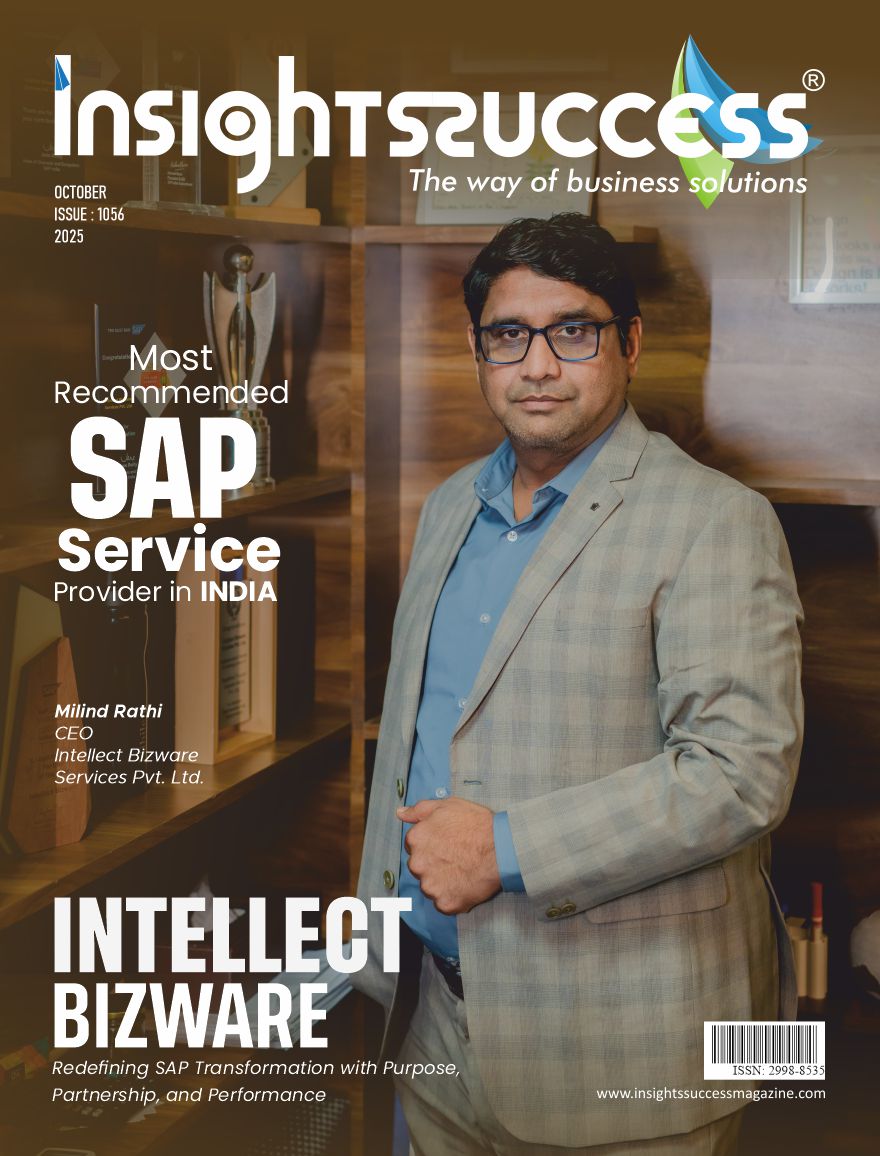
Most Recommended SAP Service Provider in India
Most Recommended SAP Service Provider in India

Most Visionary CEOs Driving IT and AI Innovation to Follow
Most Visionary CEOs Driving IT and AI Innovation to Follow This edition highlights executives who excel in leading organizational change, pioneering AI-driven strategies, and building teams capable of solving complex, global challenges. These CEOs combine technical expertise with bold leadership, ensuring their companies remain at the forefront of innovation while delivering sustainable growth. Digital Link Quick highlights Quick reads

The Convergence of Cloud, Data, and AI
Digital Transformation 2.0 Digital transformation surpassed process digitization and tech deployment independently in its initial stages. Digital Transformation 2.0 is currently being defined by the convergence of cloud, analytics, and AI. Not merely copying operational effectiveness, the convergence of the three is, by definition, copying business models, customer interactions, and competitive advantage across industries. The Evolution to Digital Transformation 2.0 The initial phase of digital transformation was entirely mobility, automation, and direct digitization of processes. These efforts infused efficiency, albeit still in silos and not so highly integrated at the firm functions. Digital Transformation 2.0 is an end-to-end integrated solution in which cloud, data, and AI converge to deliver smart, agile, and scalable businesses. Cloud computing offers the platform to process and store data dynamically and scale it. AI works on such data to realize predictive intelligence, automate strategic decisions, and generate value in real time. Combined, they form an environment where organizations can accomplish at speed, agility, and accuracy what was not possible with conventional systems. Harnessing the Power of Data Data is the Digital Transformation 2.0’s blood. Businesses are richer with ginormous streams of unstructured and structured data streaming in from business processes within, customer behavior, IoT sensors, and external market trends. Capture is not a problem but extraction. AI-powered analytics brings the loop closed between raw data and usable insight so business companies can forecast trends, personalize offers, optimize supply chains, and look around corners and predict risks in advance. With cloud infrastructure built-in, the insight is immediately available anywhere and everywhere, and empowers globally distributed teams to make informed decisions at record speed. Cloud as the Enabler Cloud computing isn’t just a data warehouse but the power of scale, flexibility, and collaboration. Cloud platforms are today depended upon by organizations for hosting AI models, mash-up of various sources of data, and providing real-time insights on on-premises boundaries. Cloud flexibility allows companies to react to evolving needs, try new AI-driven applications, and expand to new geographies with no worry. Global collaboration is facilitated by the cloud, where data-driven insights are translated into action efficiently and within timeframes. AI Driving Intelligent Decision-Making Artificial intelligence is at the forefront of this revolution, taking cloud-based data and making it prescriptive, predictive, and actionable insight. Trends are established, outcomes foreseen, and optimal practices recommended by machine learning algorithms by function—operations and finance to sales and marketing. In customer experience, AI drives hyper-personalized experiences, connecting with needs and desires in the moment. In supply chains, it predicts disruptions, optimizes routes, and lowers operating costs. The adaptive and learning capacity of AI enables decisions to continually get better and better over time, creating a cycle of intelligence that drives long-term growth and innovation. Combining Culture and Strategy Technology alone is not Digital Transformation 2.0. It needs to be tied to data-driven culture, continuous learning, and cross-functional collaboration. CEOs need to link digital initiatives to strategic goals so that investments in cloud, data, and AI deliver tangible business results. Second, aside from the above, ethical issues pertaining to AI and data management are of most importance. Organisations need to be transparent, fair, and secretive while gaining the trust of employees’, customers’, and regulators’ and making the best use of such technologies. The Competitive Advantage of Convergence The intersection of cloud, data, and AI offers enormous competitive power. Whoever is able to bring these ingredients together gets to go faster, make better, faster decisions, and innovate at scale. They are also best positioned to feel the change in the marketplace, bring new products and services to market, and drive customer joy—while driving operational efficiency to an extreme. As varied as healthcare and finance to retail and manufacturing, so are they in the midst of going through this convergence. Those who are embracing the convergence are not merely making themselves leaner—business models are being rewritten, new revenue streams are being created, and work’s future is being defined. Challenges and Strategic Considerations While Digital Transformation 2.0 promises much, no company is perfect. Data silos, legacy systems, talent deficits, and cyber attacks are hanging over the decision to adopt. What is required is a strategic approach: solid data governance, cloud-first development, AI model certification, and upskilling the workforce. They will need to tread the middle line between ambition and realism, so that they are building projects which create tangible value while building a test-and-iterate culture. Conclusion Digital Transformation 2.0 is neither evolution nor revolution but revolution driven by convergence. Riding on the synergistic advantages of the power of cloud computing, analytics, and artificial intelligence, organizations can be clever, nimble, and quick and thereby endowed with the ability to drive long-term growth in a complexity- and competition-inducing ecosystem. They are the ones who excel in this new world with the intersection of technological adoption, strategic vision, cultural alignment, and moral stewardship. They thereby unlock digital potential to business-transcending results, enabling industry futures and setting an example of innovation in the AI economy. Read Also: Building Smarter, Faster, and More Resilient Systems

Building Smarter, Faster, and More Resilient Systems
The AI-Driven Enterprise With this emerging, high-speed business era of the present times, artificial intelligence (AI) has emerged as a force driver that is revolutionizing the manner in which businesses compete, innovate, and conduct business. Companies across all industries are not only adopting AI as technology but are also reconstituting themselves as AI-driven companies, injecting intelligence into all the dimensions of a company to create more discerning, faster, and more sensitive systems. Redefining Business Intelligence The AI company begins with the inherent change of decision-making. Man’s instinct and experience are the pillars of ancient business wisdom, and it is psychologically predisposed towards reactive approaches. AI is capable of predictive and prescriptive analytics, which facilitate companies to forecast trends, automate, and make decisions based on information in real-time. By putting AI into core processes, businesses are able to achieve a degree of sensitivity and responsiveness that had previously been out of reach. From predicting demand in the marketplace to feeling the beat of machine failure, AI converts data into real-time insight so that executives can gain a step ahead rather than a step behind. Boosting Operational Velocity and Efficiency Operational velocity is arguably the most concrete benefit of AI systems. Repetitive tasks executed by machines in an automated process, process optimization by intelligent solutions, and instant analysis enable organizations to do things much quicker with no drop in quality. At factory, AI solutions monitor production lines, identify irregularities, and rebalance in real time to guarantee quality and minimize downtime. In supply chain planning, AI detects disruption, routes efficiently, and controls inventory with accuracy. Through customer support, AI chatbots and virtual assistants converse in real time as they learn how to improve experience. The result is an enterprise performing at the same speed as the moment market conquest. Constructing Resilience With AI Resilience is the biggest differentiation in today’s uncertain business landscape. AI allows organizations to construct resilience by making possible quick threat identification, agile response, and continuous learning from past experience. For example, AI-powered risk management software monitors increasing financial, operating, and cyber risk in real-time. When something’s wrong, AI can notify, simulate, and recommend countermeasures—so leaders can respond fast and make an impact. This ability not only allows organizations to weather disruption but learn and prosper in trouble. Driving Innovation and Competitive Advantage AI is not merely a driver of productivity; it is an innovation driver. With big-data analysis, pattern recognition, and insight creation, AI is driving product, service, and business-model innovation. Those which implement AI into R&D can accelerate ideation cycles, optimize design workflows, and predict customer demand with unheralded accuracy. In marketing, AI facilitates hyper-personalized interaction, reaching individuals at the time and location where and when and it’s most relevant, fueling brand adoration and top-line expansion. Those which are able to deliver to successfully integrate AI create a permanent competitive edge by acting on insight before others. It doesn’t merely call for going AI-first as a business successfully—it calls for culture change. Leaders must build a culture of experimentation, learning, and collaboration. Teams must learn to be data literate, AI fluent, and co-work with smart machines instead of seeing them as substitutes. Second, ethics precede. As autonomous systems pervade all areas of life, organizations must guarantee fairness, transparency, and responsibility in decision-making. Developing an ethical culture of AI practices gains the confidence of employees, customers, and stakeholders and prevents discriminatory or black box algorithms. Getting AI Across Functions Together The ultimate showstopper of AI capability is when it infuses the whole enterprise. In finance, AI will manage cash flows on autopilot and catch fraud. In HR, AI can procure automatically, forecast worker turnover, and tailor learning programs. In operations, AI can run logistics on autopilot, power supply chain transparency, and cut waste. Silo-busting and infusing intelligence across functions makes companies integrated, responsive, and much better placed to respond to shifting market conditions. Challenges to the AI Transformation Process It is not easy to move an AI business. Bad data, infrastructural constraints, and legacy architecture can hold it back. Talent gaps, cultural resistance, and ethics make things even tougher. Successful companies avoid these bottlenecks in advance. They invest in strong data governance, cloud or edge scalability, AI abilities, and cross-functional alignment. Avoiding these bottlenecks in advance enables companies to utilize the promise of AI and lower risk. Conclusion AI is no longer tomorrow’s visions—it is available today for forward-looking organizations. By embedding intelligence into operations, learning culture, and ethics, organizations can drive AI to drive performance, innovation, and developing resilience to historic levels. In an age of intelligence, velocity, and nimbleness to succeed, AI is no longer a technology—AI is an upender. Anyone who understands that disruption won’t simply solve yesterday’s challenges, but create tomorrow’s possibility, creating businesses that are clever, fast, and nimble in the midst of disruption. Read Also: The Three Pillars of Entrepreneurial Success

Technology Leadership Aligned to Business Value
Jeff Roberts, Founder & CEO, Innovation Vista Jeff Roberts founded Innovation Vista to close a gap he saw repeatedly: midsize organizations needing strategic, vendor‑independent technology leadership without the cost of a full‑time C‑suite hire. His premise is straightforward—connect IT decisions directly to revenue, profit, and enterprise value—and deliver that connection through fractional and interim CIO/CTO leadership, advisory services, and hands‑on execution when needed. Origin & Model Early in his career, Jeff observed that many companies didn’t need “more IT”; they needed business impact-focused IT—a strategic roadmap, clear governance, and measurable outcomes. Innovation Vista was built to provide exactly that: Independent, vendor‑agnostic advice Fractional/Interim CIO & CTO services for mid‑market organizations Strategy, assessment, and roadmapping tied to business outcomes Targeted execution across data & analytics, AI enablement, cloud, applications, and cybersecurity when it advances the strategy As the firm grew, Jeff structured the organization to serve both mid‑market clients—the core mission—and larger enterprises through a dedicated team, ensuring scale without compromising focus or independence. Leadership Approach Jeff’s leadership evolved from hands‑on problem solving to collaborative, outcomes‑oriented management. He empowers senior leaders, sets clear objectives, and reinforces a culture that prioritizes transparency, practicality, and measurable impact over trends. Where Innovation Vista Creates the Most Value Mid‑market focus. Midsize organizations often lack access to seasoned, independent technology leadership. With fractional C‑level expertise and an execution‑ready network, Innovation Vista helps these companies move faster than larger competitors—innovating pragmatically and investing where returns are clear. Turning IT from Cost Center to Value Driver A consistent milestone in client engagements is the mindset shift from “IT spend” to technology investment with defined ROI. By aligning initiatives to growth, margin, and valuation, Innovation Vista positions technology as a competitive advantage rather than a fixed expense. Practical AI & Data Jeff views AI as a practical lever, not an end in itself. For mid‑market companies, AI and modern analytics can democratize capabilities once reserved for large enterprises. Innovation Vista emphasizes use cases with clear payback, data readiness, responsible governance, and change management so AI augments processes and people rather than becoming a distraction. The Sequencing That Works Successful transformations follow a disciplined sequence: Stabilize – Ensure reliability, security, and supportability. Optimize – Streamline processes, reduce waste, and improve user experience. Monetize – Directly link technology to revenue growth, margin expansion, and valuation. Skipping steps erodes returns; sequencing protects ROI. Curiosity, Filtered by Pragmatism The firm stays current on emerging technologies, but adopts only what fits the client’s maturity and business case. Novelty never outweighs feasibility, total cost of ownership, and measurable value. Building Credibility One Outcome at a Time In a market full of broad promises, Innovation Vista has earned trust by being specific and accountable: clear charters, defined success criteria, and visible results. The differentiators remain independence, mid‑market expertise, and a business‑first orientation. Values Jeff’s decisions are guided by integrity, curiosity, and a commitment to impact. Success is measured by client outcomes, not by the volume of technology deployed. Guidance for Aspiring Technology Leaders Don’t get lost in the toolset. Start with the business problem, define financial and operational outcomes, and ensure every technology choice is traceable to value. Communicate clearly, build trust, and lead with both business acumen and technical depth. Read Also: Most Visionary CEOs Driving IT and AI Innovation to Follow

Most Visionary Faith-Tech Entrepreneurs to Follow
Most Visionary Faith-Tech Entrepreneurs to Follow This edition highlights leaders who are redefining how faith and technology coexist. From creating immersive digital experiences to enabling community-driven impact, these entrepreneurs leverage technology to foster meaningful connections, drive inclusivity, and amplify their mission-driven work. Digital Link Quick highlights Quick reads

The Three Pillars of Entrepreneurial Success
Money, Mindset, and Momentum Entrepreneurship has been romanticized as a vocation of passion and imagination. Vision and imagination are required, but sustained entrepreneurial accomplishment is a combination of financial acumen, grit, and deliberate action. Money, attitude, and momentum are the three legs of power on which successful ventures get underway, driving entrepreneurs from concept to lasting legacy. Money: The Fuel for Growth Resource management and financial literacy are the basis of being an entrepreneur. Money is not money; money is power to create, build, and produce. Entrepreneurs should understand cash flow, capital management, and investment opportunities so that they can make sound business decisions to keep their business going. Fund raising, bootstrapping, venture capital, or strategic alliance, requires vision and credibility. Successful entrepreneurs connect money and business goals in a manner that maximizes resources, minimizes risks, and locates areas of expansion. Misappropriation of resources is innovation killer and derailment of even the largest of plans, and discipline monetary planning is the moment of the need. Mindset: The Resilient Core Whereas money provides the capital necessary, attitude sets the tone for how entrepreneurs react to averting looming business creation failure. Resilience, flexibility, and orientation towards growth are required to react to failure, ambiguity, and strategic decision-making in distress. Entrepreneurial spirit effective is the ability to leverage failure as a source of learning, stay concentrated amidst distraction, and remain self-aware. Emotional intelligence, grit, and information access-based decision-making are all characteristics of this spirit. Self-aware entrepreneurs can weather adversity, stay motivated, and instill confidence among stakeholders, employees, and consumers. Momentum: Execution That Drives Results Ideas and strategy, so carefully thought out as they are, would not be effective without doing something about it. Momentum is the power to bring vision into being by steady effort. It includes planning systematically, concentration, and being able to seize opportunities while keeping in mind operations. Momentum builders understand the power of incremental, small wins that accelerate with time. They synch long- and short-term goals to ensure progress continues and working on their dream in the long term. Momentum is also in building networks, partnerships, and team strength to effect maximum impact and fuel growth. The Interaction of the Three Pillars Money, mind, and momentum are linked. Money makes an individual do something, but money is moneyed down if an individual fails to possess good mind. Good mind makes an individual perform, but never having plans and ideas executed without momentum. Momentum gives room for financial growth and maintains confidence and concentration. Successful entrepreneurs manage this process and end up constructing all three pillars. They consider money a process, not an event, mindset dynamic, not static, and momentum a process, not an event. Lessons from High-Impact Entrepreneurs Successful entrepreneurs in any field are the par excellence of these three pillars. They balance planning finances against inspirational creativity, recover from failures, and always employ strategies with tangible results. Take the case of market volatility or recession. Risk-averse leaders have the financial strength in hand, and cognition offers adaptive problem-solving. Momentum helps them seize new opportunities, innovate to excellence, and maintain value creation in adversity. Building Pillars in Action These pillars can be positively building constructed by entrepreneurs via intentional practice and self-awareness. Money skills are built via mentoring, learning, and experiential money management. Mindset skills are built via coaching, personal practice rituals, and mastering recovery from failure. Momentum is built by building disciplined habits, tracking momentum, and leveraging collective networks to build habitual action. Most importantly, all of these pillars are dynamic and need continuous maintenance and tuning. As companies grow and marketing dynamics evolve, entrepreneurs need to re-analyze budget strategy, enhance mental paradigms, and sustain operation tempo constantly. Conclusion Entrepreneurship is a three-dimensional, tough, and life-altering process. Genius and luck do not deserve credit for achievement. It’s the outcome of intentional building of three pillars: money, mindset, and momentum. Financial literacy drives growth, mental toughness provides bounce backability, and brutal execution turns vision into reality. Entrepreneurs who excel at these pillars not only achieve successful businesses—they thrive in adversity, maximize opportunity, and create lasting legacies in their industries and communities. By the intersection of finance strategy, mindset, and execution, they make dreams a reality, and ideas into lasting success. Read Also: The Entrepreneur’s Journey of Transformation

The Entrepreneur’s Journey of Transformation
From Idea to Impact Entrepreneurship is an adventure of ambition, tenacity, and transformation. Any good business is first an idea—a stroke of inspiration—but to span the idea to purposeful results requires vision, planning, and initiative to market. The path from vision to market dominance is never a straight line, with individual growth and organizational flexibility in between. Certain is that this path is responsible for the differences characterizing transformational entrepreneurs from visionaries per se. The Genesis of an Idea Every business by an entrepreneur starts with a need or an issue. The concept, though simple, is only the start. Effective entrepreneurs find opportunities in the market, unfilled needs, or emerging trends, and they develop solutions that are functional and creative. But a concept in and of itself is no guarantee of success. It must be tested by research, prototyping, and experimentation. Early validation provides entrepreneurs with the chance to iterate on concepts, foresee potential pitfalls, and ensure that there is in fact a demand. Inspiration to viable idea is a process that demands curiosity, humility, and flexibility to change course when wisdom says it’s time to do so. Transformational founders are spurred by a compelling vision that is aligned with both market opportunity and individual purpose. Vision gives direction, unites groups, and creates a common sense of mission. Strategic alignment guides each decision, from resource deployment to product development, toward the one goal of creating lasting impact. The best leaders who can ride through the waves of uncertainty are the ones who are ambitious with an element of discipline in strategy. They know that growth isn’t necessarily growth quick but growth smart, making sure their business model, operations, and culture develop hand in hand with shifting market demands. Resilience in the Face of Challenges The journey from conception to realization is never linear. Start-ups are greeted by failure in as many guises as cash-flow problems and resistance to business in the marketplace that goes off the rails and delivering it to regulators. Resilience—recovering quickly from misfortune and handling things as they come—is a characteristic trait of great leaders. Effective entrepreneurs do not perceive failures as endpoints but milestones in learning. Every failure comes with lessons in how to enhance strategy, increase execution, and develop the mental resistance to enable long-term success. Entrepreneurial resilience enables entrepreneurs to keep going even in environments with very volatile conditions. Establishing an Effective Team Influential entrepreneurship is seldom a one-man show. To take an idea from brainstorm to viable business, there’s a supporting cast of folks who plug the founder’s blind spots, bet on the vision, and bring alternate perspectives. Getting, building, and retaining the right talent is as important as genius-schmegenius-ing the product or service. Effective business leaders empower individuals, build a culture of accountability through teams, and provide structures where innovation can take hold. Inspiring, communicating, and delegating abilities set apart leaders who send ideas into lasting businesses from leaders who fail to scale. Embracing Innovation and Flexibility The contemporary business era is characterized by panoramic economic, social, and technological revolution. Players who embrace perennial innovation—in product innovation, business models, or process of operations—will be in the game. Flexibility is also essential. Market trends, competitors’ moves, and upcoming trends are to be followed by entrepreneurs, ready to respond positively to survive in business. Those who can combine innovation and flexibility with the temperament of their business create a good foundation for growth. Metrics of Impact Beyond Profit While profitability is the key, performance is measured in terms of broader impact for change-driven entrepreneurship. Entrepreneurs today are getting more socially, ecologically, and culturally responsible. Value to customers, employees, communities, and society at large separates companies that endure from those that die. Impact measurement involves having defined goals, measuring outcomes, and continually making adjustments. Entrepreneurs who place purpose alongside profit build organizations that build loyalty, trust, and long-term loyalty. The Transformational Mindset Lastly, the path from concept to impact is a journey of entrepreneurial success and personal change. Entrepreneurs grow with their entrepreneurs, acquiring emotional intelligence, strategic thinking, and leadership skills. This growth prepares them to manage complexity, lead with empathy, and make a sequence of choices that meet short-term needs and long-term strategy. Read Also: Navigating Change with Resilience and Agility

Merging Faith with an AI-powered Future – Luke Whiting: The Hailo Visionary
Founded in faith in the Lord, our God, humanity flourishes to the glorious future it so righteously deserves, believes Luke Whiting. Recognized today as one of the most visionary faith-tech entrepreneurs, Luke is transforming our congregation of trust―Churches, with the most advanced technology of the modern era―artificial intelligence. Luke’s most recent endeavor, Hailo, is the personification of that belief. As the founder of this innovative SaaS platform, he is leveraging Hailo to provide data-driven insights and hyper-personalized pastoral care tools that are transforming church leaders’ capacity to serve their congregation, translating a community of trust into technology. A Tested Record of Delivery: Luke is well-acquainted with achievement in the faith-tech industry. In the last 10 years, his startup activities have been prolific. Together with his team, he has established and exited 11 successful tech startups with a faith-based approach, raising collectively over £100M and registering multiple 8-figure valuations. This extensive network includes more than 10,000 decision-makers in global ministries, providing a solid foundation for Hailo’s launch. The platform already boasts a worldwide presence, with strategic partnerships worth £5.35M of Annual Recurring Revenue (ARR) across 1,800 churches. With three continents’ worth of beta testers, Hailo is ready for hyper-growth on a scalable basis. The Triple-Sided Marketplace: Hailo’s groundbreaking business model is founded on a triple-sided marketplace, forming a unified ecosystem for every stakeholder. The site gives congregants AI-tailored Bible tools, presents pastors with actionable church insights to better know and serve their community, and provides Christian-led businesses with their perfect audience. This distinctive architecture guarantees that Hailo delivers enormous value to all users, creating a successful digital community based on trust and mutual purpose. This model is underpinned by a robust financial strategy of recurring revenue through SaaS subscriptions and affiliate commissions, with cash-positive contracts and long-term retention already in motion. In an exclusive interview with Insights Success, Luke spoke about his age-transformational idea in detail. Let’s understand it completely. Luke, take us back to the moment when the idea of blending faith and artificial intelligence first took shape. Was there a specific experience or turning point that set Hailo in motion? In 2024, I completed 3x startup exits. It was a busy year for me professionally. In September, in our usual Sunday morning Church service, I was praying to God for his direction and to go ahead of me in the next phase of my Kingdom entrepreneurial journey. A week later, a situation presented itself at Church, and the Holy Spirit gave me a gentle nudge to go and find a solution. After many weeks of validating this problem with Church Pastors and Churchgoers, I decided to attend a globally renowned accelerator to help take Hailo from 0 to 1. This was the birth of our divine and God-ordained faith-tech startup. You’ve described Hailo as revolutionising the Church through AI. What does this mission mean to you on a personal level, and how has your faith influenced the direction you’ve taken? As Christians, I believe we are called to be stewards. Stewards of the resources and finances God gives to us as his children. This also includes technology. In the new era of AI, we have a duty and obligation to ensure technology is redemptive and serves God’s Kingdom and His people. 1 Peter 4:10 says, “Each of you should use whatever gift you have received to serve others, as faithful stewards of God’s grace in its various forms.” On a personal level, I see this is both an opportunity and an ordination – an opportunity to help Churches better serve their congregations and to create opportunities for human flourishing for believers, and an ordination for me to carry the mantle by harnessing technology for God’s glory. What has been one of the most humbling lessons you’ve learned in this journey—and how has it shaped you as a leader? Throughout my entrepreneurial journey, God has constantly reminded me that “Unless the Lord builds the house, the builders labor in vain.” Over the past decade, God has been pruning me, refining me, and growing me to be more Christ-like through the trials and tribulations. In the storm, it’s difficult to see a way through, whether it’s been the struggles of raising investment, setbacks when rolling out a new product, or dealing with a difficult team member. But to know that God has gone before me, and that he will make a way where there seems to be no way, leaves me with no choice but to seek Him and his guidance first. I’m thankful for all the tests that have come my way. If Paul and Silas can praise in prison, then I can worship the creator of heaven and earth through my “light and momentary troubles”, as they “are achieving for us an eternal glory that far outweighs them all” – 2 Corinthians 4:17. Luke, £5.35M ARR and over 1800 churches—those are remarkable numbers. But behind the stats, what’s been the most meaningful conversation or moment you’ve had with a church using Hailo? That’s easy – I demo’d Hailo to one of the largest Church Groups in the UK a few weeks ago, and the lady on the call began crying, saying, “Imagine how many lives this could save by preventing suicide”. It caught me off guard – and I started crying too, with the overwhelm and realisation of how impactful Hailo could actually be on people’s lives, and the conviction God placed in my heart to see Hailo serve His Church and His people. My ultimate goal, the acid test, to Hailo’s success – if I see someone walking down the street and they recognise me as the Founder of Hailo, if they come up to me and say something along the lines of “Your app saved my life” or “Your app saved my marriage” then I have the opportunity to say “God did”. As I get older, the more I realise that titles, standing, and finance become less significant than serving God and His people. God has