





Reimagining Design: The Future of Retail Shop Fitting Solutions in an Evolving Marketplace
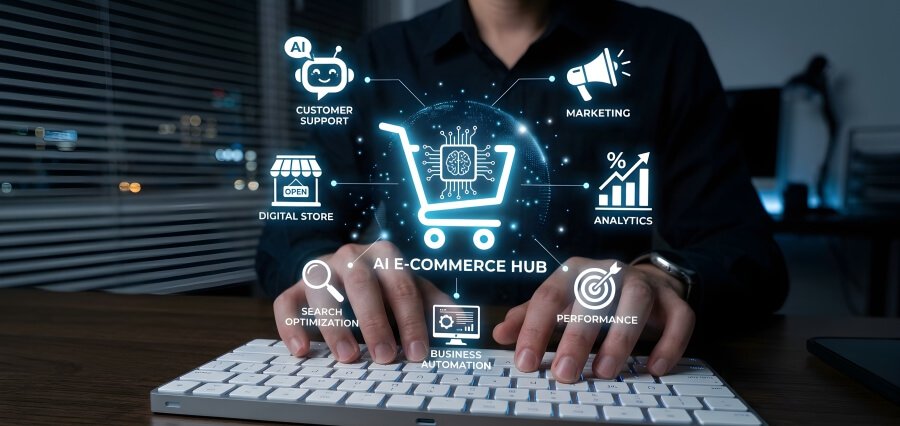
The retail industry is going through huge changes, driven by shifting consumer expectations, digital disruptions and growing focus on experience-based engagement, like getting people to feel something. Retail outlets are no longer considered transaction centers but are being seen as immersive spaces that represent a particular brand identity. In the current scenario, retailers have started giving prominence to design techniques that enable better customer interaction, efficient utilization of spaces, and effective integration of physical and virtual retailing. As a result, there has been a requirement for planning in designing stores, where elements such as store layout, fixture planning, and visual merchandising play a significant role in helping to shape customer buying behaviors. Due to this reason, there has been an increasing focus on the importance of implementing retail shop fitting solutions in order for retail businesses to create flexible retail spaces that can adapt to change quickly. In addition to the aesthetics benefits associated with implementing retail shop fitting solutions, there has been increased emphasis on functionalities that help achieve efficiency and scalability. Design Shift Design trends centered around consumer-centralism are shaping modern retail environments. Nowadays, retailers place special attention to modular, flexible, and story-telling-oriented spatial designs for their shops. The ability to redesign the interior space quickly according to seasonal requirements and events becomes increasingly important since such solutions ensure better space usage while maintaining brand coherence. Besides, retailers tend to create effective customer paths and optimize product display within stores to make sure that customers will notice them easily. The second notable trend consists in the desire to find the right balance between aesthetics and functionality. In today’s retail environment, the need arises to create a store interior design which will be aesthetically appealing as well as convenient for staff work. It means that special attention is paid to lighting, fixture arrangement, and materials used. Sustainable materials become increasingly popular due to the growing number of eco-conscious clients. At the same time, such an approach encourages retailers to look for new ways to make their shops more attractive and efficient. Tech Integration The use of technology is increasingly shaping the future of retail by making stores smarter. Digital technology implementations, such as augmented reality in particular, have been improving customer engagement in a less noticeable way, mainly via better personalization. There is use of data analytics, to keep an eye on and also interpret consumer behavior trends, then use that insight to decide what works best for store layouts. Meanwhile, digital integration is also supporting an omnichannel experience for shoppers, so consumers can move through the whole shopping journey while getting more meaningful value. Smart store projects which basically integrate mobile apps, loyalty programs and other technologies inside the stores have been gaining importance lately. This provides the means for retailers to communicate with consumers in real time and to provide personalized recommendations and promotions through the analysis of consumers’ browsing and purchasing history. Artificial intelligence has been utilized extensively to help make decisions in merchandizing and inventory management. Sustainability Eco-friendliness is one of the main factors which have become crucial elements of modern retail store design and development. Retail chains are gradually moving towards more environment friendly building materials and energy-saving lightning systems. In addition, sustainability becomes an integral part of store construction due to both legislation and increasing consumer awareness regarding such factors. It means that the design of retail stores is currently developing under the influence of various trends related to waste reduction and energy efficiency. In the future, sustainability will be an even more important factor influencing the design of retail stores. With the help of innovations in the sphere of building material science, lighting equipment and other important elements of construction, the future will see new standards and approaches. Moreover, sustainable design is increasingly considered in partnerships between retailers and suppliers of materials. Conclusion The future of the retail environment will definitely be influenced by the constant combination of sustainability, technologies, and flexible approaches to designing. In order for any retailer to keep up with constantly changing consumer behavior and the increasing competition, one should create a flexible and efficient environment which will positively impact their business. From energy-efficient materials used in construction to technologically driven consumer experiences, store designs reflect the growing need for innovativeness and sustainable retailing. Thus, in such an environment Retail shop fitting solution will always be necessary in order to align business needs and customers’ demands and keep everything consistent among various retail environments. From smart technologies to sustainable retailing practices, the future of the retail environment will require further transformations in its development. Data-driven, automated solutions, and modular designing will be more prevalent to create a store space. Such a move towards automation and innovative designs will not only help in enhancing efficiency but also ensure greater brand values for any retailer operating in a competitive market. Read Also : Enhancing Precision: The Rise of Transparent AI Healthcare Solutions in Modern Medicine

Visionary Woman Shaping Ethical Intelligence in AI, 2026
Visionary Woman Shaping Ethical Intelligence in AI, 2026 Sabira Arefin is a transformational leader turning data into lifesaving possibilities through her work in healthcare innovation and AI. As Founder and CEO of the Institute of Global Health and co-founder of IDMap.ai, she operates at the intersection of data science and human-centered care. Her vision emphasizes meaningful impact over scale, ensuring technology reaches underserved communities. With over fifteen years of experience across healthcare, technology, and entrepreneurship, Sabira combines technical expertise with lived experience shaped by her own health journey. Digital Link Quick highlights Quick reads

Sabira Arefin: Turning Data Into Lifesaving Possibilities
Some change direction when the world gives them challenges. Then some change the world. When the world is changing with the rise of artificial intelligence in industries, healthcare, and human connection, the leaders we need to pay the most attention to aren’t necessarily the ones with the biggest voice in the room. They’re the ones who have been through something, learned from it, and didn’t let the experience go to waste. They’re the ones who look at the broken system and see not roadblocks but opportunities. They’re the builders, the researchers, and the quiet forces of nature. And every once in a while, someone comes along who embodies all three. Sabira Arefin is one of those transformational leaders. She is the Founder and CEO of the Institute of Global Health and co-founder of IDMap.ai. She works at a crossing point that few people occupy- where the precision of data science meets the warmth of human care, and where the question driving every decision is not “how do we scale?” but “who does this actually reach?” With over fifteen years of experience across data technology, healthcare innovation, and entrepreneurship, Sabira brings both technical depth and a deeply human perspective to everything she touches. Her belief that data saves lives is not a line she rehearses. It is something she has lived. A Question That Refused to Stay Silent When Sabira was diagnosed with cancer, the experience did not paralyze her. It opened something. It made her ask a question she could not let go of: how many people around the world never receive the early warning that could change or save their lives? And behind that question sat another- how many communities simply do not have access to the care and infrastructure that make a timely diagnosis possible at all? These were not abstract questions. They were personal. They grew from the reality of someone who had faced a health crisis and come out the other side, asking why not everyone gets that chance. Her purpose, she says, did not come from a strategy meeting. It came from a moment that demanded she do something meaningful with the time she had been given. That moment reshaped how Sabira leads. She calls her approach operational empathy- a way of running teams and building systems that protect human energy and dignity, not just productivity. Sabira does not lead with fear. She does not chase output at the cost of the people producing it. Instead, she designs structures that support her people, holds high standards, and stands beside those working to meet them. Surviving cancer taught her that real strength is built on compassion, not exhaustion. Built From the Ground Up Sabira’s path to establishing the Institute of Global Health and IDMap.ai was not a straight line. It was a series of deliberate steps across different industries, each one teaching her something she would eventually need. She worked as an ERP Analyst at Expedia, a consultant at CNA Insurance, a Senior SMART Analyst at Countrywide Home Loans, and held a strategic role at Cisco. These were not just jobs. They were a masterclass in how large organizations handle data, and how they fail when they handle it poorly. Sabira took every one of those lessons with her. She holds an MBA in Health Sector Management from Duke University and has completed the Global Healthcare Leaders Program at Harvard Medical School. She is currently pursuing a Doctorate in Business Administration focused on AI and healthcare innovation. For Sabira, learning is not something you do once and move on. It is a practice she returns to every year, because she believes that a leader who stops learning eventually stops leading. IDMap.ai- Where Integrity Meets Intelligence IDMap.ai is a big data platform that compiles business and consumer datasets in real time, using AI and machine learning to manage identity verification, fraud detection, and compliant analytics. It serves clients across marketing, banking, government administration, and healthcare. Sabira built it on a principle that has never wavered: data only earns its value when it is handled with integrity. Sabira’s thinking is simple and grounded. Fraud and misuse hide inside disorganized and poorly governed data. When systems are structured, traceable, and regulation-ready, organizations make confident decisions. In healthcare, that confidence is not a comfort; it is a lifeline. It determines whether resources reach patients or disappear into the gaps of a broken system. At IDMap.ai, accountability is not added at the end. It is built into how the platform works from the very beginning. IDMap.ai is one part of a larger story Sabira is still writing. She has also built InteleMap, an AI-powered relationship mapping platform; IntentMarketingX; PromohealthX; VirtualDoctorX; and VirtualMedC, a telehealth startup where she currently serves as a strategic advisor. Each venture carries the same core belief- technology should be built for genuine impact, not just market position. The Institute of Global Health- From Research to Reality The Institute of Global Health was built on an idea that sounds simple but demands everything: health innovation must leave the laboratory and reach the people who need it. Sabira calls it a research-to-reality ecosystem- the space where discoveries travel from academic papers into programs, and from programs into communities. The institute offers certifications and courses in longevity science, mental health in the workplace, teen mental health, caregiver support, and healthcare systems specialization. Sabira’s focus on underserved communities in the Arab world gives the institute its particular urgency. She does not describe AI as a tool for corporate efficiency in these contexts. She describes it as social infrastructure- something that expands access, protects identity, and makes early intervention possible for people whom modern healthcare has long passed over. Sabira is not imagining a better future. She is actively building one. One of her most forward-looking commitments is what she calls proactive longevity engineering- an AI-powered approach that draws on risk, behaviour, genetics, and environment to model health outcomes long before illness appears. The goal is a clear shift: from treating

Enhancing Precision: The Rise of Transparent AI Healthcare Solutions in Modern Medicine
The major reason for the integration of AI technology into the medical field is the increasing demand for high diagnostic precision with minimal chances of errors by humans. However, the initial versions of AI did not come with a mechanism to explain their predictions. As such, doctors had issues trusting such AI-based systems since they could not understand their workings. Modern health organizations have been emphasizing the importance of explainability. With these tools, doctors will be able to validate the decisions of algorithms with respect to existing medical facts and knowledge and even past cases. This approach is not only increasing acceptance but promoting closer interaction between human intuition and artificial intelligence. In other words, transparent solutions are becoming a necessity in order to cope with these issues, since understanding the path of decision-making makes it easier for clinicians to implement the findings. Trust Shift The necessity of achieving higher accuracy and minimizing human error in diagnostics was one of the main reasons for integrating AI into medicine. Nevertheless, initially developed AI solutions functioned as a black box, no explanations about how they reached certain decisions were provided. The absence of explanations hindered their integration into clinical practice since physicians were wary of using the recommendations made if they had no clue how they were generated. At present, modern healthcare institutions prioritize explainability as much as efficiency. Due to the ability of providing insights, it becomes possible for physicians to verify whether recommendations follow logic and whether there are any errors. In turn, this development improves both acceptance rates and cooperation between humans and machines. Transparency of AI Healthcare Solutions is currently gaining importance as an indispensable quality when working on this problem. As soon as a clinician understands how a recommendation based on prediction has been formed, it can be easily integrated into practice. Clinical Use Currently, in healthcare practices, AI has been introduced in radiology, pathology, cardiology, and primary care. This technology can help detect patterns in images, predict the course of diseases, and suggest customized treatment options for patients. Nonetheless, when used without transparency, even the best performing systems may face a lack of trust from their users because of fears related to the reliability of results and data bias. Therefore, the application of Transparent AI Healthcare Solutions is needed to overcome this disadvantage. In radiology, for instance, a particular region in the image that helped make a diagnosis could be identified. The information obtained from these technologies would contribute to increasing the safety standards for patients since doctors could be aware of the mistakes that could have occurred during the process of diagnosing the condition. Furthermore, with the use of Transparent AI Healthcare Solutions, hospitals may promote patient engagement. Patients who receive detailed information about their diagnosis or suggested treatment options are more likely to follow the recommended treatment plan. Future Path In the future, technology in the area of healthcare will be strongly related to the use of AI solutions with interpretability as the main priority. With evolving regulations, transparent solutions would become a must-have rather than an optional feature of clinical AI implementation. The development of transparent AI models that produce highly explainable results without compromising their efficacy and scalability is currently happening. Also, medical institutions are starting to train clinicians in terms of interpreting results from AI-based solutions. Such human-machine partnership would definitely facilitate getting maximum out of advanced technologies and mitigate any potential risks connected to misunderstanding the results produced by AI tools. Undoubtedly, Transparent AI Healthcare Solutions are set to define the future of a healthcare ecosystem. This approach to the use of artificial intelligence in the medical field unlocks its true potential. Conclusion The increasing implementation of artificial intelligence in healthcare is considered a revolutionary process in medicine, but its ultimate success is dependent on trust and accountability. Transparent AI Healthcare Solutions are becoming one of the key elements in facilitating such a process because they help ensure that highly sophisticated algorithms can still be understood and remain consistent with clinical decision-making. By following this approach, healthcare practitioners will more likely embrace AI technology while retaining full responsibility for clinical decisions. Given the continuous evolution of the healthcare market, more attention will be paid to transparency and ethical use of technological innovations in medicine. The significance of Transparent AI Healthcare Solutions will become obvious when creating technologies that will have both innovative and socially responsible features. As a result, artificial intelligence can become a valuable tool for further progress in medicine. Read Also : Risk Management in Global Trade and Logistics

The Most Inspiring Personality in Supply Chain Leadership
The Most Inspiring Personality in Supply Chain Leadership In a rapidly evolving global economy, supply chain leaders are redefining resilience, innovation, and operational excellence. The Most Inspiring Personality in Supply Chain Leadership edition celebrates visionary professionals who transform challenges into opportunities, drive seamless global connectivity, and inspire industries through strategic leadership, adaptability, and a commitment to sustainable and future-ready supply chain ecosystems. Digital Link Quick highlights Quick reads

The Navigator of Global Logistics – Dr. Bumal Murchoyea: Building Meaningful Leadership at DP World
Whenever you imagine a leader, you visualize them standing at the front. Isn’t it a limiting perspective? Dr. Bumal Murchoyea feels that it is indeed a restrictive outlook—restrictive on both the leader and the team they are leading. That is not leadership in the true sense. Rather, according to him, ‘Leadership is not about standing in front. It is about lifting others forward.’ Dr. Bumal’s own professional journey is an enchanting tale of transition. “It is an odyssey not in a linear sense, but as a global expedition that has spanned the bustling trade hubs of Dubai, the strategic ports of Singapore, the industrial heart of the Netherlands, and the sophisticated boardrooms of Paris. His journey is a testament to the idea that a true leader must understand every gear in the machine—finance, law, compliance, and operations—to truly lift a team toward the horizon. The Foundation of Precision In his own words, Dr. Bumal’s journey has been less about titles and more about transformation. He grew through multiple logistics ecosystems across continents, each operating under different regulatory, cultural, and economic realities. The first chapter of his 20-year tenure was written in the rapid-growth environment of Dubai with TNT. “What shaped me most were the early roles where finance was expected merely to “report the past,” while the business needed guidance to shape the future.” From Dubai to the Randstad Beginning as a Management Accountant, he quickly ascended to Regional Business Controller, mastering the financial “physics” of the logistics world. Yet, never content with just the numbers, he moved to the Netherlands to lead Group Internal Audit. It was here, amidst the complex networks of the Randstad, that he developed his surgical eye for compliance and risk, learning that the integrity of a system is just as vital as its speed. “To lead from within the gears is to understand that every transaction is a promise kept. Integrity isn’t a department; it’s the rhythm of a successful enterprise.” One Defining Moment One defining moment was leading the post-merger financial stabilization of a fast-growing freight network. Processes were fragmented, data integrity was weak, and local decision-making lacked visibility. Dr. Bumal adds, “We were losing value simply because systems and governance were not aligned with operations.’ He realized then that finance cannot sit behind operations; it must sit within operations. That experience forged his leadership philosophy: finance must be predictive, not reactive. It must simplify complexity, not add to it. And most importantly, finance must enable people — not police them. The Singapore Pivot In 2014, Dr. Bumal’s journey took a decisive turn toward the East. In Singapore, the world’s maritime capital, he didn’t just manage finance; he mastered the law. While serving as the Head of Compliance for CTE Logistics and later as the Director of Finance and Operations for Bionix LLP, he embarked on a grueling academic pursuit, earning a Bachelor of Laws (LLB) and becoming a licensed International Arbitrator. This transformation made him a rare vanguard in the industry—a financial leader with the legal acumen to resolve complex maritime and logistics disputes. Since 2019, he has served as a sentinel in the Singaporean legal ecosystem, balancing the scales of risk and arbitrage with a veteran’s poise. The DP World Ascent: A Vision for West Europe Today, in early 2026, Dr. Bumal stands at the peak of his strategic powers. Having served as the Senior Director of Finance for the APAC region and then as the Cluster Director for West Europe, he has recently assumed the mantle of Chief Financial Officer for Freight Forwarding in West Europe at DP World, based in Paris. “I see my role as building intelligent financial ecosystems that connect strategy, operations, people, and technology into a single nervous system for the business.” In this role, he oversees the financial heartbeat of a global titan, ensuring that a sophisticated flow of capital and data matches the complex flow of goods across borders. His leadership in Paris is the culmination of two decades of diverse exposure, allowing him to devise solutions for challenges that others might deem insurmountable. “Global logistics is a symphony of moving parts. A CFO’s role is to ensure that while the world changes, the music of commerce remains harmonious and secure.” The Architect of Financial Agility In the high-velocity theatre of 2026, where global logistics operates as a real-time battlefield, Dr. Bumal has redefined the role of the CFO. From his base in Paris, he manages a landscape where a single delayed decision can ripple across continents. To navigate this volatility, he has institutionalized a revolutionary “dual-speed” financial architecture—a system that ensures the organization never has to choose between surgical discipline and dynamic agility. The Dual-Speed Strategy: A Masterclass in Equilibrium Dr. Bumal’s strategy rejects the slow, traditional cadence of month-end reporting in favor of a bifurcated approach. On one hand, he maintains a “Standardized Core”—an unshakeable foundation of governance, IFRS integrity, and rigid cash discipline. On the other hand, he has deployed an “Agile Decision Layer.” This is the engine of the modern era: real-time dashboards, predictive forecasting, and margin analytics that empower leaders to make high-stakes commercial decisions daily. In this framework, finance is no longer a rearview mirror; it is the “GPS” guiding every route the organization takes. “Sustainable growth is not a happy accident; it is the result of growth that is profitable, cash-positive, and scalable. Finance is the lens that brings that reality into focus.” Beyond Revenue: The Science of Granular Profitability For Dr. Bumal, “revenue” is a surface-level metric that masks the complexities of a global network. Under his leadership at DP World, the measure of success is found in the deeper, more difficult numbers. He tracks the “Cost-to-Serve” with microscopic precision, analyzing profitability not just by the customer, but by the specific lane and modality. He monitors cash conversion velocity and productivity per FTE, ensuring that every gear in the West European cluster is turning with maximum efficiency. The Multicultural Navigator: Leading with Purpose and Presence

Risk Management in Global Trade and Logistics
Strategies for an Uncertain Era As it can be noticed nowadays, organizations do not confine themselves only to limited geographic areas as their products are now produced in one country, assembled in another, and advertised on numerous continents. While the constant increase in the interconnectivity of nations positively impacts the further development of the industry, a number of challenges remain for any company. These involve anything starting from logistical issues up to cybercrime and others. It is important that a company uses appropriate risk management techniques in order to operate effectively in a globalized business environment. Understanding the Importance of Risk Management in Global Trade and Logistics The ecosystem within the context of international trade and logistics is extremely complex and requires the involvement of many players, from suppliers to manufacturers and distributors to shippers and custom agencies. Any hiccup within the chain can lead to significant disruptions as well as loss, reputation and consumer dissatisfaction. A lot of recent events globally, such as pandemic outbreak, warfare, inflation rates, congestion in ports and other factors have clearly illustrated how fragile supply chains are. Businesses who had poor contingency planning faced significant disruption, while others were better equipped through a sound risk management approach. Risk management allows businesses to identify potential threats and assess their impact, as well as take appropriate preventive actions. Most importantly, risk management allows business operations to continue despite uncertainty. Key Risks Affecting Global Trade and Logistics Many types of risks exist in the field of international logistics and business operations. Knowing about these risks is critical in ensuring the formation of a resilient logistics system. Supply Chain Disruptions One of the most common problems encountered by international companies is the disruption of the supply chain. Natural calamities, labor strikes, closure of factories, and other events may disrupt the shipment of supplies. An even delay in a global shipment port could result in further cascading effects. Companies that rely excessively on a particular vendor or location are especially vulnerable to these events. Geopolitical and Regulatory Risks It is evident that international companies will be affected by politics and changes in regulations. Some disruptions may occur due to changes in aspects such as trade barriers, sanctions, taxation, and customs regulations. Differences in geopolitics may exist between two countries, leading to higher costs of transportation and operation. Changes in regulations need to be observed by international businesses to prevent themselves from being penalized. Cybersecurity Threats As digital technology continues to develop in the field of international trade and logistics, cybersecurity has become one of the most important problems. Logistic companies use cloud technology, automation systems, IoT systems, and other technologies based on digitalization. In such situations, cyber-attacks will threaten confidential data, logistics services, and even customers’ trust. For example, ransomware attacks will stop the work of logistics software, resulting in financial losses. Financial and Currency Risks Trade is carried out using several currencies, and thus companies are exposed to exchange rate risks, such as a sharp depreciation in the value of the currency or rise in inflation. Furthermore, an unstable economy in some countries might affect payment delays and reduced consumer demand. The Role of Technology in Global Trade and Logistics Risk Management The application of technology has proven to be very effective when it comes to minimizing risks and maximizing visibility in operations. With the help of digital tools, companies can monitor their supply chains in real-time, anticipate disruptions, and respond promptly. The use of artificial intelligence and predictive analysis enables businesses to detect any demand changes and bottlenecks that might happen in the future. Blockchain technology is used to facilitate secure transactions and minimize the chances of any fraud in operations. In addition, cloud-based logistics solutions can help companies communicate effectively in case of emergencies. Building a Strong Risk Management Strategy for Global Trade and Logistics Proactive steps need to be taken into account when managing risk management issues. The organizations need to develop systems which will adapt to the changing scenario. Diversifying Suppliers and Transportation Networks Relying only on one supplier or transport mode increases the vulnerability to risks for one organization. Having multiple suppliers and transport alternatives will decrease vulnerability to such risks. The organizations need to develop relations with multiple suppliers from different geographical areas and also have transport alternatives where necessary. Strengthening Compliance and Monitoring Regulatory compliance is critical in global trade and logistics. Businesses must regularly monitor international trade laws, customs regulations, and industry standards to avoid legal complications. Conducting regular audits and maintaining accurate documentation can help minimize compliance-related risks. Investing in Employee Training Employees are vital to the risk management process. Adequate training enables employees to handle situations well when a crisis arises, thus ensuring smooth operations. Training of employees should encompass knowledge on cybersecurity, emergency management, and supply chain management. Developing Crisis Management Plans Disruptions are always going to happen. It is important for the business to have a thorough contingency plan that will help it deal with the situation effectively. An effective crisis management strategy entails communication plan, alternate suppliers, stock management, and recovery periods. Sustainability and Risk Management in Global Trade and Logistics The topic of sustainability is getting more and more relevant in terms of global business activities. Climate change, weather catastrophes, carbon emissions legislation and other environmental issues influence greatly the logistics sector. Nowadays companies implement eco-friendly transportation systems, plan routes more efficiently and develop environmentally-friendly packaging systems. Sustainability provides not just a way to reduce negative ecological impact, but also increases the resilience of businesses. Consumers and shareholders prefer companies that have a certain environmental responsibility, thus making sustainability an important part of contemporary logistics. The Future of Risk Management in Global Trade and Logistics However, just like with everything else, with the changes in time, it is essential to consider that the approaches to risk management should also change because of how quickly things have been changing in the global marketplace recently. With that in mind, it is important to understand that

Developing Cross-Border Logistics Expertise
From Compliance to Efficiency As we live in the era of globalization, where the economic transactions of the business organizations have crossed the barriers of territoriality, procurement, production, and movement of goods are taking place across many countries. In such a scenario, cross-border logistics gains paramount importance in the contemporary dynamic business environment of globalization. The concept of cross-border logistics involves many problems, such as customs-related issues and logistics management, among others. Cross-border logistics does not only mean moving goods from one nation to another; rather, it is concerned with handling the entire gamut of logistics processes, including regulation and procedure issues, transportation system, logistics network, visibility of logistics, culture, and technology issues, among others. Through investment in the knowledge of cross-border logistics, the organization can develop a competitive advantage over its competitors. Understanding the Importance of Cross-Border Logistics The continuous growth of international trade has made cross-border logistics an essential element of growth and success. Customers want rapid delivery, complete transparency, and an easy purchasing experience, irrespective of the origin of the goods. The pressure imposed by customers has put businesses under tremendous stress to improve their global logistics systems. Effective cross-border logistics not only helps businesses gain access to new markets and foster strong international relationships but also helps them ensure a continuous flow of their goods. If not handled correctly, businesses may run into various difficulties, ranging from customs clearance problems to tariff issues and even the loss of customer confidence. Knowledge of logistics will enable them to manage all the risks involved. Besides, global factors such as geopolitics, changes in trade regulations, and logistics challenges have further stressed the importance of efficient global logistics management. Building Strong Cross-Border Logistics Knowledge Acquiring skills in cross-border logistics entails gaining knowledge of international trade laws and compliance requirements. Each country has unique rules when it comes to importing and exporting goods, tax regimes, customs processes, and documentation processes. It is essential for the logistics practitioner to know the relevant changes within the regulatory framework to prevent penalties and delivery delays. Customs documentation skills will be critical. The documents, such as bills of lading, commercial invoices, certificates of origin, and import permits, need to be filled out correctly to avoid any delay in delivering the goods to their intended destination. It is necessary to have knowledge of the mode and route of transportation. A business must consider the available options and choose the most suitable one, considering its urgency, cost, and nature of the goods. An expert knowledge in choosing an appropriate carrier is essential in enhancing the performance of the supply chain. Training staff through various means, including seminars and practical work experience, can also help build capacity to perform cross-border logistics tasks effectively. Technology’s Role in Cross-Border Logistics However, there have been numerous advancements within the business community regarding managing cross-border logistics owing to technological advancements. In this regard, it is noteworthy to mention that technology has made it possible for firms to trace the movement of goods and manage their inventories and clear their goods online. Technology will make it possible for the firms to achieve efficiency and accurate services as far as customer communication is concerned. Some of the innovation strategies that are being used by the companies include transportation management systems, warehouse automation, and cloud-based supply chains. Furthermore, the use of artificial intelligence and prediction analytics will be useful in predicting firm requirements, selecting a good route, and reducing risks within the supply chain process. In addition, the use of blockchains will enable firms to track products from one border to another efficiently and effectively. Blockchain technology will also reduce the need for document verification and tracing of the process. Therefore, the incorporation of technology in logistics will enable businesses to be faster and exercise control in international logistics. Managing Challenges in Cross-Border Logistics While the concept offers numerous opportunities, there are certain issues that should be considered while implementing cross-border logistics. First of all, customs procedures take quite some time due to different laws, rules, and documentation required in each country. Fluctuations in currency rates and various taxation systems also influence expenses associated with logistics services. Pricing strategy and financial management will have to be improved in order to stay competitive in international markets. Political instability and change in international trade relations might also bring problems for logistics operators. Language barrier and cultural diversity could also hinder collaboration with foreign customers and suppliers. In addition to all those factors mentioned above, poor infrastructure conditions may cause difficulties with transportation and cargo handling. In case the company operates in regions with underdeveloped road transport or congested seaports, transportation might be delayed or become inefficient. However, logistics specialists are aware of potential difficulties and develop proper contingency plans. Risk management is therefore a crucial component of cross-border logistics expertise. Businesses must develop flexible strategies that allow them to respond quickly to changing global conditions while maintaining customer satisfaction. Strategies for Strengthening Cross-Border Logistics Operations In order to improve the efficiency of cross-border logistics, firms must develop strategic alliances. The dependability of freight forwarders, custom brokers, and the transport company itself will play a great role in achieving efficient cross-border logistics processes. The interpretation of data will play a very important role in improving business operations. Firms have to evaluate their performance through such parameters as delivery time, customer satisfaction, shipment performance, and transport costs. A firm must diversify its logistics partners and suppliers in order to increase its resilience. It could be risky for a firm to rely heavily on only one logistics partner and only one supplier, especially during uncertain situations. Finally, companies must pay close attention to sustainability issues as they relate to cross-border logistics. Companies are increasingly adopting sustainable packaging and fuels as a way of achieving their global objectives. Not only will this improve the company’s image, but it will also ensure future efficiency. Ultimately, customer satisfaction is essential to business success. Communication, transparency regarding shipping time, and delivery estimates will

Global Excellence Leadership Awards in Africa 2026 Set to Spotlight Visionary Leaders and Industry Trailblazers
A powerful celebration of leadership, innovation, and business excellence is just days away as the Global Excellence Leadership Awards in Africa 2026 prepares to bring together influential entrepreneurs, executives, innovators, and changemakers from across industries. With growing anticipation surrounding the upcoming event, business communities across the continent and beyond are looking forward to an evening dedicated to honoring leaders who are driving meaningful transformation and shaping the future of global industries. Positioned among the most anticipated Africa innovation awards 2026 events which is powered by Insights Excellence Awards, in collaboration with Insights Success Media the celebration is expected to attract prominent business leaders, investors, decision-makers, and emerging entrepreneurs who continue to push boundaries through bold ideas and visionary leadership. The event will recognize individuals and organizations that have demonstrated excellence across sectors including technology, healthcare, finance, education, sustainability, manufacturing, real estate, and entrepreneurship. The Global Excellence Leadership Awards in Africa is more than just a recognition platform. It stands as a celebration of resilience, strategic vision, and purpose-driven leadership that inspires progress across industries and communities alike. As businesses worldwide continue adapting to rapid transformation, the awards aim to highlight leaders who are creating sustainable impact while redefining standards of innovation and growth. Industry experts are already describing the event as one of the standout Africa innovation awards 2026 platforms due to its strong focus on honoring businesses and professionals who are shaping Africa’s growing influence in the global economy. From breakthrough startups to established enterprises, the event will celebrate leaders who continue to inspire change through innovation, leadership excellence, and long-term vision. Beyond the award presentations, attendees can expect a vibrant atmosphere filled with high-level networking opportunities, leadership interactions, and meaningful industry conversations. The event will help to create valuable connections between entrepreneurs, corporate leaders, investors, and innovators who share a common goal of driving progress and collaboration across the business landscape. The ceremony will shine a spotlight on entrepreneurs whose determination, creativity, and strategic thinking have transformed industries and opened new avenues for growth. These visionary leaders represent the evolving face of African entrepreneurship — ambitious, globally competitive, and driven by innovation. Alongside them, distinguished executives and organizations that continue to set benchmarks in leadership, operational excellence, and business transformation will also be recognized for their outstanding contributions. As conversations around the Africa innovation awards 2026 continue gaining momentum, the event is expected to serve as an important platform for celebrating achievements that extend beyond business success. Many of the leaders being recognized have played a crucial role in empowering communities, creating employment opportunities, encouraging sustainable practices, and fostering innovation-driven development across industries. The highly anticipated Global Excellence Leadership Awards in Africa is being organized by Insights Success Media, a globally recognized business publication and leadership platform known for celebrating influential leaders and transformative business stories worldwide. Through initiatives like these, the organization continues to create impactful spaces that recognize excellence while strengthening global business collaboration and leadership growth. With only a week remaining before the celebrations begin, excitement surrounding the Global Excellence Leadership Awards in Africa continues to rise rapidly. As leaders and innovators prepare to gather for this landmark occasion, the event is set to become one of the defining Africa innovation awards 2026 celebrations — a powerful tribute to leadership, transformation, and the visionaries shaping the future of industries across Africa and beyond. Disclaimer – This article is a work of original content created for public relations and informational purposes only. It may be published across multiple digital platforms with the full knowledge and consent of the author/publisher. All images, logos, and referenced names are the property of their respective owners and used here solely for illustrative or informational purposes. Unauthorized reproduction, distribution, or modification of this article without prior written permission from the original publisher is strictly prohibited. Any resemblance to other content is purely coincidental or used under fair use policy with proper attribution. Read Also :Karma Foundation Successfully Crosses 25,573+ Sterilization Surgeries Since Inception

Karma Foundation Successfully Crosses 25,573+ Sterilization Surgeries Since Inception
Karma Foundation, a Pune-based charitable trust providing veterinary care for animals in need, has successfully crossed 25,573+ stray animal sterilization surgeries since it began operations in 2018. The milestone reflects consistent, on groundwork in a space where efforts are often scattered and difficult to monitor at scale. At Karma Foundation, the approach has been to build a system that works in real conditions. Animals are registered through an online process, and in cases where the team conducts pick-ups, the exact location is logged at the time of catching. The system does not allow release unless the animal is taken back to the same spot, which helps avoid relocation-related issues that are commonly seen in urban areas. The organization has also put medical checks and protocols in place that are usually skipped in large drives. Dogs undergo blood tests before surgery to detect conditions like tick-borne fever or distemper, while cats are handled differently to reduce stress and recovery time. The team follows highly sterile surgical practices with minimal post-operative intervention. Alongside sterilization, Karma Foundation has also recorded 22,157+ rescues, 47,730+ vaccinations, 13,575+ surgeries, and 6,210+ treatments through its community clinic. Speaking on the milestone, Ms. Priya Kailad, Founder and President, Karma Foundation, said, “Reaching this number is important, but what matters more is how the work is being done. Sterilization only works if it is consistent and properly tracked. From making sure every animal goes back to the same location to carrying out basic medical checks before surgery, we have tried to remove the gaps that usually exist on the ground. The issue exists because of us human beings, and it needs to be handled with that level of responsibility.” Karma Foundation currently operates out of a 14,000 sq. ft. facility in Pune, providing both inpatient and outpatient care. As cities continue to struggle with managing stray populations, the organization’s focus remains clear: build a system that is consistent, accountable, and difficult to break, rather than one that only works in fragments. The milestone is not just a number, but a marker of what sustained, method-driven execution can achieve when done right. About Karma Foundation Karma Foundation is a Pune-based charitable trust working towards the welfare and medical care of stray and community animals. The organization was established on 12 January 2018 with the objective of providing ethical, accessible, and advanced veterinary treatment to animals in need. The foundation operates a 14,000 sq. ft. animal healthcare facility in Pune, designed to function on the lines of a human hospital. The center includes an in-house pathology laboratory, Intensive Care Unit, operation theatre, recovery wards, and an outpatient department. It has the capacity to provide inpatient care to up to 150 cats and dogs and outpatient services to around 300 animals per month. Karma Foundation provides a wide range of veterinary services, including emergency trauma care, diagnostics, surgeries, sterilization, vaccinations, and post-treatment rehabilitation. Its work combines immediate medical intervention with preventive healthcare to address long-term animal welfare challenges. Since its inception, the foundation has saved over 22,157 animals, sterilized 25,573, vaccinated 47,730, performed 13,575 surgeries, and treated 6,210 animals through its community clinic. The organization is supported by a team of over 40 members, including six full-time veterinarians and surgeons, along with trained caregivers and visiting specialists who ensure continuous care and emergency response. Karma Foundation’s mission is to make Pune a rabies-free city through sustained sterilization and vaccination programs, while gradually expanding into rural India with smaller units focused on education and basic animal healthcare. Its long-term vision is to create a more humane and structured ecosystem for animal welfare through medical care, awareness, and community engagement. Read Also: Mack Brands Unveils Redesign of Tequila Rosaluz and Conte Camillo, Challenging Traditional Spirits Packaging