






The Leadership Multiplier: Creating Cultures That Thrive, Perform, and Elevate Others
In any company—a startup, a school, a social enterprise—leadership is commonly thought of as one voice for many. But the most powerful leaders are not solo acts. They are multipliers—forces who liberate the untapped potential in others, enlarge team smarts, and build cultures that don’t merely endure change but win with it. Welcome to the Leadership Multiplier era—a model and mindset that enables individuals to lead, perform, and develop together. Beyond Control: The Shift from Command to Capacity Traditional leadership models have long been based on control: giving too little direction, too much monitoring of performance, and keeping operations in check. But this predictability-built model collapses when confronting complexity and velocity newcomers. Multipliers recognize that no one leader has all the solutions. Rather than demanding, they develop. Rather than draining, they increase. They see that their highest contribution isn’t genius alone—but the power to elicit genius in others. Leadership multiplication is ultimately about multiplying capacity, not control. It’s about getting better questions asked, powering decentralized decision-making, and creating a culture where initiative and cooperation are not merely encouraged—but anticipated. Cultures That Perform by Design, Not Default Performance is not an accident. It flourishes in cultures that are intentional, inclusive, and growth-minded. Multipliers are builders of such cultures. They create systems that incentivize contribution rather than compliance, collaboration rather than competition, and purpose rather than pressure. They understand that culture does not consist of posters on the wall—it’s built by day-in-day-out modeled behaviors: The way feedback is delivered. The way failure is addressed. How praise is spread. How voices are heard—particularly the soft ones. When individuals are psychologically safe, they become more courageous, learn more quickly, and excel more than those working under fear or rigidity. Multipliers establish trust by being open, consistent, and genuine. And through this, they access a degree of discretionary energy that can’t be demanded—only motivated. From Talent Keepers to Talent Amplifiers Multipliers don’t merely hire talented people—they make them better. They’re force multipliers for talent, potential, and purpose. Whether it’s an educator developing future changemakers or a CEO developing a bench of internal leaders, they understand leadership not as a throne upon which to sit—but as a ladder to hold firm for others. They teach. They guide. They stretch. And above all, they believe in other people before other people believe in themselves. The data is unequivocal: Multiplier-led organizations always have higher rates of engagement, retention, and innovation. Why? Because individuals don’t depart from companies—people leave leaders who minimize them. And remain with those who maximize them. Innovation as a Byproduct of Inclusion Vibrant cultures are breeding grounds for innovation. Innovation, however, is not solely a product of genius—it thrives where ideas are embraced, where diversity is prized, and where experimentation is encouraged. Multipliers don’t monopolize the limelight. They make room for others to take center stage—and for ideas to arise from anywhere, not only the corner office. This requires humility, curiosity, and patience—traits not often associated with traditional power structures, but essential in modern leadership. It also requires an intentional effort to include perspectives from the margins: across levels, geographies, and identities. Because the best solutions often come from the edges—not the center. The Ripple Effect: Scaling Leadership Through Others Maybe the most compelling thing about the multiplier effect is that it is self-replicating. Empowered people empower others. Trusted leaders create teams based on trust. Performance cultures compound exponentially—not due to process, but because of people. This is why multiplier leadership is so sustainable. It doesn’t depend on the motivation of an individual—it bubbles up through mindsets, through norms, and through shared values. It makes departments ecosystems, teams tribes, and objectives shared missions. And during times of crisis or transformation, it gives resilience—not from hierarchy, but from unity. From Me to We: A Leadership Philosophy for the Future In a world characterized by volatility, uncertainty, and ongoing reinvention, yesterday’s leadership rulebook no longer works. What we require are leaders who multiply, not magnify; grow others, not goals; create spaces where everyone is part of the mission—not just passengers on the journey. To be a Leadership Multiplier is to lead from abundance, not scarcity. To substitute ego with empathy. To shift from transactional power to transformational leadership. And in doing that, you don’t just create better organizations—you create better societies. Final Thought Each team, each classroom, each boardroom has hidden potential—ideas not spoken, talents not yet unleashed, leaders not yet identified. The question is: Will you be the one to multiply them? Raed More : The Leadership Multiplier: Creating Cultures That Thrive, Perform, and Elevate Others

Strategic Leadership for the Next Era: Balancing Innovation, People, and Performance in Disruptive Times
We are living in a time where volatility has become a constant. Rapid technological change, geopolitical instability, global health crises, and economic swings are reshaping the rules of business and leadership alike. In this landscape, the demands placed on leaders are evolving just as quickly. The old playbooks no longer suffice. Strategic leadership in this new era requires a nuanced balance—between bold innovation, people-centric cultures, and high-performance outcomes. The executives who succeed here are not just reactive. They are future-focused, purpose-based, and responsive in their action. They realize that winning in times of disruption is not only about strategy but about the capacity to change forever, build resilience, and get people to contribute at a meaningful level towards common goals. Innovation with Intent Innovation today is not a choice—it is the driver of survival and relevance. But in a competitive market where everyone is running to embrace the newest technology or subvert current models, strategic leaders differentiate themselves by innovating with purpose. They don’t pursue fads to stay current. Instead, they make more fundamental inquiries: What are we trying to solve? How does this further our mission? What value does this add to our customers and stakeholders? In the process, they turn innovation from an ad-hoc effort into a purposeful, systematic force for change. They commit to skills that count—not tools and technologies, but systems for experimentation, collaboration, and ongoing learning. Innovation becomes part of the organization’s fabric, allowing it to grow in harmony with the world around it. Human-Centered Leadership At the center of every resilient organization are human beings—people who infuse energy, empathy, and imagination into uncertain, dynamic contexts. Strategic leaders understand that transformation cannot occur through processes. It occurs when people are motivated, enabled, and aligned to a sense of higher purpose. This is why contemporary leadership is inherently human-focused. It values psychological safety, active listening, and belongingness. It values vulnerability as a strength and recognizes that trust, once achieved, is an extraordinary catalyst for performance. By developing cultures in which workers feel noticed and heard, leaders unlock intrinsic motivation and generate a sense of ownership. Human-centered leadership also involves acknowledging the difference of talent, thought, and lived experience as a business strength. The more diverse an organization is, the more innovative and flexible it will be—more able to comprehend changing customer needs and to create solutions that mirror the world’s complexity. Performance Without Burnout During times of disruption, organisations find themselves compelled to do more with less. Strategic leaders have no choice but to create solutions that drive performance without propelling their teams into burnout. This is not merely a matter of workload management—it’s about making clarity, establishing priorities, and setting rhythms that permit intensity and rest. Sustainable performance is based on alignment. As long as people grasp how their work leads to larger goals, they work with more purpose and satisfaction. Leaders who speak with candor, set clear goals, and eliminate obstacles to action bring into being environments in which excellence is the natural consequence—not the result of coercion, but of purpose and empowerment. Concurrently, great companies care about well-being. They recognize rest, reflection, and reinvention as not distractions from productivity, but as pillars of long-term success. Strategic leaders craft ecosystems where people can grow up without wearing themselves down. Decision-Making in the Grey The contemporary leader never works with complete information. It is today’s decision-making often which takes place in grey areas—irregular spaces where data is imperfect, outcomes are uncertain, and timelines are tight. What sets great leaders apart is not their exposure to solutions, but their skill in maneuvering those spaces with judgment, humility, and bravery. They know when to hold back and think, and when to act unhesitantly. They ask for input without resorting to analysis paralysis. They create space for experimentation, realizing that failure is not the other end of success but an integral part of the journey. They make value-based decisions and are transparent even when the way ahead is messy. By doing so, they establish credibility—not because they are perfect, but because they are actual, earthy, and open to learning in public. The Integration of Strategy and Culture One of the characteristics that define strategic leadership in this age is that it understands strategy and culture are not two different worlds. They are very interdependent. Good strategies collapse in cultures that don’t change. On the other hand, great culture without direction results in energy without outcome. Contemporary leaders construct both simultaneously. They synchronize strategic priorities and cultural behaviors so that what the organization portrays externally is in harmony with how it acts internally. They don’t just define what success will be, but also what type of organization they wish to become in the process of achieving it. This alignment is particularly important in times of disruption, when organizations are most susceptible to misalignment, disconnection, or mission drift. By anchoring change efforts in common values, leaders ensure that the company advances together—no matter how unknown the terrain may be. Leading Forward There is no going back to the ease of the past. The complexities of the times require more than transactional leadership—they require transformation. Strategic leaders have to be architects of possibility: courageous enough to see what’s next, disciplined enough to guide execution, and empathetic enough to bring people with them. The future will keep challenging assumptions, pushing capabilities, and requiring reinvention. But with a leadership framework that links innovation, people, and performance, organizations can do more than survive disruption—they can shape the contours of what’s next. This is the promise—and the burden—of leadership in the era to come. Read Also: From Blueprint to Results: Unlocking Visionary Growth Strategies for Success

Inspirational Icon To Look For In 2025
Inspirational Icon To Look For in 2025 In a world increasingly seeking authenticity and compassion in leadership, Miriam Schnyder stands out as a beacon of purpose-driven transformation. Named as the Inspirational Icon To Look For in 2025, Miriam has built her career not on convention, but on connection—between mind and heart, between ambition and meaning, between people and their fullest potential. Quick highlights Quick reads

Miriam Schnyder: Journey to Transform Art and Emotion
With vision, emotion, and ferocious determination, Miriam Schnyder is standing still and moving forward in a world that frequently rushes past beauty in the name of efficiency. She is not just reinterpreting the relationship between art and usefulness as the CEO of SCHNYDER Group Holding and the driving force behind Art X on Glass, but she is also establishing herself as a revolutionary leader propelled by empathy, accuracy, and creativity. Her path has not been typical at all. Rigid hierarchies and conventional systems don’t define her leadership approach. Rather, she fosters teamwork, blurs the distinction between executive and artist, and creates a culture that values distinctiveness while allowing it to be incorporated into a unified brand story. She is embracing the power of global perspectives to create work that speaks to people everywhere while leading a team that is as creatively rich as it is culturally diverse. Schnyder is unique in that she can strike a balance between emotion and initiative. What started as a daring glass painting concept has expanded under her direction into a business that is collaborating with architects, interior designers, and collectors worldwide to create custom works that are both emotionally and functionally significant. Her vision extends beyond aesthetics; it aims to question conventions, reinterpret the function of art in everyday life, and demonstrate that sustained commercial success and creative brilliance may coexist. Schnyder is leading with heart and intent in every choice, a unique combination that keeps Art X on Glass from becoming a specialized passion project to a long-lasting international brand. The Mirror of the Soul “Art X on Glass is not just a piece of glass. Our artwork is the mirror of our soul; our eyes, our ears paint with us, not only our hands.” Schnyder explains with the passion that has driven her unconventional journey. This philosophy isn’t mere marketing speak it’s the foundation of a company that launched in 2024 with an ambitious mission: to bring unique, emotionally evocative art into every home. The technique Schnyder and her team have mastered is deceptively complex. Unlike traditional canvas painting, glass art requires artists to think in reverse literally. “The biggest challenge is the fact that we need to think mirrored. We paint on one side of a glass, but we watch it from another side. It is like when you see things from another perspective.” she notes. This fundamental shift in perspective has become a metaphor for Schnyder’s entire approach to business and art. The technical challenges don’t end with spatial orientation. Glass presents unique obstacles that canvas artists never face. The glass cannot absorb the moisture from the colors, and here is where a big adventure starts. No one ever knows how the picture at the end will look. This uncertainty, rather than being a limitation, has become the company’s greatest strength each piece truly is one-of-a-kind, born from a process that embraces the unexpected. A Global Team, A Universal Vision What sets Art X on Glass apart isn’t just its technique, but the diverse tapestry of artists who bring it to life. The company’s seven-person team reads like a United Nations roster, with talent drawn from across the countries of Europe and beyond. Each artist brings their cultural heritage and unique perspective to the glass canvas. Eirini Stefanaki from Crete serves as the creative force behind the successful “Asia-collection,” specializing in modern art techniques using acrylic spray. Her Mediterranean sensibilities blend seamlessly with Asian-inspired motifs, creating pieces that transcend geographical boundaries. Veronika Gisler from Austria has earned recognition as the team’s “glass expert,” with her floral compositions becoming signature pieces that showcase the medium’s capacity for delicate beauty. The Slovak contingent including Schnyder herself, Monika Prochazka and her father Miroslav, and brothers Miro and Marian Sidlik, brings what Schnyder describes as “a totally different wind into the paintings.” Their work is characterized by bold use of glitter, powerful colors, and compositions filled with “huge emotions.” This multicultural approach isn’t accidental; it’s central to Schnyder’s vision of art as a universal language. “Every nation in our world has so many strengths. It is so great to show these beautiful emotions on glass.” Schnyder reflects. This philosophy extends beyond the studio walls, informing how the company approaches clients and customization. Where Function Meets Form Art X on Glass has successfully bridges the gap between fine art and functional design, creating pieces that serve practical purposes while maintaining artistic integrity. From kitchen backsplashes to dining tables, coasters to large-scale installations, each piece must meet dual criteria: aesthetic beauty and practical durability. The company’s approach to functional art is particularly evident in their kitchen and bathroom applications. Using 6mm tempered glass with painting applied to the reverse side, these pieces offer both visual impact and practical benefits. “Many people have one color on the glass in the kitchen and bathrooms RAL-colors that are everywhere the same. Why not be unique and have the sunset in the kitchen? Or have a lotus as painting?” Schnyder observes. This practical application of art extends to some impressive scales. The company’s largest commission to date was a massive 3m x 2.5m glass installation for an atrium in a house by Lake Neuchâtel. The piece, featuring sun, waves, and a palette of orange, blue, and silver, demonstrates how glass art can transform architectural spaces while maintaining the intimate, emotional connection that defines the medium. The Personal Touch in a Scalable Business Despite the company’s growth ambitions, Schnyder has maintained a deep personal approach to client relationships. “Before we start to paint a customized picture, we meet the client in person. Our painting should be a part of the life of someone; it should harmonize with person, with family.” she explains. This commitment to personalization presents unique business challenges. How does a company scale while maintaining the intimate artist-client relationship that defines its brand? Her answer lies in the diversity of her team and a collaborative approach that ensures each artist can contribute their unique perspective while working within

The Power of Purposeful Leadership: Inspiring Action, Driving Change, and Leading with Integrity
In an uncertain, intricate, and fast-moving world, the best leaders are not necessarily those with the loudest voices or the most penetrating strategies. Instead, they are those who lead with purpose clarity—those who leverage their vision to drive action, create meaningful change, and build a culture of integrity. Purposeful leadership is not a trend or management jargon. It’s a practice and a philosophy—an intentional method of decision-making, empowering teams, and establishing business outcomes in terms of broader human influence. At its core, it’s about answering an intrinsic question: Why do we lead? And the best leaders answer not with profits or power, but with people, principles, and progress. Leading from the Inside Out Purposeful leadership begins with self-awareness. Before a leader can motivate others, they must understand what drives them. What are their values that inform their choices? What future are they working toward? What will be their legacy? These types of leaders are egoless and not centered around short-term gain. They’re grounded in a personal purpose—a bigger “why” that drives their choices and unites them in bad times. Whatever that motivation is—whether it’s improving healthcare, building sustainable businesses, influencing the next generation, or driving innovation—it’s a north star that guides every conversation, initiative, and strategy. This purpose clarity allows intentional leaders to lead from within out, establishing authenticity and emotional resilience that is rare yet compelling in today’s volatile climate. Inspiring Action Through Meaning Leadership is not control—it’s influence. And purpose gives the leadership its magnetic pull. When individuals understand the “why” of the work, they are more involved, committed, and creative. A clear purpose builds alignment so that people can see themselves as part of something greater than a job or a quarterly objective. Purposeful leaders are master storytellers. They don’t assign tasks—they set tasks in purpose. They build cultures where workers are heard, seen, and motivated to offer their best, not because they have to, but because they choose to. They create mission-driven workplaces where collaboration is energized through values, and success is measured not just in figures, but in impact. Driving Change with Courage and Conviction Change is certain—but progress isn’t. It requires conscious, fearless leadership that’s not bothered to challenge the status quo. Principle-centered leaders are uniquely qualified to drive change because their actions are guided by something greater than self-interest—they’re guided by principles. Look for them to speak up when it’s hard. They take unpopular stands in the short term that are essential to long-term justice, sustainability, or innovation. They don’t ride trends; they champion truth. Whether it is embracing inclusive policies, altering business models to reduce environmental impact, or altering organizational culture, intentional leaders are change disruptors. They do not hesitate to tread through the uncomfortable territory since they realize that progress has the propensity of beginning at the doorstep of uncertainty. Integrity: The Pillar of Sustained Leadership Without integrity, leadership is empty. Intentional leaders don’t only speak of values—they live them. Their actions and words are consistent. They lead with candor, own their failures, and establish trust through consistency. Integrity builds credibility, and credibility builds loyalty. In a time when cynicism about institutions is high, leaders who lead with moral courage are needed more than ever. They rebuild trust in leadership—not by being perfect, but by being responsible, principled, and human. This ethical guide also has a ripple effect. Teams echo what they see in their leaders. If integrity is practiced at the top, it becomes part of the culture—enabling a workplace where ethics are more than compliance boxes but become routine behavior. Purpose in Practice: A Strategic Advantage Purpose is considered to be a soft concept, but the evidence tells another story. Those companies with purpose-based leadership outperform their peers in almost every key metric—invention, retention of employees, customer loyalty, and long-term profitability. Why? Because purpose generates focus, resilience, and unity. It allows organizations to harness complexity with clarity and transform without surrendering their essence. It unites stakeholders, sparks customer trust, and lures talent—particularly from next-gen generations seeking purposeful employment. Not virtual, but authentic, purpose becomes a practical advantage, allowing leaders to mobilize people, inform strategy, and stay earthed amidst chaos. The Future Belongs to Purposeful Leaders As the globe struggles with converging crises—ranging from climate change and international tensions to mental health crises and digital disruption—demand will grow only for effective leadership. Tomorrow’s leaders must not only be visionaries. They must be value-driven builders who can transform purpose into reality. They must motivate, not direct. They must work in concert, not demand. And above all, they must understand that leadership is not an office—leadership is a calling. Conclusion: Leading with Purpose, Leaving a Legacy Purposeful leadership is not heroic moments or big speeches. It’s intentional choices made with courage and empathy every day. It’s about doing the harder right and not the easier wrong. It’s about setting people’s fire ablaze, not igniting it underneath them. Inspiring action, driving change, and leading with values—this is the power of purpose. And in a world hungry for hope, vision, and impact, it is also the most enduring form of leadership we can hope to achieve. Read More: Leading Global Supply Chain Innovation Through Digital Transformation

How Human-Centered Leaders Are Reshaping Business and Society
Commanding Change with Compassion In an era defined by disruption—technological, environmental, social, and economic—change is no longer a choice but unavoidable. But the leaders who are cutting through the noise, leading movements, and building lasting legacies aren’t just the ones with a clear vision or good strategic thinking. They’re the ones who lead with humanity. Welcome to the era of human-centered leadership—a game-changing style that combines strength and sensitivity, innovation and fairness, and authority and authenticity. This new model of leadership is leading through change, not through coercion or threat, but through compassion—and in doing so, it’s reshaping success in boardrooms, institutions, and society as a whole. The Rise of Human-Centered Leadership The old leadership playbook—based on hierarchy, control, and metrics—was written for industrial-era efficiency, not for the nuances of our current world. Our world today requires leaders who can thrive in uncertainty, create connection, and establish cultures in which people flourish. Human-centered leadership has four pillars: Empathy: Embracing the lived reality and emotional truth of others. Purpose: Grounding decision-making in values that go beyond profit. Authenticity: Leadership with honesty, openness, and a desire to learn. Empowerment: Building systems where every voice can be heard and every person can add valuable input. This isn’t about abandoning performance—it’s about arriving there with trust, inclusion, and shared vision. Compassion in Action: The New Competitive Advantage Some of the world’s most admired leaders—be they business professionals, educators, public officials, or civil society activists—are showing the world that compassion is not a vulnerability. In fact, it’s becoming the greatest strength in high-pressure leadership. Consider CEOs who’ve made mental health efforts a priority during times of turmoil, executives who’ve openly spoken out against social justice issues, or managers who’ve transformed work cultures to be more dynamic and well. These aren’t gestures for the sake of warmth—they’re business imperatives in an age where talent, trust, and transparency are no longer debatable. Research bears it out: those companies with more empathetic leaders have higher engagement, lower turnover, improved innovation, and higher customer satisfaction. Compassion, in short, generates loyalty, drives resilience, and ignites creativity—all essential during times of extreme change. Leading Change Without Leaving People Behind Change is too often accompanied by disruption—and disruption, when not well managed, gives rise to fear. Human-centered leaders understand that lasting change involves emotional intelligence, not operations strategy. Instead of imposing compliance, they construct collective buy-in through listening deeply, communicating openly, and valuing people’s concerns. They also know that the path to changing passes through people’s hearts and minds. They also build psychologically safe cultures in which individuals feel empowered to challenge the status quo without fear of censure. Change is not imposed in such cultures—it’s co-created. This co-creative model guarantees that transformation is sustainable, inclusive, and consonant with the lived realities of those it affects. Human-Centered Leadership in Society The impact of compassionate leadership extends far beyond the organization. In government, NGOs, and social movements, human-oriented leaders are bringing systemic change—climate change, inequality, education, healthcare—using empathy-fueled innovation. They understand that systems won’t shift until people do, and that people won’t shift without trust. These leaders listen to communities, amplify marginalized voices, and create policies for the greater good, not special interests. Whether it’s a mayor speaking out for green cities, a school superintendent planning trauma-sensitive classrooms, or a tech entrepreneur developing ethical AI—empathy is the currency of credibility in public leadership. The Balance: Strength and Sensitivity Human-centered leadership is not soft leadership. It requires, in fact, more courage, honesty, and self-awareness than most traditional models. These leaders must confront uncomfortable truths, make tough choices, and stand firm in uncertainty—all while keeping themselves anchored in people’s humanity. They don’t avoid responsibility or ambition—they redefine them. Success isn’t just about profits, rankings, or returns anymore. It’s also about the richness of relationships, depth of impact, and inclusiveness of progress. This balance—between decisiveness and empathy, performance and meaning—is what distinguishes today’s best and most respected leaders. Building a Culture of Human-Centered Leadership In order to make this leadership model effective, it must be integrated into organizational DNA. That means: Reshaping leadership training programs to include emotional intelligence, active listening, and inclusive decision-making. Rewarding leaders for what they do, but also for how they lead. Creating feedback loops that track employee well-being, not only KPIs. Leading vulnerably at the top—because people trust leaders who are real, not flawless. It also requires an adherence to diversity and representation—ensuring leadership teams reflect the communities and cultures they serve. The Road Ahead: Compassion as a Catalyst Since the world is getting more unstable, more uncertain, and more connected, the demand for empathetic leadership will only keep increasing. We need leaders who don’t merely get things accomplished, but inspire a sense of belonging. Who don’t merely act fast, but pause to listen. Who don’t merely endure change, but guide others through it with kindness. Even as the unprecedented challenges come, compassion is not a soft skill—it’s a strategic superpower. Because when people feel heard, valued, and cared for, they don’t just adapt to change—they become the change. Read More: The Power of Purposeful Leadership: Inspiring Action, Driving Change, and Leading with Integrity
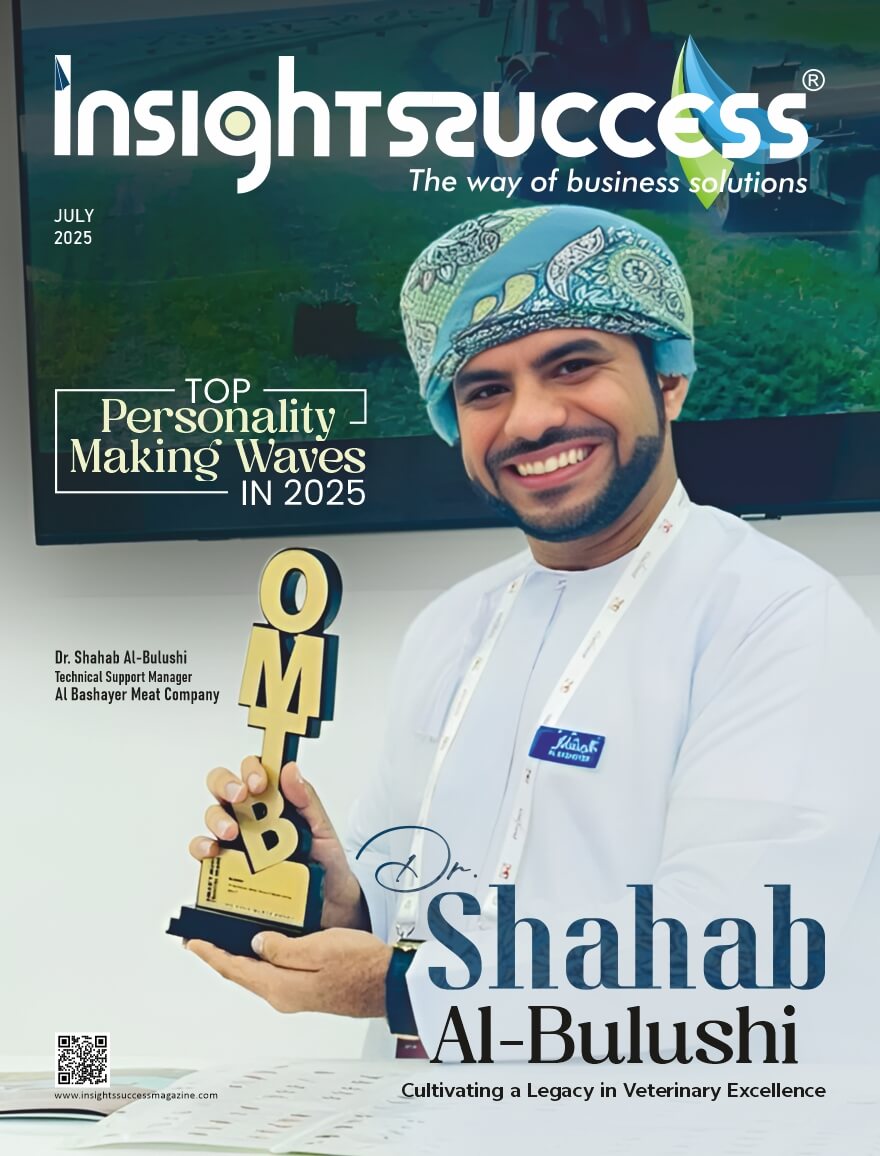
Top Personality Making Waves in 2025
Top Personality Making Waves in 2025 This edition spotlights visionary leaders reshaping industries through innovation, resilience, and impact. Featuring Dr. Shahab Al-Bulushi, this special edition honors his exceptional contributions to global healthcare transformation, celebrating his leadership, dedication, and groundbreaking strides that continue to inspire professionals across the world. Quick highlights Quick reads

Dr. Shahab Al-Bulushi: Cultivating a Legacy in Veterinary Excellence
In the Gulf region, few have embraced the challenge of transforming animal health and their businesses with the passion, resilience, and visionary spirit of Dr. Shahab Al-Bulushi. His role as Technical Support Manager at Al Bashayer Meat Company reveals a powerful story of purpose-driven progress—one fueled by unwavering commitment, a deep-rooted love for animals, and a lifelong dedication to advancing veterinary excellence. Raised as an animal breeder, Dr. Shahab Al-Bulushi’s path into veterinary medicine was shaped not by textbooks, but by the hands-on realities of caring for animals. What began as practical experience in animal husbandry evolved into a distinguished academic journey and, ultimately, a far-reaching professional career with both national and international impact. His seamless transition from clinical roles to strategic leadership within Oman’s Ministry of Agriculture, Fisheries, and Water Resources reflects not only his medical acumen but also his capacity to lead complex initiatives with clarity, compassion, and vision. Dr. Shahab Al-Bulushi’s approach to leadership is grounded in service, a principle he views not as a duty, but as a powerful opportunity to inspire and uplift others. Whether managing disease outbreaks, supporting private veterinary ventures, or representing Oman on the global stage, he brings a rare combination of technical expertise and emotional intelligence to every endeavor. At Al Bashayer Meat Company, he plays a pivotal role in aligning science with sustainable business practices, ensuring high standards of animal welfare while enhancing operational efficiency. Through every challenge and achievement, Dr. Shahab Al-Bulushi’s continues to embody the essence of authentic leadership, not defined by titles, but by the enduring impact he leaves on communities, the veterinary field, and the lives he touches along the way. Roots in the field: Humble Beginnings, Enduring Vision Dr. Shahab Al-Bulushi’s journey into veterinary medicine began not in sterile clinical corridors or university lecture halls, but on the fields of his father’s farm—a place alive with the sights, sounds, and challenges of animal life. It was here, among a diverse range of species, that a young Shahab developed a deep fascination with animal care. “My passion for veterinary medicine began at a very young age, as my father owned a farm, where I was exposed to a wide variety of animal species,” he recalls, his voice tinged with nostalgia. This wasn’t passive observation. From an early age, he was actively engaged in animal behavior, health management, and learning through hands-on experience. Day by day, he built a foundation in animal health, gaining insights into behavior, disease, and care long before stepping into formal education. As his interests matured, so did his skills. He began breeding show-quality birds and animals, competing locally and achieving commendable results in competitions, and honing a nuanced understanding of species-specific care. These early milestones weren’t just personal achievements; they were previews of a career built on curiosity, precision, and deep respect for animal life as he incorporated both domesticated and select wildlife species into his collection. Academic Excellence: Laying the Scientific Foundation Fuelled by passion and purpose, Dr. Al-Bulushi pursued veterinary medicine at King Faisal University in Saudi Arabia—one of the region’s most esteemed institutions. His transition from practical to academic learning was seamless. Through rigorous study and tireless commitment, he distinguished himself as a top student. He earned multiple accolades from the university, the College of Veterinary Medicine, and the Omani Ministry of Higher Education. In 2016, his academic journey reached a high point when he received the prestigious Al Marai Award for Outstanding Student in Veterinary Medicine—an honor reserved for the best student and graduating with first-class honors. This recognition was more than just an academic accolade; it represented the culmination of years of hard work and the validation of his chosen path. The Al Marai Award, particularly prestigious in Gulf veterinary circles, marked him as a rising star in the field distinction that would later be reinforced when he became the first veterinarian to win the award twice, earning the Al Marai Award for the Outstanding Veterinarian in the GCC in 2023. Professional Evolution: From Clinic to National Leadership Armed with his degree and a burning ambition to make a difference, Dr. Al-Bulushi began his professional journey at Al Amerat Veterinary Clinic in December 2017. Far from being a passive entry into the workforce, he immediately took on significant responsibilities, playing a key role in implementing the National Vaccination Program and providing crucial guidance to animal owners on proper management, reproduction, and health maintenance practices. The clinic years were formative in ways that textbooks couldn’t teach. Here, he encountered the real-world challenges of veterinary medicine from routine check-ups to emergency surgeries, from preventive care to complex diagnostic challenges. Each case added to his growing repository of practical knowledge, while his natural leadership qualities began to emerge. Recognition of his capabilities came swiftly. In September 2019, just two years into his career, he was promoted to Head of Preventive & Therapeutic Veterinary Services at the Ministry of Agriculture, Fisheries and Water Resources. This appointment marked a significant transition from individual practice to systemic leadership, overseeing veterinary services across more than 70 clinics nationwide. The scope of his new role was staggering. Dr. Shahab Al-Bulushi’s found himself responsible for the participation in the development of the national veterinary health plans, implementing veterinary laws and regulations, and managing the complex supply and distribution of medical products and equipment to various governorates across Oman. His work extended beyond administrative and field routine duties to include evaluating veterinary professionals for licensing and playing an integral role in controlling epidemiological diseases. Global Voice: Representing Oman on the International Stage With national acclaim came international recognition. Dr. Shahab Al-Bulushi’s was appointed national focal point for several global organizations, including the World Organisation for Animal Health (WOAH) for Veterinary Products, the Food and Agriculture Organization (FAO) in Technical Cooperation Program (TCP) for pandemic prevention, the Gulf Health Council, and the Arab Organization for Agricultural Development (AOAD). In these roles, he didn’t just represent Oman—he advocated for best practices in animal health across borders. Whether contributing

Investment Trends Shaping Animal Health Innovation in 2025
In an increasingly conscious world of sustainability, animal welfare, and food security, the animal health business is quickly evolving. 2025 marks a milestone, when investment trends are not just pursuing returns but propelling innovation towards a better future. From precision diagnostics to biotechnology, emerging technologies, open-ecosystem collaboration, and escalating global demand for safe and sustainable animal care are reshaping the future of animal health innovation. The New Era of Investment: A Shifting Priorities In the past, animal health rested in the hands of vaccine, antibiotic, and feed additive-focused pharma giants and agribusiness behemoths. Although these remain essential, investors in 2025 have their sights on more than traditional solutions. Venture capital, private equity, and strategic corporate investment are flowing into startups and scale-ups transforming how and what we monitor, treat, and avoid animal disease. Investors now challenge companies that are fusing veterinary science with data analysis, artificial intelligence, and genomics. This is motivated by the fact that innovation in animal health is not only a moral and agricultural imperative but a business opportunity that can be scaled globally and is lucrative. Technology at the Core of Innovation Among the characteristic trends of 2025 is the use of digital technologies in veterinary health practice. Wearable sensors, real-time monitoring technology, and AI-based diagnostics are enabling early detection of disease, minimizing unwanted treatment, and enhancing animal welfare outcomes. For instance, in cattle raising, ingestible sensors and smart collars monitor temperature, diet, and mobility—allowing one to act proactively instead of act reactively. This type of animal health technology that contributes to innovation attracts investors who perceive the economic reasoning as well as the ethical appeal of intervening in this way. In pet care, mobile apps which unite pet owners with telehealth, reminders for vaccinations, and remote diagnosis are flourishing. Pet technology startups are receiving a spate of seed and Series A rounds as consumers’ interest in easy and anticipatory care increases. Biotechnology and the Emergence of Alternatives Biotech is at the forefront of rethinking animal health innovation. Increased demand for mRNA and other new delivery-based vaccine platforms in 2025 is driven by human health-inspired breakthroughs. They are now being brought over to treat zoonotic disease and endemic infection in animals more efficiently. Investors are also funding the creation of alternatives to antibiotics, which have fallen under suspicion by emerging antimicrobial resistance. Microbiome therapy, probiotics, and immune-stimulatory nutraceuticals companies are getting large funding rounds. Not only do they preserve animal health, but they also solve important public health issues, so they are twice as appealing to socially responsible investors. Sustainability as a Driving Force Animal health cannot be left out when it comes to climate change and sustainability that have an impact on almost every industry. Environmental impact reduction in 2025 is linked to innovation in animal health. Healthy animals provide fewer resource consumptions, lower greenhouse gas emissions, and sustainable food production. Investors are supporting platforms for precision agriculture and environmental surveillance—minimizing waste, improving feed conversion, and reducing the carbon imprint of animal agriculture. The investment community is more interested in businesses that provide not only scalable technology but also facilitate ESG (Environmental, Social, and Governance) objectives. Additionally, regenerative farming practices that involve holistic animal welfare strategies are becoming popular. Full animal welfare solutions in regenerative systems by corporations are being considered the next frontier of sustainable agriculture business. Collaborative Ecosystems: Industry, Academia, and Startups One other key trend in 2025 is the creation of collaborative ecosystems involving industry players, startups, and academia. Innovation hotspots and animal health accelerators are being built by research institutions and universities. These hotspots are innovation idea incubators that are then funded by venture capital and industry partnerships. This multi-stakeholder model guarantees that animal health innovation is based on leading-edge science, but also commercially feasible. Big pharma and agri-tech companies have corporate venture arms that are proactively seeking early-stage tech and don’t only introduce capital, but also counsel, room, and access to market. The outcome is a high-quality, integrated ecosystem where concepts can quickly grow from bench to farm. Regulatory Support and Market Expansion Government and regulatory authorities are increasingly accepting the need for pro-active animal health interventions. In some of the globe’s biggest markets, on-the-ground governments and streamlined approval procedures are becoming drivers of innovation, along with increased R&D spend. One Health initiatives that accept the inter-relationship between animal, human, and environmental health are also proving to be a spur to investment. Emerging markets are also providing new avenues for animal health innovation. As incomes rise and urbanization accelerates, demand for quality pet care services and for animal protein is growing in regions such as Southeast Asia, Africa, and Latin America. Investors are also not missing out on the opportunity and are investing in local solution startups in these high-growth markets. Conclusion: The Future is Health-Driven and Holistic With each passing month as we step further into 2025, there is no question but that animal health innovation is no flash in the pan—it’s an upheaval in how we conduct animal welfare, food supply, and public health. From precision farm tech to biotech-derived medicines and digital pet wellness, the potential is huge and diverse. Investors are not only looking for returns; they’re creating a world where animal health is safer, smarter, and more sustainable. They’re doing this while creating a better future for animals, and for people and planet too. Read More: Government Support Mechanisms for Agri-Entrepreneurship Development

Government Support Mechanisms for Agri-Entrepreneurship Development
In the recent past, agri-entrepreneurship has emerged as a rural development changer that not only impacts farm productivity but also jobs and livelihoods. As agriculture shifts from subsistence to commercial livelihood, governments globally, particularly developing countries such as India, are increasingly recognizing the need to support agri-entrepreneurs by introducing policy, money, infrastructure, and capacity building. This article reviews the various mechanisms employed by governments in supporting and developing agri-entrepreneurship in an equitable and sustainable manner. The Emergence of Agri-Entrepreneurship Agri-entrepreneurship suggests the application of new business practices and models in farming and allied activities. It is beyond traditional farming because it entails value addition, agribusiness ventures, technological adoption, and market linkages. From organic farming to food processing and precision agriculture to supply chain management logistics, agri-entrepreneurs are revolutionizing the agricultural industry. Nevertheless, the journey of an agri-entrepreneur has not been without hiccups. Shortage of land, credit access denial, imperfection in the market structure, and low technical skills are some issues that have the potential to be growth obstacles. Governments, recognizing these issues, are stepping in with targeted support programs. Policy Framework and Institutional Support Part of the solid pillars of government support to agri-entrepreneurship is in good policy making. The regional and national governments are formulating policies that emphasize rural business setup, agricultural innovation, and inclusive growth. For instance, in India, the Startup India program, the Agri-Clinic and Agri-Business Centres (ACABC) program, etc. are a special category of programs which are specifically targeted to encourage agri-entrepreneurship. Here also, the system provides a policy-level push, and also brings in other players, such as financial institutions and research institutions, and even private players, which contributes to building a support system at all levels. Besides this, institutions like NABARD (National Bank for Agriculture and Rural Development) have the responsibility of channeling funds and technical assistance to developing agri-entrepreneurs. Subsidies and Financial Support Financial assistance in the form of capital is generally the mainstay of any business, and agri-entrepreneurship is not any different. Realizing the high initial cost and risk of farming business, governments offer a blend of subsidies, grants, and soft loans. Subsidies provided on farm machinery, cold storage, and solar-powered irrigation facilities reduce the capital expense significantly. Apart providesat, state-government-backed credit schemes such as the Pradhan Mantri Mudra Yojana (PMMY) and the Kisan Credit Card (KCC) provide collateral-free credit facilities to small and marginal farmers looking to venture into agri-business. Agriculture Infrastructure Fund (AIF) is also a successful scheme which provides medium and long-term finance in the form of debt to finance sustainable operations such as post-harvest management infrastructure and assets of community farms. Capacity Building and Skill Development As critical as financial concerns are, capacity building for entrepreneurship is also critical. Individuals who can become agri-entrepreneurs lack the technical and management competencies required to develop and establish a successful agri-based enterprise. Governments are therefore investing in skill development training and institutes. Agricultural entrepreneurship courses are also a part of schemes like Skill India and Samagra Shiksha Abhiyan. They try to provide experiential learning in agro-processing, organic farming, digital farming, and farm business management. Agri-entrepreneur incubation centers and knowledge platforms are also provided by agricultural universities and Krishi Vigyan Kendras (KVKs). Market Linkages and Digital Platforms The linkage of agri-entrepreneurs and markets is the central theme to facilitate profitability and sustainability. The traditional market mechanisms are exploitative and fragmented and therefore offer a thin margin of profits for small producers. Governments are facilitating e-marketplaces and online platforms to plug this gap. India’s e-NAM (National Agriculture Market) is one such initiative in this direction, enabling open real-time agriculture produce trade across states. Government agency-supported mobile apps and digital advisory systems are also helping farmers get market prices, weather, and best agriculture practices. Additionally, public-private partnerships facilitate public-private partnerships for farm-to-fork value chains, export market destinations, and retail participation. Not only do these render agri-entrepreneurs competitive but also improve the quality of fruit and vegetables accessible to consumers. Innovation and Technology Integration Technology is at the core of the next-generation agri-entrepreneurship. Governments are actively encouraging R&D and adoption of agri-tech innovation. From drones and IoT sensors to AI-powered crop monitoring and blockchain-based supply chain traceability, the agri-tech sector is transforming rapidly. With research grants, hackathons, and innovation challenges, the governments are inviting startups and young people to innovate solutions for agriculture’s age-old problems. State-level Centers of Excellence and Agri-Incubators are providing a fertile ground for experimentation and commercialization of technology. Conclusion: A Collaborative Path Forward Agri-entrepreneurship is not just an economic imperative but also a social one. It is the hope of rural revivals, food security, and climate-resilient farming. Governments, with a convergent package of interventions in policy, finance, skill building, and connectivity, are leading the change. But sustained success in agri-entrepreneurship will require constant coordination by stakeholders government, academe, businesses, and civil society. By encouraging innovation and empowering rural youth, we can realize the full potential of agri-entrepreneurship to be a driver of inclusive and resilient agricultural development. Read More: Investment Trends Shaping Animal Health Innovation in 2025