





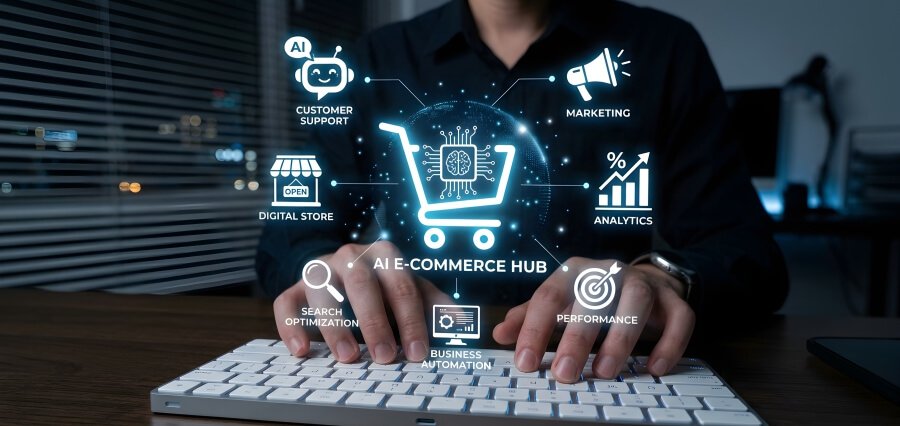
The Future of Retail: How AI, Automation and Intelligent Software Are Transforming Commerce
Running an online store involves a lot of work customers never see. A price changes, stock gets updated, a new product goes live, or an order moves to the warehouse. Each update has to reach the right place. When it does not, someone usually has to find out what went wrong and fix it. This becomes harder as the business grows. There are more products to manage, more orders coming in, and more information moving between systems. Retailers are starting to use AI and automation for some of these regular tasks, especially the ones that take up time every day. The software still needs the right information to do its job. If stock, product, or order data sits in different places, those connections have to be built first. Retail software development services can help with that work and make AI useful within the systems retailers already depend on. This article looks at where that is happening and what it changes for retail teams. Retail Is Moving Beyond Traditional Ecommerce Online stores were built around a fairly fixed way of shopping. People searched for an item, narrowed the results, read the product page, and decided whether to buy. That still works, but shoppers do not always arrive knowing exactly what they want. A customer looking for running shoes, for example, may care about where they run, how often they run, or an old knee injury. A basic keyword search does not do much with that information. Newer search and shopping tools can use those details to narrow the choice and help the customer get closer to a suitable product. There is work happening on the retailer’s side as well. Software is taking over some of the repeated checking and sorting that used to land with retail teams. That is starting to change both what customers see on the site and how the work behind it gets done. Where AI and Automation Are Changing Retail There is no single use of AI that explains what is happening in retail. The changes are showing up in different places, from the way people search for products to the work involved in getting an order out of the door. Product Search Is Getting Better at Understanding Shoppers People do not always know the right product name. Someone shopping for a jacket might simply want something light enough for running and suitable for rain. Traditional search may struggle with a request like that because it relies heavily on keywords and product labels. New search tools have more information to work with. They can use the shopper’s request along with details already stored against the products. For a large catalog, that can save customers from trying several searches or working through filter after filter. Merchandisers Have Less Catalog Work to Do by Hand Anyone who has worked with a large product catalog knows how quickly small problems pile up. A size may be missing, an item may sit in the wrong category, or supplier data may arrive with fields left blank. Finding these issues across thousands of products takes time. Some of that checking can be done automatically. The system can point out missing information or products that look out of place, leaving the merchandiser to review the cases that need attention. Decisions about collections, placement, and promotions remain with the merchandising team. Pricing Teams Can See Changes Earlier Retail prices do not exist on their own. A team may look at what is selling, how much stock is left, what competitors are charging, and whether a promotion is already running before changing a price. The tedious part is gathering all of that information. Software can do much of the checking and let the team know when something worth reviewing has changed. The final call still needs context. A competitor clearing last season’s stock, for example, is very different from a wider drop in market prices. Stock Updates Can Reach More of the Business An inventory change can affect the website, warehouse, delivery promise, and customer service team. Problems start when one system has newer information than another. A product may appear available online even though the last unit has already been sold. Better connections between these systems can reduce those gaps. When stock moves or an order is placed, the update can be passed along without waiting for someone to reconcile it later. This also gives retailers a better basis for deciding where an order should be fulfilled. Simple Support Requests Do Not Always Need an Agent “Where is my order?” is hardly a complicated customer service question, yet answering it still takes an employee’s time if the customer cannot find the information themselves. The same applies to basic questions about returns or product availability. These requests can often be dealt with automatically when the order and product information is available to the support system. A damaged order or disputed refund is different. Those cases need someone who can understand what happened and decide how to handle it. The Bigger Change Is Happening Behind the Storefront A shopping assistant is only useful if it has the right information to answer with. Take a customer asking whether a sofa can arrive by Friday. The product page alone cannot answer that. Stock may be held in several locations, delivery times vary by area, and an order already placed that morning may have taken the last available unit. The information needed to answer that question may sit in the ecommerce platform, inventory system, warehouse software, and order system. If those systems are not sharing recent information, adding an AI tool on top will not solve the problem. This is where AI integration services have a practical role. They connect AI tools with the systems holding the information they need. For retailers, getting those connections right is often more important than adding another customer-facing feature. Retail Software Will Need to Become More Connected Retail technology tends to grow over time. The online store may run on one platform, while

Assessing Technologies: Emerging Trends Shaping the Future of Smart Coating Technologies
There is a growing need in industries like manufacturing, construction, automobiles, aerospace, electronics, medicine, and energy for materials that do not just provide simple protection. The need for such companies is for coating systems that would prolong their product’s lifespan, be able to cope with changing environments, minimize the cost of maintenance, and improve performance. This need is leading to the evolution of smart coatings technologies. Though conventional coatings provide protection from corrosion, wear and tear, moisture, chemicals, and heat to the surface, smart coatings react to any environmental changes around them. Smart coatings may detect damage, release active ingredients, change their properties, or even deliver information on the state of the surface. Due to the need for a longer lifecycle of equipment and greater efficiency in industrial operations, there are many new developments in materials science and information technology that increase the capabilities of such solutions. Responsive Materials The most significant one of all these developments is that related to coatings with active responses to the surrounding environment. There are studies going on about materials reacting to temperature, humidity, pressure, light, chemicals, and mechanical actions. There can be a change in their properties or a specific action taken in response to certain changes in the surrounding environment. Another important field of advancement is that of self-healing paints. Self-healing paints are able to heal scratches and other surface damage via chemical reactions and by releasing healing agents. This will prevent moisture or any other substance from penetrating further down into the material. Industries like transportation, construction, or industrial machinery could benefit from this technology as they can increase the service life of the materials and save money on repairs. With improved stability and performance of such coatings, Smart Coating Technologies will become more commercially viable in industrial use cases. Digital Integration In the union of smart coatings with sensing and digital technologies, there arises a whole array of possibilities for monitoring. It is possible to use intelligent surfaces that have sensing qualities, helping detect such signs of deterioration as corrosion, temperature changes, strain, chemical attack, etc. With the help of the digital monitoring system, companies could be provided with information about the status of their assets. Such an approach is consistent with the ongoing trend towards integrated industrial ecosystems. Information that is collected through intelligent surfaces can be analyzed through analytics software, digital twin, and maintenance management system to help make better decisions. Companies can use this information to do risk assessments and prioritize inspection and maintenance activities based on their operational situation at hand. This will provide a framework for predictive maintenance and help in addressing possible risks before they cause any disruptions to their operations. It is another example of how Smart Coating Technologies can be implemented within the context of digital transformation efforts. Sustainable Solutions Sustainability has now become yet another driving force for advancements in coating technology. Various sectors are facing mounting pressure to cut down on emissions, waste, hazardous substances, resource use, and at the same time, provide superior performance. Such a situation is spurring research into water-based, bio-based, low-volatile organic compound coatings, and coatings that consume fewer resources across their life cycle. Efforts are also being made to make the application process of the coatings more energy-efficient and minimize waste generation. The trend will involve increased concern with life cycle performance as opposed to environmental effects of the coating in the initial phase. Durability of the surface will lessen the need for recoating, replacement, and transportation. Yet another field of study revolves around recyclable and renewable resources, which ensure sustainable material usage and minimize any environmental impact. On the other hand, the manufacturer must strike a balance between being sustainable and durable, safe, affordable, and regulated. Successful Smart Coating Technologies, therefore, have to bring about tangible environmental gains without affecting the performance required in stringent applications. The development of nanotechnology has also affected this area significantly. Nanomaterials are capable of providing features such as mechanical strength, barrier performance, antimicrobial effects, conductivity, UV protection, and thermal stability, among others. Conclusion The future of intelligent coating technologies would be determined by the capability of translating innovations from lab scale into viable commercial products. Consistency of performance, cost of manufacturing, regulations, and compatibility with current manufacturing processes would be among other issues that must be considered. In addition, cybersecurity and information management concerns would come into play for coatings that have the capability of being connected to sensing networks. The success of intelligent coatings would depend on their ability to solve specific problems rather than use technology for its own sake. With further advancement of material science, digital technology, nanotechnology, and sustainable manufacturing technologies, the intelligent surface will have even more capacity. Instead of simply protecting assets from the elements, their function will include condition monitoring, adaptation, and optimization. Companies who adopt these technologies will be able to increase reliability of their assets, decrease maintenance costs, improve sustainability performance, and increase resilience. Development of Smart Coating Technologies will contribute significantly to development of high performance industrial materials of the future, making manufacturing processes safe, increasing asset life cycles, decreasing resource consumption, and increasing competitiveness in the changing world market. Read Also : Key Luxury Home Décor Trends Shaping Modern Interior

Eliane Germanos: Turning Scientific Insight into Business Excellence
Outstanding products are built on a foundation of scientific understanding, strategic vision, teamwork, and the ability to inspire change. Leadership often begins with curiosity and a desire to develop significant solutions. Every formula has allowed Eliane Germanos to improve people’s lives, overcome challenges, and provide value. What began as a passion for chemistry evolved into a distinguished career marked by technical proficiency, inventiveness, and inspiring leadership. Currently serving as Group R&D Director at Ritver Paints & Coatings, Eliane is a prime example of how successful leaders use scientific knowledge, strategic thinking, and a people-first mindset to promote innovation and long-term economic success. She is well known for turning scientific data into significant economic value. With over two decades of experience in UV, water-based, and solvent-based coating technologies across the wood, automotive, industrial, and decorative coatings industries, Eliane has built deep technical expertise and industry knowledge. She oversees labs with the accuracy of a scientist and the vision of a leader who is aware of both the people and the technical procedures. Her research disproves the notion that science and leadership are two different disciplines by showing that creativity and business success are fostered when technical proficiency and effective leadership are combined. Engineering Strategic Impact When Eliane began her career in chemistry, she envisioned a profession centred on formulas, testing, and laboratory precision. She did not anticipate that the field would fundamentally shape her understanding of leadership. This transformation developed gradually through years of navigating challenges, embracing opportunities, and taking on increasing responsibilities. As her role expanded into production, quality assurance, and customer-focused decision-making, she came to understand that no technical decision exists in isolation. Every choice can influence production efficiency, customer confidence, operational costs, sustainability, and organisational reputation. What began as laboratory work gradually evolved into a broader strategic responsibility. This perspective also transformed her view of the laboratory. Early in her career, it was seen primarily as a technical environment, separate from other areas of the business. Today, it is regarded as one of the most important decision-making centres within a manufacturing organisation, closely connected to production, sales, regulatory compliance, and long-term business growth. Her experience has reinforced the understanding that leadership is not defined by titles or formal authority. It is demonstrated through informed technical decisions, the ability to guide teams through complexity, and a commitment to translating scientific knowledge into meaningful business value. Transforming Innovation into Value Throughout her career in decorative, automotive, industrial, and wood coatings, Eliane has consistently balanced technical innovation with commercial realities. She recognizes that innovation in the coatings industry requires careful management of competing priorities, including performance and cost, sustainability and speed to market. Manufacturing organizations must address these challenges by developing solutions that align technical capabilities with business objectives and evolving customer expectations. Rather than viewing innovation as a purely scientific pursuit, she emphasizes the importance of practical execution. A promising coating formulation must perform reliably under manufacturing conditions, meet application requirements, comply with regulatory standards, remain cost-effective, and respond to changing customer needs before it can succeed in the marketplace. In highly price-sensitive markets, even advanced technology may fail if it is not commercially viable. Similarly, in heavily regulated markets, products that do not meet compliance or performance requirements are unlikely to achieve sustainable success. For her, a thorough understanding of the market is fundamental to successful innovation. This includes recognizing customer expectations for quality, developing realistic pricing strategies, and anticipating environmental standards that increasingly influence purchasing decisions. She also recognizes that sustainability is no longer simply a competitive advantage but a business necessity. The true measure of innovation lies in developing solutions that combine technical excellence, scalability, regulatory compliance, and commercial viability, creating lasting value for both customers and the business. Leading with Confidence As a leader managing multidisciplinary teams of chemists and engineers, Eliane has given considerable thought to what enables women to succeed in technical and manufacturing organisations. She recognizes that women do not require a different leadership approach from men. Technical expertise, emotional intelligence, resilience, and the ability to make clear decisions under pressure are essential qualities for every effective leader, regardless of gender. At the same time, she acknowledges that women often face greater scrutiny in the workplace. They may be observed more closely, questioned more frequently, and expected to demonstrate their capabilities repeatedly. This reality makes self-confidence, resilience, and trust in one’s abilities particularly important for long-term professional growth. She also challenges the notion that women must adopt a traditionally masculine leadership style to advance their careers. Qualities such as intuition, empathy, patience, and effective communication are valuable leadership strengths that complement technical expertise and strategic thinking. Women can be decisive, highly skilled, and strong leaders while remaining authentic to themselves. Looking ahead to 2026 and beyond, she believes leadership should be assessed not by gender but by capability, vision, integrity, and the ability to inspire people and drive organizations towards meaningful progress. Science at the Heart of Sustainability Eliane’s career has spanned diverse coating technologies, providing extensive insight into an industry undergoing continuous transformation. She recently explored these developments in an article for The Invisible Structure: Coating Insights, where she explains that sustainability is no longer simply a marketing message. It has become a critical requirement for long-term business success, particularly for companies manufacturing chemicals and products used in everyday life. Several trends are reshaping the coatings industry. These include the increasing adoption of low-VOC and low-TVOC formulations, the transition towards water-based systems where practical, and the development of lead-free, heavy-metal-controlled, formaldehyde-free, and APEO-free products. Responsible use of preservatives and biocides is also becoming increasingly important. Durability is another important dimension of sustainability. Longer-lasting coatings can reduce the need for repainting, minimize waste, lower transportation requirements, and reduce overall lifecycle costs. Sustainable manufacturing is equally important and depends on stronger process control, fewer rejected batches, and more efficient energy consumption. The companies most likely to succeed will be those that approach sustainability with scientific discipline. This means developing solutions that are thoroughly

Visionary Women Driving Innovation in Chemistry & Manufacturing 2026
Visionary Women Driving Innovation in Chemistry & Manufacturing 2026 Eliane Germanos combines scientific expertise, strategic leadership, and creativity to advance innovation in coatings and manufacturing. As Group R&D Director at Ritver Paints & Coatings, she connects research with business value, champions sustainability, supports women in technical leadership, and embraces artificial intelligence to strengthen decision-making, operational performance, and long-term growth. Digital Link Quick highlights Quick reads
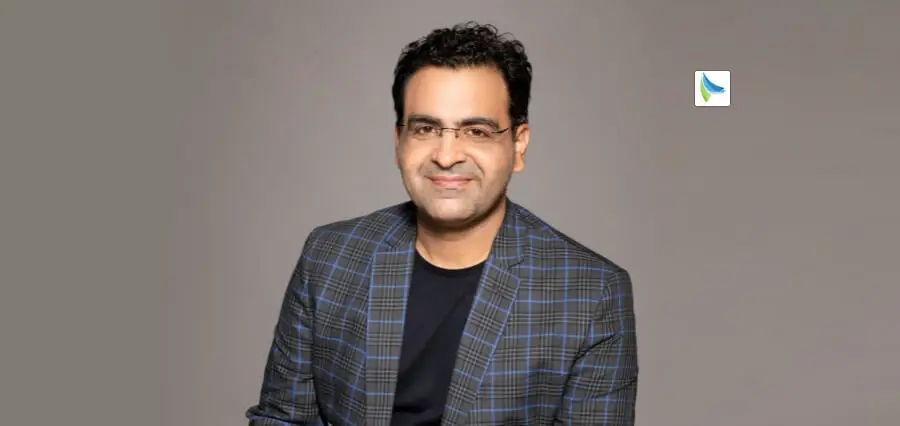
Building Better Ground: The Leadership Journey of Anuj Narula
Leadership rarely announces itself. It creeps in quietly, born not from ambition but from frustration with the status quo. Anuj Narula, Founder of Techhub & Teckkonnect, understands this truth intimately. Years spent working across India’s infrastructure sector showed him a persistent and troubling gap the distance between the country’s aspirations for world-class infrastructure and the actual quality and consistency of its execution on the ground. That gap became his calling. India currently pours resources into roads, highways, railways, tunnels, and hydropower projects at an unprecedented scale. Narula sees this national push not merely as a construction opportunity but as a chance to build something far more durable: human capital. He views leadership as the bridge connecting India’s infrastructure ambitions to the technical expertise, innovation, and trained professionals needed to deliver them. “I see leadership as an opportunity to bridge that gap: by combining technical expertise, innovation, and capability development to create better projects and stronger professionals,” he explains. A Fragmented Industry, A Focused Response The infrastructure sector Anuj operates within carries deep structural challenges. It remains fragmented, and in many pockets, poorly organised. Weak planning routinely produces delayed projects, ballooning costs, and strained resources. Compounding this problem is an educational disconnect civil engineering graduates frequently step into the workforce without the practical judgment, critical thinking, or decision-making skills that real project delivery demands. Narula chose to attack this problem at its root. Rather than treating training as an afterthought, his organisation built continuous learning and in-house capability development into its foundation from day one. The training programmes extend well past technical instruction, deliberately cultivating leadership, critical thinking, problem-solving, communication, and ownership among young engineers. He insists that delivering successful infrastructure demands far more than technical knowledge alone it requires professionals who can think, decide, and lead under pressure. Staying the Course Through Difficult Periods Every leader experiences dips in energy and motivation, and Narula does not pretend otherwise. What separates sustained leaders from the rest, in his view, is not the absence of low points but the refusal to let those low points define the journey for too long. He deliberately curates his environment, surrounding himself with people who carry a growth mindset and push him to think beyond the obvious, while regularly reading material that reinforces resilience. When circumstances turn genuinely difficult, Narula leans on something larger than the immediate obstacle. “Ultimately, during difficult periods, it is my belief in the larger vision that keeps me moving forward. When the purpose is clear, temporary challenges become part of the journey rather than reasons to abandon it,” he says. That clarity of purpose, he suggests, is what converts short-term setbacks into simple waypoints rather than dead ends. Calculated Risk Over Reckless Ambition Risk sits at the heart of entrepreneurial growth, but Narula draws a firm distinction between courage and recklessness. Genuine leadership, in his framework, is not about chasing bold moves for their own sake it is about making risk manageable through preparation. Before committing to a major decision, he researches thoroughly, maps the variables at play, identifies where failure is most likely to occur, and builds contingencies for multiple scenarios. People matter just as much as process in this equation. Narula credits his team’s involvement in critical assignments, coupled with open communication and shared clarity around objectives and obstacles, as the mechanism that turns uncertainty into calculated opportunity rather than blind gambling. A well-prepared team, he has found, can absorb volatility that would otherwise derail a project. Innovation as a Perspective, not a Product Ask Narula to define innovation, and he resists the conventional answer tied to technology or disruption. Instead, he frames it as something closer to a mindset. “To me, innovation is a ‘Perspective of Possibilities,”he states. For him, the term describes a refusal to accept convention simply because convention exists a habit of pausing to ask whether a better possibility might be hiding behind the obvious approach. Innovation, in this reading, has less to do with tools and more to do with the willingness to interrogate assumptions and keep searching for improvement. Learning Milestones and the Discipline of Delegation Narula describes the accumulated lessons of his career as “Learning Milestones” moments that quietly became stepping stones in how he leads today. Clear communication, delegating responsibility to the right person, staying proactive instead of reactive, and preparing thoroughly before important meetings rank among the most formative lessons he carries. Perhaps most significantly, he has come to see leadership not as a solo performance but as an exercise in creating clarity, trusting capable people, and stepping back to let them take ownership. A Rotary in Rishikesh, and a Lesson in Human Stakes Among the moments that have stayed with him, Narula points to a road safety assignment in Rishikesh, where he served as a third-party Road Safety Auditor. The site had a troubling accident history, driven largely by flaws in the geometry and layout of an existing rotary. After conducting a detailed audit, he recommended a set of targeted interventions removing the rotary, introducing speed-calming measures such as a speed table, upgrading hazard markings, and installing clearer traffic signage. These changes made the junction noticeably more visible and considerably safer for road users. The outcome left a lasting impression. He later learned from a road user that accidents at the site had reportedly dropped by roughly 98 percent following the redesign. Beyond the technical satisfaction of a job well done, the experience crystallised something deeper for Narula: engineering decisions carry the power to directly shape human lives. That realisation, he notes, reinforced his conviction that infrastructure engineering ultimately exists in service of society, not merely in service of blueprints and budgets. The Discipline Behind the Ideas Behind Narula’s public output sits a set of quiet, deliberate habits. Each day begins with writing down his priority tasks, a small ritual that sharpens his focus and organises his decision-making from the outset. He protects blocks of undivided attention for his most demanding work, operating on the belief that meaningful
Influential Person Who Defines 2026
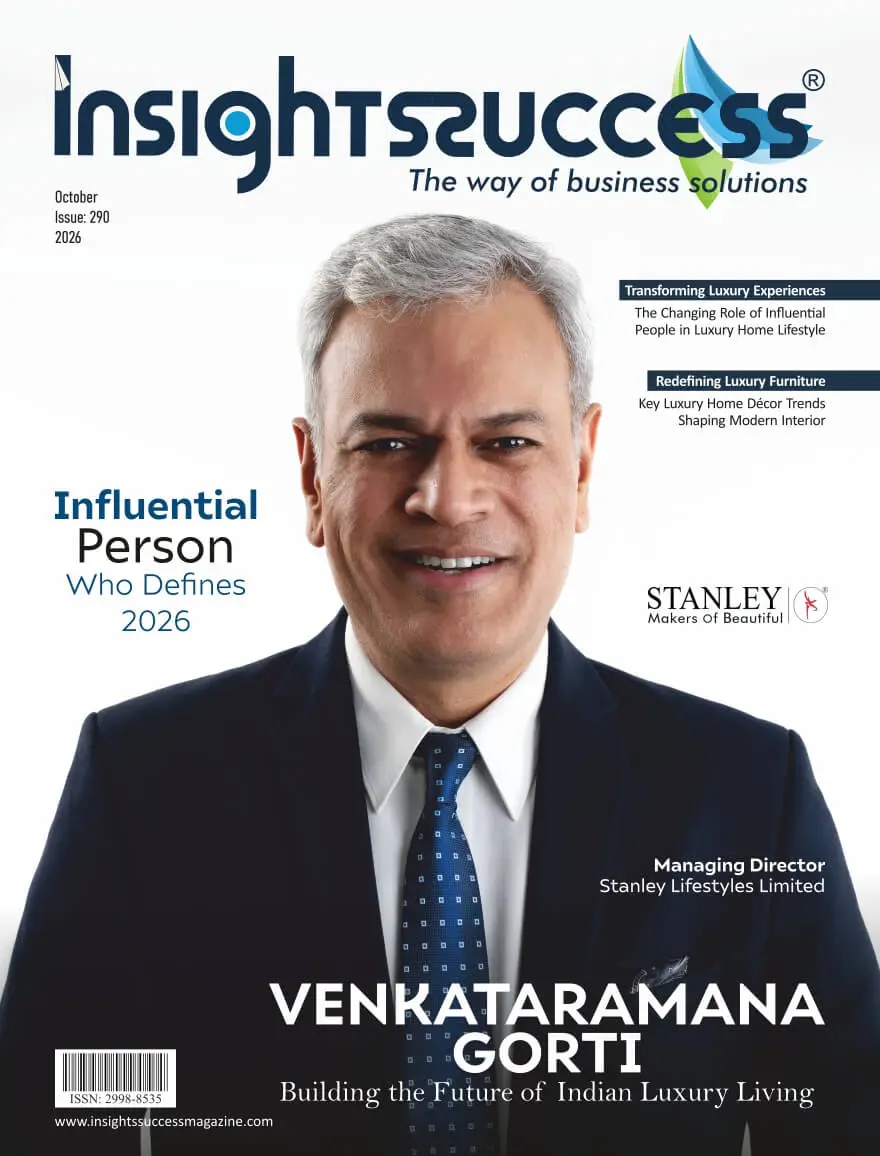
Influential Person Who Defines 2026 Showcasing an influential leader whose expertise, resilience, and purposeful decisions drive meaningful progress, inspire innovation, strengthen organizations, and shape industries through impactful contributions, visionary thinking, and leadership excellence. Digital Link Quick highlights Quick reads

Venkataramana Gorti: Building the Future of Indian Luxury Living
India’s premium home and lifestyle industry is entering a defining phase. As consumer aspirations evolve, the conversation is moving beyond individual products and categories towards something more holistic: the complete experience of living. For Stanley Lifestyles Limited, this presents a significant opportunity. Having built a strong presence in premium furniture, the company is now expanding its vision towards becoming a broader luxury lifestyle and full-home solutions brand. Leading this journey is Venkataramana Gorti, Managing Director, Stanley Lifestyles Limited—a business leader whose career spans more than three decades across engineering, manufacturing, supply chain, procurement, operations, transformation and P&L leadership across India and international markets. His leadership philosophy is grounded in a simple belief: sustainable businesses are built through strong systems, capable people, disciplined execution and an unwavering focus on the customer. A Career Built from the Ground Up Venkataramana’s professional journey has been shaped by diverse experiences across industries, functions and geographies. His career has taken him across India, the Middle East, Malaysia, the USA and Brazil, while also involving leadership responsibilities and international teams across several global markets. These experiences have given him a broad understanding of how businesses operate and grow in complex environments. Over the years, his responsibilities have covered strategic sourcing, procurement, supply chain, logistics, factory operations, new product introduction, transformation initiatives and P&L leadership. He has managed significant business and operational responsibilities, including a USD 0.5 billion business in Malaysia with a workforce of more than 4,000 employees and a 6 billion annual spend at Honeywell. Yet, beyond the scale of these responsibilities, the most important lesson from his journey has been the consistency of business fundamentals. Markets may differ. Cultures may change. Industries may evolve. But strong businesses continue to depend on capable teams, disciplined execution, customer focus, adaptability and sound decision-making. “Leadership is tested most during difficult situations,” he believes. The ability to remain calm, understand the fundamentals, make informed decisions and bring people together is what ultimately creates sustainable results. The Stanley Opportunity For Venkataramana, joining Stanley represents an exciting new chapter. Stanley has established itself as a recognised name in India’s premium furniture space. The next opportunity, however, goes beyond individual furniture categories. The vision is to look at the home as one complete environment. Customers do not experience their furniture, kitchen, wardrobes, entertainment spaces and cabinetry as isolated categories. They experience one home. Bringing together design, craftsmanship, manufacturing excellence and customer experience across the complete home therefore creates a powerful opportunity. This is where Venkataramana sees significant potential for Stanley. The ambition is to build on the company’s existing strengths while bringing greater operational discipline and scale to its evolving luxury lifestyle and full-home solutions proposition. For a premium and luxury brand, excellence cannot stop at design or marketing. It has to extend across the product, manufacturing, installation, service and every customer interaction. That combination of aspiration and execution will be critical in shaping Stanley’s next phase of growth. Leadership Through People and Systems Venkataramana does not believe leadership is about personally solving every problem. Instead, he believes the role of a leader is to create clarity, build capable teams, establish strong systems and enable people to take ownership. “Leadership should not mean trying to personally solve every problem.” His approach is deeply systems-driven. Strong processes, data, technology and clear accountability help organisations become more predictable and reduce unnecessary firefighting. At the same time, systems alone do not build successful organisations. People do. Throughout his career, Venkataramana has placed significant emphasis on building teams where individuals understand their responsibilities, have the authority to make decisions and are accountable for outcomes. Over time, he has also learned an important lesson about leadership and delegation. “You cannot build a strong organisation by trying to control everything yourself.” The strength of an organisation, he believes, is reflected in its ability to perform effectively without depending on the constant presence of one individual. That requires trust, capable people, strong processes and a culture of accountability. Turning Complexity into Opportunity Complexity has been a recurring feature throughout Venkataramana’s career. From manufacturing and supply chain transformation to strategic sourcing, procurement, logistics, business turnarounds and operational improvement, his experience has involved solving problems where multiple variables must work together. For him, complexity is not necessarily something to avoid. It is an opportunity to simplify, create stronger systems and generate value. Cost, quality, speed, service, inventory and working capital may appear to be separate business metrics, but they are deeply interconnected. Together, they influence both profitability and customer experience. This operational perspective is particularly relevant to the premium home category. A luxury brand can create desire through design and storytelling, but the real brand experience is ultimately delivered through execution. The product has to meet expectations. Manufacturing has to maintain quality. Installation has to be seamless. Service has to inspire confidence. Every part of the organisation contributes to the customer’s perception of the brand. Resilience Beyond Crisis The COVID-19 pandemic reinforced another important leadership lesson for Venkataramana: resilience cannot be built after a crisis begins. “Resilience should be built into the business before a crisis occurs.” His experience across supply chain, procurement, manufacturing and operations has consistently reinforced the importance of visibility, agility, diversification and risk management. The pandemic demonstrated how quickly established assumptions could change. Businesses had to examine sourcing dependencies, inventory strategies, logistics networks, alternate suppliers and continuity planning. Technology and strong systems also became increasingly important. Organisations with better data visibility and digital infrastructure were better positioned to make informed decisions quickly and adapt to changing circumstances. For Venkataramana, the lesson is clear: while cost efficiency remains important, sustainable businesses must also build agility, people capability and the ability to respond quickly when conditions change. Achievements Built Through Collective Effort Across more than three decades, Venkataramana’s career has included leadership responsibilities across complex businesses and global operations. His professional journey has included managing a USD 0.5 billion business in Malaysia with a workforce of more than 4,000 employees, overseeing a 6 billion annual spend at

The Changing Role of Influential People in Luxury Home Lifestyle
Transforming Luxury Experiences The way luxury home lifestyle is defined, communicated, and experienced has changed significantly over the past decade. The tastemakers who once held exclusive authority over what counted as refined living a narrow group of established designers, legacy publications, and high-end retailers now share that space with a considerably broader and more diverse range of voices. Influential people in luxury home lifestyle today come from design backgrounds, creative industries, architectural practice, content creation, and entrepreneurship, and together they are reshaping not just the aesthetic of luxury living but the very definition of what luxury in the home context means. Moving From Gatekeepers to Collaborators The old model of luxury home taste was essentially top-down. A small number of authoritative voices, influential designers, prestigious showrooms, and aspirational publications determined what was considered beautiful, what was considered tasteful, and what any self-respecting luxury home should contain. Everyone else either adopted those standards or operated outside the definition of luxury entirely. Influential people in luxury home lifestyle today operate within a much more collaborative and dynamic ecosystem. The conversation about what constitutes excellent home design is happening across more platforms, involving more voices, and reaching more people than the traditional model ever allowed. This democratization has not diminished the quality of the conversation; it has enriched it, introducing perspectives and approaches that the narrower traditional model would have filtered out. Balancing Influence with Authenticity Influential people in luxury home lifestyle who sustain genuine authority over time tend to share a quality that distinguishes them from those whose influence is more transient, authenticity. Their spaces, their choices and their aesthetic perspectives feel genuinely theirs rather than assembled for effect or calibrated to maximize audience appeal. That authenticity is what earns them the kind of trust that translates influence into genuine impact on how their audiences think about and approach their own homes. The luxury home lifestyle space has seen its share of performative influence, beautifully staged spaces that do not reflect real living, design choices made for visual impact rather than genuine habitation. Audiences have become increasingly sophisticated in their ability to distinguish this from the genuine article, and the influential people in luxury home lifestyle who are building lasting authority are those whose work reflects real conviction. How Influential Voices Shape the Industry The impact of influential people in luxury home lifestyle extends beyond individual audience members to the broader industry, the designers, manufacturers, retailers and brands whose work shapes what is available in the luxury home market. When a genuinely influential voice directs attention toward a particular approach, a specific material, or a design philosophy, the market responds. Craft-based furniture makers whose work might previously have reached only a small specialist audience find themselves with suddenly expanded visibility. Design approaches that challenge established conventions get legitimized through influential endorsement. And luxury brands that understand how influence works in this environment build genuine relationships with the voices whose endorsement carries real weight, not through transactional arrangements that undermine authenticity but through genuine alignment of values and aesthetic perspective. Using Influence to Educate and Inspire The most valuable role that influential people in luxury home lifestyle play is educational, helping their audiences develop the vocabulary, the eye, and the confidence to make genuine choices about their own spaces rather than simply following trends or deferring to authority. This educational dimension of influence is what produces lasting impact rather than short-lived inspiration. When someone engages with a genuinely influential voice in the luxury home space and comes away with a better understanding of why certain materials are exceptional, how proportion works in interior design, or what genuine craftsmanship looks like versus its imitation, they are better equipped to create a home environment that genuinely serves their life. That kind of influence produces something more meaningful than aspiration; it produces capability. Looking Ahead Influential people in luxury home lifestyle will continue to evolve in how they operate and how they communicate, but the fundamental dynamic driving their influence is unlikely to change. People want guidance in creating beautiful homes. They want to develop their own taste rather than simply following instructions. And they respond to voices that combine genuine knowledge, authentic aesthetic perspective, and the ability to communicate in ways that make excellent design feel accessible rather than intimidating. The influential people in luxury home lifestyle who will matter most in the years ahead are those who serve this need most genuinely, who help their audiences see more clearly, think more independently, and create spaces that are truly and meaningfully their own. Read Also : Assessing Technologies: Emerging Trends Shaping the Future of Smart Coating Technologies

Key Luxury Home Décor Trends Shaping Modern Interior
Redefining Luxury Furniture The way people relate to their homes has genuinely changed. A home is no longer just a place to recover from the day; it has become one of the most personal statements a person makes about who they are, what they care about, and how they want to move through their daily life. That shift has changed how luxury interiors get designed and experienced. Luxury home décor trends today are less about showcasing expensive things and more about building spaces that feel deeply personal, visually honest and genuinely livable. Choosing Quality Over Quantity One of the clearest threads running through current luxury home décor trends is a move away from filling rooms and toward editing them. The idea that a luxury interior means an interior packed with valuable objects has been replaced by something more disciplined: fewer pieces, chosen with real intention, that bring genuine character and earn their place in a space rather than simply occupying it. This reflects a more mature understanding of what luxury in a home actually means. It is not about volume; it is about the quality of what a space feels like to be inside. One piece of furniture chosen for exceptional craftsmanship, real beauty, and genuine fit within a room does more for that space than a roomful of expensive items that have nothing to say to each other or to the people living among them. Rediscovering the Value of Craftsmanship Among the most meaningful shifts in current luxury home décor trends is a renewed respect for genuine craftsmanship, furniture and objects made by skilled hands, with deep knowledge of materials and technique, in ways that machines simply cannot replicate. The mark of the maker, the subtle variations, the evidence of human attention paid over time, has gone from something to be hidden to something to be celebrated. This appreciation for craftsmanship reflects a broader cultural reaction to the prevalence of mass-produced goods, a desire for objects that have a genuine story, that were made by someone who cared deeply about their work, and that will last because they were built to last. Luxury furniture that carries genuine evidence of skilled craftsmanship, in its joinery, its finishing, its proportions, brings something to an interior that no amount of expensive material alone can provide. Creating Personalized Interiors Luxury home décor trends increasingly emphasize personalization, the creation of interiors that are genuinely specific to the people living in them rather than assembled from a vocabulary of available luxury goods. Bespoke furniture, custom finishes, commissioned art, and the thoughtful integration of objects with personal meaning are all expressions of this direction. The most sophisticated luxury interiors today are not those that could appear in any glossy magazine as an example of a particular style, they are the ones that could only belong to the specific person who created them. That specificity is the ultimate expression of luxury, an environment so well-matched to its owner’s sensibility, habits, and preferences that it could not be mistaken for anyone else’s. Integrating Technology With Design Luxury home décor trends in the current era include the thoughtful integration of technology into residential environments, but with a crucial distinction from earlier approaches that treated technology as its own design statement. Smart home systems, integrated audio and visual technology, and automated environmental controls are increasingly designed to be invisible, embedded in the architecture and the furniture in ways that allow spaces to function with genuine intelligence without that intelligence interrupting the aesthetic quality of the environment. The challenge of integrating technology beautifully rather than just effectively is one that the best luxury interior designers are addressing with considerable skill, creating homes that are genuinely contemporary in their functionality while remaining genuinely beautiful in their aesthetic. In Summary Luxury home décor trends are increasingly reflecting an alignment between luxury and sustainability, a recognition that the most genuinely valuable objects are those made responsibly, from materials sourced with care for their environmental and social impact, by makers who are fairly compensated for their skill. This alignment feels natural rather than forced in the luxury context, because the values that define genuine luxury craftsmanship have always included care, attention, and responsibility toward materials and process. Furniture and objects that carry genuine sustainability credentials, that are made from sustainably sourced materials, that are built to last rather than to be replaced, and that are produced through processes that respect both makers and the environment, represent a convergence of luxury and responsibility that the most thoughtful clients and designers are embracing as one of the defining characteristics of luxury done right. Read Also : The Changing Role of Influential People in Luxury Home Lifestyle
Qualcomm to buy Huawei US patents in multi-year licensing pact
Prime Highlights- Huawei agreed a multi-year patent licensing deal with Qualcomm covering AI, 5G, computing and networking technologies, the company announced on Monday. The deal is expected to lift Huawei’s total patent licensing agreement value to more than $6.9 billion once completed. Key Facts- Qualcomm will buy certain Huawei US patents tied to computing, AI and networking. This is Huawei’s first patent licensing deal with Qualcomm to include 5G technologies. Background- Huawei Technologies of China has reached a wide-ranging, multi-year patent licensing agreement with Qualcomm. The pact spans artificial intelligence, 5G, computing and networking technologies, according to a company statement. Under the terms, Qualcomm will buy certain Huawei patents in the United States tied to computing, AI and networking. The agreement is the first between the two firms to cover 5G technologies, which adds a fresh chapter to their long relationship. Both companies gain broader access to technologies that power modern devices and networks, a step that supports wider progress across the global telecom and computing sectors. Huawei expects the deal to take the combined value of its patent licensing agreements past $6.9 billion once it is finalized. The company noted that its licensing arm has brought in positive revenue since 2021, which reflects long-term investment in research and development. Over recent years, Huawei has stepped up its research spending and, in the process, built a large body of patents tied to its own technology development. Over time, the licensing business has grown into a key source of recognition for the firm’s innovation. The Qualcomm pact follows a multi-year Wi-Fi patent licensing agreement with HP Inc, which Huawei announced earlier, and it widens the company’s list of licensing partners. Read Also: NX Group Targets $380 Million Revenue in India’s Growing Chip Logistics Market