






The Impact of Women in Educational Management on Educational Development
Advancing Educational Progress Education shapes everything that follows it. The quality of what happens inside schools and universities determines how well students are prepared for the challenges they will face, how effectively communities develop over time and how broadly opportunity is distributed across society. Getting education right requires more than good curriculum and adequate funding. It requires strong leadership, clear vision and the kind of management that creates conditions where genuine learning can take place. Women in educational management are playing an increasingly central role in building those conditions and their impact on educational development is both measurable and meaningful. A Presence That Has Always Been There Women have worked in education for generations. In many countries, teaching has long been a profession where women make up the majority of the workforce. What has changed more recently is the visibility of women in the leadership and management roles that shape how educational institutions operate, what they prioritize and how they develop over time. This shift matters because the people in management positions make the decisions that determine the direction of an institution. Curriculum choices, resource allocation, staff development, student support systems, and institutional culture all flow from leadership. Women in educational management are now making these decisions in growing numbers, and the decisions they are making reflect a set of values and priorities that are strengthening educational development across the institutions they lead. Building Stronger Learning Environments One of the most consistent patterns observed in institutions led by women is the emphasis placed on creating environments where students feel safe, supported and genuinely engaged with their learning. This is not a soft priority. It is a foundational one. The importance of such an environment cannot be understated, and research consistently points out how well the students learn in an environment in which they feel included. Women in educational management have demonstrated a particular strength in building these environments. They tend to prioritize the relational dimensions of institutional life alongside the academic ones, understanding that the two are deeply connected. When students feel the institution genuinely cares about them, their engagement improves. When engagement improves, outcomes follow. Investing in Teachers as a Development Strategy Educational development does not happen without strong teaching, and strong teaching does not happen without investment in the people doing it. Teacher development, support, and retention are areas where management decisions have an enormous impact on the quality of education an institution delivers over time. Women in educational management have shown consistent strength in this area. They tend to invest seriously in professional development, create collaborative structures that allow teachers to learn from each other, and build the kind of supportive culture that makes teaching feel sustainable rather than draining. Institutions that retain their best teachers over time consistently outperform those that cycle through staff, and the management approach that makes retention possible is one of the most significant contributions to long-term educational development. Driving Inclusion Across the Institution Women in Educational development is not only about improving outcomes for students who are already well served by the system. Another aspect of development includes providing good education services to those students who have not received proper attention in the past. One of the areas where women managers have contributed greatly is this aspect of development. Women leaders in education have consistently pushed for more inclusive approaches to curriculum design, student support and institutional culture. They have advocated for students with different learning needs, from different cultural backgrounds and from communities that have not always found educational institutions welcoming. This work is fundamental to genuine educational development, which requires that the system improves not just for some students but for all of them. Modeling What Leadership Can Look Like In addition to the influence they have on the actual practice of institutions, women who are involved in the management of education also contribute to what students think is possible for them. Youth acquire their vision of leadership through observations of those who occupy leadership roles. When young people see women being successful in managing their schools and universities, it broadens their perspective of what is possible. This modeling effect is particularly significant for girls and young women who are developing their own sense of ambition and possibility. The presence of capable women in educational leadership sends a message that reaches deeper than any classroom lesson about equality or opportunity. In Summary The impact of women in educational management on educational development is real, broad, and continuing to grow. It shows up in stronger learning environments, better-supported teachers, more inclusive institutional cultures, and improved outcomes for a wider range of students. It also shows up in the expanded sense of possibility that students carry with them when they have seen leadership done well by people who look like them. Educational institutions that develop and support women in management roles are not simply filling positions. They are building the leadership capacity that educational development genuinely needs. Read Also : How Human Capital Management Improves Organizational Efficiency
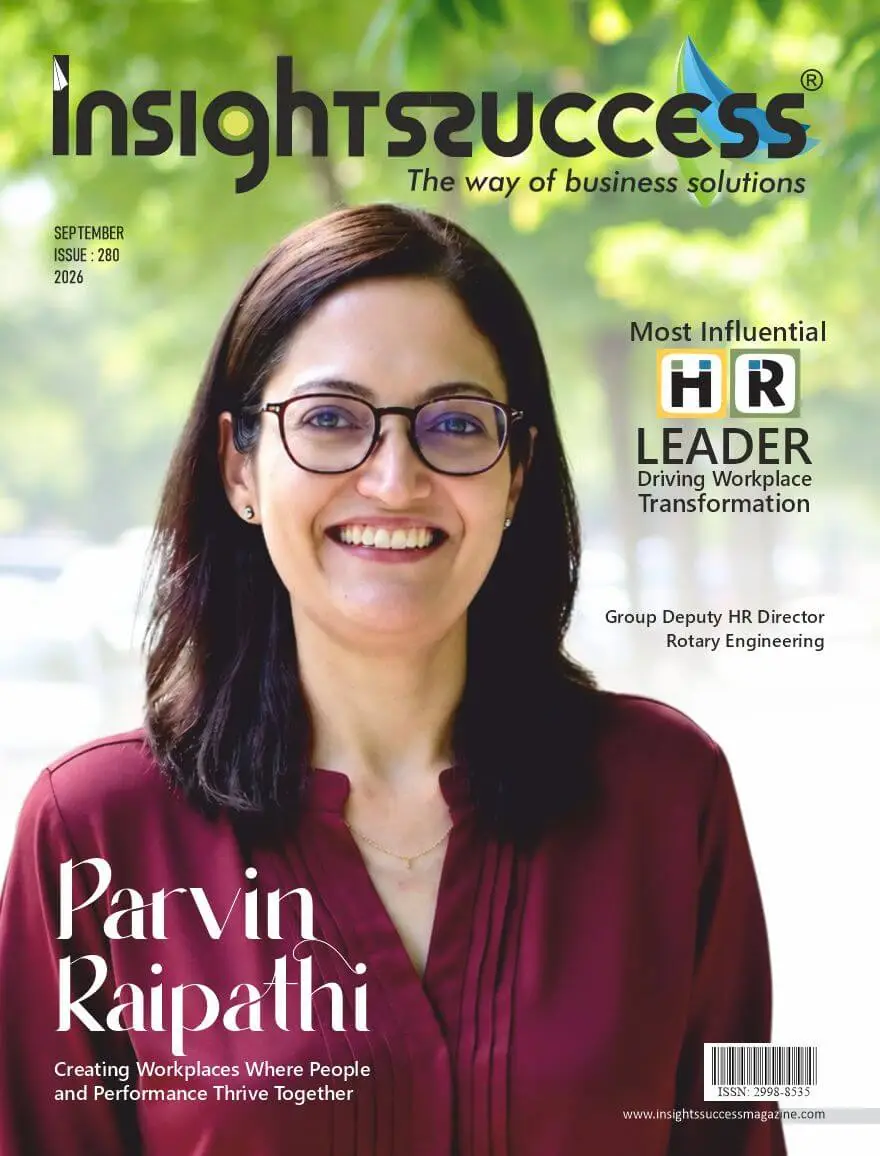
Most Influential HR Leader Driving Workplace Transformation
Most Influential HR Leader Driving Workplace Transformation Exploring the journey of an influential HR leader transforming workplaces through people-centered strategies. This edition highlights organizational culture, workforce engagement, strategic HR leadership, and sustainable business impact. Digital Link Quick highlights Quick reads

Parvin Raipathi: Creating Workplaces Where People and Performance Thrive Together
There is a version of Human Resources that most organizations have settled for. It processes paperwork, manages compliance, runs onboarding programs, and responds to problems after they have already become expensive. It is functional, reliable, and almost entirely reactive. Then there is the version that Parvin Raipathi has spent her career building: an HR function that sits at the center of strategic decision-making, shapes organizational culture from within, and measures its success not by the policies it has implemented but by the sustainable impact those policies create in the people and the business long after implementation. Parvin is an HR leader whose career has been shaped by the engineering and construction sector, one of the world’s most demanding and human-intensive industries. Currently, she is working in Rotary Engineering, the multi-national engineering firm based out of Singapore known around the world for their expertise in oil and gas, petrochemicals, and industrial projects. Throughout her career, she has been instrumental in transforming workforces across several countries and different cultures in varied industries, overcoming the challenge of meeting huge operational requirements along with human-centered leadership. Her philosophy is both clear and uncommon: organizations succeed because of people, not processes alone, and the HR function that truly understands this becomes one of the most powerful levers a business has at its disposal. She reflects, “Every project milestone, safety achievement, and business result ultimately depends on engaged, capable people working together. That belief continues to guide my approach today.” The Belief That Started Everything Parvin’s path into Human Resources was not accidental. It was shaped by a direct and early observation that stayed with her and eventually defined her entire professional purpose. She saw how the right leader could inspire confidence, unlock potential, and transform performance within a team. She also witnessed, with equal clarity, how poor leadership could disengage talented individuals despite excellent systems and processes being in place around them. That tension, between the potential of people and the conditions that either release or suppress it, became the intellectual engine of her career. What she brought to HR from the beginning was not simply an administrative instinct but a genuine conviction that the function could and should operate as a bridge between business strategy and human execution. Over the years, her career evolved from operational HR into strategic leadership, giving her the opportunity to lead workforce transformation across geographies and industries that tested every dimension of that conviction. The engineering and construction sector, with its high-pressure project timelines, diverse multicultural workforces, and non-negotiable safety standards, proved to be exactly the environment where the human dimension of business becomes most visible and most consequential. She states, “My career gave me the opportunity to lead workforce transformation across multiple countries, cultures, and industries. That experience reinforced the importance of balancing business priorities with humanity.” What Transformation Actually Means In the language of modern business, transformation is everywhere. Organizations describe themselves as transforming constantly, and the word has been so widely applied that it has begun to lose its meaning. Parvin’s definition of transformation is specific enough to cut through noise. Meaningful transformation, as she frames it, is not about changing policies or introducing new technology. It is about changing behaviors, mindsets, and organizational culture in ways that create lasting value rather than temporary improvement. The distinction matters enormously in practice. Organizations that focus transformation efforts on systems and structures often find that the change evaporates once the external pressure to change is removed. The organizations where transformation sticks are those where employees understand the purpose behind the change, feel included throughout the journey, and have leaders who consistently reinforce the desired behaviors in their own daily conduct rather than simply announcing the new direction and expecting it to take hold. Throughout her career, Parvin has led initiatives spanning organizational restructuring, HR digitalization, leadership development, competency framework design, and workforce capability building. The measure of success she applies to each of these is not implementation. It is adoption, engagement, and improved business outcomes sustained over time. That standard is considerably more demanding than it sounds, and it is why she considers leadership commitment, clear communication, and continuous capability development as the three non-negotiable elements of any transformation that is genuinely intended to last. She notes, “Sustainable transformation requires strong leadership commitment, clear communication, and continuous capability development. HR plays a critical role in aligning these elements while ensuring that organizational growth never comes at the expense of employee trust.” The Milestone That Defined Her Leadership When Parvin reflects on the professional achievement that most clearly captures what her leadership stands for, she returns to a single initiative: leading the transformation of HR into a strategic business partner across a global EPC company operating in multiple countries simultaneously. The scope of that work was considerable. It involved redesigning HR operating models, establishing standardized frameworks, strengthening governance structures, introducing competency-based development programs, and digitizing key HR processes across a geographically distributed organization. But the element she considers most significant was not structural. It was cultural. The initiative succeeded in shifting the perception of HR within that organization from being primarily an administrative function to becoming a trusted advisor that supported and influenced business growth. Beyond the systems and structures, she takes particular pride in the leadership capability built during that period, the individuals who grew into stronger leaders and the teams that began collaborating more effectively as a direct result of the investment made in them. The awards and professional recognition that followed were meaningful milestones. But the measure she returns to most readily is different: knowing that the work continues to create value long after implementation, because organizations have become stronger because their people have become stronger. She affirms, “Sustainable impact is built when organizations become stronger because their people become stronger. That is the only measure of transformation that I believe is genuinely worth pursuing.” Evolving for a World That Will Not Stand Still The environment in which HR leaders operate has shifted considerably across

How Human Capital Management Improves Organizational Efficiency
Supporting Workforce Stability Every business eventually runs into the same question: how do you keep good people around long enough for their work to actually pay off? That’s the problem Human Capital Management was built to solve. It pulls people, processes, and technology into one framework, and when it’s done well, the result is a workforce that stays put, grows steadily, and keeps operations running without constant disruption. What started as a back-office HR function now shapes decisions about growth, resource allocation, and how a company holds onto its people when markets shift. Plenty of leaders no longer see Human Capital Management as paperwork and process. They see it as the foundation of a stable, dependable team. The idea is fairly simple on paper. Recruitment, onboarding, performance tracking, and workforce planning all get tied into one system instead of running as separate efforts. Once that happens, fewer people fall through the cracks, turnover drops, and employees have a clearer sense of where they stand and where they’re headed. Planning a Workforce Built to Last Good planning means building a team sized to the actual workload, not a guess at it, and staffed with people who are likely to stay. Companies with solid Human Capital Management practices know their headcount, their upcoming skill gaps, and their hiring needs well before any of it becomes a crisis. That kind of lead time keeps projects moving on schedule and gives finance teams a clearer picture of labor costs months ahead, which makes budgeting more predictable. It also means fewer last-minute hires brought on under pressure, which tend to be the ones who leave first. Using Data to Spot Instability Early Most modern systems combine information from recruitment, payroll, performance reviews, and attendance into a single dashboard. That alone changes how leaders operate, because warning signs that used to hide across a dozen spreadsheets become obvious. A manager can see which team has the highest turnover, which training programs actually lead to promotions, or which department is quietly holding onto its people better than the rest and worth studying as a model. Decisions built on that kind of evidence tend to catch stability problems before they turn into a pattern. Growing People Instead of Losing Them Companies that hold onto their workforce usually invest in the staff they already have rather than treating every skill gap as a reason to hire externally. That means internal training, rotations across departments, and mentorship programs designed to move people into roles they actually want. This part of Human Capital Management often makes the biggest difference, since employees who see a real path forward have far less reason to look elsewhere. It’s also typically cheaper than recruiting from outside, and it keeps knowledge that took years to build from walking out the door with a departing employee. Why Low Turnover Changes Everything Low turnover is probably the clearest sign that Human Capital Management is actually working. When people stay, team dynamics hold together, projects stay on track, and managers spend less time retraining replacements and more time on new priorities. Pay people fairly, keep communication honest, and manage with consistency, and the best employees tend to stick around. That steadiness keeps operations running and holds onto knowledge the company would otherwise lose. There’s also a practical side to it: teams that have been together a while just work faster, mostly because everyone already knows who’s good at what. Removing Friction That Drives People Out Organized hiring, simpler paperwork, and consistent reviews all reduce the everyday frustrations that push people toward the exit. Automating routine tasks like onboarding forms, leave requests, and compliance reporting frees up time that HR teams can spend on the things that actually keep people around, and both fall squarely under good Human Capital Management, like career conversations and succession planning. What Stability Means for Leadership Executives who take Human Capital Management seriously tend to make sharper calls about where to put their investment in people. Clear reporting on workforce metrics gives them the confidence to plan expansions, restructure teams, or set budgets without worrying that core staff might walk out the door. That alignment between people strategy and business strategy is often what lets a company scale without losing its footing, even as the industry around it keeps changing. Conclusion A stable workforce doesn’t happen by accident. It comes from treating Human Capital Management as a genuine part of business strategy, rather than something to deal with after the real decisions are made. Put real effort into planning, development, and retention, and the payoff shows up in teams that stick around, work well together, and hold onto the knowledge that keeps things running. Markets won’t stop shifting. But companies that keep investing in workforce stability today are the ones that won’t be stuck rebuilding from scratch tomorrow. Read Also : Sustainable Urban Mobility and the Future of Transportation

Employee Retention Strategies and the Changing Workplace
Optimizing Human Resources Workplaces have changed fast over the past few years. Hybrid schedules, generational shifts, and rising expectations around growth have pushed retention to the top of the priority list for most HR teams. Employee Retention Strategies are no longer a side conversation reserved for annual planning meetings. They sit at the center of how organizations compete for skilled people in a market where switching jobs has never been easier. Companies once assumed a good salary was enough to keep staff in place. That assumption does not hold anymore. Workers today weigh purpose, recognition, and flexibility just as heavily as pay, and businesses that ignore this reality tend to lose their best people first, which is exactly why Employee Retention Strategies now get discussed at the leadership level rather than left to HR alone. Why Retention Matters More Than It Used To Turnover has climbed as remote work widened the talent pool beyond local borders. A skilled employee based in one city can now interview for a role halfway across the country without relocating. This shift has made it tougher to earn loyalty and easier to lose it. Without strong Employee Retention Strategies in place, organizations tend to fall into a repeating cycle of hiring and retraining, one that strains budgets and slows teams across the board. The cost of losing a trained employee rarely shows up on a single line item, but it adds up fast across departments. Does Company Culture Actually Keep People Around Culture gets mentioned constantly, sometimes to the point of losing meaning, but the substance behind it still matters. Employees who feel respected and included stick around longer than those working under leadership that treats them as replaceable. Open communication, room for honest feedback, and real support for work life balance all play a part. None of this happens through a single memo or a one time training session. It has to show up in how managers act day to day, not just in what a handbook says. Why Career Growth Keeps Coming Up People stay where they see a future. Advancement paths that are actually visible, mentorship from people higher up, and real chances to pick up new skills show employees they are valued as more than someone filling a slot. When growth stalls, so does patience, and resignations tend to follow. Businesses serious about Employee Retention Strategies now treat internal promotion and skill building as part of daily operations rather than a once a year review topic. Even small gestures, like a manager sitting down to map out a rough career path with an employee, tend to carry more weight than a generic training portal ever will. Has Flexibility Become Non Negotiable Flexible work is no longer a bonus most candidates hope for. It is closer to a baseline expectation. Hybrid arrangements, adjustable hours, and evaluation based on results rather than time logged at a desk show up constantly in job listings now. Companies that push back against this shift often lose candidates to competitors offering more room to work around personal responsibilities such as caregiving or continuing education. Flexibility has quietly become one of the strongest levers inside modern Employee Retention Strategies. Does Recognition Change Whether Someone Stays Employees frequently name a lack of recognition as their reason for leaving, even ahead of pay in many surveys. Regular feedback, honest praise, and fair reward systems build a sense of value that salary alone cannot replicate. Recognition does not need a large budget behind it. A manager who notices effort and says so consistently often does more for morale than an annual bonus. Teams that build recognition into daily routines tend to report stronger engagement over time. What Separates Good Leaders From Great Ones Here Leadership sets the tone for everything below it. Managers who communicate honestly, back their teams publicly, and live the values the company claims to hold tend to keep people longer than those focused only on output numbers. Training managers to lead with patience and consistency has become a real priority for companies trying to fix retention problems from the inside out. Employee Retention Strategies rarely succeed without leadership willing to change first, and that shift often starts with small, visible actions rather than sweeping policy announcements. Conclusion The workplace will keep shifting, and companies that adjust how they treat their people will be the ones still standing with strong teams in five years. Culture, growth opportunities, flexibility, and genuine recognition make up the core of Employee Retention Strategies that outperform pay-only approaches almost every time. As the race for skilled workers heats up, companies putting money into their people today are the ones spared from a last-minute scramble to replace them. Read Also : Sustainable Urban Mobility and the Future of Transportation

From One-Size-Fits-All to Personalised Care: How Weight Management Is Evolving
For decades, weight management was often reduced to a deceptively simple formula: eat less, exercise more, and rely on willpower to keep the results going. While energy balance remains fundamental to changes in body weight, modern healthcare increasingly recognizes that the reasons people gain, lose, and regain weight are considerably more complex. Genetics, metabolism, medical conditions, medications, sleep, stress, environment, eating behaviour, mobility, and psychological wellbeing can all influence an individual’s experience. Two people with similar body weights may therefore require very different forms of support. This understanding is helping weight management move away from rigid programmes built for the “average” person. Instead, healthcare professionals can increasingly consider individual health profiles, treatment goals, risks, preferences, and responses when determining what approach may be appropriate. Personalisation does not promise effortless results. What it offers is a more realistic starting point: recognizing that the same strategy will not necessarily work equally well for everyone. Body Weight Is More Complex Than a Single Number The scale provides useful information, but it reveals very little about why someone has reached a particular weight. One person may struggle primarily with appetite, while another may have mobility limitations that make physical activity difficult. Sleep problems, certain medicines, metabolic conditions, work patterns, stress, and previous dieting experiences can further change the picture. This complexity is one reason modern obesity care is increasingly discussed within the broader context of metabolic health. Insights Success has explored this perspective in its coverage of bariatric surgery and obesity-related health challenges, where weight management is considered alongside conditions such as type 2 diabetes, hormonal disorders and other long-term health concerns. Looking beyond body weight can change the definition of progress as well. Improvements in blood glucose, blood pressure, mobility, physical fitness, sleep, energy, or quality of life may be meaningful even when changes on the scale are slower than expected. A personalised approach can therefore begin with a broader question than simply, “How much weight should this person lose?” It can ask what improvements would make the greatest difference to that individual’s health. Treatment Choices Are Becoming More Individual The range of approaches available for weight management has expanded considerably. Nutrition and physical activity remain important foundations, but behavioural support, psychological care, medically supervised programmes, prescription medicines and metabolic or bariatric surgery may also be appropriate in different circumstances. Having more options makes individual assessment increasingly important. The most suitable weight loss treatment for one person may not be appropriate for another. Medical history, existing conditions, previous attempts at weight management, current medications, potential side effects, treatment eligibility and personal preferences can all influence clinical decisions. Even people receiving the same treatment may respond differently. One person may experience substantial benefit while another has a more modest response or side effects that require the treatment plan to be reviewed. Personalised care allows that information to influence what happens next. Instead of assuming that disappointing progress reflects a lack of commitment, healthcare professionals can assess whether the strategy itself needs adjustment. This creates a more responsive model in which treatment can evolve alongside the patient. Data Is Giving Personalisation Greater Depth Personalised weight management is also benefiting from the growing amount of health information that can be measured and interpreted. Blood tests can provide information about metabolic health. Wearable devices can record physical activity and sometimes aspects of sleep or heart rate. Food-tracking tools can reveal patterns that may otherwise be difficult to recognize, while regular clinical monitoring can show how someone responds to an intervention over time. Insights Success has previously profiled a science-driven approach to personalised health and weight management that incorporates health analysis, nutrition, tracking technologies and individualized strategies rather than relying solely on generic dieting principles. The broader opportunity lies in using relevant data to make better-informed decisions. Technology could eventually make this process more sophisticated. Digital health platforms may help identify patterns across sleep, activity, nutrition and other health information, while artificial intelligence could assist professionals in analysing large quantities of patient data. There are important limitations. More data does not automatically mean better care, and measurements from consumer devices vary in accuracy and clinical usefulness. Sensitive health information also requires appropriate privacy and security protections. The purpose of data should therefore be to support professional judgment and patient understanding, not to turn weight management into an endless stream of numbers. Personalised Care Still Depends on Sustainable Habits More advanced treatments do not make everyday behaviour irrelevant. Nutrition, movement, sleep, stress management and other routines can still influence health during and after a weight loss treatment. The difference in a personalised model is that those recommendations can be adapted to the person rather than prescribed as identical rules for everyone. Someone with joint pain may need a different approach to physical activity than an experienced gym-goer. A shift worker may require different strategies around meals and sleep than someone with a predictable daytime schedule. Cultural food preferences, family responsibilities, budget, cooking skills and access to healthy food can all affect what is sustainable. Personalisation therefore extends beyond selecting a medication or medical procedure. It also means designing supporting habits around the reality of someone’s life. This matters particularly over the long term. A highly restrictive plan may produce short-term change but become difficult to maintain. A more flexible approach that can survive holidays, demanding work periods, family events and occasional setbacks may have greater practical value. The objective is not to create a perfect lifestyle. It is to develop one that can realistically continue. The Future of Weight Management Is Likely to Be More Human It may seem contradictory that advances in medicines, data and digital technology could make healthcare more personal. Yet that may be precisely where weight management is heading. Better clinical tools give healthcare professionals more ways to understand why individuals respond differently. Rather than forcing patients through the same pathway, clinicians can potentially select from a wider range of interventions and adjust them according to response. That also changes the relationship between patient

How Businesses Can Turn Financial Data Into Better Strategic Decisions
Financial records are more than a report of what an enterprise has already spent or earned. When prepared nicely, they could show which sources have come to be used, which sports activities create price, and where future dangers can be developing. The task is turning huge amounts of economic records into insights that human beings can absolutely use. For a Construction Company in Oman, financial records can reveal trends in undertaking fees, procurement spending, hard work fees, cash flow, and profitability. Reviewing the data frequently can help identify which tasks are performing as expected and wherein economic stress may be increasing. The same precept applies for the duration of almost every organization. Businesses accumulate records from accounting systems, invoices, payroll, earnings structures, inventory information, procurement, equipment, and customer databases. However, genuinely having information no longer mechanically leads to better decisions. The real benefit comes from connecting financial numbers with enterprise goals. Instead of asking whether or not sales multiplied, decision-makers will have a study of why it increased, whether or not margins improved, and whether the increase generated enough cash to assist plans. Technology has made this process a lot less complex. Cloud accounting systems, business intelligence dashboards, automated reporting, and analytics tools can supply statistics together and make essential developments less tough to understand. Turning Raw Financial Information Into Useful Insights Financial statistics regularly arrive in complex bureaucracy. Revenue records may also sit in a unified system, supplier invoices in another, and payroll information in a few specific regions. Before a thorough assessment can take place, organizations want to arrange these facts properly into a constant shape. A beneficial place to begin is to identify the economic signs that clearly relate to the organization. Depending on the business organization, these can also encompass gross margin, running charges, cash flow, debts receivable, debts payable, project profitability, stock turnover, or client acquisition costs. Agencies working with Construction Management Companies and economic statistics also can assist in being a part of the challenge of overall performance against broader business goals. Management can take a look at whether changes in hard work expenses, material spending, scheduling, or procurement are affecting project profitability. Important financial statistics elements may additionally include: Revenue and sales increase Gross and running margins Cash inflows and outflows Project-degree profitability Supplier and procurement prices Labor fees Accounts receivable and charge cycles Inventory and storage costs The aim isn’t to track every viable metric. Too many numbers should make decision-making more difficult. A focused business enterprise of applicable signs and symptoms typically offers a clearer picture. Financial Data Strategy & Decision Framework Table Financial Data Category Key Raw Metrics Tracked PNG Strategic Analysis & Primary Insights PNG+ 1 Strategic Management Decision / Action PNG+ 1 1. Revenue & Sales Growth Total sales revenue, revenue by product/service line, customer acquisition costs Identifies seasonal patterns, high-margin offerings, and sustainable client sources Reallocate marketing and sales resources toward high-value, sustainable products/clients 2. Profitability & Margins Gross margin, operating margin, project-level profitability Reveals whether revenue growth actually improves net margins or if costs are rising faster Optimize operating expenses, adjust pricing structures, or exit unprofitable project lines 3. Operating & Labor Costs Payroll, labor expenses, facility costs, administrative spending Distinguishes temporary spending spikes from structural, ongoing operational inflation Streamline inefficient processes, adjust staffing levels, or invest in automation 4. Cash Flow & Working Capital Cash inflows/outflows, accounts receivable, accounts payable, inventory turnover Pinpoints cash flow bottlenecks, payment cycle lags, and tied-up capital Enforce tighter credit/collection terms, manage inventory levels, and schedule debt/capital commitments 5. Procurement & Supplier Spending Supplier invoices, equipment costs, vendor performance metrics (e.g., steel/raw materials) Identifies supplier pricing trends, over-budget material spending, and cost spikes Renegotiate supplier contracts, consolidate purchasing, or switch vendors to protect margins. Using Data to Improve Business Planning Once financial statistics are ready, companies can use them to evaluate current overall performance and plan future actions. This can include comparing real outcomes with budgets, preceding intervals, or internal goals. For example, if operating expenses upward push quicker than income, management may additionally need to analyze the cause. The growth might also come from higher dealer prices, more employees, investment in new equipment, facility expenses, or inefficient strategies. Financial assessment also can manual state of affairs planning. An enterprise considering a new market, product line, equipment purchase, or expansion can model projected prices and potential returns before committing huge assets. Making Better Decisions With Financial Trends Historical statistics become especially precious when analyzed as a pattern in place of being regarded as isolated numbers. One month’s sales may not tell the whole story, but numerous months of consistent statistics can monitor seasonal styles or developing adjustments. Businesses can use dashboards to display important symptoms in close to real time. Instead of waiting until the day of one / four to find out a problem, managers might also find out unusual spending or declining margins in advance. Useful planning practices embody: Compare real normal usual overall performance with budgets. Investigate unusual changes in place of ignoring them. Separate transient fees from everyday expenses. Review profitability by means of manner of product, company, or challenge. Use historical statistics when making forecasts. Connect financial metrics with operational average performance. This approach turns financial reporting from a backward-looking exercise into a realistic management resource. Technology and Commercial Intelligence Modern monetary technology lets corporations estimate statistics quicker and with greater accuracy. Cloud accounting systems can automatically gather transactions, whilst commercial enterprise intelligence systems convert financial records into interactive dashboards. Automation can lessen repetitive reporting work. For instance, normal financial reviews can be generated from related systems in place of being organized each month manually. Artificial intelligence is likewise becoming part of financial evaluation. AI-primarily based systems can assist in recognizing uncommon transactions, summarizing evaluations, identifying trends, and assisting with forecasting. However, automated insights, however, want human evaluation because the truth is financial decisions regularly depend on business conditions that can’t be understood from numbers alone. Data integration is a vital development. Stainless Steel
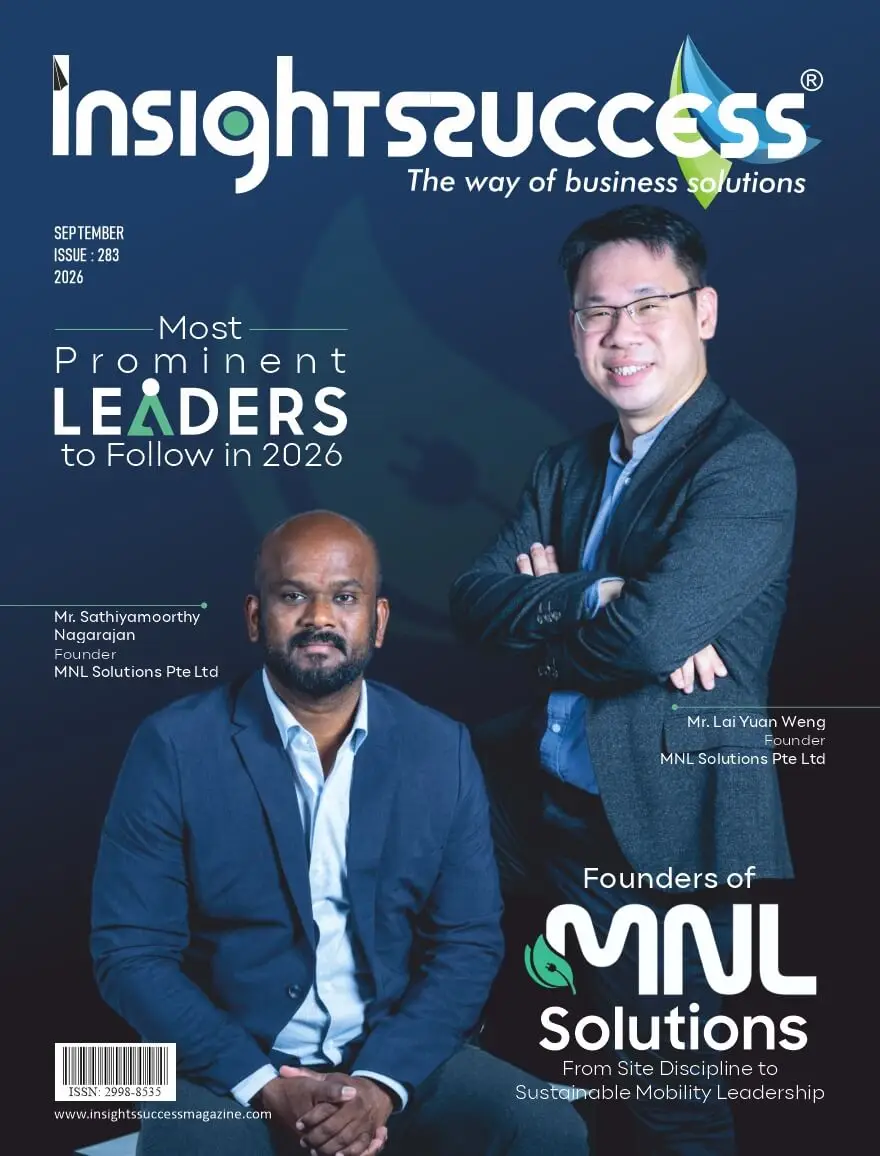
Most Prominent Leaders to Follow in 2026
Most Prominent Leaders to Follow in 2026, Highlighting prominent leaders whose entrepreneurial vision and technical expertise are shaping sustainable mobility. This edition explores engineering expertise, innovation, EV infrastructure, strategic collaboration, and solutions advancing Singapore’s transportation future. Digital Link Quick highlights Quick reads

Founders of MNL Solutions: From Site Discipline to Sustainable Mobility Leadership
Entrepreneurial activities do not usually occur within the corporate boardroom; instead, they usually occur in difficult project conditions where self-discipline, technical expertise, and problem-solving abilities are key elements in developing the leadership traits. The entrepreneurial activity of Mr. Sathiyamoorthy Nagarajan and Mr. Lai Yuan Weng, Founders of MNL Solutions Pte Ltd is an example that shows the transition from the engineering and safety domain to entrepreneurship in green transportation in Singapore. Nagarajan’s journey from Pudukkottai in Tamil Nadu to Singapore began in 2007 when several years of experience with safety and environmental management at work and in running big projects had taught him everything there was about risk management, compliance, and execution. Weng Lai Yuan, trained as an electrical engineer, established his professional experience through tackling problems at project sites. These two came together in 2016 and formed MNL Solutions. In 2020, for instance, in the wake of an ambiguous era, the two entrepreneurs leveraged their joint knowledge of the industry to embark on a venture aimed at solving the challenge of providing convenient EV charging services. Through the zero-CapEx business model with a particular emphasis on compliance, reliability, and collaboration, the founders managed to solve the existing impediments of EV technology adoption. Explore the inspiring journey of the leaders powering Singapore’s next chapter of sustainable mobility. From Construction Sites to Co-Founders Nagarajan’s path to entrepreneurship began far from Singapore. Born and raised in Pudukkottai, Tamil Nadu, he completed his Higher Secondary education at T.E.L.C. Higher Secondary School before arriving in Singapore in May 2007 with a clear determination to build a meaningful career. He started as a Safety Supervisor on institutional, condominium and pharmaceutical projects, absorbing the discipline of workplace safety and regulatory compliance during what he calls “long site hours, steep learning curves and the constant pressure of delivering under strict regulatory frameworks.” Lai Yuan Weng, a Singaporean electrical engineer, followed a parallel track rooted in project-site problem-solving. The two men met in 2016 while working on project sites, and their shared technical grounding sparked an immediate rapport. “Our shared technical background and complementary strengths led us to team up,” Lai recalls. Four years later, in August 2020, amid pandemic uncertainty, the pair formally co-founded MNL Solutions under a guiding philosophy they named “Momentum for Next-Level.” The Idea Behind MNL: Removing the Capital Barrier The company’s founding insight emerged from a gap both men saw clearly from the ground. As Singapore accelerated toward its Green Plan 2030 and its electric mobility targets, condominiums, commercial buildings and public institutions across the island still lacked convenient EV charging. Traditional charging models demanded heavy upfront capital investment from building owners, a hurdle that slowed adoption considerably. Nagarajan flipped the question building owners had grown used to hearing. “What if the charging operator absorbed the capital cost and shared the long-term revenue with the property owner?” he asks. That question became MNL’s zero-CapEx-plus-revenue-share model: the company installs, owns, operates and maintains the chargers, while the building simply provides the space and shares in revenue without spending a cent upfront. Lai frames the same origin story through an engineer’s lens. He and Nagarajan wanted to deliver end-to-end, future-ready EV charging solutions that property owners, residents, and fleet operators could trust, built around certified hardware secured through an exclusive partnership with Schneider Electric, an intelligent Charge Point Management System, dynamic load management and a user-friendly app. The founders prioritized compliance with Land Transport Authority requirements, cybersecurity standards and open protocols such as OCPI from their very first installations, a discipline that helped MNL secure its EV Charging Operator license and grow steadily into a trusted name in the sector. Building Through a Pandemic MNL’s timing could hardly have been more testing: the company was incorporated in August 2020, in the thick of the COVID-19 pandemic. Site access grew restricted, supply chains for electrical equipment buckled, and many property managers deferred non-essential capital projects, leaving both founders navigating tight cash flow and steep uncertainty. Rather than retreat, the partners leaned into the very model that set them apart. “We doubled down on the zero-CapEx proposition, precisely the solution that required no immediate outlay from building owners during a period of financial caution,” Nagarajan explains. The quieter period became an opportunity to refine internal processes, strengthen workplace safety and health protocols for a post-pandemic environment, and deepen conversations with long-term partners. Lai echoes that account of turning constraint into advantage. MNL used the disruption to strengthen its technical foundations, deepen relationships with facilities management companies and property owners, and carefully select technology partners capable of meeting Singapore’s stringent requirements. The company avoided chasing volume and instead prioritized “compliance readiness and operational excellence,” a discipline that positioned MNL to grow steadily once the market reopened and EV adoption began accelerating. Balancing Boardroom Pressure and Family Life Running a fast-scaling infrastructure business exacts a toll that neither founder minimizes. For Nagarajan, who is also a husband and father, the answer lies in intentional structuring of time. “Early mornings and structured planning allow me to address critical business matters before the day becomes reactive,” he says, adding that meals together and weekend presence with his family remain “non-negotiable.” He credits community service with Lions Club Singapore and Tzu Chi Foundation with restoring rather than draining his energy, noting that serving the elderly or participating in flag days resets my perspective. Lai approaches the same challenge through disciplined boundaries and delegation. He concentrates on high-impact project delivery, strategic partnerships and team empowerment so operational decisions do not rest solely on him, while protecting personal time for rest, family and simple recharging routines. “I try to be fully present in the moments I have away from work rather than constantly multitasking,” he says, adding that physical activity and time outdoors help him reset during periods of intense deadlines. Strengths, Weaknesses and the Discipline of Delegation Both founders point to a fusion of technical fluency and commercial instinct as the bedrock of MNL’s success. Nagarajan’s nearly two decades in workplace safety

Sustainable Urban Mobility and the Future of Transportation
Shaping Future Mobility Cities were not originally built with the idea that so many people would need to move through them every single day. Streets that once carried a handful of carts now carry a constant flow of cars, buses, bicycles, and pedestrians, often all competing for the same narrow strip of space. As more people move into cities each year, that pressure only grows heavier. Sustainable urban mobility has become one of the defining challenges of how cities function, not as a distant concern for the future but as something already shaping daily life for millions of people right now. The way people get from one place to another affects far more than convenience. It touches the air people breathe, the time they lose sitting in traffic, and the fairness of who can actually reach a job, a school, or a hospital without struggle. Rethinking how a city moves is really about rethinking what kind of place that city wants to be. Why the Old Model Is Breaking Down For decades, the answer to more people needing to travel was simply more roads and more cars. That approach worked for a while, but it has clear limits. Wider roads fill up almost as quickly as they are built, and the space needed to keep expanding them runs out fast in a crowded city. Beyond the space problem, there is the matter of what all that traffic leaves behind. Congested streets waste enormous amounts of time and fuel, and the pollution from constant traffic settles over neighborhoods that often have little say in how those roads were planned. The old model was never designed with these costs in mind and cities are now paying for that oversight. What Sustainable Urban Mobility Actually Means At its core, sustainable urban mobility is about moving people efficiently without exhausting the resources or the wellbeing of the place they live in. It is not about banning cars outright or forcing everyone onto a bicycle. It is about giving people real choices, so that walking, cycling, public transit and driving can all work together rather than compete for the same limited space. This requires more than just adding a bus route or painting a bike lane. It means designing streets and neighborhoods so that shorter trips do not automatically require a car and so that public transit feels reliable enough that people actually choose it over sitting in traffic alone. Rethinking Public Transit Public transit sits at the center of most serious efforts toward sustainable urban mobility. A bus or train that runs on time and covers useful routes can carry far more people in far less space than the same number of individual cars ever could. Yet transit only works if people trust it enough to rely on it regularly. That trust comes from consistency. Service that runs infrequently or unpredictably pushes people back toward driving, even when they would rather not. Investment in transit therefore has to focus on dependability, not just coverage, because a system nobody trusts accomplishes very little no matter how far its routes reach. Designing Safer, More Walkable Streets Not every trip needs an engine behind it. Many short journeys within a city could easily be made on foot or by bicycle if the infrastructure actually supported it safely. Wide sidewalks, protected bike lanes, and street crossings that do not feel dangerous all make a real difference in whether people choose to walk or cycle instead of drive. These changes tend to benefit a neighborhood well beyond transportation alone. Streets designed for people rather than only for vehicles tend to feel safer and more pleasant to spend time in, which strengthens the sense of community along the way. Building More Efficient Urban Transport Cars will not disappear from cities anytime soon, and sustainable urban mobility does not require that they do. What it does call for is smarter use of the vehicles that remain. Shared vehicles, whether through ride pooling or shorter-term rentals, can reduce the total number of cars needed without eliminating the flexibility that driving offers. Cleaner vehicle technology plays a role here too, reducing the pollution tied to whatever driving does remain. Together with the decrease in the number of cars, it could provide positive effects for air quality in polluted cities. In Summary The future of transportation in cities will not be shaped by a single solution but by many changes working together. Reliable transit, safer streets for walking and cycling and smarter use of vehicles all play a part in building something that can actually hold up over time. Sustainable urban mobility asks cities to think beyond how people move today and consider what kind of movement the next generation will actually need. Getting this right will not happen overnight, but the direction is already becoming clear, and cities willing to commit to it now stand a far better chance of remaining livable in the years ahead. Read Also : How Green Transportation Is Reshaping Urban Mobility