






Aditya Vaidya on Why Leadership, Systems, and Standards Will Define the Next Phase of India’s Hospitality Growth
India’s Food & Beverage (F&B) and hospitality industry is entering a decisive phase of evolution. After years of rapid expansion driven by demand growth, digital platforms, and investor capital, the sector is now confronting a more complex reality—one where leadership maturity, operational discipline, and governance will determine long-term success. The next chapter of growth will not be led by speed alone. It will be shaped by the ability to build resilient systems, enforce consistent standards, and develop people who can sustain performance across scale. From Rapid Expansion to Sustainable Scale Over the past decade, India’s hospitality sector has expanded aggressively across formats—restaurants, cloud kitchens, QSR chains, premium dining, and beverage-led concepts. While this expansion unlocked access and variety, it also exposed structural weaknesses. Margin pressure, service inconsistency, regulatory scrutiny, and high attrition have become persistent challenges. In many cases, businesses expanded faster than their operating frameworks could support. Industry practitioners increasingly agree that the sector is transitioning from a “growth-first” phase to a “systems-first” phase—where scalability depends less on capital and more on execution capability. Leadership as an Operating Advantage In this environment, leadership is emerging as a decisive operating advantage. Effective hospitality leadership today extends beyond concept creation or expansion strategy—it requires the ability to design organisations that can perform consistently under pressure. Mumbai-based hospitality professional Aditya Vaidya, with over two decades of experience across hospitality and catering management, views leadership as a function of structure rather than personality. His management philosophy is anchored in clarity of goals, accountability with autonomy, and purpose-driven execution. “People perform best when expectations are clear and systems are strong,” he notes, emphasizing that empowerment must be supported by discipline. This perspective has gained relevance as hospitality organisations scale across multiple locations, formats, and geographies. Operational Discipline Over Short-Term Fixes A recurring issue across the sector is the reliance on short-term interventions—discounting, aggressive rollouts, or reactive cost-cutting—to address deeper operational inefficiencies. Experienced operators argue that sustainable performance comes from strengthening operating frameworks: standard operating procedures, governance mechanisms, training systems, and performance metrics. Aditya’s exposure across diverse food service formats has reinforced a core belief: scale without discipline increases risk. Organisations that invest early in operational maturity are better positioned to manage growth cycles, investor expectations, and brand reputation. This shift is particularly critical as hospitality businesses pursue franchising, cloud kitchen networks, and multi-city operations. Compliance and Food Safety as Strategic Assets As food businesses grow in complexity and geographic reach, compliance and food safety have moved from backend functions to boardroom priorities. Aditya’s professional foundation reflects this systems-led approach. He holds an MBA in Shipping and Logistics Management, complemented by formal qualifications in operations management and hospitality administration. His grounding in hotel management, combined with logistics and operations education, enables a holistic view of supply chains, service delivery, and risk management. He is a certified Lead Auditor for ISO 9001:2015 Quality Management Systems (BSI – Royal Charter, UK) and ISO 22000:2018 Food Safety Management Systems (TÜV NORD, Germany), and is also recognised as a Food Safety Auditor with the Quality Council of India. This combination places compliance, traceability, and process integrity at the centre of operational strategy. In an era of heightened consumer awareness and regulatory oversight, consistency and food safety are no longer hygiene factors—they are brand-defining assets. Structured quality systems reduce operational risk, protect reputation, and enhance investor confidence. The Broader Industry Shift: Experience, Wellness, and Technology These leadership and operational shifts mirror broader changes underway in India’s F&B landscape. Consumer expectations have evolved rapidly. Dining is increasingly experience-driven, with premiumisation of regional cuisines, chef-led concepts, and immersive formats gaining traction. At the same time, cloud kitchens and delivery-first models continue to expand, albeit with a sharper focus on unit economics and repeat behaviour. Health and wellness have moved from niche positioning to mainstream expectation. Demand for clean-label foods, functional beverages, and high-protein offerings reflects a more informed and discerning consumer base. Technology underpins all of these changes—enabling demand forecasting, inventory optimisation, customer relationship management, and performance analytics. Cloud-based tools have also levelled the playing field, allowing smaller operators to adopt enterprise-grade systems without disproportionate cost. Sustainability Moves from Narrative to Measurement Another defining shift is sustainability. Once positioned primarily as a branding narrative, sustainability is now evaluated through measurable outcomes—waste reduction, responsible sourcing, packaging innovation, and energy efficiency. From an operational standpoint, sustainability aligns closely with efficiency. Reduced waste and improved resource utilisation directly impact margins while strengthening brand credibility. As practitioners like Aditya emphasise, sustainability initiatives deliver real value only when embedded into operating systems rather than treated as standalone campaigns. The Challenges That Will Define Winners Despite strong demand fundamentals, hospitality remains one of the most operationally demanding sectors. Rising rentals, labour shortages, volatile input costs, and regulatory complexity continue to pressure margins. The businesses that endure will not necessarily be the most creative, but the most disciplined. Cash-flow management, people development, compliance, and system maturity will separate resilient organisations from those driven purely by momentum. The era of “growth at any cost” is giving way to renewed emphasis on profitability, governance, and long-term value creation. Looking Ahead: A Maturing Industry India’s hospitality and F&B sector is no longer in its infancy. It is maturing—and with maturity comes accountability. The next phase of growth will favour: Experience-led dine-in concepts with operational depth Cloud kitchen ecosystems built on strong unit economics Health-forward food and beverage brands with credibility Regional Indian cuisine positioned for scale and export Organisations anchored in systems, standards, and leadership capability For professionals like Aditya Vaidya, the opportunity lies not just in participating in this growth, but in shaping how it unfolds—advocating a model of hospitality that values people, process discipline, and long-term thinking. In an industry where outcomes are visible but processes often remain invisible, the future will belong to those who invest in what happens behind the scenes. About the Author Aditya Vaidya is a Mumbai-based hospitality professional with over 20 years of experience across hospitality and catering management. He is a certified Lead

From Bestseller to Blockbuster: First-Edition Success Ignites the Race for Film and Mega Web Series Rights
Finally! – A Senapati with Nerves of Steel has emerged as far more than a successful debut novel. It represents a fully realized fictional universe with exceptional potential for cinematic adaptation and premium OTT streaming platforms. Following the strong response to its first edition, the book has sparked growing interest as a high-value intellectual property suited for transformation into a large-scale feature film franchise or a long-form, high-impact web series. With its expansive scope, intense political drama, leadership conflict, social transformation, and emotional depth, the narrative aligns naturally with global OTT platforms such as Netflix, Amazon Prime Video, and Disney+ Hotstar. Designed as an epic saga rather than a standalone story, the narrative possesses the depth, momentum, and narrative elasticity required for sustained long-form storytelling. The complete arc can unfold across approximately 150 to 200 episodes, allowing for multiple seasons of immersive content and positioning the project as a flagship global series. While firmly rooted in the Indian subcontinent, the themes of power, governance, ethics, ambition, and reform resonate universally, making the story accessible and compelling for international audiences. The scale and ambition of the story demand a cinematic vision capable of blending spectacle with substance. Filmmakers such as Mani Ratnam, Shankar, Sanjay Leela Bhansali, and Ashutosh Gowariker exemplify the creative sensibilities aligned with this universe, given their mastery of epic narratives, emotional depth, and socio-political storytelling. Likewise, performers of global stature and exceptional range, including Priyanka Chopra, Kangana Ranaut, Vicky Kaushal, and Ranveer Singh, represent the calibre of talent envisioned to embody its complex, morally driven characters. Author Sheker seeks to engage with visionary producers, directors, showrunners, and lead artists who share the ambition of building a genre-defining Indian cinematic universe with global appeal, scale, and longevity. Book Description: An Indian Leader Who Refuses to Bow to Convention Set against a nation constrained by rigid traditions, systemic corruption, and bureaucratic paralysis, Finally! – A Senapati with Nerves of Steel chronicles the extraordinary rise of Kumaran Senapati, a man courageous enough to challenge the entrenched political order of India. Disillusioned by decades of hollow promises, inefficiency, and institutional decay, Kumaran makes a life-altering decision to contest the highest constitutional office in the country. His path is fraught with resistance. Entrenched elites, decaying institutions, and shadowy alliances forged over generations rise to block his ascent. Every step forward becomes a confrontation, and every decision carries immense personal and national risk. The story asks a defining question: can a single individual, driven by conviction and armed with unshakable resolve, overcome a broken system to usher in a new era, or will the weight of political decay extinguish his vision before it can illuminate the nation? Audacious, incorruptible, and relentless, Kumaran is not driven by personal ambition alone. This is not merely a political rise, but a chronicle of transformative leadership. He is a Senapati with nerves of steel, yet the narrative repeatedly asks whether he also possesses a heart of gold. Book Synopsis: A Visionary Indian Political Thriller for the Future At the core of human experience lies a timeless struggle between ambition and fear. Across cultures and generations, individuals confront the same question: what if I dared to go beyond my limits? Too often, fear of failure suppresses possibility. History, however, reveals a single truth: limits are discovered only when they are challenged. This philosophy finds expression in Kumaran, an ordinary Indian citizen with extraordinary moral resolve. He embarks on a bold mission to reveal India’s vast and underutilized economic, intellectual, and societal potential to the world. His vision is global in scope, aimed particularly at Non-Resident Indians, international investors, and global institutions. Yet his ambition extends far beyond economic growth metrics. Kumaran seeks to build a self-sustaining ecosystem of inclusive prosperity, where progress flows from ethical leadership to every level of society. India stands at a defining crossroads. With a GDP of approximately USD 3.54 trillion and a young population with an average age of twenty-nine, the nation is positioned to become the world’s third-largest economy. Yet a troubling paradox persists. Why does meaningful development remain uneven? Why do countries with fewer resources achieve higher standards of living? Why do millions continue to feel constrained by bureaucracy, corruption, and systemic inertia? Through Kumaran’s journey, the novel argues that genuine transformation does not arise from abstract ideology or populist rhetoric, but from courageous, ethical, and selfless leadership. The narrative unfolds as both a political thriller and a manifesto of disruptive ideas and actionable reforms. Entrenched power structures are challenged, and those who profit from stagnation are exposed. Resistance is fierce, calculated, and relentless. Kumaran confronts corruption directly, embodying leadership defined by moral clarity, strategic intelligence, and unbreakable resolve. India 2032: A Global Crisis and a Transformed Nation The narrative accelerates to the year 2032, when a catastrophic asteroid threat places the survival of Earth at risk. In this moment of unprecedented global crisis, the world turns to Kumaran for leadership. The reforms he implemented between 2024 and 2031 have transformed India into a global model of governance, innovation, and human development. Once burdened by inefficiency, the Indian subcontinent is now celebrated worldwide as “Heaven on Earth.” The story opens amid this planetary emergency before rewinding to 2025, the pivotal year when Kumaran, exhausted by decades of inertia, assumes power. What follows is not rhetoric or symbolism, but decisive action, accountability, and relentless execution. Policies are tested, institutions are rebuilt, and resistance is dismantled systematically. Ultimately, Kumaran’s journey becomes a powerful call to dream boldly, lead ethically, and redefine what is possible for a nation and for humanity. About the Author: Sheker Sheker is a contemporary Indian author whose debut novel is shaped by over three decades of senior leadership experience across global multinational corporations and fast-growing Indian enterprises. A defining chapter of his career was his instrumental role in establishing GE’s operations in India, earning international recognition, including a feature on the cover of Fortune International. At Schneider Electric, he received the prestigious MVP South Asia Region award for excellence
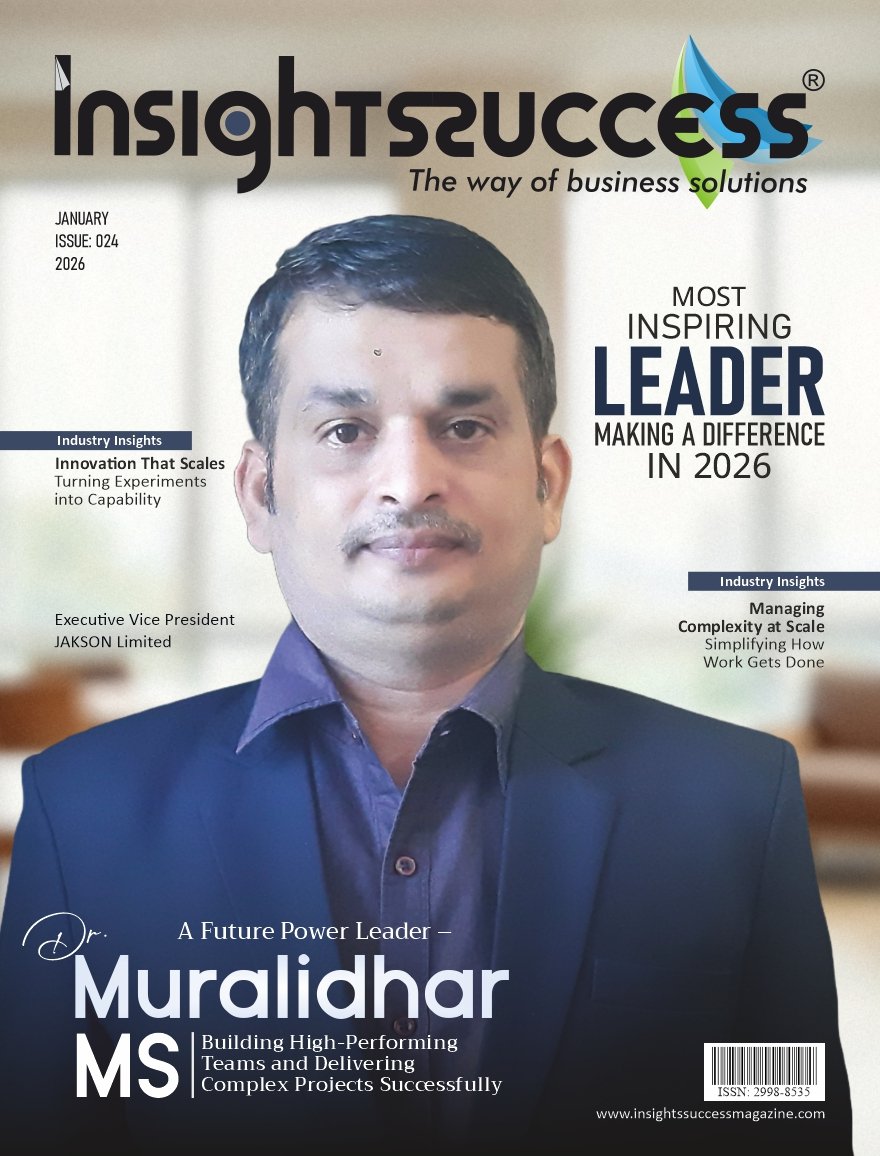
Most Inspiring Leader Making a difference in 2026
Most Inspiring Leader Making a difference in 2026 This edition is dedicated to Dr. Muralidhar MS, a remarkable changemaker whose vision, empathy, and purpose-driven leadership are creating meaningful impact, setting a powerful example through resilience, innovation, and lasting contributions to society and industry. Quick highlights Quick reads

Turning Experiments into Capability
Innovation That Scales Innovation is a must, not a choice anymore. Every company is expected to try to run new technology tests, find out about new customer models, check new products, and make internal processes better. However, experimentation does not give any company the upper hand. In fact, numerous corporations are abundant in innovation activity, and yet, they have the same hard time as before displaying the outcomes of their innovation. Why? Just because they only do experiments. The real benefit occurs when innovation is brought to the whole organization—when the fixed and reliable qualities that were once pilots turn out to be the organization’s system of operation. Scalable innovation is not a bunch of projects. It is a complete system of execution. Why Innovation Often Stays Stuck in Pilot Mode Most of the companies experimenting constantly with different methods are still struggling to derive any value from these experiments. They proceed with proofs-of-concept, hold hackathons, create prototypes, and explore new platforms, but the outcome of these efforts is still limited to a single department or a few people. This situation occurs due to causes that can easily be anticipated. The experiments usually have nothing to do with the main issues of the business. There is no clear identification of who is responsible for what. The criteria for success measure only the number of activities and not the adoption. The business units regard the pilots as “innovation theater” rather than improvements in their operations. The lack of infrastructure for scaling innovation, including governance, funding models, talent pipelines, and integration pathways, is the most critical factor contributing to this situation. There are no weak ideas that lead to the innovation process stalling. The cause of the delay is the difficulty associated with scaling. Innovation Must Start with Strategic Intent Scalable innovation is primarily dependent on a strategic viewpoint. Estimations must not be arbitrary; they should be intentional. Top companies determine a limited number of strategic areas where innovation will be of utmost importance—customer experience, supply chain, productivity, sustainability, new revenue streams—and guide their experiments in those directions. This coordination is very important. When innovation is associated with primary business results, it gets the focus of top management, the support of the financing, and the acceptance of the operation. Innovation becomes part of the strategy, not an adjacent activity. Scale innovation is the innovation that really matters. Design for Adoption, Not Demonstration One of the most frequent errors is to view innovation in the light of a technology demonstration. Teams present impressive models that captivate the top management, but are unfeasible to be used in practical operation. So, eventually, the project becomes disappointing, and trust is lost. To successfully broaden the use of a technology, it is necessary to design for adoption from the very outset. This implies not only engaging the operations teams at the very start, comprehending the genuine restrictions of the workflow, and creating solutions that are compatible with the present systems, but also foreseeing change management—training, communication, incentives, and support. The appearance of a breakthrough does not count so much as the actual use of it over time. Measure Innovation by Impact, Not Activity It is the case that several companies measure innovation in the wrong way. Measuring innovation is a common practice among companies. They monitor the number of workshops held, create prototypes, or launch pilots. These metrics are related to activities, not to effects on the business. Innovation that scales is measured through its adoption and business results. The leaders want to know if the innovations are improving performance, cutting costs, generating more revenue, making the customer experience better or lowering the risk. The question is not “Did we innovate?” but rather “Did innovation change outcomes?” Conclusion The gap between organizations that investigate the future and organizations that make it is the innovation that scales. Learning is the outcome of experiments, but capability is what gives the edge. When the innovation is synchronized with the strategy, created for acceptance, made into products that can be produced again, backed by the structure, counted by the effect, and supported by the management, it does not remain a task. It turns into a skill integrated into the organization’s way of growing, changing, and fighting. To put it differently, that is the process of scaling the innovation: not solely the concepts, but also the mechanisms that make the concepts work and bring about the economic benefit that lasts. Read Also : Simplifying How Work Gets Done

Simplifying How Work Gets Done
Managing Complexity at Scale Scale is frequently hailed as an indicator of success. A greater number of customers, wider markets, larger workforce, and a broader range of products or services can potentially lead to a more powerful brand and generate higher revenue. Nevertheless, scaling up also entails a hidden cost: complexity. The larger the organization, the more difficult coordination, the slower decision-making, and the higher operational friction. Informal collaboration would still be effective but would ultimately lead to the need for systems, rules, and structure. Dealing with complexity at scale is not about the complete management of all aspects. Rather, it is about the simplification of the manner in which work is done so that the organization can expand without becoming slow, fragmented, or inefficient. The leaders that handle scale do not develop more bureaucracy but rather more clarity. Why Complexity Builds Up The growth of an organization leads to the multiplication of connections and, at the same time, to an increase in complexity. Known processes are imposed by the new product line, the whole organization gets confused, and the standards become incompatible. The local rules, cultural differences, and operating variations are the new layers that every new geography introduces. These layers lead to the above mentioned problems as organizations start to see these issues as a result of unnecessary duplication, confusion, and inconsistent standards. The people are still capable but the system has become heavy thus making the work harder. The time for making decisions is prolonged because there is already a lot of stakeholders involved. The execution is delayed due to the overlapping roles. The same problems recurred because there is no clarity in accountability. Most times, companies under such circumstances will resort to adding more monitoring as a response. But the situation of complexity will hardly change with more control. The solution comes from a better design instead. Simplification Starts with Priority Clarity The process of simplifying work consists of giving one’s full attention to it. When there is confusion about the priorities, everything gets treated as urgent. Groups take on more than they can handle, the resources get pulled in different directions, and the overall input is divided among too many projects. This results in a situation that looks like production but is actually chaos. Leaders who perform at a high level lessen the complications by cutting down the list of priorities. They do not only tell what is most important but also ensure that the resources are directed that way. They also make the sacrifices clear. If there is a new project that has to take place, nothing else can continue at the same pace or stop altogether. Attention is a tool for simplification. It is like a shield that keeps attention secure and at the same time minimizes the amount of work that is not necessary. Design Clear Accountability In large-scale operations, one of the most significant factors contributing to complexity is unclear ownership. The presence of several teams responsible for a given outcome slows down the entire process and causes it to be less effective. The issues are always being raised to higher levels without any proper authority being able to tackle them since no one has the full power to fix them. To achieve simplification, it is necessary to establish a hierarchy of accountability. By identifying who is in charge of what, the leaders not only set the power to make decisions equal to the responsibility but also lessen the friction, remove the duplication and thus speed up the whole process. When there is no doubt about who is taking the responsibility, the company will not waste any more time clearing up the confusion but will start to work toward the goal with the right attitude. Simplify Decision-Making At large scale, decision systems frequently turn out to be the major bottleneck. A lot of decisions go up the chain, which results in senior leadership being overloaded. Or decisions become divided among different teams resulting in teams and markets getting different outcomes which are not in sync. Leaders make the decision process easier by determining the rights of the decisions. They tell which decisions are strategic, which ones are operational, and which can be dealt with at the local level. They set up rules for escalation so that people are aware of the situations when the input of leadership is required and when it is not. This arrangement shortens the times and keeps the attention of the leadership directed towards the really critical matters only. Conclusion Complexity at large scale is handled with design-oriented leadership rather than control as the priority. The organizations that are most effective in their working methods simplify the whole process by prioritizing more, making accountability clearer, facilitating the decision-making process, and standardizing the main operations while allowing for flexibility. Simplification does not equal doing less, but rather the removal of friction making the work faster, clearer, and consistent. Whenever the leaders make the work easier, they slow down the change—and thus the scale is treated as a benefit instead of a liability. Read Also : What Leaders Actually Shape

A Future Power Leader – Dr. Muralidhar MS: Building High-Performing Teams and Delivering Complex Projects Successfully
Believe it or not. Energy, power, and infrastructure are the future of humankind. Dr. Muralidhar MS always believed it. That is why his professional calling has always been closely aligned with infrastructure and energy sectors that directly impact national growth and quality of life. The idea that reliable power systems and efficient transportation infrastructure can transform societies has guided his career from the very beginning. “What truly inspired me was the realization that infrastructure touches everyday lives—whether it’s electricity powering homes, metro systems enabling mobility, or renewable energy shaping a greener future,” says Dr. Muralidhar MS as his role evolved from execution to strategy, where he could influence long-term planning, operational excellence, and talent development. Starting in public utilities and later moving into global multinational organizations allowed him to witness the full spectrum of infrastructure development—from policy-driven execution to technologically advanced, globally benchmarked projects. At ABB, Schneider Electric, Alstom Transport, and Linxon, he was privileged to manage high-voltage power systems, metro electrification, and large-scale transportation projects across multiple geographies. These experiences shaped Dr. Muralidhar’s understanding that infrastructure is not just about engineering—it is about coordination, risk management, stakeholder alignment, and long-term vision. Working across India, Southeast Asia, and international markets refined his ability to lead multicultural teams and deliver projects under diverse regulatory and operational environments. Today, as Executive Vice President at JAKSON Limited, Dr. Muralidhar MS views leadership as a responsibility—to build lasting institutions, empower people, and contribute meaningfully to India’s infrastructure and energy transformation. The business philosophy he follows is simple: sustainable growth comes from strong fundamentals, ethical practices, and people-centric leadership. Every challenge encountered—be it regulatory changes, market volatility, or execution risks—strengthened his conviction that adaptability and innovation are critical. “Over time, this approach has helped us build resilient teams, trusted partnerships, and scalable solutions aligned with India’s development goals.” At JAKSON Limited, this collective experience translates into strategic leadership focused on integrated energy solutions, sustainability, and execution excellence. The underlying idea has always remained consistent: build infrastructure that is reliable, future-ready, and impactful—today and for generations to come. Laying the Foundation Earlier, coming from a middle-class Indian family where values such as integrity, discipline, and respect for hard work were deeply ingrained in Dr. Muralidhar from an early age, his formative years were shaped by a strong emphasis on education and responsibility, which laid the foundation for both his personal and professional journey. He pursued his education with a keen interest in engineering and management, believing that technical depth combined with business understanding is essential for creating long-term value. A strong foundation of discipline, perseverance, and purpose has shaped his journey. He pursued a bachelor’s degree in Electrical & Electronics Engineering, followed by an M. Tech in Power Systems, driven by a deep interest in energy systems and nation-building infrastructure. To complement his technical grounding with global business perspectives, Dr. Muralidhar earned an International MBA in Project Management from Ulyanovsk State University, Russia, and later strengthened his leadership capabilities through the Leadership Excellence and Development Program at the Indian School of Business [ISB], along with Project Management certifications from IPMA and CSCPM Certification from Avanta Global, Singapore. He began his professional career with Karnataka Power Transmission Corporation Limited (KPTCL) as a Contract Assistant Engineer, where he gained firsthand exposure to public infrastructure systems and ground-level execution. “This early experience instilled in me a strong sense of accountability and public responsibility,” says Dr. Muralidhar, whose transition to the private sector with ABB India Limited marked a significant milestone, where he handled complex projects and learned the importance of precision, safety, and global standards. Over the years, his career progressed through leadership roles at Schneider Electric, Alstom Transport across India, Singapore, and the Philippines, and later as Project Director at Linxon Philippines. Each phase brought its own challenges—cross-cultural teams, high-stakes projects, and demanding timelines—but also invaluable learning. These experiences shaped Dr. Muralidhar’s belief that resilience, adaptability, and ethical leadership are essential for sustained success. “Family has remained my strongest anchor. Their support has helped me stay grounded despite professional demands. Friends and mentors across my journey have played an equally important role, offering perspective and honest feedback.” Value Creation Through Purposeful Growth Dr. Muralidhar’s appetite for business is driven by purposeful growth and long-term value creation. He is motivated by opportunities that strengthen institutions, improve systems, and contribute to sustainable development. Having worked across global organizations and geographies, he approaches business with both ambition and discipline—embracing innovation while remaining grounded in risk management and governance. “Transformation excites me, whether through operational excellence, adoption of new technologies, or expansion into renewable and sustainable energy solutions.” For Dr. Muralidhar, ethical practices, trust, and reputation are strategic assets. Growth achieved without integrity is short-lived. Sustainable success comes from aligning people, processes, and purpose. “The passion that drives me is building systems that last—organizations, teams, and infrastructure that create impact beyond individual tenures. I am deeply motivated by the idea of contributing to India’s development story through reliable energy and infrastructure solutions.” Equally important is people development. “Watching individuals grow into leaders, gain confidence, and achieve their potential gives me immense satisfaction,’ adds Dr. Muralidhar, believing leadership is incomplete without mentorship and knowledge sharing. He is also passionate about innovation and sustainability. The transition towards cleaner energy and smarter infrastructure is not just a business opportunity but a responsibility. “Being part of this transformation energizes me and keeps me future-focused. At its core, my passion lies in purposeful leadership—doing meaningful work while enabling others to succeed.” A People-Centric Visionary Dr. Muralidhar’s core strengths include strategic thinking, resilience, and people-centric leadership. “I could remain calm under pressure and make balanced decisions even in complex situations. I value collaboration and believe diverse perspectives lead to better outcomes.” One area he consciously works on is impatience for results. “While a sense of urgency drives performance, I have learned that sustainable outcomes require patience and nurturing.” Another learning has been letting go—trusting teams fully and allowing space for independent decision-making. Recognizing and working on one’s

Alibaba Upgrades Qwen AI App to Enable Food Orders and Travel Bookings
Prime Highlight Alibaba’s Qwen AI app now lets users complete real-world transactions, including ordering food and booking travel, directly through the chat interface. The upgrade reflects Alibaba’s shift from AI that only answers questions to AI that can actively perform tasks through deep integration with its services. Key Facts Since its public beta launch on November 17, Qwen has reached over 100 million monthly active userswithin two months. The new Qwen version integrates Taobao, Alipay, Fliggy, and Amap, allowing users to make payments and plan travel without leaving the chat interface. Background Alibaba has rolled out major upgrades to its Qwen artificial intelligence app, allowing users order food and book travel directly through the AI chat interface. The company announced the update on Thursday as it steps up efforts to expand its presence in consumer-facing AI services. The new features, now available in public testing in China, let users carry out transactions without switching between apps. Alibaba is changing how it presents Qwen, turning it from an AI assistant that mainly answers questions into one that can take action and link to real-world services. Wu Jia, Vice President of Alibaba Group, said the upgrade signals a broader change in AI development. He said the company is moving from systems that only understand user requests to systems that can act on them through deep integration with daily services. The upgrade follows a major Qwen update launched two months ago, when Alibaba began shifting focus toward consumer AI. In the past, the company concentrated more on enterprise AI through its cloud business, while rivals such as ByteDance and Tencent moved faster in consumer applications. The latest version of Qwen brings together several core Alibaba services into one AI interface. These include the Taobao e-commerce platform, instant commerce services, Alipay for payments, Fliggy for travel bookings, and Amap for navigation. With Alipay, users can approve and make payments directly in the chat. Alibaba said the payment feature currently supports instant commerce orders and will expand over time. Alibaba also introduced a new “Task Assistant” feature in invite-only testing. The tool can place phone calls to restaurants, handle up to 100 documents at once, and plan complex travel routes. Since its public beta launch on November 17, the Qwen app has crossed 100 million monthly active users in just two months. Powered by Alibaba’s Qwen3 model, the upgrade highlights growing competition in China’s AI market as companies race to turn advanced AI models into useful consumer tools. Read Also : Aldi Grows Rapidly in the U.S., Plans Over 180 New Stores in 2026
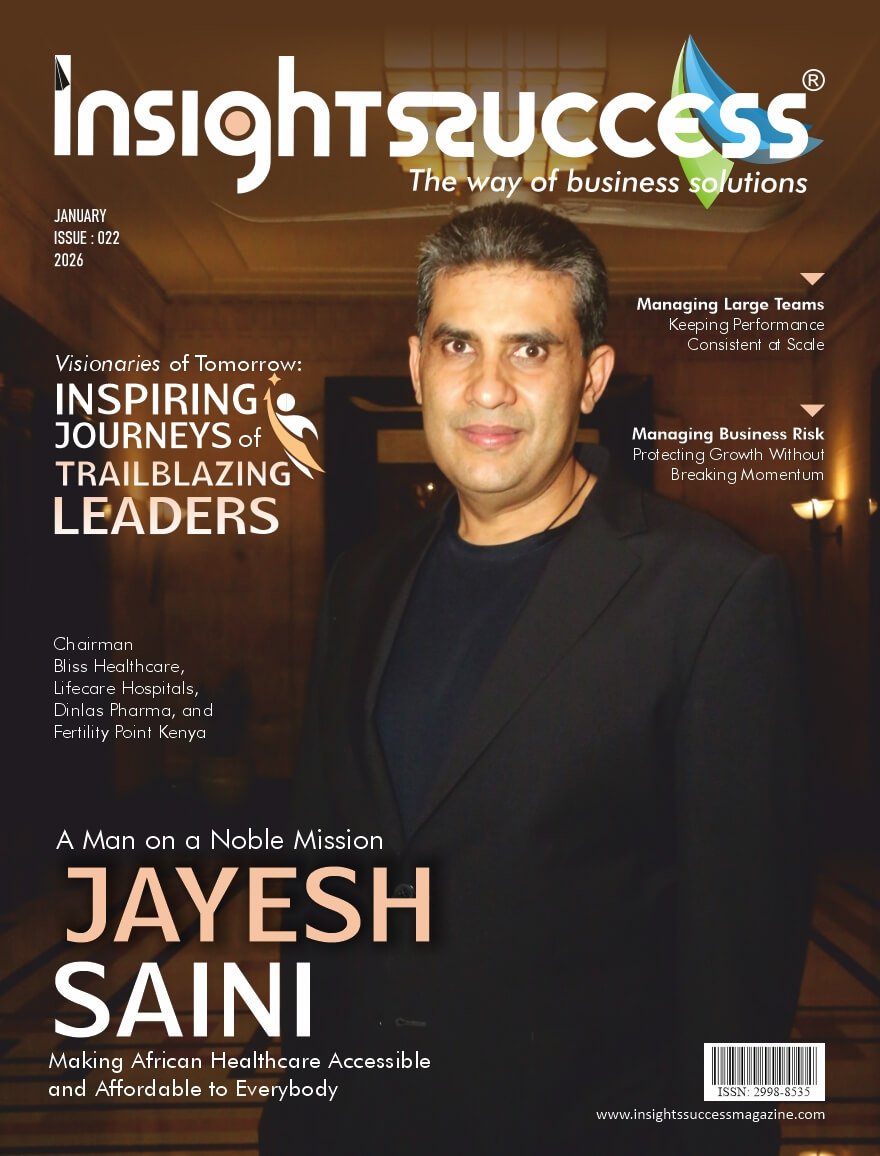
Visionaries of Tomorrow: Inspiring Journeys of Trailblazing Leaders
Visionaries of Tomorrow: Inspiring Journeys of Trailblazing Leaders This edition is dedicated to remarkable changemakers whose journeys reflect courage, innovation, and resilience, celebrating leadership that challenges limits, inspires communities, and shapes the future with purpose and impact. Quick highlights Quick reads

Protecting Growth Without Breaking Momentum
Managing Business Risk Every serious organization aims to grow, and this ambition is shared universally. But on the other hand, growth brings along expanded exposure. The companies that grow to new markets, adopt new technologies, hire more workers, and speed up their operations will face a larger and much more complicated risk. The leadership challenge is not to get rid of risk; this is not possible. The real challenge is to control risk without forcing the whole organization to become cautious and bureaucratic. Effective business risk management means keeping the growth area protected while at the same time not losing momentum. It demands the leaders to be resilient, have good governance, and make better decisions while still having the same speed, being innovative, and being confident. Risk Is the Shadow of Growth Every choice regarding growth brings along uncertainty. Moving to a new location involves the risk of regulations and cultural differences, while bringing out new products creates the risk of the market and operations. On the other hand, switching to digital platforms involves risks relating to cybersecurity and data privacy, and fast-growing companies face risks concerning their employees, the quality of their products, and their reputation. It is true that high-growth companies often go bust not due to having wrong strategy but to risk being unmanaged. The combination of weak controls, unclear accountability and aggressive timelines can change the manageable exposure into a major disruption. Risk should not be considered as the opposite of growth; rather, it is the cost of growth. Leaders who think of risk as a strategic dimension—not an afterthought—will be the ones who succeed. The Difference Between Risk Management and Risk Avoidance Risk management is often confused with risk avoidance by many companies. In the name of safety, they build layers of approvals, put restraints on initiative, and delay decision-making. The final outcome of this is that the organizations lose their agility and their chance to take advantage of the opportunities. When risk management is applied correctly, it leads to action with confidence. It makes the risk levels acceptable, reinforces controls where necessary and guarantees that the employees can work quickly without putting business at risk of harm that could have been prevented. The aim is not to deny more often. The aim is to take wiser “yes” decisions. Building a Risk-Aware Growth Culture The most robust risk systems are those based on culture rather than procedures. If the teams are accustomed to thinking in a certain way that includes risk then it will be the case that risk is exposed promptly and dealt with proactively. The leaders of an organization create this culture by promoting openness and, on the other hand, removing fear connected with reporting problems. Team members should be allowed to point out problems and confess their errors without being penalized. When the management’s reaction is based on learning rather than on assigning blame, risk becomes apparent—and at the same time, this risk is the control’s foundation. Risk Management Must Be Embedded, Not Separate It is very frequent that one of the major execution lapses happens when risk management is treated as a compliance function. If risk departments are segregated from other departments, only then can risk be regarded as a blocker at the end of the process instead of being a partner in strategy. Risk is now in daily decision-making practices in companies with high performance. Risk is considered in the areas of planning, budgeting, vendor selection, product development, and market entry strategies. This causes no opposition as a result of getting rid of the risk downside after the investment is made, instead of taking it on board at the beginning. Incorporated risk management is a bottom-line factor for companies in the fast lane to growth, as it results in avoiding the costly production of pushing back into the market. Conclusion The process of managing business risk should not result in the cutting back of aspirations. It should lead to the fortifying of the application. The risk-competent companies do not slow down; rather, they get self-assured, they become tougher, and they are more uniform in their output. The leaders, by internalizing the risk in their growth strategy, establishing a risk-conscious culture, defining precise limits, and implementing the ‘safe speed’ can secure their expansion and at the same time keep their momentum running. In the situation of frequent changes and utter disruptions, risk management is not just a defensive measure. It is an advantage of leadership and a prerequisite for the kind of growth that is not only profitable but also sustainable—thus, a requirement. Read Also : Keeping Performance Consistent at Scale

Keeping Performance Consistent at Scale
Managing Large Teams The management of a large team is a totally different ball game compared to that of a small one. In the case of small teams, the performance is mainly through closeness—leaders can be almost with the team all the time, problems are noticed right away, communication is on a personal level, and everybody is on the same page in the most casual way. When the team size increases, that closeness is gone. The leader is pushed farther away from the daily routine, decision-making tends to be layered, and there is inconsistency in performance across different units. At the same time, the challenge is no longer to separate individual motivation. It is about creating systems that can maintain performance at a similar level through many people, managers, and different parts that are in motion. The top-notch leaders do not depend on their charming personality or huge amount of constant supervision. They depend on a system, clear guidelines, and a disciplined company culture. Why Performance Becomes Inconsistent at Scale Large groups create differences in performance. There is not one single way of leading each manager. The teams’ understanding of the objectives may be different. Quality levels can change, messages can be misinterpreted, and responsibility can be shared unevenly. The company starts to suffer from the “performance pockets” phenomenon—some groups are very productive while others are not, not due to less skilled employees but because of different demands and working patterns. This variation turns out to be a costly one. It impacts customer satisfaction, efficiency of operations, and morale of the staff. The suggestion for leaders of big teams is to work on the variability. It is not management that brings about uniformity; it is the clear understanding that comes along with the use of familiar systems. Define Clear Standards That Don’t Depend on Interpretation Clarity is the bedrock of consistent performance. Leaders, in large organizations, cannot presume that people are aware of the characteristics of good performance. They have to spell it out in detail. Leaders who perform at the top level set forth precise performance benchmarks in terms of results, actions, and quality. They tell what victory signifies, what the best is, and what is not allowed. These benchmarks should be so easy that they can be memorized and used, but also so detailed that they eliminate uncertainty. With unambiguous criteria, workers do not require regular commands—they adjust themselves. Build a Strong Middle Layer of Leadership Managers are the multipliers in big teams. A leader is not able to directly manage hundreds of people efficiently without the aid of managers who maintain the standards, guide the performance, and safeguard the culture. This implies that leaders are to very heavily invest in manager capability. A large number of organizations err by elevating their top performers into management positions without building up their leadership skills. At large, this leads to inconsistency as the managers have different views of leadership. The leaders who are strong consider the development of the managers to be a strategic priority—train them, coach them, and unite them around the common expectations. Create Execution Rhythms That Drive Accountability Consistency is the daughter of rhythm. Structure is the support large teams need—a weekly meeting for checking in and discussing performance, reviewing and planning, setting up escalation paths, and reporting in a structured way. The mentioned rhythms are not a form of bureaucracy, but rather a coordination system. They bring transparency, avoid a slow slide with the help of regular checks, and make sure leaders spot problems at an early stage. More than anything, these rhythms must be results-oriented, that is, not activity-driven. The leaders should make use of key performance indicators to measure progress, pinpoint constraints, and eliminate blockers. When meetings turn into status briefings instead of forums for decisions, they take away the drive. Cadence is one of the tools high-performing teams employ to speed up their actions. Standardize What Must Be Consistent, Flex What Must Be Local Consistency is not the same as uniformity. Large groups are working under different circumstances—areas, business sectors, consumers, and limits. Trying to have everything the same will only lead to people opposing it and decreasing the flexibility of the organization. Leaders with the highest impact will unify the basics and give the periphery the freedom to choose. Basics such as brand standards, quality benchmarks, safety rules, and customer promise should be uniform throughout the whole area. Team at the local level can change the details of execution in accordance with the situation. This trade-off ensures that performance reliability and local responsiveness are maintained. Conclusion The management of big teams is a systematized practice. The leader does not need to get into each and every detail but has to make things clear, train efficient managers, set up regular meetings, and promote the culture so that the performance is always at the same level even with the increase in size. When execution becomes repeatable, accountability is evident, and standards are set, organizations scale with ease. Leaders that put down these pillars change huge teams from being a challenge of complexity to being a source of performance advantage. Read Also : How Top Companies Stay Focused