





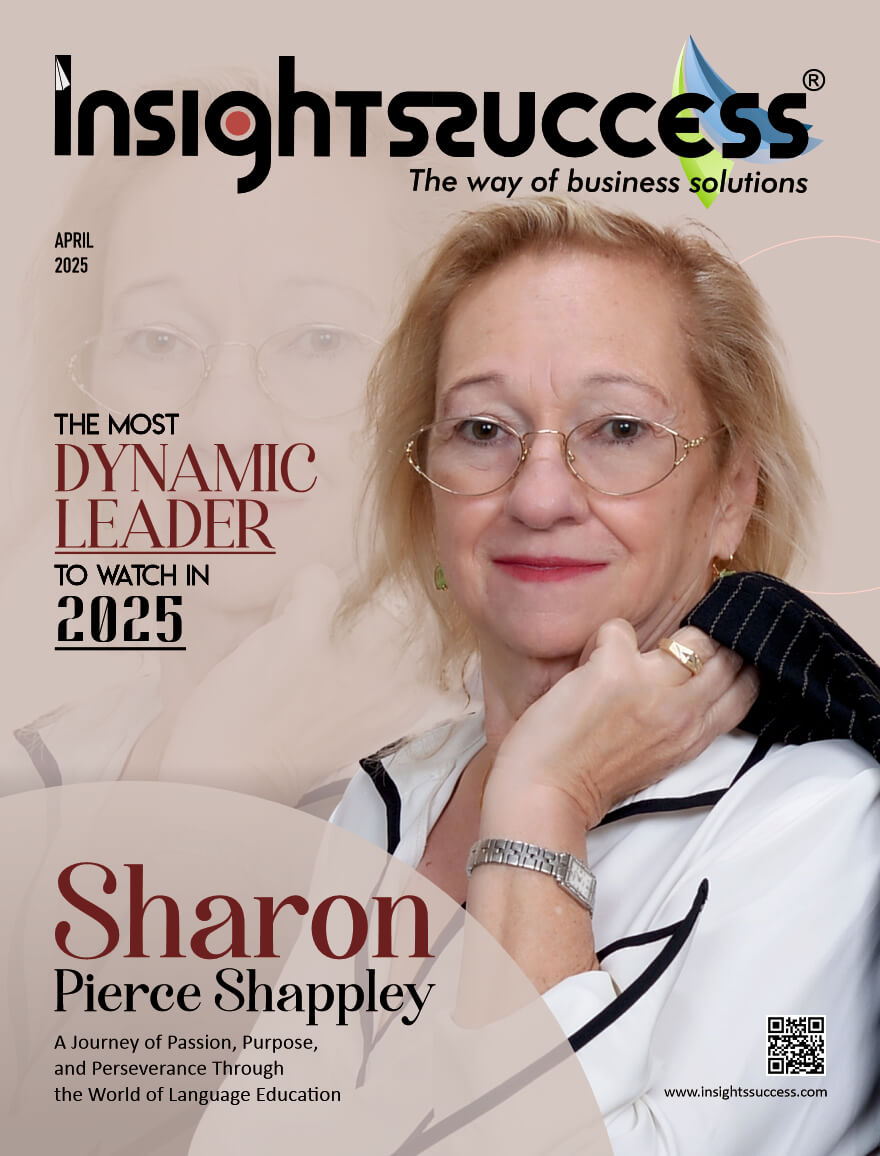
The Most Dynamic Leader To Watch In 2025
The Most Dynamic Leader To Watch In 2025 This edition spotlights Sharon Pierce Shappley, a visionary transforming leadership with innovation, resilience, and purpose. This feature highlights her groundbreaking contributions, strategic foresight, and empowering leadership style, setting her apart as a trailblazer shaping the future of business and inspiring the next generation. Quick highlights Quick reads

A Journey of Passion, Purpose, and Perseverance Through the World of Language Education
Being born in a vibrant state of Louisiana Sharon Pierce Shappley her early years spent soaking in the warmth and culture of the Caribbean islands. It was here, surrounded by diverse languages and rhythms, that her fascination with linguistics began. From a tender age, her curiosity about communication in different languages led to what would be a lifelong commitment to education. Her academic journey is characterized by a sense of resilience and passion. Graduating in Bachelor of Arts degree in Social Science with an Education Concentration and a minor in Child Development and further graduated in Magna Cum Laude August 22, 2011. Several years later, she pursued a Master’s degree in Education (MAED), which provided the foundation for an even more formidable challenge—the pursuit of her doctoral degree. In 2022, Sharon was officially crowned for her Ph.D. in Education. Her dissertation centered on adult second language acquisition was a result of years of rigorous academic research and real-world experience. Despite the challenges faced during the COVID-19 pandemic, including university closures and formatting changes, she adapted. She transformed the research process into an online experience, rewrote sections to comply with revised APA guidelines, and learned patience and perseverance in the face of uncertainty. She devoted herself to education and empowering learners was unwavering. A Career Spanning Continents and Classrooms Sharon’s professional journey in education began in 1974, with a humble start—teaching English to students in Puerto Rico who found it difficult to grasp the language in traditional classroom settings. What began as local tutoring blossomed into a global mission. Sharon has since taught in over a dozen countries, including Belarus, China, India, Italy, Japan, Russia, Spain, Ukraine, the USA, and Vietnam. While pursuing her Bachelor’s degree in 2003, she became deeply invested in second language learning. This phase became a transformative chapter in her life, inspiring her to design an adaptable, level-based English curriculum that guides students from their existing proficiency to their aspirational fluency. Her teaching model has since evolved into a robust system, integrating contemporary methodologies and ensuring relevance in an ever-changing educational landscape. Today, Sharon offers tailored learning opportunities through her digital platform. From middle school students to adult learners, the courses cater to varying levels of English proficiency, helping students not just understand written English but master it. Her courses are built with a focus on individual needs, and her doctoral research continues to influence ongoing curriculum refinement. Currently, she is spearheading the launch of a comprehensive English-learning software aligned with European language acquisition standards. With ten proficiency levels (A1 to C2) and modules for five distinct age groups, this offering represents Sharon’s vision of accessible, high-quality language education. A single subscription opens access to fifty dynamic courses, and a 7-day free trial is available at sharonsclasses.org. Managing Life, Lessons, and Learning Balancing an expansive educational business and personal commitments has been a challenging yet rewarding endeavor for Sharon. With handwritten notebooks, intricate lesson plans, and over 900 lessons mapped across ten proficiency levels, her dedication to building a meaningful language-learning ecosystem is evident in every detail. Her day rarely ends without carrying her laptop, ensuring she remains tethered to her mission of uplifting learners. Fortunately, Sharon is surrounded by a steadfast support system. From collaborators to loved ones, many have stepped in to assist—whether ironing out technical glitches, offering emotional encouragement, or simply ensuring she takes time to rest. To maintain balance, she finds solace in travel. Cruises, in particular, offer her much-needed respite from the digital world, allowing for moments of reflection and rejuvenation. Sharon also remains an ardent supporter of the arts, frequenting concerts, plays, ballets, and sporting events, especially hockey. Her students, meanwhile, serve as a continuous source of inspiration and joy. Weekly Zoom sessions go beyond academic discussions—they are communities of shared lives, laughter, and collaboration. Students often become testers and advisors, contributing real-time feedback to improve the software’s functionality and content. In times of frustration or fatigue, Sharon recalls these moments and the impact she is making. Even during community celebrations, like Passover, her commitment doesn’t wane. She multitasks—attending festivities while uploading new content to her learning management system. Learning the ins and outs of platforms like Absorb LMS has brought fresh challenges, yet the delight in discovering features that can enhance student experiences keeps her enthusiasm alive. As she aptly summarizes, “It’s with a little help from my friends and an abundance of passion that I continued to thrive.” Driven by a Purpose Greater Than Profit Sharon Pierce Shappley isn’t just an educator; she’s a visionary with a cause. Her business isn’t motivated by profits alone—it’s about democratizing language education and helping learners unlock new opportunities through communication. Her professional persona is marked by goal orientation, collaborative energy, and an unyielding desire to see others succeed. With an affinity for technology and presentation design, Sharon is constantly pushing the boundaries of conventional teaching methods. Whether collaborating with fellow educators or refining curriculum based on student feedback, she approaches her mission with grace, grit, and generosity. She derives immense satisfaction from those ‘aha’ moments when a student finally grasps a challenging concept. “My mission is clear to offer affordable, effective English language instruction to anyone with the desire to learn—regardless of their economic or geographic limitations.” says Sharon. Her business is her voice, her tool, and her testimony. It’s built on empathy, nurtured with knowledge, and sustained by resilience. “Running a business, I believe, is among the toughest jobs one can take on. But if fueled by belief in its value and executed with heart, it can become a beacon of transformation.” she commented. The Fire Within: Passion as Fuel What drives Sharon each day is an undying love for education. Books have always been her companions, and the joy she finds in reading is something she yearns to share with the world. Knowledge, she believes, is the key to a more compassionate, enlightened, and inclusive humanity. The spark of passion ignites every time she sees students genuinely curious, not

5 Emerging Leadership Trends Reshaping Executive Development
The leadership landscape is changing rapidly. The traditional models of executive development—that were once based almost entirely on hierarchical power and strategic delegation—are now being reshaped by changing societal expectations, technological innovation, and a multigenerational workforce. Leadership trends today in the high-speed business environment have a critical part to play in determining how executives are being developed, mentored, and prepared for the future. These new trends are not only remodelling executive mindsets but are also shaping the very definition of leadership. The following are five leadership trends that are having a substantial impact on executive development in 2025 and beyond: Human-Centric Leadership One of the most compelling leadership trends in recent years is a move towards human-centric leadership. In the post-pandemic era, leaders must lead with empathy, emotional intelligence, and authenticity. Being able to establish trust, create psychological safety, and enhance employee well-being is no longer seen as a soft skill but is being framed as a key leadership capability. Executive training programs are adding modules on inclusive communication, empathy training, and active listening to their curriculum now. This reflects an acknowledgment of the fact that the performance of an organization has an intrinsic connection to the psychological and emotional robustness of human beings. Connected leaders rather than controlling leaders are being shown to be more proficient at handling ambiguity and change. Digital Fluency and Tech-Driven Decision-Making Technology is no longer an enabler but a strategic driver in leadership. AI, machine learning, and big data analytics have brought in changes that compel leaders to become digitally literate. The single most significant leadership trend of the day is perhaps the need for technologically inclined executives who are able to use digital solutions in order to make decisions based on knowledge and not assumptions. Today’s executive development programs involve studying digital transformation approaches, cybersecurity culture, and data literacy. Leaders need to not just comprehend how technology operates but also how it can contribute to a competitive advantage. This transformation is also making way for more intense cooperation among CIOs, CTOs, and the C-suite, with technology being integrated into every strategic endeavor. Agility and Continuous Learning as Leadership Imperatives Those were the days when only years of experience had been the weapon of executives. Nowadays, in the VUCA world, the need for agility and lifelong learning culture is one of the most essential leadership trends. Executives need to match pace with market transitions, customer demands, and disruptions from across the globe. Future-facing organizations are investing in leadership development models founded on iterative learning, speed-driven experimentation, and fail-fast culture. Executive coaching, peer-learning networks, and microlearning platforms are deployed to foster real-time knowledge assimilation and responsiveness. It keeps the leaders current, effective, and competitive in a changing world scenario. Diversity, Equity, and Inclusion (DEI) as a Leadership Mandate One of the other disruptive leadership trends is promoting diversity, equity, and inclusion from compliance to business priority. Today’s executives are also required to be DEI champions, actively creating inclusive cultures and diverse leadership teams. Executive development is changing, as well. Unconscious bias, inclusive hiring and interviewing, and fair performance measurement are now addressed in courses. Companies are also designing sponsorship and mentorship programs to build underrepresented talent. These aren’t optics—certainly not. They’re about building more successful, more innovative companies that have a representative face. Purpose-Driven Leadership and Stakeholder Capitalism Maybe the most values-based leadership trend is purpose. Leaders today are being asked to see beyond shareholder value and adopt stakeholder capitalism. That means recognizing environmental stewardship, social justice, and community involvement as core aspects of business strategy. Executives are increasingly being trained with an emphasis on ethical leadership, social responsibility, and sustainability reporting. Leadership programmes are integrating ESG (Environmental, Social, and Governance) principles, so that future leaders are able to balance profitability and social good. This is highly heard by millennial and Gen Z employees, who desire to work for companies that share like values. Conclusion As the world itself is changing at a speed never before seen, so too must the manner in which we build and sustain our leaders. The five trends of leadership that have been identified above—human-centric leadership, digital fluency, lifelong learning, DEI, and purpose-driven leadership—are not trends to be adopted, but instead an imperative redefinition of what it means to be a leader in the 21st century. Firms that adopt these trends as part of their executive education efforts will be well positioned to hire the best and brightest, navigate disruption, and build enduring value. Most importantly, they will develop a new generation of leaders who are not only competent but also caring, inquiring, inclusive, and ethical. The days of the omniscient, command-and-control CEO are over. Following in their place is a new archetype—one driven by flexibility, empathy, and purpose. Embracing and adapting these leadership trends are no longer simply nice to do; they are essential to long-term success. Read Also : The Evolution of Dynamic Leadership in the Digital Age

The Evolution of Dynamic Leadership in the Digital Age
In an international age where technological innovation is developing at a speed never before seen, the old leadership styles are rapidly losing place to newer, more adaptable, responsive, and visionary styles. At the pinnacle of the top competencies needed that are undergoing change in this new world is Dynamic Leadership—a style that speaks to responsiveness, inclusiveness, and innovation amidst the digital age. Understanding Dynamic Leadership Dynamic Leadership is a nimble and responsive style of leadership that adjusts in real time as a result of continuous feedback, data-driven decisions, and a feeling of teamwork. Contrasting with hard, top-down structures of old, dynamic leaders are characterized by their ability to lead through uncertainty, respond to change, and motivate cross-functional teams through complex digital transformations. This form of leadership is not industry specific. Across technology start-ups and multinational corporations, across healthcare and education, the ability to lead in fluid terms has become the defining feature of successful organizations in the Digital Age. The Digital Age: A Catalyst for Change The era of digitization, dominated by technologies such as artificial intelligence, cloud computing, data analysis, and remote team collaboration tools, has transformed the very nature of work. They demand not only technical abilities but also emotional maturity, foresight, and cultural flexibility—essence of Dynamic Leadership. Historically, leadership involved hierarchical control and long-term planning. Nowadays, however, decisions need to be made in real-time, on the basis of fluctuating data and fluctuating market trends. Leaders need to be adaptable, constantly adapting strategy mid-course to take advantage of new opportunities or react to unforeseen risks. Dynamic leaders succeed in this environment because they are comfortable with uncertainty and able to make rapid but rational decisions. Key Qualities of Dynamic Leaders A few essential qualities distinguish Dynamic Leadership in the online environment: Adaptability: Online leaders must be capable of changing their strategies quickly in response to new intelligence, technologies, or market needs. Vision Orientation: Agility is essential in the short term, but dynamic leaders also possess a well-defined vision for the longer term that drives their decisions and inspires their staff. Collaborative Intelligence: No dynamic leader does anything by themselves today in the networked world. Dynamic leadership emphasizes collaboration across functions, geographies, and disciplines. Tech Savviness: Not necessarily programming experts, but dynamic leaders understand digital tools well and new technology that can spark innovation and productivity. Empowerment and Inclusion: Empowering teams, diverse perspectives, and a psychological safety and experimental culture are cultivated by dynamic leaders. Challenges in Practicing Dynamic Leadership Despite its advantages, Dynamic Leadership is not without its challenges. Hierarchically embedded firms may resist cultural change to accommodate its implementation. Even executives may struggle to shed control-oriented philosophies for trust-oriented ones. Also, in our modern interconnected world, information overload can paralyze decision-making. Dynamic leaders must be able to cut through the noise and pinpoint those insights most pertinent, so decisions are on time and data-driven, but not reactive or short-term. Another difficulty arises in finding a balance between dynamism and stability. Being dynamic does not mean being impulsive. Leaders must ensure that rapid changes in direction are strategic and congruent with other objectives. Maintaining this tightrope balance requires intelligence, but equally as much effective communication and emotional maturity. Dynamic Leadership in Action A number of examples in the world of business exhibit the power of Dynamic Leadership. The example of Satya Nadella’s Microsoft is one: “by developing a growth mindset culture, betting big on cloud, and enabling a culture of collaboration,” Nadella showed dynamic leadership at scale. Microsoft became a leader in technology again with his leadership. Similarly, when the pandemic of COVID-19 emerged, companies like Shopify and Zoom illustrated how transformative leadership could steer during complete disruption. These companies quickly reacted to spiraling demands and shifting working patterns, growing infrastructure and fine-tuning services with excellent resilience. Startup communities and innovation centers also provide fertile ground for agile leadership. There, in this high-growth ecosystem, people who can accelerate rapidly, are able to fuel creativity, and can learn through failures are irreplaceable. Creating a Culture of Dynamic Leadership For organizations that want to develop Dynamic Leadership, the process starts in the mind. Leadership development initiatives need to prioritize flexibility, digital fluency, and diversity-inclusive practices. Feedback loops, mentorship, and live learning platforms need to be integrated into the fabric of the organization. No less critical is eliminating structural obstacles. Flatter structures, decentralized decisions, and unobstructed channels of communication provide the environment where dynamic leadership can flourish. Technology also has its turn. Collaboration software, openness, and performance monitoring software can enable leaders and teams to respond dynamically without sacrificing accountability. Conclusion: The Future Is Dynamic As we continue forward, Dynamic Leadership will continue to be the solution to individuals, teams, and organizations succeeding in the age of the digital revolution. In an era where the world is marked by continuous disruption, the ability to lead with agility, clarity, and compassion is needed now more than ever. This is not merely a case of adjusting to change—it’s about designing change. Effective leaders are not just responders; they are architects of change, taking challenges and transforming vision into reality. In essence, Dynamic Leadership is not an ephemeral occurrence but a natural transformation of leadership knowledge and application. They will not just cope but lead the way to the next wave of innovation and development. Read Also : Indigenous Wisdom as Inspiration for the Future of Environmental Stewardship

The Grinch ‘Knee Surgery Tomorrow Meme’ Explained
The internet also has a weird power to transform mundane moments into virality, and one of the most compelling examples of this is the “Knee Surgery Tomorrow meme. What at first glance is a weird trend, this meme has resonated with many, especially those who have had to deal with the anxiety of having to have a medical procedure done. The “Knee Surgery Tomorrow meme, which takes an offbeat and ironic turn with the character of the Grinch, has become popular across the board. In this blog, we’ll break down the origins, the humor, and the cultural impact of the meme, explaining why it’s more than just a funny image. Origins of the Knee Surgery Tomorrow Meme The Knee Surgery Tomorrow meme originally started trending in 2021, but its humorous origins go back to a set of medical nervousness memes. The original image format utilized an image of a squirrel, looking anxious but also relieved, with the caption, “That feeling when knee surgery is tomorrow.” The short but recognizable caption struck a chord with individuals who were nervous about an upcoming surgery. The meme took an instant liking with people who have been on the rollercoaster of emotions of waiting, fear, and in some cases, anticipation that drove them to share the meme to a large extent through social media. But it was during 2022 that the meme saw a significant shift in popularity. The Instagram photo @blinch.feels provided a twist: a blue Grinch character, affectionately named “blinch,” and the caption, “That feeling when knee surgery is tomorrow.” Combined, an instantly recognizable holiday character and a nervous anxiety about surgery formed a strange and humorous dichotomy. The blue Grinch, whose grotesque facial expression so wonderfully framed the mix of emotions—fear, nervousness, and a hint of thrill—that so many feel when they learn a medical procedure lies ahead for them. How the Grinch Became a Meme Icon The transformation of the Knee Surgery Tomorrow meme from a normal picture of a squirrel into a full-fledged meme with the Grinch was a turning point. Including the Grinch character added a secondary layer of humor to the meme, as the Grinch character itself is an over-the-top, somewhat comedic character. The character, normally symbolizing untypical grumpiness and inner conflict, was the ideal visual representation of the strange sensations in anticipation of surgery. The use of the blue-hued Grinch specifically—a “blinch”—created a distinct variation of the meme that quickly gained traction among meme cultures. Before long, the meme was going viral on social media platforms, from Instagram and TikTok to Reddit and Twitter. The meme’s accurate but absurd tone found equilibrium between the broad apprehension of surgery and the irrational humor the internet craves. The Cultural Significance of the Knee Surgery Tomorrow Meme The cultural importance of the Knee Surgery Tomorrow meme is not only achieved by the amount of times it has been shared, but by the degree to which it has pervaded all aspects of internet culture. The meme, even though it’s about something as serious as surgery, can encapsulate a stressful situation into a humorous context, so that people can find something to laugh about what otherwise they would fear. It capitalizes on a common experience: fear of medical procedures, and somehow provides a release from tension. The most fascinating thing about this meme is that it is flexible. It has been picked up by various groups ranging from healthcare professionals to the general populace of internet users. On forums such as Reddit, there exist copies of the meme in a subreddit dedicated to a particular theme, such as r/KneeSurgeryMemes , in which people share their own memes hoping to be granted their procedures. The meme has, throughout the years, evolved into various forms, either in user-edit forms or even just using it for other operations aside from knee operations. Moreover, the meme has transcended entertainment alone, with the creation of meme-based cryptocurrency coins like $KNEE and $GEPE. The coins are a reflection of how far this meme has gone into permeating wider internet culture, merging internet humor and online finance and meme-based communities. The Humor Behind the Knee Surgery Tomorrow Meme In essence, the Knee Surgery Tomorrow meme is a twist on the tension between two otherwise contrasting feelings: humor and fear. Surgery, to most, is usually a source of anxiety, fear, and uncertainty, but the meme succeeds in taking these feelings and turning them into something humorous. The comedy is not in the surgery itself but in the over-the-top way in which the Grinch (or blinch) is used as a metaphor for these pre-surgery feelings. The meme is built on a common experience: waiting for a life-defining moment, one that involves a procedure. Perhaps it is fear of the unknown, fear of pain, or plain uncertainty about healing. The frowning Grinch face is the perfect visual imagery of the internal struggle to stay calm sitting on the edge of great change—somehow still managing to find a way to laugh at how absurd it all is. Why the Knee Surgery Tomorrow Meme Keeps Growing Another main reason the Knee Surgery Tomorrow meme continues to grow in popularity is that it is versatile. While the Grinch is the target in this particular, the meme template is generic enough that it can be applied to represent any level of anticipation, anxiety, or future event scenario. It’s not exclusive to knee surgery, though. It’s been applied to explain everything from dentist visits to job interviews. Yet it has made the meme up to date even though it transforms from one new shape into another. Second, the ridiculousness of the meme also makes it popular. People who are experiencing stress, either for a surgery or for some event that will turn their life around, will not find difficulty identifying with the humor of this meme. It puts everyone in a smiling mood for a second, reminding one that even the most daunting is possible to ridicule. Conclusion The Knee Surgery Tomorrow meme is the
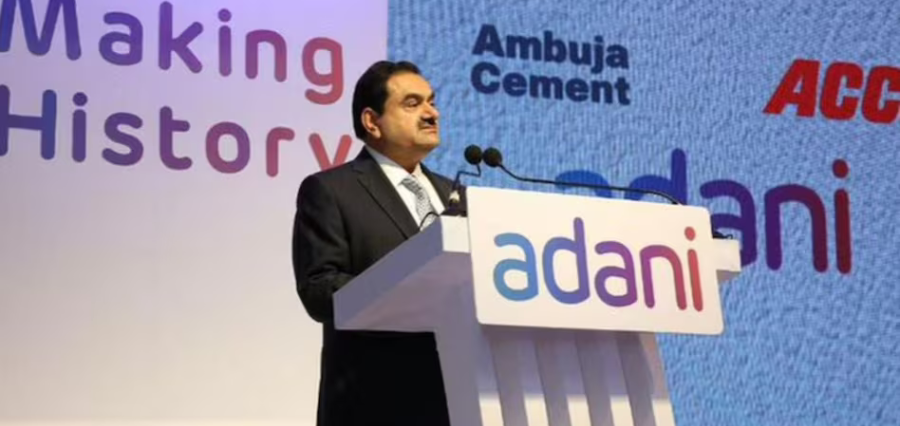
Adani Energy to Invest Up to 18K Crore in Capex in FY26
Key Points: Adani Energy Solutions will receive up to ₹18K crore as FY26 capex. Power transmission, smart metering, and renewable integration are the focus areas. Key Facts: FY25 capex of ₹15,000–16,000 crore is exceeded in FY26. Renewable transmission is the focus area in high-value projects, particularly in Gujarat. The company is also deploying humongous smart metering projects in India. Key Background : Adani Energy Solutions, the flagship energy infrastructure business of the Adani Group, has announced its bid to invest ₹18,000 crore as capital expenditure during the financial year 2025-26 (FY26). This strategic investment is a massive increase from the ₹15,000–16,000 crore spent in FY25 and shows the company’s aggressive approach to developing India’s energy infrastructure. Most of the investment will be in transmission infrastructure, the spine of India’s energy transformation. Adani Energy is at the forefront of making it possible to transmit electricity from renewable power hubs to consumption points. Such a place is Gujarat’s Khavda district, where Adani Green Energy is building a gargantuan 30 gigawatt renewable energy park. To make this possible, Adani Energy Solutions is building gigantic transmission corridors for efficient evacuation of power. Smart metering programs constitute another key support pillar to the investment strategy. The company has already received orders for the installation of 23 million smart meters and an order book for tendering to install another 120 million meters. These programs across states such as Assam, Bihar, and Maharashtra will transform the power distribution by way of modernization, loss reduction, and improved monitoring and billing systems. The company would fund the capital through internal accruals and external fund raising. Adani Energy raised close to $1 billion by way of qualified institutional placement of equity shares in its recent filing. The capital infusion reflects the confidence of investors in the company’s growth strategy and operating planning. By investing ₹18,000 crore in FY26, Adani Energy Solutions is not just expanding its market share but also aligning its business model with India’s total renewable power and sustainable growth ambitions. The capex thrust is also the company’s long-term strategy to become an Indian energy transmission and digital utility leader.

The Knowledge Review Features David Fiorucci as One of the Most Inspiring Leaders Making a Difference in Education, 2024
Effective leadership is more a matter of leading a clear direction, creating teamwork and inspiring people to deliver their best, and creating a culture of trust, responsibility, and development. Teacher in-service education is focused on bringing progressive change and innovation. As opposed to addressing task control, training is focused on putting action into common values and common goals. Vision, communication, knowledge, and ethics-based decision-making provide lasting and long-term accomplishment. David Fiorucci, Inventor of Octocracy, and the CEO and Founder of LP3 Ltd, is an accomplished entrepreneur and change-maker influencing the education market with visionary innovation. More than 30 years ago, David treaded a crossroads to pursue a revolutionary and lofty objective, foreshadowing a career of leaving a lasting impression. His aspiration goes far beyond leaving a transformational influence on the businesses that he works for; he wants to leave a ripple effect of positive influence spanning industries and communities. David’s vision was to redefine leadership to be at its best possible potential to amplify best practices, make smart decisions on where to grow and eliminate the unintended side effects of poor management. Spurred by a mammoth sense of responsibility to serve the greater good, he set out on a mission to redefine leadership’s potential to bring about dramatic and long-lasting change. One of the key things David learned was that common sense and common language at all organizational levels really do count a lot. He discovered that collaboration and alignment of stakeholders through good communication are behind bringing about cooperation and commitment to shared goals. Through the LP3 Leader system, David continues to guide his vision of leadership as a positive influence. His vision not only places organizational performance in its proper place better but also calls on leaders to make lasting, long-term contributions to their world and to humanity in general. Read Also : GITEX Expands to Vietnam, Igniting US$200bn National Digital Economy Potential

Inspirational Icon To Look For In 2025
Inspirational Icon To Look For In 2025 Lou’s journey is a testament to vision, resilience, and relentless innovation—and it’s far from over. As the driving force behind Echelon, he is not merely setting fitness trends; he is transforming lives. His leadership is rooted in a powerful blend of passion and purpose, consistently pushing the boundaries of what’s possible in health, wellness, and technology. Quick highlights Quick reads

Lou Lentine: The Relentless Spirit of Innovation
From a young age, Lou Lentine was devoted to the values of perseverance, discipline, and entrepreneurial zeal. He was employed by his father at Lentine Boating Marina in New Jersey, and he experienced the tenacity required to run a business. The marina was more than just a workplace; it was his first classroom in entrepreneurship. As he observed the long hours, customer interactions, and operational challenges, a dream emerged in him: one day, he would launch his own company. He pursued higher education at the University of Central Florida, graduating with a degree in Marketing and a minor in Finance. This academic foundation, combined with real-world insights from the marina, shaped the entrepreneurial approach Lou would soon take. Soon after college, driven by ambition and an insatiable desire to innovate, he founded Viatek, his first business venture. Viatek, like many startups, was born out of a relentless desire. Every product Lou developed was financed. Successes resulted in validation; failures taught him to pivot, reimagine, and push harder. These early years were not just about building a business; they were about constructing character, resilience, and an enduring belief in possibilities. His entrepreneurial DNA was now etched into every decision he made, establishing the stage for the creation of his next major innovation. Creating Disruption Through Purpose and Innovation Lou ‘s professional arc took a transformative turn in 2017 with the founding of Echelon Fitness Multimedia. “After over two decades of building consumer product ventures with Viatek, I saw an opportunity to challenge the connected fitness industry. I envisioned a brand that could democratize access to high-quality, tech-forward fitness solutions and Echelon was born from that bold idea.” Identifying the gap between expensive boutique fitness and affordable home workouts, Lou developed a portfolio of connected fitness equipment: bikes, rowers, treadmills, ellipticals, stair climbers, mirrors, strength machines, and smart weights. His expertise in product development and marketing propelled Echelon into both residential and commercial fitness ecosystems. What truly set the brand apart, however, was its immersive content. With world-class instructors teaching in over a dozen languages and a thriving digital community, Echelon wasn’t just selling machines — it was cultivating a lifestyle. The momentum didn’t stop there. In 2024, Echelon made significant leaps with the acquisition of ThriveX, expanding into the recovery and wellness segment. FlexIt merged into the company, creating Echelon Coach, which offers personalized one-on-one training. Simultaneously, Echelon launched ActiveMD Powered by Echelon, which provides weight loss solutions with GLP1s and includes a FitPass membership with every prescription. Adding to this innovation stack was Echelon’s entry into AI-powered customization through a collaboration with Amazon Web Services. With every pivot and product launch, Lou demonstrated how foresight and agility could redefine industries. Finding Harmony Amidst the Hustle Lou ‘s journey is not just one of business milestones, but also of personal integrity and balance. As the CEO of a multi-million-dollar company operating on a global scale, his responsibilities include overseeing product development and forging strategic partnerships to engaging with employees and stakeholders. Yet, amidst this demanding career, he has always held one principle close: quality time with loved ones is non-negotiable. A firm believer in the “work hard, play hard” philosophy, Lou carves out meaningful moments with his wife, three sons, and half-brother. Whether deep sea fishing, playing pickleball, traveling, or managing their three restaurants in Florida together, the Lentine family makes intentional choices to stay connected. This approach is less about separating work and life, and more about integrating the two in a fulfilling, purpose-driven way. His leadership is equally reflective of this belief. He demonstrates to his team that professional excellence and personal joy can exist. He’s not just the visionary at the helm; he’s the family man in the boat, fishing with his sons, or the hands-on restaurateur managing a bustling dinner service. In these spaces, Lou finds the clarity to lead with empathy and the energy to innovate. Success, in his eyes, is only meaningful when shared. The Drive to Build and Innovate Entrepreneurship is in Lou ‘s bloodstream. What started as a teenage job at a marina evolved into a lifelong pursuit of building ideas into impactful businesses. At the age of 23, he took a leap of faith and never looked back. His appetite for innovation continues to fuel him. Whether developing household gadgets or redefining the fitness industry, Lou is constantly dreaming, designing, and delivering. “It’s not just about the thrill of the next invention. For me, creation is about improving lives. From the first time I pitched a product on national television to now managing international fitness solutions, I have always been deeply connected to the user.” He listens, iterates, and evolves based on real human needs. This customer-first mindset has been instrumental in his longevity across industries. Even with two companies and three restaurants under his belt, Lou is far from slowing down. Every venture is a new chapter. He believes that when innovation meets purpose, extraordinary outcomes follow. Lou’s hunger is not just for business success — it’s for continuous impact. Success Rooted in Family and Failure Lou is fueled by the satisfaction that comes with hard work. There is unmatched joy in knowing that something he created exists in homes across America. But more than tangible success, it’s his family — both personal and professional — that gives him daily motivation. As a leader, husband, father, and mentor, Lou is committed to doing better every day. “Failure, too, plays a critical role in my journey. I don’t shy away from setbacks. Instead, I learn, adapt, and persist. The spirit of “figure it out” defines my leadership.” He keeps trying, analyzing what didn’t work, and pivots accordingly. When you’ve built something from the ground up, letting go is tough. But Lou has come to appreciate that true leadership lies in empowerment — trusting talented people to take the reins while he charts the future. Delegation is not about stepping back; it’s about scaling up. And in that scaling, Lou finds his

Indigenous Wisdom as Inspiration for the Future of Environmental Stewardship
In the wake of the reality of climate change, biodiversity loss, and environmental degradation, humanity is in desperate quest of new solutions. But perhaps some of the deepest solutions are not to be found in new-fangled technology at all but in ancient tradition. Indigenous peoples, having managed their lands for millennia, have within them a vision of a more holistic living relationship with the natural world—a vision that today’s societies are only just beginning to find out about. The More Substantial Relationship between Indigenous Cultures and the Earth For indigenous people, nature is not something to be used but a living being with whom they share a reciprocal relationship. Plants, animals, water, and earth are relatives and not commodities. This belief system brings about an intense sense of responsibility, where caring for the earth is religious obligation and essential prerequisite. From the Maasai of Eastern Africa to the Haudenosaunee Confederacy in North America, Native communities have practiced centuries of sustainable land use, agriculture, and ecologically sustainable hunting practices. Their generations-long experience with local ecosystems—gained over centuries—teaches us extremely valuable lessons regarding resilience and maintaining biodiversity. Indigenous Stewardship Practices: Lessons in Sustainability Many of the Indigenous practices depend on the sustainability principles that today’s world is attempting to adopt. Rotational agriculture, fire management to preserve forest health, selective forestry, and the protection of spiritual sites are a few of the methods that promote ecosystem health and ensure community requirements continue to be sustained. For instance, Australia’s Aborigines have been “fire-stick farming” to manage wildfire risk and promote habitat diversity. Similarly, Amazonian indigenous farmers plant agroforest ecosystems that mimic the complexity of native forests, which provide diversity and food and medicine. Observation, respect, and accommodation are the key skills as we encounter environmental challenges requiring both local wisdom and international collaboration. Bridging Traditional Knowledge and Modern Science The expanding field of Traditional Ecological Knowledge (TEK) is acknowledging the value of Indigenous know-how, as well as scientific inquiry. Collaboration between scientists and indigenous peoples is resulting in better conservation efforts. In the Arctic, for instance, Inuit ice knowledge is informing researchers on the effects of climate change on sea ice. In California, cooperation with Native American nations is restoring native fire regimes to stop devastating wildfires. Through their respect for Indigenous viewpoints, policymakers, scientists, and conservationists are learning more about ecosystems and creating solutions not only ecologically appropriate but culturally respectful as well. Challenges and the Need for Recognition Even with the additional acknowledgment of Indigenous stewardship, these people continue to be beset by challenges such as displacement from their original lands, exclusion, and effect of environmental loss brought about by external forces. Indigenous rights defense is not just a matter of morality but also one of utmost importance to planetary health. Indigenous lands safeguard 80% of the world’s remaining biodiversity, research shows. Securing Indigenous people’s land rights and decision-making power is essential to effective conservation. True environmental stewardship involves hearing, honoring, and raising Indigenous voices, honoring their sovereignty, and bringing their leadership into global environmental politics. A Vision for the Future: Learning, Listening, and Partnering In projecting to the future, Indigenous knowledge provides a way forward. It disrupts the prevailing narratives of disconnection between human beings and nature and follows an ethic of entanglement, humility, and stewardship. There can be no sustainable future through mere copies of disconnected practices alone—it needs a shift of values. It is moving away from an extractive to a regenerative position, and dominance to partnership with nature. Heeding the voice of Indigenous knowledge keepers, investing in conservation that is Indigenous-led, and respecting Indigenous worldviews has the potential to mobilize not only more impactful environmental action, but a profound cultural transformation to care for the world we co-inhabit. The path ahead is difficult, but the wisdom of Indigenous cultures teaches us: real stewardship has nothing to do with conquest; it is about relationship, respect, and responsibility. Read Also : Voices of Tomorrow| Celebrating India’s Emerging Authors in 2025