






Jo O’Driscoll-Kearney: Reimagining Leadership Development for an Uncertain Future
Amidst the altering global backdrop and increasing pressure on organizations to adapt quicker than ever, Jo O’Driscoll-Kearney’s journey emerges as a case study in how great leadership is built not via prescriptive frameworks, but by inquiry, contrast, and daring. Her career has brought her from early work in international education systems to Chief Learning Officer and Council Member at the World Economic Forum, to Professorships in Hult and Faculty with Harvard Business Impact. where she is transforming how leaders navigate an increasingly complicated world. Her trajectory is defined by her refusal to standardize human learning. Instead, she is advocating for an architectural approach which allows leaders to learn while doing their own work, rooted in the unique circumstances of their contexts. Her experiences across five continents taught her that significant development occurs when individuals address pragmatic, human-centric challenges, interact with varied perspectives, and gain the confidence to negotiate unresolved tensions. Her work in the UAE reinforced her idea that speed and depth can and must coexist. She has helped leaders develop characteristics that go far beyond technical proficiency, focusing on adaptability, stewardship, and bravery to foster the growth of others. Throughout her journey, she has remained committed to one truth: leaders are shaped not by the theory they consume, but by the leaders they grow. The Architecture of Learning O’Driscoll-Kearney’s approach centers on what she calls “architectural thinking” – designing structures rather than solutions. When working across radically different cultural contexts, she refuses to standardize approaches. Instead, she creates action-learning cohorts where leaders tackle real strategic challenges in their own contexts while observing how peers in other regions solve parallel problems. “The insight comes from the contrast, not from a universal framework I’m imposing,” she explains. This principle emerged from her work on public-private partnerships in education, where she observed that successful countries didn’t copy each other’s models. They understood underlying principles and adapted them to their unique political economies. Her approach rests on three design principles that transcend culture: start with the problem leaders need to solve, embed life in the flow of learning and create mechanisms for collective sense-making. When she gives brilliant people real problems, access to diverse perspectives, and psychological safety to experiment, they discover novel insights themselves. The Dangerous Gap Ask O’Driscoll-Kearney about the most critical leadership gap in the Fourth Industrial Revolution, and she doesn’t mention technical skills. She identifies allophilia—Harvard professor Todd Pittinsky’s term for “love of the other.” Not tolerance. Not inclusion. Genuine affection for and interest in difference. “We’ve built organizations that at best tolerate diversity and at worst perform diversity while maintaining fundamentally homogeneous thinking,” she observes. The risk isn’t that AI will replace jobs but that organizations will use AI to amplify the groupthink already killing innovation. Research shows ethnically diverse executive teams outperform homogeneous ones, but she observes a pattern: leaders assemble diverse teams, then pressure them toward consensus, which defaults to whoever holds the most power. Organizations need leaders skilled in productive conflict who hold tension between competing perspectives long enough for something genuinely new to emerge. Speed and Depth Aren’t Opposites Working in the UAE has reinforced O’Driscoll-Kearney’s conviction that speed and depth aren’t mutually exclusive. She calls the assumption “a Western hangover from industrial models of learning.” UAE leaders move fast and think deeply not sequentially but simultaneously. When the UAE committed to becoming a global AI hub, the government didn’t send people to six-month training programs. Officials embedded AI specialists in live projects, created rapid prototyping labs, and built feedback loops turning every experiment into immediate organizational learning. Reflection didn’t happen in classrooms but in debriefs after deploying AI to transform visa processing for three million people. “What looks like speed can actually be pattern recognition developing in real time,” she explains. When people learn in the flow of work, reflection becomes a constantly exercised muscle rather than a separate activity performed later. Building for 2071 The UAE’s Centennial 2071 vision fundamentally changes leadership development conversations. Planning horizons extending beyond individual careers force organizations to build leaders accountable to roles that don’t exist yet. Leadership stops being about personal legacy and becomes about stewardship. O’Driscoll-Kearney shifts focus from competency-based to capability-based development. Competencies such as Python, Excel, and financial acumen are fixed. Capabilities such as learning faster than the environment changes, holding complexity without demanding premature resolution, building coalitions across ideological divides are adaptive. She measures success differently: by the quality of leaders someone else grows. “The single best predictor of organizational sustainability is whether current leaders actively develop their replacements. But not just replacing themselves developing people who will be better than they are,” she notes. The Unlearning O’Driscoll-Kearney’s own transformation illustrates the principles she teaches. She spent years perfecting learning platforms, curating content, and measuring completion rates before recognizing she was solving the wrong problem. In high-performing organizations, people don’t use learning management systems. They figure things out in Slack channels, corridor conversations, and calls to colleagues who solved similar problems. “Learning can’t be managed. It can only be enabled,” She stopped investing in platforms and started investing in connection infrastructure. Now she tells every employee they are their own Chief Learning Officer. Her job isn’t providing learning; it’s architecting conditions under which learning becomes unavoidable. The Legacy O’Driscoll-Kearney envisions a structural shift: Chief Learning Officers reporting directly to CEOs rather than HR departments, positioning learning as strategy rather than support function. When learning sits with strategy, it becomes about competitive advantage and organizational adaptability. This matters particularly for women leaders. When learning gets coded as “HR work,” it can become care work important but not strategic, valuable but not powerful. The next generation of women leaders can help to see learning positioned where it belongs: at the executive table, driving business decisions. But she identifies a deeper barrier: internalized misogyny within women’s communities. She’s watched women leaders undermine each other and perpetuate hierarchies that held them back. Her message is clear: women must view other women’s success as expanding their

Dr. Laila Alhubaishi: Forging the Future of Obstetrics & Gynecology and Urogynecology in Women Health
In the vibrant center of the UAE’s quickly changing healthcare ecosystem, where cutting-edge technology meets a deep dedication to the welfare of society, some leaders not only adhere to international norms but firmly establish them. In this new era of clinical and academic excellence and medical governance, Dr. Laila Alhubaishi is a key pillar. As an Associate Professor and Senior Consultant in Obstetrics & Gynecology-Urogynecology with German board certification (FACHARZT), she possesses a unique and potent combination of clinical accuracy, academic and imaginative leadership. Her mission transcends the operating theatre: it is to architect a resilient, equitable future for women’s health across the nation. She translates the rigorous, ethical framework of her advanced subspecialty training into a cohesive national strategy, ensuring every woman’s care journey is defined by dignity, scientific excellence, and unparalleled attention. A Vocation Rooted in Societal Pillars and German Rigour Dr. Laila’s trajectory was inspired by an early and profound realization: women’s health is the indispensable cornerstone of a thriving society. During her formative medical years, she witnessed how pivotal life moments, from childbirth to managing pelvic floor disorders, held the power to determine not only a woman’s physical wellness but also her dignity, confidence, and capacity for social participation. These observations fuelled her sense of responsibility to advocate for women at their most vulnerable moments. She noted the stark contrast between fragmented care and truly comprehensive, woman-centered healthcare, where cultural hesitation and limited subspecialty access often led to prolonged suffering. This crystallized her vision for the UAE: a system where excellence is defined by compassionate care, high accessibility, prevention, and respect for cultural context. Dr. Laila’s ambition remains to empower women through knowledge, choice, and continuity of care. What sustains her daily is the privilege of creating a tangible difference, fulfilling her purpose by restoring function, alleviating pain, and empowering her patients with knowledge. Her German Board specialization profoundly shaped her professional identity. The core principles guiding her practice are precision, accountability, patient autonomy, and ethical rigour. German training instilled structured clinical reasoning, meticulous documentation, and an unwavering adherence to evidence-based standards. This robust framework reinforced her conviction that clinical excellence is a systematic outcome, not merely an episodic event. Equally vital is the ethical dimension: she champions informed consent as a collaborative dialogue rather than a mere formality, insisting on absolute transparency in clinical decision-making. Dr. Laila Alhubaishi maintains the moral duty to prioritize patient welfare above any external pressures, ensuring that innovation never outpaces ethics, and efficiency never compromises safety. Her distinguished service has been recognized with multiple honours, including the 2023 Sheikh Nahyan Bin Mubarak Al-Nahya Award for Distinguished Consultant of the Year in Obstetrics and Gynecology. Visionary Leadership: Building Systems and National Transformation Dr. Laila’s leadership is defined by the strategic ability to anticipate future needs while concurrently delivering current excellence. She views a visionary leader as one who builds resilient systems, empowers teams over rigid hierarchies, and strategically aligns innovation with national health priorities. This approach transforms ambition into measurable outcomes, improving patient safety, advancing subspecialty care, and nurturing future leaders. Chairpersonship at NIHS: Redefining Medical Education Her role as Chairperson of the Obstetrics and Gynecology Committee at the National Institute for Health Specialties (NIHS) is a career-defining achievement, carrying national stewardship for the future readiness and credibility of medical education in the UAE. A central accomplishment has been the systematic elevation of educational quality across OB/GYN and its subspecialties under the Emirati Board framework. She has strengthened governance structures, meticulously aligned curricula with internationally benchmarked competencies, and embedded robust assessment and quality assurance mechanisms. Crucially, Dr. Laila Alhubaishi spearheaded the localization of advanced subspecialty training programs. These programs were previously accessible only through overseas fellowships. By establishing these world-class subspecialties locally, aligned with international standards, she has fundamentally shifted the educational landscape. This strategic shift provides national benefits: capacity building of highly skilled Emirati and UAE-based specialists, talent retention within the health system, standardization of care quality, and improved patient access to advanced services. Integrated Excellence and Global Influence Dr. Laila Alhubaishi operates on the principle that the clinical, academic, and leadership roles are no longer separate; they form a single, integrated mission. This powerful alignment ensures that clinical mastery reinforces academic rigour, which in turn informs visionary leadership. Clinically, her role is not merely the delivery of expert subspecialty care; it involves setting uncompromising benchmarks for safety, quality, and innovation in complex practice. Clinical leadership means modelling ethical decision-making and translating advanced science into compassionate, individualized care. Academically, she transforms knowledge into measurable impact. This includes advancing evidence-based practice, contributing to clinical research, and actively mentoring residents and young consultants. Academic distinction lies in cultivating critical thinkers and future leaders, viewing education as a strategic investment in system sustainability. From a leadership perspective, she shapes vision, culture, and systems. Distinguished leadership is defined by the ability to strategically align people, processes, and purpose. It involves strategic planning, quality oversight, and talent development, acting as a steward of trust and national healthcare priorities. Dr. Laila Alhubaishi extends her influence globally through active membership in the International Federation of Gynecology and Obstetrics (FIGO) and as Chairperson of the Cultural Committee within the Emirates Medical Association (EMA) of Obstetrics and Gynaecology . Through FIGO, she supports by following the dissemination of updated global guidelines and policy frameworks that enhance maternal and neonatal outcomes. Her EMA role focuses on strengthening professional values, ethical practice, and cultural competence, promoting respectful and inclusive care models that align with the regional context. This dual engagement ensures that global guidance translates into measurable local impact. Furthermore, she serves as an internal and external speaker, keynote contributor, and examiner, shaping education and quality assurance in alignment with international best practices. The Frontiers of Innovation and Patient-Centered Care Dr. Laila Alhubaishi identifies the most urgently needed innovations in women’s health across pelvic floor reconstruction, minimally invasive surgery, and preventive care. She stresses that innovation in urogynaecology must pivot towards individualized reconstruction guided by functional assessment and long-term data.

Dalia Hosny: Leading with Clarity and Care at FP7 McCann
Early career experiences in advertising taught Dalia Hosny that strong leadership is rarely about commanding the room. It is about listening closely, earning trust, and creating environments where people feel confident enough to do their best work. That understanding has guided her professional path and continues to define how she is leading today. She currently works as a Senior Account Director at FP7 McCann and has built her career on cooperation, transparency, and consistent performance. Her trajectory reflects constant development resulting from hands-on experience with complex client portfolios, high-pressure campaigns, and purpose-driven work that goes beyond commercial success. Along the way, she has developed a reputation for cultivating relationships, both inside teams and with clients, by combining strategic rigor with genuine concern for the people who do the work. Her leadership style is founded on the idea that teams work best when they feel supported, challenged, and heard. She attributes much of her success to mentors who believed in her early on and pushed her to grow, lessons she is now sharing by encouraging others to step up with confidence. Her professional background, which includes award-winning campaigns and long-term client relationships, displays a balanced leadership style that values accountability, empathy, and adaptability equally. Dalia Hosny’s work at FP7 McCann proves that human connection, as well as strategy and execution, is critical to long-term success. The Foundation of Leadership Dalia Hosny defines her leadership approach as “the balance between clarity and care.” For her, effective leadership extends beyond making confident decisions and setting clear directions. It encompasses genuinely understanding the people behind the work. This philosophy emerged early in her career, shaped by the understanding that the strongest teams build their foundation not merely on sharp thinking, but on trust, respect, and emotional intelligence. “Empathy doesn’t dilute leadership, it strengthens it,” she asserts, challenging the outdated notion that compassion and authority cannot coexist in effective management. A Team-First Approach When discussing her role as Senior Account Director, Dalia Hosny displays remarkable humility about her achievements. She credits her team as her true driving force, acknowledging that without their support, energy, and motivation, she cannot accomplish her goals alone. This isn’t mere corporate speak, she actively learns from her team members daily, absorbing insights not just about work deliverables but about collaborating with diverse personalities, perspectives, and thinking styles. She views her primary responsibilities as protecting her team, challenging them when necessary, and ensuring they feel heard and valued while delivering client expectations. This approach creates a natural alignment within the team. When team members feel supported and trusted, she explains, cohesion follows organically rather than through forced mandates or rigid hierarchies. Purpose-Driven Success Every leader experience defining moments that fundamentally reshape their professional identity. For Dalia Hosny, that turning point arrived through her work on “Recipe for Change” for Arla Foods. The campaign represented far more than professional achievement, it delivered her first Cannes win and first Grand Prix at the Effies, but its deeper significance lay in being purpose-driven work for an Arab country close to her heart. The experience reinforced a crucial understanding: when creativity, purpose, and craft converge and meet with success, they validate the belief that the advertising industry can generate genuine impact beyond commercial objectives. This milestone continues to remind her why she pursues her profession with such dedication. Building Client Partnerships Relationship-driven leadership forms the cornerstone of effective account management, and Dalia Hosny approaches this responsibility with distinctive commitment. She considers herself an integral part of the client’s team not merely as their marketing partner, but also as their PR, social, and strategic collaborator. She builds trust by working hand in hand with clients, going the extra mile, staying one step ahead, and maintaining honesty even when conversations become difficult. This philosophy includes challenging clients when necessary while simultaneously championing her team’s creativity and expertise. She believes the strongest partnerships emerge from transparency and shared ambition, creating relationships that withstand pressure and drive exceptional outcomes. Navigating High-Pressure Environments Fast-paced, high-stakes environments naturally test team cohesion and individual focus. Advertising proves particularly intense, but Dalia Hosny maintains perspective through a grounding philosophy. During stressful moments, she reminds herself and her team that they’re pursuing work they love work that’s meant to be enjoyable. She acknowledges the reality of long hours, weekend shoots, and mounting pressure, but frames these challenges within a larger context: “We’re creating art that sells. This mindset helps my teams stay grounded, maintain perspective, and remain connected to the joy inherent in their creative work,” she says. Cultivating Accountability with Safety Managing diverse personalities and expectations requires delicate balance, particularly when cultivating accountability without compromising psychological safety. Dalia Hosny achieves this through clarity. She sets transparent roles and responsibilities, aligns expectations early in projects, and maintains regular check-ins with team members. When people understand what others expect from them and feel safe speaking openly, accountability transforms from a punitive concept into an empowering practice. Psychological safety enables people to take ownership of their work without fear of disproportionate consequences for honest mistakes. Staying Agile in Dynamic Markets Modern leadership demands adaptability, and Dalia Hosny maintains agility through curiosity. She listens closely to her team, clients, and market developments. She rejects the notion that leadership requires having all the answers, instead embracing the practice of asking the right questions and remaining open to adjusting course quickly when circumstances demand it. She encourages her team to view change as opportunity rather than disruption, fostering a culture that responds positively to market shifts and strategic pivots. Paying Forward Mentorship Dalia Hosny credits her leadership development to working with leaders who trusted her early, challenged her honestly, and provided room for growth. These experiences fundamentally shaped how she shows up for her own teams today. She pays this forward by remaining accessible, transparent, and invested in developing others, particularly by creating space for younger talents to step up, make mistakes, and learn confidently. A Message for Future Leaders As a woman breaking barriers in client-facing strategic

Ghada Fayek: Redefining Legal Excellence in the UAE’s Evolving Litigation Landscape
A series of moments, some planned, others purely accidental, have shaped Ghada Fayek’s path into one of the UAE’s most respected litigation leaders. One such moment led her to Mohammed Nakhira Al Dhaheri Advocates & Legal Consultants, where she joined as a Legal Consultant within the office management team, under the supervision of Dr. Abdul Wahab Abdool, Managing Partner and former President of the UAE Federal Supreme Court. What began as an initial role supporting Dr. Abdool quickly became the foundation of a defining professional journey. Immersed in a highly disciplined and demanding environment characterized by rigorous standards and institutional structure, she earned her place not through titles but through the quiet consistency of sound judgment, meticulous preparation, and an unwavering commitment to the work. The transition demanded adjustment, yet within a relatively short period, the firm’s leadership recognized her capacity to manage complex matters, lead litigation workflows, and contribute strategically to case management. That confidence evolved into genuine institutional trust, culminating in her appointment as Partner with responsibility for developing and leading the General Litigation Practice. Her journey exemplifies not only professional development but also a strong belief in learning, resilience, and self-directed progress. In a rapidly changing legal landscape, she stands out as a practitioner who blends innovation with principle, building her practice through expertise, integrity, and a strong commitment to administering justice with precision and purpose. A Platform for Excellence At the heart of Fayek’s journey lies the United Arab Emirates, a profound source of inspiration and empowerment. The country has created an ecosystem where talent is nurtured, merit is rewarded, and excellence is the standard by which success is measured. It is a nation that opens wider horizons, challenges individuals to push their limits, and offers genuine space for professionals particularly women, to shape their visions and assume meaningful leadership roles. “The UAE is not merely a place of work, but a supportive and forward-looking platform for opportunity and a fertile environment for innovation and excellence. It is a country that believes in its people and invests in their growth, creating pathways for those willing to challenge themselves and expand their knowledge,” she reflects. This environment has been instrumental in shaping her professional identity. The UAE’s institutional framework, legislative maturity, and commitment to gender equality have created conditions where professionals are evaluated purely on performance, competence, and contribution principles that resonate deeply with their own values and aspirations. Preserving Legacy, Embracing Innovation “Bin Nakhira & Partners has long occupied a well-established and influential position within the UAE’s legal landscape. My role was not to define that presence anew, but to preserve and strengthen this legacy while aligning it with a forward-looking litigation strategy—one that responds effectively to legislative developments, evolving judicial practice, and the changing needs of clients,” she notes. Her responsibilities increased steadily, as did the faith in her. The firm’s leadership quickly recognized her ability to manage complicated conflicts and traverse high-stakes legal contexts with clarity and strategic depth. That recognition culminated in her selection as Partner, where she emphasizes disciplined strategy and developing jurisprudence. Navigating Digital Transformation The UAE’s litigation landscape undergoes rapid transformation. Digital courts, advanced legal-tech adoption, and new procedural frameworks reshape how lawyers approach their work. Fayek views this shift not merely as technical change, but as a substantive opportunity to redefine legal practice towards greater efficiency and rigor. “Engaging with this transformation requires analytical awareness and deliberate adaptation, rather than reactive approaches or uncritical reliance on technology. While I actively embrace the benefits of digital courts and advanced legal technologies, I remain firmly aware that technology cannot replace legal judgment or professional intuition developed through years of hands-on experience,” she emphasizes. Bin Nakhira & Partners has integrated advanced legal-tech tools into its litigation practice in measured, structured ways. These tools support case development, factual analysis, and tracking of judicial precedents while preserving the independence of legal judgment and decision-making integrity. The approach delivers strong client outcomes by balancing efficiency with disciplined legal innovation anchored in established principles, tailoring litigation strategies to each case’s specific nature and governing judicial environment. Merit Over Gender When asked about navigating challenges as a woman in a traditionally male-dominated legal domain, Fayek reframes the conversation entirely. She does not approach her experience through that lens, as the assumption fails to reflect the UAE’s institutional or legislative reality. “From its foundation, the UAE has adopted merit and competence as the governing criteria for responsibility and leadership, without distinction based on gender. This principle reflects clearly across the judiciary, the legal profession, boardrooms, and senior leadership positions,” she states. State policies aimed at empowering women do not correct structural imbalance but ensure equitable empowerment grounded in confidence, capability, and institutional trust. Women receive appointments to leadership roles not through representation quotas but as active, integral partners in decision-making. “My professional journey here has not been defined by confronting systemic barriers, but by natural integration into a mature legal ecosystem that evaluates performance, rewards commitment, and creates space for those who demonstrate professional merit,” she explains. This reality reflects the UAE’s broader vision, a country that has made gender equality not just policy but practice, creating an environment where women are not merely included but essential to national progress and institutional excellence. The Art of High-Stakes Decision-Making In litigation where margins for error remain minimal, Fayek approaches decision-making as a calculated, disciplined process with no room for haste or improvisation. Legal precision forms the foundation, always accompanied by careful assessment of how each step may affect the case’s course and outcome. She begins with thorough case file analysis, evaluating the legal position’s strength, anticipating opposing arguments, and identifying procedural risks before acting. This core element of sound legal dispute management precedes the strategic dimensions—selecting appropriate timing, identifying effective courses of action, and avoiding procedurally sound but practically unnecessary steps. “My objective is to ensure that every decision aligns with the client’s interests, the particular circumstances of the case, and the governing judicial environment. Where the margin
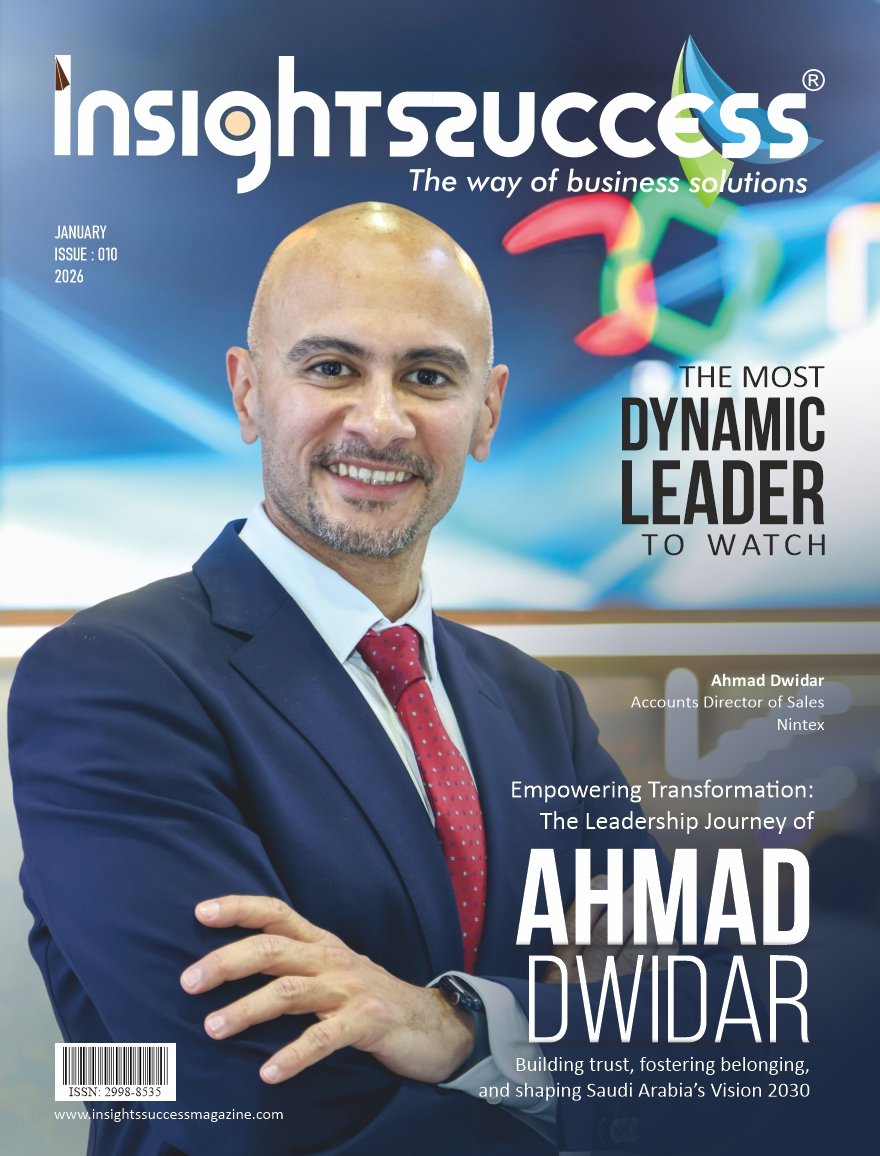
The Most Dynamic Leader To Watch
The Most Dynamic Leader To Watch This edition recognizes Ahmad Dwidar, a standout individual whose agility, vision, and decisive leadership are driving momentum; setting them apart as a force shaping change, accelerating growth, and redefining impact. Digital Link Quick highlights Quick reads

The Modern Leadership Contract
Responsibility with Authority Authority has always been linked to leadership, yet with the modern age, authority has been remapped in terms of granting and retaining. In the modern world, authority is not merely acknowledged but is constantly put to the test of responsibility. Power that is not accountable is met with challenges, raised questions, and, in the end, is shunned. The modern leadership contract states it emphatically: authority is considered legitimate only when it is connected to the clear responsibility taking place. Such a change is not simply superficial but goes along with the way bigger changes in the operation of organizations, information flow, and leading people. The Rebalancing of Power In the past, authority came from a position in the organization in a classic hierarchy. The leaders were given the power to make decisions, to give orders, and to implement them, often with little control over their actions. Responsibility was an issue, but it was often vague, postponed, or scattered throughout the hierarchy. On the other hand, modern organizations are quite the opposite in operation. Knowledge is scattered, there is a higher level of transparency, and the stakeholders—which consist of the employees, the customers, the investors, and the regulators—have the most visibility into the decisions made by the leaders. Thus, the authority is no longer cut off from the rest of the organization. It is dependent on certain conditions being met. Leaders are not only expected to make decisions but to give explanations for their decisions. They have to do the justification for their actions as well. This shift of the power to the responsibility side has made the need for accountability grow from a moral requirement to an operational one. Authority as a Stewardship, Not a Privilege The contemporary leadership contract considers authority mainly as stewardship. The leaders have been given the responsibility of managing resources, people, data, and influences which have an impact not only on their respective roles but also on the outcomes that are far beyond their own. The erosion of this stewardship mentality has a far-reaching effect on the way authority is exercised. The decisions made are not only assessed based on their efficiency or timeliness but also on their total impact which includes the factors of culture, trust, resilience, and long-term value. A leader who perceives authority as a trust acts with both restraint and decisiveness. In this regard, responsibility is proactive—it anticipates consequences rather than simply reacting to the fallout. Accountability in Real Time Immediacy is one of the characteristics that define modern leadership. Everything is monitored constantly, and accountability is no longer a thing of the past. Decisions are liable to criticism even while they are taking place. Being in this situation, leaders must take responsibility for the outcomes in an open and timely manner. Displacement, silence, or postponed recognition will not only strip leaders of their credibility but will do so very fast. On the other hand, those leaders who show up, take the blame, and act honestly, even when the situation is not in their favor, build the strength of their authority. Transparency as a Leadership Obligation Transparency is the primary facet of accountability. The leaders are supposed to impart not only the decisions made, but also the underlying rationale. This means recognizing the lack of clarity, explaining the gains and losses involved, and justifying the shifting of positions. Transparency creates comprehension, even in cases when decisions are not well-received. It shows the stakeholders’ respect and strengthens the trust relationship. On the other hand, non-transparent leadership will provoke suspicion and pushback. Nowadays, transparency is not a choice anymore; it is a must for the leaders’ credibility. The Human Dimension of Responsibility The human aspect is the final one of authority with responsibility. Not only the economic conditions but also the psychological states and the whole life of the people depend upon the leadership decisions. The modern leader’s requirement is to take into account human impact in a straightforward manner. However, it is not the case of shirking difficult decisions. It is rather the case of making them with caution, lucidity, and justice. Leaders who not only show the quality of empathy but also reaffirm their determination will be able to gain the organization’s greater loyalty and strength. Conclusion The contemporary leadership agreement has a very easy but at the same time very demanding principle that states: the power must be at par with the accountability. An individual with a certain position may have access to power, but his or her right to exercise it will not come until he/she shows such qualities as being accountable, ethical, open, and a good steward. Leaders acknowledging this fact do not consider accountability as a limitation on power. They interpret it as the ground on which power gains its acceptability. In the face of increased scrutiny and complexity, sharing one’s power with accountability is not only the kind of leadership that survives; it is the only type of leadership that survives. Read Also : Leadership in the Digital Age

Leadership in the Digital Age
Integrity Under Scrutiny Leadership has been subjected to stress from the very beginning, yet the digital era has changed the character of that stress. Now, in a world of extreme transparency, instant communication, and eternal documentation, decisions get made. Previously, actions that were not disclosed could become public in a matter of minutes. In such a scenario, lack of integrity is no longer just a personal vice; rather, it is one of the visible and constantly assessed attributes of leaders that they should possess. Integrity is tested to determine the leaders of today. It is not only manifested by the intentions of the leaders but also by the ability of their decisions to survive the exposure, interpretation, and questioning in a world that is digitally connected. The End of Private Leadership Digital platforms have made the divide that existed between internal actions and external views disappear. The whole process is a result of emails getting leaked, internal discussions becoming public, and the reactions of stakeholders going viral through social media and online networks, as well as promptly being amplified. Consequently, top managers cannot merely presume that the influence will be different from the result. The reputation of a company will always be affected by every decision made, even if the primary objective was just the operational outcome that was intended. Today, leadership is being carried out in public, most of the time without context, and very seldom with patience. Transparency as the Default Condition In the era of digital technology, transparency has become a must. The stakeholders are demanding to see the whole process of decision-making, the manner of utilizing data, and the way organizations act when something goes wrong. The managers who do not comply with transparency generally show a defensive or evasive attitude, although they might be acting legally. The ones who opt for the transparency concept—recognizing the situation’s ambiguity, discussing the compromises, and notifying promptly—gain trust even in the hard times. Ethics Beyond Compliance in a Digital World The implementation of digital systems brings about dilemmas of a moral nature that cannot be resolved only through compliance frameworks. Data privacy, algorithmic bias, cybersecurity, and misinformation are issues that simply put executives in a position where legal advisors may not be able to meet social expectations. Consistency Between Values and Behavior Discrepancies between the stated values and the real actions are revealed almost instantly under constant scrutiny. Digital monitoring not only makes coherence easy and supports it but also discredits and punishes contradiction at the same time. Those who strive for a public campaign on values like inclusiveness, sustainability, or responsibility, are expected to show their support in an unmistakable manner by means of hiring, partnering, product selection, and handling crises. Misuse of values erodes trust much faster than silence would do. Integrity, therefore, is obtained by being the same under all circumstances, not by being perfect. Building Trust in a Low-Trust Environment Ironically, however, the increased transparency has not necessarily brought about trust. Misinformation, polarization, and skepticism lead to a situation where the leaders have to work in a low-trust environment all the time. In such a situation, integrity is like a cumulative process. It is something that is gradually built up by continuous matching of words and actions. A leader who is always just, clear, and patient wins trust that can still be there when the leader is being scrutinized. Trust is now no more assumed but earned again and again. Leadership Courage in the Digital Era With integrity, however, it is the courage that is going to be needed—the bravery that indeed cowards brave who would so easily by others’ avoid making the right decisions, to be clear voiced instead of being mute when silence is the more secure option, and to keep high moral grounds when lures for taking easy routes are very strong. With digital visibility, both risks and responsibilities are amplified. The leaders who acknowledge this take risks not by withdrawing from it, but rather by leading through it. Conclusion In the digital age, leaders are put under the microscope all the time. Integrity won’t be tested quietly or retrospectively anymore; it will be evaluated continuously, in real time, and often without prior notice. Those who lead and guard the truth are the individuals who first comprehend this fact and then proceed with discipline, openness, and moral leadership. Integrity under scrutiny is not a matter of perception management; it is a matter of proving that when decisions are unfolded, they can stand inquiry. In a society where nothing is hidden, integrity is more than a personal attribute. It is the cornerstone of trustworthy leadership. Read Also : Turning Plans into Results

Empowering Transformation: The Leadership Journey of Ahmad Dwidar – Building trust, fostering belonging, and shaping Saudi Arabia’s Vision 2030
In the ever-changing and sometimes complex environment of today’s digital age, where market moves occur in minutes and technology is constantly rewriting the playbook, Ahmad Dwidar has a firm belief: “Leadership today is about being adaptable, empathetic, and having clarity of vision, but, above all, it is about people and teams.” He recognized early on that the frenetic pace of the digital world necessitates a counter to that pace—an internal culture that is strong and cohesive. Ahmad understood that for him, this is about leading with intention and a consistent, deliberate attempt to foster a deep sense of belonging. This approach stands in stark contrast to an antiquated command-and-control style. It is a philosophy forged in the hard work of collaboration in his “true learning home,” Cisco, where hierarchy mattered less than enablement. Ahmad understood clearly that when people feel they are part of something bigger than themselves, the natural ability to be creative is accelerated along with their sense of ownership. Interestingly, his primary concern is not taking charge of people; it is a serious, firm level of trust to engage in real collaborative work. This is really the essence of his leadership style. Ahmad’s leadership is engaged and creating the environment where everyone is heard, everyone matters, and shared objectives move the group forward. The Anchor of Belonging in a Digital Sea Ahmad is the Accounts Director of Sales at Nintex, with over 18 years of experience leading global and regional technology organizations. He has held leadership roles at Cisco, Oracle, IBM, Nutanix, Veeam, HPE, and HSB, consistently bridging the worlds of business strategy, customer success, and enterprise technology. With a degree in Computer Engineering and an Executive MBA, Ahmad combines technical expertise with strategic leadership, enabling organizations to accelerate digital transformation through intelligent automation. At Cisco, his true learning home, Ahmad developed his leadership DNA, earning trust through innovation and teamwork. At Oracle, he learned the discipline of scaling enterprise solutions. Nutanix sharpened his agility to compete in disruptive markets, while Veeam taught him execution, resilience, and what the company proudly called ‘Veeam Speed.’ IBM reinforced the value of orchestrating people, culture, and processes in enterprise-scale transformation. At HSB, Ahmad led mega-project orchestration across diverse teams, and at HPE, he built trust and unity across Middle East and Africa teams by resolving conflicts and aligning everyone under one vision. Today at Nintex, Ahmad focuses on aligning automation with Saudi Arabia’s Vision 2030, ensuring that solutions not only address today’s challenges but also empower organizations to sustain innovation on their own. His leadership philosophy is rooted in teamwork, belonging, and empowerment—because technology may enable change, but it is people who make transformation real. The Architecture of Shared Success Ahmad’s leadership is anchored by three immutable principles: integrity, accountability, and collaboration. He views organizational success not as a destination for the individual, but as a ‘shared journey, not a solo act.’ His method is to institutionalize trust by promoting radical transparency across his teams. He insists on recognizing and celebrating small wins, believing that when people feel their efforts are seen, their creativity thrives and results become truly sustainable. For Ahmad, this approach ensures that the foundation of his leadership is built on “Respect, trust, and open communication.” Feasibility Meets Foresight His authority, spanning both the boardroom and the technical trenches, stems from a powerful duality. His engineering background provides the bedrock of technical credibility, while his Executive MBA sharpens his strategic vision. Ahmad doesn’t see these two domains as separate; they are profoundly complementary. On any given day, his work pivots seamlessly from meticulously reviewing workflow designs and system architecture to sitting with executives to align automation roadmaps with ambitious Vision 2030 initiatives. His technical depth ensures feasibility, while his strategic foresight guarantees relevance, allowing him to effectively ‘earn trust across IT and business leaders alike.’ The Precision of Listening Ahmad understood that no single technology could solve every problem; the key to resonating with clients was to practice ‘listening first.’ He knew that every organization was a distinct ecosystem, complete with its own unique culture and hidden pains. Before aligning any solution, he dedicated himself to understanding the reality—both the struggles clients voiced and ‘the ones left unsaid.’ Once this comprehensive picture was clear, he could strategically deploy Nintex’s capabilities—whether to integrate siloed systems or enable complex compliance. Crucially, he always communicated the solution in the client’s business language, ensuring its relevance extended far beyond technical specifications. Redefining Transformation: From Weeks to DNA This philosophy brought about transformations that resonated deeply. He recalled a pivotal moment with a large public-sector customer in Saudi Arabia, crippled by procurement onboarding delays due to disconnected systems. Leveraging Nintex K2, Ahmad’s team automated complex workflows, integrating their entire digital landscape, from ERP to Active Directory. Processing time plummeted from weeks to days, boosting compliance and transparency. However, the most profound outcome was the human one: the teams’ frustrations were eased, restoring their sense of belonging to a solution that worked for them. The final achievement was empowerment: thanks to the low-code approach, other departments soon began building their own workflows. This, Ahmad concluded, is ‘true transformation,’ when technology becomes part of the organization’s DNA. The Doctrine of Capability Ahmad defined a truly effective solution not by its features, but by its outcome. He insisted that in a competitive landscape, the ultimate test was ‘adoption and sustainability.’ A platform had to be holistic, scalable, and empowering—a concept he refined across his career. At Veeam, this was crystallized as ‘Veeam Speed,’ the discipline of delivering fast results ‘without compromising trust.’ He applied the same philosophy at Nintex, ensuring that clients using low-code could move quickly while still relying on enterprise-grade reliability for mission-critical processes. Ahmad firmly believes that when a customer can move fast, scale confidently, and sustain their automation journey, “you know you’ve delivered more than a solution, you’ve delivered capability.” The Synthesis of Global Leadership Ahmad’s leadership DNA is a mosaic of lessons learned across the world’s most influential tech

Turning Plans into Results
From Vision to Execution Vision provides the path to walk for organizations, but the execution reveals their credibility. A lot of organizations exclaim great visions and clever strategic plans but find it really hard to let their good intentions bring about the desired outcomes. The discrepancy between the vision and its practical application does not result from a lack of ambition but from misalignment, lack of discipline, and unclear responsibility. The effectiveness of leadership is, in the end, judged by how well they can turn plans into results. Why Vision Often Fails to Materialize The execution of strategic visions often exceeds their conception. The high-level ideas and goals, though they might be very inspiring, they do not steer daily decisions unless materialized into specific priorities. When the groups do not know what has to be changed, how the success will be measured, or who is responsible, the implementation of the plan gets stuck. Another main reason for the failure is the scope being too large. The management is trying to handle several projects simultaneously, which is taking away the focus and wearing the team out. Even the best plans lose pace if there are no strict prioritization and enforcement. Translating Vision into Strategic Priorities The initial phase in the process of execution is the conversion. The vision that is held by the leaders must, first of all, be translated into a manageable number of strategic priorities that are in direct line with the long-term goals. In other words, these priorities have to be so specific that they would point out the right way for decisions to be made and trade-offs to be made. Besides, the great leaders clarify not only what of the actions but also the inactions. This very concentration not only allows for the preservation of resources but also assures that the effort is deployed in the most critical area. The organization-wide clear priorities are used as a filter for the operational decisions to be made. Aligning Structure, Resources, and Capability Misalignment between organizational structure and resources with strategic intent leads to the failure of plans. Execution implies that the allocation of people, budgets, and capabilities will be done deliberately to priority initiatives. Decision-makers have to examine if the current structures are helping or impeding execution. Sometimes, this might involve reimagining roles, making processes easier, or purchasing new capability. Alignment guarantees that the strategy is supported by daily operations rather than being weakened by them. Ownership and Accountability When responsibility is made clear, the pace of execution increases. It is necessary for each strategic initiative to have a definite person in charge, who has the right to make decisions, and who is to be held accountable for measurable results. Vague ownership results in slow processes, overlaps, and a lack of interest. Top individuals who conduct frequent progress evaluations establish accountability. The reviews are centered on teaching and changing, not fault, which helps the teams to solve problems upfront, and keep the pace of work. If the work is owned, it is turned from the planning of the project into a promise. Communication That Enables Action The successful implementation relies on the communication that links the policy to the individual input. The workers must be aware of the fact that their labor is contributing to the achievement of general goals. Those leaders who consistently and in very practical terms communicate the vision create a united front. They inform the team about the reasons for the assigned priorities and give justification for the decisions taken. This transparency allows the different working groups to be self-sufficient in their action but still remain within the strategic framework. Managing Progress Through Discipline Execution is not a one-time event, but a process. Establishing operating rhythms that follow up on the progress, disclose problems, and allow for correction of the course is a must for the leaders. This process involves determining the main performance indicators that are related to the strategic outcomes and having a constant review of them. Monitoring with discipline avoids deviation and guarantees that execution transforms according to the changing conditions. Culture as an Execution Multiplier Culture is a decisive factor in execution, either accelerating or decelerating it. In cultures where accountability, cooperation, and learning are valued, the execution of plans is quickened. On the other hand, in cultures that are divided by departments or that avoid taking risks, execution slows down. Through their actions and rewards, leaders create the culture of execution. They practice ownership, support openness, and highlight achievements, thus building a habitat where execution flourishes. Conclusion The main characteristic of leadership is that it turns vision into results. Vision determines the destination; execution opens up the way. Clarity, alignment, accountability, and discipline are the qualities that successful leaders give top priority to in their journey. They understand that execution is not a matter of the amount of work done but rather the unity of the work. The time and results produced are thus that of a sustainable nature as trust and performance have already gained over time when vision and executions are held in line. Read Also : Managing Complexity Across the Organization

Managing Complexity Across the Organization
Operating at Scale Expansion provides chances but also complexity with size. As companies grow through markets, products, locations, and departments, the systems that were used to speed things up might turn out to be friction sources. The decisions are delayed, accountability is not clear, and the costs of coordination are increased. To operate effectively at scale is not to put more controls but to install clarity in the middle of complexity. The management determines if the size will be a competitive advantage or an operational burden. Understanding the Nature of Organizational Complexity Scale pushes the complexity envelope up very steeply. The more the number of people, the more the number of interfaces. The more the number of products, the more the number of dependencies. The more the number of markets, the greater the exchange of regulatory, cultural, and operational differences. If this complexity is not managed properly, it will show up as wasted resources through duplication of efforts, conflicting decisions, and competition among departments for financial support. Complexity is not the problem; rather, it is the unmanaged complexity that makes it difficult for the leaders to succeed at large-scale and during their whole career when they switch to streamlining the complexity reduction where possible and setting up the standardization where it is needed, all this done without giving up responsiveness. Designing for Clarity, Not Control One of the usual errors that come with the scaling of organizations is the delivery of complexity with that of being over controlled. Waning execution while keeping the appearance of order is just what the additional layers, approvals and reporting do. Leaders, who are effective, on the other hand, create for clarity. They prioritize, give rights to make decisions and set accountability in a very clear manner. With this in place, when the people know who is going to decide what, when and based on which criteria, coordination gets better and friction gets lesser. Control is no longer needed if there is clarity. Clarity of control drives up the cost and slows down the organization. Operating Models That Scale For large-scale operations, a functioning model has to be built that could stand the test of time and be repeated many times. Such processes that could not be run without dramatic efforts of key individuals or without sometimes relying on informal connections are destined to fail; they will completely collapse with the increase of their volume and the variability of the situation. The management team chooses to secure the standardized core processes, e.g., planning, budgeting, performance management, and risk oversight, while giving freedom and room for maneuvering at the edges. The “core-and-flex” system thus allows for consistency without suppressing local adaptation. Decision Architecture as a Scaling Tool Making decisions is one of the very first functions that suffer from a lack of power. When organizations become large, the decisions are either centralized to such an extent that a bottleneck is created, or they are so distributed that inconsistency arises. Leaders who can handle the complexity of the situation create a precise decision-making structure. They categorize decisions into strategic, tactical, and operational ones; set escalation limits; and assure the alignment of power with responsibility. The above-mentioned structure allows the company to make more rapid decisions with less disagreement. Furthermore, it minimizes the need for redoing some work, because decisions are taken at a suitable level and with the proper information. Aligning Structure to Strategy The evolution of an organization’s structure should go hand in hand with the evolution of its strategy. An organizational structure that facilitated the business when it was at one stage of growth might prove to be detrimental during the next stage. Functional silos, matrix confusion, or overlapping mandates can all add to the complexity of the organization. Leaders regularly evaluate the organizational structure to make sure it is in line with the company’s main goals. This might include making clearer distinctions between the roles of the corporate and business units, reducing the number of reporting lines, or redefining the relationships between different functions. A clear organizational structure is not about being perfect; it is about being suitable for the current scale. Technology as an Enabler, Not a Cure The utilization of technology is mandatory if the operation is to be successful on a large scale, but it cannot overcome the shortcomings in design. The systems will be able to integrate data, automate workflows, and improve visibility, but all that will depend on the underlying processes and decision rights being clear. Leaders who are good at technology application mainly operate by granting full visibility and making fewer handoffs. They do not allow the introduction of more tools on broken processes. Technology gives an extra effect to what already exists; it does not fix the misalignment. Conclusion Every decision made in the design process defines a leadership challenge of operating at scale. Complexity is always there but can be handled with the help of clarity, alignment, and disciplined simplification. The successful leaders don’t try to have everything under their control. Instead, they create a system that allows for the scaling of decision-making, align the structure to the strategy, and depend on the culture to unify the company. When complexity is managed intentionally, scale is no longer a limitation but rather a potent source of advantage. Read Also : What Remains When Systems Think for Us