





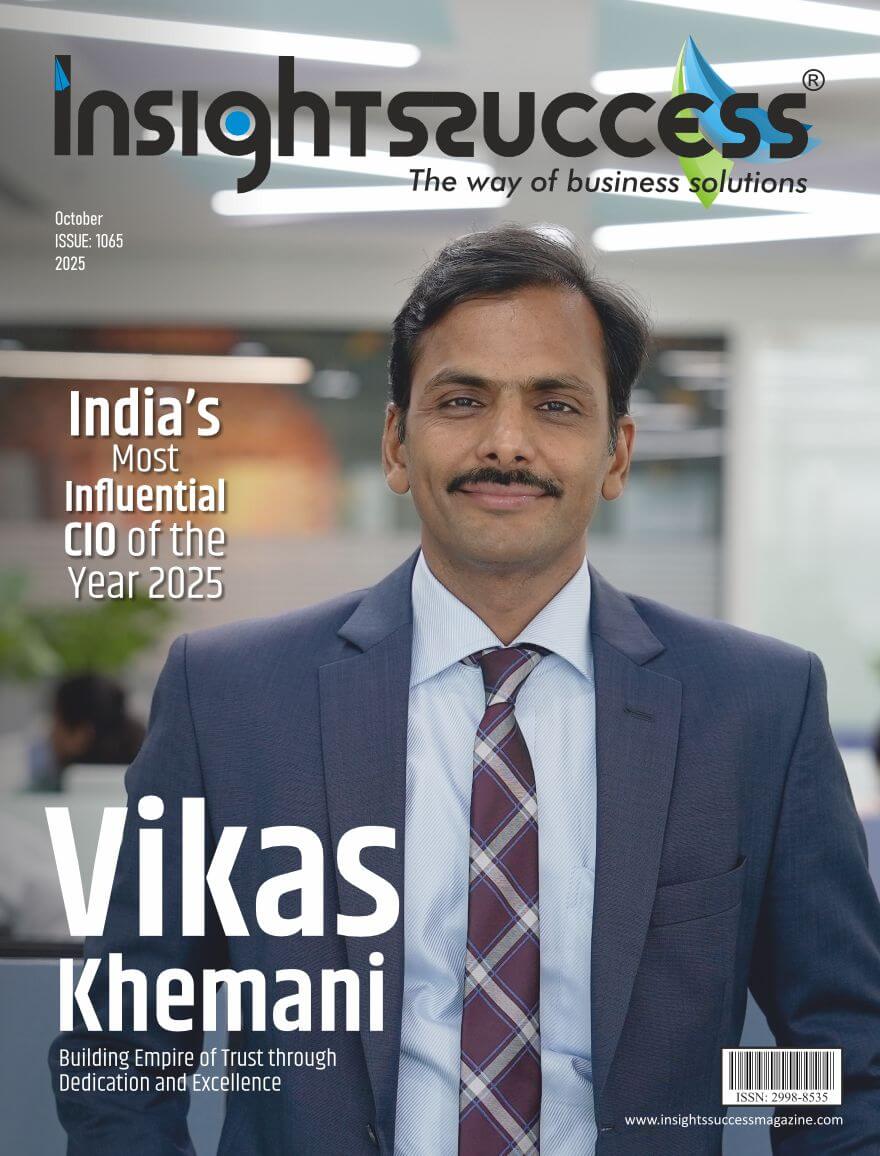
India’s Most Influential CIO of the Year 2025
India’s Most Influential CIO of the Year 2025 Vikas Khemani, Founder and CEO of Carnelian Asset Management, exemplifies leadership rooted in trust, discipline, and long-term vision. From humble beginnings to leading India’s financial evolution, he blends integrity with innovation, fostering a values-driven institution that prioritizes sustainable growth, client trust, and excellence in wealth creation across market cycles. Quick highlights Quick reads

Vikas Khemani: Building Empire of Trust through Dedication and Excellence
Imagine a chess grandmaster seated and staring at the board, not working out the next move but reliving the previous game. In the frenetic Indian financial markets where machines sprint in fractions of a second and information is transmitted at light speed, vision for the long term distinguishes genuine wealth creators from market takers. The landscape is like the ocean, where opportunity rides with risk. Disruption battle with tradition because veteran and new investors sail in the same uncharted waters. Under this case, true success does not belong to the waveriders but to the sages of deeper currents. It is not only the growth of GDP that makes an emerging economy developed, but also the evolution of institutions and leaders able to move capital across centuries. They are the ones who think globally, act locally; who borrow ideas and keep fixed principles; who compound for decades by riding out short-term cycles in the market. Few of the economic drivers of India have witnessed this paradox more than those who have lived on either side of the corporate-entrepreneur divide. They know that actual wealth has nothing to do with outperforming the quarterly numbers but supporting platforms that amplify trust, smarts, and returns over cycles. They don’t only invest capital; they build hopes, stimulate reading, and contribute to making infrastructure that is at the core of India’s economic rise. From Humble Beginnings to Professional Excellence Vikas Khemani’s story starts in a middle-class business family where the seeds of entrepreneurship were sown early, but demands for patience prevailed. By 21, he’d achieved academic distinction as a Chartered Accountant, a foundation that would serve him throughout his career. But he understood that entrepreneurial success required more than ambition and formal qualifications. Lacking both capital and experience initially, he opted to build his expertise first within the corporate world. His professional journey began in 1999 at ICICI Securities as India’s financial markets underwent a significant transformation. This period provided firsthand insight into the shifting structure of markets and financial institutions. In 2002, Vikas Khemani moved to Edelweiss Financial Services Ltd, marking a defining chapter in his growth. The company’s entrepreneurial culture aligned perfectly with his aspirations, and his rise through the ranks was swift. At 30, he became the youngest member of the Edelweiss Management Committee. Over 17 years, he ran and expanded several capital markets businesses, including Institutional Equities, Prime Brokerage, and Research, eventually becoming the CEO of Edelweiss Securities Ltd. These experiences acted as a vital training ground: he gained a comprehensive understanding of market dynamics, client needs, and operational complexity. It provided him with the confidence, perspective, and skill to manage people and risk. The Entrepreneurial Vision Takes Shape Yet the entrepreneurial dream persisted for both Vikas Khemani and his wife, Swati. Their shared ambition evolved into a partnership, waiting for the right moment to leap from the corporate world. The catalyst was a strong conviction in India’s unique growth trajectory: “India is the only economy in the world which provides a once-in-a-lifetime opportunity as it moves toward becoming a developed nation. We are lucky to be part of India’s growth story.” This belief was rooted in rigorous analysis of demographic trends, structural reforms, and policy shifts set to fuel decades of expansion. Founding Carnelian: A Collaborative Vision The decision to launch Carnelian Asset Management was the product of years of preparation and relationship-building. The founding team, Vikas Khemani, Manoj Bahety, and Swati Khemani, brought together complementary strengths developed over 25 years of friendship and 15 years of shared professional experience. It was not a typical startup, but an evolution of an established team: Vikas Khemani contributed his macro-perspective and leadership acumen; Manoj deep research and analytical rigor; Swati, a relationship-centric and intuitive approach. Carnelian’s name was chosen to reflect its ethos, echoing the stone’s qualities of courage, confidence, and leadership. Their ambition was to build not just a business, but an institution defined by values and identity. Investment Philosophy: Thinking Beyond the Crowd From inception, Carnelian avoided crowd-following, rooting philosophy in fundamentals and first principles. Vikas Khemani believes intellectual courage is essential- taking positions that defy popular sentiment if analysis supports. In order to achieve better risk-adjusted returns and gain the trust of partners and clients, Carnelian has demonstrated a willingness to make non-consensus decisions. But contrarianism is not pursued for its own sake; it must be grounded in disciplined analysis and clear investment frameworks. The team treats client capital with utmost sensitivity, positioning themselves as risk managers rather than mere seekers of return. Their risk framework divides risk into three buckets: permanent capital loss (Type A), temporary mark-to-market volatility (Type B), and opportunity risk (Type C). The central challenge is balancing Type A and Type C- guarding against permanent losses while seizing major opportunities. Short-term volatility receives less concern, as true wealth is built over the years. Leadership Through Culture and Values Vikas Khemani’s leadership style centers on team competence, meritocracy, and shared ownership. At Carnelian, excellence and constant evolution matter most. Merit determines progression, shared ownership aligns individual and organizational goals, and the mantra “good is not good enough” anchors the drive for improvement. “We want Carnelian to be known not just for returns, but for how we achieve them- for the values, processes, and people that define us,” Vikas Khemani says, emphasizing identity and ethos over outcome. Navigating Modern Market Complexities The investment landscape’s evolving complexity is not lost on Vikas Khemani. Information overload and diminishing traditional edges require deeper insights and resilience. Carnelian’s “Beyond Narratives” communications aim to help clients cut through distractions and understand real substance. Vikas Khemani appreciates that today’s edge is increasingly behavioural and psychological, not merely analytical. He encourages meditation among team members for mental clarity and emotional steadiness, reinforcing clear decision-making under pressure. Embracing Technology While Preserving Human Judgment While behavioral skills are prioritized, Vikas Khemani and Carnelian have embraced technology, especially AI and data science. Carnelian’s AI Lab helps process vast datasets, identifies anomalies, and offers forensic insights. The goal

Nurturing Innovation: The Impact of Influential CIOs on Business Success
Since the time business has changed, the Chief Information Officer (CIO) role itself has undergone a transformation from being a technologically oriented function to that of a strategic business leader of highest value in driving business success. With business corporations being challenged by digital disruption, market volatility, and matching customers’ expectations to new heights, CIOs become even more critical not only as tech administrators but as business influencers. Their decisions and vision shape company operating effectiveness, innovation capabilities, and competitive advantage. Those organizations that maximize the strategic value their CIOs bring will be empowered to innovate, transform, and succeed in a digital-first economy. CIOs do not just need to keep IT infrastructure operating or in-house applications purring. They’re digital change agents whose tech spending equals quantifiable business results. This is the latest evidence that technology supports nearly every function of contemporary business, from customer engagement to supply chains. Effective CIOs possess a distinct combination of technical skills, business acumen, and leadership capabilities that enable them to position innovation, fuel organizational change, and create agility- and digitally enabled culture. Leadership for Strategic Transformation Effective CIOs create lasting business transformation and align strategy in the core of the business. They are responsible for monitoring technology trends, evaluating new solutions, and aligning IT projects to long-term business requirements. This allows companies to look ahead to market change, make business mechanizable, do away with operational inefficiency, and capture new growth opportunities. An anticipating CIO who also considers the total business horizon can make technological potential a possible strategy to execute, making investments in innovation tangible returns on investment and enhancing the company’s competitive edge. For example, companies undergoing digital change count on the CIO to incorporate new technologies like artificial intelligence, cloud, data analytics, and automation software into business processes. It is more about changing things at a core level, streamlining them, and driving better decisions. Great and good CIOs drive cross-functional teams to make sure digital initiatives are goal-oriented, enable people, and keep on driving the customer experience higher. Strategic thinking causes companies to think ahead and look out for disruption in their domain and not fight it. Improving Operational Efficiency Apart from strategy, top-level CIOs also significantly improve operational efficiency. They cause business processes to make sense to achieve leaner operations, make sense of resource deployment, and make sense of cost through intelligent use of technology. By eliminating duplicate manual procedures, integrating scattered systems, and leveraging best-caliber data-driven decision tools, CIOs allow businesses to capitalize on enhanced productivity, efficiency, and operations excellence. Their approach positions technology in action not as a back-office enabler but as the fundamental driver of business performance end-to-end and long-term business success. Good CIOs are also risk managers, regulatory affairs, and security. Since data breaches, cyber-attacks, and disruptions today have significant financial as well as reputation consequences, the CIOs possess robust cybersecurity with no loss in operating flexibility. Preserving valuable assets while making innovation possibly creates stakeholder trust, confidence, and long-term business growth. Companies with CIOs possessing balanced amounts of operating acumen and strategic vision beat their peers on efficiency, resiliency, and responsiveness. Promoting Innovation and Competitive Vigor Innovation is a key driver of long-term business success, and great CIOs have a key role to play in restoring an experimental way of working, innovative problem-solving, and learning for life. By embracing agile approaches, collective cultures, and new technology, they enable people to experiment with new ideas, streamline processes, and leverage capabilities. Next-generation CIOs don’t just deliver technology; they enable employees to try things out, learn fast, respond rapidly, and deliver successful ideas quickly. In pursuit of that, CIOs also help to frame customer-focused strategy and drive business value, for the most part. With the support of rich knowledge of data, they enable businesses to understand customers’ behavior, preferences, and dislikes and push them to create personalized, live, and highly contextual experiences. Through creation of revenue growth, loyalty, and differentiation in the market place over the long term directly by leveraging technology-enabled enhancement of engagement, ease of interaction, and evidence-based value, CIOs are the prime driver. Their leadership transforms technology from being hardware into a strategic weapon, driving sustained competitive advantage and setting the firm up for long-term success. Conclusion Their contribution to the success of the business has grown tremendously in the last two years as a reflection of the extent to which technology is ingrained in current-day business strategy. Besides IT infrastructure management, CIOs in the current day are strategic leaders, operational optimizers, and innovation catalysts. Their capacity to drive technology capability into business allows business organizations to effectively respond to issues in the market place, enhance efficiency, and attain a competitive advantage. Power CIOs who effectively identify and empower them are rewarded with change of leadership as power CIOs create a bridge between technology-business strategy. Through leading digital transformation, establishing innovation, and creating operational excellence, CIOs not only enable companies to catch up with what is happening in their industry but shape their future. Because technology is both an outcome function of business and a technology function, the role of the CIO has never been more crucial. Read More : Leading Change with Clarity and Conviction
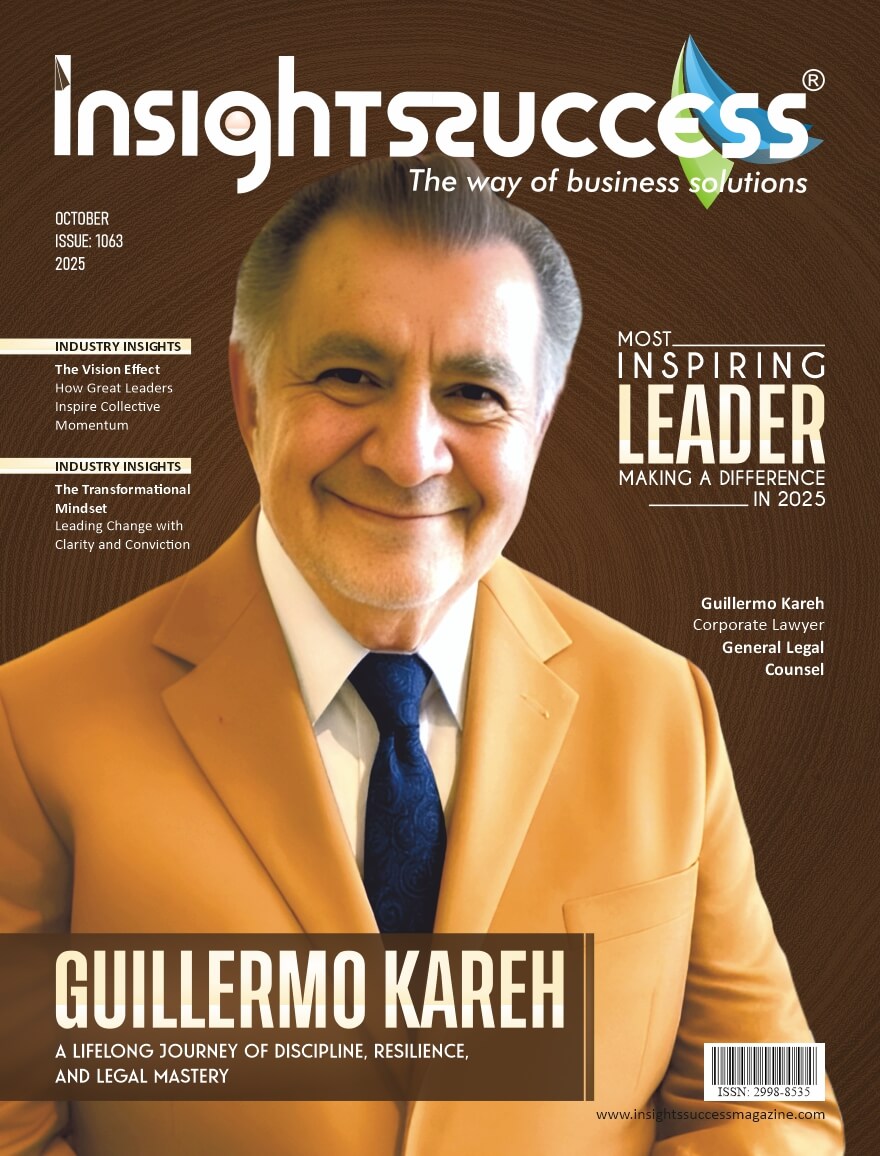
Most Inspiring Leader Making A Difference In 2025
Most Inspiring Leader Making A Difference In 2025 In an era where leadership is often measured by titles or financial metrics, few embody the deeper dimensions of influence and impact like Guillermo Kareh. Recognized as one of the Most Inspiring Leaders Making a Difference in 2025, Kareh’s journey exemplifies perseverance, vision, and an unwavering commitment to ethical leadership. Quick highlights Quick reads

Guillermo Kareh: A Lifelong Journey of Discipline, Resilience, and Legal Mastery
A tribute to drive, foresight, and a lifelong pursuit of excellence, Guillermo Kareh‘s journey wound from the tidy passageways of a Jesuit military academy in Puebla to the boardrooms of multinational corporations. His odyssey begins with basic religious and family values that were preserved through an education that requires both intensive discipline and intellectual success. These early years instilled a leader whose business life revolved around ethics as well as a keen legal mind. His journey was not straightforward. Before discovering his calling in law, he ventured into nuclear engineering. He soon became established in one of Mexico’s premier law schools. Professional setbacks and financial hardships never discouraged him; instead, they only spurred him on further. He rose through the ranks of multinational giants like Procter & Gamble and DuPont, creating legal solutions that always placed solutions ahead of problems by striking the balance between creativity and pragmatism. Apart from his current activity as General Legal Counsel and Advisor to multinational businesses, he has taken on a new mission: the mentoring of the next generation. He challenges young entrepreneurs to perform at their very best with courage, accountability, and hope through writing and coaching, a mindset that will continue to distinguish his legacy. Foundations of Excellence Kareh’s formative years at the Instituto Militarizado Oriente, which he entered at the tender age of three, laid the groundwork for his future success. The unique combination of Jesuit education and military discipline instilled in him an unshakeable foundation of values, academic rigor, and leadership qualities that would later distinguish him in Mexico’s competitive legal arena. “My family was my big inspiration where the values and principles were not negotiable and should be followed with the highest standards and respect for everybody, especially my parents, uncles, and family in general.” he reflects on his upbringing. His academic excellence was evident early on he consistently ranked first in his class and accumulated close to 100 diplomas and 26 medals during his 14-year tenure at the institute. This exceptional performance foreshadowed the meticulous attention to detail and pursuit of excellence that would become his professional hallmark. The Path to Legal Mastery Kareh’s academic journey took an interesting turn when he initially pursued nuclear engineering before ultimately choosing law. In 1973, he relocated to Mexico City to attend the prestigious Escuela Libre de Derecho, one of Mexico’s most demanding legal institutions. The statistics speak volumes about the institution’s rigor: of the 375 students who began the program alongside him, only 65 graduated, and fewer than 45 successfully passed the bar examination. He not only survived this academic gauntlet but thrived, becoming the first from his generation to pass the bar exam on November 21, 1978. This achievement was particularly remarkable considering the financial constraints he faced, often having to choose between eating and paying for transportation to visit his parents in Puebla on weekends. Corporate Ascendancy Kareh’s professional journey began in 1973 at Bufete Aarun Tame, where he balanced his law school schedule with practical legal work. This early experience taught him the value of perseverance and resourcefulness, qualities that would prove invaluable throughout his career. After graduation, he briefly worked as a partner at another law firm before making a pivotal decision that would shape his career trajectory. In December 1981, he joined Procter & Gamble de Mexico at the entry level, a move that demonstrated his willingness to start from the bottom to achieve long-term success. At P&G, Kareh’s rapid ascension was nothing short of remarkable. Within two years, he was promoted to group manager, and by 1985, he was selected for an intensive six-month training program in Cincinnati, Ohio. This program included leadership development at the World Trade Center and comprehensive corporate training that would prove instrumental in his future roles. “My education was formed in an institutional way following Procter & Gamble standards at the highest level in each area of the company.” he notes, highlighting the transformative impact of this corporate experience. His expertise in complex legal matters became evident as he spearheaded major projects including soft landings for new companies, joint ventures, mergers and acquisitions, and trademark management for Latin America. A particularly notable achievement was his successful navigation of a patent infringement case between Procter & Gamble and Kimberly Clark, resulting in a favorable resolution for both companies and establishing a mediation and arbitration framework that remains in effect today. Leadership Through Adversity After 12 successful years with P&G, Kareh joined Grupo Gomez Flores in Guadalajara, taking on the challenge of managing legal affairs for a diverse portfolio that included Grupo Financiero Cremi, Grupo Dina (coach and truck manufacturing), and significant real estate holdings. His role expanded dramatically when he led the legal efforts in acquiring Grupo Minsa from the Mexican government, demonstrating his capability in high-stakes public-private transactions. However, his career was not without its challenges. The 1995 Mexican peso crisis severely impacted the corporate group, leading to salary reductions of up to 75%. Rather than abandon ship, he chose to stay and help navigate the company through turbulent waters, eventually taking on the role of chief executive corporate officer for Grupo Dina’s international operations spanning the United States, Canada, and Latin America. The intensity of these responsibilities often requiring 20-hour workdays and constant international travel took a toll on his health and family life, leading to his eventual decision to seek new opportunities. Innovation at DuPont and Beyond In 1999, Kareh joined DuPont Mexico, where he would spend the next 12 years in dual roles as general counsel and head of public and government affairs for Latin America. Managing legal matters for 23 business units while simultaneously handling regional government relations requires unprecedented organizational skills and strategic thinking. His innovative approach to legal challenges earned him the President’s Award, particularly for his groundbreaking work in collecting debts from a U.S. company in Chapter 11 bankruptcy proceedings. This achievement demonstrated his ability to think outside conventional legal frameworks and deliver results where others saw only obstacles. He also

Leading Change with Clarity and Conviction
The Transformational Mindset In the current high-speed, volatile business environment, transformation is no longer an option but a reality. Organizations are being confronted with continuous disruption due to technology innovation, changing customer needs, and increasing global economies. With all this turmoil, success in transformation is the badge of honor for every great leader. Underpinning it is the transformational mindset—a combination of clarity, confidence, and flexibility that enables leaders to steer organizations through change and build trust, engagement, and innovation. Grasping the Transformational Philosophy Transformational philosophy is neither a skill set, but rather a leadership style. It is vision and action, adaptability and resilience, strategic thinking and emotional intelligence. Transformational leaders view challenges as levers to learn from and grow versus as hindrances. They recognize that sustainable change is unrelated to procedural change—it is about cultural alignment, stakeholder involvement, and personal commitment. This is the spirit of leadership which enables leaders to walk into the complex unflinchingly. Intent-free and judgment-free, they give direction even when directions of movement remain uncertain. Workers are, on the other hand, urged to see change as a shared adventure and not a top-down requirement. Clarity: The Compass for Change Clarity is the foundation of transformational leadership. They ought to have a clear vision of their future, explaining why they must change, what the change entails, and how that facilitates pushing the ultimate objective of the organization. Good communication dispels uncertainty, builds trust, and enables workers to work constructively. Good communication also assists in making resources, plans, and action appropriate for overall goals, avoiding confusion and wastefulness. Leadership communication not only informs teams of what they need to do, but also why, and it results in commitment and responsibility at every level. Conviction: The Driving Force While direction springs from clarity, momentum springs from conviction. Change is always resisted—humans resist exiting the comfort zone, killing habits, or learning new technology. Conviction-based leaders are unstoppable in believing in the change process since they themselves are resolute and tenacious. Conviction is contagious. As workers see leaders standing up to adversity, weathering it with dignity, and working over the long term, they will be more likely to become actively and consistently committed themselves. Such word-deed congruence creates confidence and establishes a culture of innovation and risk-taking. A transformational style also places an extremely high value on flexibility. Change is never a straight line, and leaders need to be willing to adapt strategy, reprioritize, and be open to criticism. A culture of flexibility empowers workers with the freedom to experiment, iterate, and improve continuously without fear of failure. These firms are better positioned to deal with disruptions, either technological, economic, or social. Transformational leaders develop cultures to enable curiosity, learning, and flexibility, to ensure that the firm can shift direction without sacrificing strategic direction. Engaging and Empowering Teams Change needs to be felt by everyone. Leaders need to actively engage with groups in order to foster ownership, responsibility, and collaboration. It means hearing balanced input, combining feedback, and getting employees heard and empowered to contribute value. Empowered teams are more motivated, more creative, and more loyal. If workers understand the ‘why’ of change, see their efforts translated into decisions, and are engaged at work, they become participant actors in the change process rather than onlookers. Leading with Emotional Intelligence Emotional intelligence is a primary force behind transformational leadership. They need to sense the emotional climate of their firms, and feel stress, resistance, and skepticism as well as offer support and encouragement. Empathy enables leaders to handle issues in a positive manner, build trust, and sustain morale in times of turmoil. Transformational leadership that is head and heart places leaders not only as strategic in relation to change, but also people-focused, trading organizational success for employee well-being. Sustaining Transformation Genuine change is not something that happens but an evolution occurring all the time. Transformational leaders make sure that change becomes organizational DNA, with systems of constant learning, assessment, and calibration. They celebrate milestones, learn from mistakes, and re-enforce behavior leading to desired culture. Discipline, patience, and persistence are required for change. Leaders should have long-term visions in mind as they swim through short-term challenges, and therefore change is permanent rather than transient. Conclusion The transformational mind is the signature of leaders who turn uncertainty into opportunity, vision into action, and disruption into growth. Armed with clarity, conviction, flexibility, and emotional intelligence, these leaders spearhead multi-dimensional change through organizations and create engagement, resilience, and innovation. In a rapidly changing world, building a transformational mindset is not an option—necessity. Transformational leaders build adaptive, mission-centric, and resilient organizations that flourish amidst ongoing change. They don’t just execute strategy; they inspire, energize, and create sustained impacts on people, culture, and organizational legacy. Read More: How Great Leaders Inspire Collective Momentum

How Great Leaders Inspire Collective Momentum
The Vision Effect All great revolutions, innovations, and movements start with a vision — a strong imagination of what can be, and the will to bring it into being. Vision is the most powerful driver of great leadership. It’s not goal-setting or implementing strategy; it’s inspiring people to have faith in a shared future that they can create together. This energy — the Vision Effect — is the one that makes ordinary groups great groups and businesses lasting legacies. The Strength of a Shared Vision Vision gives direction, meaning, and inspiration. Leaders inspiring vision give their people a higher purpose than tasks from workday to workday. People are not employed by a company; they are contributing to something bigger. Shared vision brings individuals together in any role, position, and function. It provides harmony within teamwork and decision-making, pushing everyone toward the same destination. This harmony is where collective momentum — the power that helps teams accomplish more collectively than they ever could separately — is derived. Beyond Words: Vision in Action A vision is only as effective as the behavior it inspires. Great leaders articulate their vision in concrete strategies, quantifiable goals, and daily practices that are actualized through long-term visions. They do not just talk in speeches or mission statements but in ordinary decisions, open behavior, and real commitment. As people observe leaders living the vision — deciding about values and purpose — trust is built. Vision then becomes more than a thought exercise; it is ignited as an alive, breathing culture that informs the way people think, work together, and innovate. The Emotional Connection Emotional connection fuels the Vision Effect. Reason and fact may guide, but emotion energizes commitment. Visionary leaders know that to most effectively energize people, they must connect to their sense of purpose and belonging. They weave stories that connect individual values and organizational purposes. They get others to see how their work serves — not the bottom line, but something more than themselves. That personal stake converts compliance to zeal, effort to passion. Turning Vision into Momentum Momentum is established when vision turns into movement on a mass scale. Not overnight, though; it’s when individuals see small wins, see progress, and have faith in where they are headed. Leadership is very much responsible for establishing the process. They determine landmarks, celebrate effort, and remain consistent even in challenging times. In doing this, they keep people’s morale and feeling that the vision can become reality. Moreover, good leaders understand that momentum is an outcome of flexibility. Effective leaders create strategies with alteration of conditions, hence the pursuit of vision becomes dynamic rather than static. Flexibility sees to it that momentum is given maintenance even in uncertainty. Empowerment is the ultimate test of visionary leadership. When the power of the leader grows exponentially as others feel that they are part of the vision — owning it, making their own decisions, and leading by initiative — that is the benchmark. The best leaders construct this distributed leadership on autonomy and trust. They attempt, they invite different ideas, and they challenge others to bring to the forefront their unique abilities. Such communal stewardship converts the followers into co-creators, snowballing and catalyzing innovation. Sustaining the Vision Maintaining shared momentum involves continuous reinforcement of vision. In high-change environments, distractions and changing priorities can impair focus. Leaders have to keep re-affirming teams to the “why” — the cause and beliefs behind the mission. Sustained communication, reflection, and thanksgiving fuel interest. Periodic re-visit to the vision by new stories, accomplishments, and plans keeps it fresh and inspiring. This sustained approach prevents momentum loss in fleeting success but transmutes it into lasting influence. The Ripple Effect of Visionary Leadership The Vision Effect is far-reaching beyond the walls of an organization. Value-based leadership affects partners, customers, and communities. It sets the bar for integrity, innovation, and inclusion — values that cross industries and generations. When leaders encourage people to dream bigger and live more boldly, they create waves of change that move far beyond their own personal orbit of influence. This wave is how visionary leadership builds not only successful companies, but visionary communities. Conclusion Good leaders do not direct people or processes — they initiate movements. With vision, they establish direction; with action, they establish trust; with purpose, momentum. The Vision Effect is the unseen power that transmutes potential into progress, ambition into achievement, and people into a unifying force for change. With a world that is more dynamic and global each day, vision is the overriding force. Visionary leaders who possess it don’t just lead organizations — they create the future. Read More: Why Values Outweigh Profits in the Long Run
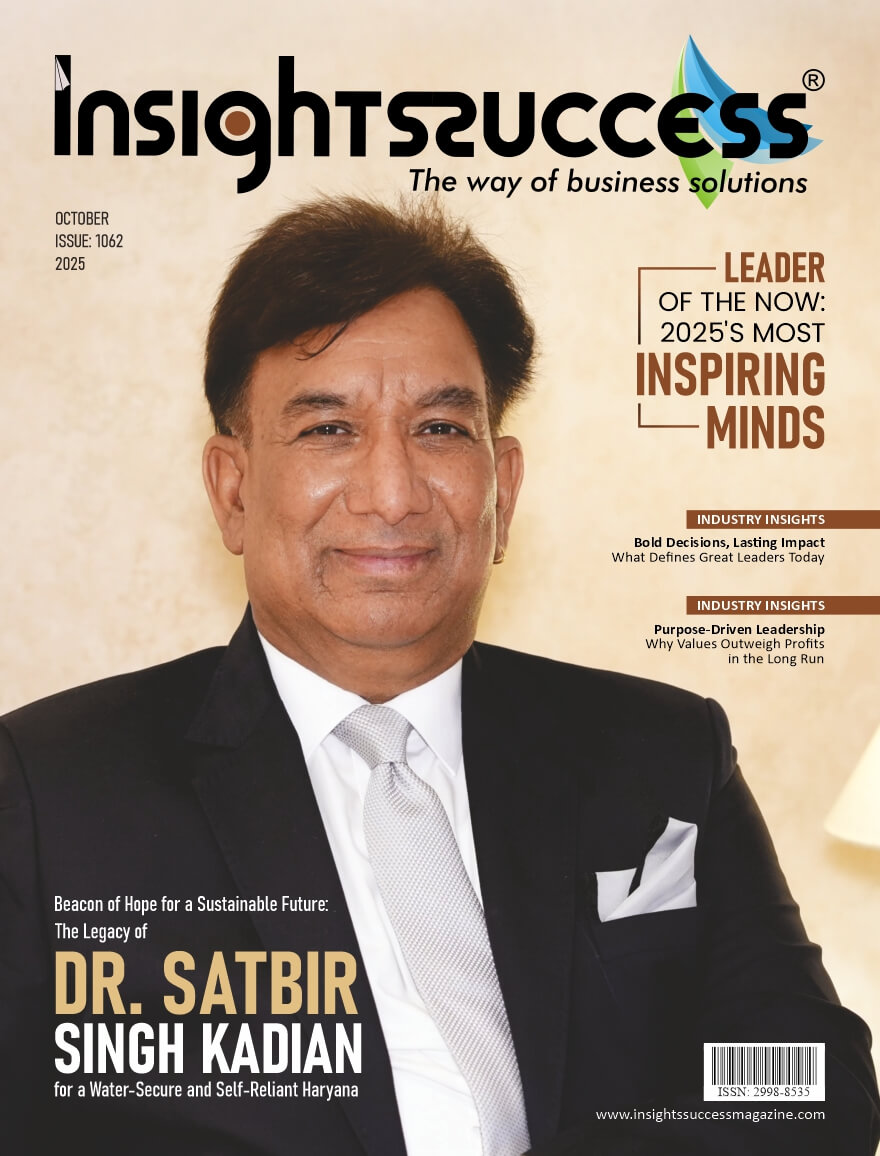
Leader of the Now: 2025’s Most Inspiring Minds
Leader of the Now: 2025’s Most Inspiring Minds Dr. Satbir Singh Kadian stands out as a visionary leader in 2025, exemplifying the fusion of technical expertise, strategic foresight, and a deep commitment to sustainable development. As the Engineer-in-Chief and CEO of the Haryana Water Resources Authority, he has been instrumental in transforming water management practices in Haryana, India. Quick highlights Quick reads

Beacon of Hope for a Sustainable Future: The Legacy of Dr. Satbir Singh Kadian for a Water-Secure and Self-Reliant Haryana
Water is life and more than simply a resource for a state like Haryana, which is home to one of India’s best agricultural belts. It is also essential for environmental balance, rural economies, and food security. However, Haryana is currently facing severe water problems: groundwater levels are dropping to dangerously low levels, waterlogging with soil salinity in increased areas, old irrigation equipment is breaking down, supply is not keeping up with demand, and climate change is only waiting to highlight the delicate balance. In addition to technological answers, such intricate situations demand innovative, intelligent leadership that blends public discourse, research, and policy. Leading this transformation is Dr. Satbir Singh Kadian, a visionary leader whose leadership personifies such an integrated vision. For more than two decades, Dr. Kadian has been at the helm of transforming Haryana’s water management infrastructure to be efficient, equitable, and sustainable. His work goes far beyond engineering achievements, reaching to community empowerment, institutional reforms, and path-breaking vision goals adopted as a model of water security not only in Haryana but across India. Rooted in Rural Wisdom, Rising with Global Knowledge Dr. Satbir Singh Kadian hails from a small village called Beholi in the Panipat district of Haryana. Dr. Satbir Singh Kadian is a farmer by profession, and a family man, who understood the cycles of rural life and the importance of water in protecting his people’s health. Dr. Satbir Singh Kadian’s father was a proud member of the community council in his village, teaching him values of service, honesty, and accountability. Ever since a very early age, Dr. Satbir Singh Kadian has had this voracious appetite to inquire and learn. He was always at the top in primary school and secondary school, receiving state-level awards more than once. With a zealous desire to solve real-life issues, he went on to study Mechanical Engineering at the illustrious Thapar Institute of Engineering & Technology and graduated in 1992 with honors. But Dr. Satbir Singh Kadian’s education was not limited to books. He saw the sheer need for integrating policy and technology and sustainability. This vision led him to the Indian Institute of Technology (IIT) Delhi, where he finished his integrated Ph.D. in Functional ERP Systems and Sustainability by 1998. The uncommon mix put him at the crossroads of engineering, environmental protection, and systems management. With a zeal to learn, he pursued an executive education course on management at Harvard University on entrepreneurship in developing economies; a set of skills essential to turning ideas into public initiatives that can be scaled. Concurrently, learning through the MASHAV program in Israel provided him with the current advances in water management, technology, and economics that would be most useful in semi-arid and water-scarce states like Haryana. This strong combination of technical prowess, global exposure, and national insight was the cornerstone of Dr. Kadian’s successful career committed to resolution of the water crisis in Haryana. From Decline to Delivery: A Landmark Canal Rehabilitation Led by Vision and Innovation Dr. Satbir Singh Kadian joined the Haryana Irrigation Department upon graduation, a field of utmost significance given the state’s overdependence on canal irrigation and groundwater. In his formative working years, he witnessed firsthand the sorry condition of the Jawaharlal Nehru (JLN) Lift Canal System, a key irrigation channel built in the 1970s that had lost its efficiency over the years. The canals and LYRIC pumps were uneconomical, the majority of parts unused, resulting in water shortages in tail-end regions and deterring farmers’ potential. Rather than succumbing to this ongoing decline, Dr. Satbir Singh Kadian took it as a challenge. Leaping Himalayan bounds from his technical experience and managerial skills, he spearheaded a pioneering project to rejuvenate and modernize the entire lift canal system. Funded by more than $10 million of NABARD money and equipped with state-of-the-art technology such as SCADA (computerized control systems), AI-based predictive maintenance, and telemetry-based monitoring, the rehabilitation got the canal system back on track for full, reliable function. The impacts were spectacular. Over a million people were directly impacted by augmented availability of irrigation, enhanced utilization of safe water, increase in crop yield, and migratory pressure from drought in source regions lessened. The rehabilitation also ensured long-term viability of the facilities through rigorous quality standards that ensured a minimum life of 20 years of utility; with long vision turning out to be true. Due to his emphasis on transparency and accountability, this project was an open model for infrastructure management that received high-profile awards such as the CBIP Award for Distinguished Operations and the Central Water Commission award. Pioneering Water Governance at State and National Levels Dr. Satbir Singh Kadian’s experience widened quickly to larger responsibility: Engineer-in-Chief Irrigation & Water Resources Department of Haryana, CEO Haryana Water Resources Authority (HWRA), and Administrator of MICADA, the organization which is designing micro-irrigation and command area development. He applied experience-based engineering with policy-making and institutional reform in these roles, directing large-scale programs that have transformed water management in Haryana: Atal Bhujal Yojana (AbhY): Groundwater Sustainability through Community Ownership With the launch of Atal Bhujal Yojana, the flagship programme of the Ministry of Jal Shakti, Dr. Satbir Singh Kadian initiated the Community-Based Participatory Approach (CBPA). Contrary to the conventional top-down groundwater management plans, his method strengthens the grassroot Panchayati Raj Institutions and women volunteers called “Bhujal Sahelis” in the task of evaluating, planning, and implementing water-conservation activities. This participatory strategy enabled villages to plan their water security independently, from scientific groundwater information but guided by local experience and need. Campaigns for water conservation, awareness campaigns, and behavioral changes picked up speed gradually, which stabilized the rate of groundwater in most districts. Jal Shakti Abhiyan & National Hydrology Project Incorporating real-time data systems has been the hallmark of Dr. Satbir Singh Kadian’s efforts. Haryana’s role in Jal Shakti Abhiyan is rainwater harvesting, reviving traditional water bodies, and natural aquifer recharging. Supplementing the real-time groundwater level data of the National Hydrology Project and computer modeling, these initiatives have pro-active, science-based management of the precious resource. State Vision

Why Values Outweigh Profits in the Long Run
Purpose-Driven Leadership In today’s hypercompetitive, fast-moving business age, there is only one question always and eternally the same for the leaders: what is great in the long run? Business had one-eyed concentration on a single objective — maximization of profit — for decades. Although society, market, and employees today expect more authenticity, more sustainability, and more integrity, the paradigm has changed. Most thriving sustainable companies of the era are driven by leaders who recognize that values, and not money, build truly great companies. Purpose-driven leadership has emerged as the foundation of organizations that establish trust, foster innovation, and create legacies that extend far beyond quarterly returns. The Rise of Purpose in Contemporary Leadership The idea of purpose-driven leadership speaks to a deep change in the definition of success. Profit remains essential to business survival, but it no longer suffices for lasting sustainability. Customers, employees, and investors increasingly expect organizations to represent something more — a greater sense of purpose beyond profit. Purpose infuses purpose and direction into every decision. Purpose provides the essential “why” question answer — why the business exists, for whom, and how it can make a difference. Leaders who talk and live their organization’s “why” build commitment orders of magnitude greater than compliance; they spark belief. Values as a Strategic Advantage Values are not ideals but strategic assets. They inform decision-making, form culture, and navigate organizations through times of turbulence. Attempting to lead with integrity, empathy, sustainability, and inclusiveness first, leaders establish credibility and trust — commodities in increasingly scarce supply in an uncertain world. Profit strategies can produce short-term profit at the expense of undermining stakeholder trust when separated from ethics. Ethical leaders forge strong relationships of loyalty instead. Consumers defend brands that reflect their values, employees are loyal to companies that respect them as people, and investors invest in companies that demonstrate long-term stewardship. The Human Connection Fundamentally, purpose leadership knows that firms are human systems. Individuals want to be part of something greater than themselves — to play a role in making a difference in what they are passionate about. When leaders more clearly and consistently communicate values, they make employees champions and customers ambassadors. This human connection ignites passion and innovation. Shared Purpose communities own, co-create innovate, and breakthrough. The empowerment and trust culture developed then acts as the catalyst for sustained success. Purpose Over Profit: Lessons in Sustainability History shows that those companies which were established purely on profit considerations do not survive. Markets change, technologies advance, and competition emerges. The only perpetual is the company’s character — its mission and values. Purposeful companies are more agile since their purpose serves as a stabilizing force during periods of upheaval. They understand that profit is a byproduct of good work, not the singular metric for success. This approach to the business promotes ethical growth, innovation based on society’s needs, and long-term stakeholder value dedication. To them, success is not just making the most money but reducing harm, increasing well-being, and generating shared prosperity. This wider success definition makes their businesses relevant and in demand no matter what the economy is doing. Leading by Example Values-based leadership starts with self-knowledge. First, leaders must create their own values and then lead others to do the same. Authenticity — what is done versus what is said — is of critical importance. Employees and stakeholders will immediately recognize when purpose is performative, not authentic. Visionary leaders lead by example every day, demonstrating their values through behaving the way they want to be emulated throughout the organization. They listen, they hear, and lead with clarity. Their choice is a marriage of reason and compassion, force and integrity — demonstrating how profitability and purpose are not either/or but rather inclusive efforts. The Cultural Multiplier Effect When leaders embed values in all aspects of an organization — from hiring and measuring performance to product design and customer relationships — they create a culture of self-reinforcement. The “cultural multiplier effect” ensures that when leaders and the market change, the purpose of the organization remains intact. A purpose culture produces the best talent, fuels innovation, and reduces risk. It helps organizations bounce back faster from calamity and be believable during crisis. Culture now becomes the unseen infrastructure behind long-term resilience and greatness. The Future Belongs to Purpose With automation, artificial intelligence, and digital transformation transforming industries, the human element of leadership is more important than ever. Purpose-driven leaders will be those who can make technology human, weigh efficiency against compassion, and make progress work for people, not profit. Future-proof companies are companies that infuse purpose into strategy, sustainability into operations, and ethics into leadership DNA. And, in doing so, future-proof their business model, yet redefine success for what it is. Conclusion The truth about long-term leadership is straightforward: profit can keep a company in business, but values sustain a legacy. Good leaders understand success financially is the result of doing the right thing for the right reasons. They build companies that are trusted, respected, and admired — not always due to what they make, but why and how they make it. In a world of constant flux and glimmering uncertainty, purpose is the anchor that prevents organizations from drifting away and the compass that points them in the direction of success. By placing values first, leaders don’t lose success — they rewrite the definition of what it means. Read More: How Great Leaders Inspire Collective Momentum