






Why Subspecialized Care Is Redefining Pancreatic Disease Treatment in the Modern Era
Medicine has always evolved, but the pace of transformation in recent years has been extraordinary. Nowhere is this more apparent than in the management of complex gastrointestinal conditions, particularly those involving the pancreas. Once considered a domain where generalist surgeons and gastroenterologists could adequately manage most presentations, pancreatic disease has emerged as a field demanding deep subspecialization, advanced imaging, and multidisciplinary coordination. Patients today are no longer willing to accept a one-size-fits-all approach, and the medical community has responded with a level of precision that would have seemed aspirational just two decades ago. The Complexity Behind Pancreatic Conditions The pancreas is a deceptively complex organ. Tucked behind the stomach and nestled among major blood vessels, it performs dual roles — producing digestive enzymes and regulating blood sugar through insulin and glucagon secretion. When disease strikes, the consequences can be wide-ranging and severe. Conditions such as acute and chronic pancreatitis, pancreatic cysts, exocrine pancreatic insufficiency, and pancreatic cancer each carry distinct clinical profiles, treatment pathways, and long-term management needs. Pancreatic cancer, in particular, remains one of the most challenging malignancies in oncology. Its tendency to present at an advanced stage, combined with its proximity to critical vascular structures, makes surgical intervention technically demanding. Early detection and access to a specialist who understands the nuanced staging criteria, resectability thresholds, and adjuvant therapy protocols can be the difference between curative intent and palliative management. This is precisely why subspecialized expertise has become non-negotiable in this space. The Shift Toward Subspecialization in Surgical Medicine The broader surgical community has been undergoing a significant philosophical shift. Surgeons and specialists are no longer expected to be generalists who dabble in multiple organ systems. Instead, the most effective practitioners are those who dedicate their careers to a narrow but deeply understood clinical territory. This mirrors a trend observed across multiple disciplines. As noted in a recent profile on Dr. Cory Torgerson’s approach to subspecialized facial surgery and advanced 3D surgical planning, the movement toward hyper-focused expertise is reshaping how patients receive care and how outcomes are measured across surgical fields. In pancreatic medicine, this shift is equally pronounced. High-volume centers with dedicated pancreatic programs consistently report better surgical outcomes, lower complication rates, and improved survival statistics compared to institutions where pancreatic procedures are performed infrequently. Volume and expertise are deeply intertwined — the more a surgical team performs a specific procedure, the more refined their technique, their complication management, and their postoperative protocols become. Multidisciplinary Teams as the New Standard Modern pancreatic care is rarely the work of a single physician. The most effective treatment programs bring together hepatobiliary surgeons, gastroenterologists, oncologists, radiologists, pathologists, and nutritional specialists under one coordinated framework. This multidisciplinary model ensures that every decision — from initial diagnosis to surgical planning to post-treatment surveillance — is informed by multiple expert perspectives. Tumor board discussions, for instance, allow complex cases to be reviewed collectively before any treatment pathway is committed to, reducing the risk of suboptimal decisions made in isolation. Minimally Invasive Approaches in Pancreatic Surgery Surgical innovation has also transformed what is possible in pancreatic intervention. Procedures that once required large open incisions and extended hospital stays can now, in select cases, be performed using laparoscopic or robotic-assisted techniques. These approaches reduce blood loss, minimize postoperative pain, shorten recovery times, and lower the risk of wound-related complications. According to detailed clinical information on minimally invasive surgery techniques and their applications, the expansion of these methods into complex abdominal surgery has been one of the most significant advances in patient care over the past two decades. That said, minimally invasive pancreatic surgery is not universally applicable. Patient selection, tumor location, vascular involvement, and the surgeon’s experience with robotic platforms all factor into whether a minimally invasive approach is appropriate. This is another reason why subspecialized centers are so critical — they have the volume and the expertise to make these nuanced decisions correctly and consistently. Endoscopic Interventions and Diagnostic Precision Beyond surgery, endoscopic techniques have dramatically improved the ability to diagnose and manage pancreatic conditions without major operative intervention. Endoscopic ultrasound, for example, allows clinicians to visualize pancreatic lesions with remarkable clarity, obtain tissue samples for biopsy, and even deliver targeted therapies directly to the site of disease. Endoscopic retrograde cholangiopancreatography remains a cornerstone for managing biliary obstruction secondary to pancreatic pathology. These tools, in the hands of experienced specialists, have expanded the therapeutic options available to patients who might not be surgical candidates. Cleveland Clinic Abu Dhabi: A Center Built for Complexity For patients in the UAE and the broader Gulf region seeking world-class pancreatic care, access to a dedicated subspecialty program has historically required international travel. That landscape has changed significantly. Cleveland Clinic Abu Dhabi has established a comprehensive pancreatic disease program that brings together the diagnostic precision, surgical expertise, and multidisciplinary coordination that complex pancreatic conditions demand. Patients who consult a pancreatic specialist Abu Dhabi at this institution benefit from a team trained in the same protocols and standards as one of the world’s most respected medical institutions, without the burden of traveling abroad for care. The program encompasses the full spectrum of pancreatic conditions — from benign inflammatory disease to complex malignancies — and integrates advanced imaging, endoscopic evaluation, surgical intervention, and oncological management within a single, coordinated care environment. This level of integration is not incidental; it is the product of deliberate institutional design aimed at delivering outcomes that match international benchmarks. Patient-Centered Care in a High-Stakes Specialty What distinguishes truly excellent pancreatic programs is not only their technical capability but their commitment to patient-centered communication. A diagnosis involving the pancreas is inherently anxiety-inducing. Patients need specialists who can explain complex findings in accessible terms, outline realistic treatment expectations, and provide emotional support alongside clinical expertise. The best programs invest as heavily in the human dimensions of care as they do in their surgical and diagnostic infrastructure. Conclusion: Precision, Expertise, and the Future of Pancreatic Medicine The evolution of pancreatic disease management reflects a broader truth about modern

How Data Analytics Is Changing the Way Gambling Companies Understand Customers
Someone opens a betting app, checks the odds, then closes it. Nothing unusual happened. Yet those few actions still created useful information. Gambling companies can study that activity to see how people actually use their websites and apps. The findings can shape everything from page design to account security. A Lot Happens Behind a Simple Click Years ago, customer records were fairly basic. A company could see deposits, withdrawals, bets, and account details. There is much more to look at today. A website can show which pages receive the most visits. It can also reveal where people stop during registration or which parts of an app are rarely opened. That can uncover surprisingly simple problems. Customers may be leaving the payment page because the instructions are confusing. Perhaps mobile users struggle to find live matches. The issue becomes easier to spot when the same behaviour appears again and again. Customers Do Not All Use Betting Sites the Same Way One person might open a sportsbook every Saturday to follow Premier League games. Someone else prefers basketball and rarely looks at football. Then there are customers who spend most of their time in the casino section. Putting all these people into one group would not make much sense. By looking at past activity, companies can get a better idea of what different users are interested in. This may influence how a homepage is arranged or which sports appear near the top of an app. Sometimes the Useful Data Is About What People Don’t Do A completed action is easy to measure. An unfinished one can be just as interesting. Picture 1,000 people starting the registration process. If 400 of them suddenly leave on the same page, something may be wrong there. Perhaps the form asks for information in a confusing way. Maybe a button does not work properly on certain phones. Customer Support Can Show Where Things Are Going Wrong Support messages are another source of useful information. One complaint may be nothing more than an isolated problem. Five thousand similar complaints are different. Suppose customers keep asking where they can change a payment method. Support workers can answer each person separately, but that does not solve the real issue. The setting itself may simply be difficult to find. A company could approach the problem like this: Group support messages by subject. See which questions appear most often. Find the pages connected to those questions. Work out why people are getting confused. Change the page and see if complaints decrease. In this case, data is not being used to predict what someone will bet on. It is being used to fix something that is not working well. Security Teams Look for Changes That Stand Out Most accounts develop a normal pattern. A customer at Spinando live casino might usually log in from one phone. Their deposits may stay within a similar range. They may also use the same payment method each time. Then something suddenly changes. The account is accessed from a new device. Several passwords are entered incorrectly. Soon after that, an unusually large withdrawal is requested. Software Can Find the Odd Cases First A large platform can have too much activity for a security team to inspect manually. Software can narrow things down. It may flag: Repeated failed login attempts A new device followed by unusual activity Sudden changes to account information Transactions that are very different from normal Several unusual actions happening close together A staff member can then review what happened. That human step matters. A computer can notice a strange pattern, but it may not understand why. The Same Information Can Support Safer Gambling Behaviour changes matter for another reason. Imagine someone who normally makes a few small bets over the weekend. Over time, their activity starts to look very different. They are logging in more often. Sessions last much longer. Deposits become more frequent. One long session means very little by itself. Several changes happening together may deserve more attention. This is where safer gambling systems can use behavioural data. Depending on the situation, a platform might show information about spending limits, time-outs, or support services. The aim here is not to guess why someone is behaving differently. It is to notice the change and respond in a responsible way. Testing Beats Guessing Imagine a design team arguing about where the withdrawal button should go. One person wants it in the main menu. Another thinks it belongs inside the account section. They could debate it for hours. Or they could test both versions. Some customers see one layout while another group sees the alternative. Their experience can then be compared. If people consistently find an important feature faster in one version, the designers have something useful to work with. A Big Number Can Still Tell the Wrong Story Data looks convincing because it comes with numbers. Numbers can still be misunderstood. Suppose mobile traffic jumps by 30% one evening. At first, it appears that customers suddenly became much more interested in using their phones. Then someone notices that the desktop site had a technical problem during the same period. The increase was real. The first explanation was wrong. Good analysis needs context. Analysts have to ask what was happening around the numbers before deciding what those numbers mean. AI Can Find Patterns, but It Cannot Explain Everything Artificial intelligence has made large datasets easier to examine. AI can check a lot of data very quickly. It can help spot fraud, problems, or unusual activity. But unusual activity does not always mean something is wrong. Someone may suddenly place larger bets because they received a bonus. A customer might log in from another country because they are travelling. An old device can disappear from an account simply because the person bought a new phone. Software sees the change. A person may be needed to understand it. Read Also : How Property Maintenance Records Affect Slip and Fall Claims in Boynton Beach

Margo Digitech Emerges as a Global Marketing and Technology Consultancy, Redefining How Brands Create Content and Build Impact
Margo Digitech, a New Delhi-based marketing and technology consultancy, is expanding its work with businesses across India, North America, and the Middle East, combining content, technology, and strategic consulting to help brands strengthen their digital presence and connect with audiences across markets. Founded by Kshitij Goel and Nandini Marwah, Margo Digitech operates at the intersection of marketing and technology, offering businesses an integrated approach to content creation, digital products, localization, and brand communication. Unlike a conventional marketing agency, the company focuses on developing content and digital solutions designed to address the changing ways audiences discover and engage with brands. Its content capabilities include search engine optimization (SEO) and generative engine optimization (GEO), with the company producing blogs, articles, and long-form content intended for visibility across search engines and generative AI platforms. Margo Digitech also develops video content across formats, from user-generated content (UGC)-style videos to fully produced brand films. Its localization services enable brands to adapt content for different languages and markets while retaining the original message and brand voice. The company’s work also extends into digital product development. Margo Digitech builds web-based and app-based products for clients, incorporating AI plugins and third-party integrations where required. By bringing content, design, and engineering capabilities together, the firm works with clients across both communication and digital product development. Its client portfolio includes PolicyBazaar, Tata Capital, Swiggy, CultFit, ClickUp, and Mercer. The portfolio spans industries including fintech, insurance, food technology, wellness, software, and consulting, reflecting the company’s work across different business sectors and audience groups. Margo Digitech has also received the Iconic Business Award, adding external recognition to its work in the marketing and technology sector. Founders Bring Entrepreneurial Experience Kshitij Goel, co-founder of Margo Digitech, is an IIT Delhi graduate with more than seven years of entrepreneurial experience. Before establishing Margo Digitech, he co-founded TechCurators and TransCurators, which together grew to a workforce of more than 500 people. He has also participated in international conferences, where he shares perspectives on marketing, technology, and entrepreneurship, while advising select companies on growth strategies. Nandini Marwah, co-founder of Margo Digitech, is a Delhi University graduate with previous experience at Big Four firms and six years of entrepreneurial experience. She previously co-founded TransCurators with Goel. At Margo Digitech, she has played a central role in developing client relationships and shaping the company’s internal culture. Both founders attended Delhi Public School, Dwarka, and have worked together across multiple business ventures. “We started Margo Digitech with a simple belief that marketing and technology should not operate in silos,” said Kshitij Goel, co-founder of Margo Digitech. “Brands today need content that performs across search engines, AI platforms, and human audiences at the same time. That is the gap we set out to close, and the results we have delivered for our clients show that the approach works.” Nandini Marwah, co-founder of Margo Digitech, added, “Every brand has a story worth telling, but very few have the right partner to tell it well and in the right language for the right audience. That is the role Margo Digitech has chosen to play, and it is a responsibility we take seriously with every client we work with.” Based in New Delhi, Margo Digitech continues to work with international clients while maintaining a strategy-led approach to marketing, content, and technology. As brands increasingly adapt their digital strategies to AI-driven discovery, multilingual audiences, and new content formats, the company is focused on supporting businesses through this changing digital environment. For more information about Margo Digitech and its services, visit www.margodigitech.com. Disclaimer – This article is a work of original content created for public relations and informational purposes only. It may be published across multiple digital platforms with the full knowledge and consent of the author/publisher. All images, logos, and referenced names are the property of their respective owners and used here solely for illustrative or informational purposes. Unauthorized reproduction, distribution, or modification of this article without prior written permission from the original publisher is strictly prohibited. Any resemblance to other content is purely coincidental or used under fair use policy with proper attribution.
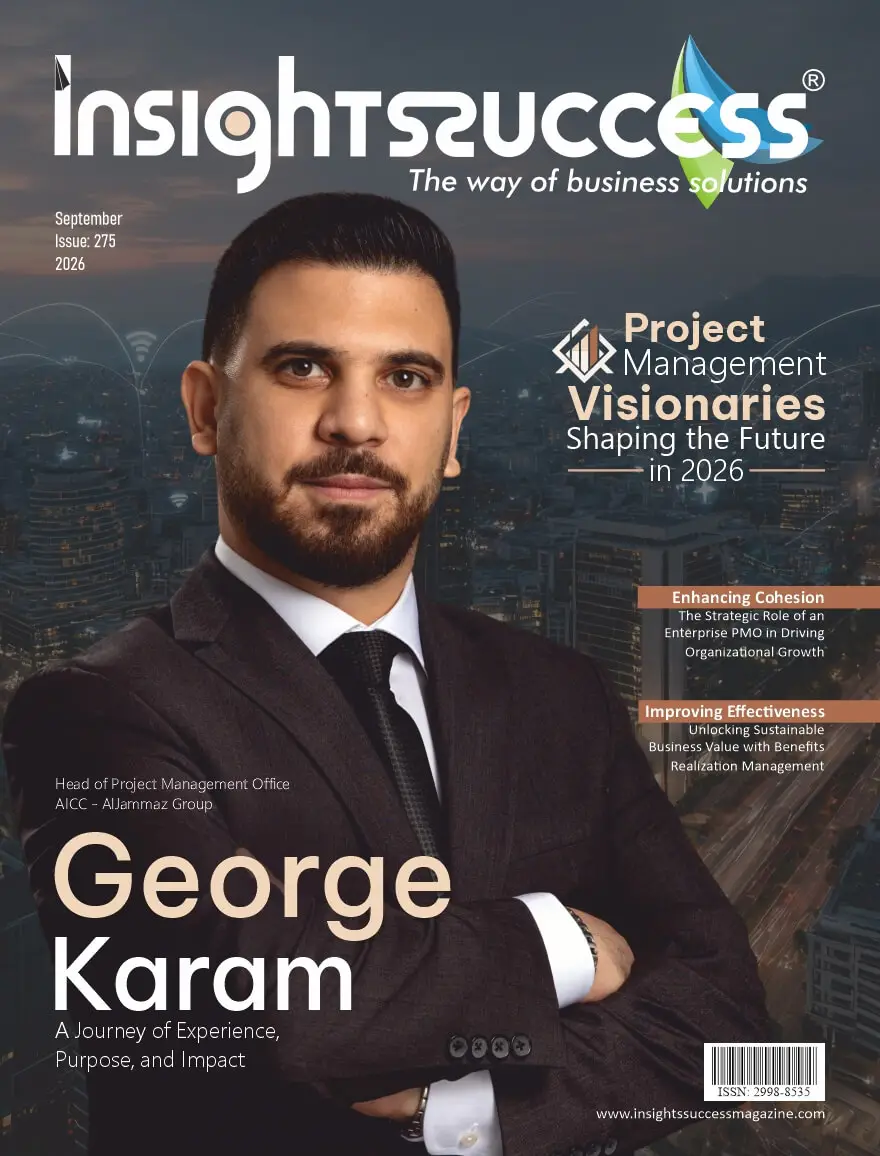
Project Management Visionaries Shaping the Future in 2026
Project Management Visionaries Shaping the Future in 2026 George Karam, Head of Project Management Office at AICC, AlJammaz Group, has developed a leadership approach grounded in responsibility, trust, and collaboration. His experience managing major infrastructure projects, including Riyadh Metro, has shaped his focus on communication, accountability, strategic thinking, and developing future leaders. Digital Link Quick highlights Quick reads

George Karam: A Journey of Experience, Purpose, and Impact
Leadership is rarely shaped in boardrooms. Its most enduring lessons are often learned in the simplest settings. For George Karam, Head of Project Management Office at AICC – AlJammaz Group, that journey began in a close-knit town in North Lebanon, where people knew one another well, and conversations flowed naturally across family and community ties. Long before he was given a leadership role, this environment instilled in him characteristics that would later define his style of leadership: listen before passing judgment, build trust through genuine connections, and unify people behind a single objective. These early lessons formed the basis of a leadership approach built on connection, respect, and a deep understanding of people. George uses his abilities to tackle some of the region’s most difficult infrastructure projects. He has developed a leadership philosophy that blends humility, strategic thinking, discipline, and empathy with experience managing massive construction projects like the Riyadh Metro. His journey offers a candid perspective on how effective leadership is shaped through lived experience. His current leadership style has been shaped by his involvement in sports, mentorship, family obligations, and the realities of working on some of the most difficult project sites in the region. Leadership Built on Responsibility As the eldest son in his family, George took on a guiding role from an early age. He often mediated disagreements among his siblings, organized household responsibilities, and set an example for his younger brother and sisters. This strong sense of duty remained with him throughout his youth. He coached a children’s football team, captained his village football side, and later became part of a diverse university community in Lebanon. These experiences taught him how to collaborate with people from different backgrounds and perspectives. His father’s local business provided another important learning experience. Although modest in size, the business required discipline, planning, accountability, coordination, and sound decision-making. George supported financial planning, calculated profit and loss, and coordinated with suppliers and vendors. These responsibilities taught him an early lesson that continues to guide him: every decision has consequences. “Every decision has consequences. I take ownership of my choices and remain mindful of how they affect others,” he says. Wisdom Through Experience George’s career took a defining turn when he moved to Saudi Arabia to work on major construction projects. One of the most significant was the Riyadh Metro, one of the largest infrastructure projects in the region. He started as a site engineer and gradually took on wider site management responsibilities. His role required him to coordinate people from dozens of nationalities and different technical disciplines, often under significant time pressure. This experience changed the way he understood leadership. He learned that technical instructions alone are not enough to move a project forward. Trust, clear communication, and mutual understanding are equally important. He saw that even the strongest technical plan can fail without effective communication between teams. The experience also taught him humility. He learned as much from experienced site foremen as he did from formal training. “Technical expertise can move a project forward, but trust and communication are what bring people together,” he says. Mentorship also played an important role in his professional development. George credits Wael Allan, whom he describes as a true veteran of the construction industry, as an important influence. Allan helped strengthen his technical judgement and shaped the way he works with teams and clients. Two books also had a lasting influence on his approach to leadership. Unlocking Leadership Mindtraps by Jennifer Garvey Berger made him more aware of the mental shortcuts that can affect good judgment. The Three Deadly Sins: Three Conditions You Need to Avoid to Be Successful in Construction by Stuart E. Graham remains a practical reference that he continues to consult. These experiences and influences have reinforced a belief that George holds strongly. Leadership is earned, not given. A title does not make someone a leader. The way a person treats others does. He believes in treating everyone with the same respect he would expect for himself, regardless of their position or rank. Today, he sees leadership not as a position, but as an ongoing practice of listening and adapting every day. Building Alignment Through Purpose George compares his role to that of a ship’s captain. A successful team must understand its destination, trust the route, and work together toward a common goal. On complex projects, individuals can become focused on their own responsibilities and lose sight of the broader objective. To maintain alignment, he establishes clear and measurable priorities for each phase of the project. These priorities are reinforced through kickoff sessions, daily coordination meetings, and transparent progress tracking. “Teams perform at their best when everyone understands the destination and takes responsibility for reaching it,” he says. He also believes that teams should have a voice in shaping priorities rather than simply receiving instructions. Team members are encouraged to participate in decision-making discussions, not only meetings focused on reporting results. Each workstream has a clearly defined owner, deliverable, and timeline. This approach reduces uncertainty, strengthens accountability, and ensures that everyone understands their role in achieving the wider objective. These principles are also reflected in the organization’s core values of safety and quality, integrity, client focus, and collaboration. The company is strengthening its commitment to environmental responsibility and sustainability, while maintaining zero-harm safety as a non-negotiable standard. For him, these principles provide a strong foundation for delivering projects responsibly, effectively, and with a clear sense of shared purpose. Decisions with Foresight When priorities compete, timelines become tighter, or requirements change, George focuses on what is urgent and what is truly important. He bases every decision on safety, quality, and delivery commitments. He believes that effective leadership goes beyond solving problems quickly. It also requires proactive risk management. This means identifying potential supply chain disruptions, technical conflicts, and commercial challenges well before they affect the project. This discipline begins before construction starts. George places strong emphasis on due diligence when selecting clients, subcontractors, and vendors. He recognizes that attractive financial terms

Enhancing Cohesion: The Strategic Role of an Enterprise PMO in Driving Organizational Growth
Organizations have been working in environments characterized by the fast pace of technology changes, evolving customer demands, regulation, and stiff competition. With firms growing in size, it becomes harder to manage different projects in different departments within firms. This can happen without proper frameworks in place. Projects might conflict with one another on resources, lack consistency on processes, and fail to align with strategic objectives of the business. An Enterprise PMO creates a framework for organizing projects, improving governance, and ensuring that investment on projects is aligned with strategic objectives. Beyond the scope of conventional project management, the significance of an Enterprise PMO lies in the link that it makes between executive leadership and project teams as well as its ability to convert the organizational goals into programs and tangible deliverables. Through standardization, performance measurement, and decision making, it facilitates managing complexity and creates an environment conducive for growth for the organization. This allows leaders to be aware of risk factors early on, deal with shifting priorities, and make sound decisions in the process. Strategic Alignment One of the main duties of the Enterprise PMO is that it links the project portfolio to the strategic direction of the organization. Companies tend to run several initiatives at once, although not all of them contribute to the development of the company in an equal manner. The centralizing of project management will allow for analyzing the strategic needs of the organization and deciding what should be done and how the time, money, and workforce should be utilized. In this way, the links between projects and the strategic vision of the organization will become clear. Strategic alignment is a powerful means for improving accountability as well. If the people working on projects know what kind of value these projects bring to an organization and align them with its strategic goals, then the decision-making process becomes much more meaningful. The leadership is able to set measurable goals and check whether projects are delivering any value. Thus, the risks of making a significant investment into projects which do not yield enough value strategically become much lower. Strategic alignment makes it easier to change portfolios depending on the situation in the market and on business goals. Better Governance Good governance becomes very important when there are various departments, technologies, budgets, and stakeholders involved within an organization’s portfolio. Enterprise PMO can set up standards for projects in terms of project management processes, reporting systems, approvals, and metrics. This standardization process ensures that the same operating environment is provided where leaders can compare different projects and find out the problems which might become serious in future. This standardization avoids duplications as well. Governance should not be an exercise of establishing too many administrative processes. The purpose of governance is to establish adequate structure for making effective decisions while keeping the project team flexible. Proper governance defines roles, escalation, and decision-making processes. Good governance may enhance communication between senior management, program management, and operating units. Based on the information received in time and with proper analysis, decision-makers would have knowledge about the state of the project, resource needs, risk and projected results. Enabling Growth Growth often requires organizations to undertake several transformation initiatives at the same time. The transformation activities may include technology update, market expansion, improvement of processes, innovation of products, or restructuring of the organization. An Enterprise PMO is essential in helping manage the transformation activities so that they are not managed as individual activities. Through managing the portfolio, it will be able to discover any dependencies, any resource conflicts, and any possibilities for cooperation. The role may also be instrumental in promoting organizational flexibility. The market situation is bound to change and this will make certain projects very relevant, while others are likely to become outdated. A central view of the portfolio allows management to re-prioritize their activities where needed. It may also foster the use of performance metrics to determine whether the initiatives are delivering the promised results. In this way, the organization will start building better project skills and learn how to utilize its resources better. This way, growth will not rely anymore on single hits but will become more process-based. Conclusion An Enterprise Project Management Office is important due to its ability to link strategy and execution in organizations. In doing this, it enables organizations to link their projects to their goals, enhance governance, increase visibility, coordinate activities in order to facilitate informed decision-making. It is not just about tracking project progress in terms of timelines and budgets. The Enterprise PMO ensures that projects portfolios are managed systematically with an eye on the desired results. As organizations move ahead with their transformation and sustainable growth aspirations, the capacity of organizations to choose and carry out appropriate initiatives will continue to be relevant. The right positioning of an Enterprise PMO will assist in achieving this through consistent coordination, without restricting flexibility. With proper backing from the organization’s leaders and integration within business planning processes, it can play a very vital role for organizations in making strategies into actions and value creation. Read Also : NX Group Targets $380 Million Revenue in India’s Growing Chip Logistics Market

How Property Maintenance Records Affect Slip and Fall Claims in Boynton Beach
After a fall, a property owner may say the area was checked, cleaned, or repaired before the incident. That statement can matter, but records matter more. Maintenance records can show what actually happened before a fall. They may reveal when an area was inspected, when a problem was reported, and whether repairs were completed. They can also show gaps, delays, or repeated hazards that were not addressed. Slip and fall injury attorneys review these records because they can support or weaken a claim. In Boynton Beach slip and fall cases, the paperwork often tells an important part of the story. What Are Property Maintenance Records? Property maintenance records are documents that show how a property was inspected, cleaned, repaired, or managed. They may be kept by a business, landlord, property manager, maintenance company, or outside vendor. Common examples include: Inspection logs Cleaning schedules Repair requests Work orders Complaint records Safety checklists Vendor reports Employee notes These records help explain what the property owner did before the fall. They may also show what was not done. Why Records Matter in a Fall Claim A slip-and-fall claim usually depends on whether the property owner acted reasonably. Maintenance records can help answer that question. They may show: How often an area was inspected Whether a hazard was reported before the fall How long a repair was delayed Whether warning signs were used Whether staff followed safety procedures For example, if a store claims an aisle was checked every 30 minutes, inspection logs should support that. If the logs show no inspection for several hours, that gap may become important. Records help move the case away from guesswork and toward facts. Inspection Logs Can Show Missed Safety Checks Inspection logs are often important because they show when staff checked an area. In busy places, regular inspections can help prevent falls. A log may support a claim if it shows: Long gaps between inspections Missing entries during high-traffic hours Incomplete or unclear notes Checks marked complete after the incident No inspection after a reported hazard Consider a fall near a store entrance. If rainwater was tracked inside and no one checked the area for hours, the inspection records may suggest poor monitoring. On the other hand, a recent and documented inspection may help the property owner argue that the hazard appeared suddenly. Repair Records Can Show Prior Knowledge Repair records may be even more direct. They can show that the owner knew about a condition before someone was injured. Examples include records involving: Broken handrails Loose flooring Torn carpet Uneven pavement Leaking coolers Poor lighting Damaged stairs If a repair request was made days or weeks before the fall, the record may show actual notice. If the repair was delayed or marked complete without proof, that can raise questions about how the property was managed. A repair history can also show repeated problems. A leak that appears again and again may be harder for a property owner to dismiss as unexpected. Records Can Also Help the Property Owner Maintenance records do not always help the injured person. Sometimes they support the property owner’s defense. Records may show that staff inspected the area shortly before the fall, repaired the hazard promptly, or placed warning signs nearby. If those records match photos, video, and witness statements, they may weaken the claim. That is why records must be reviewed alongside other evidence. A log entry by itself is not always the full picture. The question is whether the record matches what happened at the scene. Florida Notice Rules and Maintenance Records Notice is often central in slip and fall cases. Actual notice means the property owner knew about the hazard. Constructive notice means the hazard existed long enough, or happened often enough, that the owner should have known about it. For falls involving transitory foreign substances in a business establishment, Florida Statute § 768.0755 requires the injured person to prove that the business had actual or constructive knowledge of the dangerous condition and should have acted. Constructive knowledge may be shown by evidence that the condition existed long enough to be discovered or occurred regularly enough to be foreseeable. Maintenance records can help prove notice. A prior complaint, missed inspection, repeated leak, or delayed repair may show that the owner had a chance to address the danger. Evidence That Should Be Compared With the Records Maintenance records are strongest when they are compared with other proof. A trip and fall lawyer may look for consistency between the paperwork and the scene evidence. Helpful evidence may include: Photos of the hazard Surveillance footage Witness statements Incident reports Medical records Receipts or proof of presence Prior complaints Repair photos For example, a cleaning log may say an area was checked at 1:00 p.m. But surveillance video may show no employee entered that area at that time. A witness may also remember seeing the hazard well before the fall. When records conflict with other evidence, those conflicts matter. Common Problems Found in Maintenance Records Some records are incomplete or unreliable. Others show patterns that support the claim. Common issues include: Missing entries Identical inspection times every day No follow-up after complaints Repair requests closed without proof Gaps during busy hours Conflicting records from staff and vendors Logs filled out after an incident These problems do not automatically prove liability. They do raise questions about whether the property owner had a real safety process or only paperwork that looked complete. Florida Fault Rules and Deadlines Florida’s modified comparative negligence rule can affect fall claims. In covered negligence actions, a person found greater than 50 percent at fault for their own harm may not recover damages. If fault is assigned below that level, compensation may be reduced by that percentage. Florida law also gives two years for actions founded on negligence. This deadline matters, but maintenance records may disappear much sooner. Businesses may overwrite video, discard logs, or update records after repairs. Early action can help preserve important proof. What You Should

Build Your Personal Health Map Before You Actually Need It
For people in Grants, NM, taking care of your health is easier when you already know where different needs belong. Waiting until an injury, unfamiliar symptom, or stressful diagnosis appears can mean trying to understand the healthcare system while you are worried, uncomfortable, or short on time. A personal health map solves a different problem than a fitness plan or wellness checklist. It identifies the people, services, records, and routines you may need at different stages of care. Building that map while you are well can make future healthcare decisions more organized and less reactive. Know Where Different Health Needs Belong Not every health concern requires the same setting. Routine examinations and ongoing management of chronic conditions may begin with primary care, while serious injuries and potentially life-threatening symptoms require emergency evaluation. Imaging, laboratory testing, rehabilitation, behavioral health, and specialty services can become important at other points. Knowing the capabilities of your local hospital in Grants, NM can therefore be part of practical health preparation. Access to services such as 24/7 emergency care, imaging, laboratory testing, orthopedics, cardiopulmonary care, surgery, physical therapy, and women’s health can help residents understand which forms of care may be available close to home. The goal is not to diagnose yourself. It is to know the healthcare landscape well enough to seek appropriate help when circumstances change. Create a One-Page Medical Snapshot Medical information has a habit of becoming difficult to remember precisely when it matters most. Medication names blur together, dates disappear from memory, and people may forget an important previous procedure when answering questions under pressure. Create a concise health summary containing current medications and doses, allergies, major diagnoses, previous surgeries, relevant medical history, and contact information for regular healthcare providers. Update it whenever something significant changes. Parents and caregivers may find similar summaries useful for children or relatives whose healthcare they help manage. Keep privacy in mind when deciding where the information is stored and who can access it. The objective is not to create an enormous personal medical archive. It is to make essential information available when accurate communication matters. Stop Treating Preventive Care as a January Project Preventive healthcare often appears on New Year’s resolution lists and disappears by spring. A better approach is to spread health maintenance across the calendar. Routine needs vary according to age, sex, medical history, family history, medications, pregnancy status, and individual risk factors. Rather than following a generic online checklist, ask your healthcare professional which screenings, vaccinations, examinations, and follow-up visits are appropriate for you. Then attach them to months instead of intentions. One month might include an annual checkup, another a dental visit, and another a recommended screening. Turning prevention into scheduled maintenance makes it less dependent on remembering everything at once. Understand the Next Step Before Leaving an Appointment A medical visit can feel complete simply because the conversation has ended. In reality, the next step may determine whether the visit produces useful care. Before leaving, make sure you understand what happens afterward. Do you need laboratory work? Is imaging being ordered? Should you schedule a follow-up? Has a medication changed? Are there symptoms that should prompt more urgent attention? If instructions are unclear, ask for clarification rather than relying on memory later. This habit is particularly useful when several healthcare professionals are involved. A referral only helps when it is completed, and a test result only helps when the appropriate person reviews it and explains what comes next. Treat Recovery as Part of Healthcare People often focus intensely on diagnosis and treatment while treating recovery as an afterthought. Yet regaining mobility, strength, endurance, or confidence can require its own structured period of care. After an injury, illness, hospitalization, or procedure, follow the recovery plan provided by the appropriate professionals. Depending on the situation, rehabilitation may involve physical therapy, gradual activity changes, follow-up testing, wound care, or other services. Avoid turning recovery into a race. Feeling somewhat better does not necessarily mean tissues have healed completely or that normal activity should resume immediately. If symptoms worsen, new problems develop, or recovery does not progress as expected, contact the relevant healthcare professional instead of improvising around the problem. Make Mental Health Part of the Same Map A personal health map is incomplete if it covers only physical symptoms. Stress, anxiety, depression, grief, substance use concerns, and other behavioral health needs can affect sleep, relationships, work, physical health, and the ability to follow medical recommendations. Identify behavioral health resources before reaching a crisis. Knowing whom you could contact can reduce one barrier to seeking help later. Everyday habits also matter. Regular sleep, social connection, movement, time outdoors, and realistic boundaries around work can support well-being, although they are not substitutes for professional treatment when treatment is needed. Mental and physical health frequently influence each other. Treating them as entirely separate systems can make care unnecessarily fragmented. Prepare for Emergencies While Everyone Is Well Emergency planning tends to happen after an emergency. Reverse that order. Household members should know essential medical information and whom to contact when appropriate. Keep important numbers accessible and understand when symptoms require immediate emergency assistance rather than waiting for a routine appointment. Emergency supplies should reflect the household’s actual needs. Someone who relies on essential medication or medical equipment may require a different plan from someone without those needs. Preparation is especially valuable when travel distance, weather, transportation, or caregiving responsibilities could complicate a stressful situation. The point is not to anticipate every possible medical event. It is to remove avoidable confusion from the first few decisions. Build Continuity Instead of Collecting Appointments Healthcare becomes more useful when individual visits form a connected story. Keep track of important results, recommendations, medication changes, referrals, and unresolved questions rather than treating each appointment as an isolated event. Bring relevant information to new providers and tell regular providers about significant care received elsewhere. Patient portals can help organize records when available, but personal notes can also make it easier to remember what

What to Know When Bees or Wasps Show Up at Home
You may barely notice a bee or wasp passing through the yard, but the situation changes quickly when repeated activity starts showing up near a doorway, roofline, wall opening, or outdoor seating area. Some species build surprisingly large colonies; established yellowjacket and hornet nests can contain hundreds or even thousands of individuals, while paper wasp nests are usually much smaller. Their nests are impressive in their own right. Paper wasps, yellowjackets, and hornets actually create their paper-like nest material by chewing wood fibers and mixing them with saliva. Still, fascinating biology becomes a practical concern when a nest is close to people, pets, doors, or frequently used outdoor spaces. Knowing what kind of insect you are dealing with—and whether the nest truly poses a risk—can help you avoid unnecessary removal, painful stings, and a very memorable afternoon for all the wrong reasons. How to Tell Whether You’re Dealing With Bees or Wasps At a glance, bees and wasps can look similar, especially when you’re trying not to panic. Still, the differences matter because their behavior, nesting habits, and risk levels aren’t the same. Bees usually look fuzzier and thicker. They’re built for pollination, not intimidation. Wasps tend to have smoother bodies, narrow waists, and a more angular shape. They often look like they mean business because, frankly, they do. You’ll also notice different nest styles: – Bees may settle inside wall cavities, trees, or roof spaces – Wasps often build paper-like nests under eaves, railings, and soffits – Ground-nesting species can appear in lawns or garden beds If insects keep returning to one spot, don’t assume it’s random traffic. A repeated flight path usually points to an active nest nearby. That’s your clue to stop guessing and start paying attention. The Real Risks Of Trying To Remove A Nest Yourself DIY insect control videos make nest removal look oddly casual. Real life tends to be less cinematic. You climb a ladder, spray the wrong angle, miss part of the nest, and suddenly the air gets loud. The biggest risk is provoking a defensive swarm response. Wasps, in particular, can sting multiple times. Some species become aggressive when they sense vibration, movement, or chemical irritation. If the nest is tucked under roofing, inside siding, or behind shutters, reaching it safely becomes even harder. There’s also the identification problem. You can’t choose the right treatment if you don’t know the species, the nest structure, or whether beneficial pollinators are involved. That’s where professional bee and wasp control becomes a practical option, especially when the nest is established or located near daily foot traffic. If anyone in your home has an allergy to stings, the margin for error gets very small. At that point, this stops being a weekend project. Why A Small Nest Can Turn Into A Bigger Problem Quickly A lot of homeowners wait because the nest looks tiny. That’s understandable, but it’s also how a manageable issue becomes a full-blown headache. Many wasp colonies grow fast during warm months. A nest that seems harmless in early summer can become heavily populated in a matter of weeks. Bees can also expand their colonies significantly, especially when they find a protected place with easy access to food and water. The location matters as much as the size. A small nest near a mailbox, AC unit, pool gate, or kids’ play area creates frequent contact. That raises the chance of stings, and repeated disturbance can make insects more defensive. A hidden nest can cause extra trouble: – Bees inside walls may leave wax and honey behind – Moisture and residue can attract other pests – Structural gaps may allow colonies to spread deeper into the home Tiny does not always mean low-risk. In pest control, “I’ll deal with it later” has a talent for aging badly. What A Professional Service Usually Does Differently Professional treatment is not just “spray, remove, done.” A solid service starts with inspection. The goal is to identify the species, locate the nest, evaluate the level of activity, and spot the conditions that attracted the insects in the first place. That process matters because different insects require different strategies. Honey bees may need a careful approach that accounts for colony placement and possible removal concerns. Wasps often require direct treatment of the nest plus follow-up monitoring around entry points. A trained technician will usually focus on: – Safe treatment based on the species involved – Nest removal or neutralization where appropriate – Identification of entry points and harborage areas – Recommendations to reduce repeat activity Good service is also about safety logistics. That includes rooflines, wall voids, ladders, protective equipment, and timing the work when insect activity is lower. It’s less dramatic than internet hacks and much more effective, which is a decent trade. How To Make Your Property Less Attractive To Stinging Insects You can’t make your yard invisible to bees and wasps, but you can make it less appealing. Most infestations are connected to shelter, moisture, and food access. Remove enough of those incentives, and you reduce the odds of a colony settling in. Start with the easy wins around your home: – Seal gaps around vents, soffits, and utility openings – Check sheds, playsets, and fence lines for early nest activity – Keep garbage lids tight and rinse sticky drink containers – Trim overgrown shrubs near entryways and windows – Fix outdoor leaks and eliminate standing water where possible Regular inspections help more than people think. Walk your property every week or two during active seasons and look at corners, overhangs, and less-used areas. Early detection changes the whole game. If you garden, stay aware of increased insect activity around flowering plants. Pollinator traffic is normal. Nesting near your patio furniture is a separate issue entirely. When You Should Act Right Away Instead Of Waiting Some situations call for immediate action. If insects are entering through cracks near a bedroom, gathering around your front entrance, or nesting in a place where children and pets play,

How to Make Smarter Real Estate Decisions Around Design, Materials, and Value
Every property decision eventually comes down to a set of smaller choices that most buyers and owners make quickly and then live with for decades. A floor plan gets approved in an afternoon. A color palette gets picked from a handful of samples. An exterior finish gets chosen because it looked good on a neighboring house. These choices feel minor while they are being made, yet they end up shaping how a home looks, how it ages, how much upkeep it demands, and what a future buyer is willing to pay for it. Across Texas and in most other markets, the properties that hold their appeal are rarely the ones with the flashiest features. They are the ones where design, materials, and value were considered together rather than one at a time. Getting better at these decisions does not require a background in construction or design. It requires a clear way of thinking about what each choice is actually buying you, and a willingness to slow down at the points that matter most. The Building Blocks Behind a Lasting Exterior The outside of a building takes more punishment than any other part of it, absorbing heat, rain, wind, and years of temperature swings without any chance to rest. Limestone has long been a favorite for exteriors because of that endurance, but owners often struggle to find a source that can match color, cut, and finish across an entire project, which leaves facades looking patched together instead of intentional. Working with a dedicated natural stone supplier solves that problem, since a single supplier can hold consistent material through every phase of a build. Homeowners, builders, and designers who want that consistency work with Texas limestone from Eagle Stone Supply when the exterior needs to look right on the first day and every day after. Why Design Choices Deserve More Attention Than Price Tags Cost is the easiest thing to compare, which is why it dominates most conversations. Two options sit side by side, one is cheaper, and the decision feels settled. The trouble is that price only describes the moment of purchase. It says nothing about how a surface will look after ten summers, how often it will need attention, or whether it will still feel current when the property changes hands. A more useful question is what the choice costs over the life of the building. A finish that needs repainting every few years carries a recurring bill that never appears on the original quote. A material that fades unevenly creates a repair problem that is harder to solve than the original installation. When these costs are counted honestly, the cheaper option frequently turns out to be the more expensive one. What People Notice First on a Walk-Through Attention follows a predictable path. Visitors register the approach, the entry, and the immediate impression of quality long before they open a cabinet or test a faucet. The first thirty seconds set the frame through which everything afterward is judged. This argues for spending carefully rather than evenly. Money directed at the entry, the facade, and the main gathering spaces does more work than the same money spread thinly across every room. A property that makes a strong first impression is forgiven for small imperfections later. One that starts poorly has to fight for the rest of the visit. Questions Worth Asking Before You Commit A few plain questions prevent most expensive regrets. How will this look in five years without any intervention? What has to happen to keep it looking good? If part of it is damaged, can the repair be matched? Is this choice tied to a passing trend or to something that has held up across generations? Owners who ask these questions before signing rarely find themselves undoing work later. Those who skip them often discover the answers at the worst possible moment, when a repair is urgent, and the original material is no longer available in the same run. Working With Builders, Designers, and Suppliers The people involved in a project shape its outcome as much as the materials do. A builder who has handled similar work knows where problems hide. A designer who listens closely produces something that fits the way a household actually lives. A supplier with real depth of inventory keeps a schedule from slipping when a shortage appears. The relationship works best when it is treated as a conversation rather than a transaction. Explaining what you want the property to feel like, how long you intend to stay, and what level of upkeep you are willing to accept gives professionals the information they need to steer you correctly. Withholding that context leaves them guessing, and their guesses will be shaped by what is easiest rather than what is right. Planning a Renovation That Holds Its Value Renovation rewards sequence. Structural issues, drainage, and anything behind a wall come first, because work done on top of an unresolved problem has to be torn out later. Visible improvements come after, once the foundation of the project is sound. It also rewards restraint. Highly personal choices can make a home a joy to live in and a challenge to sell. There is nothing wrong with that trade, as long as it is made knowingly. The mistake is assuming that every improvement returns its cost. Some do, some do not, and knowing which is which before the work begins is worth more than any single upgrade. Thinking Beyond the Current Owner The most useful habit in property decisions is imagining the next owner standing in the room. Not to strip a home of personality, but to keep a check on choices that only make sense from the inside of one household’s routine. A property that can be handed over without apology is one that has been built and maintained with judgment. Design, materials, and value are not three separate subjects. They are three ways of looking at the same decision. Treating them together, at the moment the