






Galderma Launches Sculptra® in India, Introducing Regenerative Aesthetic Treatment to the Market
Mumbai, India | 27 July 2026: Galderma, a global dermatology-focused company, has announced the launch of Sculptra® in India, introducing what the company describes as the first clinically proven regenerative biostimulator in the country’s injectable aesthetics market. Supported by more than 25 years of global clinical evidence, Sculptra® is designed to stimulate the body’s natural collagen production, helping restore facial volume and improve skin quality through a gradual, regenerative approach when administered by qualified healthcare professionals. The introduction of Sculptra® comes as India’s aesthetic medicine sector continues to evolve, driven by growing awareness of skin health, increasing demand for minimally invasive procedures, and a preference for personalized treatment approaches. Healthcare professionals and patients are increasingly exploring regenerative therapies that focus on supporting the skin’s natural biological processes rather than providing temporary aesthetic correction alone. Introducing a Regenerative Approach to Injectable Aesthetics Unlike conventional injectable treatments that primarily address visible signs of ageing through immediate correction, Sculptra® is designed to work by stimulating the body’s own collagen production. Through its proprietary PLLA-SCA™ (poly-L-lactic acid) formulation, the treatment gradually supports the restoration of the skin’s underlying structure, helping improve facial volume, skin firmness, and overall skin quality over time. As collagen production naturally declines with age, structural support within the skin decreases, contributing to volume loss, reduced elasticity, and the appearance of wrinkles. Regenerative bio stimulation seeks to address these underlying changes by encouraging the body’s natural collagen synthesis, resulting in progressive, natural-looking improvements. Supporting the Evolution of Aesthetic Medicine in India Commenting on the launch, Raghavendra Sadashiva, Managing Director, Galderma India & South Asia, said: “At Galderma, we remain committed to advancing dermatological science by introducing innovations that address the evolving needs of both healthcare professionals and patients. The launch of Sculptra® represents an important milestone as regenerative aesthetics continues to gain global recognition. By working with the body’s natural collagen production, the treatment offers healthcare professionals an additional option for patients seeking gradual, natural-looking improvements in facial structure and skin quality.” Growing Focus on Collagen Regeneration Globally, aesthetic medicine is increasingly moving towards regenerative treatment strategies that focus on preserving natural facial characteristics while enhancing skin quality over time. Rather than seeking dramatic or immediate changes, many patients are now opting for treatments that support the skin’s own regenerative processes and deliver subtle, long-lasting outcomes. According to Galderma, Sculptra® has been used by healthcare professionals in more than 40 countries and regions, supported by extensive clinical research and real-world experience spanning over two decades. The company states that the treatment can provide gradual improvements in facial volume and skin quality, with results that may last for more than two years, depending on individual patient characteristics and treatment protocols. Expanding Galderma’s Injectable Aesthetics Portfolio Ravi Mittal, Business Unit Head – Aesthetics, Galderma India, said: “The aesthetics landscape in India is evolving rapidly, with increasing interest in treatments that support long-term skin quality while maintaining natural-looking results. We are seeing greater emphasis on collagen regeneration and therapies that address the underlying biological changes associated with ageing. The introduction of Sculptra® expands the range of science-based treatment options available to healthcare professionals practising regenerative aesthetics.” The launch further strengthens Galderma India’s injectable aesthetics portfolio and reflects the company’s continued focus on bringing globally established dermatology innovations to the Indian market. Galderma’s portfolio spans injectable aesthetics, dermatological skincare, and therapeutic dermatology, supporting healthcare professionals with evidence-based treatment solutions across a broad spectrum of skin health needs. About Sculptra® Sculptra® is a regenerative biostimulator developed using a proprietary PLLA-SCA™ (poly-L-lactic acid) formulation. The injectable treatment is designed to stimulate the body’s natural collagen production, gradually restoring facial volume while improving skin quality and structural support. Supported by more than 25 years of global clinical evidence, Sculptra® is intended to be administered only by qualified and appropriately trained healthcare professionals. Individual suitability and treatment outcomes may vary. About Galderma Galderma (SIX: GALD) is a global dermatology-focused company operating in approximately 90 countries. Since its establishment in 1981, the company has developed a science-based portfolio across Injectable Aesthetics, Dermatological Skincare, and Therapeutic Dermatology. Galderma works in partnership with healthcare professionals to advance dermatological care through research-driven innovations designed to address a wide range of skin health needs worldwide. Read Also : PhysicsWallah Partners with Indian Navy Welfare & Wellness Association to Provide Scholarships for Naval Families

Naver Shares Jump 10% After Nvidia’s $1 Billion Investment
Prime Highlights : Naver stock jumps 10% as Nvidia takes a 4.5% stake through a $1 billion investment. Naver, Nvidia and Brookfield plan a $10 billion AI data centre expansion in South Korea. Key Facts : Nvidia buys 7.2 million new Naver shares at 204,500 won each. GAK Sejong expansion targets 200 megawatts of capacity by 2028. Background : Naver shares surged 10% after Nvidia agreed to invest $1 billion in the South Korean cloud company, giving the chipmaker a 4.5% stake and marking a fresh step in their growing AI partnership. Naver said it would place 7.2 million new shares with Nvidia at 204,500 won each, a 1% discount to its previous closing price, as part of the deal. Investment group Brookfield will provide up to $9 billion in financing as the project’s capital partner, Naver added. The investment lifts Nvidia among Naver’s biggest shareholders, trailing the National Pension Service, which held a 9.25% stake, and BlackRock Fund Advisors, which held 6.12%, as of the end of 2025. As a first step, the companies and Brookfield plan to expand Naver’s AI data centre in South Korea with up to $10 billion in funding. The expansion will rise at Naver’s GAK data centre in Sejong, running on Nvidia’s Vera Rubin and Blackwell chip platforms, with capacity reaching 200 megawatts by 2028. The move builds on an earlier agreement between the two firms to pursue gigawatt-scale AI infrastructure across South Korea and international markets. Nvidia CEO Jensen Huang has said Naver would grow tenfold once that vision takes shape. A gigawatt of capacity runs about four times larger than GAK Sejong, South Korea’s largest hyperscale data centre, and could support hundreds of thousands of Nvidia’s newest GPUs at once, according to Naver. Huang has pushed the view that nations should build and control their own AI infrastructure, a strategy that could widen Nvidia’s customer base beyond major U.S. hyperscalers. Nvidia has also backed other AI ventures, including a $30 billion investment in OpenAI and a $10 billion investment in Anthropic. Read Also : Anduril In Talks For Funding Round At 100 Billion Dollar Valuation

Redefining Sustainability in a Developing Country
Redefining Sustainability in a Developing Country Celebrating an inspiring leader whose commitment to sustainability is creating meaningful environmental, social, and economic impact, demonstrating how visionary leadership can drive lasting progress and responsible development in a developing country. Digital Link Quick highlights Quick reads

When Waste Becomes a Doorway: How Michelle Korevaar Is Rewriting the Rules of Environmental Leadership
Cape Town sits at the southern tip of Africa, where one of the world’s most biodiverse ecosystems meets one of its most unequal cities. It is a place where environmental urgency and social hardship exist side by side, often in the same neighborhood, and where the distance between those who talk about sustainability and those who live with its absence can feel impossibly wide. Michelle Korevaar has spent over a decade working in that gap, not as an outsider with solutions to deliver but as someone who understood early that the gap itself was the point of entry. The communities most affected by environmental degradation were the same communities most excluded from the conversations about addressing it. That contradiction became her founding question, and the work she built from it has quietly become one of the most compelling models of community-led environmental change on the continent. What has emerged is more than a sustainability program; it is a scalable implementation blueprint that bridges the gap between environmental ambition and community action. EcoChangeMakers demonstrates that lasting change is achieved not simply through innovation, but through widespread adoption. By equipping people with climate literacy, practical skills, and meaningful opportunities to participate, the model transforms communities from passive beneficiaries into active custodians of sustainable development. In doing so, it creates measurable environmental, social and economic outcomes that align with the UN Sustainable Development Goals, Africa’s Agenda 2063 aspirations and the Environmental, Social and Governance (ESG) priorities of businesses seeking authentic, measurable community impact. As Founder Director of ChangeMakersHub NPC and EcoChangeMakers, Michelle has developed a methodology that refuses to separate environmental action from social equity. Plastic waste intercepted by communities becomes school furniture and public benches. Young people who had no visible pathway into the green economy become environmental leaders. Schools that once sat outside the sustainability of conversation become mobilization hubs for measurable change. The logic running through all of it is the same: environmental challenges, approached correctly, are not problems to be solved from the outside. They are opportunities to be activated from within. A Path That Was Never Straight Michelle’s career did not follow a single clean arc from corporate life to social entrepreneurship to environmental advocacy. She describes it honestly as a journey shaped by learning rather than by plan, moving through corporate work, then entrepreneurship, then community development, and gradually into the intersecting space where environmental action and social empowerment meet. What changed her was not a single moment but a pattern she kept observing across the communities she worked with closely: the people facing the greatest economic hardship were consistently the same people most exposed to pollution, waste, climate vulnerability, and blocked access to opportunity. The double burden was structural, not accidental. That observation led her to a question she has never stopped asking: how can environmental action become a pathway to empowerment rather than simply a response to a problem? It shifts the design of programs away from compliance and remediation toward participation and ownership. It places community members, particularly young people, at the center of the solution rather than at the edge of it. It asks not just what needs to be cleaned up but who should be trusted to do the cleaning and what they should gain from it beyond a cleaner environment. She reflects, “My commitment to sustainability and social equity comes from the belief that environmental solutions must include people, particularly young people, as active participants rather than passive beneficiaries.” EcoChangeMakers: The Model in Practice EcoChangeMakers was not launched as a finished idea. It was developed through years of direct community engagement, testing, adaptation, and listening to what communities actually needed rather than what external observers assumed they did. The result is a circular economy ecosystem that weaves together climate literacy, environmental stewardship, youth leadership development, reward systems, waste interception, and circular manufacturing into a single coherent program rooted in local realities. The centerpiece is the EcoChangeMakers 2030 Impact Program, which activates schools as environmental mobilization hubs, generating measurable social and environmental outcomes. Plastic waste intercepted through community participation is transformed into tangible community infrastructure: school furniture, public benches, structures that communities can see and touch and use. When a learner sits on a bench that began as waste collected from their own neighborhood, the connection between environmental action and community benefit becomes concrete rather than abstract. It closes the loop in a way that a poster or a pledge never could. The program also creates sustained pathways for young people to develop leadership skills and environmental awareness while gaining meaningful exposure to the green economy before it closes off to them. She states, “Waste should not be viewed only as a problem. It can become a resource, a learning tool, a participation mechanism, and a catalyst for positive change.” Sustainable Leadership as She Defines It Michelle’s definition of sustainable leadership differs from the version most frequently cited in business and policy circles. For her, it is not primarily about vision or strategy or stakeholder alignment, though she values all of those. It is about building systems that remain resilient, inclusive, and relevant in the face of change, and doing so with the courage to move beyond traditional approaches when traditional approaches are producing traditional results. Courage appears in her thinking consistently. She argues that leaders today must be willing to challenge outdated systems and create new pathways for collaboration, even when support for those pathways is not yet fully formed. More fundamentally, she insists that sustainable leadership cannot measure success through financial outcomes alone. Social impact, environmental stewardship, and the opportunities created for future generations are equally valid and equally necessary measures of whether leadership is actually working. That position is harder to hold than it sounds in environments where financial metrics dominate every performance conversation, and the fact that she holds it consistently is itself a form of the courage she describes. She explains, “Sustainable leadership is not about maintaining the status quo. It is about building systems that

Accelerating Climate Action for Sustainable Growth
ESG Strategy Sustainability in the long run needs the involvement of everybody from every level of society. Corporations, government institutions, schools and the community members need to contribute their share in ensuring that there are behaviors which are environmentally responsible. Campaigns to foster employee involvement, environmental awareness campaigns, sustainable procurement procedures, and environmental education will take us far in providing a conducive environment for making responsible decisions. Creating Long-Term Business Value Whereas sustainability was seen as merely a compliance measure, it is now considered a tool for fostering innovation and growth. A successful ESG strategy will revolve around responsible use of resources, governance, the well-being of employees, and sustainable investments. Such actions help increase stakeholder trust while boosting operational resilience and profitability at the same time. At the same time, Climate Action helps companies turn to renewable sources of energy, increase energy efficiency, minimize waste, and increase environmental resilience. Technology Driving Sustainable Transformation It is worth noting that digital innovations can help companies achieve their sustainability goals. The role of artificial intelligence, cloud computing, predictive analytics, IoT and environmental monitoring tools cannot be underestimated when helping organizations to measure emissions, manage energy use and conduct environmental reporting. This helps to reinforce ESG Strategy through accurate data that ensures good governance and informed decision-making. The same applies to technology which helps speed up Climate Action since it enables companies to find avenues where they can reduce their carbon footprint and make efficient operations management. Strengthening Organizational Culture Effective sustainability programs require employees who recognize and embrace the objectives of their organization. The commitment of leaders, ongoing learning, involvement of employees in programs, and responsible operations within the workplace enable the creation of a culture in which sustainability is integrated into the decisions being made every day. An effective ESG Strategy promotes collaboration among various departments and aligns the objectives of business with the environment and society. Similarly, involvement in Climate Action programs enables employees to participate by conserving energy and resources and finding solutions to problems innovatively. Driving Collaboration and Accountability To achieve sustainable transformation of the business, it is essential to encourage collaboration between different parties such as governments, investors, employees, suppliers, consumers, and other companies from the same sector. Businesses that promote collaboration and communication are likely to establish a stronger basis for their further development. Successful implementation of the ESG Strategy ensures cooperation by setting sustainability goals, improving governance, and engaging in responsible corporate activities throughout the entire value chain. Likewise, coordinated Climate Actions will guarantee exchange of knowledge, innovations, and collaborative efforts aimed at reducing the negative impact on the environment. The collaboration of the public and private sectors also enhances sustainability projects and economic stability. Innovation Supporting Sustainable Growth Innovation plays a crucial role in helping companies find a balance between being environmentally friendly and performing well financially. Investments in renewable energy sources, circular economy projects, sustainability in product design, green infrastructure development, and responsible supply chain management will help the company mitigate risks and generate new growth opportunities. The ESG Strategy is focused on encouraging companies to take environmental and social performance into account when making business decisions along with the financial ones. At the same time, Climate Action will make the company’s operations more efficient by cutting emissions, optimizing the energy use, and increasing the resilience to climate-related challenges. The Future of Responsible Business The future of corporate success will be more likely determined by those organizations who embed sustainability across all areas of their business. Organizations adopting an ESG Strategy will enhance governance, increase transparency, attract responsible investment, and generate value for stakeholders. Meanwhile, climate action will be necessary for risk mitigation, support of low-carbon economic growth, and resilience of the community. New technology like artificial intelligence, predictive analytics, digital sustainability solutions and environmental monitoring tools will make decision making better within organizations and sustainability reporting and performance measurement easier. Investment in workforce, innovation, stakeholder engagement and sustainable infrastructure will allow organizations to adapt to new market requirements and regulations. Businesses that embrace ESG Strategy as part of their long-term planning and promote Climate Action through tangible initiatives will develop operational resilience, optimize resource management, and build competitive advantages. Through an approach of ethics, sustainability, and innovation, companies will be able to foster sustainable economic development without compromising the protection of natural resources and the creation of social value. Such an approach will allow organizations to gain profit in the long term, build trust, and be environmentally responsible. Read Also : The Foundation of Effective Climate Action

The Foundation of Effective Climate Action
Environmental Sustainability Environmental sustainability has now become an important priority for the government, companies, and communities all across the globe. Increased temperature levels, resource exploitation, biodiversity extinction, and climatic disasters have emphasized the need to coordinate activities that will help preserve natural systems along with developing economically. One of the key elements of this revolution is Environmental Sustainability, which promotes responsible usage of resources, decreased environmental impact, and ecological balance. In addition to these strategies, there is Climate Action, aimed at decreasing greenhouse gas emissions and sustainable development. Integrating Sustainability into Business Strategy It is becoming clearer to organizations that environmental sustainability will positively contribute to the future success of the business. Companies are implementing renewable energy sources, efficient technology, sustainable supply chain management, and circular economy principles to maximize business performance while having a minimum environmental footprint. Good Environmental Sustainability practices should promote minimizing waste, conservation of natural resources, and increasing energy efficiency within the organization. In addition to this, Climate Action will allow companies to decrease carbon emissions, become resilient to the risk of environmental changes, and meet new regulatory requirements. Technology Supporting Environmental Progress The development of digital technologies such as Artificial Intelligence, Cloud Computing, Internet of Things (IoT), Predictive Analytics, and Advanced Environmental Sensing Technologies has transformed sustainability initiatives through their application. This allows firms to gauge their energy consumption, track their emissions, manage resources effectively, and generate reports about how they affect the environment. Smart systems improve Environmental Sustainability by determining where efficiencies could be gained without resulting in waste. Similarly, technology can assist Climate Action by encouraging the adoption of renewables and measuring carbon. Creating a Culture of Environmental Responsibility Sustainability in the long run needs involvement of everybody from every level of society. Corporations, government institutions, schools and the community members need to contribute their share in ensuring that there are behaviors which are environmentally responsible. Campaigns to foster employee involvement, environmental awareness campaigns, sustainable procurement procedures, and environmental education will take us far in providing a conducive environment for making responsible decisions. The Environmental Sustainability initiatives create innovation while encouraging people to take part in climate action. Strengthening Collaboration for Lasting Impact For any substantial advancement in the environmental domain, coordination between governments, companies, scientists, investors, and the local community is necessary. Policies, technological innovations, investments, and international cooperation can all help create better environmental results. The organizations which include Environmental Sustainability in their planning processes not only stimulate innovation but also increase resistance to any environmental issues. The collaborative efforts of renewable energy projects, ecosystem rehabilitation, sustainable infrastructure development, and responsible supply chain management also help strengthen Climate Action. Driving Innovation Through Sustainable Leadership Leadership is central in ensuring that the environmental agenda moves forward in all the different industrial sectors. Companies that delegate authority to workers, adopt green technologies, and set sustainable goals are capable of creating value that is both business and socially valuable. An Effective Environmental Sustainability strategy will ensure that companies strive for excellence through proper corporate governance, reporting, and measurement. Similarly, climate action helps the organization to prepare for environmental threats, comply with changing regulations, and improve stakeholder confidence. The Future of Sustainable Growth The future of global development is determined by the integration of economic development with the environment. Given the challenges of the environment to industries and communities at large, there is a need for integration in innovation, resource utilization, and planning. Environmental Sustainability will be the basis of environmental protection, conservation of natural resources, and promotion of sustainable economic development. On the other hand, Climate Action will still lead to investments in renewable energy, technology, infrastructure, and carbon emissions reduction programs that promote the resilience of the environment. Innovation in technologies such as artificial intelligence, prediction and monitoring of the environment, and management of energy are some solutions for the improvement of the environment and decision making. Businesses that embrace the concepts of Environmental Sustainability and make efforts to achieve Climate Action through their corporate strategies will become more competitive, efficient, and trustworthy. With a combination of environmental responsibility and business strategy, governments and industries are able to minimize environmental impact, foster biodiversity, inspire innovations, and develop resilient economies capable of solving future environmental problems. This way, both the environment and economic development will develop in parallel. Read Also : The Competitive Edge for Top AI Business Leaders
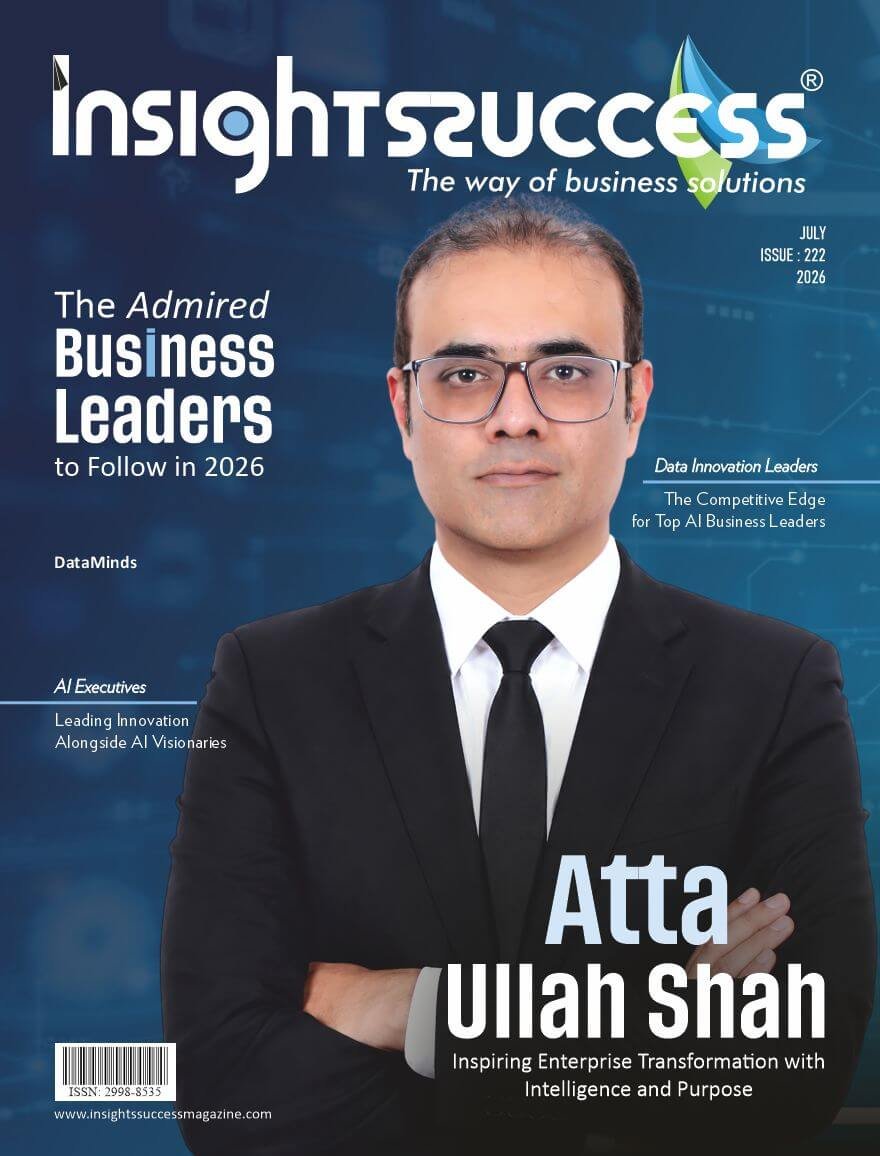
The Admired Business Leaders to Follow in 2026
The Admired Business Leaders to Follow in 2026 Showcasing outstanding business leaders whose vision, innovation, and strategic excellence are driving organizational success, inspiring industries, embracing change, and setting new standards for leadership and sustainable growth in 2026. Digital Link Quick highlights Quick reads

Atta Ullah Shah: Inspiring Enterprise Transformation with Intelligence and Purpose
The room had already spent millions. The dashboards were live, the AI models were in production, and the data platform behind them had been built to specification. Atta Ullah Shah sat in the executive meeting and watched a CFO ask the only question that mattered: “How has this actually changed the business?” No one in the room could answer it cleanly. The technology had done everything it was asked to do. What it could not do was tell anyone what to do differently on Monday morning. That silence, more than any slide deck or business case, is the moment Atta Ullah traces his thinking back to. Technology alone does not create transformation. Leadership and decision-making do. It is not a moment he encountered once. Over more than fifteen years leading enterprise data, AI, and digital transformation initiatives across government and private sector organizations, working directly with CEOs, CIOs, CFOs, and CISOs, he watched the same scene repeat itself in different rooms, with different technology, and the same gap at the center of it. Enormous investment. Sophisticated platforms. Professionals who could operate the tools but could not connect any of it to a decision the business actually needed to make. That accumulated experience, sitting across the table from executive leadership again and again, is what eventually led him to found DataMinds. The Realization Behind DataMinds Atta Ullah’s path to founding DataMinds was not a sudden pivot away from a comfortable career. It was the product of years of watching the same pattern from different angles, in different organizations, until it became impossible to ignore. He sat in the rooms where large technology investments were justified, approved, and later delivered. He watched, consistently, what happened once delivery was complete and the next evaluation cycle began: the technology worked, but the outcomes were harder to find. “For years, technical expertise built careers,” he reflects. “AI is changing that equation. Execution is becoming automated, but judgment is becoming the most valuable leadership capability.” That conviction did not arrive fully formed. It came from repeatedly watching technically excellent teams struggle in front of executive leadership, not because their architecture was wrong, but because they could not explain why it mattered to the business, or when a technically correct answer was still the wrong call for that organization at that moment. What surprised him most, over years of this, was how rarely the failure was technical. It was almost always a failure of judgment, framing, or timing, and no certification program was teaching anyone how to close that gap. That is the specific gap DataMinds was built to close. Atta Ullah had, by that point, found excellent technical training everywhere he looked: cloud certifications, AI bootcamps, leadership programs, each one credible on its own terms. What he could not find anywhere was a single program that taught enterprise decision-making, boardroom communication, architecture trade-offs, governance, and strategic thinking as one integrated discipline, rather than as separate electives a professional was left to stitch together alone. DataMinds exists because that program did not, and because he had spent too many years watching capable people learn that lesson the hard way, in front of an executive audience, when the cost of not knowing it was highest. He reflects, “Technology should never be the destination. It should be the enabler. Great leadership is about simplifying complexity, empowering people with strategic thinking, and ensuring every technology investment delivers measurable value.” What DataMinds Actually Teaches The curriculum at DataMinds is deliberately unusual. It combines enterprise architecture, business strategy, governance, AI, leadership, and decision-making frameworks into a single integrated learning journey, because Atta Ullah operates from the conviction that those subjects are not separate disciplines to be studied in sequence. They are different facets of one core competency: the ability to understand a business problem deeply enough to know whether AI is the right response to it, and if so, how to implement that response in a way that creates lasting value rather than technical output nobody quite knows how to use. The shift he watches happen in participants is specific enough to track. Professionals who complete the DataMinds journey stop asking which technology to use first, and start with the business problem itself: what decision needs to improve, who the relevant stakeholders are, what the governance and architecture implications look like, and what success means in terms the business can verify. Professionals from organizations across banking, government, and technology sectors have gone through that shift, and the pattern he hears back most often is the same one: executive leadership starts treating them differently, not because their technical output changed, but because their judgment became visible. He explains, “AI will not replace data professionals. Data professionals who effectively leverage AI will outperform those who do not. The future belongs to the combination of human expertise and artificial intelligence.” The Data Foundation Argument One of the more deliberately contrarian positions Atta Ullah takes in public is his insistence on slowing down the AI adoption conversation to address data foundations first, at precisely the moment when market excitement about Generative AI, Large Language Models, and Agentic AI is running at its highest pitch. He is not dismissive of those technologies. He is specific about a sequencing error he has watched organizations repeat at real cost: investing in sophisticated AI applications before establishing the trusted data, governance structures, clear ownership, and architecture those applications need to produce reliable outputs. The reason the error is costly is that AI does not neutralize weaknesses in the data environment it operates within. It amplifies them. Poor data quality fed into a sophisticated model produces sophisticated-looking poor outputs that are harder to challenge than the obvious errors a simpler system would surface. Atta Ullah has made this argument in rooms where the audience wanted to talk about model selection and prompt engineering instead, and the organizations that listened to it earliest are, in his experience presenting architecture recommendations to executive leadership, the ones that built the most durable AI

The Competitive Edge for Top AI Business Leaders
Data Innovation Leaders Data has emerged as one of the most crucial strategic resources for modern enterprises. Each contact with a customer, each process in operations; each market tendency produces information that can help organizations make better decisions and open up new opportunities. The efficient conversion of data into practical insights is helping some organizations operate more efficiently, engage their customers, and sustain their growth. These transformations would not be possible without the efforts of Data Innovation Leaders, who develop strategies to derive maximum value from enterprise data and promote innovation in their organizations. Along with them, Top AI Business Leaders use the power of artificial intelligence to automate processes, improve decision-making, and generate smart business models that adapt easily to new market conditions. Building a Data-Driven Culture Organizations that have been successful realize that it is not enough to rely on technology alone in order to create a competitive advantage. In order to foster a culture that supports innovation, employees must be encouraged to make decisions based on data. Data Innovation Leaders create governance models, ensure high quality of data and collaboration between departments to make sure that the information is relevant and accessible. On the other hand, Top AI Business Leaders are able to incorporate artificial intelligence into business processes and find patterns and trends in an efficient and accurate manner. Technology Accelerating Intelligent Decisions AI, ML, cloud computing, predictive analysis, and intelligent automation are redefining how companies analyze their data. They process huge amounts of structured and unstructured data in seconds to allow businesses to take advantage of the opportunities and mitigate any threats. The Data Innovation Leaders manage the introduction of advanced analytic tools to provide useful insights for the business while ensuring security and compliance. At the same time, Top AI Business Leaders use intelligent technologies to enhance customer experience, optimize operations, and come up with innovative solutions. Responsible Innovation and Governance In the era of increased reliance of businesses on data and artificial intelligence, there is increased importance of responsible governance. Ethical use of AI, cybersecurity, regulation, transparency, and data protection should continue to be at the forefront of all digital endeavors. Leaders in Data Innovation implement governance practices so that there is responsible behavior around the data and trust remains in place with their clients, employees, and other stakeholders. Likewise, Leaders in AI Business use responsible means to promote innovation by blending technology and sustainability. Strengthening Collaboration Across the Enterprise The best value that organizations can get from their data is when technology, management, and business activities all come together with a common goal. Collaboration across functional groups allows marketers, financial officers, operators, sellers, and customer services to benefit from common insight for planning and executing their activities. The role of Data Innovation Leaders in this process is to create standard data practices, ensure good access to data, and develop analytics capabilities across the enterprise. In addition, Top AI Business Leaders are responsible for aligning artificial intelligence activities with business needs. Preparing the Workforce for an Intelligent Future Increasingly powerful AI and advanced analytics means that companies need to make learning a continual process and foster development of their workers. Workers who are knowledgeable about digital skills and have the capability to analyze will be in a better position to help innovating and transforming the business. Data Innovation Leaders can help through fostering a culture of decision-making through data as well as creating learning cultures where the worker feels comfortable using analytical capabilities. Top AI Business Leaders on the other hand promote continuous skill upgrading and foster collaboration and innovation among their teams. The Future of Data-Driven Leadership In the years ahead, it is imperative that the future success of enterprises depends on the presence of intelligent technology combined with effective leadership and corporate governance. With the continuous production of big data within organizations, the Data Innovation Leader will become an important figure that will convert data into valuable insights to enhance enterprise performance, build stronger customer connections, and ensure continued growth. At the same time, the Top AI Business Leader will be involved in driving innovations with the application of artificial intelligence in decision-making, processes, customer interactions, and overall business strategy. Emerging technologies such as generative AI, predictive analytics, autonomy, digital twins, and real-time intelligence will be disruptive for organizations. By making use of technology infrastructures, good AI governance, human capital management, and leadership collaboration, companies will be able to benefit from their competitive advantage while being more flexible and resilient as well. By using the capabilities and expertise of Data Innovation Leaders together with the vision of Top AI Business Leaders, companies will be able to benefit from their informational advantages, innovate, become efficient, and grow sustainably in the intelligent digital economy. Read Also : Leading Innovation Alongside AI Visionaries

Leading Innovation Alongside AI Visionaries
AI Executives Artificial intelligence has emerged as a key driver of business transformation, allowing businesses to streamline operations, innovate more rapidly, and make data-driven decisions. In all sectors, executives are now using intelligent technologies in their products and services to compete in dynamic markets. At the core of this business transformation lie the AI Executives, whose role is to manage investments in technology and ensure that the artificial intelligence contributes to the bottom line. Alongside them are the AI Visionaries, who spot new opportunities, innovate, and develop a digital strategy for the future. Creating Strategic Business Value For an AI program to be successful, it requires not only advanced technology but also leadership that will help to harmonize innovations towards achieving the corporate strategy. The role of AI Executives is to develop proper governance, invest prudently, and facilitate collaboration between different corporate functions to ensure technology is in line with the corporate strategy. On the other hand, AI Visionaries motivate organizations to experiment with new uses of technology and develop innovative business models. Innovation Through Responsible AI Due to the increased application of AI, there is more recognition of the need for responsible adoption of the technology. Governance, transparency, cybersecurity, regulation, and privacy form some of the critical components that contribute to the success of any AI program. The AI executives have an essential role to play in coming up with strategies that will ensure responsible implementation of the technology while balancing innovation and responsibility. Conversely, AI Visionaries support ethical innovation by ensuring fairness, inclusivity, and sustainable development of technology. Technology Accelerating Business Growth The technologies such as cloud computing, machine learning, generative artificial intelligence, predictive analytics, and intelligent automation continue to transform business operation processes all over the world. All of the above-listed innovations help enterprises automate mundane tasks, make decisions, interact with customers, and analyze information. On the one hand, the AI Executives apply these technologies to improve operational efficiency and return on investment. On the other hand, the AI Visionaries predict innovative uses of these innovations that can lead to completely new growth opportunities for business. Building High-Performance AI Organizations The success of the implementation of AI depends on cooperation among tech teams, business managers, researchers, and operational units. Intelligent solutions become more scalable when the company promotes continuous learning, cooperation, and exchange of information. Executives in charge of AI work to ensure that a cooperative culture is fostered in the company since they match the technological initiatives to organizational objectives and provide necessary skills to teams. At the same time, the role of AI visionaries is to support innovation and creative thinking to discover new ways for development. Preparing the Workforce for an AI-Driven Future Technology on its own is not enough to change an organization if there are no people who know how to use it properly. Companies are spending money on developing the workforce, building digital literacy, training leaders and upskilling. Good leadership of AI Executives helps companies create an approach that involves both people and intelligent technologies. Meanwhile, AI Visionaries motivate people to be innovative through cultivating curiosity and lifelong learning. It allows innovating with confidence because of the balance between technology and people that guarantees productivity, engagement and satisfaction of employees and customers. The Future of Intelligent Leadership In the future, success in the world of enterprises is expected to be determined by those individuals who can fuse technological innovation with strategic thinking about business. In line with the continued evolution brought about by the application of artificial intelligence within the different industries, the AI Executive will be the critical individual who will ensure the integration of intelligent systems in key business processes with governance and security in mind. On the other hand, the AI Visionary will continue to discover disruptive and futuristic trends to ensure businesses are well prepared for future challenges. With generative AI, predictive analytics, autonomous systems, and intelligent automation innovations, decision-making and engagement with customers will be further enhanced. The combination of the strategizing skills of the AI Executives and the futuristic outlook of the AI Visionaries can help in the acceleration of innovation, increase organizational agility, build stakeholder trust, and establish competitive advantages that are sustainable in nature. This balanced approach will allow enterprises to leverage the complete potential of artificial intelligence and realize business results in a responsible way. Read Also : Who is Rajdeep Singh Chauhan: reputation management expert and AI reputation strategist