



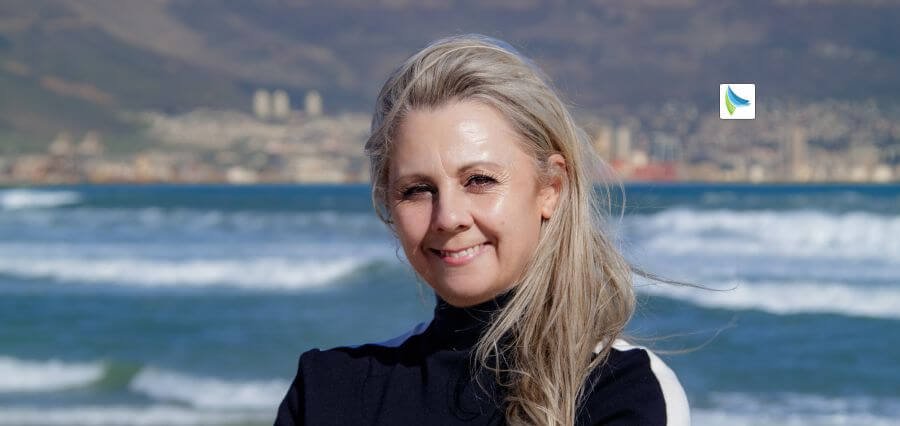
Cape Town sits at the southern tip of Africa, where one of the world’s most biodiverse ecosystems meets one of its most unequal cities. It is a place where environmental urgency and social hardship exist side by side, often in the same neighborhood, and where the distance between those who talk about sustainability and those who live with its absence can feel impossibly wide. Michelle Korevaar has spent over a decade working in that gap, not as an outsider with solutions to deliver but as someone who understood early that the gap itself was the point of entry. The communities most affected by environmental degradation were the same communities most excluded from the conversations about addressing it. That contradiction became her founding question, and the work she built from it has quietly become one of the most compelling models of community-led environmental change on the continent.
What has emerged is more than a sustainability program; it is a scalable implementation blueprint that bridges the gap between environmental ambition and community action. EcoChangeMakers demonstrates that lasting change is achieved not simply through innovation, but through widespread adoption. By equipping people with climate literacy, practical skills, and meaningful opportunities to participate, the model transforms communities from passive beneficiaries into active custodians of sustainable development. In doing so, it creates measurable environmental, social and economic outcomes that align with the UN Sustainable Development Goals, Africa’s Agenda 2063 aspirations and the Environmental, Social and Governance (ESG) priorities of businesses seeking authentic, measurable community impact.
As Founder Director of ChangeMakersHub NPC and EcoChangeMakers, Michelle has developed a methodology that refuses to separate environmental action from social equity. Plastic waste intercepted by communities becomes school furniture and public benches. Young people who had no visible pathway into the green economy become environmental leaders. Schools that once sat outside the sustainability of conversation become mobilization hubs for measurable change. The logic running through all of it is the same: environmental challenges, approached correctly, are not problems to be solved from the outside. They are opportunities to be activated from within.
A Path That Was Never Straight
Michelle’s career did not follow a single clean arc from corporate life to social entrepreneurship to environmental advocacy. She describes it honestly as a journey shaped by learning rather than by plan, moving through corporate work, then entrepreneurship, then community development, and gradually into the intersecting space where environmental action and social empowerment meet. What changed her was not a single moment but a pattern she kept observing across the communities she worked with closely: the people facing the greatest economic hardship were consistently the same people most exposed to pollution, waste, climate vulnerability, and blocked access to opportunity. The double burden was structural, not accidental.
That observation led her to a question she has never stopped asking: how can environmental action become a pathway to empowerment rather than simply a response to a problem? It shifts the design of programs away from compliance and remediation toward participation and ownership. It places community members, particularly young people, at the center of the solution rather than at the edge of it. It asks not just what needs to be cleaned up but who should be trusted to do the cleaning and what they should gain from it beyond a cleaner environment.
She reflects, “My commitment to sustainability and social equity comes from the belief that environmental solutions must include people, particularly young people, as active participants rather than passive beneficiaries.”
EcoChangeMakers: The Model in Practice
EcoChangeMakers was not launched as a finished idea. It was developed through years of direct community engagement, testing, adaptation, and listening to what communities actually needed rather than what external observers assumed they did. The result is a circular economy ecosystem that weaves together climate literacy, environmental stewardship, youth leadership development, reward systems, waste interception, and circular manufacturing into a single coherent program rooted in local realities.
The centerpiece is the EcoChangeMakers 2030 Impact Program, which activates schools as environmental mobilization hubs, generating measurable social and environmental outcomes. Plastic waste intercepted through community participation is transformed into tangible community infrastructure: school furniture, public benches, structures that communities can see and touch and use. When a learner sits on a bench that began as waste collected from their own neighborhood, the connection between environmental action and community benefit becomes concrete rather than abstract. It closes the loop in a way that a poster or a pledge never could. The program also creates sustained pathways for young people to develop leadership skills and environmental awareness while gaining meaningful exposure to the green economy before it closes off to them.
She states, “Waste should not be viewed only as a problem. It can become a resource, a learning tool, a participation mechanism, and a catalyst for positive change.”
Sustainable Leadership as She Defines It
Michelle’s definition of sustainable leadership differs from the version most frequently cited in business and policy circles. For her, it is not primarily about vision or strategy or stakeholder alignment, though she values all of those. It is about building systems that remain resilient, inclusive, and relevant in the face of change, and doing so with the courage to move beyond traditional approaches when traditional approaches are producing traditional results.
Courage appears in her thinking consistently. She argues that leaders today must be willing to challenge outdated systems and create new pathways for collaboration, even when support for those pathways is not yet fully formed. More fundamentally, she insists that sustainable leadership cannot measure success through financial outcomes alone. Social impact, environmental stewardship, and the opportunities created for future generations are equally valid and equally necessary measures of whether leadership is actually working. That position is harder to hold than it sounds in environments where financial metrics dominate every performance conversation, and the fact that she holds it consistently is itself a form of the courage she describes.
She explains, “Sustainable leadership is not about maintaining the status quo. It is about building systems that remain resilient, inclusive, and relevant in the face of change.”
The Collaboration Imperative
One of the clearest themes running through Michelle’s professional philosophy is her understanding of collaboration not as a nice-to-have but as a structural requirement for the kind of change she is trying to create. No single organization possesses all the resources, expertise, or influence needed to solve the challenges EcoChangeMakers is working on. Businesses bring scale and resources. Communities bring lived experience and local knowledge. Innovators bring creativity and new approaches. The impact of any single stakeholder working alone is systematically smaller than what becomes possible when they work together around a shared vision.
What she pushes for in practice goes beyond the transactional partnerships that characterize much of the corporate sustainability landscape, where a business provides funding, and a community organization provides a logo for the annual report. The model she advocates for, and has built EcoChangeMakers around, is one of co-creation, where communities are not recipients of support but active participants in shaping the outcomes that affect their lives. That shift from delivery to co-creation takes longer and is organizationally harder. It also produces results that hold after the program ends, which transactional partnerships rarely do.
She affirms, “The most successful initiatives are those where communities are not simply recipients of support but active participants in shaping outcomes.”
Technology, Innovation, and the Human Connection
Michelle’s view of technology in the sustainability context is shaped by the communities she works with, which keeps it grounded in a way that more purely digital conversations about sustainability often are not. Technology is a powerful enabler when it remains connected to human needs and local realities, and a distraction when it substitutes for that connection rather than strengthening it. Within EcoChangeMakers, technology supports participation tracking, environmental data collection, and impact measurement, all of which allow the team to understand what is working and improve it continuously.
But she is equally clear that some of the most transformative innovations in her field have nothing to do with digital tools. Circular economy models, community-led environmental programs, and new approaches to environmental education are all forms of innovation. Rethinking what waste is and what it can become is an innovation. Designing a program where a school becomes an environmental hub rather than a passive recipient of awareness campaigns is an innovation. The measure of any innovation, in her view, is simple and consistent.
She believes, “The most effective technology is technology that empowers people and creates opportunities for inclusion.”
Purpose-Driven Leadership in Practice
Michelle’s approach to developing leadership within communities follows a straightforward principle: people are more likely to step up when they feel genuinely connected to a meaningful purpose and can see the direct impact of their own actions. Within EcoChangeMakers, this means creating environments where young people are trusted, supported, and given real responsibility rather than carefully managed participation that keeps them at arm’s length from actual decision-making.
The program deliberately builds confidence alongside skills, because she has observed that confidence is often the missing variable. Young people who understand the problem, see the solution, and feel ownership over both tend to exceed every expectation placed on them. The environmental outcomes are real. But the leadership outcomes are what compound over time, in communities, in the green economy, and in the next generation of people who will be building sustainability programs of their own.
She notes, “Purpose-driven leadership begins when people recognize that they have the ability to influence outcomes and become part of something greater than themselves.”
The Legacy Taking Shape
When Michelle describes what gives her hope, she reaches not for statistics or program milestones but for the leadership emerging in the young people EcoChangeMakers works with. Young people who arrive without a visible pathway into the green economy and leave with confidence, skills, and sense of ownership to create their own. That transformation, repeated across enough communities over enough time, is the closest thing she has to a legacy statement, and it is a more honest one than most.
Her advice to emerging changemakers carries the same earned directness that runs through everything she says. Start with purpose but remain practical. Build solutions with communities rather than for them. Do not wait for perfect conditions. Understand that sustainability is ultimately about people and their relationship with the natural world that makes their existence possible. Technology, systems, and innovation matter, but lasting change happens when people understand the connection between themselves, the planet, and the prosperity that depends on both. The work of EcoChangeMakers, in her words, is to shine the light on positive ways to be a contributing citizen and then trust communities to walk toward it.
She advises, “If your purpose is genuine and your commitment remains strong, the impact you create may reach far beyond what you initially imagined.”