



Nations build lasting prosperity through institutions, not just resources. The quality of financial systems, governance structures and entrepreneurship ecosystems determines whether an economy can translate its potential into opportunity for the people within it. In emerging markets, this work is especially consequential. Where institutions are young, financial standards are still maturing, and investment depends heavily on trust, the professionals who bring discipline, transparency, and international expertise to local realities play a role that extends well beyond their immediate responsibilities.
Libya sits at exactly this inflection point. A country with significant resources and a generation of talented young people looking for pathways to build, invest, and contribute. What it needs are leaders willing to close the gap between international standards and local practice, one institution, one entrepreneur, and one properly governed balance sheet at a time.
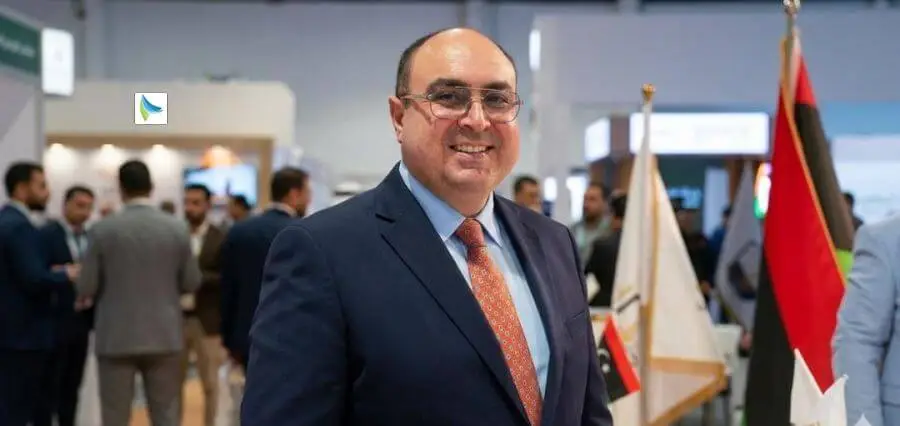
Mohamed Kurd, Chief Executive Officer of The Libyan Consultancy Group, has built his career around exactly that purpose. His path across audit, corporate finance, banking, consultancy, and public institutional leadership reflects a consistent conviction: that sound financial foundations are not simply a technical requirement. They are the starting point for everything a society wants to build.
From Finance to Institutional Development
Mohamed is a Libyan Chartered Accountant, finance executive, and banker whose career has been shaped by one conviction: “Sound finance is the foundation on which institutions, businesses, and nations are built.” He grew up in Libya and earned his Bachelor’s degree in Accounting from Garyunis University in Benghazi in 2006. His career began at PricewaterhouseCoopers in Tripoli as a Senior Associate, where he audited financial statements, tested internal controls, carried out due diligence and valuation assignments, coached audit teams, and worked on judicial cases requiring an independent professional conclusion.
He later served as Chief Accountant at Al Mansoori Specialized Engineering in Abu Dhabi and Finance Manager of Schindler Elevator Corporation in Benghazi. He spent more than six years with Sacyr Construcción in Doha, first as Accounts Manager on a USD 1.67 billion joint-venture portfolio and later as Finance Manager on a USD 0.52 billion portfolio. He also served as Financial Controller for Stichting SPARK’s UKAID-funded programme, helping establish the Benghazi Entrepreneurship Centre.
He continued learning through an M.Sc. in Accounting and Finance from the University of Western California, an MBA from Rome Business School, and an Executive Master in Marketing & Sales from SDA Bocconi School of Management. He also holds more than fifteen international professional qualifications, including ACCA, DipIFR, Certified CFO, CPFA, and ACPA. Today, he serves as General Manager of the National Entrepreneurship Council and Founder & CEO of The Libyan Consultancy Group. He previously served as Chairman of the Board of Mediterranean Bank. His family, friends, and mentors have remained central to his journey.
From Numbers to Institutional Development
Mohamed’s profession began with a fascination for the story behind financial accounts. At PwC, he learned to read those stories critically. In the Gulf, managing large construction portfolios taught him to build budgets, control cash flow, negotiate with banks, and implement IFRS-aligned processes that turned financial information into a tool for decision-making.
A question stayed with him: how could this knowledge serve Libya? He saw that many Libyan institutions and businesses needed stronger governance, reporting standards, and financial discipline to attract investment and grow sustainably. His work as a consultant to the Central Bank of Libya on the unification project led by UNSMIL and executed by Deloitte, and as a Risk and IFRS Implementation Consultant to Bank of Commerce & Development, reinforced this understanding.
This became the idea behind The Libyan Consultancy Group, founded in 2022 with offices in Tripoli and Benghazi. TLG offers financial advisory, IFRS implementation, risk management, corporate governance, due diligence, and forensic accounting services to banks, companies, and public institutions. Its purpose is to bring international standards to local realities with an understanding of the Libyan and MENA context.
The same purpose connects to his role as General Manager of the National Entrepreneurship Council since 2023. His work focuses on building an ecosystem where young Libyans can turn ideas into viable enterprises. His time as Chairman of the Board of Mediterranean Bank added responsibility for steering a financial institution at the highest level of governance.
His professional path has therefore moved across audit, advisory, corporate finance, banking, consultancy, entrepreneurship, and public leadership. Each stage has added another perspective to his understanding of how financial systems, institutions, businesses, and people are connected. His work began with numbers, but its purpose is people: “Stronger institutions, more transparent markets, and more opportunities for the next generation.”
An Appetite for Long-Term Business Value
Mohamed’s appetite for business is rooted in the belief that “Enterprise, when built on integrity and sound financial foundations, is a powerful engine of development.” He is interested in creating value, whether by turning around underperforming operations, building an institution, or helping an entrepreneur transform an idea into a sustainable company.
His Gulf experience showed him how large organisations succeed or fail through budgeting, cash management, and risk controls. Overseeing finance for projects worth more than USD 2 billion taught him how financing facilities and carefully structured subcontracting could protect millions in value.
Founding The Libyan Consultancy Group became a natural next step. As an entrepreneur, He experienced the challenges faced by clients, including winning trust in a young market, recruiting talent, and investing ahead of revenue. He sees opportunities in reforming banks, formalising family businesses, building entrepreneurship ecosystems, and connecting local companies with international partners.
His Executive Master in Marketing & Sales at SDA Bocconi reflects his belief that strong finance must be matched with the ability to grow markets and customers. He is not interested in innovation simply for its own sake. He evaluates opportunities through their ability to create sustainable value and support organisations over time.
Above all, he has a long-term appetite for business. He measures success over time, focusing on institutions and businesses that can continue thriving because they were built properly from the start.
A Passion for Strong Institutions and Young Entrepreneurs
Mohamed is driven by the desire to see Libya and the region build institutions that are transparent, resilient, and worthy of trust. His career has shown him how financial discipline changes outcomes. Credible budgets, effective controls, and honest reporting help organisations make better decisions, strengthen investor confidence, and protect livelihoods.
This is why he values IFRS, corporate governance, and risk management. To him, these are instruments of fairness and accountability that protect shareholders, depositors, employees, and citizens.
Young entrepreneurs are another major source of his passion. Since helping establish the Benghazi Entrepreneurship Centre in 2013 and now leading the National Entrepreneurship Council, he has met young Libyans with ideas and determination. He believes they often need access to finance, mentorship, markets, and practical business skills. Opening those doors and seeing an idea become a company that creates jobs gives him deep satisfaction.
Learning is another part of his passion. His more than fifteen professional qualifications and three master’s-level programmes reflect his belief that continued study makes him more useful to the people and institutions he serves. His professional development has covered accounting, finance, IFRS, forensic accounting, financial modelling, risk management, and marketing and sales.
Ultimately, he wants to leave stronger institutions, a generation of capable professionals and entrepreneurs, and proof that world-class standards can be achieved at home.
Turning a Crisis into Professional Growth
COVID-19 profoundly affected Mohamed’s profession while he was Finance Manager for Sacyr Construcción’s joint venture in Doha, overseeing a portfolio of around USD 0.52 billion. He responded by increasing cash-flow monitoring, re-forecasting budgets, prioritising critical payments, working with banks on facility terms, reviewing contracts and risks, strengthening SAP reporting and control, and using time previously spent travelling to earn CPFA, CFC, CFM, Diploma in IFRS, Certified Financial Modeler, and Certified CFO qualifications. The experience taught him that crises reward preparation, transparency, and adaptability.
Strengths, Weaknesses, and Continuous Learning
His greatest strength is analytical discipline. Mohamed’s PwC background trained him to look beyond numbers, question assumptions, and identify risks before they become problems. More than fifteen years across accounting, corporate finance, banking, and governance have strengthened that ability.
His breadth of experience is another strength. He has worked in audit, advisory, construction, industrial services, development programmes, central banking, commercial banking, consultancy, and entrepreneurship across Libya, the UAE, and Qatar. This allows him to understand the viewpoints of auditors, CFOs, regulators, investors, and entrepreneurs.
He also values lifelong learning, integrity, and relationships. He considers trust the true currency of finance and seeks to build relationships through transparency and reliability.
He recognises two weaknesses that became learning grounds. Earlier in his career, he took on too much himself because he wanted every detail to be perfect. He learned that “Delegation is not a loss of control but a multiplication of impact.” His appetite for learning and new opportunities can also lead to too many commitments, teaching him the discipline of saying no and focusing energy where it creates the most value.
For him, recognising weaknesses is part of professional development. Rather than treating them as fixed limitations, he sees them as areas that require greater discipline, focus, and awareness. Knowing when to delegate and when to decline an opportunity allows him to protect the quality of his work while giving capable people the opportunity to contribute.
Achievements That Define the Journey
Mohamed served as Chairman of the Board of Directors of Mediterranean Bank from August 2022 to February 2024 and has served as General Manager of the National Entrepreneurship Council since 2023. He founded The Libyan Consultancy Group in 2022 and contributed to the Central Bank of Libya’s unification project led by UNSMIL and executed by Deloitte.
His earlier achievements include serving as Finance Manager of Schindler Elevator Corporation in Libya, managing finance for Sacyr Construcción joint ventures in Qatar with combined portfolios exceeding USD 2 billion, and helping establish the Benghazi Entrepreneurship Centre under a UKAID-funded programme with Stichting SPARK.
Academically, he holds a Bachelor’s in Accounting, an M.Sc. in Accounting and Finance, an MBA, and an Executive Master in Marketing & Sales from SDA Bocconi School of Management. He holds more than fifteen professional qualifications, including ACCA, DipIFR, Certified CFO, CFM, CPFA, CFC, AFA, AIA, CPAA, and ACPA.
His recognitions include Fellowship of the Arab Certified Public Accountants in Jordan, Fellowship of the Arab Chartered Accountants Society in Egypt, Honorary Membership of the Qatar Association of Certified Public Accountants, and Chartered Accountant status with the Libyan Accountants & Auditors Syndicate.
Balancing Leadership and Personal Life
For Mohamed, balance is a discipline rather than a fixed state. Leading a national council, running a consultancy group, and until recently chairing a bank’s board creates constant demands, so he relies on clear priorities, sound planning, and regular review.
He identifies the decisions and relationships that will move his organisations forward and delegates remaining tasks to capable teams. He believes strong teams create space for personal life because a leader who cannot delegate eventually becomes the bottleneck of both the organisation and his own wellbeing.
Family is his foundation, and time with them is scheduled and respected. Having spent many years working in the UAE and Qatar away from home, he understands the importance of being fully present with the people he loves.
Continuous learning also gives him renewal. Completing an MBA in Rome, a Master’s in the United States, and an Executive Master at SDA Bocconi in Milan alongside a demanding career required careful time management, but each programme refreshed his perspective.
Resilience helps him handle economic uncertainty and institutional transition in Libya. He relies on faith, reflection, and trusted friends and mentors to maintain perspective. When a problem appears overwhelming, he approaches it like a complex financial case by analysing facts, assessing risks, considering options, and acting decisively.
Balance, for him, does not mean giving every responsibility equal time every day. There are seasons when professional responsibilities demand more attention and others when family must come first. What matters is recognising which season he is in and making those choices consciously rather than allowing circumstances to make them by default.
Leading With Knowledge and Integrity
Mohamed advises aspiring leaders to master their craft before seeking to lead others. Leadership depends on credibility, which comes from competence, education, professional qualifications, and practical experience.
He encourages continuous learning and believes leaders should seek new knowledge, industries, and countries. His own journey across Tripoli, Abu Dhabi, and Doha showed him that every environment can teach lessons that cannot be learned elsewhere.
Integrity is equally important. “In finance, reputation can take years to build and moments to lose.” Transparency, commitment, and making the right decision even when it is not easy are central to earning trust.
He also advises leaders to build teams rather than dependence. Meaningful responsibility, mentoring, and recognition help develop other leaders and strengthen an organisation.
Challenges should be embraced rather than avoided. Economic instability, a pandemic, and institutional transition can test leadership, but they also provide opportunities to demonstrate calm and analytical decision-making.
For him, “Leadership serves a purpose larger than personal success: stronger institutions, a healthier economy, opportunities for the next generation.”
Knowledge, Integrity, and Resilience
Mohamed believes “Growth is not an event but a discipline.” Continuous learning, integrity, and solid foundations create lasting progress. He encourages people to surround themselves with those who challenge them, invest in those who follow them, and keep moving forward despite uncertainty.
His mantra is simple: Knowledge, Integrity, Resilience. He believes mastering these three qualities makes success not a destination to chase, but a result to create.
He believes deeply in Libya and its young people. The country has extraordinary resources, but he considers human talent its greatest asset. By combining that talent with international standards, transparent institutions, finance, and mentorship, he believes Libya can become a hub for entrepreneurship and investment in the region.
He invites professionals in the diaspora, international partners, and young Libyans to contribute to this journey. His vision is for an economy that is diversified, resilient, and full of opportunity for generations to come.
For Mohamed Kurd, finance has never been only about numbers. It has been a means of building trust, strengthening institutions, supporting entrepreneurs, and creating opportunities. His journey reflects a commitment to knowledge, integrity, resilience, and the belief that lasting institutions are built through disciplined effort over time.