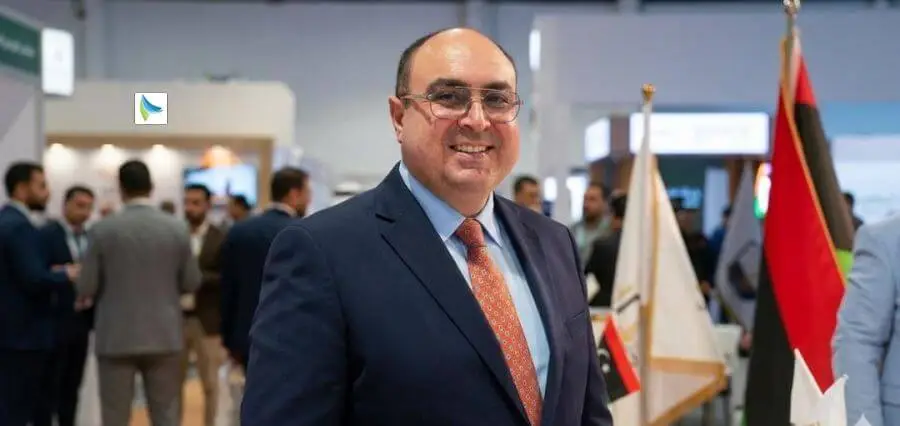





The best retail leaders don’t just set direction from the top. They stay close to where strategy actually meets the customer, on the shop floor, in the aisle, at the checkout, so plans hold up under real conditions instead of falling apart on the way there. That kind of closeness is often what separates businesses that merely perform from those that last. Zied Hammami has built his career on this principle. As Executive Director of Sharjah Coop, he brings more than 25 years of experience across retail, commercial management, and transformation. Throughout, he’s built his career on commercial discipline, operational reality, and developing the people who make execution possible.
Leading Through People and Purpose
With more than 25 years of experience across retail, commercial management, operations, and transformation, Zied Hammami has built his leadership approach around commercial discipline, operational reality, people development, and social responsibility. His professional journey began in Tunisia, where he developed an understanding of customer behavior, merchandising, and commercial discipline.
His career trajectory across Carrefour Tunisia, France, and subsequently Carrefour UAE under Majid Al Futtaim provided him with extensive exposure to sophisticated international retail ecosystems, institutional operating standards, category management methodologies, strategic sourcing frameworks, commercial optimization, and large-scale operational execution.
His transition to Sharjah Coop further broadened the strategic scope of his experience, positioning him within a distinctive cooperative retail model where commercial performance, stakeholder value, operational sustainability, and community-oriented objectives must be carefully integrated. This progression strengthened his ability to navigate complex retail environments, reconcile profitability with broader organizational purpose, and translate strategic priorities into commercially viable and operationally executable initiatives.
The experiences that shaped him most were often close to the reality of the business. Store openings, transformations, difficult trading periods, customer complaints, supplier negotiations, and teams working under pressure all became part of his leadership experience.
As he puts it, “‘The shop floor reveals everything.’ It shows whether strategy is understood, whether standards are real, and whether the customer promise is being delivered.” This combination of commercial discipline, operational reality, people leadership, and social responsibility defines his approach today.
Connecting Strategy with Execution
For Zied, strategy, operations, customer expectations, and growth are not separate priorities. They are parts of one connected business model.
Strategy establishes where the business wants to go, which customers and shopping missions matter most, how it will differentiate itself, and which capabilities it needs to build. Yet strategy creates value only when it reaches execution. His view is clear: “Strategy can fail between head office and Aisle 7.”
For every major decision, he considers whether it creates real customer value, whether it can be executed consistently at scale, whether it strengthens the economics of the business rather than adding complexity, whether people, systems, and processes can support it, and whether it aligns with responsibility to shareholders, employees, and the community.
He believes, “Growth remains important, but growth alone does not define success. The right growth should make the business stronger, more relevant, and more resilient.” It should improve productivity and customer experience while strengthening organizational capability and creating the capacity to reinvest and prepare for what comes next.
Understanding the Changing Retail Customer
Retail has changed as customers move between stores, apps, delivery services, loyalty programs, social platforms, and customer service. For Zied, omnichannel retail is not about operating several channels independently. It is about making the entire customer journey feel connected.
Artificial intelligence is also influencing forecasting, inventory, pricing, personalization, customer engagement, and decision-making. He sees the next stage involving wider use of generative and agentic AI working alongside employees, systems, and customers. These technologies can simplify product discovery, answer questions instantly, build shopping lists, recommend alternatives, support meal planning, and make shopping faster and easier.
Generational change is also influencing retail. Gen Z is already reshaping discovery, comparison, and loyalty, while Gen Alpha is expected to raise expectations around immediacy, interactivity, personalization, and authenticity.
Yet he believes the foundations of retail will remain the same: value, quality, freshness, availability, convenience, and trust. The physical store will continue to play an essential role, but increasingly as a combination of shopping, fulfillment, experience, technology, and community.
Making Innovation Matter to Customers
Zied believes innovation only matters when customers can feel the difference. In grocery retail, customers repeatedly judge a business on fundamentals such as availability, price perception, convenience, freshness, and the overall experience. Technology and process improvements therefore need to strengthen these outcomes.
His approach begins with the customer and works backward. The questions are straightforward: What friction is being removed? What decision is being improved? What time is being given back?
A technically impressive solution that creates confusion in the store cannot be considered successful innovation. Trust, in his view, is built through consistency. “Customers do not buy our effort; they buy our consistency.”
Customers may never see the complexity behind forecasting, replenishment, or systems integration. They see whether the product is available, whether the price is right, and whether the experience works. This is why he believes in piloting, measuring, learning, and scaling. Innovation must translate into visible customer value and stronger operating discipline.
Building People to Build the Business
One of Zied’s strongest beliefs is that building people builds the business. Retail remains a people business even as technology becomes more important.
Professional development cannot depend only on classrooms. Coaching, exposure, responsibility, cross-functional projects, and real business challenges can help people develop practical capabilities. Initiatives such as Coop School and practical learning and knowledge exchange reflect this focus on development.
According to him, “Empowerment also needs structure. Empowerment without clarity can create confusion, while accountability without empowerment can create bureaucracy.” Strong teams need clear standards, decision rights, measurable objectives, and the confidence to act.
Culture becomes visible through behavior and results. Better service, stronger availability, fewer repeated issues, higher productivity, and honest collaboration all reflect the strength of an organization’s culture.
The role of leadership is therefore not to create dependence. It is to develop managers who can think, make decisions, challenge ideas constructively, and develop others.
Leading Through Transformation
One of the most demanding periods of Zied’s career involved integrating and transforming major retail operations while the business remained fully operational. Retail has no pause button. Stores must remain open, shelves must remain filled, teams must continue working, and customers must receive the same standards while systems, processes, and responsibilities are changing.
His response was to simplify priorities. The customer had to remain protected, basic operations had to remain stable, ownership had to be clear, and issues had to be resolved quickly through a strong operating rhythm. Cross-functional alignment became essential. Operations, commercial, sourcing, supply chain, finance, technology, and people functions all had to work together.
The experience reinforced a key lesson for him. Transformations often struggle not because organizations lack ability, but because they lack clarity, coordination, and disciplined follow-through.
Resilience, in this context, means absorbing change without losing standards. Leadership visibility, calmness, and direction help ensure that customers do not experience the complexity taking place behind the scenes.
A Value-First Approach to Technology
Zied takes a value-first approach to technology. Instead of asking where artificial intelligence can be used, the starting question is where greater customer value or operational improvement can be created.
Once the opportunity is clear, AI, analytics, and automation can improve speed, decision quality, productivity, consistency, and convenience. Potential applications include forecasting, inventory management, space optimization, personalization, workforce planning, pricing, and real-time operational insight.
However, technology works best when supported by strong processes and reliable data. His guiding principle is simple: simplify first, digitise second, automate third. Technology should therefore be tested, measured for operational impact, and scaled only when the value is clear.
As personalization becomes more advanced, trust remains equally important. Technology should help businesses understand and serve customers better without reducing them to data points.
Building a Responsible Business
At Sharjah Coop, Zied views sustainability through three connected dimensions: economic strength, social and community value, and environmental responsibility.
Economic sustainability means maintaining a financially strong and productive cooperative that can reinvest, remain competitive, provide customer value, and deliver sustainable shareholder returns.
The social dimension reflects the cooperative’s broader purpose. Responsible retail can support community wellbeing, develop people, maintain access to essential products, and strengthen local relationships. Environmental responsibility includes reducing food and operational waste, improving forecasting and inventory accuracy, and using energy and other resources more efficiently.
For him, these areas should influence everyday decisions and performance measures rather than exist as separate presentations or initiatives.
Creating a Stronger Organization
The achievements that matter most to Zied are those that strengthen the organization as a whole rather than a single department or financial result. He recently gained the Certified Chair™ credential through the Certified Chair™ Executive Program, a formal approach to executive advisory education designed for professionals at the top of their fields.
According to him, Retail transformation cannot happen in isolation. Operations, commercial, sourcing, marketing, supply chain, technology, and support functions need to work as one interconnected system, from teams on the shop floor to management at head office.
A major focus for him has been aligning strategic vision vertically and horizontally. People at every level need to understand where the organization is going, why it matters, and what their role is in delivering it.
Store transformations, new openings, stronger fresh operations, customer experience improvements, digitalization, and disciplined performance management become more effective when connected through one roadmap rather than treated as separate projects.
Competition and customer expectations continue to evolve, while cooperative businesses must combine commercial discipline with sustainable returns and a wider social purpose.
For him, the lasting mark of leadership is an organization with stronger people, clearer decisions, and the ability to renew itself.
Preparing the Next Generation of Retail Leaders
Zied believes future retail leaders in the UAE will need to connect capabilities that were once managed separately. Strategy and execution, technology and humanity, commercial performance and community responsibility, data and judgment will increasingly need to work together.
He also believes future leaders must think beyond individual functions and develop into business-model leaders who understand the wider organization.
Customer expectations can change faster than traditional planning cycles. Future customers will increasingly expect experiences that are intuitive, personalized, immediate, and connected. Leaders must therefore ask not only what customers want today, but whether the organization is designed for the customer of tomorrow.
His advice remains grounded in business reality. Leaders should stay close to the truth of the business by visiting stores and warehouses and listening to customers, employees, and suppliers. Data can explain what is happening, but proximity can explain what dashboards cannot.
Clear choices matter. So does building people who are stronger and more capable. Curiosity, the willingness to challenge assumptions, and the ability to turn strategy into action remain essential.
According to him, “Retail will continue to depend on execution, but its future relevance will depend on how effectively the entire ecosystem works together.” People, stores, technology, data, partners, and communities all have a role in creating that future.
For Zied Hammami, leadership is ultimately about connecting these elements with purpose. By staying close to customers, building capable people, maintaining operational discipline, and using technology where it creates real value, he continues to approach retail as a business that must keep learning, adapting, and delivering.