



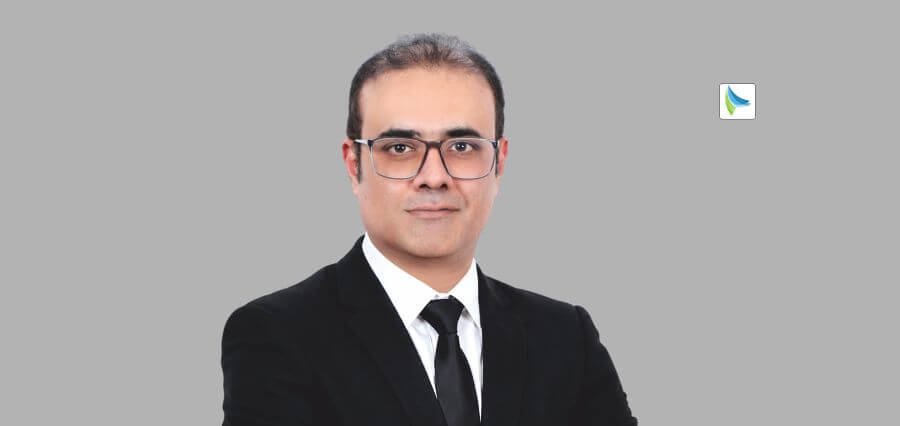
The room had already spent millions. The dashboards were live, the AI models were in production, and the data platform behind them had been built to specification. Atta Ullah Shah sat in the executive meeting and watched a CFO ask the only question that mattered: “How has this actually changed the business?” No one in the room could answer it cleanly. The technology had done everything it was asked to do. What it could not do was tell anyone what to do differently on Monday morning. That silence, more than any slide deck or business case, is the moment Atta Ullah traces his thinking back to. Technology alone does not create transformation. Leadership and decision-making do.
It is not a moment he encountered once. Over more than fifteen years leading enterprise data, AI, and digital transformation initiatives across government and private sector organizations, working directly with CEOs, CIOs, CFOs, and CISOs, he watched the same scene repeat itself in different rooms, with different technology, and the same gap at the center of it. Enormous investment. Sophisticated platforms. Professionals who could operate the tools but could not connect any of it to a decision the business actually needed to make. That accumulated experience, sitting across the table from executive leadership again and again, is what eventually led him to found DataMinds.
The Realization Behind DataMinds
Atta Ullah’s path to founding DataMinds was not a sudden pivot away from a comfortable career. It was the product of years of watching the same pattern from different angles, in different organizations, until it became impossible to ignore. He sat in the rooms where large technology investments were justified, approved, and later delivered. He watched, consistently, what happened once delivery was complete and the next evaluation cycle began: the technology worked, but the outcomes were harder to find.
“For years, technical expertise built careers,” he reflects. “AI is changing that equation. Execution is becoming automated, but judgment is becoming the most valuable leadership capability.” That conviction did not arrive fully formed. It came from repeatedly watching technically excellent teams struggle in front of executive leadership, not because their architecture was wrong, but because they could not explain why it mattered to the business, or when a technically correct answer was still the wrong call for that organization at that moment. What surprised him most, over years of this, was how rarely the failure was technical. It was almost always a failure of judgment, framing, or timing, and no certification program was teaching anyone how to close that gap.
That is the specific gap DataMinds was built to close. Atta Ullah had, by that point, found excellent technical training everywhere he looked: cloud certifications, AI bootcamps, leadership programs, each one credible on its own terms. What he could not find anywhere was a single program that taught enterprise decision-making, boardroom communication, architecture trade-offs, governance, and strategic thinking as one integrated discipline, rather than as separate electives a professional was left to stitch together alone. DataMinds exists because that program did not, and because he had spent too many years watching capable people learn that lesson the hard way, in front of an executive audience, when the cost of not knowing it was highest.
He reflects, “Technology should never be the destination. It should be the enabler. Great leadership is about simplifying complexity, empowering people with strategic thinking, and ensuring every technology investment delivers measurable value.”
What DataMinds Actually Teaches
The curriculum at DataMinds is deliberately unusual. It combines enterprise architecture, business strategy, governance, AI, leadership, and decision-making frameworks into a single integrated learning journey, because Atta Ullah operates from the conviction that those subjects are not separate disciplines to be studied in sequence. They are different facets of one core competency: the ability to understand a business problem deeply enough to know whether AI is the right response to it, and if so, how to implement that response in a way that creates lasting value rather than technical output nobody quite knows how to use.
The shift he watches happen in participants is specific enough to track. Professionals who complete the DataMinds journey stop asking which technology to use first, and start with the business problem itself: what decision needs to improve, who the relevant stakeholders are, what the governance and architecture implications look like, and what success means in terms the business can verify. Professionals from organizations across banking, government, and technology sectors have gone through that shift, and the pattern he hears back most often is the same one: executive leadership starts treating them differently, not because their technical output changed, but because their judgment became visible.
He explains, “AI will not replace data professionals. Data professionals who effectively leverage AI will outperform those who do not. The future belongs to the combination of human expertise and artificial intelligence.”
The Data Foundation Argument
One of the more deliberately contrarian positions Atta Ullah takes in public is his insistence on slowing down the AI adoption conversation to address data foundations first, at precisely the moment when market excitement about Generative AI, Large Language Models, and Agentic AI is running at its highest pitch. He is not dismissive of those technologies. He is specific about a sequencing error he has watched organizations repeat at real cost: investing in sophisticated AI applications before establishing the trusted data, governance structures, clear ownership, and architecture those applications need to produce reliable outputs.
The reason the error is costly is that AI does not neutralize weaknesses in the data environment it operates within. It amplifies them. Poor data quality fed into a sophisticated model produces sophisticated-looking poor outputs that are harder to challenge than the obvious errors a simpler system would surface. Atta Ullah has made this argument in rooms where the audience wanted to talk about model selection and prompt engineering instead, and the organizations that listened to it earliest are, in his experience presenting architecture recommendations to executive leadership, the ones that built the most durable AI capabilities as a result.
He states, “Everyone wants AI. Few realize that AI is only as strong as the data foundation beneath it.”
Natural Intelligence and Artificial Intelligence
The phrase Atta Ullah has made most distinctly his own is simple and precise: artificial intelligence needs natural intelligence. It is not a defensive argument for the continued relevance of human professionals in an AI era. It is a description of where he has seen enterprise value actually get created, in governance discussions and platform strategy decisions where AI processes information at a scale no human can match, but cannot supply the business context that comes from navigating an organization’s real priorities and constraints.
Understanding why a technically optimal recommendation is organizationally premature requires judgment built from experience. Building the executive trust that moves a transformation initiative from proposal to funded program to delivered outcome requires relationship intelligence that remains a distinctly human capability. Atta Ullah’s educational philosophy is built entirely around developing that capability at the highest level, because it is what separates professionals who lead AI-enabled transformations from those who simply implement them.
He affirms, “Artificial Intelligence needs Natural Intelligence. AI can accelerate execution, but it cannot replace human judgment, business context, ethical decision-making, creativity, or leadership.”
Building Teams That Think Differently
The approach Atta Ullah takes to building high-performing teams follows the same logic he applies to DataMinds. Future-ready talent is not produced by accumulating exposure to more technologies. It is produced by developing professionals who ask better questions, because the quality of questions determines the quality of decisions, and decision quality is the actual unit of value leadership delivers in complex, fast-changing environments.
The culture he cultivates is one where continuous learning is embedded into how work gets done, curiosity is an expectation rather than a personality trait, and healthy disagreement is treated as evidence of engagement rather than friction to manage. He encourages every professional around him to challenge their own assumptions with the same rigor they apply to external ideas. Those are the habits that make people genuinely indispensable to organizations facing uncertainty at speed.
The Legacy Taking Shape
When Atta Ullah describes the accomplishment that means most to him, the answer is not a technology implementation or a revenue milestone. It is a conversation, repeated often enough to have become recognizable: a professional who went through DataMinds describing how their relationship to every technology question changed permanently, how they now start from the business problem without reminding themselves to, and how they have become the person their organization reaches for when the hard questions about strategy and technology intersect. That is the transformation he measures his work against.
Technology will keep evolving. AI will keep becoming more capable. But organizations will always need leaders who can make sound decisions under uncertainty, connect technology to business value, and lead transformation with purpose. That, more than any platform or curriculum, is the mission Atta Ullah built DataMinds to serve: developing the enterprise leaders who will carry that judgment forward.
He envisions, “Technology may evolve every year, but the ability to think strategically, lead with purpose, and create value will always remain timeless. That is the legacy I hope to leave behind.”