






Staying Relevant as Markets Evolve
Continuous Learning The market operates through continuous movement because technological progress causes changes in customer needs and new competitors emerge while business models shift. The achievements that brought success in the past now fail to sustain victory in the present. The organization needs to fulfill its relevant purpose because relevance serves as an objective which will always remain out of reach. Organizations and leaders maintain their market edge through continuous learning instead of achieving complete knowledge. Organizations need continuous learning because it serves as their essential resource for survival. The process helps organizations develop their abilities to anticipate upcoming changes which enables them to face new challenges with confidence instead of facing operational disruptions. Why Learning is Now a Strategic Imperative Historical expertise maintained its value for extended periods. Knowledge cycles currently experience shorter durations than before. Skills that were cutting-edge a few years ago can quickly become baseline expectations. The market rewards continuous capability development while it punishes those who depend on their previous achievements. Stagnation develops when people stop learning new information. The process enables leaders and teams to learn about upcoming developments together with new technologies and customer behavior patterns and changes in regulations. The processallows organizations to test their basic beliefs before they create different types of danger. Learning has become a requirement for development. The process supports operational activities. From Training Events to Learning Culture Organizations view training as their method to acquire knowledge. People need training to develop skills, but training does not enable them to maintain ongoing skills development. Organizations need to adopt continuous learning through cultural transformation which requires education to shift from temporary training sessions to permanent development of employee skills. A learning culture promotes curiosity as its main value. Organizations need to create an environment where people can ask questions. The organization provides resources for employees to test their ideas. The organization maintains a practice which employees follow to share their knowledge with others. Employees need to develop their skills because it forms part of their main job responsibilities instead of being treated as additional work. Leaders serve as the main authority who establishes this organizational atmosphere. Teams will follow their leaders when those leaders practice learning through feedback collection and gap recognition and knowledge acquisition. Learning Linked to Strategy, Not Abstract Growth The business direction defines the purpose of learning which becomes more effective when both elements work together. People find random skill development to be interesting yet it fails to create significant results. Organizations should develop their future competitive capabilities through strategic learning efforts which establish essential company competencies. Digital transformation needs digital fluency development through learning programs which serve as essential requirements. Learning programs must teach service skills and data interpretation abilities because they are essential for improving customer experience. Learning programs should create methods that develop new ideas through creative problem-solving and experiential learning because innovation serves as the core element. Organizations achieve their strategic goals through learning programs which create relevant content and provide measurable benefits. Feedback as a Learning Engine Organizations learn through both formal education and feedback mechanisms. The organization receives immediate operational insights through customer feedback together with performance metrics and project assessments and market research data. The process of high-performing organizations begins with feedback collection which they transform into operational enhancements. The organization conducts outcome assessments while identifying performance deficiencies and implementing rapid learning from prior experiences. The process of continuous feedback collection transforms practical experiences into organizational knowledge which improves operational performance. Practical experience provides stronger learning outcomes compared to theoretical knowledge. Encouraging Safe Experimentation Organizations need to test their ideas through experimental work because it forms the base for their innovative activities and their ability to adjust to changing circumstances. Employees show resistance against testing new methods because they fear negative consequences which result from their failed attempts. The establishment of a continuous learning environment enables employees to test their ideas while maintaining full safety protection of their mental well-being. The organization requires its personnel to maintain standards at their highest possible level. The organization requires controlled trials together with learning cycles to achieve its future development objectives. Leaders must differentiate between intelligent risk-taking and careless behavior. People who work at their organization become better performers when they have permission to explore new ideas and learn from their experiences. Leadership Responsibility in Continuous Learning Leaders need to establish environments which enable their teams to acquire new skills. Leaders need to allocate time for development while establishing recognition systems to acknowledge learning activities and they need to set performance standards which include learning objectives. Leaders need to show humility because their expertise does not prevent their need for continuous development. The organization pursues its mission when leadership establishes learning as the fundamental work duty of their position. Conclusion The organization needs to maintain learning activities because it enables them to handle market changes and technological advancements and shifting customer needs while maintaining operational efficiency. Through their learning culture development leaders establish organizations which develop at the same speed as their external environment changes. In a changing world, the greatest competitive advantage is not what an organization knows today. The organization needs to develop learning capabilities which enable it to acquire new knowledge at a faster rate than its competitors. Read Also : Aligning Operations with Market Needs

Aligning Operations with Market Needs
Customer-Centric Leadership Numerous businesses assert their dedication to customer service. Only a small number of companies maintain true customer-oriented business practices. The difference lies in alignment. Customer focus exists at the messaging level through brand positioning, marketing language, and service slogans. Customer-centric leadership determines decision-making processes and operational frameworks and company-wide priority establishment. Customer-centric leadership does not exist to satisfy customers in all circumstances. The organization needs to establish systematic alignment between its strategic objectives and operational processes and performance measurement standards with actual market demands. The process transforms customer insights into standardized operational practices. Why Customer-Centricity Is a Leadership Responsibility The operations of a business create the customer experience which extends beyond the interactions with employees who work directly with customers. Internal systems create all delivery timelines along with product reliability and service responsiveness and pricing structure and issue resolution capabilities. The customer experience deteriorates because operational friction increases when leadership decisions fail to represent actual customer situations. Customer-centricity requires more than customer service and marketing to handle its responsibilities. Leaders must ensure that customer impact is considered in product development, supply chain design, technology investment, policy decisions, and performance metrics. The brand promise weakens when operations fail to meet customer requirements. A customer-centric leadership approach enables organizations to make decisions that create value for customers. Understanding Customer Needs Beyond Surveys Customer insights about their needs create a foundation that organizations use to build successful business operations. Organizations need to understand customer behavior together with their feedback, which shows their essential needs and shows which aspects of their service they find most challenging. This process requires organizations to combine different types of data such as customer feedback and their usage patterns together with complaint trends and support interactions and market signals. Leaders must treat this information as strategic input, not as post-transaction reporting. Organizations that maintain systematic listening methods will experience faster adaptation processes while reducing the differences between what customers expect and what organizations deliver. Translating Customer Insight into Operational Priorities The organization lacks alignment because it depends on understanding to achieve its goals. Leaders must define operational priorities through their understanding of customer requirements. Businesses need to minimize internal delays and handoffs when their customers need fast delivery. The organization needs to establish more stringent quality requirements when reliability becomes essential. Product design and communication need to become more understandable when simplicity holds value. Organizations need to establish policies that focus on transparent and fair practices when trust becomes essential. Customer-centric leaders connect customer expectations to internal standards. The system enables operational processes to achieve both efficiency and customer value delivery. Aligning Metrics with Customer Outcomes Organizations develop their operational patterns based on their selected measurement systems. Customer experience will decline when organizations use performance metrics that measure only cost control and output volume and internal efficiency. The teams will achieve their targets while customers face extended waiting times and experience customer frustration. Customer-centric leadership requires organizations to measure their internal efficiency and their customer results. The company needs to track various metrics which include satisfaction scores and retention rates and service resolution time and complaint trends and usage adoption. Customer impact measurement leads teams to change their work patterns. Market reality becomes the main guide for decision-making processes. Breaking Down Silos to Serve the Customer The organization presents itself to customers as a single entity while its internal operations separate work into different functional areas. The first statement explains that marketing and operations deliver different results, while the second statement shows that service handles problems at a slow pace. The leaders of the organization establish operational processes that match customer requirements through improved coordination between different business departments. The combination of shared objectives with integrated operational systems and matching incentive programs enables teams to achieve customer outcomes that require their combined efforts instead of pursuing separate departmental goals. The process of integration establishes smoother operations between systems while delivering uniform results throughout the organization. Empowering Frontline Teams with Authority Customer-centricity needs businesses to respond to customer needs. Frontline employees see customer problems first, yet they cannot solve those problems without permission from higher authorities. The process of escalation creates delays in problem-solving, which results in negative impacts to user experience. Organizations achieve operational unity when their leaders give decision-making power to frontline workers through established operational frameworks. The customer trust relationship improves when employees solve problems faster after receiving permission to act in the customer’s best interest while meeting established operational standards. Conclusion Customer-centric leadership requires organizations to adjust their internal processes in order to meet customer expectations. The organization needs to establish its strategy and operations along with its performance metrics and organizational culture to deliver continuous value to customers. Organizations that leaders establish through their customer-focused decision-making processes will achieve faster adaptability and better competitive performance and enhanced brand loyalty. Customer-centricity exists as an essential business principle that goes beyond marketing practices. The operational commitment exists as an ongoing business requirement, which leaders must fulfill through their daily decisions. Read Also : Reputation Management Strategy

Building with Purpose: Kavita Doshi on Redefining Excellence and Breaking Barriers
Impactful leadership is rarely born from certainty. It is shaped in motion — through pressure, reflection, and the courage to evolve in real time especially when times are tough. For Kavita Doshi, the journey has been deliberate and deeply formative. Her early years were marked by intensity and high self-expectation, driven by a desire to build with purpose and precision. Over time, experience has brought perspective — and with it, a deep commitment to reflection, learning, and growth. Kavita grew up in an entrepreneurial family where discipline, responsibility, and hard work were deeply ingrained from an early age. Business was not presented as aspiration alone, but as stewardship — a responsibility to endure through both favourable and difficult cycles. “Business thinking was part of my DNA,” she reflects. “It was about commitment, endurance, and taking ownership, especially when conditions were challenging.” That early grounding shaped her work ethic and instilled a respect for long-term responsibility over short-term reward — a principle that continues to guide how she builds, leads, and invests today. Kavita studied Law at the University of Cambridge in the UK, where she developed a strong foundation in structured thinking, intellectual curiosity, and rigorous discipline. Although she did not pursue a traditional legal career, the training has been formative — shaping how she approaches governance, risk, negotiation, and complexity today. Kavita’s professional journey has evolved across management consultancy, hospitality, commercial, and residential development, spanning the UK and Kenya. Through London Town Group of Companies, and later as the founder of Innova Properties in Kenya, “I discovered my entrepreneurial spirit, gravitating towards environments that champion vision, resilience, and precision in execution.” Kavita says she has never been interested in shortcuts — only in focusing on substance over speed and lasting value over quick wins. “I do not see leadership as something one arrives at — I am very much still learning, still refining, and embracing the next level of the journey with curiosity and humility.” Impact is an integral part of Kavita’s work, using her platform to champion the advancement of women in construction and ensuring that women have a rightful place in key decision-making roles at every level in the built environment. This year marks Innova Properties’ launch of Kenya’s First Women’s and Maternity PPE — a significant step forward for the industry. Kavita has also developed a first-of-its-kind Inclusive Site Checklist, giving developers a clear, practical framework for implementing safe and inclusive sites in practice, not just in policy. Through tangible initiatives at Innova Properties, her board role at WIRE Kenya and her own inclusivity platform HerVoice creating pathways for women in real estate, Kavita strives to shift the narrative and deliver real, on the ground change to foster a more equitable industry Moving to philanthropy, in 2016 Kavita founded Charity Connect focusing on transparency, trust and deep genuine impact as well as long term perspectives in its work. The foundation seeks to guarantee where every donation goes through complete accountability and reporting, and no administration fee being taken from donors. Today, she believes that progress comes not from having all the answers, but from remaining open, thoughtful, and willing to evolve, and creating an environment where you continually challenge yourself to do better and question the status quo. Elevating Benchmarks Innova Properties was founded with a clear and deliberate purpose: to introduce an elevated, globally benchmarked approach to quality, reliability, and purpose-led standards in the Kenyan real estate market. Kavita’s background in hospitality and property ownership through London Town Group exposed her to mature markets where global standards — in construction quality, governance, and delivery discipline — are expected. “When I began developing in Kenya, I saw both an opportunity and a responsibility to bring those standards into a local context, while remaining sensitive to place, people, and market realities.” Innova Properties was built on a commitment to on-time construction, thoughtful and innovative design, and enduring quality. From the outset, the intention was not rapid scale, but credibility — built one project at a time. “Quality is not superficial; it is structural, operational, and cultural.” Over time, the business has evolved beyond development alone. It has become a platform to demonstrate that commercial success can coexist with inclusivity, ethical site practices, and a genuine investment in people. Initiatives around safer and more inclusive construction environments, and sustainable building practices grew organically from this belief. At its core, Innova Properties reflects how Kavita believes modern businesses should operate — grounded in values, disciplined in execution, and committed to innovation and excellence. Driven to Evolve Kavita’s appetite for business is shaped by challenge, responsibility, and ambition. She is driven to evolve — to push boundaries and build work of lasting value with intent and discipline. “For me, success is not defined by speed or scale, but by the quality and integrity of what is created over time.” She is motivated by building with vision and innovation, and by the courage it takes to bring new thinking into established industries. “Progress, in my experience, comes from a willingness to test ideas, to learn through complexity, and to refine continuously.” Transformation is rarely linear, and she strives to lead with clarity and conviction, even when the path is unclear and fraught with complexity. In Kavita’s words, “the privilege to lead and author a new status quo is centred on insight, growth, and most importantly lifting others as you climb. It is about open-book thinking and cultivating environments where people are empowered to grow, contribute, and excel. I am committed to building cultures of excellence grounded in a growth mindset — where high standards coexist with curiosity, learning, and respect.” This philosophy carries particular weight in property development, a sector where women remain underrepresented. “I feel a strong responsibility to open pathways, break barriers, and challenge norms — not only through representation, but by materially shaping systems and cultures that enable women and future generations to thrive in leadership and decision-making roles at all levels of the industry.” Ultimately, Kavita
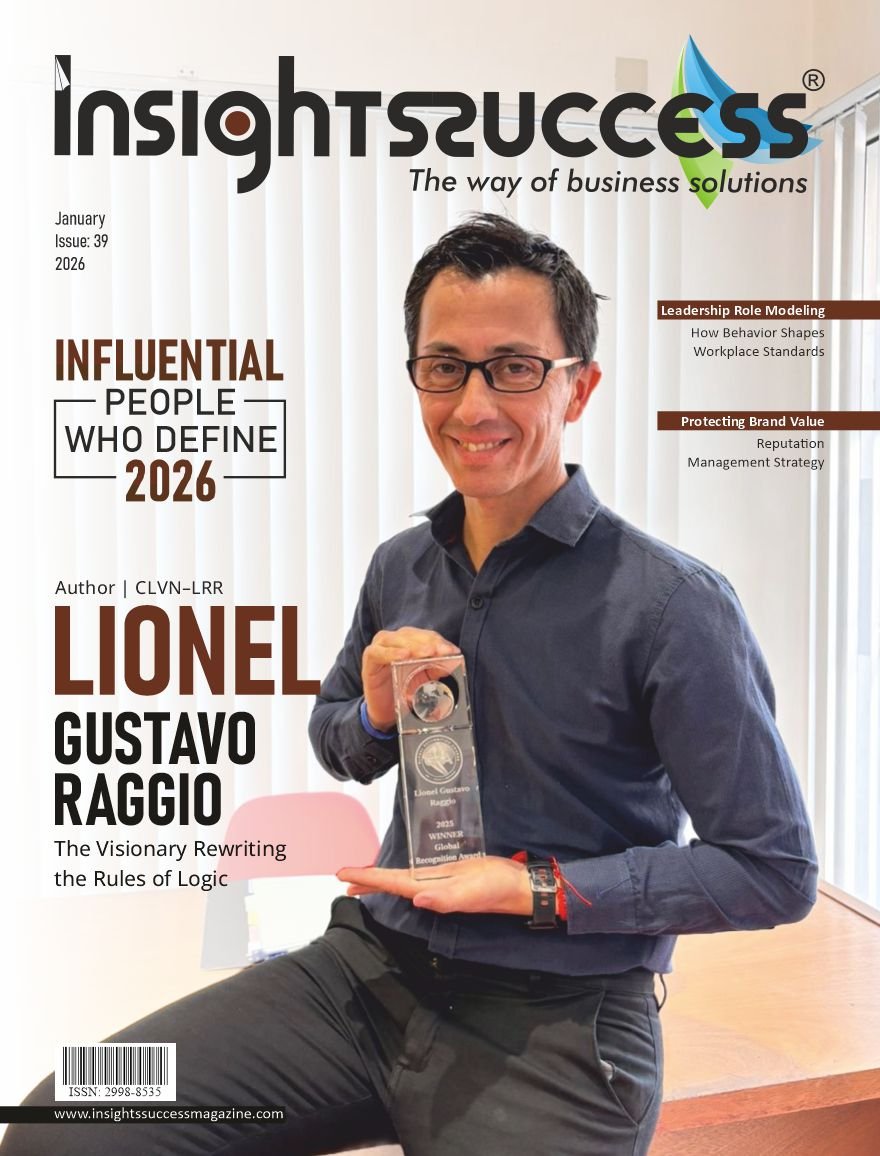
Influential People Who Define 2026
Influential People Who Define 2026 This edition is dedicated to exceptional individuals whose vision, courage, and decisive actions are shaping the year’s most important shifts—recognized for setting agendas, driving innovation, and leaving a measurable mark across industries and communities. Digital Link Quick highlights Quick reads

Reputation Management Strategy
Protecting Brand Value Brand value develops through behavior and performance and trust-building over an extended period. Stakeholders experience an organization through its reputation which differs from its self-presentation. The rapid information dissemination and continuous public examination of businesses has made brand value their most volatile yet valuable asset. The system determines customer loyalty and investor trust and employee recruitment and business collaboration and government support. Organizations need to manage their reputation through a process that extends beyond communication. The process functions as a leadership method which operates as an organizational strategy. Organizations need to maintain constant alignment between their actual business operations and their brand promises to safeguard their brand value. Reputation is Formed Through Experience, Not Messaging Organizations use their reputation as a perception asset which they can mold through dedicated marketing efforts. The need for communication exists but it fails to solve the problem of operational defects. Customers develop trust in brands that maintain consistent product delivery. Employees build trust in organizations that provide them with fair treatment. Business partners establish trust in organizations that fulfill their business commitments. Positive experiences that occur repeatedly establish the foundation for building a brand reputation. The brand identity of a business develops through every customer interaction and every service result and every product quality indicator and every executive choice. The brand reputation grows stronger when actual business operations match the established brand image. The public loses trust when actual events contradict the company’s advertised messages. The organization must start its brand protection efforts through internal measures instead of using advertising methods. Risk Awareness as a Reputation Strategy The operational blind spots which businesses fail to see create their biggest reputation risk because they do not produce visible problems. Brand trust faces gradual erosion because of poor service quality and unethical practices and data misuse and supply chain failures and internal cultural problems until public awareness occurs. Leaders must treat reputation as an enterprise risk category. The organization needs to include brand factors in every business decision process which involves product development and data management and employee scheduling and partnership building and regulatory compliance. The system for risk identification needs to identify potential reputation risks at an early stage so that solutions can be implemented to prevent damage from spreading. Preventive governance operates with greater efficiency than damage control which reacts to problems after they occur. Employee Advocacy as a Brand Asset The employees function as the brand’s most powerful ambassadors because their personal experiences create digital and social media impressions that shape public opinion about the brand. The organization maintains brand security through its strong internal culture which causes employees to speak positively about their work and to behave in responsible ways while representing the organization. Employees create a positive reputation for the organization through their feelings of respect and support and their shared dedication to organizational values. The absence of internal trust results in a loss of brand credibility which affects external perceptions. Monitoring and Feedback Loops The process of reputation management needs continuous monitoring as its essential requirement. The leaders must monitor five specific elements which include customer feedback and employee sentiment and media coverage and regulatory developments and market perception signals. The emerging ideas from these inputs become visible through their capacity to identify new problems at an early stage. The feedback loops enable organizations to modify their behaviors and enhance their operational procedures while they fix their existing problems before any major harm occurs. Listening systems enable leaders to maintain contact with stakeholder perspectives which helps organizations to build brand resilience. Conclusion The responsibility to maintain brand value requires strategic leadership to protect its worth. A reputation develops through people maintaining consistent behavior while they practice ethical standards and deliver reliable results and lead their teams with responsibility. The organization safeguards its assets through its employees who understand risks and its ability to listen to people and prepare for emergencies. Brand value exists because trust exists between parties. The organization must match its actual behavior with its promised commitments to maintain customer trust because people perceive trust through both its image and its operational work. Read Also : How Behavior Shapes Workplace Standards
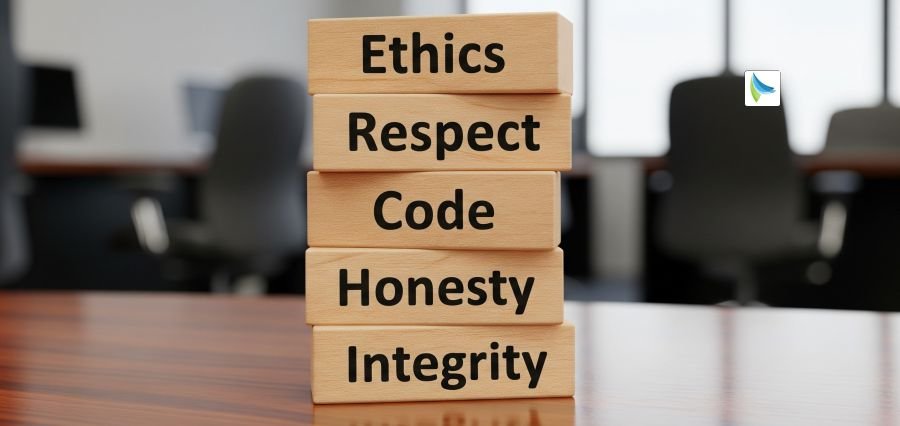
How Behavior Shapes Workplace Standards
Leadership Role Modeling Organizations often allocate significant resources to create value systems and performance evaluation methods and establish their organizational culture. Yet culture exists because people act in particular ways rather than because organizations make official statements. The specific factor that determines this outcome is the actions taken by leaders. The actual standard which organizations follow is determined by what their leaders choose to do and what they choose to overlook and what they choose to give importance to. The way leaders demonstrate their values to others carries important operational functions. The system establishes specific procedures which determine all aspects of work execution and interpersonal relationships and decision-making and performance assessment procedures. Employees take cues less from policies and more from what they see leaders practice consistently. Employees take cues less from organizational policies than from observing which practices their leaders implement on a regular basis. Every leader fulfills a continuous teaching function through their work. The question is not whether leaders influence standards but which standards they are reinforcing. Why Behavior Overrides Communication Leaders use their words to establish organizational goals while they use their behavior to show their desired results. A leader who demonstrates accountability through his words but fails to meet his deadlines will create a weaker perception of accountability. A leader who promotes teamwork yet gives preferential treatment to solitary achievers will create stronger departmental boundaries. A leader who promotes work-life balance through his communication yet requests nighttime work from his employees will create an environment where overwork becomes standard practice. Employees learn quickly what truly matters. They observe which behaviors receive rewards and which ones face correction and which ones go unnoticed. Organizational norms develop through upcoming signals that operate with greater force than any official program. Cultural aspects develop through actual human actions. Standards Become Visible Through Leadership Habits The practice of role modeling occurs through the performance of minor actions which people repeat throughout their day. The way leaders conduct their meetings, the way they deal with disputes, their methods for handling errors, their process for providing feedback, and their behavior towards support functions create their daily performance climate. The leaders who prepare their meetings and maintain their focus during discussions create an environment that upholds discipline and shows respect for time. Leaders who address issues directly rather than indirectly reinforce transparency. Leaders who acknowledge effort and give credit reinforce fairness. The established patterns of behavior within an organization create its emotional atmosphere and its operational functioning. Consistency Creates Credibility Employees evaluate leaders not only by their actions but by their ability to maintain consistent behavior. Inconsistent behavior which includes enforcing standards on one day and ignoring them on the next creates confusion and diminishes trust. Leaders who demonstrate consistent behavior provide their teams with predictable work environments. The teams understand their expected duties and the decision-making process and the methods which will assess their performance. The ability to predict upcoming events leads to decreased anxiety levels and higher confidence during execution. Leaders who demonstrate behavior which matches their declared expectations build their credibility particularly when facing stressful situations. Leaders Shape Psychological Safety Through Behavior The establishment of psychological safety requires more than organizational policies because it depends on leaders’ reactions to employee vocalization of their concerns. Leaders who actively listen to their employees demonstrate appreciation for their concerns by providing them with constructive feedback which creates a workplace environment that encourages staff members to report problems before they escalate. This process enables organizations to handle problems more effectively while decreasing their unidentified risks. Leaders who defend themselves through their behavior and interrupt others while dismissing their worries create an environment of silence. Performance suffers from the presence of silence. Safety requires demonstration through actions instead of announcement through words. The Multiplying Effect of Senior Leadership The influence of role modeling increases with leadership level. The entire systems receive their leadership guidance from senior leaders. Their behavior cascades through management layers. Senior leaders establish clarity and discipline and respect as their standard which becomes the organizational norm. The organization adopts political behavior and inconsistent practices because they allow such behavior to continue. The multiplying effect of leadership behavior allows organizations to use leadership as their strongest organizational tool. Conclusion Leadership role modeling stands as an essential soft skill. The method establishes itself as the strongest force that determines workplace standards together with employee performance. Employees learn what excellence, accountability, collaboration, and professionalism look like by watching leaders. Leaders create workplace culture through their daily actions. Leaders create workplace culture through their daily actions. People establish actual standards through their behavior when it matches expected behavior. The first option creates actual standards while the second option causes standards to lose their strength. Leaders establish an organization s culture through their repeated actions. The organization s culture emerges through this process. Read Also : Why Credibility Outperforms Charisma
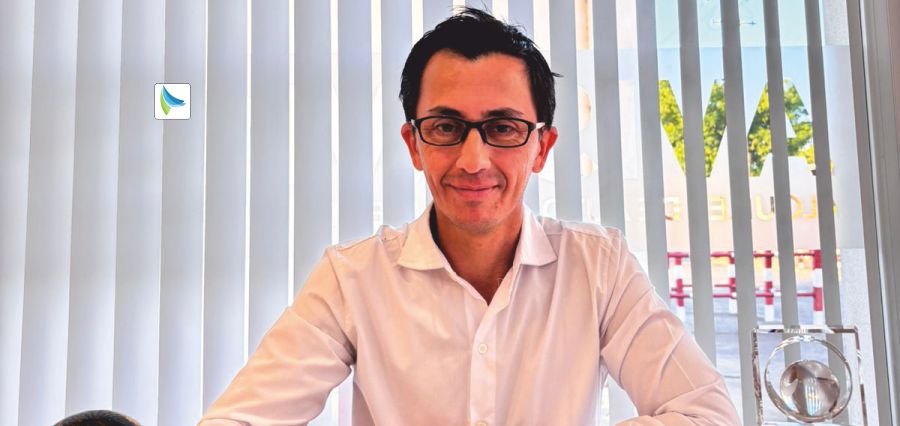
Lionel Gustavo Raggio: The Visionary Rewriting the Rules of Logic
There are minds that construct theories, and then there are those who discover architecture buried within silence itself. Lionel Gustavo Raggio belongs to the latter. His journey, as a thinker created in isolation rather than university, is a meditation on failure, patience, and the invisible constructions of meaning. The CLVN-LRR™ Theorem (Latent Conservation of Numeric Value) is a breakthrough framework for understanding loss, resonance, and the link between zero and infinite. What began as modest observation developed into a movement that combined science, philosophy, and symbolic logic. His theory posits that what appears to be disappearance in one form reappears as delay in another recoverable pattern awaiting activation. His route to recognition was anything but straightforward. Rejected by institutions and neglected by academia, he endured what he refers to as “the silence behind causality,” basing his theories on conviction rather than acceptance. He is now regarded as a unique synthesis of mathematician, philosopher, and visionary entrepreneur. His work translates abstract resonance into real-world frameworks via over 80 initiatives spanning AI, medical, and crypto systems. His story is more than just discovery; it is about coherence born of loneliness and structure formed of quiet. The Birth of a Theorem The CLVN–LRR™ Theorem, which stands for Latent Conservation of Numeric Value—emerged not from a laboratory or academic institution, but from years of observing what Lionel Gustavo Raggio calls “the silence behind causality, the compression behind contradiction, and the reverberation behind failure.” The framework turns conventional mathematical thinking on its head by proposing that what appears as loss actually transforms into latency—a recoverable structure waiting to be activated. “This work didn’t come from ambition. It came from listening, to silence, to failure, to compression,” Lionel Gustavo Raggio says. The theorem challenges a fundamental assumption that has governed mathematical thought for centuries: that mathematics has reached its natural limits. Lionel Gustavo Raggio’s framework suggests otherwise, opening doors to entirely new ways of understanding compression, symbolic resonance, and the relationship between zero and infinity. Unlike traditional startups born from market gaps, his ventures emerged from what he describes as “a structural void in human knowledge.” This theoretical foundation has now seeded an ecosystem of over 80 interconnected ventures spanning artificial intelligence, medical technology, predictive systems, and cryptocurrency. Among these projects sits λNet™, an entirely new conception of a symbolic internet built on principles of intention, compression, latency, and reversibility. Years in the Wilderness Recognition did not arrive quickly. For years, Lionel Gustavo Raggio faced the familiar struggles of those who work at the edges of accepted paradigms: silence from academia, lack of funding, and dismissal from institutional systems not prepared for disruptive logic. He describes the emotional cost as “one of the quietest forms of pain” not being understood, even by those closest to him. “I’ve learned not to force resonance. Structure always finds those ready to see it. My responsibility is to protect coherence, not to demand understanding from every person,” he reflects During these difficult years, Lionel Gustavo Raggio maintained his work through what he calls “resonance discipline” acting only when the structure aligns, refusing shortcuts, and building from inner conviction rather than external validation. This emotional sovereignty, forged in isolation, became one of his greatest strengths. “The silence has been my greatest teacher. It forced me to build from inner resonance rather than outer reaction,” he says The Pandemic as Mirror When COVID-19 swept across the globe in 2020, Lionel Gustavo Raggio did not view it as an interruption but as an amplifier. While the world focused on managing a visible health crisis, he concentrated on what he calls “the latent one” the structural fragility of human systems that the pandemic exposed. “COVID revealed what was already broken, education, logic, health, meaning. It showed how deeply disconnected we had become from coherence. In that sense, COVID was not an interruption, it was a mirror,” Lionel Gustavo Raggio observes. The global pause provided something Lionel Gustavo Raggio describes as invaluable: undisturbed silence to listen to structure. During lockdown, he deepened and refined the CLVN–LRR™ framework, developing applications ranging from symbolic AI to regenerative health protocols. Rather than asking how to adapt, he asked a more fundamental question: “What was missing all along?” This inquiry led to dozens of breakthroughs in symbolic reversibility models, latent intention mapping, and what he calls “a new paradigm of regenerative logic.” Many of the ventures he now launches, including symbolic medical systems, predictive resonance models, and crypto-latency frameworks, were born during the pandemic years. “I didn’t survive the pandemic. I structurally decoded it,” he states simply. Global Recognition Arrives In 2025, the tides began to turn. Lionel Gustavo Raggio received the Global Recognition Award for “unifying science and symbolic resonance in an unprecedented structural framework.” An international jury acknowledged CLVN–LRR™ as a system capable of reshaping paradigms across disciplines—not merely solving isolated problems. Shortly after, Business Insider published an article about his work under the headline “The Man Who Reversed Zero and Everything After It.” The piece triggered what he describes as “a silent wave of academic curiosity and institutional debate.” His foundational manifesto now circulates in internal groups at MIT, CNRS in France, King’s College London, and UNESCO, institutions not necessarily ready to embrace his framework, but unable to ignore it. “They’re watching not to reject it, but to understand how it rewrites everything they thought was fixed,” he notes. The Integration of Life and Work Balancing work that touches the edge of logic with everyday reality presents unique challenges. Lionel Gustavo Raggio’s work demands complete immersion—structures live in him day and night. He finds himself deciphering symbolic patterns while cooking or writing equations while walking with his children. “The boundaries blur, but they don’t disappear,” he says. His children serve as more than companions; they remind him that resonance exists not only in theory but in felt, lived experience. He rejects the traditional concept of work-life balance as separation, instead embracing integration. Every dinner, every story with his daughter, every conversation feeds back into the
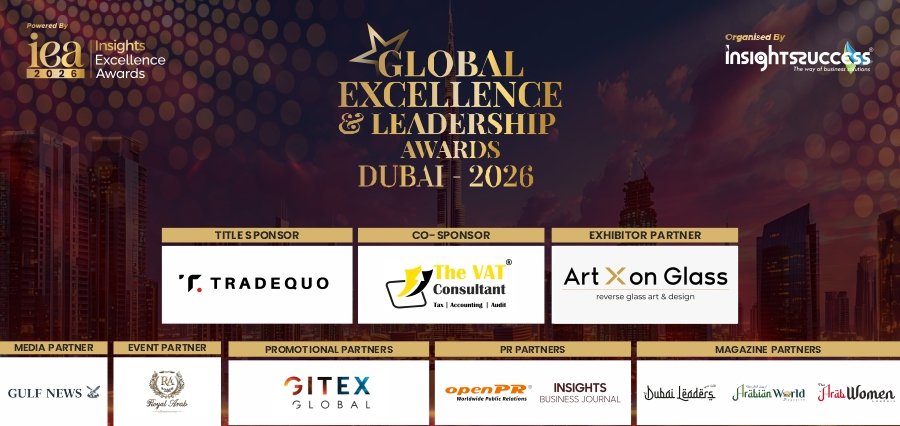
Inside Dubai’s Trending Business Award Ceremony That Redefined Global Business Recognition, The Grand Success of the Global Excellence and Leadership Awards – Dubai 2026
Dubai witnessed a landmark celebration of leadership, innovation, and enterprise as the Global Excellence and Leadership Awards – Dubai 2026 concluded with outstanding success. The evening elevated global recognition standards, strengthened its position among premier business awards, reinforced its background as one of the best business awards in Dubai, and firmly established itself as Dubai’s trending business award ceremony shaping the future of leadership dialogue. From the moment guests arrived, the venue reflected prestige, warmth, and world-class hospitality delivered by the Insights Excellence Awards team. The seamless execution, curated networking environment, and executive-level audience set the tone for a distinguished business awards experience. Industry leaders consistently described it as one of the best business awards in Dubai, while global delegates acknowledged its growing influence as Dubai’s trending business award ceremony. The presence of eminent dignitaries elevated the platform. The Guest of Honor, Dr. Eesa Mohammed Al Bastaki, President of the University of Dubai, inspired the audience with forward-looking insights on education, leadership, and innovation. The Chief Guests, Yaqoob Al Ali (Executive Director, Al Ali Group of Company), Consultant Dr. Saleh Jumaa Mohammed Al Marashed (Sharjah Police General Headquarters), H.E. Laila Rahhal El Atfani (Founder & CEO, Woman Business Circle), and Dr. Bu Abdullah (Chairman, Bu Abdullah Group), delivered engaging addresses that energized the audience, strengthened confidence among attendees, and empowered awardees to pursue excellence with renewed determination. Their presence amplified the stature expected from top-tier business awards, further affirming the platform among the best business awards in Dubai and solidifying its identity as Dubai’s trending business award ceremony. The ceremony merged recognition with knowledge. Keynote speakers, Francis Christy Boy, Agnes George, Hassan Horrou, Jessica Soledad Cáceres, Unmesh Deshpande, Dr. Lee Errett, Durga Prasad Reddy, Ignacio Bonasa, Patrick Czerka, Selvam, Fayed Yousry, Sana Al Daoumi, and Olufunsho Peters, delivered powerful sessions on transformation, resilience, innovation, and leadership strategy. Their insights transformed the stage into a global knowledge platform, demonstrating how modern business awards can drive thought leadership. This intellectual depth positioned the event strongly among the best business awards in Dubai and reinforced its status as Dubai’s trending business award ceremony. The event’s impact deepened through two high-powered panel discussions. Session 1: “Future Ready Organizations: How Innovation, Leadership and Creativity are Redefining Industries.” Panelists Mr. Kalyana Sivagnanam, Wail Muhrzi, Dr. Bumal Murchoya, Abdul Qayum Alidin, Miriam Schnyder, Joel Perri, and Ruchi Agnihotri shared strategic perspectives on innovation-driven leadership and organizational transformation. Dr. Parveen Smith moderated the discussion, guiding a dynamic exchange that explored future-readiness, creative problem-solving, and leadership adaptability. Their insights elevated the depth of these business awards, reinforcing why professionals rank it among the best business awards in Dubai and recognize it as Dubai’s trending business award ceremony, where leadership direction shapes industries. Session 2: “People, Protection and Performance: Redefining Excellence in Healthcare and Finance.” Panelists Sylvia Dr. Paulig, Dr. Markus Meier, Abby Liang, and Mohamed Bellal delivered cross-industry perspectives on performance excellence, people-centric leadership, and future-focused risk frameworks. Joel Perri moderated the session, steering a thought-provoking dialogue that connected healthcare innovation with financial resilience. This exchange further strengthened the platform’s standing among global business awards, reinforced its credibility among the best business awards in Dubai, and advanced its influence as Dubai’s trending business award ceremony, driving sector-wide conversations. The awards segment honored leaders and organizations whose achievements represent measurable impact, resilience, and visionary leadership. Each recognition embodied the purpose of meaningful business awards, celebrating progress that inspires industries. Observers noted that few platforms among the best business awards in Dubai- GELA 2026 combine recognition, leadership dialogue, and global networking on such a scale, a defining reason it continues to rise as Dubai’s trending business award ceremony. The ceremony also unveiled this year’s definitive and exclusive edition, “The 100 Trailblazing Leaders Revolutionizing Industries with Game-Changing Innovations,” spotlighting powerful business success stories from influential leaders across the globe. This standout feature commands attention as a flagship highlight and sets the tone as the must-read edition of the magazine. In his closing address, the Managing Director of Insights Success, Mr. Manish Bansal, reflected on the milestone and stated: “Our vision for the Global Excellence and Leadership Awards – Dubai 2026 went beyond recognition — we set out to create a powerful platform where leadership, innovation, and real impact come together. Watching global leaders, innovators, and emerging achievers share the same stage proves that excellence multiplies when minds connect and ideas move into action. This event marks a defining milestone for Insights Success Media and Insights Excellence Awards, and we remain committed to building credible platforms that celebrate achievement while driving meaningful conversations for the future of business.” He thanked Title Sponsor TradeQuo, Co-Sponsor The VAT Consultant, and Exhibitor Partner Art X on Glass, along with partners and attendees who contributed to the success of these business awards. Their collaboration strengthened the ecosystem around the best business awards in Dubai and supported the global momentum of Dubai’s trending business award ceremony. This grand celebration marks a turning point in the journey of Insights Success Media and Insights Excellence Awards. By uniting recognition, leadership exchange, and global participation, the platform continues redefining the future of business awards, standing firmly among the best business awards in Dubai and expanding its influence as Dubai’s trending business award ceremony. The Global Excellence and Leadership Awards – Dubai 2026 did more than celebrate excellence; it built a global leadership movement. Disclaimer – This article is a work of original content created for public relations and informational purposes only. It may be published across multiple digital platforms with the full knowledge and consent of the author/publisher. All images, logos, and referenced names are the property of their respective owners and used here solely for illustrative or informational purposes. Unauthorized reproduction, distribution, or modification of this article without prior written permission from the original publisher is strictly prohibited. Any resemblance to other content is purely coincidental or used under fair use policy with proper attribution. Read Also : Insights Excellence Awards Brings Global Excellence & Leadership Awards – 2026, The Most Prestigious Business Leadership Awards
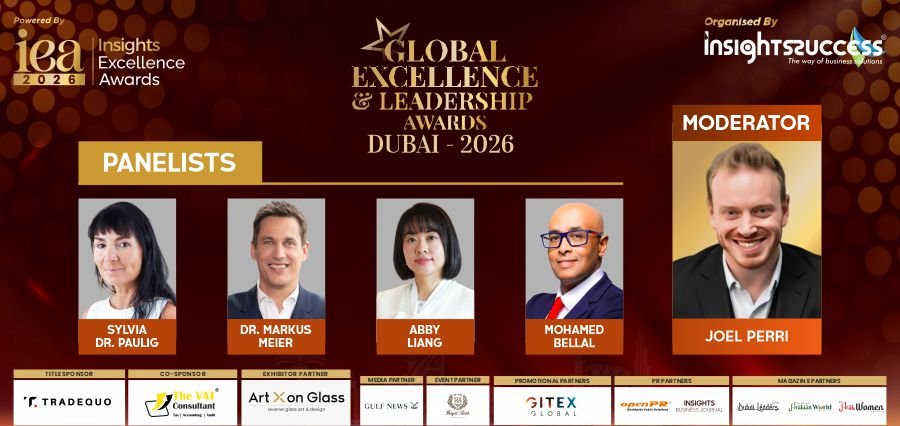
Insights Excellence Awards Brings Global Excellence & Leadership Awards – 2026, The Most Prestigious Business Leadership Awards in Dubai with a High-Powered Leadership Panel
Dubai, UAE On 24th January 2026, Dubai will witness a significant celebration of leadership, innovation, and impact as Insights Excellence Awards, in collaboration with Insights Success Media, presents the Global Excellence & Leadership Awards – Dubai 2026. Recognized among the most prestigious Business Leadership Awards in Dubai, this most awaited international event will bring together influential entrepreneurs, senior corporate leaders, decision-makers, and celebrated award recipients in a premium setting dedicated to honoring excellence and advancing meaningful business dialogue. A major highlight of this most awaited international event will be the exclusive second session of the Panel Discussion, prepared to deliver sharp, future-focused insights on leadership evolution, enterprise resilience, corporate governance, strategic transformation, and innovation at scale. This segment will uplift the event into a platform for thought leadership, creating a deeper experience for attendees who seek more than recognition, perspective, and direction. Session 2 of the panel discussion at the Global Excellence & Leadership Awards – Dubai 2026 will be moderated by Joel Perri, an accomplished moderator known for driving insightful conversations with clarity, energy, and structure. With a strong ability to connect diverse perspectives and elevate meaningful leadership narratives, Joel will ensure the discussion remains engaging, relevant, and rich in actionable takeaways for founders, executives, and changemakers attending the forum. The Insights Excellence Awards is set to welcome an impressive panel lineup featuring globally respected voices across leadership, strategy, innovation, and execution: Sylvia Dr. Paulig will contribute a perspective rooted in modern leadership thinking, highlighting how today’s decision-makers can build resilience, influence culture, and sustain performance in fast-changing environments. Her insights will reflect the human side of excellence—where clarity, alignment, and purpose-driven leadership shape long-term impact. Adding strategic depth to the conversation, Dr. Markus Meier will bring a structured, high-level viewpoint centered on leadership frameworks, decision architecture, and organizational excellence. His discussion points will reflect how leaders can build scalable systems, strengthen governance, and drive measurable outcomes while navigating complexity at enterprise level. Abby Liang will bring an insightful global lens, reflecting leadership through adaptability, innovation, and progressive business thinking. Her contribution will address the importance of building agile teams, creating future-ready operating models, and maintaining competitive relevance in dynamic markets and multi-cultural environments. Complementing the discussion with expertise in execution and performance-driven leadership, Mohamed Bellal will emphasize operational excellence, accountability culture, and high-efficiency team leadership. His insights will reinforce how modern organizations can sharpen delivery discipline, elevate standards, and strengthen leadership credibility through measurable performance. Speaking on the announcement, Mr. Manish Bansal, Director of Insights Success Media, emphasized the vision behind the event: “Dubai represents ambition, global relevance, and a future-driven business culture. Through the Global Excellence & Leadership Awards, we aim to build the most prestigious Business Leadership Awards in Dubai that not only celebrate excellence but also spark meaningful leadership conversations that inspire measurable progress.” The Global Excellence & Leadership Awards – Dubai 2026 will be held on 24th January 2026 (Saturday) at DoubleTree by Hilton Dubai – M Square Hotel & Residences, Al Mankhool, Dubai, celebrating visionary leaders, startups, enterprises, and changemakers shaping the future of business; being the most awaited international event. With the stage prepared for the most prestigious Business Leadership Awards in Dubai, the Global Excellence & Leadership Awards – Dubai 2026 invites visionary executives, innovators, and growth-focused organizations to join an evening defined by recognition, meaningful networking, and impactful leadership conversations. The event is anticipated to host 200+ senior business leaders representing 15+ countries, while 50+ organizations will be honored for their contributions across diverse sectors. Beyond applauding excellence, the event is designed to spark strategic connections and open doors to future collaborations, offering a premium experience that will leave a lasting impression across industries. Recognized among the most prestigious Business Leadership Awards in Dubai, this celebration is expected to experience strong participation and high visibility. The countdown is on, less than 24 hours remain until excellence takes the spotlight at the Global Excellence & Leadership Awards – Dubai 2026. Disclaimer – This article is a work of original content created for public relations and informational purposes only. It may be published across multiple digital platforms with the full knowledge and consent of the author/publisher. All images, logos, and referenced names are the property of their respective owners and used here solely for illustrative or informational purposes. Unauthorized reproduction, distribution, or modification of this article without prior written permission from the original publisher is strictly prohibited. Any resemblance to other content is purely coincidental or used under fair use policy with proper attribution. Read Also : Insights Excellence Awards Announces Global Excellence & Leadership Awards – Dubai 2026, the prestigious Business Awards in Dubai Featuring Power-Packed Panel Discussion with Global Business Voices
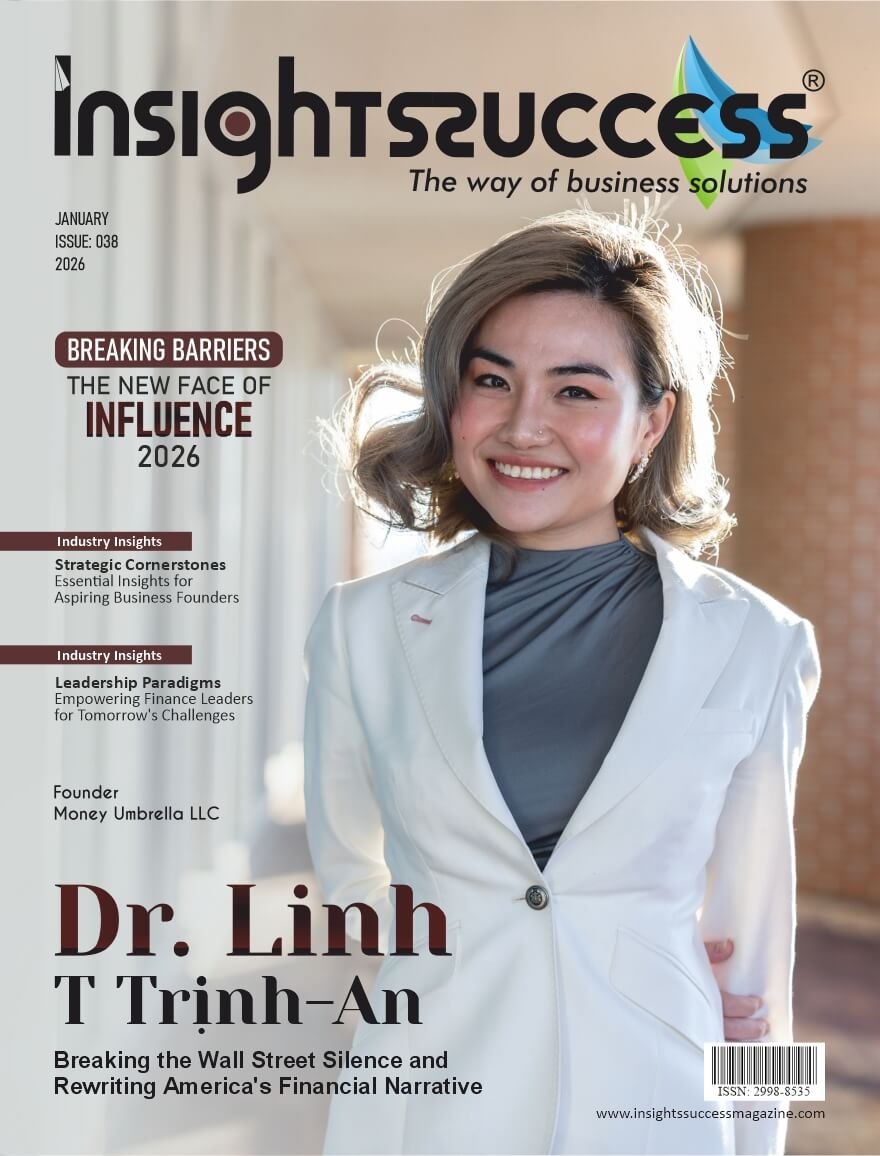
Breaking Barriers: The New Face of Influence 2026
Breaking Barriers: The New Face of Influence 2026 Dr. Linh T. Trịnh-An is transforming financial advisory by prioritizing education, clarity, and empowerment over industry jargon and speculation. As a Founder of Money Umbrella LLC, she bridges knowledge gaps in retirement, insurance, and investments, challenging conventional Wall Street narratives and equipping individuals with the tools to achieve financial independence and informed decision-making. Digital Link Quick highlights Quick reads