






Leann King: Redefining Excellence Across Global Real Estate, Development and Executive Leadership
A British Global Chief Operating Officer, Leann King, engineer, property developer, acquisitions specialist and business transformation executive, recognized for leading complex operations across luxury real estate, construction, and international investments. As an engineer herself, Leann combines technical expertise with commercial leadership, allowing her to bridge the gap between design, construction, operations, and executive decision-making. Her ability to understand projects at both an engineering and strategic level enables her to identify risks early, optimize buildability, improve operational efficiency, and deliver exceptional outcomes from concept through to completion. Specializing in complex business transformation, operational turnarounds, and executive leadership, Leann has built a reputation for diagnosing the root causes of underperforming organizations and rebuilding them into agile, high-performing businesses. Her expertise spans engineering, corporate governance, compliance, logistics, finance, sales, project delivery and executive leadership, creating operational frameworks that improve performance, accelerate delivery, and support sustainable long-term growth. Known for reshaping businesses from the inside out, Leann restructures fragmented operations into streamlined organizations with strong foundations, clear accountability and efficient systems that keep the “engine room” of a business operating at peak performance. Rather than managing complexity, she simplifies it — transforming stagnant businesses into scalable, commercially successful enterprises capable of sustaining long-term growth. In 2026, Leann led the vision, renovation, engineering coordination, project management, and delivery behind Dubai’s highest residential rental transaction in history — an AED 17 million one-year lease in Emirates Hills, setting a new benchmark for the city’s ultra-luxury residential market. Today, she oversees a multi-billion-dollar development pipeline across multiple international markets, earning a reputation as one of the region’s leading executives in luxury real estate, development, and business transformation. Visionary Developer “I’m not just an operator; I create the vision.” Leann is recognized for taking projects from the earliest stages of vision and concept through design development, coordination, construction, operational readiness and final delivery. Her involvement extends far beyond executive oversight, ensuring every element reflects the intended standard, commercial objectives, and long-term value. Engineering Mindset With a great mindset and hands-on technical knowledge, Leann bridges the gap between architecture, construction, and commercial strategy. This enables her to identify risks before they become problems and make decisions that balance design excellence with operational efficiency. Executive Problem Solver Leann is frequently entrusted with an organization’s most challenging assignments — complex developments, distressed assets, underperforming operations, and high-value negotiations, where strategic leadership, technical understanding, and decisive execution are critical. Luxury Expertise “I’m becoming known for luxury.” Her portfolio spans ultra-prime residential developments, luxury hospitality, mixed-use developments and high-value investment assets, where meticulous attention to detail and uncompromising quality define every project. Leadership Philosophy As Leann often says, “Leadership isn’t about telling people what to do. It’s about creating systems so clear, cultures so strong, and teams so empowered that excellence becomes the standard rather than the exception.” Leann’s ambition is not simply to build exceptional developments or transform businesses, but to create organizations that continue to thrive long after she has moved on — businesses built on integrity, accountability, operational excellence and, above all, people. She believes the greatest measure of leadership is not the projects completed or the records broken, but the lasting culture, systems and opportunities left behind for others to build upon. Beyond her professional achievements, Leann hopes to be remembered as a leader who genuinely cared, someone who took the time to understand people’s thoughts, feelings and perspectives, making every individual feel seen, valued and respected. She believes that true leadership is measured not only by results, but by the positive impact you leave on the lives of those around you. Why I Lead? For Leann, leadership has never been about titles or authority. It is about creating environments where people can perform at their highest potential while feeling respected, supported and valued. She believes the greatest leaders are those who raise the standards around them while bringing others along on the journey. My Philosophy Known for her relentless work ethic, Leann often says that excellence is built through thousands of small decisions rather than one defining moment. Every project, meeting, and relationship is approached with the same discipline, attention to detail, and commitment to continuous improvement. Humanity Despite operating in high-pressure environments where decisions can involve multi-million-dirham developments and complex commercial negotiations, Leann believes people should never become numbers. Behind every project are families, livelihoods, ambitions and emotions, and she considers it a responsibility to lead with empathy alongside accountability. Spiritual Side Outside of business, Leann believes strongly in purpose, faith, gratitude, and the power of intention and manifesting. She approaches both life and leadership with the belief that integrity, kindness, and consistency ultimately create the greatest opportunities. Rather than chasing success, she focuses on becoming the person capable of sustaining it. What Success Means to Me Now Having experienced both extraordinary success and significant personal setbacks, Leann no longer measures achievement by wealth alone. Success, in her view, is creating meaningful impact, building organizations that outlast individual leaders, and helping others realize potential they may not yet see in themselves. The Person Behind the Executive Those who know Leann best describe her as a perfectionist in the pursuit of excellence — someone who demands more from herself than she ever asks of anyone else. Renowned for her relentless work ethic, she is often the first to arrive and the last to leave, remaining available whenever her team, clients or projects require her. She leads from the front, believing that respect is earned through action rather than authority. Her meticulous attention to detail and uncompromising standards are evident in every project she undertakes. From the earliest concept through to final completion, she personally involves herself in every stage, ensuring that nothing is overlooked and that every decision reflects the level of quality and excellence she has become known for. While uncompromising in her pursuit of excellence, Leann is equally committed to fairness, loyalty, and creating opportunities for others to grow. She believes the strongest leaders are remembered not only for the businesses they build or the

Advancing the Future of Urban Development
Scalable Business Growth Urban environments are becoming more and more crucial as sites of economic productivity, innovations, work, and social interactions. In view of rising population numbers and changing business needs, urban areas require development models which will allow growth while maintaining functionality and quality of life. Creating Conditions for Sustainable Expansion Scalable Growth refers to the capability of an organization in expanding its coverage, capacity, and worth without letting its complexity expand at the same rate. An organization needs reliable infrastructures, competent workforces, access to markets, transportation, connectivity, and regulation in a friendly environment for this purpose. Such cities are bound to attract investors, entrepreneurs, firms, and industries. Businesses can in turn create jobs, improve supply chains within the cities, spur investments, and provide public goods and services. The link between cities and businesses is what makes city planning an essential aspect in the growth of businesses. Designing Cities Around Economic Opportunity City planning that is done well will take into consideration how people travel, how businesses work, how services are provided, and how communities function together. Mixed use of areas, efficient transport systems, business hubs, technological systems, and public spaces can all contribute to a situation where economics happen naturally. Proper Urban Planning is also beneficial for organizations to face operational challenges. Connectivity will save time in terms of travel and distribution of products, while commercial zones will attract more customers. Digitization will enable companies to cooperate with remote workers, target bigger markets, and provide technologically advanced services. When cities have an effective platform for economic participation, the growth of businesses becomes more feasible. Businesses can branch out into different locations, reach a wider clientele, and build partnerships in a business ecosystem. Technology as a Growth Enabler Technology is shaping the city’s processes. Data platforms, smart mobility solutions, digital services for citizens, connected infrastructure, and smart resource management may enhance the efficiency of urban areas. Companies use these features to receive information and act according to market demands. In cases where companies aim at Scalable Business Growth, digital technologies may help to achieve this goal. Cloud solutions, automation, analytics, and communication technologies will help to manage business operations in different regions without creating new separate systems for each region. Technology may also assist in improving urban development through assisting city officials in understanding transportation trends, energy use, demands for services, and infrastructure use. Data can be used to make better decisions and direct resources to areas that will yield the most benefit. Building Connected Business Ecosystems No business organization can grow outside of its ecosystem. Suppliers, buyers, banks, institutions of learning, technology companies, professional associations, and government bodies play a role in the growth of businesses. These connections can be improved through the creation of business districts, innovation centers, industrial clusters, start-up incubators, and professional networks. In such an environment, cooperation is fostered and distances between the complementary organizations become shorter. Ecosystem is essential to Scalable Business Growth because companies will get the resources and connections that would have taken time to create otherwise. At the same time, these ecosystems help city growth through the creation of economic hubs and investments into adjacent areas. Balancing Growth with Livability Urban development cannot be based solely on business gains. Urban Development should always be based on areas where people live, work, move about, and get all their necessities without any hassles. Availability of housing, transportation, environment, healthcare facilities, educational institutions, and recreational grounds all contribute to making the city area more appealing. Livability in cities is good for business since the employees tend to stay in places that offer reliable amenities and better opportunities. Therefore, Urban Development must take into account economic, social and environmental needs. A balanced strategy will enable Scalable Business Growth to contribute towards economic growth that is not limited to individual pockets of business activity. Businesses that can grow in tandem with their community will be able to contribute to the economy and develop relationships with the people involved. Preparing Cities for the Next Generation The future urban landscape will have to be designed in a way that caters to these trends. Firms will experience similar pressures in light of globalization and competition. Flexibility is needed to plan these changes. The urban systems have to be flexible enough to accommodate new industries, expansion of businesses that already exist, and adjustments based on the requirements. Long-term planning is crucial for Urban Development and Scalable Business Growth. Cities and businesses will continue to play an important role influencing economic development. When there is proper urban planning that provides the infrastructure, opportunities, ecosystem, and good living environment, businesses receive the necessary ingredients for growing in a responsible way. In turn, successful businesses provide the means that help build strong communities. At the end of the day, urban development and scalable business growth are not two independent objectives. When built in tandem, both can produce economically viable and future-ready cities. Read Also : Harnessing Technologies: The Evolution of Digital Investment Banking and Its Impact on Modern Finance

Infrastructure Development and Operational Resilience
Building Resilient Foundations Infrastructure creates the framework in which individuals and firms conduct their activities. Roadways, utilities, buildings, communications, logistics and all other forms of physical infrastructure have an impact on the way that firms and individuals can perform efficiently. However, one cannot measure the worth of infrastructure based only on its utility to meet current demands. Infrastructure must continue to be reliable under changing conditions. Creating Strong Foundations for Long-Term Performance In order to develop an Effective Infrastructure, there is need for an understanding of the existing needs and future possibilities. The considerations should include population growth, business activity, technological developments, environment, transport, and changes in resource consumption patterns. Infrastructure that incorporates all of these considerations will be more flexible and able to sustain economic activity. Even the quality of the infrastructure will have an impact on how well the organizations using the infrastructure perform. The use of a reliable transport system could help to facilitate good movements of the supply chain, and the availability of a reliable utility network will ensure that production and service delivery is safe. An effective digital infrastructure will facilitate communications, thus allowing the organization to react fast to consumer needs. Designing for Continuity The infrastructure is exposed to various forces across its life cycle. These include extreme weather conditions, breakdowns of infrastructure elements, shortages in supply, cyber attacks, maintenance issues, and sudden demands. There must be mechanisms that ensure continuous functioning of operations despite disruptions and efficient recovery from disruptions. This is the main premise behind continuity planning. The process of Building Operational Resilience entails more than just preparation for emergencies. It entails an appreciation of the key processes involved, knowing the possible areas of vulnerability, having alternative measures in place, and making sure everyone knows what to do when things go wrong. All this can be achieved through infrastructure planning at the initial stage. Integrating Technology with Infrastructure Technology has revolutionized the way infrastructure planning, monitoring, and maintenance are carried out. There are sensors, internet-connected devices, analytics platforms, virtual models, and automated monitoring technologies that could provide relevant information regarding asset performance. Using such information, organizations can detect developing problems before they cause failure. Technological development also provides opportunities for better decision-making by infrastructure providers. Real-time data will provide an insight into traffic changes, energy use, condition of equipment, or availability of resources. All this information will allow for faster reactions and efficient use of resources. With the help of technology, Physical Infrastructure will be able to become smarter. The use of digital technology is also important for operational resilience because digital technology helps organizations maintain visibility during disruption through remote monitoring, automated alerts, digital communications, and centralized information systems. Prioritizing Maintenance and Adaptability Infrastructure development is just the start of the life cycle process of the infrastructure. For sustainable operation, there must be proper inspection, maintenance, upgrading, and the replacement of old parts. Neglecting this duty will make the whole community susceptible to problems. Resilient design should thus consider maintenance to be a strategic endeavor. Designing flexibility will help in adapting to future changes in technology, policy, and user needs. This strategy enhances Infrastructure Development by not only focusing on construction but considering performance throughout the life cycle of the project. This strategy will enhance continuity since good maintenance ensures that the asset is well prepared for pressure. Building Collaboration into Infrastructure Planning Infrastructures are not often standalone. Various stakeholders such as governments, corporations, construction firms, tech companies, communities, and service providers are often interdependent. Failure in one infrastructure can have impacts in many other infrastructures. Collaboration can aid the stakeholders in comprehending the interdependencies and formulating strategies accordingly. Partnerships can also enable the sharing of expertise and knowledge. The future resilience of organizations will depend on this approach to interdependence. Organizations that understand their environment will be able to prepare better for disturbances and recover more confidently. Preparing Infrastructure for the Future The most important form of infrastructure is not infrastructure that fulfills the needs of today. Rather, it is infrastructure that is able to adapt to the demands of tomorrow. Changes in population, changes in technology, changes in environment, and changes in economic focus will all impact communities and businesses in the future. Forward-thinking Infrastructure Development will take into account flexibility, sustainability, technology, and lifecycle considerations in its planning and decision-making. Simultaneously, companies can increase their Operational Resilience through continuous readiness assessments, critical dependency reviews, and lessons learned from disruptions. Resilient foundations are, at the end of the day, achieved through conscious decisions. In the case where infrastructure development and operational resilience go hand-in-hand, the physical elements no longer serve as simply the means through which activities can be carried out. Rather, they provide a reliable foundation through which growth and development can occur. The synergy between Infrastructure Development and Operational Resilience allows for resilient systems. Read Also : Advancing the Future of Urban Development

The Most Admired HR Directors to Watch in 2026
The Most Admired HR Directors to Watch in 2026 Sevil Ryshatova, HR Director at Livrichy Real Estate, demonstrates a leadership philosophy grounded in trust, consistency, empathy, and accountability. Her experience has shaped an approach that balances high performance with genuine human connection, enabling teams to remain resilient, engaged, and focused during periods of uncertainty and change. Digital Link Quick highlights Quick reads

Sevil Ryshatova: Leading With Trust, Purpose and a Human Touch
Leadership is tested when the figures go down, pressure increases, and certainty is lost. It is revealed in those moments when the need for guidance outweighs the need for answers. Sevil Ryshatova did not learn leadership from a textbook. She learned it in moments when pressure was real and results were visible, on the sales floor during periods of low activity when calls were slowing and deals were becoming harder to close. Today, as HR Director at Livrichy Real Estate, she continues to lead according to the same principles that shaped her approach. Her success as an established HR leader in the region has not been achieved because of major business reorganizations or revolutionary ideas that attracted attention. Her style of work has been formed by a certain philosophy which she learned from her own practice. Being present and consistent is more important than being perfect. It is about creating an environment where people can perform, grow, and succeed over time. Leading with Purpose and Trust The experience that shaped Sevil most did not come from a case study. It came during a genuinely difficult period in the market, when a team of agents she led faced weeks of silence. There were no calls, no closings, and no clear path forward. During such periods, she says, the natural instinct for many people is to quietly give up before anyone notices. Her role at that moment was not strategic in the traditional sense. It was simpler, yet more difficult. She had to keep her team steady when staying motivated felt almost pointless. What stayed with her was not simply the return of results, but the genuine respect she earned from her team. That respect came not only from hiring the right people, but from finding individuals who truly believed in the vision behind the work, not just the responsibilities outlined in their job descriptions. That distinction has remained central to how she leads today. When a team believes its leader shares the same commitment to the mission, consistency does not need to be forced. People choose to bring it themselves. This insight became the foundation of her leadership style, built on presence rather than perfection and consistency rather than charisma. Performance with a Human Touch Over the years, her leadership approach has evolved significantly. Early in her career, she admits that she confused professionalism with being distant. She maintained a polished HR persona that placed policies before people. Over time, she realized that in an industry built on relationships, this approach could limit a leader’s ability to connect, inspire, and build trust. Today, Sevil describes her leadership style as “structured warmth.” She holds her team to high standards and maintains clear accountability. At the same time, she makes sure every person feels seen and valued as an individual rather than simply as a number on a KPI report. “I lead with high standards, but I never want people to feel like numbers,” she says. In real estate, much of the work involves emotional effort. Teams manage client expectations, deal with rejection, and stay motivated during slower periods. These experiences require more than targets and spreadsheets. Leaders must understand the human side of the work and create an environment where people feel supported while remaining accountable. A leader who focuses solely on numbers can quickly lose connection with the team. Navigating Change with Honesty Sevil relies on three principles when leading people through change and uncertainty: honesty, fairness, and context. For her, honesty means communicating difficult news clearly and early. Whether it involves a restructuring, changing targets, or shifts in the market, she believes employees should hear the facts directly rather than through workplace rumors. Fairness means applying consistent standards to everyone, regardless of seniority or personal relationships. In a workplace built on trust, even the perception of favoritism can undermine that foundation. Once trust is compromised, rebuilding it can be a challenging and time-consuming process. Context is equally important. Sevil does not view change as simply an announcement. In her view, people handle uncertainty better when they understand why a change is taking place, not just what is changing. Before communicating difficult news, she asks herself one important question: Have I given people enough of the “why” to help them understand and accept the “what”? Trust Through Human Connection For Sevil, trust is built through small and consistent actions rather than big speeches. It can mean remembering that a colleague’s mother was unwell and asking how she is doing. It can mean staying visible on the sales floor instead of retreating to the boardroom. It can also mean responding to a junior agent’s message on a Friday evening rather than waiting until Monday. Dubai’s real estate market adds another layer of complexity to building trust. A single team may include an agent from the Philippines, a sales manager from Lebanon, and a marketing lead from the United Kingdom, all working within the same structure. Building trust across such diversity, she’s found, requires genuine cultural understanding rather than a one-size-fits-all approach to people management. She makes an effort to understand what motivates each person. For some, it may be recognition in front of their peers. For others, it may be private feedback. For many, it may simply be the reassurance that their job is secure. Understanding these individual needs helps her build stronger relationships and create a more supportive workplace. Some of her methods are remarkably simple. Most days, she encourages people to sit together for lunch and checks in on how everyone is doing. It is not treated as a formality. A distracted or exhausted mind, she says, cannot perform at its best, whether in sales, leadership, or personal growth. When something feels wrong, the team addresses it instead of allowing the issue to linger. For Sevil, this everyday attentiveness is what trust is truly built on. It is not created through occasional gestures, but through consistent presence, genuine understanding, and care. “Trust is earned through consistency, not created through

Maximizing Impact: The Strategic Impact of Intelligent Workforce Management on Business Performance
In the current competitive world of business, there is growing pressure on companies to be more productive, manage costs effectively, respond to changes in the market promptly, and offer a good employee experience. Workforce management has thus gone beyond the initial process of just scheduling employees. Companies are now embracing more strategic processes of linking workforce planning to the overall goals of the organization. In intelligent workforce management, we are talking about an approach to the organization that involves combining data about workers, automation, analysis, and technology so that workers can be aligned with organizational needs. It offers better visibility into the needs for staffing, employee performance, workloads, and trends in operations. It has implications on productivity, costs, worker engagement, customer service, and organizational performance. Smarter Planning Workforce planning needs to start with an insight into the interplay between the three: people, processes, and business demand. With Intelligent Workforce Management, organizations get the ability to assess past trends in their workforce, predict future needs, and identify possible gaps before they impact operations. Managers could make use of the information available to them, without having to engage in manual computations or making any assumptions, to determine their staffing needs and make schedule adjustments accordingly. The significance of this strategy is evident in businesses that experience considerable fluctuations in demand for their services. This holds for the retail industry, health care, hospitality sector, logistics, manufacturing, and other business organizations which must adjust to fluctuating loads without affecting the quality of services offered. The benefit of data-driven workforce management is that it makes it possible for business managers to determine the busiest time for employees and assign tasks accordingly. Driving Efficiency Operational efficiency becomes one of the major issues where intelligent workforce policies could impact business operations. Automation could decrease the amount of administration required to schedule, monitor attendance, manage time, allocate shifts, and report on the workforce. As a result, fewer repetitive actions will make it possible for managers and HR personnel to focus more on strategic issues like employee development and performance improvement. In addition to automation, there are other ways through which patterns can be determined and may not be easily detected otherwise. Management can analyze productivity trends, overtime needs, absenteeism, workforce utilization, and costs of staffing in order to know where changes are necessary. This would help in making better resource allocation decisions and avoid any unnecessary spending. When it comes to making workforce decisions, it is essential for companies to make use of current information rather than rely on hunches alone. Strengthening People Technology is not enough for achieving sustainable business performance. It is necessary to have an engaged workforce that knows what is expected from them, gets proper support, and is provided with development opportunities. Intelligent Workforce Management can help achieve this goal since it allows for increasing transparency for employees in terms of their schedule, workload, tasks, and performance requirements. A good workforce strategy can also help in developing employees since it will show what skills, potential, and even further training is needed for them. Management will have the opportunity to identify talented employees, capability gaps, and delegate tasks based on their strengths. It may help in increasing engagement and building a flexible talent pool for organizations. If employees are properly planned and developed, then workforce management will become an essential part of retention and collaboration. Building Business Value The broader strategic implications of workforce intelligence involve the linking of workforce decisions with business results. Workforce intelligence makes it possible for an organization to analyze its workforce decisions in relation to its productivity, customer service, cost of operations, and revenues. In this way, there is a better linkage between workforce strategy and decision-making at the management level. In other words, rather than regarding the workforce as an administrative matter only, it becomes a key business resource. This approach further helps in achieving organizational agility. The market may change suddenly due to various factors such as economic factors, customer demands, technology changes, or disruptions in the market environment. Those organizations that are better at seeing their workforces are able to react quickly through the reallocation of resources and identification of new demands. In the long run, this will help them achieve greater levels of organizational resilience. Conclusion Intelligent Workforce Management is emerging as an essential aspect of business strategy due to its provision of greater structure and visibility into workforce management decisions. Through integration of data, automation, forecasting, and workforce intelligence, the approach will help to enhance the planning process and decrease administrative complexity. More importantly, it will link workforce decision-making with business and financial goals. The future of workforce management depends on how well the organizations find ways to combine technology and human management. Organizations that utilize workforce intelligence ethically are able to boost their productivity, use their resources more efficiently, enhance employees’ experiences and be better prepared for any changes in the markets. As organizations keep focusing on efficiency and agility, workforce management will continue being a major factor behind success. Read Also : Infrastructure Development and Operational Resilience
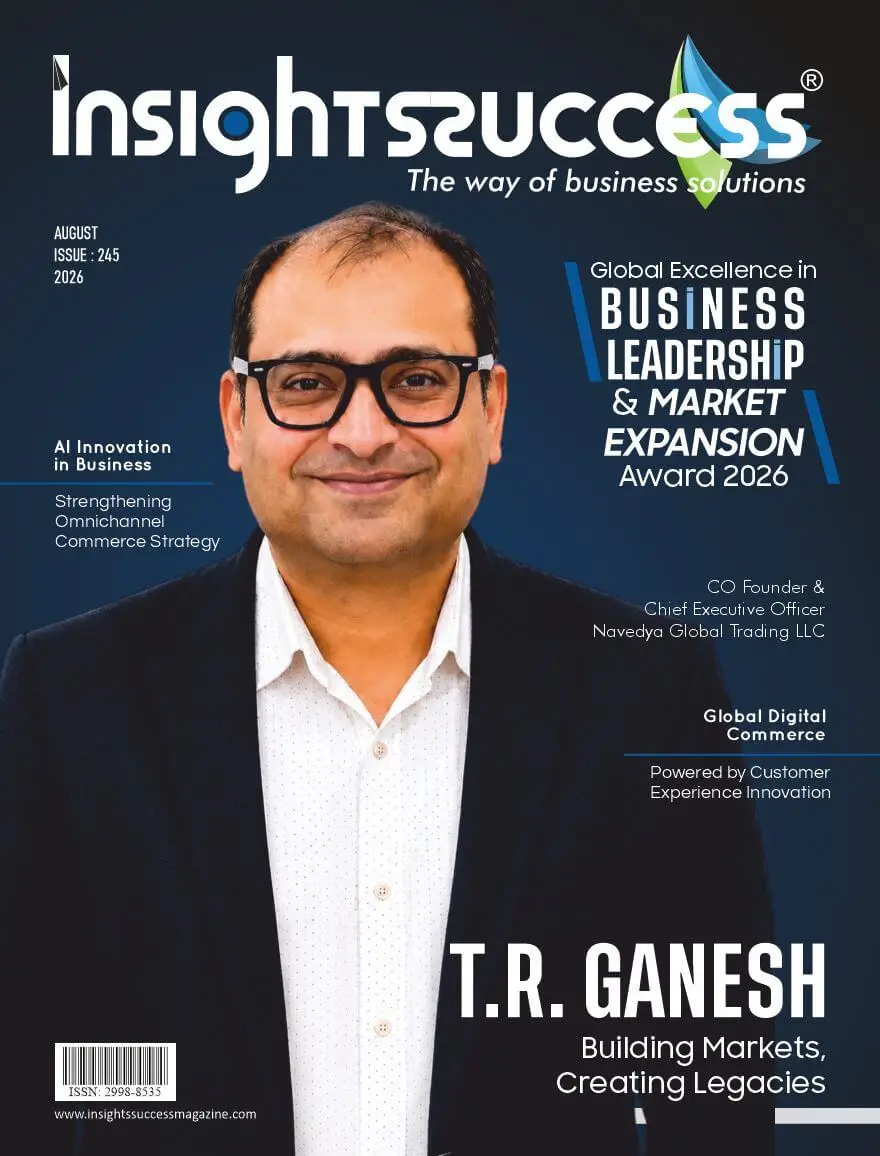
Global Excellence in Business Leadership & Market Expansion Award 2026
Global Excellence in Business Leadership & Market Expansion Award 2026 Celebrating visionary leaders who drive business excellence, expand into new markets, embrace strategic innovation, and create lasting value through bold decisions, resilient leadership, and global growth. Digital Link Quick highlights Quick reads

T.R. Ganesh: Building Markets, Creating Legacies
There are leaders who have been born in a good market environment; then there are those who create their own environment. T.R. Ganesh certainly belongs to the latter group of people. Over the course of his three-decade career, he has managed to turn every single potential opportunity into a thriving business, and his brand enjoys a very high reputation in the Middle East, Africa, and Asia. From earning recognition in leadership programs during his early years at Philips India to driving business success across banking, consumer electronics, home appliances, and premium lifestyle brands, Ganesh has developed a reputation for combining strategic vision with disciplined execution. Today, as the Co-Founder & Chief Executive Officer of Navedya Global Trading LLC, he continues to champion innovation, meaningful partnerships, and customer-centric expansion, proving that enduring leadership is measured not merely by business results but by the lasting value it creates for people, brands, and markets alike. Discover how T.R. Ganesh is redefining global market expansion by turning vision into enduring business success. A Career Rooted in Purpose Ganesh traces his professional drive to a simple but demanding ambition: building businesses and creating markets where none existed before. That ambition first took shape at Philips India, where he earned a place in the company’s Elite Talent Pool and completed an Asia Pacific leadership assignment, an early signal of the potential his employers recognized in him. From there, his path carried him through ICICI Bank, where he helped a branch climb to the number two position in South India while achieving 125 percent of its business targets, proof that his instincts for growth translated as comfortably to financial services as to consumer goods. The years that followed added further depth to his profile. At Electrolux Kelvinator, he played a central role in pushing the company to the number one region in microwaves and air conditioners, a rare feat in a segment crowded with established global names. At Jumbo Electronics and later Better Life, part of the Al Gurg Group, he sharpened his understanding of Middle Eastern retail and distribution, learning firsthand how consumer behavior, logistics, and local partnerships intersect in a region as diverse as the Gulf. Each assignment added a new layer to a career built on brand building, market expansion, and profitable growth, themes that recur throughout every conversation about his work. His time at Unilever, within the Life Essentials division with brands like Blueair and later at Milagrow and Tafani, reinforced the same pattern: enter a market with a clear strategy, build the right team, and stay disciplined about execution even when circumstances change quickly. It is an approach that has served him across appliance categories, air and water purification, and now the broader portfolio of international brands he oversees at Navedya Global. Three Months of Profitability When asked Ganesh about which milestone shaped him the most, he does not hesitate. Establishing Blueair’s Middle East operations under Unilever’s Life Essentials vertically stands out as a defining chapter. He built the business from scratch, brought it to market in just three months, and steered it to profitability within its first year, an outcome that would be notable in any industry and remarkable in a category as competitive as air purification. The venture did more than post strong numbers; it built category leadership and reinforced a belief he has carried into every role since. “It reinforced my belief that great leadership is about empowering people and building sustainable organizations,” he reflects. That philosophy shows up again in his work with Coway, which he positioned among the top three air purifier brands in the UAE e-commerce while also establishing it as a premium name in water purification, a dual achievement that speaks to his ability to build credibility across price points and categories at once. Few executives manage to position the same brand as both an accessible e-commerce favorite and a premium household name, yet Ganesh did both simultaneously. A similar pattern appears in his stewardship of Simfer, which he drove into the top three cooking appliance brands across independent retail channels, and in his leadership at Milagrow, where he built the company’s presence across the Middle East and Asia and established its Global Office in Dubai, turning a regional ambition into an international operation. In each case, Ganesh applied the same fundamentals: identify an underserved segment, build the distribution and brand equity to serve it properly, and scale with discipline rather than haste. Few results illustrate his approach better than his work with Supra, where he led the brand’s expansion to a 20 percent market share among the Private Labels while sustaining 20 percent year-on-year growth, ultimately building it into a USD 60 million business. Numbers like these do not emerge from a single tactic; they come from disciplined execution sustained over time, a hallmark of Ganesh’s leadership across every organization he has touched. Sustaining that pace year after year, rather than posting a single strong quarter, is often the harder task in retail, and it is the consistency of Supra’s performance under its leadership that stands out most to industry observers. A Philosophy Built on Discipline For Ganesh, successful market expansion follows a clear internal logic. “I believe successful expansion starts with understanding customers, selecting the right markets, building strong local partnerships, and executing with discipline,” he explains. These principles, he adds, have guided him in establishing distribution networks across the Middle East, Africa, and Asia, launching multiple international brands, and consistently delivering profitable growth even in markets where brand awareness started at zero. That last challenge, building recognition where none previously existed, ranks among the toughest he has faced. Whether introducing Blueair to Middle Eastern consumers as part of the Unilever Group or carrying Milagrow into new international territory, these experiences taught him resilience, strategic thinking, and the importance of balancing risk with disciplined execution. Building distribution networks across the Middle East, Africa, South Asia, and the CIS markets has demanded a similar blend of patience and boldness. Each region carries its

Powered by Customer Experience Innovation
Global Digital Commerce The advent of digital commerce has transformed the way people discover, consider, buy, and talk about their products and services. What used to be an interaction confined to a store is now an interaction across multiple channels such as search engines, social media, mobile apps, marketplaces, websites, payment systems, delivery services, and even after-sales services. In doing so, the experience has become the new focus of business. Businesses cannot compete based on just availability or price anymore; everything needs to be meaningful and easy. New prospects are emerging for organizations as far as reaching customers through digital channels while addressing the local demands. It’s not just the scale, but the understanding of what people want makes the difference. Organizations must understand the values of customers and their different expectations in different regions and journey points. Understanding the Complete Customer Journey Customer experience is generally not a straight line. For example, a customer can meet the brand by viewing an advertisement online, looking at customer reviews, going to the physical store, asking something using a chatbot, and finally coming back to make the purchase. Every experience affects the subsequent one. Customer Experience Innovation helps brands tie these experiences together so that customers won’t need to start from scratch each time. Data is crucial in ensuring such continuity. Information gathered from various channels such as websites, applications, shops, service centers, and others can be consolidated to gain more insight into customer behavior. Information, if used effectively, enables team members to see where there is a problem and solve it. Personalization with Purpose Personalization is the best opportunity for Global Digital Commerce. Consumers will value relevant suggestions and useful information. Through analytics and artificial intelligence, trends can be found in browsing behavior, purchases, and consumer engagement. However, personalization must not turn into an excessive targeting process. Consumer trust is based on being transparent about how the information will be used and obtaining consent from the consumers. The Customer Experience Innovation should create more useful consumer experiences, but not those where customers feel paid. Building Consistency Across Markets International business is another level of complexity. Each market has its own demands for payment, shipping, language, legislation, and customer service. A winning online business model must have an international base but be adaptable locally. The model could be built around the Global Digital Commerce framework that links digital storefronts, payments, logistics, customer care, and analysis. But technology is meant to complement rather than substitute business and cultural knowledge. Knowledge about the customers’ expectations could come from the local teams while consistency of practices could be maintained from a central place. Improving Service Through Innovation Customer service has emerged as an essential aspect of the commercial process. The customers want quick responses, easy returns, prompt updates, and convenient customer service. The automated assistance system can deal with standard queries, and intelligent routing can take care of more complicated queries to be solved by the employees. Automation and human assistance function best if they complement each other. Although clients may want fast answers to simple queries, they require empathy and judgment when it comes to complex queries. The organization can keep itself from creating conflicts and maintaining credibility through such service provision. Using Feedback as a Growth Engine Every communication provides opportunities for learning. Reviews, surveys, customer interactions, returns, and purchase behavior indicate customer requirements. Companies that analyze such data can enhance their offerings and online experience. An innovation in Customer Experience calls for continuous improvement. Rather than viewing customer feedback as a process that is periodically carried out to report on something, organizations can use feedback as part of the product development and operational planning process. Creating Long-Term Digital Value Future success of Global Digital Commerce will hinge upon the ability of companies to leverage technology alongside customer knowledge. More channels will be opened up, but the successful brands will be those that create consistency across the channels. Customers need to find consistency along with relevant experience tailored to their unique needs. Customer Experience Innovation can turn into a strategic capability that is not simply a series of disconnected initiatives but can affect product design, services, marketing, fulfillment, and loyalty. When organizations apply customer insights into decision-making about these activities, digital commerce ceases to be simply a transaction engine but becomes a relational ecosystem. At the end of the day, successful e-commerce is gauged not just by the rate of conversion but also through confidence, convenience, satisfaction, and retention. Through Global Digital Commerce, companies can connect to customers beyond geographical borders, whereas responsible innovation ensures that they are able to offer better service to those customers. Companies that listen, respect data, and constantly improve their experiences are more likely to succeed. Read Also : Maximizing Impact: The Strategic Impact of Intelligent Workforce Management on Business Performance

Strengthening Omnichannel Commerce Strategy
AI Innovation in Business Businesses have transcended their brick-and-mortar store confines and individualized websites. Consumers find the product on social networks, compare alternatives on markets, seek help via messaging apps, and make purchases via whatever avenue is more convenient to them. This trend has elevated connected commerce from being an auxiliary capability to an important business objective. Businesses that aim to sustain their growth should know the customer behaviors. AI Innovation in Business allows groups to transcend past reporting; businesses are able to sift through large amounts of information from customers, products, transactions, and interactions to determine patterns and forecast changing demands. Such intelligence can be useful in merchandising, marketing, inventory, servicing, and sales. With care, such innovation can spur quicker, data-driven decision making. Building Connected Customer Journeys The first step in developing an effective omnichannel commerce strategy is having an understanding of the consumer journey. Customers do not consider internal organizational structures or channels while using products and services. They expect the company to acknowledge their preferences and offer consistency during the transition from one device to another. It is quite possible that a consumer might research the product through the mobile app, assess it by visiting the store, and finally purchase it online. AI Innovation in Business would be able to ensure continuity of this process through enabling the acquisition of useful customer insight from different touch points. Recommendation systems could identify the right products, while the predictive system could determine the point at which the customers need help. The conversational system could help answer standard questions and channel difficult questions to human staff. Smarter Inventory and Demand Planning Inventories have always been an important aspect in which intelligence can make a positive impact on the performance of business. Excess inventories tie up money in them and there is always the danger of having to write down the value of those items due to reduced prices; under-stocking may mean lost opportunities. Within an Omnichannel Commerce Strategy, these insights gain importance since the inventory may be available not just at brick-and-mortar stores but also across warehouses, fulfillment centers, and online channels as well. Organizations would be able to assess their availability of stock and make decisions about efficient fulfillment. Personalization at Scale Personalization is now an important expectation in e-commerce. People will react favorably when the companies know what they like without intruding into their lives. AI Innovation in Business can help the companies study the online activities of the customers, including their interests in browsing, buying, searching, and engagement. However, the benefits of personalization come with a caveat in terms of proper execution. Organizations need to ensure that there is transparency in the use of data, take into account consumer preferences, and do not over-personalize. Human intervention is key, especially when automated processes affect prices or customer service. Empowering Commerce Teams However, one must not see the application of artificial intelligence merely as a function carried out in front of the customer. Artificial intelligence can assist in the enhancement of processes used by sales and marketing departments, as well as merchandising and customer service divisions. It works best when the employees are well aware of how to leverage their skills. For this, there should be training, proper governance, and cooperation between the technical and commercial teams. If both people and technology work together, then companies can achieve speed without compromising on human judgment. Creating a Future-Ready Commerce Model An effective strategy in Omnichannel commerce goes beyond integration. Alignment across data, technology, operations, people, and customer expectations is needed. Businesses will need to set up standardized information systems, integrate appropriate systems, and clearly define responsibility for the customer journey. Performance measurement should be across all channels and not treat each point of contact as a separate business unit. The intelligent system has the potential to provide the level of intelligence needed to enhance this model. From demand forecasting to engagement with individuals, the intelligent system will play a big role in helping an organization find opportunities and respond effectively. The success of this technology is dependent on the purpose of the business. With the further development of commerce, the need for a strategy such as the Omnichannel Commerce Strategy will depend upon connecting experiences and decision-making. Businesses using effective data, smart software, and human skills are capable of offering seamless journeys as well as enhanced efficiency. Organizations will not just embrace the use of artificial intelligence because of its availability but will rather deploy it to enhance relevance, efficiency, and transparency of commerce. Read Also : Powered by Customer Experience Innovation