






Healthcare Technology Transformation in 2026
The Executive’s Roadmap This industry is heading towards an era when technologies will not only complement the work of healthcare professionals but will completely transform them. In 2026, the global healthcare industry started implementing innovative technological approaches in response to emerging patients’ needs, the lack of specialists in the field, rising costs associated with healthcare services provision, and the necessity to personalize treatment. The advent of innovative technologies has allowed the managers of the healthcare sector to understand that true innovation can be achieved through the establishment of a cooperative approach in which all the stakeholders of the field will concentrate on patients’ needs. Healthcare Technology Transformation Through Artificial Intelligence Artificial intelligence is set to be one of the major contributors towards the progress made in medicine in the year 2026. With artificial intelligence, doctors will have assistance when analyzing patient information, diagnosing diseases early on and making sound recommendations for treatments. Whether it will be through predictive analysis or even through diagnoses, artificial intelligence will facilitate efficiency and accuracy in several health-related processes. Through artificial intelligence and its use of advanced algorithms, there can be patterns found in the patient’s medical data that are difficult to detect by humans. In addition to assisting on the medical front, artificial intelligence is also enhancing hospital administration. Hospitals and health care institutions are expected to employ intelligent automation in their operations including patient appointment bookings. Healthcare Technology Transformation and the Rise of Virtual Care Telehealth has made huge strides from the early stage when it was only limited to basic video consultations. In the coming years, telehealth companies will become sophisticated enough to deliver full digital health care that connects healthcare users to professionals regardless of the geographic distance. Currently, people are getting medical monitoring from their homes through various means including mobile applications, wearables, and video calls. This is particularly important for people with chronic illnesses, elderly patients, and underprivileged groups. Furthermore, telemedicine is helping healthcare facilities to provide their services efficiently, minimizing hospital visits as well. The reason being that electronic health records and wearables help them monitor the patients on a regular basis. Healthcare Technology Transformation Through Data-Driven Decision Making The significance of data has significantly increased in the contemporary healthcare industry and become one of its core resources. Modern technologies provide an opportunity to process a large volume of health-related data and respond adequately to these results. Analytical systems enable healthcare organizations to recognize trends among patients, forecast disease outbreaks, and allocate resources rationally. Real-time access to data regarding the state of patients provides clinicians with the opportunity to make more precise diagnostics. By employing predictive analytics, healthcare organizations will have the opportunity to predict patients’ future needs before complications and reduce hospital readmissions, healthcare expenditures, and, consequently, increase their welfare. If the interoperability standards concerning health-related data continue growing, healthcare organizations will easily access the health-related data of their patients regardless of their location and other factors. Healthcare Technology Transformation Enhancing Patient Experience There have been some remarkable changes when it comes to expectations of patients in recent years. In this connection, the expectation of convenience, customization, and connectivity is seen with regards to the experience within the healthcare system. Healthcare organizations have responded to the changing dynamics by implementing technology through mobile health applications, appointment booking systems, web portals, and customized services. It becomes possible due to technology, making it possible for the patient to take control of their health. Wearable technology is another important aspect of patient experience in the contemporary trend. With continuous monitoring of various health-related metrics, wearable technology provides data that can help in preventive healthcare measures. Therefore, patient experience is one of the factors that lead to improved atmosphere in the healthcare industry in terms of communication and availability of health information. Healthcare Technology Transformation: Strengthening Cybersecurity and Trust Since the incorporation of technology within the health sector, patient privacy has emerged as one of the main challenges. Cybersecurity has emerged as one of the primary areas of focus when talking about technology within the health care sector in 2026. Sophisticated security systems have been employed, and technology that will protect the information accessed within the medical facilities and any other technology used in the digitized process of health care has become a necessity within the health care sector. In addition, it is through artificial intelligence that cyber threats may be identified. Trust entails more than securing the data; it is essential that the information be safe. The Future of Healthcare Technology Transformation The future of health care is going to be defined by constant innovation, cooperation, and adaptability. Some of the technologies that are forecasted to have more influence in determining the future of healthcare include digital twin technology, robotics, personalized medicine, wearables, and others. Modern health care executives are not working on developing any individual technologies anymore, but rather are seeking for ways to build an ecosystem that would unite all patients, health care professionals, payers, and research scientists in one. The future of health care is going to depend on how well the organizations will manage to integrate technology while still maintaining the human element of care. Technology, of course, cannot solve all the problems; there is still a place for human touch in healthcare. Read Also : How Regional Leaders Are Reshaping Road Infrastructure Development

Digital Health Leadership Across MEA
From Vision to Implementation The revolution that is currently happening in the MEA healthcare market is indeed revolutionary. It is fueled by developments in technology, changing patient demands and needs, as well as the evolution of healthcare demand. As a result, digitization became the key aspect of modern healthcare industry development. Digital leaders are behind this transformation, creating innovations related to healthcare delivery, management, and overall experience. Through their efforts, we create a better future with improved healthcare delivery, efficiency, and sustainability. However, amid this process, there appear digital health leaders whose efforts are crucial for the development of the healthcare market. Digital leaders should be engaged in developing sustainable ecosystems that will have positive effects on healthcare delivery and development. The Rise of Digital Health Leadership in MEA Some of the traditional problems faced by the healthcare industry in the MEA region include restricted access to healthcare facilities, a lack of healthcare providers, fragmented healthcare systems, and geographical barriers. But thanks to accelerated digital transformation, some of these challenges have started to become easier to solve. Digital health leaders are leading efforts that use AI-based technologies, telehealth, eHealth, remote monitoring, and big data analysis to transform the process of delivering care to patients. With the help of the strategic vision provided by these leaders, institutions can go beyond traditional solutions and adopt more effective ways of working. In fact, the emergence of Digital Health Leadership in MEA is connected with the modernization of the healthcare system. Regional governments understand that implementing digital technologies will help boost economic development and improve the state of public health in the region. How Digital Health Leadership in MEA is Enhancing Patient Care Besides many other consequences brought about by the processes of digitalization within contemporary organizations, one of the major effects of this phenomenon has to do with the way patient care is provided. Modern healthcare leaders try to adopt the new approach to patient care that utilizes the latest technological achievements in terms of making sure that digital platforms are convenient and user-friendly to deliver top-notch service. Telemedicine becomes widely implemented thanks to modern healthcare leaders, so even patients who live in distant and hard-to-reach areas have a chance to access healthcare services. Now it is much more convenient to reach out to medical professionals without having to spend a lot of time and money traveling to clinics in person. Furthermore, the process of personalized healthcare provision is now facilitated with the help of predictive analytics and artificial intelligence among modern healthcare leaders from MEA. The Strategic Role of Data in Digital Health Leadership in MEA Data has now become the most valuable resource in modern healthcare systems. There has been an increased reliance on data analysis for informed decision-making, effective utilization of resources, and achieving better outcomes from clinical treatments by MEA healthcare leaders. Incorporation of electronic health records along with powerful analytics tools will give the leaders insight into the patient population and trends in healthcare services. This will help them in identifying emerging health issues, monitoring the effectiveness of the treatment, and implementing interventions based on analysis. Digital Health Leadership in MEA understands the importance of data security and privacy of individuals, just like its value in improving the quality of healthcare. Leaders must ensure the secure handling and protection of sensitive information through efficient cybersecurity measures. Data analysis is becoming a differentiating factor in digital health organizations across the MEA region. Building Sustainable Healthcare Systems Through Digital Health Leadership in MEA Sustainability has become an increasingly common concept among health administrators, who are increasingly faced with growing demand for healthcare with shrinking resources. The use of technology could lead to operational efficiency and save on unnecessary costs. Use of automation in handling administration work, scheduling visits, remote monitoring service provision, and AI diagnostics would improve efficiency in handling tasks within the healthcare field. The Digital Health Leadership in MEA is fostering collaboration among different players in the healthcare sector, such as providers, government organizations, insurance companies, and IT corporations. Collaboration is an important element of developing sustainable healthcare systems. Building sustainable healthcare systems through investing in modern digital infrastructure today would prepare the ground for their use by future generations. The Future of Digital Health Leadership in MEA The future of healthcare in the MEA region will require leaders who understand the art of balancing innovation with human-centricity. Artificial intelligence, machine learning, blockchain, wearables, and precision medicine are expected to play an increasingly significant role in the provision of health care services. However, leadership in this sector cannot be confined to the use of innovative technologies alone. The leadership needs to have visionary ability, governance ability, and an agile attitude. The health care digital leaders need to be able to innovate but at the same time pay attention to factors such as accessibility and patient-centricity. Given the pace at which digital transformation is taking place, it is necessary to cultivate leadership that is capable of meeting emerging challenges. Read Also : Healthcare Technology Transformation in 2026
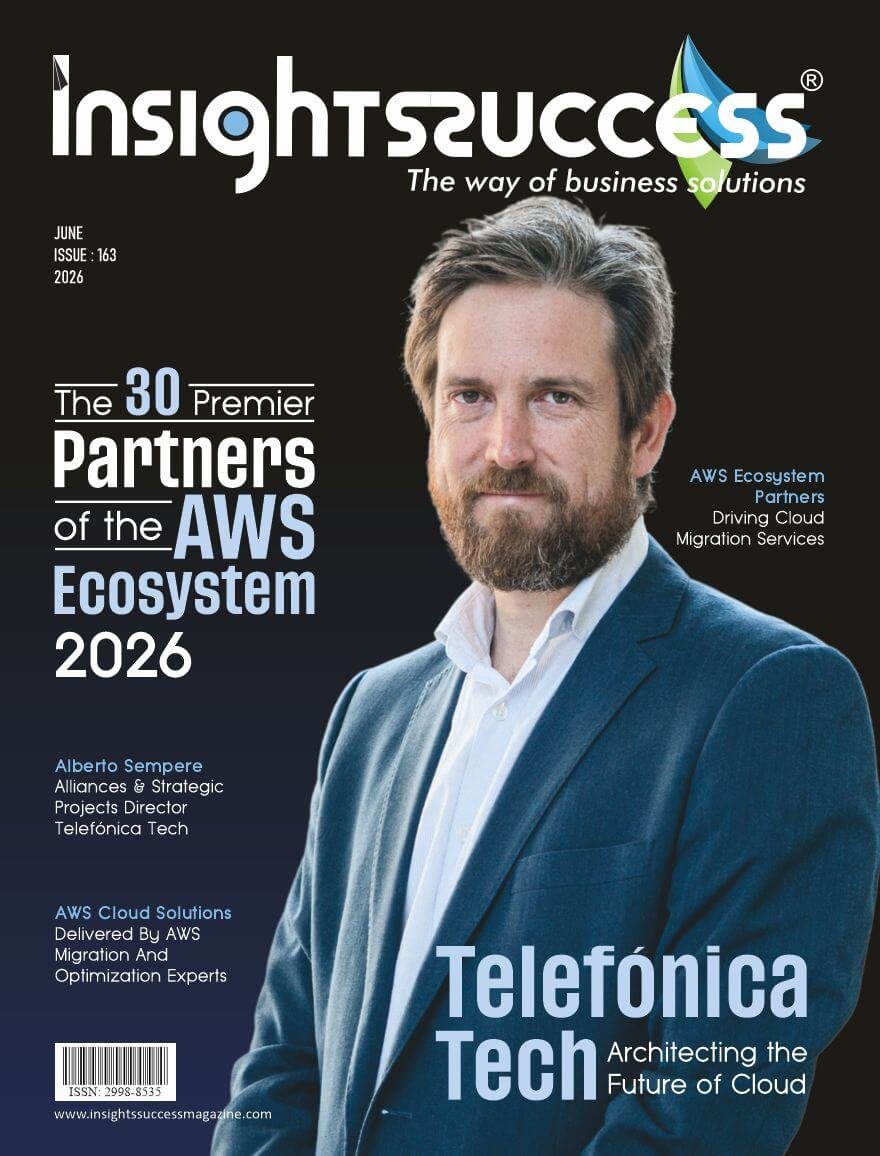
The 30 Premier Partners of the AWS Ecosystem 2026
10 Best Logistics Companies to Watch in 2022 June2022 Lorem ipsum dolor sit amet, consectetur adipiscing elit. Ut elit tellus, luctus nec ullamcorper mattis, pulvinar dapibus leo. Lorem ipsum dolor sit amet, consectetur adipiscing elit. Ut elit tellus, luctus nec ullamcorper mattis, pulvinar dapibus leo. The 30 Premier Partners of the AWS Ecosystem 2026 Celebrating 30 exceptional AWS ecosystem partners recognized for delivering cloud innovation, accelerating digital transformation, enabling scalable solutions, and helping organizations unlock business value through expertise, collaboration, and customer-centric excellence. Digital Link Quick highlights Quick reads

Telefónica Tech: Architecting the Future of Cloud
Transformation at enterprise scale is rarely the result of a single breakthrough. The system develops through strategic funding together with technical expertise and a long-term operational model that connects innovative work to responsible practices. Telefónica Techhas established itself as a recognized cloud transformation partner while serving as a reliable consultant to businesses that deal with difficult digital transitions through its unnoticeable development of foundational elements. The company has pursued a cloud strategy since its initial cloud efforts, which led to its current position as an AWS Premier Partner through its ongoing development of essential capabilities. The evolution of the organization centers on Alberto Sempere, Alliances & Strategic Projects Director at Telefónica Tech, who uses his leadership skills to change strategic partnerships with AWS into actual business results. His approach emphasizes depth over optics, ecosystem collaboration over transactional growth, and long-term value over short-term gains. The company has developed its capabilities through this leadership to support regulated industries and public sector modernization and enterprise cloud services. The organization measures its progress through three core elements, which represent its dedication to secure-by-design systems, sovereign cloud solutions, and cross-domain integration. Telefónica Tech has established its digital economic presence through its expansion, which shows its business growth and ability to operate in a digital age, and its strategic development of business technology. The Architecture of Ambition Telefónica Tech’s ascent within the AWS ecosystem did not happen by accident. The company pursued a deliberate, multi-layered strategy, one that fused technical investment with a clear articulation of where it could uniquely add value. At the heart of that strategy sits Altostratus, part of Telefónica Tech, the firm’s specialized AWS Center of Expertise. Altostratus functions as the nerve center of the company’s cloud-native delivery model, housing the engineers, architects, and cloud specialists who design and execute some of the most complex migration and modernization engagements in the market. The company stacked its credentials systematically: AWS Competencies in Security Consulting, Government, Migration & Modernization, and SMB. Validated services spanning AWS Direct Connect, Amazon RDS, and Amazon EC2 for Windows. Managed Services Provider status. Each credential represents not just a certification on the wall, but a validated ability to deliver enterprise-grade outcomes across increasingly complex environments. Sempere is direct about the intent behind this accumulation of credentials: “We did not chase competencies for optics. Each one reflects a genuine capability we had built and a customer segment we were already serving at scale. The credentials follow the substance, not the other way around.” Alongside its technical build-out, Telefónica Tech aligned itself closely with AWS’s strategic direction and evolving service portfolio. “The company developed the AWS Cloud Camp in collaboration with Escuela 42 in Madrid, a joint training initiative focused on cultivating cloud talent and AWS expertise.” Cloud Camp graduates enter a market that desperately needs skilled AWS practitioners, and the organization’s willingness to invest in the broader ecosystem reflects a philosophy that long-term leadership demands ecosystem stewardship, not just internal excellence. Two Markets, One Unified Edge Ask most cloud transformation firms where they play, and they will name a vertical or a deal size and stop there. Telefónica Tech occupies an unusual dual position, simultaneously mastering the public sector, where the stakes are existential and the compliance requirements unforgiving, and the SMB segment, where scale and accessibility define the value proposition. In the public sector, the company has built what can only be described as a fortress of trust. The company participates in AWS’s Authority to Operate program and runs sovereign cloud models that comply with the ENS (Spain’s National Security Framework), GDPR, and broader EU regulatory requirements. Government agencies and public institutions do not hand their mission-critical workloads to just anyone; they demand proof of resilience, compliance maturity, and a track record that spans years, not quarters. They deliver all three, supported by a global workforce of thousands of security specialists operating across multiple geographies and industries. On the SMB front, the organization benefits from one of the most powerful advantages any cloud partner can have: distribution scale. Telefónica reaches more than 80% of the SMB market in Spain, a footprint that gives the firm an unmatched runway for cloud adoption among smaller enterprises. The company packages this reach with preconfigured AWS solutions, cost-optimized migration paths, and managed services designed around the operational realities of smaller organizations. Sempere frames this dual market position as a strategic strength rather than a tension to manage: “Our public sector depth and our SMB reach are two sides of the same coin. Both require trust, both require tailored solutions, and both reward partners who invest in understanding the client’s world, not just the technology.” Security as a First Principle If there is one theme that cuts across every dimension of Telefónica Tech’s AWS practice, it is security. The company does not treat cybersecurity as an add-on or a compliance checkbox — it builds security into the architecture from the first whiteboard session. This philosophy flows naturally from Telefónica’s standing as one of Europe’s and Brazil’s most influential cybersecurity players, a position validated by independent analysts including Avasant, which placed the company among the top-tier cybersecurity leaders globally. The company’s security practice extends into operational technology environments, a domain that most cloud providers still treat as a specialized afterthought. The company’s experience securing OT infrastructure for energy, healthcare, finance, and critical infrastructure demonstrates a depth of expertise that few competitors can match. When enterprises in these sectors migrate to AWS, they carry with them a complex matrix of compliance requirements, data residency concerns, and operational dependencies that demand equally sophisticated cloud architecture. The firm designs specifically for this complexity, not around it. Sempere describes the company’s security posture as non-negotiable. “Security-by-design is not a feature we offer; it is the condition under which we build everything else. When a regulated enterprise or a government agency trusts us with their cloud transformation, they trust us with infrastructure that cannot fail. We treat that responsibility accordingly,” he says. The practical output of this mindset

HipLink Software Redefining Mission-Critical Communications for the Cloud Era
A single second can make the difference between a saved life and a lost life, so communication is essential. At HipLink Software, the company has constructed its identity based on that fact. It was established on the idea that mission-critical organizations deserve communication infrastructure that is as dependable as their staff, including decades of building a solution to keep hospitals in touch, first responders connected, and emergency services operational, even when all other systems are down. Headquartered in the United States, the startup is dealing with a specialized intersection that very few technology firms can operate in and that is the life-safety protocols, enterprise-grade cloud infrastructure, and real-time communications. The company designs, develops, and implements sophisticated wireless message and notification systems to organizations operating in high-stakes settings – those operated by institutions whose consequences of a misplaced alert or lost notification can be irreversible. What makes HipLink Software stand out is not only its technology stack, but its institutional DNA. The aspect of reliability is not a feature; it is a non-negotiable lower limit, which explains all products, architectural decisions, and interaction with customers. Leadership Grounded in Operational Reality At the helm of HipLink Software stands CEO Pamela LaPine, whose professional background spans more than three decades in public safety communications and hospital operations. Her career reads less like a traditional tech executive’s resume and more like a field manual for crisis communications. She has worked inside the environments organization serves, understanding not just what organizations need, but why, and what happens when systems fail. LaPine’s leadership philosophy centers on a conviction: technology is not the goal; it is the consequence of vision. Before her engineering teams write a line of code, HipLink Software studies how organizations function during emergencies, clinical events, and large-scale disruptions. The resulting products do more than improve message delivery; they resolve systemic communication friction that costs time, coordination, and lives. This vision-driven model shapes the company’s culture. Engineering, operations, and customer teams align around KPIs connecting innovation to outcomes. Cross-functional collaboration ensures individual expertise strengthens collective performance. Products Built for the Environments That Cannot Fail Organization’s core product portfolio centers on wireless messaging, mass notification, and intelligent alerting platforms. Their clients include public safety agencies, hospital systems, utilities, and enterprises where uptime is measured not in percentages, but in lives and operational continuity. The flagship HipLink Software Wireless Messaging Software enables organizations to send critical alerts across multiple channels simultaneously, including SMS, email, pager networks, voice calls, and push notifications. This multi-channel approach ensures no single point of failure can silence an alert, embedding redundancy into crisis communication. HipLink’s platforms integrate with existing hospital and public safety systems, connecting electronic health records, computer-aided dispatch, and incident management tools into unified workflows. Rather than replacing existing investments, it adds intelligent notification and escalation capabilities, accelerating adoption and reducing disruption. The solutions support HIPAA-aligned and CJIS-compatible environments, meeting stringent healthcare and law enforcement requirements. Governance and agility, often seen as competing priorities, operate as mutually reinforcing disciplines in the company’s product design. The AWS Partnership: A Strategic Inflection Point In 2020, HipLink’s executive leadership made a defining strategic decision to deeply integrate Amazon Web Services into the company’s architectural foundation. This was not a routine migration. Leadership recognized AWS as a long-term innovation platform capable of delivering the scalability, automation, and resilience that mission-critical communication environments demand. Today, this company holds AWS Premier Partner status, reflecting both technical proficiency and sustained strategic investment. High-availability design, distributed processing, automated scalability, and security-first frameworks are intrinsic to system characteristics. The organization’s cloud-native architecture leverages AWS’s geographically distributed infrastructure to maintain performance during large-scale incidents when coordination demands peak. For healthcare, AWS-backed deployment enables secure cross-departmental integration across hospital systems, accelerating coordination between physicians, nurses, and staff. Faster information exchange translates to quicker response times, improved efficiency, and better patient outcomes. HipLink Software treats its AWS relationship as a collaborative innovation partnership, continuously translating emerging AWS services in analytics, automation, machine learning, and resilience into specialized solutions for its target industries. Engineering at Scale: A Globally Distributed Development Model HipLink’s commitment to continuous innovation required a corresponding investment in engineering capacity. The company operates a globally distributed development organization, including an extensive engineering team in Southeast Asia, that supports around-the-clock innovation cycles without sacrificing deployment discipline or product quality. Leadership deliberately prioritized long-term technological advancement over short-term financial optimization. It reinvested in platform modernization initiatives and expanded its engineering workforce at a pace that anticipated customer demand, rather than simply responding to it. That forward investment philosophy now positions the company ahead of the growing market need for resilient, cloud-native communication platforms capable of supporting mobile and distributed workforces across diverse geographic environments. Intelligent Communications: The Next Frontier HipLink Software is advancing into the next phase of communication platform evolution, defined not by message delivery, but by intelligent operational assistance. The company is investing in artificial intelligence and automation technologies that enable contextual awareness, intelligent routing, and adaptive escalation workflows. These capabilities move company’s platforms beyond notification infrastructure to systems that support real-time decision-making. Future deployments will interpret operational context, automate escalation paths, and help organizations prioritize responses during complex, fast-moving events. Leadership envisions communication platforms evolving into unified operational hubs, orchestrating workflows across distributed organizations rather than merely transmitting information. Innovation at HipLink Software begins with customer deployments, not trend-watching. Engineering teams prototype solutions based on field challenges, integrate emerging AWS services, and test improvements in live environments. This grounded approach ensures new capabilities address real operational problems, a distinction critical to the public safety agencies and hospital systems It serves. Market Position and Client Trust HipLink Software serves organizations whose missions depend on uninterrupted communication performance. These are not transactional vendor relationships; they are operational partnerships that extend across years and through the most demanding conditions these organizations face. The company’s credibility is not established during product demonstrations. It is proven during critical operational moments when systems must perform flawlessly, and the cost of failure is impossible

Driving Cloud Migration Services
AWS Ecosystem Partners Organizations across different industries are pushing forward their digital transformation work, trying to get more agility, better scalability, and day to day operational efficiency. In the process of modernizing technology infrastructure, cloud computing shows up as a real key factor for innovation, and growth. Yet, shifting workloads, apps, and data up to the cloud is never just a quick step, it needs careful planning along with execution. That ’s also where AWS ecosystem partners come in, because they support businesses through practical cloud migration services, which can help lower the overall complexity and at the same time maximize the actual value. Understanding The Cloud Migration Landscape Cloud migration isn’t just a technology thing anymore, it’s more like a strategic business choice that can quietly affect how operations run, how customers feel, and how competitive a company stays over time. With good Cloud Migration Services, you typically start by looking at what infrastructure is already in place, then figure out what gets moved first, and deal with potential risks in a very hands-on way. After that, you also need to keep business continuity steady during the whole shift, because disruptions can snowball fast. To navigate these challenges successfully, organizations often rely on AWS ecosystem partners that have specialized knowledge in cloud architecture, migration planning, security, and compliance. In practice, their experience helps organizations make informed decisions, while also minimizing disruption during the migration project , even when things feel messy at first. The Value Of AWS Ecosystem Partners The cloud environment keeps evolving pretty fast, bringing in new tools , services, and also best-practices that seem to show up every few weeks. AWS ecosystem partners add a lot of useful insight that helps a business adopt cloud technologies with more confidence, and not just in a generic way. Their know-how runs across multiple industries and different use cases, so organizations can choose the right solutions that match what they actually need operationally , instead of what sounds good on paper. When you work together with AWS Ecosystem Partners , companies get access to tried and tested methods, technical direction, and actual help with execution. In a lot of cases, this kind of cooperation speeds up how fast the work gets done, but also it makes the odds better for a smoother cloud adoption results. Enhancing Business Agility Through Migration One of the main benefits of Cloud Migration Services is that it can boost organizational agility, a lot. Because cloud environments come with the kind of flexibility where you can scale resources depending on business needs, organizations are able to move faster, to react to market shifts and even customer demands, before they get out of hand. Also it’s sort of… easier to adjust, rather than get stuck waiting on the usual setup. Modern Cloud Migration Services also support application modernization efforts , that sort of help boost performance and operational efficiency too. So when you move legacy systems into cloud-based environments , businesses can ease up on infrastructure constraints and, in practice, build a better base for upcoming innovation. Security And Compliance Considerations Security is still a major concern for organizations trying to move toward cloud transformation. A solid AWS Ecosystem Partner, or rather partners who really know the space, can help a business build a secure cloud setup that fits regulatory demands , and the usual industry standards too. With that kind of know how , they guide teams to put in place security controls, improve monitoring abilities, and create governance structures so that critical assets stay protected , even when things change. At the same time, Cloud Migration Services often include risk assessments along with compliance planning , to make sure that the migration work actually meets both legal and operational requirements. This proactive angle helps organizations keep their credibility steady while also cutting down on potential vulnerabilities , and it kind of prevents things from getting out of hand. Driving Innovation And Long-Term Value Beyond infrastructure modernization, cloud adoption kinda opens the door to innovation. AWS ecosystem partners, they help organizations make use of more advanced cloud capabilities like artificial intelligence, machine learning, analytics, and automation. With these tools in place, companies can improve their decision making, and also shape new value streams. It’s like technology that supports smarter choices and more outcomes, not just migration. Similarly, well-executed Cloud Migration Services help with long-term digital transformation goals, while giving scalable platforms for what comes next, and like future growth. In practice, organizations can innovate more quickly too when theyre not stuck with the old infrastructure limitations, you know. This sort of approach also makes the whole environment more resilient, and a bit more adaptive in the long run. Read Also : Digital Health Leadership Across MEA

Delivered By AWS Migration and Optimization Experts
AWS Cloud Solutions Cloud computing now feels like a kind of backbone for how modern businesses run, and honestly, it’s become foundational in a way that’s hard to ignore. Companies are leaning on cloud technologies more and more, not only for scalability but also to get better day-to-day operational efficiency and, in a practical sense, to speed up innovation. As adoption keeps rising, many businesses are looking for advanced AWS Cloud Solutions that can handle complicated operational needs, while still supporting long term digital transformation goals. To make that happen, a lot of organizations end up depending on AWS Migration and Optimization Experts, who help them maximize the real value of their cloud investments, even when the setup gets messy, or the requirements keep changing. Understanding AWS Cloud Solutions Modern AWS Cloud Solutions cover quite a broad set of services meant to help with infrastructure management, application building, data analytics, security, and business resilience. With these options, organizations can move past older tech boundaries and craft a nimbler operating environment, in a way that feels faster and steadier. By adopting AWS Cloud Solutions, businesses can boost system performance, cut down infrastructure costs, and get access to new capabilities that help with growth and competitiveness. In cloud-based environments, things are also more flexible, so organizations can adjust or scale resources as business needs to shift, which is kind of handy for staying ahead. The Role of AWS Migration and Optimization Experts Successful cloud adoption usually means more than just throwing technology in place. Organizations still have to think through migration strategies, handle workloads the right way, and then keep tuning and optimizing performance over time, because things change. This is basically where the AWS Migration and Optimization Experts can help in a practical sense. With specialized know-how and technical expertise, AWS Migration and Optimization Experts help organizations assess what they already have, chart a migration roadmap, and put proven cloud operations practices in place. Their guidance reduces overall confusion, while also boosting migration results and long-term efficiency. Optimizing Performance and Cost Efficiency One of the main benefits of today’s cloud spaces is the ability to tune resources around business needs. With good AWS cloud solutions in place, organizations get tools that boost how well they use what they have, automate routine stuff, and also make the operational visibility feel a lot clearer. It’s kind of the whole point really, adjust fast, run smoother, and keep an eye on what’s happening, without too much friction. At the same time, AWS Migration and Optimization Experts help organizations spot opportunities to cut costs and speed things up. With ongoing observation and fine tuning, businesses can keep their cloud environments matching operational aims, and also those changing requirements. In other words, it stays aligned. Supporting Innovation Through the Cloud Innovation is one of those major drivers when it comes to cloud adoption, and you can feel it in practice. With Advanced AWS Cloud Solutions, teams get access to a bunch of tech options like artificial intelligence and machine learning, plus data analytics, automation, and other smart building blocks. This mix helps organizations come up with new products; it also sharpens customer interactions, and it supports the way decisions are made, so things run more effectively over time. To maximize these opportunities, AWS Migration and Optimization Experts help organizations integrate advanced technologies into existing workflows but also mesh it all together. Their expertise makes sure cloud innovations get implemented in a practical way, and that they deliver measurable business value. Strengthening Security and Resilience Security plus resilience is essential, honestly in any cloud strategy. With today’s AWS Cloud Solutions, you get sturdy security controls that keep operations steady during disruptions and help an organization guard against sensitive information. Those same features also back compliance obligations, while they lower day to day operational risk. Likewise, AWS Migration and Optimization Experts help companies put in place governance frameworks, monitoring systems, and disaster recovery strategies, that sort of lock in cloud resilience. Through their guidance, organizations are able to keep operations secure as well as reliable, not just in theory but in practice. Sometimes it even feels like a steady watch, across the whole environment, so everything stays steady and responsive. Looking Ahead As cloud tech keeps evolving a bit, organizations will end up leaning more on AWS cloud solutions, to help with digital transformation and business expansion. You can expect newer innovations too to bring a kind of fresh momentum for efficiency, automation, and smarter, more informed decisions. In other words, there is this whole shift, where governance and scaling feel less like chores, and more like part of the everyday. The role of AWS Migration and Optimization Experts will keep getting broader, as orgs go looking for more specialized expertise to deal with cloud environments that are now way more sophisticated than before. What they bring will still be really essential, not just in theory but in practice, for helping businesses reach sustainable value from their cloud investments. Read Also : Driving Cloud Migration Services

UK Introduces New Rules to Strengthen Publisher Rights in Google Search
Prime Highlights- UK regulators have given publishers more control over how their content is used in Google’s search services. Google will be required to provide clearer attribution and links to original publisher content in search results. Key Facts- Google is the world’s largest search engine and handles more than 90% of online search queries in the UK. The new CMA requirements are aimed at improving transparency and supporting fair competition in the digital market. Background- Britain’s competition regulator has introduced new requirements for Google’s search services, giving publishers greater control over their content and aiming to strengthen competition in the digital market. The Competition and Markets Authority (CMA) said the measures will allow publishers to decide whether their content can be used for training Google’s technology models. The regulator said the move is designed to improve transparency and provide publishers with stronger bargaining power over the use of their material online. Under the new requirements, Google will also need to ensure that content used in generated search responses is clearly attributed to its source. Publishers, including news organisations, must receive visible links that direct users to the original content. The CMA said these changes will help create a fairer environment for content creators while improving access to reliable information. The regulator has been examining Google’s position in the UK search market, where the company handles the vast majority of online search queries. The latest measures form part of broader efforts to support competition and encourage balanced growth across the digital economy. CMA Chief Executive Sarah Cardell said the regulator had designed the requirements to reflect recent and future changes in Google’s search services. She said the measures are intended to ensure that competition remains effective while supporting publishers and users. Google had previously indicated that it was developing additional search controls to address concerns raised by UK regulators. The new framework aims to give publishers clearer guidelines on how their content can be used online. Read Also : Sunshine Silver Raises $270 Million in US IPO Listing

The Most Influential Personality To Follow In 2026
The Most Influential Personality to Follow in 2026 Celebrating exceptional leaders whose vision, innovation, and influence are creating lasting impact across industries. This feature highlights individuals driving transformation, inspiring progress, and setting new benchmarks for leadership, growth, and excellence worldwide. Digital Link Quick highlights Quick reads

Strategic Sourcing Solutions Transforming Procurement into a Strategic Advantage
Procurement Analytics and Insights Procurement has transcended the role of just negotiating the lowest price for products and services. In the modern context, procurement has become a crucial driver for businesses to create value, achieve operational excellence, and strategize, and grow. Organizations are leveraging the knowledge gained from their spending habits, supplier performance and market dynamics through Procurement Analytics and Insights, which are continually evolving in the global markets. Meanwhile, Strategic Sourcing Solutions are helping businesses to link sourcing activities to overall business objectives and turning procurement into a strategic asset. The Growing Importance of Data-Driven Procurement Businesses have created a huge amount of procurement data as a result of digitizing all business processes. As a result of the digital transformation of business processes, a large amount of data has been created in relation to procurement. But data is useless if it cannot be made into some kind of intelligence. Here comes the role of Procurement Analytics and Insights. Through this analysis of spending patterns, supplier indicators, contract performance and market conditions, organizations can make informed decisions that will maximize efficiency and minimize risk. For modern procurement leaders, you know, the ones on a mission to uncover cost savings, keep supplier relationships healthy and anticipate future procurement needs, Procurement Analytics and Insights are basically a must-have toolset. These capabilities give you better visibility around the procurement process, so organizations can be more proactive in how they respond to market fluctuations rather than wait until things show up as an actual problem. Strategic Sourcing as a Business Enabler The analytics provide visibility, the structured sourcing process is needed to get things done. Through Strategic Sourcing Solutions, organizations can move from transactional purchasing towards a longer-term procurement strategy path which can fulfill their organizational objectives. Companies do not only evaluate their suppliers based on price, but they also take into account the supplier’s quality, innovation, sustainability, reliability, and value added. By implementing Strategic Sourcing Solutions, organizations can build better relationships with suppliers, broaden their sourcing strategies and reduce risk of supply disruption. This strategic vision can contribute to establishing a more sustainable procurement system in the future that can support the business. Enhancing Supplier Performance and Collaboration Today’s business world is interconnected, and supplier relations are crucial. Effective organizations look at suppliers not just as vendors, but like valuable partners, who can bring in their own ideas for innovation, and also help with day to day operational success. With Procurement Analytics and Insights, procurement teams can dig into supplier performance using measurable indicators such as delivery reliability, quality measures, responsiveness, and cost efficiency. These insights help companies engage suppliers more effectively and help to foster ongoing improvement efforts. Through Strategic Sourcing Solutions, organizations can build partnerships to foster innovation and mutual value creation and enhance service levels. Effective supplier relationships greatly help to ensure procurement effectiveness and business resilience. Improving Risk Management and Resilience The halts in the supply chain, geopolitical risks, and those shifts in the economy have pushed proactive risk management to the front. It becomes key to spot vulnerabilities earlier, before the effects start hitting the organization’s day to day operations. Procurement Analytics & Insights bring forward clearer visibility to judge supplier risks, keep an eye on market trends and also foresee potential disruptions. Meanwhile, Strategic Sourcing Solutions help organizations put together contingency plans, vary their supplier base, and keep sourcing resilience alive. When you factor risk assessment into procurement decisions, companies can limit disruptions and keep operations running with continuity, even when things are a bit uncertain. Driving Sustainability Through Procurement Many companies have sustainability as a major focus. Customers, investors and regulators are putting increasing pressure on companies to practice responsible sourcing and environmental responsibility. Procurement Analytics and Insights allow companies to monitor metrics related to sustainability, evaluate supplier adherence to standards, and gauge environmental effects during the procurement lifecycle. In a similar vein, Strategic Sourcing Solutions help you touch those sustainability objectives by weaving environmental, social, and governance aspects right into supplier selection and assessment criteria. so, companies can tick off their business targets and join more extensive sustainability endeavors, which, in turn, improves their corporate image too. The Future of Strategic Procurement Artificial intelligence, machine learning, predictive analytics, and automation will provide further enhancements to Procurement Analytics and Insights, allowing organizations to make quicker and more accurate decisions. All of these technologies will help to enhance prediction capability, streamline procurement, and facilitate better resource allocation. Companies of the future will persist in their investment in Strategic Sourcing Solutions to create agile, resilient and value-driven procurement systems. With a mix of advanced analytics and strategic sourcing techniques, companies can shift procurement from a cost management process to a competitive differentiator. Read Also : Delivered By AWS Migration and Optimization Experts