






Sophie Blum: Decades at the Top, So You Don’t Have to Climb Alone.
Sophie Blum does not speak about leadership the way most executives do. There is no recycled framework, no rehearsed answer. What she offers is something rarer, the kind of clarity that only comes from having led at the highest levels of global business, and the conviction to make it available to others without the decades of trial and error. Together with her husband and co-founder Eric, she built ESBC Ventures on a single belief: ambitious leaders deserve access to the best business thinking in the world, exactly when they need it most, and not a day later. We sat down with Sophie to understand what drives her, what she has learned, and why she and Eric built ESBC Ventures. I Have Always Led. I Just Did Not Always Have the Title. Perhaps it starts with being the eldest of three. From a young age, I understood intuitively that leadership is not about authority, it is about responsibility. The responsibility to be present, to read a situation clearly, to move people forward even when you yourself do not have all the answers. That instinct followed me into every professional chapter. I was one of the first Global Customer General Managers to come from a non-sales function at Procter & Gamble, handling already half a billion revenue, among the first female leaders in an emerging business, and one of the first professional leadership trainers in the company, placed in high-stakes rooms, expected to grow others while growing myself, often before I felt traditionally ready. What I discovered in those moments is something I now pass on to every executive I work with: the leaders who grow fastest are not the ones who wait for perfect conditions. They are the ones who commit to the discipline of leadership every single day, in the moments that are uncomfortable, uncertain, and deeply visible. One of my most stretching experiences was moving from leading categories to leading a global customer, in other terms, from marketing to sales. Overnight, I stepped into a 75% uncomfortable zone. No playbook, no safety net. Just the discipline of staying present, learning fast, and leading anyway. That experience taught me more about leadership than any of the roles where I already knew the terrain. Many of those I mentored in those early years have gone on to lead companies and organisations across the world. That network of impact, not any single business result, is what I am most proud of. It is also what drove me, eventually, to co-found ESBC Ventures. Growth Does Not Happen in the Steady Years. It Happens When Everything Is at Stake. Some of my most formative experiences came not from managing what already worked, but from building what did not yet exist. Across Fortune 50 corporations, multi-billion family businesses, and scale-up startups, I have led the launch of entirely new business functions, creating structure, hiring teams, defining culture, and establishing credibility in markets where no one knew the brand yet. I have led geographic expansions across India, the Middle East and Africa, and Eastern Europe, markets where the organisation had to become something genuinely new, fast, while still delivering results in its existing territories. Each of those experiences demanded the samething: the ability to hold a clear vision of where you are going while being brutally honest about where you actually are today. The gap between those two realities is not a problem, it is the work. And the leaders who can name that gap clearly, communicate it without fear, and build momentum inside it are the ones who create something that lasts. This is what I help executives do. Not by giving them a manual, but by helping them find their own clarity faster than they would alone. There Are Two Moments in a Leader’s Life When Having the Right Mentor Changes Everything. When I think about the executives Eric and I work most closely with, they tend to be living through one of two defining chapters. The first is stepping into the role of CEO, or Head of business for the first time. You have worked your entire career for this moment. You know your industry. You know your business. And yet nothing fully prepares you for the particular weight of that seat. When I was first promoted to General Manager, the role where you become fully accountable for the P&L and for people’s careers, I quickly understood how lonely that position truly is. The organisation is watching every signal you send, and there is no one above you to absorb the uncertainty. Having a mentor who has already sat in that chair, who can help you lead with confidence from day one rather than spending two years finding your footing, that changes everything. The second moment is the crossroads, when a leader, a team, or an entire business arrives at a point of genuine inflection. Do we expand? Do we reinvent? Is this the right structure, the right market, the right strategy for what comes next? These are the moments where experience matters most, and where the cost of the wrong decision is highest. Having someone beside you who has navigated those crossroads multiple times, across Europe, the Middle East, Africa, the US and beyond, changes the quality of every decision you make. These are the leaders we built ESBC Ventures for. In Uncertain Times, the Leaders Who Wait Are the Ones Who Fall Behind. We are living through a period of profound global disruption. Supply chains, geopolitics, technology, talent, the rules that governed business a decade ago are being rewritten in real time. And in that environment, I see two types of leaders emerge. The first type waits. They gather more data, hold more meetings, delay decisions until clarity arrives, not realising that in a fast-moving world, that clarity never comes. Wait and see is not a strategy. It is a slow surrender of competitive advantage The second type acts, not recklessly, but with what I call structured intuition. They combine

The Role of Experiential Learning in Leadership Development
Beyond Credentials Leadership does not come from knowledge alone. A person may know absolutely everything there is to know about proper management, he may know all there is to know about leaders, and he may have been trained many times before, but when faced with an unruly employee or a difficult situation, he would not be able to cope. This is how leadership comes about. This is where the value of experiential learning comes into play. By using this method, a person can contribute towards the development of knowledge through experience and reflection, as well as problems and experiences. Moreover, this method makes decision-making and problem-solving more efficient. Experiential Learning as a Foundation for Learning Development The process of experiential learning is rooted in a straightforward principle where the participant in the experience will be able to learn in a better way if he/she takes an active role in the experience rather than just being a passive listener. This means that instead of going through a lecture about how to deal with conflicts, for example, the emerging leader will have to find ways to solve the conflict in a simulated environment at the workplace. In this way, experiential learning makes learning development very practical. It gives individuals the ability not only to read about leadership ideas but also to put these ideas into practice and assess their effectiveness. Turning Challenges into Learning Development Opportunities Leadership development usually occurs when individuals are pushed out of their comfort zones. Putting employees in charge of cross-functional projects, managing initiatives, and responding to issues they have not faced before helps to discover talents that traditional training might not discover at all. Such experience is also useful for teaching. The project might fail in achieving its goal, but the leader will understand what effect the results had on communication, delegation, planning, and management of stakeholders. Constructive failure is a great source of knowledge. Such experience promotes the development of learning because it helps professionals to see every challenge not as something to prevent progress but as something to gain from. Over time, leaders become more comfortable with unpredictability and confidence in their decisions. Reflection: The Missing Link in Learning Development Just having experience does not necessarily mean that one is a good leader. Reflective practice transforms experience into learning. Once the project or situation has been completed, there should be an opportunity for the leader to analyze the whole thing and reflect upon it: What went well? What did I miss? What was the impact on other people? What would I do differently next time? There are many ways in which organizations can help the leaders to learn from experiences, including mentoring dialogues, keeping a leadership journal, receiving feedback, communicating with colleagues, and conducting reflective reviews. Learning Development Through Real-World Responsibility One of the most effective types of experiential learning involves giving emerging leaders actual responsibility. Instead of restricting leadership development inside training facilities, there could be chances to chair meetings, mentor peers, run budgets, coordinate teams, or head strategic projects. Actual responsibility means being accountable. When actions have actual consequences, leaders start realizing the significance of being prepared, communicating, making judgments, and owning their actions. Such an approach ensures that learning development becomes very practical for leaders. They start learning how to balance various interests and how to think about the larger implications of their decisions. Building Emotional Intelligence Through Experience The very definition of leadership implies people and, therefore, emotional intelligence becomes one of the essential attributes of good leadership. In turn, the experience of learning provides numerous opportunities for developing emotional intelligence. Working with different personalities, resolving conflicts, receiving criticism, and motivating people provide a great deal of practice for leaders to become more aware of their own emotions and more sensitive to others’ emotions. A tough conversation can give much more information on empathy and attentive listening than a purely theoretical discussion. Through experience and feedback, leaders learn how to become more effective in terms of interpersonal awareness. And the human aspect of learning development is required to establish trust rather than to dominate over people. Feedback Makes Learning Development More Effective Another equally important part of experiential learning is feedback. Without feedback, one will continue to make the same mistakes without even being aware of it. Feedback must always be timely, constructive, and performance-enhancing. Instead of pointing out mistakes in the way an individual has presented himself/herself, the coach can give some pointers about how he/she could present himself/herself better. With the inclusion of feedback in the organizational learning and development program, it becomes a continuous process instead of an intermittent one. Leadership begins seeking feedback from their peers, coaches, bosses, and subordinates. Creating Leaders Who Can Adapt and Evolve As there is continuous change in technology, changes in customers’ needs, economic instability, and changes in working conditions, there are also changes in the business environment. This means that the leader cannot rely on the experience gained since time immemorial. Experiential learning enables one to become flexible as a result of learning, unlearning, and acting. In all these instances, one becomes broader in terms of perspective and confident in dealing with uncertainties. This means that learning is a process and not an end. Good leaders know that no matter what level of experience one acquires, he or she can never be considered infallible but is grounded enough to learn. From Experience to Leadership Excellence In the end, the method of experiential learning is a way to make sure that the process of leader development mirrors the essence of real leadership. Experts can experiment, make decisions, make mistakes, get feedback and continue learning through more difficult situations. The organizations that use such a method will be able to develop leadership pipelines, which will be based on practical abilities rather than theories. At the same time, however, they will be able to create a culture in their organization, in which every challenge becomes an opportunity for learning and professional development. Leadership

Executive Coaching in the Digital Age
Adapting Leaders for Tomorrow The modern-day dynamic and ever-changing nature of work-life has made it impossible for the few leaders who might have been prepared for this. New technologies such as artificial intelligence, hybridization, online collaboration, security issues, changes in customer preferences, and constant disruptions in the market have all revolutionized the nature of leadership skills required. The modern-day leader does not require technical competence alone; emotional intelligence, flexibility, strategic thought processes, and inspiring skills are essential. It is in this scenario that executive coaching becomes extremely important. While coaching was earlier perceived only as a tool of development for senior executives, it has now become a means of understanding one’s strengths and weaknesses and acquiring the required skills for the digital age. How Executive Coaching Is Redefining Modern Leadership Leadership in the era of digitalization implies that one has an entirely different perception of it. Insufficient information, distance and diversity of teams, and the change of roles due to the use of technologies call for prompt decision-making. An executive coach helps one to relax and get away from everydayness for a while to reflect upon how one leads. Instead of offering him ready-made solutions, an experienced coach encourages executives to dig deep into themselves and find their own questions and answers to them, which are right for them as leaders. It is thanks to this approach that not only self-awareness, but also practical skills in handling certain situations are obtained. Therefore, the outcome is not just a capable executive, but also a good leader who can cope with changes. Executive Coaching and the Rise of Digital Leadership Yet it is not only about technology – it is mainly about people and leadership. The implementation of innovations will influence the way of working, accountability, communication and culture within the company. Thus, it is essential not only for the executives to know about all technological possibilities, but also to understand the attitude of people to these changes. Executive coaching may be used as a tool to make executives more flexible regarding experimentation, uncertainty and constant learning. For example, the executive coach can encourage the executive to think about how he/she would react to the appearance of innovative technology and its impact on the working process or how he/she would explain digital transformation to his/her employees. Building Emotional Intelligence Through Executive Coaching Even though modern technologies can assist in making processes more efficient, they will not eliminate the necessity of interaction between people. On the contrary, in a world where organizations depend increasingly on technologies, the importance of emotional intelligence may become even greater. Managers have to know what their employees need, solve disputes, show empathy and establish trust without being close. Executive coaching is critical when developing such skills. Self-reflection and constructive feedback can help the leaders to understand how their actions affect other people. They may recognize that the way of communication that was successful in an office environment is not applicable in a virtual or multigenerational one. With emotional intelligence, the leaders are able to communicate consciously. Emotional intelligence also makes it possible to create a work environment where employees feel heard, respected and motivated. Executive Coaching for Navigating Uncertainty One of the main characteristics of companies of today is uncertainty. Economic uncertainty, political uncertainties, technological changes, labor shortages, and altered preferences of customers may influence the priority list of a company. Though executives do not have the ability to foresee the future, they can certainly prepare for it. Executive coaching helps the leaders learn how to analyze the decisions taken under uncertainty. The thing is that the leaders will not only respond to what is going on, but will spend some time analyzing the situation and looking for the answers. This ability becomes really important when there is simply no right answer to be found. Strengthening Remote and Hybrid Leadership with Executive Coaching The culture of telecommuting and blended working influenced the process of interaction between the leader and his/her subordinates. The process of performance management cannot be conducted according to the quantity of minutes of interaction. It is necessary to create the atmosphere of trust and effective communication via the use of Internet technologies. The leaders may use the method of executive coaching for getting rid of the comfort zone of routine working procedures. The leaders will concentrate on results, empowerment, cooperation, and motivation of employees. It will be possible for the leader to master the complex skill of digital communication thanks to the technique of executive coaching. Sometimes, the absence of response, silence during the phone conversation, and even e-mail can have some meaning. Using Executive Coaching to Develop Future-Ready Leaders However, it has been understood that there is a need for developing leaders in organizations. But this development does not necessarily mean executive development. Therefore, there is always a need for developing those people who have leadership qualities. Executive coaching can facilitate in this process because it enables the potential leader to identify his/her strengths and weaknesses. He/she may be aware of the areas where he/she needs to develop. He/she can improve his/her skills in strategic thinking, communication, delegation, conflict resolution, and collaboration with stakeholders. There will be leaders at all organizational levels. Executive Coaching in an AI-Driven Business Environment AI is transforming the way companies operate. Through automating processes or making decisions, AI has become integral to decision-making processes. However, business executives must recognize when the use of technology is required and when human decisions must come into play. Coaching can help business executives pose such questions without being caught up with the speed of technology. Leaders who are suitable for the age of AI would not necessarily be those who understand everything about AI but those who know how to pose the right questions and evaluate risks. The Human Future of Executive Coaching However, even as technology continues to shape the ways we work, the essence of leadership will forever remain inherently human. Trust, purpose, empathy, courage, and judgment are characteristics that

The Global Icon 2026
The Global Icon 2026 The feature honors an exceptional individual whose visionary leadership, remarkable achievements, and enduring influence have earned global recognition while inspiring others and setting new benchmarks for excellence. Digital Link Quick highlights Quick reads

Dr. Aarathy Radhakrishnan: The Global Icon Redefining Healthcare Quality Culture
Most accreditation stories end at the compliance score. A hospital passes inspection, the certificate goes up on the wall, and the team that built the system moves on to the next audit cycle without ever asking whether the standard actually survived the celebration. The more interesting story is the one that starts after the certificate, when someone notices the gap between passing a standard and actually living it, and decides that gap is worth building a career, and eventually a company, around. Dr. Aarathy Radhakrishnan once stood inside The View Hospital Laboratory in Qatar as it achieved CAP accreditation with 99.5 percent compliance across 1,249 individually audited standard elements, a result most consultants would call a career-defining win and move on from. She treated it instead as evidence of a pattern she had been tracking for years: that hospitals across the region were remarkably good at preparing an inspection and remarkably inconsistent at sustaining the culture behind it once the inspectors left. That gap is what eventually pulled her out of hospital leadership altogether and into founding her own company, HACE, built to close it on a global scale. It is also, in a quieter way, the same gap she has spent her personal life closing, between the discipline her military father and educator mother instilled in her growing up in Salem, Tamil Nadu, and the demands of raising two daughters, sustaining a marriage of over two decades, and performing Bharatanatyam, all while building an international accreditation practice from scratch. Few profiles in this space can claim both a 99.5 percent compliance score and a Universal World Record; Dr. Aarathy Radhakrishnan holds both, and neither, in her telling, was ever the point. A Foundation Built on Discipline and Service Dr. Aarathy Radhakrishnan was born and raised in Salem, Tamil Nadu, in a family that placed education, discipline, and service at its center. Her mother, a school principal for twenty-six years, instilled in her philosophy she still lives today as she pursues an Independent Directors’ Program. She says, “Education is the most valuable investment one can make.” Her father, a war-wounded Indian Army soldier, taught her that challenges do not define limitations but reveal strength. Together, she says, her parents built the foundation on which her entire personal and professional journey rests. That foundation extended into her own family life: twenty-one years alongside her husband, Prajeeth Ramakrishnan, and motherhood to her daughters, Aadhya and Akshitha, experiences she describes as teaching her patience, responsibility, and the discipline of balancing dreams with commitments. From Diagnostics to Culture: The Making of a Quality Leader Her professional journey began in medical laboratory science, where she quickly recognized that accurate diagnostics alone could not guarantee excellent patient care. She says, “Quality should not be viewed merely as compliance with standards, but as a culture that protects patients and empowers healthcare professionals.” That realization pulled her toward healthcare quality, patient safety, clinical governance, and international accreditation, work she carried out across organizations including Hamad Medical Corporation, The Korean Medical Centre, and The View Hospital in Qatar, engaging with standards such as CAP, JCI, AABB, GHA, and ISO along the way. A defining milestone came when she left the stability of government healthcare for a leadership role in the private sector, a step that let her lead the CAP accreditation journey at The View Hospital Laboratory and reinforced her belief in purpose-driven leadership. Founding HACE: A Vision Beyond Compliance Across those years, Dr. Aarathy Radhakrishnan noticed a recurring pattern: many healthcare organisations treated accreditation as a project with a finish line rather than a journey of continuous excellence, letting compliance become the goal instead of the means to better patient outcomes. That observation became the founding idea behind HACE, Healthcare Accreditation and Compliance Excellence. Her ambition for it reaches beyond traditional consultancy. She envisions HACE as a global platform empowering healthcare professionals and organisations through education, leadership development, accreditation readiness, and mentorship, one where professionals can continuously build their competencies while organisations receive practical guidance in building sustainable cultures of quality and patient safety. For me, she says, accreditation is not about achieving a certificate; it is about transforming the way healthcare is delivered. Balancing Purpose and Partnership Asked how she balances a demanding career with her personal life, Dr. Aarathy Radhakrishnan is candid that it has never been about achieving perfect balance every day, but about clear priorities and continuous growth. Every major career decision, she says, including her move into private hospital leadership and later the founding of HACE, was made with the encouragement and partnership of her husband. Outside healthcare, she finds balance through Bharatanatyam, acting, and writing, pursuits she credits with strengthening the discipline, communication, and emotional resilience that also shape her leadership. During the COVID-19 pandemic, she and her husband coordinated over one hundred children from around the world in a virtual rendition of the Indian National Anthem, an effort that earned a Universal World Record and reinforced her belief that meaningful leadership extends well beyond the workplace. Reflecting on a recent career transition that followed organisational restructuring, she says, “While circumstances may change, our values, knowledge, and determination remain our greatest assets.” The Business of Meaningful Impact Her appetite for business, she explains, grew not from a pursuit of commercial success but from a desire to create meaningful change in healthcare at a larger scale. As a healthcare consumer herself, visiting hospitals for her own family, she witnessed patients facing preventable risks tied to inconsistent compliance or gaps in basic quality practice, experiences that convinced her quality should be a daily culture rather than a regulatory checkbox. Her entrepreneurial journey began during a period of professional transition, following organisational restructuring in the healthcare sector, when she chose to transform change into opportunity. Entrepreneurship, she says, requires courage, resilience, innovation, and the willingness to take calculated risks, qualities she credits in part to leading the CAP accreditation journey with 99.5 percent compliance across 1,249 standard elements. That confidence carried directly into how
Powered by Patient Safety Solutions
Hospital Quality Assurance Services In the field of healthcare, there is a need to balance the demands of patients, clinical practice, efficiency, regulation, and personnel. Such a balancing act can only be achieved through having proper systems that help in recognizing areas of weakness, measuring performance, and ensuring constant improvement. The Hospital Quality Assurance Services have been designed to provide healthcare organizations with systems that would help them assess their processes and maintain their standards. Through such systems, healthcare organizations can achieve consistency and improve patients’ experience through practical solutions in patient safety. Building Reliable Quality Frameworks The first step to ensuring quality assurance is by setting expectations about the performance of the clinics and operations. The hospitals must have the right set of policies, procedures, mechanisms to monitor and review their performance in relation to the expectations. The Hospital Quality Assurance Services can assist institutions in evaluating their current process in order to see whether there is something that needs improvement regarding the procedures. By combining the services with Patient Safety Solutions, quality will no longer be about meeting the expectations but about mitigating risks. Identifying and Managing Patient Risks The safety of patients is ensured through the identification of risks that may arise in both clinical and administrative practices. These risks include medication safety, infection control, patient identification, clinical documentation, communication, and emergency management among others. Patient Safety Solutions entail performing risk assessment, analyzing incidents, developing safety measures, training of health care providers, and setting up a monitoring system that aims at minimizing any form of error. Hospital Quality Assurance Services will ensure that this process is done correctly. Using Data for Continuous Improvement Accurate information would help the hospital comprehend its performance and know the areas that require improvements. Performance indicators may include patients’ outcomes, infection rate, re-admission cases, incident reporting, patients’ feedback, reaction time, and other performance indicators. Through an analysis of these performance indicators, it will be easier for leaders to see patterns and set their priority of improvement. The Hospital Quality Assurance Services can be utilized in gathering, analyzing and interpreting relevant information on hospital performance. On the other hand, Patient Safety Solutions can be utilized in converting this information into actions. Strengthening Staff Competence The best-designed quality systems are dependent on staff that know what they are supposed to do and how to do it. Hospitals require continuous training on safety procedures, clinical guidelines, communication, documentation, emergency preparedness, and quality standards. Patient Safety Solutions will help in designing training that makes employees aware of potential hazards and how to deal with them. On the other hand, Hospital Quality Assurance Services will help in measuring the efficacy of training programs by conducting audits, performance evaluations, and compliance checks. Improving Communication Across Departments There are many professionals working together within a hospital and among different shifts. Good communication is thus required in order to ensure continuity. This includes standardized handovers, documentation, escalation, and multidisciplinary collaboration in order to make sure that the relevant information is available to those who require it. Hospital Quality Assurance Services will conduct an assessment of communication methods and offer areas for improvement. Patient Safety Solutions will assist in putting those changes into practice. Supporting Technology-Enabled Quality New technologies are influencing the ways hospitals control their performance and provide care to patients. The use of electronic health records, analytics, automated alerting, and digital reporting may offer useful insights that could be used for quality improvement. At the same time, technology should be introduced with great caution to ensure usability, accuracy, patient privacy, and patient safety. With Patient Safety Solutions, one may identify potential risks connected with technology introduction while designing the necessary measures. Creating a Culture of Continuous Improvement QA should never be regarded as a periodic check. It is an on-going process that demands dedication from management, involvement of employees, valid information and evaluations. Effective Patient Safety Solutions can assist organizations to change their focus from responding to risks into recognizing and managing these risks proactively. Competent Hospital Quality Assurance Services offer a framework necessary for standard monitoring and improvement sustaining. Quality assurance and patient safety can be combined to develop more robust systems for delivering dependable services to clients and ensuring more stakeholder trust. The processes of constant monitoring, training of personnel, reports, and improvement can assist organizations in responding to new problems and at the same time in keeping existing standards in place. With the integration of both quality and safety into one system, healthcare facilities will be able to provide their clients with reliable services and allow professionals to carry out their duties efficiently because they will have necessary systems and information. Read Also : Guided by a Strategic Patient Safety Consultant

Guided by a Strategic Patient Safety Consultant
Healthcare Quality Management Healthcare systems function in an environment that is closely linked with quality, safety, efficiency, and trust from patients. Quality health service delivery does not depend only on the competence of the clinical personnel but also involves good processes, well-defined standards, good communication channels, reliable information, and continuous assessment. Health Care Quality Management gives a framework for addressing these needs while maintaining consistent standards of healthcare delivery. In this setting, a Patient Safety Consultant will have unique skills for helping an organization assess weaknesses in the system and improve processes for safer care delivery. Building Stronger Safety Systems In order to achieve patient safety, it is necessary to recognize possible risks before any adverse consequences occur. In healthcare organizations, it is necessary to analyze clinical processes, communication, documentation, medications, and procedures to find out where improvements can be made. The role of a Patient Safety Consultant involves reviewing current practices, assessing risks, and developing recommendations that will enhance the safety system. By conducting audits, assessment, training, and analysis of processes, an organization can develop more specific procedures and become more accountable. Using Data to Improve Care Information is critical when evaluating the performance of healthcare systems. Information may be gathered on issues such as outcome measures, adverse incidents, readmission rates, infection control, patient satisfaction, and operational efficiencies. Through analysis, leadership is able to spot trends and determine the need for areas of improvement. An important aspect of Healthcare Quality Management is the use of valid information in making evidence-based decisions. A Patient Safety Consultant will assist in analyzing information to establish trends and set measurable improvement goals. Strengthening Staff Engagement Improvement in quality is highly dependent on the people entrusted with providing and assisting in the provision of healthcare services. The healthcare workers should be expected, well trained, have proper lines of communication and avenues to make suggestions. Patient Safety Consultant could assist healthcare facilities to come up with training for risk awareness, incident reporting, communications and safety measures. Creating an environment where the staff feel comfortable raising issues without being blamed unnecessarily would also assist in detecting problems in their early stages. Improving Communication and Collaboration Poor communication in health care settings is likely to bring about many hazards. There needs to be accurate flow of information between doctors, nurses, technologists, administrators, patients, and other interested parties. The organization can help in improving the process of communication by instituting handover systems, documentation processes, communication escalation and multidisciplinary communication. The services of a Patient Safety Consultant can help in assessing the communication processes within an organization and recommending how to improve them. Supporting Continuous Improvement Quality in healthcare is not something that happens just once. Standards, technology, patient demands, and other needs are constantly changing, so it is important for organizations to assess their own practices on a consistent basis. Health care quality management allows for continuous improvement through such methods as audit, performance measures, corrective actions, and review. The services of a Patient Safety Consultant may be very useful here as an external point of view. Preparing Healthcare Organizations for the Future The use of digital files, telemedicine, artificial intelligence, analytics, and automation are becoming common among healthcare facilities. These innovations are useful for enhancing effectiveness and accessibility, but at the same time, pose new challenges in the areas of data protection, designing workflows, training employees, and ensuring the safety of patients. Proper Healthcare Quality Management can assist healthcare facilities in examining these innovations thoroughly. Thanks to guidance by a Patient Safety Consultant, the management of a healthcare facility can identify possible risks and develop proper safeguards. Creating a Culture of Safer Care Quality and safety are maximized through being organizational priorities. Leadership should give guidance on what needs to be done, whereas staff members know their impact on patients’ well-being. Healthcare Quality Management is the process through which it is possible to set standards, monitor the performance, and maintain improvements. At the same time, a Patient Safety Consultant can assist organizations with risk identification and development of safety initiatives. Quality healthcare in the future will require organizations which have the combination of evidence-based practices, competent professionals, dependable systems, and consistent learning. Focusing on patient safety in quality endeavors will enable healthcare organizations to develop trust and consistency for improved results. Strategic quality in healthcare can ultimately help to build healthcare settings in which safety is an essential part of all activities. Read Also : The Role of an Artificial Intelligence Leader in Shaping Business Innovation

Signs Your Real Estate Market Has Reached Saturation and Recovery Strategies
Property markets seldom announce a clear shift with a dramatic headline. A neighborhood may still host open houses and new listings while buyers take longer to commit, sellers grow uneasy, and concessions quietly spread. Those shifts matter because a small supply-demand imbalance can change price power long before official reports reveal the full picture. Agents, brokers, homeowners, and investors need a practical way to read these clues before slower transactions become normal. The strongest response starts with a clear distinction between a brief pause and an entrenched inventory problem. Once the evidence is organized, local professionals can adjust price guidance, communication, and lead outreach while preserving credibility. For more information, please check this article. Signs of a Saturated Real Estate Market 1. Inventory Exceeds Qualified Buyer Demand The question “is the real estate agent market saturated?” becomes clearer when active listings rise faster than the pool of qualified purchasers. Compare current availability with the prior six and twelve months, then separate entry-level homes, family properties, luxury stock, and new builds. A sustained 20 percent increase deserves attention, particularly when comparable homes remain available with little meaningful interest. Sellers gain fewer advantages as choices multiply, and agents may face rivalry over the same limited pool of appointments. Property saturation concerns homes available for sale, while agent saturation concerns professionals pursuing too few viable clients. The first places pressure on sellers, whereas the second raises acquisition costs and makes differentiation urgent. Both can appear at once, yet their remedies differ. Excess homes require sharper pricing and buyer appeal, while agent competition calls for specialization and persistent relationship work across crowded local neighborhoods and price bands. 2. Longer Market Exposure and Weaker Buyer Response Days on market show how long a property stays listed before a sale or removal. A median figure that remains 50 percent above its historical average can signal that buyers hesitate or resist current price expectations. Fewer tour requests, fewer online inquiries, thinner open-house attendance, and a 25 percent drop in under-contract sales reinforce the alert. Review these measures across several months, because a holiday period or storm season can temporarily distort a single report. 3. Stagnant Prices and Broader Incentives Price behavior offers another unmistakable clue. Similar homes that remain flat or decline for three months show that supply reduces the seller’s leverage in negotiations. Widespread promotions make the pattern harder to ignore. These visible adjustments deserve attention because they reveal pressure that raw listing counts may hide: Closing-cost credits appear on several comparable listings. Rate buydowns, repair allowances, upgrades, or waived fees become routine. Several price cuts appear before a serious offer arrives. Expired listings return with lower asking prices. Each concession has a purpose, yet a cluster of them suggests that buyers possess greater leverage. Sellers who receive a clear explanation of competing inventory can make faster, more rational decisions instead of expecting a swift market rebound. Clear seller education limits reactive choices and strengthens confidence during difficult negotiations. 4. Delayed Construction and Elevated Vacancy New-home activity can reveal where confidence is weakening. Developers may postpone launches, cancel later phases, reduce lot releases, or add generous incentives when local demand no longer supports the planned pipeline. Higher vacancies send a related message, because empty homes and rental units show that household formation trails available space. A vacancy rate above 10 percent merits a close look, especially in areas with heavy investor ownership or large apartment deliveries. 5. Low Absorption and Excess Months of Supply Two calculations turn instinct into a disciplined diagnosis. Absorption rate measures the share of available properties sold in a set period, while months of supply estimates how long active inventory would take to clear at the recent sales pace. These reference points help classify the pressure: Absorption rate = properties sold ÷ available properties × 100. A result below 20 percent can indicate weak demand and buyer control. Months of supply = active inventory ÷ average monthly sales over twelve months. More than six months of supply suggests excess inventory; four to six months signals relative balance. Segment the figures by neighborhood, home type, and price range. A strong starter-home segment can conceal trouble among larger homes, while a narrow luxury slowdown can exaggerate conditions across the broader area. Regular reviews reveal change sooner and give each segment its proper weight. The related question, “is real estate saturated?” deserves an answer based on neighborhood data rather than headlines. Recovery Strategies That Restore Market Traction 1. Price and Prepare Homes With Precision Recovery starts with an honest launch plan. Compare every listing with active competitors, pending contracts, recently sold homes, and buyer objections before a list price is set. Strong visuals, careful presentation, complete disclosures, and repairs that remove friction can support a value story without panic discounts. Prompt feedback after viewings helps sellers identify a problem early, when a measured adjustment still carries weight. 2. Select a Stronger Farm and Niche A broad message fades quickly when agent competition rises. Study absorption, available inventory, competitor concentration, and demographic movement at neighborhood level before choosing a farm. A focused specialty, such as downsizers, first-time purchasers, probate sellers, relocation households, multilingual clients, or renovation-minded owners, gives prospects a concrete reason to choose one adviser. Local expertise becomes credible through realistic valuation, lender guidance, contractor referrals, school-area context, and knowledge of property-specific concerns. 3. Rebuild Visibility Through Direct Mail and Digital Content Consistent communication keeps a professional visible while sellers hesitate. Postcards, letters, brochures, and concise local reports can explain days on market, price shifts, absorption data, and practical next steps in plain language. Each piece should offer a useful action, such as a valuation review, a seller-readiness checklist, or a consultation about move schedules. Email, neighborhood videos, testimonials, and responsive social channels should echo the same message so recipients find a dependable presence wherever they look. 4. Diversify Lead Sources and Seller Value A leaner pipeline calls for tighter lead management and smarter partnerships. Track cost per lead, conversion rates, referral sources, outreach
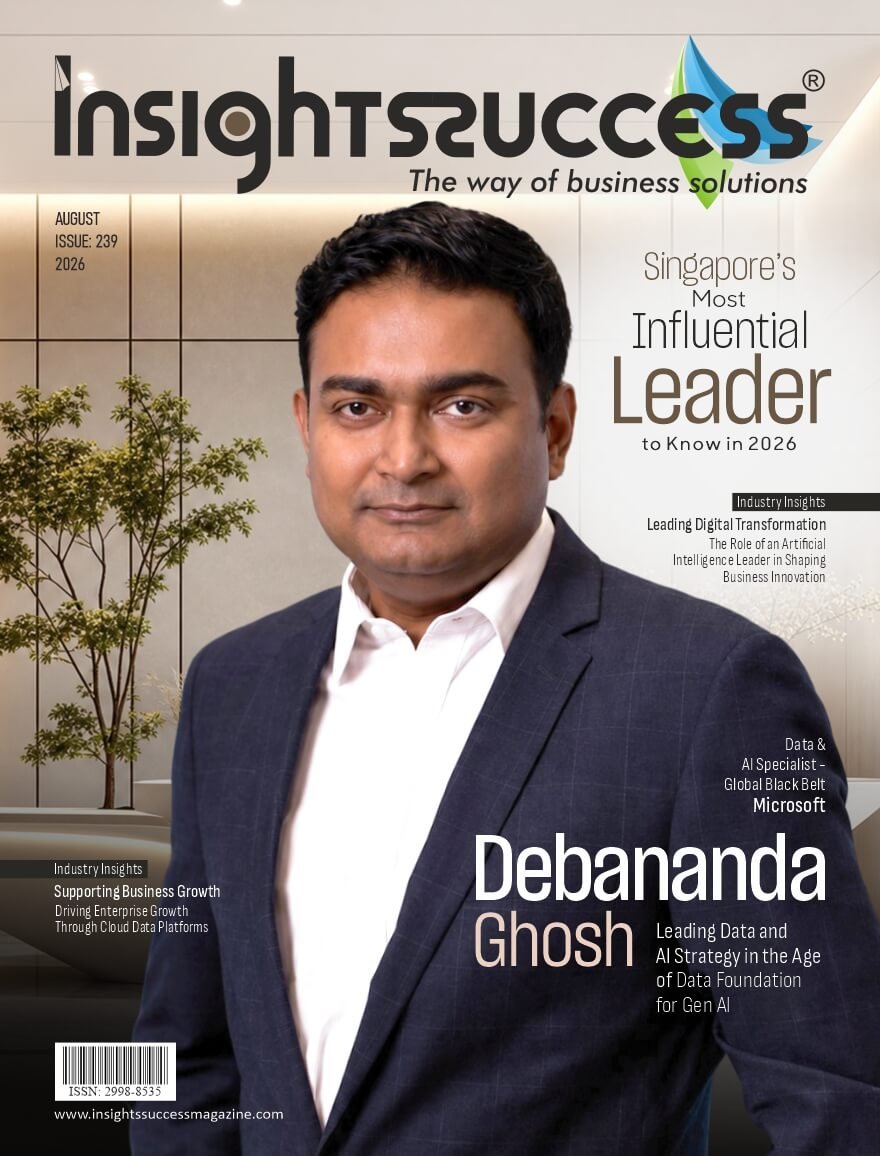
Singapore’s Most Influential Leader to Know in 2026
Singapore’s Most Influential Leader to Know in 2026 Recognizing Singapore’s most influential leader, this edition explores visionary leadership, strategic thinking, and meaningful contributions that inspire progress, drive innovation, and create lasting impact across industries and communities. Digital Link Quick highlights Quick reads

Debananda Ghosh: Leading Data and AI Strategy in the Age of Data Foundation for Gen AI
Not long ago, most companies relied on data only after events had already unfolded, such as when a sale was completed, a customer had left, or a problem had surfaced. That approach is rapidly becoming outdated. Today, businesses want real-time visibility into what is happening, along with the ability to anticipate outcomes. Increasingly, they expect AI to identify patterns and deliver insights before questions even arise. This shift has moved data and AI strategy from the periphery to the core of business discussions. It is no longer seen as a technical function managed quietly by IT teams. Instead, it plays a critical role in shaping competitive advantage, guiding leadership decisions, and determining how quickly an organization can scale. Debananda Ghosh has spent nearly two decades at the center of this transformation. As a Data & AI Specialist and Global Black Belt at Microsoft, he works closely with organizations to modernize their data ecosystems for an AI-first future. Over the years, his work has taken him through financial services, aviation, and large-scale cloud transformation projects, giving him a mix of deep technical knowledge and real business understanding that is hard to find in one person. Let’s explore the story behind Deb’s journey and how he is helping organizations navigate the next era of intelligent, data-driven transformation! A Journey Built on Data, Innovation, and Business Transformation Deb’s professional journey spans nearly two decades of helping organizations unlock value from their data. His career began at Infosys, where he led large-scale data warehouse and analytics implementations across financial services organizations in Asia. Those early experiences established a strong technical foundation while exposing him to the growing importance of enterprise data in business decision-making. His journey continued at Singapore’s CPF Board, where he modernized enterprise data platforms supporting millions of citizens. Later, at Rolls-Royce, he worked on machine learning and predictive maintenance solutions for aviation analytics, further expanding his understanding of how intelligent technologies could solve real-world operational challenges. Each experience reinforced a larger realization. As he explains, “These experiences showed me that data is not just a technology asset; it is the foundation for business transformation.” Witnessing organizations evolve through analytics and emerging technologies gradually reshaped his own professional direction. He became increasingly fascinated by how advanced analytics, machine learning, and artificial intelligence could help organizations move beyond reporting historical information toward predicting future outcomes and shaping strategic decisions. This passion ultimately led him to Microsoft, where his career has progressed from Senior Data Architect to Asia Lead for Cloud Analytics & AI Modernization. Alongside his leadership responsibilities, he is also the author of the book Mastering Microsoft Fabric, reflecting his passion for helping organizations harness data and AI to drive business transformation. Today, he helps enterprises across Asia-Pacific modernize their data estates, adopt cloud-scale analytics platforms such as Microsoft Fabric, and leverage Generative AI to drive business innovation. Looking back, he sees specializing in Data and AI as a natural evolution of his career, bringing together his deep data engineering background with his passion for innovation, customer success, and enabling organizations to realize their full potential through intelligent, data-driven transformation. Driving Innovation Through AI-First Transformation In his current role as Data & AI Specialist – Global Black Belt at Microsoft, Deb works closely with organizations across Asia-Pacific to accelerate their transformation into AI-first enterprises, often referred to as Frontier Firms. His work centers on helping organizations modernize data estates, enable cloud-scale analytics, and harness the power of Artificial Intelligence to deliver measurable business outcomes. Rather than viewing technology modernization as an isolated initiative, he focuses on connecting modern data platforms, advanced analytics, and Generative AI capabilities with tangible business value. This enables organizations to innovate faster, enhance decision-making, improve operational efficiency, and create new growth opportunities in an increasingly AI-driven world. At the core of his work is a clear objective: “My focus is on enabling customers to transform data into a strategic asset, empowering them to make faster, smarter, and more informed decisions.” Building on this philosophy, he partners with both business and technology leaders to define organizational data and AI strategies, architect modern analytics solutions, and guide enterprises through complex modernization journeys. His role extends well beyond technology implementation. By introducing AI-first approaches and promoting responsible AI adoption, he helps organizations unlock new revenue opportunities, improve operational efficiency, and enhance customer experiences. Every transformation initiative, therefore, becomes more than the deployment of new technology. It becomes an opportunity to align innovation with measurable outcomes, ensuring that data serves not merely as information, but as a catalyst for business growth and long-term competitive advantage. As organizations continue to accelerate their AI adoption, this combination of technical depth, strategic thinking, and customer-centric leadership has become central to his approach. His focus remains on helping enterprises navigate complexity with confidence while building the data foundations required to thrive in the next generation of intelligent business. Leading with Vision, Empowerment, and Collaboration For Deb, successful Data & AI transformation is not driven by technology alone. It is driven by people who are aligned around a common vision, empowered to take ownership, and committed to delivering meaningful business outcomes. His leadership philosophy reflects this belief, emphasizing collaboration as much as technical excellence. He describes his leadership approach as being centered on vision, empowerment, and collaboration. When leading complex Data & AI initiatives, his first priority is aligning teams around clear business outcomes while creating an environment where innovation and accountability go hand in hand. Rather than directing every aspect of a project, he focuses on enabling individuals to take ownership of their work while encouraging diverse teams to contribute their expertise toward a shared objective. This approach helps teams navigate complexity, accelerate decision-making, and consistently deliver measurable business impact. At the same time, customer success remains a defining element of his leadership style. By combining technical excellence with customer obsession, he ensures that every solution is grounded in real business needs rather than technology for its own sake. Equally important is his commitment to