





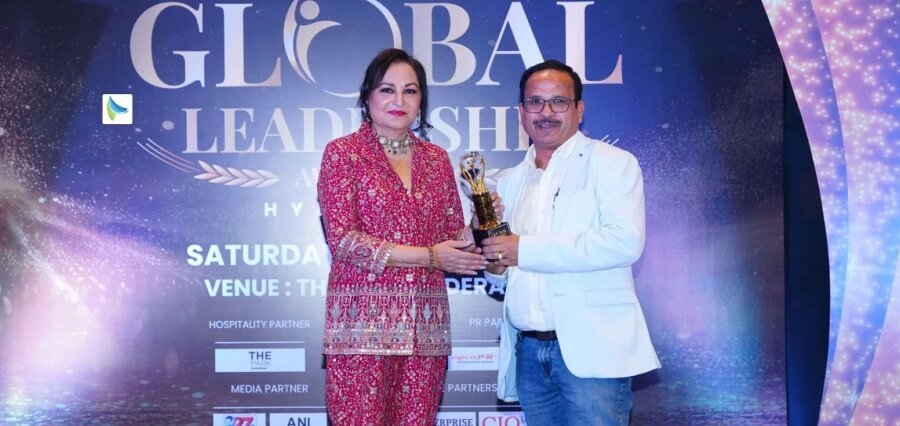
Venkata Reddy: Building the Future of Global Outsourcing Through Technology, Scale, and Relentless Execution
A man who believes in not waiting, not waiting for the world to hand him a stage, instead builds one. A man who quietly, methodically, with the patience of a craftsman and the nerve of a pioneer, fills the stage with something worth watching. Meet Venkata Reddy, who steers an organization that sits confidently at the intersection of knowledge process outsourcing, enterprise technology, financial services, and artificial intelligence. Today, he is the Director and CFO of Venkat Tech Global Solutions Private Limited, but the story behind this title is far more compelling than any designation could convey. In this feature story, let’s take a deep dive into Venkata Reddy’s journey. His journey was never a bed of roses; instead, he had to face the brunt of complex institutions, global systems, and relentless strangulation between ambition and execution. He began within the disciplined corridors of finance, where precision and accountability are non-negotiable, and gradually transitioned into the uncertain yet expansive domain of entrepreneurship. It is here that his vision found its fullest expression. As he reflects, scale is not something one studies; it is something one lives. The years preceding Venkat Tech became his proving ground, offering a rigorous, real-world education in how the world’s most formidable organizations sustain themselves and evolve. Roots in Rigour: The Making of a Finance Mind Not all careers begin with a grand plan. Some begin with a conviction that mastery of the fundamentals will, in time, open doors that shortcuts never could. Venkata Reddy’s early years were anchored in exactly this belief. He entered the professional world through the structured landscape of finance, and it was here, in the meticulous discipline of numbers and compliance, that he forged the first layer of a career that would eventually span continents and industries. His formative years at Ernst & Young gave him something that no classroom could fully replicate: exposure to how global organizations think about process, governance, and accountability. The firm’s culture of precision became something he absorbed deeply. From there, a role at Bosch broadened his perspective further, drawing him into the complex machinery of shared services at scale. He saw how multinational corporations manage sprawling back-office operations across time zones and cultures, and he took notes, not just on the systems, but on the failures, the workarounds, and the moments when structure gave way to chaos. HSBC offered yet another dimension. It was here that Venkata encountered the powerful overlap between enterprise technology and financial operations. Large-scale system implementations, he mentions, “It showed me that the future of finance was never going to be just about the numbers, it was going to be about the infrastructure that made the numbers meaningful.” That insight, absorbed in the middle of one of the world’s most complex financial institutions, would prove to be a defining influence on everything that came after. State Street and the Scale of Seriousness If Ernst & Young taught Venkata how global organizations are structured, and HSBC showed him where finance and technology converge, it was State Street Corporation that gave him something even rarer: the experience of leading large-scale offshore operations with real consequences. At State Street, he managed hundreds of professionals across functions, overseeing operations where errors were not merely inconvenient; they were costly. There was no room here for approximation. Precision was not a virtue; it was a survival requirement. It was in this environment that he developed the leadership instincts that continue to shape him today. According to him, the greatest lesson from those years was not about technical expertise; it was about governance. He states that “You can have the smartest people in the room, but without clear frameworks, without accountability built into every layer of the operation, you will eventually lose control of the thing you are trying to build.” That philosophy of structured governance of designing systems that work even when attention wanders became a cornerstone of how he would later build Venkat Tech. The years at State Street also deepened his understanding of what clients actually want from global delivery partners. It was not, he understood, simply about cost reduction. Organizations of that scale demand reliability, predictability, and the confidence that their most sensitive processes are in capable hands. He carried that understanding forward, intact, into every conversation about what Venkat Tech should stand for. The Leap: From Operator to Founder There is a moment in the lives of certain professionals when a career built for others starts to feel incomplete. Not inadequate, but incomplete. Venkata Reddy reached that moment and responded with characteristic decisiveness. The founding of Venkat Tech Global Solutions Private Limited was not an impulsive act. It was the result of years of accumulated insight, industry knowledge, and a growing conviction that the market needed something different from what established players were offering. He envisioned a company that would not simply execute outsourced tasks but would serve as a genuine transformation partner for its clients. He mentions that he wanted to build something that could sit at the client’s table as a strategic equal, not simply as a vendor executing instructions from a distance. That ambition demanded a multi-pillar model, one that could speak fluently in the languages of operations, technology, finance, and innovation simultaneously. The early days of building Venkat Tech were, by any measure, demanding. Launching a company that spans knowledge process outsourcing, IT services, financial consulting, and AI-driven product development is not a linear exercise. It requires the founder to wear many hats at once: strategist, salesperson, talent developer, and operational lead, often in the same afternoon. Yet Venkata appears to have thrived in precisely this kind of complexity. In less than three years, the company grew from inception to a recognized global delivery partner with clients across Europe and North America. He states that the speed of growth has been gratifying, but what matters more to him is the quality of what they are building: “The depth of the capabilities, the strength of the client relationships, and

The Future of Global Operations Management in a Borderless Business World
Navigating the Next Frontier Back in the day, running a business across borders involved tons of paperwork, sketchy communication, and endless stress about what was going on elsewhere. Global operations management isn’t just about shifting goods and services around. That time feels remarkably distant now. Today, a startup in Pune can manage a customer support team in the Philippines, a development hub in Eastern Europe, and a logistics partner in the UAE, all before lunch. The world has not just become smaller. It has become, in many meaningful ways, borderless. And yet, with that freedom comes a complexity that many businesses are still learning to manage well. The Shifting Landscape of Global Operations Getting different region teams to communicate and make decisions effectively? That’s crucial for business success, not some optional nice-to-have skill. At its core, it is about coordinating people, processes, and resources in a way that creates value, consistently at scale, and without losing sight of quality. What has changed dramatically in recent years is the speed at which organisations are expected to do all of this. Digital infrastructure has removed many traditional barriers. Cloud platforms, real-time communication tools, and AI-assisted workflows mean that a manager in Toronto can oversee a production update being executed in Chennai with the same visibility they would have sitting in the next room. The operational boundaries that once defined how businesses were structured are dissolving, and the leaders who recognise this early are the ones building genuinely resilient organisations. Offshore Operations: Beyond Cost-Cutting For a long time, offshore business operations carried a fairly narrow reputation as a way to reduce labour costs, nothing more. That perception is changing, and not a moment too soon. Businesses that approach offshoring purely as an expense management tool often find themselves disappointed. The real opportunity lies in using distributed operations to access specialised talent, extend working hours across time zones, and build capabilities that would simply be too expensive or too slow to develop domestically. A well-structured offshore team is not a cheaper version of what you already have. It is, when done right, an expansion of what is possible. This shift in thinking requires a shift in management. Leaders overseeing offshore business operations today need cultural intelligence as much as operational expertise. When you talk about where global ops are headed, tech has to be part of the chat. It’s not just because it’s trendy; tech genuinely helps work get smarter. The Technology Layer When you talk about where global ops are headed, tech has to be part of the chat. It’s not just because it’s trendy; tech genuinely helps work get smarter. Thanks to automation, managers don’t spend hours on routine stuff anymore. Also, predictive analytics now help ops leaders spot potential issues way before they blow up into full-on crises. And increasingly, AI tools are being embedded directly into supply chain management, quality control, and workforce planning in ways that would have seemed ambitious just five years ago. But technology does not replace judgment. The most effective global operations leaders use these tools to free up their thinking so that the hours previously spent on status updates and manual tracking can be redirected toward strategy, relationships, and the kind of nuanced problem-solving that no algorithm has yet mastered. The Human Element Nobody Talks About Enough Here is something that often gets lost in discussions about operational efficiency and global scale: people still run everything. Behind every optimised process is a person who designed it. Behind every offshore team is a manager who has built trust across a twelve-hour time difference. Behind every smooth supply chain is a relationship, maintained carefully over the years. The businesses that will lead in global operations management over the next decade are not necessarily those with the most sophisticated tools. They are the ones that invest in developing leaders who can hold complexity without being paralysed by it, who can build cohesion across distance, maintain standards without micromanaging, and adapt quickly without abandoning what works. Looking Ahead The borderless business world is not a destination that companies arrive at and then settle into comfortably. It is a condition that keeps evolving, demanding ongoing attention and honest reassessment. New geopolitical realities, shifting trade relationships, and the growing expectations of both customers and employees will continue to reshape what good global operations actually look like. What will not change is the fundamental challenge at the heart of it all: bringing people, process, and purpose into alignment across every geography, time zone, and cultural context an organisation touches. That has always been the work. It is simply bigger now, and the stakes for getting it right have never been higher. Read Also : Empowering Communities Through Visionary Leadership and Direct Sales Excellence

Leading the Transformation of Global Operations Through Business Process Outsourcing
The Strategic Shift Not long ago, outsourcing was a word that made employees nervous and CFOs quietly relieved. It meant cutting costs, offloading repetitive work, and hoping the quality didn’t suffer too much in the process. That version of the story is largely over. Business process outsourcing has evolved way beyond just a cost-cutting move; now, it’s a key strategy for smart companies looking to revamp their operations, competition strategies, and expansion plans globally. From Cost Center to Strategic Engin At first, outsourcing meant handing off unwanted tasks to save money and concentrate on core activities. Nowadays, though, it requires more strategic thought. For a while, that worked. But companies quickly discovered that farming out processes without a clear strategy created fragmentation — misaligned teams, inconsistent customer experiences, and a loss of institutional knowledge. The shift happened when leaders stopped asking “what can we outsource?” and started asking “how do we want to operate?” That reframe changed everything. Business process outsourcing is no longer about subtraction. Companies need to figure out which skills stay in-house and which go to external partners, all while ensuring smooth cooperation between them. That’s why it involves deeper planning. The Global Dimension When it comes to growth, outsourcing proves really valuable. Take a medium-sized business aiming to get into Southeast Asia, Latin America, or Eastern Europe – building a complete ops setup in each region is impractical. Issues like local hiring, understanding worker rules, installing financial and HR systems, and handling legal requirements can overwhelm a firm’s growth efforts. Enter BPO – it gives these businesses a serious advantage by providing existing structures and know-how to tackle all those tricky regional specifics. Companies can enter new markets faster, test with lower risk, and scale back just as quickly if the thesis doesn’t hold. What once required a multi-year buildout can now happen in months. That’s not a small thing — in competitive markets, timing is often the only advantage that matters. What Leading Organizations Are Actually Outsourcing The scope has broadened considerably. Finance and accounting, customer service, and data entry were the early candidates. Now, companies are extending business process outsourcing into: Knowledge-intensive functions like research, analytics, and compliance monitoring Technology operations including application support, cloud management, and cybersecurity Human resources from talent acquisition to payroll to learning and development Supply chain coordination, especially in industries with complex, multi-tier vendor networks The common thread isn’t the function itself — it’s the logic behind the decision. Leaders are outsourcing processes where specialization, scale, or technology access outside the company would produce a meaningfully better outcome than building it in-house. The Leadership Imperative Here’s what often gets missed in the outsourcing conversation: it requires strong internal leadership to work. The organizations that struggle with business process outsourcingare usually the ones that treat it as a delegation and then disengage. They hand off a process, reduce headcount, and move on — only to find, a year later, that the partnership has drifted, quality has slipped, or the vendor is running a version of the process that no longer fits the company’s direction. The organizations that get it right stay actively involved. They invest in vendor relationships the same way they’d invest in an internal team. They define outcomes clearly, revisit them regularly, and create feedback loops that keep both sides aligned. They treat the outsourcing partner not as a contractor but as an extension of the organization — one that deserves context, communication, and accountability on both sides. Where This Is All Heading Artificial intelligence is adding a new layer of complexity — and opportunity. Automation is absorbing the most routine, rule-based work, which means the **business process outsourcing** industry is under pressure to move up the value chain. The partners worth working with are already doing this: building AI-assisted workflows, offering deeper analytical capabilities, and positioning themselves as transformation partners rather than task vendors. For companies willing to engage with that shift, the possibilities are significant. Outsourcing is no longer a conversation about what you can afford to hand off. It’s a conversation about what kind of organization you want to become — and who you want alongside you as you get there. That’s a very different question. And it deserves a very different kind of answer. Read Also : The Future of Global Operations Management in a Borderless Business World

Sunshine Silver Raises $270 Million in US IPO Listing
Prime Highlights- Sunshine Silver Mining raised $270 million through its US IPO and successfully listed on the New York Stock Exchange. The company plans to expand and restart mining operations in Idaho’s Silver Valley to boost future production. Key Facts- Sunshine Silver Mining & Refining Company focuses on silver mining, asset redevelopment, and operations across North America. The IPO reflects growing investor interest in mining and resource companies during a broader revival in US listings. Background- Sunshine Silver Mining & Refining Company has raised $270 million through its initial public offering in the United States. The company sold 20 million shares at $13.50 each, completing the listing on strong investor demand despite pricing at the lower end of its expected range. The IPO is an important step in the company’s growth as it plans to expand its mining operations across North America. Sunshine Silver focuses on buying, redeveloping and operating precious metal assets, with a strong presence in Idaho’s Silver Valley, a historic silver mining region. The listing comes during a broader recovery in US IPO activity, with several companies entering public markets as investor interest in new issues increases. The mining sector has also seen fresh momentum, with more firms moving ahead with listings and expansion plans. Sunshine Silver plans to restart and expand a previously closed mine in Idaho. The project is expected to strengthen its production base and support long-term output growth in silver mining. The company’s existing investors, including Electrum Group and Ospraie Management, are expected to retain significant ownership after the IPO. Following the listing, Sunshine Silver will trade on the New York Stock Exchange under the ticker symbol “SSMR”. The IPO was supported by major financial institutions acting as joint book-running managers. The successful fundraising shows growing investor confidence in resource-based companies and rising demand for exposure to precious metals in equity markets. The listing also places Sunshine Silver among a growing number of companies using US capital markets to support expansion and development plans. Read Also : Goldman Sachs Sees Sharp Rise in SpaceX AI Revenue by 2030

How Fashion Rooted in Cultural Identity Inspires Authentic Creativity
Creativity Through Culture Fashion is a powerful form of cultural expression. It reflects identity, heritage, and the traditions that shape people and communities. While trends change over time, many of the most meaningful designs are inspired by culture, history, and personal experience. Fashion is always evolving, and people are beginning to value what makes design feel truly genuine. Fashion rooted in cultural identity brings real depth to creative work rooted in lived traditions, honest experiences and a true sense of community. That foundation gives fashion something that trends alone simply cannot. The Importance of Authentic Origins in Design Every garment tells a story, but not every story belongs to the person telling it. When designers draw from lived experience, inherited tradition and real cultural connection, the work lands differently. Fashion rooted in cultural identity is not a visual reference; it is a creative act tied to memory, community and meaning. That cannot be manufactured on demand. This matters because authenticity is harder to fake than it used to be. People have grown sharp at spotting the difference between sincere expression and surface-level borrowing. Work that comes from a real place holds attention in a way that assembled aesthetics rarely do. It resonates because it is specific, and specificity is what gives creative work its staying power. Preserving Tradition Through Contemporary Design A common misconception is that drawing from cultural tradition means recreating the past. The most compelling work does something quite different. It treats tradition as a living source rather than a fixed archive. Techniques, patterns, silhouettes and materials passed down through generations carry accumulated knowledge. When that knowledge is understood rather than copied, it opens up possibilities that trend-driven design cannot reach. Fashion rooted in cultural identity tends to carry a layered quality. A single piece might reference a specific weaving method, a ceremonial color palette, or a construction approach tied to a particular region. Those layers give the work depth and allow it to be read on multiple levels, which is exactly what separates enduring design from something built for a single season. How Cultural Foundations Inspire Creativity There is a widespread belief that creativity thrives on total freedom. In practice, some of the most inventive work comes from within constraints, a specific material, a community’s aesthetic language, or a set of cultural values that shape what a garment is even meant to be. Those boundaries do not limit creativity. They give it direction and something solid to push against. For designers working within their own cultural contexts, that foundation brings real clarity. They are not searching for an identity; they already have one to build from. Fashion rooted in cultural identity gives the creative process a starting point that is both personal and connected to something much larger than the individual. That combination consistently produces work with genuine distinction. Expanding Perspectives Through Representation The range of cultural identities present within the fashion industry directly shapes what the industry produces. When design teams, creative directors, and decision-makers reflect a wider range of backgrounds, the work naturally draws from a broader pool of real experience. This is not an argument about optics; it is a straightforward creative one. Wider representation means more authentic stories being told, more distinct visual languages entering the conversation, and more fashion rooted in cultural identity reaching the audiences it was always meant to speak to. The work becomes richer, not just in a social sense, but in terms of the actual quality and range of what gets made. Continuing Cultural Legacies Through Design One of the less talked-about dimensions of culturally grounded design is its relationship with inheritance; not just receiving a tradition but actively continuing it. Designers who work consciously within their own cultural context often think about what they are giving back; not only what they are drawing on. That sense of responsibility shapes creative decisions in ways that purely market-driven thinking does not. It introduces a longer view. Work is weighed not just against what sells or what the season calls for, but against what it contributes to something ongoing. Fashion rooted in cultural identity, approached this way, becomes part of a living conversation rather than a finished product. Looking Ahead The broader fashion world has a lot to gain from taking cultural grounding seriously, not as a trend to absorb, but as a principle worth understanding on its own terms. Creativity built on genuine identity tends to be more original, more considered, and more durable than work assembled from borrowed references and borrowed aesthetics. The clearest lesson is also the simplest. The most compelling creative work always comes from somewhere real. When fashion rooted in cultural identity is given the space and respect it deserves, it does not just produce better individual pieces; it raises the standard for what fashion can say and who it can speak for. Read Also : Leading the Transformation of Global Operations Through Business Process Outsourcing

Exploring the Influence of Cultural Heritage Fashion on Global Trends
Global Style Influence Fashion has always been more than clothing. It is a language spoken through fabric, color, pattern and craft, a way of communicating who a person is, where they come from, and what they carry with them. As the global fashion industry continues to evolve, one of the most powerful forces shaping its direction is not a new trend emerging from a major city runway. It is something far older and far deeper. Cultural heritage fashion is changing the entire world of fashion in ways that are reshaping how the world thinks about beauty, identity and the meaning behind what we wear. Where Tradition Meets the Modern World Every culture in the world has a visual language built over generations. Textiles woven by hand, embroidery passed down through families, dyeing techniques developed over centuries and silhouettes shaped by the daily lives of communities, these are not simply old practices. They are an expression of identity and are meaningful, and no process in a factory could duplicate their meaning. With the increasing interconnection of global fashion, designers and consumers have started to seek inspiration and authenticity outside of the familiar western style. Cultural heritage fashion sits at the center of this search. Its richness, its depth and the stories embedded in its every detail offer something that fast fashion simply cannot provide, a genuine connection to human experience and history. How Heritage Styles Are Entering Global Conversations The path from a traditional craft community to a global fashion conversation is not always straightforward, but it is happening with increasing frequency. Techniques and aesthetics rooted in specific cultural traditions are appearing in collections shown at major fashion events, in the wardrobes of people far removed from the cultures that created them and in the broader visual language of contemporary style. Cultural heritage fashion travels through multiple channels. Independent designers bring their cultural backgrounds into their creative work. Conscious consumers actively seek out pieces that tell a story and support the communities behind them. Each of these pathways contributes to a global fashion conversation that is becoming richer and more diverse with each passing season. Ethical Approaches to Cultural Exchange Adopting a heritage style, without credit, without payment to the communities who developed them or without awareness of the importance, causes real harm. It reduces deeply meaningful traditions to surface aesthetics and strips away the context that gives them their value. When engagement happens thoughtfully, with proper recognition and genuine support for the artisans and communities involved; it creates connections that benefit everyone and helps ensure that living traditions continue to thrive. Craftsmanship, Community, and Cultural Continuity Every item of cultural heritage has its own community of people, whose knowledge, skill and time brought it into existence. Weavers, embroiderers, dyers, and tailors working within living craft traditions are not simply producing goods. They are preserving knowledge that took generations to develop and that cannot simply be recreated by a machine or a shortcut process. With the rise of a global interest in heritage fashion, there is a growing opportunity to make meaningful contributions to these communities. Consumers who choose pieces made within authentic craft traditions are contributing to the economic wellbeing of those communities and to the survival of skills that might otherwise disappear. This connection between a garment and the people who made it is one of the things that gives cultural heritage fashion its particular power in a world where so much of what we buy is anonymous. Creativity Rooted in Heritage There is a tendency in fashion to treat newness as the highest value. The next season, the next trend, the next big idea. But some of the most interesting and enduring contributions to global style have come not from looking forward but from looking back and across, to the vast wealth of human creativity that already exists in the world’s cultural traditions. Cultural heritage fashion reminds the industry that creativity does not only live in the new. It lives in the refined, the inherited, the carefully made and the deeply meaningful. In Summary The influence of cultural heritage fashion on global trends is not a moment or a movement. It is a recognition that the world’s diverse cultures have always had something profound to say through what they wear. As that recognition grows deeper and more widespread, the global fashion conversation becomes richer, more honest, and more genuinely connected to the full range of human experience. That is not just good for fashion. It is good for the understanding we build of each other across cultures and across time. Read Also : How Fashion Rooted in Cultural Identity Inspires Authentic Creativity

Olumide Oyewunmi: Elevating Heritage into a Modern Design Dialogue
The fashion industry in the world is ever-changing, with designers introducing new perspectives that merge culture, creativity, and purpose. Today’s fashion leaders are not only shaping trends but also redefining how identity and storytelling are expressed through design. Their work demonstrates a stronger approach to originality, cultural awareness, and significant innovation that crosses borders. Among these emerging voices is Olumide Oyewunmi, Creative Director and Founder of MIDETUSH. Known for his distinctive approach to Afrocentric design, he has steadily built a creative identity that blends heritage with modern expression. Through his work, he explores fashion as both an art form and a powerful way to tell stories. He positions himself as a designer who contributes to the evolving global story of culture-driven fashion. The Beginning of a Creative Calling Olumide’s entry into fashion did not begin with a desire for glamour or attention. He was first drawn to fashion through its ability to tell a story without words. Growing up, he was fascinated by how clothing could completely transform a person’s confidence and identity, and what started as curiosity, experimenting with outfits, sketching designs, and paying attention to details others overlooked quickly became something deeper. The turning point came when he realized he wasn’t just enjoying fashion, he was analyzing silhouettes, imagining collections, and feeling a genuine excitement in creating something original. It stopped being a hobby and became a form of self-expression and purpose. That’s when he knew fashion wasn’t just a passion for him, but it was his calling. This early realization became the foundation of his creative identity, shaping how he approaches design as both an emotional and intellectual process. A Creative Vision Rooted in Authenticity and Innovation Olumide defines his creative vision as a balance between authenticity and innovation. His work is guided by a desire to create pieces that merge heritage elements with modern expression, forming a signature style that reflects both cultural grounding and contemporary relevance. His inspiration comes from everyday life, culture, and emotion. He draws from the way people carry themselves, the energy of different environments. He is also inspired by art, music, and the idea that “fashion should not only look good but also tell a story and evoke a feeling.” Ultimately, his vision is about creating something meaningful that reflects individuality and confidence. This approach allows him to build collections that are not only visually compelling but also emotionally resonant, reinforcing his position as a storyteller through fashion. Balancing Artistry and Brand Longevity Balancing artistic expression with building a lasting brand requires both intention and discipline. As an Afrocentric designer shaping the future of fashion, Olumide’s creativity is deeply rooted in heritage, storytelling, and cultural pride. Yet he recognizes that “growth demands consistency, accessibility, and sustainability.” His work consistently reflects a balance between artistic exploration and structured growth. He honors African traditions, textiles, and narratives while reimagining them for a modern audience. Every collection, campaign, and collaboration is created with the intention of aligning with the brand’s core identity. For him, it is not only about creating beautiful pieces but about establishing a recognizable and meaningful presence in the global fashion industry. At the same time, he remains grounded in the business side of fashion, focusing on understanding his audience and making strategic decisions that support long-term growth. Olumide sees artistry and business as partners, as the former keeps the brand soulful, while the latter ensures that culture and stories continue to inspire. Challenges That Shaped a Leader The fashion industry is often viewed through a glamorous lens, but Olumide’s journey reflects the demanding realities behind the scenes. One of the defining challenges he faced was balancing the pressure to constantly innovate while staying true to his creative vision. Early in his career, aligning commercial expectations with experimental ideas often felt overwhelming. The fast pace of the industry sometimes moved quicker than his ability to adapt. However, these challenges transformed him. These experiences taught him resilience, discipline, and the ability to listen not only to market demands but also to his own intuition. Over time, he also recognized the importance of building a team capable of bringing vision into reality. Navigating deadlines, criticism, and shifting trends shaped him into a leader who values collaboration, clear communication, and empowering others. These experiences influenced his perspective on fashion, allowing him to see it as an evolving dialogue between creativity, culture, and people. Staying Relevant While Preserving Originality In an industry where trends change overnight, Olumide Oyewunmi has developed a clear method for staying relevant without compromising originality. He believes relevance requires awareness. Observing consumer behavior and tracking emerging trends is important, but he does not adopt them blindly. Instead, he filters everything through his own creative lens, ensuring that each decision aligns with his core aesthetic and values. For him, originality comes from consistency in vision. He stays grounded by revisiting his design philosophy and the story he wants to tell. At the same time, he embraces evolution by experimenting with new techniques and collaborations that remain authentic to his identity. “It’s ultimately about balance: staying informed and adaptable while remaining intentional in every decision,” he says Sustainability and the Future of Fashion Sustainability and conscious fashion are redefining the industry, and Olumide Oyewunmi sees himself as both a creator and a catalyst in this shift. “Sustainability is not a trend for me but a commitment that guides my choices from material selection to production and longevity,” he states. His focus includes reducing waste, prioritizing the use of innovative fabrics that align with sustainable practices, and each piece is designed with longevity in mind. Innovation plays a central role in his sustainability approach. By exploring new technologies and ethical practices, he continues to rethink how fashion is created and consumed. Conscious fashion, in his view, requires awareness of the social and environmental impact behind every decision. Ultimately, his goal is to create work that balances style with responsibility. Through this approach, he aims to inspire a shift toward fashion that is thoughtful,

The World’s Next Fashion Visionaries 2026
The World’s Next Fashion Visionaries 2026 Featuring emerging fashion visionaries who are redefining creativity, craftsmanship, and industry standards. This edition celebrates groundbreaking work, fresh perspectives, and a lasting influence on the global fashion industry. Digital Link Quick highlights Quick reads
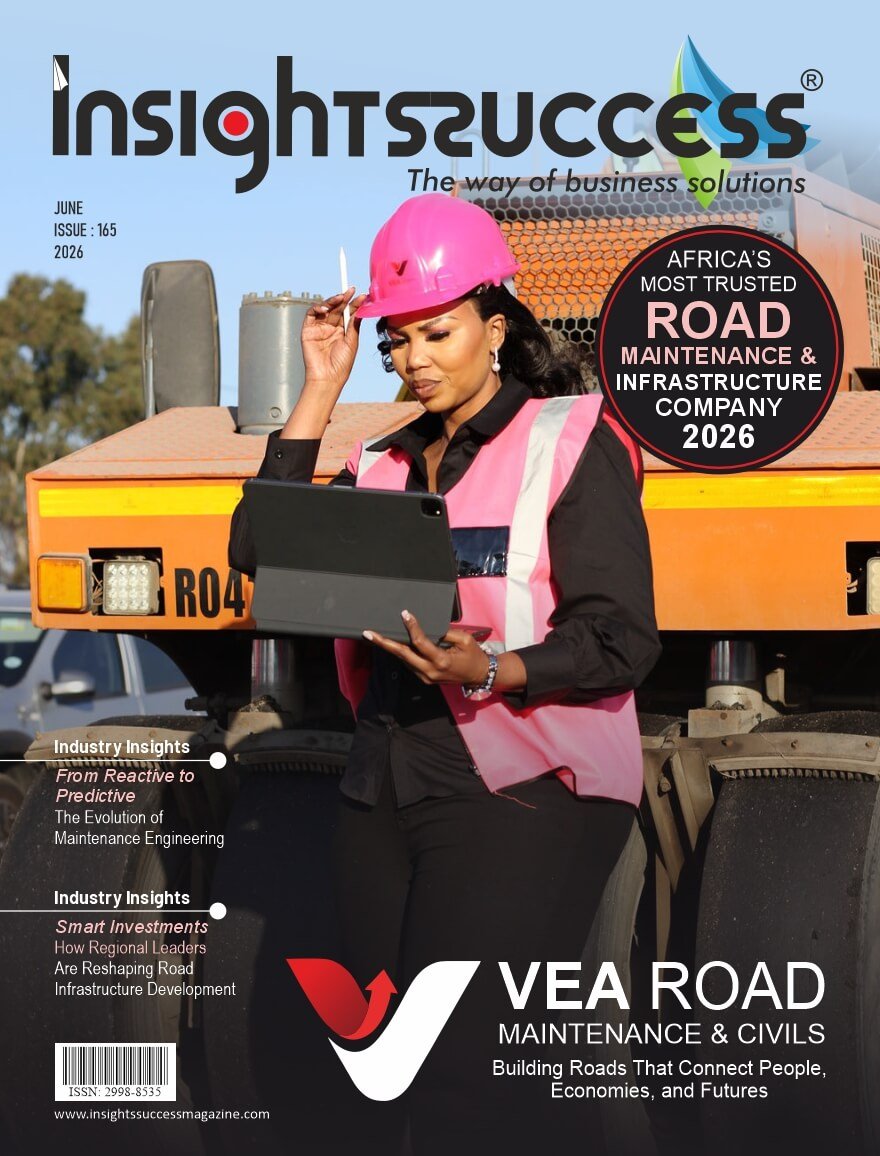
Africa’s Most Trusted Road Maintenance & Infrastructure Company | 2026
Africa’s Most Trusted Road Maintenance & Infrastructure Company 2026 This edition celebrates the organizations redefining Africa’s infrastructure landscape through innovation, reliability, and sustainable development. Featuring VEA Road Maintenance and Civils, it highlights industry excellence, transformative road maintenance solutions, and a steadfast commitment to building safer, stronger, and more connected communities across the continent. Digital Link Quick highlights Quick reads
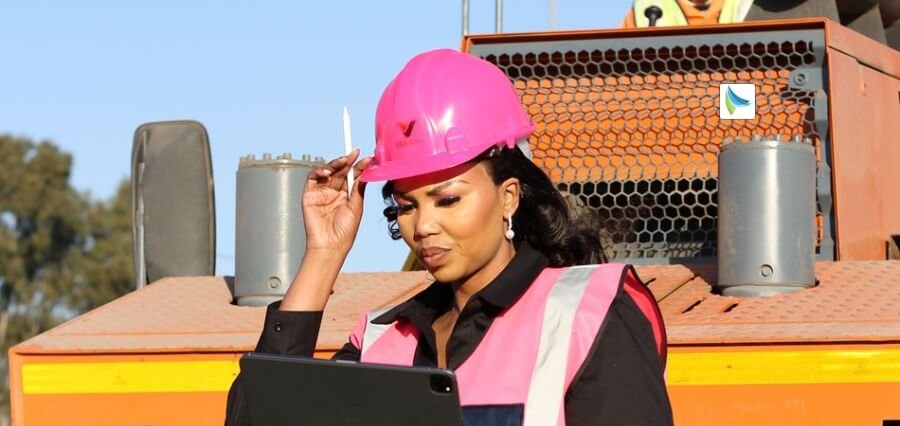
VEA Road Maintenance & Civils: Building Roads That Connect People, Economies, and Futures
There are construction companies that deliver projects, and construction companies that build industries. VEA Road Maintenance & Civils, established in 2010 and operating today as a CIDB 9CE PE contractor across eight of South Africa’s nine provinces, has consistently demonstrated that it belongs in the second category. Under the leadership of Managing Director Thoko Tshabalala-Shandu, the company has developed a model of infrastructure delivery that holds technical performance and community transformation to the same standard of accountability. A 97% on-time delivery rate, consecutive Top 5 rankings in the South African Construction Sector, and the active development of over 370 SMMEs annually are not separate achievements. They are the integrated outputs of a company that decided, from the very beginning, that how it builds matters as much as what it builds. From Vision to National Impact VEA Road Maintenance & Civils was built on a clear and deeply personal vision. Managing Director Thoko Tshabalala-Shandu, who joined the company in 2017 as Business Development Director before being appointed to lead it, has shaped the organization around a belief that infrastructure delivery and community transformation are inseparable activities. Under her leadership, what began as a regional contractor has become a nationally recognized platform for empowerment, excellence, and equity. The company’s CIDB 9CE PE grading, the highest level in the industry, reflects its technical capability and financial standing. Its consecutive Top 5 rankings in the South African Construction Sector for 2023, 2024 and 2025, placing it among the top five of five hundred companies, reflect the consistency with which it delivers against those capabilities. Its recognition as a double finalist in the 2025 Oliver Top Empowerment Awards, for both Business Leader of the Year and Diversity, Equity and Inclusion in the Workplace of the Year, reflects something harder to quantify but equally important: the integrity with which the company pursues its mission every single day. In addition, VEA Road Maintenance & Civils emerged as one of the biggest winners at the 2025 Annual South African Construction Awards (SACA), proudly walking away with 5 of the industry’s highest honours: South African Construction Company of the Year Award– Celebrating VEA Roads’ national footprint, 9CE PE status, and transformational growth South African Woman in Construction of the Year Award– Awarded to Managing Director, Thoko Tshabalala-Shandu South Africa Infrastructure of the Year Award – Awarded to VEA Roads South Africa CEO of the Year Award – Awarded to Thoko Tshabalala-Shandu SACA Contractor Choice of the Year Award – VEA Roads These outstanding accolades recognise VEA Roads’ exceptional commitment to delivering quality infrastructure, driving sector transformation, and creating meaningful socio-economic impact. They also celebrate Tshabalala-Shandu’s exceptional leadership and her groundbreaking role in reshaping a traditionally male-dominated industry. She notes, “We have built a business where performance is predictable. Our clients know what to expect from us and we deliver it.” Precision, Scale, and the Systems Behind Both Delivering infrastructure across eight provinces is an operational challenge that most contractors underestimate until they attempt it. It demands more than capacity. It demands the kind of institutional discipline that keeps quality consistent regardless of geography, team composition, or environmental condition. VEA Roads has built that discipline into the architecture of the company itself. Its portfolio spans road rehabilitation, routine and periodic maintenance, stormwater systems, milling and resurfacing, and emergency infrastructure response. Across all of it, the company maintains standardised systems, clear accountability structures, and cross-functional collaboration frameworks that ensure every team, whether operating in a high-traffic urban corridor or a remote rural region, performs within the same quality framework and to the same standard of accountability. The 97% on-time delivery rate that VEA Roads maintains is not an accidental outcome. It is the product of real-time monitoring systems that provide visibility across multiple simultaneous sites, proactive problem-solving cultures that surface and resolve issues before they become delays, and governance structures that keep every project aligned with both client expectations and national compliance standards. She asserts, “Scale only works if your systems are stronger than your growth. We’ve built our systems first.” Trust Built Project by Project In infrastructure, trust is not declared in a company presentation. It is demonstrated through consistent delivery, transparent communication, and the willingness to show up when conditions are difficult and the margin for error is small. VEA Roads has built its client relationships on exactly that foundation. The company’s long-standing engagement with SANRAL is the most visible expression of that trust. Working on major corridors including the N2, N12, and R23 highways, VEA Roads has delivered projects that improved road network quality, contributed to job creation, and generated skills development in the local communities surrounding each project. The SANRAL long-term road maintenance contract, one of the company’s defining engagements, was delivered ahead of schedule and under budget, while employing over 150 local workers and mentoring 18 SMMEs who reinvested over 30% of the budget back into the surrounding economy. The N2 emergency roadworks project added another chapter to that record. Working against an immovable pre-Easter deadline, the VEA Roads team operated continuously and opened the road on time, proving in the most public possible way that the company’s commitment to delivery does not diminish under pressure. It intensifies. She reflects, “We measure success by what remains after we leave. Not just the road, but the impact.” Projects That Define a Portfolio Across South Africa, VEA Roads’ work is visible not only in infrastructure but in the communities that infrastructure serves. On the P158/N14 corridor, structural rehabilitation improved safety, long-term durability, and overall road performance on a route that carries significant economic and commuter traffic. In Centurion’s arterial networks, preventative maintenance preserved critical routes and protected communities and businesses from the costly disruption of unplanned road failure. In Mabopane, urban road rehabilitation restored mobility and meaningfully improved daily life for residents who had endured deteriorating infrastructure for years. Each of these projects reflects the same underlying philosophy: infrastructure must be built right the first time and built to last. Traffic accommodation plans align with national standards.