



Navigating the Next Frontier
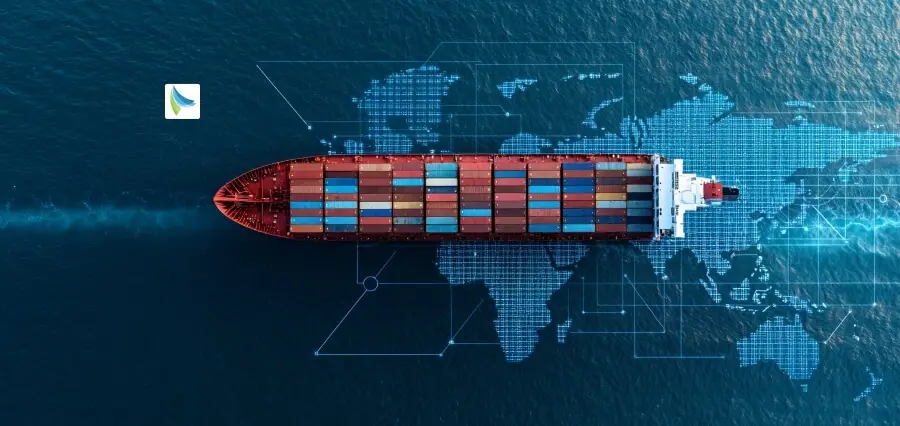
Back in the day, running a business across borders involved tons of paperwork, sketchy communication, and endless stress about what was going on elsewhere. Global operations management isn’t just about shifting goods and services around. That time feels remarkably distant now. Today, a startup in Pune can manage a customer support team in the Philippines, a development hub in Eastern Europe, and a logistics partner in the UAE, all before lunch. The world has not just become smaller. It has become, in many meaningful ways, borderless.
And yet, with that freedom comes a complexity that many businesses are still learning to manage well.
The Shifting Landscape of Global Operations
Getting different region teams to communicate and make decisions effectively? That’s crucial for business success, not some optional nice-to-have skill. At its core, it is about coordinating people, processes, and resources in a way that creates value, consistently at scale, and without losing sight of quality. What has changed dramatically in recent years is the speed at which organisations are expected to do all of this.
Digital infrastructure has removed many traditional barriers. Cloud platforms, real-time communication tools, and AI-assisted workflows mean that a manager in Toronto can oversee a production update being executed in Chennai with the same visibility they would have sitting in the next room. The operational boundaries that once defined how businesses were structured are dissolving, and the leaders who recognise this early are the ones building genuinely resilient organisations.
Offshore Operations: Beyond Cost-Cutting
For a long time, offshore business operations carried a fairly narrow reputation as a way to reduce labour costs, nothing more. That perception is changing, and not a moment too soon.
Businesses that approach offshoring purely as an expense management tool often find themselves disappointed. The real opportunity lies in using distributed operations to access specialised talent, extend working hours across time zones, and build capabilities that would simply be too expensive or too slow to develop domestically. A well-structured offshore team is not a cheaper version of what you already have. It is, when done right, an expansion of what is possible.
This shift in thinking requires a shift in management. Leaders overseeing offshore business operations today need cultural intelligence as much as operational expertise. When you talk about where global ops are headed, tech has to be part of the chat. It’s not just because it’s trendy; tech genuinely helps work get smarter.
The Technology Layer
When you talk about where global ops are headed, tech has to be part of the chat. It’s not just because it’s trendy; tech genuinely helps work get smarter.
Thanks to automation, managers don’t spend hours on routine stuff anymore. Also, predictive analytics now help ops leaders spot potential issues way before they blow up into full-on crises. And increasingly, AI tools are being embedded directly into supply chain management, quality control, and workforce planning in ways that would have seemed ambitious just five years ago.
But technology does not replace judgment. The most effective global operations leaders use these tools to free up their thinking so that the hours previously spent on status updates and manual tracking can be redirected toward strategy, relationships, and the kind of nuanced problem-solving that no algorithm has yet mastered.
The Human Element Nobody Talks About Enough
Here is something that often gets lost in discussions about operational efficiency and global scale: people still run everything. Behind every optimised process is a person who designed it. Behind every offshore team is a manager who has built trust across a twelve-hour time difference. Behind every smooth supply chain is a relationship, maintained carefully over the years.
The businesses that will lead in global operations management over the next decade are not necessarily those with the most sophisticated tools. They are the ones that invest in developing leaders who can hold complexity without being paralysed by it, who can build cohesion across distance, maintain standards without micromanaging, and adapt quickly without abandoning what works.
Looking Ahead
The borderless business world is not a destination that companies arrive at and then settle into comfortably. It is a condition that keeps evolving, demanding ongoing attention and honest reassessment. New geopolitical realities, shifting trade relationships, and the growing expectations of both customers and employees will continue to reshape what good global operations actually look like.
What will not change is the fundamental challenge at the heart of it all: bringing people, process, and purpose into alignment across every geography, time zone, and cultural context an organisation touches.
That has always been the work. It is simply bigger now, and the stakes for getting it right have never been higher.