






Implementing AI-Enhanced Workflows Without Disrupting Operations
C-Suite Strategy In the current dynamic environment of business organizations, efficiency, cost saving, and service improvement have become the key goals of each organization. An innovation has been discovered that would help to achieve all those goals. This innovation is called Artificial Intelligence (AI). Nevertheless, most of the managers of such organizations prefer not to use this innovation due to possible disruption, resistance from employees, or failure in the implementation process. There are some options to apply innovation without changing anything drastically. Thus, for example, there are some options to get benefits from using the innovations of AI without disrupting the workflow. To do so, it is necessary to implement them properly. Understanding the Value of AI-Enhanced Workflows It is important for organizations to understand the concept of AI-enabled workflow in order to use it in their processes. The process uses human expertise and intelligent automation in order to create an efficient and effective process. It does not create work processes that have no human involvement but helps workers to do their work more easily through automation of the boring tasks. For example, customer service departments may use a chatbot to answer questions from customers regarding mundane things, while complex work is left to be done by human customer service representatives. The finance department will use invoice processing without human involvement. Building a Strong Foundation for AI-Enhanced Workflows One of the mistakes made by organizations in the use of artificial intelligence is its implementation without any preparation whatsoever. Preparation is essential before AI implementation can be considered proper. Organizations should start with a complete process assessment. First, they should understand where there are repetitive processes, data entry, and analysis. It is here that the greatest potential lies in implementing AI. Knowing about their processes and problems, organizations will manage to recognize those initiatives that would help them but would not interfere with their routine work. Additionally, organizations should assess the quality of their data, technology preparedness, and readiness in general. AI is heavily dependent on data; hence, preparation is crucial for success. Introducing AI-Enhanced Workflows Through Pilot Programs The gradual introduction of AI is usually considered the optimal strategy when it comes to its introduction. Companies should think small – instead of adopting AI across all business units, they should start with some pilot projects to solve specific problems. A pilot project will help to understand how well AI works, how often it is used by employees, and what problems may arise while using it. This method will allow the company to test the solution and make appropriate changes before its full-scale implementation. So, for example, a company can first introduce a scheduling system based on AI only in one of its departments, and not in the whole company. Empowering Employees to Embrace AI-Enhanced Workflows Technology alone is not a determinative factor in a successful transition. There are many cases where the importance of the involvement of the employees makes all the difference between success or failure in any AI venture. Initially, most workers view artificial intelligence technology as a threat to their job security. For this problem to be addressed, it is necessary to educate the employees. The leaders have to make it clear that artificial intelligence technology is meant to complement human capabilities. The training should inform the employees about the benefits of using artificial intelligence to make the work easier. When the workers feel that AI technology will be of help to them, the integration process becomes very easy. Maintaining Operational Stability During AI Integration Another major challenge in the use of AI systems is that of disruption. To ensure that the business runs normally, there should be proper governance and performance monitoring measures put in place. There should be a staged introduction of AI systems, the use of alternative systems, and proper human monitoring of the processes. This will help detect any challenges early enough to prevent disruptions in the normal operation of activities. Some of the KPIs that should be monitored include productivity, accuracy, customer satisfaction, and response time. It is also important to engage in cross-collaboration. IT professionals, business managers, and operations managers need to work together in the introduction of AI systems. Scaling AI-Enhanced Workflows for Long-Term Growth If initial implementations show good results, it is then possible to expand the use of AI techniques in other areas. Yet, it is important not to make the scaling process too aggressive. It is essential to constantly analyze performance indicators, listen to feedback from workers, and adjust workflows based on real experience. As the field of AI develops dynamically, it is important to remain flexible and adjust strategies accordingly. Scalable initiatives related to AI are aimed at creating interconnected systems that foster collaboration and effective decision-making within the organization. Scaling gradually allows to get the most out of the implementation of AI techniques. The Future of AI-Enhanced Workflows The development of AI technology in the future will only make the importance of AI in business more pronounced. The future AI technology will be smarter, more customized, and agile. Nevertheless, the companies that will thrive in the future will be the companies that strike a balance between technology and humans. The adoption of AI will not just be about technology; it will be more about culture. With such an approach to AI, a lot will be gained without any disruption. Read Also : How CEOs in the UAE Are Shaping Tomorrow’s Economy

How CEOs in the UAE Are Shaping Tomorrow’s Economy
The Vision Blueprint It can be clearly seen that the United Arab Emirates has always had the reputation of being a center for technology and trade. In the recent past, the country has successfully transformed itself from an economy that was based on oil into a technology-based economy, which includes finance, tourism, renewable energy, and business development. All these developments have been possible due to the visionary businessmen who are revolutionizing the various sectors with their leadership. At present, the CEOs in the United Arab Emirates are doing more than running successful businesses; they are building the future of the economy as well. CEOs in the UAE Driving Economic Diversification One of the main contributions from the CEOs in the UAE is the diversification of its economy. The leaders of the country have always been concerned about reducing their dependency on oil and establishing a knowledge-based economy. This objective is to be supported by firms through their investments in different sectors like AI, fintech, health care, logistics, and renewables. CEOs across all industries are coming up with innovative business models, expanding into international markets, and creating an opportunity for ensuring economic sustainability of the UAE. This is accomplished by utilizing the latest trends and adapting to the changing international market environment. Finally, many firms are supporting the efforts of the government in terms of implementing its vision, like the UAE Vision 2031, which aims to make the UAE one of the most developed countries in the world. How CEOs in the UAE are Accelerating Innovation Currently, innovation is perceived as a crucial key factor for the success of organizations. Innovation has already been embraced by the CEOs of the UAE, who regard innovation as a crucial factor within their organization. CEOs have recognized that innovation is no longer a luxury but a necessity for the survival and prosperity of organizations. Creating an innovative culture enables CEOs to motivate their employees to be innovative and think outside the box. The presence of many innovation hubs, technology parks, and ecosystems within the UAE depicts how leaders from different business firms can create a conducive environment for innovation. CEOs in the UAE Strengthening Entrepreneurship and Startups A dynamic entrepreneurship environment plays an important role in achieving economic growth, and now, the CEOs of the UAE are supporting young businesses. There are a lot of existing businesses that work with startups and help them in terms of mentorship, financial support, and advice. Business leaders understand the benefit that the startups bring with their innovative solutions to problems. The business leaders offer entrepreneurs different opportunities to grow their businesses. The necessity for developing a new generation of innovators and entrepreneurs is critical for the UAE, and by doing so, CEOs of the businesses are contributing to economic development and creating jobs. The Role of CEOs in the UAE in Advancing Sustainability The question of sustainability is among the most significant issues for companies worldwide, and the importance of the roles of CEOs in the UAE in implementing the c practices in their corporate strategies becomes more evident. The efforts made by them serve as evidence of the possibility for companies to be profitable and socially beneficial at the same time. Using renewable energy resources, reducing the carbon footprint, and demonstrating responsible behavior in business, CEOs demonstrate the possibility of the combination of sustainability and business efficiency. Besides, some companies use the concept of the circular economy and apply the technologies of environmental protection. It becomes especially vital in the context of the increasing influence of the UAE on the global sustainable development agenda. CEOs in the UAE Creating a Skilled Workforce for the Future Economic growth depends heavily on human capital, and CEOs in the UAE are investing significantly in workforce development. Recognizing the rapid pace of technological change, business leaders are prioritizing employee training, upskilling, and professional development initiatives. Organizations are collaborating with educational institutions, industry experts, and government agencies to ensure that workers are equipped with the skills needed for emerging industries. This focus on talent development is preparing the workforce for future opportunities while enhancing organizational competitiveness. Additionally, CEOs are promoting diversity, inclusion, and employee well-being, recognizing that a motivated and empowered workforce is essential for sustainable success. CEOs in the UAE: Enhancing Global Competitiveness Being a strategic place, the United Arab Emirates has served as a gate through which the West meets the East. The business environment in the UAE has been improved through global collaboration and cooperation in order to make UAE a favorable business destination in the world. In addition to that, the business leaders have increased their competitiveness through international standards and technologies, and also through exploring other markets. Their ability to adapt to international challenges is making UAE stronger in the economic arena. With the increasing number of international investors coming to do business in the UAE, visionary leadership is becoming even more crucial. Read Also : Performance Optimization Experts Driving Organizational Excellence

Breaking Barriers: The New Face of Influence in 2026
10 Best Logistics Companies to Watch in 2022 June2022 Lorem ipsum dolor sit amet, consectetur adipiscing elit. Ut elit tellus, luctus nec ullamcorper mattis, pulvinar dapibus leo. Lorem ipsum dolor sit amet, consectetur adipiscing elit. Ut elit tellus, luctus nec ullamcorper mattis, pulvinar dapibus leo. Breaking Barriers: The New Face of Influence in 2026 The edition celebrates visionary leaders who challenge conventions, inspire meaningful change, redefine success through innovation, and create lasting impact across industries, communities, and the global business landscape. Digital Link Quick highlights Quick reads

Performance Optimization Experts Driving Organizational Excellence
Stakeholder Relationship Development Organizations exist in dynamic ecosystems where their employees, customers, investors, suppliers, partners, and communities play a crucial role. In addition to performing well, the organizations should also maintain good relations with such stakeholders. This way, they will develop a sense of trust, cooperation, and loyalty from their side, which will help the organization thrive. In light of growing demands of various stakeholder groups from the business, Stakeholder Relationship Development has emerged as an important strategic function. Moreover, there is another set of experts known as Performance Optimization Experts, who help the organization optimize their performance. Building Trust Through Meaningful Engagement It is still true that trust can be the greatest asset for any organization. The stakeholders will find it easier to deal with those organizations that are open and honest about their communication and are accountable while adding value to them all the time. In an organization that focuses on Stakeholder Relationship Development, investments are made in communications and collaboration. Knowing the needs of stakeholders will help form better relationships that help organizations achieve success. Such relationships offer information that helps make better decisions and improve organizational performance. Trust-based engagement also strengthens resilience during periods of uncertainty by fostering loyalty and cooperation among key stakeholders. The Role of Performance Optimization In order to have operational excellence, one needs to evaluate and improve continually. Organizations that have been able to deliver consistent results through effective evaluation and improvement are usually those who hire Performance Optimization Experts. Performance Optimization Specialists have experience in analyzing various processes, systems, and organizational structure in order to recognize areas that need some optimization. Their knowledge can be useful for companies when they want to raise their efficiency, cut down losses, and become more effective. Optimization efforts also contribute to stronger stakeholder confidence because improved performance often results in better service, higher quality, and greater organizational reliability. Aligning Relationships with Organizational Goals There is a direct correlation between stakeholder relationships and organizational performance. Those organizations that align their engagement strategy with organizational goals have a better chance of succeeding. Stakeholder Relationship Development will help the organization understand stakeholder needs, and ensure organizational activities meet those expectations. On the other hand, Performance Optimization Experts help achieve alignment through their expertise in making sure that resources, processes, and performance measurements add value towards strategic objectives. The blend of relationship management and performance optimization is one that leads to improved cohesion within an organization. The stakeholders are assured by the decisions made by the leaders of the organization. Creating a Culture of Continuous Improvement It is not possible to achieve excellence by means of a stand-alone process. A culture where learning and adaptability is valued can bring about excellence. Companies that embrace continuous improvement are more capable of responding to changes in the marketplace. The effective development of stakeholder relationships helps in achieving this kind of culture by promoting open communication and positive feedback. The stakeholders usually provide insightful opinions which enable organizations to recognize areas of development and innovation. In the same way, Performance Optimization Experts facilitate constant improvement by creating frameworks that help to evaluate, learn, and improve. This allows organizations to keep their progress as they seek more efficient performance. Together, these efforts create environments where excellence becomes an ongoing organizational objective rather than a temporary achievement. Shaping Sustainable Organizational Success As organizations operate in more and more complicated business settings, relationship building and performance optimization will become extremely important. It is Stakeholder Relationship Development that will continue to be very significant in developing such qualities as trust and collaboration. While at the same time, the Performance Optimization Experts will continue to be very useful partners in assisting organizations to be efficient and effective as well as meeting their strategic goals. Incorporation of Stakeholder Relationship Development and Performance Optimization Experts becomes an effective base for organizational success. The key focus on building relations and constant improvements allows companies to become more resistant, improve performance, and generate value for all stakeholders. Companies following such a strategy will be better prepared to survive and succeed in a competitive environment. Read Also : Commercial Real Estate Advisory Driving Long-Term Value Creation

Commercial Real Estate Advisory Driving Long-Term Value Creation
Property Investment Strategies The commercial real estate industry still maintains its importance for economic development, growth, and wealth generation. The modern-day investors, developers, and institutions seek business options that can generate sustainable income with lower levels of risk. In this context, decision making process has gained more significance than before due to changes taking place in the economy, innovations in technology, and changes in the expectations of tenants. Consequently, property investment strategies have become an integral part of successful operations. In addition, Commercial Real Estate Advisory services offer the know-how required for identifying new business opportunities and maximizing the gains from investments. The Importance of Strategic Investment Planning Real estate investments should not only involve finding lucrative opportunities. Market analysis, performance assessment, and sustainability have to be taken into account as well. Successful Property Investment Strategies can assist investors in making investments according to their overall financial goals. Investors who follow the Property Investment Strategy in a structured way will be able to cope with uncertainties and harness the benefits from new openings. The use of strategies allows them to make sound judgment based on market trends and the performance of their investments, thus making them less vulnerable to risks and more likely to reap benefits. As competition increases across real estate markets, disciplined investment approaches remain essential for generating consistent value and maintaining portfolio resilience. The Value of Expert Advisory Services Commercial real estate business transactions always entail large amounts of money and complicated decision-making. It would be very beneficial for investors to get advice on such matters from someone who possesses particular expertise in this field. Here comes into play Commercial Real Estate Advisory. Professional advisory for Commercial Real Estate involves giving investors market information, financial advice, assistance in transactions, and strategic guidance all through the investment process. This will enable the investors to comprehend market forces and overcome any hurdles that may arise. Expert advice can help in improving results from investments and building confidence in the decisions made by the organization. Advising will assist investors to react proactively in case of changes in the market environment. Creating Long-Term Portfolio Value Sustainable long-term value creation requires attention towards both performance metrics and sustainability. An investor focused only on short-term gains tends to overlook the possibility of creating a robust portfolio which generates returns consistently. Property Investment Techniques include a wide range of strategies such as diversification, market analysis, and asset management. Through these techniques, investors can find the right balance between risks and returns while securing their portfolios in terms of future growth through proper long-term planning. At the same time, the Commercial Real Estate Advisory service is useful in maximizing value by assisting investors in optimizing their asset performance and making strategic changes to their assets. They make recommendations which can improve the effectiveness of operations, increase occupancy levels, and generally maximize asset competitiveness. Navigating Market Change and Opportunity Commercial real estate is continually evolving based on changing corporate policies, sustainable efforts, and innovations. The investors must keep up to date on these changes for an effective response. Effective Property Investment Strategies help investors to gauge and prepare market trends. This applies to finding out about new areas, new needs from tenants, or even new types of properties. In addition, Commercial Real Estate Advisory gives vital market insights which can assist investors in knowing both strengths and weaknesses that exist in the dynamic environment. Advisors are essential in ensuring that companies are making informed decisions in line with their objectives. Building the Future of Real Estate Investment Innovation, sustainability, and changing economic factors will determine the future of the real estate business. Those investors who will have the capacity to think strategically and seek expert advice will be most successful in the coming years. Property Investment Strategies will continue to form the basis for sound decision-making and portfolio development. Similarly, the need for Commercial Real Estate Advisory services will still be critical in assisting investors in dealing with complexities, managing risks, and generating value. All these factors collectively help firms create robust portfolios for their investments, which facilitate the achievement of financial success in the long run. Investors can generate high returns and improve the performance of assets by incorporating disciplined planning and sound advice. In a rapidly changing industry like commercial real estate, companies that focus on strategic investment and seek professional guidance will fare the best. Read Also : 4 Reasons Why Corporate Lawyers Are Among the Highest-Paid Attorneys

Discipline, Diversification, and Deep Purpose: The Leadership World of Mary Collins
Makurdi, the capital of Benue State in north-central Nigeria, does not appear on the shortlists of global finance hubs. It is, however, where Mary Collins grew up, the third and youngest child of two civil servants who believed, from hard experience, that the most durable investment they could make in their children was not financial. It was foundational. Her late father, an engineer by profession, was the defining influence of her early years. Disciplined, deliberate, and deeply invested in the academic and moral development of his children, he modelled values that would hold Mary steady through the most demanding moments of her career: integrity, perseverance, and the willingness to take full responsibility for your outcomes regardless of what surrounds them. When his health began to fail, a blood pressure diagnosis that progressed to partial paralysis and dependence on continuous medication, she watched a strong man face illness with quiet dignity. That, too, shaped her. There was a season when it looked as though a partially sponsored opportunity to study in the United States might open a different door. Financial constraints closed it before she could walk through. It was a genuine disappointment, and she names it as such without sentiment. What it taught her was something she has carried into every subsequent chapter of her career: that alternative paths are not lesser paths. They simply demand that you build more of the infrastructure yourself. She mentions, “This experience taught me valuable lessons about resilience and finding alternative paths to success.” Building the Knowledge Before Building the Business Mary’s professional formation was deliberate and cross-disciplinary in ways that were not common among her peers. Her Bachelor’s degree in Economics from the Federal University of Technology, Yola, where she graduated as the Best Female Student, gave her the analytical foundation. Her early career on a British government-supported African development project gave her operational fluency in high-value financial transactions. The commendation she received during that period for managing those transactions with integrity and professionalism was the first formal recognition of a professional standard she has since maintained across every role and every market. From there, her path moved through multinational financial advisory, investment, and real estate firms across multiple international markets. Professional certifications in Real Estate Development and Investment and Financial Management, from the University of Cape Town and the Kellstadt Graduate School of Business in Chicago, widened her technical lens. A research co-authorship on labor force participation among married women in Adamawa State, published in the Journal of Emerging Trends in Economics and Management Sciences, reflected the social dimension of her thinking. And her Master’s degree in Real Estate Finance from Henley Business School, completed as she was simultaneously building Marie Consulting and Partners, provided the academic architecture for the investment thesis she had already begun developing from lived market experience. She asserts, “My academic background and professional experience combined to give me a framework for understanding how to diversify risk across both asset classes and geographies.” The Pandemic That Built the Business The COVID-19 pandemic destroyed a great deal and built a few things that might not otherwise have been built. Marie Consulting and Partners are one of them. In 2020, Mary was working within a financial advisory firm when global markets collapsed. Stock portfolios that had taken years to build were decimated within weeks. The distress of communicating these developments to investors who were simultaneously managing health anxieties was among the most professionally and personally demanding experiences of her career. At the same time, something was becoming visible that the noise of the crisis made it easy to miss: not all assets were falling. Residential real estate in several key markets was moving in precisely the opposite direction as remote work changed where people needed to live and how much space they needed to live in. The observation that different assets behave differently under the same conditions is not a new insight. But experiencing it in real time, managing real client portfolios through real market chaos, gave that insight a visceral quality that no textbook conveys. Diversification, she concluded, was not a risk management principle. It was the foundational logic around which a genuinely resilient investment practice had to be built. Not just across asset classes but across geographies, so that no single market event, however severe, could devastate a well-constructed portfolio simultaneously across all its components. She highlights, “The pandemic reinforced one of the most valuable lessons in investing: the power of diversification. It became the foundation for a larger vision.” Marie Consulting and Partners were conceptually born in 2020 and formally built over the three years that followed. The firm provides exclusive investment opportunities in private equity, private credit and fixed interest loan notes, and real estate to global private wealth investors through a carefully curated network of reputable partners operating across Accra, Dubai, and the United Kingdom. The markets are not chosen arbitrarily. Each represents a combination of growth trajectory, regulatory maturity, and investment infrastructure that research and data consistently validate. Private Markets and the Gap That Needed Filling The investment advisory landscape has historically been organized around publicly traded assets: stocks, bonds, and the various instruments that derive their value from public market prices. Private markets, where some of the most significant wealth creation and preservation has always occurred, have been accessible primarily to institutional investors and ultra-high-net-worth individuals with the connections and minimum investment thresholds that have functionally excluded most private wealth investors. Mary saw that gap clearly, and the experience of watching public markets collapse while private assets held or appreciated gave it new urgency. Marie Consulting and Partners were built explicitly to close it, offering carefully researched access to private equity, private credit, and real estate opportunities that would not otherwise be available to the investors the firm serves. The firm also carries a social dimension that is not incidental to its identity. A commitment to supporting labour force participation among married women in remote areas of West Africa, grounded in the

Volkswagen offloads diesel unit Everllence to Bain Capital, retains 49% stake
Prime Highlights Volkswagen is selling a 51% stake in Everllence to Bain Capital for approximately €7.4 billion, one of Europe’s biggest industrial carve-outs this year. Volkswagen CEO Oliver Blume said the deal would help Everllence grow in data centres, energy, and shipping while freeing Volkswagen to focus on its core business. Key Facts Everllence, formerly MAN Energy Solutions, produces diesel engines for the shipping industry and is expanding into data centre power generation. A leveraged buyout is a transaction in which a company is acquired largely using borrowed money. Background Volkswagen has agreed to sell a 51% stake in its diesel engine unit, Everllence, to Bain Capital in a deal generating proceeds of about €7.4 billion ($8.4 billion). The leveraged buyout is expected to rank among the European industry’s biggest carve-outs this year. Volkswagen will retain a 49% stake in Everllence in the medium term, remaining a major shareholder under the new ownership structure. The German automaker has been seeking to free up cash amid deep cuts across its automotive operations. Volkswagen CEO Oliver Blume said leaner structures and processes would allow Everllence to grow in markets such as data centres, the energy sector, and shipping. He added that the deal would allow Volkswagen to focus more strongly on its core business. Bain Capital beat out rival bidders CVC and EQT in the process. EQT had formed a consortium with Porsche SE and Qatar, two of Volkswagen’s top shareholders. Porsche SE holds 53.3% of voting rights in Volkswagen, while Qatar holds 17% through its sovereign wealth fund. Everllence, formerly known as MAN Energy Solutions, manufactures diesel engines for the shipping industry. The business also sees growth potential in artificial intelligence through demand for generators powering data centres. The transaction remains subject to employee negotiations and regulatory approvals, which Volkswagen aims to complete by the end of this year. Five company sites across Germany will be retained under the new ownership structure at least until the end of 2030. As of the final week of May, Everllence carried a book value of approximately €3.4 billion on Volkswagen’s balance sheet. Read Also : Apple Targets Growth in Streaming and Theatrical Content Output

Thoko Tshabalala-Shandu: Leading Infrastructure Development with Vision and Expertise
Thoko Tshabalala-Shandu is an accomplished business leader and infrastructure development professional, currently serving as the Managing Director of VEA Road Maintenance and Civils. With extensive experience in road maintenance, civil engineering projects, and infrastructure management, she has established herself as a driving force in delivering sustainable and high-quality solutions that support economic growth and community development. At VEA Road Maintenance and Civils, Thoko oversees strategic operations, project execution, and business development initiatives, ensuring the successful delivery of infrastructure projects that meet the highest standards of safety, quality, and efficiency. Under her leadership, the company continues to contribute significantly to the development and maintenance of critical transport and civil infrastructure, helping create stronger connections and opportunities for communities and businesses alike. Known for her strong leadership, operational excellence, and commitment to innovation, Thoko brings a results-driven approach to every project she undertakes. Her ability to navigate complex challenges while fostering collaboration among stakeholders has earned her recognition as a trusted leader within the infrastructure and construction sector. As a member of the Advisory Committee at Insights Success Media, Thoko Tshabalala-Shandu contributes valuable industry expertise and strategic perspectives that help shape meaningful conversations around leadership, business growth, and infrastructure development. Her commitment to excellence, sustainability, and empowering future leaders reflects her broader vision of creating lasting impact through purposeful leadership and transformative projects. Thoko Tshabalala-Shandu continues to inspire through her dedication to building resilient infrastructure, driving organizational success, and contributing to the advancement of industries that form the backbone of economic progress. Read Also: The Lozenge Reimagined: Inside Medilab Healthcare’s Quiet Revolution

The Education That Built the Executive: The Alifya Taher Story
Most technology companies begin with an engineer staring at a problem on a screen. Alifya Taher began somewhere else entirely. She began in a classroom, watching people. She watched students struggle to absorb information in environments that were not designed for how they actually learned. She watched teachers adapt, improvise, and carry the weight of institutional systems that were built for compliance rather than connection. And she watched meeting rooms and training spaces fill up with impressive-looking technology that made everyone in them feel, quietly but consistently, more disconnected than before. That observation did not leave her. It followed her out of education and into the boardroom, and eventually it became the founding conviction of Altius Techno. Alifya Taher is the CEO of Altius Techno, a technology integration company building smart workspaces, corporate AV solutions, and human-centred environments for businesses and educational institutions. She brings to that role something most technology leaders do not carry: more than sixteen years of experience inside classrooms, school leadership structures, and the demanding world of global institutional inspection. Her path to the CEO chair was not a departure from her past. It was, as she describes it, a natural evolution. The Education That Built the Executive Alifya’s professional foundation rests on two pillars that most people keep in separate categories. Her BSc in Management Information Systems gave her the structural and technical literacy to understand how systems are built and how they fail. Her B.Ed and iPGCE gave her something she now considers even more important: a deep understanding of how people learn, communicate, and perform when they feel genuinely supported. She did not stop there. Completing the NPQML and NPQSL qualifications sharpened her ability to think strategically, lead teams under pressure, and make decisions grounded in long-term vision rather than short-term reaction. Her time as a PENTA Level 2 BSO School Inspector added another layer entirely, one that most executives never develop. Visiting and evaluating institutions from the outside trained her eye for systemic gaps, quiet inefficiencies, and the small but consequential improvements that create lasting organisational change. She reflects, “Moving from school into becoming the CEO of Altius Techno never felt like starting over. It felt like a natural evolution.” That evolution is visible in every aspect of how Altius Techno operates. The questions the company asks before any project begins, the way solutions are designed around human friction points rather than hardware specifications, and the philosophy that guides every client engagement all carry the fingerprints of someone who spent sixteen years understanding what happens when the people inside a space feel unsupported by the systems around them. The Philosophy Behind the Product At the centre of Altius Techno’s work sits a deceptively simple idea: technology should feel invisible. Not absent, but invisible. It should support what people are trying to do without inserting itself into the experience as a source of complexity, anxiety, or friction. Alifya calls this the principle of “It Just Works,” and she applies it equally as a company philosophy and a personal leadership philosophy. When projects become complex and challenges arise, her instinct is not to layer on additional solutions. It is to strip away the noise and find the simplest, most elegant path forward. True sophistication, in her view, lies in simplicity. She states, “Innovation is not about adding more technology into a space. It is about making technology feel natural, seamless, and genuinely helpful for the people using it every day.” This perspective puts Altius Techno at odds with a significant portion of the technology industry, which tends to equate advancement with addition. More features, more hardware, more capability. Alifya’s argument is the opposite. The most advanced thing a technology solution can do is disappear into the background of a well-functioning human environment. When the systems work so naturally that users stop noticing them, the design has succeeded. The company applies this thinking across smart workspace design, corporate AV integration, interactive display systems, and networking environments. Solutions are built with flexibility and future readiness as core requirements, allowing clients to adapt and expand without replacing their entire infrastructure each time the technology landscape shifts. Leading in a Room That Was Not Built for Her Entering the technology integration and AV engineering industry as a woman meant entering a space that had not historically made room for the perspective she was bringing. Alifya is direct about that reality, and equally direct about how she navigated it. Her grounding came not from proving herself against the industry’s existing standards, but from being clear about what she brought to the table that the industry was missing. The combination of structured systems thinking and emotional intelligence is not, in her view, a compromise between two opposing tendencies. It is a genuine competitive advantage, and one that the technology sector has historically undervalued. She asserts, “Empathy has never been a soft skill for me. It is one of the strongest leadership tools a person can have.” Her years as a Designated Safeguarding Lead reinforced this conviction at a practical level. People perform at their best when they feel safe, supported, and heard. That principle does not stop applying at the school gate. It shapes how teams solve problems, how clients describe what they actually need, and how organisations respond to pressure. Alifya built a leadership culture at Altius Techno that takes psychological safety seriously as a performance driver, not merely a wellbeing aspiration. The Problem Most Companies Are Not Solving Alifya identifies technology overwhelm as the defining challenge facing businesses in the sector today. Organisations invest heavily in sophisticated hardware, only to watch their teams revert to familiar habits because the new systems feel too complicated to trust. The gap between purchasing technology and actually adopting it is, in her assessment, one of the most expensive and least discussed problems in corporate infrastructure. Her prescription is precise: before spending on technology, ask what human friction point the investment is meant to solve. The question sounds simple. In practice, most
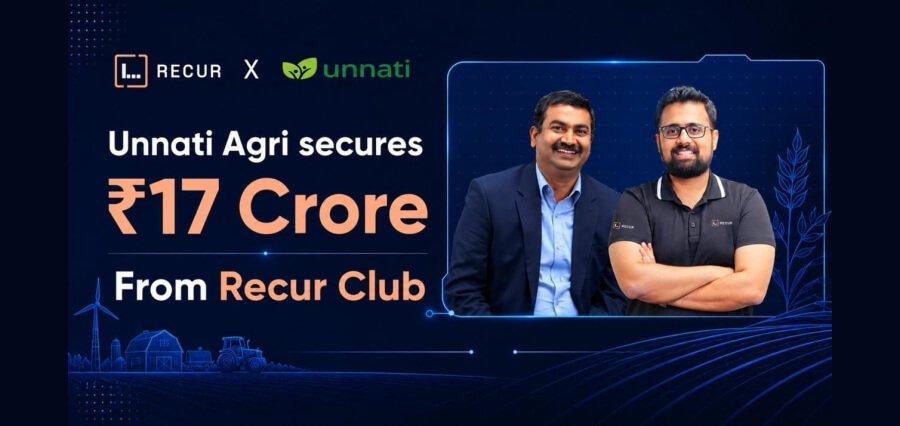
Unnati Agri Secures ₹17 Crore Growth Capital from Recur Club to Strengthen Distribution and Support Expansion Strategy
Funding to enhance seasonal working capital capabilities as the company advances sustainable agriculture initiatives and prepares for future equity raises New Delhi, India (June 23, 2026) Unnati Agri (Akshamaala Solutions Pvt. Ltd.), one of India’s leading integrated agri-input platforms, has secured ₹17 crore in debt financing from Recur Club, an AI-driven debt platform serving startups and small and medium-sized enterprises (SMEs). The funding will be utilized to strengthen seasonal working capital requirements, support inventory procurement, and enhance distribution capabilities following Unnati’s merger with Gramophone. The integration combines Unnati’s wholesale distribution network with Gramophone’s farmer-focused digital platform, creating one of the country’s largest integrated agri-input ecosystems. Strengthening Operations Following Strategic Merger The capital infusion comes at a pivotal stage in Unnati’s growth journey as the company focuses on scaling its integrated platform and expanding its reach across India’s agricultural value chain. Founded by Ashok Prasad and Amit Sinha, Unnati has established a presence across multiple segments of the agri-input ecosystem, including manufacturing, wholesale distribution, retail operations, and farmer engagement. Over the past decade and a half, the company has built extensive relationships across the agricultural sector while raising more than US$13 million in equity funding from institutional investors, including NABVENTURES. The recent merger with Gramophone is expected to strengthen the company’s ability to connect manufacturers, distributors, retailers, and farmers through a unified platform that combines physical distribution capabilities with digital engagement tools. Advancing Sustainable Agriculture Adoption A significant component of Unnati’s growth strategy centers on expanding the adoption of sustainable agricultural products across its network. Currently, sustainable agri-input solutions contribute approximately 35–40 percent of the company’s sales. Unnati aims to increase this share to nearly 66 percent over the next two to three years, reflecting what the company describes as growing demand among retailers and farmers for environmentally responsible and productivity-enhancing agricultural solutions. The company believes this transition represents a broader shift within the sector toward more sustainable farming practices while maintaining commercial viability for stakeholders across the value chain. Leadership Commentary Commenting on the financing, Amit Sinha, Co-founder of Unnati Agri, said: “Agriculture operates on seasonal cycles, making timely access to working capital essential for ensuring continuity across the supply chain. Debt financing is an appropriate growth instrument for us at this stage as it allows us to scale operations efficiently while preserving equity ahead of our planned fundraising initiatives. Recur Club demonstrated a strong understanding of our business model and delivered a financing solution aligned with our operational requirements.” Eklavya Gupta, Co-founder and Chief Executive Officer of Recur Club, added: “Unnati has spent years building a strong foundation within India’s agricultural ecosystem through its extensive distribution network and direct engagement with farmers. The company’s focus on increasing sustainable product adoption is supported by clear market demand and a scalable business model. We are pleased to support their next phase of growth and expansion.” Preparing for the Next Phase of Growth Looking ahead, Unnati is preparing for a larger equity fundraising round in the second half of 2026, with plans to raise approximately US$30–35 million to accelerate expansion initiatives and strengthen its market position. The company has also outlined ambitions to pursue a public listing within the next three to four years as it continues to scale operations, expand distribution capabilities, and deepen engagement with farmers and agricultural stakeholders across India. About Unnati Agri Unnati Agri (Akshamaala Solutions Pvt. Ltd.) is a Noida-based agri-fintech and digital farming platform that works with farmers, agri-retailers, and other stakeholders across the agricultural ecosystem. The company enables retailers to digitally engage with farmers while facilitating access to agricultural inputs, crop advisory services, and financial solutions. Through its integrated platform, Unnati seeks to improve transparency, enhance productivity, and reduce operational inefficiencies across the agricultural value chain. About Recur Club Recur Club is an AI-native debt platform serving startups and SMEs across India. The company has facilitated more than ₹3,000 crore in growth capital for over 2,000 businesses through a network of more than 120 institutional lending partners. Its proprietary AI Credit Analyst (AICA) platform enables businesses to access customized financing solutions across multiple debt structures, including working capital facilities, term loans, and structured debt products through a technology-enabled lending process. Read Also: The ePlane Company Completes Full-Scale Assembly of e200X eVTOL Aircraft, Advancing Toward Certification and Commercial Operations