






Trauma-Informed Leadership Pioneers Transforming Global Organizations
Healing as Strategy In today’s fast-changing world, many workers carry invisible burdens from past experiences. These can include personal hardships, work stress, or global events like pandemics. Trauma-Informed Leadership Pioneers are changing this by making healing a core part of business strategy. Instead of ignoring emotional pain, they build workplaces that support recovery, build trust, and boost performance. This approach turns compassion into a smart way to lead. What Is Trauma-Informed Leadership? Trauma-informed leadership implies that a leader should be aware of the role of past or current trauma on individuals. Trauma is any event that overwhelms someone’s ability to cope. It can show up as burnout, low focus, or conflict at work. These leaders adhere to the main concepts of such groups as SAMHSA: safety, trust, peer support, collaboration, voice and choice and cultural and historical awareness. They create a psychological safety in place so that employees are taken into consideration and valued. Not only is it altruistic, but it also reduces turnover, boosts engagement, and comes up with better ideas. Research shows nearly 70% of adults face at least one traumatic event. When leaders ignore this, teams suffer. When they respond with empathy, organisations become stronger and more resilient. Why Healing Is a Smart Strategy Old leadership styles focus only on results. They push hard without considering emotional needs. This causes burnout and resignations. Trauma-Informed Leadership Pioneers flip this. They see healing as key to success. For example, companies that adopt these ways report better teamwork, fewer sick days, and more creativity. Psychological safety helps people take risks, share ideas, and stay longer. In crises like COVID-19, trauma-informed leaders stepped up. They held listening sessions, gave clear information, and showed up for their teams. This built trust and helped with recovery. Businesses that use this approach link it to ESG goals — the “social” part — by investing in mental health resources. Real Pioneers Leading the Change Many forward-thinking leaders and organisations are showing the way. In health care, the Institute for Trauma-Informed Care at University Health in Texas rolled out system-wide changes. They added recharge rooms, new onboarding, art therapy, and policies that name trauma-informed care as a core mission. This helped staff heal and stay strong. The origin of the trauma-informed system of care was the first regional model of trauma-informed care, Trauma Transformed, created by Dr. Ken Epstein. His Healing Systems concept transforms organisations not to harm but to be helpful with recovery. It emphasizes equal and fair leadership. Another case is health care teams during the pandemic. Leaders used listening sessions to address fears like a lack of PPE. They focused on visible presence and empathy, helping teams cope and grow after trauma. In business and non-profits, pioneers push for mental health days, open talks about stress, and training in emotional skills. Organizations such as Relias and Workplace Peace Institute will provide leaders with training to identify indicators of trauma and react appropriately. They assist businesses in every industry in establishing cultures in which individuals flourish. Dr. Dawn Emerick calls for a “mental health revolution” through trauma-informed change. Her work shows how it raises morale and revenue. These pioneers prove the point: healing is not a side project. It drives better results. The Path Forward for Global Organisations To follow these pioneers, organisations can start small. Train leaders in trauma basics. Build safe spaces for talks. Offer mental health support without shame. Listen to employees and act on what they say. The payoff is clear. Teams become more connected. Innovation grows. People stay committed. In a world full of uncertainty, this approach builds lasting strength. Trauma-Informed Leadership Pioneers show that caring for people is the best way to win. By making healing a strategy, they transform organisations into places where everyone can grow and succeed. Read Also : How Leaders Perform When Growth Accelerates

Dr. Ahmed J. Jabbar: The Visionary Architect of Iraqi Healthcare
In the dynamic and critical domain of pharmaceutical distribution and scientific operations, where national health relies on strategic foresight and flawless execution, Dr. Ahmed J. Jabbar stands as a key figure in shaping the Iraqi healthcare landscape. As the Director of Operations at Shubber Scientific Bureau, and with a profound history of leadership in both global and local pharmaceutical powerhouses, he is justly recognized as one of the ‘Global Visionaries to Follow in 2026.’ Dr. Jabbar has two sides to him that act as one force driving him to fulfil his mission. His time at Sanofi gave him the foundation for years to come as he learned how to maintain distribution worldwide for high-quality products and successfully execute on a global growth strategy on a conservative budget. This valuable experience refined Dr. Jabbar’s capability to ensure the accomplishment of every local plan by aligning it with the highest caliber of operations performed throughout the world. After transitioning his skills from Sanofi to Shubber Scientific Bureau, he was able to implement a major change and improvement throughout his organization based on this experience by improving business efficiencies, optimizing supplier chain effectiveness, and building high-performance sales and promotional teams, driving business success in a marketplace filled with competition. Through all of these areas, Dr. Jabbar possesses an unwavering commitment to the operational excellence of his organization, working as a cohesive team player with a goal of improving patient access to quality medicines. For Dr. Jabbar, continuing on with this mission to raise the standards of the pharmaceutical industry within Iraq, he works in partnership with other leading pharmaceutical companies to create innovative products while delivering medicines on time to patients who need them. In addition to providing this level of service, he is also the strategic mind behind the scientific need for innovation, turning scientific necessity into commercial viability for patient access to the product. The Defining Crucible: Crisis Leadership in Iraq Dr. Jabbar’s leadership journey began with a profound decision in 2008: pivoting away from traditional clinical practice after graduating from the Baghdad College of Medicine. He chose the pharmaceutical industry, believing he could create impact at scale—influencing healthcare nationwide. His early momentum at Sanofi was electric, leading to promotions from Medical Representative to Head of Sales for Sanofi’s business in Iraq by May 2012, a role he held for four years. Then came the defining test of his career: the 2014 takeover of major territories by ISIS. Leading teams during that period transcended mere performance; it became an intense crash course in crisis leadership. It was about “protecting people, ensuring access to essential medicines, navigating risk, and making decisions under extreme pressure.” These years—demanding foresight, adaptability, and decisive action—forged the resilient leadership mindset Dr. Jabbar still applies today. The Entrepreneurial Pivot: Preserving Continuity When Sanofi closed its direct presence in Iraq in 2016, Dr. Jabbar faced another turning point. Instead of seeing it as a setback, he leveraged his robust network, relationships, and reputation to establish a hybrid business model through the general trading company Judi Apex. This entrepreneurial period preserved his market continuity, deepened his commercial instincts, and strengthened his resilience, allowing him to represent multiple pharmaceutical companies and license products to sub-distributors in Kurdistan. This agile, self-directed experience was crucial before he chose to return to corporate leadership, joining Shubber Scientific Bureau in 2018, where he quickly ascended to Director of Operations. The Mall of Brands: Visionary Consolidation Upon joining Shubber in 2018, Dr. Jabbar identified a critical early signal: the Iraqi market was shifting toward global-standard compliance and strategic consolidation. Multinationals no longer wanted transactional distributors; they demanded fully integrated, strategic partners. This insight birthed the vision: to transform Shubber into “The Mall of Brands”—a national platform capable of hosting leading global pharmaceutical companies under one umbrella. This single ecosystem provides promotional excellence, commercial discipline, regulatory compliance, strong supply chain performance, and institutional capabilities. Supported by the owners, this vision led to heavy investment in structure and talent development. Today, Shubber represents ten prominent multinational pharmaceutical companies, and the “Mall of Brands” has become a market reality, positioning the firm as “the preferred strategic partner for global innovators in Iraq.” Anchoring Local Execution in Global Standards Dr. Jabbar ensures Shubber Scientific Bureau stays ahead of the curve by anchoring local execution in global standards. Strategically, this means maintaining close engagement with multinational partners, adopting their global best practices, and adapting business models to Iraq’s unique market challenges. This allows the firm to respond proactively to regulatory changes, pricing volatility, and market dynamics. Technologically, Dr. Jabbar has overseen the modernization of multiple core pillars: forecasting and demand planning, CRM platforms, logistical and inventory visibility, and data-driven commercial decision-making. These advanced tools ensure clarity, transparency, and speed throughout the organization. His entire management philosophy rests on three core fundamentals: *Strategic Clarity: “Everyone must understand where we are going and why.” *Operational Excellence: “Systems must be scalable, compliant, and disciplined”, and *Continuous Development: A learning culture ensures that people grow alongside global standards. He affirms that innovation ensures Shubber doesn’t just keep pace but ‘lead transformation within the industry.’ Cultivating Confidence: The Pipeline of Empowered Leaders Dr. Jabbar believes that culture is not imposed; it must be built consistently. He focused on creating an environment where people develop, gain confidence, and lead with integrity. He highlights that many of today’s departmental leaders were once junior staff, proving the effectiveness of his investment in mentorship, structured development pathways, and exposure to international practices. His culture encourages solution-driven thinking and ownership, not dependency. Teams are empowered to challenge the status quo, contribute ideas, and act with accountability, which is essential for resilience. This approach enabled the firm to navigate supply pressures and market instability “not with fear, but with confidence and adaptability.” For Dr. Jabbar, a resilient organization is one where “people feel they are part of the journey, not just employees filling a role,” ensuring that human capital grows alongside global operational excellence. The Role Model: From Baghdad to the
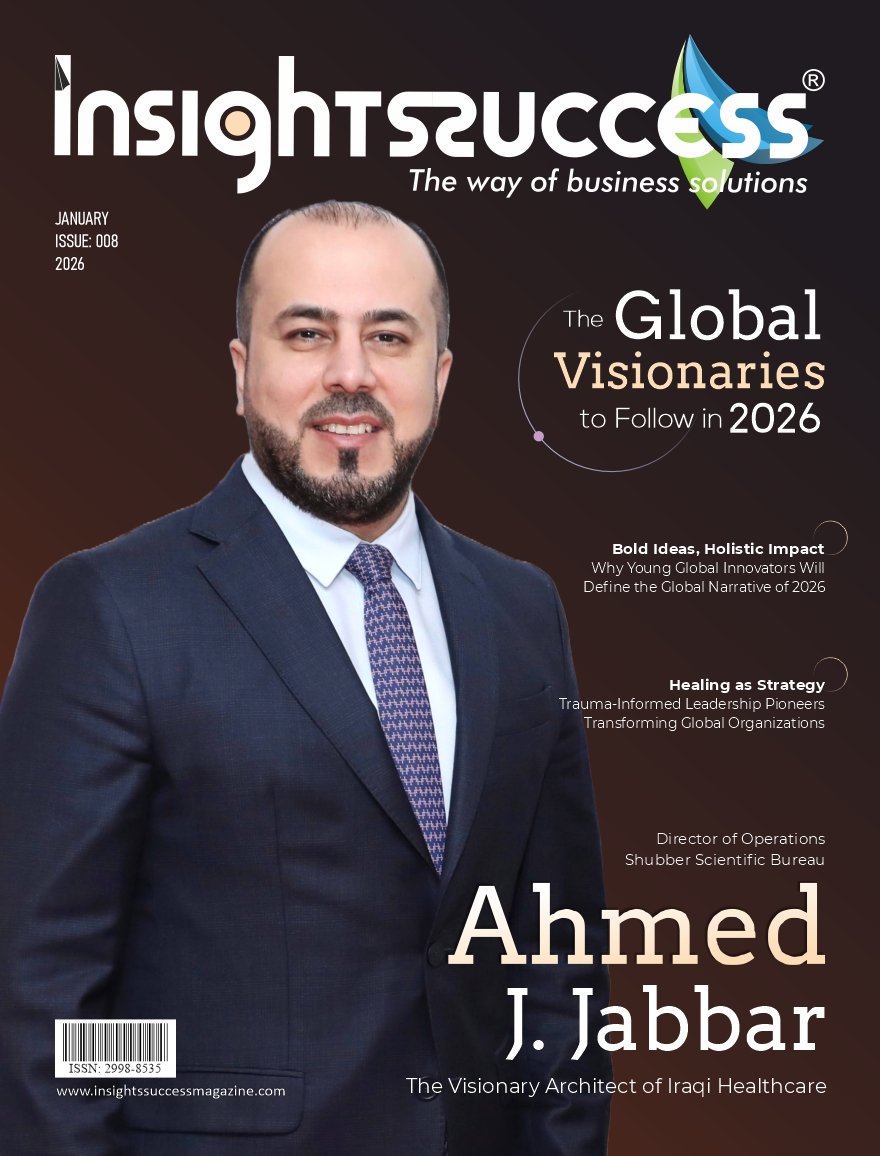
Global Visionaries to Follow in 2026
Global Visionaries to Follow in 2026 In this edition we spotlight bold, forward-thinking leaders reshaping industries and societies worldwide pioneers whose vision, values, and influence are defining the future of leadership, innovation, and human-centered progress. Digital Link Quick highlights Quick reads
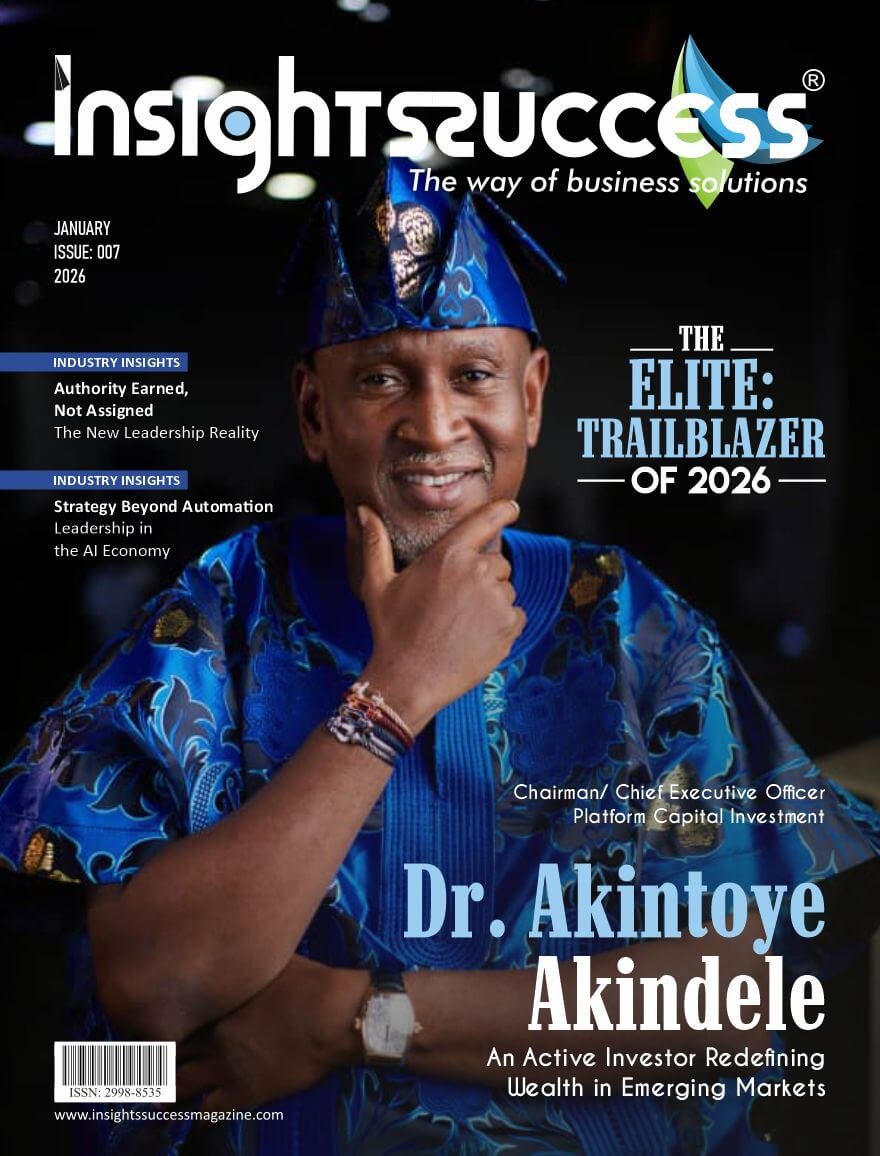
The Elite: Trailblazer of 2026
The Elite Trailblazer of 2026 Honors Dr. Akintoye Akindele, an exceptional leader whose pioneering vision, strategic excellence, and lasting impact are setting new benchmarks, recognizing those who lead from the front and shape the future with distinction. Digital Link Quick highlights Quick reads

Dr. Akintoye Akindele: An Active Investor Redefining Wealth in Emerging Markets
The investing industry is undergoing a massive, nearly quantum change. This development poses a serious challenge to the antiquated idea that capital must function as a cold, heartless force. This transformative change is redefining success and proving beyond a reasonable doubt that significant social impact and outstanding financial return are not mutually exclusive goals but rather two potent, intertwined forces of sustainable growth. Platform Capital Investment’s CEO and Chairman, Dr. Akintoye Akindele, is at the center of this revolutionary change. Dr. Akindele is not merely participating in the market; he is a master architect actively constructing a future where financial resources possess an inherent moral compass. He powerfully defines it as a “soul.” His work is a declaration that immense financial success can, and indeed must, be the organic consequence of deep-seated, measurable impact. He operates with the acute realization that his true measure is not determined by the size of his assets but by the magnitude of the positive change he successfully orchestrates. He sees himself as the courageous “man in the arena,” dedicated to fighting a good fight to transform the limiting narratives of his people. Platform Capital is his blueprint for a global investment model, proving that patient, purposeful capital is the ultimate engine for building stable nations, accelerating innovation, and unleashing the full potential of millions of entrepreneurs across emerging markets. The Unshakeable Roots: A Foundation of Shared Wealth To truly grasp the depth of Dr. Akindele’s revolutionary investment philosophy, the core conviction that capital must have a soul, one must learn about his childhood, the source where his ethical and professional foundation was meticulously poured. He gratefully credits his parents, an “amazing couple,” with instilling a value system that continues to shape his entire worldview regarding life, business, and community. He often cites Warren Buffett’s concept of the “lottery of the womb,” acknowledging the role of fortune, but stressing the absolute importance of the life built from that starting point. His father, a former Central Bank Director, modelled a life rich in service, despite having emerged from poverty. This firsthand experience with hardship fuelled his lifelong commitment to lifting others. The family operated under the powerful belief in building a dynamic community and actively being their “brother’s keeper.” His father’s profound, timeless directive became the mantra that anchors Dr. Akindele’s career: a person “should be ashamed to die” if hundreds of lives cannot actively testify that he existed in this world. This ethos was demonstrated daily. His father routinely sponsored community projects, constructing boreholes for water access and building places of worship. Similarly, his mother maintained an open-door policy and an “open kitchen,” routinely feeding over 50 children daily. Growing up, Dr. Akindele felt he was sharing his life with a “thousand siblings,” absorbing the foundational lesson that dignity, integrity, and shared responsibility form the bedrock of a meaningful existence. This early life of communal service, coupled with the rigorous academic expectations from his grandfather, established the ethical scaffolding for the global empire he builds today. The Strategic Pivot: From Engineering Constraint to Financial Empowerment Dr. Akindele’s professional journey began not in finance, but in the precise world of technical analysis. He successfully completed his university studies in Chemical Engineering, driven by a powerful, early vision to be a process engineer who would design the systems necessary to “change the narrative” of his developing nation. He took his rigorous technical training to the Nigerian National Petroleum Corporation (NNPC), the state oil company, ready to implement his ideas. Yet, within the NNPC, he repeatedly encountered a persistent, paralyzing constraint that dramatically redirected his professional focus. Time after time, his innovative project proposals, designed to optimize resources and drive national growth, were met with the same discouraging veto: “There’s no finance; there’s no capital.” He came to a crucial, career-defining realization: the true national bottleneck was not a lack of engineering ingenuity, but the lack of accessible, patient capital. This intellectual roadblock compelled him to execute a calculated and decisive career pivot. He deliberately stepped away from the comfort of engineering to immerse himself completely in the mechanics of money. He joined the esteemed GT Bank, submitting himself to intensive training in corporate finance, law, economics, strategy, and accounting. Excelling in this demanding environment, he moved rapidly into high-stakes corporate and investment banking. This period granted him a rare, panoramic view of capital allocation across diverse economic ecosystems. During this time, he continued his relentless pursuit of skill diversification, aggressively passing Microsoft, Cisco, and Certified Financial Analyst( CFA) exams. This deliberate fusion of engineering systems thinking, technological proficiency, and deep financial acumen created a unique, multidimensional skill set, allowing him to see opportunities where others saw only complexity and risk. The Mastering of Equity and the Launch of Synergy After nearly eight years dedicated to mastering the mechanics of debt financing and banking operations, Dr. Akindele identified the next critical knowledge gap: the mastery of equity- the patient, essential engine of growth. Coinciding with the opening of Nigeria’s economy, he executed another strategic move, joining African Capital Alliance (ACA), then the premier private equity firm in West Africa. His tenure at ACA was characterized by intense integration, successfully merging his technical and financial skills with the complex art of equity investment. He was deeply involved in critical national deals, including the highly strategic entry of the telecommunications giant, MTN, into Nigeria, along with various essential investments across the technology and services sectors. By 2006, having amassed extensive hands-on experience, he felt unequivocally ready to launch his own entrepreneurial enterprise. He established Synergy Capital, an investment bank that rapidly became a significant force, providing a comprehensive suite of corporate finance, advisory, and restructuring services. What fundamentally differentiated Synergy was its pioneering strategy: the profits generated from the advisory arms were systematically reinvested into other companies, building the firm’s proprietary, verifiable investment track record. This success led to the launch of the Synergy Private Equity Fund One, securing capital from an esteemed roster of global development finance

The New Leadership Reality
Authority Earned, Not Assigned The contemporary office is changing the concept of power completely. Being the boss, having a good position, and exercising power do not automatically provide one with the right to be heard or accepted. In times characterized by intellectual work, openness, and changing of generations, authority is to be gained by trust, skill, and moral qualities. In fact, the leader of today is the one who trusts rather than the one who commands. This points to a radical transformation in the way power is given, used, and kept. The Decline of Positional Authority Classic leadership models were based on hierarchy. The flow of power was mainly downward and was supported by the structure and control. Although this model provided transparency and effectiveness in stable situations, it finds it hard to cope with the current dynamic and interdependent companies. Employees of different departments have more autonomy, information is available more easily, and people with good knowledge often work outside the official hierarchy. In this scenario, leaders purely dependent on their rank would encounter detachment and opposition. The employees might obey the orders given by the managers, but they will not be committed to the company. The new leadership situation calls for power of persuasion instead of disregard. Credibility as the Foundation of Authority Authority gained through a proper way starts with trust. The leaders establish their trust in the course of time by their skills, consistency, and sound judgment. When the leaders are in command of their field, make the right choices, and stick to their promises, they find the confidence of their followers. Credibility is also supported by intellectual humility. A leader who accepts his restrictions, asks for opinions, and is open to learning signals strength as opposed to weakness. Such a person is the one who fosters cooperation and, thus, increases the trust that is the most important factor of power that lasts. Character and Integrity in Leadership In a period of greater transparency and demanding responsibility, personality has turned out to be the cornerstone of leadership power. The employees and the stakeholders vigilantly watch the leaders’ daily actions in the pressurized situations, making the right ethical choices, and the way they interact with others. Trust is lost at a glance when leaders behave in a way that contradicts their proclaimed values. On the other hand, the leaders who are showing honesty—even if it has to do with their own person or the company—are winning over the trust that is very deep and lasting. Character-oriented leadership generates moral power that can often be more prominent than the power that comes with the position. Influence Through Relationship and Respect Authority that has been won is connected with relationships. Informed leaders create a social network of authentic interactions, they also practice active listening and consider different points of view. This approach of relationships does not take away the power of making firm decisions; instead, it builds it up since those decisions are founded on common comprehension. The ones who perceive their opinions to be considered and their presence to be important usually will support the choices made by the management even when such choices are no less than the hardest ones. The dictation of the respect-based authority has the effect of drawing people together rather than just getting them to bow down and this in turn makes a leader capable of gathering the support of the people without putting on any pressure. Performance and Accountability Reiterated performance strengthens power. The leaders who communicate their responsibilities and at the same time produce results become the ones who influence the pugilistic way of working. Accountability is not an attribute of blaming; rather, it is the ability to own up to one’s mistakes or successes. When the leaders claim the responsibility of results—good or bad—they write the tale of giving and trust. This kind of acting increases their authority and makes the others in the organization follow the same path of accountability. Conclusion In the contemporary world, one can’t simply rely on the title to claim authority; it must be won through trust, personal qualities, and regular actions. The new leadership scenario is a contest where those who are honest, win with their reputation, and give others the power to participate, are on the winning side. As firms turn into more intricate and cooperative structures, the winning leaders will be those who realize that power is not granted to them—it is a constant process of earning it on their part. Read Also : How Leaders Perform When Growth Accelerates

Leadership in the AI Economy
Strategy Beyond Automation The development and implementation of artificial intelligence have been happening at a very fast pace all the way from the testing stage to the adoption by companies. However, a very big misunderstanding still exists which is that only automation leads to an edge over the competitors. In fact, automation is just the beginning. The AI leaders who not only focus on efficiency using AI but also apply it in a very strategic way—changing the decision-making process, business models, and organizational skills—will be the ones creating the sustainable value in the AI economy. It is the leadership that determines whether AI will be a tool or a transformation, not the technology. From Automation to Advantage Long before, AI started to be used mainly for automating tasks—which meant cost-cutting, faster processing, and greater precision. In spite of the fact that these are real benefits, they can be easily copied. What automation does is it gives everyone the same power; it doesn’t determine who the winner is. The concepts of strategic leaders who see AI as an intelligence layer and not a labor force replacement. They query in what ways AI can bolster judgment, forecast results, and guide the course of action. This alteration brings AI from a mere operational upgrade to a source of insight and uniqueness. Reimagining Decision-Making Decision quality becomes the more and more decisive factor to the performance within the AI economy. By including AI in the decision making process, a leader gets to have the advantages of speed, consistency, and foresight. The use of predictive analytics, scenario modeling, and real-time insights opened a door for organizations to move from management being responsive to strategies that are proactive. Nonetheless, the role of a leader cannot be overlooked. AI points out the way but it is not the one to take the decision in the end. A great leader knows where the AI suggestions are most powerful, where the human intuition is needed, and how to maintain accountability. This kind of clarity conserves control of the strategy and at the same time hinders the dependency on algorithms. Aligning AI with Business Strategy Misalignment is one of the major reasons of AI failures and the like. Companies implement high-tech models that are not connected to their strategic priorities at all. Consequently, AI achieves technical success but has a minor impact on the business. To lead the AI economy, the starting point is to have a clear vision of the future. The decision-makers spot the use cases with the highest value where AI has a direct role in enabling the growth, making the company more resilient, or helping in branding. They focus on the projects that can be scaled, integrated with other departments, and aligned with the company’s long-term goals. Such a practice allows the companies to get the full benefit of the AI investments as they are distributed across the whole organization rather than being limited to a specific area. Building the Foundations for Scale AI strategy is dependent upon solid foundations. The quality, governance, security, and architecture of data decide whether AI can be trusted and its usage expanded. Those who overlook these factors, thereby, risk their performance and reputation. A similar scenario is with organizational readiness. The integration of AI changes the roles, workflows, and skill sets needed. That leaders have to invest in talent development, cross-functional collaboration, and change management to ensure the successful embedding of AI is a reality. Inevitably, the limitation of innovation is not the way, but the introduction of it in well-defined frameworks is the way to control in the AI economy. Ethics, Trust, and Responsibility When AI systems make decisions that have consequences for customers, employees, and markets, then ethical leadership is a must for the strategy. The questions of bias, transparency, privacy, and accountability cannot be left to the technical teams only. The highest-ranking managers should set the specific ethical codes for the application of AI and monitor the adherence through governance and oversight. Trust—within the organization and outside of it—is an asset that gives a competitive edge. Companies that use AI in a responsible manner not only gain public acceptance but also ensure their continuity in the long run. Conclusion The AI economy strategies are going to be more than just a matter of automating processes. The leaders will have to make the intelligence part of the organization—their decision-making, culture, and even the way of creating value will be influenced by it. In a way, technology opens the door to new opportunities; however, it is up to the management to decide what the result will be. The companies that will be successful will have as their leaders the ones who consider AI not just a tool for faster and cheaper processes, but rather a strategic one that requires the utmost clarity, responsibility, and human judgment. Read Also : How Leaders Perform When Growth Accelerates
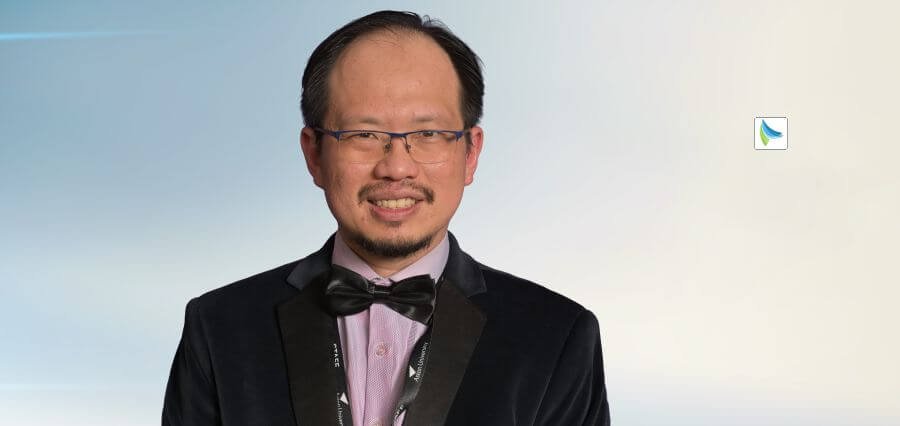
Professor Victor Chang: A Global Force in Business Analytics
We are on the verge of a new industrial era characterized by the sheer amount and speed of data. Intelligence is as much a part of this revolution as technology. Nowadays, the world is searching for visionaries who can decipher the intricate language of algorithms and turn it into real economic and social benefits. These leaders are today’s digital cartographers, charting the uncharted territories of data science, artificial intelligence (AI), and the Internet of Things (IoT). They strive to create a future in which technological advancement is ethical, safe, and accessible to all. This crucial role demands a rare and potent combination of deep technical mastery, strategic business insight, and a relentless commitment to institutional change. Professor Victor Chang embodies this ideal, consistently driving the essential work of transforming raw data into sophisticated foresight. He moves with purpose, actively engineering the future of business and technology across the globe. His career is a powerful narrative of interdisciplinary excellence. He does not simply study the future; he is actively building it. The Visionary at Aston University Professor Chang currently holds a pivotal position at the heart of technological and business synergy. He serves as a Professor of Business Analytics at the esteemed Aston Business School, part of Aston University, UK. He assumed this distinguished role in mid-May, 2022. His work resides within the Operations and Information Management section, a crucial hub for developing modern business strategy. He brings profound, specialized knowledge in AI-oriented data science, continually making significant contributions across multiple disciplines. Professor Chang’s vision for his current role is both strategic and action oriented. He focuses intensely on translating academic brilliance into real-world impact. He dedicates himself to the vital process of securing funding and forging powerful collaborative projects. These initiatives successfully bridge the gap between academic theory and industry applications. He possesses a proven ability to lead large-scale research, having successfully steered more than four major projects. He has led major projects worth over £3 million and has been involved in international collaborative projects totaling more than £14 million across Europe and Asia. This success demonstrates his exceptional skill in attracting investment and managing complex, high-stakes research agendas. Professor Chang is also actively preparing to take research leadership for Aston University. This future role will further cement his position as a primary force in institutional research leadership. The Architectural Blueprint of Expertise Professor Chang’s academic career reveals a deliberate, strategic pursuit of interdisciplinary knowledge. This foundation supports his comprehensive expertise in business analytics. His educational journey began with a dual focus at the University of Sydney, Australia. He achieved both a Bachelor of Engineering (Telecom) and a Bachelor of Science (Physics and Computing) between February 1996 and June 2000. He then refined his focus on technology and learning. Professor Chang completed an MPhil in Engineering, specializing in e-learning, at the Cambridge University Engineering Department. He earned this degree from October 2001 to September 2002. Recognizing that innovation requires strategic leadership, he pivoted to integrating business acumen with his technical depth. He successfully completed an MBA in Technology Management, studying from September 2002 to January 2004. This combined knowledge forms the unique blend he uses today in Business Analytics. He concluded his formal education with the highest academic honor. He completed his PhD in Computer Science at the University of Southampton. He undertook his doctoral work from October 2009 to September 2013. Demonstrating a truly remarkable drive, he concurrently pursued and completed a PGCert in Higher Education from the University of Greenwich, achieving Fellow status. He accomplished both his PhD and the PGCert in just four years, all while managing several major projects simultaneously. Before committing himself to academia, Professor Chang established a robust professional track record. He showed exceptional dedication to practical IT standards. He achieved an extraordinary average score of 97% across 27 different IT certifications. This feat proves his hands-on expertise with complex systems. His real-world experience includes a highly impactful role at the NHS (National Health Services). He served as the I&T Service Manager and IT Solutions Director from July 2008 to February 2011. Engineering Institutional Change and Global Collaboration Professor Chang’s career is not only about personal achievement; it is also about institutional transformation. Before joining Aston University, he was a Professor of Data Science and Information Systems at Teesside University, UK. In that role, he actively led the key research group focusing on Cybersecurity, Information Systems, and AI. He previously held senior leadership roles internationally. He served as a Senior Associate Professor at the International Business School Suzhou, part of Xi’an Jiaotong-Liverpool University (XJTLU) in China. During his tenure, he was the Director of both the PhD and MRes programs. He also acted as a very active, contributing member of the Research Institute of Big Data Analytics at XJTLU. Earlier in his academic journey, he made significant contributions as a Senior Lecturer at Leeds Beckett University. He maintains powerful ties to his academic roots. He served as a Visiting Scientist (non-stipendiary) at the University of Southampton from December 2013 to November 2021. He continues to serve as a Visiting Professor (non-stipendiary) at the university, a role he has held since December 2021. He consistently works to cultivate and strengthen active global research communities. He is the founding conference chair for several major, sponsored international conferences. These impactful platforms include the International Conference on Internet of Things, Big Data and Security (IoTBDS), COMPLEXIS, and the International Conference on Finance, Economics, Manahement and IT Business (FEMIB), which he founded in 2019. He also established Industrial Internet of Things, Big Data and Smart Cities (IIoTBDSC) in 2019 and a new conference, EMCAS in 2025. Stepping down chair roles for IoTBDS and COMPLEXIS in 2024, this allows him to channel his considerable energy into new strategic priorities. Since June 2015, he has actively guided others as an Advisory Board member for various research communities. His expertise is trusted globally, as evidenced by his role as a PhD examiner for more than 10 universities across the world since
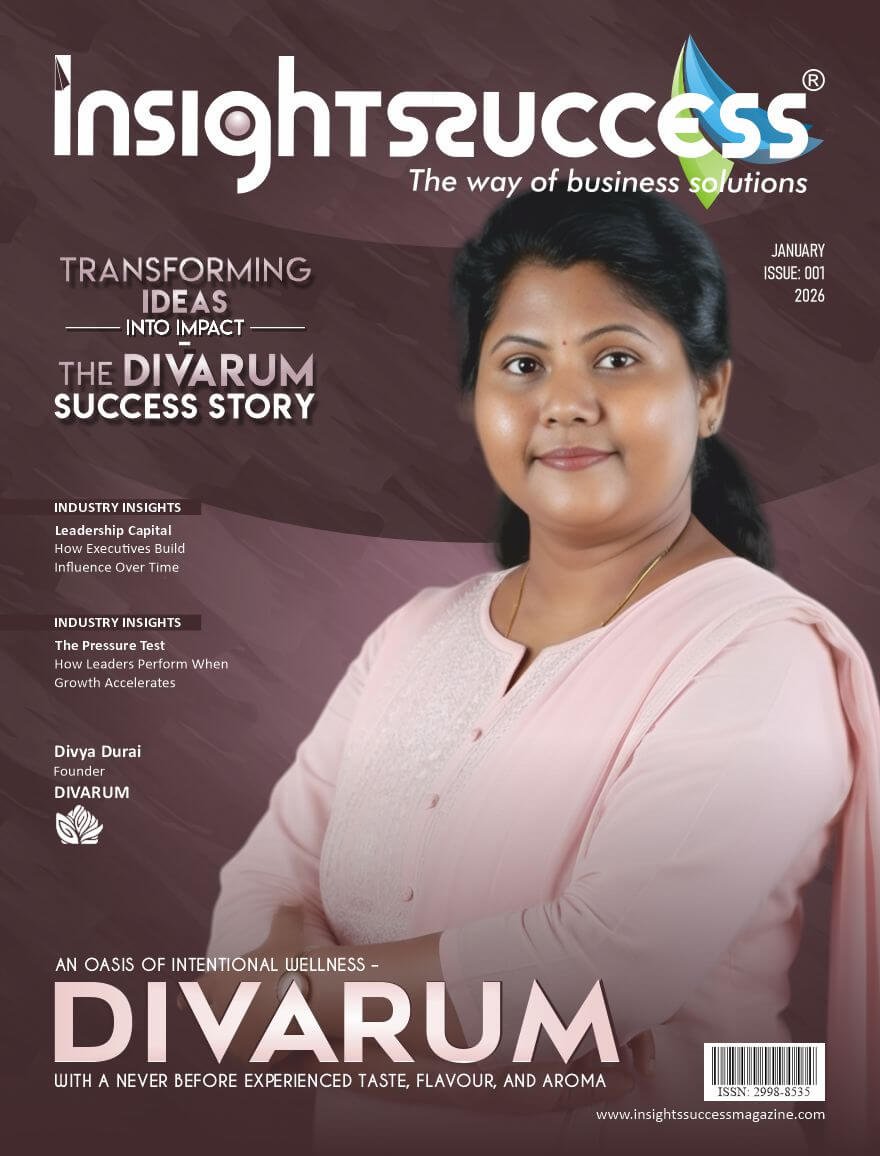
Transforming Ideas into Impact – The DIVARUM Success Story
Transforming Ideas into Impact – The DIVARUM Success Story This edition highlights Divya Durai’s journey in building DIVARUM, capturing how vision, consistency, and thoughtful execution turned ideas into measurable impact, shaping a purpose-driven enterprise with lasting influence across industries. Digital Link Quick highlights Quick reads

An Oasis of Intentional Wellness – DIVARUM: Elevating Your Everyday with a Never Before Experienced Taste, Flavour, and Aroma
How healthy you are depends directly upon both the intent and content of your food, snacks, diet, and nutritional intake. And in these fast-paced times, finding intentionally well-curated original, quality, premium, and healthy food content is difficult. It is where DIVARUM makes all the difference. In the words of its Founder, Divya Durai, at DIVARUM, she dedicated to curating the world’s most exceptional and authentic ingredients, presenting them as a legacy of purity and refined taste. “Our collection is a tribute to the discerning palate, with each product sourced directly from its native land to offer an unparalleled experience.” Rejuvenate Your Senses The completely health-conscious brand specializes in a collection that includes ★ Exquisite Saffron – Hand-harvested from the pristine valleys of Kashmir, known for its rich color, aroma, and flavor. ★ Artisanal Filter Coffee – A fine blend from South India, crafted for a rich and aromatic brew. ★ Pure Iranian Pista – Premium pistachios from Iran with a perfect crunch and nutty flavor. ★ Superior Benin Cashews – W240 grade cashews from Benin, prized for their buttery taste and texture. ★ Rare Kashmiri Mamra – A unique almond variety from Kashmir, naturally sweet and highly nutritious. ★ Select Herbal Teas – Blends of hand-picked botanicals to relax and refresh the senses. ★ Gourmet Cranberries – Plump and vibrant cranberries with a balanced tart-sweet taste. Redefining Luxury Divya adds, “Beyond our exceptional products, we offer an opportunity to share this luxury through our thoughtfully curated Gift Hampers. Each hamper is a complete sensory experience, combining our gourmet goods with timeless artisanal pieces, such as our elegant brass tea pots and traditional brass filter coffee makers, perfect for gifting or personal indulgence. Divarum is for those who appreciate a legacy of quality—a celebration of nature’s bounty, presented with elegance and distinction. *DIVARUM Mission: to elevate the everyday through the art of exceptional sourcing and refined curation. “We travel the globe to hand-select the finest ingredients, ensuring every product is a testament to authenticity and profound quality,” informs Divya, who, along with her team of dedicated health experts, is committed to delivering not just individual items, but a complete, luxurious experience. “This includes providing meticulously crafted gift hampers that combine our gourmet products with exquisite, traditional brassware, such as tea pots and filter coffee makers. Our purpose is to connect you with the world’s most celebrated tastes and timeless traditions, making luxury accessible and enriching your life with every exquisite flavor and handcrafted detail.” *DIVARUM Vision: to redefine luxury by seamlessly blending the world’s most authentic and pure ingredients with the beauty of traditional craftsmanship. Divya says she envision a world where every product and gift tells a story of its origin and purpose. She strive to be the global destination for those who seek not just a product, but a complete and curated lifestyle. “We aim to build a legacy of trust and taste, setting a new standard for excellence by offering not only our gourmet goods but also the elegant, functional artistry of brass items like our teapots and filter coffee makers. Ultimately, our vision is to become synonymous with a holistic and sophisticated approach to wellness, flavor, and gracious living.” Reboot Your Story The journey of DIVARUM is deeply personal for Divya. “It was born from a truth that many of us are facing in our fast-paced world: our modern lifestyles, filled with stress, are leading to an increase in lifestyle-related health issues.” Divya’s own path was no different. She found herself navigating a challenging health journey, dealing with issues like PCOD, thyroid imbalances, and stress-induced insomnia. “I discovered that true, lasting recovery only began when I made fundamental modifications to my lifestyle and my daily rituals.” This personal transformation became a passionate mission when she looked at her children. “As a mother, I was determined to give them a foundation of wellness and provide them with the high-quality, nourishing food I believe is essential for a healthy life.” This is where she saw the gap. She was searching for products she could trust completely— “items that were not only premium and high-quality but also connected us to our roots and heritage. I wanted to bring back the wisdom of traditional daily rituals into our modern homes.” Bridging Your Divides DIVARUM is Divya’s answer to that gap. “I’m passionate about curating and bringing these high-quality, heritage-inspired products to families like yours. This journey is about providing the tools for a healthier lifestyle, reconnecting with authentic quality, and making wellness an accessible and beautiful part of your daily life.” Every startup begins with a defining idea or moment. The spark for DIVARUM came not just from one idea, but from a series of simple, honest reactions. In the very initial stages, when Divya was just sampling her first products, gave some of their curated nuts to a small group to taste. “The feedback we received was the true insight that shaped my entire direction.” The responses weren’t just positive; she were filled with surprise. Divya recalls, “I heard comments like, ‘I had never eaten such fresh nuts before’ and ‘I didn’t know this is what she were supposed to taste like.” This exact sentiment echoed when she sampled her teas. “She was told that from the very first sip, people knew she had found their new favourite tea.” That was the moment. Divya says she had realized the gap wasn’t just in the availability of these products, but in the experience of authentic quality. “What I considered a standard of freshness and flavor was, in fact, a rare luxury for many.” This overwhelming feedback became her core mission. It pushed DIVARUM’s direction from just selling products to becoming a dedicated curator, committed to delivering that “never eaten this before” experience across its entire collection. Distinctive Guiding Principles Also, Divya insists her guiding principles are what make them different from other premium e-commerce brands. Divya has built DIVARUM on a philosophy that blends radical transparency with a modern approach