





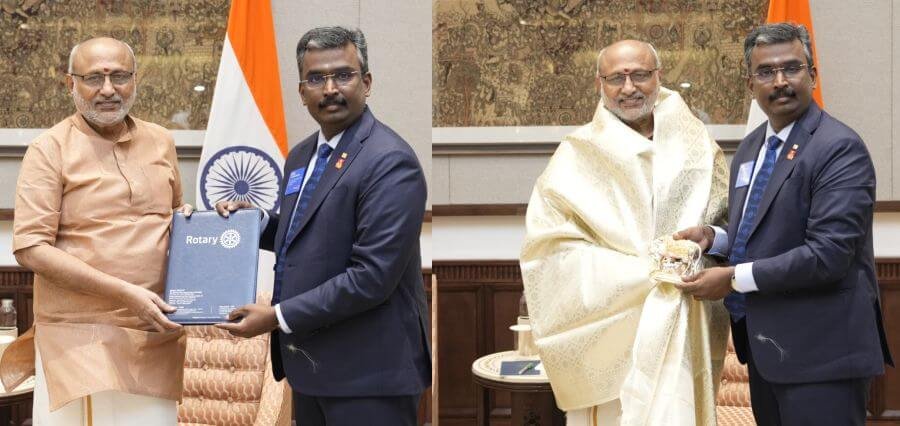
Rotary International and Government of India Explore Enhanced Collaboration for Community-Led Development
New Delhi, India | 24 July 2026: Rotary International and the Government of India have initiated discussions to strengthen collaboration on community-led development initiatives following a meeting between Rtn. AKS Er. Muruganandam M., Vice President, Rotary International (2026–27), and Shri C. P. Radhakrishnan, Hon’ble Vice President of India, in New Delhi. The meeting explored opportunities to deepen cooperation across several priority areas, including education, public healthcare, youth leadership development, water and sanitation, and broader nation-building initiatives. The discussions highlighted the potential of combining Rotary’s extensive grassroots network and global expertise in community service with national development priorities to create sustainable and long-term social impact. A key point of discussion was Rotary India’s aspiration to host a future Rotary International Convention. The Hon’ble Vice President expressed support for the proposal, recognizing the convention as one of Rotary’s flagship global events that brings together thousands of delegates from around the world. Hosting the convention in India would further strengthen the country’s position as a global destination for humanitarian collaboration, innovation, and volunteer-led service while fostering stronger international partnerships. Commenting on the meeting, Rtn. AKS Er. Muruganandam M., Vice President, Rotary International (2026–27), said: “It was a privilege to meet the Hon’ble Vice President of India and discuss opportunities to further strengthen Rotary’s contribution to India’s development priorities. We are encouraged by his support for our vision of expanding collaborative initiatives that create lasting, community-driven impact. His endorsement of India’s aspiration to host a future Rotary International Convention is an important milestone that reflects the country’s growing role in global humanitarian service.” During the meeting, the Hon’ble Vice President also acknowledged Rotary’s longstanding contribution to humanitarian service over more than 120 years, particularly its leadership in the global fight against polio through the End Polio Now initiative. He appreciated the organization’s continued efforts in immunization, public awareness, and community outreach, while encouraging Rotary to sustain its commitment towards achieving a polio-free world. Rotary continues to play a significant role in the Global Polio Eradication Initiative, working alongside international partners to help reduce polio cases by 99.9 percent worldwide. The organization has contributed more than US$3 billion, in addition to millions of volunteer hours, to immunization efforts that have helped protect more than three billion children against the disease. Beyond polio eradication, Rotary members across the world implement community-led initiatives addressing public health, education, peacebuilding, clean water and sanitation, maternal and child health, environmental sustainability, and local economic development. Through the Rotary Foundation, the organization has invested more than US$5.5 billion in humanitarian and community development programs over the past century. About Rotary International Rotary International is a global network of volunteers committed to addressing humanitarian challenges and creating sustainable community impact. The organization brings together approximately 1.2 million members across more than 45,000 Rotary clubs in nearly every country and region worldwide. Rotary members work on initiatives that improve health, expand access to education, support economic development, promote peace, protect the environment, and contribute to the global effort to eradicate polio. For more information, visit www.rotary.org. Media Contacts Karuna Pandita +91 9311667499 karuna.pandita@gcihealth.com Jyoti Rai +91 9650591553 jyoti.rai@rotary.org Read Also: Wipro Expands Strategic Partnership with Databricks to Help Enterprises Modernize Data and Scale AI Adoption

Wipro Expands Strategic Partnership with Databricks to Help Enterprises Modernize Data and Scale AI Adoption
East Brunswick, N.J. & Bengaluru, India | 27 July 2026: Wipro Limited (NYSE: WIT, BSE: 507685, NSE: WIPRO), a leading AI-powered technology services and consulting company, today announced an expanded strategic partnership with Databricks to help enterprises modernize their data infrastructure and accelerate the adoption of artificial intelligence (AI) at scale. As part of the collaboration, Wipro has established a dedicated Databricks business practice focused on developing industry-specific AI solutions, accelerators, and consulting capabilities to help organizations derive greater business value from their data investments. Enhanced partnerships are designed to support enterprises as they transition from fragmented data environments and isolated AI pilot projects to governed, enterprise-wide AI implementations. By combining Wipro’s consulting expertise with Databricks’ unified data and AI platform, the collaboration aims to enable organizations to build scalable, AI-ready data foundations while accelerating digital transformation across industries. The dedicated business practice will integrate Databricks’ capabilities in agentic AI, data modernization, analytics, and application development with Wipro Intelligence™, the company’s portfolio of AI-powered platforms, solutions, and transformation services. The practice will also leverage Databricks Genie, an AI-powered assistant that enables business users and technical teams to interact with enterprise data using natural language, helping organizations gain faster insights and improve decision-making. In addition, the collaboration will utilize WEGA, Wipro’s agent-native delivery platform, to help enterprises modernize legacy technology environments and transition toward scalable, AI-enabled data architectures. Commenting on the announcement, Kanwar Singh, Managing Partner – Technology Services, Wipro Limited, said: “Our longstanding collaboration with Databricks reflects a shared commitment to helping enterprises move beyond AI experimentation and achieve measurable business outcomes. Through this dedicated business practice, we are bringing together consulting expertise, platform specialists, and industry-focused teams to develop solutions that accelerate data transformation and enable responsible, enterprise-scale AI adoption.” The new practice builds on Wipro’s experience of delivering more than 300 agentic AI and data-driven use cases across sectors, including banking and financial services, healthcare, telecommunications, manufacturing, and energy. Wipro has also received recognition from Databricks as the 2025 Banking Partner of the Year and the 2026 Innovation Partner of the Year, reflecting the companies’ continued collaboration in delivering AI and data transformation initiatives. Kori O’Brien, Senior Vice President, Partnerships, Databricks, said: “Databricks enables organizations to unify data, analytics, and artificial intelligence within a governed platform designed for scalability and efficiency. Through this expanded collaboration with Wipro, enterprises will be better positioned to establish trusted data foundations and deploy production-ready AI solutions that generate measurable business value while supporting long-term innovation.” Industry-Focused AI Solutions The dedicated business practice will develop AI-led solutions tailored to the operational needs of multiple industries, including: Banking and Financial Services: End-to-end wealth management, portfolio optimization, and enhanced client engagement. Manufacturing and Consumer Goods: Supply chain resilience, planning optimization, and operational efficiency amid changing global market conditions. Telecommunications: AI-powered sales, marketing transformation, and customer engagement using agentic AI. Energy and Asset-Intensive Industries: Improved asset visibility, predictive maintenance, and operational performance. Finance Functions: AI-driven transformation of Financial Planning and Analysis (FP&A) processes to improve efficiency, optimize costs, and support strategic decision-making. Through the newly established practice, Wipro and Databricks aim to help organizations build intelligent, resilient, and secure digital operations capable of supporting the next generation of AI-enabled business transformation. About Wipro Limited Wipro Limited (NYSE: WIT, BSE: 507685, NSE: WIPRO) is a global AI-powered technology services and consulting company that helps organizations accelerate digital transformation through consulting, engineering, cloud, cybersecurity, data, and artificial intelligence solutions. Its Wipro Intelligence™ portfolio brings together AI-powered platforms, industry solutions, and innovation capabilities to help enterprises build intelligent, resilient, and sustainable businesses. Operating across more than 65 countries with over 240,000 employees and business partners, Wipro delivers technology-driven solutions that support clients, communities, and businesses worldwide. For more information, visit www.wipro.com. Media Contact Dinesh Joshi Email: Dinesh.joshi@wipro.com Phone: +91 92052 64001 Forward-Looking Statements This press release contains forward-looking statements relating to Wipro’s future business prospects, strategic initiatives, growth expectations, and financial performance. These statements are based on current assumptions and involve known and unknown risks and uncertainties that may cause actual results to differ materially from those expressed or implied. Factors that could affect future results include, but are not limited to, changes in market conditions, customer demand, competitive pressures, regulatory developments, geopolitical events, talent availability, technology adoption, and other risks detailed in Wipro’s filings with the U.S. Securities and Exchange Commission (SEC), including its Annual Report on Form 20-F. Wipro undertakes no obligation to update any forward-looking statements except as required under applicable law. Read Also : Rupesh Kumar Garg and Bharti Garg Honored at the Pride of Southern India Awards 2026 for Excellence in Entrepreneurship and Technology

NBC Universal Strikes Deal to Bring Peacock to YouTube Premium
Prime Highlights : Peacock’s full content library, including NFL, NBA and Universal titles, will be part of YouTube Premium subscriptions starting early next year. NBCUniversal executives said the partnership would expand Peacock’s reach and support its long-term growth as a major streamer. Key Facts : Peacock is NBCUniversal’s streaming platform, while YouTube Premium is Google’s ad-free subscription tier for YouTube. Peacock reported 48 million paying subscribers as of the end of June and reached profitability for the first time last quarter. Background : NBCUniversal’s Peacock will be available on YouTube, with all of its content included in YouTube Premium subscriptions in the US starting early next year, the companies announced this week. The offering will include NBC Sports’ portfolio of the NFL and NBA, Universal films such as the Minions franchise, and original Peacock and Bravo shows including the Real Housewives franchise and Love Island USA. YouTube Premium currently starts at $8.99 a month, compared with $10.99 for Peacock Premium on its own. Matt Strauss, chairman of NBCUniversal media group, said the deal would accelerate Peacock’s long-term growth and help it become one of the largest domestic streamers by significantly expanding its reach. Parent company Comcast’s stock rose 2% this week following the announcement. The partnership was reportedly initiated around nine months ago, when Comcast co-CEO Brian Roberts approached YouTube CEO Neal Mohan, according to a source familiar with the discussions. The two companies then began exploring collaborations after a meeting between their executive teams. The deal comes as traditional media firms face growing competition from platforms like YouTube and TikTok for viewer attention, while also adjusting business models amid the shift away from pay-TV bundles. Unlike other media companies pursuing exclusive strategies, NBCUniversal has continued to favour partnerships, with executives saying the company remains open to bundling and sharing content across platforms. The agreement also extends NBCUniversal’s distribution deal with YouTube TV and strengthens advertising collaboration between the two firms, allowing NBCUniversal to monetise Peacock content on YouTube. Read Also : Naver Shares Jump 10% After Nvidia’s $1 Billion Investment
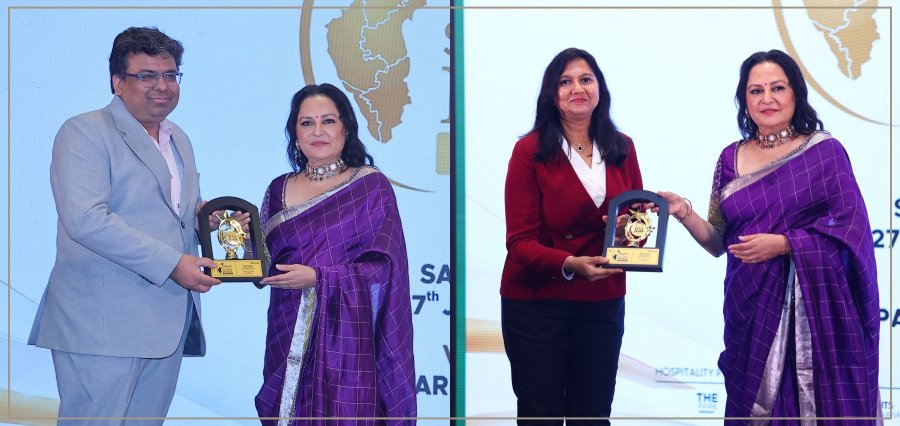
Rupesh Kumar Garg and Bharti Garg Honored at the Pride of Southern India Awards 2026 for Excellence in Entrepreneurship and Technology
Mr. Rupesh Kumar Garg, CEO and Co-founder of Frugal Testing Product Service LLP, and Ms. Bharti Garg, CTO and Co-founder of the organization, were honored for their leadership and contributions to entrepreneurship and technology at the Pride of Southern India Awards 2026. Mr. Rupesh Kumar Garg received the Entrepreneur of the Year award, while Ms. Bharti Garg was recognized with the CTO of the Year award, celebrating their individual achievements and contributions to the evolving technology ecosystem. The prestigious event was held on 27th June 2026 at The Park, Hyderabad, bringing together accomplished entrepreneurs, business leaders, professionals, visionaries, and changemakers from across Southern India. Hosted under the Insights Excellence Awards, the event celebrated individuals and organizations that have demonstrated excellence, leadership, innovation, and meaningful contributions across industries. The ceremony was also graced by the esteemed presence of Smt. Jaya Prada as Chief Guest, adding significance to the celebration. Honoring Excellence in Entrepreneurship Mr. Rupesh Kumar Garg was honored with the Entrepreneur of the Year award for his leadership and entrepreneurial contribution as CEO and Co-founder of Frugal Testing Product Service LLP. The recognition highlighted his role in guiding the organization’s business vision and contributing to its growth within the technology and software testing ecosystem. His entrepreneurial approach reflects the importance of strategic thinking, adaptability, and innovation in a competitive technology landscape. As a business leader, Mr. Garg has contributed to strengthening technology-focused capabilities while pursuing opportunities for sustainable growth and delivering value to clients. The recognition at Pride of Southern India Awards 2026 marked an important milestone in his professional journey, celebrating his contribution to entrepreneurship and his role in driving the organization forward through a focus on innovation and long-term business development. Celebrating Technology Leadership Ms. Bharti Garg received the CTO of the Year award in recognition of her contribution to technology leadership as CTO and Co-founder of Frugal Testing Product Service LLP. Her recognition highlighted the importance of strong technical leadership in helping organizations respond to evolving industry requirements and embrace technology-led innovation. In her role, Ms. Garg has contributed to shaping the organization’s technical direction while supporting its focus on quality, innovation, and technology capabilities. Her recognition acknowledged the role of technical expertise and strategic thinking in supporting organizational development and long-term growth. Driving AI and Digital Transformation The technology and innovation journey associated with the leadership of Mr. Rupesh Kumar Garg and Ms. Bharti Garg also extends to BNXT.AI (BuildNexTech), a technology-focused initiative working to help businesses embrace AI and digital transformation. BNXT.AI focuses on AI automation, intelligent system integration, custom software development, cloud-enabled transformation, web and mobile applications, low-code solutions, and business intelligence. Its approach aims to help businesses improve operational efficiency, automate workflows, reduce manual processes, and build scalable digital solutions. Recognizing Excellence in Business and Technology The recognition of Mr. Rupesh Kumar Garg and Ms. Bharti Garg at the Pride of Southern India Awards 2026 represented a celebration of two complementary areas of leadership, entrepreneurship and technology. Their respective awards highlighted the value of combining business vision with technical expertise to support innovation and organizational progress. The event provided a distinguished platform for their achievements to be celebrated alongside accomplished leaders and organizations from across Southern India. Their recognition marked a significant professional milestone while highlighting their contributions to the evolving business and technology ecosystem. The honors received by Mr. Rupesh Kumar Garg and Ms. Bharti Garg celebrated their leadership journey and commitment to entrepreneurship, technology, and innovation. Their achievements will continue to inspire professionals and emerging leaders working to create meaningful impact and shape the future of India’s dynamic business and technology landscape. Disclaimer- This article is a work of original content created for public relations and informational purposes only. It may be published across multiple digital platforms with the full knowledge and consent of the author/publisher. All images, logos, trademarks, and referenced names remain the property of their respective owners and are used solely for informational purposes. Read Also : Galderma Launches Sculptra® in India, Introducing Regenerative Aesthetic Treatment to the Market

Galderma Launches Sculptra® in India, Introducing Regenerative Aesthetic Treatment to the Market
Mumbai, India | 27 July 2026: Galderma, a global dermatology-focused company, has announced the launch of Sculptra® in India, introducing what the company describes as the first clinically proven regenerative biostimulator in the country’s injectable aesthetics market. Supported by more than 25 years of global clinical evidence, Sculptra® is designed to stimulate the body’s natural collagen production, helping restore facial volume and improve skin quality through a gradual, regenerative approach when administered by qualified healthcare professionals. The introduction of Sculptra® comes as India’s aesthetic medicine sector continues to evolve, driven by growing awareness of skin health, increasing demand for minimally invasive procedures, and a preference for personalized treatment approaches. Healthcare professionals and patients are increasingly exploring regenerative therapies that focus on supporting the skin’s natural biological processes rather than providing temporary aesthetic correction alone. Introducing a Regenerative Approach to Injectable Aesthetics Unlike conventional injectable treatments that primarily address visible signs of ageing through immediate correction, Sculptra® is designed to work by stimulating the body’s own collagen production. Through its proprietary PLLA-SCA™ (poly-L-lactic acid) formulation, the treatment gradually supports the restoration of the skin’s underlying structure, helping improve facial volume, skin firmness, and overall skin quality over time. As collagen production naturally declines with age, structural support within the skin decreases, contributing to volume loss, reduced elasticity, and the appearance of wrinkles. Regenerative bio stimulation seeks to address these underlying changes by encouraging the body’s natural collagen synthesis, resulting in progressive, natural-looking improvements. Supporting the Evolution of Aesthetic Medicine in India Commenting on the launch, Raghavendra Sadashiva, Managing Director, Galderma India & South Asia, said: “At Galderma, we remain committed to advancing dermatological science by introducing innovations that address the evolving needs of both healthcare professionals and patients. The launch of Sculptra® represents an important milestone as regenerative aesthetics continues to gain global recognition. By working with the body’s natural collagen production, the treatment offers healthcare professionals an additional option for patients seeking gradual, natural-looking improvements in facial structure and skin quality.” Growing Focus on Collagen Regeneration Globally, aesthetic medicine is increasingly moving towards regenerative treatment strategies that focus on preserving natural facial characteristics while enhancing skin quality over time. Rather than seeking dramatic or immediate changes, many patients are now opting for treatments that support the skin’s own regenerative processes and deliver subtle, long-lasting outcomes. According to Galderma, Sculptra® has been used by healthcare professionals in more than 40 countries and regions, supported by extensive clinical research and real-world experience spanning over two decades. The company states that the treatment can provide gradual improvements in facial volume and skin quality, with results that may last for more than two years, depending on individual patient characteristics and treatment protocols. Expanding Galderma’s Injectable Aesthetics Portfolio Ravi Mittal, Business Unit Head – Aesthetics, Galderma India, said: “The aesthetics landscape in India is evolving rapidly, with increasing interest in treatments that support long-term skin quality while maintaining natural-looking results. We are seeing greater emphasis on collagen regeneration and therapies that address the underlying biological changes associated with ageing. The introduction of Sculptra® expands the range of science-based treatment options available to healthcare professionals practising regenerative aesthetics.” The launch further strengthens Galderma India’s injectable aesthetics portfolio and reflects the company’s continued focus on bringing globally established dermatology innovations to the Indian market. Galderma’s portfolio spans injectable aesthetics, dermatological skincare, and therapeutic dermatology, supporting healthcare professionals with evidence-based treatment solutions across a broad spectrum of skin health needs. About Sculptra® Sculptra® is a regenerative biostimulator developed using a proprietary PLLA-SCA™ (poly-L-lactic acid) formulation. The injectable treatment is designed to stimulate the body’s natural collagen production, gradually restoring facial volume while improving skin quality and structural support. Supported by more than 25 years of global clinical evidence, Sculptra® is intended to be administered only by qualified and appropriately trained healthcare professionals. Individual suitability and treatment outcomes may vary. About Galderma Galderma (SIX: GALD) is a global dermatology-focused company operating in approximately 90 countries. Since its establishment in 1981, the company has developed a science-based portfolio across Injectable Aesthetics, Dermatological Skincare, and Therapeutic Dermatology. Galderma works in partnership with healthcare professionals to advance dermatological care through research-driven innovations designed to address a wide range of skin health needs worldwide. Read Also : PhysicsWallah Partners with Indian Navy Welfare & Wellness Association to Provide Scholarships for Naval Families

Naver Shares Jump 10% After Nvidia’s $1 Billion Investment
Prime Highlights : Naver stock jumps 10% as Nvidia takes a 4.5% stake through a $1 billion investment. Naver, Nvidia and Brookfield plan a $10 billion AI data centre expansion in South Korea. Key Facts : Nvidia buys 7.2 million new Naver shares at 204,500 won each. GAK Sejong expansion targets 200 megawatts of capacity by 2028. Background : Naver shares surged 10% after Nvidia agreed to invest $1 billion in the South Korean cloud company, giving the chipmaker a 4.5% stake and marking a fresh step in their growing AI partnership. Naver said it would place 7.2 million new shares with Nvidia at 204,500 won each, a 1% discount to its previous closing price, as part of the deal. Investment group Brookfield will provide up to $9 billion in financing as the project’s capital partner, Naver added. The investment lifts Nvidia among Naver’s biggest shareholders, trailing the National Pension Service, which held a 9.25% stake, and BlackRock Fund Advisors, which held 6.12%, as of the end of 2025. As a first step, the companies and Brookfield plan to expand Naver’s AI data centre in South Korea with up to $10 billion in funding. The expansion will rise at Naver’s GAK data centre in Sejong, running on Nvidia’s Vera Rubin and Blackwell chip platforms, with capacity reaching 200 megawatts by 2028. The move builds on an earlier agreement between the two firms to pursue gigawatt-scale AI infrastructure across South Korea and international markets. Nvidia CEO Jensen Huang has said Naver would grow tenfold once that vision takes shape. A gigawatt of capacity runs about four times larger than GAK Sejong, South Korea’s largest hyperscale data centre, and could support hundreds of thousands of Nvidia’s newest GPUs at once, according to Naver. Huang has pushed the view that nations should build and control their own AI infrastructure, a strategy that could widen Nvidia’s customer base beyond major U.S. hyperscalers. Nvidia has also backed other AI ventures, including a $30 billion investment in OpenAI and a $10 billion investment in Anthropic. Read Also : Anduril In Talks For Funding Round At 100 Billion Dollar Valuation

Redefining Sustainability in a Developing Country
Redefining Sustainability in a Developing Country Celebrating an inspiring leader whose commitment to sustainability is creating meaningful environmental, social, and economic impact, demonstrating how visionary leadership can drive lasting progress and responsible development in a developing country. Digital Link Quick highlights Quick reads

When Waste Becomes a Doorway: How Michelle Korevaar Is Rewriting the Rules of Environmental Leadership
Cape Town sits at the southern tip of Africa, where one of the world’s most biodiverse ecosystems meets one of its most unequal cities. It is a place where environmental urgency and social hardship exist side by side, often in the same neighborhood, and where the distance between those who talk about sustainability and those who live with its absence can feel impossibly wide. Michelle Korevaar has spent over a decade working in that gap, not as an outsider with solutions to deliver but as someone who understood early that the gap itself was the point of entry. The communities most affected by environmental degradation were the same communities most excluded from the conversations about addressing it. That contradiction became her founding question, and the work she built from it has quietly become one of the most compelling models of community-led environmental change on the continent. What has emerged is more than a sustainability program; it is a scalable implementation blueprint that bridges the gap between environmental ambition and community action. EcoChangeMakers demonstrates that lasting change is achieved not simply through innovation, but through widespread adoption. By equipping people with climate literacy, practical skills, and meaningful opportunities to participate, the model transforms communities from passive beneficiaries into active custodians of sustainable development. In doing so, it creates measurable environmental, social and economic outcomes that align with the UN Sustainable Development Goals, Africa’s Agenda 2063 aspirations and the Environmental, Social and Governance (ESG) priorities of businesses seeking authentic, measurable community impact. As Founder Director of ChangeMakersHub NPC and EcoChangeMakers, Michelle has developed a methodology that refuses to separate environmental action from social equity. Plastic waste intercepted by communities becomes school furniture and public benches. Young people who had no visible pathway into the green economy become environmental leaders. Schools that once sat outside the sustainability of conversation become mobilization hubs for measurable change. The logic running through all of it is the same: environmental challenges, approached correctly, are not problems to be solved from the outside. They are opportunities to be activated from within. A Path That Was Never Straight Michelle’s career did not follow a single clean arc from corporate life to social entrepreneurship to environmental advocacy. She describes it honestly as a journey shaped by learning rather than by plan, moving through corporate work, then entrepreneurship, then community development, and gradually into the intersecting space where environmental action and social empowerment meet. What changed her was not a single moment but a pattern she kept observing across the communities she worked with closely: the people facing the greatest economic hardship were consistently the same people most exposed to pollution, waste, climate vulnerability, and blocked access to opportunity. The double burden was structural, not accidental. That observation led her to a question she has never stopped asking: how can environmental action become a pathway to empowerment rather than simply a response to a problem? It shifts the design of programs away from compliance and remediation toward participation and ownership. It places community members, particularly young people, at the center of the solution rather than at the edge of it. It asks not just what needs to be cleaned up but who should be trusted to do the cleaning and what they should gain from it beyond a cleaner environment. She reflects, “My commitment to sustainability and social equity comes from the belief that environmental solutions must include people, particularly young people, as active participants rather than passive beneficiaries.” EcoChangeMakers: The Model in Practice EcoChangeMakers was not launched as a finished idea. It was developed through years of direct community engagement, testing, adaptation, and listening to what communities actually needed rather than what external observers assumed they did. The result is a circular economy ecosystem that weaves together climate literacy, environmental stewardship, youth leadership development, reward systems, waste interception, and circular manufacturing into a single coherent program rooted in local realities. The centerpiece is the EcoChangeMakers 2030 Impact Program, which activates schools as environmental mobilization hubs, generating measurable social and environmental outcomes. Plastic waste intercepted through community participation is transformed into tangible community infrastructure: school furniture, public benches, structures that communities can see and touch and use. When a learner sits on a bench that began as waste collected from their own neighborhood, the connection between environmental action and community benefit becomes concrete rather than abstract. It closes the loop in a way that a poster or a pledge never could. The program also creates sustained pathways for young people to develop leadership skills and environmental awareness while gaining meaningful exposure to the green economy before it closes off to them. She states, “Waste should not be viewed only as a problem. It can become a resource, a learning tool, a participation mechanism, and a catalyst for positive change.” Sustainable Leadership as She Defines It Michelle’s definition of sustainable leadership differs from the version most frequently cited in business and policy circles. For her, it is not primarily about vision or strategy or stakeholder alignment, though she values all of those. It is about building systems that remain resilient, inclusive, and relevant in the face of change, and doing so with the courage to move beyond traditional approaches when traditional approaches are producing traditional results. Courage appears in her thinking consistently. She argues that leaders today must be willing to challenge outdated systems and create new pathways for collaboration, even when support for those pathways is not yet fully formed. More fundamentally, she insists that sustainable leadership cannot measure success through financial outcomes alone. Social impact, environmental stewardship, and the opportunities created for future generations are equally valid and equally necessary measures of whether leadership is actually working. That position is harder to hold than it sounds in environments where financial metrics dominate every performance conversation, and the fact that she holds it consistently is itself a form of the courage she describes. She explains, “Sustainable leadership is not about maintaining the status quo. It is about building systems that

Accelerating Climate Action for Sustainable Growth
ESG Strategy Sustainability in the long run needs the involvement of everybody from every level of society. Corporations, government institutions, schools and the community members need to contribute their share in ensuring that there are behaviors which are environmentally responsible. Campaigns to foster employee involvement, environmental awareness campaigns, sustainable procurement procedures, and environmental education will take us far in providing a conducive environment for making responsible decisions. Creating Long-Term Business Value Whereas sustainability was seen as merely a compliance measure, it is now considered a tool for fostering innovation and growth. A successful ESG strategy will revolve around responsible use of resources, governance, the well-being of employees, and sustainable investments. Such actions help increase stakeholder trust while boosting operational resilience and profitability at the same time. At the same time, Climate Action helps companies turn to renewable sources of energy, increase energy efficiency, minimize waste, and increase environmental resilience. Technology Driving Sustainable Transformation It is worth noting that digital innovations can help companies achieve their sustainability goals. The role of artificial intelligence, cloud computing, predictive analytics, IoT and environmental monitoring tools cannot be underestimated when helping organizations to measure emissions, manage energy use and conduct environmental reporting. This helps to reinforce ESG Strategy through accurate data that ensures good governance and informed decision-making. The same applies to technology which helps speed up Climate Action since it enables companies to find avenues where they can reduce their carbon footprint and make efficient operations management. Strengthening Organizational Culture Effective sustainability programs require employees who recognize and embrace the objectives of their organization. The commitment of leaders, ongoing learning, involvement of employees in programs, and responsible operations within the workplace enable the creation of a culture in which sustainability is integrated into the decisions being made every day. An effective ESG Strategy promotes collaboration among various departments and aligns the objectives of business with the environment and society. Similarly, involvement in Climate Action programs enables employees to participate by conserving energy and resources and finding solutions to problems innovatively. Driving Collaboration and Accountability To achieve sustainable transformation of the business, it is essential to encourage collaboration between different parties such as governments, investors, employees, suppliers, consumers, and other companies from the same sector. Businesses that promote collaboration and communication are likely to establish a stronger basis for their further development. Successful implementation of the ESG Strategy ensures cooperation by setting sustainability goals, improving governance, and engaging in responsible corporate activities throughout the entire value chain. Likewise, coordinated Climate Actions will guarantee exchange of knowledge, innovations, and collaborative efforts aimed at reducing the negative impact on the environment. The collaboration of the public and private sectors also enhances sustainability projects and economic stability. Innovation Supporting Sustainable Growth Innovation plays a crucial role in helping companies find a balance between being environmentally friendly and performing well financially. Investments in renewable energy sources, circular economy projects, sustainability in product design, green infrastructure development, and responsible supply chain management will help the company mitigate risks and generate new growth opportunities. The ESG Strategy is focused on encouraging companies to take environmental and social performance into account when making business decisions along with the financial ones. At the same time, Climate Action will make the company’s operations more efficient by cutting emissions, optimizing the energy use, and increasing the resilience to climate-related challenges. The Future of Responsible Business The future of corporate success will be more likely determined by those organizations who embed sustainability across all areas of their business. Organizations adopting an ESG Strategy will enhance governance, increase transparency, attract responsible investment, and generate value for stakeholders. Meanwhile, climate action will be necessary for risk mitigation, support of low-carbon economic growth, and resilience of the community. New technology like artificial intelligence, predictive analytics, digital sustainability solutions and environmental monitoring tools will make decision making better within organizations and sustainability reporting and performance measurement easier. Investment in workforce, innovation, stakeholder engagement and sustainable infrastructure will allow organizations to adapt to new market requirements and regulations. Businesses that embrace ESG Strategy as part of their long-term planning and promote Climate Action through tangible initiatives will develop operational resilience, optimize resource management, and build competitive advantages. Through an approach of ethics, sustainability, and innovation, companies will be able to foster sustainable economic development without compromising the protection of natural resources and the creation of social value. Such an approach will allow organizations to gain profit in the long term, build trust, and be environmentally responsible. Read Also : The Foundation of Effective Climate Action

The Foundation of Effective Climate Action
Environmental Sustainability Environmental sustainability has now become an important priority for the government, companies, and communities all across the globe. Increased temperature levels, resource exploitation, biodiversity extinction, and climatic disasters have emphasized the need to coordinate activities that will help preserve natural systems along with developing economically. One of the key elements of this revolution is Environmental Sustainability, which promotes responsible usage of resources, decreased environmental impact, and ecological balance. In addition to these strategies, there is Climate Action, aimed at decreasing greenhouse gas emissions and sustainable development. Integrating Sustainability into Business Strategy It is becoming clearer to organizations that environmental sustainability will positively contribute to the future success of the business. Companies are implementing renewable energy sources, efficient technology, sustainable supply chain management, and circular economy principles to maximize business performance while having a minimum environmental footprint. Good Environmental Sustainability practices should promote minimizing waste, conservation of natural resources, and increasing energy efficiency within the organization. In addition to this, Climate Action will allow companies to decrease carbon emissions, become resilient to the risk of environmental changes, and meet new regulatory requirements. Technology Supporting Environmental Progress The development of digital technologies such as Artificial Intelligence, Cloud Computing, Internet of Things (IoT), Predictive Analytics, and Advanced Environmental Sensing Technologies has transformed sustainability initiatives through their application. This allows firms to gauge their energy consumption, track their emissions, manage resources effectively, and generate reports about how they affect the environment. Smart systems improve Environmental Sustainability by determining where efficiencies could be gained without resulting in waste. Similarly, technology can assist Climate Action by encouraging the adoption of renewables and measuring carbon. Creating a Culture of Environmental Responsibility Sustainability in the long run needs involvement of everybody from every level of society. Corporations, government institutions, schools and the community members need to contribute their share in ensuring that there are behaviors which are environmentally responsible. Campaigns to foster employee involvement, environmental awareness campaigns, sustainable procurement procedures, and environmental education will take us far in providing a conducive environment for making responsible decisions. The Environmental Sustainability initiatives create innovation while encouraging people to take part in climate action. Strengthening Collaboration for Lasting Impact For any substantial advancement in the environmental domain, coordination between governments, companies, scientists, investors, and the local community is necessary. Policies, technological innovations, investments, and international cooperation can all help create better environmental results. The organizations which include Environmental Sustainability in their planning processes not only stimulate innovation but also increase resistance to any environmental issues. The collaborative efforts of renewable energy projects, ecosystem rehabilitation, sustainable infrastructure development, and responsible supply chain management also help strengthen Climate Action. Driving Innovation Through Sustainable Leadership Leadership is central in ensuring that the environmental agenda moves forward in all the different industrial sectors. Companies that delegate authority to workers, adopt green technologies, and set sustainable goals are capable of creating value that is both business and socially valuable. An Effective Environmental Sustainability strategy will ensure that companies strive for excellence through proper corporate governance, reporting, and measurement. Similarly, climate action helps the organization to prepare for environmental threats, comply with changing regulations, and improve stakeholder confidence. The Future of Sustainable Growth The future of global development is determined by the integration of economic development with the environment. Given the challenges of the environment to industries and communities at large, there is a need for integration in innovation, resource utilization, and planning. Environmental Sustainability will be the basis of environmental protection, conservation of natural resources, and promotion of sustainable economic development. On the other hand, Climate Action will still lead to investments in renewable energy, technology, infrastructure, and carbon emissions reduction programs that promote the resilience of the environment. Innovation in technologies such as artificial intelligence, prediction and monitoring of the environment, and management of energy are some solutions for the improvement of the environment and decision making. Businesses that embrace the concepts of Environmental Sustainability and make efforts to achieve Climate Action through their corporate strategies will become more competitive, efficient, and trustworthy. With a combination of environmental responsibility and business strategy, governments and industries are able to minimize environmental impact, foster biodiversity, inspire innovations, and develop resilient economies capable of solving future environmental problems. This way, both the environment and economic development will develop in parallel. Read Also : The Competitive Edge for Top AI Business Leaders