





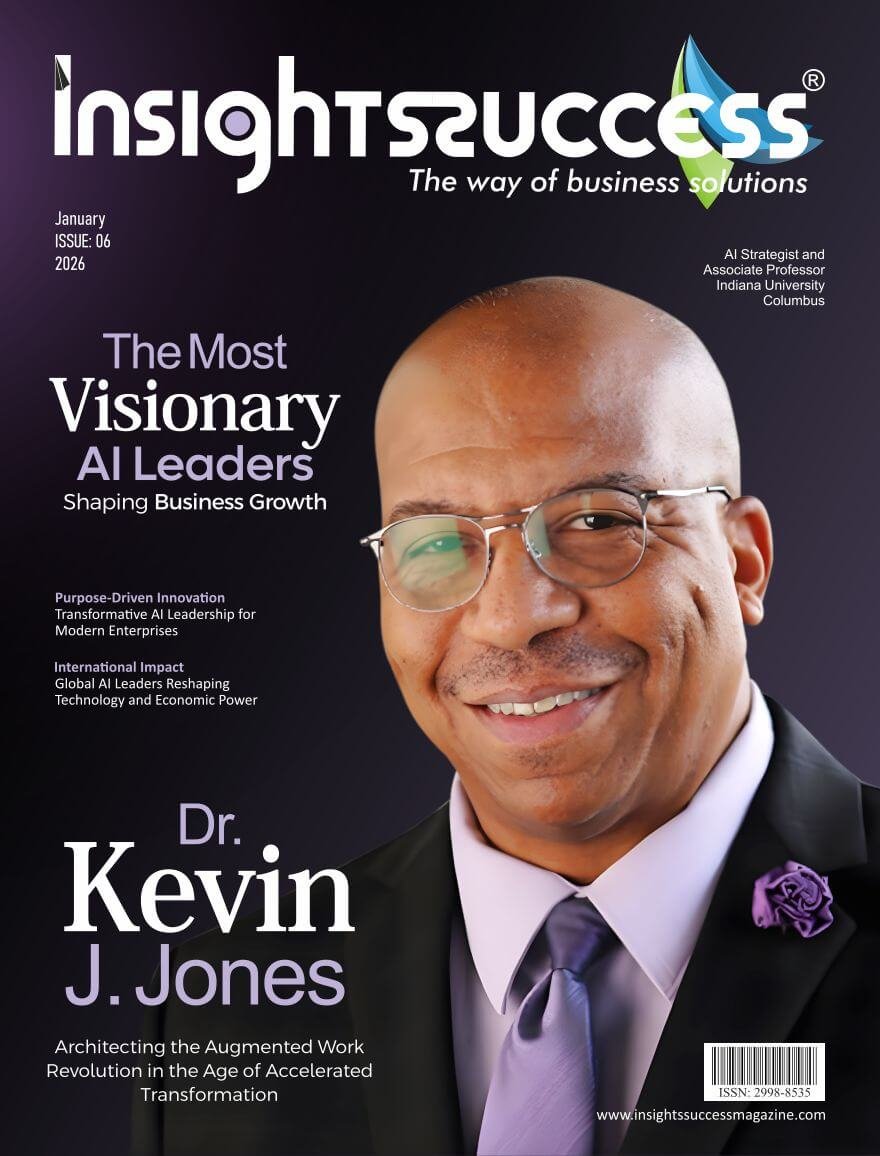
The Most Visionary AI Leaders Shaping Business Growth
The Most Visionary AI Leaders Shaping Business Growth Dr. Kevin J. Jones is an AI strategist and academic leader dedicated to advancing human-centred innovation in the Age of Accelerated Transformation. Bridging strategy, ethics, and technology, he champions augmented work frameworks that position AI as a force to enhance human capability, dignity, and purposeful organizational growth. Digital Link Quick highlights Quick reads

Dr. Kevin J. Jones- Architecting the Augmented Work Revolution in the Age of Accelerated Transformation
The world is on the brink of a change like no change seen in history. Technology is advancing in an exponential trajectory that exceeds humanity’s ability to understand the full consequences of that change. In this high-stakes situation, the advent of artificial intelligence creates possibilities of great human prosperity or the potential extinction of human relevance. In this broad-stakes context, a vital, defining question will have to be asked: Who will be the moral architect, and to ensure that technological progress is an enhancement to humanity and not its overlord? Dr. Kevin J. Jones has dedicated his distinguished career to answering that exact question. As an AI Strategist at Indiana University Columbus, Dr. Jones is in a unique position at the intersection of academic inquiry, organizational change, and innovation in technology. He designs holistic frameworks for human flourishing. He invites organizations to adopt a broad-minded view of AI as not a competitor to human intelligence but a compounded exponential force of support for human possibility and human potential. He empowers the next generation to harness technology in light of wisdom, ethics, and responsibility for good. His perspective is forged from decades of guiding organizations through tectonic shifts and cemented by a profound conviction: humanity must remain the undisputed center of every technological revolution. In an era he powerfully characterizes as “The Age of Accelerated Transformation,” Dr. Jones offers a necessary and increasingly rare commodity: a compelling vision of progress that staunchly honours human dignity, dramatically enhances human capability, and unequivocally serves human purpose. The Journey to Strategy: Weaving Insight with Innovation Dr. Jones’s path to becoming an AI strategist is a complex tapestry of experiences defined by consistent principles applied across evolving contexts. His journey weaves through telecommunications, healthcare, and higher education, with each experience cementing a fundamental conviction: sustainable organizational success is achieved only when strategy is organically aligned with its people, processes, technology, and communication. Throughout his foundational career in organizational development and change management, his persistent focus was on technology as an enabler and an amplifier of performance. He understood technology not as the solution itself, but as a powerful tool that delivers true value only when meticulously integrated into existing, complex human systems. His deeper engagement with AI began years ago, captivated by autonomous vehicles. The sophisticated AI powering these machines opened his eyes to how machine intelligence was fundamentally changing how work is defined and executed across industries. He realized AI wasn’t just automating tasks; it was redefining operations. Dr. Jones grasped that generative AI (GenAI) represented a paradigm shift unlike any previous technological advance. Committing himself fully, his focus shifted to developing operational frameworks for ethical integration, specifically centering on the concept of Augmented Work, the exploration of how humans and AI collaborate to dramatically amplify capabilities rather than simply replace them. This is the cornerstone of his thinking on “The Age of Accelerated Transformation.” Foundations of Foresight: Bellcore, Moore’s Law, and The AI System Dr. Jones’s vision is shaped by experiences that taught him to look beyond the immediate code. His work at Bellcore (a parallel organization to Bell Labs) immersed him in emerging technologies, from the early internet to advanced computational systems. Using a powerful, Unix-based Sun Workstation, he gained an early, tangible preview of advanced computing, providing a visceral understanding of Moore’s Law and the continuous, exponential expansion of possibilities. However, the defining influence remains his study of autonomous vehicles. He was captivated not by the engineering, but by the underlying AI systems enabling machines to perceive, decide, and act autonomously in complex, chaotic environments. He recognized that if AI could navigate city traffic, the implications for organizational decision-making and knowledge work were profound. His organizational development background proved invaluable. Rather than viewing AI purely as a technical innovation, he filtered it through his career framework: How does this affect people, processes, strategy, and communication? This human-centric perspective allowed him to recognize early on that AI’s enduring power would stem not from replacement, but from exponentially augmenting human capabilities. The Evolution of Vision: Navigating the Convergence Dr. Jones learned that digital literacy is not optional; it is an essential leadership competency. Effective leaders must anticipate how emerging technologies will influence future performance. His AI Strategist role truly crystallized with GenAI’s arrival, but his perspective soon broadened. He began focusing intently on the convergence of technologies and the complex, amplifying influence of external change drivers- the P.E.S.T.L.E. factors (Political, Economic, Societal, Technological, Legal, and Environmental). This led to a critical realization: AI is a major driver, but viewing it in isolation is dangerous. What organizations face is the confluence of multiple, simultaneously acting variables, creating an acceleration effect driving transformation. AI does not operate in a vacuum; it interacts with regulatory shifts, economic pressures, and societal expectations, with each force amplifying the others. His role thus evolved from focusing solely on AI implementation to becoming an indispensable guide for navigating multiple, simultaneous, and interdependent transformations where AI serves as both a catalyst and an accelerant. Strategic Alignment: Maximizing Human Performance Dr. Jones emphasizes that GenAI must be framed as a powerful enabler of performance, not the organizational focal point. Strategic alignment begins with clarity. Organizations must first articulate objectives, understand capabilities, and map processes. Only after this clarity can technology ethically and effectively enhance organizational outcomes. This sequence ensures that AI serves the strategy, rather than becoming the strategy itself. Alignment for sustainable growth requires viewing AI as a means to maximize human performance, not replace it. The core priority is people collaborating with technology in ways that amplify their unique capabilities and essential human judgment. This approach stands in stark contrast to narrow efficiency-gain goals. Sustainable growth is unlocked by enhancing what people can accomplish and creating entirely new forms of value. This demands several critical components: Augmented Work: AI handles scale and consistency; humans focus on creativity, judgment, and strategy. Capability Building: Proactive, strategic upskilling to partner effectively with AI. Process Reimagination: Redefining roles and tasks, not just making

Purpose-Driven Innovation: Transformative AI Leadership for Modern Enterprises
Artificial Intelligence (AI) is now a central aspect of enterprise development and competitiveness. Transformative AI leadership is not simply technology management but is concerned with promoting innovation, leading change in the organization, and opening new business models. Leaders who adopt AI as a strategic resource will be in a position to position their businesses to react quickly to market shocks, improve customer experiences and attain sustainable growth. Technical and strategic acumen is in practice AI leadership. The executives need to be aware of what AI technologies can and cannot do as well as make these abilities practical in the business strategies. Such a twofold focus will make sure that AI efforts are focused on corporate objectives, bring practical results, and not fall into the typical traps of hyped expectations or implementation in a silo. AI leaders can help fill the innovation motivation execution gap by fostering an organizational culture that facilitates experimentation and decision-making grounded in data that will initiate change in all organizational functions. Shaping an AI Strategy Development of clear and actionable AI vision is a core responsibility of the AI leaders. This vision should explain how AI will help the enterprise to achieve long-term goals and competitive advantage. In the absence of a specified plan, AI initiatives may be disjointed, fail to be adopted, and overlooked. An effective AI roadmap includes priority, resource distribution, and schedules of implementation and establishes areas where AI can generate short-term value over long-term change. Successful AI leaders involve cross-functional stakeholders in a way that they align and encourage organization commitments. In addition to strategic alignment, AI executives have to foresee future trends and technological changes. This includes the constant search of business environment in novelty of machine learning, natural language processing and computer vision among other applications of AI. Leaders with new AI potentials can anticipate the advancements in automation, predictive analytics and personalized customer experiences by positioning their organizations in advance. By developing a proactive vision, AI leaders drive not only operational efficiency but also the strategic direction of the enterprise in a rapidly changing market. Transforming Through Data A transformative AI leadership needs to develop a culture of viewing data as a strategic resource. Leaders should put in place systems of governance, code of ethics and systems of infrastructure, which allow safe and scaled-up data management. This involves investing in cloud platforms, sophisticated analytics, and talent that can be used to interpret and operationalize insights. The cooperation of data scientists, IT teams, and business units is encouraged so that AI solutions will be relevant to real-life problems and will also be flexible to the shifting demands. In addition to strategic alignment, AI leaders have to be forward-thinking in terms of predicting future trends and technological changes. This includes a constant survey of the business environment in the field of innovations in machine learning, natural language processing, computer vision, and other areas of AI. Emerging AI capabilities can be harnessed to benefit an enterprise, as leaders that are aware of them can take the initiative to place their companies in a position that can exploit emerging advances in automation, predictive analytics, and customized customer experiences. By fostering a forward-looking mindset, AI leaders shift the focus from mere efficiency and operations to guiding the enterprise’s growth in a dynamic and expanding market. Ethical AI Leadership Human capital should also be managed carefully when it comes to organizational change. Artificial intelligence has the potential to disorganize conventional jobs and work processes, and leaders have to go through these transitions tactfully and strategically. Executives can invest in reskilling and upskilling programs that enable the employees to welcome AI technologies instead of being afraid of them. Transformative leadership is a balance between technological innovation and human impact which creates an environment where the employees feel supported and encouraged to take part in AI-driven projects. The outcome is a company that embeds AI into its core operations rather than treating it merely as a tool. Simultaneously, AI implementation needs to be carried out ethically in order to be fair, transparent, and accountable. The governance frameworks adopted by the leaders should tackle the issues of algorithmic bias, data privacy, and responsible decision-making. Also, by instilling ethical principles in AI projects, companies will be able to establish trust between themselves and employees, customers and stakeholders and reduce the risks of reputational and regulatory damage. Ethical AI leadership does not only protect the business, but also enhances its long-term competitiveness through sustainable innovation to the benefit of society. Conclusion The emergence of AI offers a unique chance to the contemporary business to optimize the process of making decisions, stay innovative, and attain sustainable competitive edge. The actualization of this potential is however based on strategic and transformative leadership. The effective leaders in AI are individuals who manage to apply their technical expertise and vision, drive change in an organization based on evidence, and encourage responsible and ethical decision-making. They do not see AI as an instrument but as an engine of corporate change. As the rapid world of technology rapidly evolves, organizations that embrace transformative AI leadership stand better opportunities of anticipating the changes in the market, optimize business processes, and offer their customers differentiated value. To ensure that AI projects result in a sustainable contribution, leaders can nurture innovation culture, invest in human capital, and be ethically upright. Read Also : How Top Companies Stay Focused
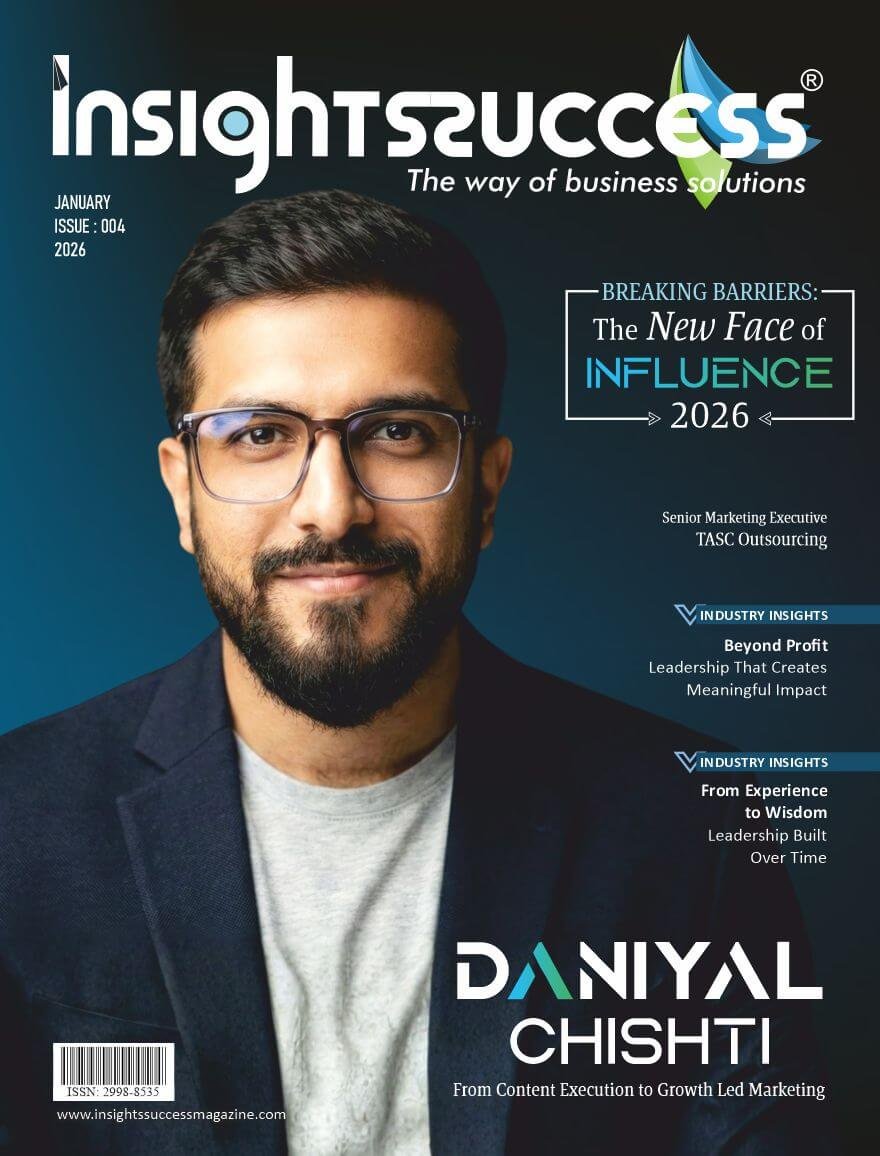
Breaking Barriers: The New Face of Influence 2026
Breaking Barriers The New Face of Influence 2026 Recognizes Daniyal Chishti whose bold leadership, authentic voice, and transformative impact are reshaping traditional norms, defining a new era of influence driven by purpose, innovation, and measurable change. Digital Link Quick highlights Quick reads

Daniyal Chishti- From Content Execution to Growth Led Marketing
The digital marketing landscape doesn’t sleep. It pivots at midnight, rewrites its own rules by dawn, and declares yesterday’s breakthrough strategy obsolete before lunch. In this accelerating chaos where attention spans shrink and platforms multiply, most marketers exhaust themselves chasing the next big thing, hopping from emerging trends to AI tools to viral frameworks, accumulating certifications like trading cards but mastering nothing. Then, some move differently. They ignore the frenzy. They dig where others skim. They build when others pivot. They choose the slow craft of genuine expertise over the quick theatre of borrowed tactics. Daniyal Chishti is part of this second group. As Senior Marketing Executive at TASC Outsourcing, his four-year journey reflects a deliberate focus on patience, consistency, and practical execution. Graduating during the pandemic shaped his approach early, reinforcing the value of preparation before opportunity and discipline over speed. Rather than rushing visibility, he concentrated on mastering core principles and applying them steadily within a B2B environment where clarity and trust matter more than quick wins. Early Influences and Academic Foundation Long before Daniyal understood marketing frameworks or conversion funnels, he was absorbing lessons that would later define his professional identity. His father’s corporate career wasn’t just a job; it was a masterclass in discipline delivered through daily example. Punctuality wasn’t suggested; it was non-negotiable. Commitment to work wasn’t inspirational; it was foundational. These weren’t lectures or life lessons explicitly taught. They were patterns absorbed through observation, the kind that settle into a young mind and emerge years later as operational principles. Yet discipline alone creates rigidity, not growth. His mother introduced the counterbalance: curiosity with purpose. She possessed an intuitive understanding of her son’s capabilities that preceded his own self-awareness. Before Daniyal could articulate why marketing felt natural, she recognized an alignment between his personality and the field. Her encouragement to explore beyond familiar territory created space where structure and experimentation could coexist and where inherited discipline could fuel intentional exploration rather than constrain it. This dual inheritance shaped his academic trajectory remarkably. During his A Levels, Daniyal didn’t just perform well; he achieved the highest marks in Business Studies across the entire United Arab Emirates, earning the Cambridge Learner Award in 2017. This wasn’t the result of last-minute preparation or fortunate timing. It reflected systematic effort, analytical rigour, and an approach to learning that prioritized genuine understanding over superficial memorization. When he pursued his undergraduate degree at Middlesex University, the pattern continued. He graduated with a flawless 4.0 GPA, demonstrating that his academic excellence wasn’t circumstantial but cultivated through sustained intellectual discipline. These achievements did more than populate his resume with impressive credentials. They established neural pathways for structured thinking, problem decomposition, and systematic improvement- capabilities that translate directly into strategic marketing execution. The Crucible Years: When Uncertainty Becomes Opportunity The year 2020 should have marked Daniyal’s seamless transition from a student to a professional. Instead, he graduated into an economy frozen by pandemic uncertainty, where hiring freezes replaced job fairs and opportunity evaporated overnight. For many of his peers, this period became synonymous with anxiety, frustration, and stalled ambitions. For Daniyal, it became something fundamentally different: an intensive preparation phase disguised as forced waiting. He approached unemployment with the same systematic discipline that earned him academic distinction. Rather than passively monitoring job boards or waiting for conditions to improve, he restructured his days around deliberate capability development. He began with HubSpot certifications, drawn specifically to their emphasis on content marketing and growth-oriented methodologies. This wasn’t random upskilling; it was strategic positioning based on careful analysis of where marketing was evolving. He established weekly goals, completing certifications with consistent momentum and expanding his knowledge base through complementary platforms like Google. Beyond accumulating credentials, he studied how applicant tracking systems evaluated candidates and refined his CV accordingly. He analysed job descriptions to understand what the market valued and positioned his capabilities to match emerging expectations. While headlines chronicled layoffs and economic uncertainty, Daniyal focused on a different metric: competitive readiness. He understood intuitively what many professionals learn too late- that preparation creates opportunity rather than waiting for it. When hiring eventually resumed, he wouldn’t need to scramble for relevance. He would be immediately deployable, carrying capabilities that exceeded market requirements rather than merely meeting them. This period forged two qualities that continue to define his professional approach. The first is strategic patience- the understanding that timelines don’t dictate readiness, preparation does. The second is perpetual upgradability- the commitment to continuously expand capabilities so that when opportunity arrives, execution is immediate rather than aspirational. These aren’t motivational concepts; they’re operational frameworks that shape how he approaches challenges, constructs systems, and delivers outcomes. The Professional Arena: From Brand Launch to Multi Vertical Marketing When Daniyal joined TASC Outsourcing as a Marketing Executive, his mandate appeared straightforward: support the launch of Future Miles, a new logistics staffing brand. This assignment provided immediate immersion into brand building from inception, offering hands-on exposure to positioning, messaging, and market entry strategies. However, his role refused to remain neatly contained. Within months, his responsibilities expanded exponentially. He transitioned from supporting a single brand launch to managing the parent company TASC’s marketing needs while simultaneously handling additional verticals, including technology staffing. This wasn’t merely an increased workload; it represented a fundamental escalation in strategic complexity. He was no longer executing focused launch messaging for one audience. He was now orchestrating multi-brand content strategies across diverse audiences, varied service offerings, and distinct sales objectives simultaneously. The early stages proved humbling. His initial content didn’t perform as intended, carrying habits from his B2C and agency background that translated poorly to enterprise environments. His messaging ran too long, leaned too heavily on sales language, and fundamentally misaligned with how B2B buyers evaluate services. In consumer markets, emotional resonance drives decisions. In enterprise environments, clarity and demonstrated expertise determine outcomes. This realization triggered an intensive learning phase. Daniyal focused relentlessly on understanding buyer intent, decoding industry-specific pain points, and internalizing a fundamental truth that separates effective B2B
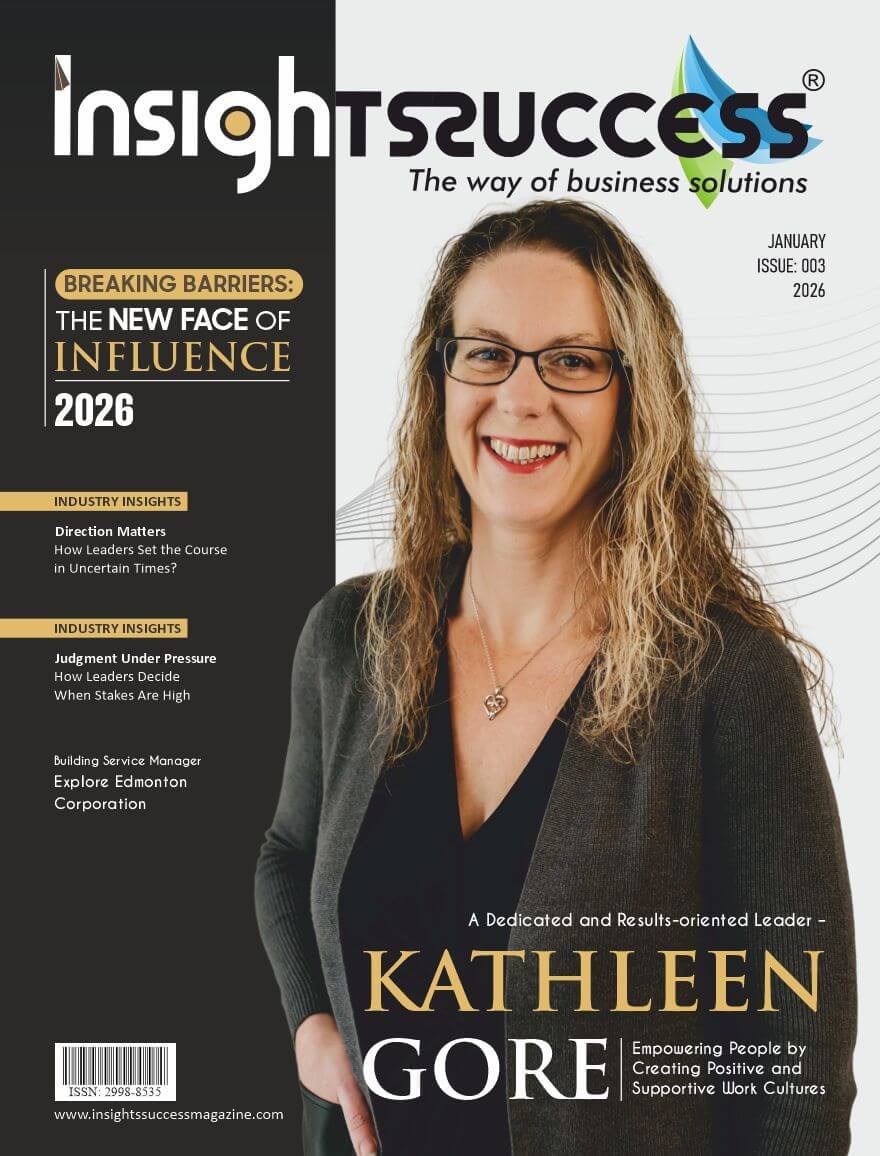
Breaking Barriers: The New Face of Influence 2026
Breaking Barriers The New Face of Influence 2026 Is dedicated to the remarkable leadership of Kathleen Gore whose courage, originality, and leadership are redefining influence—setting new standards through purpose-driven action, transformative thinking, and a bold vision for the future. Digital Link Quick highlights Quick reads

A Visionary Leader with Two Decades of Mastery – Guilherme Jacobucci: Transforming Global Infrastructure, Industrial, and Real Estate Projects
Stakes remain always high when it comes to the business horizons of global development. In it, blueprints meet the desert sand and billion-dollar visions demanding a steady hand to manifest. In that environment, Guilherme Jacobucci emerged as a master architect of progress. His story is not written in ink, but in the skylines of Europe, South America, Africa and the Middle East. It is a testament to nearly thirty years of turning the “impossible” into the “operational.” The journey of Jacobucci’s professional mastery did not begin with a single business idea but with an early, ingrained understanding of responsibility, structure, and purpose. At the age of 15, he began working alongside his father in his infrastructure business, gaining first-hand exposure to construction sites, the weight of decision-making under pressure, and the iron discipline required to deliver results. It was in those early days that becoming a civil engineer ceased to be a mere ambition and evolved into a true vocation. A Masterclass in the Art of Conscious Integration The initial philosophy behind his career was straightforward yet powerful: to build things that last and meaningfully improve lives. Infrastructure fascinated him because of its silent, foundational impact—the way it shapes cities, connects disparate regions, and sustains global economies without seeking the spotlight. As his career progressed, that core idea expanded. Jacobucci came to realize that engineering alone is never enough to move a nation; transformational projects require leadership, vision, and the ability to integrate technical excellence with commercial, social, and human dimensions. Having worked across more than 13 countries and four continents, he refined this global perspective. Each geography presented unique complexities, teaching him that success is not about replicating rigid models, but about understanding context, culture, and long-term value. The inevitable challenges of the industry—projects under stress, periods of uncertainty, and moments of total reinvention—were instrumental in building his signature resilience and strategic clarity. Today, that same mindset drives his most ambitious endeavor: the development of an exclusive and truly unique ultra-luxury resort in Saudi Arabia, The Saudi Edge Resort. For Jacobucci, this project goes far beyond the bounds of traditional hospitality. It is an audacious vision to redefine the ultra-luxury experience through the lenses of sustainability, wellness, and cultural integration, fully aligned with the Kingdom’s Vision 2030. It represents the convergence of everything he has mastered—engineering rigor, global experience, and imagination—applied to create not just a destination, but a legacy designed for generations to come. A Character Forged in Contrast Born in Spain to Italian and Spanish parents, Jacobucci was a child of movement. Emigrating to Brazil at age one, he was raised in a world of stark paradoxes: a society often marked by instability, countered by a home of profound structure and warmth. His father, a demanding Italian businessman, instilled an uncompromising work ethic, while his mother balanced that rigor with deep emotional intelligence. This duality—discipline met with empathy—became the blueprint for his leadership style. By 15, he was already on construction sites; by graduation, he possessed a decade’s worth of wisdom. His competitive spirit was further sharpened on the basketball court and the water skiing wake, where he learned that resilience is a team sport. The Great Pivot: From Trading to Holding The global freeze of 2020 did not paralyze Jacobucci; it acted as a high-pressure catalyst for a profound professional metamorphosis. Before the world slowed down, his business was a lean, family-driven trading operation focused on European beauty products. COVID-19, however, exposed the fragility of such a singular geographic and sectoral dependency. Jacobucci realized that in a fractured world, resilience would not be found in resistance, but in evolution. He chose to treat the pandemic as a rare “strategic pause,” utilizing the disruption to rethink his business model from the ground up. He moved with clinical precision, transitioning from a linear trading firm to a sophisticated holding structure. The Resilience Framework By incorporating a strategic investor and diversifying into sectors aligned with his engineering roots—such as seafood, electronics, and global consultancy—he built a fortress capable of absorbing global shocks. He anticipated the return of human mobility by integrating future-oriented tourism and events into his portfolio. For Jacobucci, the pandemic proved that adversity, when met with strategic clarity, is the most powerful driver of reinvention. He emerged not just surviving, but strengthened, with a diversified global ambition that defined his path toward 2026. The Architecture of Absolute Priorities In the high-stakes world of $5B+ portfolios and “Vision 2030” giga-projects, Jacobucci rejects the myth of a perfect work-life formula. Instead, he practices a relentless prioritization. For him, the principle is absolute: “My family comes first. My wife, my daughter, and my parents are everything.” He views his professional achievements not as ends in themselves, but as tributes to this anchor. He has learned through the inevitable personal costs of early ambition that constant acceleration is the enemy of longevity. Leadership Through Governance and Grounding Jacobucci’s ability to manage complex international programs without losing his footing is rooted in a core belief: structure creates freedom. He does not lead through constant presence, but through the creation of robust governance and the empowerment of independent teams. “Leadership does not mean constant presence—it means creating systems and people strong enough to perform independently.” This systemic approach allows him to step away from the site to be present for the people he loves. Complemented by his lifelong passion for sports, which keeps him mentally grounded in intense environments, Jacobucci continues to push into unexplored territories—be it nuclear power or ultra-luxury resorts—proving that the most enduring legacies are those built with rhythm, humility, and heart. The Pursuit of the Singular A profound search for meaning fuels Jacobucci’s appetite for business. He rejects the common lure of repetition, choosing instead to chase rarity—the difficult, the contextual, and the distinctive. Whether navigating the high-growth seafood trade or advancing autonomous solar infrastructure, every move represents an intentional strike at a clearly identified market gap. “Rarity is not excess—it is meaning. I am motivated by the
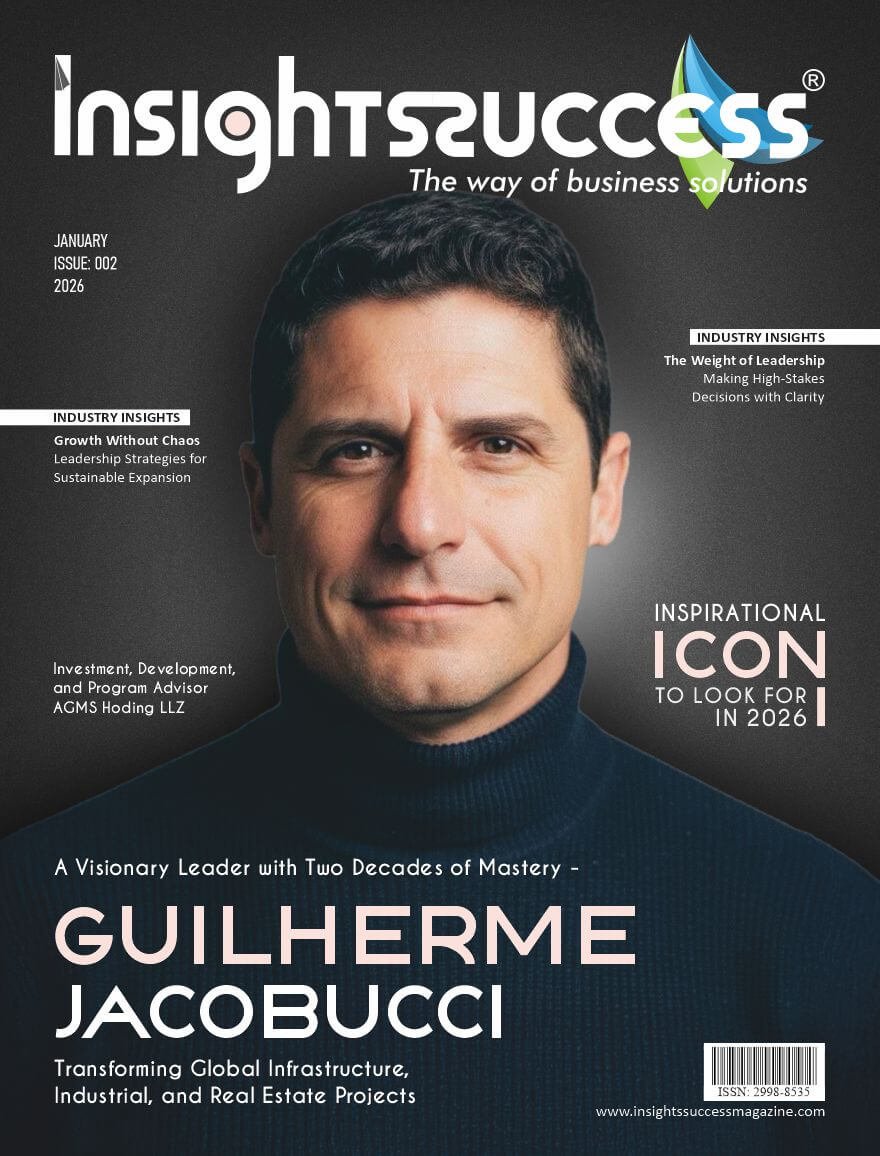
Inspirational Icon To Look For In 2026
Inspirational Icon To Look For In 2026 Inspirational Icon to Look for in 2026 honors, Guilherme Jacobucci, whose journey, values, and leadership continue to inspire progress—recognized for driving meaningful impact, influencing minds, and setting a compelling example of excellence, purpose, and forward-thinking vision. Digital Link Quick highlights Quick reads

A Dedicated and Results-oriented Leader – Kathleen Gore: Empowering People by Creating Positive and Supportive Work Cultures
When you meet your passion and choose it to be your profession, then everything else falls in place. Today, although Kathleen Gore’s leadership as Building Service Manager at Explore Edmonton Corporation is widely celebrated as a model in planning excellence, her entry into this particular industry wasn’t something she initially planned. Rather, it began as a conscious step outside her comfort zone. Early in her career, Kathleen’s work focused on community support and early childhood education, roles that were deeply people-centred and grounded in care, structure, and responsibility. While that work was meaningful, she reached a point where she wanted to expand her professional scope, challenge herself in new ways, and apply her leadership skills in a broader operational environment. That opportunity came when she joined the team at Rexall Place, supporting operations during NHL games and large-scale events. “It was an entirely different world—fast-paced, high-pressure, and operationally complex.” What stood out to Kathleen immediately was the coordination required behind the scenes to deliver a seamless experience for thousands of guests. From safety and logistics to timing, teamwork, and accountability, every detail mattered. “I found that the same principles I valued in community-based work—clear communication, trust, and respect for people—were just as critical in this setting.” A Passion Rooted in Service What began as an exploration quickly became a passion. Kathleen was drawn to the energy of live events and the challenge of managing environments where success depends on preparation, adaptability, and collaboration. She discovered that she thrived in roles where she could balance hands-on operational work with leadership and problem-solving, especially in spaces that demanded both precision and empathy. “The idea behind my professional path has always been rooted in service—creating safe, efficient, and welcoming environments for both the public and the teams delivering the experience.” From those early days at Rexall Place, Kathleen’s career expanded across facility operations, building services, and large-scale venues, allowing her to grow into a leader who understands operations from the ground up and leads with both structure and heart. Also, Kathleen’s career has been shaped by people-centred work from the very beginning. She started in hands-on, service-driven roles where responsibility, reliability, and care for others were essential. Those early experiences—working closely with families, communities, and frontline teams—instilled in her the value of empathy, clear communication, and accountability, especially in fast-paced or high-pressure environments. Over the past nineteen years, Kathleen’s career has evolved across multiple industries, including entertainment, tourism, commercial buildings, and industrial services. This diverse background has given her a broad operational perspective and the ability to adapt quickly to complex environments. Like most meaningful careers, mine has included both momentum and challenge. She has navigated periods of rapid growth alongside moments that required reflection, recalibration, and learning from setbacks. “Those experiences strengthened my resilience and reinforced the importance of leading with integrity and consistency.” As she advanced into leadership and management roles, Kathleen’s focus expanded beyond systems and outcomes to the development of people. She has led large operational teams, overseen facility services supporting thousands of daily visitors, and managed safety, procurement, and operational programs in demanding settings. Through it all, she’s maintained a leadership style rooted in trust, clarity, and inclusion—balancing structure and high standards with genuine support for the individuals behind the work. Outside of her professional life, family and close relationships continue to ground Kathleen’s perspective and reinforce the importance of balance and humility. “Today, I am driven by a commitment to creating safe, sustainable, and supportive environments where teams feel empowered, valued, and proud of the work they do,” she says, defining her passion further, “At the core of everything I do is people. I am deeply people-driven, and I genuinely believe that without engaged, supported team members, no organization can be successful—no matter how strong its strategy or systems may be.” Buildings, events, and operations don’t run themselves; they are powered by individuals who show up every day, often behind the scenes, to make everything work. Passionate About People’s Progress Kathleen’s greatest passion is developing and growing people. She is motivated by helping individuals see their own potential, build confidence, and expand their skills—sometimes before they fully recognize those abilities in themselves. Whether someone is new to their role or preparing for the next stage of their career, she finds purpose in coaching, mentoring, and creating opportunities for growth. Watching someone gain confidence, take ownership, or step into leadership is one of the most rewarding parts of her work. “I’m particularly passionate about creating environments where people feel safe to ask questions, make mistakes, and contribute ideas.” Growth doesn’t happen in fear-based cultures; it happens where trust, clarity, and respect are present. Kathleen believes that strong leadership means setting clear expectations while also providing encouragement and support. “When people feel valued and understood, they perform better, collaborate more effectively, and take pride in their work.” This people-first approach extends beyond individual development to organizational culture. She is driven by the belief that when leaders invest in their teams, the results follow—higher engagement, stronger performance, and more sustainable success. “Developing people isn’t a soft skill; it’s a strategic advantage,’ she asserts. Ultimately, Kathleen’s passion comes from knowing that her work can positively shape someone’s experience, career, or confidence. “When people grow, organizations grow with them—and that is what continues to drive me every day.” Increasing Strengths and Overcoming Weaknesses However, only passion is half of the reason behind Kathleen’s success. There are many strengths and weaknesses, too. One of her greatest strengths is her ability to lead with clarity and genuine care for people. “I am highly people-driven and believe that strong results are achieved when teams feel supported, respected, and empowered,’ she says, with a background in operations, which has also given her a strong sense of structure, accountability, and follow-through. She understands how complex systems work, how to anticipate risk, and how to guide teams through high-pressure environments with steadiness and purpose. These strengths have allowed her to build trust over time and create teams

OpenAI Bets on Audio-First AI to Power Next Generation of Screenless Devices
Prime Highlights OpenAI is rebuilding its audio AI models to create more natural, real-time conversations as it prepares for audio-first, screenless devices expected around early 2026. The push reflects a broader tech industry shift toward voice-based and companionship-focused devices, moving beyond simple command-driven assistants. Key Facts OpenAI has merged engineering, product, and research teamsto redesign its audio models, enabling features like handling interruptions and speaking simultaneously with users. The company’s hardware vision is influenced by former Apple design chief Jony Ive, following OpenAI’s acquisition of his firm io, with an audio-first design aimed at reducing screen dependence. Background OpenAI is making a major push into audio artificial intelligence as it prepares for a new generation of screenless personal devices. According to recent reporting by The Information, the company has brought together several engineering, product, and research teams over the past two months to rebuild its audio models from the ground up. The work is linked to plans for an audio-first device expected to launch around early 2026. The new audio model sounds more natural and acts like a real conversation partner. It can handle interruptions, reply right away, and even talk while the user is speaking. These features aim to move voice AI beyond today’s stop-and-start interactions. OpenAI is also said to be exploring a family of devices, including smart speakers or glasses, that focus on companionship rather than simple commands. This strategy reflects a wider shift across the tech industry. Voice assistants already play a role in over a third of US homes. Meta recently added advanced listening features to its Ray-Ban smart glasses, while Google is testing “Audio Overviews” that turn search results into spoken summaries. Tesla is also integrating xAI’s chatbot Grok into its cars to enable voice-based control of vehicle functions. Startups are also betting on audio, though results have been mixed. Products like the Humane AI Pin failed to gain popularity and devices like AI pendants and rings have raised privacy concerns. OpenAI’s hardware efforts are influenced by former Apple design chief Jony Ive, who joined the company through the company’s acquisition of his firm io. Ive has argued that audio-first design could reduce screen addiction and reshape how people interact with technology. As companies rethink how humans talk to machines, audio is fast becoming the next major interface. Read Also : Wikimedia Partners With Major AI Firms to Provide Paid, Ethical Access to Wikipedia Data