





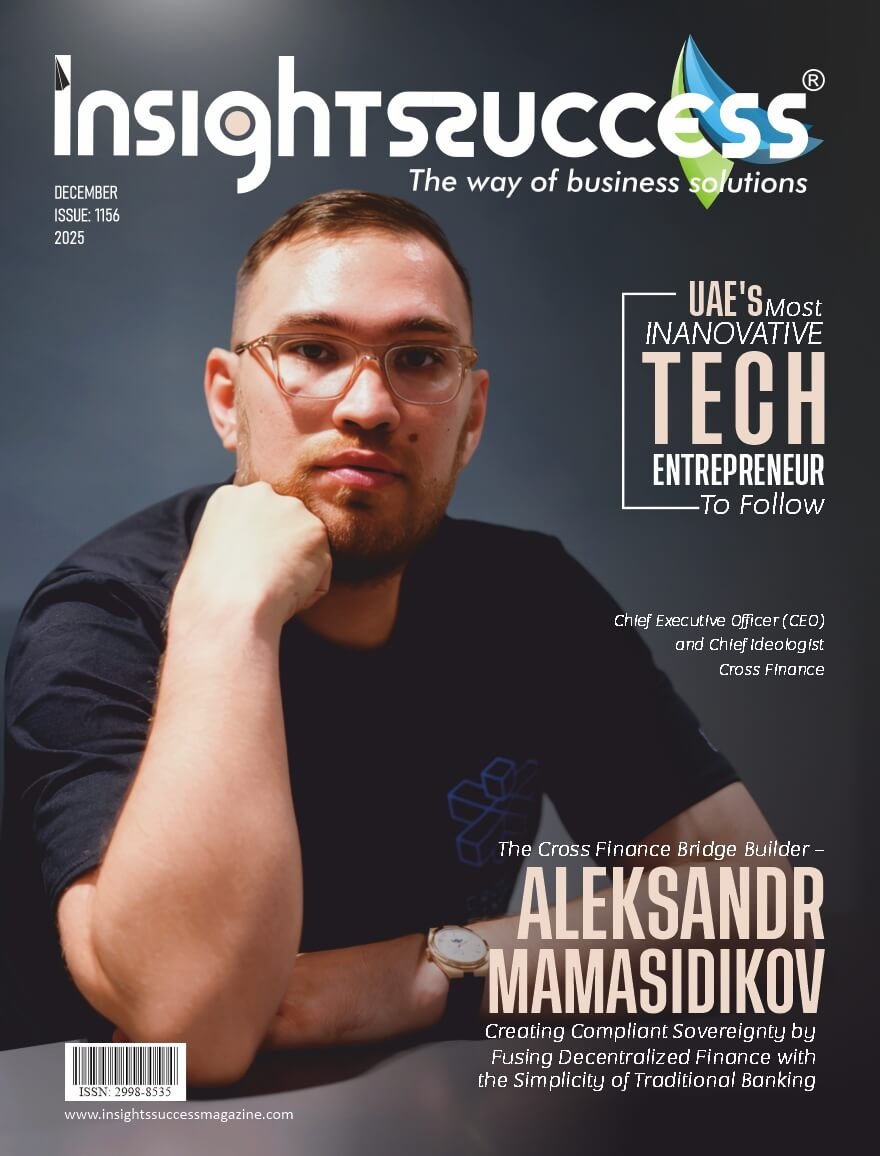
UAE’s Most Innovative Tech Entrepreneur To Follow
UAE’s Most Innovative Tech Entrepreneur To Follow A visionary force in the UAE’s technology ecosystem, 𝐀𝐥𝐞𝐱𝐚𝐧𝐝𝐞𝐫 𝐌𝐚𝐦𝐚𝐬𝐢𝐝𝐢𝐤𝐨𝐯 is redefining innovation through disruptive solutions, strategic leadership, and future-ready thinking, setting new benchmarks for digital transformation, scalability, and impact across regional and global markets. Digital Link Quick highlights

The Cross Finance Bridge Builder – Aleksandr Mamasidikov: Creating Compliant Sovereignty by Fusing Decentralized Finance with the Simplicity of Traditional Banking
Most of the time, innovation does not come from inventing something new. Rather, in Aleksandr Mamasidikov‘s case, it came from looking at reality through a different lens. Widely recognized as the UAE’s most innovative tech entrepreneur, Mamasidikov’s strength lies in minute observations, fast thinking, and coming up with unique solutions that are highly pragmatic and easily implementable. His entrepreneurial journey spans innovation, resilience, and a strong vision for the future. Although today, the world knows him as the Chief Executive Officer (CEO) and Chief Ideologist at Cross Finance, the idea for CrossFi emerged right from his recognizing a major contradiction: billions remain unbanked, while crypto and decentralized finance (DeFi) are booming yet being complex and fragmented in themselves. Aleksandr Mamasidikov explains that traditional finance is slow and restrictive, while crypto remains too technical for mass adoption. A simple yet effective solution was the need of the hour. “We built CrossFi to bridge this gap – a seamless, non-custodial Web3 banking ecosystem combining the simplicity and regulatory trust of traditional banking with the freedom and transparency of decentralized finance,” he says, and further states, “Our mission is to empower users with full ownership of their assets, removing intermediaries and limits, while integrating real-world payment solutions such as SWIFT, IBAN, and Visa.” The Unified Experience: Seamless Fusion of Finance Aleksandr Mamasidikov defines the future of cross-finance as the seamless fusion of traditional finance (TradFi) and decentralized technology into a unified user experience. His vision is one where users no longer face a trade-off between control and convenience. This future means effortlessly enabling people to hold and control their assets on-chain, spend them worldwide with physical cards, and earn passive income through DeFi—all accessed via an intuitive interface as simple as any popular banking app. His inspiration stemmed from observing users trapped between two unsatisfactory extremes: TradFi offers convenience but sacrifices true security and control with endless compliance hurdles and account freezes. Conversely, pure crypto provides maximum security via self-custody but is too complex for mass adoption. “The future eliminates the false choice between security and yield, control and accessibility. This is exactly the product we’ve created at CrossFi – the next-generation tool is available now.” CrossFi’s solution is a dual-layer architecture—utilizing the Cosmos SDK for speed and scalability, and EVM for flexibility. This allows them to deliver the non-custodial ownership of crypto, backed by compliant rails like SWIFT, IBAN, and Visa/Mastercard. The Catalyst Region: Innovation and Regulatory Credibility As a leading tech entrepreneur, Aleksandr Mamasidikov emphasizes that the UAE is an exceptional region that fosters growth for both leaders and companies. He views Dubai as his second home, noting its enormous annual growth in the financial and crypto sectors. The sheer volume of crypto-related events held in Dubai makes it easier to secure the strongest partners than virtually anywhere else in the world. Crucially, the local laws are structured to support business development when it aligns with accepted norms. This unique environment acts as a powerful catalyst for CrossFi’s development, allowing it to innovate rapidly while maintaining the regulatory credibility that institutions demand. This strategic location enables the kind of sustainable, compliant fintech scaling that CrossFi requires, which is why its headquarters is firmly established in the UAE. The Sophisticated Simplicity: Hiding Complexity for the User Building CrossFi demanded navigating a minefield of technological and regulatory challenges, a task Aleksandr Mamasidikov and his team embraced. He readily acknowledges the difficulty: “It’s certainly not easy to build a fully non-custodial product while maintaining all regulatory requirements.” This tension between maximum crypto security (non-custodial) and TradFi compliance directly informed their product design. The philosophy is defined as Sophisticated Simplicity: the system is designed to be “incredibly simple for the user but highly sophisticated internally.” Their approach involves constant testing and strategic solution selection. The key is an architectural commitment to balancing user simplicity with backend complexity. “We hide all the technical sophistication from users while ensuring maximum security and compliance behind the scenes.” This robust architecture allows CrossFi to solve challenges with quality and speed, making the system simple on the surface and unyieldingly robust underneath. Pragmatic Idealism: Purpose Over Roadmap Mamasidikov’s leadership philosophy, especially crucial during rapid growth and high-stakes innovation, is defined as Pragmatic Idealism. While the core vision—financial freedom for billions—is unwavering, the execution demands ruthless flexibility. He sets this standard for his team: “We’re dogmatic about our purpose, not our roadmap.” This ensures they prioritize solutions that genuinely serve users, even if the infrastructure is mundane, over pursuing technologically “beautiful” but impractical features. Precision in execution is driven by OKRs (Objectives and Key Results), data-driven decisions, and mandatory post-mortems on failures, treating failure as invaluable data. Innovation, however, is not stifled. It thrives through structured exploration, including dedicating 20% time for experiments, hackathons, and “crazy ideas.” Psychological safety is paramount. Aleksandr Mamasidikov shields his teams from market chaos, publicly modeling vulnerability by admitting mistakes. “Leaders absorb uncertainty; teams get clarity.” This strategic balance transforms intense cycles into sustainable breakthroughs, compounding excellence and building a resilient organization. The Triple Edge: Sovereignty, Compliance, and Ecosystem Aleksandr Mamasidikov asserts that CrossFi’s notable global traction is rooted in three defining factors that differentiate it from other fintech and Web3 platforms. These factors create an unmatched trifecta of sovereignty, regulatory access, and independence: *Full Non-Custodial Ownership: Unlike competitors who offer semi-control or managed “secure vaults,” CrossFi enforces true self-custody. Users connect their wallets and retain complete sovereignty; CrossFi never touches their assets. This is the gold standard for institutions and privacy-conscious users. *Compliance Excellence with Full Non-Custody Intact: CrossFi is committed to regulatory rigor without sacrificing user control. The platform is PCI DSS 4.0 certified, AML audited by CityLinker, and actively pursuing key global licenses like MICA (Europe) and MSO (Hong Kong). This adherence to global standards unlocks crucial partnerships with Visa/Mastercard and banks, attracting institutional capital, while simultaneously preserving 100% user control over funds. *Complete Self-Sufficient Ecosystem: CrossFi avoids dependency on fragmented external partners. The system operates as a unified financial OS, built

China Takes the Lead in Humanoid Robot Production as Industry Gathers Pace
Prime Highlights China is moving ahead in the global humanoid robot race, with local companies preparing for large-scale production ahead of competitors in other countries. Strong government support and advanced manufacturing capabilities are helping China position humanoid robots as a key part of its future industrial growth. Key Facts Several Chinese firms plan to produce thousands of humanoid robots annually for use in factories, public services, and commercial spaces. As production scales up, some manufacturers expect robot prices to fall by up to 30% each year, though costs remain high for now. Background: China is emerging as an early leader in the global race to commercialize humanoid robots, positioning the technology at the heart of its long-term economic and technological strategy. While billionaire Elon Musk has repeatedly highlighted humanoid robots as central to Tesla’s future valuation, Chinese companies appear set to bring the first wave of mass-produced models to market. Humanoid robots are built to look and move like humans. They use advanced hardware, such as chips and sensors, to function. Supporters say these robots could change many industries, including factories, logistics, hotels, and even everyday work in homes. Beijing has made robotics a national priority, identifying “embodied artificial intelligence”, AI embedded in physical machines, as a key focus area in its upcoming 15th Five-Year Plan. Chinese policymakers see humanoid robots as a solution to mounting labor shortages caused by a declining birth rate and an aging population, while also strengthening the country’s position in global technological competition. Several Chinese firms are already ramping up production. Robotics company Unitree, which is preparing for an initial public offering, has introduced humanoid models aimed at commercial use. UBTech Robotics, which is listed in Hong Kong, plans to produce thousands of robots each year for use in factories and public places, including roles like tour guides. AgiBot has also reported the rollout of its 5,000th humanoid robot, while electric vehicle maker Xpeng recently unveiled its second-generation humanoid robot, with mass production expected to begin next year. Analysts say China’s manufacturing ecosystem provides a significant advantage. Chinese regulators have also warned that the fast-growing number of similar products could create an investment bubble. Even so, analysts believe China will lead early market adoption, while wider use in homes is expected after 2040. As competition grows worldwide, humanoid robots are becoming a key area in the next stage of industrial and technological development. Also Read : Precious Metals Soar as Gold, Silver, and Platinum Hit Record Highs Amid Rate-Cut Bets

Financial Strategies for Creative Entrepreneurs to Balance Passion & Profit
Let’s be real: you didn’t become a creative entrepreneur for the love of accounting. You’re here for the satisfaction of a finished piece. Whether you’re a filmmaker or a photographer, your true currency isn’t numbers. It’s the meaning, beauty, and value you create for the people who connect with your work. Still, passion alone can’t keep the lights on. Inconsistent income, surprise expenses, and tax deadlines have a way of creeping in and pulling you out of your creative flow. However, you don’t have to choose between doing what you love and building a profitable business. You can protect your creativity and your income with the right financial strategies. Below are a few financial strategies that can help you build a business that balances passion and profit. 1 Budget for Creativity, Not Just Survival Many creatives only plan for survival. They make sure rent and utilities are covered. Then they spend whatever is left. That is a trap. It keeps you stuck in a loop. You need to budget for your growth and inspiration. Budgeting is especially important if you’re from a country with high inflation. In Canada, for instance, the annual inflation rate is 2.2%. According to Statistics Canada, the primary driver was a surge in grocery prices, which climbed 4.7%, marking the fastest increase for food costs since late 2023. A great way to budget is to follow the 50/30/20 rule. Put 50% of your income toward “needs.” This covers your studio, home, and insurance. Then, put 20% toward your future. This is for your savings and paying off old debt. The last 30% is for “wants” and growth. For you, this means new art supplies or taking a workshop. Watch out for hidden subsidies or untracked personal contributions that can skew your financial reality. This often occurs when you provide free labor or use personal assets, like your vehicle, for business purposes without reimbursement. It makes your business look more profitable than it really is. To fix this, always pay yourself a fair wage and draw a hard line between your personal and business finances. Open a separate business checking account immediately. It makes tracking your profits so much easier. 2 Explore Low-Risk Investment Options Don’t let your money sit idle in your bank account. Invest it; it will generate returns over time. Since your job is high-risk, go for low-risk investment options. The easiest place to start is a high-yield savings account. Move your tax savings and emergency fund to a high-yield savings account because it pays much more interest than a regular account. If you live in a high-tax state like California or New York, look at treasury bills, or T-Bills. These are loans you give to the U.S. government. The interest you earn is usually free from state and local income taxes. You can also look into dividend-paying stocks, which provide steady income and some cushion against market swings. Right now, Canadian rail stocks present a compelling valuation opportunity. Canadian rail stocks (CNR) and CP Rail, the latter being the combination of Canadian Pacific (CP) and Kansas City Southern (KCS), are two giants dominating the landscape. In the CP vs CNR debate, the former is performing better. The stock is trading around CAD 102.09. Meanwhile, CNR is the underperformer. ValueTrend notes that the company is focusing on belt-tightening and better operating numbers. However, in a sluggish economy, investors often prefer this lean approach over risky expansion. 3 Plan for Taxes Early Many creatives wait until tax season to think about taxes, which often leads to panic, surprises, and financial strain. Don’t make that mistake. Plan for taxes ahead, so you can save more of what you earn. In the U.S., if you’re an independent contractor, you will likely file a Schedule C with your taxes, where you report your profit or loss. If you made more than $400, you have to pay self-employment tax. This is currently 15.3%. It covers your Social Security and Medicare. In countries like Canada, you have to pay as you go. These are called quarterly estimated taxes. If you expect to owe more than $1,000, you must pay by the 15th of April, June, September, and January. Don’t wait until the end of the year to pay quarterly estimated taxes. Save about 25% to 30% of every check you get. Put this in a separate account, so you can pay on time and avoid penalties. Don’t forget your deductions. You can write off your home office, software, and supplies. These deductions can significantly reduce your taxable income. Finding the Sweet Spot Between Passion & Profit You don’t have to compromise your creativity to balance passion and profit. You can support it if you gain financial clarity. Financial clarity gives you the freedom to say no to projects that don’t align, invest in your growth, and create without constant stress. That’s when creativity thrives. Follow these strategies, and you can create a business that honors both your artistic vision and your financial future. Remember, the goal isn’t perfection or overnight success but progress, balance, and sustainability. That way, you can keep doing the work you love for years to come. Read Also: How Online Education is Transforming Access to Learning Opportunities
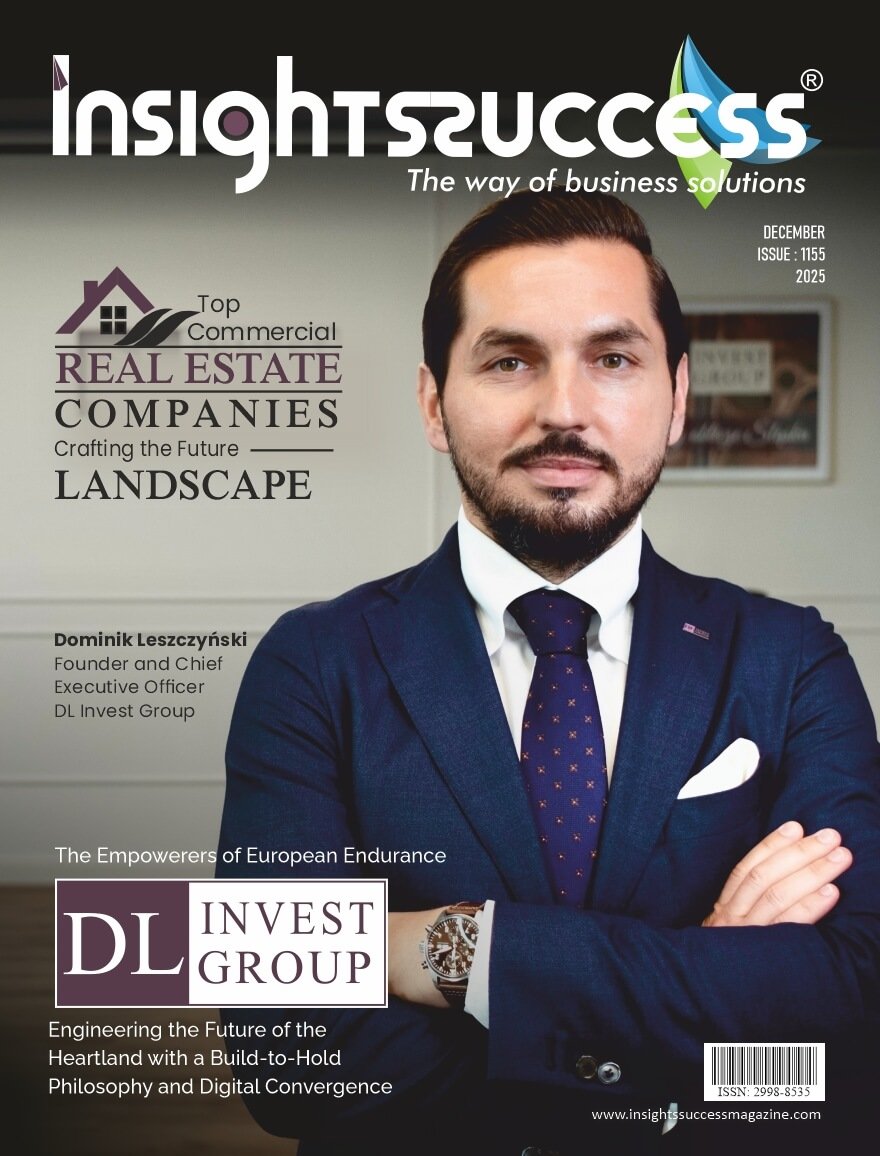
Top Commercial Real Estate Companies Crafting the Future Landscape
Top Commercial Real Estate Companies Crafting the Future Landscape Commercial real estate is undergoing a fundamental transformation—driven by shifting work patterns, sustainability priorities, urban innovation, and evolving tenant expectations. At the forefront of this evolution are organizations that are not merely developing properties, but actively shaping the future of cities and business ecosystems.This edition recognizes the firms redefining how commercial spaces are designed, built, and experienced. Digital Link Quick highlights Quick reads
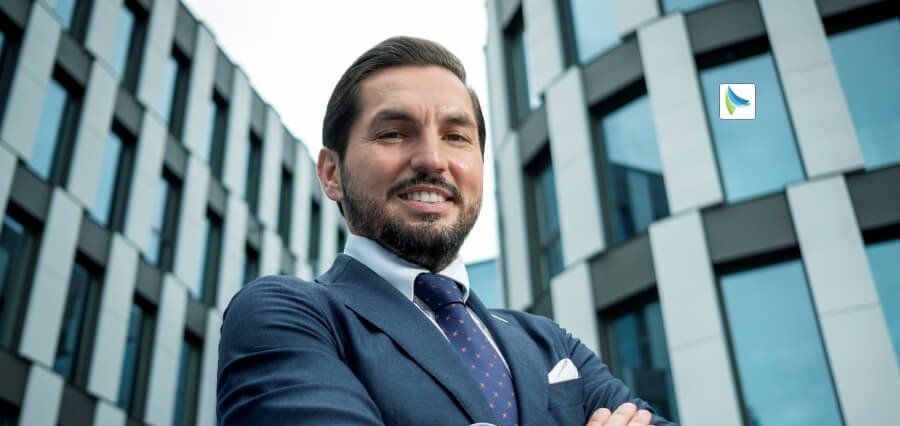
The Empowerers of European Endurance – DL Invest Group: Engineering the Future of the Heartland with a Build-to-Hold Philosophy and Digital Convergence
Commercial real estate differentiates itself from the regular one. It is due to its longer-term investment and business strategies. As opposed to a shorter-term or one-time & short-sighted approach. DL Invest Group is the best example of this extraordinary vision. The dynamics with it are pragmatic. When it comes to commercial real estate, DL Invest Group, along with its leadership, empowered by the visionary Founder and Chief Executive Officer, Dominik Leszczyński, views every building not merely as a property or a shelter, but as a dynamic economic engine. Since the beginning, he ensured that the DL Invest Group was built on a clear and disciplined philosophy: long-term value creation through ownership, not speculation. “From the outset, our ambition was not merely to develop real estate, but to create resilient, high-quality infrastructure that enables tenants to grow, scale, and remain competitive over decades.” Dominik is spot on. While a residential real estate investment is a one-time business, a commercial asset is a decades-long commitment. Dominik believes that leaders in this space must look past the immediate horizon. Like anticipating shifts in urban density, technological requirements, and global economic cycles. “We always believed that we are not just selling square footage; we are nurturing ecosystems where businesses thrive, and communities build themselves,” he adds. That is how he and his team of DL Invest Group have deliberately positioned themselves as a long-term asset owner, combining development, design, construction, and asset management within one fully integrated platform. “This model allows us to deliver tailor-made solutions, maintain full quality control, and optimize costs across the entire lifecycle of an asset.” This strategy has delivered consistent, measurable results: assets under management have grown by more than 30% year-on-year, revenues by over 40% annually for 17 consecutive years, and their income-generating portfolio remains over 97% leased. Today, DL Invest Group operates with more than 250 in-house specialists — “A structure that differentiates us in the market and ensures execution excellence.” The Discipline of Diversification: Strategic Consistency At DL Invest Group, diversification is never a gamble; it is a calculated, multi-dimensional chess match. Dominik ensures that every addition to the portfolio—whether it be a logistics park, a retail center, or a cutting-edge data center—passes a rigorous test of long-term fundamentals. Diversification at DL Invest Group is deliberate, disciplined, and strategically aligned. “We focus on complementary segments with strong long-term fundamentals.” The group’s secret weapon is synergy. By integrating renewable energy into industrial parks or leveraging existing heavy infrastructure for new data centers, they create a “multiplier effect” where one asset enhances the value of another. This consistency is maintained by an internal team of 250+ specialists who oversee the entire lifecycle, ensuring that third-party interests never dilute the original visionary standards. The Four Forces: Architecting the 2030 Horizon Dominik looks at the next decade not with uncertainty, but with a blueprint for transformation. He identifies four structural forces that are already being woven into the DL Invest Group DNA: *The Digital Surge: AI and digitization are creating an insatiable hunger for Data Centers, moving them from the periphery to the core of infrastructure. *Energy Autonomy: The transition to zero-emission standards is no longer optional. Dominik is pushing for energy-autonomous buildings that generate and store their own power. *The New Hub of Europe: As supply chains reconfigure, Poland is emerging as the manufacturing and logistics “heart” of the EU. *Modular Flexibility: To be future-proof, buildings must be “chameleons”—able to adapt their function as technology and tenant needs evolve. From Shovel to Success: Integrated Excellence What sets the DL Invest Group saga apart is its refusal to outsource its destiny. While competitors rely on external contractors, Dominik has built a fully integrated platform. From initial design and construction to long-term asset management, every link in the chain is handled in-house. This “build & hold” philosophy has resulted in an income-generating portfolio that remains 97% leased, even in volatile markets. For Dominik, the metric of success is simple: if the tenant grows, the asset thrives. By providing tailor-made, scalable solutions, he isn’t just building walls; he is building the infrastructure of the future. The Triple Pillar: Decision-Making Under Pressure In a rare display of profound stewardship, Dominik has transformed DL Invest Group into a bastion of stability and a pioneer of community-centric infrastructure by refusing to surrender to the volatile whims of short-term market pressure. In an industry often swayed by the winds of speculation, he maintains a steady course through a decision-making framework built on three unshakable pillars. He does not guess the future; he engineers it. First, the group’s full vertical integration serves as its nervous system, providing real-time data and absolute control from the moment a shovel hits the dirt to the decades of operation that follow. Second, a relentless proximity to tenants allows the group to hear the whispers of market shifts before they become roars, enabling them to anticipate change rather than merely react to it. Finally, aligned institutional relationships provide the “patient capital” necessary to ignore the noise of the next quarter in favor of the next decade. “Above all, we apply strict capital discipline. Growth is never pursued for its own sake—every decision must reinforce our strategic direction.” Operational Responsibility: Designing for Decades At DL Invest Group, “responsible growth” is not a marketing buzzword; it is a rigorous operational mandate. Dominik has discarded the “build-to-sell” model that defines much of the industry, replacing it with a “build-to-hold” philosophy. By designing assets for decades rather than economic cycles, the group ensures that every structure remains high-performing and relevant. This long-term ownership creates a unique accountability; when you plan to own a building for thirty years, you build it differently—with better materials, smarter technology, and deeper care for the environment. The Building as Infrastructure: A Civic Legacy Dominik views his projects as more than just steel and glass; he sees them as vital urban infrastructure. Each investment is meticulously woven into the local community and urban fabric, intended to serve as an engine for

Navigating Market Cycles, Regulation, and Transformation
The New Era of Real Estate Leadership The real estate leaders are stepping into a new phase characterized by intricacies, unpredictability, and rapid change. The traditional methods founded on predictable cycles, value increase, and localized decision-making are slowly losing their ground against global economic changes, regulatory scrutiny, technology disruption, and consumer and tenant needs changing. Under these conditions, a successful leader is not the one who responds to change but the one who moves through it with foresight, discipline, and adaptability. The new era of leadership in real estate calls for strategic depth far more than merely transaction-driven. Leading Through Unpredictable Market Cycles Market cycles are still an inevitable part of real estate; nevertheless, their timing and intensity have become more uncertain. Interest rate fluctuations, capital market changes, and political factors are now the ones that surprisingly compress or extend cycles. Therefore, it is necessary for leaders to go under the reactive cycle management and into the scenario-based planning and portfolio resilience. Successful real estate leaders are those who change their strategies according to new demand, availability of capital, and price changes. They control their growth by being cautious at the same time, thereby ensuring liquidity and flexibility while putting up the assets where they will be able to perform in different cycle scenarios. Strategic Capital Allocation in a Constrained Environment Capital discipline has emerged as a critical leadership quality. The increase in the cost of financing and the restriction of credit have pushed the leaders to re-evaluate risk taking, the feasibility of projects, and return expectations. The attention has been moved from the expansion of capital to the strategic use of capital. The best leaders are those that give priority to properties with unbreakable demand sources, stability of cash flow over a long period, and the ability to adapt to different uses. The decisions on capital allocation are being influenced more and more by resilience and sustainability rather than just the size of the operation. Regulation as a Strategic Variable Regulation has already become a dynamic force influencing development, investment, and operations rather than a static background in real estate. Environmental standards, zoning reforms, tax policies, and compliance requirements are not only very different from one jurisdiction to another but also change very fast. The modern-day real estate leaders consider regulatory intelligence as one of the important aspects in their strategic planning process. They are in constant touch with the policymakers, are able to predict the regulatory changes, and take into account the compliance issues right from the initial stage of project design. They regard regulation as something that should be dealt with strategically rather than something that can only be managed defensively as a constraint. Transformation Through Technology and Data Digitization is changing the real estate sector in terms of their development, management and valuation. The use of data analytics, smart building systems, and digital platforms leads to more accurate forecasts, increased efficiency in operations, and better engagement with the tenants. Those leaders that accept the tech have the opportunity to see how the assets are performing and the market trends. By using data, insights will come that will make confident decisions in leasing, maintenance, and capital planning. In the past, technology has made real estate leadership dependent on intuitions but now it is moving toward intelligence. Sustainability as a Leadership Imperative Sustainability has shifted from the aspect of reputation to the core consideration for business. The environmental performance has become one of the main factors affecting asset value, financing conditions, tenant interest, and meeting regulations. The management has to combine sustainability targets with monetary and operational strategies. This also means, among others, investing in energy-saving technologies, using eco-friendly materials, and making buildings durable against climate change. The property sector leaders who adopt sustainability from the start will not only safeguard asset value in the long run but also remain important players in the market that is driven more and more by ESG criteria. Risk Management in a Connected Market Real estate risk is becoming more and more interconnected. Simultaneously, global asset performance might be impacted by supply chain interruptions, climate disasters, rule changes, and financial market instability. The decision-makers have to look at risk in a comprehensive manner over the entire portfolio and different locations. The proactive evaluation of risks plus the development of emergency plans are the two ways that resilience is reinforced and high returns are guaranteed in the long run. Collaboration Across Stakeholders The new era of real estate leadership prompts the need for a closer involvement of investors, regulators, communities, and partners. Developments and transformations that are complex call for an agreement among the various stakeholders. Trust and transparent communication by leaders elevate the results of the project and lessen the conflict. The alignment of interests turns the collaboration into a strategic advantage instead of an operational requirement. Read Also : Balancing Speed, Scale, and Sustainability

Balancing Speed, Scale, and Sustainability
With Discipline in Real Estate Assets Real estate has always favored those who act fast but in the current scenario, it is taking too long to get ready and speed without discipline can be as risky. Capital flows quickly, markets change suddenly, and the expectations of the stakeholders are not only to get paid back but also to get something beyond that. The leadership of real estate is thus changing who can manage to perform this balancing act between three, sometimes, conflicting forces: the execution speed, the ambition scale, and the outcome’s sustainability. Discipline is what underpins these forces and leads to the transformation of growth into long-term value instead of short-lived expansion. In the field of modern real estate, discipline has changed its role and gone from being a mere conservative practice to a strategic one. Speed as a Competitive Necessity Speed is still the key factor in real estate. Opportunities have durations, capital markets change quickly, and there is not much time before the return on investment is lost. The leaders in real estate have to be able to make decisive moves, whether it is buying the right properties, starting new projects, or repositioning their asset mixes to match the current demand. On the other hand, a disciplined speed is not the same as a rush. It is always the case that such speed is getting the most from being prepared rather than from being pressured. Leaders who rely heavily on solid underwriting frameworks, dependable data, and unambiguous decision rights are the ones who can operate at high speeds without losing the quality of their judgment. The case of speeding up comes out of being ready and not of being first to react in the case of urgency. Scaling with Strategic Intent For a considerable time, scale has been synonymous with strength in the real estate sector. Bigger portfolios give the investor the advantage of being able to hold a variety of properties, get better deals, and have funds available to them. However, if there is no strategy and discipline behind it, scaling could be a sure way to take more risks. Often, these quick expansions into new markets or different asset classes may be a strain on the management and net attention is being focused on the core business area. Leaders who have discipline are the ones who scale with purpose. They go to places where they have the strength in operations, and the knowledge and understanding of the market, and where they can remain committed for the long term. The ability to grow is synchronized with the organization’s capacity, thus making it possible for the scale to fortify resilience instead of being the source of fragility. It is scalable or it is not that easy. Sustainability as a Value Driver, Not a Constraint Sustainability has shifted from a compliance requirement to a core determinant of asset value. Environmental performance, energy efficiency, and climate resilience increasingly influence tenant demand, financing terms, and exit valuations. Real estate leaders must now integrate sustainability into asset strategy from the outset. Discipline plays a critical role here. Sustainable investments require upfront capital, long-term thinking, and rigorous performance measurement. Leaders who approach sustainability strategically avoid superficial initiatives and focus instead on measures that deliver measurable impact and financial return. Sustainability becomes a source of differentiation and durability rather than a cost center. Capital Allocation with Long-Term Perspective To achieve the desired results, one has to seriously consider where to put the money. The CFOs have to face an increasingly difficult task of predicting not only the future returns but also the risk involved, the regulations that may come, and the relevance of the asset in the long run. Discipline in capital allocation goes for quality first and not for quantity. Only the most adaptable, most resilient, and of future demand will be selected among the assets and that goes with the assumption of short term yield. This gives the ability to protect against losing while still having the chance of gaining in different market cycles. Data and Governance Enabling Disciplined Growth The contemporary real estate industry is more and more dependent on data. Sophisticated analysis, market wisdom, and performance indicators are constantly giving the decision-makers information about the asset’s performance and risk at the moment. This understanding helps to make quicker decisions that are still thorough. Supportive governance structures in a way make the discipline stronger. Unambiguous authorization procedures, responsibility setups, and risk limits make it clear that quality is not sacrificed for the sake of time. Governance turns into an activator of bold moves instead of a hindrance to development. Tenant and Community Alignment Real estate leadership that is disciplined understands that the long-term value is not only determined by the investors but also by the tenants and the communities. Properties that adapt to the way people work, live, and buy last longer and show more stable performance. The approach of combining speed and scale with sustainability consists of stakeholders’ involvement from the very beginning, creating flexible spaces, and making the developments fit the local demands. This fitting decreases the resistance, quickens the renting process, and builds the good image of the company even more. Read Also : Skills, Strategies, and Mindset for the Next Decade
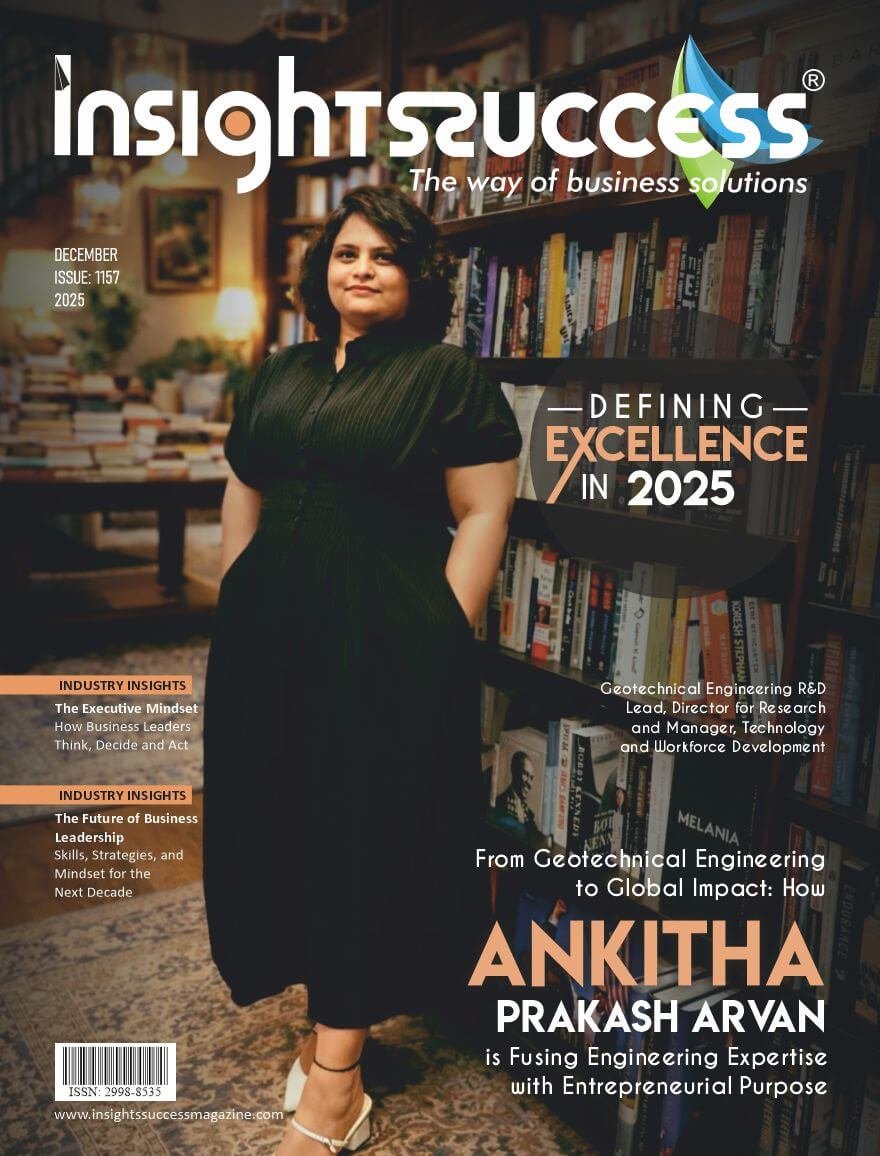
Defining Excellence in 2025
Defining Excellence in 2025 Excellence in 2025 is no longer defined solely by scale, speed, or short-term success. It is shaped by purpose, adaptability, and the ability to create lasting impact in a world marked by constant change. Defining Excellence in 2025 recognizes Ankitha Prakash Arvan who is setting new benchmarks for leadership, innovation, and responsibility. Digital Link Quick highlights Quick reads

From Geotechnical Engineering to Global Impact: How Ankitha Prakash Arvan is Fusing Engineering Expertise with Entrepreneurial Purpose
Excellence is measured by whether one can associate top-tier science with sustainable application when it comes to the complex realm of high-level engineering and research. It is the arena where theoretical models go from theory to long-lasting infrastructure in practice. Emerging as a powerful architect of this fusion of passion and excellence is Ankitha Prakash Arvan. Already recognized as one of Florida’s Most Influential Women and a finalist for the Top 50 Women Leaders of Florida at the age of 33, Dr. Arvan stands as a paragon of multidisciplinary leadership who is unequivocally ‘Defining Excellence in 2025.’ Currently serving in two prime roles as the Geotechnical Engineering R&D Lead at Tierra South Florida Inc. (TSF Geo) and the Manager of Technology and Workforce Development at TRANS-IPIC, University of Illinois Urbana-Champaign, she brings over a decade of rigorous expertise in managing high-stakes research initiatives from conception to high-quality completion. Dr. Arvan is not just a researcher but a leader in Civil Engineering, well-noted for establishing revolutionary interventions to integrate Artificial Intelligence into geotechnical engineering sciences. Her PhD work culminated in GEOS© Version 1.0, a standalone software to characterize complex soil-pile models and fills a critical void for easy-to-use applications for practitioners and researchers alike. She has received a great deal of international recognition for her thought-provoking contributions to the field and was awarded the 2023 ASCE State-of-the-Art of Civil Engineering Award. Her work is so instrumental that it was featured among the ASCE’s Special Collection for United Nations Sustainable Development Goals (UN SDG), influencing civil engineers across the world to think about sustainable civil engineering practice with respect to clean energy, climate resilience, and resilient infrastructure. Honored with the 2022 3MT Thesis Scholarship Award for her captivating communication skills and selected as a recipient of the 2024 Women in Deep Foundations Professional Development Grant from Deep Foundations Institute, Dr. Arvan is more than an academic leader. She is a visionary force driving innovation, entrepreneurship, and workforce development, ensuring that the infrastructure of tomorrow is built on the solid foundation of today’s most brilliant research. The Father’s Blueprint: Roots of Resilience Dr. Arvan’s foundation was laid by her greatest inspiration: her father, Mr. Jaya Prakash Arvan. His perseverance and unshakeable belief in continuous learning became the bedrock of her own ambitions. He encouraged a young Ankitha to stay curious and pursue excellence—values that she carried from childhood into the rigorous halls of academia. Later supported by her grandfather, Mr. Sathyanandam Shamarthi, her uncle Mr. Sandeep Shamarthi, her mother Ms. Prashanthi Arvan and a circle of close family and friends who believed in her potential, she developed the confidence to navigate a career defined by high-stakes research. This resilience proved essential. Over a decade of managing complex research initiatives, Dr. Arvan navigated both breakthroughs and failures—redesigning methodologies and overcoming technical setbacks. These challenges didn’t deter her; they sharpened her capabilities, transforming her into a master of project management and research design. From Legacy to Innovation: The Engineer’s Calling A profound evolution of purpose shaped her professional destiny. Initially, her father envisioned her as a doctor, admiring the profession’s service and discipline. For years, Dr. Arvan carried this aspiration as a badge of his belief in her. However, a different fascination took hold—a captivation with how infrastructure shapes communities when she personally witnessed her father working on great infrastructure development projects. She realized her calling was to design structures that could stand for decades and serve thousands. While her journey began with a dream passed down to her, it evolved into a purpose uniquely her own. During her doctoral research, she realized engineering offered the power not just to design, but to innovate. This epiphany led to the integration of Artificial Intelligence with Geotechnical Engineering and the birth of GEOS© Version 1.0. She honored her father’s inspiration by channeling his values into a field where she could deliver sustainable, impactful solutions for the new Civil Engineering world. The Architecture of Equilibrium Dr. Arvan understands that sustaining high-performance research requires a deliberate architecture of balance. She views work-life equilibrium not as a fixed achievement, but as a “continuous practice.” Applying the discipline instilled by her father, she approaches her personal life with the same intentionality as her research: breaking large goals into manageable steps to manage pressure without sacrificing quality. To maintain mental clarity amidst intense focus, she relies on regular yoga and meditation, tools she considers essential for reconnecting with her purpose. Furthermore, she invests deeply in mentorship—learning from others and guiding the next generation—which reminds her of the bigger picture. By knowing when to pause, reflect, and spend time with loved ones, Dr. Arvan ensures that she returns to her work with renewed clarity. Her success is a result of this holistic commitment: professional structure supporting personal well-being, allowing her to define excellence in every endeavor. The Entrepreneurial Resonance: From Science to Scale Dr. Arvan’s journey reveals that her appetite for business was not an ambition of finance, but a natural progression from her engineering and research experiences. She realized that technical expertise alone was insufficient to generate meaningful, large-scale impact. The moment her focus shifted to the intersection of innovation, strategy, and entrepreneurship, her ideas truly came to life. Throughout her research career, she was continually drawn to decision-making, planning, and value creation—skills essential for any entrepreneur. She enjoyed not only solving technical problems but also understanding market needs and crafting strategies for long-term impact. “My appetite for business is rooted in passion, curiosity, and the desire to create meaningful, scalable, and sustainable impact.” Entrepreneurship, in particular, appeals to her because it serves as a dynamic platform where creativity is encouraged, risks are transformed into opportunities, and solutions can reach broader audiences. This commitment to continuous learning in financial models, operations, and leadership perfectly complements her engineering background, empowering her to think holistically and imagine new possibilities for infrastructure innovation. The Unwavering Driver: Pursuit of Excellence with Purpose The passion that drives Dr. Arvan is the unwavering desire to “do better