





How SaaS is Powering the Future of Remote Work
The global workforce has entered a new era—one that values flexibility, autonomy, and digital connectivity over rigid schedules and office cubicles. What began as a reactive shift during the COVID-19 pandemic has evolved into a long-term transformation. Today, remote work is not just a trend; it’s a strategic choice embraced by companies seeking agility, resilience, and access to global talent. At the center of it is Software-as-a-Service (SaaS). With cloud application enabling seamless collaboration, real-time communication, and elastic infrastructure, SaaS is the pillar of the remote-first workplace. Not only is it enabling remote work, it is shaping its future. The Cloud as a Workspace Those were the days when productivity was chained to physical offices or in-house servers. SaaS technologies have emancipated the modern workforce from the chains, providing a means to access workspaces from anywhere on the globe, at any time. Applications like Google Workspace, Microsoft 365, Slack, Zoom, and Asana are now essential digital infrastructure. They enable remote teams to communicate, collaborate on projects, exchange documents, and work together in real time—regardless of location or time zone. With everything cloud-hosted, work isn’t where you are—it’s what you do. SaaS solutions have revolutionized the meaning of “presence” within a working environment, offering continuity, consistency, and collaboration in an unfenced world. Borderless Seamless Collaboration Collaboration succeeds or fails remote work. SaaS solutions allowed teams to ideate, create, and execute as if they were sitting next to one another—even oceans apart. Whether developers coding in GitHub and Jira, marketing teams ideating in Figma and Notion, or sales teams closing deals using HubSpot and Salesforce, SaaS empowered ecosystems where collaboration is asynchronous, agile, and relentless. The platforms also foster transparency. Shared dashboards, version histories, and real-time notifications reduce information silos and keep everyone in the loop. Managers are given real-time feedback on productivity and task status, without micromanaging. Cybersecurity, Compliance, and Control Security of data is one of the chief concerns with remote work. With corporate networks being accessed by the employees from home networks and personal computers, the risk surface has grown considerably. SaaS once again plays a significant role in this regard. Enterprise-grade SaaS providers now offer security measures like multi-factor authentication, encryption, single sign-on (SSO), and role-based access controls to help organizations protect sensitive data in a decentralized environment. Most platforms are also compliant with international norms like GDPR, HIPAA, and SOC 2, giving companies the degree of assurance required to do business around the world. Second, centralized management from cloud platforms makes it possible for IT departments to control access by users, track activity, and push patches without hands-on involvement—a critical feature in a remote or hybrid environment. Agility and Scalability for a Distributed Workforce Remote working isn’t a single-fits-all solution. Teams change, markets change, and business requirements change. SaaS platforms provide the flexibility and scalability organizations need to respond in real time. Have to bring aboard 50 new hires spread out across multiple time zones? SaaS can provision applications on demand. Shrinking? Licenses can be scaled back without the added overhead of infrastructure. Unlike legacy software models, SaaS applications are designed with elasticity—a critical quality in an uncertain world. In addition, integrations between SaaS solutions allow organizations to create tailored digital spaces. APIs, plug-ins, and low-code integrators get different tools “talking” to each other—accelerating workflows and decreasing redundancies. Supporting Talent and Empowering Work-Life Integration Remote work isn’t a business model—it’s a talent model. Employees now want flexibility, autonomy, and sense in the workplace. SaaS solutions make it possible by empowering work-life integration rather than requiring work-life separation. With mobile-enabled applications, clean interfaces, and device prevalence, SaaS apps set employees free to work in styles that suit their lives. Such autonomy drives engagement, retention, and productivity. For leadership, SaaS-based analytics also include insights into employee well-being, workload distribution, and patterns of performance—informed decisions regarding team support, development, and resource allocation. Reinventing Company Culture in the Cloud Culture once lived in physical offices—hallway gossip, team lunches, and in-person meetings. But as work is now digital-first, culture must play catch-up. SaaS platforms are helping businesses rebuild and reimagine culture in the cloud. Virtual town halls, recognition platforms, and social collaboration spaces keep employees connected to the company mission and to each other. Platforms like Slack, MS Teams, and Workplace by Meta allow for informal chat and formal announcements to coexist—keeping the humanity intact in remote settings. SaaS also enables inclusion. With captioning capability, language variations, and accessibility controls, inclusive and dispersed teams are able to participate fully—building a culture that crosses borders and backgrounds. Looking Ahead: SaaS and Future of Work As business shifts toward a hybrid future—some remote, some in-office—SaaS will be the central part of future-proofed infrastructure. Coming advances in artificial intelligence, automation, virtual reality, and machine learning are already enhancing SaaS potential, creating more intelligent, more intuitive platforms that anticipate and make higher-order work possible. Work in the future will include AI-powered collaboration aids, virtual reality digital offices, and predictive workforce planning analytics. And as SaaS providers provide ever more solutions tailored to industry niches and functions, remote work will be even more sophisticated and frictionless. Conclusion: The Digital Backbone of Modern Work The SaaS revolution is not just a technology phenomenon—it’s the electronic backbone of modern work. It doesn’t merely serve where we work, but how we work, how we collaborate, and how we thrive in a dispersed age. Remote work isn’t going anywhere. And as businesses stretch for resilience, innovation, and worldwide reach, it is SaaS that will persist to offer the flexibility, scalability, and people-first design to bring that future into existence. It is in this new era of work that the businesses that will succeed won’t just adopt SaaS—they’ll craft with it, drive with it, and grow due to it. Read More: Recurring Revenue, Real Results: The SaaS Subscription Boom

Inspirational Icon To Look For In 2025-Vol-7 June2025
Inspirational Icon To Look For In 2025 This edition celebrates visionary trailblazers reshaping industries and lives through purpose-driven leadership. Featuring Mr. Basim Alsukhairi, this edition honors his unwavering dedication, transformative mindset, and impact on future-ready innovation. A symbol of excellence, he inspires the next generation to lead with integrity, resilience, and bold ambition. Quick highlights Quick reads

Basim Alsukhairi: A Transformational Frontrunner in Organizational Development and Strategic HR Leadership
Leadership in the contemporary business environment is not merely about titles and tasks—it requires vision, determination, and a people-centric philosophy. A genuine leader is one who forms institutions by empowering individuals, designing systems that comply with strategic goals, and establishing cultures of continuous innovation. This is his story: a leader, a consummate professional whose life is a testament to the blend of brains, empathy, and strategic thinking—Basim Alsukhairi, Organization Development Executive Director, Confidential (PIF). Early Foundations: A Childhood Marked by Determination and Curiosity Basim Alsukhairi sets out on his journey in the beautiful city of Taif, although Riyadh would eventually be the setting of much of his childhood after his family moved there in 1988. Growing up in a home of discipline and understanding, Basim was motivated in his early years by two enormously impactful individuals—his parents. His father, a devoted firefighter, was a paragon of discipline and valor, who instilled in Basim an understanding of drive and purpose. His mother, a gentle homemaker, provided unwavering support and moral guidance, grounding his intellectual and emotional foundation. Basim, from an early age, had shown a questioning mind. Despite struggling with a bad case of asthma throughout high school—a disease that nearly cost his life several times—he never lost an insatiable appetite for learning. His interests properly lay along the lines of language and technology, a two-pronged interest that would remain so central to so much of his career. A turning point in this time was when he participated in an innovation competition and helped to design a security door system that had built-in alarm functionality—a fitting early demonstration of his problem-solving personality and innovative spirit. Education: Linking Language, Technology, and Strategy The late 1990s, an era of rapid digital evolution, interested Basim. The breaking dawn of the internet’s role in transnational connectivity etched its mark on his mind, strengthening his determination to be a contributor to the dynamics of the world. The desire motivated him to earn a Bachelor’s degree in English—a deliberate move for unlocking gates into global discourse and leadership of ideas. But his intellectual quest was not over yet. With increasing passion for business mechanisms and strategic thought, Basim Alsukhairi further pursued a Postgraduate Diploma in Strategy and Innovation from the University of Oxford and an Executive MBA from HEC Paris—two of the best institutions in the world. These academic degrees sharpened his analytical abilities to the point where he acquired a rare blend of communication skills, technological savvy, and strategic vision. The HR Calling: A Career Defined by Purpose Basim’s foray into Human Resources kicked off in 2012 when he joined the Royal Commission Health Services Program. Initially, he began working in the training and development unit, but soon discovered that HR was more about operation responsibilities—it was a platform to effect change, empower individuals, and contribute meaningfully toward business success. He was attracted to two fundamental beliefs: that HR is an upcoming science in waiting for innovation, and that human beings are the most valuable assets of a company. It was this epiphany that marked the start of his commitment to HR, not simply as an organizational function but as a business enabler. It was here that he started to cultivate a rich appreciation of the role that the profession plays in realizing the potential of individuals and aligning talent strategy with business results. Strategic Growth: A Multifaceted HR Leadership Journey With increasing experience came increased responsibility. Basim’s career soon branched out from training and development into higher areas like Talent Management, Performance Management, and Organizational Development. All this helped him develop his diagnostic acumen to the point where he could spot inefficiencies at a glance and implement systemic remedies. Among the signatures of his style has been his ability to tackle high-stakes, sensitive topics. One of these was his leadership of the change of one of Saudi Arabia’s most significant organizations through a compelling Employee Value Proposition—a initiative closely related to the company’s change agenda. In the other, he played a key role in building a complete HR function for a recently formed organization, including building a robust succession planning framework to provide it with a future pipeline of leaders. These initiatives are a reflection of Basim’s strong conviction that HR cannot just be an ancillary function but needs to be an integral business partner—actively influencing an organization’s capacity, culture, and sustained success. Philosophy of Integration: Merging Work and Life In a universe where the quest for “work-life balance” so often proves elusive, Basim Alsukhairi teaches us an even wider vision—work-life integration. Instead of placing professional and personal life in opposition as adversaries, he envisions them as integrated components of a full life. This is the ethic of many of the visionary leaders, and it signals the need to align personal habits and professional duties. For Basim, there is a need to establish disciplined daily habits that nourish the body and mind. Reading, studying, and exercise as a daily habit can energize his creativity and endurance for maintaining his very high level of performance in all areas of life. This integrated way of life is also being applied to how he contributes back to society, whether through the development of thought leadership pieces and attendance in professional workshops, a sign of how he is dedicated to ongoing learning and collaborative development. Pandemic Leadership: Turning Crisis into Opportunity The COVID-19 pandemic tested leaders across the world in terms of resilience and flexibility, and Basim Alsukhairi was no exception. Managing the twin imperatives of employee safety and business continuity demanded flexibility as well as vision. Under Basim’s leadership, HR policies were overhauled to adopt remote working, expand virtual working, and institute stringent security processes. Outside of the response to the crisis, Basim Alsukhairi set his sights on leveraging the disruption to drive change. Digital transformation of HR processes quickened, employee engagement strategies were reimagined, and well-being programs were increased to help counteract the psychological impact of the pandemic. Above all, he spearheaded the upskilling of a

Strategic Talent Management for High-Growth Companies
With the fiercely, competitive business environment of today, organizations with high potential for quick growth are faced with a whole new kind of challenge. Of all those that are most important, in the first place is the talent for attraction, retention, and development. Talent is not merely a force to be reckoned with for high-growth organizations, it is the underlying basis. Enter strategic talent management. Much more than the role of a typical HR function, it is a total strategy for aligning an organization’s people’s plan to its business plan to drive sustainable success. The Talent Management Role in Scaling Success Talent management is the acquisition, development, motivation, and retention of best-in-class talent to drive organizational performance. For business growth, these challenges are even greater. When growth businesses expand, they expand into new markets, create new products, or become structurally reorganized everything that demands talented, nimble, and aligned teams. While established companies may be able to survive trial and error in making human decisions, high-growth businesses can’t. Each attempt at recruiting, promoting, or training must be deliberate and effective. Along with this, establishing a solid talent management infrastructure early on isn’t a choice, it’s necessary. Strategic Hiring: Quality Over Quantity One of the most common sins of high-growth businesses is headhunting in a rush. New money rolling in or orders increasing, it’s easy to rush to fill the slots. An early hiring process, however, hires cultural misfits and skill gaps. Strategic talent sourcing is concerned with not only bringing in competence but also values and future potential. It requires that strict job profiles are developed, data-driven recruitment tools are utilized, and cross-functional teams are engaged in the recruitment process. It does not seek to fill a vacancy but recruit a future leader or contributor who can develop with the organization. Fostering a Culture of Ongoing Development Development is not just the case of doing more business but changing the individuals who do it. One of the most important elements of good talent management is employee development. These involve mentor experiences, individualized learning plans, leadership development, and on-the-job assignments that challenge abilities. In expansion settings, positions often shift quickly. A fresh hire who begins as a specialist is a team manager a year down the road. If not supported with developmental help, this shift can be startling. Strategic talent management incorporates upskilling as part of organizational rhythm, in preparation for a workforce that is not simply responding, but proactively in advance. Retention Strategies That Go Beyond Perks High-growth firms tend to be the ones most known for glamorous benefits—ping-pong tables, snack bars, and company retreats. While these create a work environment, they do not do much to drive to the underlying drivers of employee commitment and loyalty. Strategic talent management transcends cosmetic benefits and concerns itself with what is most important: purpose, recognition, development, and trust. Retaining in high-growth companies is even more difficult due to saturated marketplace competition. Recruiters are always on the prowl for tried-and-trusted people. It is for this reason that talent management programs must incorporate strong mechanisms of performance appreciation, clear career paths, ongoing feedback mechanisms, and powerful incentives towards mental health and work-life balance. Leadership Pipeline: Future-Proofing the Organization As companies expand, leadership gaps may become glaring. Founders who once did it all now need to delegate, and new departments require leaders who possess an understanding of business vision as well as team dynamics. A strategic talent management approach ensures that a pipeline of leadership is built from within, cultivating future leaders far ahead of available openings. This forward thinking involves analyzing succession charts, 360-degree assessments, and cross-functional experience. Not only does it limit reliance on outside hiring for management positions, but it also encourages company culture and employee morale. Adopting Data and Technology Talent management nowadays is more and more data driven. Fast-growth firms, to keep up with the competition, need to use HR analytics to keep them updated with employees’ performance, satisfaction, and turnover patterns. AI- and machine-learning-powered software can forecast likely future attrition risk, suggest individualized training, and better match candidates with roles. But technology is only an enabler and not a substitute for human judgment. True strategic talent management power lies in bringing together human intuition and analytical muscle—figuring out not only what employees do, but why they do it and how they feel when they do it. Aligning Talent Strategy with Business Goals The most important dimension of strategic talent management will probably be alignment. All of them recruitment and hiring, development, and retention—must be linked to the company’s overall objectives. For instance, if a business is in the process of expanding into the global market, language development and cross-cultural study can become part of its talent development initiative. Alignment also involves engaging leadership in talent discussions, combining talent metrics with business KPIs, and taking a radical change based on organizational needs. Talent management, when executed effectively, then transforms into a growth driver and not an assistance function. Conclusion: Investing in People is Investing in Growth High-growth firms are playing a high-stakes game. Under these circumstances, strategic talent management is the glue that holds the growth machine together. It’s not merely hiring great talent; it’s putting the right people in the right positions to do their best and grow with the business. By injecting talent management into the firm DNA, executives can build a powerful, high-performing, and motivated workforce one that not only keeps pace with expansion but accelerates it. Because let’s be honest, firms don’t expand people do. And when people expand, everything else expands as well. Read More: Future-Proofing Organizations Through Effective HR Leadership Development

Future-Proofing Organizations Through Effective HR Leadership Development
In an increasingly dynamic business environment, organizations are confronted with economic downturns, technology disruption, and changing employee expectations. Behind the success of overcoming these is a driving force: HR leadership capability. Human Resources is no longer the behind-the-scenes player; it is now a strategic driver of employee engagement and culture, innovation, and business performance. To be long-term sustainable and competitive, the company must invest in building the HR leaders who are not just policy administrators but also visionaries who can shape the future of work. The New Role of HR in a Changing World HR departments previously cared only about hiring, compliance, and employee relations. Today, however, HR professionals are being asked to contribute to the organization in a more strategic manner. From overseeing organizational change and implementing diversity efforts to shaping business performance and systems of culture management, HR is being asked to contribute business results directly. With this shift, never before have the needs of high-quality, visioning HR leadership been more urgent. HR leaders must possess an overwhelmingly uncommon mix of empathy, strategic mind, fact with numeracy, and influence across the entire organization. Why HR Leadership Development Is Important Successful HR leadership is the foundation for creating a sound organization. There are certain principal reasons why it is important to keep HR leaders’ heads above water: Fostering Organizational Agility Agile companies respond quicker during times of crisis or turmoil. Change leadership-trained HR leaders, innovation drivers, and quick reorganization are gems. The capacity to roll out agile practice to units determines how quickly a firm can bounce back in the worst of times. Driving Employee Experience With virtual work, blended models, and multi-generational workplaces becoming mainstream, employees’ requirements are now more diverse than ever. HR leaders need to be able to design experiences that drive belonging, well-being, and high performance. Developmental investment enables them to build inclusive workplaces for attracting and retaining top talent. Strategic Workforce Planning The work of the future includes automation, AI, and constantly shifting skills requirements. Effective HR leadership makes it possible for organizations to forecast talent requirements, create capacity that is future-proofed, and bridge competency deficits before they reach crisis levels. It is necessary to be competitive in highly competitive markets. Major Elements of HR Leadership Development Building successful HR leaders is not a boilerplate training program. It must be a sophisticated program designed to build up skills and competencies aligned with organizational objectives as well as the future workplace. Leadership Coaching and Mentoring Individual coaching enables HR professionals to learn their own leadership style, negotiate problems, and establish confidence levels. Mentoring by experienced HR leaders also provides invaluable lessons in negotiating actual situations. Cross-Functional Exposure HR leaders require a general business operating view. Cross-functional or rotational experiences in finance, marketing, or operations build this view. The more business-oriented the HR leader, the better they can align people strategies with business goals. Data-Driven Decision Making Advanced HR increasingly depends on analytics—turnover forecasted through measuring engagement. Education in HR analytics and technological tool mastery allow leaders to make strategic decisions and prove the ROI of HR programs. Emotional Intelligence and Communication HR leadership also depends on soft skills. Listening, conflict resolution, communication, and emotional intelligence are all crucial when dealing with sensitive employee issues or gaining leadership commitment. Building a Pipeline of Future HR Leaders To truly future proof the organization, organizations will have to have a robust leadership pipeline. That means identifying future HR leaders with high potential and formally developing them on structured development paths early in their careers. Leadership development programs need to include scenario-based problem-solving, peer networking, and experiential learning. Second, the culture of ongoing learning must be created in organizations. HR leaders themselves need to be trained and motivated to exemplify life-long learning and flexibility as a role model for the organization. At its heart, HR leadership is people—helping people give their best so that organizations can achieve their potential. An exceptional HR leader is not simply about metrics of performance but discovers the implicit drivers of people. They build employees’ culture in which people feel noticed, appreciated, and replenished. When HR leadership works, businesses realize fewer employees jumping jobs, greater engagement, and better collaboration. Visioneering HR-led firms also perform best on innovation and employee satisfaction—drivers of bottom-line growth. Leading the Way to a Sustainable Future The working world of the future requires no longer responsive but more anticipatory leaders—leaders who can see what’s on the horizon and put their businesses in place to take advantage of it. HR leadership development is not an option, but a business imperative. Companies that invest in their HR leaders now are building the foundations for a quicker, more agile, and people-centric workplace of tomorrow. By doing this, they are not only keeping pace with the world—they are shaping the way to a brighter, more sustainable future. Read More: Strategic Talent Management for High-Growth Companies

Top Dynamic Personality Making A Difference In 2025
Top Dynamic Personality Making A Difference In 2025 This edition honors Chaitran C., a visionary leader whose passion, purpose, and performance are transforming lives and industries. This edition celebrates her inspiring journey, groundbreaking contributions, and unwavering commitment to driving meaningful change across communities and global platforms. Quick highlights Quick reads

Chaitran C.: Transforming Global Healthcare Systems with Precision and Purpose
This saga is of a pioneer who has re-mapped the boundaries of validation engineering and e-health, igniting innovation in sectors and worldwide. Chaitran C.’s journey from India’s heart to the cutting edge of world healthcare technology is a tale of mission, resilience, and innovation. This is where actual progress is achieved after technology’s convergence with compliance and human-centered design. Early Foundations: A Childhood Rooted on Curiosity and Integrity Growing up in an Indian close-knit family, Chaitran’s childhood was marked by a culture that placed immense importance on education, honesty, and a consuming curiosity. He was enthralled with things functioning as a very young boy and would disassemble and reassemble home appliances to figure out how they function. This natural inquisitiveness combined with an in-home culture of learning and integrity set him on the path of technological and problem-solving greatness. Academic Ventures: Connecting Continents and Disciplines Chaitran C. started his academic path with a degree in mechanical engineering in India, where he developed his analytical brain and learned to tackle technology problems analytically. Having witnessed the revolutionary impact of technology on the globe, he chose America as his destination and entered Kent State University in Ohio. There he obtained a master of science in technology management and a minor in software engineering. This choice would eventually become the necessary step to opening his eyes and giving him an interdisciplinary way of thinking. The intellectual and cross-cultural transition from India to America also had its own set of adversities. Acclimatization in new surroundings, brokering heterogeneous thoughts, and becoming an expert on cutting-edge technologies tested the mettle and strength of Chaitran. It only honed his technical skills further and fortified his love for direct cross-functional collaboration. Professional Genesis: From the Trenches to Leadership Chaitran C. moved into the pharma and medical devices industry, where he became a challenging validation engineer. During these initial years, he became deeply invested in the regulations, perspiring day and night to write validation protocols, documentation management, and bringing extremely intricate systems up to high-quality standards. Through experience, he gained a micro-level understanding of the regulatory environment—a platform that would serve as the foundation for his leadership positions in the future. As experience increased in Chaitran, so did his job designation. He transitioned from protocol delivery to managing large projects of computer system validation (CSV) on platforms like Veeva Vault, ERP, and clinical systems. His experience as CEO of companies like Sarepta Therapeutics, Dermira, Dendreon, and Edwards Lifesciences exposed him to the complexity of healthcare operations like fragmentation and inefficiency caused by siloed data in genomics, diagnostics, and patient monitoring. Navigating Obstacles: Resilience in the Midst of Adversity Chaitran’s own path has not been one lacking its own challenges. Project deadlines, grueling regulatory audits, and instances of self-doubt have all pushed him to his limits. Yet with every challenge, each was met with a mix of precision and speed, and compliance and innovation. Instead of seeing setbacks as discouragers, Chaitran C. has seen setbacks as drivers of growth, continually refining his approach and building his leadership skills. The COVID-19 pandemic, among various things, was crucible and catalyst. In unprecedented disruption of global healthcare infrastructure, Chaitran led mission-critical operations—adopting cloud quality systems, remote auditing, and enabling business continuity to pharma customers. Strategic Impact: Bridging Business and Technology Chaitran’s professional life has been that of seamless blending of technical expertise and foresight. He saw in the first few years of his professional career that most operational inefficiencies were systemic rather than technical. This understanding resulted in a transition from task management to solution architecture, and ultimately to strategic guidance. His interest in the business aspect of technology spurred him to outline enterprise processes, align technology investment with regulation designs, and consult clients on how to utilize quality operations with automation and AI. Vision fusion as a notion empowered Chaitran to drive value from operations and competitive differentiation. Awards and Milestones: A Legacy of Excellence Stretched over a period of over eight years, Chaitran has developed a work portfolio capturing personal excellence and cumulative value. His most impactful accomplishments are: Enterprise System Validation: Spearheaded end-to-end implementation and validation of enterprise systems like Veeva Vault, NetSuite, and SAP for life sciences customers, with FDA 21 CFR Part 11 and EU MDR regulation compliance. Workflow Enhancement: Assisted Sarepta Therapeutics to validate more than a dozen cross-functional modules in Veeva Vault and achieved 30% compliance cycle time improvement. Expense Reduction: Created reusable SOP templates and validation sets and assisted clients in saving more than $250,000 in implementation costs. Leadership Accolade: For the contribution to facilitating global teams, sponsoring new validation professionals, and creating best practice cross-published across organizations. Certifications: Has a certification as a Veeva Vault Platform Associate Administrator and Lean Six Sigma Green Belt, reflecting his passion for continuous improvement and quality improvement. The Human Element: Balance between Professional and Personal Life Even with high-pressure demands for a high-stress career, Chaitran has stuck to self-balance and health. Work-life integration for him is not about ideal balance, but about an act of being and intention. He diverts career ambitions and personal responsibilities weekly at the same moment as equally high-priority tasks, with equal attention to a critical validation report and a family dinner. Trust and delegation are the cornerstones of his leadership style. With self-empowered team members and ownership culture, there is no relaxation on quality even as he steps away to take a break. He also lays tight boundaries on screen time, taking breaks drawing everyday moments, reading, and with family—habits that charge his creativity and mental acuity. Mentorship is also among the secrets of Chaitran’s self-satisfaction. Through mentoring future professionals and giving back to society, he keeps himself grounded and revitalized, further affirming the mission culture that drives his endeavors. A Passion for Intelligent Healthcare There is a powerful passion for smart healthcare at the heart of Chaitran’s career.

Transforming Global Healthcare Delivery Through Digital Innovation
Over the last few years, the face of international health care has undergone a transformation so sweeping and profound. Digital revolution has come to assume a role of unparallel significance as it redefines the provision, coordination, and perception of care. From diagnosis powered by AI to telemedicine, technology’s entry into health care infrastructure worldwide has not only enhanced patient outcomes but also made health care more accessible, effective, and personalized. This article discusses how digital innovation is transforming the provision of healthcare worldwide, its advantages, and the challenges that need to be addressed. The Digital Transformation of Global Healthcare Medicine has traditionally been a reactive industry—patients appeared only when something was amiss. But digital technology is driving the movement toward proactive, preventive medicine. Sensors worn on bodies, phone apps, and remote monitoring equipment give patients control of their own well-being. Physicians can now track chronic diseases like diabetes and high blood pressure in real time, before they get ahead of themselves. On an international level of health, these innovations bridge the gap between developing and developed countries. Online consultation sites enable rural or underserved communities to access experts they were not familiar with before. This change not only enhances outcomes but also decreases the strain on overcrowded urban health systems. Telemedicine: Decreasing Access Barriers Telemedicine is probably the most revolutionary technology over the past few years. The COVID-19 pandemic fast-tracked its use, but the practice continues. It allows people to see physicians at home, conserving time, eliminating travel costs, and reducing exposure to contagious illnesses. Where healthcare facilities are scarce in areas like Africa and Southeast Asia, telemedicine is stepping up to the plate to bridge the disparity of access to worldwide healthcare services. Telehealth systems are being heavily invested in by governments and NGOs to enable remote diagnosis, care, and follow-up. This brings about an expanded, no-one-left-behind health system. Artificial Intelligence and Data-Driven Decisions Artificial intelligence (AI) is opening up new frontiers in diagnosis, treatment planning, and the discovery of new drugs. Machine learning computer algorithms can scan enormous amounts of data—electronically stored health records, imaging tests, and genomic data—faster and more reliably than traditional methods. AI-based diagnostics are already helping radiologists detect abnormalities on X-rays and MRIs with great accuracy. In oncology, AI is being used to tailor treatment protocols based on the individual tumor’s genetic makeup. Such steps towards personalized care are raising healthcare standards worldwide and ensuring greater effectiveness of treatment and greater assurance of outcomes. In addition to this, predictive analytics also facilitates the better utilization of hospital resources. Forecasting patient flow enables hospitals to better staff, decrease waiting times, and improve patient care, hence providing a more sustainable healthcare system. Digital Health Records: Merging Patient Data Electronic Health Records (EHRs) are the foundation of the electronic healthcare revolution. EHRs are a safe, centralized, and accessible store for patient information. EHRs facilitate better collaboration among providers, lower medical errors, and provide greater continuity of care. Around the world, nations are at various points on the road to EHR adoption, but the direction is unmistakable. Within the European Union, electronic health records are being harmonized across member states in order to enable cross-border care. In the third world, mobile-enabled solutions for electronic health records are being developed in order to bypass the infrastructure deficit. Harmonization is the answer to a time when global healthcare is not constrained by geography or administrative borders. The Role of Mobile Health (mHealth) Apps Smartphones are now everywhere, even in the remotest parts of the world. Taking this further, mobile health (mHealth) apps are being developed to do it all from prompting individuals to take medication and offering mental health support to monitoring fitness and maternal well-being. These instruments encourage health literacy and self-care, the dual pillars of public health. In India, mHealth apps, for example, have been leading the way in counseling expectant mothers during prenatal care, while in sub-Saharan Africa mobile platforms are being used for HIV/AIDS education and counseling. In its capacity to democratize and empower, mHealth is enabling bottom-up transformation in global healthcare. Challenges and Ethical Considerations Although the future of digital innovation in healthcare is enormous, obstacles remain. At the top of the list are data protection and cybersecurity. Since sensitive health information is being electronically stored and transmitted, rigorous security measures must be put in place to avoid breaches. One of those issues is the digital divide. Not everybody uses the internet or smart devices. To enable global healthcare systems to reap the maximum dividends of digital innovation, efforts have to be made to include marginal groups into the digital revolution. Ethical concerns related to AI and automation, such as algorithmic bias and depersonalized care, must be tackled. Regulations must evolve with technology in order to maintain patient safety and trust. A Future in Partnership The future of global health is partnership—among governments, tech companies, healthcare workers, and communities. Scale at an equal level involves investment in digital infrastructure, education of healthcare workers, and public-private partnerships. Global institutions like the World Health Organization (WHO) are already leading in developing digitally standardized best practices and knowledge sharing between nations. More entrants into the fold will make the vision of a digitally linked, effective, and patient-centered world health system within reach than ever before. Conclusion Digital innovation is no longer seen as a luxury but an imperative for healthy and sustainable global health. It can facilitate a termination of age-old disparities, improve the quality of care, and bring patients to the forefront of the health system. The path is multi-faceted and fraught with difficulty, but through judicious deployment, ethical imagination, and shared intent, the digital revolution in world health can mean healthier living and more durable communities worldwide. Read More: Cybersecurity Considerations in Digital Health Strategies

Cybersecurity Considerations in Digital Health Strategies
As medicine becomes digital, digital health programs are being revealed as a pillar of advancement. Telemedicine and AI diagnostics are just two illustrations of how digital processes are transforming the provision, accessibility, and control of care. Yet this comes with the increased danger of cybersecurity. Its greatest risk factor for cyberattacks is perhaps the healthcare sector, and patient information is a hacker’s goldmine. In contrast to credit card information that can be easily altered after an intrusion has been achieved, personal health information is permanent and more sensitive. It is not only the legal responsibility to protect it, but also a moral obligation. The Inherent Risk in Going Digital Digital health initiatives, by their very nature, rely on the unencumbered exchange of information among patients, clinicians, and technology platforms. From a glucometer application on a mobile phone to a cloud-based storage mechanism for storing diagnostic histories, data are on the move. And with every connection—every point of entry—there is a weak link. Data privacy is one of them. More and more information is being gathered and passed on on a wide range of websites, and this makes it exponentially more probable that it will be accessed by mistake or fall into the hands of the wrong individuals. And although health data is guarded by statutes such as HIPAA in the United States and GDPR in Europe, this compliance is not necessarily equivalent to end-to-end protection. The framework is there in these kinds of regulations, but the construction of the architecture that will safeguard remains with organizations. A third factor that is of concern is third-party vendors. The majority of healthcare organizations outsource digital services—cloud hosting, software writing, medical devices—to other vendors. With each partnership, there is more risk. A security breach on the vendor’s end can become a disaster for the healthcare organization, so third-party risk assessment is not an option but a requirement for any strategy. The Human Factor and Legacy Technology Technology is not the only failure—human beings have a big part to play, too. Human error is the most prevalent cause of data breaches. Hurriedly typing on a phishing email, creating poor passwords, or incorrectly configuring security settings, well-intentioned employees may unknowingly leave the door open for attackers. This is especially concerning where there exists considerable stress, such as in hospitals, where the provision of patient care and not cybersecurity is the priority. In addition, most health organizations still operate on legacy systems that were not originally built for current cyber attacks. Connecting these with newer systems without necessary upgrades or security patches provides enormous weaknesses for the digital health infrastructure. Legacy systems usually do not have room for encryption or sophisticated access controls strong enough to seal out sensitive information. Embedding Security into Digital Health Strategies In order to prevent these problems, security must be baked in at the start of any digital program—not as an afterthought. Effective digital health programs are ones that adopt security as an integral part, built into each phase of design, development, and implementation. This starts with embracing a ‘security-by-design’ culture, where each digital platform or tool is developed with security measures in place from the ground up. Encryption, secure APIs, role-based access, and audit trails must be default, not extras. Further, ongoing risk assessments need to take place in order to catch vulnerabilities as they form throughout systems. This forward-thinking allows organizations to remain one step ahead of materializing threats, instead of scrambling to react to attacks after they occur. Staff training is just as vital. Cybersecurity awareness needs to be built into organizational culture. Staff-training programs, scenario simulation, and open-reporting processes go a long way towards minimizing human oversight. Cybersecurity is no longer an initiative of the IT department—it’s all our initiatives. Perhaps more important is a solid set of incident response plans. With best practices, incidents will occur. The question is how to respond quickly and effectively. A good plan with timely detection, containment, recovery, and communications can reduce damage and preserve patient trust. Navigating the Regulatory Landscape Digital health interventions work in the complicated environment of regulation, and half the tale is to follow standards. Governments and worldwide bodies are ramping up the speed to lay down and enforce cyber security standards in healthcare. But regulation has to play catch-up with technology advancement. Companies have to be as nimble, as well, as they adhere to global and local cybersecurity regulations. For example, a telemedicine platform utilized across the entire world might have to concur with numerous data privacy regulations at the same time. Effective governance and good stewardship are necessary to remain consistent with such changing legislation. Innovation and Security: A Delicate Balance No question digital health can change lives. But that possibility must be treated cautiously. It’s all too tempting for organizations to fall in love with new solutions and hurry to implement them. But innovation without safety is dangerous. Patients don’t just want convenience and quickness—they want their information treated with the same care as they are treated for their health. Building patient trust is in large part reliant on the means by which organizations secure digital experience. When digital health initiatives place cybersecurity and innovation atop their agenda, they are not only safeguarding their systems—they are raising the overall level of care. Final Thoughts The path to a digitally enabled healthcare system is one of promise, but also one of danger. Cybersecurity is not an expense of a one-time or compliance box-checking—it’s an ongoing commitment. To succeed on digital health projects, they need to be characterized by a security-first strategy that safeguards patient information, preserves privacy, and serves people rather than technology—opposite. In this fast-changing world, the companies that will survive are those that know this fundamental fact: without cybersecurity, there is no digital health. Read More: Transforming Global Healthcare Delivery Through Digital Innovation
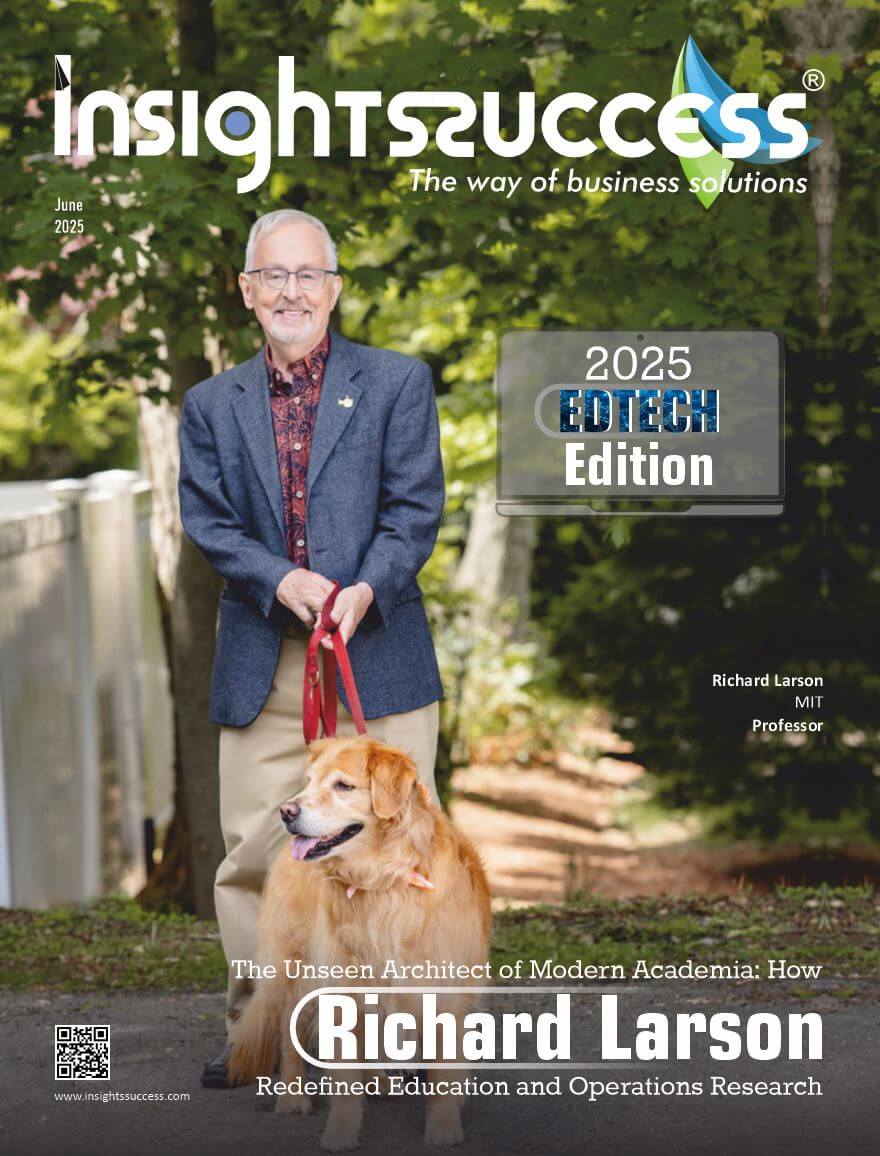
2025 EdTech Edition
2025 EdTech Edition Richard Larson, a pioneering force in education and operations research, redefined interdisciplinary learning and institutional innovation. Through five decades at MIT, he championed mentorship, global equity in STEM, and the integration of research with societal impact—leaving a lasting imprint on students, academia, and the future of education. Quick highlights Quick reads