





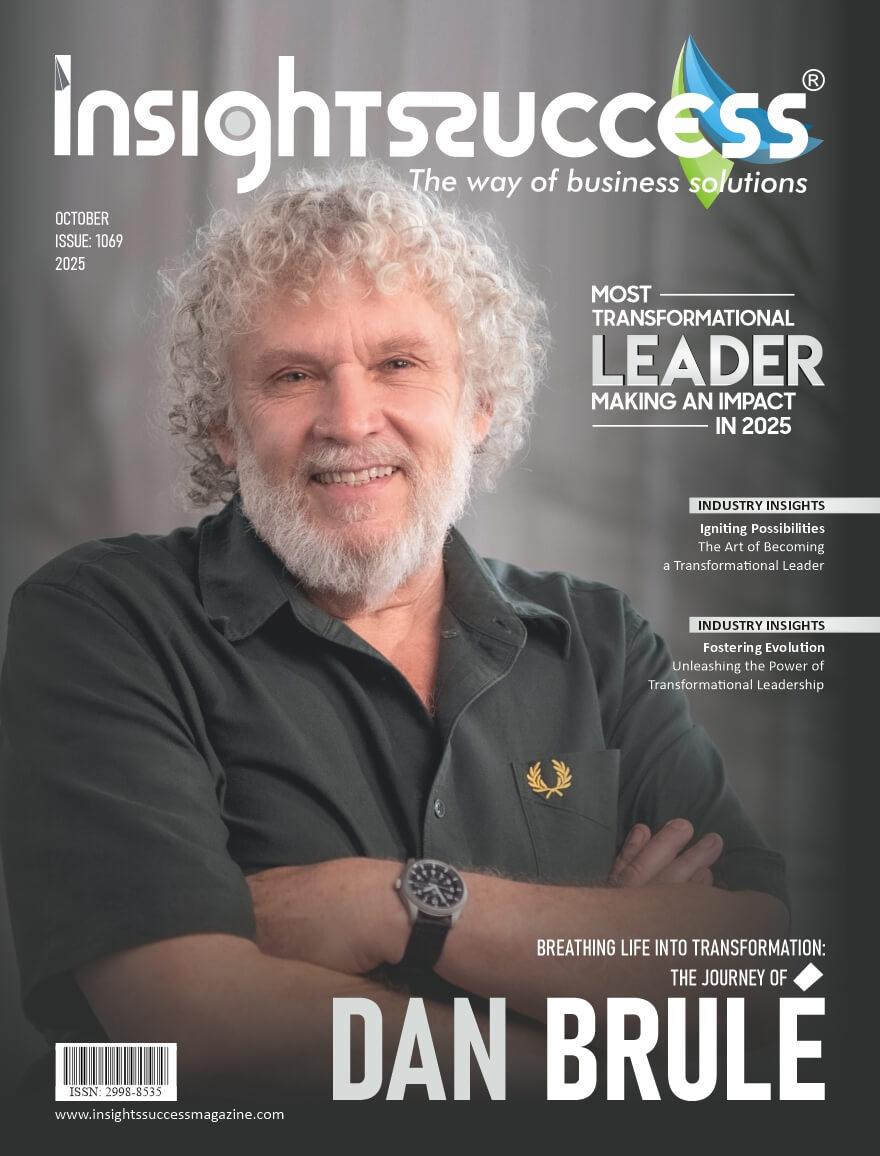
Most Transformational Leader Making An Impact In 2025
Most Transformational Leader Making An Impact In 2025 Dan Brulé, a Vietnam-era U.S. Navy medic, transformed his mission from saving lives to inspiring global transformation through breathwork. Integrating Eastern and Western practices, he trains, teaches, and guides thousands worldwide, demonstrating that conscious breathing fosters physical healing, emotional growth, spiritual awakening, and holistic well-being, making the simplest act profoundly transformative. Digital Link Quick highlights Quick reads

خلال الفترة من 13 إلى 17 أكتوبر 2025 في مركز دبي التجاري العالمي
OpenAI , G42 , and Microsoft are leading pivotal discussions on building AI-powered societies at GITEX Global 2025 . The 45th edition of GITEX Global brings together the world’s leading technology and artificial intelligence experts to discuss and develop strategies for the next phase of the transformation towards AI-powered national societies and enhance their readiness for the digital future. United Arab Emirates, Dubai, October 11, 2025 : GITEX Global 2025, the world’s largest technology and artificial intelligence event, will take place from October 13-17 at the Dubai World Trade Centre, at a pivotal moment as the world shifts from piecemeal AI adoption to comprehensive national AI strategies, where computing power, data, institutional readiness and governance are integrated to drive economic and societal transformation . With global attention focused on the rise of “AI nations,” OpenAI CEO Sam Altman is making his highly anticipated debut at GITEX Global, where he will participate alongside G42 Group CEO Peng Xiao in a prominent virtual discussion entitled ” From Early Adoption to Native AI Societies: Envisioning the New Era of Intelligence.” The dialogue brings together two of the world’s most influential leaders in the evolution of artificial intelligence to provide pioneering insights on moving from the experimental phase to full integration of AI, and laying the foundations for building “AI native” communities. The GITEX and G42 AI Native Communities program also expands the discussion to include alliances and strategic structures . Senior executives from Core42 and the US-UAE Business Council will participate in the sessions to highlight the 5GW UAE-US AI Park project , the largest AI infrastructure outside the United States . The discussions will also cover smart infrastructure and the future global intelligence network, with the participation of leaders from G42, OpenAI, Microsoft, Cisco, Oracle, Khazna Data Center, and Cerebras. The focus then shifts to real-world applications, with the leadership team from the Abu Dhabi Government Services Platform “TAMM” – Department of Government Empowerment, along with PreSight, Core42, OpenAI, Inception, AIQ, and Mohamed Bin Zayed University of Artificial Intelligence, showcasing how governments, industries, and educational institutions are implementing AI on a large scale . Power Agenda: The Geopolitics of Artificial Intelligence and its Economic Impact The GITEX Global 2025 conference program offers the largest gathering of its kind, bringing together ministers, policymakers, CEOs, founders, and investors from more than 180 countries, in a series of summits addressing geopolitics and sovereignty in the field of artificial intelligence, the prospects of quantum computing, AI applications across sectors, investment priorities, and cyber resilience in the age of artificial intelligence. This momentum is based on a massive showcase platform that includes more than 6,800 technology companies, 2,000 startups, and more than 40 billion-dollar companies, along with 1,200 investors managing assets exceeding US$ 1.1 trillion, making the discussions on the platforms highly influential on future strategies, business transformations, alliances, and economic forces that are reshaping the global technology industry . Ekaterina Zaharieva, the European Union Commissioner for Startups, Research and Innovation, will open the sessions by discussing Europe’s quest to transform its deep-tech dominance into a strategic economic powerhouse, while His Excellency Abdullah bin Touq Al Marri, the UAE Minister of Economy and Tourism, will address how to readjust economic strategies in light of the shift towards artificial intelligence . The high-level discussions continue with the participation of His Excellency Omar Sultan Al Olama, UAE Minister of State for Artificial Intelligence, Digital Economy and Remote Work Applications, and His Excellency Evan Solomon, Canada’s Minister of Artificial Intelligence and Digital Innovation – the country’s first Minister of Artificial Intelligence – through a session entitled “ Superintelligence Cycle ”. During the session, leaders will discuss how countries can leverage artificial intelligence as a tool to enhance their resilience to economic fluctuations and solidify their position in global digital leadership . Directing capital flows towards national leadership With UBS investment bank estimating that funding for artificial intelligence projects will reach $ 375 billion in 2025, pivotal questions arise about the geopolitical influence of these investments . In a keynote session at GITEX Global 2025, Victor Gao, President of the China Energy Security Institute and a leading expert on international affairs, will meet with Dr. Jörg Goschen, CEO of KfW Capital , Europe’s largest state-backed venture capital fund with € 2.5 billion in assets, for an in-depth discussion on the new economic geography of investment and how capital is being used as a tool of technological and strategic power . At the national level, Naeema Al Falasi, Senior Vice President of AI Strategy and Transformation at Mubadala, Abu Dhabi’s sovereign wealth fund which manages a portfolio exceeding US$ 302 billion , shares strategic insights on integrating AI and machine learning technologies into vital sectors, thereby enhancing the country’s competitiveness and leadership in the global digital economy . The tech blueprint for major corporations – from industrial AI to chip strategies McKinsey reports that 92 % of companies will accelerate their investments in artificial intelligence during 2025, increasing the pressure on organizations to achieve tangible business value through AI . In this context, Peter Quirty, Chief Technology Officer and Chief Strategy Officer at Siemens, provides a comprehensive vision on how to transform the complexities of industrial artificial intelligence into a real competitive advantage . On the other hand, Zulfi Alam, Executive Vice President of Quantum Affairs at Microsoft (USA), shifts the discussion towards human capital, explaining how the academic, governmental and corporate sectors should cooperate to build a workforce qualified for the quantum computing era. Wassim Charbaji, President of Qualcomm for the Middle East and Africa and Senior Vice President of Government Affairs for Europe, the Middle East and Africa, represents the chipmakers’ technology group, offering new insights on achieving economic prosperity through the alignment of electronic chip strategies and artificial intelligence . Ana Paola Assis, Senior Vice President , Chairman and General Manager for Europe, the Middle East, Africa and Emerging Markets at IBM, reveals a multi-dimensional vision of the future of business and governance in the era of

Powering Tomorrow: The Unseen Advantages of Smart Home Energy
For too long, our relationship with electricity at home has been passive. We flip a switch, plug in a charger, or turn on the AC without giving much thought to where that power comes from or what it costs us in the bigger picture. The grid has always just been there—a silent partner keeping everything running in the background. But the world is changing, and so is our role in it. The grid we rely on is older, more stressed, and less reliable than ever. Add in extreme weather, rising costs, and the demands of smart devices and electric vehicles, and suddenly, the old model feels outdated. Today, the story around home energy looks very different. Homeowners aren’t just flipping switches and paying bills anymore—they’re taking a real role in shaping their own energy future. And it’s not happening by accident. Smarter, connected systems are giving people tools that go way beyond simple backup power. Suddenly, you’re not just keeping the lights on—you’re in control. You decide how your energy is used, stored, and even shared. That shift means more independence, lower bills, and a lifestyle that feels far more in tune with both the economy we live in and the planet we depend on. The first step in this journey is understanding the potential of a modern energy ecosystem—something that systems like the OCEAN Pro Solar battery storage are designed to deliver. Financial and environmental benefits of intelligent systems The most apparent advantage of a smart home energy system is financial. Electricity bills are one of those costs that creep upward every year. A well-designed solar-plus-storage setup changes that story. By capturing free energy from the sun and storing it for later, you cut your reliance on the grid. That means less exposure to peak-hour pricing spikes and, in many cases, a significant reduction in your monthly bill. But that’s only part of it. In the U.S., for example, homeowners can take advantage of a 30% federal tax credit on storage systems and solar power for your home, plus state-level rebates, exemptions, or incentives. These programs can make the upfront investment much more manageable, sometimes cutting payback periods to just a few years. Instead of thinking about it as a sunk cost, more families are beginning to see it as an investment that delivers real returns. Then there are the environmental benefits, which are harder to put a dollar value on but just as important. By generating and consuming your own clean energy, you’re reducing your carbon footprint every single day. For families who care about sustainability, it’s a tangible way to live out their values without giving up comfort or convenience. In fact, it often feels like an upgrade: your home becomes greener, smarter, and more future-ready. This isn’t just about installing a product—it’s about embracing a lifestyle change that blends financial savvy with environmental responsibility. Key features of an advanced home battery If solar panels are the muscles of a smart home energy system, the battery is the brain and heart rolled into one. A modern home battery does far more than sit quietly in the garage waiting for a blackout. It’s the centerpiece of an intelligent energy management system. So, what should you look for in a home battery? High power output. It’s one thing to keep lights on, but a truly advanced system can run multiple appliances at once—air conditioning, fridges, washing machines, even EV chargers. Products like the EcoFlow DELTA Pro deliver strong continuous power output, making sure your home runs smoothly without compromise. You only need a modest setup today. But what about tomorrow? A growing family, a bigger home, or new energy-hungry appliances might shift your needs. A scalable system lets you start small and add more capacity over time, so you’re never locked into what you chose on day one. Multiple charging sources. The sun isn’t always shining. That’s why it’s essential for a system to be able to draw power not just from solar panels, but also from the grid or even a generator. Flexibility means reliability. Smarts built in. This is where things get exciting. The latest systems use AI to learn your energy usage habits. They can automatically prioritize when to store, when to use, and when to feed power back to the grid. And with easy-to-use mobile apps, you can monitor everything in real time from anywhere. Durability and safety. At the end of the day, a battery needs to be dependable. Certifications, long cycle lives, and reliable warranties are must-haves. A good solar battery is built not just for convenience, but for long-term peace of mind. The combination of these features turns a simple “backup battery” into something much more powerful: the command center of your home’s energy future. How eco-friendly power becomes a profit center One of the most exciting aspects of smart energy systems is one that most people don’t expect: they can actually make you money. Here’s how it works. More and more utilities are adopting something called Virtual Power Plants (VPPs). When you’re part of a VPP, your system can send stored energy back to the grid during times of high demand. It’s like renting out your battery’s spare capacity to the utility when they need it most. For you, that means payments or credits on your account—turning your energy system into a mini business that earns while you sleep. For the grid, it means better stability and fewer fossil-fuel power plants kicking in to handle demand. It’s a win-win that transforms sustainable living from “the right thing to do” into a smart financial strategy as well. Imagine looking at your electricity bill and seeing not just savings, but earnings. That’s not some futuristic idea—it’s already happening in communities worldwide. Real-world examples of home energy in action The shift to more brilliant, more independent home energy is not a distant vision—it’s happening right now, in very practical ways. Families in hurricane-prone areas are installing solar-plus-storage systems so they can ride out
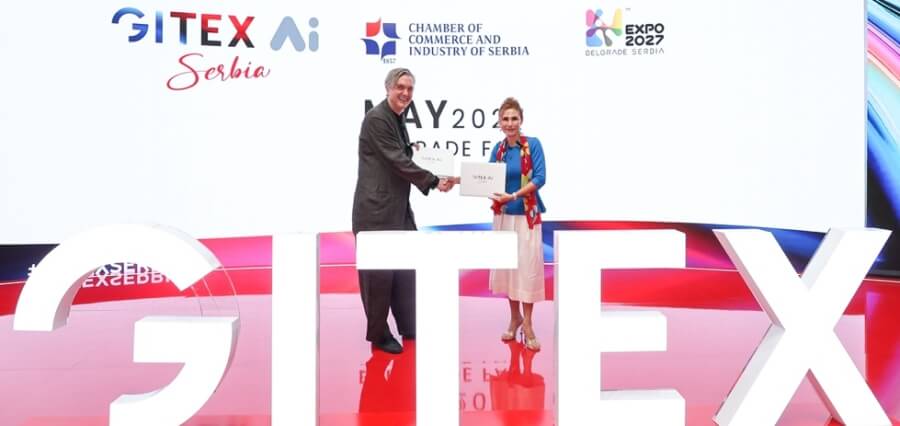
اقتصاد التقنية العالمي يدشّن «جيتكس أي آي صربيا» مع تسارع طموحات التقنية والذكاء الاصطناعي في جنوب شرق أوروبا
GITEX AI Serbia will take place at the Belgrade Fairgrounds on May 26-27, 2027 — organized by the Dubai World Trade Centre (DWTC) and Kawn International in partnership with the Chamber of Commerce and Industry of Serbia . The first GITEX event in Southeast Europe will take place in conjunction with Expo 2027 Belgrade — the first global trade fair to be hosted by Serbia. The new event aims to expand cooperation, enhance competitiveness, stimulate investment, drive innovation, and open up access to Southeast European markets for players in the global digital economy. Dubai, UAE — October 13, 2025 : As Southeast European countries pursue ambitious digital transformation frameworks, inspired by the transformative potential of emerging technologies, a new dawn is breaking for this dynamic corridor connecting European , Asian , and Middle Eastern markets . In a pivotal move with far-reaching implications for the region’s digital transformation trajectories, GITEX — the world’s largest technology and AI events network — officially launched in Southeast Europe on Monday. Organized by the Dubai World Trade Centre and Kawn International , and in strategic partnership with the Chamber of Commerce and Industry of Serbia , GITEX AI Serbia will take place at the Belgrade Exhibition Centre on May 26-27, 2027. As the official technology event of Expo 2027 Belgrade , GITEX AI Serbia aims to promote Southeast Europe as a powerful hub connecting emerging regional digital economies with the frontiers of global innovation, technology, and investment. Marko Chadj , President of the Chamber of Commerce and Industry of Serbia, said : “Holding GITEX AI Serbia in conjunction with Expo 2027 represents an unprecedented opportunity to showcase our country’s digital transformation journey on the global stage, uniting regional innovation with an international community of investors, partners, and visionaries. Combined with Expo and the expected visitor numbers for both events, we hope to achieve a much better positioning for our country in economic and business circles. We aim to impress potential investors with the capabilities of our education system and present Serbia as a country brimming with significant technological opportunities.” Trixie Le Mirmand , Executive Vice President of Dubai World Trade Centre and CEO of Kawn International , the global organizer of GITEX , said : “ GITEX AI Serbia embodies our vision of enabling bold innovation that shapes the future on every continent and building cross-border collaboration—crucial in the decade of AI . Strategically hosting the first edition of GITEX during Expo 2027 Belgrade is a smart move to unlock the soft power of technology and AI, foster collaboration between nations, and openly participate in creating a new global paradigm. By connecting this vibrant region with the world’s most influential technology leaders, we will inspire partnerships that unlock investment, talent development, and transformative growth across borders and technology-intensive sectors.” Supporting ICT exports and the AI development agenda in Serbia Serbia has emerged as a leader in digital transformation in Southeast Europe, demonstrating its prominence through a thriving ICT sector , advanced e-government services, biotechnology ecosystems, and a national artificial intelligence strategy. The ICT sector contributes 10% to the GDP and achieved record exports of US$ 4.31 billion in 2024 — a tenfold increase in 12 years—and currently employs around 110,000 specialists, with this number expected to reach 140,000 by 2027 , the year in which the Ministry of Information and Communications targets exports of US$ 11.7 billion (€10 billion) . In addition, the Serbian government announced last year an $ 82.1 million (€70 million) investment plan for AI development through 2027 —aligning with its vision to foster leadership in AI , agricultural technology , sustainability , and the circular economy . This followed the establishment of the first AI research institute in Southeast Europe , further solidifying Serbia’s position as a regional benchmark for innovation, research, and development—a position that GITEX AI Serbia will further enhance and elevate, both for the country and the region as a whole. In line with Expo 2027 Belgrade’s theme , “ Playing for Humanity: Sport and Music for All, ” Serbia’s National Innovation Journey reflects the values of creativity, unity, and human connection that will characterize this highly anticipated event. By blending technological advancement with cultural expression, Serbia’s digital journey exemplifies how innovation can harmonize with humanity—a vision that GITEX AI Serbia is poised to promote. Southeast Europe: Growing momentum as a thriving digital hub Southeast Europe is undergoing a remarkable digital transformation driven by robust government reform , increased investment in information and communication technologies (ICTs), and active private sector innovation . Digital public services, e-government, and the adoption of financial technologies are expanding rapidly, with emerging technology industries poised for explosive growth. The regional data center market is projected to grow by approximately 50% in the coming years (according to JLL), highlighting the accelerated development of digital infrastructure in the region and its emergence as a pivotal technology corridor connecting Europe , Asia , and the Middle East . Bold partnerships inspire transformative growth GITEX continues to provide unparalleled access to new markets , capital , talent , partnerships and opportunities — underpinned by its rapid international expansion. In just three years , GITEX has built the largest global network of technology events , with editions held across 14 cities and countries . Leveraging its global network connecting the public and private sectors in the digital economy, GITEX AI Serbia will bring together technology companies, thought leaders, policymakers, SMEs, startups, and venture capital investors from around the world in Belgrade . Its program will prioritize expanding collaboration, enhancing competitiveness, stimulating foreign direct investment , and opening access to national industries and Southeast European markets—inspired by a shared vision to build an inclusive digital future driven by innovation and opportunity. GITEX AI Serbia was announced on Monday during the opening day of GITEX Global 2025 — the world’s largest exhibition for technology, artificial intelligence and startups — where the Chamber of Commerce and Industry of Serbia , as the partner for the future digital economy ,

جيتكس جلوبال 2025 يفتتح نسخته الاستثنائية الـ 45: توحيد صنّاع السياسات وروّاد الذكاء الاصطناعي والشركات لبناء اقتصاد الذكاء
Record numbers attend the pivotal 45th edition with the participation of +6,800 exhibitors , 2,000 startups and technology delegations from 180 countries Ministers and investors from the UAE, Europe, and Asia discuss the artificial intelligence economy, geopolitics, and investment prospects in startups. Major announcements via generative AI, connected cloud, and next-generation enterprise systems herald the era of integrated AI. Dubai, United Arab Emirates — October 13, 2025 : GITEX Global 2025 , the world’s largest technology and artificial intelligence event, opened today with packed halls and the largest gathering of global government leaders, technology companies, startups, investors and business executives, marking 45 years of its journey at the Dubai World Trade Centre . The event will take place from October 13-17 , 2025 , bringing together more than 6,800 exhibitors , 2,000 startups , 1,200 investors , and delegations from more than 180 countries . Its impact is not limited to scale; it extends globally. This year’s edition reflects the accelerating convergence of technology, economic strategy, and geopolitical ambition—establishing Dubai as a unifying force where governments, industry leaders, and innovators collaborate to address the challenges and opportunities of building smart economies and societies . Global ministerial cooperation on the economic and political impact of artificial intelligence The keynote discussions on the main stage were opened by His Excellency Abdullah bin Touq Al Marri , UAE Minister of Economy and Tourism, who spoke on the topic: “The Race Beyond Innovation: Artificial Intelligence, Geopolitics, and the Resetting of the Global Economy.” He emphasized that innovation and economic diversification remain at the heart of the UAE’s national strategy. His Excellency Abdullah bin Touq Al Marri stated : “Thanks to the forward-looking vision of its wise leadership, the UAE is not merely participating in the global race for innovation, but is actively shaping and solidifying its foundations by building a resilient, future-oriented economic model based on knowledge and advanced technology. This strengthens the UAE’s position at the forefront of the global economic landscape.” Turning to the global impact of deep technologies, Ekaterina Zaharieva , Commissioner for Startups, Research and Innovation at the European Commission , joined Dr. Najwa Arraj , CEO of the Technology Innovation Institute (the applied research arm of the UAE Advanced Technology Research Council), to explore how deep technology ecosystems can drive change at the national level. Ekaterina Zaharieva, Commissioner for Startups, Research and Innovation at the European Commission, said : “The EU and the UAE share a vision to drive innovation for the benefit of our citizens. We agree on the importance of startups and scaling companies to our economies. This journey begins at GITEX 2025.” The “Super Intelligence Cycle” session brought together His Excellency Omar Sultan Al Olama , UAE Minister of State for Artificial Intelligence, Digital Economy and Remote Work Applications; His Excellency Evan Solomon , Canada’s Minister of Artificial Intelligence and Digital Innovation; and Amandeep Gill , UN Envoy for Digital Technologies, to discuss how artificial intelligence is becoming the defining economic infrastructure of this century . The Honourable Evan Solomon, Minister of Artificial Intelligence and Digital Innovation in the Government of Canada: “GITEX is a very pivotal example of launching entrepreneurs at speeds we have never seen before — and we must uphold our values and build together. It is great to meet people and companies, and to see our deep partnership with the UAE strengthened as we share this message: transforming AI from a trusted technology to a technology designed to serve everyone.” As the European Union launched its $ 1.1 billion Apply AI strategy to accelerate AI adoption in critical sectors, and the UAE oversaw $ 3.5 billion in AI investments under the Abu Dhabi Digital Government Strategy 2025–2027 , government leaders from both regions discussed the dynamics of strategic AI autonomy . The discussion included Her Excellency Ksenia Klemfer, Minister of Digital Transformation of Slovenia; His Excellency Dr. Raław Rożyński, Deputy Minister of Digital Affairs of Poland; His Excellency Hamad Obaid Al Mansoori, Director General of Digital Dubai ; and Stefan Wacke , Director of EISMEA at the European Innovation Council (Belgium), who addressed how AI factories have become central to industrial and national strategies. Andrew Feldman , CEO of Cerebras —the unicorn company that launched the world’s largest AI training supercomputer in partnership with G42 — spoke about his company achieving the fastest AI inference speeds , potentially redefining high-performance computing. “We built the largest chip in the history of computing, about the size of a dinner plate,” Feldman said. “By increasing the chip size, we were able to store more information on the chip and transfer less. This means less power consumption and faster delivery of results.” Global companies reveal the future of cloud, connectivity, and artificial intelligence Visitors to the exhibition witnessed a wave of groundbreaking technologies from leading global companies. E& Communications presented demonstrations that drew large crowds, showcasing next-generation connectivity and intelligent robotics. Among the highlights were the Mercedes-Benz VISION EQXX concept car, which redefines future mobility with a record-breaking range exceeding 1,000 km on a single electric charge, and XPENG ‘s latest eVTOL aircraft . Oracle also showcased its unique distributed cloud concept that enables organizations to accelerate AI adoption, and gave visitors an interactive experience that creates a customizable, realistic video avatar in seconds via Oracle Generative AI — heralding a new era of highly personalized enterprise tools. At GITEX Global, BlackBerry launched a leading cybersecurity office suite , while Amazon Web Services (AWS) and HCL Software unveiled advanced solutions for cloud modernization and enterprise-level AI deployment. The day was also marked by an unprecedented level of international participation, with Brazil joining as the country’s partner with its largest delegation ever, alongside national pavilions from Canada , Spain , Turkey , Chile and Ecuador , and broader representation from Europe , Central Asia , Latin America , Africa and the Levant . What’s next? AI-born societies take center stage. The second day of GITEX Global continues with major announcements and insightful discussions. Sam Altman
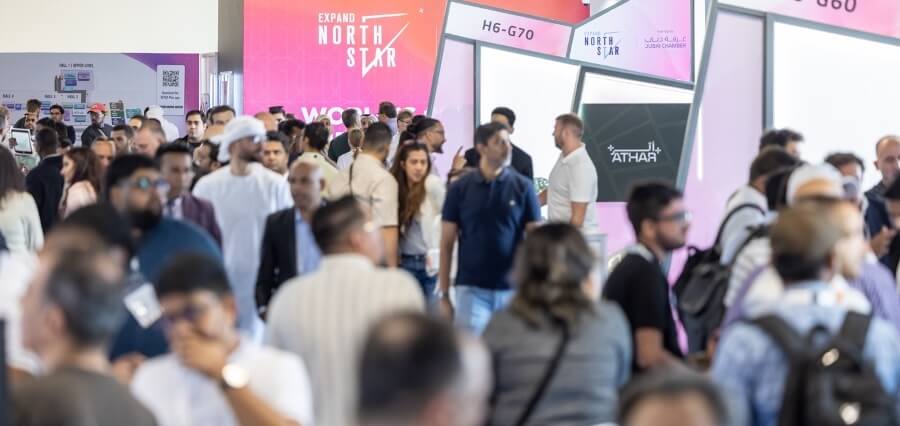
إكسباند نورث ستار ضمن جيتكس جلوبال تسهم في توسيع نطاق شركات ناشئة من 180 دولة
جيتكس جلوبال | إكسباند نورث ستار انسجامًا مع المكانة الدولية لفعالية إكسباند نورث ستار على اعتباره أكبر الفعاليات العالمية للمستثمرين وللشركات الناشئة ضمن جيتكس جلوبال، استقطبت نسخة الذكرى العاشرة أكثر من 2,000 شركة ناشئة و1,200 مستثمر من 180 دولة، من ضمنها البرازيل كشريك دولي، بالإضافة إلى مشاركة جديدة من الإكوادور وتشيلي. وفي ظل وصول حجم الاستثمارات العالمية في رأس المال الاستثماري إلى 368 مليار دولار أمريكي في عام 2024، تتعاظم أهمية الدور الذي تؤديه الفعالية في دعم توسّع المنظومة الرقمية حول العالم. يمتد برنامج إكسباند نورث ستار على مدى أربعة أيام بين 12 و15 أكتوبر، وقد صُمّم لرفع مستويات التمويل والتوسّع وتدفّق الصفقات إلى آفاق جديدة، بما يحفّز الشراكات ويقود نموًا رقميًا شاملًا في اقتصادات الذكاء الاصطناعي الناشئة. بناء جسور مع البرازيل وما بعدها بصفتها شريك الدولة الرسمي الأول في تاريخ الفعالية، تحضر البرازيل بقوة مع أكثر من 50 شركة ناشئة من بين أكثر الشركات حيوية في البلاد، التي تعرض حلولها خلال إكسباند نورث ستار 2025. وأكدت تاتيانا رييرا، المديرة التنفيذية لمكتب أبيكس برازيل في دبي، وهي وكالة البرازيل الوطنية للترويج للتجارة والاستثمار، في كلمتها الافتتاحية يوم 12 أكتوبر، على الدور المحوري لدولة الإمارات في رعاية الابتكار وبناء الشراكات الدولية. وقالت رييرا: “اليوم تُعدّ البرازيل موطنًا لأحد أكبر النُّظُم البيئية للشركات الناشئة ورأس المال الاستثماري وحقوق الملكية الخاصة في العالم، مع أكثر من 20,000 شركة ناشئة في البلاد. وجود أبيكس برازيل في إكسباند نورث ستار يهدف إلى بناء جسور بين البرازيل والعالم، وخاصة هنا في دبي. وتُعد غرفة دبي من أبرز شركائنا، ولهذا يكتسب هذا الحدث أهمية خاصة بالنسبة لنا. الأمر لا يقتصر على عرض الشركات الناشئة، بل يشمل أيضًا التشارُك في صناعة المستقبل بين البرازيل والإمارات، وبين البرازيل وبقية العالم — وهذه هي أجندتنا في إكسباند نورث ستار.” عارضون جدد وأسواق جديدة منذ انطلاق نسخته الأولى في 2016، واصل إكسباند نورث ستار توسيع حضوره وسمعته عالميًا، فاستقطب المؤسسين والمستثمرين وروّاد الأعمال والتنفيذيين في قطاع الأعمال والشركاء الاستراتيجيين من القطاعين العام والخاص من مختلف أنحاء العالم، بما في ذلك دول تشارك للمرة الأولى. ومن بين العارضين الجدد الإكوادور. وقد شدّد فيليبي ريبادينيرا، سفير الإكوادور لدى دولة الإمارات العربية المتحدة، خلال وجوده في إكسباند نورث ستار على أهمية حضور بلاده ضمن جيتكس، قائلًا: “نفخر بعرض أكثر من 22 شركة أكوادورية، من ضمنها 20 شركة ناشئة، تقدّم حلولًا تمتد من الخدمات المصرفية المعزَّزة بالذكاء الاصطناعي إلى التقنيات الطبية المتقدمة. إنّ دبي والإمارات تستثمران بقوة لتكونا مركزًا عالميًا للبيانات والذكاء الاصطناعي، ونرى فرصة هائلة للبناء على هذا الزخم. وفي فبراير، خلال القمة العالمية للحكومات، نتوقع توقيع مذكرة مهمة لإنشاء ممر لوجستي للتكنولوجيا — خطوة إضافية نحو شراكة أعمق تحقق المكسب للطرفين بين الإكوادور والإمارات“. كما تشارك تشيلي للمرة الأولى في إكسباند نورث ستار عبر 12 شركة خدمات مبتكرة تغطي قطاعات متنوعة تشمل قطاع المناجم والتعليم، والتمويل، والإنشاءات، والترفيه. وإلى جانب ذلك، ستُسهم قمة الابتكار بين تشيلي ودبي التي سيستضيفها الجناح التشيلي في تعزيز حضور تشيلي في دولة الإمارات ودول الشرق الأوسط الأخرى، دعمًا لمسار تنويع الصادرات التشيليّة. توسيع أسواق رأس المال إضافة إلى فتح أبواب أسواق جديدة، تُعدّ الفعالية جاذبًا لكبار المستثمرين العالميين في رأس المال الاستثماري والملكية الخاصة الساعين لاكتشاف الشركات ال”يونيكورن” التالية. ويحضر جيتكس جلوبال وإكسباند نورث ستار 1,200 مستثمر تتجاوز قيمة الأصول المُدارة لديهم 1.1 تريليون دولار أمريكي — في انعكاس لافت للأثر الاقتصادي والنفوذ العالمي للحدثين. وأشاد الدكتور يورغ غوشين، الرئيس التنفيذي لـ كي إف دبليو كابيتال، بتركيز دولة الإمارات على الابتكار، معتبرًا إيّاها شريكًا طبيعيًا للراغبين في توسيع الفرص انطلاقًا من الأسواق الأوروبية. وقال خلال جلسة حوارية بعنوان “تعزيز نمو رأس المال الاستثماري والابتكار بالشراكة مع صناديق الثروة السيادية”: “لا يقتصر هدفنا على تمويل الصناديق الأوروبية والألمانية والشركات في مراحلها الآخيرة فحسب، بل نسعى أيضًا إلى جعل سوق رأس المال الاستثماري أكثر إتاحة — مزيد من الشفافية، ومزيد من خيارات السوق الثانوية، وتقليل البيروقراطية. فعندما يرى المستثمرون الأداء وتتوافر مسارات خروج واضحة، يضخّون استثماراتهم. وهنا في الإمارات، مع تعطّشها للتكنولوجيا ورأس المال العالمي، نرى إمكانات حقيقية لتسريع الاستثمار المشترك في الابتكار الأوروبي عالي الجودة”. شراكات عالمية من أجل النمو وقّع مركز دبي التجاري العالمي، الجهة المنظمة لفعاليات جيتكس جلوبال وإكسباند نورث ستار، حزمة من الشراكات مع عدد من الجهات الدولية خلال اليوم الأول من الفعالية في دبي هاربور. وتشمل هذه الشراكات مختلف الدول الرئيسية، ومن بينها تفاهمات مع بريسَيت و28 ديجيتال وأبيكس برازيل وغرفة التجارة والصناعة في صربيا. وتُرسِّخ هذه الشراكات مكانة مركز دبي التجاري العالمي كمنصة عالمية شاملة انطلق منها أكثر من 8,000 مؤسس لتوسيع أعمالهم على مدى السنوات. ويعكس جيتكس جلوبال وإكسباند نورث ستار طموح حكومة دبي في رعاية الابتكار واستقطاب المواهب العالمية، مع التطلّع إلى توليد 30,000 وظيفة جديدة بحلول 2030 وإيجاد ما لا يقل عن 10 شركات يونيكورن — أي شركات يتجاوز تقييمها مليار دولار أمريكي — بحلول 2031. لمزيد من المعلومات، يُرجى زيارة: www.expandnorthstar.com -انتهى- تابع جيتكس جلوبال على وسائل التواصل الاجتماعي: Youtube | LinkedIn | X | Instagram | Facebook #GITEXGLOBAL نبذة عن جيتكس جلوبال: يعُد جيتكس جلوبال أكبر حدث تكنولوجي في العالم في مجالي التقنية والذكاء الاصطناعي، ويحتفل بنسخته الـ 45 في عام .2025 ينُظَّم الحدث من قبل مركز دبي التجاري العالمي (DWTC)، ويقام في الفترة من 13 إلى 17 أكتوبر في المركز، بمشاركة أكثر من 6,800 عارض، من ضمنهم 2,000 شركة ناشئة من 180 دولة، إلى جانب 1,200 مستثمر يديرون أصولًا تفوق 1.1 تريليون دولار أمريكي، إضافة إلى أكثر من 40 شركة يونيكورن. وفي عام 2026، ينتقل جيتكس جلوبال دبي إلى مقره الجديد في مركز دبي للمعارض – إكسبو سيتي، ليكشف عن صيغة جديدة بالكامل تبدأ في 7 ديسمبر مع قمة رفيعة المستوى، تليها المعرض التفاعلي من 8 إلى 11 ديسمبر. وبصفته العلامة التجارية لأكبر فعالية تكنولوجية في العالم، يمتد اليوم جيتكس إلى 14 مدينة عبر قارات متعددة، ليدعم الحوارات التي ترسم ملامح مستقبل القطاعات الحيوية عالمياً. لمزيد من المعلومات: www.gitex.com Disclaimer – This article is a work of original content created for public relations and informational purposes only. It may be published across multiple digital platforms with the full knowledge and consent of the author/publisher. All images, logos, and referenced names are the property of their respective owners and used here solely for illustrative or informational purposes. Unauthorized reproduction, distribution, or modification of this article without prior written permission from the original publisher is strictly prohibited. Any resemblance
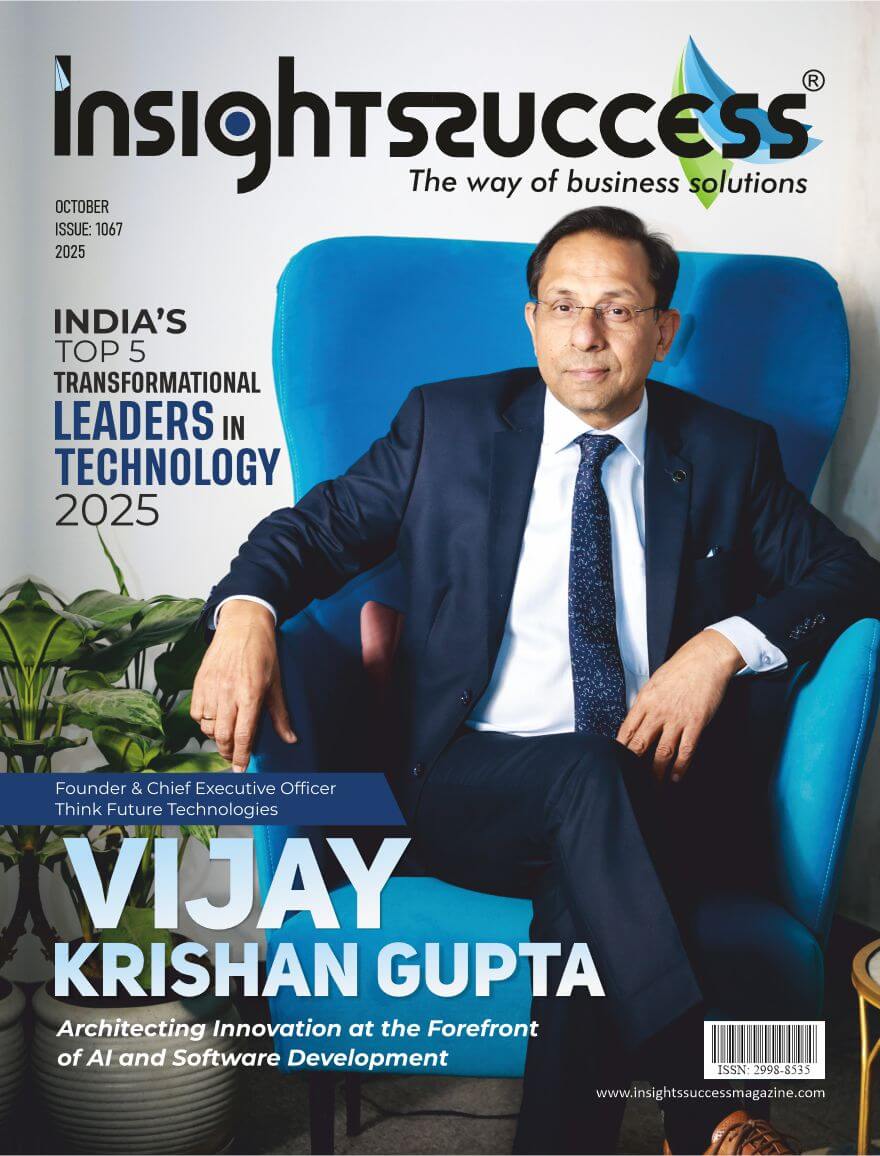
India’s Top 5 Transformational Leaders in Technology 2025
India’s Top 5 Transformational Leaders in Technology 2025 In this edition, we celebrate the leaders revolutionizing technology in India. These visionaries harness AI, quantum computing, and blockchain to fuel groundbreaking innovations and propel digital ecosystems forward. With fearless ingenuity and a passion for excellence, they are forging a smarter, more connected future for India and the world. Quick highlights Quick reads

How Emerging Tech Visionaries India Are Shaping the Future of Business
Innovating Future Markets India is standing on the edge of a technological renaissance. Across the nation, a new generation of innovators is reimagining what’s possible by combining advanced computing, digital infrastructure, and local creativity. These Emerging Tech Visionaries India are not only transforming the way the companies operate, they are also transforming the enterprise itself, establishing a model that incorporates technology, social influence and sustainable development. This article discusses the role of the technology leaders in India in creating a movement toward innovation as opposed to outsourcing to fuel new start-ups, digital infrastructure, and inclusive growth to create a smarter, more connected future. From Outsourcing to Innovation Powerhouse For years, India was known as the world’s outsourcing center, an essential partner for global IT services. That story has now evolved. The technology industry of the nation has emerged as a dynamic center of innovation, entrepreneurship, and digital revolution. The modern-day visionaries do not merely serve to sustain systems on behalf of other people; they are the creators of new products, platforms, and ideas that drive markets around the globe. This transformation is now led by automation and data-driven tools. The Cloud and Computing Revolution At the heart of the change lies the power of cloud computing and advanced analytics, two key forces shaping India’s digital future. Cloud services enable start-ups to scale without big investments and enable them to introduce products quicker, enhance performance and access customers globally. The innovation of robotics, interconnected devices, and real-time data processing is assisting Indian businesses in transcending traditional boundaries. Factories are more efficient, cities are managing services in a better way, and farms are utilizing technology in order to enhance productivity. From the fields of Punjab to the smart grids of Bengaluru, digital tools are closing gaps and delivering real results. The Emerging Tech Visionaries India understand that digital intelligence drives progress. Innovation with Indian DNA What makes India’s new generation of technologists stand out is their focus on contextual innovation. With the resourceful and innovative jugaad mentality of the country, they create technology that addresses practical rather than theoretical concerns. Their inventions are usually localized, but have scaled globally to fulfill different needs, including low-cost medical devices or green energy systems. This attitude plays well in the increasingly collaborative culture in India. There is collaboration between startups, big corporations, as well as universities like never before. Alliances between old-world and new-world digital innovators are leading to new concepts in agriculture, logistics, education, and others. The outcome is an inclusive, flexible, and person-centred innovation movement. The digital public infrastructure of India has altered the game as well. Platforms such as Aadhaar, UPI, and ONDC show how open, scalable systems can serve both national and international users. These models are not only boosting the economy of India but also giving other nations an example of how the Emerging Tech Visionaries India are setting a new global benchmark on digital growth and inclusion. Startups, Scale, and Social Impact India’s startup scene captures the spirit of a nation in motion. Innovation has become an identity of India, where there are over 100,000 startups and more than 110 unicorns. Global Capability Centers (GCCs) are the ones behind the product development of large global brands, and cloud service providers are ever-expanding their investments in the country. Outside of the large companies, there are thousands of small businesses and local entrepreneurs who are utilizing digital tools to expand their services, generate employment, and enhance livelihood. Intelligent systems now act as creative partners, helping professionals design, build, and deliver solutions faster and more efficiently. Challenges and the Road Ahead Despite this excellent advancement, there are still challenges. Modernization of old systems, data security and data transparency continue to be a challenge to most organizations. India must retain its trust, ethics, and long-term responsibility base in order to ensure its digital transformation is successful. Education and digital literacy are just as important. People across all walks of life, from students to executives, need the skills to understand and shape the technology they use. The Emerging Tech Visionaries India know that technology alone cannot drive the future. The most important thing is the way in which it is responsibly and creatively used. Since India is in the transition phase of the digital era, the emphasis should be on establishing systems that are equitable, transparent, and inclusive. Conclusion India’s technological rise is more than an economic story; it represents a social and cultural transformation. The innovators of the nation are establishing new standards of efficiency, inclusiveness, and sustainability that are global. Their work integrates a high level of technology with extensive knowledge of human needs, and they develop solutions that are helpful to the business and society. With the barriers being broken by Emerging Tech Visionaries India, it is creating a future where innovation drives the growth, everybody has the opportunity, and technology is a companion of common development. India is no longer just part of the global digital revolution; it is helping lead it with confidence, purpose, and vision. Read Also : Guiding Teams with Values, Not Just Vision

Exploring the Strategies of India Digital Transformation Leaders
Creating Business Impact In the 21st century, India’s digital revolution has become one of the strongest forces for economic, social, and technological growth. What began as an effort to improve infrastructure has turned into a nationwide movement changing how citizens, businesses, and governments connect and operate. In 2025, India Digital Transformation Leaders are not only driving business success but also reshaping the nation’s economy and society, making digital inclusion a foundation of national progress. The article focuses on how India Digital Transformation Leaders are leading innovation, customer focus, and collaboration to build sustainable businesses and create a more connected and inclusive digital future for the country. The Digital Transformation Imperative Digital transformation in India goes beyond simply using new technologies. It marks a total shift in how organizations operate, with cloud computing, data analytics, IoT, and blockchain driving the change. India’s goal of achieving a $1 trillion digital GDP by 2025 reflects its determination to build growth on three strong pillars: reliable digital infrastructure, equal access to digital and financial services, and widespread digital literacy. This growing digital ecosystem supports organizations that combine technology with inclusion. The most successful among them, the India Digital Transformation Leaders, turn digital opportunities into real business value and social progress through innovation, customer focus, and collaboration. Key Strategies of Digital Leaders Innovation as a Growth Catalyst Innovation in India does not only stop at the level of a project; it is a culture of the top companies in India. They leverage technology to streamline business and make their operations more efficient, and create new business models that revolutionize business. Other examples of the successful results of strategic innovation are companies such as Tata Consultancy Services (TCS). The process of workflow digitization and the automation of the core processes helped the company to improve its production, reduce costs, and define the culture of constant improvement. These indicators prove that operational excellence is long-term and can be created through long-term planning of technology usage. Customer-Centric Digitalization Every successful digital transformation starts with understanding the customer. India Digital Transformation Leaders focus on people, not just systems, when designing their digital strategies. Paytm, a leader in digital payments, follows this customer-first approach. By emphasizing simplicity, safety, and accessibility, Paytm made digital payments possible for millions who had never used such services before. Its local language options and partnerships with small and large businesses alike helped turn mobile payments into a nationwide habit and a tool for financial inclusion. This people-focused approach goes far beyond finance. Across retail, healthcare, and education, digital leaders are using technology to simplify everyday life and offer more personalized experiences. Data-Driven Decision Making Data now drives business success. Companies like BigBasket and Shoppers Stop use analytics and IoT to improve inventory, personalize marketing, and manage logistics more efficiently. These data-led methods help businesses reduce waste, improve service quality, and make faster, smarter decisions. The insight-driven approach of India Digital Transformation Leaders shows how data turns uncertainty into opportunity. By using accurate information and human expertise together, businesses can stay ahead of changing markets and customer needs. The Power of Partnerships Change will be successful when teamwork is in play. Indian digital leaders willingly engage with technology companies, educational institutions, and government agencies to bring new ideas and ensure that they have a mass impact. These partnerships, be it in the manufacture of the digital instruments or the association with the social programs, provide India with an extra push as far as the international digital economy is concerned. These partnerships also address a broader objective, which is to make the country digitally empowered. These organizations ensure a balanced development of communities and businesses by ensuring that the interests of both are compatible with national interests. Challenges and the Way Forward India is yet to overcome the challenge of digital transformation despite its strides. Some organizations fail to adapt due to old habits and systems. In response, India Digital Transformation Leaders invest in training, change management and lifelong learning so as to allow employees to be technology savvy. Another significant threat is cybersecurity. Trying to build the trust of the population, businesses are enhancing the security of their data and surveillance. The problem of skill gaps has also appeared to be urgent, and companies are more concerned with the process of upskilling to prepare workers for digital jobs. Simultaneously, organizations are modernizing old-fashioned systems by connecting the traditional platforms with the new online solutions to establish a smooth business. Conclusion India Digital Transformation Leaders journey is not about making a profit, but about a national transformation towards innovations and inclusiveness. Their work demonstrates how technology can empower people and make economies strong when employed with purpose and vision. These leaders have turned India into a digital excellence model by encouraging innovation, collaboration, and customer orientation. Their experience teaches the world a lot: in the event that technology is used by people and improvement, it is a real growth engine and collective prosperity. Read more : Digital Transformation as a Catalyst for Women Entrepreneurship in the Post-Pandemic Era
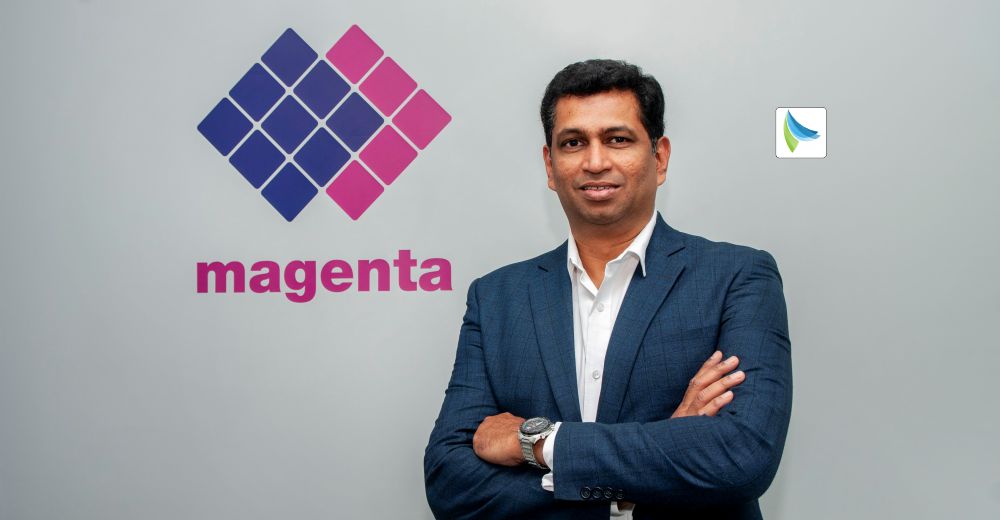
Maxson Lewis: Powering India’s EV Ecosystem with Vision and Technology
Maxson Lewis is the Founder and Chairman of Magenta Mobility, India’s largest electric vehicle cargo fleet operator. A mechanical engineer from Mumbai University and an MBA graduate from IIM Mumbai, Maxson’s career spans over two decades in the automotive, technology, and energy sectors. He began his professional journey with five years in the automotive industry, followed by 15 years at Accenture Management Consulting, where he led technology and electricity transformation projects across global markets, including Canada, Singapore, Australia, Hong Kong, the USA, and the UK. The turning point in his career came with the realization that “electricity is the new oil.” Driven by this conviction, Maxson returned to India to establish Magenta Mobility. Today, under his leadership, Magenta has evolved into a technology-driven logistics platform managing one of India’s largest EV fleets, along with advanced charging infrastructure and driver management systems. His journey from automotive to technology to energy has made the creation of Magenta a natural culmination of his expertise and vision. Let’s delve into the interview details below! How would you describe your leadership style, and how has it evolved over the years? I see leadership as a continuously evolving process. In my early years as a class representative during engineering and later as Vice President at IIM Mumbai, leadership meant leading from the front and bringing people along, even without formal authority. My real learning began at Accenture, where I worked with global CXOs and led teams of 200+ people across geographies. That experience taught me two fundamentals that I carry even today: a leader must be true to themselves and their team, and honesty, about successes as well as mistakes builds lasting trust. At Magenta, my style has further evolved. While I take responsibility for decisions, I have become far more consensus-driven. I’ve realized that great ideas can come from anywhere, and the best outcomes emerge when you respect diverse perspectives. Today, my leadership is a balance i.e., collaborative and inclusive, but firm when it matters. What has been the most transformative initiative or project you’ve led, and what impact did it create for your organization or industry? The most transformative journey for me has been building Magenta over the past eight years. I call it my “P2P journey – “Proprietor to Pyun” – leading from the top, but also rolling up my sleeves at the ground level. Coming from Accenture, where I worked with global leaders on high-impact projects, entrepreneurship was a completely different challenge. It required unlearning the corporate way and relearning how to build from scratch. That process has transformed me personally, while also shaping Magenta and, in a small way, the EV ecosystem in India. Without overstating it, I believe both Magenta and I have played a role in changing how people think about EVs in this country. Which emerging technologies do you believe will redefine the industry in the next 5–10 years, and why? Two stand out for me. First, in the EV and energy space, it’s battery technology. The way we store and consume energy is undergoing a fundamental shift. Just as mobile phones turned everyone into a “battery carrier,” EVs are evolving with higher-density batteries, smarter BMS systems, and innovative chemistries. The future lies in compact, high-capacity batteries that can store more energy, charge faster, and dispense it efficiently. That will completely redefine mobility and energy usage. Second, beyond my industry, I believe the real game-changer is Artificial Intelligence. After language, mathematics, and computing, AI is the next leap for humanity. It’s already transforming how we think, learn, and operate, and we’re only scratching the surface of its potential. From simplifying tasks to enabling entirely new ways of problem-solving, AI will fundamentally reshape industries and societies. In short: batteries will transform how we move, AI will transform how we live. What major challenges have you faced while implementing technological transformations, and how did you overcome them? In my 15 years at Accenture and the last eight years at Magenta, I’ve never seen technology itself as the challenge, it keeps evolving. I started with GW-BASIC writing my own code, and today we have AI writing code for us. The real challenge has always been adoption. Too often, people view technology defensively as a threat rather than as an enabler. We’ve seen this pattern before: computers were once feared for taking away jobs, yet they ended up creating entirely new industries and efficiencies. The same narrative is repeating today with AI. In markets like India, this challenge is sharper because technology often competes with low-cost human labour, which makes adoption slower. But the real opportunity lies in seeing technology not as a replacement, but as a multiplier, improving people, businesses, and the systems around them. That mindset shift has been, and will remain, the biggest technology challenge. How do you foster innovation and collaboration within your team, especially in a rapidly changing technological landscape? Magenta operates in a very traditional logistics industry where, even today, many operators still track vehicles by simply calling drivers. From the beginning, we set out to be different and to build a company that operates safely, smartly, and sustainably. That meant putting technology at the core. We invested early in our own telematics platform called Normic, which not only tracks vehicles but also monitors critical parameters such as battery health and temperature, enabling proactive interventions. We also developed a seamless driver management platform by integrating tools like DigiLocker long before they became mainstream, making onboarding and compliance as simple as a few clicks. In the EV charging space as well, many of the platforms used in India today are built on concepts first introduced by Magenta in 2018. For us, technology is not an add-on; it is the backbone that allows scale, efficiency, and reliability in an industry that has historically resisted digital adoption. What advice would you give aspiring technology leaders who want to make a significant impact in the field? Technology, while powerful, is often one of the most inhuman systems if looked