





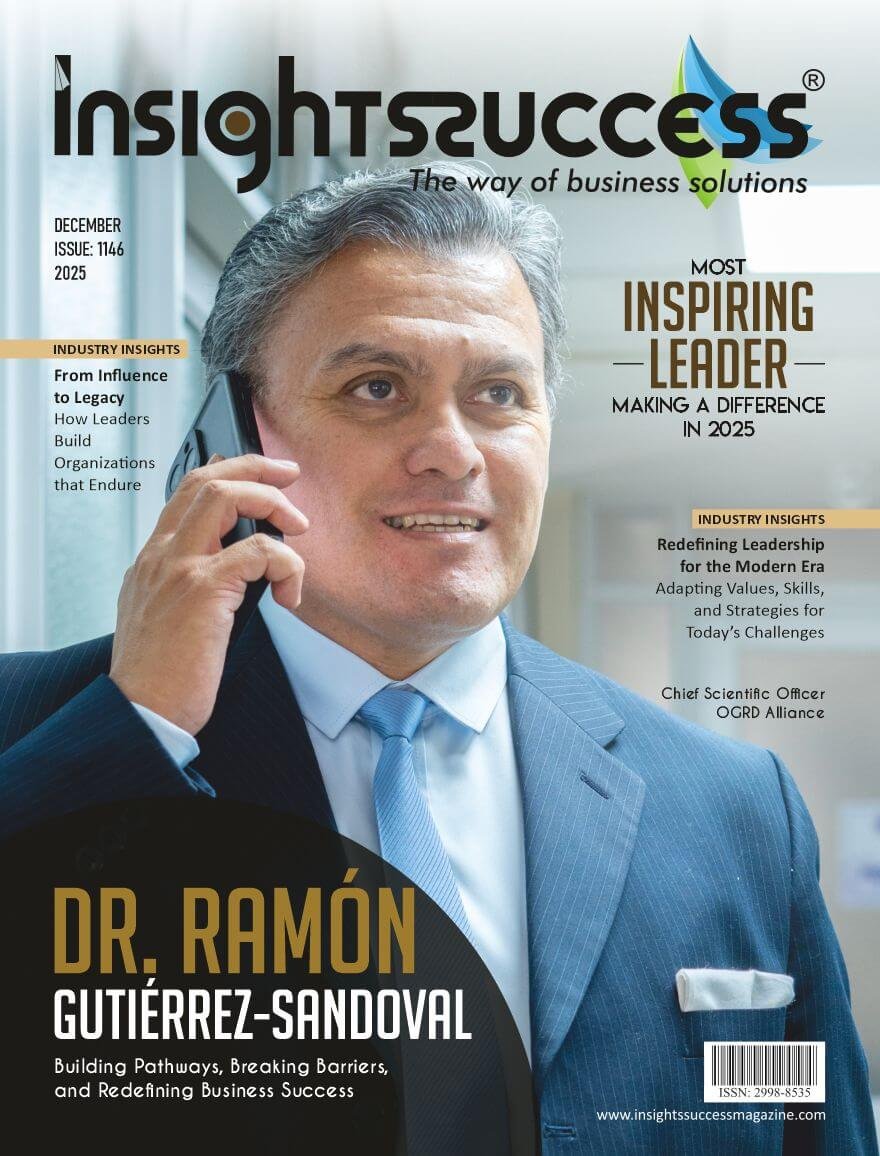
Most Inspiring Leader Making A Difference In 2025
Most Inspiring Leader Making A Difference In 2025 In a time when leadership is measured not only by results but by relevance, empathy, and purpose, one individual stands out for their ability to inspire meaningful change. This edition honors Dr. Ramon Gutierrez whose vision, integrity, and commitment are creating a lasting positive impact across organizations, communities, and lives. Digital Link Quick highlights Quick reads

How Leaders Build Organizations That Endure
From Influence to Legacy Influence is the very source of leadership, but legacy is what essentially gauges it. A lot of leaders energize the followers just for the moment, increase the work output, and at the end show the success visually. Only a small number of them, however, manage to create such organizations that still grow and develop even after they leave. Walking the path from influence to legacy means the protagonist has to change his personal impact to institutional strength, and short-term results to long-term endurance. Long-term organizations cannot be the outcome of only one person’s charm. Such organizations result from the combination of intention, values, systems, and people. Influence as the First Foundation Influence is the capability of a leader to persuade employees, to have an effect on decisions and to enhance the progress of an organization. Such a position comes as a result of credibility, communication, and consistency. Leadership at such a point in time is usually very much related to the particular individual—their foresight, command, and charisma. In a while, influence is absolutely necessary, but still, it is basically a temporary thing. Thus, an organization which is a success over a leader can easily become a fragile one. Leaders with a legacy-oriented mindset quickly recognize this restriction and start the plan that goes beyond themselves. Shifting Focus from Leader-Centric to System-Centric Leaders who build legacies move their attention and resources to systems instead of relying only on personal management. They develop structures for governance, decision-making, and the modes of functioning, which are active even without the intervention of the person. Processes get to the point where they are not only repeatable, but also transparent and strong enough to resist situations that are difficult to handle. It guarantees, at this point, that the coming of new leadership will not be the end of the story. Thus, the organization remains guided by its values and priorities and does not lose its bearings in such times because it has embedded those into work routines already. Values That Outlast Individuals Long-living organizations base their existence on the values which are very clear and which primarily lead the behavior of every level. Leaders who think about their legacy, live up these values themselves and support them via all the organizational policies, through recognition and accountability mechanisms. Values become the organization’s basis for making decisions when there are no clear rules to follow. In the case that values are lived and not simply stated, then they are able to survive a change of leadership as well as market interruption. Developing Leaders, Not Followers Legacy is a hallmark of people. Leaders who become architects of the future will not ignore talent and succession issues. They provide guidance to new leaders, hand over the real work to the capable shoulders, and organize the avenues that lead to personal development. They do this by fostering leadership skills at all levels of the company, which is the most effective way for influence to expand rather than to be concentrated in one place. The organization becomes more profound, flexible, viable, and thus, the risk of a particular person-dominated situation is minimized. Culture as the Carrier of Legacy Culture is the strongest vehicle to carry on the heritage. It is about how people kneel in the absence of the watchful eyes and how they take decisions when under strains and pressures no one can witness. Leaders preoccupied with their legacies vigorously set the tone for culture by way of what they allow, reward, and demonstrate themselves. Strong culture supports a high level of trust, facilitates communication of standards, and makes it easy for people to reach an agreement no matter the generational gap of employees. Culture turns into the supporter that silently sustains the organization’s good performance over a long period of time. Long-Term Thinking in a Short-Term World Today’s companies are constantly forced to come up with instant results. However, legacy-oriented executives are able to think in the long run which balances this reality. They still put money into, among other things, their skills, relationships, and good name of the company even when the profits are far from being immediate. This intention acts as a shield for the organization against short-sighted choices that lead to its weakening in the future. Thus, managers who do not focus on only the next quarter results but instead build up foundations capable of withstanding the ups and downs of the market as well as changes in leadership. From Influence to Legacy Influence gives wings to leaders’ actions. Legacy is the main reason that their effect lasts. These leaders making this change of gear, move their attention from being absolutely necessary to the organization, to making it independent. Genuine leadership is not measured by the amount of influence one has, rather it is determined by what is left after that influence is gone. The pillars of those organizations which are able to last in the long run are the leaders who think beyond their own selves – coming up with values, systems, and cultures which will continue to serve their purpose not just for the present but for the future generations as well. Read Also : Adapting Values, Skills, and Strategies for Today’s Challenges

Adapting Values, Skills, and Strategies for Today’s Challenges
Redefining Leadership for the Modern Era Leadership is changing its definition due to the factors that go way beyond what traditional management theory suggests. The digital acceleration, global uncertainty, cultural changes, and evolving workforce expectations have changed what leading effectively means. The present time calls for leaders who are able to continuously adapt them—by reexamining their values, broadening their skills, and reshaping their strategies to handle complex and often unpredictable challenges. Redefining leadership does not mean throwing away the tried and tested principles; rather, it means developing them further in order to stay relevant, credible, and impactful. Evolving Values for a Changing World Values have always been the core of leadership, however today they are challenged more than any other. Transparency, integrity, and accountability are not only expected—they are also continuously verified. Leaders of today must especially under pressure or in a moment of uncertainty make their actions correspond to their declared values. Leadership credibility, in a connected world, depends on ethical decision-making, social responsibility, and respect for diverse perspectives. Values are no longer just a matter of internal culture but they also incorporate environmental impact, community engagement, and fairness. Those leaders who change their value system to mirror these aspects will create a trust that will keep their organizations going through the disruption. Expanding Skills Beyond Traditional Authority The skills needed for effective leadership have dramatically been extended. Technical expertise along with positional authority are no longer enough. Leaders of today should be skilled in emotional intelligence, active listening, and cross-cultural communication. They should also be able to deal with ambiguity and be able to lead through influence rather than exert control. Moreover, digital fluency has also been a necessary skill. Leaders have to know the way technology, data, and automation are changing business models and human work. It does not involve being a technical expert, but certainly, it does require being a strategic thinker. Those leaders who are constantly upgrading their skills will be able to keep up with the rapid changes in the environment and stay relevant. Strategic Thinking in an Era of Uncertainty In the modern world, strategy is not about having a fixed roadmap anymore. Markets change rapidly, disruptions happen without any kind of notice, and long-term certainty is very rare. Leaders who are effective in their role learn to use adaptive strategies that combine putting the plan into action with leaving room for flexibility. They plan their works with clear intentions but they carry them out by being agile. This method needs the leaders to have a good grasp of systems thinking—to be able to see interdependencies across people, processes, and technologies. Leaders are expected to foresee the second- and third-order consequences of their decisions and change their path if the situation is different. Strategy turns into an ongoing process instead of being a static plan. Human-Centered Leadership as a Competitive Advantage Today’s firms are not able to thrive except through employees, not in spite of them. Human-centered leadership is an approach that considers wellbeing, inclusion, and development as the foundation of performance. Leaders who are aware of the human aspects of decisions are those who establish the cultures where trust, engagement, and innovation are flourishing. Such a method does not make accountability less strong but, on the contrary, it enhances it. When people experience support and respect, they become more willing to take ownership, provide ideas, and commit to common goals. The focus on people as the center of leadership makes culture a strategic asset. Leading Through Complexity and Change Change, which used to be episodic, is now continuous. Leaders have the responsibility to take the teams through layered transformations, that go from digital shifts to organizational changes. For this, they need the quality of being resilient, along with the capacity to communicate clearly, as well as managing the emotional responses to uncertainty. Contemporary leaders accept the reality of problems, communicate the purpose in a very clear way, and get the teams involved into finding solutions. They lessen the change resistance and build the collective resilience by seeing change as a shared journey rather than giving it as a command from above. Continuous Learning as a Leadership Discipline Leadership that is redefined entails the necessity of constantly learning throughout one’s life. Leaders are required to stay curious, they should be open to receiving feedback and they should be flexible in their way of thinking when the contexts change. Learning is not limited to formal training and it is only through experience, reflection, and dialogue that learning can take place. Those leaders who serve as role models in learning, thereby, bring about the development of cultures that are willing to take risks and are committed to continuous improvement. The capability to adjust turns into a very important asset when it comes to handling the challenges of today. Read Also : Fueling Creativity: The Impact of Visionary Leaders on Modern Business

Bedfordshire Set for UK’s First Universal Studios Theme Park with £500m Investment
Prime Highlights: The UK government has approved plans for the country’s first Universal Studios theme park, to be built near Bedford on a former brickworks site. The project is expected to create 28,000 jobs, including 20,000 during construction and 8,000 permanent roles once the park opens. Key Facts: The theme park will feature rides up to 115 metres tall, potentially the tallest in Europe. New transport infrastructure, including two new railway stations and road upgrades, will support the park and improve regional connectivity. Background: The UK is set to welcome its first Universal Studios theme park after the government granted planning permission for construction in Bedfordshire. The new attraction will be built on the site of a former brickworks near Bedford and is part-funded with £500 million in public investment for rail and road infrastructure. Comcast, parent company of Universal and Sky, applied for the project through a special development order (SDO), allowing the government to approve the plans directly, bypassing standard local planning procedures. The Ministry of Housing, Communities and Local Government (MHCLG) approved the scheme on Tuesday, though a parliamentary review period will still take place before the SDO officially comes into force on 12 January. Mohammad Yasin, local Labour MP, described the approval as a “landmark moment for Bedford and the wider region,” calling the project “transformational and felt for decades to come.” Comcast has announced that the park is expected to open in 2031 and will feature attractions “unlike anything that exists in the UK,” including rides that could reach heights of up to 115 metres. The government projects that the theme park will draw over 8 million visitors each year, generating an estimated £50 billion boost to Britain’s economy. The park’s construction is expected to create 20,000 jobs, and once it opens, it will provide 8,000 permanent positions. Universal also said it will share updates on progress, job opportunities, and ways for local businesses to get involved. Transport infrastructure improvements are already underway to support the project. Bedford Borough Council has coordinated with Network Rail to build a larger station at Wixams, and East West Rail Company announced a new station in Stewartby to serve the park. The developments aim to connect the park with major hubs, including Oxford, Cambridge, Milton Keynes, and Luton Airport, which recently received approval for expanded capacity. Read Also : Google DeepMind to Open Its First Automated Research Lab in the UK
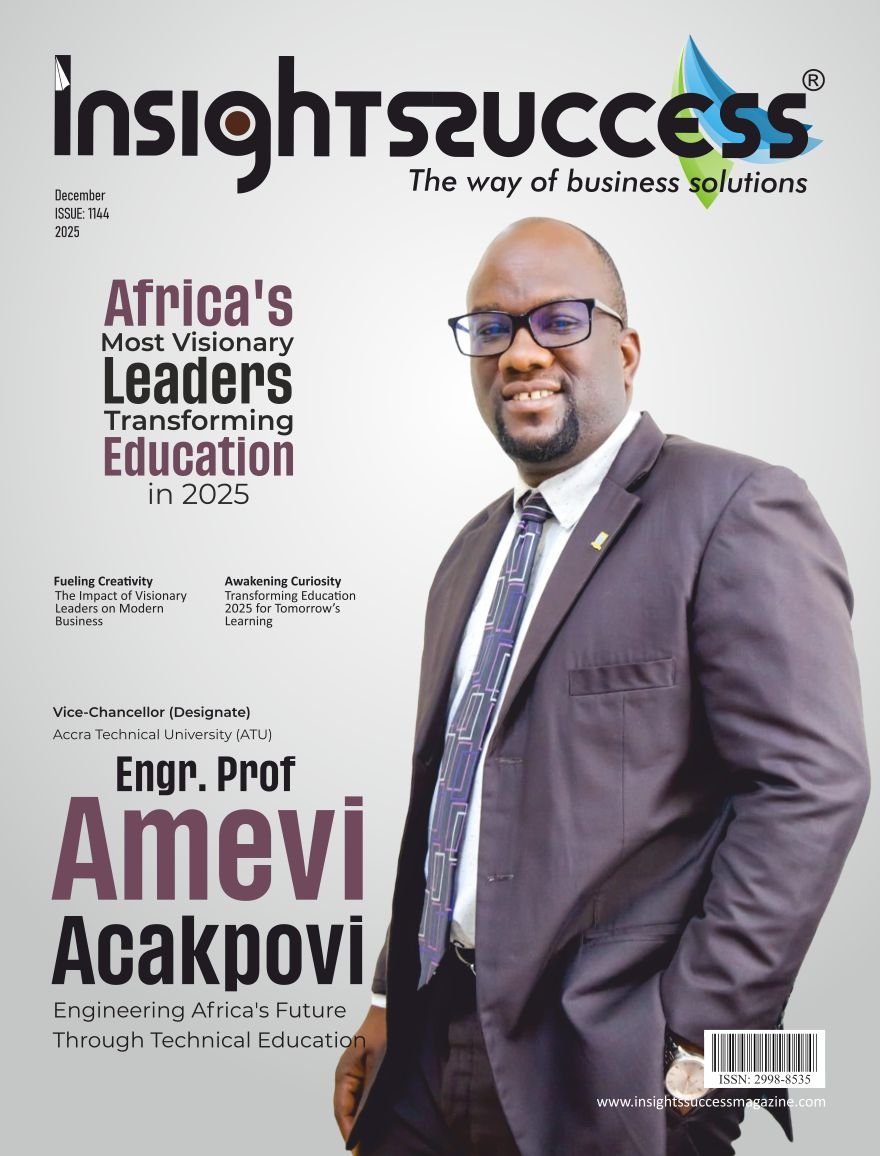
Africa’s Most Visionary Leaders Transforming Education in 2025
Africa’s Most Visionary Leaders Transforming Education in 2025 Engr. Prof. Amevi Acakpovi is redefining Africa’s technical education through service-driven leadership and sustained institutional transformation. By strengthening applied research, industry-aligned curricula, and digital innovation at Accra Technical University, he champions home-grown engineering talent as a foundation for Africa’s industrial growth and long-term prosperity. Digital Link Quick highlights Quick reads

Fueling Creativity: The Impact of Visionary Leaders on Modern Business
Leadership has been central to business success in recent years, as rapid technological change, intensifying global competition, and profound societal shifts have fundamentally reshaped the business landscape. Companies have to face uncertainty, disruption and constant change in their environments nowadays. The indelible mark of visionary leaders is however, clearly visible and their influence has become more significant. These leaders not only oversee the operations and give the numbers for a short period of time, rather they create, communicate and live the exciting future, motivate stakeholders and integrate the strategy with the long-term purpose. The power of visionary leaders in the present-day business spreads over strategy, culture, innovation and resilience. Through their vision of the future, they anticipate trends and create new markets which is the way they determine how companies grow, compete and stay relevant. It is also the case that they have the ability to executing the vision at the same time which gives the freedom to the companies to go beyond incremental improvements and embark on radical transformations. When companies are facing problems such as digital disruption, sustainability, workforce transformation, the role of visionary leadership has become the core of success over time. Long-Term Strategic Vision Visionary leaders enable organizations to adjust their strategic direction by looking beyond immediate pressures and identifying emerging opportunities and risks. Instead of defensively reacting to market changes, they are reshaping business models and competitive positioning in a proactive manner. Visionary leaders, among other things, give organisations a feeling of movement which is used as a guide for making decisions at every level by clarifying purpose and ambition. A perspective that is so far ahead enables firms to invest in skills, technologies, and markets which may not yield instant returns but are necessary for growth in the future. Also, the power of leaders with foresight very often extends the ability of a company to create sustainable value over time. Such leaders, among other things, by concentrating on the company’s financial performance while still considering the interests of the wider stakeholder group, they thereby, integrate environmental responsibility, social impact, and ethical governance into the core strategy. This detailed approach has a positive effect on corporate reputation, it attracts investor trust, and it creates customer loyalty. In today’s business environment, where trust and credibility are increasingly important, visionary leaders play a decisive role. They ensure that growth is not only profitable but also socially responsible. Innovation and Organisational Change Innovation is the key to a company’s competitive advantage, and therefore, it is often the visionary leaders who, as a result of their breakthrough ideas, initiate the transformative change. They challenge established thinking, assure that trial and error is part of the process, and build environments where creativity gets nurtured. Visionary leaders imply that taking chances is not only acceptable but also rewarded when they advocate for innovation as the most essential value. Consequently, this attitude gives organizations the capability to be more agile, responsive and to spot the openings that others may fail to see. Moreover, visionary leaders are the main drivers of profound organisational transformation beyond product and technological innovation. They understand that firm structures, procedures, and skill sets evolve as a result of the adoption of digital tools, new business models, and customer expectations. Using their communication skills and leading by example, they navigate employees through the change journey without losing the connection to the organisation’s core purpose. In effect, visionary leaders lessen resistance, increase commitment and thus ensure that the change initiatives they have undertaken lead to business results rather than being just a few projects isolated from each other. Building Culture and Resilience One of the main features of visionary leaders is their capacity to influence the culture of the organisation in such a way that it facilitates success over time. Culture is a significant performance driver because it affects how employees think, collaborate, and respond to issues. Visionary leaders support cultures built on purpose, responsibility, and shared values. They, therefore, through their own behaviour and by encouraging the continuation of the chosen conduct, create places where workers are motivated, have a sense of ownership, and are united with the organisation’s broader vision. As much, if not more, a role is played by the visionary leaders in the development of talent and the building of organisational resilience. They recognize the importance of grooming these future leaders as they know that sustainability is entirely based on leadership that is well developed and continuous learning. In a way of crisis or uncertainty, visionary leaders are the ones that provide the organization with firmness and trust as they stick to the core and are prompt in their decision-making. Their ability to handle disruption and at the same time keep the team members focused and willing to change, makes it possible for their organisations to realise quick recovery and to be in a better position after experiencing the hardship. Conclusion Visionary leaders have an enormous and lasting impact on modern business. Through their influence on strategic direction, as the chief innovation drivers, and by creating adaptable cultures, they enable companies to survive in complex and volatile situations. Their influence goes beyond economic outcomes, as it reshapes the manner in which companies become responsible entities, involve stakeholders, and characterize their position in the world economy. The demand for visionary leaders will become even higher in the future as the pace of change is getting faster and faster. Such companies which energize their leaders to become more visionary are more powerful to detect disorder, involve their employees, and get sustainable growth. Ultimately, it is the courage, foresight, and above all, the visionary leaders’ insight that makes it possible for contemporary organisations to turn challenges into opportunities and even survive in a constantly changing world.

Engr. Prof. Amevi Acakpovi: Engineering Africa’s Future Through Technical Education
In the quiet corridors of the technical universities of Africa, there’s an energy that’s beginning to form and develop; but not through great noise or events, rather within laboratories busily researching methods to generate clean electric energy, in classrooms filled with dialogue about artificial intelligence and in workshops of young engineers developing new products and finding solutions to problems that have existed for many years on the African continent. This metamorphosis will create a need for leaders capable of interpreting both circuit boards and business models as easily as they interpret balance sheets, and recognising that Africa’s industrial future is not only dependent upon engineers trained abroad but on home-grown engineering talent as well. In Ghana, one such leader has been quietly rewriting the script of technical education. For fifteen years, he has transformed Accra Technical University from a modest teaching institution into a powerhouse of applied research and innovation. He doesn’t chase headlines or court controversy. His weapon is consistency- the relentless pursuit of excellence through measurable action. His name is Engr. Prof. Amevi Acakpovi. He embodies a truth that Africa’s brightest minds have always known: technical education, when done right, becomes the fastest route from poverty to prosperity. The Service Philosophy Prof. Amevi’s leadership rests on a deceptively simple foundation: leadership is service, and service must produce measurable transformation. This isn’t motivational rhetoric borrowed from management seminars. It’s a working philosophy forged through his journey from lecturer to Vice-Chancellor (Designate) at Accra Technical University (ATU), where every promotion brought expanded responsibilities and deeper commitment. He operates through three interconnected principles. Excellence with impact ensures that academic work strengthens national relevance. Innovation with purpose guarantees that new programs directly address unemployment and technology shifts. Discipline with empathy balances high standards with fairness and respect. These principles don’t hang on office walls as decorative statements. They drive decisions about curriculum design, faculty recruitment, infrastructure investment, and student support. His vision of leadership extends beyond institutional boundaries. He believes African higher education must anticipate future industry needs and prepare institutions today for opportunities that will emerge tomorrow. This forward-looking approach transforms universities from reactive institutions into proactive engines of economic development. Transforming ATU’s Academic Foundation The numbers tell part of the story. Prof. Amevi secured full accreditation for thirteen Master’s programs and twenty-seven new four-year BTech programs. Enrolment surged past twelve thousand students. ATU now ranks fourth in Ghana and among the top technical universities in Sub-Saharan Africa according to Times Higher Education Rankings. But numbers alone miss the deeper transformation. He rebuilt ATU’s research infrastructure from the ground up. The Research Commons he established serves as the university’s intellectual hub. ATU’s visibility in Scopus and Web of Science expanded dramatically. Research governance structures now ensure quality and relevance. The institutional Research Bulletins and Annual Research Reports document contributions to national development. These initiatives elevated ATU from primarily teaching students to actively solving Ghana’s challenges in energy, technology, and sustainable development. His student-centered reforms reveal his understanding that technical education must develop complete professionals. Expanded IGF-funded scholarships opened doors for vulnerable students. More field trips connected classroom theory to industrial reality. Innovation competitions unleashed creative problem-solving. Improved library digital access democratized knowledge. The pioneering Virtual Internship Programme addressed placement challenges by creating digital pathways to industry experience. Campus stability enables academic excellence. Prof. Amevi maintained a strike-free environment through transparent communication and timely allowances. He introduced institutional insurance systems and strengthened financial discipline without stifling innovation. This peaceful atmosphere allows faculty and students to focus on their core mission rather than constant disruptions. Infrastructure modernization transformed the physical learning environment. Smart classrooms embrace digital pedagogy. Regenerated laboratories support cutting-edge experiments. A new university clinic safeguards health. Solar installations demonstrate sustainability commitments. A six-story student housing project addresses accommodation challenges. These investments reflect his belief that world-class education requires world-class facilities. Redefining Technical Education Prof. Amevi brings rare credentials to educational leadership. His research portfolio includes over one hundred thirty peer-reviewed publications on hybrid renewable energy systems, microgrid optimization, and AI applications in energy. This work places him among the top three per cent of scientists in Ghana. He speaks from authority when discussing where technology is heading and what skills students will need. He champions technical and vocational education and training as the backbone of Africa’s industrial transformation. His industry-driven curriculum reform led to the development of a 4IR and sustainability-oriented framework now being adopted nationally. This ensures graduates understand not just current technologies but emerging ones shaping the next decade. Competency-based training anchors his educational philosophy. Practical skills, design thinking, and problem-solving remain central to teaching. Graduates apply their knowledge immediately rather than requiring extensive retraining. The Sustainable Energy Service Centre, Drone Training Centre, Career Centre, and Centre for Entrepreneurship and Incubation Services provide hands-on learning environments where students tackle real challenges. His international leadership amplifies ATU’s impact. As President of the IEC National Committee of Ghana, Chair of AFSEC TC77 on Electromagnetic Compatibility, and President of ARSO TC70 on Solar Thermal Systems, he promotes continental technical standards ensuring African professionals compete globally. These roles bring global perspectives directly into ATU’s academic programs. Digital Transformation Strategy Prof. Amevi recognizes digital transformation as essential for institutional relevance. His strategy balances digital infrastructure, digital literacy, and digital governance. Library services now run digitally, integrating advanced databases like Dimensions that connect students to cutting-edge research. AI literacy training ensures the university community understands technologies reshaping every industry. Enhanced online teaching capabilities expanded ATU’s reach beyond physical boundaries. The AFOS DigiCap Centre and CEIS support digital innovation among students and entrepreneurs. New programs in information systems and technology are expanding into cybersecurity and digital engineering specializations. Across all programs, he mainstreamed modules on cloud computing, Internet of Things, and data analytics, ensuring every graduate possesses foundational digital literacy. Preparing Complete Professionals Technical knowledge forms only part of what students need. Prof. Amevi’s holistic preparation model exposes students to real industry challenges through field trips, internships, and applied projects connecting theory with workplace reality.
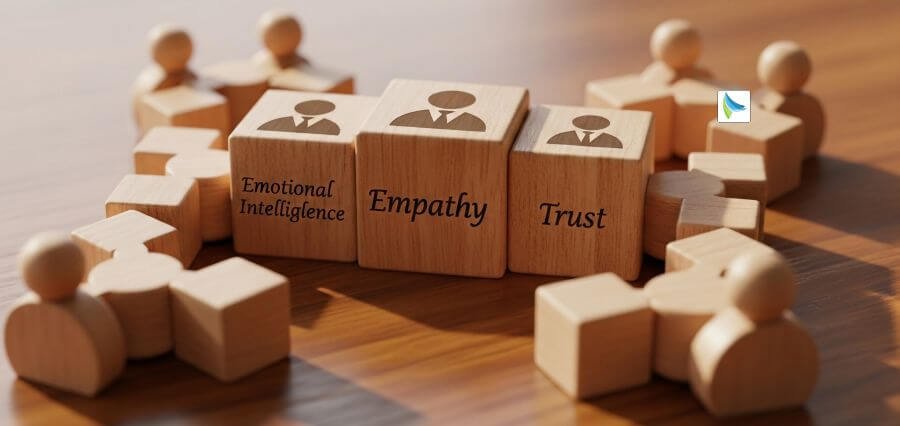
Why Empathy and Intelligence Matter More than Ever
The Human Side of Leadership Leadership faces tests that it has never experienced before. Those rapid technological changes, the worldwide uncertain situations, the hybrid work styles, and the employees’ rising expectations have, among other things, changed what the leaders should be like to continue leading. In these circumstances, those who have the power and are experts but do not show their human side, will not be successful. The successful leaders are those who rely upon empathy and intelligence and use them for gaining the trust of their employees, encouraging their performance, and confidently leading their organizations in the middle of complicated issues. Empathy and intelligence were once two different things, but now they have become two inseparable leadership capabilities. Empathy as the Foundation of Trust Empathy gives leaders the ability to understand people. That means to listen more, to recognize the problems, and to react with sincere help. When there is change or pressure, the empathy in the leading team makes it possible to feel safe. It allows the ideas, the worries, and the uncertainties to be expressed without fear of any kind of negative reaction. Trust grows when people feel understood. Empathic leaders create constructive relationships with their employees, engagement, and loyalty which people cannot buy from the shops. Being faithful to one’s job is a direct result of empathy transforming leadership so that the leader becomes a connector rather than a commander. Intelligence That Extends Beyond Expertise Today’s leadership intelligence is beyond one field of knowledge and goes even beyond cognitive ability. The leadership intelligence now includes emotional intelligence, situational awareness, and the skill of understanding complex systems. Intellectual leaders discover the relationships, foresee the results, and make decisions that balance the rationale with the human side. The extended scope of this intelligence makes it possible for the leader to maneuver through unclear situations, handle the opposing priorities and get the wokrs of the teams done through providing them with a clear direction. They also let in the balanced use of in-depth judgement with the data-driven insights, thus making the decisions not only financially sound but also sustainable. The Power of Empathy and Intelligence Together Empathy without intelligence would mean sentiment lacking a guiding principle. Intelligence without empathy would lead to coldness and thus the risk of encountering more resistance. When merged, they provide leadership that is humane as well as efficient. A leader who is in harmony with both empathy and intelligence is at the same time emphatic and clear in his/her communication. He/she can go through with the decision-making process without losing the trust of others and carry on with the performance without any wellbeing sacrifice. The care for the people as well as the competence demanded by the modern organizations are both satisfied by this balance which the employees experience as being crucial in the contemporary work environment. Navigating Change with Humanity Even though change is unavoidable, the way it is handled determines whether it will be successful or not. Empathetic leaders take in the emotional side of the change and talk openly about it not showing certainty but rather being honest. Smart leaders meet the challenges by creating the clear plans that will lead to the future, they also budget the resources and foresee the obstacles. By combining these two, the change in question will witness lesser resistance and on the contrary, people will be more willing to take it on. Thus, individuals accept the change more willingly if at the same time, they feel supported and informed. Enhancing Performance Through Psychological Safety The real challenge of performance is to keep it going in an environment where each person regards his/her contribution as safe and necessary. Empathy is here to ensure that people are open, and intelligence is a tool used to keep the feedback and the expectations constructive and goal-aligned. Leaders who are involved in building an atmosphere of psychological safety deliver also that accountability, continuous learning, and innovation follow as natural consequences. Errors become a source of development and not blaming, thus the strength of both the ability and the self-confidence within the teams is enhanced. Leadership in an Age of Technology While AI and automation are changing the way we work, the need for human qualities is getting stronger and stronger. Yes, technology can be the fastest data processor and the most efficient system optimizer but empathy, ethical judgment, and human connection are some of the things that machine cannot replace. Business leaders should be the ones to connect the human experience with the digital capability. Empathy is a way to let technology really serve human beings and not vice versa while intelligence acts as a tool to ensure that technology is utilized in a responsible and strategic manner. Read Also : Decision-Making When Pressure is Highest

Decision-Making When Pressure is Highest
Leadership in Critical Moments Critical moments are those that most clearly show the leadership qualities of a person as compared to long-term plans or well-thought-out strategies. Leaders are not tested on their knowledge but on their thinking and actions when the pressure increases, time shortens, and the consequences are serious and immediate. In these instances, decision-making is both a duty and a source of trouble. The feature that is capable of differentiating successful leaders from the majority is their ability to keep their cool, be decisive, and follow their principles even if they are under very high pressure. Leadership in such times as these is not less about perfection but more about these features – clarity, control, and accountability. Pressure Changes the Decision Environment Distortion of perception is what happens in high-pressure situations. There may be incomplete information, raised emotions, and increased stakes. Also, leaders have to deal with the issue of conflicting priorities most of the time, e.g., speed versus accuracy, risk versus opportunity, short-term containment versus long-term impact. To acknowledge the manner in which pressure affects your thinking is already half the battle of combating it. Even under a condition of urgency, that is externally imposed, effective leaders internally regulate their response. This self-control gives them the opportunity to look at the facts, realize what is really important, and keep away from making decisions only out of terror or on the spur of the moment. Clarity Over Complexity When a crisis occurs, complexity is the enemy of the action. Eliminating the unnecessary parts and retaining only those which are the most essential is the method that leaders use to solve problems. What is going on? What matters most right now? What decision will stabilize the situation? By being clear about these things leaders are able to ignore the noise and focus on the factors that will most affect the results. Clear priorities serve as a guide for teams through the period of uncertainty. Whenever leaders make it clear what has to be done at once and what can be left, perplexity is transformed into coordinated action. Balancing Speed and Judgment The situation of making a critical decision is usually accompanied by the need of doing it quickly, however, if it is done without judgment, the risk will be increased. Leaders who are strong find the right balance between quick action and careful thinking. They use principles, experience, and a few trusted advisors instead of a lengthy analysis. They are aware that information is never complete. They decide on the best action with the information available and keep the option open for making changes when new information becomes available. Being decisive and, at the same time, ready to change keeps the flow going. Emotional Regulation Under Stress Under pressure, people experience different emotions that affect their judgment. Anxiety, irritation, or even overconfidence may cause bad decisions. Such leaders, who successfully conduct through difficult times, have the ability to control their emotions and evenness of mind. This tranquility affects teams in a positive way. When leaders are steady, others get more confident and concentrated. Calm leadership does not mean that the situation will be less urgent — it only directs the urgency into something more productive. Trusting the Team and Delegating Effectively There is no single person who can be a leader and come out of a critical moment successfully without the help of others. This is the kind of situation which calls for a well-coordinated effort. The leaders who trust their teams and delegate in a clear manner are like those who have turned their decision-making power into a big tree with many branches under which they can rest and find support. They give the closest people to the problem the authority and at the same time they grant them the freedom to take up to a certain limit their role in decision-making. The practice of delegation coupled with trust is like rocket fuel to the organization’s response time since the former removes the need for leaders to be the middlemen for everything and thus bottlenecks at the same time, and accelerates the latter through the granting, or experiencing, of mutual trust. It is also a great confidence booster for the whole organization to see and realize that the concept of leadership is a shared one rather than a unitary one. Defining Leadership in the Moments That Matter Most Critical moments are those that most clearly show the leadership qualities of a person. They reveal all decision-making habits, emotional self-control, and moral guide. Leaders who are good under pressure do not depend solely on their reflexes — they depend more on preparation, self-awareness, and values. Leadership under such conditions is not about staying away from them but rather about having command over them. In cases when quick decisions have to be made and real are the consequences, leaders who maintain clarity, composure, and conviction make the surrounding stable and lead their team through those moments of crisis. Read Also : Leadership in High-Risk, High-Reward Environments

Unyime Udi: Shaping Futures Through Purpose-Driven Educational Leadership
While managing a school in Nigeria’s increasingly complex educational system, Unyime Udi is leading an enormous change in culture. This process isn’t announced by press releases; rather, it occurs in a subtle way through the change as these influences evolve into tangible outcomes. The change is most easily seen in children’s eyes when they are able to make sense of their first elaborate sentence. This accomplishment resonates loudly within the parents of the student who observe their child, realising they don’t have to fear that their child may not have a chance at achieving something that she or he was previously not able to achieve. Unyime Udi is the architect of this shift, a visionary who looks past the cold metrics of test scores and the constraints of outdated curricula to see the limitless, untamed potential resident in every young mind. Her fierce determination acts as a lodestar, guiding early childhood education away from the safe harbor of mediocrity and toward a standard of foundational excellence. What compels someone to build a school from the ground up with just two students? What drives an individual to spend sleepless nights perfecting teaching methodologies while others rest? The answer lies not merely in ambition but in a profound sense of purpose. Unyime Udi embodies a rare breed of leader who understands that education isn’t simply a profession or a business venture. It represents the sacred responsibility of shaping destinies, guiding futures, and laying foundations that will support generations yet to come. Her journey, from a struggling high school student selling snacks to survive to an internationally recognized education influencer, is a powerful testament that transformational leadership emerges not from privilege but from resilience, vision, and an unwavering commitment to service. The Foundation of Unwavering Resilience Unyime’s story begins in a household where six children learned early that perseverance was non-negotiable; it was essential for survival. Born as the fourth child, she grew up in an environment where excellence was not just encouraged but expected. Her early educational years flowed smoothly, setting a trajectory that seemed predetermined for success. However, life had different plans, ones that would test her resolve and forge the character that defines her today. During her secondary school years, her world shifted dramatically when her father lost his banking position. The financial security her family once enjoyed evaporated, forcing difficult decisions. She had to leave one of the region’s premier high schools because the fees became very high. The transition to a more affordable institution meant stepping into an academically weaker environment, a change that could have derailed her dreams entirely. Many would have allowed circumstances to define their limits. Unyime Udi chose differently. Instead of viewing her situation as a limitation, she transformed it into fuel for an unstoppable determination. She didn’t simply attend the new school; she dominated it academically, graduating with exceptional results that defied external expectations. But academic excellence alone couldn’t pay bills or ease financial pressures. Demonstrating entrepreneurial instincts that would serve her throughout life, she converted school holidays into business opportunities. She launched a small snack-selling venture, generating income that supported her needs while her peers relaxed. These experiences taught her lessons no classroom could provide- resourcefulness, self-reliance, and the understanding that circumstances don’t determine destiny; responses do. The Academic Journey and Service Armed with determination and exceptional grades, Unyime Udi pursued higher education at a university, specializing in Medical Biochemistry. The choice reflected common expectations and practical considerations rather than intrinsic passion. She approached her studies with characteristic dedication, earning her degree through focused effort and disciplined work. It was during this period that she discovered her capacity for leadership and service through her involvement with the Nigerian Christian Corpers’ Fellowship during her mandatory one-year National Youth Service Corps program. Serving as Assistant General Secretary for the entire service year, she demonstrated organizational skills and commitment that foreshadowed her future leadership roles. This position required coordinating activities, managing relationships, and serving a community of young professionals navigating their transition from academic life to professional careers. The experience enriched her understanding of people management and reinforced her natural inclination toward service-oriented leadership, laying critical groundwork for the complex organizational challenges she would later face. The Pivot to Purpose: Addressing Learning Poverty Following her service year, Unyime Udi entered the private health sector, taking on marketing responsibilities and leading campaigns for an organization. On paper, the career path aligned perfectly with her academic background. In reality, each day felt increasingly disconnected from her authentic calling. She performed her duties competently, but something essential was missing: the sense of purpose that gives work meaning beyond paychecks and professional advancement. The realization arrived gradually, built through countless small encounters that collectively revealed her true path. She noticed a pattern in her interactions with children: she would instinctively reach for a book, eager to see how the child engaged with reading. These simple moments opened her eyes to a disturbing reality that many preferred to ignore: numerous children struggled with basic reading comprehension, unable to decode simple texts accessible to their age group. This observation introduced Unyime Udi to a concept that would define her mission: learning poverty. UNICEF defines it as the inability of a child to read and comprehend simple text by age ten. The widespread nature of this problem struck her deeply, transforming from mere observation into a burden she couldn’t shake. Coupled with a strong spiritual conviction and direction she felt, the path forward crystallized. She needed to do something tangible, something that addressed this fundamental gap in children’s foundational education. The decision to start a school wasn’t born from careful market analysis or long-term strategic planning. It emerged from necessity, from witnessing a problem too significant to ignore, and from recognizing that she possessed the skills and passion to make a difference. She made a bold move, leaving the health sector behind to pursue educational qualifications that would formalize her calling. Unyime Udi earned a Postgraduate Diploma in Education followed by