






The Most Influential Chief Information Security Officers to Watch in 2026
The Most Influential Chief Information Security Officers to Watch in 2026 Alex Ryals’ career reflects the value of diverse experiences and perspectives. From technology leadership and solution consulting to distribution, software, and cybersecurity, each role has shaped his approach to leadership. Today, as Chief Information Security Officer and Senior Vice President at MicroAge, he combines technical expertise, business insight, and people-focused leadership. Digital Link Quick highlights Quick reads

Alex Ryals: Shaping Leadership Through Perspective and Purpose
Some careers follow a clearly defined path, while others are shaped by diverse experiences and opportunities. Alex Ryals’ career has followed a less conventional path, with each role adding a new perspective and deepening his understanding of the technology industry. Becoming a Chief Information Security Officer was not part of his original career plan. Instead, he built his career one opportunity at a time, allowing each experience to shape his professional journey and expand his expertise. Currently serving as Chief Information Security Officer and Senior Vice President at MicroAge, a ScanSource company, Alex brings more than 19 years of cybersecurity experience to his role. His career across four distinct perspectives has given him a broad understanding of the technology industry and its evolving challenges. While Alex considers his career path unconventional, he sees this diverse experience as a defining strength. It enables him to connect technology with business objectives, partner requirements, and customer needs, allowing him to make practical and informed decisions. A 360-Degree Perspective Alex began his career as a customer, managing technology for FedEx before moving into solution consulting with an HP reseller, Pepperweed Consulting. This experience as a reseller partner allowed Alex to work directly with customers in solving their technology challenges and later led to his interest in revisiting this experience with his current employer, MicroAge. Between these roles, Alex spent several years at distributors including Avnet, Tech Data, and TD SYNNEX. In these positions, he sold technology to reseller partners. Most recently, he worked at Ping Identity, an independent software vendor, where he led a global channel organization which enabled other resellers to sell Identity and Access Management solutions to their customers. Few executives have experience across all four positions in the technology channel ecosystem: customer, value-added reseller, distributor and vendor. Alex has spent nearly 15 years focused on cybersecurity. During that time, he worked closely with dozens of CISOs and gained a clear understanding of the challenges they face. Listening to their concerns and priorities eventually gave him the confidence to take on the role himself. This experience also shaped his view of what distinguishes an effective CISO from an average one. He observed that security leaders often tend to focus on one of two areas. Some prioritize technology, while others focus primarily on compliance. Alex set out to develop expertise in both. His early experience as a CTO, software developer, and pre-sales solutions architect gave him a strong technical foundation. He later invested significant time in understanding compliance and regulatory requirements. This combination of technical expertise and compliance knowledge now shapes his approach to cybersecurity leadership at MicroAge. Influence Through Leadership Alex describes his leadership style as one based more on influence than authority. He is comfortable giving direct instructions when a decision has already been made. For example, when the company decides to deploy a new security tool, someone has to take responsibility for implementation. However, Alex prefers to involve his team in the process. He encourages team members to participate in selecting the right technology. He may ask some employees to work with the vendor on pricing and others to develop the deployment plan. By the time he gives the final approval, the team already understands the decision and supports the project. This creates stronger ownership and commitment to successful execution. Another important part of his leadership philosophy is the principle of failing fast. Cybersecurity changes quickly, and tools or processes that appear effective on paper may not work well in practice. Alex encourages his teams to recognize problems early and take corrective action. He believes holding on to a poor decision because of stubbornness, internal politics, or sunk costs can create greater problems. Admitting a mistake early allows the team to learn, adjust, and move forward with a better solution. Empowering Through Trust Alex wants his team to see him as anything but a micromanager. Part of this approach comes from necessity. He does not have the time to oversee every decision. More importantly, he believes in hiring capable people and giving them the freedom to do their jobs. His team members are experienced leaders in their respective areas. He meets with them regularly, usually on a weekly basis, to review progress and discuss key issues. He asks direct questions to understand whether they are simply following instructions or taking ownership and developing their own ideas. Alex is willing to challenge a direction when he believes a different approach would be better. At the same time, he gives his team the space to make decisions and take responsibility for the results. He also accepts that people may sometimes make mistakes. In his view, failure becomes a problem only when it is not recognized and addressed quickly. This balance of trust, accountability, and timely intervention allows his team to operate with greater confidence while keeping projects and priorities on track. Innovation as a Habit Alex believes innovation should become a regular part of the company culture rather than an occasional initiative. He sees this as a fundamental cultural shift. He organizes his time around two key areas: strategy and execution. At the beginning of each fiscal year, and to a lesser extent each quarter, he moves into strategy mode. During this period, he works closely with his teams to review their technology, processes, and priorities. They assess what is working, identify areas for improvement, and make changes where needed. This strategic approach led to the creation of the Business Optimization team at MicroAge last year. The team is led by a director who looks across the business for opportunities to improve efficiency and introduce new solutions. This includes using AI to automate manual processes. The director provides monthly updates to the leadership team and quarterly updates to the entire company. The team has already developed several AI-based tools that simplify work across the organization. Alex believes these efforts have also helped create a stronger culture of innovation. As each quarter progresses, he shifts his focus from strategy to execution. He

Reimagining Excellence: Advancing Cyber Resilience with an Effective Security Operations Strategy
The sophistication level of cyber threats is escalating along with their persistence and unpredictability. Different industries are dealing with a complex IT environment coupled with ransomware, phishing, insider threats, supply chain threats, and targeted attacks. With the growing digitalization of organizations, there is no need to say that traditional approaches in cybersecurity are no longer enough. Cyber resilience involves anticipation, identification of vulnerabilities, reaction, and recovery at the same time. A well-constructed Security Operations Strategy is essential to accomplish this resilience. It allows linking the four factors to create an environment of cooperation for security. Organizations need to stop treating cybersecurity as fragmented tools and use a strategy to define their priorities, gain better visibility, improve their responsiveness and evolve according to the changing threats. In this way, security departments will be able to change their position from reaction and protection to proactiveness and resilience. Moreover, security operations strategies will allow aligning security efforts with organizational priorities and stakeholders’ expectations. Building Strong Foundations Cyber resilience starts with a thorough knowledge of the IT environment of an organization and those assets that need the highest level of protection. These assets are applications, networks, endpoints, clouds, databases, and mission-critical systems. Regular risk assessments should be performed to learn about possible vulnerabilities, their interactions, and how they can influence each other. It will help to distribute limited resources based on business requirements and possible impact instead of giving the same importance to every security alert. People and processes are equally essential in the development of a resilient security environment. It is imperative that organizations ensure that the roles of their security staff are well defined, have appropriate escalation processes in place, effective channels of communication, and proper incident response plans. Training ensures that the employees can spot anything unusual and respond accordingly, thus becoming an active participant in securing their organizational information. Security goals should be defined, and the cybersecurity strategies tied to business goals. Strengthening Detection Current security activities are very much based on the early recognition of suspicious behavior that does not evolve into a more serious problem. This can be achieved by combining various pieces of information collected from endpoints, networks, applications, clouds, identities, and other sources. By analyzing all these elements together, it is possible to detect patterns that would go unnoticed if looked at separately. Security information and event management systems, endpoint detection, threat intelligence, and automation solutions can be very helpful in this respect. Technology, on its own, is not valuable; the value of technology lies in its integration into operations. For an organization’s Security Operations Strategy to be successful, it needs to set the priorities, investigation process, escalation procedure, and resolution method. The task of automation is to perform repeatable tasks, like enrichment and initial investigation and actions, leaving more sophisticated tasks to security experts. Meanwhile, organizations need to periodically evaluate their detection and response processes to ensure that they are adapted to evolving threats. Enabling Rapid Response Even the best preventive measures will not be able to ensure that all cyber threats are addressed. Hence, organizations must have the capacity to react swiftly in case of an incident. For an effective incident response program, there must be a set of protocols related to containment, investigation, communication, recovery, and lessons learned after an incident. The incident response team should know who is supposed to make important decisions and how the technical teams can work in tandem with other stakeholders. The cyber resilience of an organization is also dependent on learning from any security breaches that occur. Each and every breach offers some important insights into what weaknesses existed, what procedures were lacking, how aware employees were, and how effective the technologies employed by the organization were in helping mitigate these threats. This is why a good Security Operations Strategy is one that never stops even after the resolution of a threat. Conclusion Resilience in cyberspace is more often than not turning out to be a business need rather than just a technological one. Enterprises have to safeguard their key assets and ensure continued operations in an environment where the threats continue to develop and change. Resilience does not depend on having the latest technologies in security alone but rather on other aspects like proper governance, qualified people, good processes, accurate intelligence, monitoring, and cooperation. The Security Operations Strategy will ensure that the above capabilities are combined in a coherent manner. The strategy will enable the organization to achieve better visibility, enhance threat detection, speed up responses, and learn from each security occurrence. In view of the expansion of digital ecosystems, organizations embracing a proactive and holistic approach towards cybersecurity will be better positioned to address uncertainties and preserve stakeholders’ confidence as well as business continuity. Resilience to cyberattacks is a process that never ends. Read Also : Orchestrating Development: The Role of OEM Packaging Project Management in Successful Product Launches
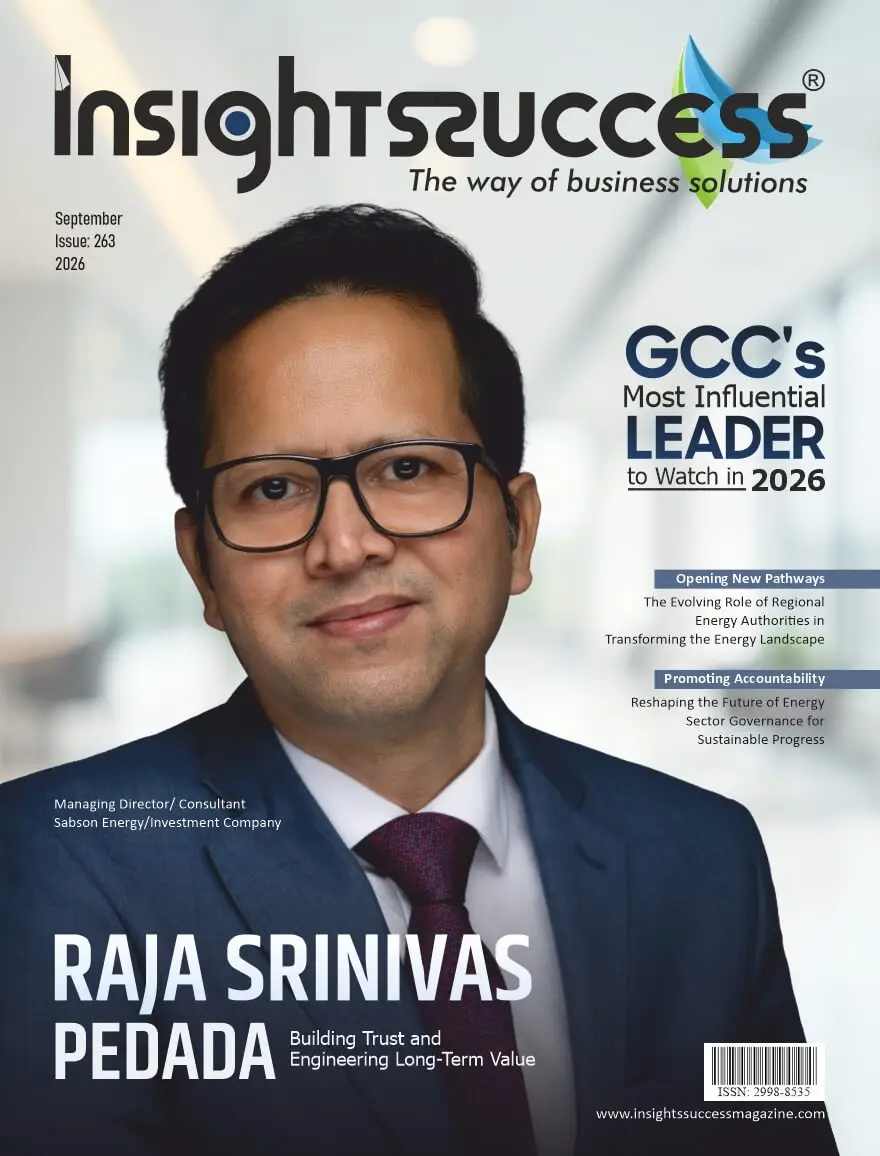
GCC’s Most Influential Leader to Watch in 2026
GCC’s Most Influential Leader to Watch in 2026 Raja Srinivas Pedada exemplifies purposeful leadership in energy and infrastructure. With decades of experience, he combines engineering expertise, strategic vision, disciplined risk management, and stakeholder collaboration to deliver complex projects. His leadership focuses on sustainable growth, investor confidence, organizational resilience, and creating lasting value for communities and economies. Digital Link Quick highlights Quick reads

Raja Srinivas Pedada: Building Trust and Engineering Long-Term Value
A fundamental change is taking place in the Middle East and Africa. Although energy resources continue to be significant, the future of the region depends on strategic investments, good infrastructure, and visionary leaders. As countries try to diversify their economies through energy security and sustainable development, apart from investing in state-of-the-art infrastructure, developing a robust system that creates long-term value for their economy is essential. For this purpose, leaders who have the capability of navigating complexities and delivering results are required. Raja Srinivas Pedada is one of those leaders. As Managing Director and Consultant at Sabson Energy and an investment platform supported by leading industrial groups and financial institutions, he brings more than three decades of experience in energy infrastructure, project finance, and cross-border investments. He has earned a reputation for delivering complex projects, building strong strategic partnerships, and creating sustainable value in challenging environments. His leadership extends well beyond managing business ventures, encompassing long-term value creation, strategic vision, and resilient execution. Leading with Vision Raja’s career reflects a unique journey from mechanical and production engineering to strategic business leadership. His strong technical background, combined with extensive leadership experience, enables him to connect engineering, finance, policy, and execution. He is equally comfortable leading boardroom discussions and reviewing complex technical operations on project sites. Today, Raja directs capital and expertise toward critical infrastructure projects across the MENA region. He helps countries balance the transition to cleaner energy with the need for reliable and affordable power. This is one of the energy sector’s greatest challenges because existing power infrastructure cannot be replaced overnight. His teams manage this transition through carefully planned projects that deliver steady and practical progress. Raja’s leadership is guided by a long-term vision. “My philosophy is to look beyond the immediate horizon, ensuring that our long-term impact benefits both communities and economies,” he explains. This perspective influences every major decision, from selecting the right financing structure for new projects to determining the pace of expansion into new markets. He evaluates opportunities with a long-term outlook and has earned a reputation for disciplined decision-making, strategic planning, and sustainable value creation. Shaping Sustainable Growth Raja’s current role is built on a strong foundation established more than a decade ago. In 2010, the group’s promoters partnered with the Bajarsh Group, led by Yahya Bajarsh, and secured support from funding institutions, including the Arab Fund for Economic and Social Development. Together, they established an investment company that played an important role in transforming the energy landscape of a challenging market. One of the company’s first major achievements was Yemen’s first Independent Power Producer project, an 85-megawatt power plant in the Hadramout region. The plant continues to operate today despite years of political and economic instability. Its continued success reflects the value of disciplined execution, careful planning, and strong risk management. It also demonstrates the long-term resilience of the organization’s approach to infrastructure development. The organization is a diversified group of more than fifteen companies operating across the power, steel, food, cement, oil & gas, infrastructure, facility management and construction sectors. It has also delivered additional energy projects through rental power purchase agreements with utility providers across the region. This growth was driven by the credibility and trust established through the successful delivery of the Hadramout project. Raja and his colleagues strengthened relationships with regulators, financial institutions, and utility operators, creating new opportunities in markets that had previously been cautious about external investment. At present 300 MW projects are under implementation in East & West Africa and southern region of Yemen bordering to Oman. Raja has also co-founded Synergy Solutions, further expanding his presence in the energy sector. This venture enables him to pursue emerging opportunities across the region while continuing to support the development of reliable and sustainable infrastructure. Building Operational Resilience Raja operates in one of the most complex and unpredictable areas of the energy and infrastructure sector. Regulatory changes, geopolitical uncertainty, and logistical challenges are constant realities. Success in this environment requires careful planning, resilience, and the ability to adapt to changing conditions. Colleagues describe Raja as a leader who views setbacks as opportunities to learn and improve. Whether facing permit delays, currency fluctuations, or policy changes, his teams are prepared with alternative strategies from the beginning. This approach was developed during the Hadramout project, where he learned that successful projects must be designed to adapt to uncertainty rather than depend on stable conditions. Dynamic Risk Management Raja believes that risk management is an ongoing process. He regularly reassesses risks throughout a project’s lifecycle and builds contingency plans into every stage. He also develops flexible contractual frameworks and diversifies supply chains to strengthen project resilience. “Risk must be continuously reassessed because it is never static,” he explains. Building Strong Stakeholder Relationships Raja understands that successful projects depend on strong relationships as much as strong contracts. He works closely with governments, regulators, investors, and local communities to build trust and maintain alignment throughout every stage of a project. These relationships create the long-term support needed to overcome challenges and deliver sustainable results. Flexible Project Delivery Raja supports phased implementation strategies that allow projects to achieve important milestones while remaining adaptable to changing circumstances. This approach enables his teams to respond effectively to external challenges without losing progress. It reflects his commitment to delivering complex infrastructure projects with discipline, flexibility, and long-term success. Creating Lasting Value Raja measures success by more than financial performance. He also considers the lasting impact his work creates for communities, industries, and economies. His projects have supported economic development, expanded critical infrastructure, strengthened energy security, and encouraged responsible investment across multiple markets. He has built a reputation for integrity, transparency, and ethical leadership. These values have earned him the trust of stakeholders across both the public and private sectors. Those who have worked with him recognize his commitment to honoring agreements and maintaining strong relationships, even when circumstances change. This consistency has made him a trusted partner in complex and evolving markets. Raja believes that strong organizations

Promoting Accountability: Reshaping the Future of Energy Sector Governance for Sustainable Progress
There have been many changes in the energy sector globally. Changes in energy demand, commitment to the environment, technology, and market dynamics have changed the way organizations in the energy sector are run and strategic decisions are made. As nations seek clean, efficient, and resilient sources of energy, it is necessary to ensure that there is governance so that the change will bring about sustainable value. Governance will create the structure that organizations require to strike a balance between growth and sustainability in their decisions. Energy sector governance for the future will depend not only on regulatory compliance but also on the ability of organizations to create frameworks that can deal with uncertainty and the new risks that arise. Energy organizations will need governance systems that integrate finances, environment, stakeholder considerations, and technology to make better decisions that will make energy companies more resilient and build a platform for progress. Strengthening Accountability Accountability is the starting point of good governance. There are significant impacts of decisions made by energy organizations and institutions in the larger environment that may affect not only the local community but also the investors, the employees, and the environment as well. It is thus important for there to be accountability, transparency, proper management, and oversight. Board directors and top-level executives must set performance targets while taking into account sustainability and risk management. The next important element of energy governance is the creation of trust between key stakeholders. Communities expect energy companies to show the contribution their activities make to the economy of a particular region and to environmental protection. Moreover, investors pay more attention to climate change, corporate responsibility, and sustainability. In order to create trust, it is important for organizations to communicate openly and responsibly and make commitments. Enabling Innovation Technological innovations are changing how the energy sector is perceived, thus bringing up opportunities that were impossible before. Utilization of renewable energy, energy storage, smart grids, artificial intelligence, analytics, and surveillance technologies can make energy production, delivery, and consumption better while reducing the impact on the environment. However, there are also several risks associated with technological innovations in the energy sector, including operational risk, cybersecurity risk, regulatory risk, and investment risk. In order to make sure that the value from the technological innovations is sustainable and measurable, organizations have to develop a governance framework, strengthen risk management, and set proper controls. Good governance in the energy industry may assist innovation, while keeping reliability and accountability. Organizations must create processes through which the evaluation of technological innovations is done, together with the identification of the risks and impacts of the innovations. Data analysis may assist in forecasting and resource management, while technology may assist in ensuring transparency in the whole process. However, organizations must remember that technology is simply a tool meant to be used in accomplishing organizational goals and not an end in itself. Building Sustainable Resilience Sustainability is being embraced by the energy sector as part of its future strategy. While the move to lower-carbon energy will be expensive, it will also offer benefits such as enhanced efficiency, improved energy security, and the creation of new economic opportunities. Organizations that adopt sustainability into their governance framework are able to make more informed decisions with respect to capital allocation, infrastructure development, supply chain management, and employee training. This means that environmental factors will be considered within strategic decisions and not as part of a separate corporate social responsibility strategy. Governance for the future in the energy industry will require the reconciliation of multiple needs at once. However, energy systems must not only be sustainable and resilient but also affordable and reliable. It will be necessary to anticipate changes in the regulatory, technological, and geopolitical environment, and in customer demand. It is recommended that business executives adopt a proactive approach to developing governance systems that are flexible to changing conditions. Conclusion In order for energy organizations to succeed in the future, they will need to be able to govern transparently, responsively, and sustainably. Given changing technological and industrial requirements, it is essential for energy companies to be adaptive enough to respond accordingly. In this manner, energy companies can contribute towards facilitating sustainable economic growth, building operational resiliency, creating stakeholder confidence, generating value, and impacting energy sustainability and security. In other words, good governance will be able to provide an enabling environment for sustainable development. Good organizational governance should concentrate not only on the present problems but also on the strategic aspects of sustainability, resilience, social well-being, and the needs of future generations. Those organizations that integrate these principles in their organizational governance systems will have the capacity to deal with risks, leverage opportunities, innovate responsibly, build trust among stakeholders, and generate value through sustainable development. Read Also : Reimagining Excellence: Advancing Cyber Resilience with an Effective Security Operations Strategy

A Woman Who Creates, Empowers & Transforms !!
A Woman Who Creates, Empowers & Transforms !! Showcasing a remarkable woman leader, this feature celebrates her inspiring journey of creating meaningful opportunities, empowering communities, and transforming lives through visionary leadership, strategic excellence, and an enduring commitment to positive change. Digital Link Quick highlights Quick reads

Ar. Shieital Sonawane-Ugale: Building Sustainable Impact Across Every Role
Clean a riverbank once, and it feels good. Clean it again three months later because the plastic is back, and it starts to feel different. Most people who do clean-up drives know this feeling. It makes you stop and ask a harder question: not “how do we clean this up” but “why does it keep coming back?” That question is at the heart of a lot of environmental work happening in India today. Clean-up drives are easy to organize. Getting people to actually change how they live is much harder. A video about a river clean-up can get millions of views online, but six months later, people are often doing the exact same things that caused the mess. Real change means changing habits, not just clearing waste for a day. Ar. Shieital Sonawane-Ugale has spent years trying to close that gap. She started out as an architect. Today, she runs Curryleaves Hotels Group with her husband, Mr. Vikram Ugale, and also leads the Creative Kuteer Foundation and its KleanYug Mission, which focuses on reducing plastic use and cleaning up rivers, including the Godavari, one habit at a time. Running a business is not unusual. Running a foundation is not unusual either. What stands out about her is how naturally she moves between architecture, business, art, and social work; none of it feels separate from the rest. Let’s explore how Shieital has transformed purpose into action, inspiring individuals and communities to become active participants in building a cleaner, more sustainable future! Building a Life Where Every Role Serves a Purpose Shieital’s journey began in architecture, a profession that shaped not only her career but also her perspective on leadership and society. She began her professional life as an architect, where she learned that every structure should improve the lives of the people who use it. Over time, architecture evolved into entrepreneurship through Curryleaves Hotels Group, where she discovered that businesses can also become platforms for social responsibility. As she simply describes herself, “I am an architect by profession and entrepreneur by responsibility and artist by passion and a social reformer by purpose.” Rather than viewing these identities separately, she has allowed each one to strengthen the other. Art has always been her language of emotions, while writing has been her way of preserving thoughts and inspiring people. These creative pursuits helped her understand that change does not always begin with policies; it often begins with stories and emotions. Today, every role she plays complements the others. Architecture taught her to build spaces, entrepreneurship taught her to build organizations, art taught her to touch hearts, literature taught her to inspire minds, and social work taught her to build a better society. At the core of this journey is a leadership philosophy that continues to guide every initiative she undertakes: “Purpose gives direction. Compassion gives strength. Consistency creates transformation.” The Birth of Creative Kuteer Foundation and the KleanYug Mission While architecture, entrepreneurship, and creativity shaped Shieital’s professional identity, the defining chapter of her life began when she stepped into social reform. During cleanliness drives, she witnessed firsthand how plastic pollution was silently destroying the environment. Instead of waiting for someone else to act, she decided to become part of the solution. That decision eventually led to the birth of Creative Kuteer Foundation and the KleanYug Mission. The inspiration, she explains, came from witnessing the reality around her. Everywhere she looked, plastic bags, bottles, wrappers, and waste had become a normal part of everyday surroundings. Rivers, streets, pilgrimage sites, and public spaces were silently suffering. However, the true turning point came during one of the cleanliness drives. She realized that cleaning alone was not enough. Unless people’s habits changed, society would continue cleaning the same places repeatedly. That realization transformed the mission from waste collection to behaviour transformation. The moment she realized that environmental conservation is not the responsibility of governments alone, but belongs to every citizen, became the defining turning point of her journey. Creative Kuteer Foundation was therefore established to create sustainable solutions rather than temporary fixes. Under the KleanYug Mission, the Foundation promotes cloth bags made from donated cotton clothes, organizes plastic awareness campaigns, conducts river and public space clean-up drives, and inspires citizens to become environmental custodians. “Our mission is not just about removing plastic; it is about rebuilding our relationship with nature,” she notes. Rather than focusing only on removing visible waste, the Foundation works toward changing attitudes and encouraging communities to become active participants in protecting the environment. Transforming Awareness into Collective Action Among the many initiatives undertaken through the KleanYug Mission, the Godavari River restoration drives remain especially close to Shieital. Standing inside the sacred river and removing tonnes of discarded clothes, plastic waste, and ritual offerings was, she says, emotionally overwhelming. The Godavari is not just a river; it is a cultural heritage and spiritual identity. Yet the lasting impact of these initiatives extends beyond the physical clean-up itself. What made these drives unforgettable was the response from society. Thousands of volunteers joined the movement, schools participated enthusiastically, citizens began changing their habits, and millions watched the awareness videos online. For her, those millions of views represented far more than digital engagement. They represented conversations, awareness, and collective responsibility. Building on this momentum, the KleanYug Mission has continued expanding its outreach through public awareness campaigns, community participation, and educational initiatives that encourage long-term behavioural change rather than temporary action. As she explains, “One clean-up can transform a location. One awareness campaign can transform a generation.” That, she believes, is the true success of KleanYug. Purpose-Driven Entrepreneurship The same philosophy that drives her environmental initiatives also shapes her approach to business. As the Managing Director of Curryleaves Hotels Group, alongside her husband Mr. Vikram Ugale, she believes that business success and social responsibility are inseparable. Within the organization, they constantly encourage responsible resource management, support local communities, and promote environmentally conscious practices wherever possible. One example is their consistent promotion of balloon-free and plastic-free celebrations. Her

Understanding How Impact-Driven Ventures Balance Purpose with Sustainable Growth
Supporting Sustainable Innovation Something has been changing quietly across the business world. Companies are no longer satisfied with profit alone as a measure of achievement. A growing number of them, known as Impact-Driven Ventures, are built around a different premise entirely. Their goal is not simply to sell a product or service. It is to address a genuine problem in society while still keeping the business financially sound. That balance is harder to strike than it sounds, and it demands more discipline than most people assume. At the center of this shift is a basic tension. Purpose and profit have long been treated as separate tracks, almost as if a business had to pick one and abandon the other. Impact-Driven Ventures reject that framing. They argue, often through their actions rather than their marketing, that meaningful work and financial health are not opposites. They can reinforce one another when the underlying strategy is sound. Defining the Impact-Driven Business Model A conventional company tends to measure itself through revenue, market share, and growth charts. Impact-Driven Ventures ask a different question first. They want to know whether their work is actually improving conditions for the people it touches, whether that means communities, the environment, or entire industries. Profit still matters. It has to. But it is treated as one part of the picture rather than the entire picture. This distinction changes how decisions get made. Leaders in these organizations are pushed to think past the next quarter and toward outcomes that unfold over years. Building something that genuinely helps people, rather than something that merely performs well on paper, becomes the underlying test for every choice. That includes admitting where a strategy falls short, rather than dressing up weak results in confident language. Balancing Purpose with Financial Sustainability None of this removes the basic reality that a business still has bills to pay. Impact-Driven Ventures cannot run on good intentions alone. Good intentions don’t pay salaries. Impact-Driven Ventures still need wages covered, operations funded, and a market that won’t wait around for a noble mission to catch up. Skip the financial footing, and even the best-intentioned venture eventually buckles under its own weight. Sustainable growth, in this context, means expanding carefully enough that the mission itself is never sacrificed along the way. It means resisting the pressure to cut corners simply to post faster numbers. This is often where friction appears, since many investors are trained to expect quick returns. Leaders of Impact-Driven Ventures frequently find themselves having to explain, patiently and repeatedly, why slower and steadier growth is not a weakness but a strategy. Building Trust Through Consistent Values Trust does not arrive quickly, and it rarely survives contradiction. People increasingly notice where their money goes and what kind of footprint a company leaves behind. When an organization behaves consistently with its stated values, audiences respond with a loyalty that is difficult to manufacture through advertising alone. That loyalty, over time, becomes one of the more durable forms of growth available to any business. The same principle applies internally. Workers today are not chasing a paycheck alone. Many want assurance that their daily effort contributes to something worth doing. Organizations that provide that sense of purpose tend to keep their teams more engaged, which quietly strengthens performance across the board. Keeping Innovation Aligned with Purpose Innovation remains essential, yet it can just as easily undermine a venture as strengthen it. A company that chases trends without discipline risks drifting from the very identity that made it distinct in the first place. The smarter approach treats innovation as a tool for the mission, not a substitute for it new ideas are worth chasing only when they still answer the question the venture was built to solve in the first place. This discipline keeps growth coherent rather than chaotic. It also protects the relationships a company has built with the people who rely on it, since consistency tends to matter more to audiences than novelty for its own sake. Looking Ahead The future likely belongs to organizations willing to hold purpose and growth together, rather than treating them as competing priorities. It is not a simple path. Businesses obsessed only with profit often struggle to earn lasting trust, while those ignoring financial discipline rarely last long enough to matter. The most capable Impact-Driven Ventures understand that these two forces work best in tandem, supported by patience and honest self-assessment. As more organizations adopt that mindset, the wider economy stands to benefit from innovation that is not only clever, but genuinely responsible. Read Also : Promoting Accountability: Reshaping the Future of Energy Sector Governance for Sustainable Progress

How Women Leaders in Social Impact Are Shaping Sustainable Community Development
Advancing Social Innovation Sustainable community development is not built through short-term programs or well-intentioned interventions that disappear when the funding cycle ends. It is built through relationships, through trust, through deep understanding of what communities actually need and through the kind of patient, committed leadership that stays focused on long-term impact when short-term pressures push in other directions. Women leaders in social impact have consistently demonstrated exactly this kind of leadership, driving community development initiatives that produce genuine and lasting change by working with communities rather than simply working on their behalf. Leading With Purpose for Sustainable Community Development Social impact work requires a particular kind of leadership, one that can hold complexity, navigate competing interests, build coalitions across differences, and maintain focus on human outcomes when institutional demands threaten to pull attention toward metrics and reporting. Women leaders in social impact bring an approach to this work that consistently reflects these qualities, leading with empathy without sacrificing strategic clarity, building relationships without losing sight of the results those relationships need to produce. This is not about making broad claims regarding gender and leadership style; it is about recognizing the observable reality that the women driving some of the most effective sustainable community development work are doing so with a quality of leadership that the field deeply needs. Their presence in leadership roles is changing not just who leads but how leading gets done in ways that benefit the communities depending on that leadership. Putting Community Voice at the Center of Development One of the most consistent characteristics of the approach that women leaders in social impact bring to community development is a genuine commitment to ensuring that the communities being served have a real voice in shaping what that service looks like. Development work that is designed around what outsiders believe communities need without authentic engagement with the people whose lives the work is meant to improve has a long and instructive track record of underperforming. Leaders who insist on community voice as a non-negotiable design principle build programs that reflect actual needs, that generate genuine community ownership, and that communities are invested in sustaining because they were genuinely part of creating them. This approach takes longer and is less controlled than top-down program design, but it consistently produces outcomes that are more meaningful and more durable. Building Lasting Community Capacity Women leaders in social impact working in community development are often focused not just on the specific outcomes of individual programs but on building the social infrastructure, including the relationships, the community organizations, and the networks of mutual support, that allows communities to continue developing beyond the life of any particular initiative. This focus on durable community capacity rather than program delivery is one of the most important distinctions between community development that creates lasting change and community development that creates a dependable need for external intervention. Investing in local leadership development, building community organizations that can pursue resources and advocate effectively beyond the support of any external partner, and creating connections between community members that persist long after program activities have ended are all ways that women leaders in social impact are building social infrastructure with genuinely lasting value. Addressing the Root Causes of Community Challenges The communities that struggle most with persistent poverty, poor health outcomes, inadequate educational opportunity, and limited economic mobility tend to face these challenges not in isolation but as interconnected consequences of deeper structural conditions. Effective sustainable community development has to engage with those deeper conditions rather than simply providing services that address symptoms without touching causes. Women leaders in social impact consistently demonstrate the willingness to engage with this complexity by designing initiatives that address multiple dimensions of community need simultaneously, advocating for the policy and systems changes that create the conditions for sustainable community development, and refusing to accept the artificial boundaries between issue areas that often fragment social impact work into less effective pieces. This integrated approach reflects both a deeper understanding of how community challenges connect and a genuine commitment to change that goes all the way down. In Summary The most significant changes in how sustainable community development is practiced are not happening through dramatic announcements or large-scale program launches. They are happening through the patient, relationship-centered, root-cause-focused work that women leaders in social impact are doing every day, building the trust, the capacity, and the community ownership that genuine and lasting change requires. That work is less visible than it deserves to be. But its results, in communities that are genuinely more resilient, more connected, and more capable of shaping their own futures, are the clearest evidence of what the right leadership, applied consistently over time, can produce. Read Also : Understanding How Impact-Driven Ventures Balance Purpose with Sustainable Growth