






Martine Bouchard: Engineering Solidarity and Second Chances at Transplant Québec
Leadership is not characterized by one’s decisions in peacetime; it is characterized by one’s ability to create hope amidst devastating crisis. In the unique theatre of life and loss, the field of organ donation, the kind of visionary leader isn’t simply helpful, it is essential. They are managing complex medical logistics, but they are also deeply aware that each process, policy, and protocol likely involves an individual human being, family, and the chance for a second chance at life. Martine Bouchard, President and Chief Executive Officer (CEO) of Transplant Québec, is standing at the strong intersection of medical rigor and one of the most intimate human decisions, the gift of life. Her job is to carefully navigate an ecosystem that few people can truly understand; a place where families are faced with unthinkable losses but choose an act of exceptional generosity, when time is racing against biology, and a single singular choice can impact unimaginable number of futures. It is health care at its most high stakes, turning loss into legacies and endings into new beginnings. It is demanding a leader capable to both bear the weight of heartache while designing systems designed for hope. Bouchard brings to this mission a perspective honed by decades at the frontlines of care, sharpened through transformative leadership roles, and anchored in an unshakeable belief: that dignity is the non-negotiable standard embedded into every decision, system, and interaction. As she guides Transplant Québec through unprecedented transformation, pioneering legislative change, revolutionizing governance, and leveraging technology, she demonstrates that the truest measure of leadership is not found in quarterly reports, but in lives restored, families honoured, and a culture of deep solidarity woven into the fabric of an entire society. From Hands That Heal to Vision That Transforms Every transformative leader carries an origin story, a moment when calling crystallizes into purpose. For Bouchard, that moment began at the bedside, where she first donned a nurse’s uniform and discovered that healthcare’s greatest challenges don’t confine themselves to hospital walls; they spill into communities, shape public discourse, expose inequalities, and demand solutions that reach far beyond individual care. Her nursing career planted seeds that would grow into something larger. She witnessed how vulnerability and competence meet in the clinical space, how a single interaction can restore dignity or diminish it, how systems either support or fail the people they’re meant to serve. This understanding became her compass, directing her toward governance, strategic planning, and the complex art of organizational transformation. The trajectory she carved through Québec’s and Manitoba’s healthcare landscape reads like a masterclass in purposeful progression. Each leadership position added new dimensions to her understanding. University affiliated institutions taught her academic rigor, regional organizations revealed community dynamics, and every role reinforced a singular conviction: strategic excellence without compassion creates efficient systems that miss the point entirely. At Hôpital St-Boniface in Manitoba, she undertook an ambitious cultural redefinition. The goal wasn’t simply improving operations but fundamentally reimagining what it means to center compassion in healthcare, ensuring this value lived not just in mission statements but in boardroom decisions, budget allocations, and every level of the organizational hierarchy. She proved that culture change isn’t cosmetic; when done authentically, it transforms how institutions think, decide, and act. When she took the helm at Transplant Québec in January 2023, the role represented a convergence point for everything that had shaped her professional identity: ethics as foundation, innovation as tool, stakeholder mobilization as method, and equitable healthcare access as north star. “Directing Transplant Québec means carrying a mission that doesn’t just save lives; it creates community,” she reflects, her words carrying the weight of profound responsibility. “We bring together families navigating grief, professionals working under extraordinary pressure, and policymakers shaping what’s possible. It’s about transforming the ultimate gesture of solidarity into a system that honours that sacrifice. I approach this work with humility because the stakes couldn’t be higher, with rigor because excellence isn’t optional, and with passion because nothing less will do.” The Mission That Transforms Tragedy Into Tomorrow Under Bouchard’s stewardship, Transplant Québec operates at the intersection where medicine meets meaning, where logistics serves love, and where careful coordination enables life’s continuation against impossible odds. The organization’s fundamental mission, coordinating, promoting, and advancing Québec’s organ donation system, sounds straightforward until you grasp its profound complexity. Every potential donor must be identified in narrow time windows. Every family deserves support when making the most difficult decision imaginable. Every recipient needs care that recognizes their restored life as sacred trust. This isn’t healthcare as usual; it’s healthcare at its most intensely human, where clinical precision and emotional support must coexist in perfect balance. Architecting Vision Into Reality Bouchard’s blueprint for transformation rested on three loadbearing pillars- equity ensuring everyone’s access, transparency building trust, and mobilization converting passive support into active participation. The governance overhaul came first. Working intensively with the board of directors, she led a comprehensive review that sharpened accountability structures and enhanced strategic flexibility. From this foundation, a new strategic plan emerged- not another document gathering dust, but a living framework with measurable indicators. She finalizing a dedicated strategic operations room that enabled real-time tracking, resource optimization, and decision-making grounded in data. The operations room particularly demonstrates her commitment to evidence-based leadership: performance indicators flow continuously, allowing the team to spot bottlenecks before they become barriers, optimize resource deployment, ground decisions in data rather than assumptions, and maintain transparency. Her commitment to mobilization advanced Québec toward historic provincial legislation that is still in making after her testimony in a parliamentary commission. This legislative progress represents the vision’s tangible manifestation: collective effort guided by clear purpose, institutional change rooted in human need, and policy evolution reflecting societal values. Confronting Complexity With Innovation and Courage Organ donation’s profound beauty unfolds within a system of staggering complexity, and Bouchard confronts its challenges strategically. The first systemic barrier manifests as fragmentation. Responsibility scatters across institutions, professionals, agencies, and families, creating consequences like missed donation opportunities and critical delays. The second challenge lives

Building Competencies: Equipping Healthcare Leaders for Emerging Challenges
The healthcare systems across the globe are becoming complicated over time. These are mainly influenced by changes in population patterns, rapid technological advancement and changing patient expectations. The longer lifespans, the increasing prevalence of chronic diseases, and the widening gap of care inequalities are changing the sector in a radical way. Meanwhile, digital health tools, advanced analytics, and automation are revolutionizing the ways in which care is delivered and managed. Healthcare leaders are forced to operate in a rapidly changing environment, where they still need to possess the qualities of adaptability, strategic foresight, and operational excellence. Providing leaders with the skills they need in such a turbulent climate demands for a disciplined, well-thought-out approach to capability building. Leadership development nowadays implies improving clinical and administrative competencies, promoting collaboration cultures, and, at the same time, implementing continuous learning throughout the organization. Competencies for Complex Care Those leading healthcare organizations must possess an astute mind for analysis and the capability of making prudent decisions if they are to effectively handle systems that are continually becoming more complicated. Healthcare systems require leaders that, on the one hand, care for the patients and, on the other, manage organizations efficiently and keep a tight rein on the finances while at the same time dealing with a higher number of patients, increased occurrence of chronic diseases, more complex supply chains, and ever-more rigorous regulations. Leaders understanding these aspects are in a better position to grasp the big picture, decide on interventions, and adjust the equity for the greatest clinical and operational effect. Along with the analytical skills, leaders need to have good interpersonal skills. Healthcare is a complex system with many stakeholders such as clinicians, administrators, government agencies, insurers, technology vendors, and community organizations. Leaders have to be the ones who simplify the complicated information, adjust the conflicting priorities, and create the cross-functional consensus. Successful communication results in trust, team cohesion, and organisational performance at the whole care continuum level. Through a culture of open dialogue and psychological safety, leaders thereby allow teams to express ideas, raise issues, and work together more efficiently which is the ultimate support for better patient outcomes. Technology and Innovation in Leadership The healthcare industry is moving towards a digital revolution with the help of numerous technologies like artificial intelligence, telemedicine, remote monitoring systems, electronic medical records, and predictive analytics which altogether are redefining the healthcare delivery model. In order to use them effectively, leaders need to understand the functionalities, boundaries, and moral considerations of such technologies. Digital literacy has become one of the essential requirements as it empowers leaders to choose the right solutions, anticipate the impacts on the workflow, ensure the security of data, and align the technology investments with the organization’s objectives. When digital instruments are employed in an appropriate way, they have the potential to make healthcare processes more efficient, increase the accuracy of diagnostics, provide better care coordination, and ease the process of decision-making. The use of technology is not only a matter of skills, it also requires a change of mindset. Creativity gets the most out of itself in a climate where trial and error is the norm and where failure is considered a stepping stone towards success. Leaders who encourage communication, provide support for pilot projects and lay emphasis on creative solving of problems give their employees a higher degree of confidence in new methods. Additionally, leaders should make sure technology empowers the clinical judgement rather than be the one to decide. With the increase in automation, the role of leaders in balancing digital efficiency with humane, patient-centered care becomes even more vital. Resilience and Future Preparedness The COVID-19 pandemic has changed the way health systems operate worldwide and has brought to light the indispensability of tough healthcare leadership. Crises test the very core of infrastructure, governance, and communication systems, thus unveiling areas where the delivery can be compromised due to gaps. Therefore, leaders are required to cultivate in themselves the skills of rapid response to the emergence of threats while at the same time ensuring the availability of the essential services. Resilience is about, among other things, the development of well-structured emergency plans, enhancement of supply chain strategies, strengthening of the staffing models, and providing for rapid and transparent communication. The stability of institutions over time is dependent on the embedding of learning mechanisms that will enable organizations to evolve. Leaders ought to support the implementation of reflective practices, the performance of after-action reviews, and the integration of insights from the best practices worldwide. They also need to make sure that their companies continue to be resilient in the face of new challenges, such as cybersecurity risks, antimicrobial resistance, climate-related health difficulties, and changing disease patterns. Strategically being prepared involves scenario planning, spending money on infrastructure that is adaptable, and maintaining a continuous level of capability development. Conclusion Healthcare systems are getting complicated and the role of the leaders who are effective has been very important. Technological disruptions, higher patient expectations, staff pressures, and changes in the regulatory environment are some of the challenges faced by leaders. Leaders need to use a deliberate and future-oriented approach. It is the essence of such leadership to increase core competencies, to innovate, and to build systems that are strong enough to support leaders who are able to lead their organisations through the turbulent times and at the same time, safeguard patient care. Healthcare leaders equipped with analytical skills, digital literacy, and the capability to foster collaborative and adaptable cultures can steer their healthcare facilities towards long-term viability, operational excellence, and improved health outcomes. Read More : Catalyzing Innovation: Visionary Leadership Trends in Middle Eastern Hospitality
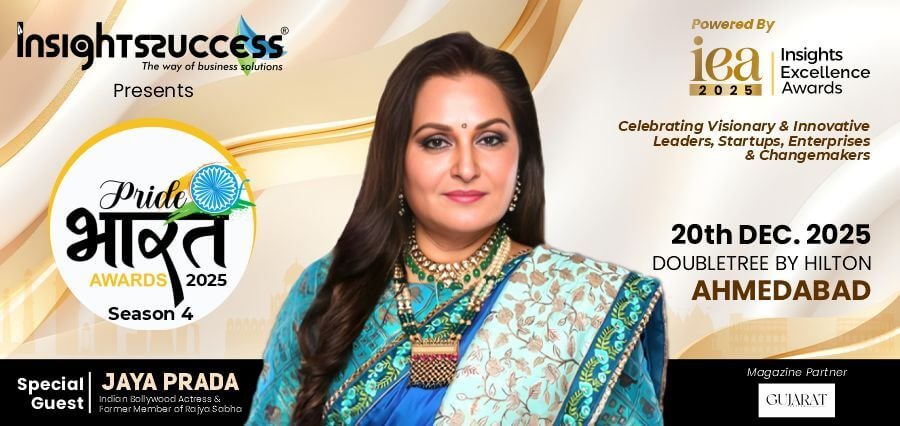
Pride of Bharat 2025 Set to Unite India’s Most Influential Business Leaders in Ahmedabad
Ahmedabad, India, December 2025 Every great business journey begins with a decision to create something that did not exist before. It starts when a founder takes a first step, when a small team believes in a big dream, or when a leader chooses courage over comfort. Pride of Bharat 2025 will celebrate those decisions. Insights Success Media and Insights Excellence Awards will host the event on December 20, 2025, at DoubleTree by Hilton in Ahmedabad. Gujarat Review will serve as the official magazine coverage partner for this special celebration. This event invites business leaders to look back on the challenges they overcame and the results they achieved. It brings together innovators who kept working when others stopped and thinkers who turned ideas into successful ventures. Some created technological solutions. Some built sustainable products. Some generated employment and inspired entire communities. Pride of Bharat 2025 will recognize these achievements and share their stories with a national audience. The celebration will welcome Jaya Prada as the Chief Guest of Honor. She is known for her successful film career and her experience as a Member of Parliament. Her presence will inspire participants who believe in growth, culture, and service to the nation. She will join entrepreneurs, corporate leaders, investors, and innovators for a celebration that emphasizes excellence and recognition. Attendees will take part in networking sessions and interactive conversations on brand building, technology adoption, sustainability, performance, and industry transitions. The event encourages leaders to share practical insights and connect with people who believe in growth through teamwork and fresh thinking. It offers a chance to make valuable contacts and explore business partnerships that can expand across states and sectors. Insights Success Media, with its impeccable reach of 1.2 million monthly readers digitally, designed the event alongside the Insights Excellence Awards to give visibility to deserving individuals and organizations. This gives participants a strong media presence and long-term visibility in the business community. Pride of Bharat 2025 recognizes achievements in leadership, revenue growth, workplace culture, innovation, corporate governance, and social responsibility. Each award sends a message that progress comes from purpose and consistency. For more information, visit the official event page. Disclaimer – This press release is the exclusive property of Insights Success and is being circulated solely for public relations purposes. All content, including text, data, and creative material, is protected by copyright and any associated intellectual property rights belonging to Insights Success. Read Also : ADEETYA MOHTA (NAGPUR): FIRST INDIAN MAN IN THE WORLD SINGLE PARENT TO ADOPT 3 MALE KIDS BRAHMA (CREATOR) VISHNU (PRESERVER) MAHESH SHIVA (DESTROYER)

Moore Threads Soars Over 400% on Shanghai Debut After $1.1 Billion IPO
Prime Highlight: Moore Threads surged more than 400% on its Shanghai trading debut after raising $1.1 billion, signaling strong investor confidence despite U.S. sanctions. The company plans to use the new capital to accelerate development of next-generation, self-developed AI training and inference GPUs, reinforcing China’s push for chip independence. Key Facts: The stock is trading at 98 yuan, over five timesits IPO price of 114.28 yuan, marking one of the strongest debuts in China’s semiconductor sector. S. export controls have blocked Moore Threads and other Chinese firms from accessing advanced chip-making technology, prompting the rapid growth of domestic alternatives such as Huawei, Cambricon, Enflame, and Biren. Background: Moore Threads, a Beijing-based graphics processing unit (GPU) developer widely known as “China’s Nvidia,” surged more than 400% during its trading debut in Shanghai after completing a $1.1 billion initial public offering. The stock opened strongly and is now trading at 584.98 yuan, more than five times its IPO price of 114.28 yuan. CITIC Securities served as the lead underwriter for the listing, while BOC International Securities, China Merchants Securities, and GF Securities acted as joint book runners. The company said the fresh capital is essential for speeding up research and development of next-generation, self-developed AI training and inference GPU chips. Part of the proceeds will also support its working capital needs. Moore Threads’ strong debut comes even as the company remains under U.S. sanctions imposed in 2023. These restrictions have blocked it from getting advanced chip-making technology and using overseas factories. Even with this pressure, the firm has become a key player in China’s push to depend less on American chipmakers, especially Nvidia. China’s push to build a self-sufficient semiconductor ecosystem has encouraged the rise of several domestic AI chip developers. Alongside Moore Threads, companies like Huawei and Cambricon are growing quickly. Cambricon’s shares have already risen more than 100% this year, showing that investors are very interested in China’s own chip industry. U.S. export controls have prevented Nvidia from selling its most advanced AI chips to China for years. Recently, China has also taken steps to restrict imports of Nvidia products as it promotes local alternatives. Newer companies like Enflame Technology and Biren Technology are entering the market as well, aiming to meet the rising GPU demand previously filled by Nvidia. Chinese regulators continue to clear more semiconductor IPOs, accelerating the country’s drive for AI and chip independence. Read Also : Google DeepMind to Open Its First Automated Research Lab in the UK

The Most Influential Leaders Transforming Middle East Hospitality, 2025
The Most Influential Leaders Transforming Middle East Hospitality, 2025 Ahmad Kazem exemplifies resilient leadership in modern hospitality, steering FP Le Verdun through regional challenges with a people-first philosophy. His servant-leadership approach, operational mastery and commitment to innovation, sustainability and authentic guest experiences continue to elevate the property while inspiring the next generation of hospitality professionals. Digital Link Quick highlights Quick reads

Catalyzing Innovation: Visionary Leadership Trends in Middle Eastern Hospitality
The Middle East hospitality industry has been substantially transformed in the last several years. This transformation is basically the outcome of a farsighted leadership that figured out the exact point where the combined demands of tourists, economic objectives of the region, and the worldwide sustainability requirements converge. Leaders in the industry are not only reacting to the need for good-quality lodging, but they are also foreseeing the following trends of travelers by integrating innovative ideas that help to redefine the concept of hospitality in the modern era. It is through the renewal of luxury resorts and the planned extension towards the mid-market segments that hotel operators and developers are taking the lead in a long-term perspective. They are creating properties and services that transcend the traditional models of service and accommodation. Their work is designed to immerse visitors in an experience that, along with being culturally authentic, environmentally friendly, and technologically advanced, sets out to establish a new standard for hospitality that is modern and profoundly linked to the region’s unique identity. Sustainable Technology Regional decision-makers are turning sustainability trends from a peripheral “nice to have” into a core strategic direction. The GCC-based hospitality sector is progressively adopting environmentally friendly measures, regenerative design, and eco-friendly facilities in their developments. The industry is not only showing its alignment with global sustainability standards but also attracting travelers through iconic initiatives such as eco-luxury resorts in Oman and solar-energy-based hotels in the UAE. These initiatives cover a wide range of activities starting from green building certification and solar-powered electricity generation to water recycling schemes and sourcing locally-produced food and materials. To make the customers highly comfortable and to give them a personalized human touch rather than a cold automated process, hotels are rolling out AI-powered automated check-ins, smart-room controls, predictive guest-preference systems, and virtual concierge assistance services. Top managers, who are leading the change, not only consider hotels as a temporary accommodation but also as eco-friendly living spaces where health and comfort exist together. This concept has resulted in the emergence of regenerative hospitality, a term used by industry insiders to denote a new hospitality model that merges environmental concern with high class to create the new generation of products which are both luxurious and eco-friendly. Redefining Guest Experiences The concept of luxury in the Middle Eastern hospitality industry has shifted away from flashiness and grandeur. Trendsetting hoteliers choose to invest more energy into deeply immersive, extremely personalized, and culturally authentic experiences that customers recall for a very long time. To achieve this, hotels are progressively implementing the idea of “immersive storytelling” whereby local culture, heritage, design aesthetics, and personalized services become the guest’s interaction at every touchpoint. This transition can be seen in such offerings as the tailor-made culinary experiences featuring local cuisine, art exhibitions presenting local artists, wellness retreats based on traditional practices, stays at private villas, and culturally themed events. Moreover, hotels are going beyond appearances to produce experiences that touch on the guests’ emotions and make them feel a genuine affinity for the local communities. For instance, a luxury mountain resort can elevate the stargazing experience by integrating traditional Bedouin storytelling. On the other hand, hotels located in metropolitan areas such as Dubai or Riyadh could provide that along with the local culture and heritage tours combined with specially crafted wellness programs. The change marks the different expectations of the new generation of travelers which mostly consist of millennials, Gen Z, wellness seekers, and culturally curious tourists – a group of consumers that value the authenticity of the experience, their health, and the acquiring of meaningful experiences more than extravagant luxury. Strategic Hospitality Expansion One of the most significant changes that the top management facilitated is the methodical spreading of hospitality infrastructure throughout the Middle East region which is largely driven by high tourism targets, economic diversification plans, and global events on a large scale such as the World Expo, Formula 1 races, and international cultural festivals. The region is witnessing its hotel-construction pipeline going to a whole new level of what has never been seen before, with the active projects in the area numbering in the hundreds, thereby adding the new rooms by the tens of thousands every year. Saudi Arabia, the UAE, Oman, and Egypt are leading this growth, driven by visa reforms, eased foreign investment regulations, and the implementation of comprehensive tourism-focused policies. Leading firms in the sector are going using a diversified strategy to meet the needs of luxury travelers and business tourists, families, wellness seekers, and long-stay residents as well. The growth strategies of the regions have turned the mid-market hotels, boutique properties, and mixed-use hospitality projects into the core, which shows the realization that sustainable tourism is a matter of inclusivity and accessibility for different demographic and economic segments. The growth is not just about the increase of the stock of the rooms; it is a long-term vision where hospitality becomes one of the main elements of economic change. In fact, hotels are the engines of employment, training, and skill development, thus making a notable addition to societal growth beyond the hotel industry. Conclusion Currently, the Middle Eastern hospitality sector is a fusion of daring foresight, well-planned capital infusion, and rapidly changing guest desires. Whether corporate hotel groups or national-level tourism strategists, the regional leaders, are directing the industry to a sustainable, authentic, tech-savvy, and sizable future. Creative leadership in hospitality is setting a fresh global standard as the region speeds up its way to the ambitious tourism and economic goals. The Middle Eastern pattern is a convincing case to the investors, stakeholders, and industry watchers of what hospitality can be if it is led by insight and morals. It can be the main contributor to economic diversification, the source of cultural enrichment, and a way to have sustained growth. In essence, the future of Middle Eastern hospitality hinges on a mix of factors such as luxury and responsibility, technology and human connection, and expansion and environmental stewardship. Read Also
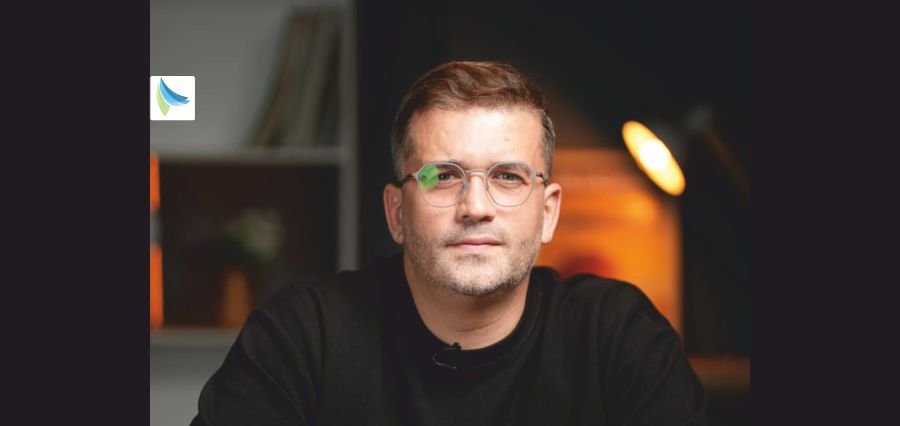
Ahmad Kazem: An Architect of Resilience Steering Modern Hospitality Through Turbulent Times
In the high-stakes arena of global hospitality, where ephemeral moments become lasting memories, there are leaders who don’t just manage properties, they cultivate experiences. Step into the world of Ahmad Kazem, General Manager of FP Le Verdun, a distinguished Marriott International property, and you encounter such a figure. His is a philosophy that sees hospitality not through the lens of transaction, but as a genuine calling to enrich lives and build meaningful human connections. This powerful, human-centric vision, deeply rooted in the ethos of servant leadership, is the creative energy driving the hotel’s success. His journey is far from ordinary; it’s a narrative of passion ignited early, honed through decades of experience, and tested against unprecedented regional challenges, all while maintaining an unwavering focus on his people. His career trajectory is a meticulously constructed masterpiece, built not by swift leaps but by comprehensive mastery. His early start in the restaurant business sparked a lifelong passion for hospitality. Armed with a Master’s in Hotel Management and several leadership program completions such Cornell University, he deliberately immersed himself in every facet of the operation, gaining crucial hands-on experience across key departments, from food & beverage to finance. This cross-departmental exposure granted him a solid, 360-degree understanding of the full operation, enabling him to drive consistent growth and exceptional performance throughout his journey. Today, he channels that depth of insight into a leadership style that is genuinely refreshing: a strategic mind that champions a “people first” culture and consistently elevates global standards through the authentic warmth of the local touch. Leadership Defined: A Servant’s Heart at the Helm The engine driving Ahmad’s management style is his conviction in servant leadership. For him, the role of a General Manager is not to issue directives, but to support, guide, and empower the team to perform at their absolute best. He focuses intensely on the line staff, recognizing them as the face of the operation and the key to success. This deliberate focus acknowledges that the guest experience is ultimately shaped at the point of interaction, making the line team the most vital part of the operation. He delivers a profound, daily visual statement of this belief: in the staff area of FP Le Verdun, the organizational chart hangs upside down. This tangible symbol places the General Manager and the executive team at the bottom and the line teams at the top. It serves as a simple yet powerful reminder that true leadership is dedicated to serving the people who serve the guests. This distinct approach has demonstrably built strong engagement, accountability, and great results across the teams he has led. He firmly believes that associate engagement is one of the most important metrics for success, understanding that when people are engaged, positive results, including financial improvements, naturally follow. Ahmad Kazem ensures the “People First” culture is not just a slogan but a living, breathing part of daily life. He genuinely checks in on the well-being of his teams, addressing needs not just professionally, but personally as well. His leadership extends to providing emotional and, when necessary, financial support during difficult times. He makes a point of celebrating achievements, recognizing efforts, and meticulously ensuring the work environment is well taken care of. His teams also enjoy a workplace where things are kept fun with small surprises, little indulgences, and team activities that powerfully remind them they are truly appreciated. The goal is to cultivate a space where people feel valued, supported, and motivated. The Art of Authentic Excellence FP Le Verdun is celebrated for its masterful integration of global excellence with local authenticity. Ahmad Kazem ensures this unique balance permeates every facet of the guest experience. The property holds a strong reputation in the Lebanese market spanning over 20 years, known for delivering international service standards while maintaining a genuine local touch- a characteristic that truly reflects the spirit of the Four Points by the Sheraton brand. His strategy for enriching the guest experience blends the international with the deeply local: Culinary Fusion: The food offering is a thoughtful blend of international dishes and authentic Lebanese cuisine, which is cherished for its rich flavors, freshness, and variety. Local Support: Through the Best Brews program, the hotel serves draft beers sourced from local suppliers. This initiative proudly celebrates authenticity while actively supporting local businesses. Ahmad Kazem anchors his approach to service in the fundamental truth that hospitality has always been about people, built upon human interaction and genuine connection. The key to exceptional service, in his view, is maintaining a personal touch: being friendly, approachable, and warm, yet always professional. The teams focus on delivering personalized service in a relaxed, comfortable atmosphere. They meticulously review guests’ past stays, understand their preferences, and pay close attention to small details, ensuring they consistently not only meet but exceed expectations every time. He recognizes that guest satisfaction is the second most crucial metric for success, demonstrating that the effort put into personalization pays clear dividends. Innovation, Resilience, and a Vision for a Greener Future Under Ahmad’s direction, sustainability at FP Le Verdun is viewed not as a passing trend, but as the future they are actively building for their children, essential for a greener and healthier world. His core focus is to embed a culture of sustainability within every team member, ensuring it naturally integrates into their daily tasks. The property has achieved numerous operational milestones: utilizing energy-efficient lighting and equipment, installing water-saving devices in showers and taps, implementing waste sorting, and actively managing food waste through careful portioning, menu planning, and local sourcing. It is a holistic effort to make sustainability an intrinsic part of the daily operation. Beyond environmental stewardship, Ahmad Kazem actively nurtures a culture of innovation. He constantly prompts, and encourages his teams to ask, how they can enhance the workforce, improve the guest experience, increase revenue, reduce costs, or find smarter, more effective alternatives. A hallmark of this innovative spirit is the ‘BIR’ project, or Business In-Room. This practical solution provides guests with a

Most Transformational Leader Making An Impact In 2025
Most Transformational Leader Making An Impact In 2025 In a year defined by reinvention, innovation, and purposeful action, a select group of leaders stand apart for their ability to turn vision into measurable change. This edition honors Gurpreet Singh whose leadership transcends conventional success and inspires real transformation across people, industries, and communities. Digital Link Quick highlights Quick reads
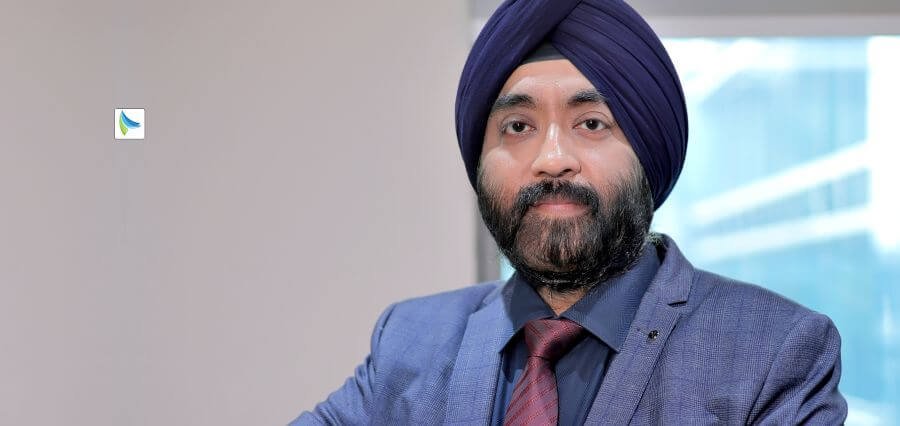
Gurpreet Singh: From Numbers to Narratives of Change
In the era of acceleration, when algorithms determine choices, and turbulence characterizes vision, change has turned into demand. However, not every leader realizes that actual change is not about embracing technology but a reconsideration of purpose. It requires the audacity to challenge what is working, the precision to restructure what is not, and the compassionate nature to make sure progress does not become an end in itself. The real change, however, begins inside. It is true that when a majority of leaders consider disruption as a storm that they have to withstand numerous challenges and come up with transformative solutions. Gurpreet Singh sees it as the wave that carries change. He has confronted complexity not by refusing to deal with it but by demystifying it- making ambiguity his architecture, crises his engines of reinvention. In all positions, he has reinvented finance as an adaptive and intelligent instrument. Where others would only perceive ledgers and figures, he views patterns of possibilities. His leadership is not about change management but rather about controlling momentum, making destinies where purpose, performance, and progress run in the same direction. He has a strong history of multiplexed experience in a career of more than 23 years as the head of finance strategy and transformation in IT, FinTech, and diversified environments. Being the CFO and head of strategic finance, he has spearheaded business growth, operational excellence, and financial discipline. Re-engineering Finance for the Future A Chartered Accountant with CS, CISA, CIA, and ACCA (UK) qualifications, Gurpreet blends technical depth and strategic acumen in finance transformation, business strategy, FP&A, controllership, and risk management. He optimizes capital structures, scales high-growth ventures, and strengthens investor confidence. Hailing from a humble public servant’s family, he values integrity, perseverance, and purpose. Outside work, he cherishes family time for grounding balance. A CFO’s Journey Across Conglomerates and Code Gurpreet’s journey began at Deloitte in Assurance, auditing major corporations. This foundation built his expertise in financial discipline, detail orientation, governance, and integrity. These core values guide his career. He then joined Aditya Birla Group, a leading Indian conglomerate, gaining deep insights into manufacturing and industrial operations. There, he observed how strategy, execution, and finance converge to achieve scale and sustainability. Transitioning to GE Capital proved pivotal, entering financial services. In leadership roles for the GE Capital-State Bank of India Joint Venture, Gurpreet mastered technology-driven transformation. He learned how digital tools and data analytics revolutionize finance, operations, and customer experience. At HCL Technologies, he took a global role in managing complex commercial structures for international clients while fueling profitable growth. While expanding enterprise transformation and global finance practice leadership, he advised Fortune 100 companies on tech-enabled restructuring and innovation. Shifting from a multibillion-dollar firm, Gurpreet became CFO at PayU, building the FinTech startup from scratch. He explored digital payments and new products in a disruptive, high-speed environment. Today, as CFO of Waisl, he leads digital transformation in transport infrastructure, creating solutions that improve passenger experiences for millions while driving partner profitability. Gurpreet finds privilege and passion in this impactful intersection of technology and purpose. Each phase, from global giants to agile startups, has driven continuous learning, transformation, and purpose. This reinforces his view that finance, fused with technology and strategy, propels business evolution and enduring value. Beyond the 50/50 Myth Gurpreet highlights, “Balancing professional and personal life, especially in a demanding leadership role, is less about achieving a perfect equilibrium and more about finding harmony through clarity and prioritization.” Balance starts with purpose and perspective. At work, he drives meaningful outcomes by empowering teams, promoting growth, and creating value. Effective delegation and trust in colleagues free him to focus on strategy over operations. With family, he disconnects fully to recharge and reflect, returning energized. Presence, not time, defines quality in boardrooms or at home. He maintains discipline through fitness, reading, and mindfulness to stay focused amid financial demands on resilience and judgment. Balance remains dynamic, requiring ongoing recalibration. Work may dominate at times, family at others. Alignment with core values ensures professional success never compromises well-being or relationships. Blending Discipline with Disruptive Innovation Gurpreet recalls, “My appetite for business has always been driven by curiosity, purpose, and impact.” He is driven to understand how strategy, people, technology, and finance converge to create enduring value, keeping him engaged in evaluating models, shaping growth, and leading transformation. He sees business as a platform for innovation and value creation, not just profit. Across IT, FinTech, and manufacturing, he has learned resilience, adaptability, and growth, reinforcing that success blends financial discipline with entrepreneurial agility. Guided by strategic pragmatism, Gurpreet balances ambition with accountability. He thrives on scaling businesses, unlocking efficiencies, and ensuring sustainable growth through sound stewardship. Equally, he invests in people, building trust, nurturing teams, and promoting empowerment. In essence, his drive is simple: contribute meaningfully, learn continuously, and leave every organization stronger. Thriving at the Intersection of Finance and Future Gurpreet is driven by continuous learning and the thrill of solving complex problems through innovative thinking. Every challenge, operational, strategic, or transformational, offers a chance to learn, adapt, and improve. Finance evolves with technology, regulation, and markets, demanding an open, curious mindset beyond technical skills. He thrives on exploring how new ideas, technologies, and models reshape operations and value delivery, keeping him energized and agile. He excels at connecting insights to action, turning complexity into scalable solutions: optimizing performance, driving digital transformation, or crafting growth strategies. Innovation means smarter, sustainable problem-solving and building resilience. Learning flourishes through diverse teams, fresh perspectives, and fearless experimentation. Gurpreet mentions, “I find immense satisfaction in cultivating environments where ideas can grow and where people feel empowered to question the status quo.” His passion is the ongoing journey of learning, evolving, and innovating, using each experience to create lasting impact for businesses, people, and ecosystems. Gurpreet’s Pivot to Profitable Resilience The COVID-19 pandemic tested leadership like never before, requiring agility, empathy, and decisive action. As a CFO, Gurpreet prioritized business continuity and employee well-being, blending financial prudence with human sensitivity. He

People First, Performance Always
The Leadership Balance Leadership is no longer a decision that people or performance have to be prioritized separately in the rapidly changing world of today. Those leaders who actually succeed in the long run – and therefore lead to lasting success – recognize that the two cannot be separated. They understand that the source of sustained performance is putting people first and that it is not at all a barrier to success but rather the most dependable engine of achievement. The leadership balance does not involve a choice of trade-offs but rather represents a disciplined philosophy. Among the features of this philosophy are empathy combined with accountability, compassion with clarity, human bonding with measurable outcomes. As a result of mastering this equilibrium, the leaders’ teams will not only work harder but also smarter, with a sense of purpose, vigor, and shared commitment. Putting People First is Not a Sentiment But a Strategic Move First of all, leading with a people-first approach does not signify lowering standards or shying away from tough decisions. What it means is that performance is the outcome of workplaces where every individual feels valued, supported, and mentally safe. Employees that trust their leaders are more inclined to bring fresh ideas without any hesitation, take ownership of their tasks, and be emotionally committed to the results. These employees will be engaged not because it is demanded from them but because they will feel that they matter. When people get recognized and listened to, productivity is no longer a metric to chase – it becomes a natural result. The leaders who focus on well-being and respect for their staff are doing this because it leads to positive outcomes, not because it sounds good. Accountability That Motivates, Instead of Scaring Performance is at its best when accountability is just, consistent, and openly communicated. Leaders who carry balanced accountability in their performance do not micromanage or manipulate – instead, they communicate the set of expectations clearly, give enough assistance to their teams, and are in control of the situation when it comes to their own follow-through. They establish the environment where progress is measured in an honest way and feedback is given for development purposes rather than for punishment. In this case, accountability turns into a tool for getting better, not for creating anxiety. It does so by transforming the latent potential into capability and the capability into excellence. If people are aware of what is required and are given the means to fulfill the task, performance will not be a show of force, but rather it will be a result of their efforts. Communication That Provides Clarity and Connection Both Good communication is extremely important for balanced managers. Without it, they wouldn’t be able to reach this delicate balance. Besides being direct and clear, communication strategies of leaders must also be humanistic. Leaders are to convey goals, deadlines, and priorities of work, but at the same time, they should also accept doubts, listen attentively, and answer with understanding. Clarity functions as a means of creating a path. Connection serves to generate the necessary drive. Neither of these elements is sufficient for conversion of the plan into a practical action. Good leaders communicate not to gain obedience, but to produce coordination. They communicate not only what is to be done but also why. They let others see the decisions being made, rather than keeping them in the dark. Transparency fosters trust, while engagement foster loyalty. People First, Performance Always The greatest leaders are aware of one very important fact: the act of putting people first is the one that leads to outstanding performance. When people are given respect, cultures become healthy, communication is clear, and accountability is effective, then the results will be the natural consequence. Leaders are not required to make a choice between caring and achieving. What they have to do is combine these two deliberately. People are not different from performance — they are the source of it. Leadership balance is all about recognizing this and, therefore, building success on trust, clarity, empowerment, and integrity. It is the creation of those groups who are able to perform not because they are forced upon, but because they feel pride. Read Also : Leadership Habits That Create Champions