






Lifelong curiosity, Enduring Impact: Richard Larson’s Legacy in Education, Innovation, and Human Progress
Richard Larson’s life and career are a testament to the transformative power of education and an enduring commitment to knowledge. For over five decades, Larson has demonstrated that learning is not a phase of life but a lifelong endeavor—one that continues to evolve, surprise, and inspire. From his earliest days as a student at MIT to becoming a globally respected researcher, professor, and mentor, his journey reflects a deep-seated belief that knowledge is not only valuable—it’s empowering. As B.B. King once said, “The beautiful thing about learning is that no one can take it away from you,” a sentiment Richard Larson embodies in thought and practice. His legacy extends far beyond academic credentials and research citations. What sets Richard Larson apart is his personal mission to make learning accessible, impactful, and lifelong. Whether through mentoring graduate students, co-founding educational programs with his late wife Mary Elizabeth Murray (“Liz”), or authoring books to simplify complex ideas for the public, his life’s work exemplifies how intellectual curiosity can ripple across institutions, communities, and generations. Through a commitment to both rigorous inquiry and compassionate education, Larson continues to inspire future innovators. Even in retirement, Larson’s journey is far from over. He remains actively engaged in spreading the principles of MODEL-Based Thinking and championing intellectual growth across diverse platforms. With humility and passion, he shares the wisdom gained over a lifetime of breakthroughs, mentorship, and discovery—reminding us all that the pursuit of learning is one of the most fulfilling paths a person can walk. Academic Foundation at MIT Richard Larson credits his foundational success to his time at MIT, where he arrived as an eager freshman at just 18 years old. Despite financial concerns from his father about commuting, Richard Larson found a home away from home at Phi Beta Epsilon (PBE), a fraternity based right on campus. This close-knit community nurtured his academic and personal growth in profound ways, providing a sense of belonging that shaped his undergraduate experience. Motivated by his fascination with systems and problem-solving, he continued his studies at MIT, eventually earning a PhD in Operations Research. As he neared the completion of his dissertation, an unexpected opportunity came his way: a faculty position offered by his advisor, Professor Alvin W. Drake. Though initially hesitant—unsure if he was ready to shift from student to professor—Larson embraced the role, beginning a long and distinguished academic career at MIT. This decision would mark the beginning of a lifelong relationship with the institution. Over time, he moved up the academic ranks, ultimately becoming a tenured professor. His tenure at MIT was characterized by continuous curiosity and an unwavering dedication to pushing the boundaries of both education and research. Mentoring Through Meaningful Relationships While Larson’s professional achievements are vast, what he found most rewarding was his interaction with students. More than lectures or textbooks, it was the mentor-mentee relationships that left the greatest impact. He guided numerous graduate students, often collaborating with them on pioneering research projects that went on to be published in top-tier journals. For Larson, teaching was never simply about transferring knowledge—it was about cultivating intellectual independence, curiosity, and creativity. Witnessing his students evolve into researchers, educators, and leaders across disciplines brought him unparalleled satisfaction. “The most fulfilling part of teaching,” he often says, “was watching others surpass me—achieving things I had only imagined.” These relationships weren’t limited to the classroom. They were deep, collaborative, and often transformative for both student and mentor. They helped form a research community that was rigorous, creative, and focused on making a meaningful impact in the real world. Shaping the Next Generation of Thinkers Even after stepping away from the classroom, Larson continues to impact the next generation through his public education efforts. He is particularly passionate about MODEL-Based Thinking, which he now brings to a broader audience through his book, MODEL THINKING For Everyday Life. In this work, he emphasizes that conceptual models—once thought to belong only in academic theory—can guide real-life decision-making. The book aims to arm individuals with tools to think critically, make smarter decisions, and solve everyday problems through structured reasoning. Whether one is analyzing financial risks, managing time, or deciding on healthcare plans, Larson believes that models serve as intellectual compasses in a chaotic world. Through this initiative, Richard Larson remains true to his core belief: education is for everyone, not just scholars. He continues to democratize knowledge, turning complex theories into practical wisdom that anyone can understand and apply. The Lifelong Habit of Curiosity Richard Larson is a vocal advocate for lifelong learning. Inspired by Einstein’s philosophy that “a day without learning is a day wasted,” he has made continuous curiosity the foundation of his life. This curiosity extends beyond research and academia—it permeates his daily life, from casual observations of nature to deep dives into emerging technologies. Some of Larson’s most profound insights came when he least expected them—during sleep. Twice, he awoke from dreams with fully formed solutions to complex problems. One of these instances led to the Hypercube Queueing Model, which would become a cornerstone of emergency response optimization. These moments serve as powerful reminders that the mind never truly stops learning, even in rest. He encourages everyone to stay open to new information, new experiences, and new perspectives. To him, learning is not about age, status, or credentials—it’s about mindset. Creating Impact Beyond the Campus Richard Larson’s commitment to education extends beyond MIT’s walls. One of his proudest contributions is his support for educational institutions like Notre Dame Cristo Rey High School, which serves students from underrepresented backgrounds. He believes that quality education should not be a privilege but a right—accessible to all who seek it. His generosity and vision culminated in the establishment of the Richard Larson Chair in Data, Systems, and Society at MIT. This endowed position ensures continued innovation and scholarship in interdisciplinary fields that intersect technology, society, and policy. For Larson, this isn’t just a professional achievement—it’s a personal commitment to future generations. By fostering inclusive, impactful education, Richard Larson

Most Influential Leader To Look Up To In 2025
Most Influential Leader To Look Up To In 2025 Dr. Evgeniya Dudinova stands as one of the most influential leaders to look up to—not just for what she has accomplished, but for the values she embodies: authenticity, vision, and the unyielding belief that growth is always possible, no matter the conditions. Quick highlights Quick reads

Making Impossible Possible–Dr. Evgeniya Dudinova: Supporting UAE’s Food Security with AGTHIA
Everything is possible if you have the wit, the will, and the power of your vision to clear the picture in front of you. As the daughter of a resolute Russian farmer, Dr. Evgeniya Dudinova’s journey of emerging from a crisis situation to winning over another crisis scenario is akin to a seed growing amidst whatever weather and soil conditions it faces to later grow into a bush, plant, or a tree feeding the ever-hungry world. Today, being the Procurement Director – Commodities at AGTHIA, Dr. Evgeniya Dudinova reflects, “Sometimes I think it was my destiny! My father – a small Russian farmer – loves his lands and plants. He grows them and not only sees them as seeds but as a part of sowing his soul with every seed!” From Russian Farmland to Global Commodities Leadership Thus, her story began in the rural heartland of Russia, where her father, once the Chief Agricultural Engineer of a collective farm, risked everything to pursue independent farming just as the Soviet Union was collapsing. Amidst economic instability and grain import dependence, he planted the seeds of resilience—seeds that would later shape his daughter’s destiny. Raised in the rich soils of the Krasnodar region, now a global wheat-exporting powerhouse, Evgeniya’s early years were steeped in agriculture. She excelled academically, earning a gold medal in school and later enrolling at KUBSAU, one of Russia’s top agricultural universities, the same institution her father attended. Her academic focus on the cost and profitability of sunflower seeds was rooted in personal experience—she spent countless summers clearing fields and even hand-harvested corn when machinery failed. These early lessons instilled a work ethic and understanding of agribusiness that would define her career. After earning her red diploma with distinction, Dr. Evgeniya Dudinova joined Cargill as a Commercial Management Trainee in 2010, despite having a competing offer from a multinational consumer goods company. Her decision was inspired by the meaningful impact of feeding the world, and her early career involved navigating the aftermath of Russia’s grain export ban. She quickly rose through the ranks, moving from domestic supply chain management to international trading, and eventually played a pivotal role in opening the GCC market to grains from Ukraine, Romania, and Bulgaria—beyond the traditional Russian supply. In 2019, she joined AGTHIA Group, where she was entrusted with reshaping procurement strategy amid volatile global markets. Leveraging her deep knowledge of commodity flows from the Black Sea, Baltics, and Australia, she helped AGTHIA transition from a regional buyer to a leading force in the Gulf and MENA region. Her leadership in launching solo Panamax import programs and securing competitive wheat and barley origins revolutionized AGTHIA’s import structure. Her academic pursuits, including a PhD in World Economy, complement her practical expertise. Dr. Evgeniya’s career stands as a bridge between field-level grit and boardroom strategy—a legacy of feeding not just one family farm but millions across the globe. Driving Strategic Transformation in Grain Trade and Market Collaboration Among Dr. Evgeniya’s many accomplishments, one achievement stands out as a defining milestone in her professional journey—leading AGTHIA Group’s evolution from a part-cargo importer to a strategic powerhouse in the GCC grain trade. Taking on the complex challenge of commodity risk management in a fragmented and unpredictable market, she pioneered AGTHIA’s transition into full Panamax-size import programs. Her breakthrough came in 2019 with the historic arrival of MV INCE TOKIO—AGTHIA’s first secured Panamax vessel carrying Ukrainian milling wheat. This moment symbolized more than just logistical success; it marked the beginning of a new procurement mindset for Grand Mills—which is a part of AGTHIA’s Agri-Business portfolio—one built on agility, risk-informed decision-making, and cross-functional trust. Coordinating between port operations, quality control, and leadership support, Dr. Evgeniya Dudinova ensured seamless execution and introduced a new specification standard—“Consensus Spec”—balancing premium quality with market liquidity. Leveraging her global trading experience and deep market knowledge, she empowered her team to think bigger. Through a flexible specification strategy and precision sourcing, AGTHIA became a strong regional competitor, challenging multinational trading houses. The company maintained top-tier quality standards, supported by the only GAFTA-approved lab in the UAE, while achieving cost-effective import diversification—expanding from milling wheat to including Black Sea feed barley and corn. What sets Dr. Evgeniya’s leadership apart is her ability to foster collaboration over competition. Recognizing the unique spirit of the UAE’s import market, she facilitated a strong cooperative relationship with other key players like Al Ghurair. Rather than vying for dominance, the two leading millers shared strategic insights, managed overlapping risks, and supported each other in times of supply pressure or late arrivals. Her vision has reshaped procurement dynamics in the region, transforming AGTHIA into a resilient and forward-looking player while strengthening a market culture built on transparency, mutual growth, and shared intelligence. In her words and actions, Dr. Evgeniya Dudinova continues to demonstrate that strategic foresight, operational excellence, and trusted partnerships can move markets—and feed nations. Resilience Amidst Global Volatility: Dr. Evgeniya Dudinova’s Strategic Leadership at AGTHIA As Procurement Director for Grains and Commodities at AGTHIA Group PJSC, Dr. Evgeniya Dudinova faces an ever-shifting landscape marked by export bans, geopolitical tensions, and market disruptions. From Russia’s quota systems to India’s wheat export restrictions and the volatility in the Black and Red Seas, the challenges are formidable. Yet, her approach is grounded in foresight and flexibility. Unlike paper trading, where contracts can be canceled under force majeure, physical trading demands robust contingency planning. Dr. Evgeniya Dudinova meets this head-on by diversifying sourcing strategies and always preparing multiple fallback plans—from B through E. This ensures continuity in supply even under worst-case scenarios. Investments in technology, such as upgrading Buhler milling lines, have enhanced transparency and operational efficiency, supporting new diversification efforts across flour and feed programs. At the heart of her strategy lies relentless collaboration—within her team with global suppliers, shippers, surveyors, and port operators. The Grain Desk’s daily tracking system has become a vital tool for risk mitigation. Acknowledging the collective contributions of every team member has been key to navigating

Essential Skills for Modern Procurement Leadership Excellence
Modern Procurement is no longer an office function that focuses solely on managing costs and transacting efficiently. Procurement leaders today are crucial to the strategic definition of an organization’s power, agility, and competitiveness in this day’s complex, global, and technology-driven business. As increasingly volatile supply chains and environmental, social, and governance factors set the pace, procurement professionals’ expectations have entirely changed. Procurement leadership now needs to be a powerful and adaptive set of skills—a blend of proven commercial capability with emerging-edge competencies in data, collaboration, and sustainability. To thrive in this modern age, it is not necessarily about getting the cheapest price, but value creation, transparency, and innovation through the supply base. Strategic Thinking and Business Acumen Strategic thinking lies at the center of modern procurement leadership triumph. Leaders have to comprehend how procurement aligns with the overall business vision and make organizational long-term success choices. That involves looking at macroeconomic trends, seeing opportunities and risks in the supply base, and working with internal stakeholders to generate growth and innovation. Today’s procurement leader is more than a negotiator—today’s procurement leader is a business executive. He needs to be able to speak to the value contribution of Modern Procurement in driving enterprise value, from working capital optimization to empowering go-to-market strategies at a faster clip through agile sourcing. Digital Fluency and Data-Driven Decision-Making As procurement gets more digital, data fluency and technical acumen have become the standard. Executives will need to utilize digital tools—everything from spend analysis and e-sourcing technology to AI-powered demand forecasting—leverage insights, automate processes, and make fact-based decisions in the moment. Ease with technology such as ERP software, SRM software, and online procurement dashboards enables leaders to remain in control of complexity, monitor performance, and identify areas of inefficiency. Much more critical, the capacity to interpret data and convert it into strategic action separates the great from the good procurement leaders. Relationship Management and Stakeholder Engagement Modern Procurement success is based on relationships—both internal and external. Effective leaders have to lead various stakeholders, from finance and operations to legal, IT, and C-suite executives. Internally, this requires building trust and aligning procurement efforts with cross-functional objectives. Externally, it means building supplier partnerships that are collaborative, transparent, and performance-driven. The era of it being all about tough supplier relationships is over. Supplier partnering today is all about value co-creation, reducing risk, and an assurance of continuity and innovation. It will require a very high emotional intelligence, empathy, and communication capability for a procurement leader to develop effective partnerships and influence without power at many levels of the organization. Risk Management and Resilience Planning Risk management is a leadership imperative in the post-pandemic reality where there is supply chain disruption, geopolitical risk, and climate volatility. Modern Procurement leaders need to craft effective contingency plans, perform supplier risk analysis, and diversify sourcing models in order to facilitate business continuity. This encompasses not just recognizing and controlling operational risks, but also integrating ESG-associated risks in procurement plans. The managers need to be apprised of due diligence, compliance, and scenario planning so that they can anticipate disruptions and respond with agility. Sustainability and Ethical Sourcing Today’s Modern Procurement leadership is necessarily associated with sustainability. Organizations are now more than ever expected to portray ethical procurement, minimize carbon footprints, and pursue socially responsible procurement. The leaders must embed sustainability in supplier assessment, contract negotiation, and performance evaluation. This involves interaction with suppliers to ensure labor rights, environmental and governance standards, are respected in the supply chain. Leaders should also be aware of sustainability reporting systems like Scope 3 emissions and how procurement can drive meaningful change against the ESG objectives. Agility and Change Management As markets and technologies are changing at a breakneck pace, procurement leaders need to respond and adapt. Whether it is implementing a new digital platform, reacting to regulatory mandates, or dealing with global supply shortages, the skills to lead in the midst of change are critical. Modern Procurement leaders are most often required to lead transformation programs. These need skills in advanced change management approach, stakeholder management, training, and rollouts in stages. Agility also implies a growth mind-set—embracing new ideas, testing new models, and learning from failure. Negotiation and Commercial Acumen Strategic leadership is more than negotiating, but commercial acumen is a necessity. Procurement leaders must be master negotiators, capable of trading cost against quality, service, and risk. Above all, they must know when to negotiate price and when to negotiate long-term value. This is about learning how to read cost drivers and market trends, contract laws, and supplier psychology. Great leaders employ a combination of hard facts and soft skills in order to build win-win relationships that benefit business as well as supplier interests. Conclusion: Redefining Excellence in Procurement Leadership Procurement leadership these days is about a lot more than conducting effectiveness. It’s about strategic impact, digital empowerment, values-based stewardship, and agility. The new leader needs to be everything to everyone—all change agent, data scientist, sustainability advocate, and talent developer—all at once and with a consistent concentration on value creation. As procurement itself becomes increasingly a strategic force behind business success, so must its leaders. Through the acquisition of a wide-ranging, holistic set of skills, today’s procurement leaders are not only driving transactions—you bet—but transformation as well. Read More: Developing Next-Generation Procurement Leadership in the UAE

Developing Next-Generation Procurement Leadership in the UAE
With the United Arab Emirates (UAE) being in the process of growing its economy and increasing its competitiveness on the international stage, procurement has now emerged as a leading driver for national development. The days are over when procurement was restricted to cost control, and transactional efficiency as procurement plays a central role now in driving innovation, sustainability, and resilience in the public and private sector. With a changed world led by vision-based aspirations like the UAE Centennial 2071, procurement leaders must reinvent themselves to meet the needs of a digitally empowered, highly interconnected, and green economy. The needs of future procurement leaders in the UAE are not merely a business need—it’s a national need. They must rebalance thinking, design, and capabilities to connect procurement to more ambitious economic transformation goals, from industrialization and infrastructure development to clean energy and digitalization. From Operational to Procurement Leadership Procurement was traditionally transactionally—compliance, tendering, and price negotiation. Today, next-gen UAE leaders are likely to behave as strategic business partners. That is to link procurement objectives with national and corporate strategy, understand market behavior, and deliver value throughout the supply chain. The shift to strategic procurement requires leaders who are able to think end-to-end throughout the enterprise, collaborate with C-suite stakeholders, and anticipate shifts in demand, regulatory, and international supply markets. These leaders need to provide commercial insight and meaningfully contribute to investment, risk, and sustainability choices. Adopting Technology and Data Digitalization is the cornerstone of the UAE’s Vision 2031, and procurement is no exception. The confluence of AI, blockchain, predictive analytics, and smart contracts is transforming how procurement functions are performed—from vendor qualification and contract management to spend analysis and risk management. The next-generation procurement leaders therefore must be technologically aware. They must lead the adoption of new technology, lead change management, and make real-time data-driven decisions. In today’s highly technological world in the UAE, particularly in sectors such as logistics, building, and healthcare, the capability to leverage data and automation as an enabler. Upskilling in digital procurement technologies, e-sourcing solutions, and intelligent SRM platforms is imperative. Beyond technologies, leaders must understand how to obtain insights, maximize performance, and make digital strategy function effectively with human judgment. Building Resilience in an Active Supply Environment COVID-19 pandemic, local turbulence, and global geopolitics have highlighted the need for supply chain robustness. For the UAE as a key re-export center and gateway for trade, the assurance of supply chains’ adaptability and robustness is of strategic importance. The next generation of procurement leaders will need to have the ability for risk management, diversification of the supply base, and scenario planning. These include identification of areas of supply chain risk, creating alternative sourcing bases for suppliers (geographic and global) and engaging in partnerships with regulators to obtain unconstricted flows of trade. The drivers of domestic manufacturing and localization of supply, fueled by national industrial policies, also necessitate leaders to have the capacity to create sustainable, locally-tailored procurement systems. Sustainability as a Leadership Imperative Through plans like the UAE Net Zero 2050 strategy and expansion of ESG investing, procurement is increasingly being recognized as a force for sustainable development. Future generations of leaders should incorporate ESG considerations into the evaluation of suppliers, procurement, and performance measurement. This is not compliance-driven–it is creating long-term value. Sustainable procurement creates reputation through the brand, reduces environmental footprint, and delivers convergence to international investor expectations. Leaders in the UAE need to gain capability in the fields of sustainability reporting, ethical procurement, and green procurement practice in order to lead in advance of regional and global best practice. With its attention on hosting international forums such as COP28, the priority on being a climate leader further put the UAE in the lead—prioritizing sustainability skills at the top of procurement leadership development. Talent Development and Localization Empowering future procurement leaders in the UAE also requires investing in local human capital and creating proper career progression streams. With the Emiratisation drive gaining prominence, more efforts are being directed towards finding, developing, and channeling Emirati procurement experts in government agencies and private industry. Cultivating great procurement leadership is achieved by crossing technical skills to focus on soft skills like negotiation, cross-cultural communications, and stakeholder management. Mentorship initiatives, global certification (like CIPS and PMP), and executive coaching can equip emerging leaders with the competencies needed to handle complexity and build high-performance teams. An effective talent pipeline guarantees continuity in procurement change efforts while supporting the UAE vision of developing a knowledge-based economy. Collaboration and Ecosystem Mindset Procurement is no longer an isolated function—a technology-driven field fueled by ecosystems. The leaders must work together across industries, engage with startups, technology suppliers, and universities, and engage in policy discussion. Free zone-sovereign-multinational collaborations offer platforms for collaborative innovation within the highly integrated ecosystem of the UAE. Future procurement professionals need to adopt an ecosystem procurement leadership approach—facilitating value co-creation, sparking innovation in suppliers, and leveraging collective intelligence. It is best suited for high-impact sectors like aviation, energy, logistics, and infrastructure where procurement intersects with national development goals. Conclusion: Procurement Leadership Fit for the Future The UAE is building its future with dint of vision-inspired boldness, investment-inspired visions, and an innovation and sustainability culture. Thus, procurement leadership must transform—not gradually but fundamentally. It must be given a new definition of competencies, embrace digital transformation, and hold values of ethics, strategy, and co-creation of value. As businesses strategize for the future, developing tomorrow’s procurement leaders is not only a question of talent—it’s a competitiveness imperative. They not only propel operational excellence but facilitate the development of the resilient, sustainable, and future-proof economy that the UAE is constructing. Read More: Essential Skills for Modern Procurement Leadership Excellence

Apple Reveals macOS Tahoe 26 with Liquid Glass Look and Improved Spotlight
Prime Highlights: macOS Tahoe 26 features a modern “Liquid Glass” design update with floating elements and transparent effects. Spotlight gains significant productivity enhancement through new keyboard shortcuts and editable workflows. Key Facts: Apple changes macOS naming convention to a year-centric model—Tahoe is now officially macOS 26. Beta developer is available now; public beta is coming in July, with a complete rollout in fall 2025. Limited support to Apple Silicon and some Intel Macs with T2 chips. Key Background : macOS Tahoe 26 is Apple’s newest Mac operating system, announced at the 2025 Worldwide Developers Conference. It brings a new visual identity named “Liquid Glass,” intended to make macOS more contemporary, dynamic, and visually consistent with other Apple platforms such as iPadOS and visionOS. The Liquid Glass theme uses a frosted glass-like, translucent layer on principal elements of the interface, such as menus, toolbars, sidebars, the Dock, and even volume and brightness overlays. This creates a sense of depth and lightness for macOS, with objects seemingly floating above the desktop. Drawing from Apple’s Vision Pro interface visual clues, the design treats layers and depth but still provides the ability to customize for accessibility and personal taste. In addition to this visual refresh, Apple focused on personalization. Users have the ability to now put widgets on the desktop rather than confine them to the Notification Center. The widgets are interactive, resizable, and can even integrate with the wallpaper. Other theme choices allow users to choose from new accent colors, icon shapes, and even folder designs—offering a very customized experience to the Mac. Productivity got focus in Tahoe as well. Spotlight has been reimagined as a more powerful and intelligent assistant. It also now features keyboard-based navigation shortcuts: Command + Space launches Spotlight, then Command + 1 through 4 to see Apps, Files, Shortcuts, and Clipboard History respectively. New “Quick Key” shortcuts enable faster execution of tasks through just the keyboard, like opening specific files or sending template emails. Apple is also going ahead with its shift from Intel processors. macOS Tahoe 26 will be compatible with Macs powered by Apple Silicon (M1 or subsequent) alone, or a few Intel Macs with T2 security chips. This marks a direct shift towards the OS being optimized only for Apple-designed chips. As far as rollout goes, the developer beta became available shortly after WWDC. A public beta will arrive in July, and the final release should come sometime in September or October 2025. Apple’s switch to year-based naming (macOS 26 rather than macOS 15, for instance) also serves to bring its whole ecosystem under one versioning system. Read More: Citigroup to Cut 3,500 Tech Jobs in China as Part of Global Overhaul

The Most Iconic Ag-Tech Leaders Making a Difference in 2025
The Most Iconic Ag-Tech Leaders Making a Difference in 2025 Dr. Eliud Urquidi leads Mexico’s agricultural transformation as Chief Commercial Officer of Avocados Aljoe and founder of multiple agribusiness ventures. Recognized with Doctor Honoris Causa and AgriNext Awards, he champions sustainable practices, fair trade, and technological innovation while expanding Mexican avocado markets globally through strategic partnerships and environmental certifications. Quick highlights Quick reads

Dr. Eliud Urquidi: A Visionary Leader in Mexico’s Agricultural Renaissance
Mexico’s avocado industry, often referred to as “green gold,” has experienced remarkable growth over the past few decades. As the world’s leading producer, Mexico contributes approximately 45% of the global avocado supply. This surge has significantly bolstered the nation’s economy and positioned avocados as a staple in households worldwide. However, this fast growth has also created environmental challenges such as deforestation and water shortages, along with social challenges such as organized crime penetration in the sector. Solving these challenges requires innovative leadership and unwavering determination to sustainable approaches. This is where the prominent leaders in AgriTech step in. They drive innovation in farming and develop and deploy new technologies such as IoT, drones, AI, blockchain, and robotics. These leaders improve agricultural productivity through tools that help monitor crop health, automate irrigation, and optimize yields. The forerunners of the AgriTech industry minimize environmental footprint by encouraging wise use of water, fertilizer, and energy. They participate in climate adaptation by creating systems for drought-resilient plants, carbon agriculture, and regenerative farming. Furthermore, these leaders of the AgriTech industry responsibly carry out supply chain activities which include shipping of agricultural produce from farms to plate, while tracking the produce in order to waste less and engage in ethical activities. Dr. Eliud Urquidi: Championing Agricultural Transformation Leading this revolution is Dr. Eliud Urquidi, whose career is a testament to passion, determination, and a vision to transform the agri-food sector. This year, he was invited to participate alongside renowned and influential industry leaders at the Annual Global Summit on Food Science, Nutrition and Technology 2025, in Bern, Switzerland. As Chief Commercial and Strategic Development Officer of Avocados Aljoe, Founder and Owner of Agrocorp LE, and Founder of Bauer Commerce LLC, Dr. Eliud Urquidi has been at the forefront of change in Mexican agriculture. In recognition of his tireless efforts, he was awarded the title of Doctor Honoris Causa and honored in Dubai with the “Excellence in Leadership, Community Empowerment and Development in Recognition of his Contribution to the Agriculture Industry” by the AgriNext Awards. Early Ventures: Planting the Seeds Dr. Urquidi’s career started with Agrocorp LE, where he specialized in breaking into the local Mexican market. With trial boxes and client prospecting as a beginning, the company streamlined its business, steadily solidifying commercial relations and increasing sales. Seeing the promise of international markets, Dr. Eliud Urquidi led the company’s growth into Asia, Europe, South America, and the United States. This strategic step gave rise to the emergence of Avocados Aljoe, a brand that is a symbol of synergy and shared vision, setting the company on the path of international competitiveness. Innovations and Sustainable Practices The company has promoted innovative agricultural solutions. One of these is the creation of a biostimulant, which was the result of the effort and vision of one of its partners, who is deeply committed to sustainable development and environmental stewardship. Witnessing the growing problem of sargassum, he decided to take action and, using these marine algae, succeeded in improving plant health and fruit quality. On the other hand, the company also implemented the use of hypochlorous acid. A field development project was carried out to determine the effectiveness of the product in combating plant diseases, reflecting the company’s strong commitment to sustainable and eco-friendly practices. Expansion into the U.S. Market: Setting up Bauer Commerce LLC To establish the company’s foothold in the U.S. market, Dr. Eliud Urquidi established Bauer Commerce LLC in the United States. The venture enhanced logistics, lowered delivery times, and raised service standards, reiterating the company’s devotion to quality and efficiency. Core Values: Transparency, Quality, and Fair Trade At the heart of Dr. Urquidi’s business philosophy are transparency, quality, and fair trade. The firm endeavors to establish enduring relationships based on trust and mutual respect, with a view to establishing a strong network that is beneficial to both producers and consumers. This not only strengthens business operations but also benefits the involved communities, encourages sustainable development, and conducts ethical practices. Facing Industry Challenges: A Proactive Approach The Mexican avocado sector is facing a number of challenges, among them being environmental degradation and crime. In light of this, Dr. Eliud Urquidi has taken positive steps, for example, coming up with certifications that guarantee avocados are produced without engaging in illegal deforestation. This creates transparency and allows consumers to make informed decisions while supporting sustainable and ethical production processes. Strategic Alliances and Technological Integration Dr. Eliud Urquidi highlights strategic alliances and technological convergence as key drivers of business expansion. Strategic alliances with like-minded partners have been instrumental in overcoming industry challenges and capturing new opportunities. Additionally, the implementation of cutting-edge technologies, including traceability platforms and smart logistics systems, has streamlined processes, enhanced commercialization, and improved customer experiences, keeping the company ahead in a fast-changing market. Vision for the Future: Preserving Mexican Agricultural Heritage Going forward, Dr. Eliud Urquidi foresees stabilizing national operations and cementing a solid, strong position in the U.S. marketplace with Bauer Commerce LLC. Expansion of the commercial base, access to new international markets, and the sustenance of a fair-trade, people-based philosophy are planned objectives. Through such objectives, the vision seeks to make the company the benchmark of quality and service and showcase Mexican agriculture’s rich history and traditions worldwide. A Legacy of Dedication and Innovation Dr. Eliud Urquidi’s journey is a testament to his deep commitment not only to the transformation of Mexican agriculture through innovation, but also to human rights in vulnerable sectors, sustainability, business ethics, and fair trade. His leadership has enabled him to confront and address structural issues within the industry, which have translated into meaningful improvements for the communities he has worked with. By blending traditional values with modern strategies, Dr. Eliud Urquidi demonstrates the power of visionary leadership to drive profound change, ensuring that the fruits of his efforts continue to benefit the world while honoring Mexico’s rich agricultural heritage. An Impactful Forerunner Dr. Urquidi’s policies have had a chain reaction effect on the wider farming community. Through the introduction of sustainable

Igniting Development: How to Drive Leadership in Ag-Tech Innovation?
Ag-tech industry is the intersection of traditional agriculture and cutting-edge technology, at such a point where increasing global food security challenges and climatic pressures call for visioning leadership in ag-tech innovation. The need for such leadership has never gone that high, and effective leadership in this domain has to bring together the unique flavors of agricultural experience, technological acumen, and strategic foresight in a complex modern farming landscape. Leadership in ag-tech innovation extends beyond conventional management approaches, demanding leaders who can bridge the gap between Silicon Valley’s technological prowess and the practical realities of agricultural production. The sector’s transformation relies on individuals who understand both the intricacies of crop science and the potential of emerging technologies such as artificial intelligence, precision agriculture, and biotechnology. These leaders need to establish a context where Ag-Tech Innovation can flourish as well as address the overall needs of farmers and the entire agricultural sector. Establishing Cross-Functional Knowledge and Vision Effective ag-tech leadership starts with developing cross-functional knowledge within a broad range of disciplines. These leaders have to appreciate agricultural issues at a profoundly deep level, which go from sub-soil quality to crop yields, all the way up to supply chain and market forces. Such foundational knowledge helps them see the authentic pain points that technology can fix rather than seeks for solutions looking for a problem to apply them to. The most effective leaders will combine this agricultural insight with technological literacy to see how such emerging technologies can be applied practically to improve farm operations. Strategic vision formation requires leaders to anticipate future agricultural needs while considering current market realities. This keeps them informed on aspects of population growth, changing dietary preferences, and environmental regulations that would be the future of agriculture. Their leaders need also to appreciate the importance of sustainability and Ag-Tech Innovations that add value not only in productivity but also in improving the state of the environment. Innovation Culture and Stakeholder Engagement Building an innovation culture in ag-tech organizations calls for a conscious effort to foster experimentation and calculated risk-taking. The leaders need to create spaces where employees feel confident to try atypical solutions and learn from errors. This sets the stage for the iterative development process that allows for building effective agricultural technologies. Successful leaders understand that breakthrough Ag-Tech Innovations typically result from combinations of current technologies or new uses of established concepts. Stakeholder interaction is the second significant element of ag-tech leadership-its accomplishment is in the value chain coalition-building relationship. Leaders must be in constant communication with farmers, agronomists, distributors, and others in this value chain so that they know their needs and can take feedback on an evolving solution. It even extends to ongoing collaboration with research institutions, government agencies, and other technology companies to share collective expertise and resources. Regulatory Landscapes and Market Adoption The agricultural technology sector is complex, with different regulatory environments across regions as well as in various product categories. The leader must develop competencies to navigate the regulatory regime but sustain the Ag-Tech Innovation pace. This means on-time interactions with regulatory agencies, proactivity in compliance planning, and the ability to interpret what is safe and effective about new technologies for different stakeholders. Good leaders of the problems of regulations are able to organize dedicated teams that work on compliance and interact with regulatory organizations throughout the process of creating their product. Market adoption strategies in agriculture are highly responsive to the conservative nature of farming communities and the cyclical nature of agricultural decision-making. Leaders will thus need to develop patient capital investment strategies consistent with longer adoption cycles than in other technology industries. This includes elaborate demonstration programs that build trust through pilot projects and economic models that clearly articulate return on investment for the farmers. The best leaders recognize that successful market penetration often follows years of relationship building and proof of concept validation before widespread adoption occurs. Conclusion Agricultural innovation through technology is a special mix of agricultural knowledge, technological vision, and capabilities to execute strategically. The best leaders in this sector can successfully navigate intricate stakeholder dynamics, regulatory landscapes, and market forces while keeping their eyes resolutely fixed on real agricultural problems. As the industry evolves, effective leadership will increasingly depend on fostering collaborative systems of Ag-Tech Innovation that integrate diverse expertise and perspectives. The future of agriculture is in the hands of leaders who can leverage the potential of technology to solve the world’s most critical challenges, at the same time honoring ancient principles and practices that have supported farming societies for millennia. Through the development of these leadership capabilities in the context mentioned above, ag-tech entrepreneurs can create dramatic change to widen food security, environmental sustainability, and farmers’ livelihoods in a global context. Read More:
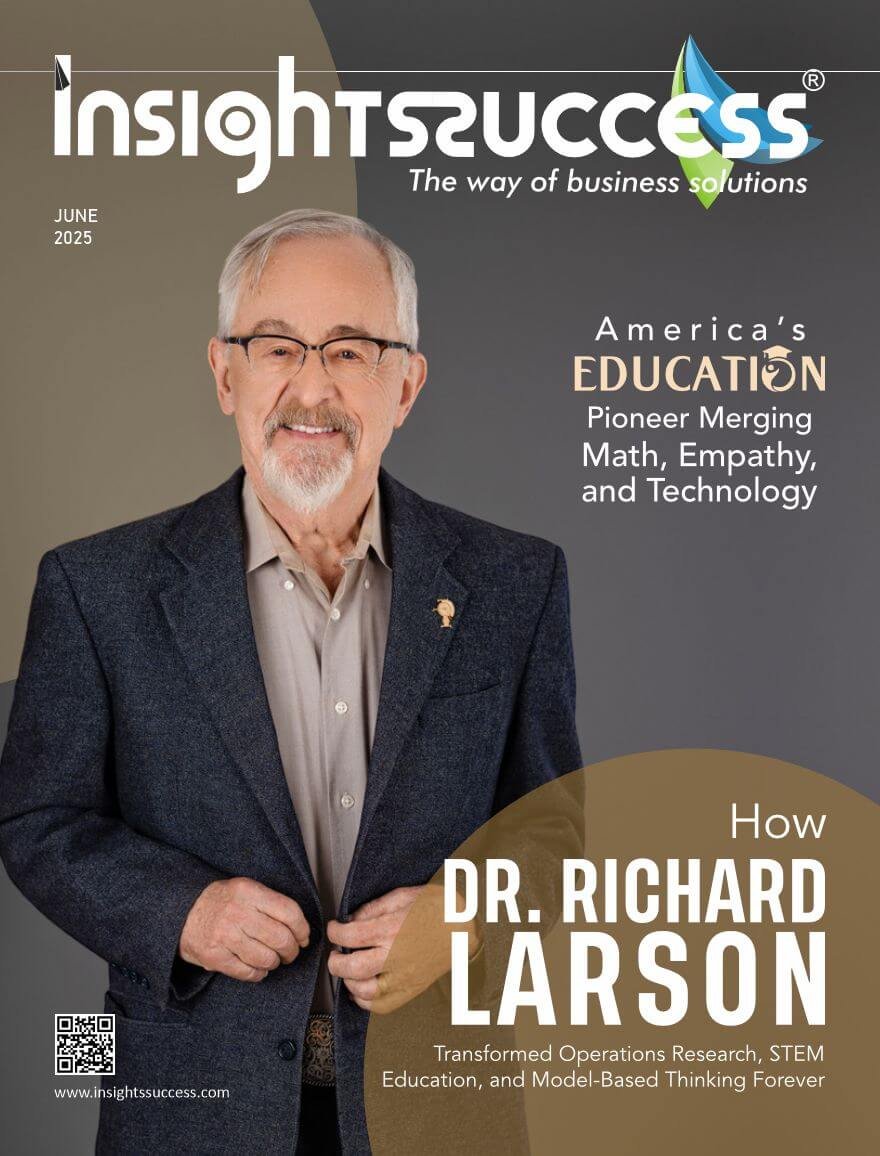
America’s Education Pioneer Merging Math, Empathy, and Technology
America’s Education Pioneer Merging Math, Empathy, and Technology This edition celebrates Dr. Richard Larson, an American educational visionary who revolutionized learning by integrating mathematical principles with empathetic teaching and cutting-edge technology. Discover how his pioneering approach fostered a deeper understanding of complex subjects while nurturing essential human connections, shaping the future of education. Quick highlights Quick reads