





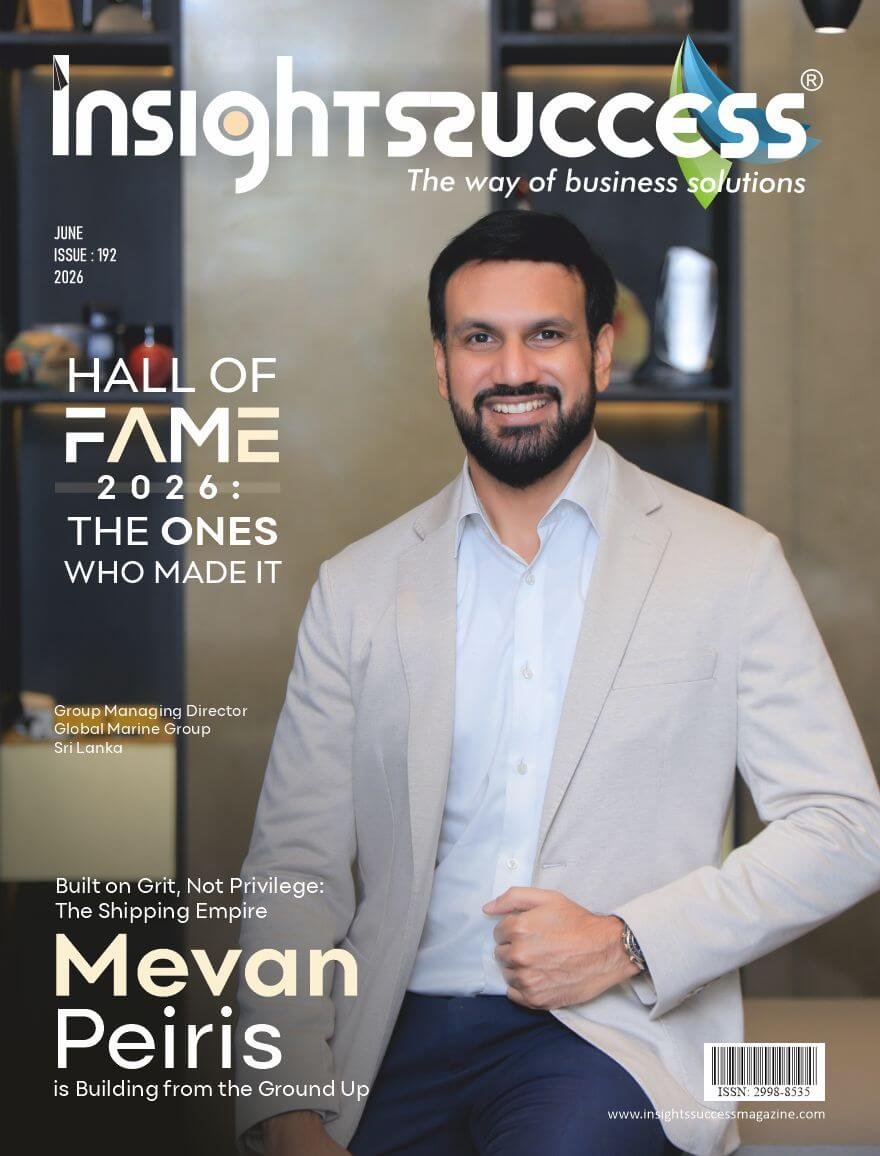
Hall of Fame 2026: The Ones Who Made It
Hall of Fame 2026: The Ones Who Made It The edition celebrates exceptional leaders whose vision, innovation, and enduring contributions have shaped industries, inspired excellence, and established a lasting legacy of leadership, influence, and transformative success. Digital Link Quick highlights Quick reads

Built on Grit, Not Privilege: The Shipping Empire Mevan Peiris Is Building from the Ground Up
Growing up as the son of a ship captain who commanded commercial vessels with the same strict, almost military-like discipline he brought to running the family household, Mevan Peiris could have taken the easier path. The Ceyline Group his father built, one of the most diversified shipping conglomerates in Sri Lanka, represented a ready-made inheritance that most second-generation businesspeople would have embraced without question. Mevan Peiris chose differently. He did not want things handed to him. He wanted to build something on his own terms, using the work ethic and grit instilled by a father whose principles left no room for entitlement. That choice, made deliberately and held to even when it would have been more convenient to abandon it, is the organizing thread of a career that has taken him from a petrol station in Australia to the Group Managing Director of Global Marine Group, a rapidly expanding maritime conglomerate with ten subsidiaries spanning Sri Lanka, Singapore, and Dubai. His academic foundation was built across two continents. After completing his advanced level examinations at Royal College, one of Sri Lanka’s premier educational institutions, he moved to Australia, completed a bridging program in Economics and Accounting at Taylor’s College, and subsequently graduated from Monash University with a Bachelor of Business Management degree in 2009. He later became a member of the Chartered Institute of Logistics and Transport, adding professional credentials to an academic base that was already broader than most of his peers in the industry. He mentions, “I wanted to forge my own path. I didn’t want things to be handed to me. I wanted to build and run a business completely on my own terms.” Australia and the Education of an Entrepreneur The most instructive education of Mevan’s early career happened outside the classroom. His first job in Australia was at a BP petrol station, a detail he shares without embarrassment and with genuine appreciation. His father, despite building considerable success in Sri Lanka, insisted he fend for himself abroad. The lesson embedded itself permanently: customer service is not a department. It is the foundation of every business relationship worth building and understanding it from the front line rather than the executive suite produces a quality of commercial instinct that no degree program replicates. After completing his degree, he joined the Australian National Line as a trainee. From day one, his approach was unmistakable. Every opportunity that appeared, he applied for it. Every challenge that surfaced, he stepped toward rather than away from. Within five years, he was promoted three times, progressing from trainee to Cargo Superintendent, a trajectory that reflected not ambition for titles but a genuine and consistent drive to improve, learn, and contribute at a higher level with each passing year. He asserts, “I wasn’t motivated by titles. What drove me was the desire to improve, learn, and make a difference.” Coming Home and Earning Respect In 2012,Mevan Peiris returned to Sri Lanka and joined what was then the family business. He could have entered at a senior level given his experience and his family name. Instead, he joined as a Business Development Manager, starting at the ground floor because that was how his family believed respect genuinely had to be earned, and it was a belief he shared completely. It was not a symbolic gesture designed for appearances. It was a genuine conviction that trust within an organization, particularly one where your surname already carries considerable weight, must be built through performance rather than inherited through association. The turning point that defined his internal reputation came when he began volunteering to take over underperforming companies within the group. Colleagues and experienced advisors told him to avoid it. Getting involved with struggling businesses, they argued, was an unnecessary risk to his reputation and his longer-term future. Mevan Peiris was not interested in protecting his reputation through avoidance. He was interested in building it through demonstrable results. He took on underperforming entities in healthcare, freight forwarding, and logistics. Together with the teams involved, he turned those businesses around and returned them to growth. Between 2018 and 2022, he grew the overall business fivefold, a trajectory that continued even through the disruption of COVID-19, which in his hands became not a crisis to be survived passively but a strategic opportunity to be recognized and seized before anyone else had framed it that way. He highlights, “People often think opportunities are handed to you in a family business. I knew that if I wanted respect, I had to earn it through results.” The Pandemic Strategy That Changed Everything When COVID-19 hit global shipping, over 150,000 seafarers were stranded on vessels worldwide. Crew changes had become logistically impossible as borders closed, and lockdowns took hold simultaneously across every major maritime nation. For most operators, it was a problem to endure and wait. For Mevan Peiris , it was a problem to be solved, and Sri Lanka, which had contained the virus early, had precisely the infrastructure required to solve it at scale. He mapped the country’s available assets with careful precision: Mattala Airport in the south, the port of Galle, surrounding tourist resorts that could be converted into quarantine facilities, all connected by a highway system at a safe distance from dense population centers. He packaged this as a comprehensive and detailed proposal to establish Sri Lanka as an international crew-change logistics hub and pitched it directly to the port chairman, General Daya Ratnayake, who formed a committee and took it to the President for approval. The execution that followed was bold, multi-sectoral, and consequential. Chartered Sri Lankan Airlines flights transported crews safely. Empty hotels became secure quarantine centers that provided revenue to a hospitality sector facing collapse. Shipping agents, healthcare providers, and aviation businesses found new revenue streams at a moment when they desperately needed them. Critical foreign exchange entered an economy under severe strain. He states, “We generated crucial foreign exchange for the country and built a secure, innovative solution that saved lives and kept global

Global Freight Transportation Driving Supply Chain Excellence
Port Logistics Optimization Effective logistics systems are the key to global trade by combining manufacturing plants, suppliers, distributors, and end-users from different continents together. Due to international business being on the rise, ports play a significant role in becoming gateways in economic development and efficient supply chains. Increased volume of cargo, changing demands of consumers, and technological developments are putting pressure on logistics companies to revamp their systems. It is against this background that Port Logistics Optimization has gained importance as a way of enhancing operational effectiveness in order to minimize delays along maritime supply chains. At the same time, Global Freight Transportation has continued to change through technology integration. The Growing Importance of Efficient Port Operations Today’s ports have developed into much more than cargo handling centers. Ports are logistics facilities, which link ship lines, land transport systems, customs clearance organizations, and distribution centers. Good Port Logistics Optimization guarantees efficient handling of cargo throughout the system without any delays or bottlenecks. Firms which invest in Port Logistics Optimization make use of digital scheduling, automated container handling, predictive analysis, and real-time tracking technology. Such actions help in improving turnaround times. The result is a reduction in operational bottlenecks while boosting terminal capacity and efficiency. With the continuous growth in volumes of trade, Port Logistics Optimization becomes more essential than ever before. Transforming Global Freight Transportation For international supply chains to be properly coordinated, the processes involve multiple modes of transportation, regulatory structures, and geographical areas. Global Freight Transportation is a key component in making sure that the goods arrive at the marketplaces efficiently. Global Freight Transportation in the Modern World involves the utilization of ships, trains, trucks, and airplanes within the context of logistics that relies on technologies. Advanced logistics systems can offer the ability to see shipments and optimize routes. Such an approach enhances customer satisfaction levels and allows for coping with different kinds of problems. Technology-driven freight operations also strengthen collaboration among logistics providers, ports, carriers, and customers, creating more transparent and responsive supply chains. Technology Driving Operational Excellence The process of innovation within the digital world is revolutionizing logistics management in every conceivable way. Automation technology, artificial intelligence, Internet-of-Things sensors, and cloud computing make it possible for organizations to have visibility and better control over processes. The Port Logistics Optimization framework makes use of such technologies. Optimal scheduling will ensure that there is less waiting time for ships to dock, whereas automation of the cranes makes it more efficient. Additionally, predictive maintenance helps in minimizing equipment downtime. With these new technologies, ports can handle more cargo without lowering their service levels. Global Freight Transportation also enjoys the advantages of intelligent routing, automated documentation, and tracking systems. Potential risks that may arise can be predicted, and appropriate steps taken to correct them. This not only enhances resilience but also improves efficiency in delivery processes. Supporting Sustainability and Resilience Environmental sustainability is becoming more and more of a concern for the logistics sector. More and more governments, companies, and customers are expecting that the supply chain would be able to emit less and become more efficient at the same time. This is how Port Logistics Optimization helps to reach both goals. Global Freight Transportation also contributes to sustainability through efficient routing, fuel efficiency, and increased coordination within transportation systems. Through digital planning, organizations are able to minimize unnecessary mileage while increasing cargo capacity. Systems which have the ability to cope with disruption make it much easier for businesses to recover from economic instability, bad weather, and geopolitics. Building the Future of Supply Chain Excellence For the logistics industry to have a successful future, it will have to rely on intelligent technology, collaboration, and connectivity within supply chain ecosystems. Using port logistics optimization, organizations will be able to improve efficiency, competitiveness, and customer orientation through improved cargo management. Global Freight Transport shall also change as a result of technology improvements. All those companies who will improve their freight transport systems shall have the benefit of improved visibility, efficiency, and flexibility in adapting to changes in the market environment. Port Logistics Optimization and Global Freight Transportation provide the foundation for excellence in supply chains. Through the use of modern technology and by striving for constant improvement, it is possible for companies to develop efficient logistics systems that would enable them to do sustainable business around the globe. With the growth of global business, the companies who have done so are poised for success in the future. Read Also : Shipping Network Solutions Transforming Global Trade

Shipping Network Solutions Transforming Global Trade
Digital Maritime Logistics Effective global trade is dependent on the efficient handling of the logistics that link manufacturers, vendors, and consumers in different markets across the globe. With increasing volumes of cargo traffic and complex logistics, the shipping industry has decided to take on the challenge of digital transformation through new and innovative procedures that encourage efficiency, transparency, and resilience. Companies need increased speed in shipment, higher visibility, and effective coordination in logistics networks in order to be competitive. In this regard, Digital Maritime Logistics has been embraced as a critical element by all parties involved in shipping operations including shipping lines, ports, and logistics providers. In addition, innovative Shipping Network Solutions have made the process easier. The Rise of Digital Maritime Operations Conventional maritime logistics was dependent upon paper-based processes, scattered communications, and poor visibility regarding cargo. Nowadays, technological advancement is revolutionizing the entire process of maritime logistics through ecosystem creation that allows quicker and more informed decision making. Digital Maritime Logistics helps organizations integrate their shipping activities through cloud technology, real-time analytics, automation, and intelligent monitoring systems. Through the use of Digital Maritime Logistics, companies are able to get increased visibility with regard to cargo, vessels, and ports. The real-time information helps the logistics firms to predict potential problems, plan their schedules, and enhance customer communications. This makes the operations more certain and enables better coordination with other parties involved. As digital technologies continue to mature, maritime organizations are discovering new opportunities to improve service quality and operational performance. Building Smarter Shipping Networks The effective transport of cargo requires the logistics network to be efficient, coordinating all parties involved in international supply chains. The modern solution for effective logistics is Modern Shipping Network Solution, which allows companies to control all these processes using advanced digital technologies. With the help of Advanced Shipping Network Solutions, Artificial Intelligence, Predictive Analysis, and Scheduling have been used to streamline vessel routing, cargo loading, and transportation planning. This reduces any kind of delay and at the same time increases the efficiency and effectiveness of operations. Increased network visibility helps cater to the ever-changing requirements of customers. By creating connected shipping ecosystems, organizations improve reliability while strengthening supply chain performance across global markets. Driving Efficiency Through Technology The modern logistics in the maritime domain are powered by technology. Automation, IoT sensors, digital documentation, and analytics enable companies to become more efficient and less complex simultaneously. Digital Maritime Logistics makes use of these technologies to ensure that intelligent shipping systems can be developed to promote constant improvements. Smart monitoring systems allow for real-time analysis of the condition of the ship, state of the cargo, and performance in the environment. Automation of paperwork makes the process of customs clearance faster. The technologies of predictive maintenance allow shipping companies to avoid equipment failure. On the other hand, Shipping Network Solutions help to coordinate efforts of ports, shipping companies, freight forwarders, and customers through provision of information during the entire shipping process. The integrated process helps to improve planning while facilitating quicker shipping of goods. Strengthening Sustainability and Supply Chain Resilience Being environmentally responsible is now a significant concern for the international shipping sector. Companies are faced with the challenge of ensuring that their processes remain effective and efficient despite being emission free. Digital Maritime Logistics plays a role in sustainability through the effective management of voyages and fuel efficiency. In a similar manner, Shipping Network Solutions help ensure sustainable development through optimization of routes, better usage of cargo capacity, and reduced movements that do not add any value to the system. Resilience has become another critical factor in light of the disruptions within supply chains due to uncertainties in the economy, geopolitics, and weather. With digital technologies, companies can stay ahead of any risk and keep their operations going even in the face of difficulties. Transforming the Future of Global Trade A new age for the shipping industry based on connectivity, intelligence, and collaboration is emerging. Companies that focus on Digital Maritime Logistics will find themselves well-equipped to increase efficiency, enhance their customer service experience, and respond to market dynamics. Digitalization enables companies to adapt to the growing complexity of global supply chains and promote future business growth. Similarly, Shipping Network Solutions will remain influential in international business through the development of an integrated logistics environment that will ensure visibility, coordination, and improved transport efficiency. These organizations will be more flexible in their operations and have better positioning in a competitive environment. With the aid of the two innovations, namely Digital Maritime Logistics and Shipping Network Solutions, the future of maritime business is being shaped. With innovation through digitization and collaborations together with smart logistics, companies can establish strong shipping networks. With continued developments in international business, those that embrace digitization will be better placed in efficiency and reducing operational risks. Read Also : Digital Acceleration Strategy Driving Enterprise Innovation

Zyoin Group and Karnataka Digital Economy Mission Partner to Strengthen Karnataka’s Global Capability Center Ecosystem
Collaboration will support GCC growth through talent development, innovation, ecosystem partnerships, and strategic industry engagement Bengaluru, India: Zyoin Group has signed a Memorandum of Understanding (MoU) with the Karnataka Digital Economy Mission (KDEM) to support the continued growth of Global Capability Centres (GCCs) in Karnataka. The partnership aims to strengthen the state’s position as a preferred destination for multinational enterprises by combining talent expertise, ecosystem collaboration, and strategic industry initiatives. The collaboration brings together Zyoin Group’s capabilities in GCC advisory, talent intelligence, workforce strategy, and employer branding with KDEM’s role in enabling policy support, ecosystem development, and industry engagement. Together, the two organizations aim to create a more conducive environment for companies looking to establish, expand, and scale their GCC operations in Karnataka. Strengthening Karnataka’s Position as a Global GCC Hub Karnataka has emerged as one of the world’s leading destinations for Global Capability Centers, supported by its highly skilled workforce, robust technology ecosystem, research and innovation capabilities, and business-friendly policy environment. KDEM has played a central role in advancing the state’s digital economy agenda by facilitating collaboration between government, industry, academia, and startups. Its initiatives have contributed to attracting investments, promoting innovation, generating employment, and reinforcing Karnataka’s reputation as a global technology and innovation hub. The new partnership is expected to further strengthen these efforts by aligning workforce readiness with the evolving needs of multinational organizations establishing or expanding their GCC presence in India. Supporting the Entire GCC Lifecycle As part of the collaboration, Zyoin Group will provide strategic support across multiple aspects of the GCC journey, including market entry, talent acquisition, workforce planning, employer branding, operational scale-up, and long-term capability building. KDEM will facilitate ecosystem-level engagement by connecting enterprises with relevant stakeholders, supporting industry collaborations, and enabling strategic initiatives designed to attract global investments into Karnataka. The partnership will also promote knowledge sharing, industry research, and best practices to help organizations respond to changing workforce requirements and evolving business models. In addition, the collaboration will encourage startup engagement, innovation partnerships, leadership development, employment generation, and stronger collaboration across Karnataka’s growing GCC ecosystem. Expanding Growth Beyond Bengaluru While Bengaluru continues to serve as India’s largest GCC hub, the collaboration also seeks to accelerate the development of emerging technology clusters across the state. These include cities such as Mysuru, Mangaluru, Hubballi-Dharwad-Belagavi, and Kalaburagi, where ongoing investments in infrastructure, talent development, and digital capabilities are creating new opportunities for global enterprises. By encouraging the expansion of GCC operations into these emerging centers, the partnership aims to contribute to more balanced regional economic development while broadening access to high-value employment opportunities. Industry and Government Collaboration to Drive Future Growth Commenting on the partnership, Anuj Agrawal, Founder and CEO of Zyoin Group and Workplace Awards, said: “Karnataka continues to lead India’s Global Capability Center transformation, and this partnership with KDEM represents an important milestone in strengthening the state’s position as a global destination for digital innovation and enterprise operations. We look forward to working together to support organizations throughout their GCC journey—from market entry and operational scale-up to long-term capability development and workforce transformation.” Sanjeev Kumar Gupta, Chief Executive Officer of Karnataka Digital Economy Mission (KDEM), said: “This partnership reflects our shared commitment to strengthening Karnataka’s GCC ecosystem across both established and emerging technology clusters, including Mysuru, Mangaluru, Hubballi-Dharwad-Belagavi, and Kalaburagi. Collaborations with industry partners such as Zyoin enable us to create stronger connections between enterprises, talent, startups, academia, and government. We invite organizations across the GCC ecosystem to engage with us as we continue to position Karnataka as a preferred global destination for capability centers and digital innovation.” Building a Collaborative Ecosystem for Global Enterprises The partnership comes at a time when India continues to witness sustained growth in Global Capability Center investments, with multinational companies increasingly expanding their engineering, research, technology, finance, and business operations within the country. By combining institutional support with industry expertise, Zyoin Group and KDEM aim to enhance operational readiness for global organizations while fostering innovation, talent development, and long-term ecosystem collaboration. The initiative is expected to contribute to the next phase of Karnataka’s GCC growth by supporting business expansion, attracting international investment, strengthening regional innovation ecosystems, and creating new opportunities for skilled professionals across the state. About Zyoin Group Zyoin Group is a talent and workforce solutions company specializing in recruitment, GCC advisory, talent intelligence, employer branding, and workforce transformation. The company partners with enterprises to help build scalable teams, strengthen organizational capabilities, and support business growth across emerging and established markets. About Karnataka Digital Economy Mission (KDEM) Karnataka Digital Economy Mission (KDEM) is an initiative of the Government of Karnataka dedicated to accelerating the growth of the state’s digital economy. Working in collaboration with government, industry, academia, and startups, KDEM promotes innovation, investment, job creation, and ecosystem development while positioning Karnataka as a leading global destination for technology, digital transformation, and Global Capability Centers. Read Also: Abu Dhabi Begins Construction of Dar al Funoon Abu Dhabi, a Landmark Performing Arts Institution on Saadiyat Island

Onsemi to Acquire Synaptics in $7 Billion Deal to Expand Physical AI Business
Prime Highlights Onsemi will acquire Synaptics in a $7 billion all-stock deal, its largest acquisition, to expand its physical AI and connected computing business. The acquisition strengthens Onsemi’s position in AI-enabled devices, automotive, industrial, robotics, and humanoid technologies. Key Facts Synaptics shareholders will receive 1.350 Onsemi shares for each Synaptics share, representing a 19% premium. Onsemi expects the acquisition to expand its total addressable market to $243 billion by 2030. Background ON Semiconductor Corp has agreed to buy chipmaker Synaptics in an all-stock deal worth around 7 billion dollars, marking the largest acquisition in the company’s history as it moves to strengthen its position in artificial intelligence-enabled devices. Under the deal, Synaptics shareholders will receive 1.350 shares of Onsemi common stock for each Synaptics share they hold. The exchange ratio gives Synaptics shareholders a 19% premium based on the 10-day volume-weighted average closing prices of both companies. Onsemi Chief Executive Hassane El-Khoury said the acquisition targets growth in physical AI, a term used to describe artificial intelligence built directly into devices and machines. He said Synaptics brings a connected computing platform already present in markets where Onsemi operates, and that the combined business would become a market leader in the physical AI space. Synaptics’ platform complements Onsemi’s existing strengths in automotive, power and industrial markets. The deal also gives Onsemi access to Synaptics’ human-machine interface business and its research and development work in robotics and humanoid technology. Onsemi expects the acquisition to expand the total market it can target by 30 billion dollars, pushing that figure to 243 billion dollars by 2030. Markets reacted sharply to the news. Shares of Onsemi dropped nearly 10% in after-hours trading, while Synaptics shares climbed more than 10% following the announcement. The deal is subject to shareholder and regulatory approvals before it can close. Read Also : Volkswagen offloads diesel unit Everllence to Bain Capital, retains 49% stake

Abu Dhabi Begins Construction of Dar al Funoon Abu Dhabi, a Landmark Performing Arts Institution on Saadiyat Island
Frank Gehry-designed cultural destination will host year-round programming and strengthen Abu Dhabi’s position as a global center for the performing arts Abu Dhabi, UAE: (June 26, 2026) The Department of Culture and Tourism Abu Dhabi (DCT Abu Dhabi) has announced the commencement of construction on Dar al Funoon Abu Dhabi (House of the Arts), a landmark performing arts institution set to become one of the Middle East’s most technologically advanced venues for live performance when it opens in 2030. Located on Saadiyat Island, the new institution represents a significant investment in Abu Dhabi’s cultural infrastructure and forms part of the emirate’s long-term strategy to expand its creative economy, strengthen international cultural collaboration, and establish world-class platforms for artistic excellence. Designed by the late internationally renowned architect Frank Gehry, Dar al Funoon Abu Dhabi is expected to become a permanent home for opera, ballet, theatre, orchestral music, jazz, and multidisciplinary performances, welcoming artists and audiences from around the world. Advancing Abu Dhabi’s Long-Term Cultural Vision The announcement reflects Abu Dhabi’s continued commitment to investing in culture, creativity, and knowledge as key pillars of sustainable development. By expanding its portfolio of cultural institutions, the emirate aims to create opportunities for artistic exchange, nurture creative talent, and provide residents and visitors with year-round access to world-class cultural experiences. Commenting on the project, His Excellency Mohamed Khalifa Al Mubarak, Chairman of DCT Abu Dhabi, said: “Dar al Funoon Abu Dhabi represents a long-term investment in artistic expression and reflects our broader vision for cultural development. Rooted in our heritage while embracing global collaboration, the institution will provide a permanent home for performances of the highest international standard. Through artistic residencies, international partnerships, and major productions, it will create new opportunities for cultural exchange, inspire future generations of creatives, and further strengthen Abu Dhabi’s position as a global centre for culture and the arts.” A Dedicated Home for World-Class Performing Arts Upon opening in 2030, Dar al Funoon Abu Dhabi will become one of the region’s largest purpose-built performing arts institutions. The venue has been designed to accommodate a diverse range of artistic disciplines, allowing audiences to experience productions ranging from intimate chamber performances to large-scale international opera and ballet productions. Programming will take place throughout the year, with performances, educational initiatives, and cultural activities scheduled across all 365 days. The institution will feature: A multipurpose performance hall with seating for more than 2,000 guests A 3,500-seat open-air amphitheatre A 400-seat studio theatre A dedicated 250-seat jazz venue Collectively, the facilities will accommodate more than 6,000 visitors across multiple performance spaces. Beyond presenting international productions, the institution is expected to serve as a platform for long-term artistic residencies, touring collaborations, co-productions, and educational initiatives involving leading global performing arts organizations while creating opportunities for emerging artists from the UAE and the wider region. An Architectural Landmark Designed by Frank Gehry Dar al Funoon Abu Dhabi has been designed by the late Frank Gehry, one of the world’s most influential contemporary architects and the designer of the forthcoming Guggenheim Abu Dhabi. The architectural concept draws inspiration from the movement and fluidity of live performance. Its sweeping, fabric-like exterior is intended to evoke the energy of music and dance while creating a striking visual identity within the Saadiyat Cultural District. A transparent façade has been incorporated into the design to encourage public engagement with artistic activity, symbolizing openness, accessibility, and cultural dialogue. The project further reinforces Abu Dhabi’s longstanding commitment to commissioning internationally significant architecture that reflects the emirate’s cultural ambitions while contributing to its evolving urban landscape. Building on a Growing Performing Arts Ecosystem The development of Dar al Funoon Abu Dhabi builds upon the emirate’s expanding cultural landscape and its growing international recognition as a destination for music and performing arts. Abu Dhabi has been designated a UNESCO Creative City of Music and continues to host internationally recognized initiatives, including the Abu Dhabi Festival, Berklee Abu Dhabi, Bait Al Oud, and numerous international concerts, festivals, and educational programs. The emirate also served as the host city for International Jazz Day 2025, further strengthening its position within the global performing arts community. The addition of Dar al Funoon Abu Dhabi is expected to complement these institutions by providing permanent, state-of-the-art infrastructure capable of supporting a broader range of international productions and creative collaborations. Driving Cultural and Economic Impact In addition to its cultural significance, the new institution is expected to generate lasting economic and social benefits for Abu Dhabi. The project is anticipated to create employment opportunities across the cultural, hospitality, tourism, technical production, and creative sectors while supporting the development of local artistic talent and expanding opportunities for professional training and cultural education. Officials also expect the institution to contribute to the continued growth of Abu Dhabi’s creative economy by attracting international visitors, strengthening cultural tourism, and encouraging long-term investment in the arts. About the Department of Culture and Tourism – Abu Dhabi The Department of Culture and Tourism – Abu Dhabi (DCT Abu Dhabi) is responsible for driving the sustainable development of Abu Dhabi’s culture and tourism sectors while supporting the emirate’s broader economic and social ambitions. Working in collaboration with public and private sector partners, DCT Abu Dhabi develops policies, programs, and cultural initiatives that preserve heritage, promote creativity, expand tourism, and strengthen Abu Dhabi’s position as a leading global destination for culture, innovation, and authentic experiences. For more information, visit: https://dctabudhabi.ae https://visitabudhabi.ae https://abudhabiculture.ae Media Contacts Hetika Gala – hetika.gala@ogilvy.com Laksh Kapri – laksh.kapri@ogilvy.com Avantika Mohun – avantika.mohun@ogilvy.com

CreativeWebo Charts U.S. Entry with Revamped Digital Platform and Cross-Border Delivery Model
Technology services firm CreativeWebo has taken its next step in a phased international expansion, announcing that it will now actively pursue client partnerships in the United States. The announcement arrives alongside the debut of an overhauled company website, rebuilt to address the expectations of a broader global audience and to consolidate CreativeWebo’s presence across the three regions it now serves. From a Single City to a Three-Market Footprint When CreativeWebo began operations in Mumbai, the focus was straightforward: help local businesses solve technology problems through custom-built digital products. That narrow mandate gradually widened as the company’s portfolio grew and referrals crossed borders. The decision to open in Dubai was the first signal that leadership was thinking beyond domestic demand. The U.S. announcement formalises what the company describes as its next phase, one shaped less by opportunity alone and more by a structured plan to serve clients on multiple continents without sacrificing delivery quality. “Working across Mumbai and Dubai gave us something classroom training cannot replicate: the experience of managing client expectations in genuinely different business cultures,” said a CreativeWebo spokesperson. “That exposure, and the processes we built around it, is what we’re bringing to North America.” Three Directors, Three Distinct Mandates Rather than consolidating authority at the top, CreativeWebo distributes executive responsibility across three specialised directors. Sagar Salvi holds the Marketing Director role, directing external communications, partnership strategy, and long-range business development. Asif Pathan, as Delivery Director, carries accountability for how projects are scoped, managed, and concluded, covering everything from timelines to quality benchmarks. Swapnil Bhavekar rounds out the trio as Technical Director, making decisions on software architecture, engineering practices, and the technology stack the company builds on. The arrangement is designed to remove a common friction point in scaling professional services firms: the tendency for founders or senior generalists to become bottlenecks when juggling strategy, delivery, and technical oversight simultaneously. By assigning clear lanes, CreativeWebo aims to maintain consistent output quality regardless of how many projects run in parallel. A Portfolio Built Across Four Hundred Engagements Over the course of its history, CreativeWebo has completed upwards of 400 client engagements. The work spans a wide band of sectors and company sizes, from early-stage ventures to established corporations. Among the organisations it has worked with are Tata Communications, Eisai, Clevertap, LIC, Informa Markets, Croma, VFS Global, and Basic Home Loan, a roster that reflects both the company’s geographic reach and the range of industries it has navigated. Each sector brings its own constraints: pharmaceutical clients contend with regulatory compliance; financial services firms demand audit trails and data security; retail and e-commerce projects live or die by performance under traffic spikes. Across these environments, the company has had to adapt its methods rather than apply a single template. That adaptability, according to its leadership, is a practical credential for the U.S. market, where clients routinely have complex, cross-functional digital needs. The Website Rebuild: Function Over Aesthetic The timing of the website overhaul was deliberate. As CreativeWebo prepared to engage prospective clients in the United States, a market where vendor evaluation often begins with a digital audit long before a first call, the previous site no longer reflected the company’s current scale or scope. The rebuilt platform at creativewebo.com was rearchitected for speed and navigational clarity, with distinct sections addressing clients in each of its three active markets. Accessibility standards were also addressed, an increasingly non-negotiable factor for firms operating at the enterprise level. What CreativeWebo Builds The company’s technical capabilities span the principal areas of digital product development: Tailored website design and full-stack development Native and cross-platform mobile application builds Custom software engineered to specific operational requirements Interface and experience design, from wireframes through final handoff End-to-end commerce platform development Consulting and execution for broader digital transformation initiatives Sectors With Established Project History CreativeWebo has active delivery experience in: Pharmaceutical and healthcare organisations Software-as-a-service product companies Financial services and banking institutions Retail chains and direct-to-consumer brands Hospitality and lifestyle businesses Property development and real estate groups Large-scale enterprise operations Reading the U.S. Market Demand for third-party digital development in the United States has not contracted. Businesses across sectors continue to fund technology modernisation, driven by the need to reduce operational friction, improve how customers interact with their products, and build infrastructure that does not require rebuilding every few years. The firms capturing this demand range from large multinational consultancies to specialist boutiques. CreativeWebo enters as the latter, smaller than the generalist giants but more focused, with a track record that spans industries and a delivery structure built for remote collaboration. Its international background is a functional differentiator in this context. Having already resolved the practical challenges of serving clients across time zones, languages, and contracting conventions, the company does not need to solve those problems from scratch in North America. Next Steps CreativeWebo has not outlined specific personnel additions, physical office plans, or financial targets tied to the U.S. push. The emphasis, for now, is on building recognition among prospective clients and demonstrating through early project work that its delivery model travels. The redesigned website is the primary vehicle for that introductory effort, supplemented by direct outreach and partnership development. The company expects its positioning in the North American market to strengthen progressively over the coming year as project references accumulate and its local network develops. About CreativeWebo Established in Mumbai and now operating across three international markets, CreativeWebo is a technology services company that designs, builds, and deploys digital products for businesses at different stages of growth. Its work covers websites, mobile applications, bespoke software, and commerce infrastructure. A second office in Dubai expanded the firm’s geographic reach before its current move into the United States. More information is available at creativewebo.com. Disclaimer – This article is a work of original content created for public relations and informational purposes only. It may be published across multiple digital platforms with the full knowledge and consent of the author/publisher. All images, logos, and referenced names are the property of their respective

Transforming A Dull Office into an Inspiring Workspace
Running a business is not just about investing thousands of dollars in expensive tools and a fancy office. It is more about having a happy and motivated team giving its best. Unfortunately, most businesses are falling short here. According to a 2024 Gallup survey, employee engagement in the U.S. dropped to its lowest level in a decade, with only 31% of employees engaged. Workers younger than 35 are the most affected, painting a grim picture for the future. Besides engagement strategies, business owners need to create a workspace that inspires. A dull office can drain motivation, reduce productivity, and impact overall well-being. The good news is that transforming an uninspiring office does not require a complete overhaul or a large budget. This article discusses a few practical ways to turn a dull office into a vibrant workspace that encourages both efficiency and comfort. Optimize the Layout The foundation of any functional workspace begins with layout. A cluttered or poorly arranged office can feel chaotic and restrictive, while a well-planned layout enhances flow and efficiency. Marina V. Umali, a certified feng shui practitioner and design expert, explains how a feng shui-inspired layout can help you design your office for productivity. Placing the desks in a command position is a good start. This means setting up the desks and chairs in front of a solid wall. Also, ensure movement and access to essentials, ideally facing natural light or an open area. Keep frequently used items within arm’s reach and minimize unnecessary objects. Create defined zones within the office for specific activities, such as focused work, meetings, or storage. This zoning improves organization and mental clarity. Avoid overcrowding furniture, no matter how small your workspace is. Instead, prioritize pieces that serve multiple purposes, like desks with built-in storage. A clean, intentional layout instantly makes the office feel more spacious and purposeful. Maximize Natural Light A Business.com article highlights the effect of good lighting in the office on worker productivity and mood. Beyond supporting individual performance, adaptive lighting has a positive impact on team dynamics. It enables individuals to personalize their space, boosts comfort, and helps create a workplace where everyone can do their best thinking. Natural light, in particular, boosts energy levels, reduces eye strain, and creates a welcoming ambiance. The right design approach can maximize it to create an inspiring space. If possible, position the desks near windows to take full advantage of daylight. Avoid blocking windows with bulky furniture or heavy curtains. Complement daylight with layered artificial lighting, including ambient lighting for general illumination, task lighting for focused work, and accent lighting to highlight decor elements. Choose warm or neutral light tones to maintain a comfortable environment. A well-lit office feels more open, inviting, and conducive to sustained focus. Choose a Calm Color Palette Color has a powerful psychological impact on how a workspace feels to people who spend a good part of the day there. A calm and cohesive color palette can transform a dull office into a serene and motivating environment. Neutral tones like white, beige, and soft gray create a clean base, while muted blues and greens promote relaxation and concentration. A commercial painting company can offer valuable insights for color selection. EA Pro Painters notes that business owners must keep the lines of communication with their painting contractor open to ensure the best results. Since professionals know what works in commercial spaces, they can recommend the best options in colors and textures. Avoid overly bright or clashing colors, which can create visual noise and distraction. You can introduce accent colors sparingly through decor items, artwork, or accessories to add personality without overwhelming the space. In commercial space, it is best to stick to a limited palette to maintain harmony. Thoughtful use of color enhances aesthetics and supports a balanced and focused mindset throughout the workday. Add a dash of green with low-maintenance plants placed around the office. Prioritize Ergonomics An inspiring office is not just visually appealing. It must also support the physical comfort and long-term health of the employees. Ergonomics can prevent strain and improve productivity. Occupational Safety and Health Administration (OSHA) adds that they can lower the risk of musculoskeletal disorders for workers over time. When setting up a workspace, ensure that your employees have adjustable chairs that support proper posture. Monitors should be positioned at eye level to avoid neck strain, and the keyboard and mouse should be within comfortable reach. Consider providing standing desks or adjustable desk converters to alternate between sitting and standing. Small additions like wrist rests, footrests, or anti-fatigue mats can show that you care for the comfort of your team members. A comfortable workspace reduces fatigue, allowing them to focus more effectively and work for longer periods without discomfort. FAQs How to make an office look expensive? Focus on simplicity, quality, and cohesion. Use a neutral color palette, invest in a few high-quality furniture pieces, and keep the space clutter-free. Add subtle textures like wood or metal, incorporate good lighting, and use minimal but impactful decor such as framed art or elegant storage solutions for a polished, upscale appearance. How to fill dead space in an office? Use dead space strategically by adding functional or decorative elements. Consider shelving units, indoor plants, a reading nook, or a statement artwork. You can also include storage cabinets or a small seating area. The goal is to balance the space without overcrowding while maintaining visual interest and practicality. What are some common office design mistakes? Common mistakes include poor lighting, cluttered layouts, uncomfortable furniture, and inconsistent color schemes. Ignoring ergonomics or overdecorating can also reduce functionality. Another frequent issue is a lack of personalization, which makes the space feel uninspiring. A balanced approach ensures both comfort and visual appeal in the workspace. Key Takeaways Workspace Factor Data / Insight Benefit Employee Engagement Only 31% of U.S. employees were engaged in 2024 (Gallup) Highlights need for better work environments Natural Light Exposure to natural light improves mood and productivity Supports focus and

What HOA Legal Disputes Can Teach Residents About Their Rights
Most people don’t pay much attention to their HOA until something goes wrong. You get a sudden violation notice, or your monthly fees spike without warning. Sometimes the board just denies a request and refuses to explain why. Small issues like these often sit at the center of much larger disputes. Recent HOA conflicts across the country show a common pattern. Residents and boards often disagree because they have different views of the rules, the process, or the board’s authority. Left unresolved, those disputes can become expensive and stressful. If you understand your rights before problems appear, you’ll have a much better chance of resolving issues without a long fight. Knowing Your Rights Before a Dispute Escalates When an HOA decision affects your property or finances, it’s easy to focus on the outcome. Start with the process instead. Many homeowners dealing with a long-running dispute eventually search for answers to questions like can I sue my HOA. Before you reach that point, take time to review your community’s governing documents for internal mediation procedures. Understanding those procedures can help you make more informed decisions. For instance, Condominium Associates notes that governing documents and state laws usually protect board members from personal liability. At the same time, lawmakers in some states are expanding the options available to homeowners. According to Florida Politics, Florida’s House recently passed HB 657 by a 108-2 vote. The bill would create a state-funded process for handling certain disputes and establish a clearer procedure for dissolving HOA boards. It also addresses board accountability and oversight. Rep. Juan Porras summed up the goal of the bill well: “Residents deserve real accountability and transparency in their communities.” The changes aim to give homeowners more ways to address disputes before they reach the courts. The more familiar you are with HOA procedures, the easier it becomes to raise concerns and protect your interests. Building a Paper Trail to Prove Your Case Disputes usually come down to what can be proven, which is why records matter. Save emails and keep copies of notices. You should also hold on to meeting minutes and maintenance requests. If a disagreement develops later, those documents can establish a timeline and show exactly what happened. That becomes even more important when formal oversight is limited. According to KXAN, Texas has over 23,000 community associations, yet no state agency directly regulates them. Homeowners who believe an association acted improperly can file a complaint with the Attorney General’s Office or pursue legal action. KXAN also reported that over 900 complaints were filed against community associations over a two-year period. Billing issues, service concerns, and performance disputes topped the complaint list. These concerns have also fueled discussions about greater transparency. One proposal would require associations to make their governing documents, rules, fee structures, and enforcement policies easier for homeowners to access. In situations like these, clear records can help homeowners support their concerns and communicate them more effectively. They can also make discussions with board members, property managers, or legal counsel far more productive. How Broken Communication Escalates Local Disputes Many HOA disputes grow for months or even years before anyone finds a solution. By then, frustration often replaces communication. According to WPTV, a fatal HOA-related dispute in Port St. Lucie renewed debate about how communities handle serious conflicts. The incident involved a long-running disagreement between neighbors. The case also prompted fresh discussion about proposed legislation that would allow communities to vote on dissolving their HOAs under certain circumstances. It also raised questions about how communities should handle ongoing conflicts. A recent Florida case shows how quickly disputes can consume people’s lives. According to ClickOrlando, an attorney spent years battling his HOA through the courts before being jailed for contempt. The conflict stretched across multiple legal proceedings and became a costly legal battle. These disputes show how quickly disagreements can grow once communication breaks down. People become focused on winning instead of solving the problem. That’s usually when costs rise, and options shrink. Addressing concerns early gives everyone more room to find common ground. Staying Informed About HOA Finances Most residents ignore HOA finances until a massive bill arrives. Waiting until the envelope hits your mailbox is a mistake. You must track how your association builds its budget and funds reserves. Those decisions affect your monthly costs and future assessments. According to WSOC-TV, homeowners in one North Carolina community saw monthly HOA dues rise from $350 to $1,250. They were also hit with a $10,000 special assessment. Unprepared residents heavily questioned how the board spent community funds. Some homeowners said the fees were supposed to support community amenities, including a pool that was never built. The neighborhood has about 80 homes, and several residents raised concerns about unusual spending decisions. Litigation related to the dispute was already underway. This is why residents should pay attention to financial decisions before problems develop. Attend meetings when possible and review financial reports. Ask questions about large expenses and reserve funding. The more you understand the numbers, the less likely you are to be surprised by major financial decisions. People Also Ask Can an HOA fine you without warning? It depends on your state’s laws and your association’s governing documents. Many HOAs must provide notice and an opportunity to respond before issuing certain penalties. If you receive a fine, review the notice carefully and check whether the association followed the required procedures outlined in its rules. What records are homeowners entitled to request from an HOA? In many states, homeowners can request access to documents such as budgets, meeting minutes, financial statements, and governing documents. The exact rules vary by location. Reviewing these records can help you understand how decisions are made and whether association policies are being applied consistently. How can homeowners resolve HOA disputes without going to court? Many disputes can be resolved through internal appeals, mediation, arbitration, or direct discussions with board members. These alternatives are usually quicker and cheaper than litigation. The best approach depends on the nature