




Running a business is not just about investing thousands of dollars in expensive tools and a fancy office. It is more about having a happy and motivated team giving its best. Unfortunately, most businesses are falling short here. According to a 2024 Gallup survey, employee engagement in the U.S. dropped to its lowest level in a decade, with only 31% of employees engaged. Workers younger than 35 are the most affected, painting a grim picture for the future.
Besides engagement strategies, business owners need to create a workspace that inspires. A dull office can drain motivation, reduce productivity, and impact overall well-being. The good news is that transforming an uninspiring office does not require a complete overhaul or a large budget.
This article discusses a few practical ways to turn a dull office into a vibrant workspace that encourages both efficiency and comfort.
Optimize the Layout
The foundation of any functional workspace begins with layout. A cluttered or poorly arranged office can feel chaotic and restrictive, while a well-planned layout enhances flow and efficiency. Marina V. Umali, a certified feng shui practitioner and design expert, explains how a feng shui-inspired layout can help you design your office for productivity.
Placing the desks in a command position is a good start. This means setting up the desks and chairs in front of a solid wall. Also, ensure movement and access to essentials, ideally facing natural light or an open area. Keep frequently used items within arm’s reach and minimize unnecessary objects.
Create defined zones within the office for specific activities, such as focused work, meetings, or storage. This zoning improves organization and mental clarity. Avoid overcrowding furniture, no matter how small your workspace is. Instead, prioritize pieces that serve multiple purposes, like desks with built-in storage. A clean, intentional layout instantly makes the office feel more spacious and purposeful.
Maximize Natural Light
A Business.com article highlights the effect of good lighting in the office on worker productivity and mood. Beyond supporting individual performance, adaptive lighting has a positive impact on team dynamics. It enables individuals to personalize their space, boosts comfort, and helps create a workplace where everyone can do their best thinking.
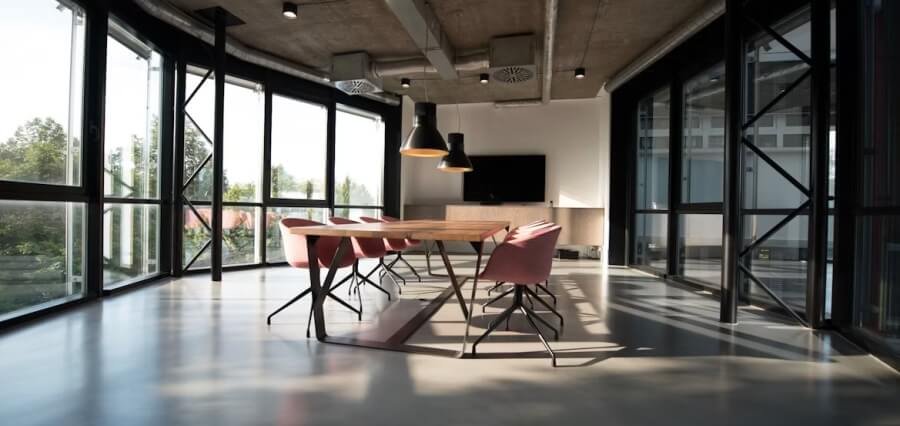
Natural light, in particular, boosts energy levels, reduces eye strain, and creates a welcoming ambiance. The right design approach can maximize it to create an inspiring space. If possible, position the desks near windows to take full advantage of daylight. Avoid blocking windows with bulky furniture or heavy curtains.
Complement daylight with layered artificial lighting, including ambient lighting for general illumination, task lighting for focused work, and accent lighting to highlight decor elements. Choose warm or neutral light tones to maintain a comfortable environment. A well-lit office feels more open, inviting, and conducive to sustained focus.
Choose a Calm Color Palette
Color has a powerful psychological impact on how a workspace feels to people who spend a good part of the day there. A calm and cohesive color palette can transform a dull office into a serene and motivating environment. Neutral tones like white, beige, and soft gray create a clean base, while muted blues and greens promote relaxation and concentration. A commercial painting company can offer valuable insights for color selection.
EA Pro Painters notes that business owners must keep the lines of communication with their painting contractor open to ensure the best results. Since professionals know what works in commercial spaces, they can recommend the best options in colors and textures. Avoid overly bright or clashing colors, which can create visual noise and distraction.
You can introduce accent colors sparingly through decor items, artwork, or accessories to add personality without overwhelming the space. In commercial space, it is best to stick to a limited palette to maintain harmony. Thoughtful use of color enhances aesthetics and supports a balanced and focused mindset throughout the workday. Add a dash of green with low-maintenance plants placed around the office.
Prioritize Ergonomics
An inspiring office is not just visually appealing. It must also support the physical comfort and long-term health of the employees. Ergonomics can prevent strain and improve productivity. Occupational Safety and Health Administration (OSHA) adds that they can lower the risk of musculoskeletal disorders for workers over time.
When setting up a workspace, ensure that your employees have adjustable chairs that support proper posture. Monitors should be positioned at eye level to avoid neck strain, and the keyboard and mouse should be within comfortable reach. Consider providing standing desks or adjustable desk converters to alternate between sitting and standing.
Small additions like wrist rests, footrests, or anti-fatigue mats can show that you care for the comfort of your team members. A comfortable workspace reduces fatigue, allowing them to focus more effectively and work for longer periods without discomfort.
FAQs
How to make an office look expensive?
Focus on simplicity, quality, and cohesion. Use a neutral color palette, invest in a few high-quality furniture pieces, and keep the space clutter-free. Add subtle textures like wood or metal, incorporate good lighting, and use minimal but impactful decor such as framed art or elegant storage solutions for a polished, upscale appearance.
How to fill dead space in an office?
Use dead space strategically by adding functional or decorative elements. Consider shelving units, indoor plants, a reading nook, or a statement artwork. You can also include storage cabinets or a small seating area. The goal is to balance the space without overcrowding while maintaining visual interest and practicality.
What are some common office design mistakes?
Common mistakes include poor lighting, cluttered layouts, uncomfortable furniture, and inconsistent color schemes. Ignoring ergonomics or overdecorating can also reduce functionality. Another frequent issue is a lack of personalization, which makes the space feel uninspiring. A balanced approach ensures both comfort and visual appeal in the workspace.
Key Takeaways
| Workspace Factor | Data / Insight | Benefit |
| Employee Engagement | Only 31% of U.S. employees were engaged in 2024 (Gallup) | Highlights need for better work environments |
| Natural Light | Exposure to natural light improves mood and productivity | Supports focus and employee well-being |
| Ergonomics | Proper ergonomic setups reduce risk of musculoskeletal disorders (OSHA) | Improves comfort and long-term health |
| Feng Shui Layout | Desks placed in a “command position” can improve workflow | Enhances organization and productivity |
| Color Psychology | Soft blues, greens, and neutrals promote calm and concentration | Creates a focused, stress-free workspace |
Transforming a dull office into an inspiring workspace is a gradual process that blends functionality with personal style. Even small changes can have a significant impact when implemented thoughtfully. The key is to design a workspace that reflects your needs and encourages focus, creativity, and comfort. With intentional planning and attention to detail, any office can evolve into a place where you feel motivated, organized, and ready to do your best work every day.