






Aseem Goyal: Leading Through Uncertainty: Why Values Matter More Than Ever
It started with a client lunch that went badly. Two months into his career as a Relationship Manager at TD Bank in Toronto, he found himself at a table with two senior bankers and the CEO of a major client account. The conversation flowed easily between the experienced professionals around him. When it turned to him, he stumbled. His answers were shallow. The silence on the ride back told him everything he needed to know. When his boss finally asked the question, he already knew the answer. That moment of professional embarrassment, arriving so early and so clearly, became the foundation of everything that followed Aseem Goyal. Not as a scar but as an instruction: preparation is not optional. It is the price of serious participation. From that afternoon in Toronto, he made it a habit to prepare, and often to over-prepare, before every meeting, every conversation, and every high-stakes moment that his career has since placed in front of him. Discipline, never-ending preparation, and attention to detail became, as he describes it, his DNA. The second defining moment arrived when that early discipline began producing visible results. Promotions came. Recognition followed. And then came the quiet danger that success reliably brings comfort. Reading about Asia’s tiger economies in The Economist, he felt the tension between where he was and where he wanted to go building to a point he could not ignore. In 1995, he resigned from TD Bank and moved to Bangkok with two suitcases. Those two forces, disciplined preparation and the courage to leave comfort, have defined his leadership across the thirty-five years that followed. Aseem’s first book, Bridging Borders: Leadership, Crises and Reinvention across Eight Global Markets, will be published in September 2026. What Values Look Like Under Pressure Aseem’s understanding of leadership begins with values, not as aspirational language displayed on office walls but as standards; a leader is genuinely willing to be judged by when circumstances become difficult. The values he returns to consistently are respect, integrity, accountability, teamwork, and a sustained commitment to excellence. They sound uncomplicated until pressure arrives, and pressure is precisely where their real meaning is revealed. Integrity, as he defines it, means telling the uncomfortable truth to clients, teams, and bosses alike. Accountability means owning outcomes without deflecting. Teamwork means listening across cultures rather than assuming your own model translates. Respect means understanding that leadership authority must be earned through trust rather than conferred by title. He states, “Values can be the manual override. Leadership is not defined in times of stability, but when pressure rises, values are at the core of every decision.” In a business environment where algorithms increasingly drive decisions and speed is rewarded as a virtue in itself, that argument carries more weight than it might once have. The organizations navigating complexity most effectively are not those moving fastest. They are those with the clearest internal compass when the external environment stops making sense. Vietnam and the 49 Percent Few leadership stories carry the instructive weight of Aseem’s experience in Vietnam. He had replaced a leader who was personally well-liked but professionally underperforming. His mandate was clear: raise standards, restructure where necessary, and change the culture. The team neither wanted the change nor wanted an outsider to lead it. Six months in, after restructuring roles and lifting expectations, the annual employee engagement survey returned a score of 49 percent, one of the lowest in the entire organization. The easy response was available: blame resistance, cite cultural differences, move on. He took a different path. He told his team directly: the result was on him. Improving it was on all of them. Then he started listening in a way the team had not seen before. He changed team meeting formats so that members could speak without fear of judgment. He asked what success looked like for them personally, not only for the bank. He explained not just what was changing but why, and what it would mean for them over time. And he modelled the standards he expected rather than simply announcing them. One year later, the same team recorded one of the highest engagement scores in the organization: 93 percent. The turnaround was not achieved through a new strategy or structural fix. It was achieved through the kind of genuine listening and transparent communication that most leaders describe but fewer consistently practice. He reflects, “I told the team: this result is on me. But improving it is on all of us.” Letting People Go, and Staying Present The professional test that left the deepest lasting impression on Aseem’s leadership came not from strategic complexity but from a deep human set of conversations. Following an acquisition in Thailand after the 1997 Asian financial crisis, his team expanded rapidly from ten to twenty-five people, even though the underlying business did not justify that size. Two years later, when the acquisition failed to deliver expected results, he was told to reduce the team by nearly half. He sat across the table and had ten separate conversations in which he told people their roles no longer existed. He then sat with those who remained and asked them to stay focused through the uncertainty that followed. He was relatively young as a leader. The weight of those conversations has stayed with him. The lessons he took from that period are precise and lasting. Leadership means carrying responsibility even for decisions made above you that you may not agree with. Transparency is a form of respect: people may not like outcomes, but they can sense honesty and they respond to it differently than to managed communication. And empathy is not a compromise of authority. It is an expression of it. He notes, “Engagement is not maintained through optimism alone. It is maintained through clarity, accountability, and humanity.” Communication as Alignment, Not Eloquence Across eight markets and thirty-five years, aseem Goyal has developed a view of communication that separates him from leaders who treat it as a performance skill. The conventional

The Role of Global Business Leadership in Managing Market Complexity
Strategic Global Leadership The current pace at which markets operate is much quicker than any organization can keep up with. Currency fluctuation, changes in trading policies, disruption in the supply chain, and changing customer expectations combine together to produce scenarios that no guidebook can foresee. Under such circumstances, global business leadership will be able to determine whether an organization stays afloat amid all of the turbulence or succeeds in converting it into a strength. Understanding the Nature of Market Complexity Global markets are complex due to various interrelated factors including economic cycles, regulatory differences, technological changes, and culture. Nothing is working alone. Any change in tariffs in one country will affect the supply chains of other countries in a few days. Being an effective leader in global business needs the ability to understand all the interrelations and deal with the problem before the situation worsens. A good leader needs to create the system that deals with volatility and absorbs shocks but keeps the strategy in place. Building Adaptive Organizational Structures Typical hierarchical organizations actually tend to be slowed down at precisely the times when they need to move quickly. Successful organizations in complex environments have flat structures where local management is empowered to make decisions on the basis of defined strategies. This requires trust, which is only possible if there is a leadership that conveys its vision while at the same time giving operational freedom. Leadership in global business organizations works through this balance of central strategy and decentralization of execution. It allows local management to react to local conditions without having to seek approvals from remote headquarters. Developing Cultural and Contextual Intelligence Global businesses require leaders to be open to various business standards, customer behavior, and regulation requirements. A winning formula in one environment might prove ineffective in another without considering the local context. Effective global leaders take time to understand the history of the region, ways of communicating and negotiating in such an environment. Such leaders assemble their leadership teams from a diversity of leaders with direct market experience. This enables them to make informed decisions while avoiding mistakes that may be costly. Organizations that focus on this aspect of global business leadership always outperform those that use a standard operating system in every location. Managing Risk Through Scenario Planning Uncertainty is impossible to avoid but one can prepare for it. Scenario planning in major companies is used to put plans to test in different scenarios, ranging from currency fluctuations to realignment of global politics. This approach turns leadership from crisis response to strategic positioning. Teams which develop multiple alternative scenarios respond faster and with more certainty when the environment changes unexpectedly. Good business leadership on a global scale makes risk management an integral part of the process of planning on a quarterly basis, rather than an annual activity limited to one slide on a presentation deck. Leveraging Technology and Data for Real-Time Decisions Today’s leaders have the advantage of having access to information streams that were unimaginable for past generations – supply chains visibility in real time, forecasting through predictive analytics, and market sentiments analysis. However, the real benefit goes to those that use this data and take quick actions based on the available information. Teams of leaders that base their decisions on analytics in addition to traditional quarterly reports achieve better results than those that use only reports. Proper technological investments combined with skillful signal interpretation by leaders make such foresights possible. Communicating Vision Amid Uncertainty Leadership plays an essential role when situations become uncertain for employees, investors, and partners. When there is uncertainty within leadership, all employees in the organization will hesitate. The leaders who communicate clearly, tell the organization what is not known yet, and have a vision ahead are the ones that keep the organization moving in such uncertain times. Conclusion The increasing complexities in the marketplace are likely to increase as countries become more interdependent and technology makes things happen faster. Companies that see complexity as a strategic factor to capitalize on instead of a barrier have a sustained competitive advantage. Global business leadership based on adaptability, cultural knowledge, risk management, and open communication prepares firms to handle uncertainties with confidence. The leaders of tomorrow who understand this will be the successful firms of tomorrow in this continuously changing global market environment. Read Also : How Organizational Transformation Redefines Modern Business Operations

How Organizational Transformation Redefines Modern Business Operations
Strengthening Operational Resilience Modern businesses work in an environment characterized by rapid advances in technology, changing customer requirements, and stiff global competition. For businesses to succeed within this dynamic environment, they have no choice but to move beyond making minor adjustments. Businesses need to embrace organizational transformation, a holistic process in which the company’s strategy, structure, culture, and technology will all be transformed simultaneously. The Driving Forces Behind Change There are several reasons why a company must re-evaluate its way of doing business. Digital technologies are constantly disrupting the way that businesses are run by compelling them to use different methods and platforms. The customer now demands a seamless experience at every touchpoint, while the employee requires flexibility and meaning in his work environment. In addition, economic uncertainty forces companies to ensure resilience in all levels of their operations. All these factors are interconnected and reinforce each other, leading to a very complicated environment that is difficult for traditional forms of management to handle. It is for this reason that leaders, recognizing the complexity of the situation, choose to undertake the more complete transformation of their organizations. Redefining Structure and Strategy Transformation begins with an articulated strategic vision. The leadership team sets out a vision of where the firm needs to go and what capabilities are needed to realize the vision. Structure is redesigned to reduce redundant levels of hierarchy, facilitate cross-functional cooperation, and fast-track decisions. Such flat organizational structure facilitates easy flow of information and makes it possible for people to solve problems without the need for higher authority approval. The strategy also changes along the way. Firms move away from being inflexible to flexible, which means that their strategies become adaptable to changes in the business environment. Technology as an Enabler The use of technology is inevitable in today’s world of transformation. By adopting cloud technology, automation, and analytics, companies acquire the necessary ability to function effectively and make good decisions. When businesses use these forms of technology, they have the opportunity to assess their positions and make changes if need be. On the other hand, artificial intelligence and machine learning take organizations one step further in this revolution. With the use of these technologies, organizations can analyze large volumes of information, discover new patterns, and develop new ideas that even human analysts might miss. Culture Determines Success Though structure and technology may be important, culture is what will make or break any effort at change. Staff members need to know why their organization is making this change and how it will help them. The leadership of an organization achieves that by communicating and conveying a clear message about the change. Through training programs, people will be able to acquire the necessary skills in order to work within this changed environment. An organization that practices continuous learning will have a workforce ready to adapt to further changes, not just one-time change. Through this approach, people will become contributors, not merely passive receivers of change. Overcoming Resistance The opposition to change is still one of the major barriers for organizations. Many people worry about job losses, increased workload, and the discomfort of getting used to something different. The managers solve these issues by making the staff members take part in this process, asking their opinions, and showing how effective the new solution can be. There are specific change management models that describe an organized way of managing this process. They describe all the necessary stages of communicating the changes, training employees, and reinforcing new behaviour patterns. Measuring Impact Organizations need to monitor progress so that their actions produce some kind of results. Important indicators of performance, like increased productivity, cost reduction, and customer satisfaction ratings, enable company officials to determine whether their activities are effective. Regular monitoring enables organizations to adjust their strategy and avoid failure in the future. Conclusion Organizational transformation is not just a fleeting phenomenon. It is a paradigmatic change in the way companies function and evolve in an uncertain environment. Companies that undertake Organizational Transformation are setting themselves up for success because they will be ready to deal with the changes in the competitive landscape that are inevitable. The organizations that will fail to recognize this reality will fall behind those who embrace the future of work. Read Also : Why Regulatory Risk Consultant Support Matters in Complex Markets

How Licensed Online Therapists Are Changing Access to Mental Health Care
Mental health support is no longer limited to appointments inside a traditional office. As technology becomes part of everyday life, more people are choosing professional support through digital platforms that allow them to communicate with a therapist from home, work, or another private location. This shift has made it easier for many people to consider counseling when travel, scheduling, distance, or personal comfort might otherwise become obstacles. Licensed online therapists play an important role in this change. They provide professional mental health services through video calls, phone conversations, and secure messaging, depending on the platform and their professional setup. For people looking for reliable support without visiting a physical clinic, online therapy can provide a practical option while maintaining professional standards. What Licensed Online Therapists Do Licensed online therapists are qualified mental health professionals who provide counseling through digital communication methods. Their professional credentials depend on their field and location, but many may include psychologists, professional counselors, clinical social workers, or marriage and family therapists. The type of support offered can vary significantly. Someone may seek counseling for stress, relationship concerns, work pressure, grief, anxiety, personal development, or other emotional challenges. A therapist can assess a person’s concerns and work with them to develop an appropriate approach based on their professional training. Online sessions can take place through secure video platforms, phone calls, or written communication. The exact options depend on the therapist and the service being used. Before beginning, clients should check the therapist’s qualifications, licensing status, areas of practice, and availability. Why Online Therapy Has Become Popular Convenience is one of the main reasons people consider online therapy services. A traditional appointment may require commuting, arranging transportation, taking time away from work, or finding someone to care for children. A virtual appointment can remove some of these practical difficulties. For someone with a busy schedule, attending a session from a private room at home may be considerably easier than traveling to an office. This can also be helpful for people who live far from major cities or have limited access to local mental health providers. Privacy is another consideration. Some individuals feel uncomfortable entering a mental health clinic because they worry about being recognized. Speaking with a professional from a private location may feel more comfortable and can make the first step toward counseling less intimidating. Online services can also make it easier to compare professionals. Depending on the platform, users may be able to review information about a therapist’s qualifications, specialties, communication methods, and availability before deciding whether to schedule a session. The Role of Licensed Mental Health Professionals Professional qualifications matter when choosing mental health support. Licensed mental health professionals have completed the education, supervised training, examinations, and other requirements established by the relevant licensing authority in their jurisdiction. Licensing does not mean that every professional will be suitable for every client. A therapist may specialize in certain concerns or work primarily with particular groups. One professional might focus on relationships, while another may have experience with stress, grief, family concerns, or behavioral issues. A good starting point is to check whether the professional’s license is valid and whether their experience matches the type of support being sought. Clients can also ask about the therapist’s approach, communication methods, appointment structure, and policies before committing to regular sessions. How Virtual Therapy Sessions Work Virtual therapy sessions can feel similar to traditional appointments, although communication happens through technology. In a video session, the client and therapist typically speak face to face through a secure online platform. Phone based sessions may involve a normal conversation without video, while some services offer written communication between appointments. Before a session, clients usually need a reliable internet connection and a private place where they can speak comfortably. Headphones can be useful when privacy is important. The quality of the experience can depend partly on the environment. A quiet room can make it easier to concentrate on the conversation. It is also helpful to reduce interruptions and test the device before an appointment. Some people prefer video because facial expressions and body language can be part of communication. Others may feel more comfortable using audio or written messages. The best format depends on individual preferences, the therapist’s services, and the nature of the counseling relationship. What Makes Online Counseling Different Online counseling offers several practical differences compared with in person appointments. The most obvious is location. Instead of visiting a clinic, clients can communicate with their therapist remotely. This flexibility may make regular attendance easier. Consistency can be important because counseling often involves multiple sessions rather than a single conversation. When appointments fit more naturally into a person’s schedule, maintaining them may become less difficult. Another difference is the wider choice of professionals. Someone living in a small community may have relatively few local providers. An online service may provide access to professionals located elsewhere, subject to licensing rules and geographic restrictions. At the same time, online counseling is not appropriate for every situation. Certain mental health emergencies require immediate local assistance. A person experiencing an immediate danger to themselves or another person should seek emergency support or contact an appropriate crisis service rather than relying solely on an online appointment. Choosing a Therapist Online Finding a suitable therapist requires more than selecting the first available appointment. Clients should consider professional qualifications, experience, communication style, availability, cost, and the type of concerns they want to address. The therapist’s area of practice is especially important. Someone seeking relationship counseling may want a professional with relevant experience, while a person dealing with work related stress may prefer someone who regularly works with similar concerns. It can also help to consider how comfortable the communication feels. Therapy involves discussing personal experiences, so trust and communication are important parts of the relationship. Several online platforms provide access to licensed professionals. For example, 7Cups is one platform people may consider when looking for online emotional support and related services. However, clients should always review the qualifications and

Las Vegas Hospitality: AI Empowering Hotel Management App Development
Most customers are now installing high-end apps to manage their tours and stay at their locations. All of these things are managed through phones just a tap away that was once a dream. Most of the customers who are travelling look for ways through which all their trips are planned and they have to pay for the stays and eatery items. It’s an all-in-one platform, and businesses are now getting huge responses over the design and development of the hotel management apps. App development studios in Las Vegas comprise all the app developers who are known for developing the best versions of apps ranging from healthcare to real estate, realtors and logistics, hotel management and a lot more. You would be surprised to learn that most of the businesses are now openly accepting the idea of developing hotel management apps and indeed it’s one of the best decisions made. Customers traveling from one country to another stay in luxury hotels to mid-level ones, and they definitely require someone who could take the lead and book the rooms and entire trip for them. The trip management comes beneath the tourist domain whereas, right now we are precisely talking about hotel management apps. According to research, Las Vegas has always been one of those cities where hospitality operates at an extraordinary scale. Hotels are built after every lane and resorts are highly acquired by tourists. These places are useful for entertainment purposes, and nightlife that is full of fun and ideal for delivering memorable experiences, whereas managing thousands of guests and employees would be a difficult task. Las Vegas welcomed approximately 38.5 million visitors in 2025, with around 150,300 hotel rooms and an average hotel occupancy rate of 80.3%. Tourism generated an estimated $80.9 billion in economic impact. In this blog, we will make you learn the significance of AI in the hotel management field and how it could help the customers in different ways. Are you excited to explore it with us? Let’s get started then… What is the use of AI in Hotel Management Apps? An AI empowered hotel management app is more than just a digital booking app or a chatbot. It is an intelligent software platform that connects you with different locations and functions like, hotel operations, guest information, staff workflows and property management systems along with communication channels and business data into a single hub empowered by AI. Instead of simply displaying information, the application can: Understand guest requests Predict operational requirements Automate repetitive tasks Recommend decisions Coordinate employees Personalize guest experiences Analyze hotel performance Detect operational problems Communicate with guests Execute actions through connected systems Mandatory Features To Be Included In Hotel Management App In this section, we are going to learn about the necessary features that should be included in the hotel management app: AI Powered Digital Assistant: Consider yourself stuck in a flight and you have some questions in mind about the hotel booking but the operator is not available.. What will you do then? Definitely, you are going to look for an AI assistant who would answer all your queries and give you the reasoning to your questions. Therefore, a digital assistant is important in hotel management apps. Instead of sending long emails to human employees and waiting for AI to answer the queries, you may retrieve the right source of answers from AI-personalised professionals where all the things will be answered with appropriate reasoning. Digital Check-In and Check-Out: Most of the AI development companies are now adding in features like digital check in and check out in the hotel management app, bringing in ease and simplicity for the customers. Waiting in long queries makes the customer irritated and frustrated. With AI-powered hotel management apps, the guest verification, reservation, confirmation, room assistance, digital keys, and digital invoices are done automatically without any error or human control. The vision is not to eliminate the front-desk staff but to bring in ease for them so they can focus on other activities and work on the betterment of tasks while keeping the employees available for guests who require personal assistance. AI Housekeeping Management If you are into hotel management, then you must know the importance of house keeping and the role they plan in making the digital journey amazing. An AI-powered system would help you monitor the current status of the room and plan out the activities accordingly, and indeed an AI assistant would help you in managing it with excellence. The core activities include expected arrival times of the guest, check-out schedules, room types, VIP status, guest requests, staff availability, and estimated cleaning duration. Smart Room Management in Hotel Management App Lastly, we have smart room management in the hotel management app, where it includes technologies like smart lighting, entertainment systems, and other climatic control processing. The app will offer centralised control over the core services which includes, adjustment in the room temperature, controlling the lighting, and requesting housekeeping for cleaning or other purposes. Moreover, you may be required for maintenance and access other core features through the app. This highlights an important development principle: smart technology should simplify the guest experience rather than complicate it. Doesn’t it sound like a dream? Most of the customers still believe that AI doesn’t exist and the automated processes are prone to error or making the payments before the trip would be a fraud. They would lose their hard earned money and wont even get the satisfaction they get by doing everything manually themselves. However, the main mission in this scenario is to prove them wrong and give them the best level of digital excellence so that they feel relieved while using the hotel management apps and enjoy the entire process together without any hassle. Do you get the point, we are trying to illustrate? Hire professional app developers and let them do the rest for you. Read Also : How Licensed Online Therapists Are Changing Access to Mental Health Care

Why Regulatory Risk Consultant Support Matters in Complex Markets
Strengthening Compliance Strategies Businesses today operate in markets where rules change faster than most teams can track. New laws, updated tax codes, and shifting trade policies can affect operations overnight. This is why many companies now bring in a Regulatory Risk Consultant to help them stay ahead of these changes instead of reacting after problems appear. A Regulatory Risk Consultant does more than point out what rules exist. They look into how these regulations impact the operations of the organization and design ways that will minimize the chances of being fined or delayed. This kind of assistance is vital for companies operating within multi-tiered regulated industries. Handling Multiple Overlapping Regulations Rules can be contradictory to each other from one area to another. In some instances, products that have already been approved to be used in one area require further testing or labeling in another area. Teams without clear guidance can end up spending months trying to figure out requirements, and sometimes go astray. This is where a Regulatory Risk Consultant plays a key role. They decompose complex requirements into simple steps, explaining which rule applies to which step and what the sequence of steps is. In one instance, a healthcare organization that goes into a new market could require assistance in sequencing the approvals to ensure that manufacturing, packaging and distribution schedules do not get stuck at various points. Reducing Costly Compliance Mistakes Compliance errors are not usually minor. Failure to file on time or failure to disclose the correct information can result in fines, audits or even a temporary suspension of operations. These problems are likely to appear at the wrong time, such as when a business is closing a deal or introducing a product. Experienced compliance support can help identify these risks at an early stage. Teams do not have to find a gap at an audit, but rather have the opportunity to correct it before the audit. A Regulatory Risk Consultant usually audits the current processes, identifies these risks, and recommends changes that are suitable to the firm’s specific operations and are not based on a cookie-cutter approach that’s not relevant to the business. Supporting Smarter Business Decisions Business strategy should not be separated from regulatory concerns. If compliance is an afterthought, businesses may make decisions that may seem good on paper but lead to legal complications. Including regulatory input in strategic discussions can help prevent this divide. That’s one of the reasons that leadership teams are more inclined to bring in outside experts before making big decisions like entering a new market or introducing a new product line. These plans can be reviewed early by a Regulatory Risk Consultant who can identify risks that internal teams would not be able to see due to being too close to the project. Such a third-party view can save time and money in the long run. Building Long-Term Compliance Culture Quick solutions do not necessarily correct compliance issues. The rules are constantly evolving – if the rules are only good until the next revision, then teams must have a system that will adapt to them. It isn’t a review that will suffice to create this type of culture. Good compliance support that’s good will be about training internal teams to identify the risks themselves over time. A proficient advisor does not make their staff dependent on them; instead, he teaches them to be more proficient by working through examples and instilling good habits such as the practice of making decisions clearly documented and unusual requests flagged before they are a problem. It can be helpful for a company or organisation to minimize repeating gaps and be quicker to react to new regulations if they do come in the future, as the employees are already aware of the logic behind important compliance measures. Building Stronger Compliance Foundations Markets will keep evolving, and along with regulations too. When new rules crop up out of the blue, companies that have made compliance a one-time event often find themselves in trouble. Sourcing a Regulatory Risk Consultant provides businesses with a better understanding of what lies ahead and how to be ready for it, instead of reacting to events when they arise. The key is when outside experts are used with inside information. Together, both contribute to a corporate compliance plan that stands the test of time and can serve as a solid foundation for corporate growth. This type of preparation is not only useful in complex markets. It’s what makes a business tick when others fail to keep up with the ever-changing regulatory environment. Read Also : The Growing Importance of GRC Management in Organizational Success

The Growing Importance of GRC Management in Organizational Success
Strengthening Business Governance In today’s world of organizations, decision-making needs to be fast and yet controlled and accountable. The expansion of companies in different markets, departments and digital platforms increases the difficulty of managing responsibilities, risks and regulatory requirements. Having a framework in place makes it easier for the leader to keep things organized and enables this individual to accomplish a long-term business objective. Governance, risk management and compliance are now part of a connected approach with GRC Management. These areas may be used in combination to augment the decision-making process, resolve issues and ensure standards are met. This practice is increasingly significant for enterprises looking for sustainable and responsible development. Building Stronger Governance Systems Effective governance provides a structure for the operation of an organisation. It sets out responsibilities, decision-making powers, approvals, policies within the organisation and reporting lines. GRC Management helps gather these together and ensures that employees are aware of their roles and managers are able to have a clearer view of business activities. For instance, in a manufacturing organization, personnel are assigned to procurement, production, quality assurance, sales and distribution departments. The responsibility of each department is unique, but activities are related. A well-designed governance system will ensure that processes run smoothly between teams and appropriate approvals and controls will be established. It can also help to clear up the confusion with multiple departments involved in decision-making. Managing Business Risks Better There are risks involved in every organization, and they can include financial, technological, employee, supplier, operations, or reputation risks. GRC Management can help businesses deal with these risks before they turn into serious issues. It also helps leaders to determine what the potential consequences of each risk may be and what action should be taken to mitigate it. If risk management is brought down to the day-to-day decision-making, it will be more useful. For example, if a company is very reliant on a single supplier, they may experience an impact on production and revenue should their supply be disrupted. A possible reaction from management is to develop alternative suppliers, inventory accordingly, or establish a response plan. This turns risk management into an effective business planning tool as opposed to a periodic activity. Periodic risk reviews may also enable organizations to adjust to the market conditions. Enhancing Compliance and Accountability Compliance is more than simply following laws. Companies may also have to adhere to industry standards, contractual requirements, internal policy requirements and regulatory expectations. Businesses can use GRC Management to monitor these needs and set up controls that promote compliance throughout various functions. Compliance practices also have a positive impact on accountability. Once policies, responsibilities and controls are well documented, it is easier to determine who is responsible for a specific process and if actions required have been taken. Routine checks may identify gaps early, and this may enable the organisation to act now to prevent financial, legal or reputational repercussions. Clear records can also facilitate audits and help to minimise disruption to day-to-day operations where possible. Supporting Better Business Decisions Good GRC Management can help leaders to better understand the impact of governance, risks and compliance issues on business performance. But instead of piecing the information together from various departments, decision makers can take these factors into account as a whole when assessing projects, investments, partnerships or operational changes. This can help management identify the opportunities and potential constraints before investing resources. This is an integrated strategy that can also help build a more robust corporate culture. When it is clear what is expected of everyone and management shows a commitment to accountability, employees are more likely to adhere to established procedures. This can lead to more harmonious operations over time and a better ability to deal with change with confidence. It also promotes the departments to communicate earlier when a problem is identified, and not wait till it becomes more difficult to solve. Building Long-Term Resilience Many organizations today have to manage growth in a controlled manner; this is where GRC Management is playing a significant role in the success of their organizations. Good governance gives direction, risk management provides resilience plans for the future, and compliance ensures business activities operate within the scope of the applicable requirements. These areas combine into a more planned management method of the organization. The effectiveness of GRC Management will ultimately rely upon how well it is woven into the everyday work. If treated as an ongoing management responsibility, instead of a compliance process, it can help to make better decisions, to have accountable leadership and to increase business resiliency. Read Also : How Executive Leadership Strengthens Strategic Decision-Making

Prem Kumar: Transforming Compliance into a Catalyst for Responsible Growth
It is widely accepted that compliance is the final destination of any organization where the decision made would be evaluated for compliance with the law after they have been made. But it is the people who revolutionize their industries who understand that there is much more value added when governance becomes an integral part of the journey, and not only the destination. This principle has been embodied in the successful career of Prem Kumar, Head of Ethics & Compliance, Southeast Asia and India, Takeda Pharmaceuticals. Given that he has dealt with many challenging cases, Kumar knows how to succeed by finding a balance between business interests and integrity. But there is not only practical skill in his professional background but also wisdom, courage, and people management skills necessary to make the way out of ambiguity and form corporate culture. Nowadays, he is one of those visionary people who redefine the notion of Ethics and Compliance. Discover how Prem Kumar is redefining Ethics and Compliance as a strategic force for sustainable business growth and lasting trust. From Gatekeeper to Growth Enabler Ask Kumar how GRC has changed over the course of his career, and he will tell you the old model is dead. For decades, governance functions operated defensively, brought in after decisions were already made to check them against the rulebook. He believes that approach no longer serves organizations that want to outperform. The businesses winning today embed GRC from the start, present at market-entry decisions, product launches, mergers and acquisitions, and technology rollouts, rather than auditing them after the fact. Kumar frames this evolution along three distinct lines. First, governance has become a trust multiplier. In an age when regulators, investors, and consumers scrutinize corporate behavior more closely than ever, strong governance functions as a genuine competitive differentiator rather than just a defensive shield. Second, mature GRC accelerates decisions rather than slowing them down. Teams that have already mapped the risk landscape do not need to reinvent a risk assessment for every new initiative, which lets them move faster, not slower. Third, GRC now serves as an early-warning system, using data and cross-functional visibility to catch regulatory, reputational, and cyber risks before they escalate into crises. “Organizations that internalize this shift don’t ask how we stay compliant. Instead, they ask how strong governance helps us grow responsibly,” he explains. It is a subtle reframe, but one that changes everything about how a compliance function is resourced, staffed, and heard inside a company. The Milestone That Defined a Career Every leader has a moment they return to again when reflecting on their own growth. For Kumar, that moment arrived after nearly a decade in consulting, where he advised corporations on white-collar crime investigations and compliance matters from the outside looking in. Stepping into an in-house compliance role means leading the function for a leading pharmaceutical organization in India which changed the equation entirely. What followed was a full-scale compliance transformation: building a function from the ground up, expanding his remit to a global level, navigating significant investigations, and embedding a unified compliance framework across international markets. He admits that the outcome mattered but what defined the experience was what it demanded of him as a leader, holding a firm line on principle while still bringing skeptical stakeholders along, delivering difficult truths upward without losing leadership’s trust, and making sound decisions under real-time pressure. That period convinced him that technical knowledge of regulation is table stake in this field. The real differentiator, he says, is judgment, knowing when to escalate, when to coach, when to hold firm, and when to find a pragmatic middle path that protects both an organization’s integrity and its commercial interests. “Technical expertise in regulation is table stake. The real differentiator is judgment knowing when to escalate, when to coach, when to hold firm, and when to find a pragmatic middle path that protects both the organization and its integrity,” he reflects. It remains the story he returns to most often when mentoring others, precisely because it touches nearly every dimension the role demands. Building Resilience in an Age of Regulatory Multiplication Regulatory complexity, in Kumar’s assessment, is not simply growing it is multiplying across multiple dimensions at once. Data privacy laws such as India’s Digital Personal Data Protection Act, evolving pharmaceutical marketing codes like the Uniform Code of Pharmaceutical Marketing Practices, cross-border sanctions regimes, and emerging AI governance frameworks are all developing in parallel, often with little harmonization between jurisdictions. To build resilience against that kind of complexity, he advocates four deliberate strategies. Organizations need dynamic risk-sensing rather than static, once-a-year risk assessments since regulatory landscapes now shift too fast for annual reviews to keep pace. They need genuine cross-functional integration, giving legal compliance, IT security, and business units shared visibility into risk instead of siloed reporting lines that create blind spots. They need adaptable, principles-based frameworks rather than rigid rulebooks that require a complete rebuild every time a new regulation appears. And ultimately, resilience depends on people building a broad bench of professionals who understand both the letter of a regulation and the spirit behind it, so no organization depends on a single expert to navigate a crisis. Where Innovation Meets Accountability Kumar rejects the idea that innovation and accountability naturally pull against each other. “The tension between innovation and accountability is often overstated. In practice, the two reinforce each other when governance is designed thoughtfully,” he says. His approach starts by bringing compliance into the room during ideation, not at the launch stage. When compliance professionals help shape a new product, market entry, or technology deployment from day one, the initiative can be innovative and compliant simultaneously, rather than facing a last-minute veto. He also champions proportionate governance. Not every innovation carries the same risk profile, and applying the same scrutiny to a low-risk pilot as to a high-stakes market launch only slows everything down without adding real protection. Tiered risk frameworks that scale oversight to the actual level of risk let innovation
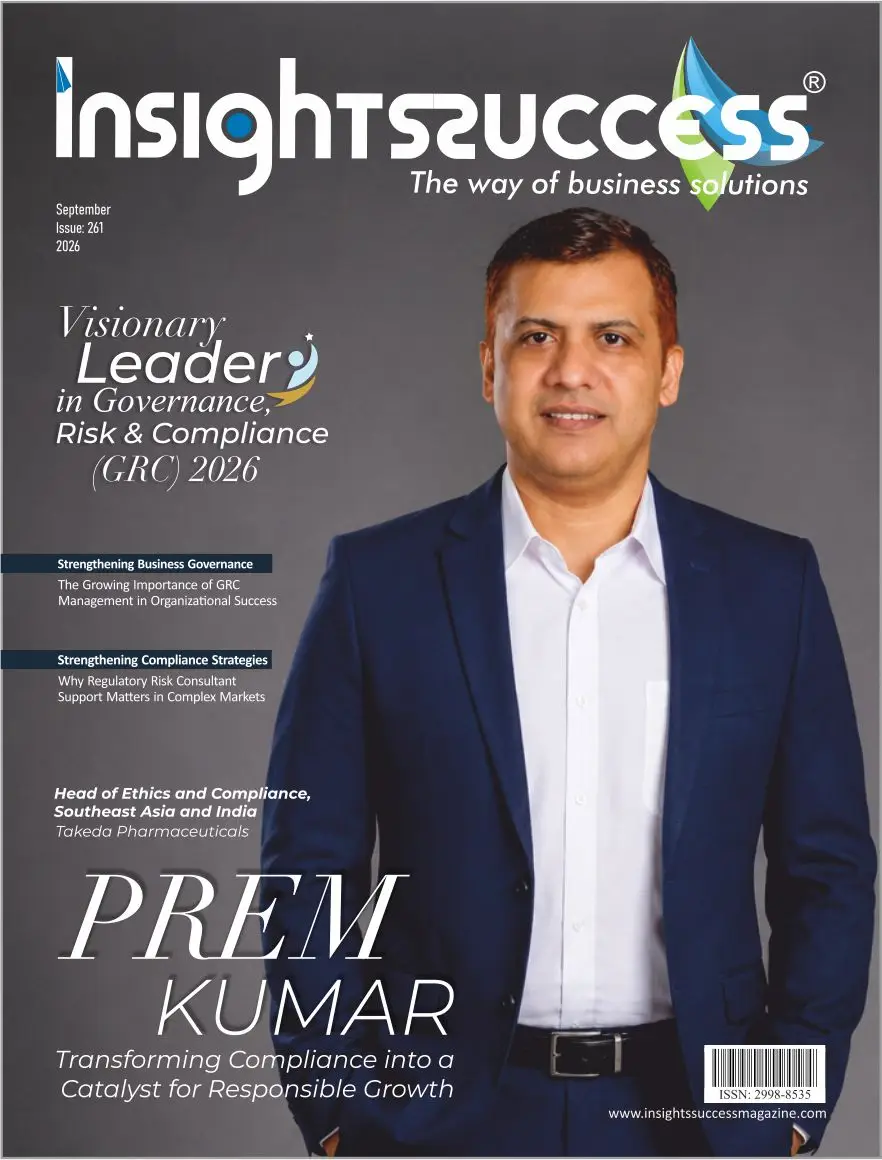
Visionary Leader in Governance, Risk & Compliance (GRC) 2026
Visionary Leader in Governance, Risk & Compliance (GRC) 2026 Highlighting visionary leadership in governance, risk, and compliance, this edition explores how ethical decision-making, effective risk management, and strong governance practices support responsible growth, business integrity, resilience, and long-term organizational success. Digital Link Quick highlights Quick reads

Top Admired Executive Coaches To Follow, 2026
Top Admired Executive Coaches To Follow, 2026 Empowering leaders to reach their full potential, this edition features the top admired executive coaches, recognized for transformative guidance, strategic insight, and leadership development that drives lasting professional success. Digital Link Quick highlights Quick reads