






Why Patients Sometimes Trust a Person More Than a Portal
A patient portal can schedule an appointment in ninety seconds. So why does a patient with a new diabetes diagnosis still call the front desk before booking online? It is not always confusion or resistance to technology. Sometimes, it happens due to trust, and trust does not come from a login screen. Practices have invested heavily in patient portals. Appointment booking, lab results, prescription requests, and secure messaging are all available, yet many patients still call when they need help understanding a result or figuring out what to do next. The problem is not that portals have failed. Patients still need the reassurance and guidance that only a person can provide. What is a patient portal? A patient portal is a secure online website or mobile app that gives patients 24/7 access to their personal health information and lets them communicate with their doctors. Its key features may include: Patients can view their lab results and imaging reports Patients can schedule and reschedule appointments and view upcoming doctor visits Patients can also ask for medication refills Patients can send their queries to their doctors directly Patients can also check and pay medical bills Why Patients Don’t Trust Patient Portals Patient portals work well for many routine tasks. The problem begins when patients are supposed to navigate the portal on their own and need more explanation than screen providers. Patients don’t know how to use them Patients may struggle to use portals effectively if they are not shown how to use them. The HINTS study found that only 39.2% of respondents said their provider had encouraged them to use online medical records. Among patients with a regular doctor, that figure rose to 43.2%, compared with just 20% among those without one. So, it’s a lesson for medical practices that there is a difference between portal activation and portal adoption. Practices should provide patients with a quick overview and tell them how to use it so they can use it in their normal routine. Portal navigation creates friction Patients are more likely to stop using a portal when even small tasks take a lot of time. Some of the common causes of friction in navigation include portals requiring multi-step login verification, complex sign-up processes, finding test results or appointment buttons takes more time, and medical jargon confusing older patients. Portals can’t provide reassurance A patient who sees “abnormal” on their lab report may immediately wonder how serious the issue is. Similarly, a patient who has been referred to another specialist may not know whether to wait or contact the practice for an update. A portal may display the test result or referral status but cannot provide human clinical communication and emotional support. Why Patients Trust a Person More Patients usually trust a person more than any portal or website because human interaction provides them with emotional support and personalised reassurance. Some of the common reasons are as follows: Staff can handle patient questions Most of the portal problems are front-desk issues. A patient may need help booking an appointment, updating insurance information, checking a referral, requesting a refill, or finding a specific feature in the portal. A trained virtual medical assistant or virtual assistant services for medical practice can help healthcare practices handle these routine questions, guide patients through administrative tasks, and send clinical questions to the right team members on time. The goal is not to replace the portal but to make sure patients have somewhere to go when portal services are not sufficient. Human follow-up prevents drop-offs A portal cannot notice that a patient started a process and then gave up. This is where a staff member can notice these signs and step in. For example, a patient may be struggling with registration, unable to finish scheduling or sending questions that need clarification. A quick call or a follow-up message can help the patient complete the tasks instead of abandoning them. People make digital care feel personal Balancing digital tools with a human touch makes healthcare easier and more reassuring for patients. Technology works well for routine tasks, such as scheduling appointments, changing appointments, and sending quick administrative questions. But technology cannot replace empathy and clear conversations. Patients need staff contact for explaining confusing test results, providing emotional reassurance during stressful times, and answering complex questions about a new treatment. Conclusion Patient portals are useful, but they cannot handle every part of the patient experience. Patients may use them to view lab results, schedule an appointment, request refills, and more. But information is complex, and test reports show that patients with abnormal results need reassurance from humans in their difficult times. A person can explain difficult medical terms to a patient when the portal cannot. Speaking to a real human makes patients feel seen or heard, and valued instead of feeling like just another number in a computer system. Read Also : From One-Size-Fits-All to Personalised Care: How Weight Management Is Evolving

The Woman We Were Taught to Be Culture, Choice and the Courage to Redefine Ourselves
The Woman We Were Taught to Be: Culture, Choice and the Courage to Redefine Ourselves Exploring women’s leadership through culture, choice, courage, and agency. This edition highlights how questioning inherited expectations, embracing personal ambition, and supporting others can shape meaningful leadership and empowerment. Digital Link Quick highlights Quick reads

The Woman We Choose to Become: Rizvana Abdul Reman on Courage, Culture & Leadership
What does it mean to choose the woman you become? For Rizvana Abdul Reman, that question has become increasingly important — not only in her work as an educational leader, but in how she understands culture, identity, ambition and leadership. With more than sixteen years of experience across UK and international education, Rizvana has built her career around questioning what she already knows. As Head of Maths & Science Departments at Nun Academy Primary School in Jeddah, a Chartered Teacher and NPQSL-qualified leader, her work spans curriculum, assessment, teacher development and school improvement.She has also been recognised with the Education Leadership Impact Award and the Transformational Education Leader Award in 2026. Yet the professional titles tell only part of the story. Her more recent writing has taken her thinking beyond the classroom and into questions of culture, agency, choice and women’s leadership. Her latest published article, The Woman We Were Taught to Be: Culture, Choice and the Courage to Redefine Ourselves, explores how women can absorb expectations about who they should be long before they are old enough to question them. For Rizvana, this has become an important part of understanding leadership — because before we can lead others, we must be willing to examine the assumptions that have shaped us. A Career Built on Questioning What She Already Knew Rizvana traces much of her development not to moments of certainty, but to experiences that unsettled what she thought she already understood. Beginning her career in the UK across English, Maths and Science, she developed a strong foundation in curriculum and classroom practice before moving into international education. Working across different cultural contexts reshaped her thinking. Strategies that succeed in one school do not necessarily succeed in another, even when the curriculum remains familiar. Expectations around behaviour, communication, relationships and what constitutes “good teaching” can vary considerably. She says, “There is rarely one right answer in education, we need evidence and strong principles, but we also need to understand the people and the context in which we are applying them.” That lesson became central to her leadership. Over time, her focus shifted from becoming a better teacher herself to helping other teachers grow. She began to see leadership less as having the answers and more as creating the conditions in which other people can develop the confidence and competence to find their own. But questioning assumptions did not stop with education. When Culture Becomes an Invisible Curriculum Rizvana’s experience of international education led to her article When Great Teachers Move Abroad: Why Culture Matters More Than Curriculum, exploring why strong teaching does not always translate directly from one cultural context to another. Culture matters in schools because it shapes behaviour, expectations and relationships. But Rizvana has increasingly become interested in what happens when culture shapes people in ways that are much less visible. Her latest article, The Woman We Were Taught to Be, explores the invisible curriculum that girls can experience as they grow up. They learn what is expected of them through language, observation, relationships and the behaviour of the people around them. They absorb messages about how ambitious they should be, how agreeable they should remain, what responsibilities should come first and which choices may be considered unacceptable. The difficulty is that expectations can become so familiar that we stop recognizing them as expectations. We simply accept them as truth. Rizvana’s reflections on culture are not about rejecting culture. Nor does she believe that women’s empowerment requires women to reject faith, family or community. Instead, she argues for the freedom to examine what we have inherited and distinguish genuine belief from cultural interpretation. That distinction matters. When social expectations are presented as unquestionable — particularly when they are presented as religious obligation — questioning them can feel disobedience. For Rizvana, questioning is not rejection. It is agency. The Courage to Choose Courage is often associated with taking risks, speaking up or trying something new. For Rizvana, courage can mean something more personal: having the courage to question what you have inherited, to make choices that may not always be understood by others and to accept that the person you once thought you had to become may not be the person you ultimately choose to be. Her own journey has reinforced this understanding. She has experienced the assumptions that can surround women and the expectations attached to identity, relationships and age. She has also experienced what it means to make choices that may not fit comfortably within other people’s expectations. Those experiences have shaped her thinking, rather than defined it. At fifty, she is particularly conscious of the tendency to treat age as a boundary for women’s ambition. She rejects that idea. “There is no expiry date on ambition.” For Rizvana, reaching a certain age should not mean reaching the end of possibility. Experience can bring greater clarity about what matters, what no longer matters and what we still want to become. Choosing who we become is therefore not necessarily about rejecting the past. It is about deciding what we carry forward, what we question and what we leave behind. From Achievement to Agency This idea of agency also runs through Rizvana’s educational leadership. As Head of Maths & Science Departments, she is deeply interested in the difference between pupils appearing successful and genuinely learning. Her work and writing around assessment challenge the assumption that strong results automatically mean deep or secure understanding. The Illusion of Achievement explores that gap between attainment and learning. For Rizvana, curriculum sequencing, assessment and teacher development are inseparable from pupil outcomes. Learning walks, pupil voice and work scrutiny are not intended simply to evaluate teachers, but to understand where support is needed and where effective practice can be developed more widely. “Achievement and teacher development are not competing priorities,” she argues. “They are two sides of the same commitment.” The same principle applies to how she develops teachers. Her approach rests on a simple belief: support and accountability must operate together. She

The Importance of Women’s Empowerment in Modern Society
Supporting Women’s Growth Society functions best when all of its members have the opportunity to contribute fully. When large portions of a population are held back by barriers that have nothing to do with their capability, the loss is felt by everyone. Progress slows. Potential goes unrealized. Communities carry problems that could be solved if more people had genuine access to the tools, resources, and opportunities needed to address them. Women’s empowerment is about removing those barriers and creating conditions where women can participate fully in economic, social, and civic life. It is not a niche concern. It is one of the most consequential investments any society can make in its own future. What Empowerment Actually Means The word empowerment is sometimes used loosely, but it has a concrete meaning worth holding onto. It refers to the process through which people gain the ability to make meaningful choices about their own lives. For women, this means access to education, to economic opportunity, to legal protections, to healthcare and to a voice in the decisions that affect them. It means being able to move through the world with the same freedom, safety and dignity that others take for granted. Women’s empowerment is not about advantage. It is about equity. It is about ensuring that gender is not the determining factor in what a person is able to achieve or who they are able to become. When that equity is in place, women thrive. And when women thrive, the communities and institutions around them are stronger as a result. The Economic Case The connection between women’s empowerment and economic growth is well established. Economies that do not allow women to participate fully are way below their optimal level. The talents, skills, work, entrepreneurial and innovative capabilities of women contribute a great deal to the productivity of any economy. The exclusion of these capabilities due to discrimination or lack of equal opportunities bears the cost for the entire economy. When women have genuine access to education, credit, fair employment and equal pay, they contribute to economic growth in ways that compound over time. They invest in their families, support their communities and build businesses that create jobs and generate wealth. The economic case for women’s empowerment does not rest on generosity. It rests on the straightforward recognition that no economy can afford to waste the potential of half its population. Education as the Foundation Everything else in women’s empowerment is stronger when it rests on a foundation of education. Educated women make more informed decisions about their health, their finances and their families. They are better positioned to advocate for themselves in professional and legal settings. They are more likely to raise children who are also educated, creating a generational effect that extends the benefits of investment in women’s education far into the future. Access to quality education for girls and women is therefore not simply one component of women’s empowerment. It is the component that strengthens every other one. Communities which focus on educating girls have a tendency to improve in other social-economic fields as well due to the power of this single investment. Safety and the Right to Live Without Fear Empowerment requires safety. A woman who cannot move through public or private spaces without fear of violence or harassment is not empowered regardless of what other opportunities exist on paper. Physical safety is not a separate issue from women’s empowerment. It is central to it. Societies that pay attention to this develop legal institutions that shield women, enforce such shields effectively and reform the cultural attitudes that enable the perpetuation of harassment and violence. This work is difficult and takes time, but it is fundamental. Women cannot participate fully in economic, civic and social life when their safety cannot be taken for granted. Leadership and the Power of Visibility When women hold positions of leadership in business, government, education, and civic life, it changes what is possible for other women who see them there. Being visible as leaders is in itself an act of empowering women since it widens people’s sense of what is possible. It illustrates through action, not through debate, that women are capable of being leaders at all levels and in all realms. Institutions and societies that purposefully provide routes by which women may rise into leadership positions are creating a future in which empowerment will be self-sustaining among women. More women in leadership means more decisions made with women’s perspectives genuinely represented. More decisions made with those perspectives means policies, products, and institutions that serve women better. And better-served women are better positioned to lead. In Summary Women’s empowerment is not a cause that benefits women alone. It benefits families, communities, economies, and societies as a whole. The evidence for this is consistent and it crosses geographic, cultural, and economic boundaries. Investing seriously in the empowerment of women is one of the most effective things any society can do to improve the wellbeing of all its members. The barriers that remain are real, but so is the progress that has already been made and the momentum behind continuing to build on it. Read Also : The Impact of Women in Educational Management on Educational Development

The Impact of Women in Educational Management on Educational Development
Advancing Educational Progress Education shapes everything that follows it. The quality of what happens inside schools and universities determines how well students are prepared for the challenges they will face, how effectively communities develop over time and how broadly opportunity is distributed across society. Getting education right requires more than good curriculum and adequate funding. It requires strong leadership, clear vision and the kind of management that creates conditions where genuine learning can take place. Women in educational management are playing an increasingly central role in building those conditions and their impact on educational development is both measurable and meaningful. A Presence That Has Always Been There Women have worked in education for generations. In many countries, teaching has long been a profession where women make up the majority of the workforce. What has changed more recently is the visibility of women in the leadership and management roles that shape how educational institutions operate, what they prioritize and how they develop over time. This shift matters because the people in management positions make the decisions that determine the direction of an institution. Curriculum choices, resource allocation, staff development, student support systems, and institutional culture all flow from leadership. Women in educational management are now making these decisions in growing numbers, and the decisions they are making reflect a set of values and priorities that are strengthening educational development across the institutions they lead. Building Stronger Learning Environments One of the most consistent patterns observed in institutions led by women is the emphasis placed on creating environments where students feel safe, supported and genuinely engaged with their learning. This is not a soft priority. It is a foundational one. The importance of such an environment cannot be understated, and research consistently points out how well the students learn in an environment in which they feel included. Women in educational management have demonstrated a particular strength in building these environments. They tend to prioritize the relational dimensions of institutional life alongside the academic ones, understanding that the two are deeply connected. When students feel the institution genuinely cares about them, their engagement improves. When engagement improves, outcomes follow. Investing in Teachers as a Development Strategy Educational development does not happen without strong teaching, and strong teaching does not happen without investment in the people doing it. Teacher development, support, and retention are areas where management decisions have an enormous impact on the quality of education an institution delivers over time. Women in educational management have shown consistent strength in this area. They tend to invest seriously in professional development, create collaborative structures that allow teachers to learn from each other, and build the kind of supportive culture that makes teaching feel sustainable rather than draining. Institutions that retain their best teachers over time consistently outperform those that cycle through staff, and the management approach that makes retention possible is one of the most significant contributions to long-term educational development. Driving Inclusion Across the Institution Women in Educational development is not only about improving outcomes for students who are already well served by the system. Another aspect of development includes providing good education services to those students who have not received proper attention in the past. One of the areas where women managers have contributed greatly is this aspect of development. Women leaders in education have consistently pushed for more inclusive approaches to curriculum design, student support and institutional culture. They have advocated for students with different learning needs, from different cultural backgrounds and from communities that have not always found educational institutions welcoming. This work is fundamental to genuine educational development, which requires that the system improves not just for some students but for all of them. Modeling What Leadership Can Look Like In addition to the influence they have on the actual practice of institutions, women who are involved in the management of education also contribute to what students think is possible for them. Youth acquire their vision of leadership through observations of those who occupy leadership roles. When young people see women being successful in managing their schools and universities, it broadens their perspective of what is possible. This modeling effect is particularly significant for girls and young women who are developing their own sense of ambition and possibility. The presence of capable women in educational leadership sends a message that reaches deeper than any classroom lesson about equality or opportunity. In Summary The impact of women in educational management on educational development is real, broad, and continuing to grow. It shows up in stronger learning environments, better-supported teachers, more inclusive institutional cultures, and improved outcomes for a wider range of students. It also shows up in the expanded sense of possibility that students carry with them when they have seen leadership done well by people who look like them. Educational institutions that develop and support women in management roles are not simply filling positions. They are building the leadership capacity that educational development genuinely needs. Read Also : How Human Capital Management Improves Organizational Efficiency
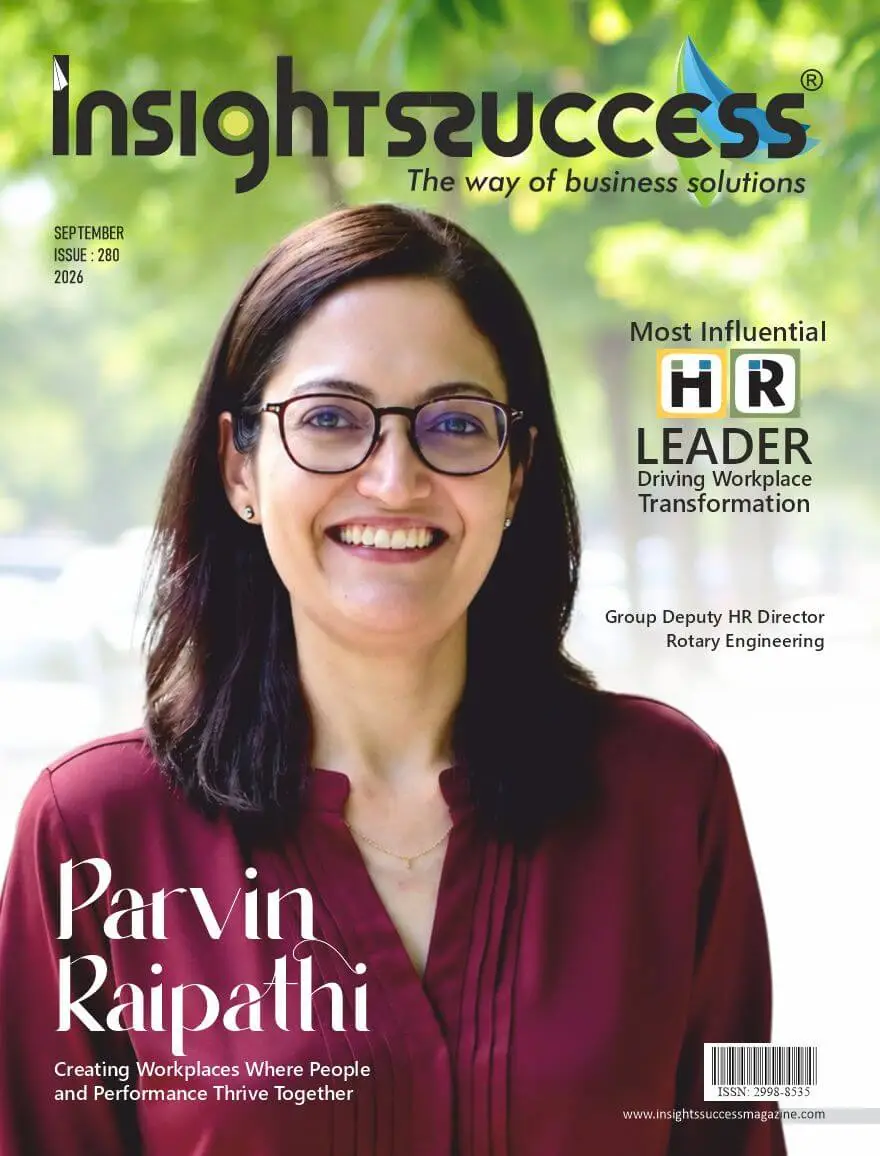
Most Influential HR Leader Driving Workplace Transformation
Most Influential HR Leader Driving Workplace Transformation Exploring the journey of an influential HR leader transforming workplaces through people-centered strategies. This edition highlights organizational culture, workforce engagement, strategic HR leadership, and sustainable business impact. Digital Link Quick highlights Quick reads

Parvin Raipathi: Creating Workplaces Where People and Performance Thrive Together
There is a version of Human Resources that most organizations have settled for. It processes paperwork, manages compliance, runs onboarding programs, and responds to problems after they have already become expensive. It is functional, reliable, and almost entirely reactive. Then there is the version that Parvin Raipathi has spent her career building: an HR function that sits at the center of strategic decision-making, shapes organizational culture from within, and measures its success not by the policies it has implemented but by the sustainable impact those policies create in the people and the business long after implementation. Parvin is an HR leader whose career has been shaped by the engineering and construction sector, one of the world’s most demanding and human-intensive industries. Currently, she is working in Rotary Engineering, the multi-national engineering firm based out of Singapore known around the world for their expertise in oil and gas, petrochemicals, and industrial projects. Throughout her career, she has been instrumental in transforming workforces across several countries and different cultures in varied industries, overcoming the challenge of meeting huge operational requirements along with human-centered leadership. Her philosophy is both clear and uncommon: organizations succeed because of people, not processes alone, and the HR function that truly understands this becomes one of the most powerful levers a business has at its disposal. She reflects, “Every project milestone, safety achievement, and business result ultimately depends on engaged, capable people working together. That belief continues to guide my approach today.” The Belief That Started Everything Parvin’s path into Human Resources was not accidental. It was shaped by a direct and early observation that stayed with her and eventually defined her entire professional purpose. She saw how the right leader could inspire confidence, unlock potential, and transform performance within a team. She also witnessed, with equal clarity, how poor leadership could disengage talented individuals despite excellent systems and processes being in place around them. That tension, between the potential of people and the conditions that either release or suppress it, became the intellectual engine of her career. What she brought to HR from the beginning was not simply an administrative instinct but a genuine conviction that the function could and should operate as a bridge between business strategy and human execution. Over the years, her career evolved from operational HR into strategic leadership, giving her the opportunity to lead workforce transformation across geographies and industries that tested every dimension of that conviction. The engineering and construction sector, with its high-pressure project timelines, diverse multicultural workforces, and non-negotiable safety standards, proved to be exactly the environment where the human dimension of business becomes most visible and most consequential. She states, “My career gave me the opportunity to lead workforce transformation across multiple countries, cultures, and industries. That experience reinforced the importance of balancing business priorities with humanity.” What Transformation Actually Means In the language of modern business, transformation is everywhere. Organizations describe themselves as transforming constantly, and the word has been so widely applied that it has begun to lose its meaning. Parvin’s definition of transformation is specific enough to cut through noise. Meaningful transformation, as she frames it, is not about changing policies or introducing new technology. It is about changing behaviors, mindsets, and organizational culture in ways that create lasting value rather than temporary improvement. The distinction matters enormously in practice. Organizations that focus transformation efforts on systems and structures often find that the change evaporates once the external pressure to change is removed. The organizations where transformation sticks are those where employees understand the purpose behind the change, feel included throughout the journey, and have leaders who consistently reinforce the desired behaviors in their own daily conduct rather than simply announcing the new direction and expecting it to take hold. Throughout her career, Parvin has led initiatives spanning organizational restructuring, HR digitalization, leadership development, competency framework design, and workforce capability building. The measure of success she applies to each of these is not implementation. It is adoption, engagement, and improved business outcomes sustained over time. That standard is considerably more demanding than it sounds, and it is why she considers leadership commitment, clear communication, and continuous capability development as the three non-negotiable elements of any transformation that is genuinely intended to last. She notes, “Sustainable transformation requires strong leadership commitment, clear communication, and continuous capability development. HR plays a critical role in aligning these elements while ensuring that organizational growth never comes at the expense of employee trust.” The Milestone That Defined Her Leadership When Parvin reflects on the professional achievement that most clearly captures what her leadership stands for, she returns to a single initiative: leading the transformation of HR into a strategic business partner across a global EPC company operating in multiple countries simultaneously. The scope of that work was considerable. It involved redesigning HR operating models, establishing standardized frameworks, strengthening governance structures, introducing competency-based development programs, and digitizing key HR processes across a geographically distributed organization. But the element she considers most significant was not structural. It was cultural. The initiative succeeded in shifting the perception of HR within that organization from being primarily an administrative function to becoming a trusted advisor that supported and influenced business growth. Beyond the systems and structures, she takes particular pride in the leadership capability built during that period, the individuals who grew into stronger leaders and the teams that began collaborating more effectively as a direct result of the investment made in them. The awards and professional recognition that followed were meaningful milestones. But the measure she returns to most readily is different: knowing that the work continues to create value long after implementation, because organizations have become stronger because their people have become stronger. She affirms, “Sustainable impact is built when organizations become stronger because their people become stronger. That is the only measure of transformation that I believe is genuinely worth pursuing.” Evolving for a World That Will Not Stand Still The environment in which HR leaders operate has shifted considerably across

How Human Capital Management Improves Organizational Efficiency
Supporting Workforce Stability Every business eventually runs into the same question: how do you keep good people around long enough for their work to actually pay off? That’s the problem Human Capital Management was built to solve. It pulls people, processes, and technology into one framework, and when it’s done well, the result is a workforce that stays put, grows steadily, and keeps operations running without constant disruption. What started as a back-office HR function now shapes decisions about growth, resource allocation, and how a company holds onto its people when markets shift. Plenty of leaders no longer see Human Capital Management as paperwork and process. They see it as the foundation of a stable, dependable team. The idea is fairly simple on paper. Recruitment, onboarding, performance tracking, and workforce planning all get tied into one system instead of running as separate efforts. Once that happens, fewer people fall through the cracks, turnover drops, and employees have a clearer sense of where they stand and where they’re headed. Planning a Workforce Built to Last Good planning means building a team sized to the actual workload, not a guess at it, and staffed with people who are likely to stay. Companies with solid Human Capital Management practices know their headcount, their upcoming skill gaps, and their hiring needs well before any of it becomes a crisis. That kind of lead time keeps projects moving on schedule and gives finance teams a clearer picture of labor costs months ahead, which makes budgeting more predictable. It also means fewer last-minute hires brought on under pressure, which tend to be the ones who leave first. Using Data to Spot Instability Early Most modern systems combine information from recruitment, payroll, performance reviews, and attendance into a single dashboard. That alone changes how leaders operate, because warning signs that used to hide across a dozen spreadsheets become obvious. A manager can see which team has the highest turnover, which training programs actually lead to promotions, or which department is quietly holding onto its people better than the rest and worth studying as a model. Decisions built on that kind of evidence tend to catch stability problems before they turn into a pattern. Growing People Instead of Losing Them Companies that hold onto their workforce usually invest in the staff they already have rather than treating every skill gap as a reason to hire externally. That means internal training, rotations across departments, and mentorship programs designed to move people into roles they actually want. This part of Human Capital Management often makes the biggest difference, since employees who see a real path forward have far less reason to look elsewhere. It’s also typically cheaper than recruiting from outside, and it keeps knowledge that took years to build from walking out the door with a departing employee. Why Low Turnover Changes Everything Low turnover is probably the clearest sign that Human Capital Management is actually working. When people stay, team dynamics hold together, projects stay on track, and managers spend less time retraining replacements and more time on new priorities. Pay people fairly, keep communication honest, and manage with consistency, and the best employees tend to stick around. That steadiness keeps operations running and holds onto knowledge the company would otherwise lose. There’s also a practical side to it: teams that have been together a while just work faster, mostly because everyone already knows who’s good at what. Removing Friction That Drives People Out Organized hiring, simpler paperwork, and consistent reviews all reduce the everyday frustrations that push people toward the exit. Automating routine tasks like onboarding forms, leave requests, and compliance reporting frees up time that HR teams can spend on the things that actually keep people around, and both fall squarely under good Human Capital Management, like career conversations and succession planning. What Stability Means for Leadership Executives who take Human Capital Management seriously tend to make sharper calls about where to put their investment in people. Clear reporting on workforce metrics gives them the confidence to plan expansions, restructure teams, or set budgets without worrying that core staff might walk out the door. That alignment between people strategy and business strategy is often what lets a company scale without losing its footing, even as the industry around it keeps changing. Conclusion A stable workforce doesn’t happen by accident. It comes from treating Human Capital Management as a genuine part of business strategy, rather than something to deal with after the real decisions are made. Put real effort into planning, development, and retention, and the payoff shows up in teams that stick around, work well together, and hold onto the knowledge that keeps things running. Markets won’t stop shifting. But companies that keep investing in workforce stability today are the ones that won’t be stuck rebuilding from scratch tomorrow. Read Also : Sustainable Urban Mobility and the Future of Transportation

Employee Retention Strategies and the Changing Workplace
Optimizing Human Resources Workplaces have changed fast over the past few years. Hybrid schedules, generational shifts, and rising expectations around growth have pushed retention to the top of the priority list for most HR teams. Employee Retention Strategies are no longer a side conversation reserved for annual planning meetings. They sit at the center of how organizations compete for skilled people in a market where switching jobs has never been easier. Companies once assumed a good salary was enough to keep staff in place. That assumption does not hold anymore. Workers today weigh purpose, recognition, and flexibility just as heavily as pay, and businesses that ignore this reality tend to lose their best people first, which is exactly why Employee Retention Strategies now get discussed at the leadership level rather than left to HR alone. Why Retention Matters More Than It Used To Turnover has climbed as remote work widened the talent pool beyond local borders. A skilled employee based in one city can now interview for a role halfway across the country without relocating. This shift has made it tougher to earn loyalty and easier to lose it. Without strong Employee Retention Strategies in place, organizations tend to fall into a repeating cycle of hiring and retraining, one that strains budgets and slows teams across the board. The cost of losing a trained employee rarely shows up on a single line item, but it adds up fast across departments. Does Company Culture Actually Keep People Around Culture gets mentioned constantly, sometimes to the point of losing meaning, but the substance behind it still matters. Employees who feel respected and included stick around longer than those working under leadership that treats them as replaceable. Open communication, room for honest feedback, and real support for work life balance all play a part. None of this happens through a single memo or a one time training session. It has to show up in how managers act day to day, not just in what a handbook says. Why Career Growth Keeps Coming Up People stay where they see a future. Advancement paths that are actually visible, mentorship from people higher up, and real chances to pick up new skills show employees they are valued as more than someone filling a slot. When growth stalls, so does patience, and resignations tend to follow. Businesses serious about Employee Retention Strategies now treat internal promotion and skill building as part of daily operations rather than a once a year review topic. Even small gestures, like a manager sitting down to map out a rough career path with an employee, tend to carry more weight than a generic training portal ever will. Has Flexibility Become Non Negotiable Flexible work is no longer a bonus most candidates hope for. It is closer to a baseline expectation. Hybrid arrangements, adjustable hours, and evaluation based on results rather than time logged at a desk show up constantly in job listings now. Companies that push back against this shift often lose candidates to competitors offering more room to work around personal responsibilities such as caregiving or continuing education. Flexibility has quietly become one of the strongest levers inside modern Employee Retention Strategies. Does Recognition Change Whether Someone Stays Employees frequently name a lack of recognition as their reason for leaving, even ahead of pay in many surveys. Regular feedback, honest praise, and fair reward systems build a sense of value that salary alone cannot replicate. Recognition does not need a large budget behind it. A manager who notices effort and says so consistently often does more for morale than an annual bonus. Teams that build recognition into daily routines tend to report stronger engagement over time. What Separates Good Leaders From Great Ones Here Leadership sets the tone for everything below it. Managers who communicate honestly, back their teams publicly, and live the values the company claims to hold tend to keep people longer than those focused only on output numbers. Training managers to lead with patience and consistency has become a real priority for companies trying to fix retention problems from the inside out. Employee Retention Strategies rarely succeed without leadership willing to change first, and that shift often starts with small, visible actions rather than sweeping policy announcements. Conclusion The workplace will keep shifting, and companies that adjust how they treat their people will be the ones still standing with strong teams in five years. Culture, growth opportunities, flexibility, and genuine recognition make up the core of Employee Retention Strategies that outperform pay-only approaches almost every time. As the race for skilled workers heats up, companies putting money into their people today are the ones spared from a last-minute scramble to replace them. Read Also : Sustainable Urban Mobility and the Future of Transportation

From One-Size-Fits-All to Personalised Care: How Weight Management Is Evolving
For decades, weight management was often reduced to a deceptively simple formula: eat less, exercise more, and rely on willpower to keep the results going. While energy balance remains fundamental to changes in body weight, modern healthcare increasingly recognizes that the reasons people gain, lose, and regain weight are considerably more complex. Genetics, metabolism, medical conditions, medications, sleep, stress, environment, eating behaviour, mobility, and psychological wellbeing can all influence an individual’s experience. Two people with similar body weights may therefore require very different forms of support. This understanding is helping weight management move away from rigid programmes built for the “average” person. Instead, healthcare professionals can increasingly consider individual health profiles, treatment goals, risks, preferences, and responses when determining what approach may be appropriate. Personalisation does not promise effortless results. What it offers is a more realistic starting point: recognizing that the same strategy will not necessarily work equally well for everyone. Body Weight Is More Complex Than a Single Number The scale provides useful information, but it reveals very little about why someone has reached a particular weight. One person may struggle primarily with appetite, while another may have mobility limitations that make physical activity difficult. Sleep problems, certain medicines, metabolic conditions, work patterns, stress, and previous dieting experiences can further change the picture. This complexity is one reason modern obesity care is increasingly discussed within the broader context of metabolic health. Insights Success has explored this perspective in its coverage of bariatric surgery and obesity-related health challenges, where weight management is considered alongside conditions such as type 2 diabetes, hormonal disorders and other long-term health concerns. Looking beyond body weight can change the definition of progress as well. Improvements in blood glucose, blood pressure, mobility, physical fitness, sleep, energy, or quality of life may be meaningful even when changes on the scale are slower than expected. A personalised approach can therefore begin with a broader question than simply, “How much weight should this person lose?” It can ask what improvements would make the greatest difference to that individual’s health. Treatment Choices Are Becoming More Individual The range of approaches available for weight management has expanded considerably. Nutrition and physical activity remain important foundations, but behavioural support, psychological care, medically supervised programmes, prescription medicines and metabolic or bariatric surgery may also be appropriate in different circumstances. Having more options makes individual assessment increasingly important. The most suitable weight loss treatment for one person may not be appropriate for another. Medical history, existing conditions, previous attempts at weight management, current medications, potential side effects, treatment eligibility and personal preferences can all influence clinical decisions. Even people receiving the same treatment may respond differently. One person may experience substantial benefit while another has a more modest response or side effects that require the treatment plan to be reviewed. Personalised care allows that information to influence what happens next. Instead of assuming that disappointing progress reflects a lack of commitment, healthcare professionals can assess whether the strategy itself needs adjustment. This creates a more responsive model in which treatment can evolve alongside the patient. Data Is Giving Personalisation Greater Depth Personalised weight management is also benefiting from the growing amount of health information that can be measured and interpreted. Blood tests can provide information about metabolic health. Wearable devices can record physical activity and sometimes aspects of sleep or heart rate. Food-tracking tools can reveal patterns that may otherwise be difficult to recognize, while regular clinical monitoring can show how someone responds to an intervention over time. Insights Success has previously profiled a science-driven approach to personalised health and weight management that incorporates health analysis, nutrition, tracking technologies and individualized strategies rather than relying solely on generic dieting principles. The broader opportunity lies in using relevant data to make better-informed decisions. Technology could eventually make this process more sophisticated. Digital health platforms may help identify patterns across sleep, activity, nutrition and other health information, while artificial intelligence could assist professionals in analysing large quantities of patient data. There are important limitations. More data does not automatically mean better care, and measurements from consumer devices vary in accuracy and clinical usefulness. Sensitive health information also requires appropriate privacy and security protections. The purpose of data should therefore be to support professional judgment and patient understanding, not to turn weight management into an endless stream of numbers. Personalised Care Still Depends on Sustainable Habits More advanced treatments do not make everyday behaviour irrelevant. Nutrition, movement, sleep, stress management and other routines can still influence health during and after a weight loss treatment. The difference in a personalised model is that those recommendations can be adapted to the person rather than prescribed as identical rules for everyone. Someone with joint pain may need a different approach to physical activity than an experienced gym-goer. A shift worker may require different strategies around meals and sleep than someone with a predictable daytime schedule. Cultural food preferences, family responsibilities, budget, cooking skills and access to healthy food can all affect what is sustainable. Personalisation therefore extends beyond selecting a medication or medical procedure. It also means designing supporting habits around the reality of someone’s life. This matters particularly over the long term. A highly restrictive plan may produce short-term change but become difficult to maintain. A more flexible approach that can survive holidays, demanding work periods, family events and occasional setbacks may have greater practical value. The objective is not to create a perfect lifestyle. It is to develop one that can realistically continue. The Future of Weight Management Is Likely to Be More Human It may seem contradictory that advances in medicines, data and digital technology could make healthcare more personal. Yet that may be precisely where weight management is heading. Better clinical tools give healthcare professionals more ways to understand why individuals respond differently. Rather than forcing patients through the same pathway, clinicians can potentially select from a wider range of interventions and adjust them according to response. That also changes the relationship between patient