





Ayman Yahya: Engineering Vision, Building Legacies
When the majority of people look at the skyline, they see buildings. Ayman Yahya sees something entirely different: decisions, alignments, and leadership moments that took place long before construction ever began.. In today’s complex development landscape, he believes success is not defined on site, but much earlier within the design phase, where vision, strategy, and execution are first aligned. This perspective has not only shaped his career, but also positioned him among a new generation of leaders redefining how major projects are delivered across the Middle East. He is squarely in the second category, and today, as Vice President of Design Services in the Dar Al Riyadh Group, which is one of the oldest engineering consultancies in the Middle East, he is one of the most convincing solutions to all of them. His path is not only purposeful, very precise, but also filled with unwavering confidence that great infrastructure is built way before it is even paved with the first brick. The Foundations of a Builder Long before boardroom decisions defined his days, Ayman was a young man captivated by a simple question: how do cities grow, and how does thoughtful design shape the people who live in them? He discovered early that infrastructure was never just about pipes and pillars. It was about purpose. That curiosity drove Ayman Yahya to pursue Industrial Engineering at the University of Jordan, where he built the technical foundation that would anchor his career. He then sharpened his leadership instincts through an MBA at the New York Institute of Technology, equipping himself with the ability to operate at the intersection of technical delivery and strategic leadership. His early career placed him in project and design management roles, where he coordinated engineers, architects, and urban planners across major developments in the Middle East. Healthcare complexes require precision and sensitivity. Hospitality developments demanded aesthetic intelligence. Mixed-use urban projects called for both technical mastery and stakeholder diplomacy. Each project reinforced one truth: the real challenge in infrastructure is never merely technical. “From the very beginning, I understood that delivering a project is only part of the equation. The deeper challenge is building the right team and creating the right environment for them to succeed,” he says. From Execution to Elevation As his career evolved, so did his perspective. He recognized that organizations delivering large-scale design programs often excelled at technical output but struggled with governance, coordination, and long-term strategy. He shifted his attention from project delivery to organizational performance, a move that marked his transition from accomplished practitioner to strategic executive. “Infrastructure and design are among the most powerful tools for shaping the future of societies,” Ayman Yahya reflects. That conviction became his compass. He invested his energy in building the frameworks, teams, and operational systems that would allow organizations to perform at a consistently higher level, year after year. Today, He leads multidisciplinary teams responsible for major design portfolios serving government and institutional clients across the region. He drives strategic planning, shapes governance frameworks, and builds client relationships that transform single contracts into enduring partnerships. In a sector where trust is the most valuable currency, He has spent two decades accumulating it. “When clients trust you with their most ambitious programs, you are not just managing a contract. You are carrying their vision, and that responsibility never leaves you,” he states. The Shift That Defines Modern Projects As projects across the region continue to grow in scale and complexity, Ayman Yahya has become a strong advocate for a critical industry shift: elevating design management from a coordination function to a strategic leadership discipline. “Today, project success is no longer determined during construction, it is determined by how effectively the design phase is managed,” he explains. In his experience, three factors consistently define successful developments. The first is early stakeholder alignment, ensuring that all parties, from clients and operators to consultants, share a unified vision from the outset. The second is integrated multidisciplinary collaboration, where architecture, engineering, sustainability, and operational requirements are aligned early to avoid fragmentation. The third is strong design leadership, connecting technical teams with strategic objectives to ensure long-term value creation. This approach has enabled him to position design as a key driver of efficiency, performance, and return on investment in large-scale developments. Milestones that Matter When Ayman reflects on his achievements, he does not speak in terms of projects completed, but in terms of systems improved, organizations strengthened, and long term value created.. His portfolio spans healthcare, hospitality, education, residential, mixed-use, and large-scale urban programs across more than two decades, a breadth that speaks to both his versatility and appetite for complexity. One accomplishment he holds closest is an initiative that elevated client satisfaction levels to nearly 90 percent, reflecting years of systematic improvement in coordination, quality management, and stakeholder communication. “Client satisfaction at that level does not happen by accident. It is the result of consistent communication, rigorous quality processes, and a genuine commitment to delivering beyond expectations,” he highlights. Another defining milestone was the establishment of a cross border design delivery platform in Amman, Jordan. An initiative that introduced a scalable operational model, enhanced quality governance, and significantly strengthened Dar Al Riyadh’s regional delivery capability.. He also played a pivotal role in cementing a strategic partnership with Oman’s Public Authority for Special Economic Zones and Free Zones (OPAZ), unlocking new opportunities within major economic development programs. Additionally, he expanded the organization’s client base through engagements with prominent governmental entities and Public Investment Fund (PIF)-affiliated companies, placing the firm within Saudi Arabia’s transformative national development ecosystem. When the World Stopped and How They Kept Moving The COVID-19 pandemic did not spare the engineering and infrastructure sector. Projects were disrupted. Supply chains fractured. Teams built around physical coordination suddenly navigated an entirely different reality. For Ayman Yahya and his team, the crisis became a defining test of organizational resilience. The first priority was continuity. Remote collaboration systems replaced in-person coordination, allowing teams to maintain progress despite physical restrictions. He understood that the

GCC Infrastructure Development Supporting Institutional Development GCC
Economic Expansion Due to the diversification policies, population boom and the national long-term visions, the Gulf Cooperation Council region has become one of the most vibrant economic zones in the globe. The key aspect of this change is the focus on the massive infrastructural projects that increase connectivity, productivity, and competitiveness. GCC infrastructure development is now a key driver of economic growth, and it aids the growth of industries including transportation and energy, healthcare, and education. Meanwhile, the governments of the region are giving special attention to the institutional development GCC so that to enhance governance, service delivery and establish resilient economies. This match of the infrastructure investment and the institutional capacity is becoming known as a key to sustainable growth and stability in the long-term. Strategic Investment and Policy Alignment The region does not have infrastructure projects which are independent projects but rather they are closely linked to the larger economic and social goals. Strategic planning makes investments to serve national interests like diversification, creation of employment opportunities, and development of technology. GCC infrastructure development is crucial to facilitating these results through the provision of the physical and virtual space of economic activity. The other factor that plays an important part is the part of institutional development GCC in ensuring that these investments are properly managed and maintained. Powerful institutions offer the rules, authority systems, and supervision systems that maximize the effects of infrastructure expenditure. In the face of such lack of alignment, even the most ambitious projects can fail to achieve their desired gains. Enhancing Connectivity and Competitiveness The enhancement of connectivity in the region and the world is one of the most apparent effects of infrastructure development in the GCC. The current transport structures developed logistic centres and merged urbanization are altering how individuals and products can be transported in the region. The benefits of these developments are that they not only make trade easy but also lure investment and talent. The convergence between institutional structures and the physical infrastructure is crucial in being competitive. Smoother working processes, efficient regulation systems, and efficient and transparent public administration make it easier to implement projects and to exploit the available assets. Consequently, the region is consolidating itself as an economic powerhouse in the world. Technology Integration and Smart Development Digital transformation is gaining a greater role in decision making to determine the future of infrastructure in the GCC. The future of project design and project delivery is being rewritten by smart cities, data-driven planning, and innovative technologies in construction. Combining these innovations will help to increase efficiency, minimize costs, and achieve better sustainability results. The institutional capacity should change with technology to have a good implementation and governance. This encompasses building of digital skills, embracing of contemporary management skills and instilling the culture of innovation in the public and private sector organisations. The region can achieve maximum benefit of the investments made on infrastructure by aligning technology with institutional preparedness. Socioeconomic Impact and Value Creation The GCC is not just involved in infrastructure development but the infrastructure development is aimed at bringing substantial social benefits. Better health care facilities, education and social services enhance better quality of life and social integration. These have been especially relevant in promoting urbanization and growth of population. The contribution of the institutions to the provision of these benefits cannot be overemphasized. Sound governance leads to the development of the projects in accordance with the needs of the community and the effective allocation of the resources. Such comprehensive vision of development will increase the governmental trust and help to sustain it in the long term. Challenges and Risk Management In spite of the advancements, there are a number of challenges that are encountered in the development of infrastructure in the GCC, some of them being the volatile economic conditions, changes in the regulations necessary and environmental concerns. These issues need an active and systematic response that is both ambitious and realistic. Effective institutions are very important in order to reduce the risks and guarantee the success of the project. They can ensure that sustainable development is achieved by setting policies that are clear, keeping it transparent, and ensuring accountability. The cooperation of both stakeholders, i.e. public and private ones, is also crucial in the process of overcoming complications and reaching some common goals. Future Outlook and Regional Transformation In the future, the further unification of infrastructure and institutional building will remain central to the further economic growth in the GCC. When the region is changing to meet the global trends like digitalization, sustainability, and changing economic dynamics, the significance of the coordinated strategies will be even greater. It is anticipated that the connection between GCC infrastructure development and institutional development GCC will only improve, and the two aspects complement each other in achieving long-term development. The GCC can pursue its vision of a diversified and resilient economy by continuing to focus on the areas of innovation, governance, and inclusivity. Read Also : Professional Coaches to Follow for Startup Success

Architecture Leadership Guiding Engineering Design Consultants
Expert Direction The architecture and engineering industry is also experiencing a major change, and this has been brought about by the rapid urbanization process, new technology, and the ever-complicated nature of projects. The focal point of this evolution is the increasing significance of structured leadership in the formation of strategic direction and coherent provision of projects. With the growth and complexity of projects, the role of leaders has evolved beyond design supervision to governance, financial discipline, and stakeholders’ alignment. Simultaneously, the consultancy teams will be expected to be more agile, incorporating multidisciplinary knowledge without losing accuracy and efficiency. This relationship between leadership and consultancy has thus been critical and has not only impacted on the design outcomes but also long-term success of the institutions. Strategic Alignment and Governance The capacity to coordinate the design objectives with larger organizational and economic objectives is one of the major features of successful architecture leadership. This includes laying out clear structures of decision making, setting quality standards, and accountability in all processes of project implementation. The leaders are increasingly demanded to intersect creative vision and operational feasibility. In the case of engineering design consultants, such alignment would be converted into well-organized workflows, better coordination, and clarity of the deliverables. In the presence of strong governance structures, teams can concentrate on innovation as well as possessing constant standards. This balance is vital in the provision of projects within the aesthetic and functional expectations without any form of schedule and budget deaths. Enhancing Collaboration Across Disciplines Contemporary projects require a smooth co-operation of architects, engineers, planners, and contractors. The role of leadership in this integration is to promote a communication culture and shared responsibility. Best direction promotes cross-functional discourse, where the different opinions are incorporated to deliver a common solution. Such collaborative environments are very advantageous to consultancy teams. Through direction, they are likely to coordinate their work, minimize similarities, and solve any potential conflict at an earlier stage of the design. Not only does this increase efficiency, but it also helps to improve the overall quality of deliverables, especially in large scale infrastructural and institutional developments. Technology and Innovation Integration The introduction of digital solutions like Building Information Modeling, data analytics, and automation have transformed the process in which projects are imagined and implemented. Architecture leadership plays a key role in making this digital transformation, and technology is used in a strategic manner and is not used in isolation. In the case of technical teams, the use of advanced tools makes the team more accurate, better at visualization, and easier at coordinating. Nevertheless, the real worth of technology is the fact that it follows project objectives and strategies. That is why the leaders need to make sure that innovation is not only embraced but also successfully integrated into the working processes to produce tangible results. Client-Centric Approach and Value Creation The growing competition in the business world has forced the client’s expectations to shift towards greater transparency, responsiveness, and long-term values. The leadership should thus focus on the client-centric approach where the needs of the stakeholders are understood and solutions that are beyond the scope of the project are provided. Engineering design consultants also add this value addition through technical expertise and innovative solutions to problems. With good guidance, teams will make efforts to work to the satisfaction of the clients, which leads to better satisfaction and relationships. Necessary alignment is essential, especially in projects done with public sector bodies and big institutions, whereby accountability and impact are highly evaluated. Navigating Challenges and Risks Modern projects are very complex and also offer various challenges such as regulatory restrictions, financial pressures, and changing market conditions. These risks need to be identified and minimized by the leaders to ensure that the projects are on track even when there is uncertainty. It needs strategic foresight, flexibility, and proper communication. In this process, consultancy teams are important as they give technical advice and point to possible risks in the design. With proper guidance, they may assist in taking active action with issues and making informed decisions. This teamwork is also necessary in ensuring the stability of the project and the attainment of the desired results. Future Outlook and Industry Impact In the future, the architecture leadership/engineering design consultant’s phenomenon is likely to be even more embedded in the success in the industry. The importance of having a unified leadership and specialization will continue to increase as the projects keep expanding in size and complexity. Companies that emphasize this kind of synergy will tend to become more efficient, innovative, and resilient. After all, the success of the future of the architecture and engineering industry will rely on how leaders and consultants will adjust to a changing environment whilst upholding the principle of excellence. Through teamwork, technological adoption, and alignment with strategic aims and goals, they can influence a created environment that responds to the fast-changing world. Read Also : Celebrating Global Healthcare Visionaries Shaping the Future of Medicine

Hyundai Accelerates North America Push with 36 New Models Planned by 2030
Prime Highlights- The wide mix of models across segments and price points is designed to attract a broader customer base and strengthen Hyundai’s competitive edge. Alongside North America, the company is also targeting growth in major markets like China as part of its wider global expansion strategy. Key Facts- Hyundai Motor plans to introduce 36 new vehicle models in North America by 2030, signalling a strong push to expand its presence in one of its biggest markets. The upcoming lineup will include petrol, hybrid, and electric vehicles, aimed at meeting changing customer preferences and the growing shift toward cleaner mobility. Background- Hyundai Motor is pushing ahead with plans to widen its presence in North America, with 36 new vehicle models lined up for the region by 2030. The announcement underlines its commitment to one of its most important markets, where appetite for a wide variety of vehicles remains strong. The new lineup will cover petrol, hybrid and electric vehicles, showing the company’s effort to keep up with shifting buyer preferences and the broader move toward cleaner transport. By offering more choices across different price ranges and segments, Hyundai hopes to draw in more customers and stay ahead of the competition. Outside North America, Hyundai has its eyes on other big markets too, with China being a top priority as the company works to boost its sales there. This is part of a larger effort to move more vehicles and grow its name across the world. The plan reflects Hyundai’s long-term thinking, with a clear emphasis on bringing new products to market and tapping into regions with strong growth potential. Plans of this size are usually seen as a sign that a company believes strongly in what buyers will want in the years ahead. In all, the announcement makes it clear that Hyundai is determined to grow one step at a time by putting resources into new models and staying in tune with the demands of a car industry that never stops changing. Read Also: De Novo Solutions Breaks Into Europe’s Top Growth League with FT1000 Ranking

Ivy Tier & Royston G King: Proof Over Promises
Each year thousands of students with high performance, near-perfect GPAs, varsity captaincy and piled up hours of community service open their mail on decision day and receive a rejection letter. It is not that they did not work hard. But because they worked hard at the wrong things. Royston G King noticed this pattern long before most. A serial entrepreneur, well-regarded PR strategist with a global presence, and Founder of Ivy Tier & Master Scaling, King dedicated years to media empires, bestselling books, and scaling brands to millions of followers. He then redirected the same machinery to another task which was to assist students to be admitted to the most elite universities in the world. It led to Ivy Tier, a proof-based college admissions accelerator that works on a completely different basis than any other standard consulting firm available. From PR Powerhouse to Admissions Disruptor King’s path to education consulting is anything but conventional. By his early twenties, he had earned a Forbes feature at just 21 a milestone that became a cornerstone insight behind his admissions philosophy. He went on to appear on Forbes 30 Under 30 Monaco, TEDx stages, BFM Radio, The Star, Sin Chew Newspaper, a New York Times Square Billboard, and in publications including USA Today, GQ, Business Insider, and Men’s Journal. As a contributor to Fast Company, Forbes Council, Rolling Stone, and Entrepreneur.com, King built a personal brand that demonstrated exactly what he now teaches: verified, globally visible credibility is a force multiplier that no résumé can replicate. Through Royston’s companies, he delivered results for public-listed companies, emerging CEOs, and social media creators, helping dozens of books reach #1 Amazon Bestseller status across niches from psychology to AI. He also led global startup accelerators including Founder Institute and Startup Grind, growing social media accounts to tens of millions of followers across North America and replicating that success for beginners across dozens of niches. The Insight That Changed Everything The genesis of Ivy Tier came from what King describes as a reverse-engineered discovery. He studied students gaining admission to Ivy League and top 25 universities, not perfect-stat applicants, but students with something distinctly different. The pattern was unmistakable: these students-built achievements that admissions officers could verify on Google in thirty seconds. King calls this the shift from narrative to proof. The data reinforced his thinking. A 2023 Intelligent.com survey found 61 percent of college students admitted to lying on their applications, while a 2025 Fortune report revealed AI flagged nearly 80,000 ghost student enrolment attempts in California alone. Googleability has become the first filter at elite institutions, and King built a system that places students at the top of those results. The Elite Digital Proof System Ivy Tier operates through the Elite Digital Proof System, a framework built around credibility proof, distribution proof, and impact proof, delivered across four high-signal pillars with 90 percent of the execution handled by King’s team. The first pillar secures Global Media Presence through placements on Forbes, Business Insider, Entrepreneur.com, and Inc. Magazine, made accessible through King’s established editorial relationships. The second pillar engineers Amazon Bestseller Status via a done-with-you writing process and a coordinated launch campaign. The third pillar builds Social Media Authority, producing content and running growth optimization until follower counts reach independently verifiable levels. The fourth pillar, Digital Ventures, helps students launch real products with measurable traction: apps, podcasts, ecommerce stores, or startups with real users and revenue…

How Do Safety Violations Impact Injury Compensation in Industrial Claims?
Industrial workers are exposed to hazardous conditions every day. Many work with high temperatures, heavy machinery, and volatile chemicals that can pose serious risks if proper safety measures are not followed. To protect workers in these environments, federal regulations require employers to implement safety equipment, provide training, and follow established safety procedures. Workplace safety violations in refineries can lead to catastrophic injuries, damage to equipment, and even fatalities. Evidence of safety violations can show that an employer acted negligently, strengthen an injured worker’s claim, increase the potential value of compensation, and even provide a basis for claims against other responsible parties. Understanding workplace safety standards can help workers recognize when an employer may have failed to provide a safe work environment and what legal options may be available after an accident. Industrial Safety Requirements The Occupational Safety and Health Administration outlines a list of safety regulations that industrial employers are required to follow in order to protect the health and well-being of workers. Here are the main guidelines: Personal Protective Equipment: Employers are required to provide adequate protection from hazards, including protective helmets, gloves, and eye protection. Hazard-free Workplace: Work environments must be kept free of hazards that could endanger the lives of workers, like loose scaffolding, unmarked dangers, including chemical substances or physical obstacles. Communication Procedures: Industrial employers are required to have in place procedures to communicate hazards, including labelling, adequate training, and safety procedures. Machinery Safety: Heavy machinery must come with adequate labelling about how to operate and have built-in safety features to prevent grave injuries in case of errors. Injury Reporting: Employers are required to record and report any incidents of injury on site, and provide adequate assistance to injured workers. The Impact of Violations on Industrial Claims Workers who are injured on the job have a right to pursue compensation, especially if their injuries occurred due to the negligence of an employer or other entity. Here’s how safety violations can change a claim: Serves as evidence of rule breaking Firstly, OSHA and other government entities provide standards that industries are required to follow. Failure to adhere to those regulations can serve as evidence that an employer failed to maintain a safe working environment. In other words, if safety procedures were ignored and a worker was injured as a result, the violation may help demonstrate that the accident could have been prevented. Safety Reports and Investigations Safety reports and investigations can play an important role in industrial injury claims. After a serious workplace accident, regulatory agencies such as OSHA often conduct investigations to determine whether safety violations occurred. Inspection findings, safety reports, and official citations can be used as evidence to show that proper procedures were not followed. These documents may help injured workers prove that unsafe working conditions contributed to the accident. Increases the value of a claim Safety violations can increase the value of a claim. For example, if it is found that an employer failed to provide adequate safety equipment, or was aware of a hazard—such as exposure to dangerous chemicals—and failed to warn or protect workers, this may strengthen a worker’s case. Workers may be entitled to compensation for medical treatment, lost wages, and the long-term impact the injury may have on their health or ability to work. Third-Party Claims In addition to claims involving employers, workers may also bring claims against equipment manufacturers, contractors, or other parties involved in the workplace. For example, if an equipment manufacturer failed to provide adequate labelling or safety mechanisms, a worker may pursue a claim for injuries caused by unsafe equipment. Another example would be a claim against site management if they failed to clear debris or properly mark dangerous areas, such as pits or unstable scaffolding. In these situations, third parties may be held responsible for injuries caused by hazardous working conditions. Final Thoughts Industrial injuries can result in long-term health complications that require extended hospitalization, costly medical treatment, and may affect a worker’s future employment prospects. Understanding the safety regulations that employers are required to follow can help injured workers recognize when those standards have been violated. When workplace safety violations contribute to an accident, they may play an important role in helping workers pursue compensation that adequately covers their medical expenses, lost wages, and other damages. Key Takeaways Industrial workplaces are dangerous, which is why employers must follow OSHA safety regulations. Workplace safety violations in refineries can lead to serious injuries, accidents, or fatalities. Safety violations can serve as evidence that an employer failed to provide a safe work environment. Safety reports, inspections, and OSHA investigations can help prove that violations occurred. Injured workers may pursue compensation from employers or third parties responsible for unsafe conditions. Read Also : Matching Tank Shape To Terrain For Safer Transport

Matching Tank Shape To Terrain For Safer Transport
Transporting bulk liquids across agricultural and industrial environments requires careful attention to load stability and container design. Terrain conditions such as uneven farmland, sloped mining areas, or confined industrial yards influence how liquids behave during movement. When the tank shape matches the terrain it travels across, the load remains more stable and predictable, helping reduce liquid surge, maintain vehicle balance, and improve transport safety. Cylindrical Tanks For Uneven Rural Terrain Cylindrical tank designs are widely used in off-road environments because their curved structure distributes pressure evenly while allowing liquids to move more smoothly during travel. In agricultural operations and remote industrial areas where vehicles frequently pass through paddocks, gravel tracks, and ungraded access routes, cylindrical tanks help reduce abrupt shifts in liquid weight as the vehicle encounters bumps or uneven ground. Specialised containers, including TTI tanks for industrial and agricultural liquid transport, are commonly designed with cylindrical profiles to support safer transport across these conditions. The rounded structure allows the liquid mass to stabilise more gradually when the vehicle tilts or vibrates, helping maintain better load control during movement. Low-Profile Tanks For Sloped Mining Sites Mining environments present unique terrain challenges due to steep haul roads, uneven platforms, and constantly changing ground conditions. In these situations, tank height can significantly influence vehicle stability. Low-profile tanks are engineered with a broader base and reduced height, keeping the liquid load closer to the vehicle’s centre of gravity. Maintaining a lower centre of gravity reduces the likelihood of tipping when vehicles operate on inclined surfaces. By distributing the liquid weight more horizontally, these tank shapes help improve stability while transporting water, chemicals, or fuel across sloped mining terrain. Elliptical Tanks For Road Transport Stability When bulk liquids are transported between facilities via service roads or highways, elliptical tanks can provide additional stability. Their flattened oval shape lowers the centre of gravity while still allowing efficient storage capacity. This configuration supports safer transport when vehicles travel at higher speeds or cover longer distances. Elliptical tanks also help reduce the impact of dynamic load transfer, a condition where liquid shifts rapidly during braking or acceleration. By limiting vertical movement inside the tank, the design allows for smoother vehicle handling and improved control during road transport. Rectangular Tanks For Tight Industrial Access Areas Facilities such as wineries, breweries, and chemical processing plants often have compact loading zones and restricted vehicle access points. Rectangular tanks can be useful in these environments because their shape allows them to fit efficiently within tight spaces or onto transport frames designed for confined industrial settings. While rectangular tanks are generally better suited for controlled transport environments rather than rough terrain, they remain practical where manoeuvrability and space efficiency are important. When paired with internal stabilising structures such as slosh baffles, these tanks can help manage liquid movement during short-distance industrial transfers. Tank Shape And Liquid Behaviour During Movement The movement of liquid inside a tank is governed by principles associated with fluid dynamics, where the behaviour of liquids changes in response to motion, gravity, and container shape. As vehicles accelerate, brake, or navigate uneven ground, the liquid load shifts according to these forces. Tank geometry influences how these forces interact with the container. Rounded shapes typically allow smoother redistribution of liquid, while wider and lower designs help reduce vertical movement of the load. Understanding how terrain and tank structure interact helps operators choose designs that maintain better stability during transport. Why Tank Geometry Matters For Transport Safety Matching tank shape to terrain conditions is an important consideration when planning safe liquid transport operations. Different environments place different demands on containers, and selecting a tank profile suited to those conditions helps manage liquid movement, maintain vehicle balance, and reduce operational risks. By aligning tank design with terrain challenges, industries that rely on bulk liquid transport can improve stability, safety, and reliability during daily operations. Read Also : How Organizations Can Maximize Financial Efficiency
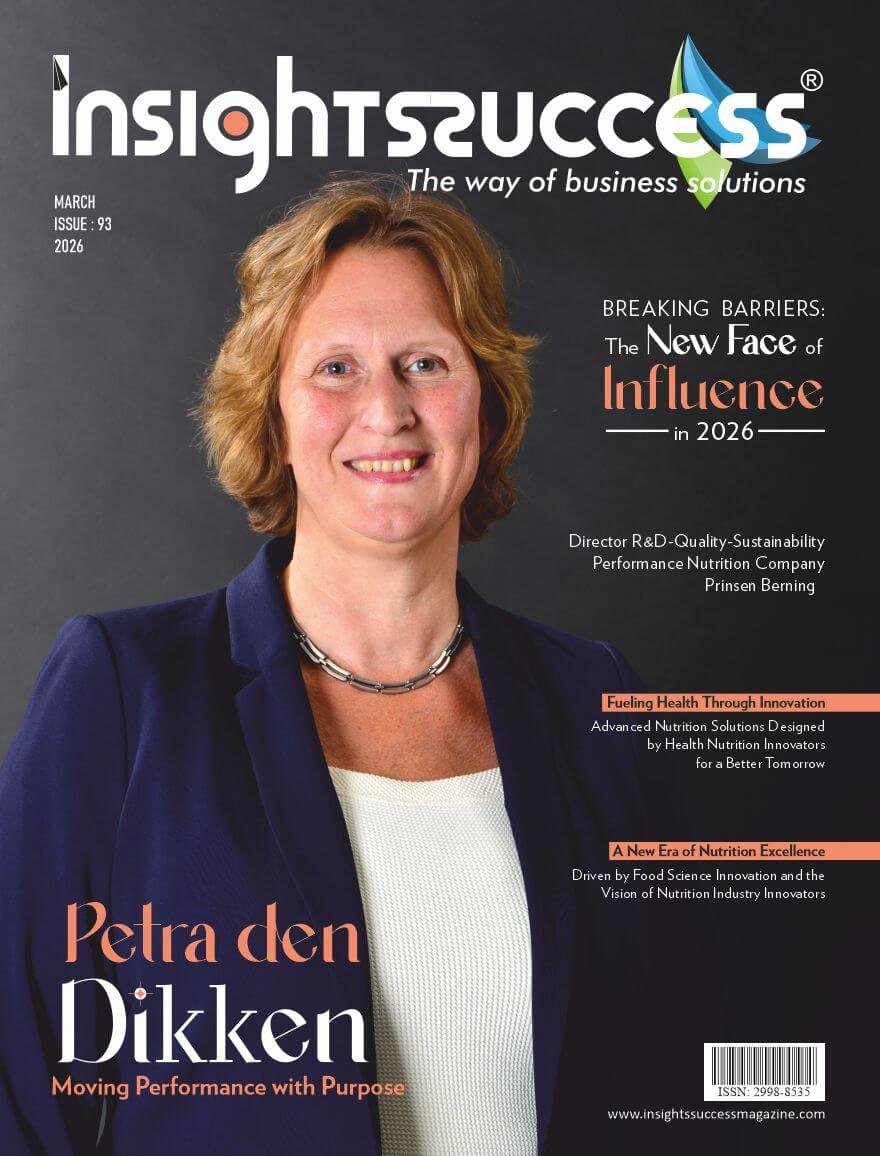
Breaking Barriers: The New Face of Influence in 2026
Breaking Barriers: The New Face of Influence in 2026 A compelling spotlight on a trailblazing individual redefining influence through authenticity, innovation, and impact, showcasing their journey, vision, and the powerful mark they are making in a rapidly evolving world. Digital Link Quick highlights Quick reads

Petra den Dikken: Moving Performance with Purpose
In a world where nutrition, health, and sustainability are shaping global priorities, true impact is created by leaders who connect science with people, and strategy with execution. Petra den Dikken, Director of R&D, Quality & Sustainability Performance Nutrition at Prinsen Berning, represents a new generation of leadership in performance nutrition—one that moves beyond technical silos to build coherence across systems, teams, and purpose. Operating at the intersection of R&D, quality, sustainability, and executive decision-making, Petra leads international R&D and Quality teams while serving on the company’s management team. She is responsible for the development of nutritional bars and powders for both leading brands and private-label customers, placing innovation at the heart of Prinsen Berning’s performance nutrition offering. Her work is driven by a passion for delivering healthy sustainable solutions that excel in taste, texture and nutritional performance. At the core of her leadership philosophy is a clear conviction: performance only endures when it serves a purpose people can believe in. By leading in a deeply context-driven way and explaining not only what is decided, but why, she creates environments where people contribute with confidence, responsibility, and pride—proving that when people belong, performance moves with purpose. She sees leadership as an orchestra, where impact is born not from solo brilliance, but from disciplines listening, aligning, and moving as one. By uniting science, processes, and people around a shared purpose, Petra creates performance that resonates long after the music stops Rooted in a Small Village, Reaching for Something Larger Petra grew up in Giessenburg, a small village in the Dutch countryside. The eldest of three children, she developed a natural curiosity and a quiet inner compass early on, a set of values that guided her toward what was right rather than what was popular. Academic ambition and a serious commitment to classical music were not the prevailing norms in her secondary school years. She faced a choice that many ambitious young people face, adapt to fit in or stay true to herself. She chose authenticity, and that choice became the foundation of everything that followed. Her path into food technology was deliberate. She studied at the College of Agricultural Sciences (Agrarische Hogeschool) Delft before continuing at Wageningen University and Research, one of the world’s foremost institutions in life sciences and agri-food. What drew her to the field was its integrative character, the way it blends chemistry, physics, and biology with human behavior and societal responsibility. For her, food is not just a product. It is where science meets everyday life, and where the right decisions carry real weight for people’s health. Her mother, who had missed her own opportunity to study, encouraged her ambition without conditions. Her music teacher taught her that discipline and emotional impact are inseparable. She carries those lessons directly into her work today. These early influences help explain why she leads the way she does: attentive, unhurried when it matters, and deeply invested in the people around her. A Career Built on Systems, People, and Trust The first chapter of Petra’s professional life unfolded at Unilever, where she completed her Wageningen studies while working in a highly structured international organization. The experience gave her a command of scale, rigor, and the discipline of building systems that hold up under complexity. She learned how decisions ripple through value chains, and how quality only works when standards are explicit, ownership is clear, and people understand why choices are made. Fries land Campina marked her transition into leadership. In 2007, she began by managing a small team and successfully expanded her leadership to large teams. There, she deepened her expertise in cheese quality, infant nutrition, and the development of R&D and quality systems. International audits took her across diverse cultures and governance contexts, broadening her understanding of how standards work or fail in practice. This was where she discovered her capacity to translate strategy into daily actions, not through instruction, but through clarity, context, and trust. Danone added a medical nutrition dimension. In her role as Research & Innovation Director she worked with her team on the high-protein drinks for patients, tube feeding solutions, areas where scientific rigor, regulatory compliance, and patient safety leave no room for compromise. “The Danone years also taught me something equally important, which is the significance of cultural fitness,” she says. I have grown more adaptable as a leader while remaining true to myself. Leading Through a Pandemic — On Foot When the COVID-19 pandemic arrived, Petra worked at Friesl and Campina. The sudden removal of physical interaction hit her hard. She found it extremely difficult to spend entire days behind a screen without real human contact, and she recognized that her team members felt the same. While others leaned entirely on digital tools, she took a different approach. She made a conscious decision to meet every team member in person safely and responsibly by going for weekly walks near their homes. She conducted her one-to-one conversations while walking, taking a photograph at each stop. When she eventually left the organization, the team compiled those photographs into a video, a gesture that captured exactly what the experience meant to everyone involved. Technology kept the work moving. Walking kept the people connected. The pandemic confirmed a belief she already held that leadership is about proximity to people, especially when distance makes that proximity difficult. She emerged from the experience with a more intentional approach to working rhythm, which aims on valuing the focused clarity that working from home occasionally offers, while protecting the informal energy that only physical presence creates. Connecting Everything at Prinsen Berning When Petra joined Prinsen Berning, she found a role that brings everything together. Her mandate spans research and development, quality assurance, and sustainability, three functions that, in many organizations, operate in parallel rather than in concert. She runs them as a single integrated system, drawing on her background in formulation science, ingredient technology, manufacturing, governance, and customer collaboration. Petra deliberately chose Prinsen Berning for its agile way of working, diverse customer

Driven by Food Science Innovation and the Vision of Nutrition Industry Innovators
A New Era of Nutrition Excellence The world of nutrition is changing fast, under the influence of the food science innovation. Due to the growing depth of scientific knowledge, nutrition has ceased to be about satisfying the most fundamental requirements of our bodies; today, it includes specific health benefits, the avoidance of illness, and health in general. Innovations in nutrition are transforming the process of developing, processing and consuming nutrients from fortified foods to functional ingredients. Biotechnology, precise fermentation, and new food processing technologies are making it possible to develop extremely efficient systems of transferring nutrients. The Role of Nutrition Industry Innovators Around these developments are the pioneers of the Nutrition industry who are pushing the boundaries of what nutrition can do. These are research institutions, startups and international food companies that are heavily investing in research and development to develop next-generation nutrition solutions. These creators are embracing an interdisciplinary mindset and incorporating food science, data analytics, and consumer insights as the foundation of creating products that are resonant with contemporary life. Trying to create plant-based alternatives, to cut sugar usage, or looking to improve protein quality, all the Nutrition industry innovators are reacting to changing consumer demands without sacrificing the health and sustainability focus. They are also involved in making food more accessible such that healthy food choices are available to a wide range of people. They are also increasing the reach of high-quality nutrition by tapping into scalable technologies and effective supply chains. Personalization: The Future of Food Science Innovation One of the most exciting changes in food science innovation is, perhaps the shift towards individualized nutrition. Traditional dietary guidelines tend to be founded on some general concepts as compared to recent research that demonstrates the importance of individual variations in genetic composition, metabolic rates and lifestyle. By feeding artificial intelligence and data-driven insights, personalized nutrition plans are becoming a possibility. These applications interpret individual health data and prescribe some vitamin and nutrient ratios and eating patterns. Not only is it a better method of increasing health but people are also able to make their own choices in regard to their nutrition. It is further supported by Smart devices, wearable technology, and digital health platforms that can provide real-time feedback and guidance. As a result, nutrition is becoming more particular, proactive and reactive to the specific needs. Sustainability and Ethical Responsibility The sustainability process is another theme that the innovators of nutrition industry are focused on because the world needs more food. The difficulty is in the creation of healthy food which has the least impact on the environment. Plant-based proteins, and innovative lab-grown ingredients, and circular food systems are also taking shape as promising alternatives to conventional approaches. Food science innovation is becoming an important area which is helping optimize resources used, lessen wastage and enhance the efficiency of food production. An example is the utilization of advanced methods of processing to extract valuable nutrients in by-products that would otherwise be thrown away. Not only does this improve sustainability but it also leads to a more resilient food system. Ethical issues like transparency and responsible sourcing are also gaining a bit of traction. Customers are becoming increasingly responsible, and companies are responding by adopting sustainable business practices and labelling. Challenges in the Path to Innovation Along the way to nutrition perfection, the path is not smooth. The implementation of new solutions can be impeded by regulatory frameworks, the cost of new technology, and uncertainty of the consumer. Also, the issue of data privacy in the personalized nutrition systems is a pressing issue. However, these problems provide growth and cooperation possibilities as well. Nutrition industry innovators can gain trust and speed up innovation by developing industry-spanning partnerships, investing in education and awareness. It will improve cooperation between the government and the masses to remove obstacles and encourage development. Shaping the Future of Nutrition It is the dawn of a new era in nutrition, and this will start with the integration of Food science innovation and the vision of forward-thinking leaders. It is not only the transformation of food products, but it is also the transformation of health, sustainability and quality of life. The future of nutrition promises great things as the innovators in the Nutrition industry ever expand the boundaries of science and technology. The future of nutrition solutions will see a personalized, sustainable, and accessible approach to support individuals and communities to reach greater health outcomes. Read Also : Advanced Nutrition Solutions Designed by Health Nutrition Innovators for a Better Tomorrow