






The Changing Role of Business Strategy Leaders in Corporate Growth
Driving Strategic Progress Corporate growth has never been simple, but the environment in which it now happens has become genuinely more complex than it was even a decade ago. Markets shift with less warning. Competition arrives from unexpected directions. Customer behavior changes faster than many organizations can track. The tools available for analysis and decision-making have multiplied, and so have the choices that come with them. Against this backdrop, the people responsible for guiding organizational strategy are being asked to do something fundamentally different from what their predecessors did. Business strategy leaders are not simply planners and analysts anymore. They are architects of organizational capability, and the way they approach their role is changing corporate growth in ways that are worth understanding. From Planning to Adapting For much of the twentieth century, business strategy was primarily a planning exercise. Organizations would analyze their market position, identify where they wanted to be in three to five years, and build detailed plans for getting there. The assumption was that conditions would remain stable enough for those plans to remain relevant over the period they covered. That assumption no longer holds. Business strategy leaders today work in environments where the plan made in January may need significant revision by March. The shift from static planning toward dynamic adaptation is one of the most fundamental changes in how senior strategic leaders do their work. Strategy is now less about building the perfect plan and more about building the organizational capacity to respond intelligently to whatever the environment presents. Connecting Strategy to Execution One of the most consistent failure points in corporate strategy has always been the gap between what gets decided in the boardroom and what actually happens on the ground. Strategies that look compelling on paper regularly fail to produce their intended results because the connection between strategic intention and operational reality is not managed well. Business strategy leaders are increasingly taking ownership of this connection. They are not just developing strategy and handing it off to others to implement. They are staying engaged through the execution process, identifying where the translation from strategy to action is breaking down, and making adjustments in real time rather than waiting for an annual review cycle to surface problems that have been visible for months. Building the Organizational Capacity for Growth Growth requires more than a good strategy. It requires an organization capable of executing that strategy effectively. Capability gaps, cultural misalignment, and leadership deficits can all prevent a well-conceived strategy from producing the growth it promises. Business strategy leaders are recognizing that their responsibility extends beyond strategy development to include the organizational conditions that make growth possible. This means paying serious attention to talent, to culture, and to the structures that either enable or impede the organization’s ability to move quickly and effectively. It means asking not just where the organization wants to go but whether it is genuinely equipped to get there, and addressing the honest answer to that question with the same rigor applied to the strategy itself. Using Data Without Losing Judgment The availability of data has transformed how strategic decisions are made. Organizations today have access to more information about their markets, their customers, and their own operations than any previous generation of leaders could have imagined. This data, used well, genuinely improves the quality of strategic decisions. Used poorly, it creates the illusion of certainty where genuine uncertainty still exists. Business strategy leaders navigate this tension by combining data-informed analysis with experienced judgment. They understand that data describes what has happened and can suggest what might happen, but it cannot replace the qualitative understanding of markets, relationships, and organizational dynamics that comes from years of serious engagement with strategic challenges. The leaders who use data as a tool rather than a substitute for thinking are the ones making the strongest strategic decisions. Leading Through Uncertainty Uncertainty is the permanent condition of modern business. No amount of analysis eliminates it, and strategies built on the assumption that the future will be predictable consistently disappoint when the future behaves otherwise. The most effective business strategy leaders have made peace with uncertainty without being paralyzed by it. They build strategies that are robust enough to hold value across a range of possible futures rather than optimized for a single scenario. They create organizations that can learn quickly from what the environment reveals and adjust course without the kind of institutional resistance that turns necessary change into a crisis. They lead with enough confidence to move forward decisively while remaining genuinely open to revising their approach when new information demands it. Conclusion The role of business strategy leaders in corporate growth is broader, more demanding, and more consequential than it has ever been. They are being asked to do more than develop strategy. They are being asked to build the organizational capability to execute it, to stay engaged through the messiness of implementation, and to keep the organization oriented toward growth through conditions that rarely cooperate with even the best-laid plans. The organizations that find people capable of doing all of this well are the ones building the strongest foundations for lasting corporate growth. Read Also : How Cyber Risk Intelligence Supports Proactive Risk Management

How Strategic Tech Visionaries Align Innovation with Business Needs
Strengthening Strategic Alignment Technology moves fast. New tools, new platforms and new capabilities emerge constantly, and the pressure on organizations to keep up is real. But speed alone is not the goal. Adopting technology without a clear understanding of what it is meant to achieve creates complexity without benefit, cost without return, and disruption without progress. The organizations that get the most out of technology are the ones where someone at the leadership level understands both the possibilities of innovation and the practical realities of the business it is meant to serve. Strategic tech visionaries are the people who hold both of those things at once, and their ability to align innovation with genuine business needs is one of the most valuable capabilities in modern enterprise. The Gap Between Innovation and Business Value Technology teams and business teams have not always understood each other well. On one side, there is often a genuine enthusiasm for new capabilities and a focus on what technology can do. On the other side, there is a focus on outcomes, on customers, revenue, efficiency, and growth, that does not always connect naturally to conversations about platforms and systems. When these two perspectives operate without a bridge between them, technology investment produces tools that nobody uses, capabilities that do not address real problems, and frustration on both sides. Strategic tech visionaries serve as that bridge. They understand the language of technology well enough to engage meaningfully with technical teams, and they understand the language of business well enough to translate what technology makes possible into outcomes that the organization actually needs. That translation is where a great deal of organizational value either gets created or gets lost. Seeing Ahead Without Losing Sight of the Present Visionary thinking in technology requires the ability to look further ahead than the current quarter or the current operational challenge. The technologies that will shape an organization’s competitive position in the future are often not the ones that are most immediately pressing today. Leaders who are only ever focused on solving today’s problems will consistently find themselves reacting to a future that others have already prepared for. Strategic tech visionaries hold this longer view without losing their grip on present reality. They invest attention in understanding where technology is heading, what capabilities will matter in the coming years and how the organization needs to position itself to take advantage of what is coming. At the same time, they stay grounded in what the organization needs right now, making decisions that serve both the present and the future rather than sacrificing one for the other. Prioritizing What Actually Matters In an environment where new technology options are constantly emerging, one of the most important things a senior technology leader can do is decide what not to pursue. Every technology initiative requires resources, attention, and organizational energy. Pursuing too many at once, or pursuing the wrong ones, drains the organization without producing proportionate benefit. Strategic tech visionaries bring discipline to this prioritization. They evaluate technology opportunities not just on their technical merit but on how directly they connect to the business’s most important needs and goals. They ask whether a new capability will genuinely move the organization forward or simply add complexity without sufficient return. Building the Internal Capability to Deliver Having a clear vision for how technology should serve the business is only part of the challenge. Delivering on that vision requires people, processes and organizational structures capable of executing it. Many technology initiatives that are well conceived at the strategic level fail at the execution level because the capability to deliver them was not built alongside the vision. Strategic tech visionaries pay close attention to this execution capability. They build teams with the right mix of skills, create processes that allow technology projects to move at the pace the business requires, and develop the organizational structures that allow technology and business functions to work together rather than in parallel. The vision and the capability to deliver it need to develop together if real alignment is going to be achieved. Making Innovation Sustainable Innovation that happens once and then stops is not really innovation. It is a project. Genuine innovation is a continuous capability, something an organization does as an ongoing practice rather than an occasional initiative. Building this kind of sustained innovation requires leadership that keeps the conditions for it alive over time. Strategic tech visionaries build these conditions by creating cultures where new ideas are genuinely welcomed, where experimentation is supported and where learning from failure is treated as a normal part of how progress happens. In Summary Aligning innovation with business needs is one of the defining leadership challenges of the current era. Strategic tech visionaries are the leaders meeting that challenge with clarity, discipline, and a genuine understanding of both the technology and the business it is meant to serve. Organizations that develop this kind of leadership at the senior level are the ones that will get the most out of what technology makes possible, not just today but consistently over time. Read Also : The Changing Role of Business Strategy Leaders in Corporate Growth

Marc Hesse: The Technology Economist Closing the Trust Deficit Between CIO and CFO
Finance cannot verify what IT cannot explain. Marc Hesse has built a firm to close that gap—before the agentic age makes it unaffordable. Picture a phone call on a cracked line. On one end, the CIO explains what the technology budget buys. On the other, the CFO hears static and asks for another report. Both raise their voices: more dashboards, more allocations, more slides. Nobody hears any better. Marc Hesse calls this the Trust Deficit, Finance cannot verify the value of technology, and IT cannot explain it in business terms. It is the problem his firm exists to resolve. As Managing Partner and Technology Economist of Enterprise Value Consulting GmbH (EVC), Marc works toward one outcome: technology spend a CFO can trust, a CIO can steer, and a business leader can read, with the models still running months after the consultants have left. EVC is not a tool wrapper and does not sell frameworks. Its slogan settles the point: 0 framework dogma · 0 tool religion · 100% Technology Economics. Marc came into technology through the side door. He started at the in-house consultancy of Deutsche Telekom on classic finance questions and moved toward technology without ever having had an IT background, which turned out to be the advantage. He could look at technology in business and financial terms without getting lost in the technicalities. That view became the core of his work. What keeps him at it is a tension: accounting is built for stability, and technology changes faster than any ledger. His career has been about adapting financial management to that mismatch and getting IT financial management teams past their reputation as bean counters. In his view, modern ITFM has to become a differentiating capability—the function that lets an organization steer technology cost and value instead of merely recording it. Built as an internal digital product, it hands the data modeling to AI and frees people for change management, community building, and strategy. Organizations that get there steer their technology spend; the rest keep losing money on it without ever seeing where. “ITFM is maturing into an internal digital product,” he says. Turning Technology Cost into Business Value The problem, for most companies, is not the money spent on technology. It is that nobody can say what the money buys. Technology, Finance, and the Business hold many conversations about the value of technology; few involve real listening on all three sides. Investments start paying off when the people who build the technology and the units that consume it agree on what value means. Cost is the first step, and only the first. So the question a CIO should be able to answer is simple: what does the business get for every euro spent on IT, on the bottom line and on the top line? Faster transactions, quicker innovation, better products, a competitive edge. Answering it takes more than internal allocations. Spend has to be aligned with the applications, products, and services that business leaders recognize and can influence. Technology becomes strategically valuable when its economic contribution can be explained to the person funding it. In the age of AI and a digital agent workforce, that requirement only sharpens. Agents produce numbers, models, and forecasts at any speed. What they cannot produce is the confidence a CFO, a CIO, and a business leader place in the same figure. Trust becomes the ultimate currency in an organization, and it is the human element in the equation. Trust as the Foundation of Leadership The defining moment in Marc’s career was co-founding EVC. He did not want a conventional consultancy driven by hierarchy and sales incentives, but a partnership built around trust, shared goals, specialist expertise, and intellectual freedom. The people he wanted around him deliver quality over quantity, hold strong opinions, say no, and argue well. Team chemistry and room to develop count for more than a title. Specialists, not interchangeable resources. That principle shaped EVC’s culture. Trust is not something consultants recommend to clients and practice selectively at home; leaders have to live it inside their own organizations first. “Trust is not just what we advise clients on, it is how we chose to build EVC,” he asserts. The same applies to financial management. IT financial management is one of the most undervalued and misunderstood functions in a technology organization. Where trust and real engagement exist, it becomes a lever for better governance, processes, platforms, and technology decisions, the superpower, in Marc’s words, that nobody expected from the controlling department. Making Financial Management More Strategic Marc’s approach moves financial management from reporting to active technology cost steering. His illustration is SAP. Traditional accounting spreads the bookings correctly across the contract period, technically right, and useless for a decision. A steering model shows license prices, actual consumption, reclaimable resources, and the financial consequences of each option. That matters more every year, as AI adds visible and less visible costs to every technology environment. Leaders do not only need costs recorded accurately; they need financial information that improves the next technology decision. That shift, from cost accounting to technology cost and value steering, is the alignment modern organizations require. Balancing Efficiency with Transformation Digital transformation demands innovation and financial discipline at the same time, the Königsdisziplin, the supreme discipline, as Marc calls it, especially under real financial pressure. At an automotive client, efficiency became the transformation’s funding source. The savings were real only where the team understood the technical setup in detail; only then could money be found that could genuinely be redirected to strategic initiatives rather than promised on a slide. Technology that can become a differentiator deserves a different funding logic: run several bets, expect some to fail, keep the ones that work, and book the rest as learning. Discipline needs rigorous analysis; innovation needs a culture willing to experiment. Neither replaces the other. Building Enterprise Cost Fitness Marc’s thinking on efficiency was shaped as interim head of ITFM, when a zero-based budgeting exercise made the point unmistakably: no
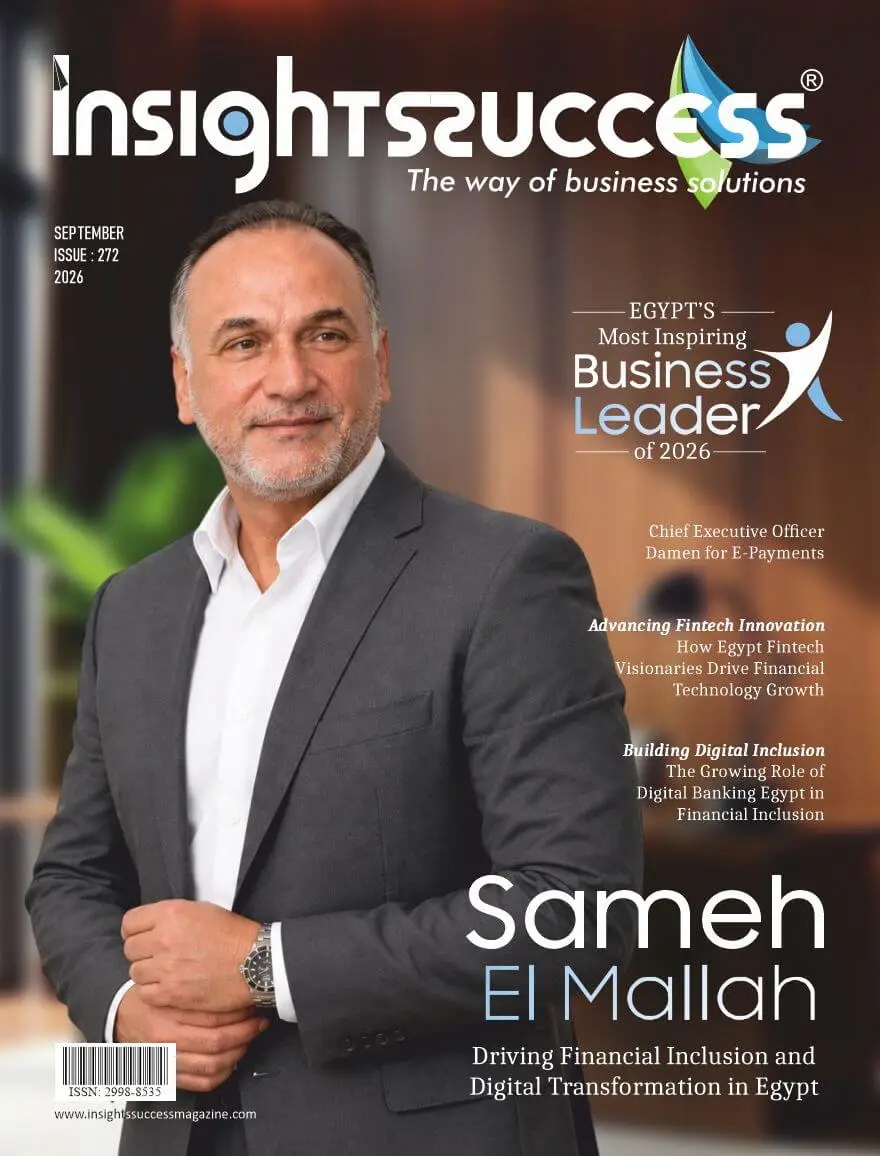
Egypt’s Most Inspiring Business Leader of 2026
Egypt’s Most Inspiring Business Leader of 2026 Highlighting an inspiring Egyptian business leader advancing digital payments through technology and innovation. This edition explores his leadership vision, industry expertise, and contribution to financial inclusion and Egypt’s digital economy. Digital Link Quick highlights Quick reads

Sameh El Mallah: Driving Financial Inclusion and Digital Transformation in Egypt
Financial technology rarely gets built by people who started in fintech. More often it gets built by engineers who spent decades laying the infrastructure other industries later depend on, learning along the way that technology only matters when it reaches the people who need it most. Few careers illustrate that trajectory as clearly as one that began on telecommunications networks, moved through national technology policy, and has now arrived at the frontier of digital payments in one of the region’s largest economies. It is a path defined less by a single breakthrough than by a steady, patient accumulation of infrastructure, institutions, and trust. Sameh El Mallah is Chief Executive Officer of Damen for E-Payments, a Cairo-based financial technology company established in 2018 that sits at the center of Egypt’s push toward a more inclusive, digitally enabled economy. His path to that role spans more than three decades across telecommunications, information technology, digital transformation and financial technology, and it has left him with a leadership philosophy built less on theory than on direct experience of what technology can do when it is deployed with purpose. He reflects, “Throughout this journey, my leadership philosophy has been shaped by a simple principle: leadership is about empowering people, creating opportunities, and enabling meaningful change through technology.” An Engineer’s Foundation El Mallah began his career as an engineer, a starting point that gave him a lasting foundation in problem-solving and systems thinking. Early in his career, he worked on large-scale telecommunications projects at Siemens Egypt, contributing to the development of nationwide communication networks. That experience taught him a lesson that has stayed with him ever since: strong infrastructure is the foundation for economic and social development, not a byproduct of it. He later moved into leadership roles at Raya, where he managed complex technology projects and led business operations in both Egypt and Algeria. Those years expanded his understanding of how technology can drive business growth while addressing the practical needs of real markets rather than abstract ones. A defining chapter in his career came at Intel, where he spent more than a decade helping governments, educational institutions, healthcare organizations and private sector companies accelerate technology adoption. Working across Egypt and the Levant gave him a broader perspective on how digital transformation improves lives, creates opportunities and strengthens economies at scale. As CEO of Silicon Waha, he contributed to a national vision focused on developing technology parks in Egypt’s second-tier cities, an experience that reinforced a belief he still holds today: innovation should not be confined to major urban centers. It should create opportunities for talented young people across the entire country, regardless of how close or far they are from the capital’s established technology hubs. Why Digital Payments El Mallah’s career has always centered on technology’s ability to solve real-world challenges, and he has consistently gravitated toward sectors that create impact at scale, from telecommunications to ICT adoption to digital infrastructure development. Digital payments, in his view, represent the next stage of that same evolution. He notes, “Financial technology has the power to transform how individuals, businesses, and governments interact. It improves accessibility, increases efficiency, and helps create a more inclusive economy.” What attracted him specifically to this sector was the opportunity to contribute to a larger national transformation. Egypt has made significant progress in its digital transformation journey, and El Mallah sees digital payments as playing a critical role in that vision, enabling greater transparency, convenience and access to financial services for millions of people. What continues to motivate him is the scale of the impact involved. Every digital transaction, in his framing, represents more than a payment. It reflects greater accessibility, improved customer experiences and increased participation in the formal economy and being part of that shift is both professionally rewarding and personally meaningful to him. That sense of meaning, he explains, is what has carried him across three distinct industries without ever losing sight of the throughline connecting them. Defining Leadership in a Fast-Moving Industry Asked how he defines effective leadership in an industry defined by constant innovation, El Mallah points to a balance between vision and adaptability. Technology changes quickly, customer expectations continue to evolve, and new opportunities emerge daily, which means leaders must remain forward-looking while staying grounded in execution. He affirms, “Leadership starts with having a clear vision of where the organization is heading and ensuring that every team member understands and contributes to that vision. However, vision alone is not enough.” Leaders, he argues, must also be willing to adapt, challenge assumptions and embrace change as it comes, rather than defending a plan simply because it came first. Just as important is the discipline of empowering people, since no leader succeeds alone, particularly in technology-driven industries. Building strong teams, encouraging innovation, and creating an environment where people feel valued and trusted are, in their assessment, essential to long-term success. Ultimately, he sees effective leadership as the work of inspiring people to achieve results while maintaining integrity, accountability and a commitment to continuous improvement, values he considers non-negotiable regardless of how quickly the underlying technology changes. Growth Built on Trust Across more than three decades of building networks, implementing technology solutions and now providing financial services, El Mallah has learned that sustainable growth depends on one asset above all: trust. A strong customer-centric approach, in his view, is what consistently proves effective, since organizations must understand their customers’ needs and continuously improve their offerings to create meaningful value. Operational excellence matters just as much. Growth should never come at the expense of quality, reliability or security, and strong governance. Disciplined execution and clear performance standards help organizations scale without eroding customer confidence. He states, “By combining customer focus, operational discipline, and strategic collaboration, organizations can achieve sustainable growth while maintaining trust.” Partnerships form the third pillar of that approach. Throughout his career, El Mallah has worked closely with governments, educational institutions, industry organizations and private sector stakeholders, and he has consistently found that collaboration accelerates innovation and

The Growing Role of Digital Banking Egypt in Financial Inclusion
Building Digital Inclusion Financing service access is evolving in Egypt. Bank visits are no longer required to conduct all transactions. Mobile phones, banking applications, electronic wallets, and online payments are facilitating access to financial services. Such evolution is especially significant for those individuals or enterprises who lack access to traditional banking institutions. Financial inclusion is much more than opening an account at a bank. Individuals require convenient means for saving, paying, receiving money, accessing credit, and managing their finances. Digital services can help meet these needs while reducing the time and effort involved. This is where Digital banking Egypt is gaining greater importance in the country’s financial sector. Making Banking More Accessible In traditional banking, accessing services may be hard for those who live far away from bank branches and those who lack time. With digital banking platforms, customers are able to conduct their business using their gadgets. Writing a check, paying a bill, sending funds or making a payment can be done in a matter of minutes. Digital banking Egypt is also helping banks offer more convenient services to customers who may not be able to visit branches regularly. With simpler digital processes, customers can manage routine financial activities at a time and place that suits them. Supporting Small Business Growth Such issues may include money management, collection of payments from customers, and lack of access to financial services. The use of digital payments will help overcome some of these problems. Entrepreneurs can receive payment from their customers through digital means and even record their income and expenditures. Digital transaction histories can also help financial institutions understand the financial activity of smaller businesses. This information may support better decisions when developing lending and other financial products. With suitable services, Digital banking Egypt can therefore support businesses that have traditionally found it difficult to access formal banking solutions. Strengthening Trust And Security Greater digital adoption also brings greater responsibility. Digital banking Egypt must therefore place strong emphasis on customer security, data protection, and reliable transaction systems. Security systems have to be implemented to protect bank accounts and transactions from any possible threats of fraud and to detect any suspicious activities within the accounts. It is very important that security systems stay easy to use for customers. Another crucial aspect that influences customers’ decisions to use a digital bank is awareness. There might be some people who would not like to do their banking online due to a lack of understanding of how to pay via the Internet and fear of being scammed. Instructions and knowledge about finances could assist customers in making safe use of digital banking. Expanding The Financial Network Financial inclusion for the future depends on collaboration throughout the financial ecosystem. Everyone- banks, financial technology firms, payment facilitators, merchants, and regulators- is expected to contribute their efforts. Collaborating will facilitate improvements in payment infrastructure, digitization and product development that would accommodate different customer groups. Affordability and usability must be kept in mind. The most advanced digital service may prove worthless in case users find it unaffordable and/or too complicated to use. Financial institutions should also pay attention to people with limited digital experience and create services that do not leave them behind. This approach can help Digital banking Egypt reach a wider section of society. Conclusion: A Wider Financial Reach Digital banking is becoming an important part of Egypt’s financial development. It would make banking simpler, provide assistance to small businesses, and guarantee access to financial services. However, technology alone cannot achieve all of that. There must be quality services, high security standards, reasonable prices, and customers must trust to use such online systems. Banks, which will prioritize those issues, will be able to develop digital banking in a better and more efficient way. In that case, Egypt will have a chance to create a financial system where access is no longer geographically limited. Read Also : How Strategic Tech Visionaries Align Innovation with Business Needs

How Egypt Fintech Visionaries Drive Financial Technology Growth
Advancing Fintech Innovation Technological solutions have become an integral part of daily transactions in the finance sector and have helped transform the finance industry in Egypt. Payments, banking, wallets, and lending have been transformed into technological innovations that are helping people handle money differently than before. The leaders have realized the importance and the challenges of building financial technology in an emerging market environment. This process is driven by Egypt fintech visionaries, who work on nurturing new concepts, encouraging the adoption of digital technology, and adapting to changing consumer tastes. It is not only about offering new financial solutions but also about enhancing the systems, accessibility, and services for a wider range of customers. Encouraging Digital Adoption The role played by fintech leaders lies in how they are improving the convenience of financial services for users. Users today require a convenient way of paying without contact, easy management of accounts, and easy access to financial services via mobile phones. To cope with this, fintech firms have established platforms for removing the extra unnecessary steps in financial services. This is something that must be realized and this is the same thing that Egypt’s fintech visionaries are doing. They encourage teams to come up with innovations based on the problems and not on technology. A combination of digital technology and customer needs can improve everything. Expanding Financial Access Financial technologies can also be applied to close the gap in the provision of traditional financial services. Digital wallets and payment platforms could help to offer other ways of handling money without going to physical branches. This could prove helpful for those individuals and small businesses that have been unable to obtain traditional finance. The role played by Egypt fintech visionaries is vital for expanding access to these solutions. They could be helpful in identifying groups that lack access to financial products and developing them for various income groups and needs. Increased access will help small businesses with managing their payments, keeping transaction records and operating within the formal financial environment. Building Stronger Fintech Systems Innovative applications are not enough to boost the growth of financial tech. Businesses must also have a reliable infrastructure, robust risk management and security against cyberattacks. When customers do not trust the systems that process their financial information and funds, they are unlikely to get involved with digital financial services any further. Another place where Egypt fintech visionaries can steer the course of the industry is here. This will affect customers’ trust in their decision-making process in terms of cybersecurity, data protection, compliance, and dependability of services. Through a responsible innovation process, fintech firms can succeed while ensuring that their clients, partners, and financial organizations remain happy. Supporting Long-Term Growth Partnerships will play a crucial role in the ongoing growth of Egypt’s fintech sector. It is possible for banks, fintech companies, tech providers, regulators and investors to bring their own expertise and resources to the table. Partnerships offer a way for new businesses to access broader markets to new businesses and more efficient implementation of valuable technologies to existing financial institutions. Egypt fintech visionaries can play a crucial role in connecting all these groups through a common agenda. Such entities can spur investment, develop talent, and create an environment where positive financial solutions could emerge. Egypt is in a position to build on its strengths within the fintech sector of the region through innovation and cooperation. Conclusion: Shaping Financial Technology The evolution of expectations, the increased access to digital channels, and ongoing investments in technology are fueling the growth of fintech in Egypt. Egypt fintech visionaries with knowledge of these shifts can be of great assistance in facilitating the conversion of emerging technologies into actual financial services. These shifts are evident in payments, banking, lending, financial access, and increased use of digital platforms. The future is one that should be based on a fine blend of innovation and responsibility. In order to achieve this progress, the leaders of the fintech industry in Egypt should keep their customers’ needs, safety, accessibility, and value in mind while making decisions. This will lead to the development of an effective financial technology environment in Egypt. Read Also : The Growing Role of Digital Banking Egypt in Financial Inclusion

AI Coding Startup Cognition Nearly Doubles Valuation In New Funding Round
Prime Highlights- Cognition’s run rate revenue has grown from $492 million to nearly $900 million. Andreessen Horowitz and Accel lead the round alongside existing backers. Key Facts- Cognition AI raises $2 billion in Series E funding at a $48 billion valuation. Valuation nearly doubles from $26 billion in the company’s previous funding round. Background- Cognition AI, a startup building autonomous software engineering agents, has raised $2 billion in a Series E funding round at a valuation of $48 billion. The round was led by new investors Andreessen Horowitz and Accel, alongside existing backers Founders Fund, General Catalyst and Avenir. The company said its run rate revenue has grown from $492 million to nearly $900 million since its previous funding round, when it raised $1 billion at a valuation of $26 billion. The new round nearly doubles that valuation, reflecting strong growth momentum for the firm. Cognition’s technology allows autonomous agents to plan, write, test and deploy code with limited human involvement, positioning the company at the center of growing enterprise interest in AI powered software development tools. The funding comes as investor interest in AI focused companies continues to surge, with billions flowing into the sector as backers look to capture opportunities tied to the broader technological shift underway across the industry. Cognition’s fast growing valuation points to broader momentum around AI infrastructure and coding automation firms, with investors chasing exposure to companies building tools that change how software gets made. The new funding places Cognition among a wider group of AI startups pulling in large scale investment, as it keeps growing its autonomous coding agent platform for enterprise and developer users. Read Also: UltraTech Cement Enters Wires And Cables Market With Ultravolt

The Supplier Market Behind Online Slots Is Splitting in Two
Open the provider filter on any large slots catalogue and it lists eighty or a hundred studio names, which reads like a crowded, fiercely competitive market. The reality underneath is a barbell. At one end, a handful of giants that quietly own many of those names. At the other, a long tail of small studios that survive only because a layer of middlemen exists to carry them. For anyone who buys from a supplier market, or sells into one, it is one of the clearest working case studies around, and the pattern is not unique to games. One studio in 1994, more than a hundred today The category began with a single supplier. Microgaming shipped the software behind the first online casino in 1994 and, four years later, the first networked progressive jackpot, and for the better part of a decade the market was a few companies deep. The explosion came in the 2010s, when browser standards removed the plug-in era’s engineering barriers and a small team with a good mathematician could build and ship a game. Entry costs fell, and the studio count climbed past a hundred. That first half of the story is the familiar one: a platform shift lowers the barrier, and a long tail appears. The giants are buying the names you recognise The second half is consolidation, and it is happening at the same time. Evolution, best known for its table games, bought Red Tiger in 2019, NetEnt in 2020, Big Time Gaming in 2021 and Nolimit City in 2022, four of the most recognisable studio brands in the category, and kept every one of them trading under its own name. Light & Wonder assembled a similar stable. So a lobby that lists a hundred studios is listing far fewer owners, and the logo on the tile no longer tells you who you are actually buying from. Anyone who has stood in a supermarket beer aisle counting the craft brands owned by the two big brewers will recognise the shape exactly. The long tail survives through middlemen What keeps the small end of the barbell alive is the aggregator, a company whose entire business is a single integration that carries dozens of studios into hundreds of operators at once, for a share of what the games earn. Without that layer, a ten-person studio could never negotiate and integrate with every operator individually; with it, its games can sit beside a giant’s on day one. The dynamic mirrors what The Spinoff described when it asked whether New Zealand’s craft beer boom was ending: a sound ecosystem of big breweries and tiny ones, where the constraint is finite shelf space and the small players who thrive are the ones with a channel of their own. In games, the aggregator is that channel. It is also, inevitably, a toll booth, and small studios get by on what is left after the toll. Why buyers want both ends Operators do not want the barbell to resolve. The giants supply reliability, the franchises players ask for by name, and release schedules you can plan a year around. The tail supplies novelty and, more often than the giants would like, the ideas. Megaways, now a mechanic used across the whole industry under agreement with its creator, came out of Big Time Gaming when it was a small independent. Cluster pays and hold-and-win formats were popularised by studios most players had never heard of. A catalogue built only from giants goes stale; one built only from indies is unreliable. The leadership lesson is portfolio thinking applied to suppliers: know which end of the market each one sits on, and buy from both on purpose. Reading a provider list the honest way The barbell is visible to anyone who looks at a catalogue with the ownership map in mind. The slots page at Christchurch Casino lists more than eighty studios behind its 2,300 titles, and have a look here at the provider filter: studios with three hundred games sit next to studios with a dozen, and names that now share an owner are listed separately, exactly as they appear on every other operator’s shelf. The filter treats them all as equals. The market does not, and the interesting information is the difference between those two views. The lesson for any supplier market Barbells form wherever two forces act at once: a platform that lowers the cost of entry, which grows the tail, and scale advantages that persist, which consolidate the head. Beer has it, software has it, retail has it. The practical advice follows from the shape. Buyers should map ownership rather than logos, because a diversified-looking supplier list can be three companies wearing twenty names. Sellers should decide which end they are at and stop pretending to be the other. And anyone in the middle, running the channel that connects the two, should understand that they hold the most durable position in the whole structure, right up until the giants decide to build their own. Read Also :Baby Gold Jewelry Reviews: What to Know Before You Buy
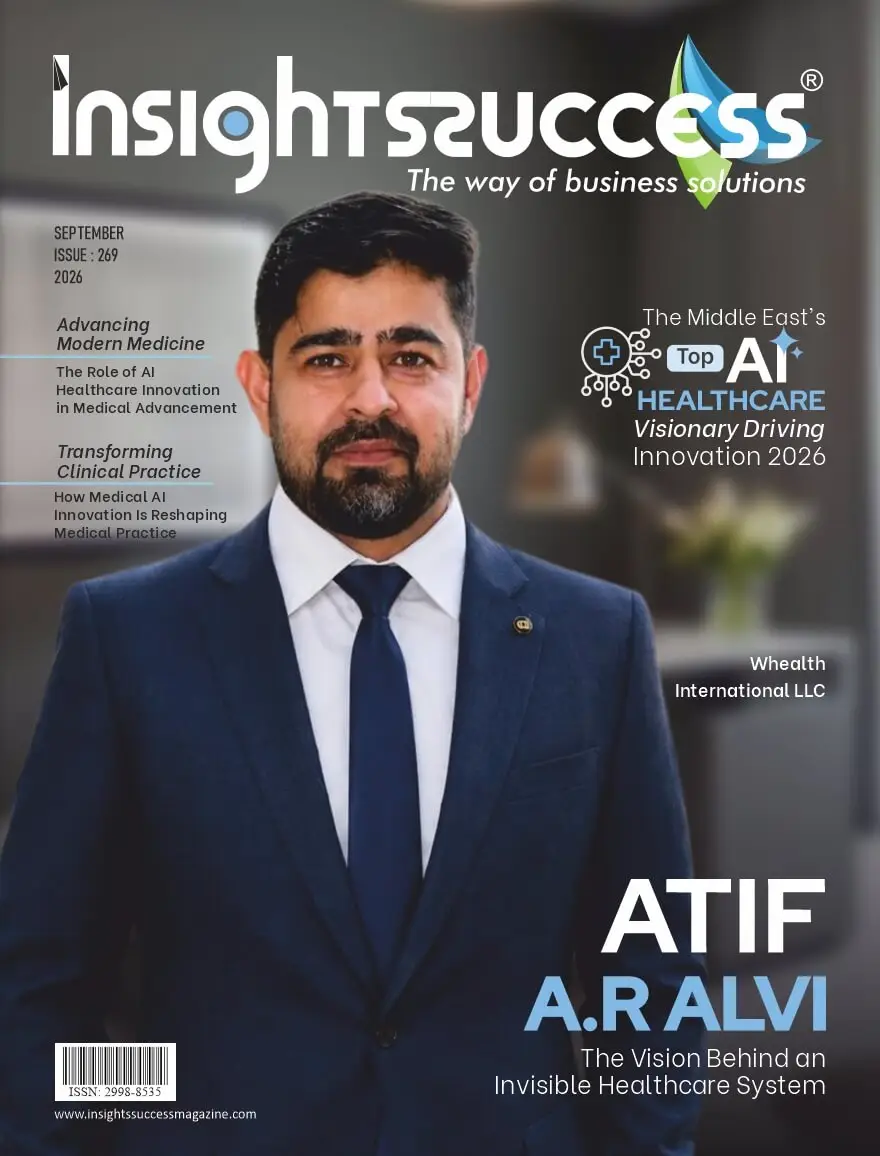
The Middle East’s Top AI Healthcare Visionary Driving Innovation 2026
The Middle East’s Top AI Healthcare Visionary Driving Innovation 2026 Showcasing the Middle East’s top AI healthcare visionaries, this edition celebrates leaders driving innovation through artificial intelligence, transforming patient care, advancing clinical excellence, and shaping the future of healthcare. Digital Link Quick highlights Quick reads