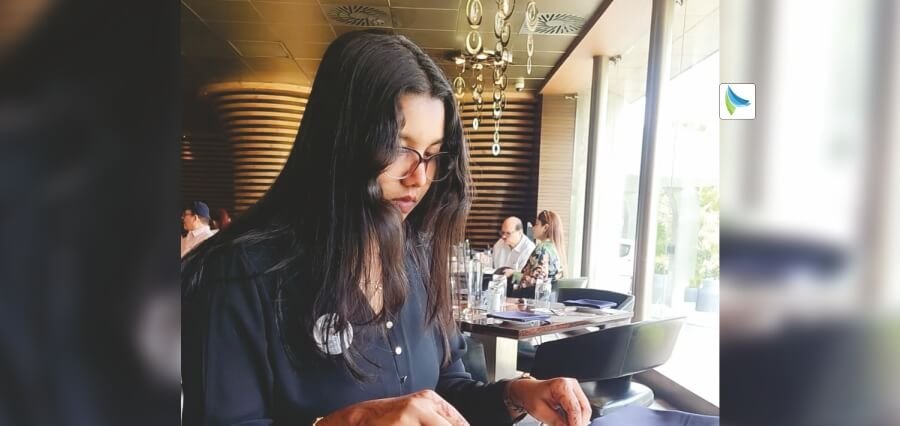




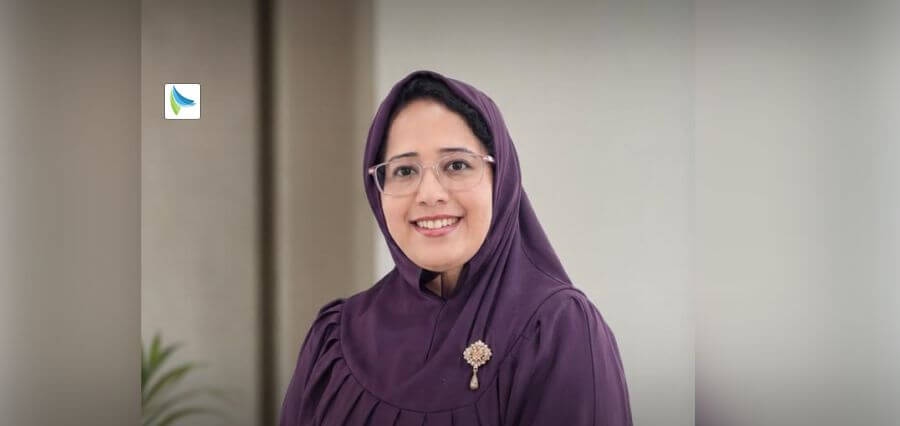
Most technology companies begin with an engineer staring at a problem on a screen. Alifya Taher began somewhere else entirely. She began in a classroom, watching people. She watched students struggle to absorb information in environments that were not designed for how they actually learned. She watched teachers adapt, improvise, and carry the weight of institutional systems that were built for compliance rather than connection. And she watched meeting rooms and training spaces fill up with impressive-looking technology that made everyone in them feel, quietly but consistently, more disconnected than before. That observation did not leave her. It followed her out of education and into the boardroom, and eventually it became the founding conviction of Altius Techno.
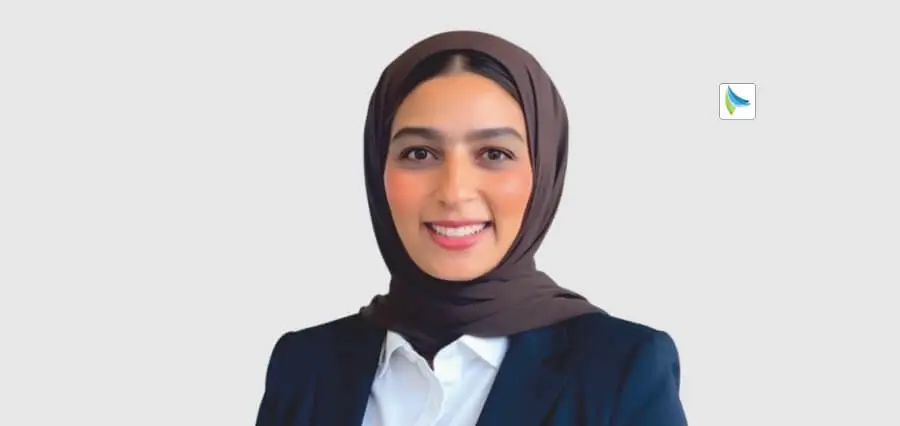
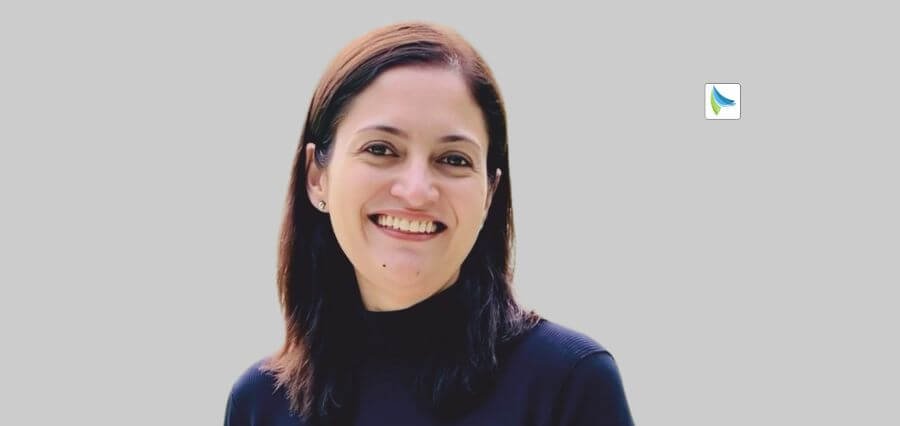
Alifya Taher is the CEO of Altius Techno, a technology integration company building smart workspaces, corporate AV solutions, and human-centred environments for businesses and educational institutions. She brings to that role something most technology leaders do not carry: more than sixteen years of experience inside classrooms, school leadership structures, and the demanding world of global institutional inspection. Her path to the CEO chair was not a departure from her past. It was, as she describes it, a natural evolution.
The Education That Built the Executive
Alifya’s professional foundation rests on two pillars that most people keep in separate categories. Her BSc in Management Information Systems gave her the structural and technical literacy to understand how systems are built and how they fail. Her B.Ed and iPGCE gave her something she now considers even more important: a deep understanding of how people learn, communicate, and perform when they feel genuinely supported.
She did not stop there. Completing the NPQML and NPQSL qualifications sharpened her ability to think strategically, lead teams under pressure, and make decisions grounded in long-term vision rather than short-term reaction. Her time as a PENTA Level 2 BSO School Inspector added another layer entirely, one that most executives never develop. Visiting and evaluating institutions from the outside trained her eye for systemic gaps, quiet inefficiencies, and the small but consequential improvements that create lasting organisational change.
She reflects, “Moving from school into becoming the CEO of Altius Techno never felt like starting over. It felt like a natural evolution.”
That evolution is visible in every aspect of how Altius Techno operates. The questions the company asks before any project begins, the way solutions are designed around human friction points rather than hardware specifications, and the philosophy that guides every client engagement all carry the fingerprints of someone who spent sixteen years understanding what happens when the people inside a space feel unsupported by the systems around them.
The Philosophy Behind the Product
At the centre of Altius Techno’s work sits a deceptively simple idea: technology should feel invisible. Not absent, but invisible. It should support what people are trying to do without inserting itself into the experience as a source of complexity, anxiety, or friction.
Alifya calls this the principle of “It Just Works,” and she applies it equally as a company philosophy and a personal leadership philosophy. When projects become complex and challenges arise, her instinct is not to layer on additional solutions. It is to strip away the noise and find the simplest, most elegant path forward. True sophistication, in her view, lies in simplicity.
She states, “Innovation is not about adding more technology into a space. It is about making technology feel natural, seamless, and genuinely helpful for the people using it every day.”
This perspective puts Altius Techno at odds with a significant portion of the technology industry, which tends to equate advancement with addition. More features, more hardware, more capability. Alifya’s argument is the opposite. The most advanced thing a technology solution can do is disappear into the background of a well-functioning human environment. When the systems work so naturally that users stop noticing them, the design has succeeded.
The company applies this thinking across smart workspace design, corporate AV integration, interactive display systems, and networking environments. Solutions are built with flexibility and future readiness as core requirements, allowing clients to adapt and expand without replacing their entire infrastructure each time the technology landscape shifts.
Leading in a Room That Was Not Built for Her
Entering the technology integration and AV engineering industry as a woman meant entering a space that had not historically made room for the perspective she was bringing. Alifya is direct about that reality, and equally direct about how she navigated it.
Her grounding came not from proving herself against the industry’s existing standards, but from being clear about what she brought to the table that the industry was missing. The combination of structured systems thinking and emotional intelligence is not, in her view, a compromise between two opposing tendencies. It is a genuine competitive advantage, and one that the technology sector has historically undervalued.
She asserts, “Empathy has never been a soft skill for me. It is one of the strongest leadership tools a person can have.”
Her years as a Designated Safeguarding Lead reinforced this conviction at a practical level. People perform at their best when they feel safe, supported, and heard. That principle does not stop applying at the school gate. It shapes how teams solve problems, how clients describe what they actually need, and how organisations respond to pressure. Alifya built a leadership culture at Altius Techno that takes psychological safety seriously as a performance driver, not merely a wellbeing aspiration.
The Problem Most Companies Are Not Solving
Alifya identifies technology overwhelm as the defining challenge facing businesses in the sector today. Organisations invest heavily in sophisticated hardware, only to watch their teams revert to familiar habits because the new systems feel too complicated to trust. The gap between purchasing technology and actually adopting it is, in her assessment, one of the most expensive and least discussed problems in corporate infrastructure.
Her prescription is precise: before spending on technology, ask what human friction point the investment is meant to solve. The question sounds simple. In practice, most organisations skip it entirely, moving directly from budget approval to procurement without ever mapping the human experience the technology is supposed to improve.
She highlights, “Ask first: what is the human friction point we are trying to solve? Technology should be invisible, intuitive, and seamlessly integrated into the daily flow of the workspace.”
A Vision Measured in Human Experience
Looking ahead, Alifya’s ambition for Altius Techno extends beyond regional growth into a broader reshaping of how corporate and educational spaces function. In education particularly, she sees artificial intelligence as a genuine transformation opportunity, one that carries with it a responsibility she takes seriously. AI must be deployed with clear ethical awareness, protecting fairness, privacy, and the irreplaceable human connection that makes learning meaningful.
Her measure of success is not the sophistication of the technology her company installs. It is the effortlessness of the human experience that technology enables.
She envisions, “If people can connect, share, and create without thinking about the systems behind it, then we have done our job right.”
Alifya Taher built Altius Techno not by following the technology industry’s existing playbook, but by bringing into it a quality of human understanding that most of its players have never developed. In a sector obsessed with what technology can do, she remains focused on how it makes people feel. That distinction is not a soft one. It is the foundation on which every lasting technology company is eventually built.