





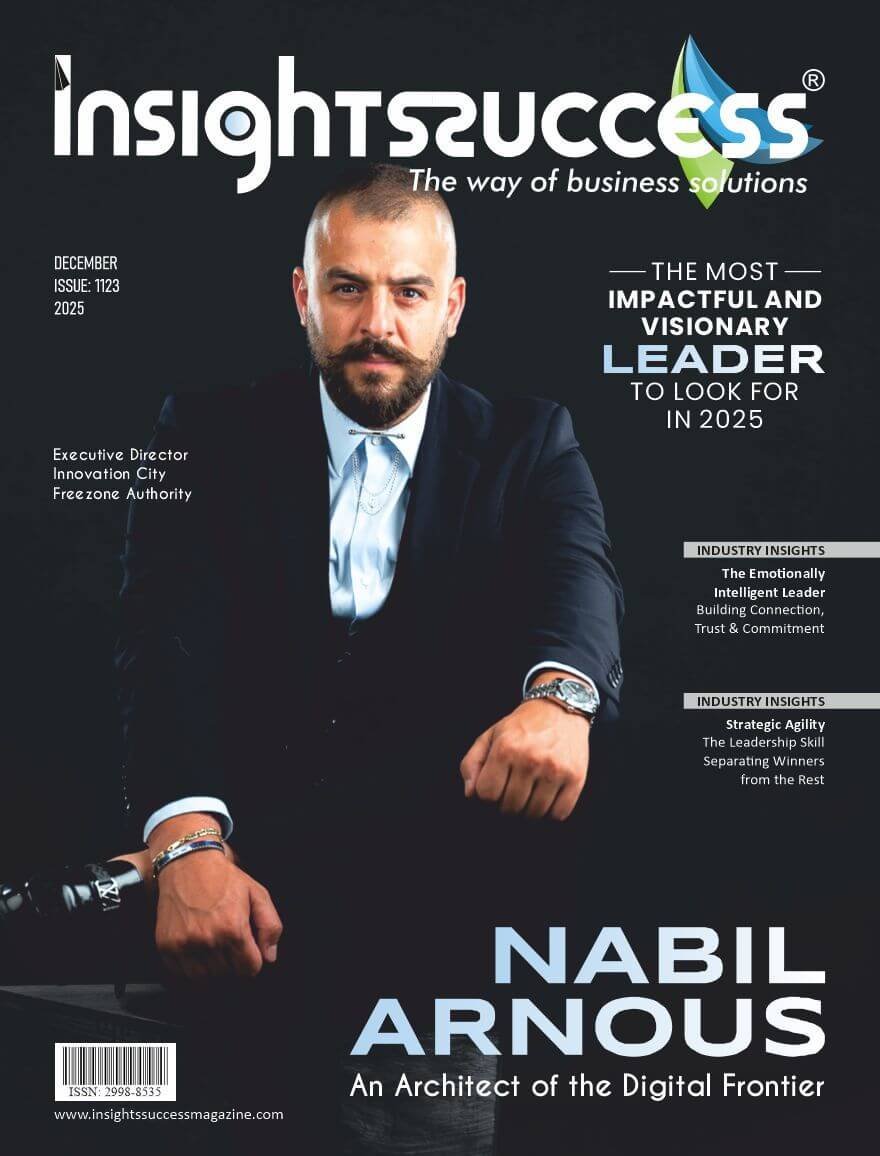
The Most Impactful And Visionary Leader To Look For In 2025
The Most Impactful And Visionary Leader To Look For In 2025 In a world defined by rapid transformation and unprecedented challenges, true leadership is revealed not through authority, but through the ability to envision a better future—and inspire others to move toward it. This edition recognizes Nabil Arnous whose clarity of purpose, innovative mindset, and transformative influence are shaping the next era of progress. Digital Link Quick highlights Quick reads

Nabil Arnous: An Architect of the Digital Frontier
At a time when the global digital economy is taking shape at lightning speed, the most impactful leaders are not just the ones who respond and adapt—they are the ones who construct the ecosystems in which response and adaptation can thrive. Nabil Arnous the Executive Director of Innovation City Freezone Authority, is a pivotal player in this new chapter. He is recognized as one of the most impactful and visionary leaders, based on a history of revenue maximization, expansion into new markets, and transformation into a digital enterprise. As a Growth-Focused Commercial Executive with an incredible record, Arnous possesses sophisticated proficiency in P&L management, strategic insight, and business development experiences across multiple direct high-risk and complexity industries, including Free Zones, Government, and Hospitality. Arnous is not just driving growth; he is framing it. He has effectively led business expansion initiatives that generated almost 25% of total revenue and increased lead generation over 5.5X, demonstrating his capacity to penetrate markets effectively. Furthermore, his capability to create global partnerships and land transformational deals has enabled Innovation City to be a hub for the future of digital assets. Whether optimizing sales operations or scaling high-performance teams of 100+ professionals, Arnous is the definitive leader for organizations seeking to transcend traditional boundaries and dominate the digital future. A Journey of Constant Influences Arnous has always believed that opportunity belongs to those willing to build it, not wait for it. His journey began in a region where ambition often outpaced infrastructure. Very early on, he was drawn to how technology and thoughtful policy could close that gap—how the right ecosystem could turn individual talent into real companies, jobs, and impact. That curiosity pushed him toward business, technology, and eventually the world of free zones and economic development, where regulation, innovation, and ambition intersect. Over the years, Arnous has worked across commercial leadership, partnerships, and ecosystem-building roles, helping international brands and regional ventures expand into the GCC and beyond. Alongside this practical journey, he strengthened his foundation with an MBA from Collège de Paris, complementing his hands-on experience with structured perspectives on strategy, governance, and sustainable growth. That mix of field experience and formal education shaped how he leads: commercially sharp, people-focused, and long-term in his thinking. These roles taught him two things: first, founders don’t just need licenses; they need clarity, speed, and belief. Second, governments and jurisdictions that understand this can fundamentally reposition their economies. The Crucial Shift The pivotal turn in Arnous’s career was stepping into the mandate to help build and relaunch Innovation City as a next-generation free zone dedicated to AI, Web3, Robotics, gaming, Healthtech, and emerging technologies. It was not a branding exercise; it was a blank canvas. He saw the chance to help in designing a jurisdiction that speaks the language of tomorrow’s founders while respecting the regulatory and reputational responsibilities of the UAE. What shaped his path are three constant influences: the UAE’s vision and competitiveness, the founders and partners who trust him with their ambitions, and a personal refusal to accept “this is how it’s always been done” as an answer. Today, his work is about making Innovation City a serious home for frontier companies—and proving that when regulation is smart and human, innovation scales faster and safer. Designing a Culture for Leaders Arnous’s career took shape one relationship and one problem at a time. He started close to clients and founders, listening to their frustrations with slow responses, unclear rules, and structures not built for modern business. He watched strong ideas lose momentum for the wrong reasons. At some point, he realized he didn’t just want to operate in that system—he wanted to help redesign it. That’s how he moved from pure commercial roles into ecosystem building. With the relaunch of Innovation City, the focus is straightforward: build a jurisdiction that is fit for the future and human in its approach. Founders should get clarity instead of confusion, guidance instead of barriers, and partners who act, not just stamp. Today, his role sits at the intersection of regulation, strategy, and people. He translates between what founders need, what the law requires, and what the team can reliably deliver. At its core, his profession is about designing a culture and platform where ambitious, responsible builders feel they belong. The Secret of Managing Personal and Professional Life According to Arnous, balance is not a perfect line—it’s active management. The pace is intense. “We’re relaunching Innovation City, shaping new frameworks, handling partners, founders, and expectations. If you’re not intentional, it consumes everything,” he adds. And thus works with a few rules: • Be present. “In meetings, I’m fully there. With family or friends, I put the phone aside. People feel when they have your full attention.” • Be honest. When there’s pressure or delay, Arnous says so. Transparency lowers stress and protects relationships. • Value small moments. Coffee with the team, quick check-ins, a shared joke on a hard day—this is where culture is built. • Trust people. “If everything depends on me, we’ve designed it wrong. Delegation with trust gives others room to grow and gives me room to think.” He adds that “We’re not machines building a tech hub; we’re people building a home for other people’s futures.” Remembering that keeps his professional drive and personal life in better alignment, even when the schedule is demanding. A Leadership of Respect, Clarity, and Courage Moreover, Arnous’s leadership approach is built on respect, clarity, and courage. *Respect: “How we treat each other on difficult days defines us. No shouting, no humiliation. You can demand excellence and still be humane.” *Clarity: People deserve straight answers. “Where are we going? What is expected? What is not acceptable? If something is blocked, we explain why. Clear is kind and productive.” *Courage: “We say no to shortcuts that damage trust. We back our people when they act in good faith. We own our decisions, and we adjust when reality proves us wrong.” Arnous invites challenge from his team, then moves decisively. He

The Leadership Skill Separating Winners from the Rest
Strategic Agility In an era characterized by constant upheaval, the single most valuable asset a company can have is not its resources, power, or even know-how but its agility. Strategic agility is the one leadership skill at the heart of this competence which distinguishes the industry leaders from those that barely make it. Strategic agility means not only feeling the change one, but also, understanding the implication of this change and, then, reacting with exactness while still following the long-term plan. It is the thing that gives leaders the power to be in front of the complication instead of being stunned by it. The time of very detailed planning and adaptation at a slow pace is gone. Markets can be quite different the following day, technology changes very fast, and customers’ expectations are always something new. Leaders who put their whole trust in old tricks of the trade and success of the past are the first to fail. On the other hand, those exhibiting strategic agility are the ones to survive and prosper. Seeing Beyond the Immediate The first step towards strategic agility is having a broader viewpoint. Agile leaders do not stop at local circumstances, but they also consider distant and global matters, from which they find e.g. new opportunities, threats, or patterns. They realize that the very first signals—changes in consumer habits, innovations, geopolitical changes—are indeed the keys to the future. The capability of anticipation thus grants the organizations the leisure to prepare instead of just reacting. Top managers who are able to see further off don’t merely handle change; they command it. Adapting Strategy Without Losing Vision Strategic agility is one’s ability to be adaptable yet consistent. Organizations with conventional strategies may limit themselves to certain fixed plans, while the ones that are agile still can have both plan and improvisation. They cling to their purpose but, at the same time, never close the door to new possibilities. Their equilibrium allows them to decide on a turn of events without any hesitation – they rethink their plans, change the flow of money, or alter the way their company is run – however, they remain deeply rooted in their long-term plan. They transform agility into a means of connecting the present with the future. Making Fast, Informed Decisions Correctness is as important as speed. With strategic agility, executives are able to decide on actions at once even if they only have partial information. Rather than waiting for complete certainty – which the modern world hardly allows – agile leaders depend on data, gut feeling, and a carefully planned trial to make the next move. They are proponents of iterative decision-making, in which one learns by doing rather than countless deliberations. This flow is what keeps companies up to date with competition and safe from the inability to act that occurs during disruptive situations. Creating a Culture That Can Pivot Agile leadership is a feature not of a single person but of a whole culture, and thus cannot be in isolation. Strategic agility really only has a huge impact when it is so embedded that it becomes part of the culture. Hence, the leaders are the ones who must create the environment for productive work where the members feel not only authorized, but also are willing to engage in the creative process, challenge the preconceived ideas and react to changes faster. This involves mending bureaucracy, providing room for experimentation, and giving the adaptability a kind of award. When a culture is at the agility’s service, then teams become quicker in what they do, collaborate more efficiently, and are more daring in inventing. Such a culture that is strategically agile becomes a competitive engine. Turning Uncertainty Into Opportunity One of the ways in which strategically agile leaders are different is their view of uncertainty. Instead of a menace, it seems to them to be a great source of innovation. They know that times of turbulence usually become the cradle of the new markets, new customer needs, and new business models. Such a viewpoint enables them to dive into the market without any preconceived ideas, revamp their products, and take advantage of the opportunities unheeded by the competitors. Their power to convert uncertainty into advantage is what keeps them one step ahead. Staying Curious, Not Complacent One of the main drivers behind strategic agility is curiosity. Curious leaders continuously improve their quality of inquiry, look for more and more different points of view, and keep their door open even for unusual solutions. They test their own assumptions and never fall into the trap of past success. Complacency is the greatest foe to agility. Curiosity is what keeps managers on their toes, creative, and ready to transform – characteristics that are indispensable if success is to last. Equipped with this clarity, teams are free to act on their own initiative and are sure of themselves even though they do not ask for approval every time. The interplay of clear strategy and freedom of action leads to very rapid decisions and the whole organization becomes a place where innovative ideas spring up and spread very fast. Read Also : Building Connection, Trust & Commitment

Building Connection, Trust & Commitment
The Emotionally Intelligent Leader While the world is changing at a fast pace and the workplace is asking more and more of us, one leadership skill is still going strong and, in fact, is even more necessary now—emotional intelligence. An emotionally intelligent leader is aware that it is people, not procedures, who make the core of a company. They also acknowledge that the performance is powered by connection, trust, and loyalty and not by authority alone. Emotional intelligence (EI) has become one of the main characteristics of contemporary leadership as it merges the strategic and the human aspects of the leadership. It equips leaders with the skills to handle conflicts in a clear manner, to motivate without using power, and to build organizations where people feel recognized, listened to, and appreciated. In such environments, where relationships count as much as results, the presence of a leader with high emotional intelligence is not just a requirement anymore, it is a real game changer. Leading With Awareness and Authenticity Emotionally intelligent leaders are primarily aware of themselves. They recognize their emotions, things that upset them, their strengths, and even their weaknesses. Such understanding enables them to respond in a controlled manner instead of reacting impulsively. These leaders communicate in a genuine way, lead with a clear goal in mind, and make their decisions not only on the basis of logic but also on the correlation with their values and purpose. Authenticity is one of the main factors that brings about trust. When leaders know their true selves, others feel that they can also be themselves. As a result, a culture is built where being truthful is common practice, being open gets more and more strengthened, and collaboration becomes almost effortless. The Power of Empathy in Leadership Empathy is the core and the basis, of emotional intelligence. Through it, leaders are able to comprehend and see beyond their own perspective and connect with people at an intimate level. Instead of making assumptions, they listen. Rather than judging, they try to understand. Empathetic leaders dismantle barriers. They ease the resistance, settle disagreements more efficiently, and make people feel appreciated. All this emotional bonding not only enhances team unity but also greatly increases loyalty—the reason being that people are more motivated when they experience being genuinely cared for. Building Trust Through Consistency and Transparency Trust is the leader’s main currency. It is, however, accomplished only by the emotionally intelligent leaders through their unwavering words and deeds. They are very open in their communication, own up to their faults, and also set clear expectations. Their being transparent to each other wipes out the confusions, calms the anxiety, and facilitates the feeling of being safe psychologically. Members of the teams rely on leaders who are consistent in their honesty even though situations may be unexpected. This trust is what forms the base that gives organizations the necessary strength to go through changes, make bets, and cooperate with assurance. Communication That Connects and Inspires Leaders with high emotional intelligence speak straightforwardly and with feeling. They are very conscious of the fact that they should change their manner depending on the situation, the persons they are addressing, and the emotional atmosphere. What they offer is truthful talk, coupled with intensive listening; and they not only talk about hardships but also recognize the contributions. Their communication is far from being just one-way—it is actually a relational one. It brings people closer, unites their objectives, and facilitates people’s willingness to work their hardest. When leaders use emotional intelligence in communication, they are able to convert the vision into a source of motivation and turn the instructions into a form of inspiration. Cultivating a Culture of Belonging People are capable of the best performances only if they feel that they are a part of a group. Emotionally competent leaders create such atmospheres that are friendly to everyone and where differences are cherished and every person is psychologically safe to give their ideas, ask questions, and challenge the set norms. The state of being a part of something does not come naturally—it is the result of purposeful leadership. When workers feel that they are included, there is no problem in collaborating, creativity grows and loyalty gets stronger. Developing Others as a Core Leadership Responsibility Emotionally intelligent leaders invest in the growth of their people. They mentor, coach, and support development. They challenge individuals with opportunities that stretch their abilities while offering guidance along the way. This focus on growth signals belief and builds confidence. Teams become stronger, more capable, and more future-ready. Leadership then becomes a shared responsibility—not a top-down directive. Read Also : Leveraging Analytics: Unlocking Data-Driven Transformation Strategies

Rahul Mergu: Building Secure, Scalable, and Future-Ready Tech Ecosystems
Digital ecosystems today shape business strength and modern leadership comes from individuals who blend strategic vision with resilience and innovation. Among them stands Rahul Mergu, a transformative presence in the IT world and the Senior Vice President of Information Technology at MarketsandMarkets. His journey began with a strong interest in using technology to solve real-world problems, an interest sparked during his early years in core IT operations. These early experiences sharpened his technical skills and guided his mission to build secure, scalable, and future-ready technology environments. As his career progressed, Rahul helped organizations grow by modernizing infrastructure, advancing cloud adoption, and strengthening cybersecurity. He led major initiatives that improved global operations and reshaped technology frameworks. His leadership in implementing Zero Trust security earned him the ISMG Dynamic CISO Award, a key milestone in his professional journey. Rahul has become an award-winning technology leader and a valued participant in the industry today. At MarketsandMarkets, one of the leading names in market research and consulting, he continues to drive digital transformation, improve resilience, and guide teams toward a more efficient and future-ready technology industry. Let’s explore his perspectives, experiences and the leadership principles that drive his work. Can you briefly introduce yourself and share the journey that led you to your current role in the technology sector? My name is Rahul Mergu, and I’ve built my career at the intersection of IT Infrastructure, Cybersecurity, and Digital Transformation. Over the years, I have led large-scale technology functions across global environments, working with GCCs, enterprise organizations, and highly regulated sectors. My journey started with a passion for how technology can solve real-world business challenges. I began in core IT operations, moved into infrastructure modernization, and eventually transitioned into senior leadership, overseeing strategic IT programs, cloud initiatives, cybersecurity frameworks, and high-availability infrastructure. With certifications like CISM and CCISO, and deep hands-on expertise in AWS and Azure, I have evolved into a technology leader known for strengthening resilience, optimizing cost, and enabling scalable digital ecosystems. How would you describe your leadership style, and how has it evolved over the years? My leadership style is collaborative, transparent, and outcome-driven. I believe in empowering teams through clarity, accountability, and innovation. Over the years, as I worked with diverse teams and global stakeholders, my style evolved from task-oriented leadership to strategic, people-first leadership, one that focuses on: Guiding teams with vision, not just instructions Building trust and psychological safety Encouraging a culture of experimentation Aligning technology initiatives with business value I lead with the mindset of “enable, empower, elevate.” What has been the most transformative initiative or project you’ve led, and what impact did it create for your organization or industry? One of the most transformative initiatives I led was the end-to-end modernization of a global IT Infrastructure ecosystem, including: Migration to hybrid cloud (AWS/Azure) Implementing Zero Trust Architecture Strengthening cybersecurity posture Achieving international compliance standards (ISO 27001:2022, GDPR, ISO 27701) Improving uptime to 99% Reducing IT operational costs by 30% through cloud optimization This initiative not only improved resilience and security but also accelerated the organization’s digital roadmap, enabling business units to scale faster, innovate quicker, and operate with greater efficiency. Which emerging technologies do you believe will redefine the industry in the next 5–10 years, and why? I believe the following technologies will reshape the future: 1. Generative AI & Autonomous AI Agents Transforming operations, cybersecurity, decision-making, and customer experience. 2. Edge Computing Reduced latency and improved real-time data processing for IoT, manufacturing, and automation. 3. Zero Trust & Adaptive Security Security architectures driven by identity, posture, and continuous validation. 4. Cloud-Native Infrastructure (Serverless, Containers, AI-Ops) Highly scalable, efficient platforms enabling rapid development and DevSecOps. 5. Quantum Computing Set to redefine cryptography, simulations, and computational problem-solving. These technologies will create smarter, resilient, and hyper-automated enterprises. What major challenges have you faced while implementing technological transformations, and how did you overcome them? Some of the biggest challenges include: 1. Resistance to change Handled through strong communication, stakeholder alignment, and phased rollout. 2. Legacy systems complexity Overcome by careful planning, architecture assessment, and hybrid transition models. 3. Budget & resource constraints Solved via optimization, automation, and prioritizing business-critical projects. 4. Cybersecurity gaps Addressed by implementing Zero Trust, governance frameworks, and policy enforcement. 5. Talent readiness Invested in upskilling programs, certifications, and hands-on capability building. The key has always been clear strategy, risk management, and strong governance. How do you foster innovation and collaboration within your team, especially in a rapidly changing technological landscape? I promote a culture of innovation through: Open communication and idea-driven discussions Allowing teams to experiment without fear of failure Cross-functional collaboration between IT, Security, Cloud, and Business units Weekly innovation sessions and problem-solving workshops Recognizing and rewarding new ideas Giving ownership and autonomy to team members My philosophy: Innovation happens when people feel empowered, trusted, and valued. What advice would you give aspiring technology leaders who want to make a significant impact in the field? My advice is: Stay curious – technology evolves fast. Master the fundamentals of cloud, cybersecurity, and AI – these are non-negotiable skills. Develop strong communication and leadership skills – they matter as much as technical depth. Think business-first, technology-second – solve problems, don’t just deploy tools. Build relationships and networks – leadership is collaborative. Focus on integrity, influence, and innovation – these define long-term success. Looking ahead, what is your vision for the future of technology, and how would you like your work to be remembered? My vision is to build secure, intelligent, cloud-first, AI-powered enterprises that are resilient, sustainable, and future-ready. I want my work to be remembered for: Transforming technology into a business enabler Building strong, motivated teams Enhancing cybersecurity and operational resilience Driving innovation and digital growth Leaving behind systems that scale and evolve long after my tenure Ultimately, I aspire to be known as a leader who empowered people, modernized technology, and created lasting organizational impact. Read Also : How Ayurveda Revives Fertility Beyond IVF and Hormones

How Ayurveda Revives Fertility Beyond IVF and Hormones
Rooted in Nature By Dr. Pallavi Chindhe M.S. (Ayu Gynac) Introduction In a world racing behind laboratory miracles, Ayurveda offers a gentler, holistic path to fertility — one that heals the mind, balances the body, and rekindles natural conception. Unlike IVF or hormonal therapies, Ayurveda addresses the root cause, nurturing wellness and hope where science often meets its limits. Fertility — A Delicate Symphony of Body, Mind, and Spirit Infertility is not merely a medical diagnosis; it is a disruption of harmony — physical, emotional, and spiritual. Modern lifestyles, environmental toxins, and relentless stress have all taken a toll on reproductive health. In the rush to find quick solutions, couples often turn to Assisted Reproductive Techniques (ART) such as IVF or hormonal therapy, which may promise success but frequently carry heavy emotional, financial, and physical costs. Ayurveda, the ancient Indian system of holistic medicine, approaches fertility from an entirely different perspective. Instead of forcing conception, it nurtures the conditions that make conception possible — restoring natural balance, vitality, and harmony within the body and mind. Infertility through the Ayurvedic Lens In Ayurveda, infertility is termed Vandhyatva, viewed not as a disease but as an imbalance among the doshas (Vata, Pitta, Kapha), dhatus (tissues), and srotas (body channels). The classical texts describe four essentials for conception — Garbha Sambhava Samagri: Rutu (Optimal timing) – aligning with the woman’s fertile period. Kshetra (Healthy womb) – ensuring the uterus and reproductive organs are well-nourished. Ambu (Proper nourishment) – adequate, balanced nutrition for both partners. Beeja (Healthy seed) – high-quality ovum and sperm. If any of these four are disturbed, conception becomes difficult. Ayurvedic treatment seeks to restore their balance, creating an internal environment where life can thrive naturally. The Limitations of IVF and Hormonal Therapies Modern medical interventions such as IVF and hormonal treatments often bypass the body’s natural processes. IVF fertilizes eggs outside the womb, while hormones are used to stimulate or manipulate reproductive functions. Although successful for some, these techniques: Impose substantial financial and emotional strain. Can cause physical side effects such as ovarian hyperstimulation or mood disturbances. Deliver inconsistent success rates that decline with age. Increase psychological stress, which paradoxically further impairs fertility. By contrast, Ayurveda aims not just for conception but for complete reproductive health. Ayurveda’s Holistic Path to Fertility Restoration Ayurveda’s strength lies in its integrative, body-friendly approach that revitalizes fertility through detoxification, nourishment, and emotional well-being. Detoxification (Shodhana) through Panchakarma The journey begins with cleansing the system of ama (toxins). Panchakarma therapies such as Virechana (purgation), Basti (medicated enemas), and Nasya (nasal therapy) help clear reproductive channels, balance hormones, and rejuvenate the endocrine system. Rejuvenation (Rasayana Chikitsa) Post-detox, the body is nourished using rasayana herbs that rebuild tissues and strengthen reproductive vitality. This enhances the quality of Shukra dhatu (reproductive tissue) in both men and women. Natural Hormonal Balance Herbs like Shatavari, Ashwagandha, Lodhra, Gokshura, and Guduchi are time-tested adaptogens and hormone modulators. They improve ovarian function, regulate menstrual cycles, enhance sperm quality, and reduce stress — without the risks associated with synthetic hormones. Wholesome Diet and Lifestyle (Ahara & Vihara) A fertility-friendly Ayurvedic regimen emphasizes sattvic foods — fresh fruits, vegetables, ghee, whole grains, and nuts — which nourish and purify. Lifestyle guidance includes adequate rest, yoga, meditation, and pranayama to manage stress and maintain emotional equilibrium. Mind–Body Synchronization Ayurveda views mental disturbance (manasika dosha) as a significant contributor to infertility. Therapies like abhyanga (oil massage), shirodhara (oil stream therapy), and daily meditation restore mental peace and hormonal harmony, preparing the mind and body for conception. Science Meets Tradition Modern research increasingly validates Ayurvedic principles. Studies reveal that Shatavari enhances follicular development and ovulation, while Ashwagandha improves sperm count, motility, and stress resilience. Panchakarma has demonstrated positive effects on detoxification and hormonal regulation. This evidence bridges traditional wisdom with modern biomedical understanding, giving Ayurveda new credibility in integrative reproductive care. Personalized Healing — Ayurveda’s Distinct Edge Unlike one-size-fits-all protocols, Ayurvedic treatments are deeply personalized. A woman with PCOS, for example, may require Vata–Kapha balancing herbs and therapies, while a man with low sperm motility might need Pitta pacification. This individualized approach often helps couples categorized as “unexplained infertility” in modern medicine. Emotional Healing and Hope The emotional toll of infertility is immense. Ayurveda recognizes this and emphasizes mental and spiritual healing alongside physical therapy. Strengthening ojas — the body’s vital essence — through nourishment, self-care, and calmness creates the right emotional and energetic space for conception. Realigning with Nature’s Wisdom Ayurveda invites couples to reconnect with nature — to live in rhythm with daylight, seasons, and biological cycles. Fertility then becomes not an achievement of technology but a reflection of balance, vitality, and harmony with life itself. Conclusion: Fertility as a Journey, Not a Procedure Ayurveda doesn’t promise instant miracles. Instead, it offers restoration — a slow, deep, and sustainable revival of the body’s innate ability to create life. By healing from within, couples discover that fertility is not about manufacturing life in a laboratory but about nurturing the environment in which life naturally blossoms. In the quiet wisdom of Ayurveda lies a profound message: when the body, mind, and spirit align, creation unfolds effortlessly. About the Author Dr. Pallavi Chindhe, M.S. (Ayu. Gynac), is an Ayurvedic gynecologist specializing in natural fertility and women’s wellness. With a deep belief in healing through balance, she integrates classical Ayurvedic principles with modern insights to help women achieve hormonal harmony, reproductive health, and holistic well-being. Read Also : Comprehending the Essential Aspects in Finance

How Seasonal Affective Disorder can Interact with your Menstrual Cycle?
Do you ever feel down, lethargic, or just not quite yourself when the days start to get shorter in winter? If so, you’re not alone. Seasonal affective disorder, aptly shortened to SAD, is a real and common ailment that strikes during these colder, darker months. For many, it’s also important to consider what happens when these symptoms coincide with your regular menstrual cycle. This article sheds light on the unique intersection of SAD and menstrual cycles, providing you with insights and helpful advice on managing both, from incorporating FLO PMS vitamin capsules into your routine to making mindful lifestyle changes. Mistakes to Avoid on Intercity House Relocations Seasonal affective disorder is a form of depression that typically develops during the darker, colder months. As the days get shorter and daylight becomes scarce, many people, especially women, may start experiencing symptoms of SAD. It’s characterized by mood swings, low energy, hypersomnia, overeating, weight gain, and a craving for carbohydrates. According to the American Psychiatric Association, about 5% of adults in the United States experience SAD, and it typically lasts about 40% of the year. It is more common in people who live far north or south of the equator, where light variation is greater. Women are four times more likely to be diagnosed with SAD compared to men. This is where the connection with menstrual cycles comes into play. Can Seasonal Affective Disorder Affect Your Menstrual Cycle? A woman’s menstrual cycle is a hormone-driven cycle; day one is marked by the first day of bleeding, and the entire process usually lasts between 25 to 30 days. The menstrual cycle consists of two main phases: follicular and luteal. The follicular phase starts on the first day of the menstrual cycle, and ovulation occurs around the middle of the cycle. The luteal phase occurs post-ovulation and includes the latter part of the menstrual cycle. Symptoms such as mood swings, bloating, fatigue, and breast tenderness often accompany this hormonal process and can vary in severity from one woman to the next. Now, what happens when you mix SAD symptoms with those of an approaching menstrual period? You’re left with a combination of hormonal changes that can exacerbate each other. The hormonal changes during the menstrual cycle, primarily the drop in levels of estrogen and progesterone, can contribute to premenstrual syndrome (PMS) symptoms. So, if you’re already feeling flat due to SAD, PMS can seem even more intense. On top of this, biochemical changes in the brain due to SAD might contribute to PMS-related mood swings, tension, and irritability. This dovetailing of SAD and menstrual cycles can create heightened emotional and physical discomfort, making it potentially harder to cope. Recognizing the interaction between the two is a crucial step toward managing these symptoms. Does Nutrition Affect My Symptoms? Getting through amplified seasonal and menstrual symptoms can be intimidating, but your diet can make it easier. Certain nutrients, such as B vitamins, lemon balm, iron, chasteberry, and Omega-3 fatty acids, can help manage energy levels, mood swings, and overall wellness — factors that are directly related to SAD and menstrual health. However, obtaining these nutrients from the diet alone during the winter months, when fresh produce is limited, can be challenging. Period vitamins and other women’s supplements can be beneficial during these times, with active ingredients that help you manage your period symptoms and reduce the impact of SAD. Additional Tips To Manage SAD and Menstrual Cycle Symptoms In addition to diet, there are other ways to manage SAD and menstrual cycle symptoms. Light therapy, a common treatment for SAD, involves exposure to bright light within the first hour of waking up to help reset your biological clock. Regular exercise, which releases endorphins, can help to improve mood and energy levels and manage PMS symptoms. Lastly, maintaining a consistent sleep schedule can help regulate your body’s internal clock and support hormone regulation, which is beneficial for both SAD management and a smoother menstrual cycle. Take Charge of Your Mood This Winter! Understanding the interplay between SAD and the menstrual cycle offers new paths to managing your wellness during the challenging winter months. Following a regular exercise routine, maintaining a consistent sleep schedule, and adding light therapy to your routine can all contribute to coping effectively with these overlapping conditions. However, these suggestions are by no means the only solution. Each individual’s experience is unique, and if symptoms persist or worsen, it may be time to seek professional medical advice. Remember, taking care of your mind and body is a journey, not a destination. Read Also: Mistakes to Avoid on Intercity House Relocations

The Most Visionary CDO Powering Data-Driven Transformation in 2025
The Most Visionary CDO Powering Data-Driven Transformation in 2025 Manu Nair exemplifies purposeful and values driven data leadership, combining technical expertise with integrity, empathy, and strategic vision. Rising from an early passion for numbers to leading global data transformations, he now shapes NeoStats’ Data to Value approach, building responsible, human centric data ecosystems that deliver lasting business impact. Digital Link Quick highlights Quick reads

Leveraging Analytics: Unlocking Data-Driven Transformation Strategies
The digital revolution is changing the manner in which global industries function very quickly. Due to this, companies are going to be reliant on data as the main source for their strategic development. In a time of increased competition and swift technological changes, the companies which are able to make the most out of their data resources are the ones that have the greatest decision-making power, their processes get accelerated, and they find different ways of developing. However, the journey to a data-driven enterprise is not about simply equipping with modern tools. It is a challenge that requires a defined approach to raise maturity levels in data management, analytics, and organizational culture. Scaling transformation to a large extent is possible by having a well-defined plan that interconnects strong data fundamentals with advanced analytics and accountable artificial intelligence. The use of technology along with a culture that promotes evidence-based decision making will enable enterprises to achieve long-term success and be able to compete in complex and ever-changing markets. Building Data Strength Across different industries, organizations are progressively coming to the realization that data quality, accessibility, and governance is the very thing that initiates a meaningful change. It is quite apparent that before enterprises can think of deploying sophisticated analytics or artificial intelligence tools, they are obliged to set up a strong data foundation that will ensure accuracy, consistency, and operational trust. As a rule, the steps involved in this procedure are the determination of data ownership, standardization of data models, and establishment of governance among other things, stipulate the ways in which information should be collected, stored, and utilized. These foundational elements serve as a base without which the most advanced technologies will hardly be able to provide reliable insights or scalable impact. The level of data maturity also necessitates the upgrading of the infrastructure to one that is capable of handling large scale data integration and processing. The use of cloud platforms is gaining popularity among the companies that are in dire need of agility, as it provides them with a flexible environment through which they can easily bring in new data sources and carry out real-time analytics. The question of how to get rid of the legacy systems that are slowing down the companies while at the same time facilitating cloud-first architectures so that organizations can have access to the accelerated decision-making is now solved. In the end, having a firm footing is what is going to turn data into a strategic asset as opposed to just a fragmented collection of operational byproducts. Leveraging Advanced Analytics Once data maturity level is achieved; advanced analytics enable enterprises to move decision-making process from simply reacting to the situation towards predictive and prescriptive intelligence. Predictive models are tools that allow companies to forecast market trends, customer behavior, and operational risks with greater accuracy. Consequently, this foresight gives organizations the power to adjust their strategies proactively even before disruptions happen or competitors seize up opportunities. Prescriptive analytics is a subsequent step based on data patterns which suggests optimal solutions thus enabling enterprises to fine-tune pricing, enhance supply chain resilience, or better engage with customers through personalization. Moreover, advanced analytics is instrumental in driving innovation both in product development and customer experience. By using behavioral data, companies are able to design more seamless user journeys, customize products/services to individual preferences, and lower customer churn rate. Furthermore, in manufacturing and infrastructure sectors, analytics-driven automation contributes to efficiency, helps in anomaly detection, and lessens production stop time. These potentials are not confined to only big corporations. Due to the availability of scalable analytics platforms, smaller businesses can now implement data-driven decision making at affordable costs thereby creating a more competitive landscape. AI and Culture Integration By equipping systems with the ability to learn, adapt, and optimize continuously, AI substantially changes the way data is handled. Businesses that implement AI can make their employees skip tasks that are dull and repetitive, increase the precision of their forecasts, and even discover new business models. But, proficiency in technology will not automatically lead to a successful AI implementation. There are many ways of achieving this, for example, figuring out the use cases that are most in line with the company’s objectives, having a well-defined governance framework for dealing with ethical issues, and employing efficient change management practices to provide a smooth transition are only some of the necessary conditions. The triumphant AI executions emphasize the understanding, accountability, and durability of value rather than the short term of experimentation. Cultural change significantly influences the continuation of data-driven projects. All employees should be empowered to take the initiative based on data rather than their gut feeling, and the leadership teams have to be the advocates of data literacy and lifelong learning. By encouraging a culture of experimentation, cross-functional collaboration and openness, businesses can fully utilize their digital capabilities. Ultimately, a data-driven transformation is not just a project but a continuous journey that entails the alignment of strategy, disciplined execution, and employees willing to use data to bring about significant change. Conclusion A data driven transformation has become a strategic necessity for organizations seeking resilience and a competitive edge in a rapidly evolving business environment. Building a strong foundation for data maturity is what enables businesses to achieve trust, transparency, and agility, which are necessary for the further development of advanced analytical capabilities. Companies, by adding predictive and prescriptive insights to their well-governed data assets, are better positioned to meet market demands, innovate with confidence, and maximize their performance savings across operations. The use of artificial intelligence and a culture that welcomes continuous learning is the way transformation, although initially short-lived, gets deeply ingrained in the enterprise. Alignment of people, processes, and technologies gives organizations the capacity to leverage their data to the fullest and create a sustained impact across the various levels. The transition to data-driven excellence never ends, but those who take it on can tap into powerful growth, differentiation, and long-term success opportunities. Read Also : Women Shaping

Manu Nair: Redefining Data Leadership with Purpose, Integrity, and Vision
From a young student attracted by numbers to overseeing complex data transformations on a worldwide scale, Manu Nair’s journey is exemplifying the ideal combination of logic, purpose, and empathy. His tale is one of gradual progression, with each milestone serving as a lesson and each problem providing an opportunity to think deeper. What began as an interest in mathematics and physics evolved into a passion for data’s revolutionary ability. During his time at TCS at the turn of the millennium, a project with GE Research & Development introduced him to the world of analytics, inspiring a lifetime interest in understanding how data can change decisions and redefine business outcomes. Today, as NeoStats‘ Chief Data Officer, he is applying over two decades of experience to the creation of data ecosystems that connect strategy and impact. His “Data to Value” philosophy serves as the foundation for the company’s methodology, integrating insights into real-world business demands while ensuring that innovation remains ethical and purposeful. Based on his basic values of honesty, empathy, and courage, he is creating a culture in which technology is supporting humans and data which acts as a bridge between intelligence and intention. He is exemplifying leadership that combines precision with compassion, innovation with accountability. The Foundation: Where Logic Meets Passion Nair’s connection with numbers began early. During his school years, Mathematics, Statistics, and Physics became more than subjects, they shaped his logical thinking and problem-solving approach. This natural affinity led him towards computers, which represented a seamless extension of his analytical mindset. The defining moment arrived during his tenure at TCS around 1999-2000. Working on a project with GE Research and Development, he built software components for statistical analysis, specifically focusing on Correlation and Regression as part of their Design for Six Sigma program. This assignment introduced him to brilliant mathematicians and opened his eyes to something profound: data patterns and structures hold immense power when properly understood and applied. “This was my first real exposure to working with data in a meaningful way. I learned the analytical way of looking at data, how to build the base for a digital twin, and how to imagine and model an enterprise from the data available,” he reflects From that pivotal project, his career trajectory accelerated. He began collaborating closely with business teams across diverse sectors. Power systems, Consumer Finance, Healthcare, Insurance, and Travel. Each industry taught him a crucial lesson that data serves its highest purpose when it solves real problems, improves decisions, and enhances operational efficiency. This hands-on experience revealed that data transcends technical considerations fundamentally connects to how businesses operate and succeed. The NeoStats Vision: Purpose-Driven Data Strategy At NeoStats, Nair has crystallized these lessons into a distinctive leadership approach. The company’s “Data to Value” philosophy represents more than marketing language, it defines their operational methodology. Rather than rushing towards dashboards and reports, his team begins every engagement by understanding the client’s actual objectives. “We start by understanding what the client truly wants to achieve. Whether it’s improving operations, gaining better customer insights, or meeting compliance needs, we begin with their goals, not with tools or technology,” he explains This backward-working approach begins with desired outcomes and constructs the path to reach them. The team establishes clear KPIs, which assess data readiness, identifies gaps, and ensures they tackle the right problems. Critically, they integrate discussions about responsible AI, data governance, and ethics from the outset. This proactive stance builds trust and ensures solutions remain both intelligent and ethically sound. The philosophy extends throughout NeoStats’ organizational culture. He ensures every team member understands the broader context of their work. “No one works on a task without knowing why it matters. We make sure every person understands how their work connects to the value we’re creating,” he states This clarity generates strong purpose and ownership across the organization. Whether team members possess decades of experience or just launched their careers, they recognize their contributions matter. They see how their efforts benefit clients, colleagues, and the company are creating a culture built on clear goals, shared purpose, and respect for every contribution. Values That Anchor: Integrity, Empathy, and Courage Nair’s leadership principles trace back to his childhood in Kerala, where stories from the Mahabharata, Ramayana, Panchatantra, and local legends shaped his worldview. These narratives taught him about choices, consequences, and character. He vividly remembers the emotional impact of watching his local boat lose in Kerala’s traditional boat race, a moment that taught him about passion, resilience, and perseverance through disappointment. These formative experiences crystallized into three core values that guide his leadership: Integrity, Empathy, and Courage. Integrity means doing the right thing regardless of observation. In AI and data fields where decisions affect millions, he considers this value non-negotiable. Whether building models, handling sensitive information, or making strategic choices, he consistently reminds his team to maintain honesty and transparency. Empathy helps him connect authentically with people. AI and data transformations generate complexity and stress. Teams face pressure, clients maintain high expectations and challenge everyone involved. He works to understand others’ feelings and support them through difficulties. He believes empathy builds trust, and trust builds strong teams. Courage enables bold decisions and commitment to them. Technology evolves rapidly, requiring risk-taking, challenging established methods, and speaking up when something feels wrong. Courage allows him to lead with confidence even when paths remain unclear. “These values don’t work in isolation. You need all three to lead well. If you have integrity but no courage, you may not act when needed. If you have empathy but no integrity, you may compromise on what’s right. And if you have courage but no empathy, you may push too hard without understanding others,” he emphasizes. When facing tough situations, technical issues, strategic decisions, or leadership challenges he returns to these fundamentals. He asks: Are we being honest? Are we thinking about others? Are we brave enough to do what’s needed? Transformation Stories: Data That Makes a Difference Nair’s career showcases numerous transformative projects, but several stand particularly