






Yaw Dwomoh: Building Brands and Redefining Modern Marketing Across Africa
Ideas create perceptions and dictate culture in marketing, thus determining how a certain product or service is recognized within a society. For years, Yaw Dwomoh has made his career through understanding the power behind these ideas and making use of their impact. As someone born in Ghana, he has been able to establish himself throughout Africa as the CEO of Adhive Group with over thirty years of experience in advertising, strategy, and brand creation. However, there is more to his career story than professional achievements. It reveals a visionary mind and creative drive alongside dedication to creating something enduring in an ever-changing industry. Yaw Dwomoh entered the world of advertising in 1995 with the conviction that the combination of creativity and analysis would lead to better results for businesses. Starting his journey as an HR clerk at Plascon, he received an excellent opportunity to understand how the process of working and communicating worked. The era was marked by many decisions made purely out of intuition, but Yaw Dwomoh believed that it was possible to combine narrative approaches and strategies in marketing. These views influenced his entire marketing philosophy and continued to direct Adhive Group. Building Adhive Group Adhive Group did not become what it is today overnight. It grew over time through Yaw’s vision, creativity, and ability to adapt to change. The business began as Idea Hive, with a strong focus on ideas and conceptual thinking. It later evolved into Tech Hive, where technology became a key part of its creative approach. This was followed by Amplify Hive, which expanded the company’s reach across digital and broadcast platforms. These stages eventually led to the creation of Adhive Group, an integrated marketing company offering end-to-end solutions for today’s communications landscape. This journey reflects Yaw’s leadership style. He focuses on building for the future rather than following trends. Under his leadership, Adhive Group has brought together a team with a combined 150 years of experience in advertising. That experience, combined with a strong focus on innovation, has given the company a distinct position in the market. Precision Marketing in the Age of Technology Adhive Group stands out in the market for its strong use of marketing technology. The company has built a MarTech ecosystem that combines creativity with intelligent tools to improve campaign performance. Yaw’s philosophy is rooted in a B2B2C approach, recognizing that Adhive Group’s clients rely on the agency to help them connect meaningfully with their own customers. To achieve this, the company integrates both MarTech for analytics, segmentation, and customer insight, and AdTech to deliver those insights as engaging, relevant communication through the right channels at the right time. Under Yaw’s leadership, Adhive Group has partnered with leading global platforms such as Brandwatch, Deployteq, and StoryTeq. These partnerships help the company deliver targeted campaigns that connect with audiences and create measurable business results. The scale of Adhive Group’s work reflects this approach. Under Yaw’s leadership, the company has produced more than 9,000 video pieces, including 1,115 videos in a single year. It has also delivered more than 100 national activations across South Africa. These achievements highlight both the company’s creative capabilities and its operational strength. For Yaw, marketing is about more than visibility. He believes it should inspire action, influence behavior, and deliver clear results for clients. Recognition and Results Adhive Group has earned recognition for its work in the advertising industry. The company received Bronze and Leader awards at the Assegai Integrated Marketing Awards. These awards placed the agency among the leading names in integrated marketing on the continent. In 2024, Adhive Group also won a Silver Award for Best CRM Strategy Campaign by an Agency at the New Generation Social & Digital Media Awards. This recognized the company’s strong approach to customer relationship strategy in the digital space. That same year, Yaw Dwomoh was identified as one of the top 10 most innovative CEOs in business by Entrepreneurial Outlook, a distinction that underscored his role in reshaping what modern marketing leadership looks like across Africa. For Yaw, awards are an important milestone, but they are not the final goal. He measures success by the impact the work creates for clients and communities. For him, success is seen in brands that build loyal customer relationships, campaigns that create new opportunities, and activations that connect people in meaningful ways. Awards recognize the quality of the work, but client results define their true value. Empowering the Next Generation Beyond business strategy and results, Yaw’s leadership is also defined by his commitment to youth empowerment. Through Adhive Group, he creates opportunities for young people to build careers in advertising and marketing. He focuses on helping emerging talent enter the industry, develop their skills, and grow with confidence. One of the most tangible expressions of this commitment is Hive Nation, a program Adhive Group runs specifically to address youth unemployment in South Africa. The platform gives unemployed creative graduates the exposure and real-world experience they need in their respective fields of study, turning ambition into meaningful career pathways. Yaw Dwomoh understands that the creative industry can be difficult to access without the right support or opportunities. That is why he actively mentors young professionals and invests in their development. He believes the future of the industry depends on the people shaping it. For him, building Adhive Group is not only about growing a successful business. It is also about creating a legacy by supporting the next generation of creative talent. A Vision for Modern Marketing Yaw Dwomoh believes in ideas that stand out and make an impact. He focuses on bold thinking that captures attention, starts conversations, and helps brands stay memorable. This mindset shapes the work at Adhive Group. It influences the clients the company works with, the strategies it builds, and the talent it develops. At the same time, Yaw Dwomoh balances creativity with discipline and strategy. He continues to learn and adapt to changes in technology, consumer behavior, and marketing, having pursued ongoing education, including a degree in

Rabih Halabi: Leading Banking with Discipline, Trust, and Purpose
Ambition drives some careers. In others, it is comprehension; the kind built quietly over years of genuine engagement with the work, that sets a leader apart. Rabih Halabi belongs firmly in the latter category. Measured in manner and methodical in approach, he leads not through volume but through conviction: a deep-seated belief that banking, at its best, is far more than a mechanism for moving money. As the Acting CEO & MD – Executive Board Member – Bank ABC Egypt, Rabih sits at the helm of one of the region’s most internationally connected financial institutions. Egypt is a market of considerable promise and considerable complexity. It’s a place where opportunity and uncertainty frequently arrive together. Navigating it well requires more than technical fluency. It demands the kind of judgment that only accumulates through years of real decisions, real consequences, and honest reflection on both. What Rabih Halabi has built from those years is a leadership style that is quiet in manner but powerful in effect: methodical, human, and anchored in the conviction that a bank’s most enduring asset is not its balance sheet. It is the trust it earns, one decision at a time. The Man Behind the Role Rabih’s rise through the financial industry is not a story of overnight success. It is a story of accumulated depth- the kind that comes from genuinely engaging with every role, every challenge, and every lesson encountered along the way. He has spent his career learning how banks actually function, not merely how they appear from the outside. That distinction matters enormously to him, and it is evident in the way he leads. His role in the board, in particular, has shaped the way Rabih Halabi thinks about leadership at every level. “Sitting at board level teaches you something that no management course can: it teaches you what accountability really feels like. Not accountability as a concept, but as a lived responsibility to shareholders, to regulators, and to the communities the bank serves every single day,” he shares. That sense of responsibility runs through every decision he makes.Rabih Halabi does not seek the most convenient answer. He seeks the right one- one that holds up under scrutiny, can be communicated with clarity, and serves the bank’s long-term interests rather than its short-term ease. Rabih pushes his team to think the same way, welcoming challenge and inviting honest disagreement in the belief that the best decisions emerge from rigorous, open conversation rather than unchallenged authority. Three Words That Define How He Leads While describing how he leads, Rabih Halabi returns to three words without hesitation: discipline, adaptability, and accountability. They sound straightforward. In practice, they are anything but. Discipline, for Rabih, is the foundation. It means staying committed to sound risk management and strong governance even when market conditions tempt shortcuts. He does not treat these as bureaucratic obligations. He treats them as structural pillars that make everything else possible. Without them, growth is fragile. With them, growth becomes sustainable. Adaptability is the second pillar. Banking today bears little resemblance to banking a decade ago. The pace of change, across regulation, technology, and customer expectations, demands a leader capable of shifting direction without losing their footing. Rabih Halabi has cultivated that capacity deliberately, studying change, preparing for it, and ensuring his organisation is positioned to move when the moment calls for it. Accountability is the third, and perhaps the most personal, pillar. Rabih Halabi believes that ownership of decisions cannot live only at the top. It has to run through every layer of the organisation. At Bank ABC Egypt, teams are trusted to make decisions within clearly defined frameworks. This is not loose management. It is intelligent delegation; the kind that creates speed without sacrificing control, and builds a culture where people feel responsible for outcomes, not just activities. Operations as a Strategic Differentiator In many institutions, operations is treated as a back-office function- necessary, but peripheral to the real work of banking.Rabih Halabi takes a different view, and it is one that has quietly become a source of competitive advantage at Bank ABC Egypt. He sees operations not as a support structure, but as a client-facing discipline in its own right. The quality of execution, in his view, defines the customer experience as much as the quality of the product. A well-structured deal can lose significant value if it is not delivered with precision and consistency. Under his leadership, operations at Bank ABC Egypt has been repositioned around three priorities: speed, accuracy, and client centricity. Operational data is used not merely to track performance but to generate insights that inform strategic decisions. The result is a function that contributes directly to client satisfaction and to the bank’s broader competitive position- a shift that reflects Rabih’s conviction that excellence in execution is itself a form of leadership. Embedding Compliance, not Imposing it Compliance carries a reputation problem in many organisations- viewed as a function that slows progress, adds layers, and turns straightforward decisions into drawn out processes. Rabih Halabi understands how that reputation forms. He also believes it need not be inevitable. At Bank ABC Egypt, the approach is to build compliance into the fabric of processes rather than attach it to the outside. Operating in close alignment with the regulatory framework established by the Central Bank of Egypt, the bank uses automation and real-time monitoring to validate transactions at the point of execution, not hours or days later. The result is an environment where rigorous standards are maintained without creating unnecessary friction. Rabih Halabi states, “doing the right thing should be the easiest thing. When that is true, compliance stops being a burden and starts being a guarantee.” Investing in People: The Talent Imperative As competition for skilled professionals intensifies, not only from other banks, but from technology firms and the fast-growing fintech sector, talent retention has become one of the defining challenges of modern banking leadership. Rabih Halabi approaches it with the same clarity he brings to everything else. His
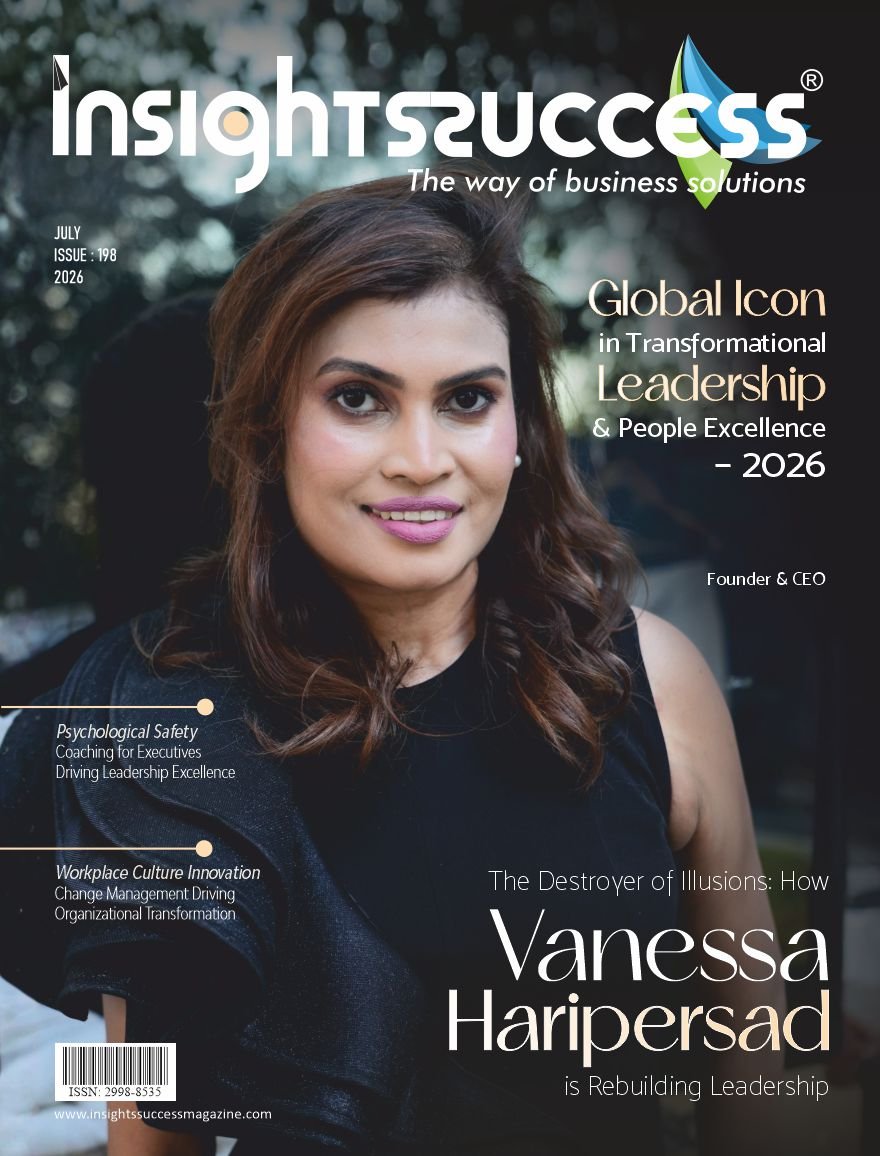
The Destroyer of Illusions: How Vanessa Haripersad Is Rebuilding Leadership
The Destroyer of Illusions How Vanessa Haripersad Is Rebuilding Leadership Recognizing a transformative leader challenging conventional thinking through authentic leadership, emotional intelligence, and purposeful innovation, inspiring individuals and organizations to embrace meaningful change, resilience, and sustainable success in a rapidly evolving world. Digital Link Quick highlights Quick reads

Change Management Driving Organizational Transformation
Workplace Culture Innovation In this dynamic business world, companies need to find ways to adjust to the technological disruptions, changing expectations of their workforce, and changes in customer needs. However, sustainable success not only requires being efficient at work but also creating an atmosphere in which people will welcome innovation, cooperation, and improvement. This makes Workplace Culture Innovation a strategic issue for those organizations that want to maintain their competitiveness in the future. On the other hand, Change Management helps organizations move through change successfully by making sure that all people and processes are aligned with organizational objectives. Building a Culture That Encourages Innovation The performance of any organization is directly influenced by culture in terms of how productive and innovative the employees are, in addition to satisfying customers. A favorable working environment encourages interaction, cooperation, and innovation. Workplace Culture Innovation requires creating an environment that encourages innovation, embraces diversity, and learning. The companies that try to achieve Workplace Culture Innovation make provision for leadership training, rewards schemes, flexibility in working and good communication. This results in employees feeling more part of the team and trust is built among the teams. Those who feel supported end up contributing to the company by working with various departments and sharing their ideas. A strong culture also enables businesses to attract and retain top talent, providing a competitive advantage in increasingly demanding labor markets. The Strategic Importance of Change Management The problem with transformation efforts is not in the technology used, but in the fact that people have trouble coping with new processes. This explains why Change Management is a vital subject matter for any organization that strives for growth and development. The key to successful change is thorough planning and proper leadership. Change Management Effectiveness enables changes within the organization to be made in an organized manner without affecting its regular functioning. The leaders, through communication of the need for change and addressing their queries and offering support, can help develop confidence within the organization. Also, structured change helps in creating harmony among various departments. When organizations manage change effectively, they improve implementation outcomes while strengthening employee engagement and organizational resilience. Aligning People, Leadership, and Strategy Sustainability transformation is achieved through synergy between organizational culture and strategic actions. The innovation of Workplace Culture creates a setting where employees know the vision of the company and are able to participate in achieving common goals. Leaders are key in this process since they set the tone through their behavior and rewarding performance. Just like Strategy Alignment, Change Management brings about alignment between the transformation and business strategy through making sure that employees are fully aware of the contribution that changes will make towards achieving organizational success in the long run. Organizations that have culture development intertwined with their change management processes find themselves having an easier time making the transition, as well as increased levels of commitment among employees, which results in better organizational performance. Driving Innovation Through Employee Engagement Innovation thrives in an environment where people are trusted, valued, and encouraged to come up with fresh ideas. Innovation in the Workplace Culture involves fostering such psychological environments that foster learning over fear and teamwork over hierarchy. The workers then actively participate in making changes to the organization. While that is true, Change Management enables the process required for translating innovative concepts into concrete business results. Effective implementation strategies, stakeholder involvement, and constant evaluation will guarantee that innovation efforts will deliver real results with minimum resistance. Organizations that achieve an amalgamation of culture innovation with change management have seen increased productivity, enhanced customer experience, and better financial results. Employee engagement is the driving force of transformation as they become brand ambassadors in the process. Preparing Organizations for Long-Term Success The future of work will also be shaped by digital transformation, workforce diversity, and expectations from businesses. Companies that make investments in Workplace Culture Innovation will find themselves well-prepared to create flexible, inclusive, and high-performing organizations. A culture of learning, collaboration, and innovation serves as a sustainable competitive advantage for the organization in an uncertain business environment. Change Management would be equally important to organizations in view of technological developments, market changes, and expansion. Companies that adopt structured ways of managing change would be able to apply new strategies more efficiently while retaining the trust of their employees. Read Also : Coaching for Executives Driving Leadership Excellence

Coaching for Executives Driving Leadership Excellence
Psychological Safety Good leadership in today’s business world is not only about being skilled and making correct decisions. Any success in the modern era can only be achieved if the leader can build trust and collaboration by ensuring the atmosphere in which everybody can freely share their ideas and solve problems. The importance of Psychological Safety cannot be overlooked as one of the key factors in building a culture of innovation and resilience. Simultaneously, Executive Coaching has come to be seen as an effective leadership development tool that helps top managers develop competencies such as the ability to communicate well, cope with change, and motivate high-performing teams. The Importance of Psychological Safety The highest productivity in employees is achieved through their feeling that they are respected, appreciated, and free from any form of criticism or penalties for sharing their viewpoints. Psychological safety helps to establish a work environment where people can feel free to ask, share their thoughts and mistakes. Psychological Safety will result in better collaboration, more creativity, and increased engagement within the organization. People in the teams will be more eager to join conversations, question ideas, and contribute to the process of continuous improvement. Managers who create Psychological Safety create better relationships and inspire innovation at all levels of the organization. A culture built on trust also enables organizations to respond more effectively to change by promoting transparency and open communication throughout the workforce. The Value of Executive Coaching Current executives have rising expectations for leadership transformation within their organizations and management of diverse groups in achieving business growth sustainably. Technical expertise cannot be enough in meeting these expectations. Coaching Executives offers individualized leadership coaching aimed at enhancing self-awareness, emotional intelligence, communication, and strategic thinking. Leaders are provided with vital knowledge of their leadership style and learn how to influence others in their surroundings through Coaching Executives. Coaching helps executives develop sound judgment and decision-making skills, enhance personal relations, and manage organizational difficulties. Leadership coaching also promotes continuous learning through reflection, adaptability, and accountability. These attributes allow the leader to develop his or her career while building an organizational culture that fosters excellence and teamwork. Building Trust Through Leadership The element of trust continues to be a precious resource in effective organizations. Authentic, empathic, and transparent leaders develop a culture in which people will be inspired to perform at their best. Psychological Safety provides the basis of these trusting relationships through open communication and mutual respect. When people feel like their voice is being heard at work, they tend to get more involved in problem solving and innovation. When leaders adopt Psychological Safety, they not only look for different viewpoints but also give room for constructive criticism and learnings from open conversations. At the same time, Coaching Executives provides leaders with specific techniques of communication that enhance trust in uncertain situations. Good coaching allows executives to listen carefully, communicate empathically, and solve employees’ problems without deviating from strategic goals. Driving Organizational Excellence Through Leadership Development Companies that develop leaders are creating a stronger base for future success. Psychological Safety helps companies excel through cooperation among team members, bettering the well-being of employees, and lowering obstacles for innovation. Employees who are safe in their environment will be more apt to try out new things and find ways to improve operations. Coaching for Executives, on the other hand, makes sure that leadership has the confidence and individual skills needed to navigate their organization within a dynamic business environment. Coaching contributes to enhancing the performance of executives by increasing adaptability, conflict resolution, and decision-making skills. Combining all these techniques can ensure the development of cultures of leadership that are committed to continuous improvement, accountability, and empowerment of workers. Companies will reap the rewards of high levels of employee engagement, high performance, and market resilience. Preparing Leaders for the Future of Work In the coming years, leadership will be required to handle changes in technology and workforce expectations, as well as a more diverse workplace. Companies that value Psychological Safety will ensure that innovation, collaboration, and continuous learning become an intrinsic part of their culture. Coaching Executives will still be an important part of developing skills needed by leaders for future endeavors through enhancing their emotional intelligence and effective communication. Coaching executives enables them to be flexible and develop relationships within organizations that have become more complex than before. In this respect, Psychological Safety and Executive Coaching go side-by-side and complement each other in developing a model of effective leadership. Through building a culture of trust, communication, and leadership development, organizations are able to build strong corporate cultures that promote innovation and engagement among employees. In today’s rapidly changing environment of doing business, those leaders who master these two competencies will be able to create teams of high performance. Read Also : Strengthening ESG Governance for Long-Term Value

The Destroyer of Illusions: How Vanessa Haripersad Is Rebuilding Leadership
There are career transitions that are planned in spreadsheets and executed with precision. And then there are the ones that arrive differently, quietly and persistently, building over years until the pressure to act becomes greater than the comfort of staying. Vanessa Haripersad‘s transition from 24 years of corporate human capital leadership to founding Shankara People Solutions belongs firmly in the second category. After more than 20,000 interviews across industries and two and a half decades of watching how organizations treat the people inside them, she kept witnessing a pattern that she could not unsee: brilliant, capable, qualified people, particularly women, being diminished by environments that rewarded output but ignored the soul. She knew she was meant to do something about it at a depth that no corporate role would allow. What she built in response is not simply coaching practice. It is a philosophy, a framework, a set of programs, and in its most recent and most personal expression, a movement with generational ambitions. The name Shankara is not incidental to any of this. It is the foundation. Vanessa Haripersad is a devoted follower of Lord Shiva, one of whose most sacred names is Shankara, meaning the one who brings auspiciousness and wellbeing, the destroyer of illusions. That divine purpose, to shatter what is false so that what is true can finally stand, is precisely what transformational coaching does at its most powerful. It destroys false beliefs: the inherited stories of unworthiness, the imposter narratives, the conditioning that tells people they are too much or not enough. Until that conditioning is directly addressed, no amount of external achievement changes what a person believes about themselves on the inside. She mentions, “Shankara People Solutions is not just a business name. It is a spiritual commitment made visible.” What 24 Years of Human Capital Reveals Two and a half decades of watching leaders perform across industries, through recessions, reorganizations, pandemics, and the accelerating complexity of a permanently uncertain world, produces a very particular and hard-earned clarity about what actually works and what does not. Vanessa Haripersad arrived at her leadership framework not through academic theorizing but through the specific and irreplaceable experience of being present in real organizations during real crises, watching real leaders either hold their shape or fracture under pressure. When she started her career, leadership was largely positioned. You earned a title; you issued direction; people followed. That model did not simply crack under pressure. It collapsed entirely when the world became permanently volatile, uncertain, complex, and ambiguous. The leaders who are thriving today are not the ones with the loudest authority or the most polished strategies. They are the ones who have done the inner work and who can hold their clarity and their composure when everything around them is shifting. From that sustained observation, Vanessa Haripersad distilled the SCCR Resilient Leadership Framework: Self-Awareness, Compassion, Curiosity, and Resourcefulness. Each pillar is not a theoretical construct but an empirically observed quality in the leaders who demonstrate sustained effectiveness over time and across conditions. Self-awareness means knowing your triggers, your biases, and your blind spots before they make consequential decisions on your behalf. Compassion is not softness but the genuine courage to see and value the humans in your care. Curiosity is the practice of asking better questions rather than defending existing answers at the cost of the truth. And resourcefulness is the capacity to find possibility precisely where others see only constraints and limitations. She asserts, “In a VUCA world, uncertainty is not an exception. It is the permanent operating condition. SCCR is an antidote.” Getting to the Root of Imposter Syndrome Imposter syndrome is one of the most widely discussed and least precisely addressed phenomena in professional life. For Vanessa, it is also one of the most consequential, and she approaches it with a rigor and specificity that distinguishes her practice decisively from the broader territory of motivational advice and surface-level confidence building. She is a certified Imposter Syndrome Coach Practitioner, trained by Dr. Lisa Orbé-Austin, one of the world’s leading clinical experts on the subject. The methodology she follows is evidence-based, structured, and designed to get to the root of the pattern rather than managing its surface symptoms indefinitely. What that methodology confirmed, and what every client’s engagement continues to confirm, is that imposter syndrome is not a confidence problem. It is an identity problem. It is the persistent, internalized belief that success is undeserved, and that exposure as a fraud is perpetually imminent, regardless of any volume of evidence to the contrary. Her work with clients follows a deliberate and carefully sequenced progression. The specific imposter pattern is surfaced first, because imposter syndrome does not present identically in every person and treating it as though it does is one of the most common reasons interventions fail. The origin of the belief system is then examined with care, tracing the environments and experiences that reinforced it over time. And then the painstaking, powerful work of rebuilding a new identity narrative begins, one that is accurate, sustainable, and genuinely owned by the individual rather than borrowed from the fluctuating availability of external validation. Alongside this, for clients experiencing burnout and depletion, Vanessa Haripersad draws on her certification as a Resilience Coach and her signature six-week Resilience Reset Program, designed specifically to help individuals who have given everything to their roles and lost themselves in the process. Over six weeks, the foundational practices of self-regulation, recovery, and sustainable high performance are rebuilt from the inside out. She highlights, “People walk out of my coaching engagements, not just functioning better. They know who they are, they stand in that fully, and they have the tools to hold that ground for life.” The Gap Between Stated Values and Lived Behavior Building high-performance and high-trust cultures is among the most frequently stated organizational priorities and among the most frequently failed executions in corporate life. Vanessa Haripersad has spent enough time inside organizations to understand precisely why the gap between intention and
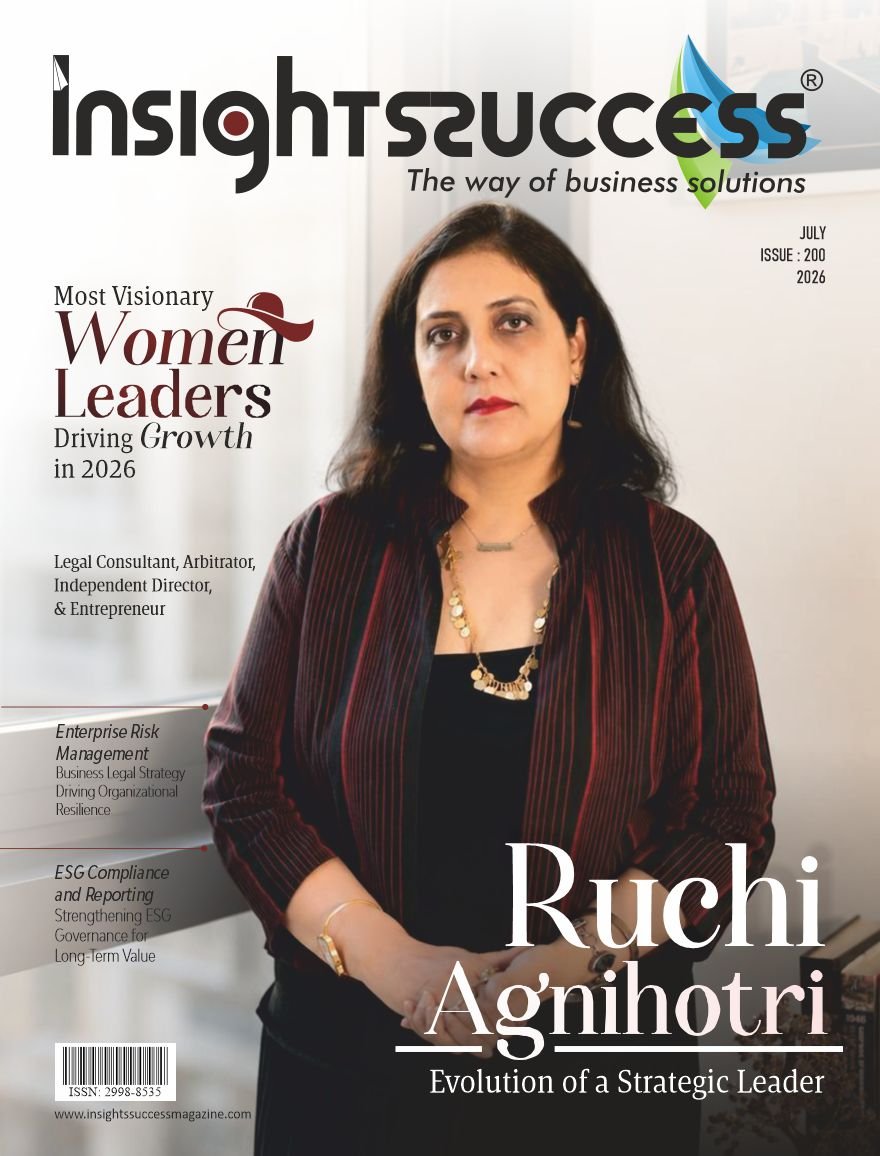
Most Visionary Women Leaders Driving Growth in 2026
Most Visionary Women Leaders Driving Growth in 2026 Celebrating exceptional women who are redefining leadership through innovation, strategic vision, resilience, and purpose, inspiring sustainable business growth, empowering communities, and creating lasting impact across industries in an evolving global landscape. Digital Link Quick highlights Quick reads

Strengthening ESG Governance for Long-Term Value
ESG Compliance and Reporting A company’s worth is no longer measured by its financial results alone. Investors, regulators, employees and customers are all paying closer attention to how a business treats the environment, handles its social responsibilities, and how it governs itself internally. That closer attention has pushed environmental, social, and governance considerations at the center of how serious organizations think about long-term success. ESG governance is no longer a side function handled quietly in a corner of the business. It has become central to how value is built, protected, and sustained over time. The Rise of ESG in Corporate Strategy A decade ago, environmental and social considerations were often treated as reputation management, something to mention in an annual report but rarely something that shaped core strategy. That period has passed. Climate risk, social inequality, and questions of corporate accountability now carry real financial weight, touching everything from access to capital to how loyal customers stay over time. This shift has made strong ESG governance a genuine business necessity rather than something nice to have. Organizations that take it seriously are finding that doing so protects them from risk, opens doors to new opportunities and builds the kind of trust that supports growth over the long run. Those that still treat it as a checkbox exercise are finding that approach increasingly inadequate. What Strong Governance Looks Like Governance, in this sense, is not just about having a policy sitting in a drawer somewhere. In practice, this means assigning clear roles, deciding who is responsible for what, and making sure environmental and social thinking gets built into day-to-day decisions rather than treated as a side issue. That includes real oversight from the board, goals that can actually be tracked, and a workplace culture that treats these priorities as seriously as it treats financial results. ESG governance works best when it becomes part of how decisions actually get made, rather than something added on after the fact. When leadership truly understands the risks and opportunities at play, and when that understanding shapes strategy instead of simply trailing behind it, the organization is far better placed to handle whatever pressures come its way. The Discipline of Compliance and Reporting Good intentions need structure if they are going to turn into something reliable, and that is where compliance and reporting come in. Regulatory expectations around environmental and social disclosure have grown substantially, and they keep evolving as governments and regulators respond to public demand for more transparency. Organizations need systems that can track the right data, check its accuracy, and present it in a way that meets requirements that grow more detailed each year. ESG compliance and reporting turn vague commitments into accountable ones. It pushes organizations to measure what they say they value and it creates accountability simply by making performance visible to regulators, investors, and the public. Without this discipline, even genuinely well-meaning ESG efforts can drift without ever producing results anyone can point to. Transforming ESG Data into Strategic Insight There is a real risk that compliance turns into a purely administrative exercise, a box-ticking process meant to satisfy outside requirements rather than to actually inform how decisions get made. Organizations that get the most value out of their efforts treat reporting differently. They use the data gathered through compliance work to understand where they actually stand and where things still need to improve. When ESG compliance and reporting are approached this way, it stops being a burden and starts being a genuine source of insight. Patterns in the data show where risks are building up, where real progress is happening, and where attention needs to shift next. That turns reporting from something purely backward-looking into something that actively shapes strategy going forward. Building Trust Through Consistency Stakeholders of every kind, investors, employees, customers and communities, respond to consistency. They want to see that commitments made are commitments kept, and that performance over time reflects real effort rather than the occasional gesture. That kind of consistency comes from governance structures sturdy enough to hold steady even when leadership changes or market conditions shift. Strong ESG governance builds this consistency by embedding accountability into the organization’s structure itself, rather than leaving it dependent on any one person’s enthusiasm. When governance is solid, commitments survive leadership transitions and market pressure and stakeholders learn they can actually rely on what the organization says about its own performance. Summary Strengthening ESG governance is not a passing trend or a reaction to temporary pressure. It reflects a real, lasting shift in how value gets created and protected. Combined with solid ESG compliance and reporting, it gives organizations the structure to act responsibly and the openness that builds trust over time. Businesses that invest seriously in both are setting themselves up not just to meet today’s expectations but to remain strong, credible, and valuable for years to come. Read Also : Coaching for Executives Driving Leadership Excellence

Business Legal Strategy Driving Organizational Resilience
Enterprise Risk Management No organization gets to choose when disruption shows up. A lawsuit, a regulatory shift, a contract dispute, or an unexpected liability can land on any given Tuesday, and how a business handles that moment depends almost entirely on decisions made long before the problem ever appeared. This is the quiet truth behind organizational resilience: it is not built in the middle of a crisis. It is built through the discipline of sound business legal strategy, woven into the broader practice of enterprise risk management that serious organizations treat as a constant priority rather than an occasional concern. Integrating Legal Expertise into Strategic Planning For a long time, legal counsel was treated as something businesses consulted after a decision had already been made, a final check before signing rather than a voice shaping the decision itself. That approach leaves real value on the table and exposes organizations to risks that earlier involvement would have caught. A well-developed business legal strategy flips that order. It brings legal thinking into the room while decisions are still being shaped when a new market is being considered, when a partnership is being structured, when a product is being designed. Catching a potential liability or regulatory conflict at that stage costs almost nothing compared to discovering it after the fact, when contracts are signed and commitments are already public. Managing Risk Across the Entire Organization The phrase gets used broadly, so it helps to be specific about what it includes. Enterprise risk management is the practice of identifying, assessing, and addressing the full range of risks an organization faces, including financial, operational, reputational, regulatory, and legal risks. It is not a single department’s job. It is a framework that touches nearly every function within a business. What makes this discipline effective is not the existence of a risk policy sitting in a binder somewhere. It is the consistent, organization-wide habit of asking what could go wrong, how likely it is, and what the business would do if it happened before any of those questions become urgent. Connecting Legal and Enterprise Risk Risk in business rarely stays confined to one category. A financial risk often carries legal exposure. An operational failure can trigger regulatory scrutiny. A reputational crisis frequently has contractual or compliance roots underneath it. This is exactly why business legal strategy cannot function as a separate silo from broader risk planning; the two are intertwined by nature. Organizations that treat legal strategy as integrated into enterprise risk management, rather than bolted on afterward, tend to see risks earlier and respond to them with far more coordination. When legal counsel understands the operational and financial context a risk sits within, the advice they give is sharper and considerably more actionable. Navigating an Evolving Regulatory Environment Regulatory environments shift constantly, and businesses operating across multiple jurisdictions or industries face a genuinely complicated compliance landscape. Falling behind on regulatory change is one of the most common ways organizations expose themselves to risk they did not see coming. Enterprise risk management that takes regulatory tracking seriously builds the systems needed to stay current, monitoring changes, assessing their impact, and adjusting practices before noncompliance becomes a problem rather than after. This ongoing vigilance is unglamorous work, but it consistently prevents the kind of costly enforcement actions that damage both finances and reputation. Building Organization-Wide Risk Awareness The strongest business legal strategy does not live exclusively inside a legal department. It is reflected in how decisions get made across the organization, how managers think about contracts they are negotiating, how teams handle sensitive information, and how leadership weighs new opportunities against the liabilities they might introduce. Creating that kind of culture takes deliberate effort. It means training people outside the legal function to recognize risk when they see it and to know when to bring in expertise rather than proceeding on assumption. Organizations where risk awareness is broadly shared catch problems earlier than those where it remains confined to a single department. Developing Resilience Through Proactive Risk Planning Not every risk can be anticipated in detail, but every organization can build the capacity to respond well when something unexpected occurs. This is where enterprise risk management earns its value most clearly, not in preventing every possible disruption, but in ensuring the organization has the structures, relationships, and legal clarity needed to respond quickly and coherently when disruption arrives anyway. Businesses that have invested in this kind of preparedness recover faster, suffer less reputational damage, and maintain stakeholder confidence even through genuinely difficult periods. In Summary Organizational resilience is not something a business declares for itself. It is something that becomes visible only when tested, and the businesses that pass that test consistently are the ones that invested in business legal strategy and enterprise risk management long before they needed either. That investment does not eliminate risk entirely. It builds the kind of organization that can absorb disruption, adapt, and keep moving forward with its integrity and its operations intact. Read Also : Strengthening ESG Governance for Long-Term Value

Ruchi Agnihotri: Evolution of a Strategic Leader
Developing effective leaders within the legal sector and institutional governance demands diverse, multi-layered professional experience. Ruchi Agnihotri’s professional trajectory spans diverse environments, including courtrooms, boardrooms, and mentorship programs, each refining her technical expertise into strategic decision-making capabilities. Her career path reflects the traditional apprenticeship system, a framework requiring rigorous learning before assuming leadership roles, where practical experience refines natural aptitude. She established her professional identity upon three core principles: mentorship, deep insights into the legal system, and an unwavering commitment to ethical standards. Dedicated to sustainable leadership, she merges legal, governance, and strategic frameworks into a value-based model that fosters internal organizational growth. Lessons Learned on the Job Ruchi Agnihotri points to the gradual, patient accumulation of wisdom gained from serving under exceptional leaders as the foundation of her leadership philosophy. “Leadership, just like any other thing in your professional life, is something that you imbibe. You learn it literally on the job while you are being led, while you are being mentored, while you are being trained,” she explains. She identifies a strong parallel between medicine and law, two highly demanding professions where mentorship serves as a foundational pillar. In both fields, the initial decade of practice, functions as a demanding learning period where raw ability is methodically refined. She views professionals in these fields as lifelong learners, noting that the cessation of learning marks the beginning of professional stagnation. For litigators of her generation, foundational lessons emerged from immediate supervisors, senior colleagues, and the courts. “There are multiple people who teach you how to lead. Your immediate bosses, and for litigators, we see judges, we see how they run their court,” she reflects. This multi-source learning model informs her current leadership approach as she passes these insights to the next generation of legal talent. The 360-Degree Enterprise In a corporate landscape where Environmental, Social, and Governance frameworks have moved from boardroom trends to strategic necessities, Ruchi’s vision for institutional leadership is highly relevant. “The business purpose and the business intention should be to be a 360-degree enterprise where E, S, and G are cohesively working with each other,” she asserts. To her, governance frameworks represent the foundation of institutional resilience rather than a mere compliance checklist. “The brand, the commercial enterprise, earns that trust, that reputation,” she says, drawing a clear line between performance that is cosmetic and culture that is genuine. She collaborates with executive teams to establish this standard, positioning the board as an active participant that evolves business purposes and accepts responsibility for long-term institutional character. She argues that enduring institutions are distinguished by predictive, proactive leadership driven by foresight rather than reactive, habit-bound management. “It’s predictive, it’s foresight-driven, it’s intuitive, and ultimately it’s proactive rather than reactive; preventive rather than managing or navigating a crisis. Preventing and avoiding crises or risks that are going to lead to adverse consequences is what will ultimately make you sustain as an organization for a long period of time,” she says. In an era marked by corporate failures and governance breakdowns, her approach offers a realistic diagnosis grounded in experience. A Message to the Next Generation Ruchi Agnihotri evaluates young professionals with balanced candor, praising their confidence, risk tolerance, and digital proficiency while identifying impatience as a primary challenge for modern professionals. “This current generation is brighter. They have more confidence, they have much higher risk appetites, and there’s a lot to learn from them as well,” she acknowledges. “What I have seen in the younger crowd is, first, that there is a lack of patience,” she observes. In a world where algorithms deliver answers in milliseconds and careers are measured in sprints rather than marathons, the capacity to sit with complexity, to let an institution breathe, to trust a process, has become a rare and undervalued skill. “Good leadership requires patience. There should be calmness. The restlessness must be curbed. Some things take time to build. Institutions take time to build,” she says. Her guidance for ambitious professionals emphasizes mastering foundational skills, developing interpersonal management capabilities, and practicing active listening. She advises filtering out the urge to accelerate progress faster than reality allows, offering this counsel as an insight derived from experience. The Leadership Blueprint: Communicative, Inclusive, Clear Ruchi Agnihotri defines her leadership philosophy through specific, actionable elements, focusing on a commutative approach built on two-way communication rather than top-down instruction. “Authoritarianism takes one nowhere,” she states, with the finality of someone who has watched that model fail from multiple vantage points. Instead, she promotes an inclusive leadership culture open to feedback from peers, juniors, and seniors alike. This framework balances open, constructive criticism with mutual professional respect. “It’s a two-way street. Commutative, feedback-oriented,” she says. She pairs this openness with structural clarity, utilizing precise delegation and distinct role allocations. However, she avoids isolating team members, ensuring every individual understands the ultimate organizational objective and how their responsibilities contribute to the collective destination. “Clear delegation, clear allocation of roles and responsibilities yet at the same time, everyone should have a clear picture of the end goal and the end objective; where is all this fitting in and leading up to” she explains. The Legacy She Intends to Leave Guided by prominent legal minds who shaped her view of the profession, Ruchi Agnihotri acknowledges her responsibility to pass these standards forward. Having benefited from exceptional mentorship, she seeks to contribute meaningfully to developing future legal talent. “We’ve learnt a lot; been mentored by some very big legal luminaries in the profession. So I hope that I have contributed in some way or the other towards building legal talent of the future,” she reflects. It is a generous aspiration which is less about personal monument-building and more about the quiet, generational work of passing on what matters. Her institutional vision targets organizations that achieve profitability and high ethical standards simultaneously, viewing the two goals as complementary. She aims to help build sustainable, forward-looking institutions grounded in integrity. “If I am able to help build institutions that value integrity,