






How Leaders Convert AI into Competitive Power
Turning Intelligence into Influence AI is easily accessible now. Besides, algorithms, platforms, and tools that provided competitive edge are today nearly within the reach of all organizations. Thus, only the intelligence factor is no longer a distinguishing mark. What gives power to the leaders and weakens the followers in the AI economy is the capability to transform intelligence into influence—converting insights into decisions, adoption into outcomes, and technology into a sustained competitive power. The shift is a challenge for the leaders, not for the tech guys. Intelligence Without Influence Has Limited Value A lot of organizations produce enormous quantities of AI-generated insights but have difficulties to turn them into activities. Data visualization tools are not used, advices are not taken, and smaller projects do not grow. The issue is not a lack of ability but a lack of influence. Influence is produced when intelligence affects behavior: decision-making, resource distribution, and strategy change, for example. Those executives who notice the alteration, apply less on AI installation and more on its integration into the very core of decision-making. Competitive edge is gained when intelligence continuously determines results. Leadership Ownership of AI Outcomes Misplaced ownership is among the most frequent obstacles to driving influence. If AI is considered as a technology-driven project, possessed by the data or IT departments, its effect will still be confined only to that specific area. The executives, who transform AI into a competitive advantage, do not shy away from letting everyone know about the outcomes. This signifies linking AI projects right to the strategic priorities of the organization—like growth, margin increase, risk minimization, or customer differentiation—and then making the top leaders responsible for the resulting situation. The moment AI is part of the same discussions regarding capital investment and strategy, its power is magnified. The focus of leadership makes the intelligence justifiable. Embedding AI into Decision Authority Artificial intelligence becomes more powerful when it participates in actual decision-making. The understanding is that AI will just provide information for decision-making, be in total control of decisions, or human supervision will be necessary in certain areas. The process of setting these boundaries is a way of gaining acceptance and support and a way for leaders to get the most out of their teams. The organization and its members understand the cases when AI will determine what data and information should be trusted and when there will be room for involving human judgment. The process of assigning the decision-making power becomes quicker and more uniform, while still maintaining the same level of accountability. The classification of this balance is a typical case of the organizations having AI tech that is capable but still being disregarded for the sake of operations. Building Trust in Intelligent Systems Influence is reliant on trust. AI outputs will not be acted upon if leaders and teams do not place trust in them. The main components of trust are transparency, reliability, and explainability. The role of leaders in establishing expectations is critical. They make sure that models are validated, biases are tackled, and constraints are expressed in layman’s terms. Offering too much hampers credibility; cautious usage encourages trust. Trust is fostered when AI is helpful in real-life decisions instead of being just spectacular in demos. Aligning Culture with Intelligence Cultural misalignment is the commonest cause of failure for AI adoption over technical weakness. Intelligence is unable to influence organizations where intuition is more valued than proof or where senior judgment is not to be contested. Culture is the key factor in determining which leaders turn AI into a competitive weapon and those who do not. Data-informed decisions are rewarded, constructive challenges are encouraged, and learning from outcomes rather than defending positions is practiced. Scaling Influence Through Operating Models For a company to have a competitive edge, it has to be big. The top executives of the company have to make sure that the intelligence from AI is not only available to certain teams or functions. This means changing the whole operating model by redesigning the processes, workflows, and incentives that support the intelligent decision-making throughout the company. To illustrate, the AI insights that are included in pricing and supply chain planning or in customer engagement systems have a daily impact on the outcomes instead of having it only once in a while. Companies that give more importance to integrating their systems rather than to performing trials can reach the required dimensions sooner. The very first impact is small but it grows steadily once intelligence becomes part of the daily routine. Conclusion AI has evolved into a technology that offers high-quality intelligence. However, the power to influence are the scarce ones. The top players in the market are those who merge understanding and execution—those who make AI a part of their decisions, factor culture with evidence, and make intelligence an extensive and ethical practice. Using intelligence to gain influence is not a matter of simply getting new technology. It calls for a certain kind of leadership that knows where the creation of value takes place: when the change in action occurs due to insight, and then the action generates advantage. Read Also : Transformational Leadership: Top Women Leaders in 2026 Driving Sustainable Growth

The Most Influential Business Woman Leader to Follow in 2026
The Most Influential Business Woman Leader to Follow in 2026 Harshita Chopra, Founder and CEO of TechnoRadiant, exemplifies authentic digital leadership through strategic clarity, ethical practice, and measurable impact. Rejecting hype-driven marketing, she builds sustainable growth frameworks grounded in patience, precision, and partnership, redefining digital excellence while delivering lasting value for clients, teams, and the wider business ecosystem. Digital Link Quick highlights Quick reads

Transformational Leadership: Top Women Leaders in 2026 Driving Sustainable Growth
Sustainable growth has emerged as a major priority in governments, corporations, and investors across the world in 2026. The environmental responsibility, social inclusion as well as good governance have ceased to be perceived have been the key to long term competitiveness. Women leaders are at the centre of this change because they are developing policies that would lead to a balanced economic performance and well-being of society. Their management is a move away from short term benefits to long term value creation. Women are actively reshaping how organisations approach sustainability across sectors such as renewable energy, finance, technology, and public policy. They are affecting the decisions in the boardroom, capital placement, innovation pipeline and stakeholder engagement. These leaders are proving that in the ever-evolving global economy, responsible growth is possible and that it is necessary by integrating sustainability into its daily operation and future planning. ESG and Sustainability Leaders Female executives in major companies are increasingly involved in mainstreaming the Environmental, Social, and Governance values. They ensure that climate commitments and social responsibility translate into measurable outcomes by aligning sustainability goals with core business objectives. Their efforts have contributed to putting ESG out of the compliance activity and into a strategic framework that determine investment choices, risk management, and corporate culture. A case in point is Vaishali Nigam Sinha who has significantly contributed towards sustainability in the renewable energy industry. Being a top executive of a multinational energy firm in the clean sector, she has spearheaded campaigns aimed at decarbonisation, community, and responsible growth. Her leadership has enhanced the incorporation of sustainability into the corporate governance in addition to increasing the contribution made by businesses towards national and global climate objectives. She also has an impact on the industry platforms where she helps in creating sustainability standards and corporate responsibility agendas. The leaders like Kara Hurst globally have shown how sustainability can be institutionalized in large, complicated organisations that work on a large scale. Such leaders are changing the way multinational companies respond to the impact on the environment by being concerned about the reduction of emissions, accountability of their supply chains, and novel ways. Green Industry Innovators In addition to existing corporations, women entrepreneurs are changing the world by establishing and expanding green-based innovative businesses. The technological solutions to these issues are clean energy access, resource efficiency, and waste reduction, which these founders are dealing with. The sustainability of their enterprises demonstrates that sustainability serves as a powerful driver of business and economic growth. Other innovative thinkers who have entered the market with unconventional ideas in the renewable energy industry are Inna Braverman, who embraces natural resources in new form. The use of renewable energy technology in her work of waves energy technology throws light on how alternative solutions can supplement solar and wind energy. Such entrepreneurs are contributing to diversification of the global clean energy portfolio by practical deployment and scalability to provide additional investment opportunities in new technologies. There are other women founders who are establishing sustainable businesses in the urban infrastructure, manufacturing and consumer sector. Such leaders are creating business models, which focus on the principles of environmental circular economy, responsible sourcing, and inclusive growth. Others are also active mentors and advocates who contribute to the development and preservation of startups at the initial stages and motivate additional female involvement into green industries. Global Sustainability Thought Leaders Women who shape policy and global structures are also defining sustainable growth in 2026. These leaders are the ones who fill the gap between science, economics and governance, facilitating complex transitions in organisations and governments. Their practice highlights the need to change the system and not individual action. Sandrine Dixons-Declave is commonly known as a person who made tremendous contributions to the discussion of climate change and sustainable development. She has been a pioneer of long-term planning and systems thinking through her position as a leader in international think tanks and advisory groups. Her advocacy states that economic models should be transformed so that they consider both climate risks, inequality, and resource constraints. Through her interaction with policymakers and business executives she has enabled sustainability to be a priority in the economy rather than environmental issue. Simultaneously, female leaders who have been identified in the global sustainability councils and industry organizations are shaping the manner in which enterprises are conducting changes. They work in consumer goods, manufacturing, technology and energy rates. They are showing how organisations can ensure profitability, good environmental and social results by integrating sustainability into strategy and operations. Conclusion The contribution of women leaders to the sustainable growth in 2026 is extensive and far-reaching. These leaders are redefining the meaning of effective leadership in an uncertain and changing world whether they work in international corporations, construct innovative new green startups, influence international policy debate, or shape the global policy agenda. Their styles emphasize the importance of long-term thinking, inclusivity, and accountability. With the issue of sustainability taking a lead in economic agendas, the example set by these women provides a good blueprint in future. By making growth and environmental responsibility to coincide, they not only advancing organisational success but making the world a more resilient and transparent global economy. Their influence will still be felt in the way businesses and societies will react to the challenges and opportunities in the decades to come. Read Also : What Leaders Actually Shape

Harshita Chopra: Redefining Digital Excellence Through Vision, Strategy, and Authentic Leadership
The field of digital marketing has become inundated with rapidly evolving trends as well as deceptive quick fixes or empty promises designs that generate immediate but unsustainable outcomes. As a result of these trends, many times, marketing agencies utilize buzzwords as a substitute for the value that companies expect from their investment in marketing. As a result, the need for leaders who will provide an authentic experience to companies through strategic leadership has increased. The difference between a fleeting digital presence and a sustainable competitive advantage lies not in following the loudest voices, but in partnering with leaders who understand that real transformation requires patience, precision, and an unwavering commitment to substance over style. It is within this challenging terrain that exceptional entrepreneurs emerge- those who build not on hype but on a foundation, who measure success through client prosperity rather than agency profit, and who recognize that true digital excellence demands both analytical rigour and human-centered values. The Visionary Behind Strategic Transformation Harshita Chopra stands as the Founder and CEO of TechnoRadiant. This digital growth consultancy has carved a distinctive path by fundamentally reimagining what client partnership means in the digital age. Her entrepreneurial journey didn’t begin with a business plan, chasing market trends or capitalizing on industry hype. Instead, it emerged from a penetrating observation of systemic failures that were costing businesses millions in wasted resources and eroding the trust between organizations and their marketing partners. Early in her professional career, Harshita witnessed a troubling pattern repeating across industries and company sizes. Organizations were investing substantial capital into digital marketing initiatives, yet these investments frequently lacked clear strategic frameworks, accountability structures, or defined pathways to measurable business outcomes. The industry had become enchanted by buzzwords- “growth hacking,” “viral marketing,” “disruptive strategies”. These terms sounded impressive in presentations but rarely translated into sustainable business growth. Campaigns were launched with fanfare but without a proper foundation, creating a cycle where effort didn’t match outcomes and investment didn’t correlate with returns. This recurring inefficiency wasn’t merely a business problem; it was an industry-wide crisis of credibility. Harshita recognized that the traditional agency model, focused on billable hours and deliverable checklists rather than actual business impact, was fundamentally misaligned with what clients truly needed. This realization became the catalyst for TechnoRadiant’s founding philosophy: to approach digital growth not as a series of transactions but as a long-term partnership invested in genuine client success. From the very beginning, TechnoRadiant operated differently. Rather than rushing to implementation, the company invests considerable time understanding each client’s unique business context, competitive positioning, market dynamics, and long-term strategic objectives. Rather than applying standardized templates, Harshita’s team crafts customized growth strategies designed to create sustainable competitive advantages. This approach requires patience, depth of expertise, and genuine commitment to client outcomes- qualities that distinguish TechnoRadiant in an industry often characterized by speed over substance. Demonstrating Excellence Through Tangible Results In a sector where promotional rhetoric often substitutes for actual performance, Harshita has built TechnoRadiant’s reputation on a foundation of demonstrable impact. The consultancy has enabled businesses to triple their qualified inbound leads within twelve-month periods without increasing advertising expenditure. It’s a remarkable achievement reflecting improved funnel efficiency and strategic targeting. Multiple clients have achieved consistent top-tier organic search visibility for highly competitive keywords within six to nine months, establishing sustainable discoverability that continues generating value long after initial optimization efforts. Perhaps most significantly, the frameworks implemented under her guidance have helped organizations reduce customer acquisition costs by over twenty-five per cent while simultaneously improving engagement quality and lead qualification rates. This dual achievement represents the rare combination of lowering costs while enhancing quality; a balance TechnoRadiant has made repeatable across diverse client engagements. These outcomes, complemented by industry awards and professional recognitions, serve as external validation. Yet Harshita views such recognitions pragmatically, appreciated as affirmation that the approach resonates broadly, but secondary to the fundamental work of delivering strategic value for clients who trust TechnoRadiant with their business growth. Strategic Global Expansion: The UK Market Entry TechnoRadiant’s expansion into the United Kingdom represents strategic growth executed with characteristic thoughtfulness. The decision emerged organically over the previous eighteen months as UK-based enterprises and international businesses operating in British markets increasingly sought the type of strategic clarity and operational accountability that TechnoRadiant provides. What began as occasional inquiries evolved into substantive conversations extending well beyond tactical campaign execution. Discussions increasingly addressed broader strategic challenges: digital transformation roadmaps, data strategy development, and long-term competitive positioning. These conversations revealed not just demand for services but appetite for a genuine strategic partnership. Recognizing this pattern, Harshita is launching TechnoRadiant.uk, which will soon go live offering region-specific services tailored to UK market dynamics. The new entity will focus on organic growth strategies, SEO-led visibility frameworks, and data-first demand generation- core competencies refined through years of client success but adapted to regional market characteristics, regulatory environments, and competitive landscapes. This enables closer engagement with local business ecosystems, operation within convenient time zones for seamless collaboration, and partnership development focused on creating substantial value rather than merely producing regular reports. Leadership Principles That Transform Organizations Harshita’s leadership philosophy rests on three interconnected pillars: empathy, accountability, and clarity. She fundamentally rejects hierarchical notions of leadership that concentrate power and decision-making at the top. Instead, she views leadership as an enabling function, creating environments where talented individuals can think independently, take genuine ownership of their work, and contribute meaningfully to collective success. Within TechnoRadiant, this manifests in concrete organizational structures. The organization prioritizes systematic information sharing, ensuring that expertise flows freely between teams rather than becoming locked in separate silos. Cross-functional collaboration is actively prioritized, allowing diverse perspectives and specialized expertise to inform client strategies comprehensively. Outcome-driven reviews replace activity-based checklists, shifting organizational focus from measuring busy work to evaluating meaningful results. This leadership approach creates cascading benefits. Team members develop broader capabilities and deeper strategic thinking. Client engagements benefit from integrated expertise rather than fragmented specializations. The organization builds institutional knowledge that survives individual transitions. Most importantly,
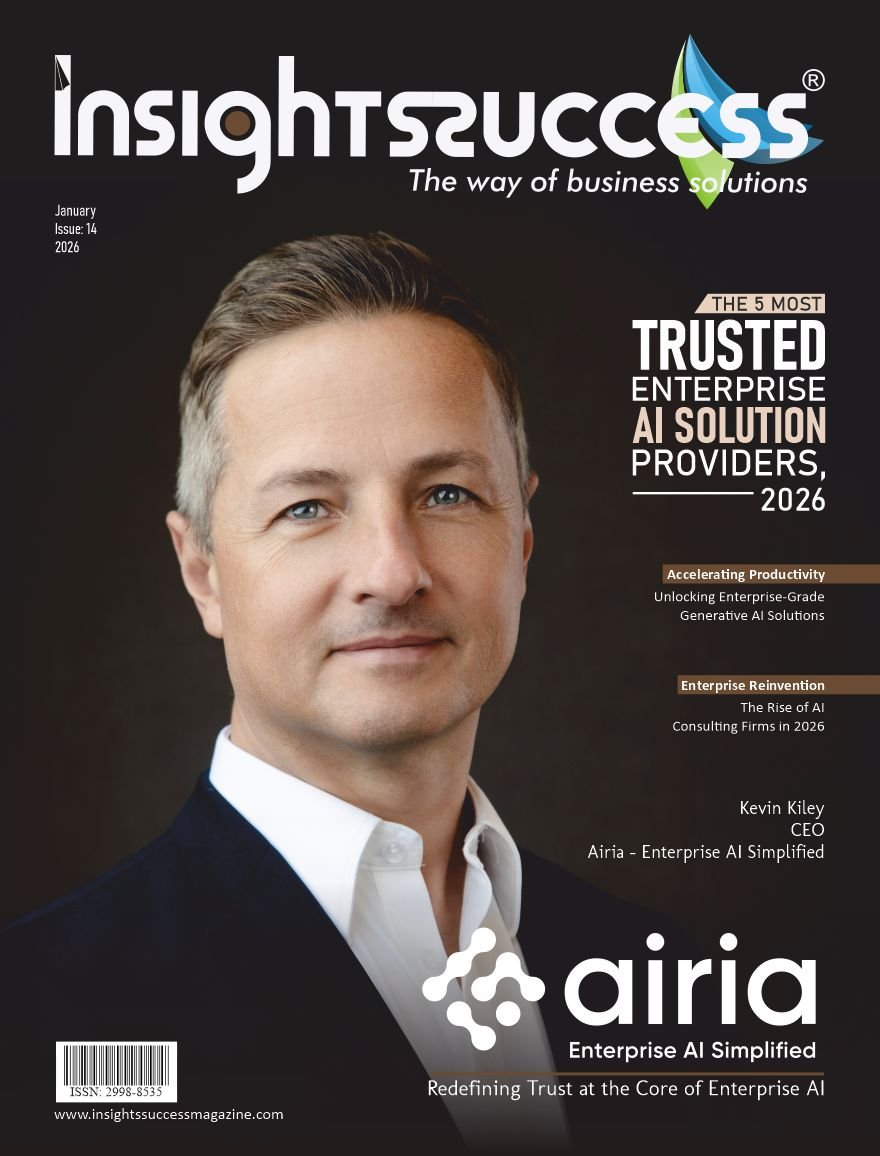
The 5 Most Trusted Enterprise AI Solution Providers, 2026
The 5 Most Trusted Enterprise AI Solution Providers, 2026 Airia Enterprise AI Simplified was founded to address a critical enterprise concern: adopting AI without losing control. Guided by CEO Kevin Kiley, the company prioritizes security, governance, and flexibility, delivering a disciplined, model-agnostic platform that enables enterprises to adopt AI confidently, responsibly, and at scale. Digital Link Quick highlights Quick reads

Accelerating Productivity: Unlocking Enterprise-Grade Generative AI Solutions
Generative AI is swiftly transcending the phase of experimentation and turning into a business technology, changing the way businesses produce contents, analyze data, and interact with consumers. The pilot projects showed great promise, but the effort to deploy these systems into the enterprise level needs much more than access to models. Businesses should make sure that generative AI solutions are trustworthy, safe, and legal and provide quantifiable business value. As a result, the focus has shifted from novelty to value creation, strong governance, and operational excellence. The decryption of enterprise grade generative AI solutions implies the compatibility of sophisticated models with strong structures, rigorous procedures, and explicit strategic direction. Successful organizations do not view generative AI as a discrete tool but as a fundamental digital capability, which is connected to the existing systems, workflows and decision-making frameworks. Enterprise AI Foundation Enterprise grade generative AI is based upon architecture and data readiness. Businesses work highly dynamic environment with their fragmented data sources, legacy systems and high security needs. The generative AI solutions should be adhered to fit the platform of other systems like enterprise resource planning, customer relationship management, and data lakes. This needs clearly defined application programming interfaces, scalable cloud or hybrid application and well-defined data pipelines that guarantee quality inputs. Without a good base, not even the best models will be able to provide any steady and repeatable results. Data governance is also very crucial. Generative AI systems learn and reason over the data that they have accessed and therefore the quality of data, its provenance and access control are important. Businesses should come up with policy that stipulates what information will be utilized, how the information will be anonymized and how the results will be checked on accuracy and bias. Security teams are critical in safeguarding sensitive information and models that do not leak proprietary or personal information accidentally. A strong underbelly provides a balance between innovation and control and allows teams to be built with confidence and to fulfil regulatory and ethical demands. AI for Business Impact Enterprise grade generative AI is successful upon being closely correlated with business goals. Instead of implementing mass solutions, organizations need to find high impact cases of use where generative AI can be used to increase efficiency, better decision making, or even generate new revenue stream. Automated document processing, software code generation, and scale-based personalized marketing are just some examples. The use cases must be measured against measures which are clear and measurable like cost reduction, improvement in cycle time or customer satisfaction. The alignment of leadership is a must in this stage. Technology teams, domain experts, and business leaders should work together to prioritize the initiatives and determine the success criteria. This partnership will make sure that generative AI solutions solve actual pain points instead of being disconnected technological experiments. Change management is also very critical. The employees should be trained and instructed to trust and utilize AI produced outputs successfully. Enterprises can transform the potential of technology into long-term business value by integrating generative AI into daily operations and evaluating the results of such applications rigorously. AI Governance and Scalability With the utilization of generative AI becoming an integral part of processes, governance and risk management have become the main issue. Enterprise grade solutions mandate explicit responsibility over model conduct, outputs as well as updates. This entails setting up review mechanisms on critical use cases, documenting model constraints and keeping track of audit trails on compliance. Other ethical issues that should be taken care of by governance structures include fairness, transparency and responsible utilization, especially in customer facing or decision critical applications. Continuous improvement and flexibility are the keys to long term scalability. Generative AI models are advanced and firms should be ready to change or upgrade models as the requirements evolve. This demands modular architectures and vendor strategies that are not lock in and at the same time provide stability. Continuous review of performance, costs and risk will ensure that solutions are kept in line with the business requirements as time goes by. With well-designed systems and strong governance, enterprises can scale generative AI responsibly and sustainably, turning it into a lasting competitive advantage. Conclusion Companies that make strategic investments in technology, data, and governance, enterprise-grade generative AI presents a future-ready opportunity. Achieving success requires more than sophisticated models; organizations must establish a strong foundation, align AI with high-value business applications, and implement rigorous controls to manage risk and ensure compliance. With the adoption of generative AI into operations processes and continuous performance control, businesses can obtain significant efficiency, improved decision-making, and novel customer experiences. Businesses can responsibly and sustainably scale generative AI by addressing it as a fundamental enterprise capability and not a standalone tool. In doing so, they gain a competitive advantage that shapes the kind of work, corporate action and value creation in the digital economy in addition to enhancing productivity and operational resilience. Read Also : How Work Really Gets Done

Airia Enterprise AI Simplified: Redefining Trust at the Core of Enterprise AI
Building a company that enterprises can trust did not begin with Airia Enterprise AI Simplified with algorithms or architecture, but with a simple question Kevin Kiley kept encountering in boardrooms around the world: How do we adopt AI without losing control? The uncertainty, the operational risks, and the mounting pressure to innovate revealed a gap far larger than any model or tool could fill. That gap became the starting point of Airia’s journey. Under his leadership shaped the company around a belief that real enterprise transformation comes from clarity, not complexity. Instead of adding to the noise of the AI market, they focused on solving the problems leaders spoke about most like security they could rely on, governance they could prove, and flexibility that respected the investments they had already made. The result is a platform built with discipline, empathy, and the understanding that enterprise AI must be secure before it can be powerful. From its early days to its expanding global presence, The organization is growing by listening first and innovating second. Guided by Kiley’s steady approach, the company stands today not as another contender in the AI rush, but as a trusted partner helping organizations adopt AI with confidence, accountability, and long-term vision. Building the Foundation for Trusted AI From its inception, Airia has positioned security and governance not as features to add later, but as foundational pillars of the platform. While many AI tools treat security as an afterthought, The company embedded enterprise-grade safeguards at the core of its architecture. The platform incorporates comprehensive guardrails: role-based permissions, audit logs, data encryption, access control, sandboxing, and policy enforcement all built into the infrastructure layer. These aren’t optional plugins, they’re intrinsic to how Airia operates. This governance-first approach allows enterprises to deploy AI with confidence. Organizations can enable AI agents to operate autonomously while tightly controlling what they can access, what actions they can take, and how they interact with sensitive data. Their commitment to responsible AI manifests most clearly in Agent Constraints, the industry’s first policy engine that enforces granular, context-aware governance across all AI agents at the infrastructure layer. This capability allows enterprises to manage potentially hundreds or thousands of agents with different permissions, tools, and risk profiles without modifying agent code. The innovation challenged conventional thinking in the AI space. Most platforms focused purely on orchestration or providing agent frameworks, treating governance as something developers would handle at the application layer. They recognized that decoupling governance from agent code would prove essential for scalable, secure enterprise AI deployment. Building this capability required Airia to rethink its platform architecture and anticipate diverse enterprise use cases. The investment in complexity on their side translates to simplicity for customers, they gain powerful governance capabilities without sacrificing agility. Model-Agnostic Design as Strategic Advantage In an AI market characterized by rapid model evolution and shifting vendor landscapes, Airia’s model-agnostic architecture provides enterprises with strategic flexibility. Organizations can integrate open-source LLMs, proprietary offerings from major vendors, or homegrown agents, orchestrating them all through a single platform. This vendor neutrality protects enterprises from getting locked into hype cycles or betting their entire AI strategy on a single provider. As new models emerge or existing ones improve, organizations can adapt to their AI infrastructure without wholesale replacement of their orchestration and governance layer. The approach also acknowledges the reality that many AI vendors overlook enterprises already have significant investments in various AI tools and models. Rather than forcing a rip-and-replace migration, they allow organizations to leverage their existing AI assets while adding the orchestration, security, and governance capabilities necessary for enterprise-scale deployment. This infrastructure-level positioning makes Airia the platform that other AI tools plug into, rather than another tool competing for attention in an already crowded market. Phased Adoption and Real-World Value “Airia’s approach to enterprise AI adoption emphasizes gradualism over revolution. The company encourages organizations to start small with human-in-the-loop workflows, quick wins, and modest use cases. As enterprises build trust, validate guardrails, and mature their governance practices, they can scale AI deployment with confidence.” This phased adoption philosophy recognizes that sustainable AI transformation requires organizational readiness, not just technological capability. Enterprises need time to develop the processes, policies, and cultural understanding that support responsible AI use. The focus on real-world value over theoretical capabilities permeates Airia’s product development process. When evaluating new features or capabilities, the company asks what problem this solves for an enterprise, not simply whether the technology can be built. This discipline keeps innovation grounded in customer needs rather than chasing every emerging trend. Customer feedback flows directly into product development cycles at the firm. Many of the platform’s most significant advancements in governance, orchestration, and user experience originated from patterns the company observed in customer conversations. This tight feedback loop ensures the roadmap remains aligned with what enterprises actually need to scale AI responsibly. Cross-Disciplinary Collaboration Driving Innovation Airia recognizes that enterprise AI isn’t purely a technical challenge. Successful AI deployment encompasses workflows, business logic, compliance requirements, user experience, and organizational change management. The company fosters strong cross-functional collaboration, bringing together data scientists, security experts, product managers, operations teams, and customer-facing professionals early in the design process. This collaborative approach ensures that new features emerge realistic, securely, and genuinely useful for customers. Engineering teams understand the compliance constraints and business objectives that shape customer requirements. Security professionals contribute to product architecture from the beginning. Customer success teams share frontline insights that inform product priorities. The result is a platform that reflects diverse perspectives and expertise. Features work in the context of real enterprise workflows. Security measures address actual risk profiles. User interfaces accommodate the needs of different roles, from data scientists to compliance officers to business executives. Global Reach with Local Insight Airia’s expansion across global markets with teams in Atlanta, London, Singapore, Dubai, and beyond demonstrates the universal need for simplified, secure enterprise AI infrastructure. The company’s distributed leadership model empowers regional teams to respond to local market dynamics, regulatory requirements, and cultural contexts while maintaining
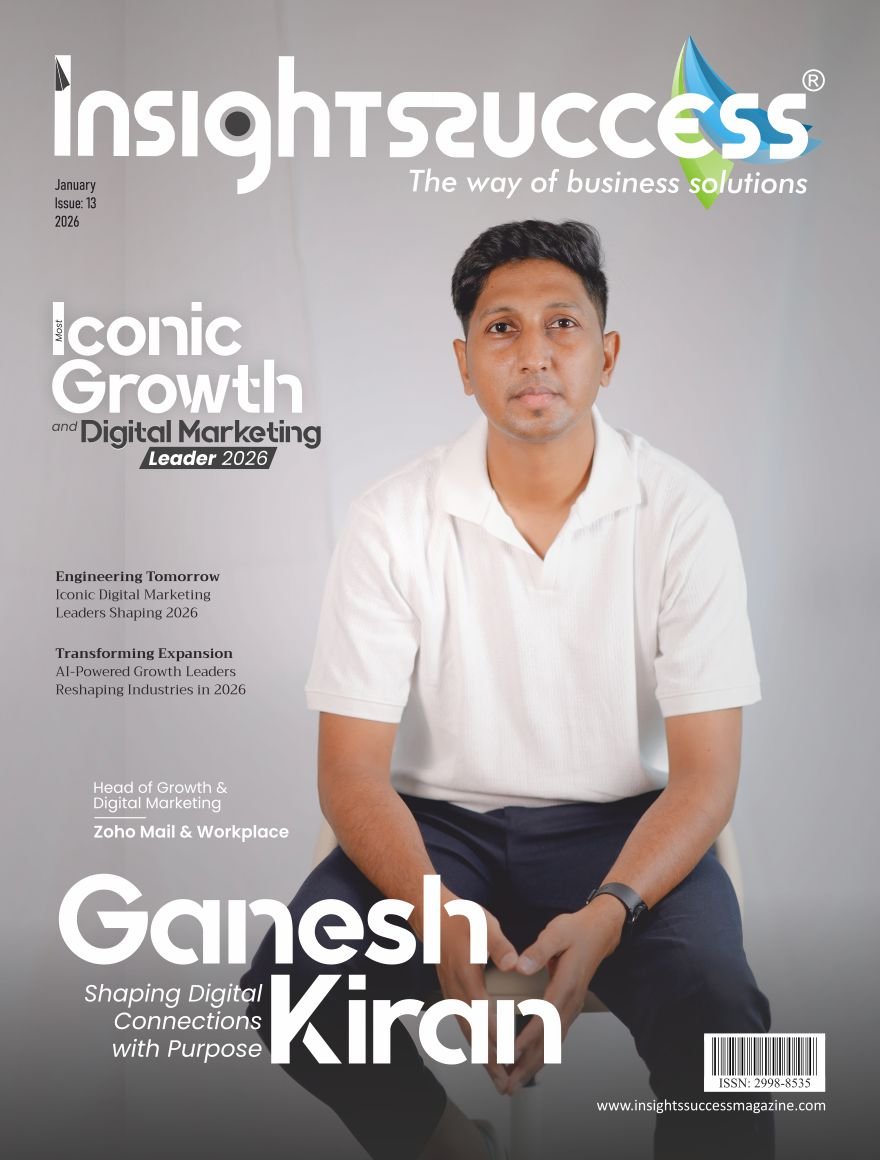
Most Iconic Growth and Digital Marketing leader 2026
Most Iconic Growth and Digital Marketing leader 2026 Ganesh Kiran’s journey from Thiruvannamalai to leading growth and digital marketing for Zoho Mail and Zoho Workplace reflects purpose-driven leadership. With deep expertise in data-led strategy, storytelling, and customer-centric execution, he exemplifies how curiosity, persistence, and meaningful engagement can create global impact. Digital Link Quick highlights Quick reads

Engineering Tomorrow: Iconic Digital Marketing Leaders Shaping 2026
In the ever-evolving field of digital marketing, there have always been leaders who have outperformed others. These are the innovators whose influence goes far beyond their own companies. Such individuals do not merely implement winning campaigns, they also define the way the industry operates, raise the bar for how to attract and engage the audience, and ultimately affect the worldwide shift of digital marketing. Their work permeates all aspects of business, including the development of new content and social media practices and the introduction of the newest technologies that will revolutionize the communication of the brand with the audience. As the digital world has become technologically disruptive due to new technology, such as artificial intelligence, machine learning, advanced data analytics, automation, and immersive technology experiences, including the use of augmented and virtual reality, the issue of leadership in digital marketing has become complex and multi-dimensional. Leading Global Visionaries Gary Vaynerchuk (Garyvee) is a digital marketer with more than 10 million followers and one of the most influential in the industry, with an extensive understanding of the social platform and content ecosystems, thus becoming the source of information to numerous marketers in the world. Vaynerchuk incorporation is more culturally aware in general and tactical since it has footprints on LinkedIn, Tik Tok, YouTube, and podcasts. His unrelenting focus on context, creativity, and community interaction still impacts the way the brands are building online audiences and developing content that is generational and has universal appeal. In the immediate aftermath of global reach is Neil Patel, a prolific marketer who has knowledge of SEO, growth hacking and analytics that are foundational in digital strategies. The wealth of content that Patel has created in the form of blogs, webinars and training programs remains an educational and empowering source to marketers who want to achieve quantifiable, data-driven growth. His theory of integrating strategic content and strong analytics has enabled companies to grow organic traffic and come up with sustainable digital marketing behavior. Seth Godin is another longtime player in the field whose radical concepts in the areas of permission marketing and brand storytelling have crossed platforms to become fundamental tenets of most digital practitioners. The emphasis of meaningful relationships, ethical interactions and outstanding products by Godin compel the marketer to abandon the conventional methods in search of more substantial connections with the audience. Next-Gen Strategists Though there are still well-known names that drive the general discussions, new strategists are transforming the way digital marketing is being delivered in the field. India has had a number of professionals like Tariq Mushtaq Khatri who have attracted attention through their creative modes of engagement and their record-breaking methods of digital interaction. The accomplishing of high levels of engagement and providing cost-effective performance by Khatri is the potential of the increasing influence of the localized expertise in the global marketing discourse. Likewise, the presence of strategists such as Dhananjay Vishwakarma who are at the interface of AI and marketing is the new generation of leadership who combine technical innovation with strategic implementation. Old players like Hareesh Tibrewala, Joint CEO at Mirum India, are still extending the limits of digital transformation and marketing automation. The leadership of Tibrewala towards new technologies and consumer behavior provides an orientation to marketers aiming at the implementation of AI application, the experience of augmented reality, and the development of data ecosystems. His worldview emphasizes the importance of marketers striking a balance between the application of innovative technology and strategic human understanding. These new and established leaders highlight a bigger trend in digital marketing, that winning is more a question of how to adapt, change, and innovate faster than others. Tech-Driven Strategy The digital marketing leaders who influence the future have a key insight in common: they realize that technology by itself does not create value without a human, centered approach. With the proliferation of AI, the process of automating activities, campaign optimization, and content creation, the skill of marketers is restructuring to become more of a high-order work. This involves the knowledge of customer psychology, the ability to create stories that are believable and the ability to use data in a way that is ethical and transparent. In this regard, digital marketing leadership is not necessarily characterized by the number of followers or the reach of the platforms anymore. It involves the skill to lead teams in the face of fast technological change, predict audience behavior change, and make decisions based on obvious business results. By mentorship, publication, or even community participation, the most influential leaders are the ones who make the whole profession great. In the future, marketers inspired by these legendary figures and new generation strategists will find it easier to navigate through the world that will be mainly agile, creative, and ethical. Conclusion The digital marketing leaders of 2026 still inspire the industry with their extraordinary mix of foresight, knowledge, and adaptability. This group of leaders includes the influential as well as least known with the latter being the ones that are defining the future of digital marketing. Their strategies, knowledge, and far-reaching influence serve as a manual for marketers who are working in a context of fast changes, diverse audiences, and even more evolving platforms. Not only do they point out the necessity of technical skills in the digital era, but they also reveal the need for a human-centered approach. In fact, it is through their journeys that companies are able to identify, imitate, and even implement the methods and the innovations of the pioneers. Read Also : How Work Really Gets Done

Ganesh Kiran: Shaping Digital Connections with Purpose
From a small town called Thiruvannamalai in Tamil Nadu, India, Ganesh Kiran’s journey is proof that passion can shape destiny. Starting with nothing but curiosity and a desire to understand the digital world, he transformed that early passion into a powerful career that now heads growth and digital marketing for Zoho’s trending products — Zoho Mail & Zoho Workplace. What began as interest evolved into expertise, and that expertise grew into leadership. Today, he stands as a testament to how small-town beginnings can lead to global impact when passion meets persistence. Every successful Digital marketer starts with a story, not a campaign. Ganesh Kiran’s adventure began long before he oversaw Head of Growth & Digital Marketing at Zoho Mail & Workplace growth & digital strategy. What started as an interest in understanding how people engage online has turned into a strong desire in connecting brands with audiences in ways that seem personal and purposeful. His journey has been one of consistent growth and reinvention. He has witnessed the internet world evolve from banner ads and simple SEO to today’s dynamic, data-driven ecosystems and has adapted to each move. Now, he is applying his knowledge to developing strategies that combine creativity with measurable impact. His work is distinguished by smart storytelling, perfect execution, and the conviction that genuine engagement always outperforms noise. His approach mirrors his philosophy that digital marketing isn’t about being everywhere, but about being meaningful where it counts the most. His career exemplifies the premise that success in digital marketing stems not from following trends, but from understanding people, their behaviours, goals, and trust. Through this lens, he continues to shape the firm’s digital presence with intention, integrity, and intelligence. From Affiliate Marketing Dreams to Digital Marketing Reality Ganesh’s story begins not in a boardroom, but in a college dorm room. As a Computer Science engineering student, he discovered affiliate marketing and started earning online, a spark that would ignite a 15-year journey through the digital & growth marketing landscape. What began as a small experiment soon became a crucial source of pocket money — especially important for a middle-class family where every contribution mattered. Ganesh pursued his studies through an educational loan, and the income he earned through affiliate marketing helped ease financial pressure at home. In search of ways to increase his affiliate income, he began exploring every possible channel — learning SEO, experimenting on social media platforms, writing guest comments, and understanding how different online mediums worked. This is where the real spark began. His curiosity turned into consistency, his efforts turned into results, and his passion slowly transformed into a career path that would define the next decade of his life. This early experimentation taught him something crucial: digital marketing isn’t just about understanding platforms; it’s about understanding human behaviour at scale. Digital marketing opened up a new skill set for Ganesh, helping him think not just like a marketer, but like a growth leader who understands funnels, user behaviour, and business impact. When he stepped into his first professional role in 2010, he carried just ₹4,000 as his salary and an insatiable curiosity to learn. “I started my career in a small startup, which gave me the opportunity to work across every layer of digital marketing,” he recalls. That startup environment became his laboratory, where he immersed himself in SEO, SEM, PPC, and content marketing. Social media marketing was just emerging, and Ganesh saw it as an advantage rather than a challenge, an opportunity to experiment without predetermined rules. By 2011, he had joined an Australia-based company, managing multiple international clients. This role expanded his perspective dramatically. He wasn’t just executing campaigns; he was building growth strategies that spanned continents. More importantly, he learned to see beyond the traditional boundaries of digital marketing. “Even in the early stage of my career, I realized that growth isn’t confined to running ad campaigns, SEO, traffic, and lead generation alone,” he explains. While managing client projects, he found himself discussing product features, suggesting improvements for customer retention, and identifying cross-selling opportunities. His clients valued these proactive contributions, transforming simple marketing engagements into long-term growth partnerships. The Growth Chapter: Expanding Skills, Scale & Strategy In 2014, Ganesh entered Zoho, a defining chapter that would test and refine his strategic capabilities at a global scale. He made it his mission to continuously adopt new technical skills and stay ahead of every shift in Google’s algorithms, SEO skills and SEM advertising features. Each update became an opportunity to innovate, test, and deliver measurable growth. He began implementing everything he had learned during his early startup days — from hands-on SEO execution to campaign structuring, cross-channel optimization, and full-funnel thinking. The agility and multitasking mindset he developed in startups became a strong advantage as he started handling large-scale responsibilities. He also gained exposure to new-age strategies such as enterprise SEO, SEM at global volume, email marketing automation, tools usage, multi-region coordination, and market-specific execution frameworks. Today, as the Head of Digital & Growth Marketing for Zoho Mail and Zoho Workplace, Zoho’s fastest-growing SaaS products worldwide, he oversees a complex web of marketing initiatives spanning SEO, SEM, performance marketing, lead generation, content strategy, budget allocation across all channels, customer retention, automation, regional coordination and full-funnel growth. His expertise blends data-driven precision with creative execution, a combination that has driven significant product growth across multiple markets. Stay passionate, stay dedicated, and stay curious about improving your output every day — when you focus on growth, your organisation will take care of yours. The Philosophy: Data Meets Human Intuition When you ask Ganesh about his approach to digital marketing, he’ll tell you it’s rooted in a simple practice: stay updated, stay curious, and stay experimental. “I make it a daily habit to stay updated through industry news, blogs, and videos, while continuously experimenting with new ideas,” he shares. His approach has always been anchored in data; he relies on performance insights, explores emerging tools, and recently, AI-powered solutions have become instrumental in