






Moneera A. Alzubairi: Creating Sustainable, Socially Responsible, and Wise Leadership
Moneera A. Alzubairi: Founder of Baseera Coaching & Training ‘Why do some leaders awaken the human spirit, while others diminish it? This question laid the foundation of ‘Moneera A. Alzubairis hidden interest and passion for the leadership field. Her transition into professional coaching was a natural unfolding shaped by lived experience, deep inquiry, discernment, and a growing sense of responsibility for human and societal impact, which unleashed the giant wisdom within her. Generally, Moneera has a lifelong habit of being contemplative and curious, asking ‘WHY’ questions —with the intent to learn more rather than judgment. This was prevalent most in her first work experience when she encountered two very different leadership styles—one rooted in stewardship and trust, and the other was transactional leadership. As an employee, then, Moneera immediately sensed the difference in her motivation, creativity, and well-being. This contrasting experience sparked a lifelong inquiry into what makes leadership truly human-centered and life-giving. Several defining experiences—what she considers turning points and blessings—collectively shaped Moneera’s philosophy and current practice: Multicultural upbringing cultivated my growth mindset Living and interacting with diverse cultures from early childhood—across Asia, Europe, and the Middle East—profoundly shaped her discernment and worldview. “Growing up across multiple cultures gave me a deep growth mindset and curiosity about human and leadership behaviors. This exposure, combined with principles instilled by my parents, especially my father’s encouragement to think differently and think big, cultivated curiosity, creativity, empathy, critical thinking, and flexibility to respect various perspectives.” “Motherhood: is the source of wisdom (phronesis) in my life journey.” Motherhood was my mother nature’s profound leadership teacher, identifying how motherhood and wisdom leadership share common core elements like care, connection, organic growth, accountability, presence, role- modeling, and sustainability.” They both have a significant influence on shaping culture in families or organizations. Motherhood is about creating a nurturing environment to serve the growth, resilience, and long-term development of children who will, in turn, lead their lives and potentially others’ lives. Resembling regenerative and adaptive leadership- important pillars of wisdom leadership- that encourage organic growth in organizations to support engagement, resilience, and talent retention. Yemeni Business Club (YBC): “Awakening my hidden leadership potential.” Moneera’s work at the Yemeni Business Club (YBC) was a major career turning point, where her own leadership capabilities were unlocked within a nurturing leadership environment. Guided by YBC’s Board (2012-2014) supportive leadership, which trusted her capabilities in leading several successful projects with various international organizations. At the top of the list of these endeavors was launching the Yemeni Institute of Directors (YIoD) in cooperation with the International Finance Corporation (IFC). Moneera says she had the privilege to be the cornerstone of establishing this excellent institute and leading the efforts to its success and sustainability. Later on in 2016, she had the honor of sitting on YIoD Board for seven years. This enriching opportunity was an eye-opener for her about the significant role leadership can play in the success or failure of family businesses, which are dominant in the MENA region. “Actually, I adore the nature of family businesses, an asset that has to be preserved throughout generations. If they are well led and governed, they stay resilient even during disruptive times.” Reinforcing her belief that coaching is pivotal for family businesses to navigate their challenges associated with succession, emotions, and values, which are central to the alignment, success, and sustainability of these businesses. This also ignited Moneera’s passion to establish Baseera Coaching & Training, introducing wisdom leadership coaching to respond to today’s complex, unpredictable, and incomprehensible world environment. Conscious choice to pursue executive leadership coaching (2019–2022) During Covid-19, a period of global disruption and reflection, Moneera became deeply aware that leaders are not neutral actors; they actively shape organizational cultures, families, communities, and societies, either positively or negatively, depending on their level of awareness, wisdom, and emotional maturity. Therefore, she made a deliberate decision to pursue executive leadership coaching, becoming a Master Certified Intelligent Leadership Coach®, by John Mattone Global (JMG), Inc. John Mattone is the number #1 executive coach in the world for seven years, and he was the personal Coach of the late Steve Jobs. “I chose to invest in this certification because John Mattone positions executive coaching as a measurable business investment, not a discretionary development expense.” His research and work with Fortune 500 leaders, and in the Middle East, show that coaching delivers ROI by strengthening inner-core leadership capabilities that directly influence organizational outcomes. This certification was transformational to Moneera’s understanding and passion for the leadership field. “Finally, all this answered a lifelong question I had carried: Why are some employees energized and fulfilled, while others feel disengaged and soulless?” The answer was clear: change begins within. Leadership effectiveness is all about who you are as a human first, and who you are as a leader second. Virtually, leaders’ behavior on the outside is merely a direct reflection of the leader’s inner story—values, beliefs, emotional patterns, and consciousness. Actually, all of the above experiences and factors compounded and crystalized to the establishment of Baseera Coaching & Training. So, Moneera would like to pose this question: “Have you ever asked yourself and reflected on … Who am I as a leader?” Baseera Coaching & Training: The Art of Wisdom Leadership Baseera Coaching & Training introduces wisdom leadership, a people-centered approach to growing leaders organically from within, by inspiring a shared vision and helping others to grow as leaders through creating a nurturing, serving and supportive environment. Leading, coaching, and facilitating the growth of future leaders and talent development. “Great leaders create more leaders, not followers.” ― Roy T. Bennett. Emerging as a response to today’s complex, paradoxical, and fast-changing environment to meet the followers’ urgent need for connection and hope especially more among the youth. Wisdom leadership coaching supports leaders’ transformation, helping them simplify and respond to today’s complex environment. Wisdom leadership philosophy is all about promoting well-being and balance. Well-being is about purpose and finding meaning in what we do, awareness, connection, and insight. The four pillars of

Professional Coaches to Follow for Startup Success
Aspiring Entrepreneurs Entrepreneurship has been an area that demands strength, creativity, and the capacity to be moved by the ever-changing environment. Nonetheless, the contemporary startup environment has never been more complicated than today, due to the fast-changing technologies, international rivalry, and the new workplace cultures. Innovation will be an expectation of aspiring entrepreneurs along with effective team leadership accompanied by a firm set of values and purpose. In these regards, professional coaching to emulate has turned out to be a significant approach to founders who require a sense of direction and leadership. Many successful entrepreneurs turn to professional coaches to follow to refine their thinking, strengthen decision-making, and navigate uncertainty. Coaches tend to come along with years of experience in their interaction with executives, founders, and organizations. Entrepreneurs can use their suggestions to avoid the most typical traps when forming sustainable habits of leadership. More coaching methods are shaped by the rising discipline of conscious leadership coaching 2026 that focuses on ethical leadership, self-knowledge, and the long-term effects. The Role of Coaching in Entrepreneurial Success Establishing a startup is not an easy task. Entrepreneurs have had to deal with financial uncertainty, product development issues, competition in the market, and team dynamics at the same time. Mentorship and coaching are very valuable in such a complicated setting. Following professional coaches to follow provide entrepreneurs with practical insights into leadership, productivity, and strategic thinking. There are numerous coaches who post lessons online, in books, or podcasts, and this enables the founders to obtain lessons in the perspective of coaches without the need to be formally engaged in a coaching session. Their advice is mostly mindset-oriented, decision-making, and resilience-based qualities that are needed to succeed in a startup. At the same time, the leadership expectations have changed. Founders are feeling the pressure to demonstrate their capacity to behave ethically and socially responsibly to investors, employees, and customers. This change has helped in the development of conscious leadership coaching 2026 which promotes leaders to ensure that business growth is more purposeful and more integrative. Influential Coaching Approaches for Entrepreneurs A number of the most established coaching models are known to assist business owners and managers in formulating efficient leadership approaches. These are the strategies that have been frequently advised to the upcoming founders who need advice. Certain programs are devoted to performance psychology, strategic thinking, and personal transformation, teaching entrepreneurs to be resilient and confident at difficult stages of business development. Some of them focus on behavioral change and continuous improvement and advise leaders to recognize what habits can impede professional development. Coaching based on mindset and leadership psychology assists the founder in establishing an objective mission and purpose prior to scaling the business. The research on vulnerability, courage, and trust can be integrated into the leadership development frameworks that can help leaders learn about the role of emotional intelligence in building strong cultures among the team. These approaches, shared by many professional coaches to follow, are frequently cited as valuable for entrepreneurs because they combine research, practical experience, and accessible teaching methods. Conscious Leadership in the Startup Era Entrepreneurship is becoming more inclusive regarding the notions of responsible leadership and organizational culture. Conscious leadership coaching 2026 embodies this change of more conscious and value-based business practices. This model of coaching helps entrepreneurs become self-aware, empathetic, and accountable. Conscious leadership does not only concentrate on financial expansion since it is a practice of creating organizations that place a priority on the welfare of the employees, making ethical decisions, and being sustainable in the long run. These principles are especially useful in the case of startup founders. Even the earliest leadership habits tend to define the company culture in the years to come. By learning from professional coaches to follow who emphasize conscious leadership, entrepreneurs can build organizations that balance innovation with social responsibility. Learning Through Digital Platforms and Communities Coaching knowledge is as accessible in the digital age as never before. Entrepreneurs can follow professional coaches to follow through podcasts, webinars, online courses, and social media platforms. These resources offer founders a chance to engage in lifelong learning and might otherwise lack entry to conventional mentorship networks. Numerous coaches communicate useful information on the topics of leadership, productivity, and team development using digital materials. This accessibility allows aspiring entrepreneurs to stay informed about emerging leadership trends, including conscious leadership coaching 2026, without committing to long-term coaching programs. Building a Coaching-Informed Entrepreneurial Mindset Following the insights of experienced professional coaches to follow helps entrepreneurs develop a stronger leadership mindset. Through the analysis of various coaching views, founders are exposed to approaches to problem solving, communication, and personal development. Equally important is the emphasis on self-awareness promoted by conscious leadership coaching 2026. The entrepreneurs who develop reflective leadership tendencies tend to create robust teams and make more considered strategies. After all, the ability to lead with decisiveness, strength and intentions is essential to the success of startups, in addition to innovative ideas. In mastering the proven coaching models and adopting the contemporary leadership models, future entrepreneurs will be in a better position to be ready to face competition and the pressures of their future sustainable business ventures within the present competitive business world. Read Also : Transforming Analytics into Actionable Strategy

From Knowledge Transfer to Wisdom-Based Coaching
A Paradigm Shift The coaching industry is undergoing tremendous change where organizations redefine learning and development of leaders. During decades, leadership development was concerned more with the knowledge transfer. Coaches and consultants give frameworks, tools, and strategies that are aimed at assisting the executives to perform and solve problems more effectively. Although these approaches allowed numerous professionals to acquire an invaluable number of professional skills, contemporary leadership issues demand more advanced skills than pure knowledge can offer. As a result, a new approach known as wisdom-based coaching is gaining attention in leadership development. Unlike traditional models that emphasize delivering solutions, wisdom-based coaching focuses on cultivating insight, reflection, and contextual judgment. The modern-day leaders work in an environment where there is high change in technology, competition on the global scene, and high stakeholder expectations. Under these circumstances, the skill of being able to use knowledge wisely becomes more significant than that of gathering information. At the same time, innovative approaches such as somatic executive coaching 2026 are expanding leadership development by integrating cognitive understanding with emotional and physical awareness. Limitations of Traditional Knowledge-Based Coaching In the traditional method of coaching, the coach was an expert, and he gave advice to the clients and steered them in each system. The overall outcome was to elevate the problem-solving ability and managerial performance. Nonetheless, this model does not always take the inner factors that determine the behavior of leadership, such as personal values, emotional responses, and unconscious habits. This limitation has encouraged the emergence of wisdom-based coaching, which shifts the focus from instruction to reflection. In this style, the coach is hoping that leaders will be able to study their experiences, assumptions, and motivations. The Rise of Embodied Leadership Awareness The next significant trend that favors this change is increased attention to embodied leadership. Leadership has been conventionally considered a cognitive process with a focus on planning and analysis. Nevertheless, there are psychological and neuroscience studies that indicate that emotions and bodily conditions have a strong impact on decision-making and interpersonal communication. These insights have contributed to the rise of somatic executive coaching 2026, an approach that highlights the connection between the body and leadership behavior. In somatic executive coaching 2026, coaches help leaders observe physical signals such as breathing patterns, posture, and muscle tension. These cues are usually emotional reactions to stress, ambiguity, or confrontation. Being aware of such body cues helps leaders learn how they respond to pressure. As an example, when one realizes that their shoulders are tight or breathe very fast when in a difficult conversation, then that may be an indication of anxiety or defense. Once leaders are aware of such signals, they are able to pause and control their reactions and be more thoughtful. Embodied awareness can supplement the philosophy of wisdom-based coaching, which sees the development of leadership, in thought, emotion, and physical presence. Leaders who are conscious of their mental health, as well as physical reactions, tend to be more composed, empathetic, and clear in complicated circumstances. Why Organizations Are Embracing Wisdom-Centered Coaching There are several reasons explaining the growing interest of wisdom-based coaching as a leadership development approach by organizations. Among those is the growing complexity of organizational environments. The executives need to negotiate through a technological upheaval, cultural diversity, and the changing expectations of the society and still sustain performance in the organization. These obstacles usually demand leaders strike a balance between conflicting priorities and put into consideration long-term consequences. The use of holistic approaches to development is also becoming popular in professional learning. Ideas derived in the context of mindfulness research, emotional intelligence research, and behavioral psychology have placed the significance of self-awareness and emotional control on leadership effectiveness. Somatic executive coaching is now a viable practice within this wider movement, designed to assist leaders in bridging the gap between intellectual knowledge and emotionality as well as physical consciousness. The Evolving Role of the Executive Coach Wisdom-based coaching is also a response to shifting perceptions regarding the coach role. Instead of being a coach with the main role of an advisor, the coach becomes a reflector and a learner facilitator. The coach will assist those leaders to find their insights through active listening and asking critical questions. It is a process that promotes individual thinking and enhancement. In most coaching interactions, somatic executive coaching 2026 also adds to this process by attracting attention to body signals that can affect leadership behavior. It is possible to notice, during talks, posture, breathing, or other gestures, the patterns of emotions that a leader may not be aware of. The Future of Coaching and Leadership Development The rising trend of wisdom-based coaching is an indicator of a significant change in the field of leadership development. Contemporary organizations need leaders who can find their way through the dark clearly, compassionate, and thoughtful. Knowledge is still necessary but the skill to analyze and use the knowledge intelligently has become important too. Coaching is becoming more of a holistic and transformative means of developing leaders today by incorporating reflective learning and embodied awareness in the form of somatic executive coaching 2026. Read Also : Transforming Analytics into Actionable Strategy

Government Launches Workplace Reforms to Help Women Thrive at Work
Prime Highlights The government has launched new action plans to reduce the gender pay gap and improve menopause support in workplaces ahead of International Women’s Day 2026. The initiative aims to remove barriers at work and help women grow in their careers while creating fairer workplaces. Key Facts Employers with 250 or more workers will be encouraged to publish the steps they are taking to reduce the gender pay gap and support employees experiencing menopause. The plans are part of the Employment Rights Act 2025, which also strengthens protections for workers, including pregnant employees and women returning from maternity leave. Background: The government has launched new action plans to reduce the gender pay gap and improve menopause support at work. The announcement comes ahead of International Women’s Day 2026 and shows the government’s aim to make workplaces fairer for women. The plan encourages employers with 250 or more workers to publish the steps they are taking to reduce pay differences and support employees going through menopause. The guidance, released this week, calls on businesses to voluntarily adopt practical measures that promote equality and improve workplace conditions for women. Officials say stronger collaboration between government and businesses will help spread best practices across industries. Bridget Phillipson, Secretary of State for Education and Minister for Women and Equalities, said the action plans aim to remove barriers that stop women from growing in their careers. She added that many women still face unequal pay and a lack of proper support at work, which affects their career progress. According to Bridget Phillipson, the government wants women to be treated fairly and supported at every stage of their careers. Business leaders and advocacy groups have welcomed the move, describing it as an important step toward improving workplace equality. Mary Macleod, Chair of the Women’s Business Council, said the measures could strengthen women’s economic participation while also boosting productivity and innovation across industries. She added that creating fair workplaces is not only a matter of equality but also an important factor for economic growth. Support for menopause in the workplace also forms a key part of the new plans. Mariella Frostrup, the government’s Menopause Employment Ambassador, said many women experience menopause at the height of their careers and often struggle with limited workplace understanding. She stressed that practical support from employers can help retain experienced employees and prevent women from leaving jobs they value. The government will continue working with businesses and experts to support these steps and promote workplace equality and a stronger workforce. Read Also: Apple Inc. Launches $599 iPhone 17e and Upgrades iPad Air With M4 Chip

The Man Who Fights for the Voiceless
Chetann Kishor Patel and the Legal Revolution for Animal Justice. In a nation where compassion often battles convenience, one man has chosen to stand where it is hardest to stand beside the voiceless. From the bustling streets of Mumbai to municipal corridors hundreds of kilometres away, Chetann Kishor Patel has emerged as a formidable and fearless force in India’s animal welfare landscape. An animal lover by heart and an Animals Rights Legal Advisor by profession, Patel is the Founder & Director of Illuminating Hope Foundation (IHF) India An Animal Welfare Core litigation organization, that is quietly but powerfully reshaping how India responds to animal injustice. He does not merely rescue animals. He protects them with the Constitution. Law in His Hands, Compassion in His Heart While many speak about kindness, Patel enforces it. Through strategic legal interventions, representations, and notices, he has secured justice for thousands of community and wild animals. His work bridges the emotional and the institutional ensuring that compassion is not reduced to sentiment, but reinforced by law. His approach is direct, structured, and unapologetically firm: Animal welfare is not optional. It is a legal obligation. The Jaora Stand: When Silence Was Not an Option One of the defining moments of his advocacy came in Jaora, where alarming reports surfaced regarding: Alleged illegal relocation of street dogs The running of an unlawful Animal Birth Control (ABC) Centre Harassment of local feeders Where many would hesitate, Chetann Kishor Patel acted. Legal notices were formally sent to the Collector of Ratlam (M.P), Superintendent of Police of Ratlam (M.P), Chief Municipal Officer of Jaora Nagarparishad (Ratlam District), and the local police station — demanding accountability and lawful compliance. The message was clear: Community animals cannot be picked up, displaced, or confined outside the legal framework. Compassionate citizens cannot be criminalized for feeding. This was not activism for headlines. It was activism for justice. Defender of the Feeders Across India, community animal feeders everyday citizens who ensure that street animals survive often face hostility, misinformation, and intimidation. Chetann Kishor Patel stands as their legal shield. He affirms what the law already recognizes: feeding community animals is not a nuisance; it is a humane act protected within legal boundaries. Harassment of feeders is not a civic order it is a violation. By defending feeders, Patel protects the ecosystem of compassion that sustains millions of street animals. Under Chetann Kishor Patel’s leadership, Illuminating Hope Foundation (IHF) India has evolved into more than an organization — it is a legal movement. Illuminating Hope Foundation (IHF) India works at the intersection of animal protection law, civic responsibility, and constitutional values. From addressing unlawful municipal practices to advocating for proper implementation of Animal Birth Control Rules, the foundation operates with precision and persistence. It is not noise-driven activism. It is result-driven advocacy. Every notice served. Every representation filed. Every illegal act challenged. Each step reinforces one fundamental belief: justice must extend beyond humans. Chetann Kishor Patel represents a new generation of animal rights defenders — strategic, legally equipped, emotionally grounded, and institutionally aware. He understands that real change is not created through outrage alone, but through structured legal action. In him, the movement finds both fire and framework. His Words, His Mission “Compassion is not weakness it is strength guided by responsibility. When we protect animals, we protect the moral fabric of our society. I do not fight authorities; I fight injustice. And I will continue until every voiceless life receives the dignity it deserves.” -Chetann Kishor Patel. In a world that often looks away, Chetann Kishor Patel looks closer. Where systems hesitate, he proceeds. Where animals suffer silently, he speaks loudly and legally. And in doing so, he is not just illuminating hope. He is enforcing it. Read Also : Numeral Group Announced as Exclusive Co-Sponsor of the Global Excellence and Leadership Awards Riyadh 2026
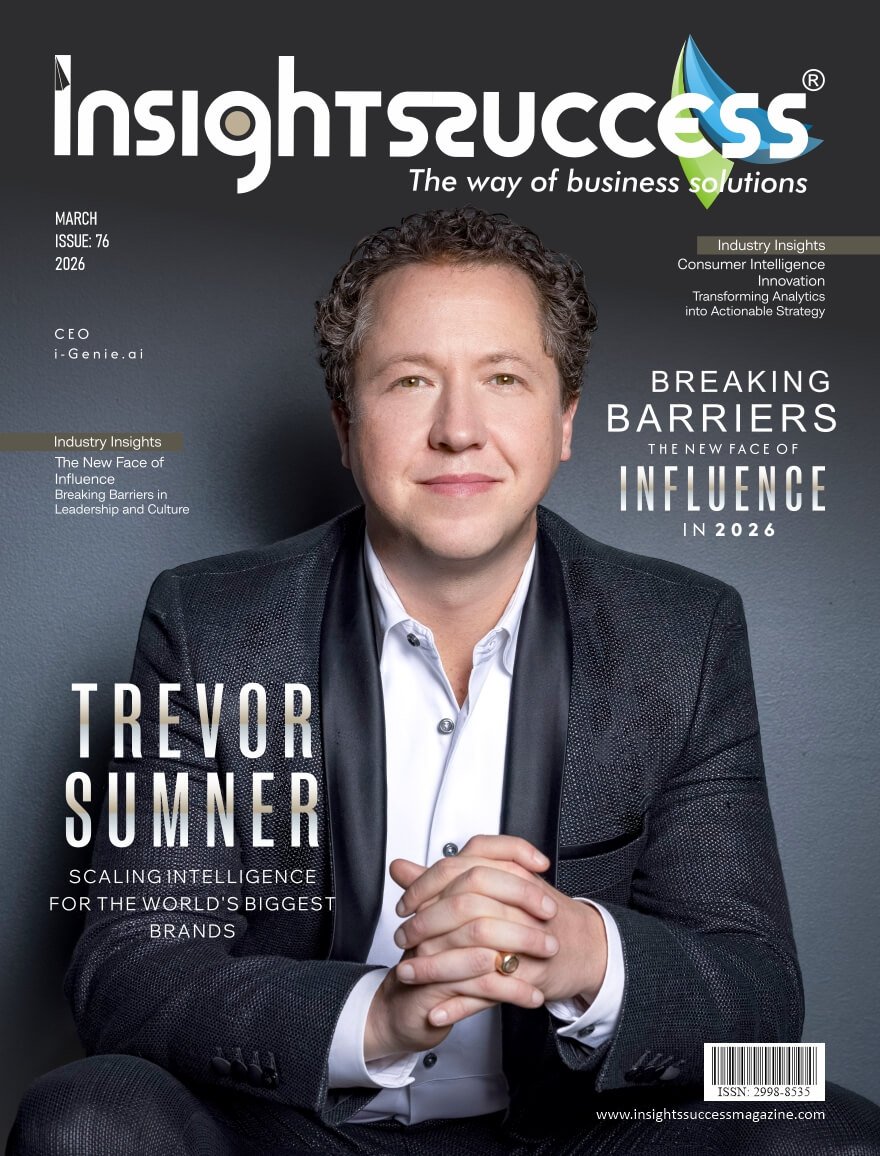
Breaking Barriers: The New Face of Influence in 2026
Breaking Barriers: The New Face of Influence in 2026 A compelling profile of a visionary leader, showcasing their groundbreaking impact, innovative strategies, and cultural influence in 2026. Highlights resilience, leadership, and the power to reshape industries and society. Digital Link Quick highlights Quick reads

Trevor Sumner: Scaling Intelligence for the World’s Biggest Brands
There is a certain kind of person who thrives on pressure, not despite the weight of it but because of what it demands. Trevor Sumner is that person. As CEO of i-Genie.ai, a company reshaping how the world’s largest consumer goods brands understand their customers, he carries the dual responsibility of visionary and executor. He does so without apology and without pause. “Pressure is a privilege,” he says, quoting a friend who offered him those three words during a difficult stretch. He did not flinch at the phrase. He adopted it. It captures, in spare language, the philosophy that has guided him across more than two decades of startup life, from the electric corridors of 1990s in New York to the bleeding edge of artificial intelligence and consumer data. The City That Built Him Sumner grew up in New York City, not as a backdrop but as a teacher. The city’s relentless pace, its tolerance for ambition, its refusal to slow down for the unprepared shaped him early. His father was a veteran of Bell Labs, whose teams-built Unix, C++, and the T1 line, the first commercially viable business internet connection. Technology was not an abstraction in the Sumner household. It was a dinner conversation. He fondly recalls his father taking a part the landline telephone and explaining how it worked, and which parts his father contributed. He graduated with a Computer Science degree from Princeton in 1998, arriving in the workforce precisely as the first internet boom ignited. He joined an eCommerce company that IPO’d. Then came mobile internet in 2000, absorbed by the largest IPO in Canadian history at the time. Internet TV streaming followed in 2005. A youth sports social media network, backed by LeBron James, Peyton Manning, and Derek Jeter, came after that. Each venture added a new layer to a craftsman who was quietly building a masterwork. He reflects, “I grew up with the metabolism of the city that never sleeps, which prepared me for a life of startup entrepreneurship, with everything coming at you all the time.” In 2010, he founded LocalVox with a friend David Pachter, who had asked his console on crafting the idea, sometimes on napkin at a local restaurant in NYC’s meatpacking district. He grew LocalVox, a local, social, and mobile marketing platform designed to drive online customers into physical stores, past one hundred employees and into eight-digit revenues before selling it to the Blackstone Group, where it merged with the largest independent yellow pages in the country. The Intelligence Revolution He Is Leading i-Genie.ai did not begin with Sumner. It began with Stan Sthanunathan, a veteran who led consumer insights at Coca-Cola and Unilever, where he spent hundreds of millions of dollars on surveys, panels, and focus groups to support multimillion-dollar strategic decisions. The problem? The data was broken. Survey fraud runs rampant; researchers estimate that over 40 percent of survey responses are fake. Sthanunathan once received glowing feedback on Hellman’s mayonnaise sales in India, even though Hellman’s was not even sold there. That absurdity sparked a revolution. Sthanunathan, along with co-founder and COO Paul van Gendt, built the People Data Center at Unilever, a precursor to what would become i-Genie.ai. The company’s thesis is elegantly simple: customers do not want to talk to brands, but they talk about brands constantly in reviews, social posts, TikTok videos, Instagram Reels, and Google searches. i-Genie.ai captures those billions of signals, correlates them across channels, and delivers a comprehensive view of what consumers think about every product, every brand, and every trend, often six months before traditional social listening platforms detect a shift. Sumner joined as CEO to scale this vision. Today, i-Genie.ai serves global multinationals including Unilever, Bayer, Coca-Cola, Anheuser-Busch, and Danone. Its flagship products, ImpactIQ, Brand Pulse, Trendspotter AI, and Innov8 AI, give clients the kind of real-time, predictive intelligence that traditional market research simply cannot match. Brand Pulse delivers predictive brand equity tracking at a quarter of the traditional cost, on a monthly cadence instead of quarterly, and tracks unlimited competitors simultaneously. Its correlation to market share sits at 0.75, a figure that commands boardroom attention. Innov8 AI generates new product innovation ideas, scores them against predicted consumer demand, and cuts innovation cycles from 12 to 18 months down to just 2 to 3 months. He describes the company’s growth under his watch, from 20 employees to 80 in a single year, with characteristic candor: “That level of growth is incredible and also uncomfortable.” The Art of Balance, Or the Honest Lack of It Ask Sumner about work-life balance and he answers with the kind of honesty that you rarely encounter in polished executive profiles. He does not claim to have solved the equation. He admits, with a wry self-awareness, that he goes to sleep most nights carrying a laundry list of unfinished tasks, nagging risks, and opportunities he has not yet chased down. What grounds him is smaller and far more powerful. Every night, he puts his two-year-old son to bed, watching the boy smile “cheekily with joy,” and finds the kind of clarity that no dashboard can provide. He plays basketball twice a week, entering what he calls a “flow state” essential to both his physical and mental health. On Sunday nights, he cooks dinner for friends. “If you cook well, you can eat well for the rest of your life,” he says. “Food is my love language.” His wife is a fellow entrepreneur, a detail he mentions with visible pride. They met through The Urban Spelunkers, an underground adventurer club that explored abandoned buildings, subway tunnels, and restricted sites including Tesla’s old laboratory. It is, perhaps, the most fitting origin story for a couple who both chose paths of discovery over safety. “Personal and professional balance is a zen-like but elusive desire, accomplishing great things requires sacrifice. I try to carve out what matters most to me,” he admits. Tested by Fire: The Pandemic Years Before i-Genie.ai, Sumner led Perch, an in-store retail media company

Transforming Analytics into Actionable Strategy
Consumer Intelligence Innovation Consumer intelligence innovation is one of the pillars of companies that tend to be helpful in the current hyper competitive market, to comprehend the evolving preferences and anticipations. Fundamentally, the innovation of consumer intelligence gives organizations the ability to turn divergent data into high-level understanding that can be utilized in product development, marketing efforts, and customer experience improvements. This analytical capability will depend on breaking barriers influence to cause a customary analytical silo to permit cross functional teams to gain access to, interpret, and take action on uniform consumer understanding. Decision makers no longer use history performance as the sole tool to predict demand but make use of real time indicators of the social sites, purchase history, and sentiments of trends to predict demand. This combined strategy does not only enhance agility in operations, but competitive differentiation by developing data-driven innovation and quantifiable business results. Building the Data Foundation Consumer intelligence innovation starts with a well-developed data infrastructure to support data collection at various touchpoints. Contemporary data ecosystems bring together CRM systems, e-commerce interactions, and other third-party consumer panel sources to create cohesive profiles which disclose preferences at both individual and segment levels. This integration is pertinent in breaking barriers influence that hamper a holistic approach of consumer behavior. By removing the data fragmentation in organizations and harmonizing stakeholders in one source of truth, organizations gain more visibility of latent trends and unmet needs. Having this in place, more sophisticated methods of analytics, such as machine learning and natural language processing, are now able to use this base to discern patterns that were previously drowned in noise. The outcome is an enhanced comprehension of consumer incentives that can be converted into strategies of high impact. Translating Insights into Action Once insights are made, transformational consumer intelligence innovation is realized using actionable execution. Successful companies do not produce stagnant reports lying around but integrate intelligence into decision loops of operation where knowledge causes a given behavior. As an example, an AI indicator of heightened customer dissatisfaction with the time of delivery can automatically target logistic interventions or personal messages to customers. This is an example of how breaking the barriers impacts the adaptability of the operations, which is the minimized distance between perception and action. Companies that have mastered this integration can quickly change pricing, product mix, or promotional tactics based on new signs. Finally, the operationalization of intelligence to specific plans makes it more responsive and increases customer loyalty in the age where the expectations are changing by the minute. Cultural Shifts and Organizational Mindset The cultural aspect of consumer intelligence innovation cannot be neglected since it has a direct impact on the valuation and utilization of the insights in an organization. A culture that values inquiry, experimentation, and iterative learning should be established, which motivates teams to look deeper and impart traditionally accepted beliefs. Leadership is an essential contributor towards overcoming obstacles and determining the enduring mentality by encouraging cross-department cooperation and rewarding evidence-based decision making. In this type of environment, teams will be enabled to test their assumptions, quantify results, and optimize strategies without fear. Besides, data literacy can be enhanced at any level, which guarantees that insights are perceived correctly and implemented successfully. Measuring Impact Effectively To measure the impact of the innovation of consumer intelligence, the measure of vanity must be substituted with the measure of the performance of strategic goals. Traditional analytics may tell a volume of traffic or number of clicks; however, the actionable intelligence is gauged by its contribution to revenue growth, retention, and cost savings. With properly defined success criteria that should be set initially, organizations are able to assess whether intelligence-based initiatives are providing anticipated ROI and improve future efforts based on such evaluations. This is a disciplined method that will aid in the breaking barriers influence that will be used to make impulsive decisions that lack evidence. With constant measurement and feedback loops, the ability to continuously improve the process leads to creation of a cycle in which a strategy is not only informed by intelligence but also improved with intelligence as the performance is observed over time. This way, organizations can also be sensitive to the evolving consumer environments and be prepared to change rapidly in case of changing conditions. The Future of Consumer Intelligence Innovation In the future, the innovation trends of consumer intelligence will be influenced by the development of artificial intelligence, privacy-conscious personalization, and distributed information governance. The use of emerging technologies is expected to improve predictive capabilities and strive to fulfil consumer expectations of data use and consent. Companies need to be cautious in shattering walls that affect old ways of doing things that create a lack of transparency and trust in the changing terrain. Through dedication to ethical constructs that facilitate balancing innovation with consideration of individual rights, organizations can develop more innate consumer relationships that are long term. Simply put, consumer intelligence innovation does not involve data accumulation only, but the connections between the insights and the strategic actions that would appeal to people, enable brands and make a significant business change in the rapidly changing world. Read Also : Leading Change in a Low-Carbon World

Breaking Barriers in Leadership and Culture
The New Face of Influence The new face of influence is transforming leadership and organizational culture in a manner that has never been done. Today, leaders no longer only make decisions, but they relate, share and innovate. Formal hierarchies are being replaced by fluid and more inclusive frameworks where power does not exist in a title but rather with the capacity to influence, empower and produce significant change. This change will enable organizations to develop resilient, agile and customer-oriented cultures. The Role of Culture in Driving Influence Culture has come out as a decisive element in creating the new face of influence. Open, participative and adaptive work cultures promote trust, participation and innovativeness in the workplace whereby employees can share their best concepts without fear of discrimination and censorship. The opportunity to cross over traditional boundaries enables teams to work across functions and geographic boundaries and increases the overall impact of teams of people and organizations. Simply put, the most effective leaders who have been found in the recent past are those that use culture as a multiplier of force as opposed to using authority. AI-Powered Retail and the Leadership Shift The technological change, especially AI-powered retail, is transforming the way leaders can influence, both internally and externally. Analytics and consumer insights delivered by AI enables leaders to make decisions that are faster and smarter and deliver personalized experiences at scale. In retail, this refers to the predictability of customer demands and the optimization of supply chain, and the development of seamless omnichannel experiences. The leaders who adopt AI-powered tools are not only enhancing efficiency in their operations but also exert an innovative influence that will be an example of an innovation-driven culture in the entire organization. Breaking Barriers Through Collaboration The new face of influence is tightly connected with teamwork. Leaders foster an organization sharing of ideas, assumptions and solutions by proactively breaking down barriers, whether in an organizational, hierarchical, or technological way. This team spirit promotes innovation and responsiveness, especially in such industries as retail where the trends are changing very fast. This is supported by AI-driven retail systems which deliver real-time data, predictive metrics, and automated insights to drive strategic decisions. Combined, technology and culture of collaboration will help to redefine the concept of leading with influence. Ethical Leadership in the Age of Technology With the inclusion of AI and other emerging technologies in the set of leadership strategies, the issue of ethics becomes significant. The leaders should make sure that the implementation of the AI-powered retail and other data-driven tools should be done in a responsible manner to balance between business objectives and transparency and fairness. The new face of influence dictates that leaders need to be custodians of culture and technology, making the innovations not interfere with ethical practices. The credibility and reach of the influence of leaders can be enhanced by establishing trust and accountability which helps organizations become stronger. Measuring Influence Beyond Authority In the culture of influence, traditional measures of leadership, like rank or tenure, become less important in the age of influence. The modern-day metrics of impact are the capacity to motivate other people to participate, act, and produce concrete results. In the case of AI-based retail, successful leaders that can convert insights into strategic actions based on the data they have will value detectable advantages, which affect consumer satisfaction as well as organizational success. Busting such traditional boundaries will make leadership to be known as a result and not a title. Preparing for the Future of Influence In the future, the new face of influence will be characterized by flexibility, understanding, and technical proficiency. The leaders should keep breaking down disciplinary, geographical, and generational boundaries to design inclusive places that foster talent and innovation. There will also be an increased capacity to make decisions thanks to AI-based retail solutions, as it will allow leaders to predict any change in the market and react in a timely manner. In conclusion, the concept of influence in the modern world is the ability to drive people and technology towards the same goals, sustainable development, and the creation of a culture that would flourish on cooperation and innovation. Conclusion The future of leadership and culture requires organizations to adopt the new face of influence to dismantle the old boundaries and incorporate AI-driven technologies into the decision-making and operations. Innovating, developing, and achieving sustained success by inspiring people through the development of inclusive, transparent, and ethical cultures, leaders can influence them even more than they can influence them with formal authority. Organizations that are able to change will continue to be competitive and culturally diverse in a world where power is gained through doing, understanding, and teamwork. Read Also : Leading Change in a Low-Carbon World

Apple Inc. Launches $599 iPhone 17e and Upgrades iPad Air With M4 Chip
Prime Highlights iPhone 17e launches at $599, targeting the competitive mid-range smartphone market while adding premium features like the A19 chip and Apple Intelligence. iPad Air upgraded with the new M4 chip, signaling Apple’s broader push to strengthen its tablet lineup amid rising demand. Key Facts The iPhone 17e features a 1-inch display, A19 chip, C1X modem, tougher glass, MagSafe charging, and 256GB base storage, with preorders starting March 4 and in-store availability on March 11. The updated iPad Air starts at $599 for the 11-inch model and $799 for the 13-inch version, offering up to 30% faster performance compared to the previous M3-powered model. Background Apple on Monday unveiled a lower-cost iPhone 17e and a faster iPad Air, opening what appears to be a week of hardware announcements. The company introduced the devices as part of a broader product push aimed at both mid-range smartphone buyers and tablet users. The iPhone 17e headlines the launch. The new model starts at $599, placing it below the $799 standard iPhone 17. With this pricing, Apple is targeting the competitive mid-tier smartphone market, where it faces rivals such as Samsung and Google, along with Chinese brands in price-sensitive regions. Apple kept the 6.1-inch display size but added several upgrades. The device runs on the new A19 chip and features the updated C1X modem. It also includes tougher glass, MagSafe charging, and 256GB of base storage, double the capacity of last year’s entry model. The 17e also supports Apple Intelligence, bringing advanced features to a more affordable device. Despite these upgrades, Apple maintained the $599 starting price. Industry watchers see this as a strong value move, especially at a time when rising memory costs have affected smartphone pricing across the market. The company will offer the iPhone 17e in pink, black, and white. Preorders begin March 4, and the phone will be available in stores starting March 11. Alongside the iPhone launch, Apple refreshed the iPad Air. The tablet keeps its design and price but moves from the M3 chip to the more powerful M4 chip. The 11-inch model starts at $599, while the 13-inch version remains $799. Apple said the new processor delivers up to 30% faster performance, along with improved wireless and cellular connectivity. The update follows strong holiday-quarter performance for iPads, with Apple reporting that about half of buyers were first-time users. Reports suggest Apple has asked retail stores to prepare for heavy customer traffic this week, signaling confidence in the new releases. Read Also: Nintendo Moves Toward Stronger Governance with $1.9 Billion Share Plan