






Hall of Fame 2026: The Ones Who Made It
Hall of Fame 2026: The Ones Who Made It Celebrating an outstanding individual whose journey reflects perseverance, excellence, and lasting impact, recognizing achievements that inspire others and set benchmarks for success across industries and professional communities worldwide. Digital Link Quick highlights Quick reads

Alice Shikina: The Peacemaker Who Turned Conflict into a Calling
In a world that has become more fluent than ever in conflict and appallingly inarticulate in resolution, Alice Shikina has structured her work of life around one, radically unconventional premise: that in any conflict, however ingrained, there is the architecture of an agreement. A leader of the Shikina Negotiation Academy, a popular public speaker, mediator, and negotiation coach, she has spent decades transforming that belief into action, one difficult conversation at a time. Her qualifications are as fascinating as her journey. Alice, the daughter of Okinawan immigrants who settled in southern Louisiana, was a classical actor in training, competed in speech on a national scale, studied theatre in Czechoslovakia and finally developed a career in mediation, corporate negotiation coaching and conflict resolution. In 2025, she received the Raymond Shonholtz Visionary Peacemaker Award, one of the most notable awards in the discipline. In 2026, Alice was a Toastmasters Golden Gavel Award nominee. What distinguishes her is the rare quality of someone who has lived with enough intention that even the unexpected chapters read, in retrospect, like they were always part of the plan. From Okinawa to Oakland: A Life Shaped by Movement Alice’s parents immigrated from Okinawa, Japan, arriving in the United States just months before she was born. When she turned five, the family relocated to southern Louisiana, where she grew up as the eldest of four children. From early on, she moved to the beat of her own drum. At seven, she declared she wanted to become an actress. At thirteen, she auditioned at a local community theatre and earned the role of Lucy in the musical Snoopy. It was a small stage, but it confirmed her passion for theatre. By high school, she had channeled that same energy into the speech team, competing nearly every weekend. As a sophomore, she began winning regional competitions in dramatic interpretation and poetry, and earned admission to The Louisiana School for Math, Science and the Arts, one of the few public residential schools in the United States. She enrolled as a junior, majored in theatre, and in her very first year was cast as the lead in The Madwoman of Chaillot. She went on to Miami University, majoring in acting, and in her senior year enrolled in a study-abroad program in Czechoslovakia, immersing herself in theatre history and the Czech language. When the program ended, she stayed to teach English for two additional years, deepening her love for cross-cultural communication. While she was teaching Czech students English, she herself became fluent in the Czech language. She later pursued graduate studies in directing in Honolulu before relocating to the San Francisco Bay Area, the region that would become the home of her most consequential work. “Peace is not only something negotiated between nations; it is something we practice in our everyday interactions,” she notes. Those years of crossing borders, cultures, and languages were quietly building the foundation for exactly that. Finding Her Calling: The Road to Mediation Before building the practice, she leads today, Alice spent nearly a decade as a graphic designer at the American Red Cross. After stepping away from design, she drove part-time for Lyft while reconsidering her direction. The pivot arrived unexpectedly. While searching for a school for her children, she came across a start-up school in San Francisco. She applied for her kids to attend. Not only did she enroll her kids there, she ended up getting a job offer as well. She spent the next three years in the San Francisco start-up world, sharpening her instincts for strategy and relationship-building. When that role ended, it was her partner who redirected her attention, observing that she had a rare and consistent talent for mediating disputes. Until that conversation, Alice had assumed mediation was the exclusive domain of lawyers. A quick search proved otherwise. “I got certified for both mediation and arbitration and started my business,” she recalls. Several years in, she expanded to include negotiation coaching, and the Shikina Negotiation Academy was born. “I like to think of my contribution as bringing more peace to the world, one conflict at a time,” she says, and coming from Alice Shikina, it sounds less like a mission statement and more like a deeply personal intention. Building the Academy: Purpose Meets Entrepreneurship Alice has always carried the heart of an entrepreneur. Before her current success, she made earlier attempts at ventures that did not pan out; each one sharpened her resilience and refining her understanding of what sustainable business-building truly requires. She regards those experiences not as failures, but as essential preparation. “What I enjoy most about entrepreneurship is the challenge of building something from the ground up,” she explains. “There is something incredibly rewarding about starting with an idea and turning it into a functioning, growing business.” Alongside that intellectual appetite runs a genuine love for people. She describes herself as a natural connector, a hub through which individuals, ideas, and opportunities find each other. That quality has proven to be among the most valuable assets in building a practice that depends entirely on trust. The freedom that business ownership affords her, to design her own schedule, travel on her own terms, and work remotely from anywhere, is not a lifestyle preference. It is alignment, a life lived in accordance with the very values she espouses. Navigating the Pandemic: A Pivot That Became a Strength When COVID-19 made in-person gatherings impossible, Alice moved all her mediations online through Zoom. The initial skepticism from clients was understandable. Mediation is an intimate process, and many doubted whether a screen could carry the same weight of trust and presence as a shared room. The reality proved otherwise. Clients no longer had to travel. Scheduling became more flexible. Participants engaged from familiar environments, which often made them more relaxed and forthcoming. She states, “What initially felt like a temporary solution soon revealed itself to be a long-term opportunity. The pandemic accelerated a broader acceptance of virtual communication.” Today, Alice operates exclusively through online

Top Negotiators and Talk & Win Leaders Elevating Communication Excellence
Clear Advantage The skill to negotiate and communicate effectively and powerfully is now a distinguishing factor in the competitive world of the interconnected and fast-paced professional world. Influencers in these spheres are not only good leaders but also shape relationships, spur the innovation process, and deliver sustainable value. The realities of the rise of best negotiators and the increasing popularity of talk and win leaders represent the way these skills are changing the concept of leadership in industries. Redefining Influence in Modern Negotiation Negotiation has developed much beyond the old-fashioned bargaining. The best negotiators today engage in negotiations with a strategic orientation that emphasizes collaborating, being flexible, and creating long term value. They do not only look at getting short term returns but aim at the long-term results that will be of value to all parties, and these will create mutual trust and continued associations. Efficient negotiation is characterized by preparation. This involves the knowledge of the motivations of the stakeholders, expected obstacles, and the creation of adaptable plans. Top negotiators can deal with complicated situations with certainty and accuracy using data, market awareness, and behavioral knowledge. The Power of Persuasive Communication Communication is the key element of effective negotiation. Talk and win leaders are unique because they are able to state ideas clearly, give active listening, and relate to various groups. They do not simply convey information through their style of communication but provide meaning and influence on action. Clarity helps to convey a message without confusion, and authenticity creates credibility and trust. Talk and win leaders are also great storytellers who employ them to make their points interesting and easy to remember. This emotion as well as intellectual power to act increases their persuasiveness in negotiations and in wider spheres of leadership. Building Trust Through Dialogue In negotiation and communication, trust is a very important element. Best negotiators do know that trust cannot be bought; instead, it has to be given to them through consistency, transparency, and respect. Through showing honesty and keeping promises, they create a platform of effective communication. On the same note, talk and win leaders also understand the essence of empathy in communication. Listening and taking into consideration any other opinion, they create an atmosphere in which people feel loved and heard. Not only will the relationships be strengthened, but this approach will result in more effective problem-solving and decision-making. Adapting to a Digital-First World The emergence of online communication platforms has revolutionized the process of communication and negotiation by leaders. Remote working, virtual meetings, and international teams demand a set of different skills to retain interest and clarity. The top negotiators have adapted through perfecting their communication skills in the digital setting to ensure that their messages are effective even in the virtual world. Balancing Assertiveness and Empathy Being able to balance assertiveness and empatience is one of the distinctive features of successful leaders in this space. Best negotiators understand when to be adamant on critical pointers but be ready to accept other options. This compromise enables them to safeguard their interests without jeopardizing their relationships. Similar to this balance is the talk and win leaders who reflect this balance in their style of communication. They share their thoughts without being judgmental and are open to criticism and opposing opinions. The synergy created by such a combination leads to mutual respect and promotes collaborative results. Continuous Learning and Skill Development It does not happen that people become great negotiators and communicators overnight. It involves continuous learning, practicing, and improving. The best negotiators make the investment of achieving their skills by training, mentorship, and experience. They study the negotiations of the past to leave where they can improve and adjust their approaches. On the same note, talk and win leaders constantly improve their communication skills through seeking feedback, watching successful communicators, and testing themselves. This growth dedication makes them stay relevant and effective in the ever-changing environment. Driving Organizational Success The effects of good argumentation and communication capabilities are not limited to personal prosperity. With the help of best negotiators and talk and win leaders, organizations have a tendency to improve collaboration, stronger partnerships, and even achieve better outcomes in the decision-making process. Such leaders foster the culture where free conversation is promoted, and various points of view are appreciated. Their coordination between communication and organizational goals and negotiation strategies also make them ensure that teams are in line with the common goals. This alignment is beneficial in terms of enhancing efficiency, as well as providing innovativeness and long-term development. The Clear Advantage Negotiating skills and the power to talk straight in a world where complexity and competition are only rising is a unique privilege. The examples of top negotiators and talk and win leaders demonstrate how they can use these skills to achieve the meaningful and sustainable success. Read Also : Negotiation Coaches 2026 and Communication Icons Who Made It Crafting Success Stories

Negotiation Coaches 2026 and Communication Icons Who Made It Crafting Success Stories
Winning Tactics Negotiation and communication have become the hallmark of any leader working in any sector in the fast-changing global environment. At the boardrooms up to the grassroots, the power to determine results, convergence of interests and trust-building defines long term success. The emergence of negotiation coaches 2026 and the timeless presence of communication icons who helped transform it into a bigger picture and change the way professionals engage in dialogue, persuasion, and conflict resolution. The Evolution of Strategic Negotiation The current day negotiation is no longer limited to transactional negotiations. Rather, it is an interdisciplinary field that is informed by psychology, data analysis, and stakeholder mapping. negotiation coaches 2026 focus on preparation based on research, scenario planning, and stakeholder mapping. These coaches promote the change toward these adversarial strategies to collaborative models, where value creation rather than the notion of zero sums dominates. The contemporary negotiation techniques incorporate behavioral science to control emotions and predict responses in order to accomplish this. The professionals are trained to identify cognitive biases, capitalize on active listening, and remain calm under stress. Consequently, negotiation would be a problem-solving process as opposed to positional bargaining. Communication as a Leadership Differentiator The timeless nature of clarity, authenticity, and storytelling is emphasized by the impact of communication icons who made it. Communication is not simply about the messages but perceptions and the action. Leaders who have refined the art are able to do vision, crisis management and create alignment in diverse teams. However, clarity helps in the minimization of ambiguity through communication and genuineness helps in the development of credibility. They especially play a part in high-stakes negotiations, where one person can rely on the other to decide the outcome, so the importance of effective communication is that icons who have made it proved to be effective by being simple, emotionally connecting, and cross-channel consistent. Bridging Negotiation and Communication Excellence The convergence between negotiation and communication is a strong synergy, and more and more coaches of negotiation include communication training in their models because they understand that no matter how good the strategy is prepared, it will fail without proper delivery. The tone, body language and time are important in making decisions. Storytelling has become an important component in negotiations. Negotiators can provide a framing of proposals in a compelling story in order to align interests and values of their counterparts. It is not only a more persuasive method since it leads to a more intense engagement and comprehension. Technology and Data-Driven Insights The negotiation practices are changing with advancements in technology. The use of artificial intelligence and data analytics can inform the market trend, the behavior of stakeholders and future possibilities of the outcome. negotiation coaches 2026 can use this technology to improve decision-making and decrease uncertainty. The process of conducting negotiations has also been changed by virtual communication platforms. Although they are convenient and accessible, they demand new skills to be applied to ensure the engagement level and the ability to read between the lines, communication icons who made it adjust to these conditions by perfecting their digital presence and making sure that their messages will be effective regardless of the format they are presented in. Ethics, Trust, and Long-Term Value Both the negotiation and the communication practice have taken ethical consideration as a central concern. It is not an option anymore, but a requirement to maintain relationships and reputations by being transparent, fair and accountable. negotiation coaches 2026 focuses on principled negotiation, in which integrity plays a central role in decision-making. Credibility is a very important currency in negotiations. The establishment and upkeep of trust involve consistency, fairness, and acknowledgment of various viewpoints, and the people who achieved it in communication through their example prove the fact that the most powerful force is based on good deeds. Lessons for Emerging Leaders To be able to negotiate like a professional coach in the future, negotiating coaches 2026 and the achievements of communication icons who did it can teach the aspiring professionals a lot of valuable lessons. Preparation, flexibility and lifelong learning are the primary features of success. The other important skill would be the ability to be assertive and empathetic simultaneously so that everyone would feel heard and valued. These skills cannot be acquired without an active practice and being exposed to different situations. The real world experience, mentorship, and training play an essential role in the creation of efficient negotiators and communicators. Throughout time, individuals can become better at their influence by accepting feedback and by refining their style. Crafting Sustainable Success The meeting of negotiation and communication excellence is the characteristic of the leaders of the modern and future. negotiation coaches 2026 and communication icons who made it are illustrations of how these competencies can be exploited to bring any meaningful results and generate sustainable success. With the constantly changing global environment, the capacity to make sense of complex situations via effective dialogue will always be an asset of leadership. Read Also : How Intelligent Computing Leaders Use Semiconductor AI Solutions to Transform Business

How High-growth Companies Balance Innovation with Regulation
Regulatory compliance and accelerating innovation are often framed as conflicting priorities for high growth businesses. The most sustainable businesses, however, view regulation as a systemic input, not a constraint. Embedding compliance in the growth strategy helps organizations build a more enduring business. Putting compliance at the centre of product strategy Lottoland is a lottery and casino platform which provides a useful example of how this balance can be achieved in practice. Operating within a highly regulated environment, such organisations must continuously innovate in areas such as user experience and platform functionality, while adhering to strict compliance standards. This requires a strategic alignment between product development, legal frameworks, and operational execution — ensuring that growth does not come at the expense of oversight. This is not a new concept in highly regulated industries. Companies that factor in their legal and compliance teams early in the product development life cycle typically have to do less retroactive engineering. It’s often about building in compliance and regulatory feedback up front in the product development cycle to ensure that features that have the potential to be regulated are deemed safe and compliant by regulators before they are released to consumers. Regulatory frameworks that support experimentation The rate at which developments are emerging in the sector is beginning to start to influence regulatory bodies, with moves towards creating testing environments. For example, FCA innovation support in the UK includes regulatory sandbox programmes which give businesses a safe environment in which to carry out the testing of brand new products in real market conditions without risk of regulatory action. Compliant innovation pathways allow for the continuous improvement and development of new developments and innovations without having to choose between their safety and efficacy or their regulatability. Compliance to multiple regulations is a common challenge faced by many organizations dealing with sensitive information. Following a standard like NIST (National Institute of Standards and Technology) Cybersecurity Compliance Framework is a good starting point for many sectors. By implementing NIST regulatory standards, organizations can strike a balance between the required level of security and their desired level of innovation, thereby satisfying both internal and auditing needs. Organisational design as a competitive advantage Where in a company should compliance sit within the organizational chart, and how can compliance fuel, rather than stifle, growth? All the companies consulted had compliance personnel embedded between the Legal department and the rest of the business, usually closer to the Tech or Product departments. Having someone positioned between the compliance checklist and the actual technology implementation helps to reduce bureaucratic hurdles and speed up the time it takes to adapt to changing laws and regulations. According to McKinsey research, companies that run their governance like a core competence may on average deliver higher long-term revenue growth. The reason: fewer stand-downs and enforcement notices, more investor confidence and quicker entry to regulated markets, in many cases. Regulation as a long-term growth signal Companies that frame regulation as a cost may tend to underinvest in the systems required for sustainable growth. But those that factor regulation into their design often end up with more robust products and enjoy greater regulatory, customer, and investor confidence. This is a fundamental distinction between short-term growth and long-term presence.

Dr. Vishwanand Pattar Introduces Companion Leadership as a People-Centric Approach for the Modern Workplace
As organizations navigate an increasingly complex and collaborative work environment, traditional leadership models centered on hierarchy and authority are undergoing a fundamental shift. Dr. Vishwanand Pattar presents an alternative framework which is Companion Leadership, which emphasizes connection, trust, and shared purpose as the foundation of effective leadership. For decades, leadership approaches have largely positioned leaders either at the forefront, directing strategy, or behind teams, driving performance through pressure. However, the rise of knowledge workers, creative professionals, and collaborative teams has redefined expectations. In this evolving landscape, leadership is no longer defined by control, but by the ability to build meaningful relationships and enable collective success. The Lantern Bearer: A New Leadership Paradigm At the core of Companion Leadership is the principle that leaders should “walk beside” their teams. Dr. Pattar illustrates this concept through the metaphor of the Lantern Bearer. In this model, a leader carrying a lantern is walking alongside the group rather than ahead or behind. The lantern does not dictate direction but provides clarity and safety, allowing individuals to navigate their own paths with confidence. This approach repositions the leader as a partner in a shared journey rather than a distant authority figure. The Seven Pillars of Companion Leadership Companion Leadership is structured around seven foundational principles that foster trust and collaboration within organizations: Presence: Leaders remain visible, accessible, and actively engaged, demonstrating attentiveness to the day-to-day realities of their teams. Trust: Built through transparency and consistency, trust establishes psychological safety within the organization. Empathy: Understanding the human dimension of performance enables leaders to support both professional and personal well-being. Shared Purpose: Aligning individual motivations with organizational goals enhances clarity and engagement. Co-Creation: Collaborative problem-solving encourages innovation through collective intelligence rather than hierarchical decision-making. Growth: Leaders act as mentors by providing guidance and opportunities that support individual development. Celebration: Recognizing progress and collective achievements strengthens motivation and reinforces a sense of belonging. The “House of Companionship” Framework Dr. Pattar further conceptualizes the ideal workplace as a “House of Companionship,” a living framework that integrates cultural and structural elements of leadership. In this model, trust and shared meaning form the foundation. Presence and empathy serve as the pillars that support the structure, while values and clearly defined boundaries act as protective walls. Within this environment, dedicated spaces for joy, reflection, growth, and healing contribute to both emotional and intellectual development. The roof represents a shared vision that unites the organization, while windows symbolize transparency, ensuring that trust remains visible and sustained. A Shift Toward Relationship-Driven Leadership Companion Leadership underscores a broader shift in leadership philosophy. As organizations adapt to rapid change and uncertainty, traditional command-driven models are increasingly insufficient. Sustainable success now depends on leaders who prioritize connection, enable autonomy, and cultivate environments where individuals feel supported and empowered. A Call to Action Dr. Pattar emphasizes that leadership is not defined by authority, but by relationships. By choosing to lead alongside their teams, leaders can create spaces where individuals feel confident to take risks, contribute ideas, and collaborate toward shared goals. In an era shaped by transformation, Companion Leadership presents a framework for building trust-driven, resilient, and purpose-led organizations. Read Also : Manipal Hospital, Salt Lake Hosts Advanced Workshop Featuring Live Transmission of MIS Gynaecological Surgeries by Leading Experts
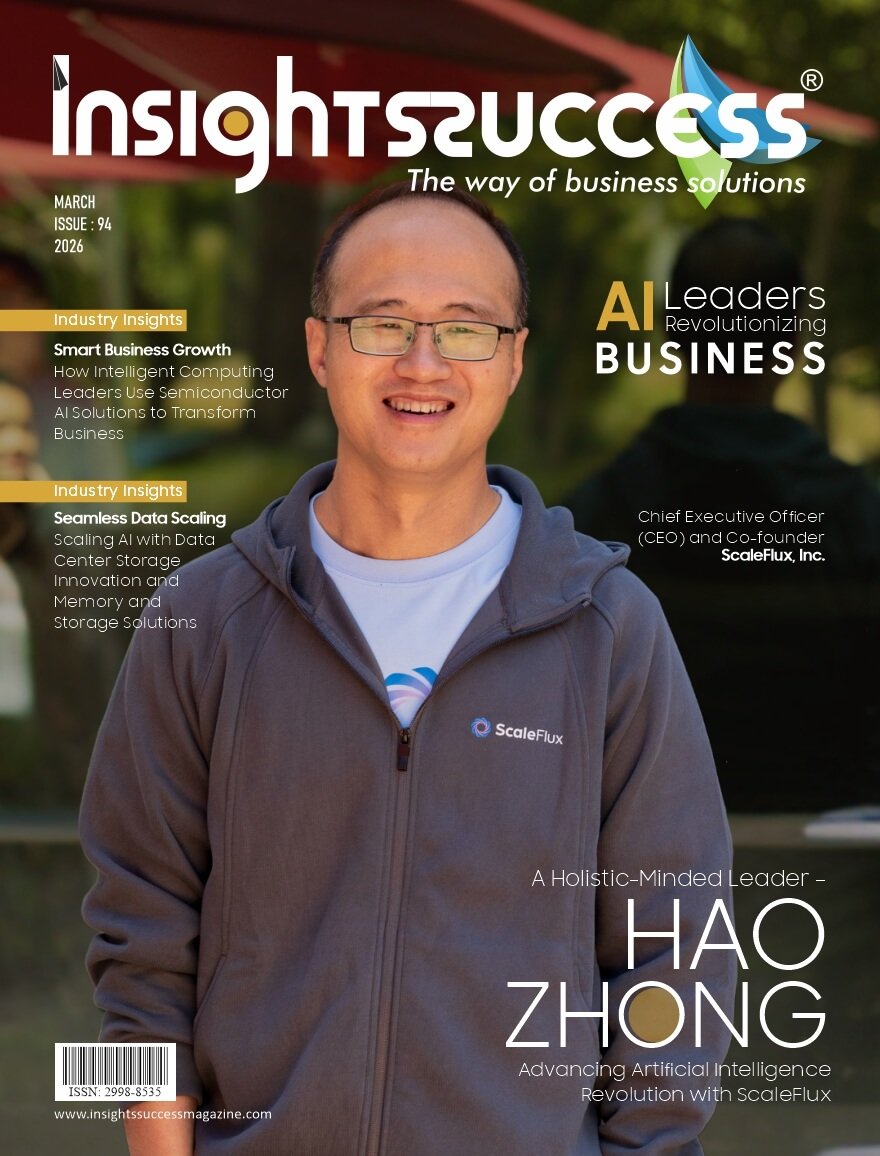
AI Leaders Revolutionizing Business
AI Leaders Revolutionizing Business Exploring visionary pioneers transforming industries through artificial intelligence, this issue highlights breakthrough innovations, strategic leadership, and real-world impact, showcasing how advanced technologies are driving efficiency, growth, and competitive advantage. Quick highlights Quick reads

A Holistic-Minded Leader – Hao Zhong: Advancing Artificial Intelligence Revolution with ScaleFlux
Artificial Intelligence (AI) has swept the current times in its sway by leaps and bounds. In fact, the revolutionary promises and transformational possibilities the entire field has brought are unprecedented. The revamp it caused in everything—be it work, play, business, industry, finance, economics, global supply chains, education, healthcare, military, defence, geopolitics, public and private sectors, and personal and professional areas—is mind-boggling. The astonishing advancements in this exceptional stream of technology are powered by the continuous breakthroughs made by some of the most extraordinary AI leaders, like Hao Zhong, who are revolutionizing the global business horizons. In all the glitz and glamour of this technological marvel, Hao Zhong never lost his focus on the most crucial element of this evolution—data. He always enjoyed innovation, architecture, and product delivery when it comes to data management. Today, as the Chief Executive Officer (CEO) and Co-founder of ScaleFlux, Inc.,Hao Zhong is leading the storage and memory technology trends, specializing particularly in flash memory-based storage solutions and Compute Express Link (CXL) solutions — from NAND devices, SSD and CXL controllers, to storage systems. A Constant Spark of Innovation: AI Leadership of 25 Years With a solid fourteen years of experience with National Instruments, Rensselaer Polytechnic Institute, Broadcom (LSI/Agere), Broadcom (LSI/SandForce), and Fusion-io in engineering and leadership positions, Hao Zhong established ScaleFlux in 2014, in the San Francisco Bay Area. He recalls the time and his own inspiration behind the risk and the opportunity. “The original inspiration came from my experiences in two flash storage pioneers – SandForce and Fusion-io. Those two companies demonstrated how startups with the right innovations can leapfrog the market. My co-founders and I sought to recreate that spark of innovation to generate revolutionary improvements for the data pipeline.” A Holistic Blueprint Those experiences also gave Hao Zhong a view into how hard it is to scale those innovations efficiently and repeatedly over multiple product generations. Those lessons led him to a holistic blueprint for ScaleFlux: (1) a highly efficient, scalable ASIC design approach; (2) a turnkey firmware–software stack (so you’re delivering a whole, validated product—not just a chip); (3) differentiated IP that moves the TCO needle; and (4) rigorous qualification and interoperability across flash, DRAM, CPUs/GPUs/TPUs/DPUs—the whole xPU spectrum. If any one of those pillars is weak, the entire structure wobbles. “That’s been our guiding principle for how we organize the team, run the process, and ship products.” The Core Mission: Building an Ever-Adaptive Computing Infra In the face of constantly shifting industry needs and market dynamics, Hao Zhong states that ScaleFlux’s core mission has remained the same – bring new levels of performance and efficiency to the computing infrastructure through innovation in storage and memory technologies – though both the means to accomplish the mission and the definition of computing infrastructure have evolved. He adds that their initial focus was on computational storage as the means for driving a 10x improvement for data center computing. Computational storage focused on generating efficiency through reducing data movement and distributing processing closer to where data lived. The concept was solid. The example deployments demonstrated massive improvements in application, system, and cluster-level performance and efficiency. But they were highly customized, proprietary, and difficult to scale to the mass market. “We pivoted our thinking to focus on solutions that could combine tremendous benefits with ease-of-use.” This led them to develop bleeding-edge features and capabilities in standards-based NVMe and CXL solutions. Re-architecting their SoC (system-on-chip) controllers to meet the demands of the AI workloads. “The explosion in AI over the last few years is what I meant in my reference to the definition of computing infra having evolved,” Hao Zhong explains. AI workloads and the GPUs they run on operate in a fundamentally different manner from traditional CPU-based infra and traditional enterprise applications. Storage and memory must evolve to support this new style of data consumption. Rearchitecting the Fundamentals ScaleFlux emphasizes rearchitecture of the SSD and memory controllers for the AI infra rather than turning the crank on traditional architectures. When asked how this fundamentally changes performance and efficiency outcomes for customers, Hao Zhong shares that turning the crank on traditional architectures has had the industry stuck in the pattern of roughly doubling performance and power efficiency at each new generation. “We aim to shift this to a 10x or more improvement with the rearchitecture of the SSD and memory controllers.” Delivering revolutionary gains instead of modest, evolutionary gains in storage and memory opens the doors for innovation in applications and massive performance and efficiency gains in the AI infrastructure. “One of the biggest challenges with AI is moving data onto and off the GPUs,” he reveals. Traditional storage and memory controllers, which were designed for traditional CPUs, simply will not get the job done. They need to be rearchitected for massive parallelism and finer-grain data accesses, for pooling of resources across processor clusters, and for greater RAS and security. Turning the crank on traditional architectures has resulted in a widening gap between GPUs’ ability to consume data and storage/memory’s ability to deliver the data. Fixing the Initial Challenges In translating the founding vision into real products, Hao Zhong recalls the challenges. “Early on, we stayed on FPGAs longer than we should have.” It gave them flexibility, “And let us try new acceleration ideas, but customers couldn’t deploy those at a massive scale. When we did our first ASIC, we stuffed it with nice-to-have features and over-scoped for the market.” The fix was to tighten the market investigation loop, sharpen the target customer and use cases, and bring that discipline directly into their holistic chip-plus-firmware process. You see the outcome in subsequent generations: clearer scope, better alignment, faster learning cycles, and more predictable delivery schedules. Interlocking All the Strengths: A Four-Pillared Approach The ScaleFlux team has implemented what they call the “Four Pillars” approach to their development. The pillars are: scalable ASIC design, turnkey firmware/software, differentiated IP, and deep interoperability/qualification. Think of them as the ingredients of a single recipe. Miss the salt, and the

How Intelligent Computing Leaders Use Semiconductor AI Solutions to Transform Business
Smart Business Growth In the modern rapidly changing digital economy, companies are continually under the pressure to be innovative, grow, and competitive. The smart computing leaders at the heart of this change are capitalizing on new growth opportunities by taking advantage of advanced technologies. These technologies include semiconductor AI solutions that are already proving to be a game-changer, by enabling organizations to process data more quickly, make smarter decisions, and drive efficiency in their operations. The Rise of intelligent computing leaders in a Data-Driven World With the increasing data centricity of industries, the leadership positions of intelligent computing leaders has increased tremendously. Not only are these leaders embracing new technologies, they are also transforming the way of doing business. They are establishing responsive and agile organizations that can respond to changes in the market through the application of artificial intelligence along with the high-performance computing systems. Semi-conductor AI solutions are of great role in such a transition. They can provide the computational power needed to support advanced analytics and machine learning, enabling businesses to derive valuable insights on large datasets. This ability will enable organizations to shift away and decide strategically in response and anticipation, rather than reactively. How semiconductor AI solutions Drive Innovation Innovation has become a must, not an option, in order to survive. Semiconductor AI solutions can help a business to speed up innovation by accelerating the processing speed, minimising latency, and improving the overall system performance. These technologies are transforming what is possible in the contemporary enterprises, starting with autonomous systems and moving on to real-time analytics. Smart computing executives are exploring the solutions to simplify the processes, automate routine jobs, and enhance cycles of product development. An example is in manufacturing, where AI-driven semiconductors can predict equipment failures before they happen and this saves time and cost. They allow quicker risk evaluation and detection of fraud in the financial field, making transactions safer. They allow a quicker risk analysis and detection of fraud in the financial sector, making transactions more secure. Enhancing Operational Efficiency and Scalability The best part of semiconductor AI solutions is that they increase the operational efficiency. Businesses are able to allocate resources in the most appropriate way, cut down on energy usage as well as enhance the reliability of systems. Intelligent computing leaders know that efficiency can be measured both in terms of cost cutting and value maximization. Another advantage is scalability. Your computing requirements grow with the business size. Semiconductor AI solutions offer the ability to scale operation without quality of performance being affected. This makes it possible to ensure that organizations are capable of growing in an uninterrupted fashion and continue being highly productive and high quality of service providers. Transforming Customer Experience Through Intelligence Customers have never had more high expectations and companies are supposed to provide customers with personalized and integrated experiences to remain competitive. AI solutions powered by semiconductors are enabling intelligent computing leaders to better understand customer behavior and preference. This will help them develop customized products that will appeal to their target market. Recommendation engines to chatbots: AI-powered technology can boost customer engagement and satisfaction. As a result of analyzing real time data, businesses are able to predict customer needs and respond more efficiently. This does not only consolidate relationships with the customer but also fosters long term loyalty and growth. Overcoming Challenges and Embracing the Future The positive side of semiconductor AI solutions is obvious, but there are challenges to implement them. Organizations need to deal with the problem of data security, integration, and lack of skills. The ability of intelligent computing leaders to overcome these challenges is hugely important by instilling a culture of constant learning and innovation. In the future, the transformation in business will be determined by the innovations in AI and semiconductor technologies. These technologies are still in development and, as a result, their influence will be even greater. Leaders in intelligent computing who respond to these changes will be well equipped to help their organizations enter into a new era of growth and success. Leaders in intelligent computing who respond to these changes will be well equipped to help their organizations enter into a new era of growth and success. Final Words The leaders in the field of intelligent computing are leveraging the strength of AI solutions in semiconductors to create efficiency, improve customer experiences, and grow faster. Change is a constant factor in a world, the most important aspect of success is the capacity to innovate and adapt. Smart businesses that are intelligent, more resiliency, and future-ready will be becoming a reality, thanks to the support of semiconductor AI solutions. Read Also : Scaling AI with Data Center Storage Innovation and Memory and Storage Solutions

Scaling AI with Data Center Storage Innovation and Memory and Storage Solutions
Seamless Data Scaling With the ongoing transformation of industries through artificial intelligence, the need to have scalable and high performance data infrastructure has never been high. Companies are producing and processing immense data, which necessitates a system capable of storing, retrieving, and interpolating data. The key point of this change is the storage innovation in the data centers, which allows the companies to increase AI capacities without losing speed, reliability, and cost-efficiency. The Growing Demand for Scalable AI Infrastructure The applications powered by AI are quantitative and speedy in terms of data. Since real-time analytics are not the only tools but also deep learning models, organizations require infrastructure that is scalable and can handle more workloads. It is at this point that we have memory and storage solutions that are very vital and therefore they act as the foundation of smooth data processing and retrieval. Contemporary businesses are not using the conventional storage systems any longer. They are instead implementing sophisticated architectures that are supporting parallel processing, low latency and high throughput. The abilities are necessary to train artificial intelligence models and make them run on a large scale, as well as to maintain the same level of work even during peak loads. How data center storage innovation Enables AI Growth The process of changing the storage technologies has had a great influence on the functioning of the AI systems. The innovation of data center storage is geared towards enhancing speed, scalability, and efficiency such that complex workloads are easily handled by the organization. The solid-state drives, the distributed storage system, and cloud-based platforms have become the technological systems that are changing the mode of data management. Through these developments, the businesses are able to minimize the bottlenecks and speed up data retrieval. This does not only optimize the AI applications but also increases decision-making skills. As the data processing speed increases, the organization can have insights in real time and this allows organizations to respond to the changes of the market rapidly. The Role of memory and storage solutions in Performance Optimization The potential of AI should be maximized by means of efficient data handling. Memory and storage solutions are structured to streamline the process of data storage, access and processing such that systems can run at optimal levels. An example is high-bandwidth memory which allows quicker transfer of data between processors and lessens latency as well as boosts overall efficiency. Moreover, scalable storage systems can enable organizations to increase their infrastructure accordingly in cases where there is no need to cause disruption of organizational operations. The flexibility is especially necessary to companies that have a high growth rate or unstable workload. With the implementation of modern memory and storage options, businesses can make sure that their systems are flexible and adaptable to the future. Supporting Real-Time Analytics and Decision-Making Among the main benefits of the contemporary AI systems, one can note delivering the real-time insights. Nevertheless, this will be possible only with the help of the powerful data infrastructure that can process continuous data streams. This can be achieved through the use of data center storage innovation which can facilitated faster ingestion and processing of data. By using the assistance of advanced memory and storage solutions, organizations are able to analyze the data as it is generated and make decisions as soon as possible. It is especially useful in such industries as finance, healthcare, and manufacturing, where prompt insights can have a great effect on the results. Through combining these technologies, companies will be able to lead the pack and become a source of innovation. Overcoming Challenges in Data Scaling Although the advantages of advanced technologies in storage are obvious, scaling AI infrastructure is also associated with certain difficulties. Issues related to the data security, integration into the system, and control of costs have to be addressed in organizations. Innovation on data center storage can alleviate these challenges by providing solutions which are efficient and secure. The Future of AI and Data Infrastructure Scalable data infrastructure will continue to be more essential as AI keeps emerging. One of the key areas in which data center storage innovation will be at the forefront in determining the future of technology is the way in which organizations will manage the constantly increasing data requirements. In the meantime, a new development of memory and storage solutions will also improve the performance and efficiency of the systems. Finally, it is necessary to have unproblematic data scaling to realize the potential of AI. When organizations adopt the innovation of data center storage and invest in the current, modern memory and storage technology, then they will have a firm base to grow on. These technologies are not only able to serve the existing needs, but also equip the businesses to take into account the opportunities and challenges that the future presents. Read Also : Driving Innovation Beyond Skincare