






Gilda Wake: Toughness With Humanity
Most of the personal development industry runs on a particular kind of anxiety. It finds you where you are, shows you the gap between where you are and where you should be, and sells you a way to close it. The formula works because shame, it turns out, is a surprisingly reliable commercial engine. It keeps people coming back. What it rarely produces is lasting change, because shame is a poor foundation for genuine growth. It generates frantic striving rather than the slower, more durable kind of development that actually sticks. Most practitioners in the field know this and carry on anyway, because the alternative is harder to sell. Gilda Wake has built her career around the alternative. As Founder and CEO of the Mental Toughness Institute, a UK-based research and development organization established in 2010, she has spent fifteen years making the case that mental toughness is not a personality trait you either have or do not have, not a gritted-teeth endurance exercise, and certainly not something you need to feel deficient about before you can develop it. It is a learnable, measurable, multidimensional capability, and the evidence base behind that claim is what she has spent the better part of her professional life building. The Gap That Became a Life’s Work Gilda’s entry into mental performance work was shaped by an observation she made early in her career that she has never been able to set aside. She watched talented people shrink themselves, consistently and unnecessarily, not because they lacked ability but because they lacked the psychological equipment to withstand pressure, setback, and self-doubt. The ability was there. The belief in ability was not. The gap between those two things became the question she has spent on the better part of her career trying to close. She says, “I have always been fascinated by the gap between what people are capable of and what they believe they are capable of. That gap became my life’s work.” Her intellectual foundations reach in two directions that might seem unlikely companions. On one side, Albert Bandura’s research on self-efficacy, the belief in one’s own capacity to execute the behaviors required to produce specific outcomes, which Gilda regards as one of the most practically useful bodies of research in psychology. On the other hand, Stoics, who understood two thousand years ago that we cannot control events, only our response to them. The Stoic dichotomy of control, applied to business leadership, means ruthless clarity about what is within your influence and the composure to release what is not. That combination, ancient philosophy and empirical research working together, is a good early signal of how Gilda thinks: skeptical of frameworks that have not been tested, drawn to ideas that have survived genuine scrutiny, and interested in what actually works under pressure rather than what sounds compelling in a keynote. The SCARFE Framework and Why It Matters The gritted-teeth caricature of mental toughness, enduring everything and feeling nothing, is something Gilda dismisses with precision. She says, “That is not mental toughness; it is slow-motion burnout.” The MTI’s definition is built around a six-component framework she calls SCARFE: Self-Efficacy, Commitment, Attitude, Resilience, Focus, and Emotional Agility. The placement of Emotional Agility at the end of that list is deliberate and revealing. It means the capacity to feel difficult emotions fully and still act on your values is not an exception to mental toughness but a component of it. Genuine toughness, in Gilda’s framework, includes knowing when to persist and when to pivot, when to push and when to recover. The framework is currently going through formal validation via the SCARFE-Q, MTI’s proprietary psychometric instrument. That process, running studies through peer review and building an evidence base that does not depend on the authority of the person presenting it, is what Gilda means when she talks about taking mental toughness from the conference stage into the scientific literature. She is blunt about why these matter. She says, “The era of charismatic frameworks without evidence is closing. Measurement, validation, and peer-reviewed research will separate serious practice from motivational theatre.” What a Hospital Taught Her About Her Own Frameworks The experience that Gilda describes as most personally transformative was not a professional milestone. It was a period of ill health that took her into surgery, onto the other side of expertise, frightened, in pain, and entirely dependent on people whose composure and capability she could suddenly need rather than study. She found herself inside her own frameworks in a way that tested whether they were held under that kind of pressure. She says it taught her something about toughness that she had understood intellectually but had not felt from the inside: that toughness and care are not opposites. She says, “The strongest people I have met hold both.” The experience also redirected her research in a significant way. Much of MTI’s academic work now focuses on resilience in surgical and perioperative settings, studying the psychology of both patients and surgeons, running systematic reviews on psychological resilience and surgical outcomes in collaboration with clinical partners. That is an unusual setting for an organization whose work began primarily in business leadership, but Gilda’s reasoning is clear. Performance under pressure, she says, is never abstract. It is a human being, holding steady, when it matters most. Studying it in operating theatres, where the stakes are unmistakable and the margin for error is narrow, produces insights that transfer directly back into every other high-stakes environment she works in. How Resilient Cultures Are Actually Built Gilda’s prescription for building organizational resilience is built around what she calls a productive paradox: high challenge and high safety at the same time. Remove the challenge and people stagnate. Remove safety and hide. Neither condition on its own produces the kind of environment where people develop real capability rather than the appearance of it. She identifies three things’ leaders do to create those conditions in practice. First, they normalize struggle, talking openly about setbacks so that difficulty
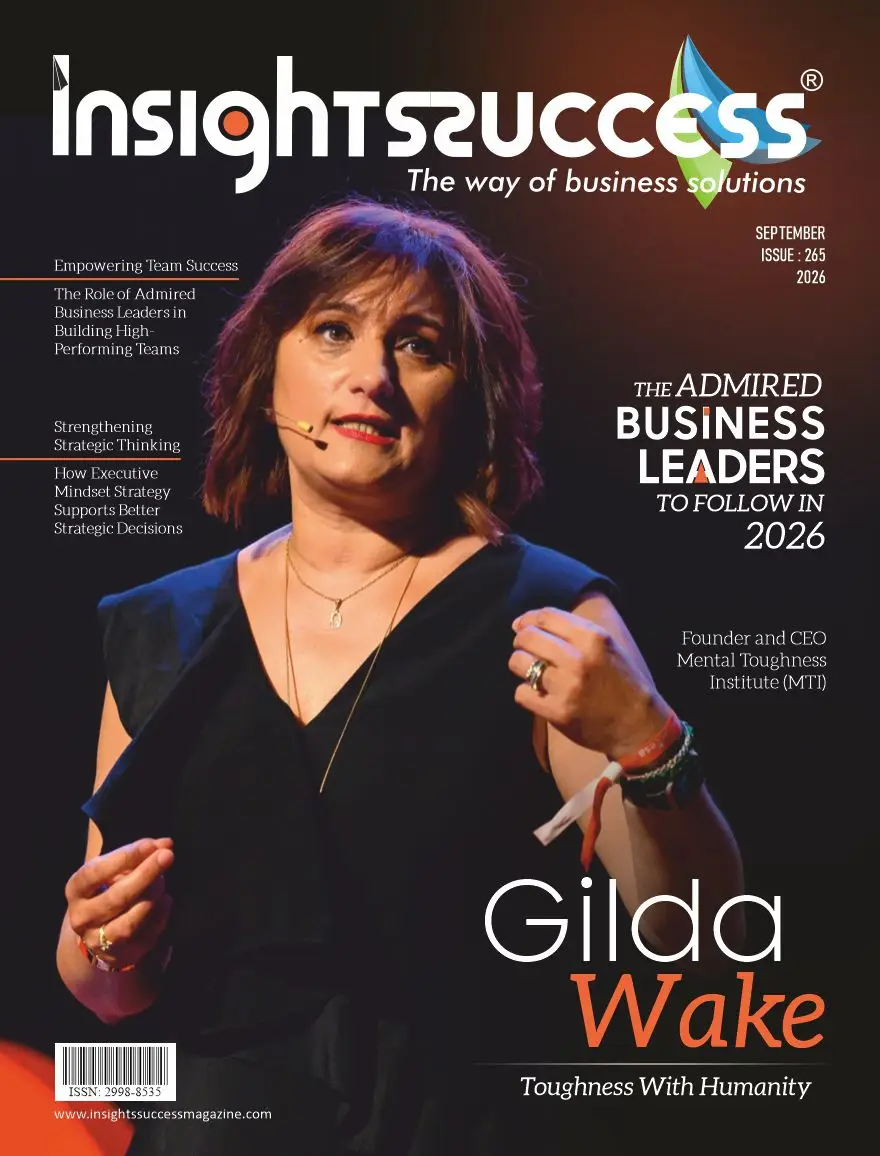
The Admired Business Leaders to Follow in 2026
The Admired Business Leaders to Follow in 2026 Highlighting admired business leaders whose vision, strategic thinking, and achievements are shaping organizations and industries. This edition explores professional accomplishments, innovative approaches, and lasting influence on business growth. Digital Link Quick highlights Quick reads

Dr. Jane Marie Spanich: Transforming Education Through Faith, Innovation, and Purpose
Dr. Jane Marie Spanich’s interdisciplinary leadership has earned recognition from educational, professional, and international organizations that celebrate innovation, service, and transformative leadership. A native of South Florida and a proud alumna of Saint Anthony’s Catholic School and Cardinal Gibbons High School, Dr. Spanich’s commitment to Catholic education is deeply personal. Having experienced firsthand the impact of faith-based education as a student, she now dedicates her career to creating the same sense of community, purpose, and opportunity for the next generation of learners. She earned her Bachelor of Science degree in International Affairs from Florida State University, where she developed a global perspective on culture, politics, communities, and the complex challenges facing society. She continued her academic journey at Rollins College, earning a Master of Liberal Studies degree, where her interdisciplinary studies deepened her understanding of the relationship between history, philosophy, quantum theory, foundations of science and culture, and human experience. Dr. Spanich later earned her Ph.D. in Practical Theology from Saint Thomas University, where her scholarship focused on the intersection of Dorothy Day, faith, society, and lived human experiences. Her commitment to educational excellence has earned recognition at the local, national, and international levels. In 2024, she was named one of the Top 10 STEM Directors in the United States by Education Technology Insights for her innovative approach to interdisciplinary STEM education. In 2025, she was honored as an Influential Woman, recognizing her leadership and impact throughout South Florida. In 2026, she was named a Rising Star in Education (Under 40) by South Florida Business & Wealth, celebrating emerging leaders who are shaping the future of education through innovation, collaboration, and service. For Dr. Spanich, these recognitions represent more than personal achievements; they reflect the collective efforts of students, educators, families, mentors and communities who believe in the transformative power of education. Her greatest mission remains creating opportunities for students and teachers to discover their God-given talents, develop confidence, and recognize their ability to make a meaningful difference in the world. “As we continue to evolve STREAM, I believe it is important to add another ‘M’ for Medicine—expanding STREAM into STREAMM: Science, Technology, Religion, Engineering, Arts, Medicine, and Mathematics. The addition of Medicine reflects the growing importance of healthcare, biomedical innovation, and compassionate service in preparing students for the future. I also want to continue turning my attention toward emerging fields such as quantum theory, healthy databases, and innovations that can directly improve the lives of people. As technology advances, we have an incredible opportunity to create solutions that promote human health, strengthen communities, and address real-world challenges. Currently serving as the Director of STREAM (Science, Technology, Religion, Engineering, Arts, and Mathematics) and Career Pathways Coordinator at Cardinal Gibbons High School in Fort Lauderdale, Florida, Dr. Spanich leads innovative academic pathways designed to prepare students for the future while remaining grounded in faith, service, and community. Her leadership encompasses the Allied Health Science, Business, Computer Science & Artificial Intelligence, Digital Video Technology, EMT, Engineering, and Robotics pathways, creating opportunities for students to explore their passions through hands-on experiences, industry partnerships, research, and authentic problem-solving. Dr. Spanich is quick to emphasize that the success of these programs is not the result of one individual, but the dedication of a team united by a shared mission. She expresses deep gratitude for the faculty and colleagues who bring these programs to life each day. “I am incredibly grateful for my teams,” she shares. “They show up to meetings, we pray together, we laugh together, we work through challenges together, and we celebrate each other and our students. That sense of community is what makes this work so meaningful. Dr. Spanich leads initiatives designed to connect academic excellence with authentic real-world experiences. Her work focuses on expanding interdisciplinary STEM opportunities, strengthening industry and community partnerships, developing career-focused pathways, and preparing students for the rapidly changing landscape of science, technology, healthcare, engineering, and emerging fields. At Cardinal Gibbons, Dr. Spanich also serves as the Miami Frost Science Center STEM Competition Moderator, Miami Herald Silver Knight Scholarship Program Coordinator, and VEX Robotics Moderator. Recognizing that teachers are essential to sustainable STEM growth, Dr. Spanich created and directed the STEM Teacher Certification Program at St. Thomas Aquinas High School (2023–2025). She was also an Aquinas Kindness Club Moderator at St. Thomas Aquinas High School, Fort Lauderdale, Florida, 2023-2025 that went to local feeder schools to teach young girls about anti-bullying. Through TEDx, Dr. Spanich has guided students in exploring complex topics at the intersection of science, technology, environmental sustainability, identity, creativity, perseverance, and social responsibility. Her mentorship has empowered students to recognize that their experiences, questions, and discoveries have value and that young people have the ability to contribute meaningful ideas to the world. Students whose TEDx presentations were supervised by Dr. Spanich include: Laura Aluka — “Bioremediation of Eutrophication” (2025), exploring environmental solutions and the importance of protecting aquatic ecosystems. Jacob Giron — “Approaching Opportunities: A Story of Perseverance” (2023), sharing a message about resilience, growth, and embracing challenges. Isabella Neustein — “You Are More Than a Test Score: Refl ecting on the College Admissions Process, Moving in New Directions” (2023), examining student identity, purpose, and personal growth beyond academic measurements. Emma Coronado — “Revitalizing Images: A Brief Refl ection on Identity and STEM” (2023), exploring representation, identity, and the relationship between students and STEM fields. Silvia Rodriguez — “E-Waste to E-Potential” (2025), highlighting sustainability, technology, and innovative approaches to electronic waste. Mia Medrano — “Invasive Species of South Florida and Satellite Technology” (2025), connecting environmental science with emerging technologies used to understand and protect ecosystems. Skylar Hooley — “The Unexpected Places of Creativity” (2020), exploring imagination, innovation, and the role of creativity in human development. Beyond mentoring student speakers, Dr. Spanich also brought distinguished leaders, researchers, innovators, and professionals to the TEDx St. Thomas Aquinas High School stage. These speakers exposed students to diverse perspectives and demonstrated how ideas can create meaningful change across industries and communities. As Miami Herald Silver Knight Scholarship Coordinator,
AI Video Campaigns Need Approval Gates Before They Scale
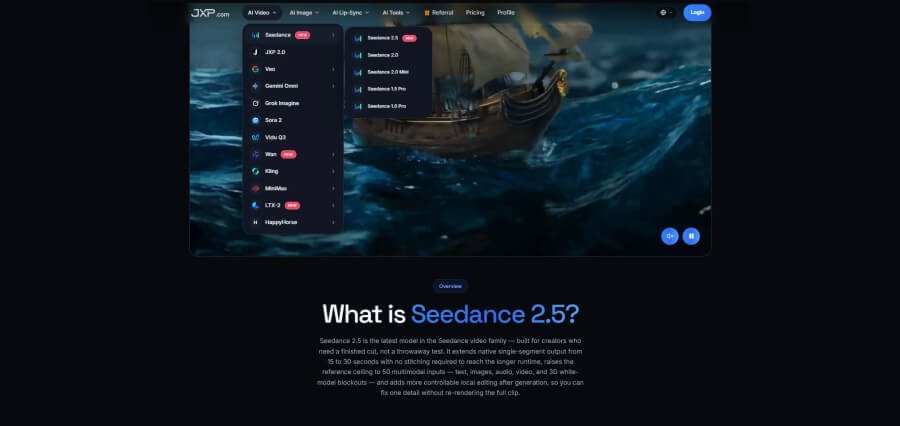
The first AI video test in a company is often treated like a creative experiment. One person writes a prompt, another person adds a product image, and a manager asks whether the result is good enough for a campaign. That loose process may be fine for a first look. It becomes risky when the same team wants to produce dozens of clips for launches, sales enablement, recruiting, customer education, or paid media. Scaling video is not only a production question. It is a leadership question. Who owns the message? Who approves the reference files? Which claims can appear on screen? What should happen when a generated scene looks polished but does not quite match the brief? Without those answers, a faster tool can simply create faster confusion. That is why approval gates matter. A gate is not bureaucracy for its own sake. It is a pause where the right person checks the right risk before work moves to the next stage. For organizations exploring AI-assisted video, Seedance 2.5 on JXP can support early campaign planning by turning approved prompts and eligible references into reviewable drafts, while the final message, claims, and publishing decision remain with the business team. The First Gate: Business Purpose Before a team tests a clip, someone should decide why the video exists. A campaign teaser, investor update, hiring message, product walkthrough, customer support explainer, and internal training asset do not need the same style or the same level of proof. A clear purpose reduces waste. If the goal is awareness, the draft may need a strong opening and a simple promise. If the goal is training, accuracy and step order matter more than visual drama. If the goal is sales enablement, the clip should support a specific conversation instead of trying to summarize the whole company. This gate should produce a short brief: audience, channel, message, asset owner, and next action. If those items are missing, the video test is likely to become a taste contest. The Second Gate: Source Material AI video drafts often depend on reference materials. A product photo may guide the subject. A rough storyboard may guide scene order. A brand palette may guide tone. A short audio cue may guide pacing. Each file should have a defined reason for being included. JXP’s Seedance 2.5 page shows a browser-based workflow with Reference Generation and Text to Video modes, upload support for multiple asset types, selectable model, resolution, aspect ratio, and duration controls, and an upload limit shown as 50 files across images, videos, and audio. Those controls give teams room to test richer ideas, but they also make input discipline more important. Business leaders should separate creative permission from AI-processing permission. A file approved for a sales deck may not be approved for external model input. A customer story may be approved for a case study but not for generated reenactment. A licensed image may have limits on remixing or paid distribution. The source gate keeps those questions from appearing too late. The Third Gate: Claims and Evidence A video draft can make a claim feel stronger than the article, report, or campaign brief actually supports. A generated crowd can imply demand. A fictional dashboard can imply measured performance. A confident product scene can imply a feature works in a way the current release does not support. The claims gate asks whether every implied message has a source. If the campaign says a product saves time, the team should know where that claim comes from and whether it belongs in the video. If a statistic appears, the date, sample, and source should remain available in the surrounding article, landing page, or sales material. When uncertainty matters, keep it visible. A short clip should not turn “may reduce manual review time” into “removes manual review.” It should not turn early feedback into market proof. Good visual communication makes the evidence easier to understand; it does not invent stronger evidence. The Fourth Gate: Brand Fit A polished draft can still be wrong for the company. The pace may feel too aggressive for a trust-based service. The lighting may make a practical product look like luxury fashion. The characters or settings may pull attention away from the actual offer. The ending may feel like a hard sell when the campaign needs a calmer invitation. Brand review should happen before final editing, not after. At the draft stage, teams can still change framing, mood, scene order, and caption space without rebuilding the whole campaign. The review should be specific: which moment feels off, which audience may misunderstand it, and which brand rule or business goal is affected. That specificity matters because “make it more premium” or “make it more human” is hard to execute. A better note says, “reduce the camera movement during the product explanation” or “keep the customer benefit on screen longer before the logo appears.” The Fifth Gate: Channel Reality A boardroom preview is not the same as a mobile feed. A clip may look clear on a large screen but lose the CTA under platform controls. A caption may be readable in a presentation but too small inside a vertical ad. A 30-second draft may explain the message well, while a shorter cut may need a different opening. The channel gate checks the practical version of the idea. Which aspect ratio is needed? Where will captions sit? Does the first frame work as a thumbnail? Can the message survive without sound? Does the page or post around the video still carry the necessary details? A workflow inside the Seedance 2.5 workspace on JXP can help teams compare these options before final production, especially when they need to test duration, crop, reference direction, and pacing. The goal is not to predict performance from a draft. It is to avoid sending the wrong version into an expensive channel. The Final Gate: Human Accountability AI-assisted production works best when accountability is visible. The tool can generate a draft, but it cannot own the campaign

Can DTF Transfers Be Used on Dark-Colored Shirts?
Yes, DTF transfers can be applied to black, navy, burgundy, charcoal, and other dark-colored shirts. The transfer includes a white ink layer beneath the colored design, helping the artwork remain visible instead of blending into the garment. Strong results still depend on suitable artwork, fabric compatibility, and correct heat-press settings. Dark garments require an effective white underbase, consistent pressure, and careful application to produce clean colors and durable adhesion. Why Do DTF Transfers Work on Dark Shirts? Unlike some decoration methods that rely on the shirt color showing through, DTF printing places a complete image on top of the fabric. Businesses can obtain custom transfers from providers such as DTF Virginia for application across different garment colors. White ink creates opacity: A white layer sits beneath the CMYK inks so the dark fabric does not overpower the artwork. Adhesive bonds the design: Powder adhesive is applied during transfer production and activated by heat when the design is pressed. Color remains visible: Bright shades, skin tones, gradients, and small details can retain their intended appearance on dark backgrounds. No cutting is required: DTF supports detailed shapes without the visible rectangular background associated with some transfer papers. Several fabrics may be suitable: Transfers can often work on cotton, polyester, cotton-polyester blends, and other compatible garments. Small orders remain practical: The process can suit one-off shirts, short runs, personalised pieces, or larger production orders. Full-color artwork is supported: Designs can contain multiple colors without requiring separate screens for every shade. The transfer must be produced correctly before pressing. Weak white ink coverage, poor adhesive distribution, or inaccurate curing can affect the result even when the heat press is set properly. What Determines the Quality of a DTF Print on Dark Fabric? A transfer that looks strong on its film can still fail when applied incorrectly. Print quality depends on how the artwork, transfer, garment, and heat-press process work together. 1.White Ink Coverage White ink must create a sufficiently opaque base beneath the colored image. If coverage is too light or uneven, black fabric may make the colors appear dull. The layer should support the design without becoming unnecessarily heavy. Balanced opacity protects color quality while helping the finished print retain a comfortable feel. 2.Artwork Color Choices Some designs are created without considering the garment color. Black lettering, dark outlines, or deep shadows may disappear visually when surrounded by black fabric. Designers should preview the artwork against the intended shirt shade. Contrast must be planned intentionally, particularly around edges, small text, and fine decorative details. 3.Transfer Production Quality Consistent ink application, adhesive coverage, curing, and film handling all influence the final result. Contamination or incomplete curing can cause weak areas and rough texture. Customers ordering full-color transfers for dark garments should submit artwork that meets the provider’s specifications. A well-produced transfer improves consistency during application. 4.Fabric Type Cotton, polyester, blends, and performance fabrics respond differently to heat. A setting that works well for a cotton shirt may damage a heat-sensitive synthetic garment. Polyester can also present dye-migration concerns. Fabric composition should guide testing, temperature selection, and the choice of transfer before a full production run begins. 5.Heat-Press Temperature Heat activates the adhesive and creates the bond between the transfer and shirt. Insufficient temperature may produce lifting, while excessive heat can scorch fabric or alter its color. Follow the transfer supplier’s instructions rather than using a universal number. Actual platen temperature should be reliable, since some presses display a setting that differs from the real surface temperature. 6.Pressure and Contact The heat press must provide enough pressure across the full design. Uneven pressure can leave corners, edges, or parts of the image poorly bonded. Seams, buttons, collars, and pockets can prevent flat contact. A level pressing surface supports adhesion, so garment placement and suitable accessories may need adjustment. 7.Peel and Finishing Method DTF films may require hot, warm, or cold peeling. Removing the carrier at the wrong stage can pull up parts of the design or leave an uneven finish. Many transfers also require a brief finishing press. Provider instructions should control the sequence, including peel timing, repress duration, and any protective sheet recommendation. What Problems Can Occur on Dark-Colored Shirts? When a DTF transfer is not sticking, the cause is often unsuitable settings, limited testing, or poor-quality materials. Identifying the problem early helps decorators correct the process before pressing more garments and creating unnecessary waste. Colors look muted: The transfer may have insufficient white ink coverage beneath the CMYK image. Shirt color shows through: Thin white areas or production defects can reduce opacity. Edges begin lifting: The adhesive may not have received enough heat, time, or pressure. Fabric becomes shiny: Excessive heat or pressure can flatten fibres, especially on dark polyester. Garment dye enters the print: Dye migration may create unwanted color changes on some synthetic fabrics. Fine details fail to transfer: Lines may be too thin, or the press may not provide even contact. Design feels too heavy: Large solid areas can create a thicker feel than artwork with thoughtful negative space. Film leaves marks: The carrier may have been peeled at the wrong temperature or angle. Shirt becomes scorched: The fabric may not tolerate the selected application temperature. Print cracks after washing: Poor adhesion, excessive stretching, unsuitable laundering, or low-quality production may contribute. Transfer is placed incorrectly: Failing to measure and align the design before pressing can leave it visibly off-centre. Moisture affects adhesion: A garment containing moisture may need a brief pre-press before the transfer is positioned. How Can You Get Better Results on Dark Shirts? DTF application becomes more predictable when the shop uses repeatable preparation, pressing, inspection, and wash-testing procedures. Small adjustments should be documented rather than guessed. 1. Test the Garment First Press one sample before applying transfers to an entire order. The test should use the same shirt brand, color, fabric, transfer type, and press settings planned for production. Inspect opacity, adhesion, shine, texture, and dye movement. One test can prevent an expensive mistake across dozens

Beyond DRGs: Healthcare Leaders to Convene in Dubai for an Executive Exchange on Value-Based Care
Dubai, UAE | September 2, 2026 — Insights Success Media is set to host an exclusive Executive Exchange at the Metropolitan Hotel, Dubai, bringing together senior healthcare leaders for a closed round table discussion on “Beyond DRGs: Building a Sustainable, Value-Based and Patient-Centered Healthcare Model.” The session will be hosted by Mr. Mario Espino, Founder, Chairman & CEO, Complete Care Management Services (CCMS), USA, a seasoned healthcare leader with extensive experience in care management, population health, value-based care, and healthcare technology. Exploring Healthcare Beyond Traditional Models The Executive Exchange will provide a focused platform for healthcare executives to discuss how organizations can move Beyond DRGs and develop healthcare models that place greater emphasis on value, quality, measurable outcomes, sustainability, care coordination, and patient experience. As healthcare systems continue to navigate rising costs, evolving reimbursement structures, technological advancements, and increasing expectations for better outcomes, the shift from volume-based healthcare toward value-based models has become increasingly important. The round table will encourage an exchange of perspectives on creating sustainable approaches that benefit patients, providers, and healthcare organizations. Mario Espino: Host and Healthcare Transformation Leader As the host of the Executive Exchange, Mario Espino brings decades of healthcare experience to the discussion. He currently serves as Founder, Chairman & CEO of CCMS-ACO, a healthcare organization involved in post-acute care, care management, chronic care management, virtual primary care, and commercial Accountable Care Organization initiatives. CCMS-ACO is also the parent company of MDsOnDemand.com, a telemedicine service focused on cost-effective healthcare access. Espino began his healthcare career in his early twenties, working across ancillary Part B services and home health. Throughout his career, he has pioneered healthcare initiatives, established a major international nurse recruiting company, and worked with organizations seeking to develop comprehensive care-management and population-health strategies. Since 2008, Espino has closely followed the industry’s transition from volume to value, including developments associated with MACRA. His consulting experience includes helping organizations develop coordinated-care initiatives and implement end-to-end IT solutions within the population health space. He also serves as a commentator for the “Week in Review Editorial Board” for FHI. Executive Contributors The exclusive discussion will bring together leaders representing healthcare operations, clinical care, finance, diagnostics, pharmaceuticals, quality, and life sciences: Danish Rizhvi, Chief Operating Officer, Citadel Holdings— Bringing an operational leadership perspective to sustainable healthcare delivery and organizational performance. Khalid Abduljabbar Al Khalaiwi, Senior ED Consultant & Group CMIO, Saudi German Health— Contributing clinical and medical information expertise to the conversation around patient outcomes and technology. Khaled Ahmed, Chief Financial Officer, Saudi German Health UAE— Offering financial insights into sustainability, resource management, and value-based healthcare. Kaartik Chauhan, Regional Director, Cepheid— Bringing perspectives from the diagnostics sector and the role of timely diagnostic solutions in healthcare outcomes. Mahmoud Saeed Ghaly, General Manager, SAJA Pharmaceuticals— Contributing pharmaceutical industry insights to patient-centered healthcare and healthcare sustainability. Jessim Basheer, Group General Manager – Operations, Starcare Hospital— Offering practical perspectives on hospital operations and implementing value-focused care models. Leila Soudah, Medical Doctor, Dr. Leila Soudah Clinic— Bringing a physician’s perspective to patient needs and the delivery of personalized care. Khushbu Piyushkumar, Founding Director & CEO, Global Healthcare Quality Academy (GHQA)— Contributing expertise in healthcare quality, standards, and continuous improvement. Hassan Herrou, General Manager, Middle East Africa, CSL Behring MEA FZ-LLC— Bringing regional life sciences expertise to the dialogue on innovation and patient-focused healthcare. Building a Sustainable Healthcare Future The Beyond DRGs discussion will examine how healthcare stakeholders can rethink established approaches to reimbursement and care delivery while focusing on measurable outcomes and improved patient experiences. Through this Executive Exchange, Insights Success Media aims to facilitate meaningful peer-to-peer dialogue and highlight leadership perspectives shaping the future of value-based healthcare. Event Details Event: Executive Exchange Discussion Topic: “Beyond DRGs: Building a Sustainable, Value-Based and Patient-Centered Healthcare Model” Host: Mr. Mario Espino, Founder, Chairman & CEO, Complete Care Management Services (CCMS), USA Date: September 6, 2026 Venue: Metropolitan Hotel, Dubai, UAE Format: Closed Round Table Session About Insights Success Media Insights Success Media is a business and leadership-focused media platform that highlights influential leaders, organizations, innovations, and emerging trends across industries. Through its editorial initiatives, events, and executive engagements, the organization creates platforms for knowledge exchange, leadership conversations, and professional recognition. Disclaimer – This article is a work of original content created for public relations and informational purposes only. It may be published across multiple digital platforms with the full knowledge and consent of the author/publisher. All images, logos, and referenced names are the property of their respective owners and used here solely for illustrative or informational purposes. Unauthorized reproduction, distribution, or modification of this article without prior written permission from the original publisher is strictly prohibited. Any resemblance to other content is purely coincidental or used under fair use policy with proper attribution. Read Also: Dr. Subhankar Dasgupta: From Banking to Building a Culture of Financial Planning in India
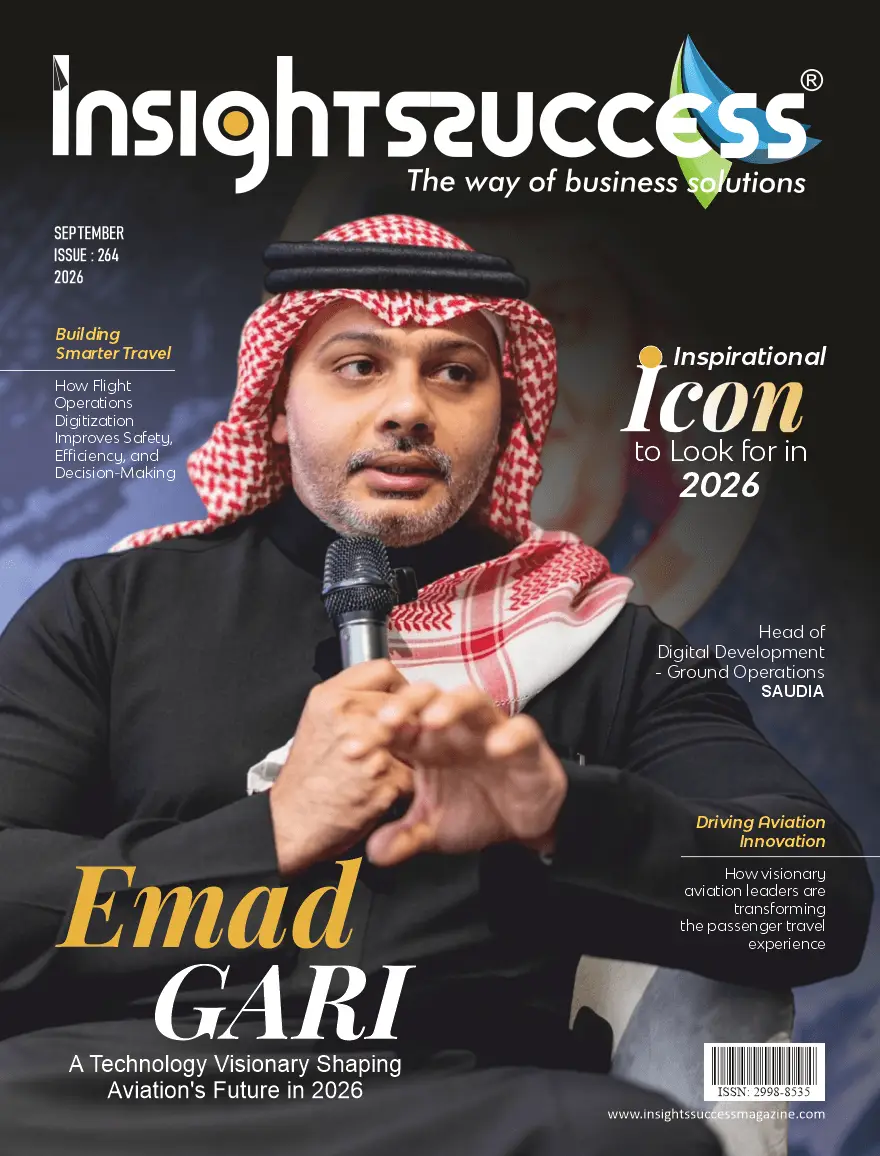
Inspirational Icon to Look For in 2026
Inspirational Icon to Look For in 2026 Honoring a distinguished leader, this feature explores a journey defined by innovation, resilience, and excellence, inspiring progress while shaping the future of aviation through visionary leadership and lasting impact. Digital Link Quick highlights Quick reads

Emad GARI : A Technology Visionary Shaping Aviation’s Future in 2026
Aviation is one of the few industries where the gap between a great experience and a terrible one is measured in minutes. A queue that moves too slowly, a disruption with no information, a boarding gate that does not recognize who you are, a bag that disappears without a trace. These are not abstract service failures. They are the moments that define how millions of people feel about travel, about airlines, and about whether the promise of seamless movement across borders is something they can actually count on. Fixing those moments is not a marketing problem. It is an operational and technological one, and it demands leaders who understand both worlds deeply enough to bridge them without losing sight of the person standing in the middle of the journey. Emad Gari is that kind of leader. As Head of Digital Development within Ground Operations at SAUDIA, he has spent years building at the intersection of aviation operations, technology, and passenger experience, driven by a philosophy that is as precise as it is powerful: technology succeeds when it becomes invisible, when the journey is simply easier, the operation smarter, and the people serving the guest better equipped to do so. A Career Built at the Intersection Emad’s professional journey began in information technology, where a strong foundation in systems, applications, and the discipline of reliable delivery gave him the technical grounding that would anchor everything that followed. But the defining shift came when he moved closer to airline operations and the passenger journey, a transition that changed not just his role but his entire understanding of what digital transformation is actually for. Airports, he discovered, are among the most complex operational environments on earth. Passengers, employees, airlines, airports, regulators, technology providers, and service partners must all function together in real time, under constant pressure, with no tolerance for failure. Even a small digital improvement in that environment can have a meaningful impact on thousands of travelers and the frontline employees serving them. “Technology is an enabler, not the destination. Success is achieved when technology becomes almost invisible because the journey is easier, the operation is smarter, and employees are better equipped to serve the guest,” says Emad. His academic background reflects the same breadth of thinking that defines his professional approach. A degree in Computer Engineering gave him technical depth. An Executive MBA from Umm Al-Qura University gave him a business and strategic perspective. A bachelor’s degree in English gave him the ability to communicate transformation in human terms, to translate between the technical and the operational, between the possible and the practical. That combination of disciplines, rarely found in a single leader, is one of the reasons he moves so naturally between the worlds his work demands. The Philosophy That Guides the Work The idea at the center of Emad’s professional life is deceptively simple: start with the problem, not the technology. Rather than identifying a new tool and searching for a use case, he begins with the passenger or operational challenge. Where is the friction? What can be automated? What information is missing? How can employees make faster, better-informed decisions? Only after those questions have been answered does the conversation about technology and delivery begin. This philosophy has shaped a portfolio of work that spans biometric passenger processing, airport self-service, digital disruption management, passenger communications, baggage services, operational dashboards, mobile capabilities, and data-driven airport operations. Each initiative begins not with a technology brief but with a human one. In 2025, that philosophy produced one of his most visible milestones: the activation of biometric boarding at New York JFK Terminal 1. In 2026, biometric implementation followed in Abu Dhabi, extending that commitment across more of the airline’s international network. Furthermore, he played a leading role in the implementation of iCoupon, a digital compensation voucher solution for disrupted SAUDIA passengers, helping transform the delivery of passenger entitlements from traditional processes into a faster, more convenient, and fully digital experience He adds, “Behind every process and every transaction is a person trying to reach a destination.” The Pilgrim Journey: A Different Kind of Transformation Emad asserts, “Progress with purpose means using innovation not because it is fashionable, but because it can make organizations more effective, employees more capable, and people’s experiences genuinely better.” Some of his most meaningful work has extended beyond the conventional boundaries of airline operations into an area of profound cultural and spiritual significance: the Hajj pilgrimage. Every year, millions of pilgrims from around the world converge on Makkah, creating one of the largest and most complex human logistics challenges on earth. The opportunity to apply digital thinking to that journey carries a weight that goes well beyond operational efficiency. During the 1447H / 2026 Hajj season, he contributed to the successful implementation of the Traveller / Hajj Without Bag initiative, an integrated operational and digital initiative designed to provide pilgrims with a more seamless travel experience by facilitating baggage handling and reducing the need for pilgrims to manage their luggage throughout key stages of their journey. The initiative was delivered through collaboration between c and key partners, including Matarat (Ministry of Transport), the Ministry of Hajj and Umrah, and Hala Bag His engagement with the Hajj ecosystem extends further. As a Board Member and innovation leader within Al-Sarah Company, he has led digital transformation projects and innovation initiatives focused on improving the pilgrim experience. He contributed to the development of Smart Wristband and Nusuk Card digital solutions supporting pilgrim mobility tracking. In 2024, he chaired the Al-Sarah Innovation Competition. He also serves as Chairman of the IT Committee of the Coordinating Council for Foreign Pilgrims Companies, leading digital transformation initiatives and unified data and performance systems. COVID-19 and the Acceleration of the Inevitable When COVID-19 arrived, aviation faced uncertainty on a scale that few in the industry had ever experienced. Travel requirements changed daily, passenger volumes collapsed, health concerns reshaped every aspect of the airport experience, and the pressure to adapt digital systems quickly became an operational

How Visionary Aviation Leaders Are Transforming the Passenger Travel Experience
Driving Aviation Innovation Air travel carries a complicated relationship with the people who use it. Most passengers have experienced the frustrations that come with the territory: delays, crowded terminals, confusing boarding processes, and the general sense that the experience of getting from one place to another is something to be endured rather than enjoyed. But something is shifting. Across the industry, visionary aviation leaders are making deliberate decisions to change what passengers experience, from the moment they book a ticket through to the moment they collect their bags at the destination. That shift is not accidental. It is the product of leadership that has decided the passenger experience deserves the same level of strategic attention that operational efficiency and financial performance have historically received. Putting the Passenger at the Center of Aviation For much of commercial aviation’s history, the passenger experience was managed primarily as an operational constraint, something to be handled adequately while the real work of running an airline or an airport happened around it. Visionary aviation leaders are rejecting that framing entirely. They see the passenger not as a constraint to be managed but as the central purpose around which everything else should be organized. This reframing changes the questions that leadership asks. Instead of asking how many passengers can move through a terminal in a given hour, the question becomes what those passengers experience as they move through it. Instead of optimizing the boarding process for operational speed alone, the question becomes how to make boarding feel less chaotic and more dignified. These are different questions that lead to different decisions, and those decisions, accumulated over time, produce a meaningfully different passenger experience. Using Technology to Simplify the Passenger Journey Visionary aviation leaders are deploying technology with a clarity of purpose that distinguishes them from organizations that invest in digital tools without a coherent vision of what those tools should achieve for the people using them. Biometric processing that moves passengers through security and boarding without the friction of repeated document presentation. Real-time flight information delivered through applications that communicate proactively rather than requiring passengers to seek out updates. Seamless digital payment and service request capabilities that reduce the need for queuing in environments that are already demanding enough. The technology decisions being made by leading aviation organizations are consistently oriented toward reducing the friction that passengers experience at each stage of their journey, not toward implementing technology because it signals modernity but because it genuinely makes the travel experience less demanding and more reliable. Rethinking the Airport Experience Airports are among the most challenging environments that most people regularly move through: high stress, often confusing, frequently crowded, and rarely designed with the specific human experience of navigation and waiting in mind. Visionary aviation leaders working at the airport level are approaching this challenge with genuine design thinking, asking what passengers actually need from terminal environments and building toward that rather than replicating what airports have always looked like. Better wayfinding that reduces the anxiety of navigation in unfamiliar terminals. Lounge and waiting environments designed to feel calming rather than chaotic. Food and retail offerings that reflect what travelers actually want rather than the captive audience economics that have historically shaped airport retail. These changes require investment and commitment, but the passenger experience improvement they produce translates into measurable differences in how travelers feel about the airports and airlines associated with those environments. Building Teams That Deliver a Better Passenger Experience None of the transformation that visionary aviation leaders are pursuing happens without the people working throughout their organizations developing the capability, the commitment, and the genuine customer orientation that excellent passenger experience requires. Vision at the leadership level is the starting point, but the passenger experience is created by the thousands of interactions between frontline staff and travelers across every touchpoint of the journey. Investing in the selection, training, and genuine engagement of the people who deliver that experience is as important as any technology investment or terminal redesign. Leaders who understand this build organizations where the commitment to passenger experience is genuinely shared rather than simply declared. The Road Ahead Visionary aviation leaders are not simply managing airlines and airports; they are deciding what the experience of air travel means for the people who depend on it to connect their lives and their work across the distances that define the modern world. The choices they make about where to invest, what to prioritize, and how to lead their organizations through the complexity of a challenging industry shape what millions of passengers experience every day. That responsibility is significant, and the leaders meeting it with genuine vision and genuine commitment are producing a travel experience that is measurably better than what came before. Read Also : How Executive Mindset Strategy Supports Better Strategic Decisions

How Flight Operations Digitization Improves Safety, Efficiency, and Decision-Making
Building Smarter Travel Few industries have been as consistently shaped by technological advancement as commercial aviation. From the earliest days of powered flight through the jet age and into the modern era of computer-assisted navigation and global air traffic management, the industry has repeatedly reinvented how it operates in response to new capabilities. The current wave of flight operations digitization represents the latest and in many ways the most comprehensive of these reinventions, touching not just individual systems or processes but the fundamental way that airlines, airports and air traffic organizations plan, execute, and manage flight operations from gate to gate. Understanding the Scope of Flight Operations Digitization The term encompasses a broad range of changes that are happening simultaneously across the aviation ecosystem. Flight operations digitization includes the transition from paper-based processes to digital workflows throughout airline operations, replacing physical documents with electronic flight bags, paper maintenance records with digital tracking systems and manual coordination processes with integrated digital platforms that connect operational teams in real time. It extends to the data infrastructure that allows vast amounts of operational information, weather data, aircraft performance data, air traffic control information, and crew scheduling data to be gathered, processed, and made available to the people who need it at the moment they need it. And it includes the analytical systems that turn that data into actionable insight rather than simply storing it in formats that require significant human effort to interpret and use. Improving Operational Decisions One of the most transformative aspects of flight operations digitization is the improvement it produces in the quality of operational decision-making. Good decisions require good information, current, accurate, and presented in ways that support rapid comprehension and confident action. The manual, paper-based, and fragmented information environments that characterized aviation operations in earlier eras made good decision-making harder than it needed to be. Digital operations platforms that give operations center personnel a real-time view of the entire operation, every flight’s status, every aircraft’s location and condition, every crew member’s position and availability, enable a quality of situational awareness and responsive decision-making that simply was not achievable when that information existed in separate systems that required significant effort to integrate. Disruption management, responding to weather events, mechanical issues, and other operational irregularities in ways that minimize their impact on passengers and operations, improves significantly when the people managing the disruption have access to complete and current information. Connectivity Between Ground and Air Operations Flight operations digitization is also changing the quality of the connection between aircraft and the ground operations teams supporting them. Digital data link communications that allow two-way exchange of operational information between flight crews and dispatch, automatic transmission of aircraft performance and health monitoring data from the aircraft to maintenance teams on the ground, and real-time weather data delivery to cockpits during flight all create a more integrated and more informed operational environment than radio communication and manual data entry could support. This ground-to-air connectivity changes what is possible in operational support, allowing ground teams to identify developing issues on aircraft in flight and begin planning responses before the aircraft lands, and allowing flight crews to receive current operational information without the communication overhead that voice-only coordination required. Supporting People in an Increasingly Digital Operation Flight operations digitization changes the role of the people working within aviation operations rather than eliminating the need for them. Pilots, dispatchers, maintenance technicians, and operations center personnel all continue to make the judgment calls that technology supports but does not replace. What changes is the quality of information those judgment calls are based on and the efficiency with which routine processes are handled, freeing human attention for the higher-level thinking that complex operational situations demand. Organizations that manage this transition thoughtfully, investing in training that builds genuine digital proficiency alongside the operational expertise their people already hold, get more from their digitization investments than those that assume capability will develop automatically from tool availability. Looking Ahead Flight operations digitization is not a destination; it is a foundation. The digital infrastructure being built across aviation operations today creates the platform from which continued advancement in safety, efficiency, and operational intelligence will be built in the years ahead. Artificial intelligence applications that optimize complex operational decisions, predictive maintenance capabilities that identify component failures before they occur, and increasingly sophisticated airspace management systems all depend on the digital foundation that current digitization efforts are establishing. The aviation industry’s commitment to continuous improvement in how it operates has always been one of its defining characteristics, and digitization is the most significant expression of that commitment in the current era. Read Also : How Cybersecurity Diversity Pioneers Are Shaping Inclusive Security Teams