






Mohammed Sultan Zubair: Crafting a Culture of Trust and Excellence
In a field where trust is earned with every action, Mohammed Sultan Zubair has built a leadership style that is defined by accuracy, integrity, and consistency rather than visibility. Over the past fifteen years, as the Managing Director of MSZ Consultancy, he has transformed the firm into one of the region’s most respected corporate advisory firms, helping more than 3,200 business owners, family offices, and multinational corporations with business setup, corporate tax planning, Golden Visa advisory, PRO services, and cross-border expansion across the United Arab Emirates and Saudi Arabia. As demonstrated by its ISO, IAF, and IAS certifications as well as its outstanding 4.9 out of 5 Google client rating, MSZ’s reputation goes beyond its financial performance. It reflects a dedication to long-term partnerships and trust. Mohammed Sultan Zubair recognized early that clients sought more than technical expertise. Every dimension of MSZ, its hiring practices, corporate culture, and client advisory approach, has been shaped by this commitment, producing an organization where trust is not merely a value but the foundation of every decision. Leadership Built on Consistent Judgement Mohammed’s journey into leadership was not defined by a single turning point. Instead, it developed gradually as he realized that people around him often looked to his judgement before making their own decisions. Even before holding a leadership title, colleagues in small group discussions relied on his assessment of whether an idea was practical or needed more thought. “Leadership did not arrive for me as a single moment of revelation. It arrived as a slow recognition that people around me would wait for my reading of a situation before forming their own,” he says. This gradual recognition shaped his leadership philosophy in lasting ways. It reinforced his belief that leadership is earned through consistent judgement rather than the loudest voice in the room. It also strengthened his sense of responsibility, which continued to grow as more people came to depend on the institutions and teams he helped lead. Three Principles That Define MSZ’s Success When asked about the philosophy behind MSZ’s strong reputation, Mohammed Sultan Zubair points to three principles that guide every decision the firm makes. The first is integrity over convenience. As a consultancy serving Golden Visa applicants, corporate tax clients, and entrepreneurs operating in two of the region’s most complex regulatory environments, the pressure to overpromise is always present. Mohammed says MSZ consciously avoids that approach. The firm has earned its reputation by giving clients honest advice, even when it means losing a business opportunity. He believes trust is not simply a value but the foundation of long-term commercial success. The second principle is complete ownership of outcomes. Every member of the MSZ team is responsible not only for their individual tasks but also for the client’s overall success. The firm follows every engagement through to completion, identifies challenges early, and resolves issues before clients need to raise them. Mohammed Sultan Zubair believes talent without accountability becomes a weakness when situations become complex. At MSZ, professional growth depends on demonstrating both ability and ownership. The third principle is reliability. It means delivering on every commitment within the promised timeline. Mohammed Sultan Zubair says that without reliability, even the strongest sales conversation eventually leads to disappointment and weakens client relationships. While the team is responsible for execution, he believes the leader must remain accountable for the firm’s reputation, regulatory compliance, and client commitments. This clear division of responsibility creates confidence across the organization and enables the team to perform at its best. Building Trust Through Consistent Leadership Mohammed Sultan Zubair believes there is a clear difference between the values leaders talk about and the values they demonstrate through their actions. In his view, employees pay less attention to speeches and formal meetings than to the decisions leaders make every day. Organizational culture is shaped in ordinary moments, and those moments reveal what a leader truly stands for. This belief is reflected in the way he leads MSZ. He ensures that the priorities he sets for the team are the same standards he follows himself. If the firm decides not to pursue a client engagement that is not in the client’s best interest, Mohammed Sultan Zubair is the first to support that decision. If managers are expected to focus on the quality of leads rather than the number of leads, he does not reward impressive but meaningless performance metrics. He believes trust grows when employees see that the same rules apply to everyone, especially the leader. Mohammed Sultan Zubair also places strong emphasis on clarity. He considers it a professional responsibility rather than a communication style. The same principle applies within the organization. With teams working across four offices and multiple time zones, communication can easily become layered and complicated. Mohammed encourages direct and transparent conversations instead. He believes people trust leaders who communicate clearly and consistently, especially when they are willing to deliver difficult messages with the same openness as positive news. Thoughtful Leadership Decisions When faced with a high-stakes decision, Mohammed’s instinct is to slow down rather than rush. He begins by separating facts from assumptions because he believes many poor decisions are based on ideas that no one takes the time to question. He then evaluates the potential downside before considering the upside. If the worst realistic outcome is manageable and the potential benefits are significant, he believes the decision is worth pursuing. However, if the downside could seriously threaten the organization, no potential reward is enough to justify the risk. After assessing the risks, Mohammed Sultan Zubair tests the decision through three different perspectives. The strategist asks whether the choice supports the organization’s long-term goals over the next three years. The operator considers whether the firm has the people, systems, and financial resources needed for successful execution. The fiduciary evaluates whether the decision would still appear responsible and sound if it were reviewed publicly a year later. Only when all three perspectives are aligned does Mohammed move forward. Once a decision is made, he believes it
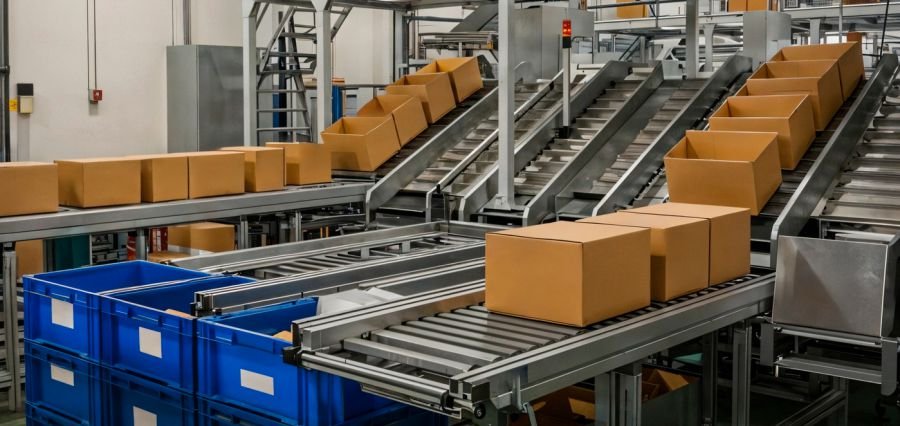
What Types Of Products Can Be Handled By Table Top Conveyors?
If you’re exploring conveyor solutions for your facility, understanding which products work best on table top conveyors helps you make smart equipment investments and avoid costly mistakes. What types of products can be handled by table top conveyors? Table top conveyors can handle a wide range of products, including bottles, cans, jars, cartons, trays, and small packaged goods. Built around a modular chain or belt riding on a rigid, flat surface, they’re a mainstay of bottling and packaging lines and typically handle products weighing up to 50 pounds per unit, with heavier-duty chain options available for bulkier loads. Keep reading to discover the specific product characteristics that determine whether a table top conveyor is the right fit, because choosing the wrong conveyor type for your product can lead to jams, tipped containers, and line stoppages that could have been easily avoided. Understanding Product Compatibility The key factor isn’t just what the product is, but rather its physical characteristics. Table top conveyors work best with products that have a stable, flat base and can stay upright as the chain moves, indexes, or transitions through curves. Products with a low center of gravity relative to their footprint tend to travel the most reliably. Products need to be conveyable — meaning they can sit securely on the chain surface without sliding, tipping, or catching on chain edges or transfer plates. Round or unstable containers often need guide rails to stay in line, especially at merges, curves, and changeovers between conveyor sections. Size And Dimension Considerations Product dimensions play a crucial role in table top conveyor selection. Chain width determines the range of product sizes a line can accommodate, while product diameter and height affect stability during turns and accumulation. Most table top conveyors handle products ranging from small vials and bottles to cartons and trays up to roughly 24 inches across. Height matters too, particularly for narrow, tall containers that can rock or tip when starting, stopping, or navigating a curve. As a general rule, products with a height that’s more than two to three times their base width need extra support, such as guide rails or neck-handling equipment, to run reliably. Common Product Categories Beverage and food operations are the classic use case for table top conveyors, moving bottles, cans, and jars between filling, capping, labeling, and packing stations. The flat, low-profile chain keeps containers stable while allowing easy access for changeovers and inspection. Personal care, household chemical, and pharmaceutical producers rely on table top conveyors for moving bottled and jarred products through production and filling lines. Consumer packaged goods and light industrial operations also use them for cartons, trays, and totes moving horizontally between processing stations. Products That May Require Special Handling Loose or unpackaged products generally aren’t suitable for standard table top conveyors unless they’re contained in trays, carriers, or pucks that keep them upright and contained. Without that support, lightweight or irregular items can shift, tip, or fall between chain links. Extremely tall, narrow, or top-heavy containers — like slim glass bottles — may need neck guides, star wheels, or specialized chain to stay stable through curves and accumulation zones. Products with protruding parts, uneven bottoms, or sharp edges might snag on the chain or guide rails, requiring custom tooling or an alternative conveying method. Temperature-Sensitive Products Many table top conveyors can accommodate temperature-controlled environments, which is why they’re common in food processing, beverage, and pharmaceutical facilities. Stainless steel frames and food-grade chain hold up well in washdown areas, coolers, and other environments with frequent cleaning or moisture exposure. Hot-fill products fresh from processing or pasteurization can also run on table top conveyors built with heat-tolerant chain and components. The key is matching the chain material and frame construction to your product’s temperature and cleaning requirements. Weight Limitations And Load Distribution While individual product weight matters, total line load is just as important, including how many products will be on the conveyor at once during accumulation or changeovers. Overloading a table top chain leads to excess wear, chain stretch, and unplanned downtime. Distribution of weight across the chain surface also affects performance. Products should track centered on the conveying surface rather than riding along one edge, which puts uneven stress on guide rails and chain wear strips over time. How Do You Test Products For Table Top Conveyor Compatibility? Testing your products before committing to a table top conveyor installation saves time and money. Most reputable manufacturers maintain testing facilities where they can run your actual products through their equipment under simulated line conditions. The testing process involves sending sample products to the manufacturer’s facility along with detailed information about your throughput requirements and any special handling needs. Engineers will run your products through different chain types, guide rail configurations, and speeds to find the optimal setup. Pay attention to how products behave at curves, merges, and stop-start points — this is where most problems surface. The manufacturer should provide video documentation of the test runs along with performance data showing achievable throughput rates. If sending physical samples isn’t feasible, some manufacturers offer virtual assessments using layout and simulation software, which can flag obvious compatibility issues before equipment is built. What Modifications Help Table Top Conveyors Handle Challenging Products? When a standard table top conveyor doesn’t quite fit your product needs, several modifications can help. Guide rails are among the most common additions, keeping products centered on the chain as they move through straight runs, curves, and transfers. Adjustable rail systems make it easier to run multiple product sizes on the same line. Product dividers, pucks, or carriers create dedicated pockets on wider conveyors, which is useful when handling small, unstable, or irregularly shaped items that can’t travel reliably on their own. This approach also helps when running mixed SKUs through the same equipment. Chain surface modifications can meaningfully improve performance. Low-friction chain reduces back pressure during accumulation, while textured or cleated options can help move products on slight inclines without slipping. Speed controls and variable frequency drives

Meta Iris AI Chip Production To Begin In September 2026
Prime Highlights : Meta will begin producing its new Iris AI chip in September, marking a major milestone in its in-house chip development strategy. Chip testing wrapped up in just six weeks with no major issues, pointing to strong momentum for Meta’s AI hardware plans. Key Facts : Broadcom is supporting the design of the Iris AI chip, while Taiwan Semiconductor Manufacturing Co will lead production. Meta has locked in long-term supply deals with Samsung Electronics, Sandisk and Sumitomo Electric to power its 2027 growth plans. Background : Meta Platforms Inc. is set to launch production of its new Iris chip in September, a milestone move in the company’s push to build its own hardware. The chip supports Meta’s plan to expand computing capacity to 14 gigawatts by 2027, doubling what it has today. Iris is one of four chips under Meta’s in-house Training and Inference Accelerators program, developed to power the AI systems behind Facebook and Instagram. The chip passed testing in just six weeks with no major issues found, a strong early result for the initiative. Broadcom Inc. is helping design the Iris chip, while Taiwan Semiconductor Manufacturing Co will manage production. The custom-built approach should give Meta more control over computing costs and a stronger position in the hardware space. Meta plans to launch a new chip roughly every six months through 2027, faster than the industry’s typical yearly pace. This year, the company is on track to add seven gigawatts of computing power, having already added one gigawatt in the first half, with 5.5 gigawatts more expected by year end. To keep up with this growth, Meta secured long-term supply agreements with Samsung Electronics for memory chips, Sandisk for flash storage, and Sumitomo Electric for fiber-optic equipment, laying strong groundwork for its data center expansion. Mike Gualtieri, vice president and principal analyst at Forrester, said companies aiming to lead in artificial intelligence are increasingly building their own chips to stay competitive on cost. He added that in-house chip development has become a key part of how major tech firms plan for long-term growth. Meta shares gained 4.6% in late afternoon trading following the announcement, reflecting positive market reception to the news. Read Also : Wall Street Banks Accelerate Digital Assistant Adoption to Boost Productivity

Sambhavami – A Timeless Journey into the Inner Kurukshetra by Author Tushar Mehta
New book by internationally recognized author and life coach Tushar Mehta explores the relevance of the Bhagavad Gita’s teachings in addressing modern emotional, personal, and professional challenges As conversations around mental wellness, emotional resilience, and purposeful living continue to gain momentum, Sambhavami – મન નું મહાભારત emerges as a timely literary work that encourages readers to explore the battles within themselves. Written by internationally recognized author and life coach Tushar Mehta, the book draws inspiration from the timeless wisdom of the Bhagavad Gita, presenting its teachings in a way that resonates with the complexities of modern life. Rather than viewing the Mahabharata solely as a historical epic, Sambhavami interprets the Kurukshetra as an inner battlefield where every individual confronts fear, attachment, ego, doubt, hope, and courage. Through this perspective, the book invites readers to reflect on their emotions, decisions, relationships, and life choices while discovering practical ways to cultivate clarity and inner balance. A Contemporary Interpretation of Timeless Wisdom At the heart of Sambhavami lies the belief that the teachings of Lord Krishna remain as relevant today as they were centuries ago. Instead of offering a conventional explanation of scripture, the book connects the philosophical principles of the Bhagavad Gita with contemporary experiences, including career challenges, family responsibilities, financial pressures, emotional struggles, and the pursuit of lasting peace. Written in a simple and engaging style, the book encourages introspection rather than prescribing ready-made solutions. Each chapter inspires readers to ask meaningful questions, helping them discover answers through self-awareness and thoughtful reflection. This practical approach makes ancient spiritual philosophy accessible to readers across different age groups and backgrounds. Addressing the Need for Emotional Resilience With increasing awareness surrounding mental health and emotional well-being, Sambhavami offers readers a thoughtful perspective on navigating life’s uncertainties with wisdom and resilience. Whether they are students seeking direction, professionals managing workplace pressures, parents balancing multiple responsibilities, or individuals searching for purpose, readers are encouraged to embrace self-discovery instead of becoming overwhelmed by external circumstances. Drawing upon more than three decades of experience in leadership, coaching, personal development, and human behaviour, Tushar Mehta combines practical life experiences with philosophical insights to present spiritual concepts in a relatable and actionable manner. His writing reflects the belief that meaningful transformation begins within and that lasting happiness is achieved through self-awareness rather than external success alone. Expanding Its Reach to a Wider Audience Following the positive response from readers, Sambhavami – મન નું મહાભારત is also set to be released in Hindi and English, making its message of inner transformation accessible to a broader audience across India and beyond. Through this latest work, Tushar Mehta reinforces the idea that true victory is not achieved by conquering others but by overcoming the conflicts within one’s own mind. By connecting the enduring wisdom of the Bhagavad Gita with the realities of contemporary life, Sambhavami serves as both a reflective companion and a practical guide for individuals seeking clarity, emotional balance, and purposeful living. For more information about Sambhavami and Happinez Within, visit https://happinezwithin.com/. Read Also : INDIAN HUMANITARIAN DR. VIJAY KISHORE BANSAL HONOURED WITH HONORARY DOCTORATE AT INTERNATIONAL CONVOCATION IN DUBAI

Vanessa Haripersad: Transforming Leadership Through People Excellence
Vanessa Haripersad is Founder and CEO of Shankara People Solutions, a human capital and leadership development firm operating across Africa and the UAE. With 24 years of corporate human capital experience and over 20,000 interviews conducted across her career, she brings deep expertise in organisational development, resilience leadership, and talent strategy. Vanessa Haripersad is the creator of the SCCR Resilient Leadership Framework, built on Self-Awareness, Compassion, Curiosity, and Resourcefulness, which underpins her keynote speaking, coaching, and workshop facilitation for corporate leaders across the continent. She is a certified Imposter Syndrome Coach Practitioner (under Dr. Lisa Orbé-Austin), Resilience Coach, Insights Discovery Practitioner, and Big 5 of Strategy Coach. She serves as Editor in Chief of Ishkama Global Change (IGC) Magazine, and founded the Shankara Leadership Academy for Girls to advance leadership development among young women. She also founded the Shankara Graduate Mentorship Programme, developing young leaders with purpose and resilience. In 2026, she received the Global Icon in Transformational Leadership & People Excellence award in recognition of her contribution to the field. Vanessa Haripersad is a sought-after speaker on global stages, with recent appearances including live television and radio interviews in London and Oxford, and panel engagements across Africa. Read Also: Mohammed Sultan Zubair: Crafting a Culture of Trust and Excellence
PepsiCo Q2 Revenue Beats Estimates on Strong Beverage Demand
Prime Highlights PepsiCo’s Q2 revenue rose 6.4% to $24.18 billion, beating estimates. Zero-sugar drinks and protein snacks offset weaker North American food sales. Key Facts PepsiCo cut prices on Lay’s and Doritos by up to 15% in North America. Core earnings per share rose to $2.20, up from $2.12 a year earlier. Background PepsiCo reported stronger-than-expected second-quarter revenue this week, as rising demand for prebiotic sodas, zero-sugar drinks and protein-rich snacks helped offset weaker food sales in North America amid pressure on financially stretched consumers. Food and beverage companies continue to face high oil prices linked to the Iran war, which have pushed up packaging and logistics costs. Companies are also adapting products to suit health-conscious shoppers seeking better value. After the results came out PepsiCo shares dropped about 1% in premarket trading. The company expects higher input cost inflation in the second half of the year. However, CFO Steve Schmitt said refund claims for tariffs paid last year, along with productivity savings, should help cushion the impact. PepsiCo had already cut prices on brands such as Lay’s and Doritos by up to 15% in North America to attract budget-conscious consumers shifting toward cheaper alternatives and smaller pack sizes. CEO Ramon Laguarta said results moderated during the quarter as U.S. food and beverage category performance softened due to tightening consumer budgets and inflationary pressure. North America food sales fell 2%, mainly due to lower effective net pricing, Schmitt noted. PepsiCo is refreshing several brands and introducing products free from artificial colours or flavours, including Gatorade Lower Sugar, alongside protein-focused offerings like Propel powder and Quaker Protein Rice Crisps. The company maintained its annual forecast, expecting fiscal 2026 organic revenue growth between 2% and 4%, with core constant currency earnings per share rising 4% to 6%. Quarterly revenue rose 6.4% to $24.18 billion, beating estimates, while core earnings per share reached $2.20, up from $2.12 a year earlier. Read Also : Victoria’s Secret Posts Strong International Growth, Led by China Momentum

Victoria’s Secret Posts Strong International Growth, Led by China Momentum
Prime Highlights- Victoria’s Secret reports 45% growth in international sales during the first quarter of fiscal 2026. China remains a key driver of the company’s expanding international business. Key Facts- Retail comparable sales in international markets grew in the mid-teens during the quarter. The company projects second-quarter net sales between $1.59 billion and $1.615 billion. Background- Victoria’s Secret & Co. continues to build significant momentum around its international business and sees global markets as an important growth opportunity for years to come. Victoria’s Secret & Co. posted a 45 percent rise in international sales during the first quarter of 2026. After adjusting for a reporting shift from direct to European digital sales, international sales still grew 36%, showing continued strength across the company’s operations worldwide. China stood out as a key driver behind this growth, with management repeating that the international business holds real long-term promise for the company. Victoria’s Secret has also seen strong engagement across its digital and social media channels in the market, work that’s helping build stronger customer ties and wider brand awareness. The company said it is taking a deliberate, customer-focused approach to its international growth, listening closely to feedback while sharpening its strategy to keep the growth sustainable. Victoria’s Secret is also shaping its marketing campaigns to fit local market preferences, work that helps deepen ties with customers across different regions. Looking ahead, the company expects second-quarter fiscal 2026 net sales between $1.59 billion and $1.615 billion, marking growth of 9% to 11%, supported by continued momentum in North America alongside its business abroad. Victoria’s Secret believes its disciplined international strategy, locally tailored marketing and growing brand engagement put the company in a strong spot to build on its long-term global growth runway in the years ahead. Read Also : Toyota Pours $3.6 Billion into San Antonio Plant, Adds 2,000 Jobs

Toyota Pours $3.6 Billion into San Antonio Plant, Adds 2,000 Jobs
Prime Highlights Toyota’s spokeswoman confirmed the company will continue producing the Tacoma at its Guanajuato plant in Mexico even as Tijuana output shifts to Texas. Ted Ogawa said the expansion reflects confidence in the region’s workforce and reinforces Toyota’s commitment to American manufacturing. Key Facts Toyota is the world’s largest automaker and employs 48,000 people across the United States. The San Antonio plant’s annual capacity will rise from roughly 200,000 to 350,000 units by 2030. Background Toyota Motor is investing $3.6 billion to move production of its Tacoma midsize pickup truck from a plant in Mexico to its San Antonio, Texas, manufacturing campus, the automaker announced earlier this week. The investment will create 2,000 jobs in the US, add a second vehicle assembly line and roughly double the size of the 2.7-million-square-foot plant by 2030, the company said. Annual capacity at the facility will expand from around 200,000 to 350,000 units. The move forms part of Toyota’s broader plan to invest up to $10 billion more than earlier expected in the US through 2030. The announcement follows the Trump administration’s decision, confirmed earlier this month, not to extend its trilateral trade pact with Canada and Mexico, opting instead for annual reviews. A Toyota spokeswoman said the company would continue operating in Mexico, with Tacoma production shifting from Tijuana to Texas over the next four years. The company will keep producing the Tacoma at its Guanajuato plant, she added, noting the investment strengthens Toyota’s wider North American production network. The San Antonio plant currently builds the Toyota Tundra pickup and Sequoia SUV hybrid. Toyota had earlier announced a separate $531 million investment in a rear axle plant on the same campus, due to begin production later this year. Toyota Motor North America CEO Ted Ogawa said the expansion reflected confidence in the region’s workforce and innovation, and reinforced the company’s commitment to American manufacturing and job creation. Toyota employs 48,000 people in the US and has invested $8.3 billion in the San Antonio plant since 2003. Read Also : SK Hynix Targets $28 Billion Nasdaq Listing to Expand AI Chip Business
SK Hynix Targets $28 Billion Nasdaq Listing to Expand AI Chip Business
Prime Highlights- SK Hynix aims to raise nearly $28 billion through a Nasdaq listing, one of the largest global share offerings in recent years. The fundraising will support new semiconductor factories and strengthen the company’s AI memory chip production capacity. Key Facts- The company will issue 17.79 million new shares through American Depositary Receipts (ADRs) for its U.S. listing. SK Hynix supplies high-bandwidth memory chips to AI leaders including Nvidia and Google and is expected to join a major U.S. semiconductor index. Background- South Korean chipmaker SK Hynix will launch a listing on the Nasdaq on Monday, aiming to raise close to $28 billion in one of the largest share sales in recent years, according to regulatory filings. The company plans to sell 17.79 million new shares through depository receipts, with ten of these receipts equal to one common share. The final price will be set on Thursday, based on how SK Hynix trades in Seoul, and the stock will begin trading in New York. Shares of SK Hynix dropped 4% in Seoul on Monday, even though the stock has climbed roughly 273% so far this year on the back of surging demand for companies tied to artificial intelligence. South Korea’s broader KOSPI index also fell over 2% the same day, reflecting recent swings in memory chip stocks amid doubts over how long the AI boom will last. Industry watchers expect investor appetite for SK Hynix shares to hold up despite the volatility. Analysts say a US listing will make the stock easier to trade for individual and smaller investors, who previously found it difficult to access the company’s shares directly. SK Hynix said it will use the money raised to build new chip factories in South Korea and purchase manufacturing equipment, including advanced lithography machines from Dutch supplier ASML. The company plans to hold investor meetings this week ahead of the final pricing. If completed as planned, the deal would rank as the second-largest share sale on record, behind SpaceX’s IPO last month and ahead of past mega-listings from Saudi Aramco and Alibaba. SK Hynix supplies high-bandwidth memory chips used by major AI companies, including Nvidia and Google, and is expected to join a key US semiconductor index following the listing. Read Also : Amazon’s Leo Satellite Network Nears 400 in Orbit, Set to Launch Initial Internet Service This Year

Amazon’s Leo Satellite Network Nears 400 in Orbit, Set to Launch Initial Internet Service This Year
Prime Highlights Amazon’s Leo satellite network crosses 394 satellites, nearing its 400-satellite milestone. The company plans to launch initial Leo internet service this year, positioning itself as a major challenger to Starlink. Key Facts Amazon has completed 14 launches so far, part of a plan to deploy over 3,200 satellites for global coverage. The company holds roughly 100 rocket launches booked, worth at least $82 billion, to build out the full constellation. Background Amazon’s Leo satellite network has reached 394 satellites in orbit, putting the company on track to begin initial internet service later this year. The milestone follows the company’s latest launch, which carried 29 satellites into space aboard an Atlas V rocket from United Launch Alliance. The mission marked Amazon’s 14th launch as part of a broader plan to deploy more than 3,200 satellites for global internet coverage. Amazon’s Leo chief, Chris Weber, said the company had completed enough launches to begin initial service this year, adding that future missions would focus on expanding coverage and capacity. Weber did not specify which region would receive service first. Industry watchers expect coverage to begin near Earth’s polar regions and expand toward the equator as more satellites join the network. Spaceflight analyst and Harvard astronomer Jonathan McDowell tracks 394 active satellites among the 398 launched by Amazon so far. The growing constellation positions Leo as an emerging competitor to SpaceX’s Starlink, which operates close to 10,000 satellites. Amazon plans to offer internet access through Leo terminals ranging from laptop-sized devices to larger, more powerful units, serving consumers, governments and companies such as airlines. The Atlas V rocket has become Amazon’s primary launch vehicle while two other planned rockets, Blue Origin’s New Glenn and ULA’s Vulcan, remain paused for safety reviews. Amazon’s chief executive, Dave Limp, expects New Glenn launches to resume by year end. Amazon’s launch lineup also includes Arianespace’s Ariane 6 and SpaceX’s Falcon 9 rocket, which has played a key role in deploying Starlink satellites. Read Also : Bridgewater’s Pure Alpha Fund Gains 8.1% in Volatile First Half