



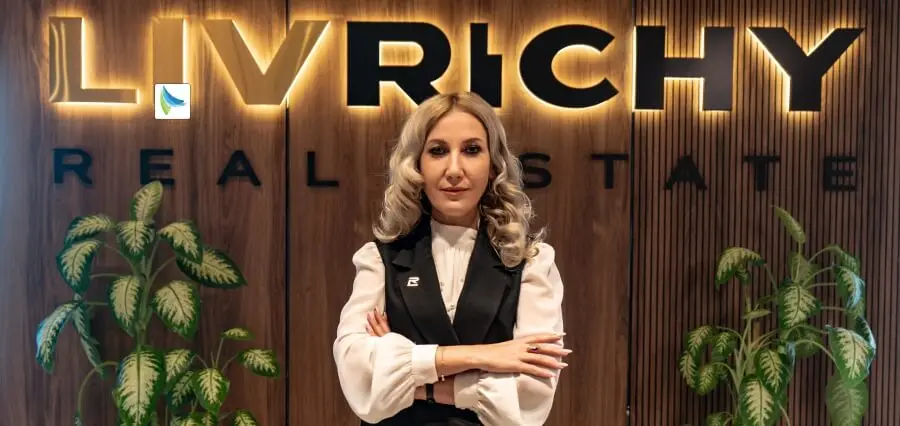
Leadership is tested when the figures go down, pressure increases, and certainty is lost. It is revealed in those moments when the need for guidance outweighs the need for answers. Sevil Ryshatova did not learn leadership from a textbook. She learned it in moments when pressure was real and results were visible, on the sales floor during periods of low activity when calls were slowing and deals were becoming harder to close.
Today, as HR Director at Livrichy Real Estate, she continues to lead according to the same principles that shaped her approach. Her success as an established HR leader in the region has not been achieved because of major business reorganizations or revolutionary ideas that attracted attention. Her style of work has been formed by a certain philosophy which she learned from her own practice. Being present and consistent is more important than being perfect. It is about creating an environment where people can perform, grow, and succeed over time.
Leading with Purpose and Trust
The experience that shaped Sevil most did not come from a case study. It came during a genuinely difficult period in the market, when a team of agents she led faced weeks of silence. There were no calls, no closings, and no clear path forward. During such periods, she says, the natural instinct for many people is to quietly give up before anyone notices.
Her role at that moment was not strategic in the traditional sense. It was simpler, yet more difficult. She had to keep her team steady when staying motivated felt almost pointless. What stayed with her was not simply the return of results, but the genuine respect she earned from her team. That respect came not only from hiring the right people, but from finding individuals who truly believed in the vision behind the work, not just the responsibilities outlined in their job descriptions.
That distinction has remained central to how she leads today. When a team believes its leader shares the same commitment to the mission, consistency does not need to be forced. People choose to bring it themselves. This insight became the foundation of her leadership style, built on presence rather than perfection and consistency rather than charisma.
Performance with a Human Touch
Over the years, her leadership approach has evolved significantly. Early in her career, she admits that she confused professionalism with being distant. She maintained a polished HR persona that placed policies before people. Over time, she realized that in an industry built on relationships, this approach could limit a leader’s ability to connect, inspire, and build trust.
Today, Sevil describes her leadership style as “structured warmth.” She holds her team to high standards and maintains clear accountability. At the same time, she makes sure every person feels seen and valued as an individual rather than simply as a number on a KPI report. “I lead with high standards, but I never want people to feel like numbers,” she says.
In real estate, much of the work involves emotional effort. Teams manage client expectations, deal with rejection, and stay motivated during slower periods. These experiences require more than targets and spreadsheets. Leaders must understand the human side of the work and create an environment where people feel supported while remaining accountable. A leader who focuses solely on numbers can quickly lose connection with the team.
Navigating Change with Honesty
Sevil relies on three principles when leading people through change and uncertainty: honesty, fairness, and context. For her, honesty means communicating difficult news clearly and early. Whether it involves a restructuring, changing targets, or shifts in the market, she believes employees should hear the facts directly rather than through workplace rumors.
Fairness means applying consistent standards to everyone, regardless of seniority or personal relationships. In a workplace built on trust, even the perception of favoritism can undermine that foundation. Once trust is compromised, rebuilding it can be a challenging and time-consuming process.
Context is equally important. Sevil does not view change as simply an announcement. In her view, people handle uncertainty better when they understand why a change is taking place, not just what is changing. Before communicating difficult news, she asks herself one important question: Have I given people enough of the “why” to help them understand and accept the “what”?
Trust Through Human Connection
For Sevil, trust is built through small and consistent actions rather than big speeches. It can mean remembering that a colleague’s mother was unwell and asking how she is doing. It can mean staying visible on the sales floor instead of retreating to the boardroom. It can also mean responding to a junior agent’s message on a Friday evening rather than waiting until Monday.
Dubai’s real estate market adds another layer of complexity to building trust. A single team may include an agent from the Philippines, a sales manager from Lebanon, and a marketing lead from the United Kingdom, all working within the same structure. Building trust across such diversity, she’s found, requires genuine cultural understanding rather than a one-size-fits-all approach to people management.
She makes an effort to understand what motivates each person. For some, it may be recognition in front of their peers. For others, it may be private feedback. For many, it may simply be the reassurance that their job is secure. Understanding these individual needs helps her build stronger relationships and create a more supportive workplace.
Some of her methods are remarkably simple. Most days, she encourages people to sit together for lunch and checks in on how everyone is doing. It is not treated as a formality. A distracted or exhausted mind, she says, cannot perform at its best, whether in sales, leadership, or personal growth.
When something feels wrong, the team addresses it instead of allowing the issue to linger. For Sevil, this everyday attentiveness is what trust is truly built on. It is not created through occasional gestures, but through consistent presence, genuine understanding, and care. “Trust is earned through consistency, not created through authority,” she says.
Balancing Empathy with Business Insight
Emotional intelligence is essential for any HR leader, but Sevil believes it is no longer enough on its own. Today’s HR leaders must combine empathy with strong business knowledge. They need to understand the P&L, sales targets, and market conditions that shape the business.
Three additional qualities are equally important. The first is courage. Leaders must be willing to have difficult conversations, including with senior leadership. The second is adaptability. This is especially important in Dubai’s real estate market, where regulations, buyer sentiment, and competition can change quickly.
The third is genuine curiosity about people. This goes beyond promoting an open-door policy. Effective leaders make a real effort to understand their people, listen to their concerns, and respond with purpose.
Commercial awareness and empathy must work together. Without business knowledge, an HR leader can lose influence, while without empathy, they can lose trust. Effective HR leadership requires both.
Navigating Difficult Conversations
Preparation is more important for difficult conversations than for easy ones. Sevil follows this as her first rule. She never enters a difficult conversation without knowing the outcome she needs and having the facts to support it. “I never enter a difficult conversation without knowing the outcome I need,” she says.
Her approach is simple. She addresses the issue directly and early. She avoids unnecessary small talk that can increase anxiety. She then listens carefully and with genuine intent. Listening is not a formality before delivering a decision. New context can often change the direction of the conversation.
The conversation then moves toward clear next steps. Both sides agree on expectations and set a defined timeline for action.
Building High-Performing Teams
Resilience in real estate teams is built through experience, not protection. In her view, leaders should not shield agents from setbacks. Instead, they should help them process setbacks quickly and return to action. A rejected offer or lost deal is not a failure. It is an opportunity to learn. Teams that treat setbacks as useful information recover faster and perform better over time.
Engagement also depends on consistent recognition. Specific and timely feedback has a greater impact than general praise. Recognizing how someone handled a particular client objection shows genuine attention and reinforces the right behaviors.
Sustained performance depends on clarity. Every team member should understand what good performance looks like, what is expected of them, and how their results are measured. Clear expectations help teams stay focused, motivated, and accountable. Ambiguity can weaken both morale and performance.
Learning as a Daily Discipline
Learning is a continuous discipline rather than an occasional activity. Sevil reads regularly, follows market data and industry trends, and learns from professionals outside HR. She often looks to sales directors, developers, and marketing strategists for new perspectives. Some of the most valuable HR ideas can come from other fields.
For the people she mentors, she prefers practical experiences over formal training. Giving someone a challenging assignment with the right support can accelerate growth more effectively than a workshop. She also encourages people to develop self-awareness early. Understanding personal strengths, blind spots, and triggers is one of the most valuable leadership skills.
At Livrichy, learning follows a consistent routine. Every Monday, managers lead mandatory training sessions that focus on different skills. Sevil’s sessions often cover psychology and professional growth. She’s found that an agent’s ability to think clearly under pressure can be more important than formal knowledge.
The company also provides regular market briefings and refresher sessions led by its developers. These sessions help agents stay informed and confident when speaking with clients. The goal is to ensure they understand current market developments rather than simply know the basics.
Accountability with Integrity
The most difficult leadership challenges Sevil has faced were rarely about strategy. They were about people. The moments that tested her most came when doing what was right for the business meant disappointing someone she genuinely cared about.
These experiences taught her that leadership is not about being liked at every moment. It is about earning trust, even during difficult situations. Confusing likability with trust, she believes, is one of the most common mistakes new leaders make.
A Legacy Shaped by People
Looking ahead, Sevil does not want to be remembered for a policy she created or a process she improved. She wants to be remembered for the people who grew under her leadership. This includes the junior agent who became a team leader, the HR coordinator who became a strategist, and the employee who chose to stay because someone believed in them at the right time.
Her advice to the next generation of HR professionals, especially those working in fast-moving industries such as Dubai real estate, is clear. Do not hide behind your title. HR is not simply a compliance function. It is a strategic partner that influences business performance, talent retention, and company culture.
Young HR professionals should understand the business they support as deeply as they understand HR principles. They should address difficult conversations early and with honesty. Most importantly, they should remember that behind every KPI, target, and performance review is a person building a life. A leader’s treatment of that person matters far beyond the numbers on a dashboard.
Read Also : Leann King: Redefining Excellence Across Global Real Estate, Development and Executive Leadership