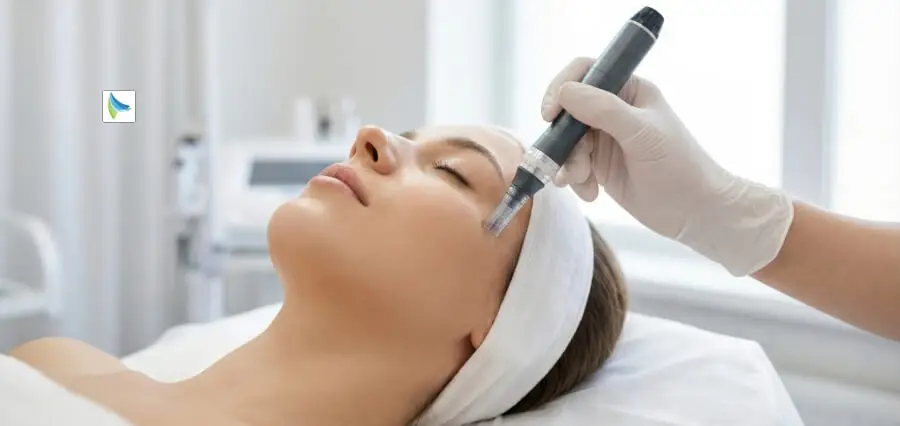



The purpose of aesthetic medicine is not to create a different version of someone, but to enhance what is already there while preserving the individuality that makes them unique. When the work is done well, the result is not a visible change but a restored confidence, a face that moves naturally, a reflection that finally matches how someone feels inside. Achieving that requires more than technical skill. It requires a genuine understanding of anatomy, proportion and identity and the discipline to let those principles guide every decision rather than trends, techniques or commercial pressure.
The practitioners who earn lasting respect in this field are those who continue to ask challenging questions long after mastering the basics. They invest in research, teach others to think critically rather than simply how to inject, and approach every patient as an individual rather than an opportunity to apply a formula.
Dr Vincent Wong, Founder and Medical Director of Omniere Aesthetics, leads from exactly that standard. With more than 16 years in aesthetic medicine, over 35 scientific publications, and an international teaching portfolio, his work consistently connects clinical practice, rigorous research, and a deeply patient-centred philosophy that places harmony, identity, and safety at the heart of everything he does.
From Traditional Medicine to Facial Aesthetics
Dr Vincent’s journey into aesthetic medicine began with traditional medical training. He studied Medicine at the University of St Andrews, graduating with First Class Honours in his BSc, before completing his medical degree at the University of Aberdeen. His early clinical training included general and plastic surgery and dermatology. These experiences gave him a strong appreciation of anatomy, tissue behaviour and the relationship between structure and appearance.
He entered aesthetic medicine more than 16 years ago, when the field often focused on treating individual features or lines. Over time, he became interested in understanding why technically successful treatments did not always produce harmonious results. This led him towards facial balancing, an approach that considers the face as a whole rather than a collection of isolated treatment areas.
Today, his work at Omniere Aesthetics centres on facial harmony, regenerative aesthetics and minimally invasive treatments, including facial feminisation and masculinisation. His philosophy is not about creating a different person. Instead, he considers each patient’s anatomy, proportions, identity and objectives before selecting treatments that support an outcome that remains unmistakably their own.
For him, achieving facial harmony requires an understanding of how different features work together.
Connecting Clinical Practice, Education and Research
The different aspects of Dr Vincent ‘s career inform one another. At Omniere Aesthetics, he remains clinically active and observes how techniques and technologies perform in real patients. Clinical practice keeps his work grounded because a concept must ultimately be safe, reproducible and meaningful for the person receiving treatment.
His international teaching responsibilities require him to examine his methods more closely. It is not enough to demonstrate that a technique works for him. He must explain why it works, where it might not work and how another practitioner can apply its principles safely.
Research provides another layer of scrutiny. Having contributed to more than 35 scientific publications, he remains interested in translating clinical observations into structured investigation. He believes, “Clinical practice, education and research should form a continuous cycle: clinical experience generates questions, research helps us investigate them, and education allows useful knowledge to be shared.”
This connection helps him consider new approaches from different perspectives. Clinical work provides practical observations, research encourages closer examination, and teaching requires him to communicate the reasoning behind his decisions. Together, these responsibilities support his continued development within aesthetic medicine.
Treating the Face as a Whole
Earlier in his career, Dr Vincent thought mainly in terms of individual anatomical areas such as cheeks, lips, chin and jawline. He now focuses on the relationships between these features. The chin does not exist independently of the nose, the temples influence how the lateral face is perceived, and the jawline affects the appearance of the neck. Skin quality can also influence how structural ageing is perceived.
This broader assessment has made his approach more systematic and, in many cases, more conservative. He spends more time deciding what not to treat. Natural-looking aesthetics is not simply about using less product. It is about making better decisions based on the patient’s needs.
The appropriate intervention may involve volume, structural support, skin regeneration or tissue repositioning. Sometimes, the right decision is not to treat at all. He says, “Facial harmony cannot be reduced to a mathematical formula. Anatomy matters, but so do age, gender expression, ethnicity, movement and identity.” Treatment should reflect these differences instead of applying a fixed template.
Patient Safety and Ethical Practice
One of the greatest challenges in aesthetic medicine is the speed at which innovation moves. New products, devices and techniques can become commercially popular before the profession has accumulated sufficient evidence or experience. Dr Vincent believes practitioners must assess these developments critically rather than assume popularity demonstrates clinical value.
Education must extend beyond learning how to perform a procedure. Practitioners need to understand anatomy, patient selection, contraindications, complication recognition and management, as well as when not to intervene.
Ethics is equally important. Social media creates opportunities for education, but it can also encourage practitioners and patients to view aesthetic medicine as a collection of trends rather than healthcare interventions carrying genuine risks. Responsible practice requires separating commercial excitement from clinical appropriateness. “Innovation is essential, but without critical thinking it can become experimentation.” Patients should never become the testing ground for professional ambition.
Teaching Practitioners How to Think
Dr Vincent has trained medical professionals internationally and authored Decision Making in Aesthetics Practice. He believes the profession has placed too much emphasis on teaching practitioners how to inject and not enough on teaching them how to think.
Technical ability matters, but decision-making distinguishes a competent practitioner from an exceptional one. Practitioners should assess patients systematically, identify the underlying anatomical or biological concern, understand available treatment options and explain why one approach is preferable.
Intellectual humility is also necessary because aesthetic medicine continues to evolve. An approach considered best practice ten years ago may no longer represent current practice. When teaching internationally, he wants delegates to leave with principles rather than choreography. Memorising injection points may allow someone to reproduce a pattern, but understanding why those points were selected helps them adapt safely to the individual patient.
Combining Experience with Scientific Evidence
Dr Vincent believes evidence and experience should challenge each other. “Scientific literature provides a framework, but clinical practice presents situations that have not been studied comprehensively.” Personal experience can also mislead when practitioners assume that an approach that works in their hands represents universal truth.
When developing an approach, he begins with anatomy, existing evidence and the clinical problem he wants to solve. He then observes outcomes, refines the methodology and, where appropriate, moves towards structured evaluation.
His interest in multimodal and regenerative aesthetics reflects his understanding that ageing occurs across multiple anatomical layers. The question is not simply which product is best, but how different modalities can complement one another. A new technique should solve a problem, simplify a process, improve reproducibility or enhance safety and outcomes. Innovation should not exist for its own sake.
Developing the R Technique
Dr Vincent’s R Technique, developed with RELIFE, emerged from his interest in treating the face three-dimensionally rather than as a series of disconnected injection points. Traditional approaches can encourage practitioners to correct visible deficits individually. He wanted a framework that considered structural support, facial proportions and relationships between anatomical regions.
Making the technique understandable and reproducible was also important. Concepts such as artistry can sound subjective, so he sought to translate the thinking behind facial balancing into a systematic methodology that practitioners could understand while adapting it to individual anatomy. The balance between structure and individualisation remains central to how he develops techniques.
Advancing Inclusivity in Aesthetic Healthcare
Through initiatives such as #IAMME, Dr Vincent has worked to raise awareness of gaps in healthcare for LGBTQ+ communities. His experience has reinforced that treating everybody in the same way is not necessarily the same as treating everybody equitably.
Language, previous experiences, identity, assumptions made by clinicians and seemingly insignificant interactions can affect whether a patient feels safe enough to engage openly with healthcare professionals. This is particularly relevant in aesthetic medicine, where appearance and identity can be closely connected.
His work in facial feminisation and masculinisation has reinforced that there is no single definition of masculine, feminine or beautiful. A practitioner’s role is not to impose one. Inclusivity begins with listening and understanding what an individual wants to achieve rather than making assumptions based on gender, sexuality, age or background. According to him, “Good aesthetic medicine should help patients express themselves, not make them conform to somebody else’s template.”
Learning to Create Sustainable Balance
Alongside clinical practice, research, training, writing and public engagements, Dr Vincent has been reconsidering how he approaches personal well-being. For a long time, he associated managing a demanding schedule with accepting every opportunity. International teaching, clinical work, research and developing new projects are responsibilities he genuinely enjoys, making it easy for work to occupy every available space.
His international teaching schedule in 2026 has encouraged him to reconsider this approach. Instead of asking only whether another commitment can fit into his schedule, he is learning to ask whether it needs to. He is making room for recovery, exercise, travel without work attached and time when nothing needs to be produced or achieved.
He does not claim to have mastered balance. He sees sustainability as something he is actively learning. Ambition does not disappear when a person looks after themselves. Instead, they can become more selective about where they invest their time and energy.
Shaping the Next Phase of Aesthetic Medicine
Dr Vincent sees integration as a priority for the next phase of aesthetic medicine. The field has accumulated a wide range of products, devices and techniques. Its next evolution, in his view, depends not simply on adding more options, but on understanding how and when to combine them.
His research interests increasingly include regenerative medicine, multimodal treatment, objective assessment and ways of evaluating outcomes beyond conventional before-and-after photography. In education, he wants to continue developing frameworks that teach practitioners how to assess patients and make decisions rather than simply replicate injection patterns.
International teaching has also shown him the value of exchanging ideas across different cultures and medical communities. Through the Metamorphosis international teaching journey in 2026, he has been documenting developments in aesthetic medicine across countries and considering how education, identity and professional growth change when people encounter different perspectives.
After more than 16 years in aesthetic medicine, he continues to develop techniques, question old assumptions, conduct research and learn from colleagues and patients around the world. He has accumulated experience without losing his curiosity, and he hopes to continue learning throughout his career.
Ultimately, he wants his work to contribute to a profession that is more evidence-led, thoughtful, inclusive and safe. Techniques will evolve, products will change and technologies that appear revolutionary today will eventually be replaced. The principles beneath them should endure: understand anatomy, respect evidence, listen to patients, remain curious, recognise limitations and never stop learning.
For Dr Vincent Wong, expertise should never mean believing that learning is finished. His continued interest in research, clinical development and international education reflects his belief that progress in aesthetic medicine depends on thoughtful decisions, responsible practice and a willingness to keep questioning established assumptions.